As kids grow, their closets can quickly become chaotic with clothes, shoes, and toys piling up. A thoughtful organization system can save time, reduce stress, and make mornings smooth for both parents and children.
These closet organization ideas for growing kids focus on functionality, simplicity, and solutions that evolve as your child grows.
1# Adjustable Hanging Rods
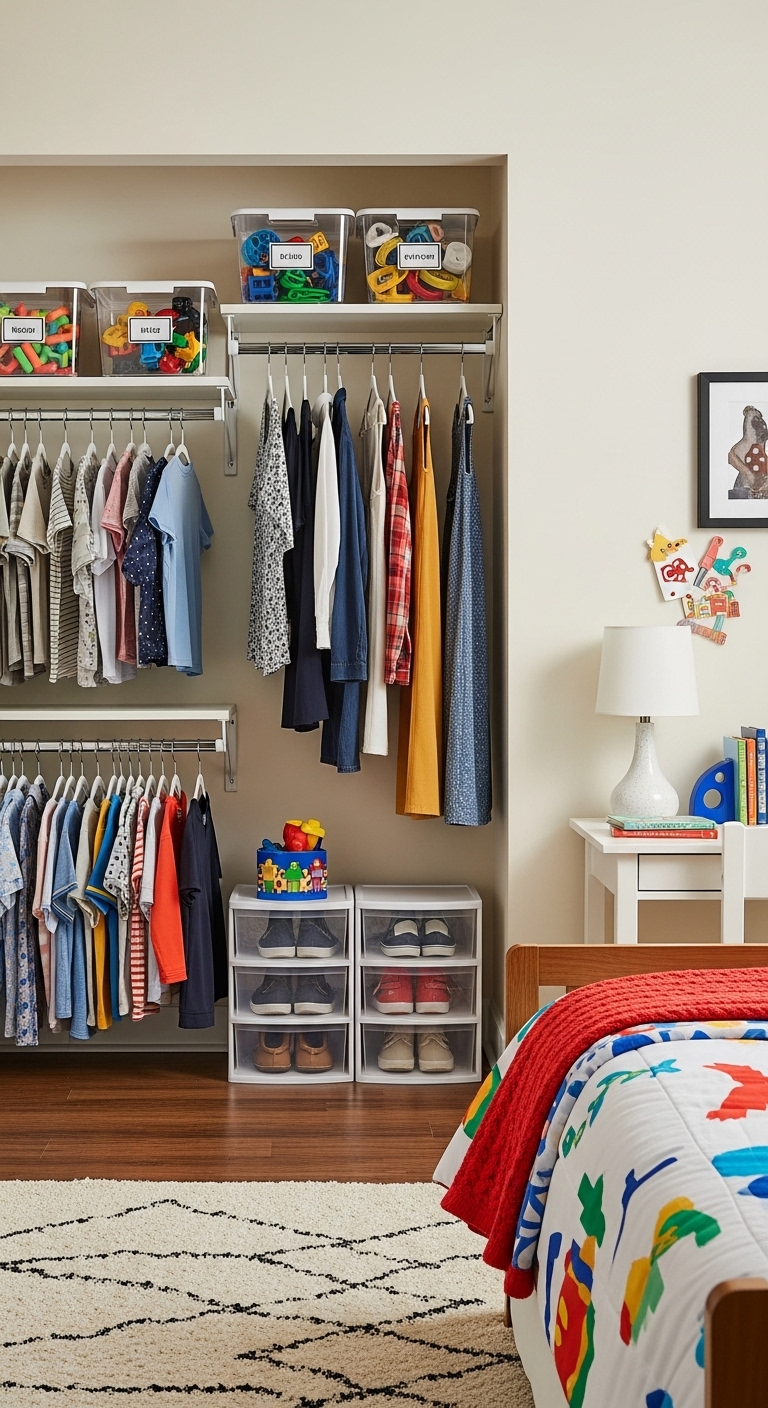
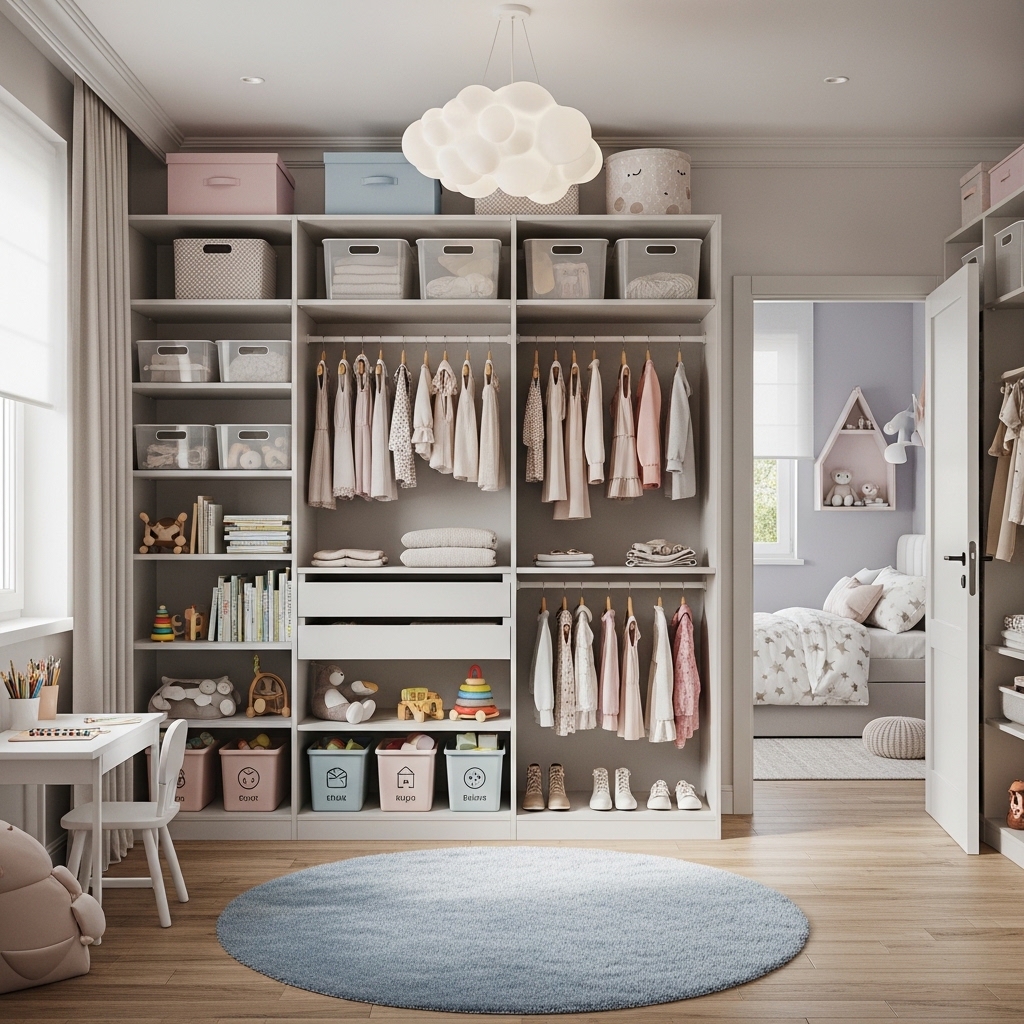
Using adjustable rods lets you change the height as your child grows. This keeps clothes accessible and organized at every stage.
It also teaches independence, letting kids reach their own outfits without help. This simple tweak makes daily routines easier.
2# Bins for Seasonal Clothing
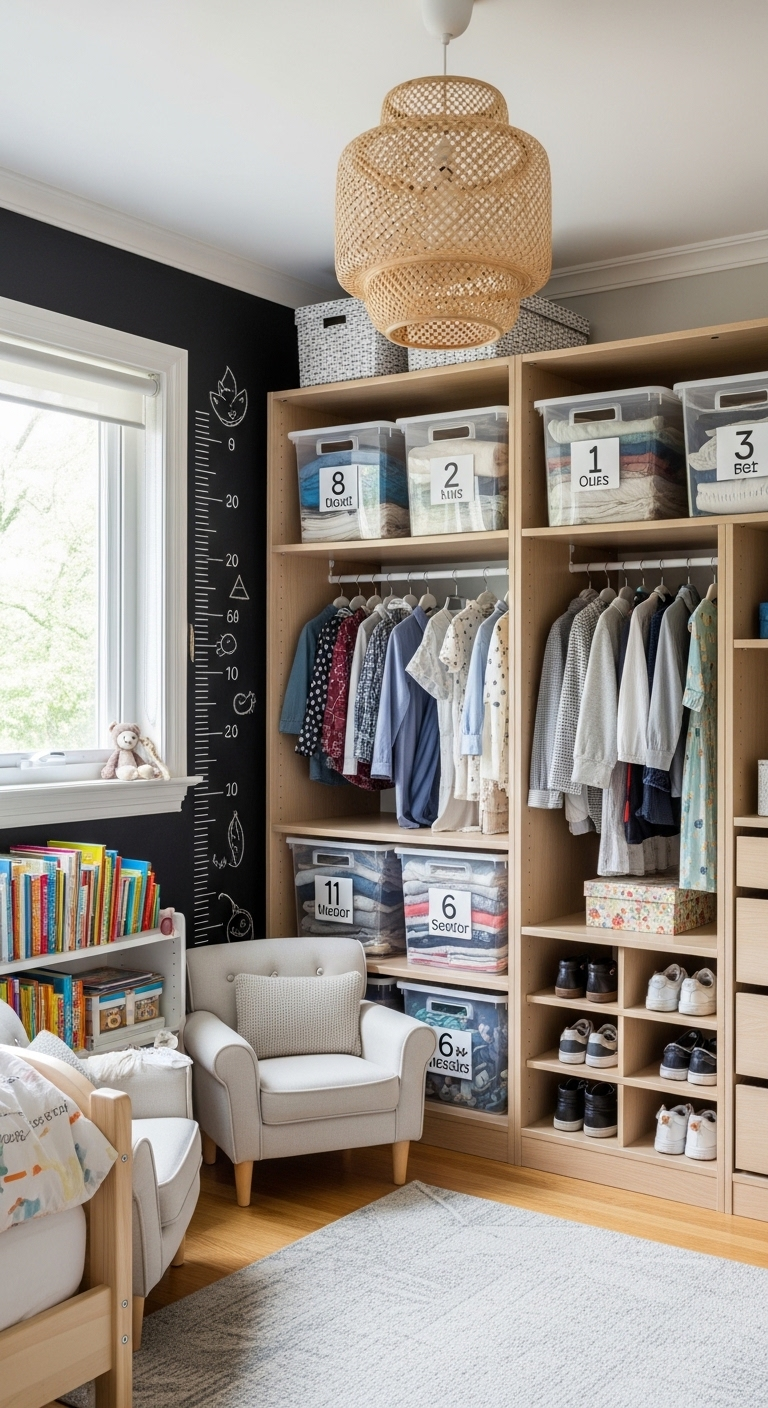
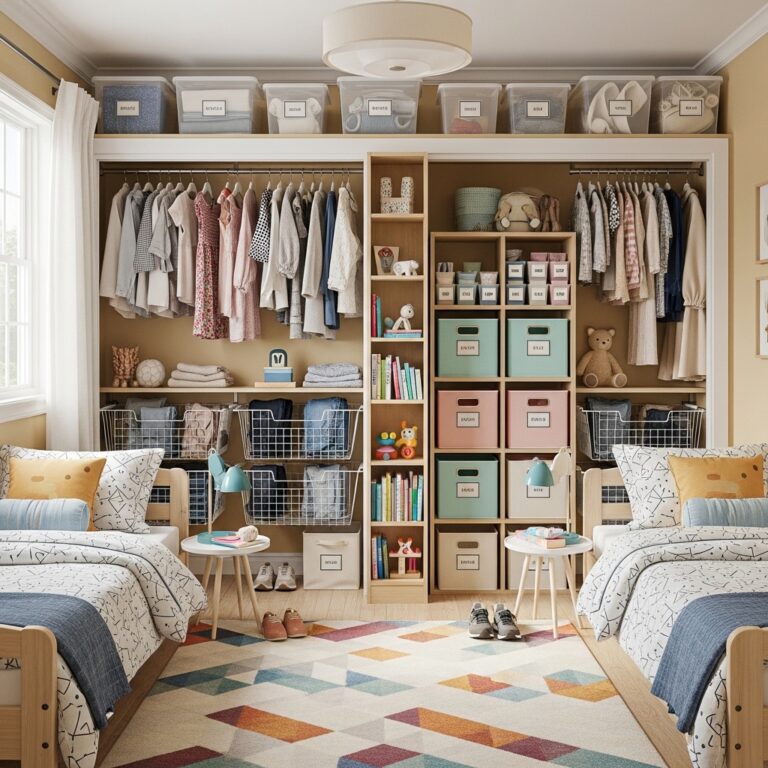
Separate clothes by season in labeled bins. It keeps the closet manageable and ensures only current items are easy to find.
This approach reduces clutter and simplifies outfit selection. Kids can quickly see what’s available and what’s stored away.
3# Hooks for Everyday Essentials
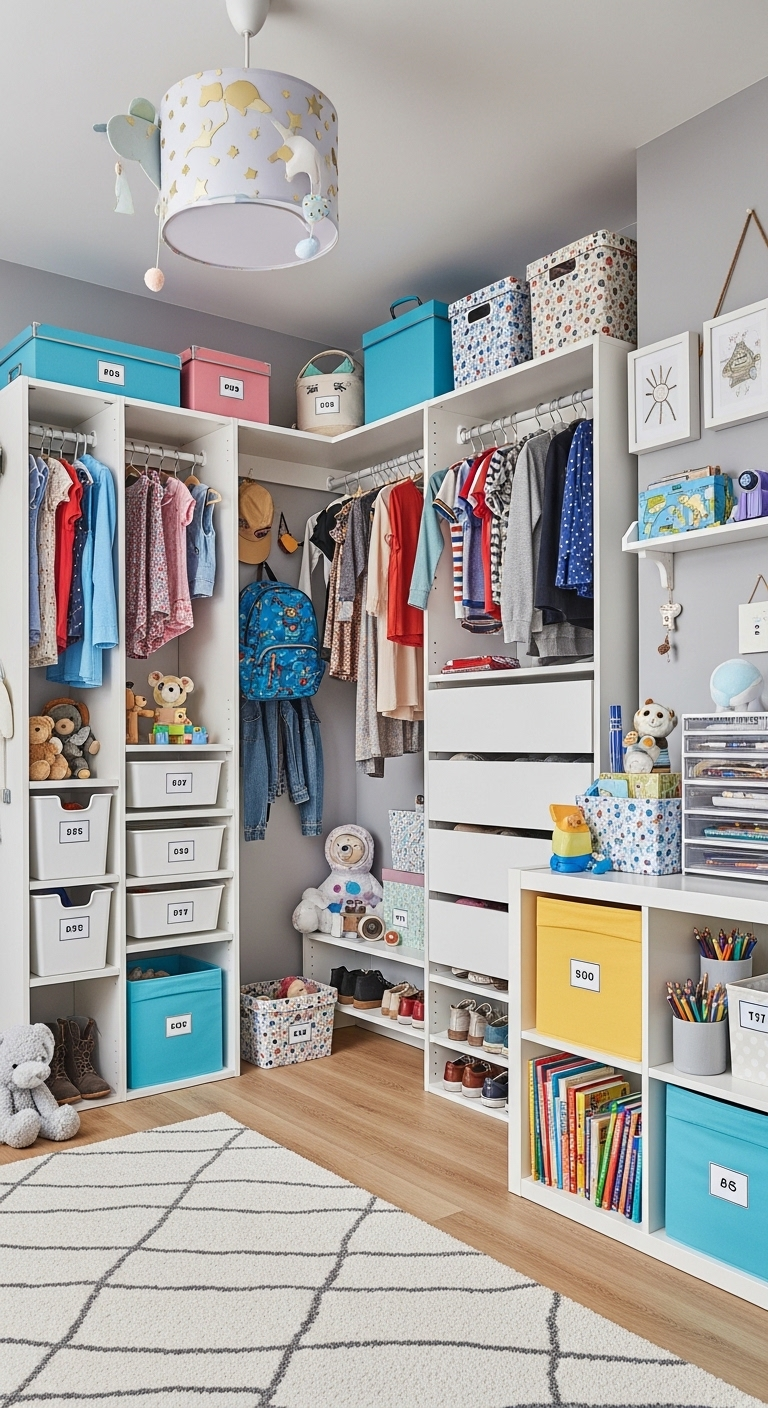
Install hooks at child-friendly heights for jackets, bags, and hats. It encourages kids to store items where they belong.
Hooks also make frequently used items easy to grab. This keeps floors clear and fosters responsibility.
4# Stackable Shelves for Flexibility
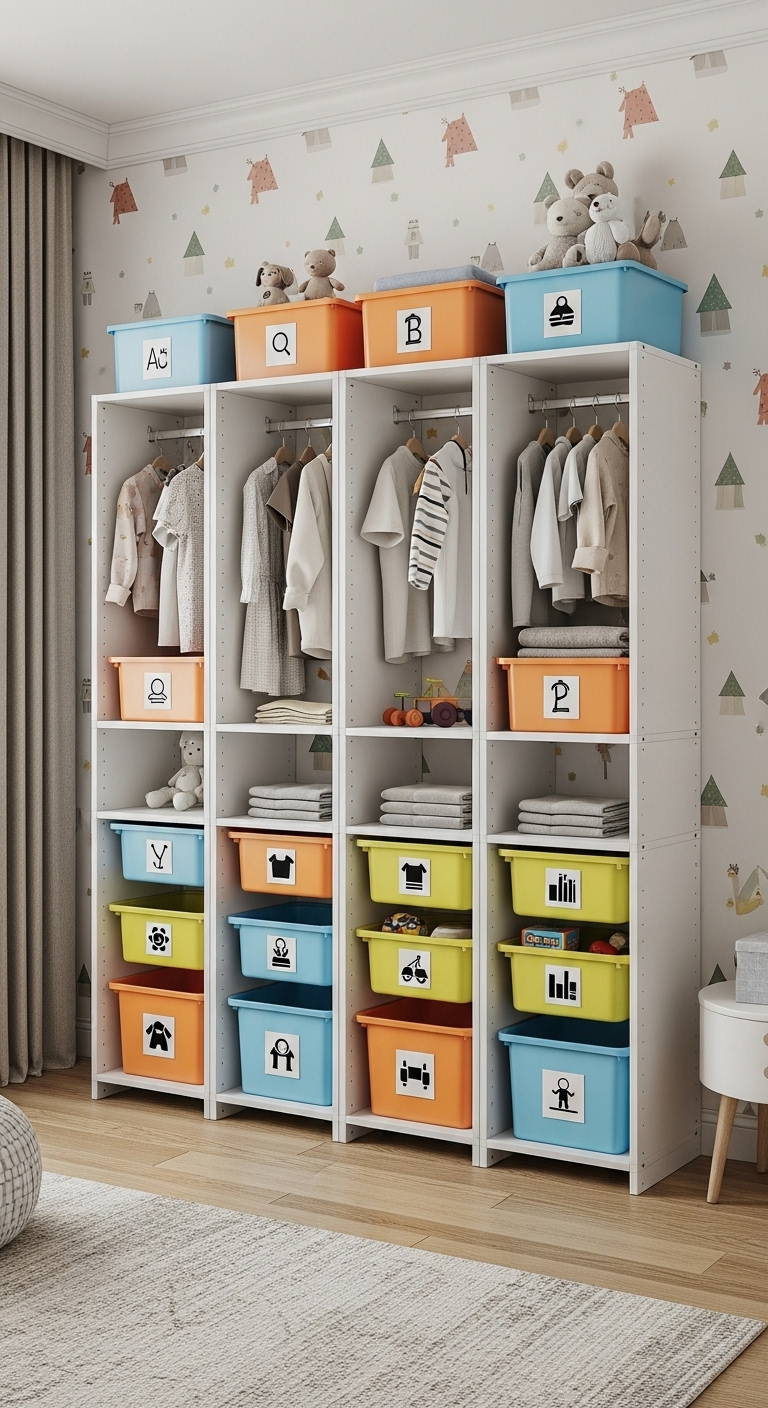
Stackable shelves adapt to changing storage needs as kids grow. They work well for folded clothes, shoes, or toys.
This method maximizes vertical space without permanent installations. It’s a versatile and budget-friendly solution.
5# Drawer Dividers for Small Items
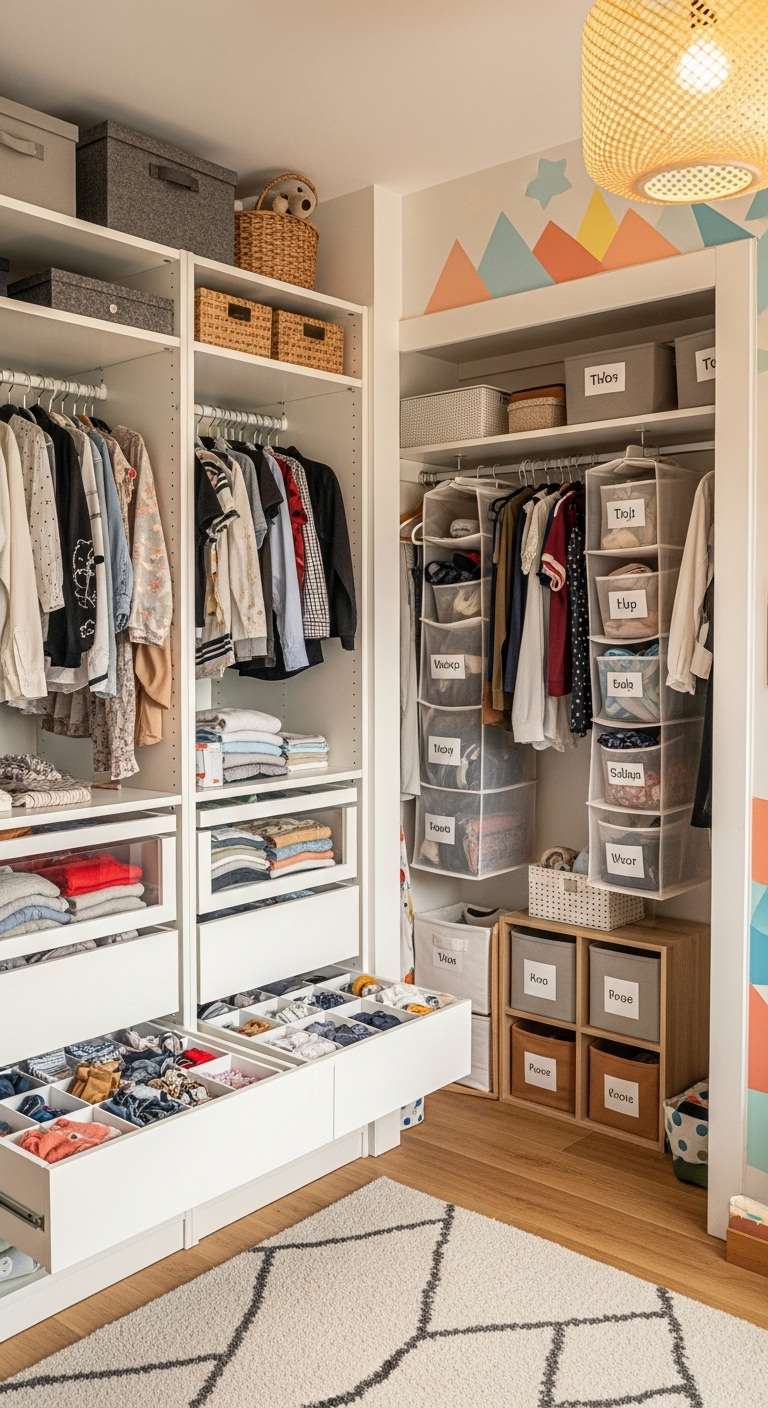
Use dividers to organize socks, underwear, and accessories. It prevents small items from getting lost in drawers.
Dividers make cleanup quick and simple. Kids can find what they need independently while keeping the space tidy.
6# Label Everything Clearly
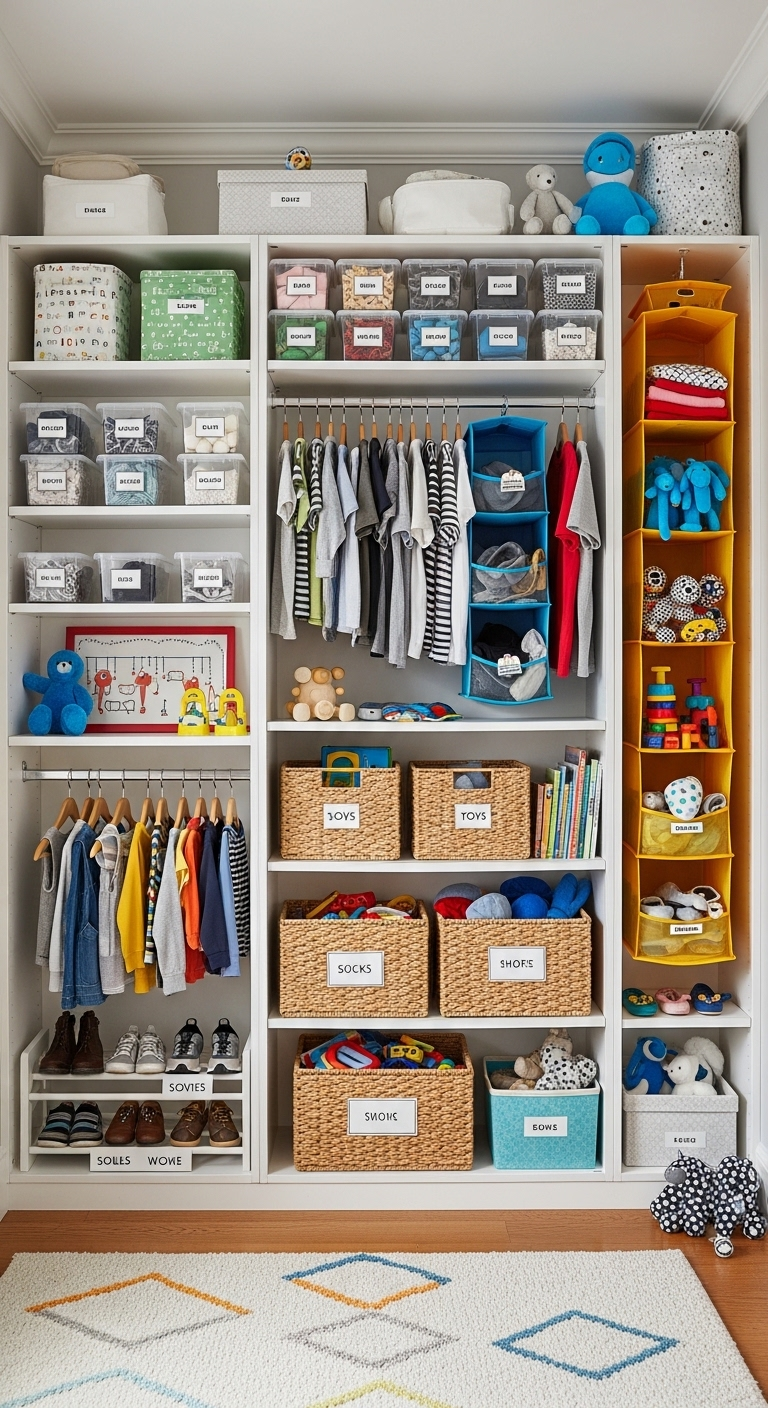
Labels help kids know where each item belongs. Use pictures for younger kids and words for older ones.
This system encourages responsibility and makes daily organization stress-free. It’s a low-cost, high-impact strategy.
7# Rotating Outfit System
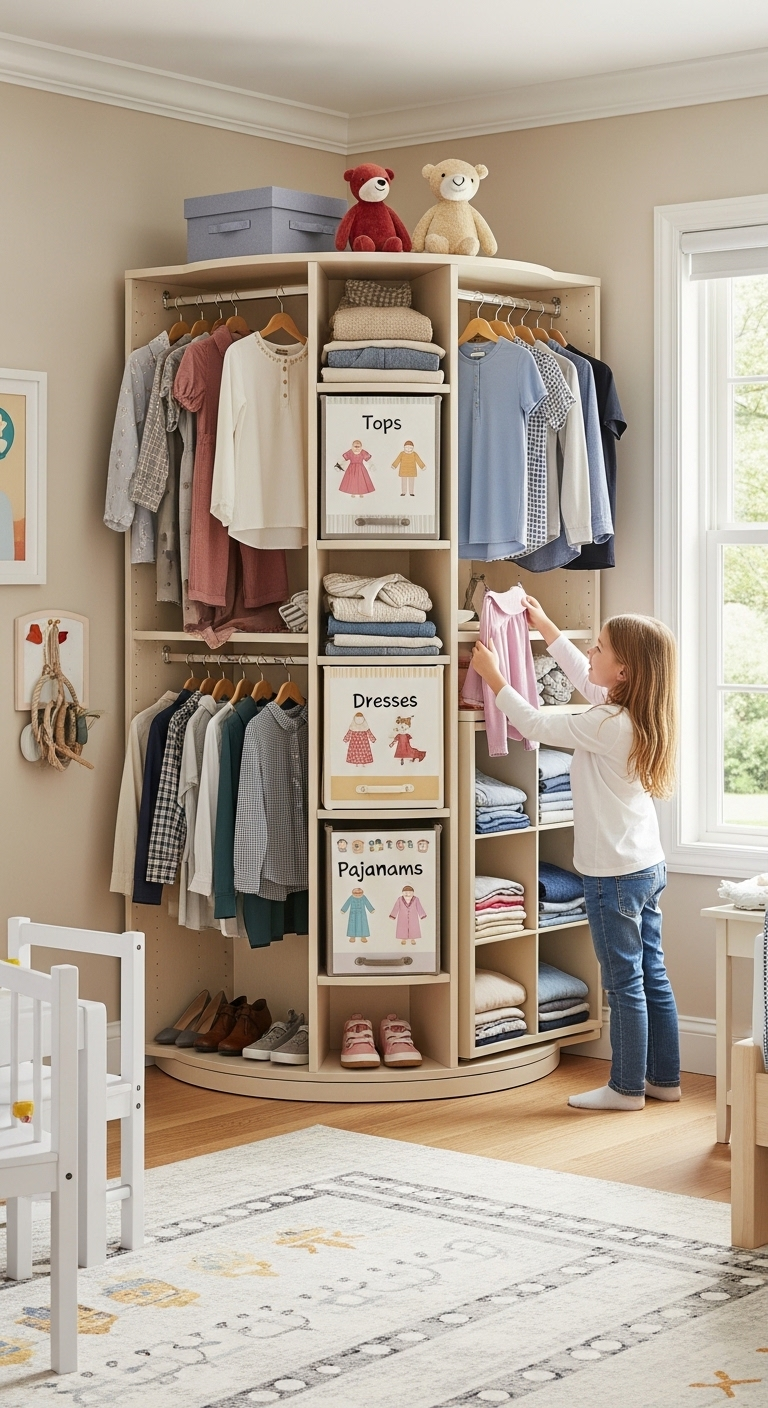
Arrange a week’s worth of outfits in bins or on a sectioned rod. Mornings become faster and more predictable.
Kids learn routine and gain independence. This approach works for both school and casual clothing.
8# Open Baskets for Toys
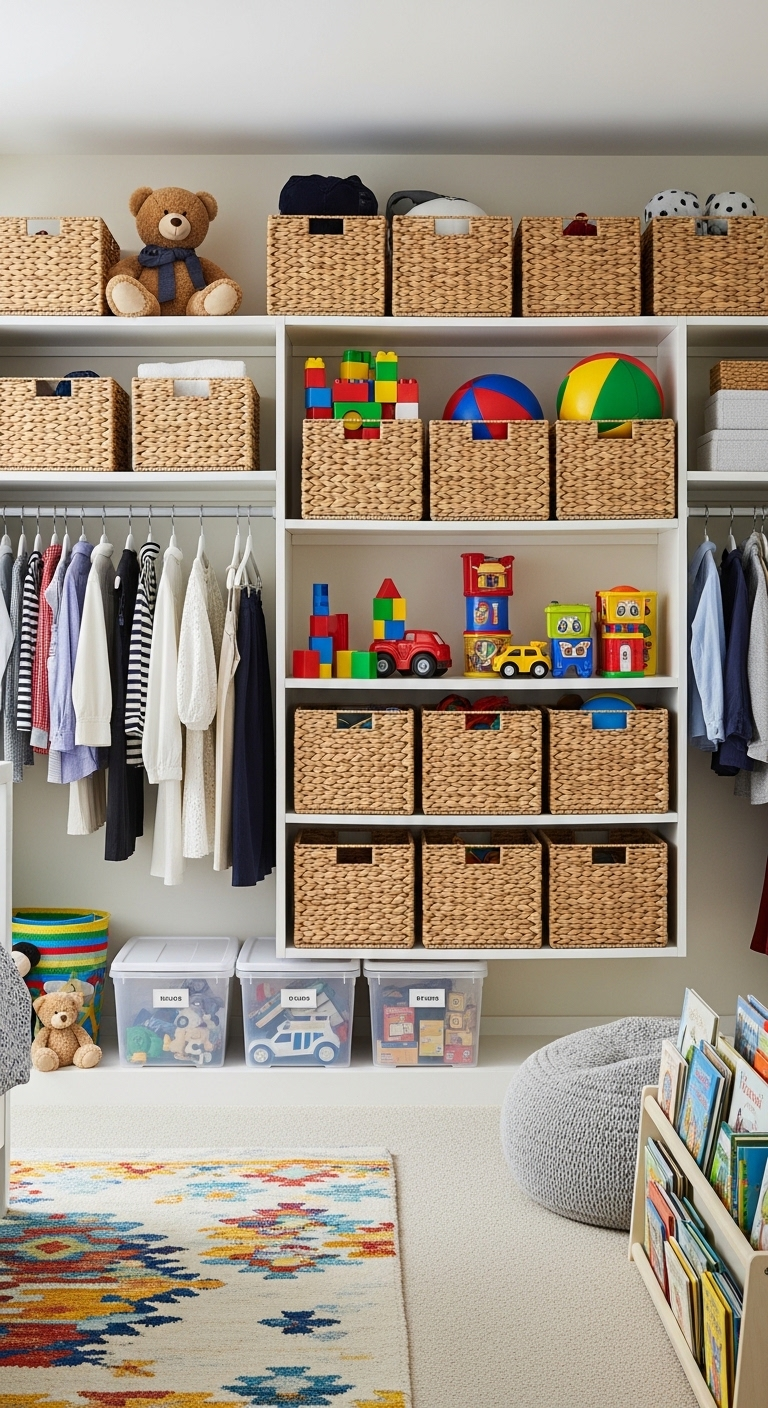
Keep toys in open baskets at lower levels. Kids can easily access them and put them away after playtime.
This keeps the closet functional and visually organized. It also teaches children to tidy up.
9# Shoe Racks at Floor Level
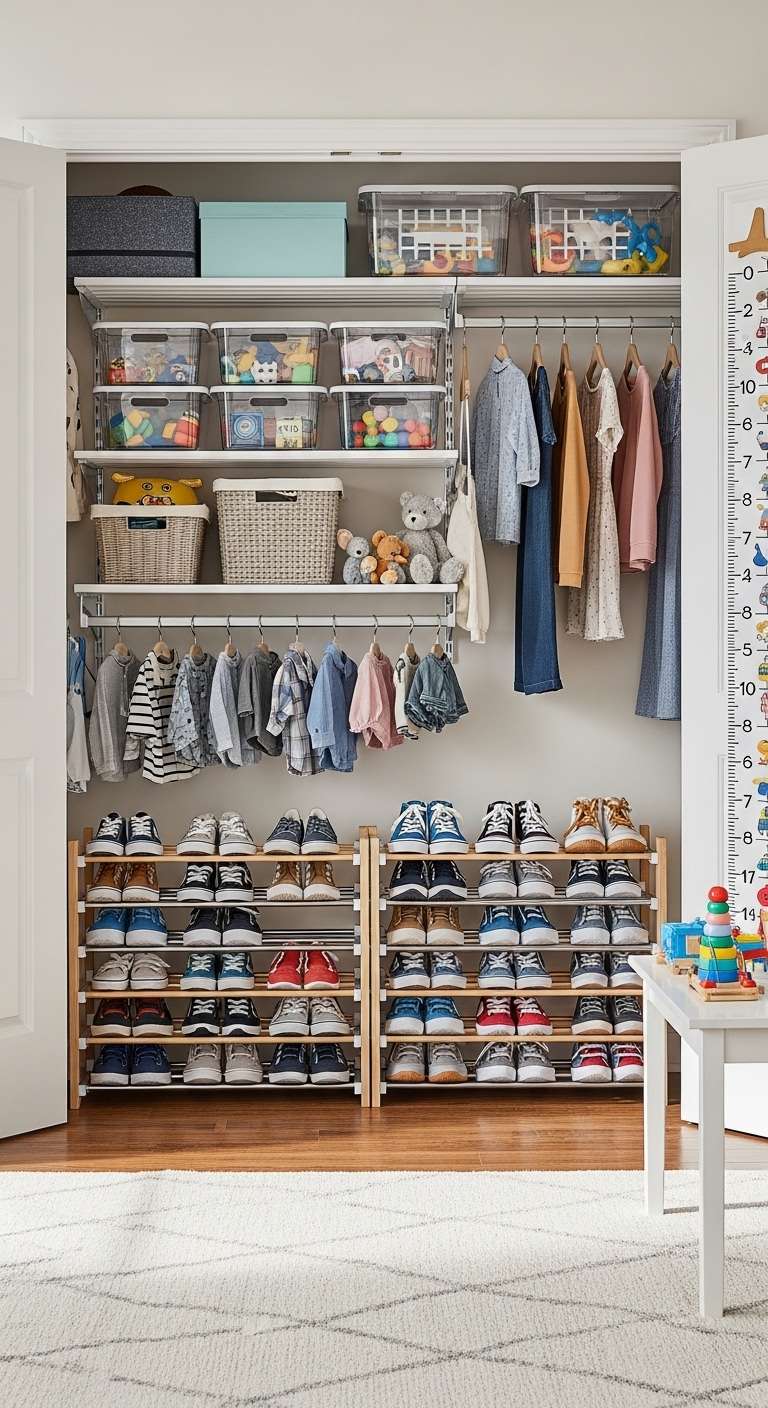
Shoe racks or cubbies at the bottom of the closet prevent shoes from piling up. They make pairs easy to locate.
This keeps floors clear and promotes independent dressing. Shoes are organized and simple to maintain.
10# Multi-Purpose Storage Boxes
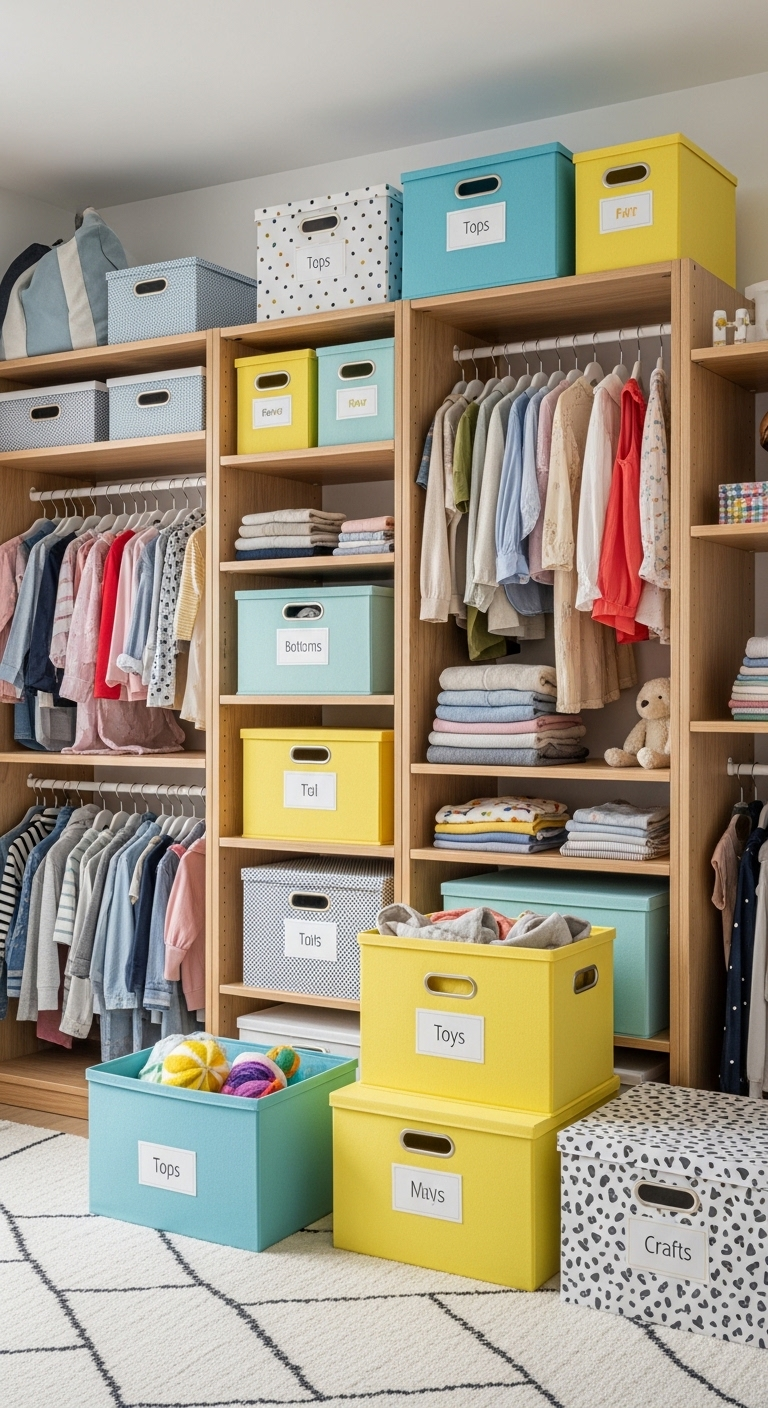
Use boxes for extra items like hats, gloves, or seasonal clothes. They can be stacked or stored out of the way.
This adds flexibility and reduces clutter. Kids can still access what they need without disrupting the main closet area.
11# Hanging Accessory Organizers
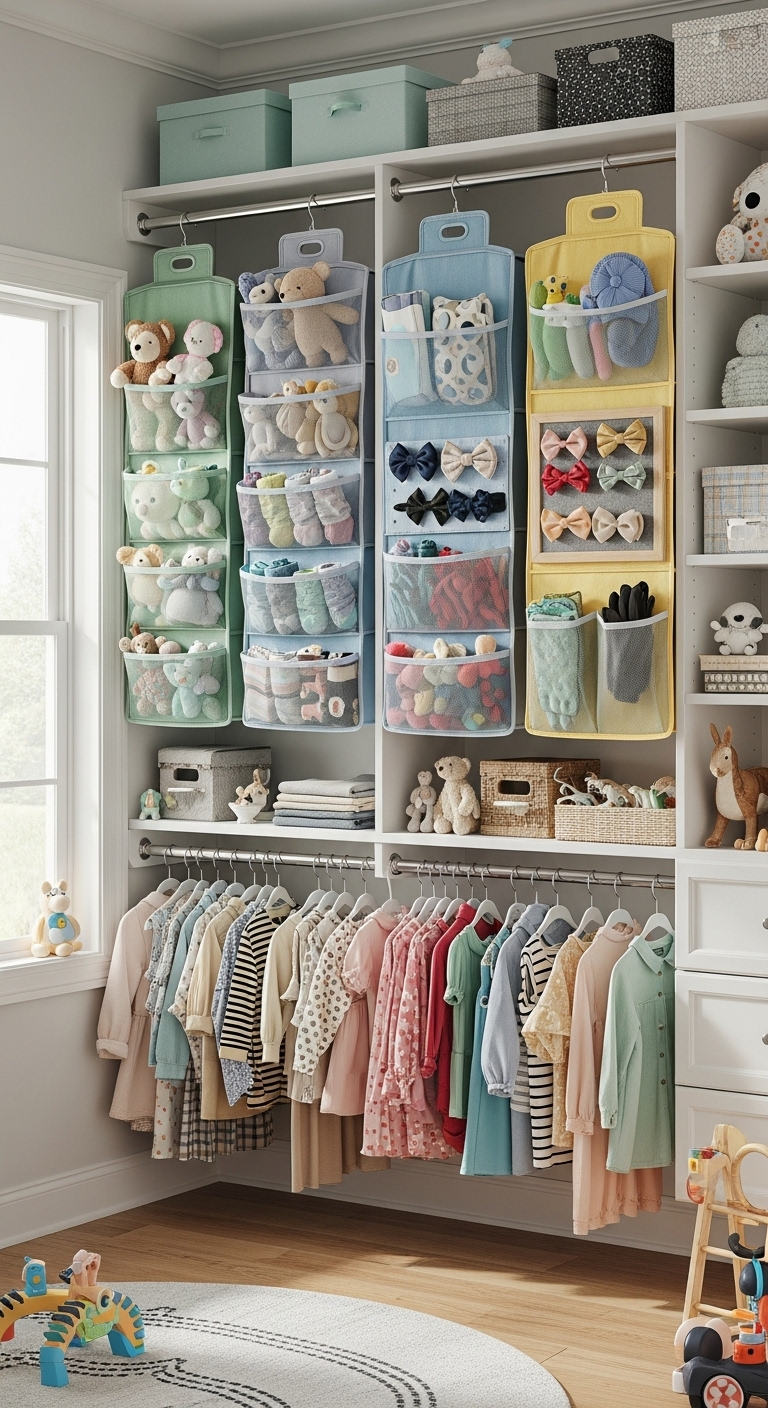
Small hanging organizers for belts, scarves, or headbands save space and keep accessories visible.
They’re practical and inexpensive. Kids can grab what they need quickly, keeping mornings stress-free.
12# Minimalist Approach
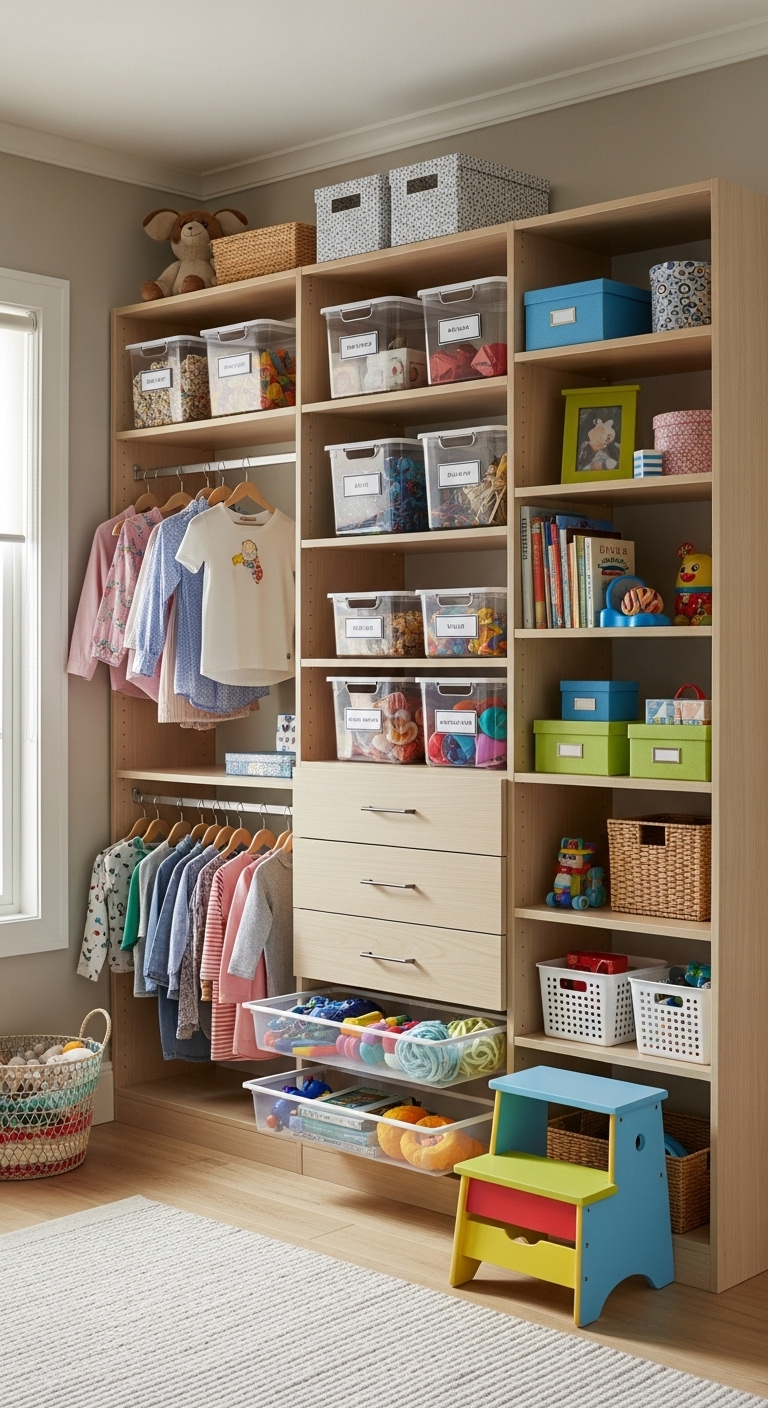
Keep only what your child uses regularly in the main closet. Rotate or store out-of-season items elsewhere.
This reduces visual clutter and makes finding outfits faster. Less is often more when it comes to growing kids’ closets.
13# Personalized Sections
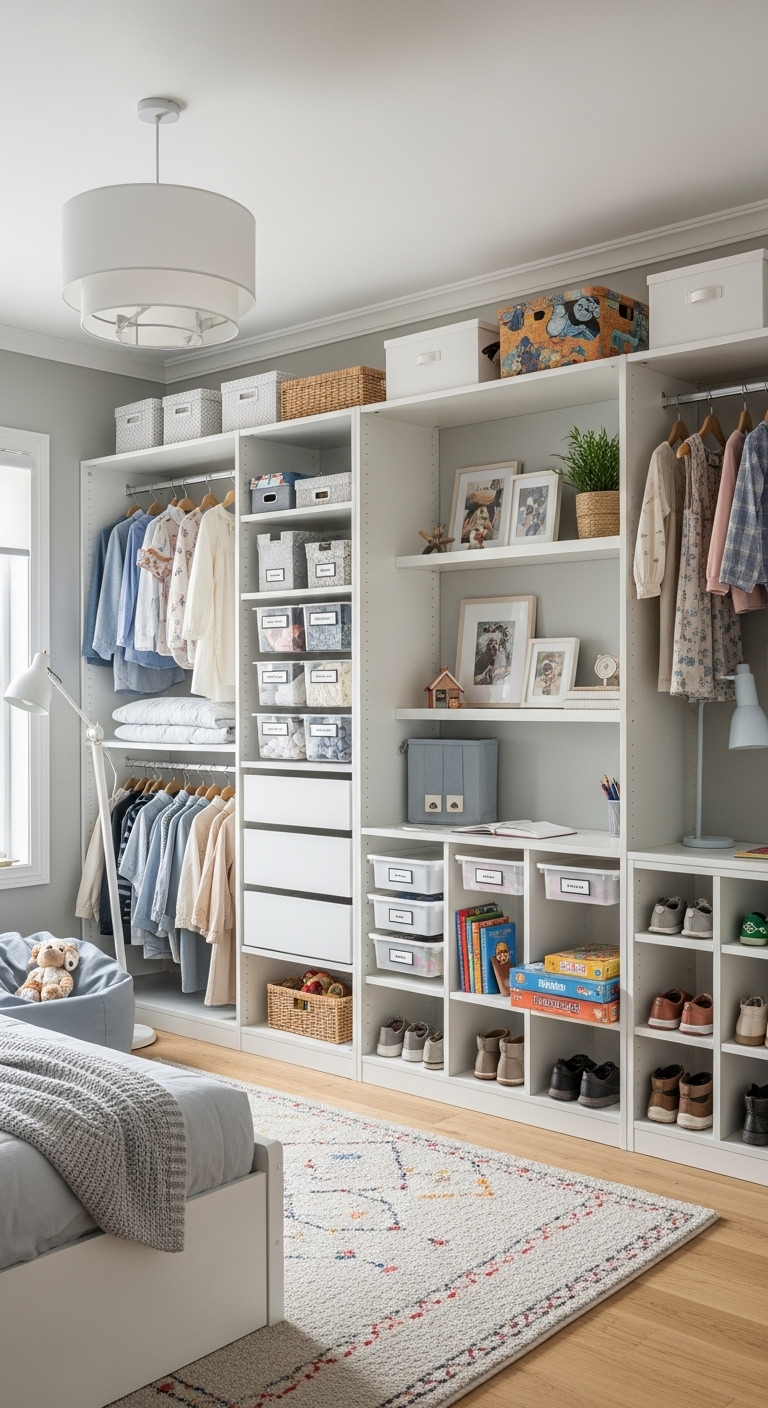
Designate sections for each child in shared closets. It helps them recognize their space and maintain order.
Personalized zones teach responsibility and make cleanup easier. Each child has ownership over their area.
Wrap-Up
Closet organization for growing kids is all about flexibility, accessibility, and simplicity. These ideas show how small, intentional changes can make a huge difference in daily routines. By creating a system that evolves with your child, you can save time, reduce stress, and foster independence—all while keeping their space functional and tidy.