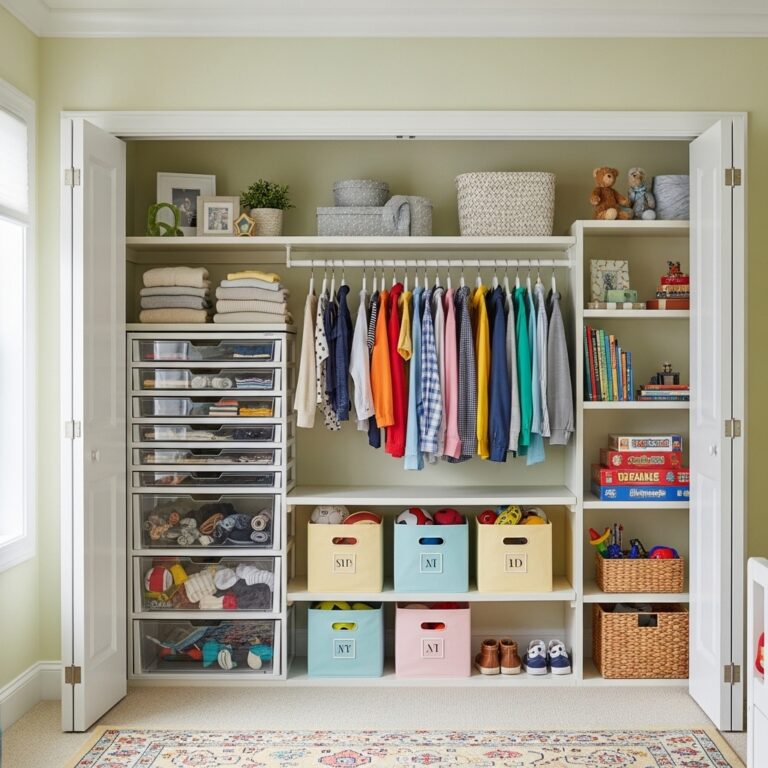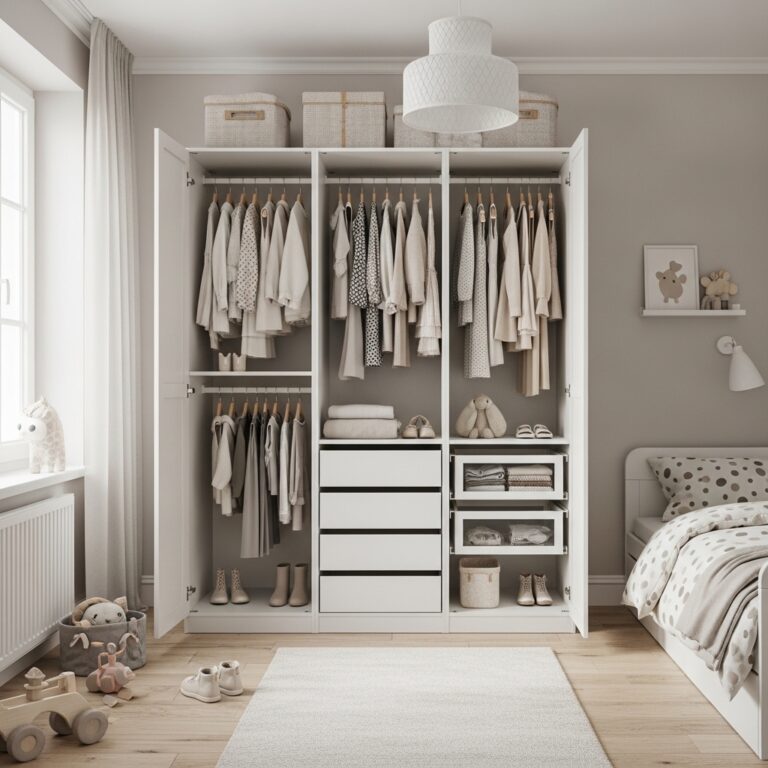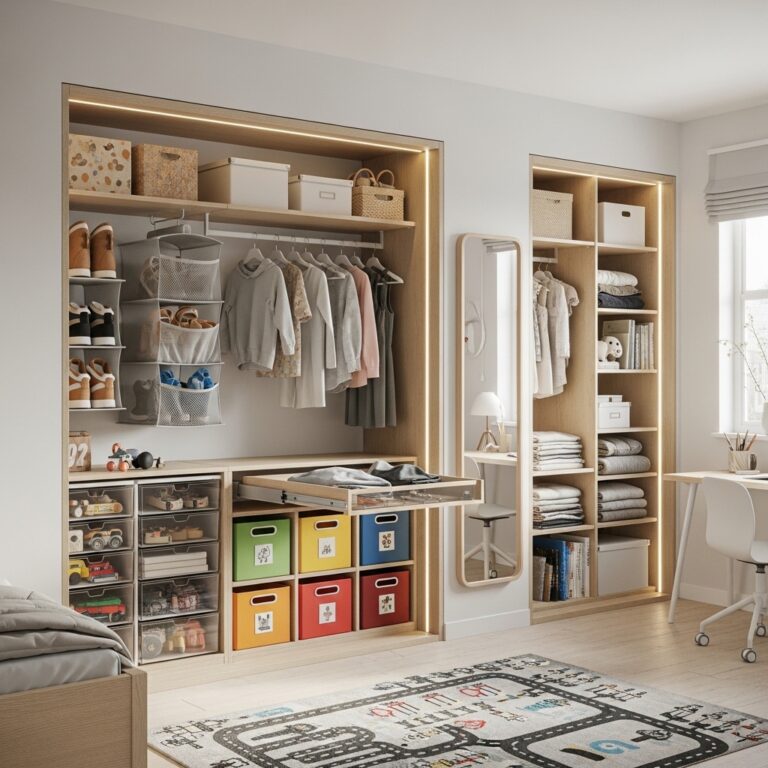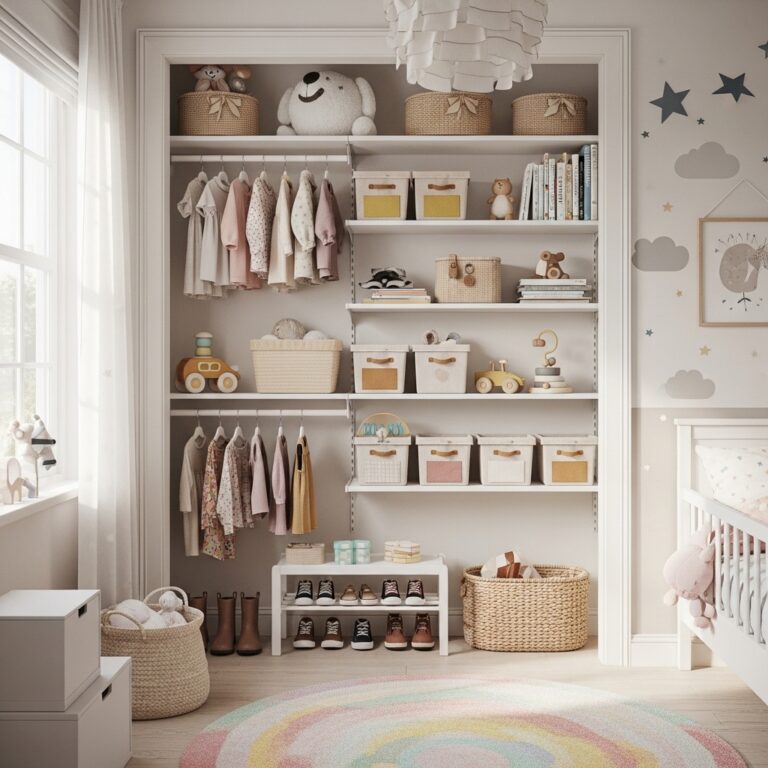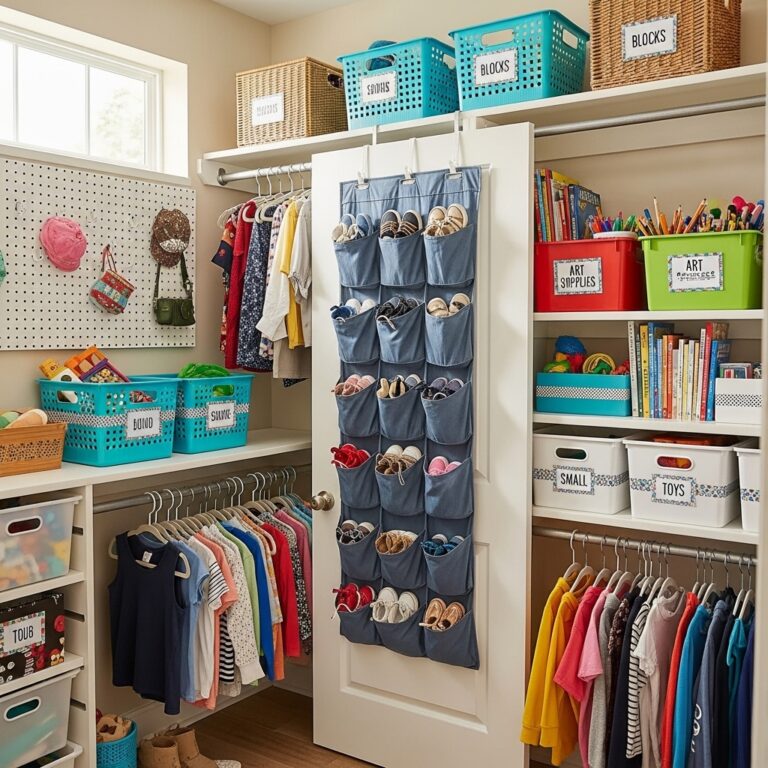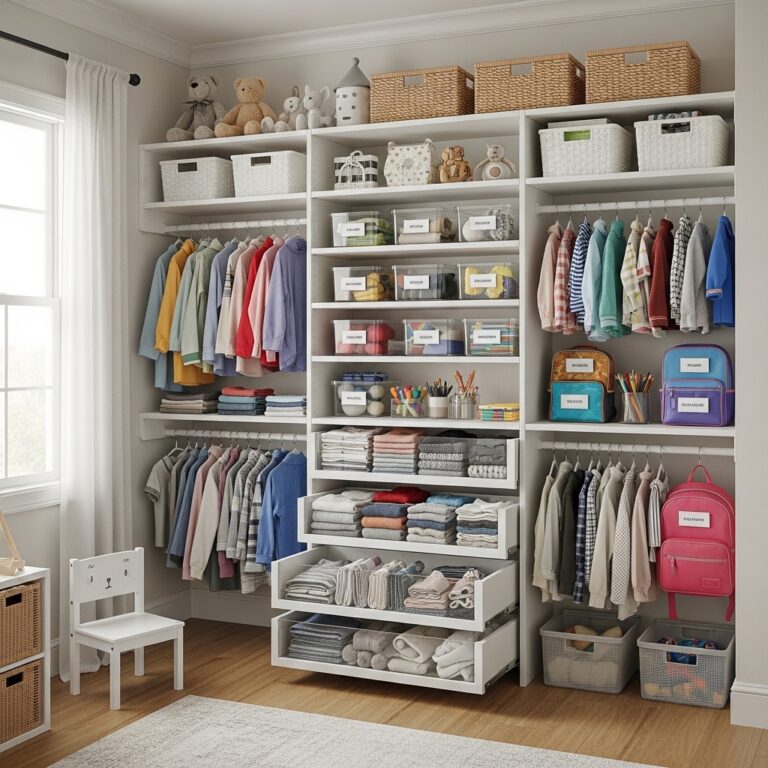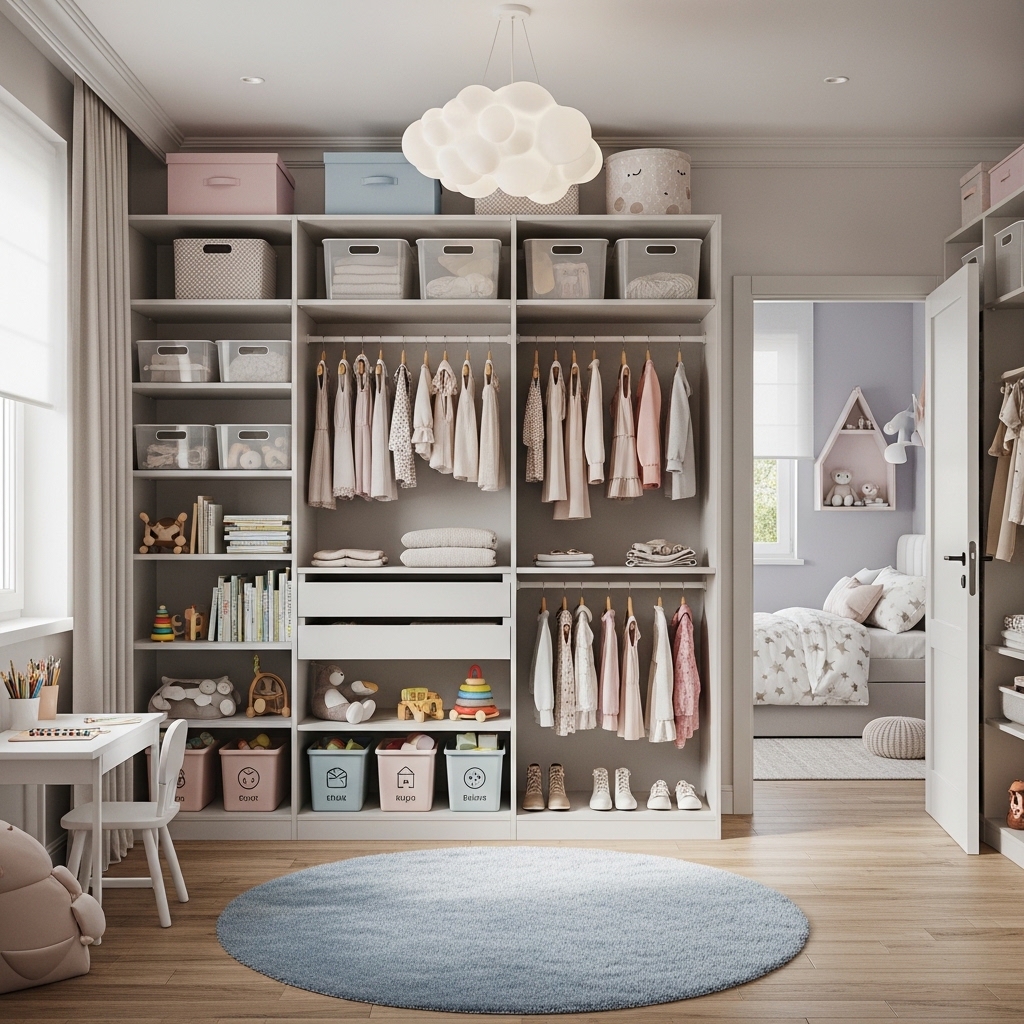
As kids grow, their closets can quickly become chaotic with clothes, shoes, and toys piling up. A thoughtful organization system can save time, reduce stress, and make mornings smooth for both parents and children.
Starting with modular shelving allows you to adjust heights as your child grows taller over time. This basic framework keeps the entire wardrobe area flexible and ready for any future changes.
Using open cubbies on the floor creates a landing spot for items they reach every single day. This setup prevents floor clutter and teaches them to put things away without needing your help.
Investing in adjustable rods means you can drop the hanging level while they are still small. As they reach school age, you simply shift the hardware up to accommodate their longer clothes.
Creating a layout that changes with them saves money and keeps the bedroom feeling perfectly clean. Your goal is to build a foundation that supports their independence through every developmental stage now.
1# Adjustable Hanging Rods
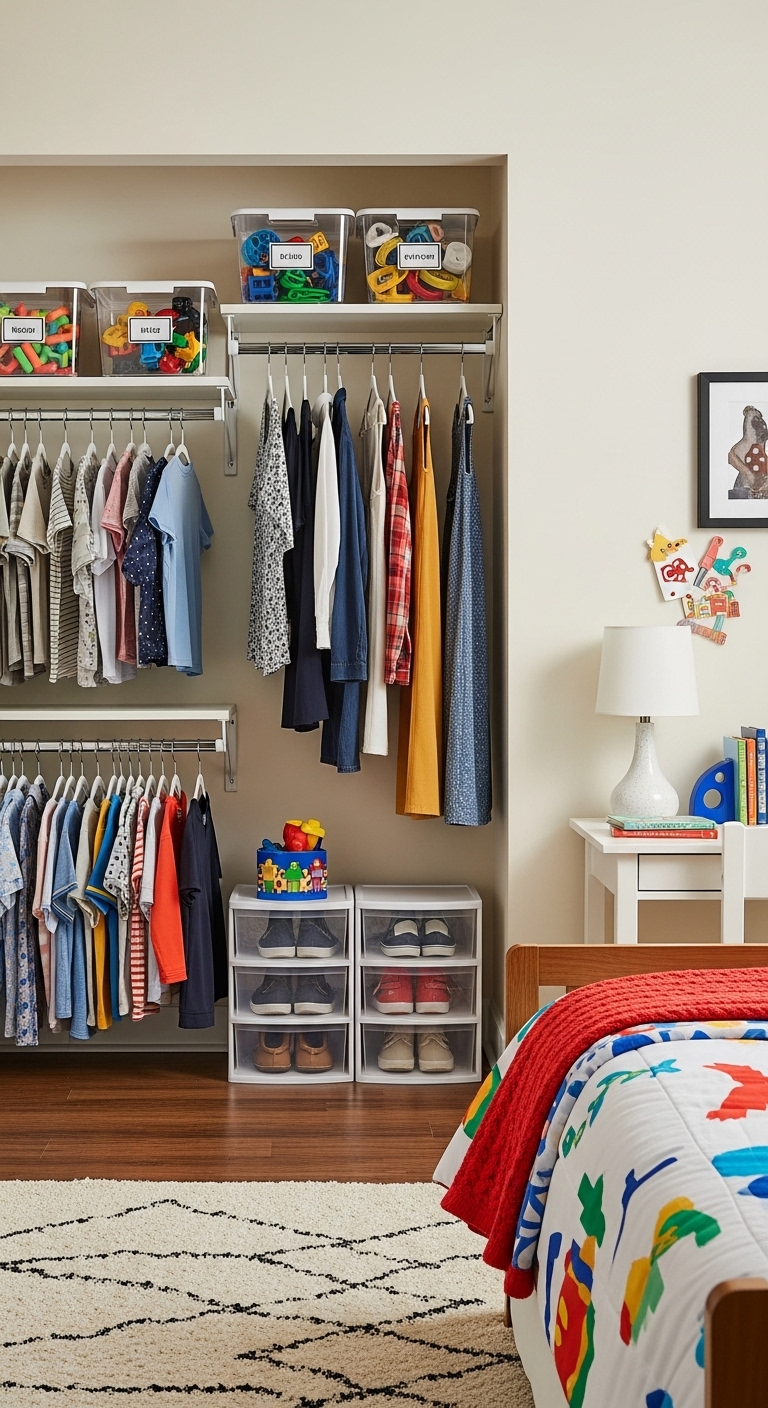
Adjustable rods provide the flexibility needed to match the changing height of your growing children. You can lower the hanging level early on to ensure they can reach their own shirts.
This simple hardware change transforms a standard closet into a highly accessible and usable space. It prevents the frustration of clothes being hung too high for little hands to reach.
Moving the rod upward as they grow ensures that the system stays relevant for years. You save money by avoiding the need for expensive new furniture or major closet renovations.
A professional and adaptable setup supports your family’s daily routine with ease and total clarity. Investing in this feature is a smart way to manage your storage for the future.
2# Bins for Seasonal Clothing
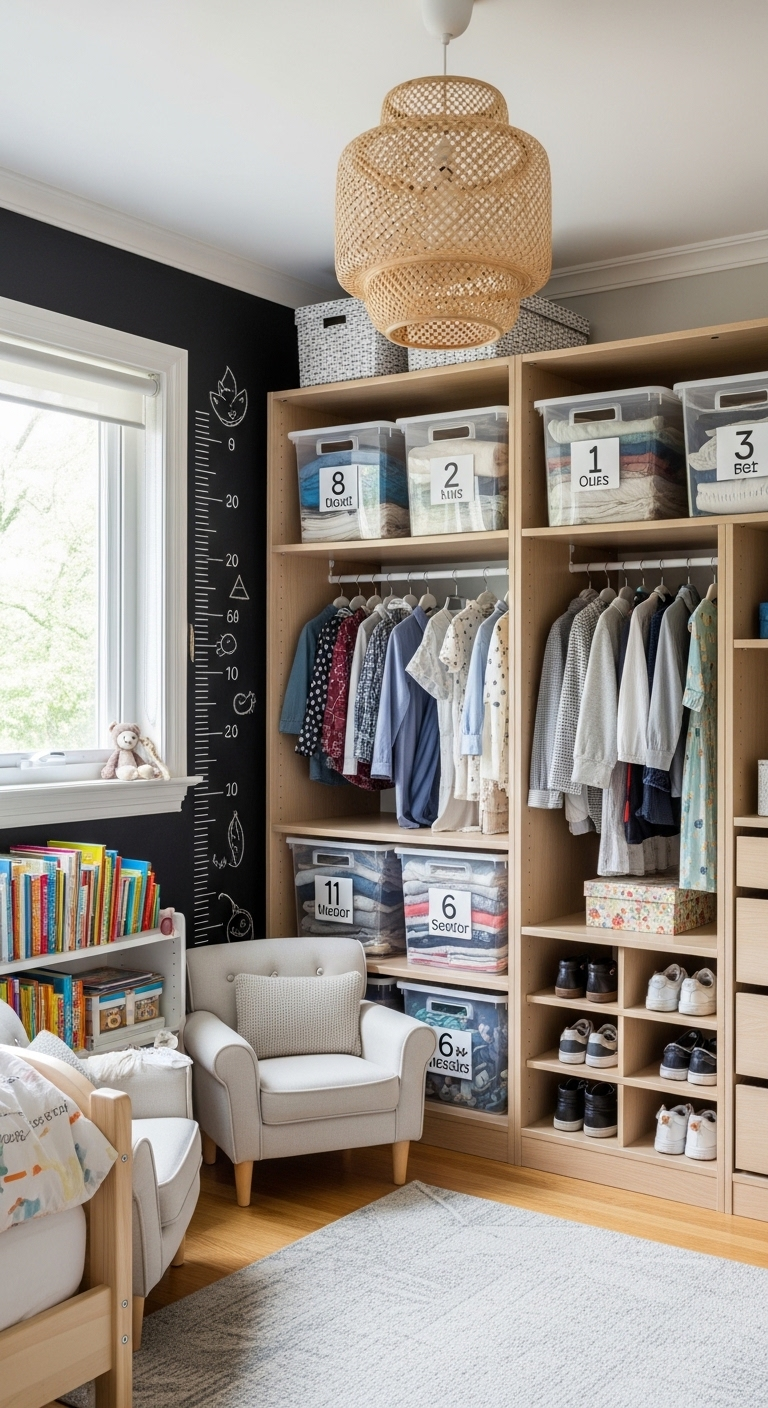
Storing seasonal clothing in clearly labeled bins keeps your primary closet feeling open and tidy. You can move winter gear away during the summer to maintain a lean, accessible wardrobe.
This method ensures that your kids only see the clothes that fit the current weather. When the closet is not overcrowded, picking out a daily outfit becomes a quick task.
You should use transparent containers so everyone knows exactly what is tucked away inside them. Organizing this way prevents the mess of having too many items stuffed into one space.
A manageable closet is the secret to maintaining a home that feels calm and professional. Small shifts in your storage strategy make a massive difference in your daily living area.
3# Hooks for Everyday Essentials
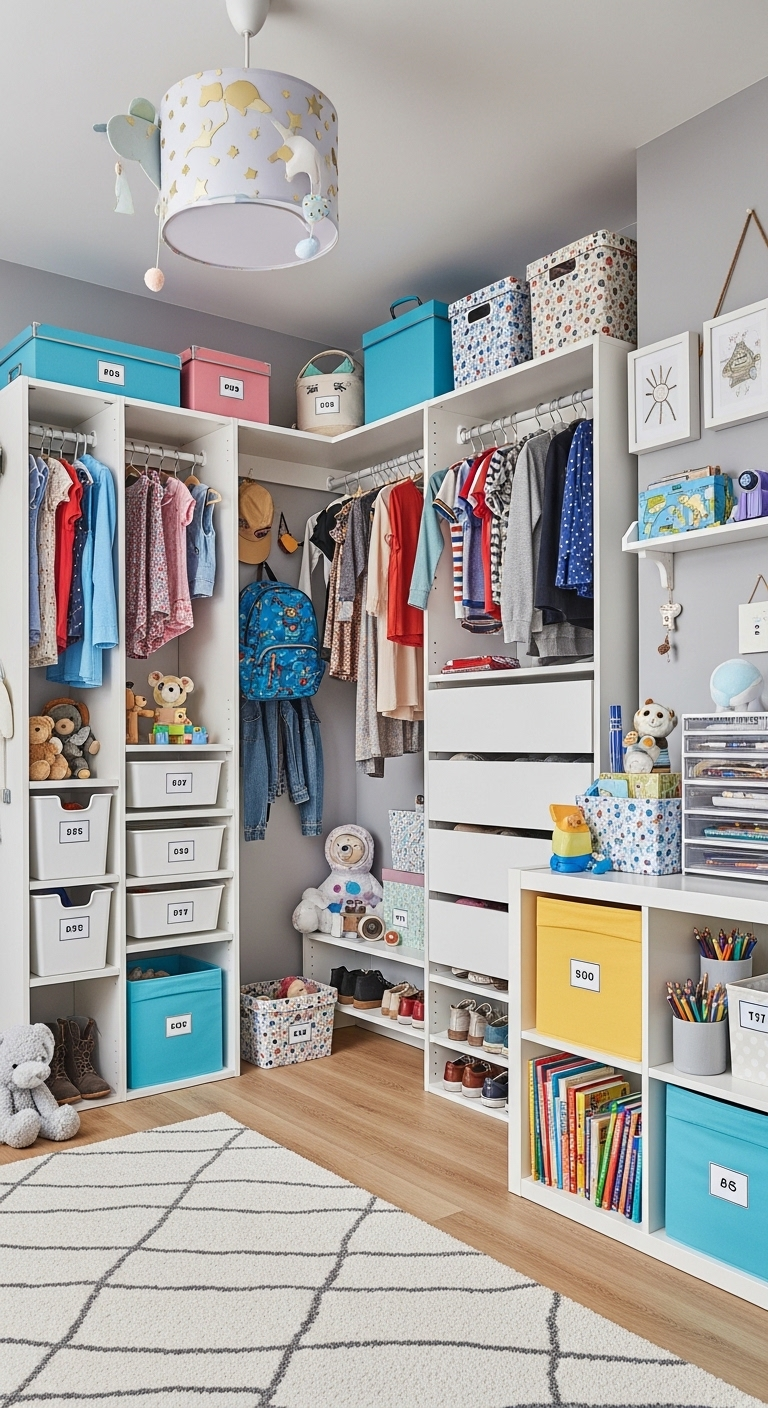
Installing hooks at a child-friendly height turns a bare wall into a productive storage zone. You can place these at eye level so your kids can easily manage their own gear.
This simple addition ensures that jackets, hats, and school bags never end up on floors. When items have a dedicated spot, your home stays much cleaner throughout the entire day.
You will find that these wall-mounted tools provide a professional look for your mudroom area. They are a smart, low-cost solution for keeping your main entryway organized and clutter-free now.
A designated hook for every item creates a clear visual guide that kids follow daily. Small, thoughtful hardware choices significantly improve the overall function of your family living space.
4# Stackable Shelves for Flexibility
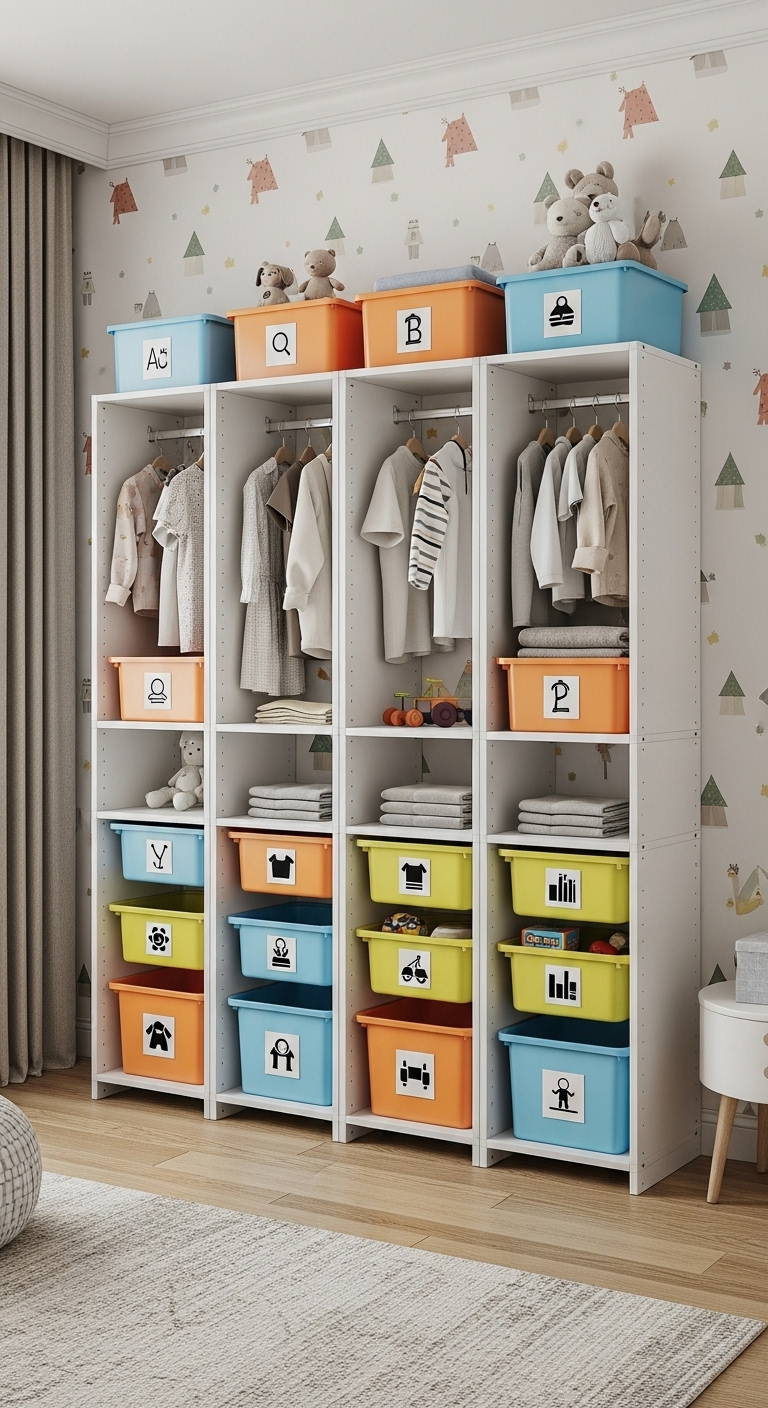
Stackable shelves provide a flexible way to manage your growing storage needs with total ease. You can add or remove levels as your children grow to keep the space relevant.
This modular design works perfectly for folded clothing, shoes, or even various small toy collections. The ability to customize your layout ensures the closet stays functional for many years today.
You will find that these units maximize your available vertical space without requiring any installation. They offer a professional look while staying within your budget for home organization projects now.
Focus on aligning the shelves carefully to keep your closet feeling intentional and well balanced. A flexible setup like this is the secret to a wardrobe that evolves with you.
5# Drawer Dividers for Small Items
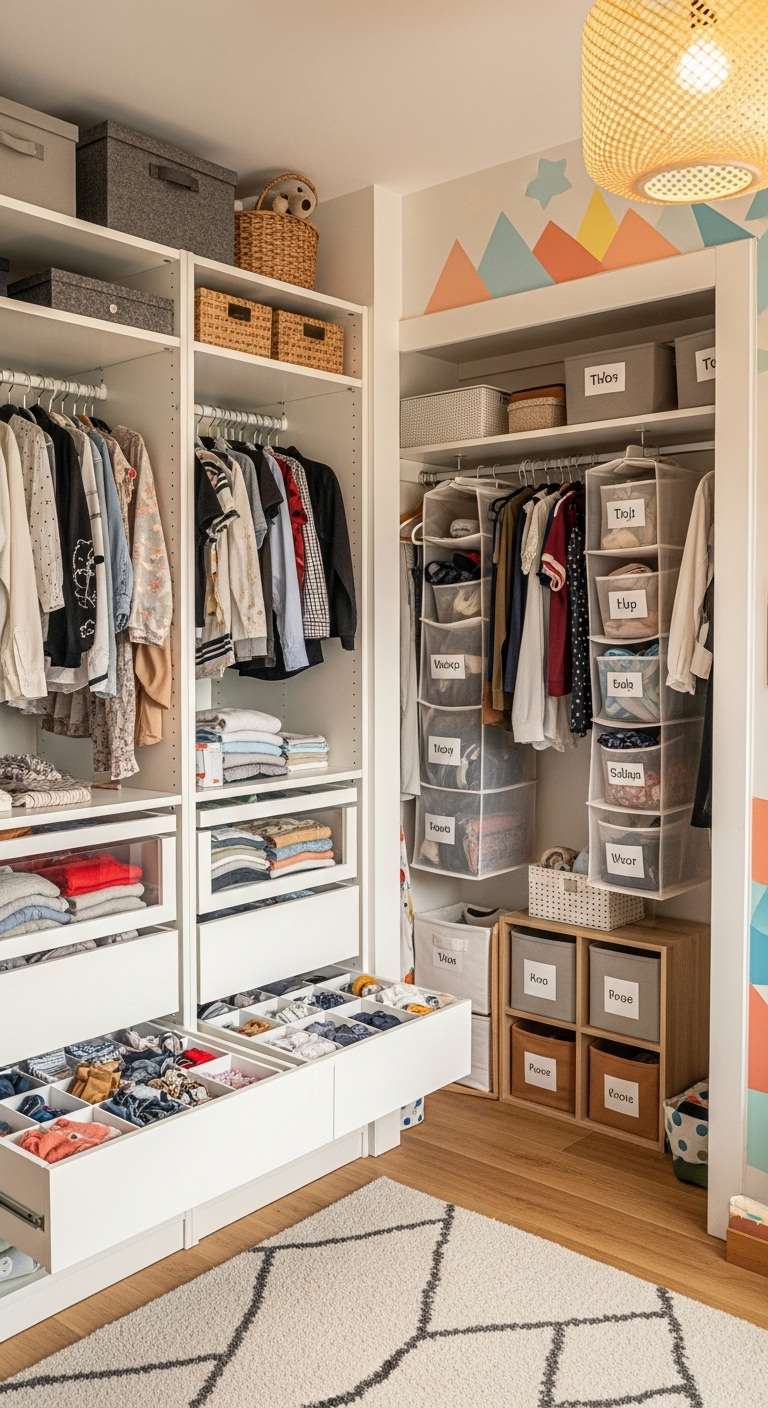
Drawer dividers turn a messy collection of small items into a perfectly organized, professional system. You can place these tools in any standard drawer to create dedicated zones for everything.
This setup prevents your socks and underwear from getting lost in the back of drawers. When every single item has a defined place, your closet feels balanced and highly functional.
You will find that organizing these small essentials eliminates the daily scramble to find pairs. A clear, structured drawer is the secret to a fast and efficient morning routine today.
Focus on grouping similar items together so that the entire family knows where everything lives. These simple, affordable dividers offer a massive improvement in your home’s overall daily flow now.
6# Label Everything Clearly
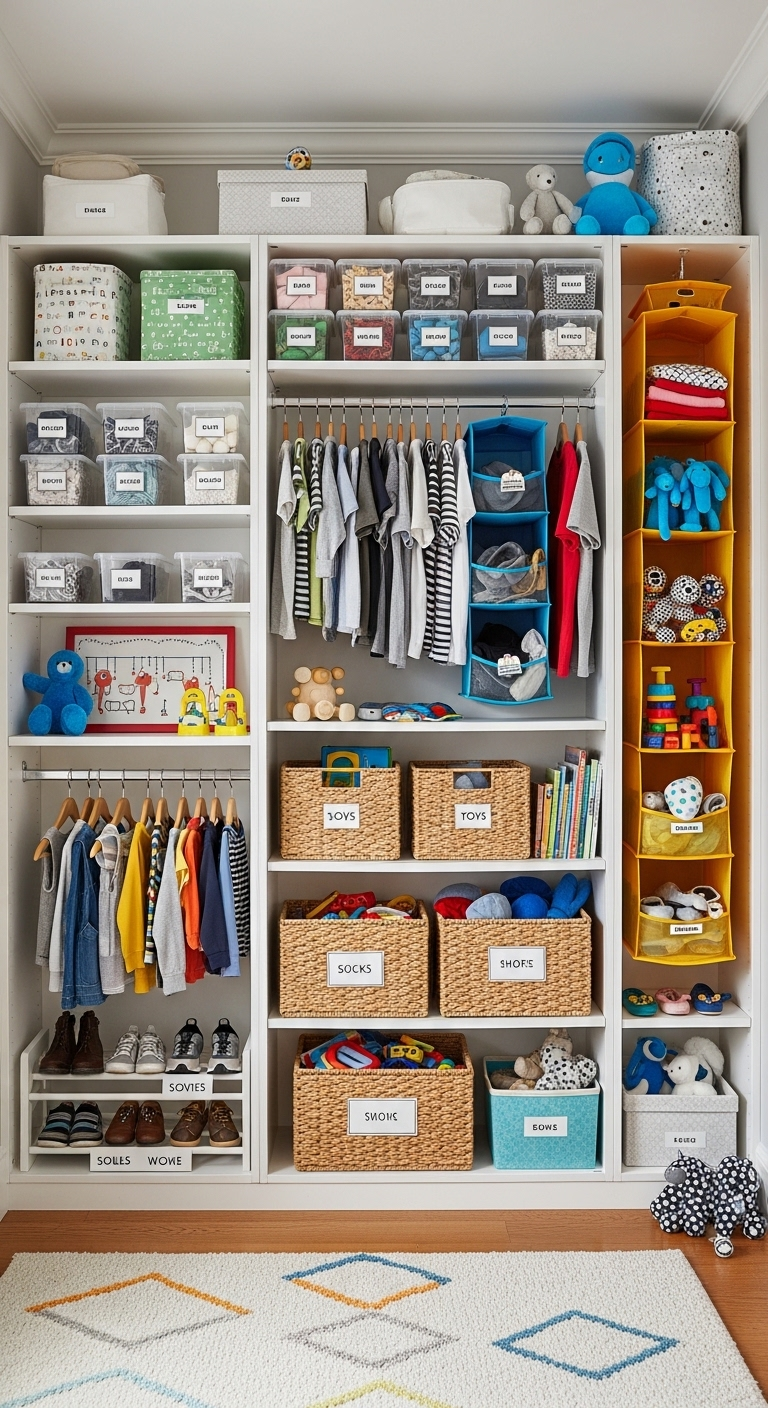
Labels provide the perfect visual guide to show your children exactly where every item belongs. You can use simple picture icons for younger kids who are still learning to read.
As they grow older, you can switch to word labels to build their literacy skills. This transition ensures that your system stays useful and effective through every developmental stage today.
A labeled bin system turns the task of putting clothes away into a clear game. You eliminate any confusion about where items go, which helps keep your closet perfectly tidy.
This low-cost strategy has a massive impact on how well your home functions every day. You are creating an environment where everything has a home and nothing gets lost now.
7# Rotating Outfit System
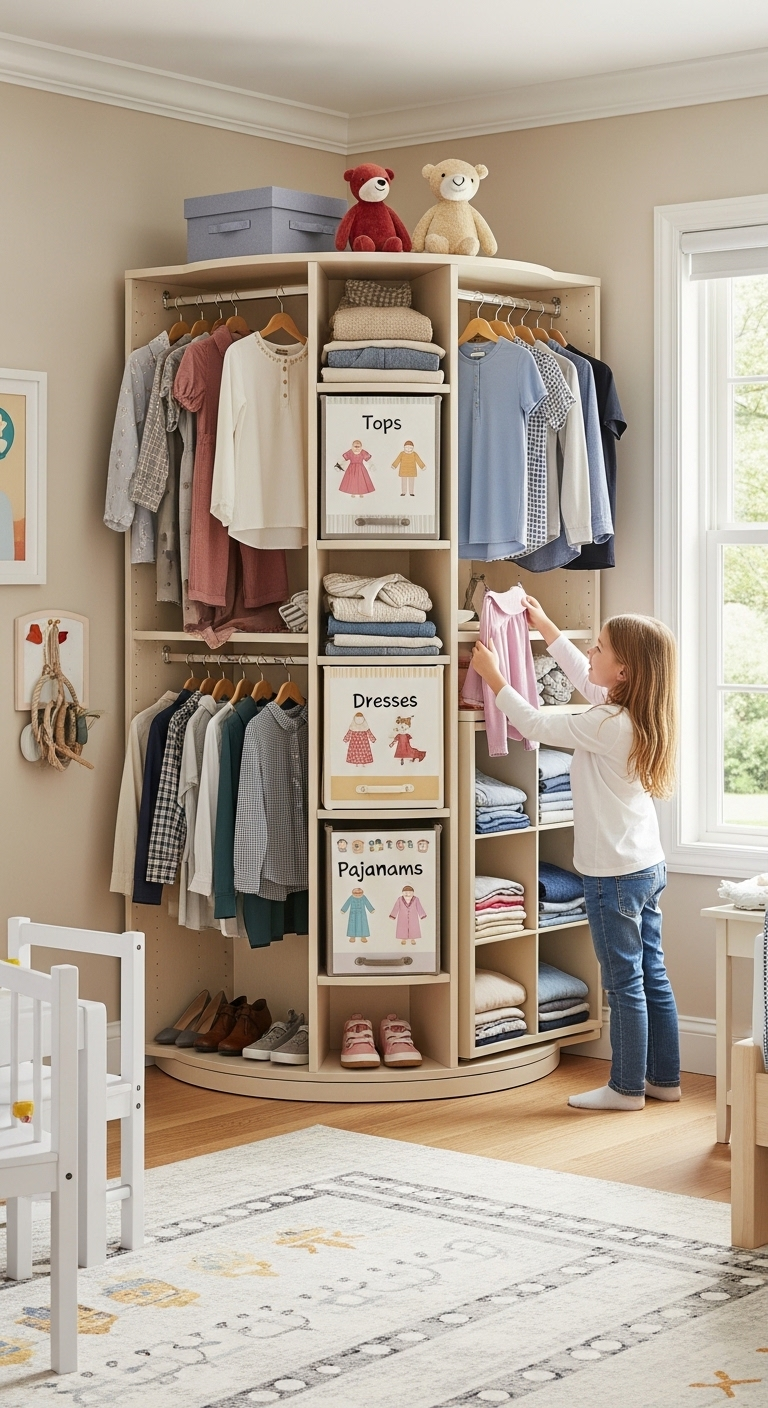
Planning out a full week of outfits ahead of time transforms chaotic mornings into calm, efficient starts for everyone. By using dedicated bins or a sectioned rod, you eliminate the daily scramble for matching socks or clean shirts.
This structured preparation creates a predictable rhythm that allows you to focus on breakfast and coffee instead of closet crises. Your children will quickly learn to navigate their own wardrobe independently, which saves you immense amounts of energy.
When clothing is pre-selected and ready to grab, you drastically reduce decision fatigue for both parents and kids throughout the week. This shift encourages responsibility while ensuring that every outfit is ready and waiting before the sun even rises.
Implementing this system works seamlessly for both school uniforms and weekend casual wear, keeping your home organized and stress-free. Consistency is the key to making this method stick, so start your first batch of bins this Sunday evening.
8# Open Baskets for Toys
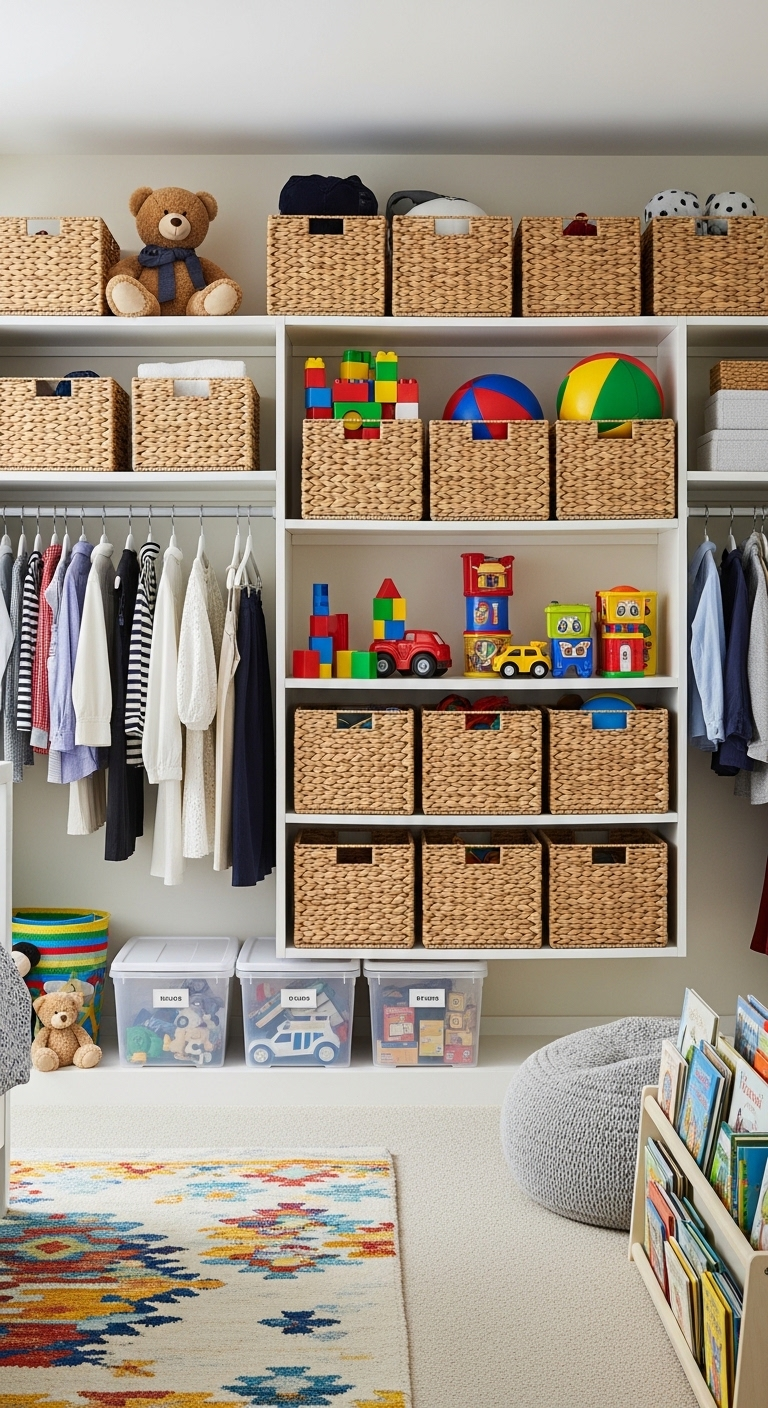
Keeping toys in open baskets at lower levels makes playtime much more enjoyable for little ones. They can easily access their favorite items and learn to put them away when they finish.
This simple storage habit keeps the closet functional and visually organized throughout the day. It creates a stress-free environment where everything has a designated home and stays tidy.
Teaching children to pick up after themselves becomes a fun activity rather than a chore. By having accessible bins, they gain independence while keeping clutter off your bedroom floors.
You will notice a massive difference in how quickly your space stays neat and clean. Consistent habits like these turn organizing into a manageable task for the whole family.
9# Shoe Racks at Floor Level
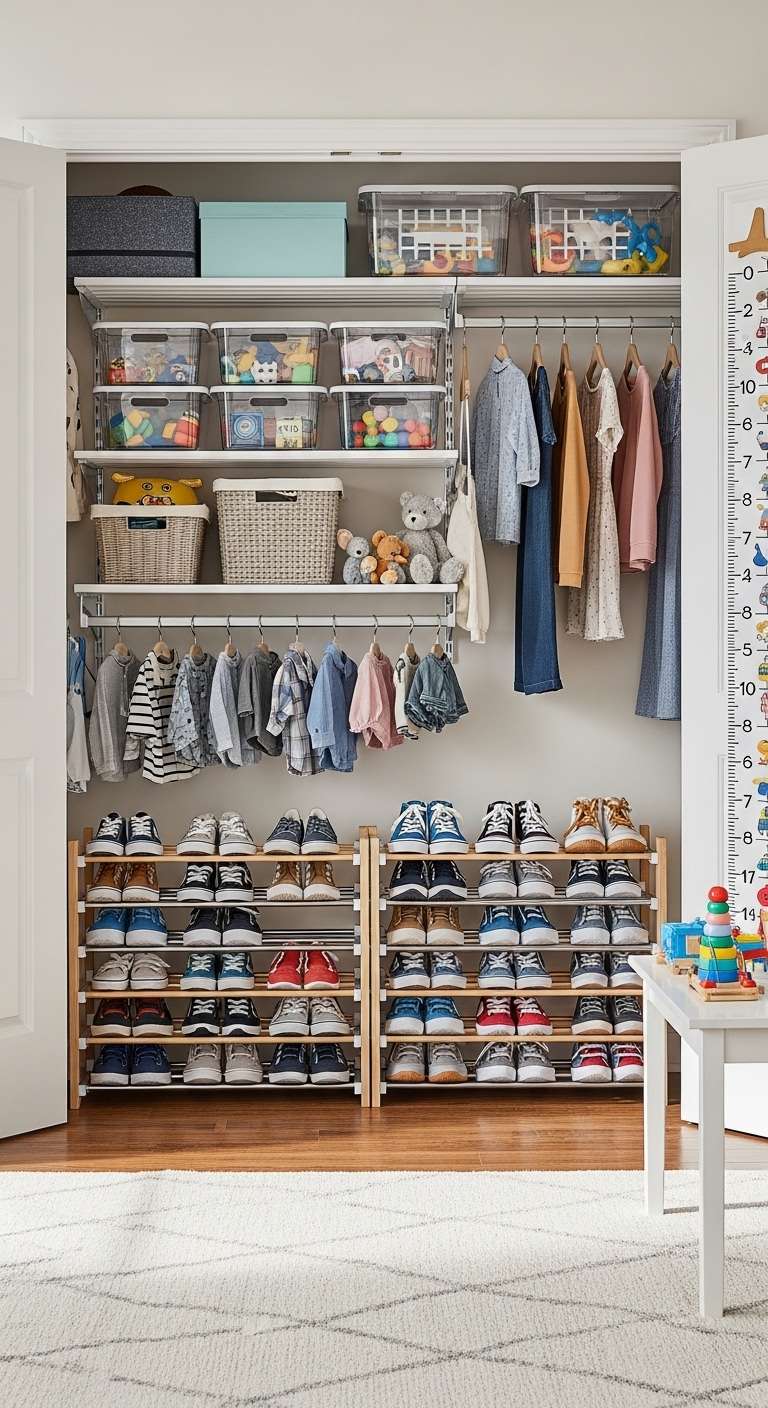
Installing dedicated shoe racks or cubbies at the bottom of the closet stops clutter immediately. These structures prevent pairs from piling up and make finding specific shoes quite simple.
When every pair has a clear home, you stop wasting precious time searching for them. Your floor remains completely clear, which makes vacuuming or sweeping the area much easier.
These storage pieces promote independent dressing because children can reach their own footwear easily. They will start picking out their shoes without needing your constant help every morning.
Keeping shoes off the ground protects your flooring while maintaining an organized closet space. This small addition creates a more streamlined routine for your busy family every day.
10# Multi-Purpose Storage Boxes
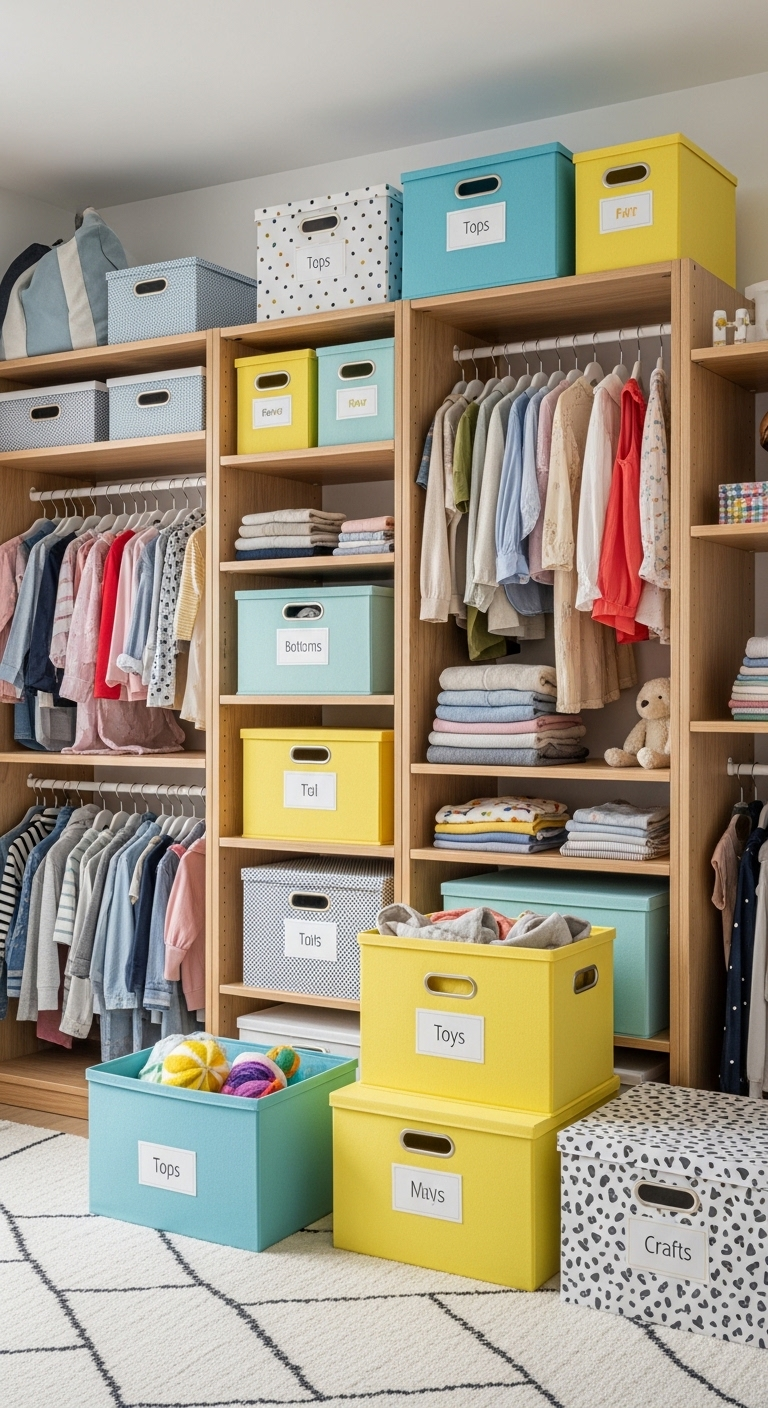
Using boxes for extra items like hats and gloves keeps your closet space organized. They can be neatly stacked on higher shelves or tucked away in hidden corners.
This approach adds necessary flexibility to your storage while significantly reducing overall room clutter. You can rotate these containers whenever the weather changes to match your current needs.
Children maintain full access to their essential gear without disrupting the main closet area. They learn where specific items live, which saves you from searching through messy drawers.
Choosing clear or labeled boxes makes identifying the contents a quick and simple task. You gain a sense of control over those small accessories that usually cause chaos.
11# Hanging Accessory Organizers
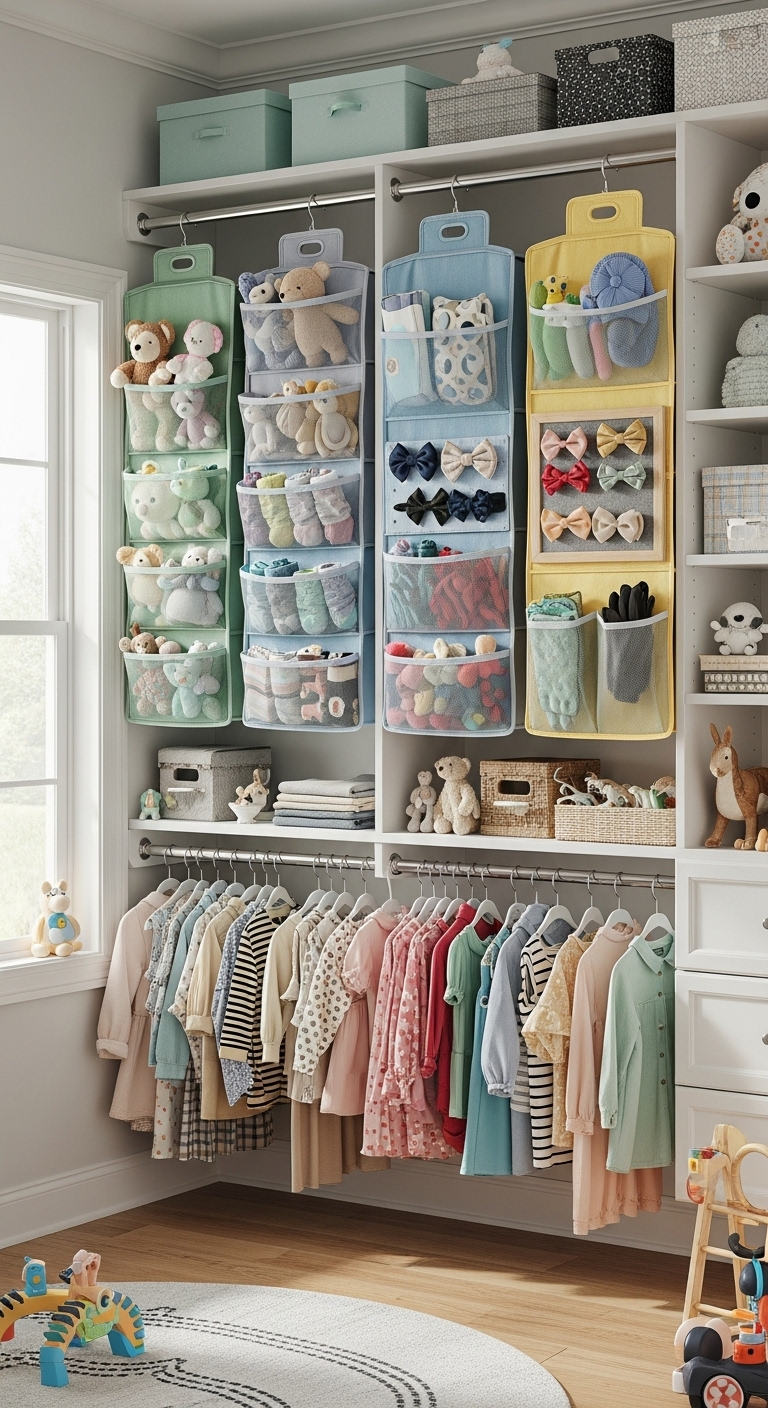
Small hanging organizers are perfect for keeping belts, scarves, or headbands tidy while making the most of your available closet space. By utilizing vertical areas, these tools ensure that every accessory stays visible and easy to grab during your busy morning routines.
These organizers are incredibly practical for anyone looking to declutter their living space without spending a significant amount of money. They offer a simple, cost-effective solution that instantly transforms a chaotic drawer or pile into a well-managed display of items.
Children benefit immensely from having an organized system that puts their favorite daily accessories right at their eye level. When they can easily see and reach their own headbands or belts, they develop better habits and learn to manage their things.
Incorporating these hanging solutions creates a stress-free environment that helps everyone start their day feeling calm and prepared. You will notice an immediate difference in the flow of your mornings when accessories are neatly stored in one accessible spot.
12# Minimalist Approach
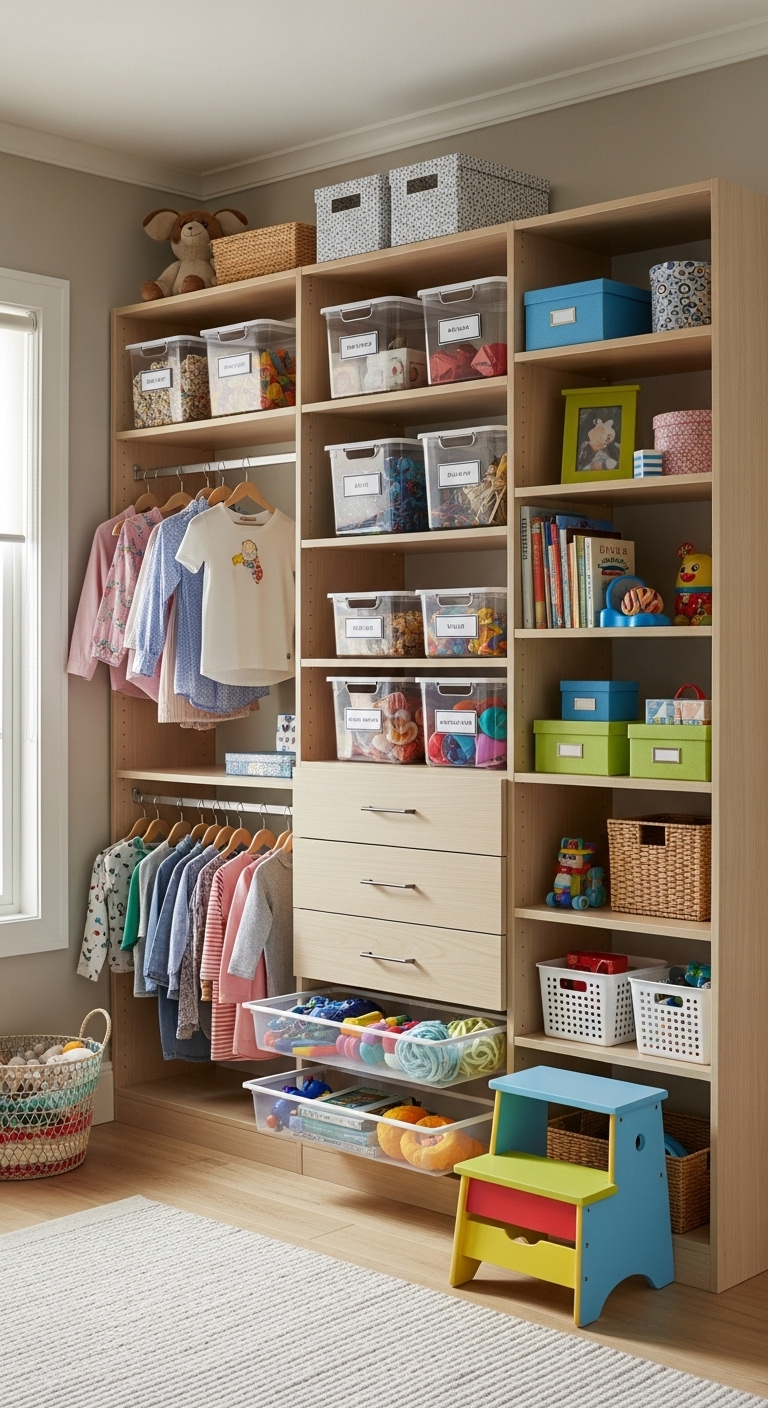
Keep only the items your child uses on a regular basis inside the main closet to ensure the space remains highly functional. Rotating your seasonal gear into long-term storage keeps the current wardrobe lean and prevents that overwhelming feeling of excess.
This approach significantly reduces visual clutter, which helps you locate specific outfits much faster during those busy weekday mornings. A simplified collection means you spend less time sorting through clothes that simply do not fit the current weather needs.
Applying a less-is-more philosophy is particularly effective for growing kids who seem to change sizes every single season. By focusing on a smaller, curated selection of quality pieces, you avoid the common frustration of a packed and messy wardrobe.
Teaching your children to manage a smaller number of items makes it easier for them to learn how to keep things. They will quickly grasp the value of keeping only what they love and need, leading to a much tidier bedroom.
13# Personalized Sections
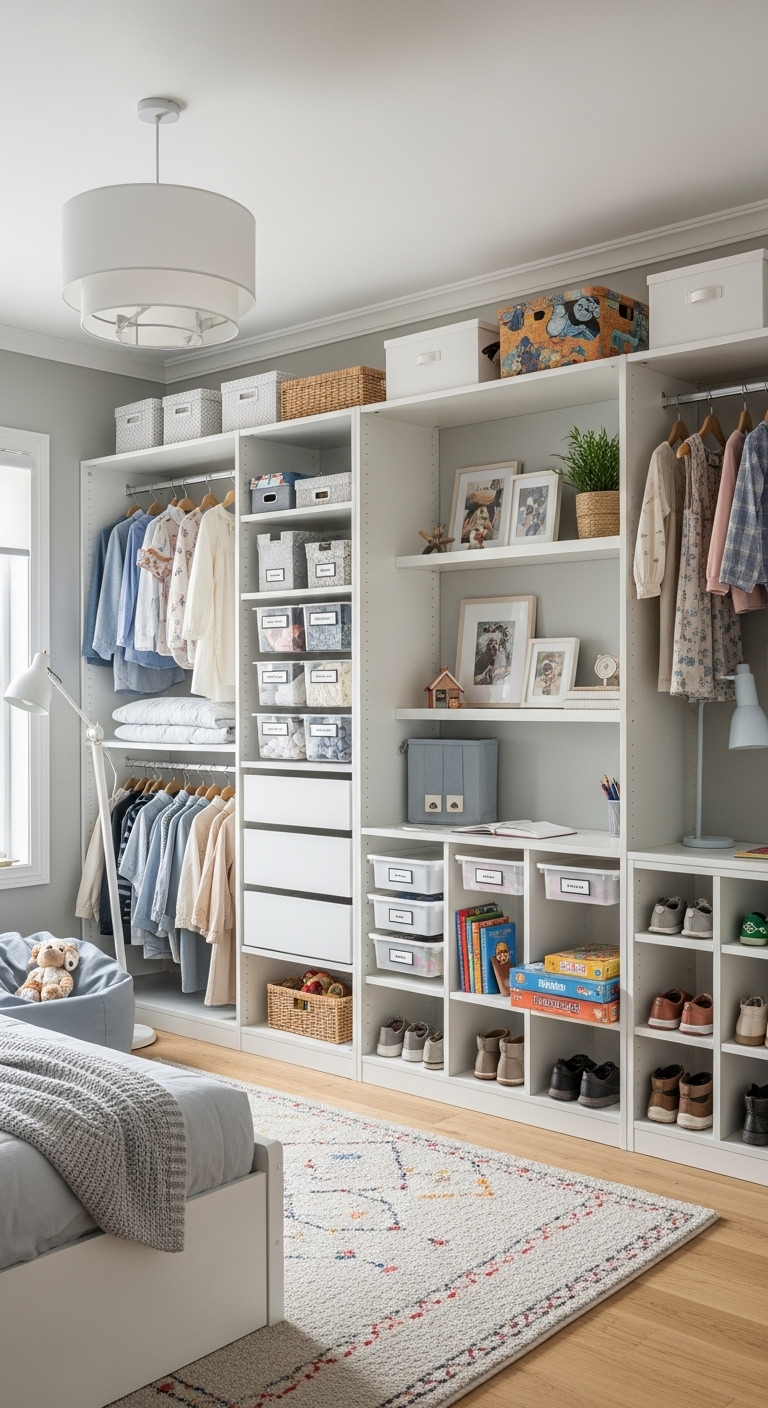
Designating specific sections for each child within a shared closet is a smart way to help them navigate their space. Clear boundaries ensure that everyone knows exactly where their belongings go, which significantly reduces conflicts over misplaced clothing or accessories.
When children recognize their own designated area, they are much more likely to take pride in keeping it organized daily. This simple physical division creates a sense of order that makes it easier for them to manage their own items.
Personalized zones are an excellent tool for teaching young children responsibility as they learn to care for their clothes. When they know a space belongs to them, they naturally become more invested in maintaining its neat and tidy state.
Granting each child ownership over their section empowers them to participate in the routine process of cleaning up after themselves. This level of autonomy builds good habits early, making the entire household routine run with much less daily friction.
Wrap-Up
Closet organization for growing kids is all about flexibility, accessibility, and simplicity. These ideas show how small, intentional changes can make a huge difference in daily routines. By creating a system that evolves with your child, you can save time, reduce stress, and foster independence—all while keeping their space functional and tidy.