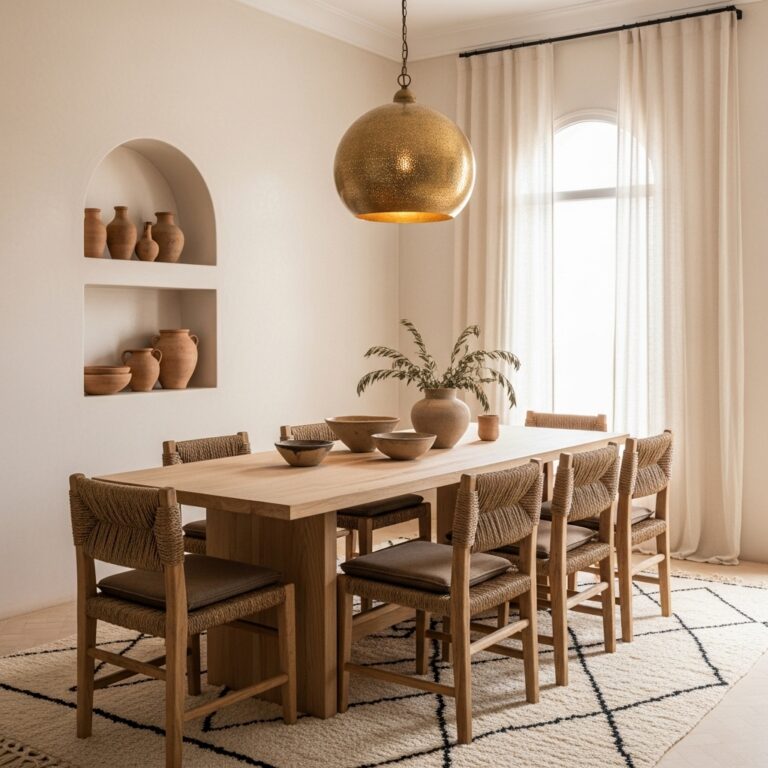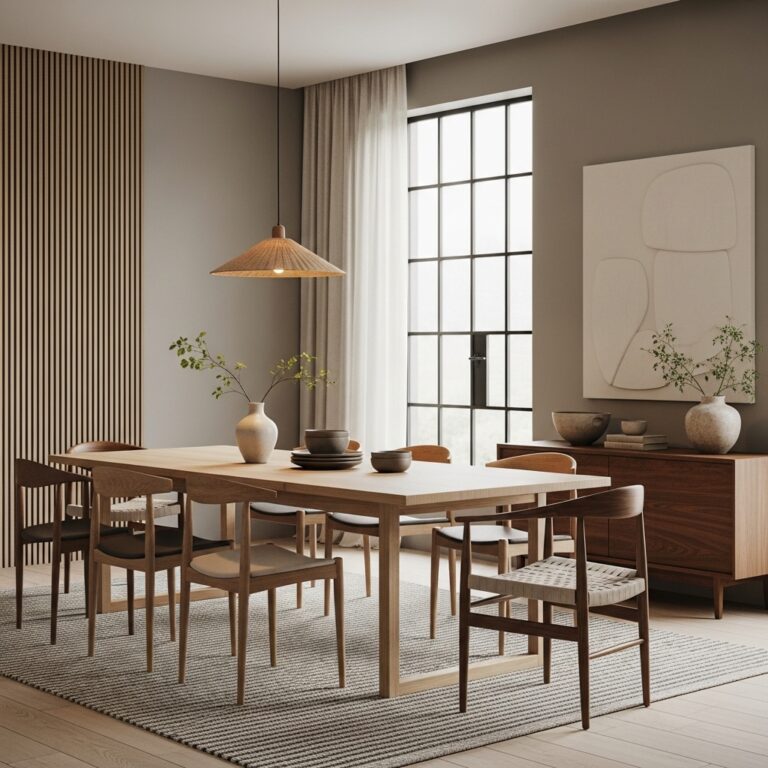
In the hustle of modern life, the Japanese design philosophy offers a serene path back to balance and intentionality.
Japanese Dining Room Design Ideas for embracing the principles of “Ma” (negative space) and the beauty of natural materials, you can transform your dining area into a tranquil sanctuary.
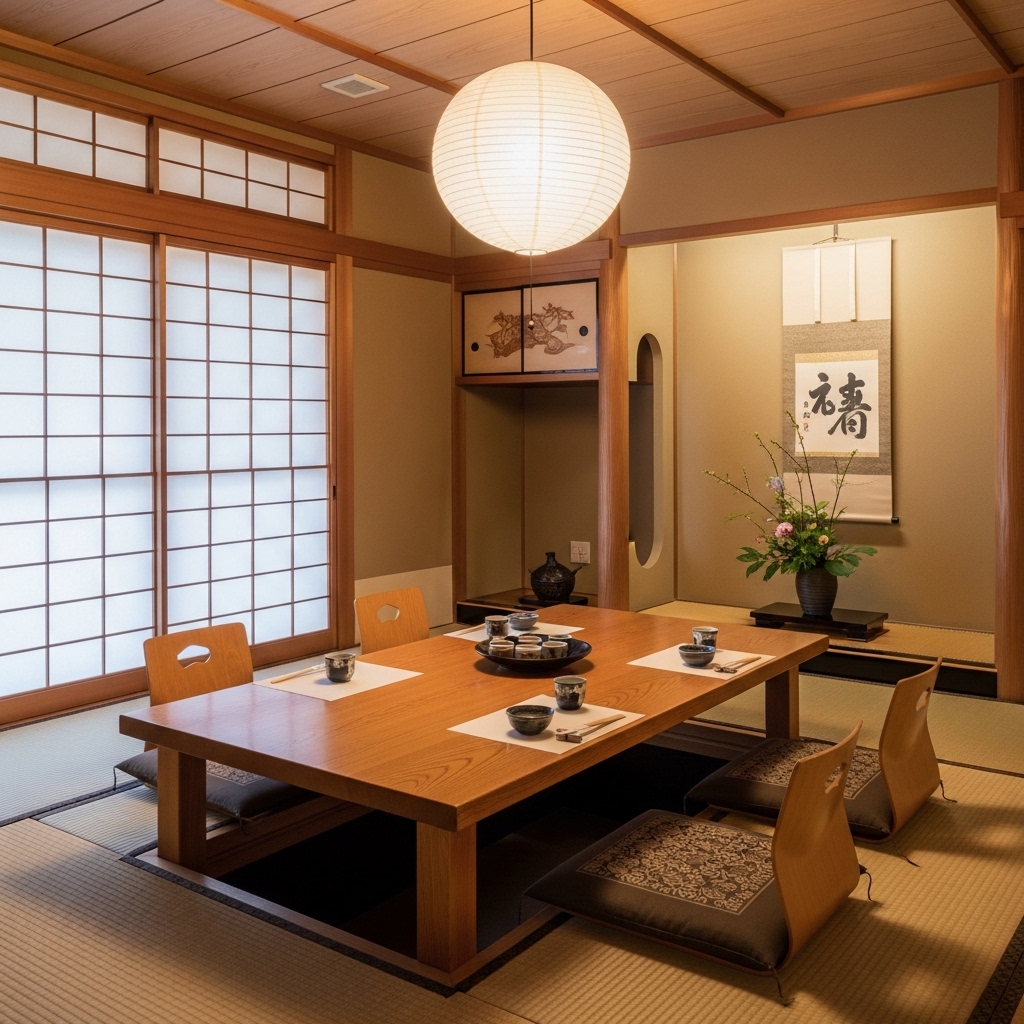
This aesthetic is more than just a trend; it is a lifestyle that celebrates the ritual of sharing a meal in a calm, uncluttered environment. Let’s explore how to blend traditional elements with contemporary comfort to create your own soulful Japanese retreat.
Zen at Home: Modern Japanese Dining Sanctuary
1#. Traditional Tatami Floor Mats
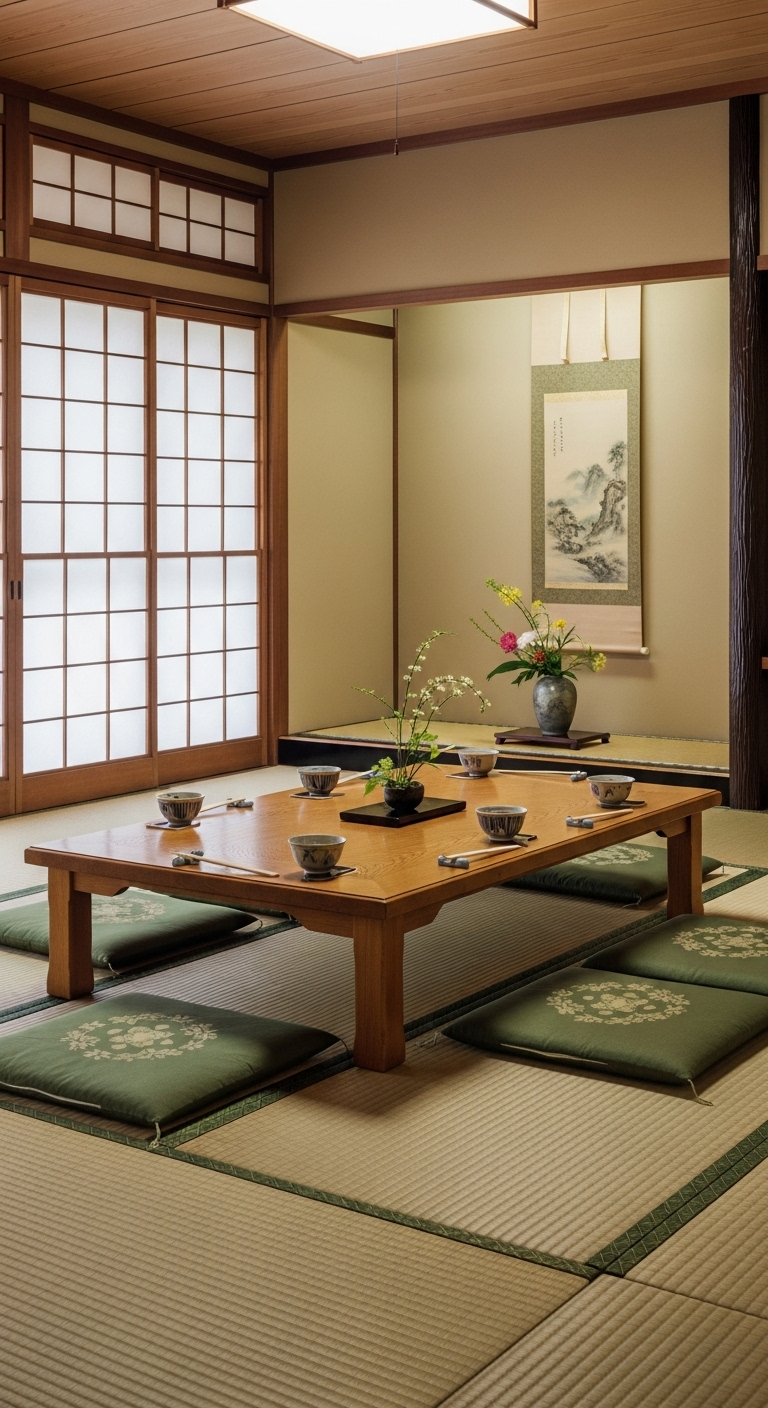
Incorporating authentic straw tatami mats provides a soft, organic foundation that instantly sets a peaceful tone for the room. These mats offer a unique scent and texture that are fundamental to classic Japanese Dining Room Design Ideas.
The natural greenish-gold hue of the straw coordinates beautifully with light wood furniture and minimalist decor. It is a sustainable flooring choice that encourages a grounded, floor-focused dining experience that is both healthy and calming.
2#. Low-Profile Chabudai Tables
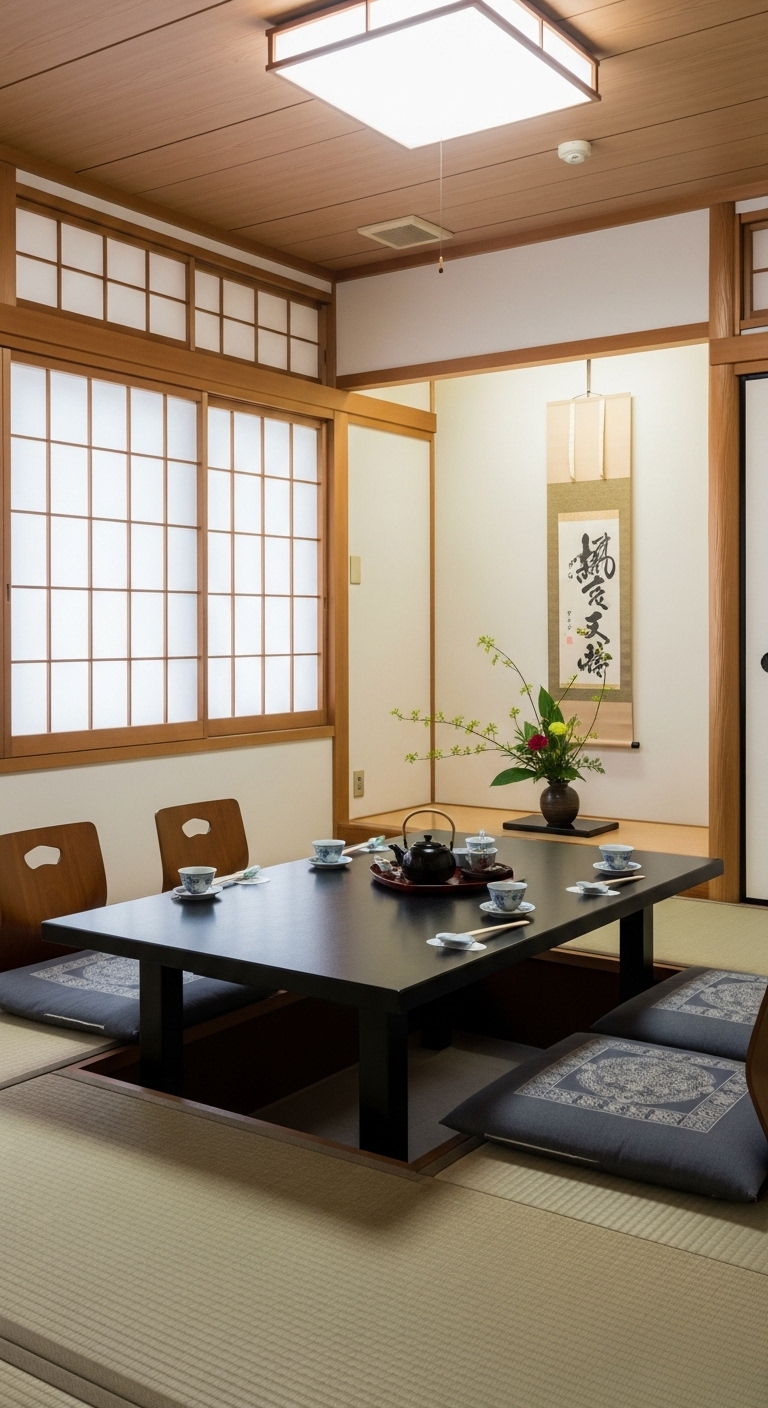
The “Chabudai” is a traditional short-legged table that invites guests to sit on the floor, fostering a sense of intimacy. This low-profile furniture piece makes the dining room feel more spacious by leaving the upper half of the room open.
Choose a table made from solid ash or cedar to emphasize the connection to nature and high-quality craftsmanship. It is a functional centerpiece that encourages a slower, more mindful pace during your family meals and tea times.
3#. Woven Zabuton Seating Cushions
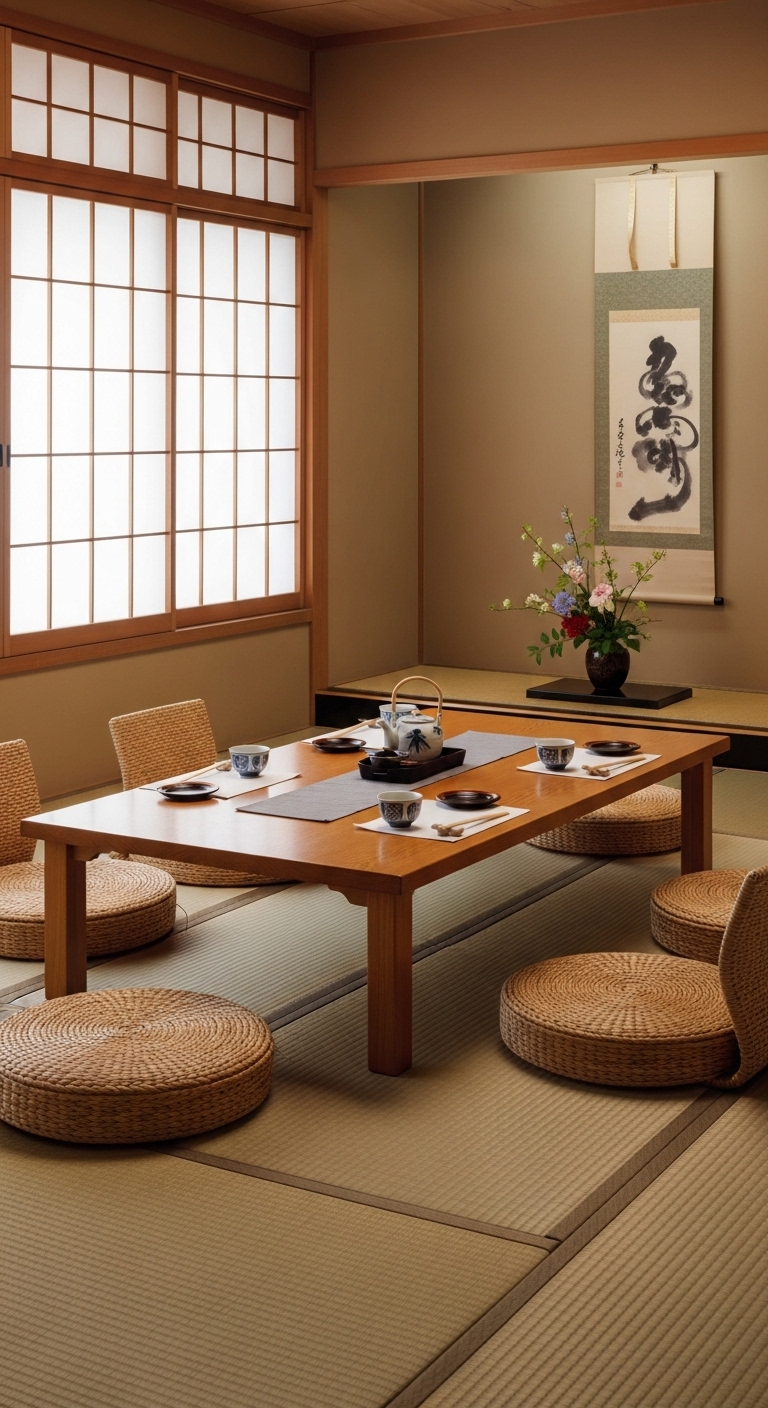
Replace traditional chairs with “Zabuton,” which are thick, square cushions designed for comfortable floor seating around a low table. These cushions add a soft, textile layer that balances the hard surfaces of the wooden table and straw mats.
Choose covers in muted indigo, charcoal, or sand tones to maintain a sophisticated and cohesive color palette throughout. They are easy to stack and store, keeping your Japanese Dining Room Design Ideas flexible and clutter-free.
4#. Translucent Shoji Screen Dividers
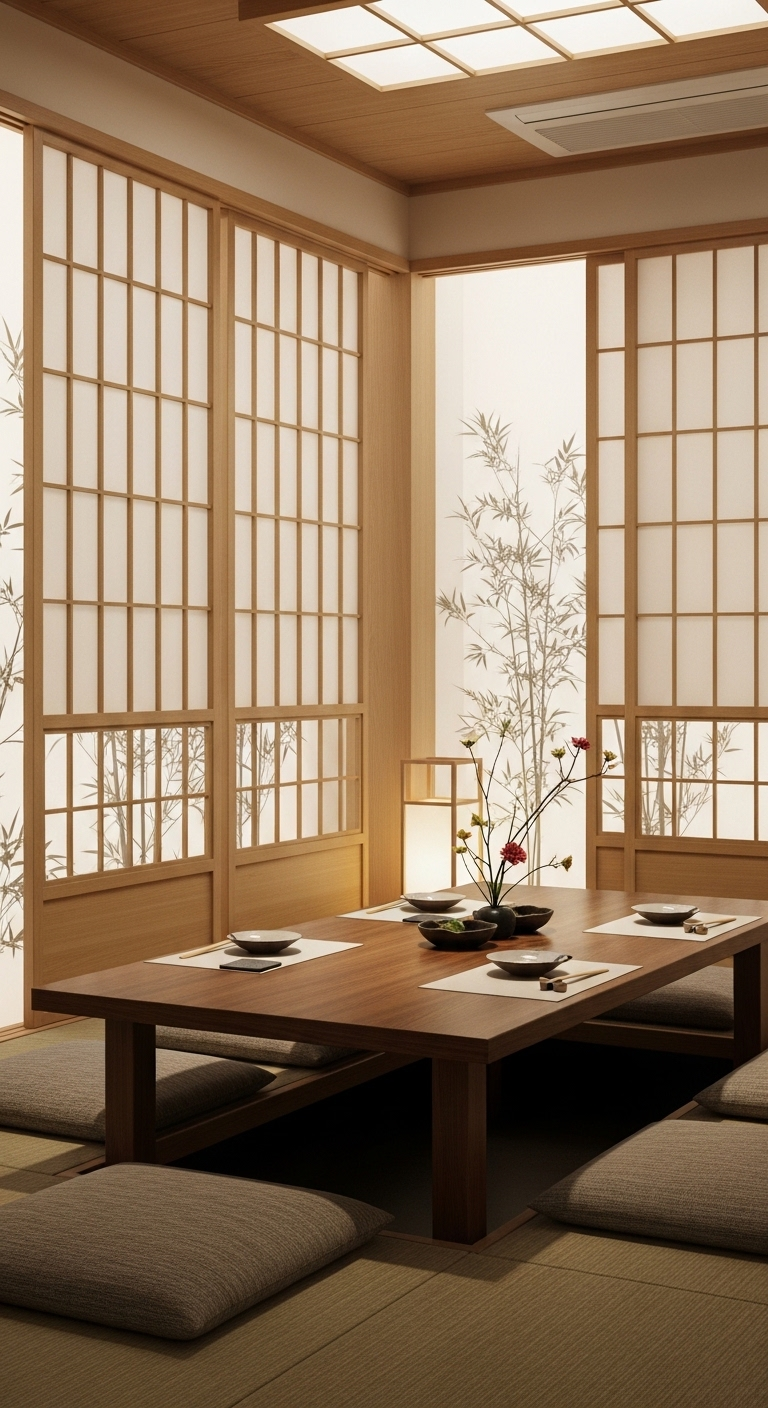
Shoji screens made of light wood frames and washi paper are perfect for creating private dining nooks without blocking light. These sliding panels provide a soft, diffused glow that makes the interior feel warm and sheltered from the outside world.
The geometric grid of the screens adds a subtle architectural pattern that feels rhythmic and incredibly organized. It is a classic design element that allows you to master the flow and privacy of an open-concept living space.
5#. Oversized Washi Paper Pendants
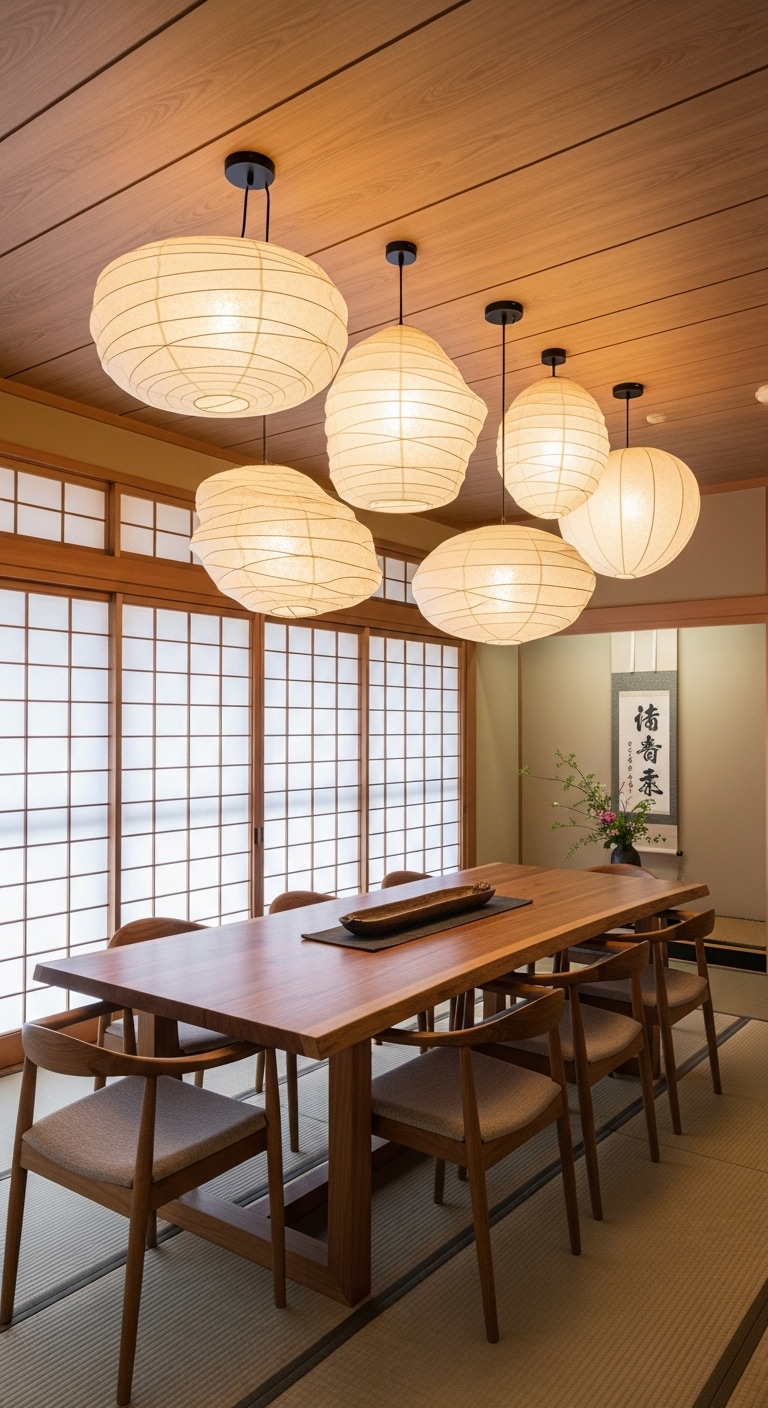
Hang a large, spherical paper lantern over your dining table to act as a soft, glowing “moon” for your evening meals. The lightweight nature of the washi paper provides a delicate, organic texture that feels much softer than glass or metal.
Proper lighting is the secret to achieving the “Zen” atmosphere that defines the best Japanese Dining Room Design Ideas. This fixture provides enough light for dining while maintaining a moody, relaxing ambiance for your guests.
6#. Minimalist Tokonoma Display Nooks
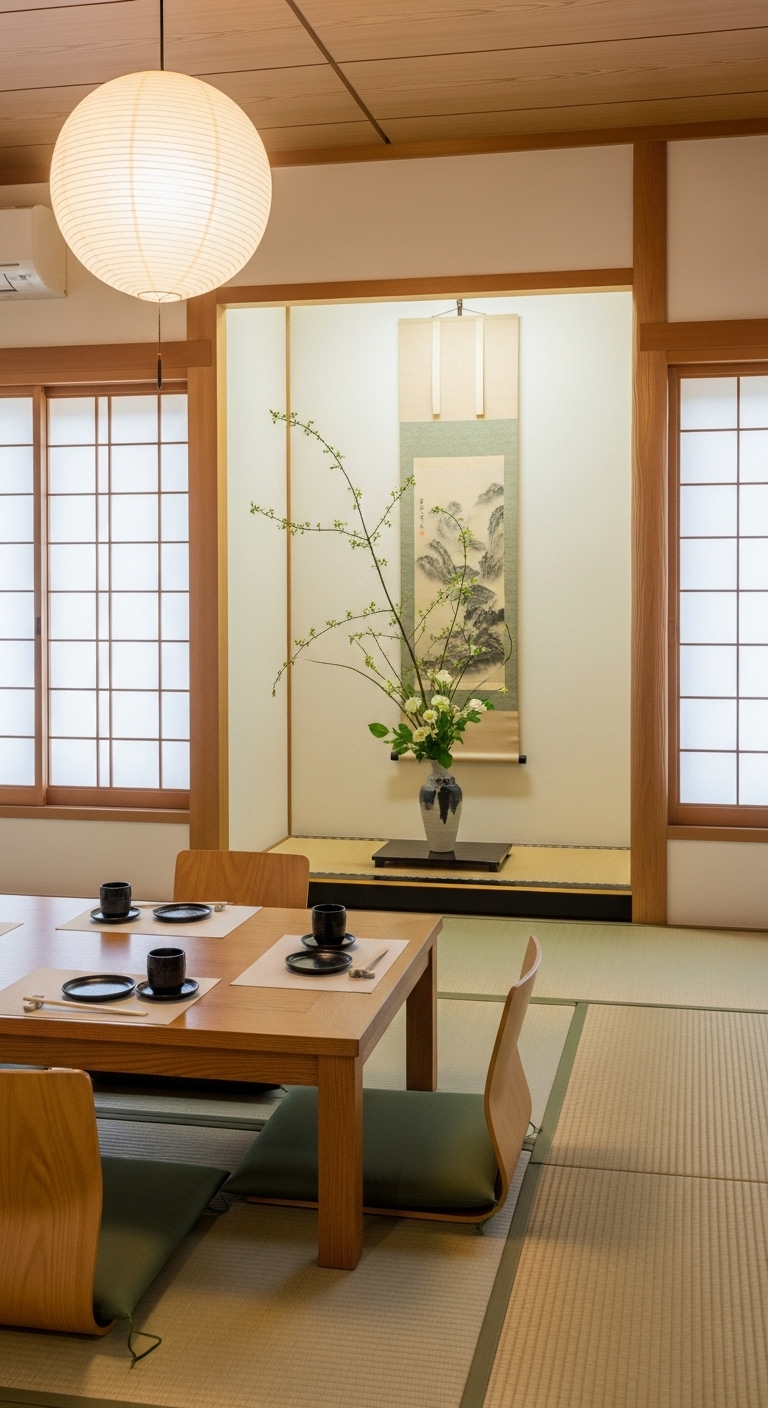
A “Tokonoma” is a recessed alcove used to display a single piece of art, a scroll, or a seasonal flower arrangement. This dedicated space for beauty encourages guests to pause and appreciate the present moment before they begin their meal.
Keeping the display minimalist ensures that the room remains focused and free from unnecessary visual noise or clutter. It is a soulful architectural feature that adds a layer of intellectual and artistic depth to your home.
7#. Natural Bamboo Wall Paneling
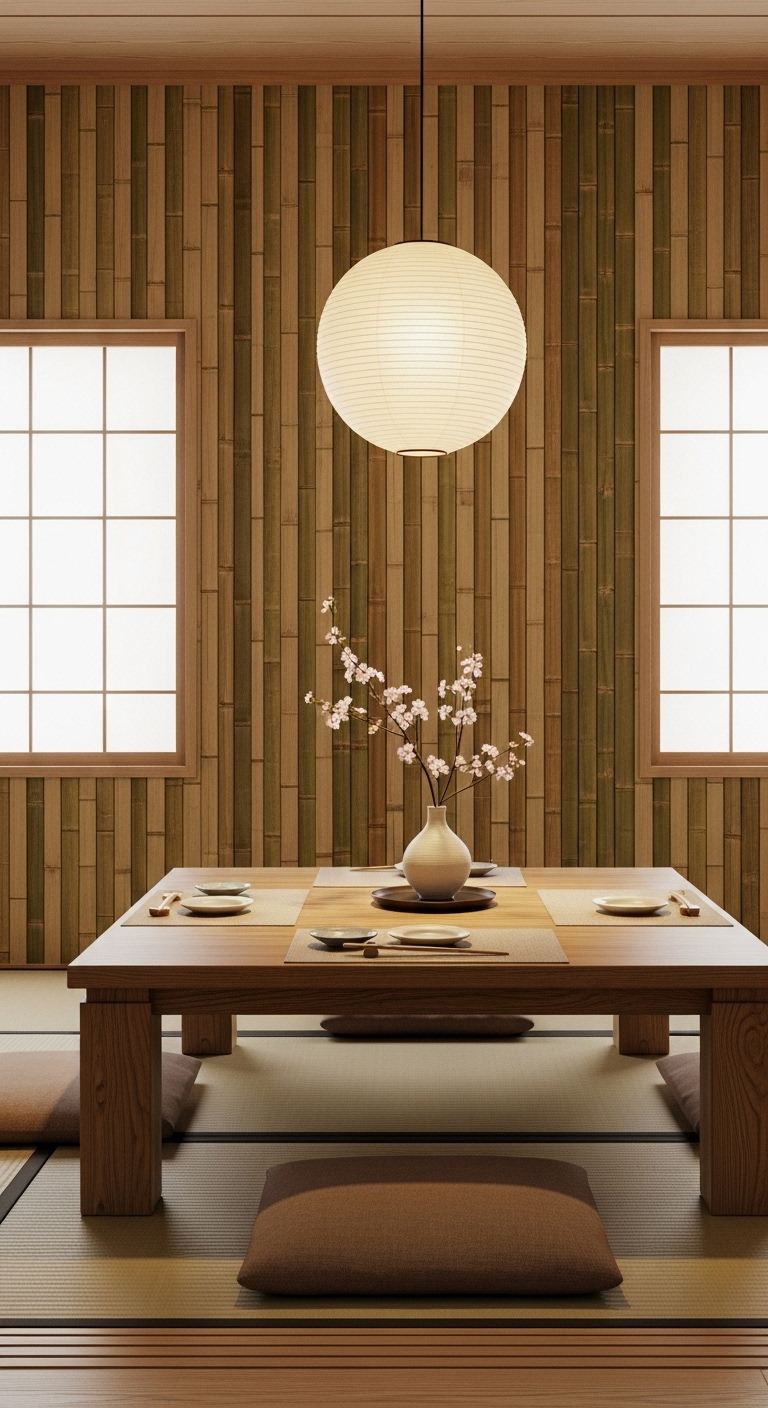
Apply thin bamboo slats to a feature wall to introduce a vertical, rhythmic texture that mimics a peaceful forest. Bamboo is a rapidly renewable resource that aligns perfectly with the eco-friendly values of modern Japanese design.
The light honey-tone of the bamboo brightens the room and provides a warm backdrop for your minimalist furniture and art. It is a durable and stylish way to incorporate the “nature-first” philosophy into your dining sanctuary.
8#. Hand-Crafted Ceramic Tea Sets
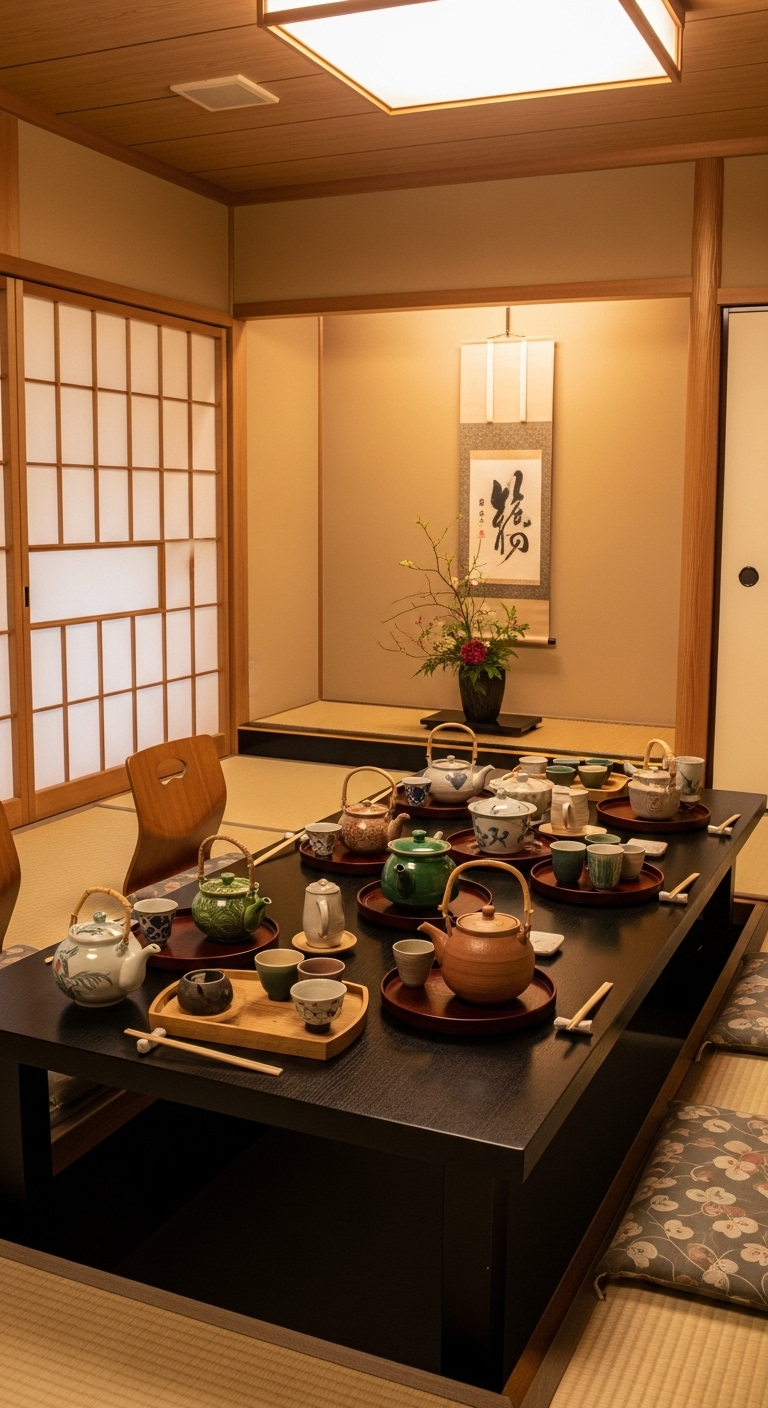
Display a collection of handmade ceramic teapots and cups on a low shelf to celebrate the beauty of functional art. The irregular glazes and textures of the clay represent the “Wabi-Sabi” spirit of finding beauty in the imperfect.
Using these pieces daily turns a simple tea break into a mindful ritual that grounds you in the present. It is an easy way to introduce a touch of Japanese heritage into your Japanese Dining Room Design Ideas.
9#. Subtle Indoor Zen Gardens
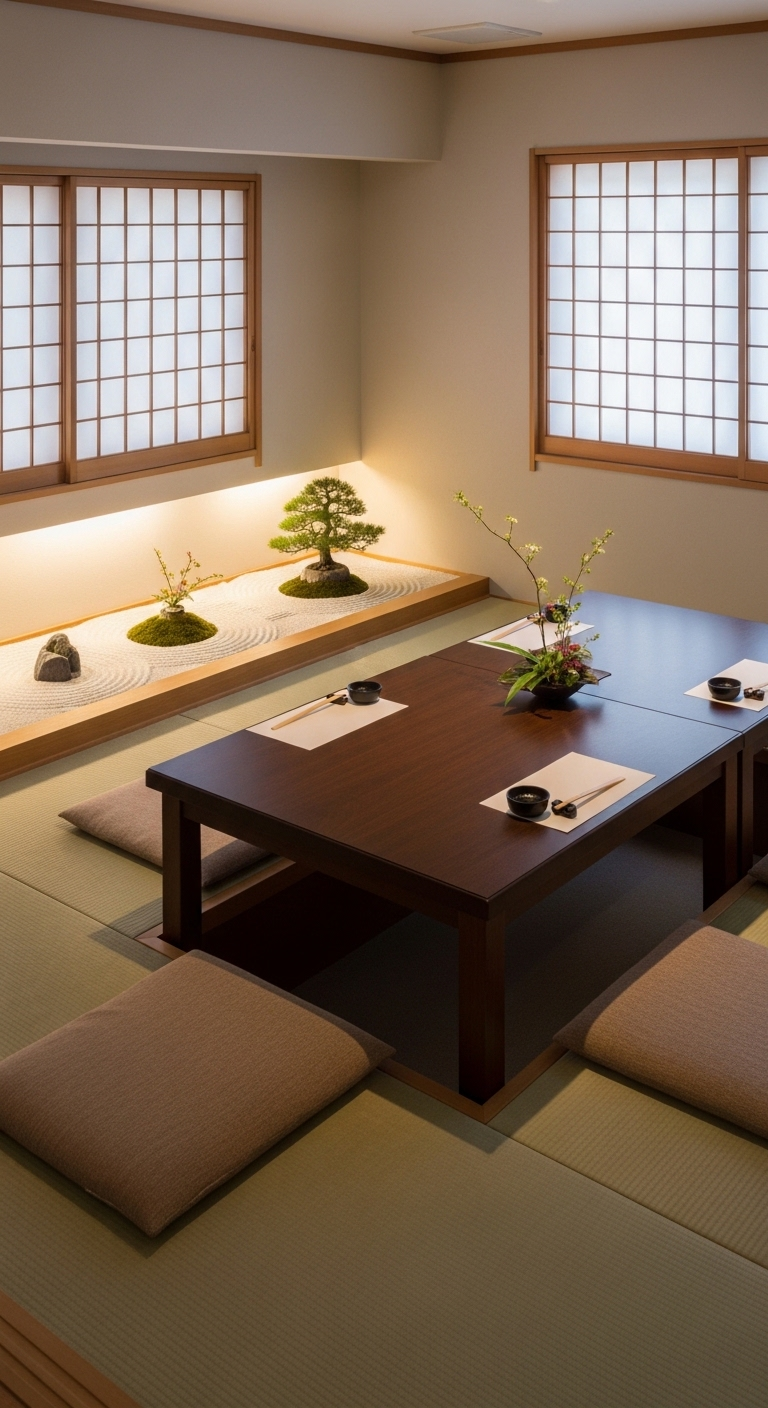
Incorporate a small tray of raked sand and smooth river stones on a sideboard to bring the essence of a Zen temple indoors. This “dry landscape” adds a sense of stillness and contemplation that enhances the room’s peaceful energy.
The gray and white tones of the stones provide a cooling, stony texture that balances the warmth of wood and straw. It is a unique, low-maintenance decorative element that serves as a visual anchor for your mindfulness practice.
10#. Sliding Fusuma Door Panels
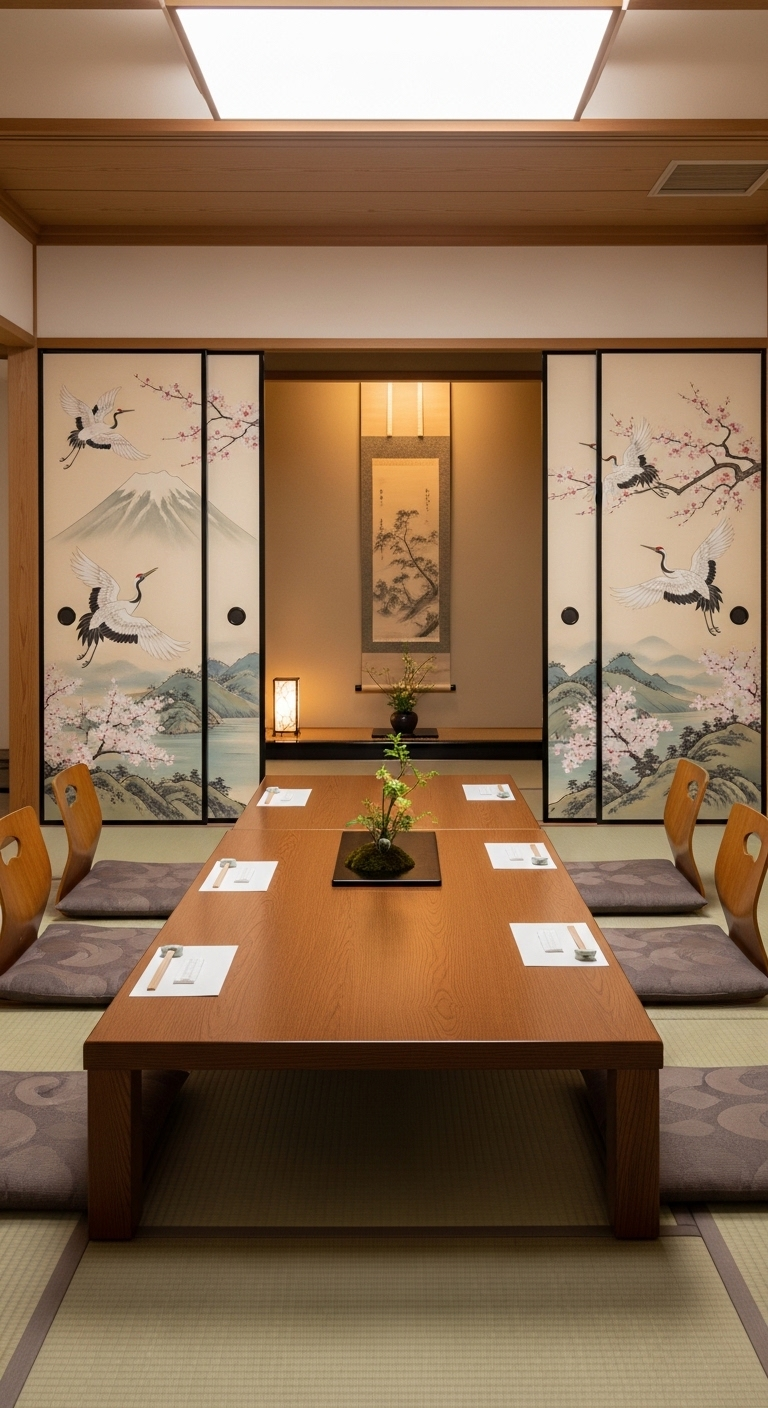
“Fusuma” are thick, opaque sliding panels often decorated with subtle landscape paintings or minimalist geometric patterns. They serve as beautiful room dividers that can be moved to change the layout of your home instantly.
The art on the panels adds a layer of storytelling and personality without the need for additional framed art on the walls. This is a versatile and traditional way to manage the space in your Japanese Dining Room Design Ideas.
11#. Polished Dark Stone Flooring
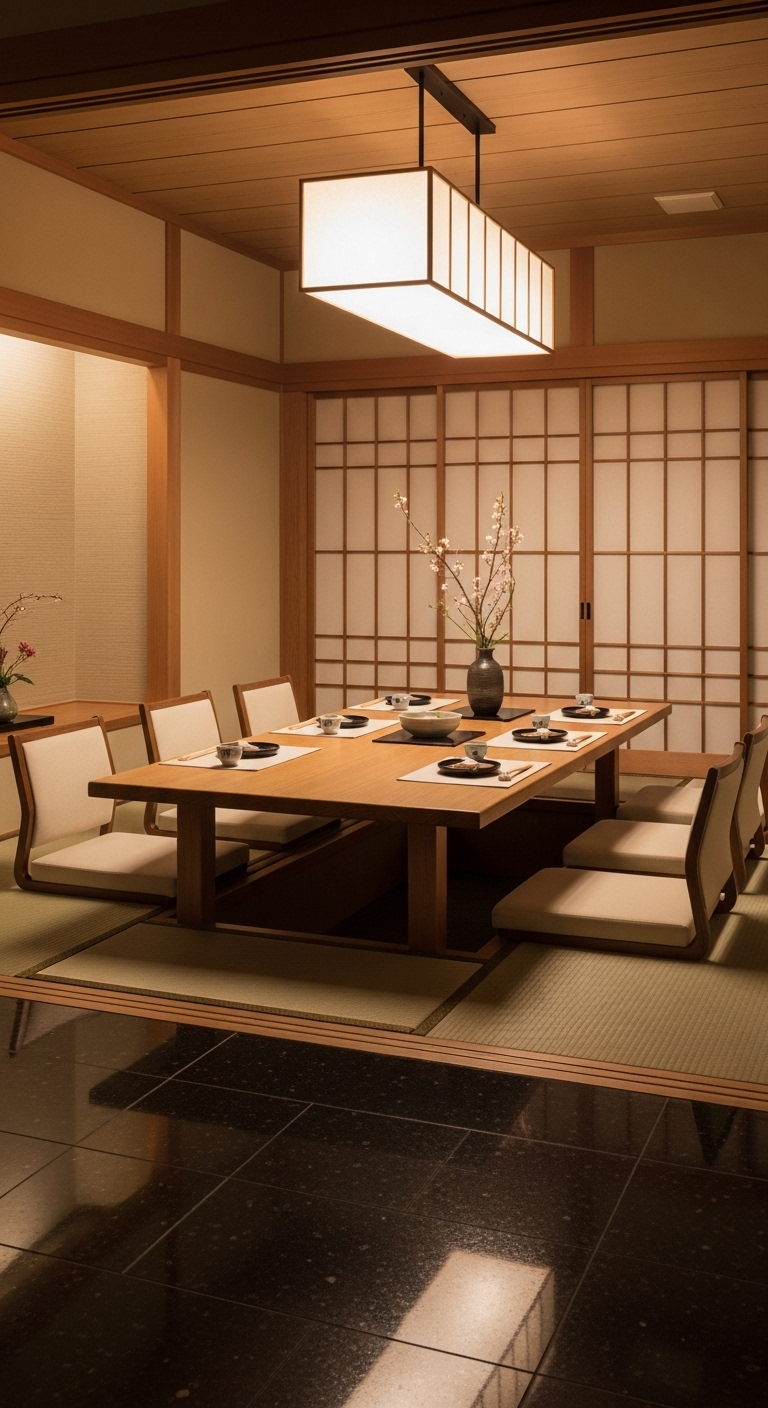
For a more modern and high-end look, choose dark slate or polished basalt tiles to contrast with light wood furniture. The seamless, cool surface provides a sophisticated foundation that mimics the stony paths of a Japanese garden.
Stone is incredibly durable and easy to maintain, making it a practical choice for a high-traffic eating area. It provides a heavy, grounded feel that balances the “lightness” of paper lanterns and wooden screens.
12#. Sculptural Ikebana Floral Art
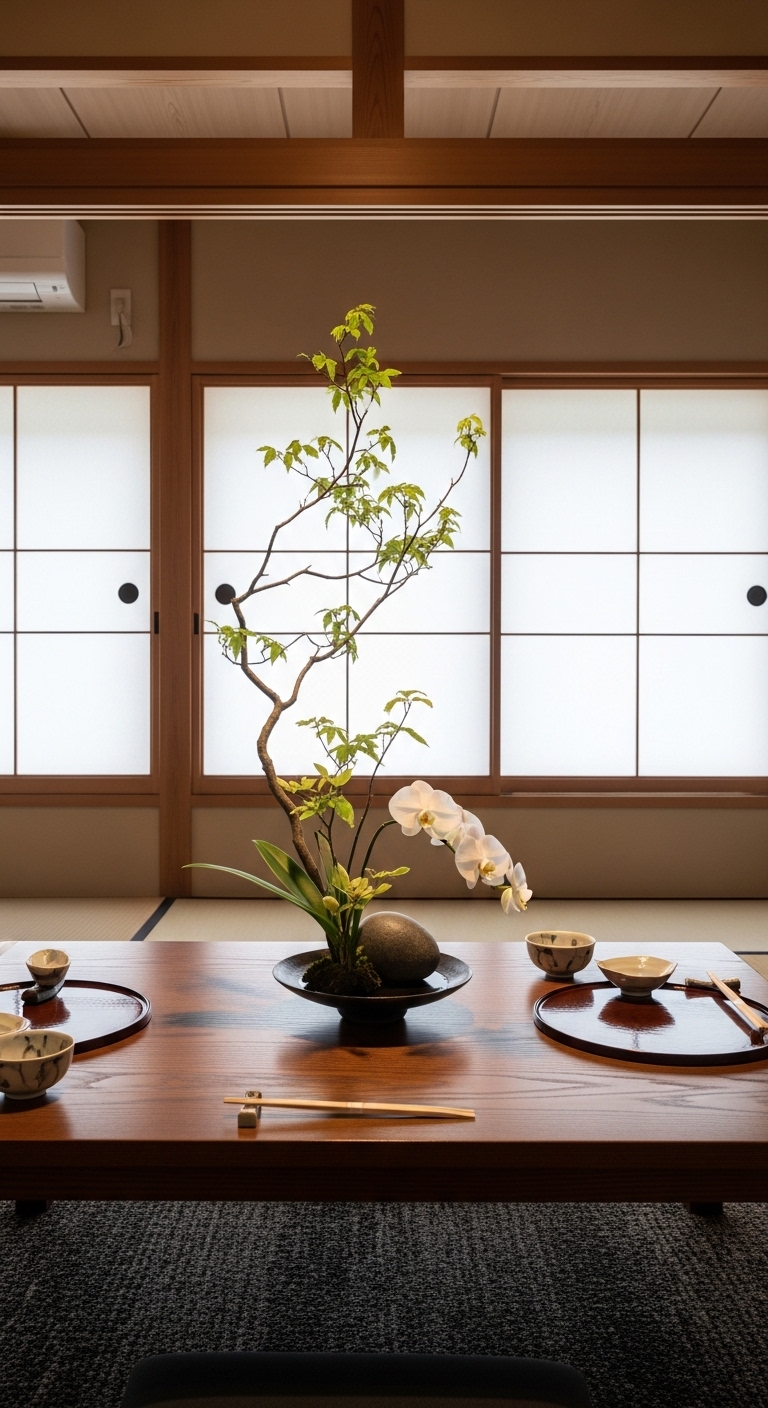
Instead of a full bouquet, use a single, strikingly curved branch in a tall vase to practice the art of Ikebana. This style of floral arrangement emphasizes line, form, and the beauty of negative space around the plant.
It adds a “living” sculptural element to your table that feels intentional and artistic rather than cluttered. Ikebana is a peaceful hobby that brings a touch of the outdoors into your Japanese Dining Room Design Ideas.
13#. Exposed Cedar Ceiling Beams
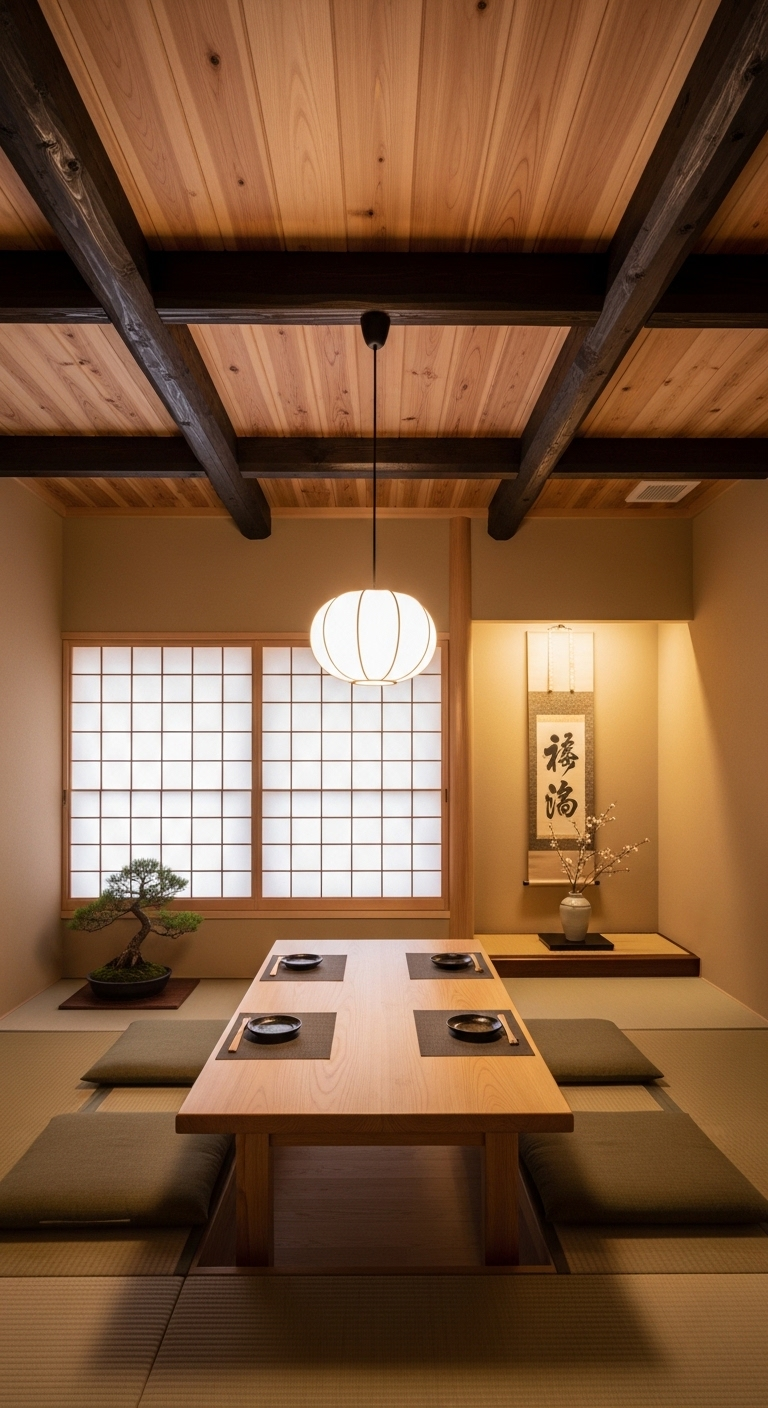
Keeping your wooden ceiling beams exposed adds a sense of structural honesty and “forest-lodge” warmth to the room. The scent of natural cedar is refreshing and is known to promote a sense of calm and well-being.
The heavy timbers provide a protective feel overhead that makes the dining area feel safe and sturdy. It is a beautiful architectural detail that highlights the quality of the materials used in your home’s construction.
14#. Black Ink Calligraphy Scrolls
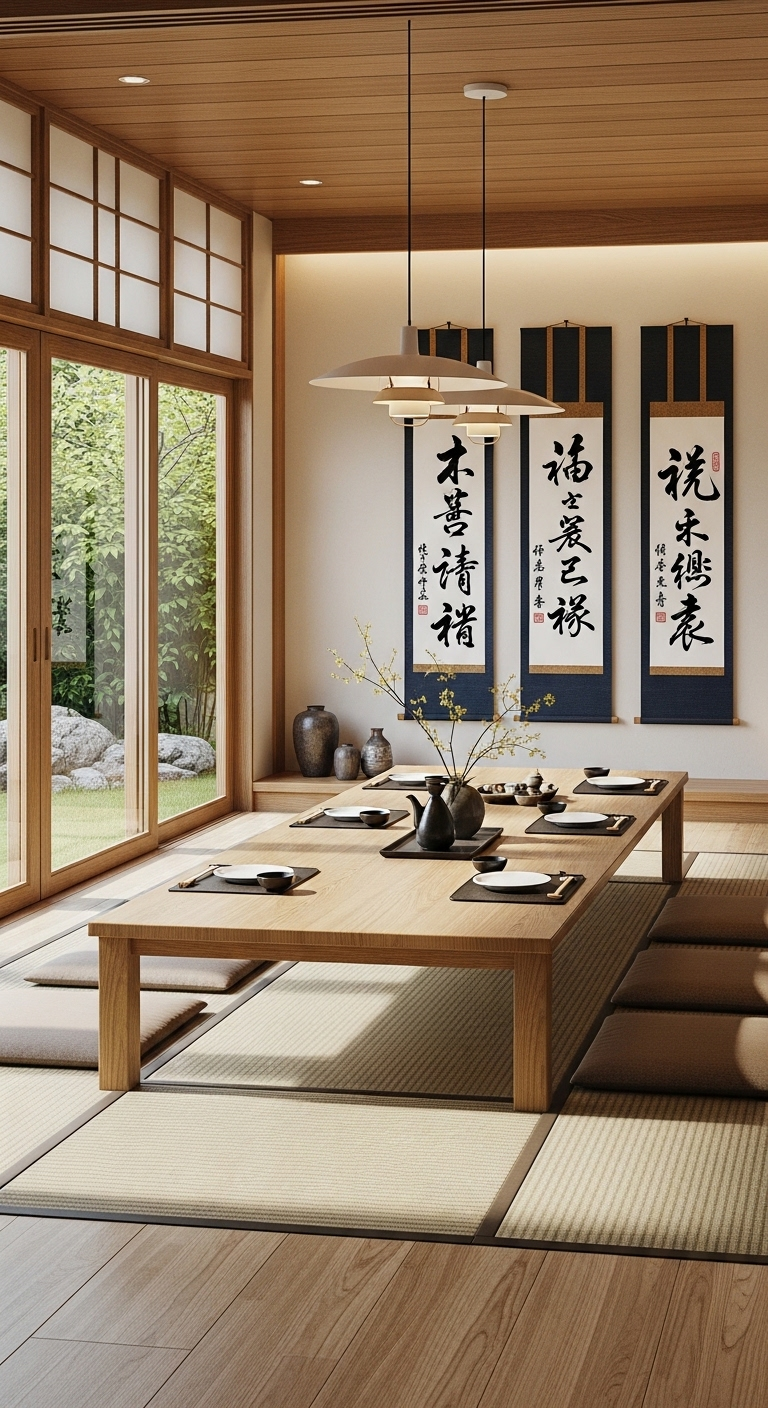
Hang a vertical wall scroll featuring a single, bold ink character or a short poem to add an intellectual focal point. The high-contrast black ink on white paper fits perfectly within a minimalist and modern color scheme.
Calligraphy adds a sense of history and wisdom to the space, encouraging quiet reflection during your meals. It is a lightweight and traditional way to decorate your Japanese Dining Room Design Ideas walls.
15#. Integrated Floor-Level Lighting
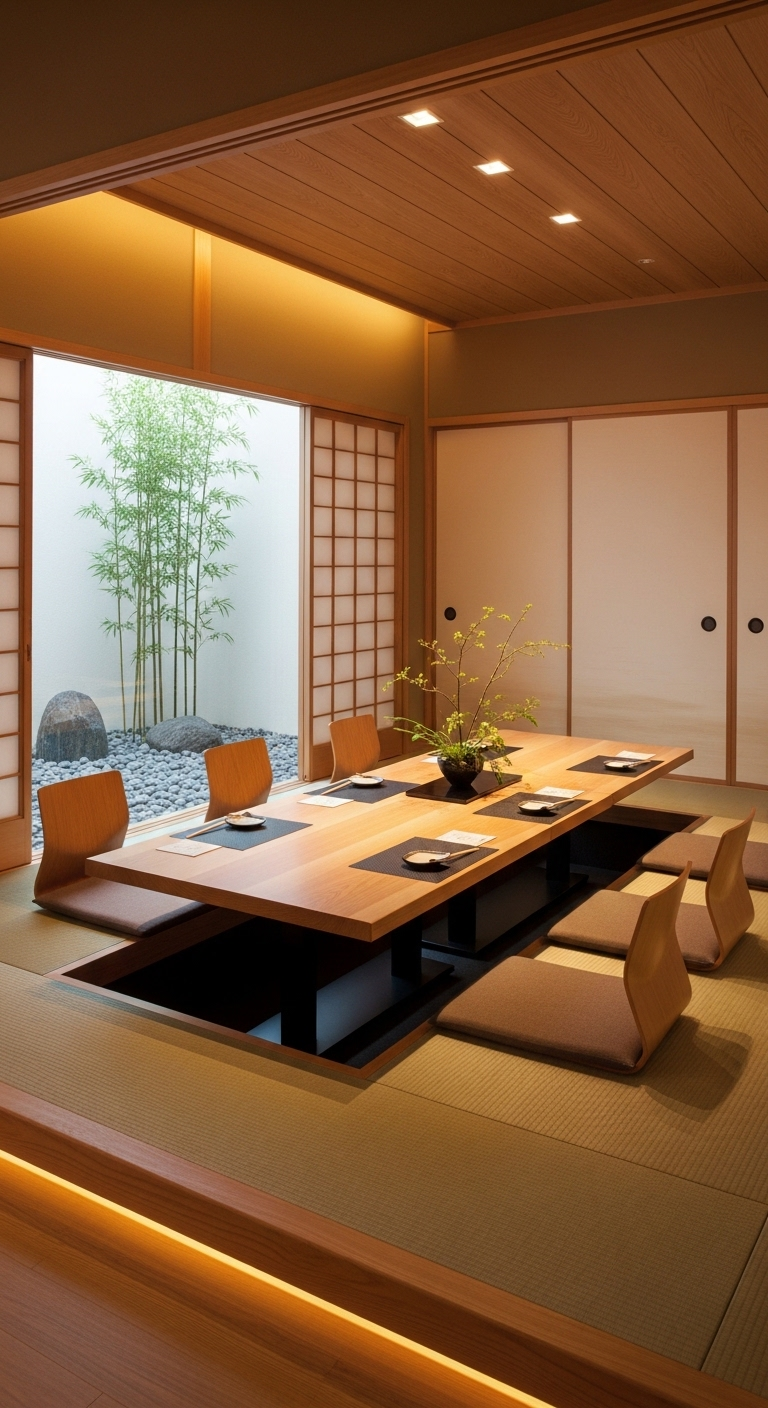
Install soft LED strips or small lanterns at floor level to illuminate your tatami mats with a gentle, indirect glow. This “low-light” approach creates a moody, intimate atmosphere that is perfect for late-night tea or conversation.
Floor lighting makes the room feel taller and more expansive by drawing the eye to the very edges of the space. This is a high-tech way to interpret the traditional Japanese aesthetic for a modern luxury home.
16#. Matte Black Hardware Accents
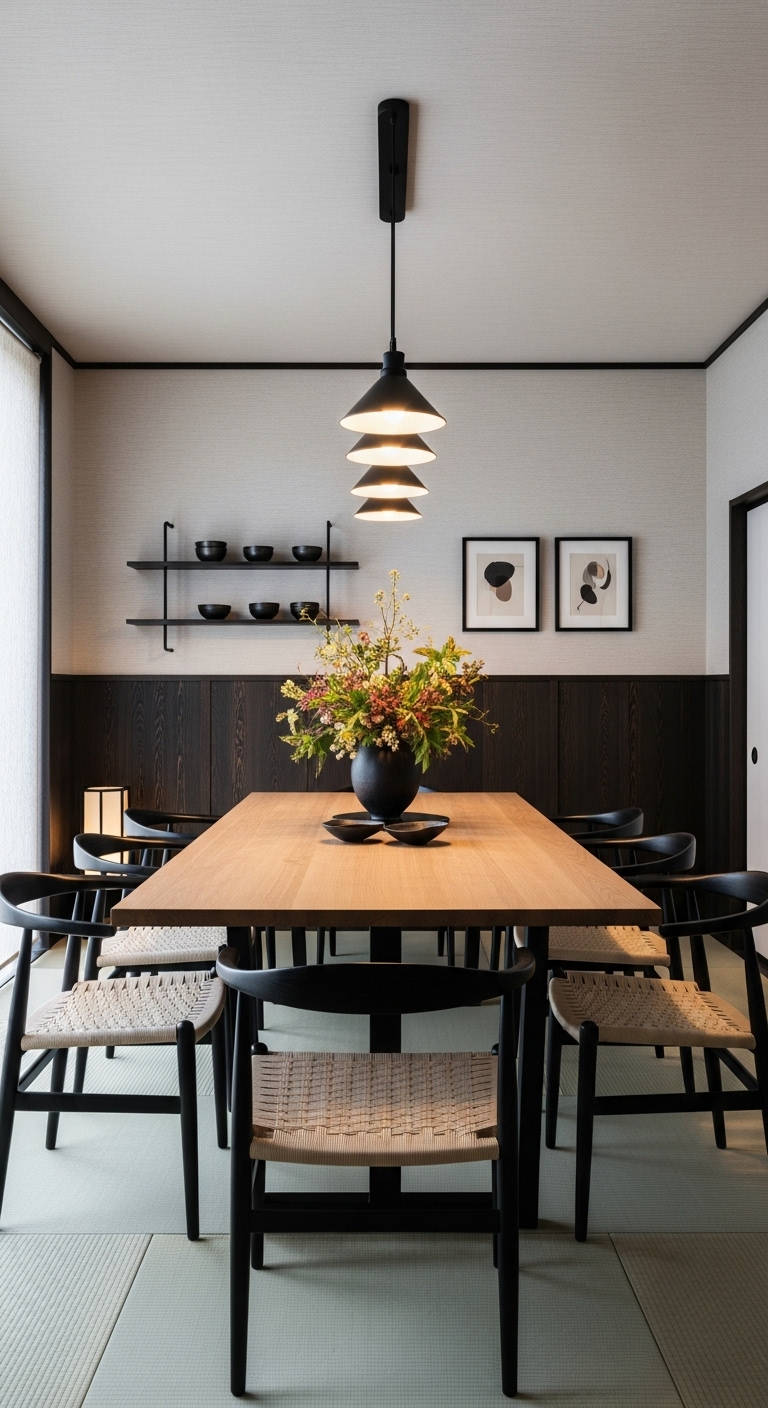
Use matte black metal handles and hinges on your sliding doors and cabinets to provide a sharp, modern definition. This graphic touch anchors the lighter wood tones and prevents the room from feeling too soft or washed out.
The black metal mimics the look of traditional Japanese lacquerware and ironwork, adding a layer of heritage. It is a simple and effective update for those seeking a “designer” finish for their Japanese Dining Room Design Ideas.
17#. Traditional Noren Door Curtains
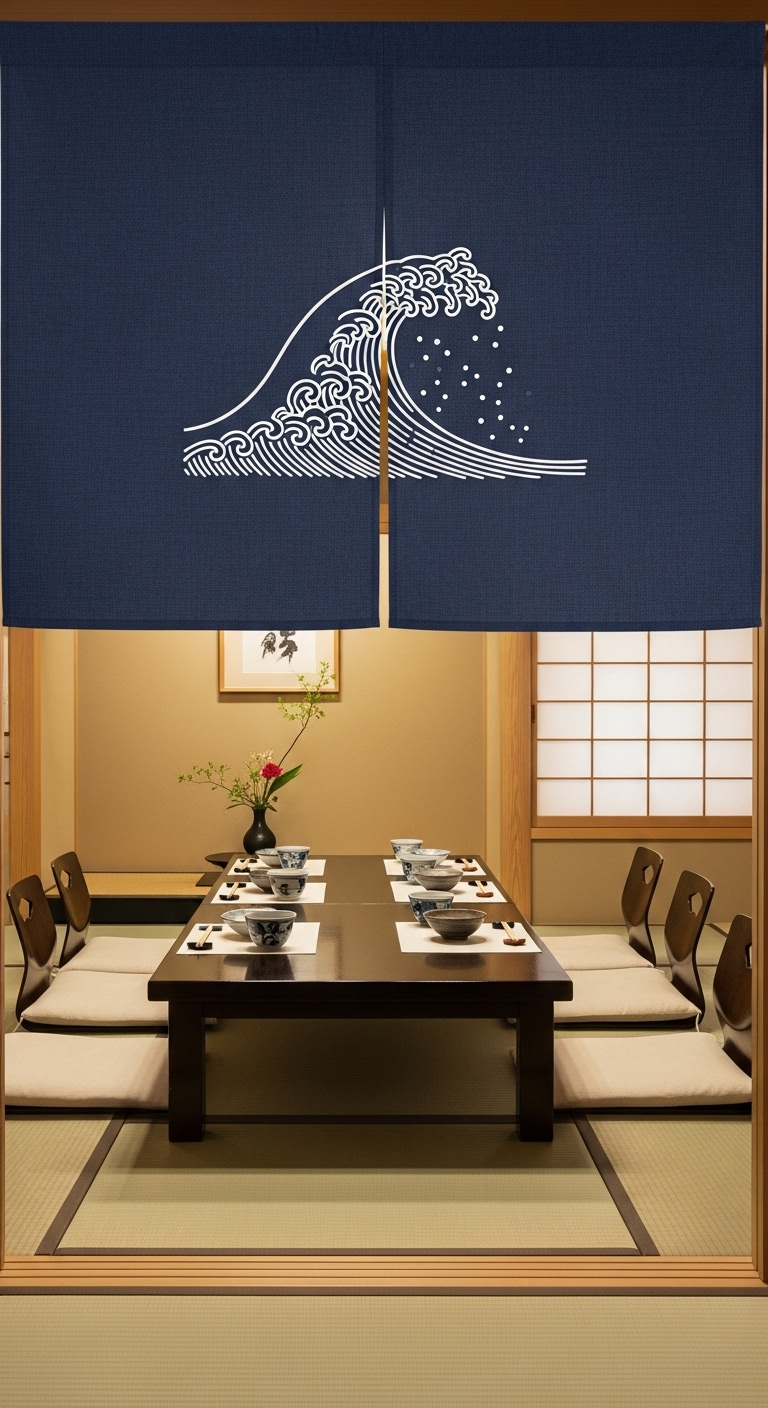
Hang a split fabric “Noren” in the doorway to create a soft transition between the kitchen and the dining room. These curtains provide a sense of mystery and privacy while allowing air and light to flow through easily.
Choose a natural linen fabric in indigo or cream to maintain an organic and grounded feel in your transition spaces. Noren is a charming and practical detail that adds an authentic Japanese “shop-front” vibe to your home.
18#. Built-In Wooden Bench Seating
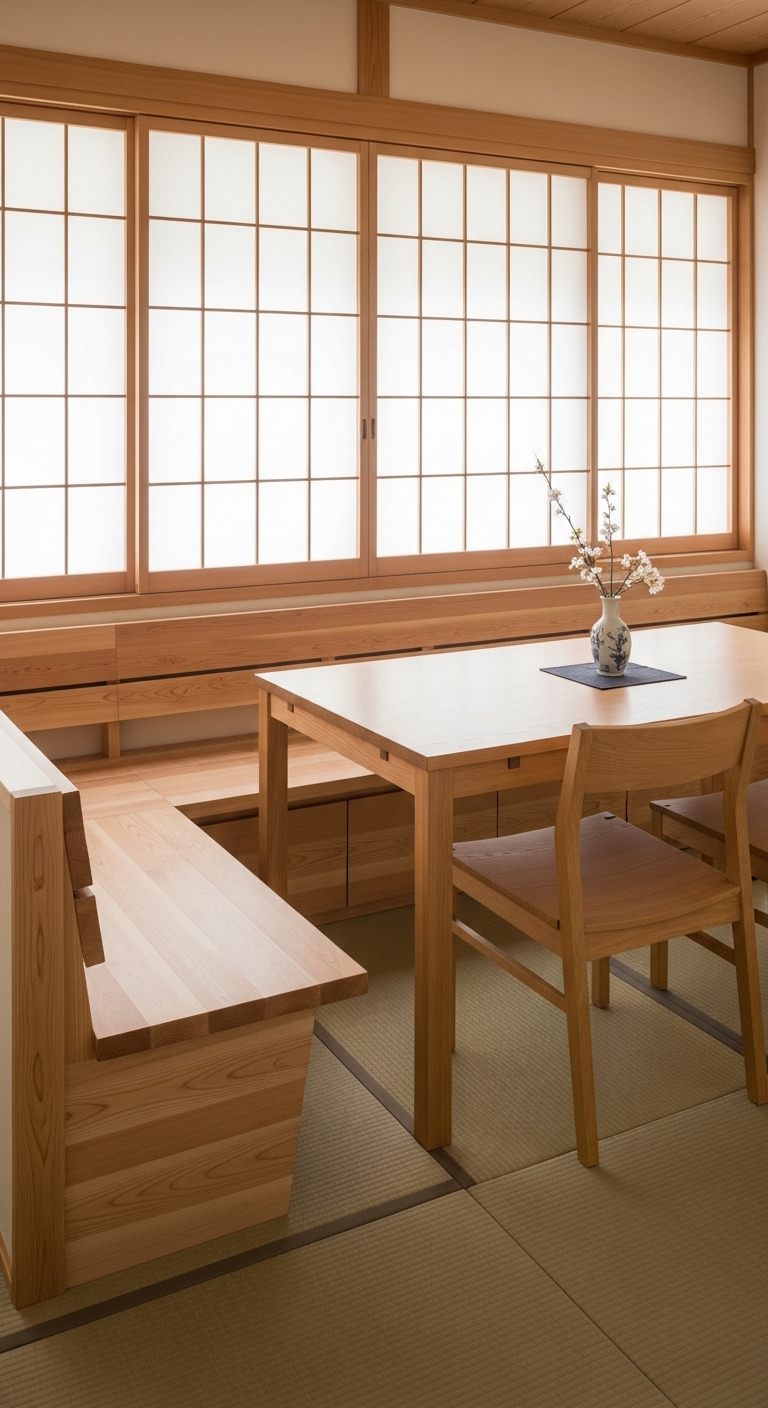
For a modern twist, incorporate a built-in wooden bench along one wall to maximize seating without cluttering the floor. The clean, horizontal lines of the bench provide a sturdy and minimalist seating solution that feels very custom.
Pair the bench with soft Zabuton cushions to ensure your guests are comfortable during long dinner parties. It is a smart way to use space in smaller urban Japanese Dining Room Design Ideas projects.
19#. Floating Ash Wood Shelving
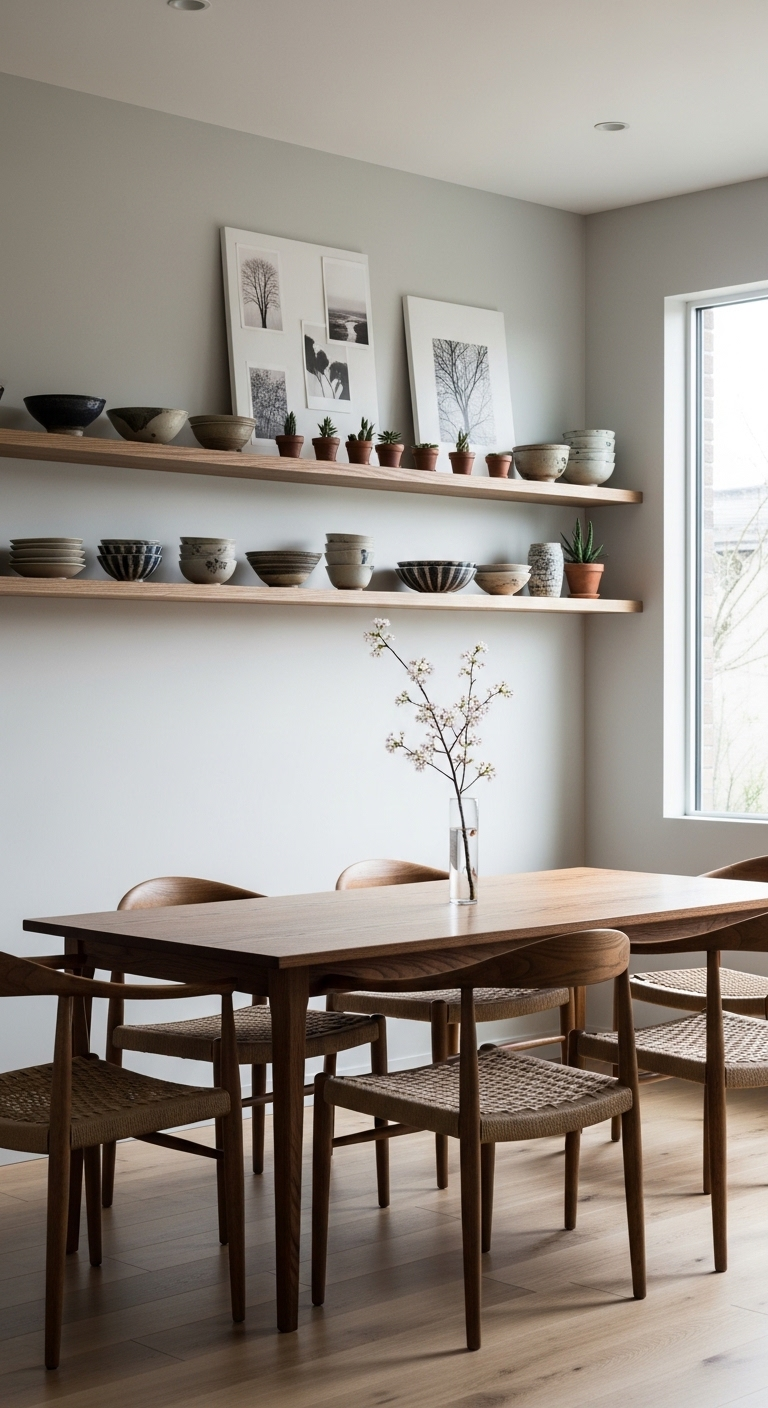
Install simple floating shelves to display a few select ceramics, small plants, or tea canisters in an organized way. The light color of ash wood keeps the room feeling bright and airy while providing essential vertical storage.
By limiting the number of items on display, you ensure that the shelves contribute to the room’s “Zen” atmosphere. It is a versatile solution for keeping your surfaces clear and your dining room looking its best.
20#. Subtle Moss and Stone Terrariums
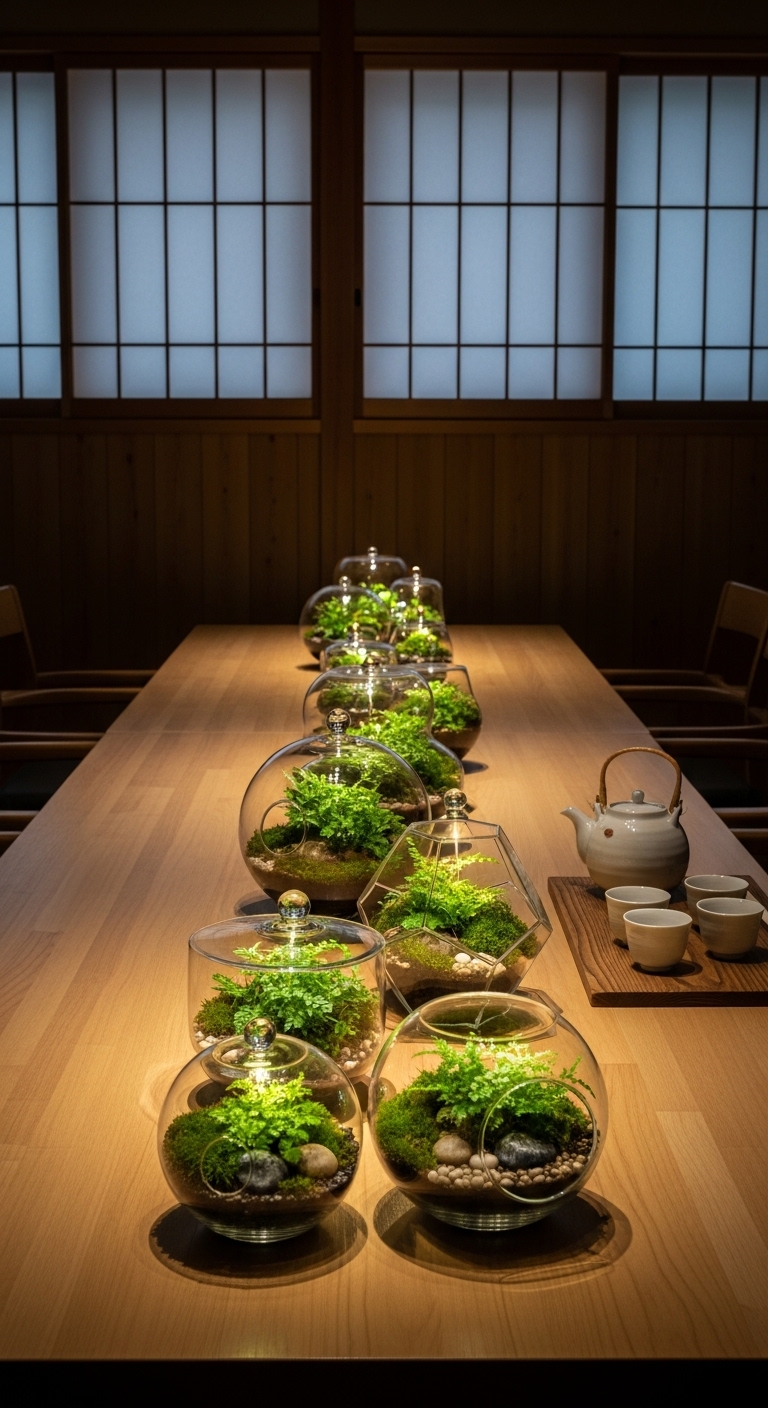
Place a glass terrarium filled with fresh green moss and a few pebbles on your table to act as a “mini-mountain” display. Moss adds a vibrant, velvet-like texture that requires very little maintenance but offers a lot of peace.
This small botanical detail brings the spirit of the Japanese temple gardens directly to your daily dining experience. It is a unique and quiet alternative to traditional colorful flower arrangements in Japanese Dining Room Design Ideas.
21#. Symmetrical Cabinet Arrangements
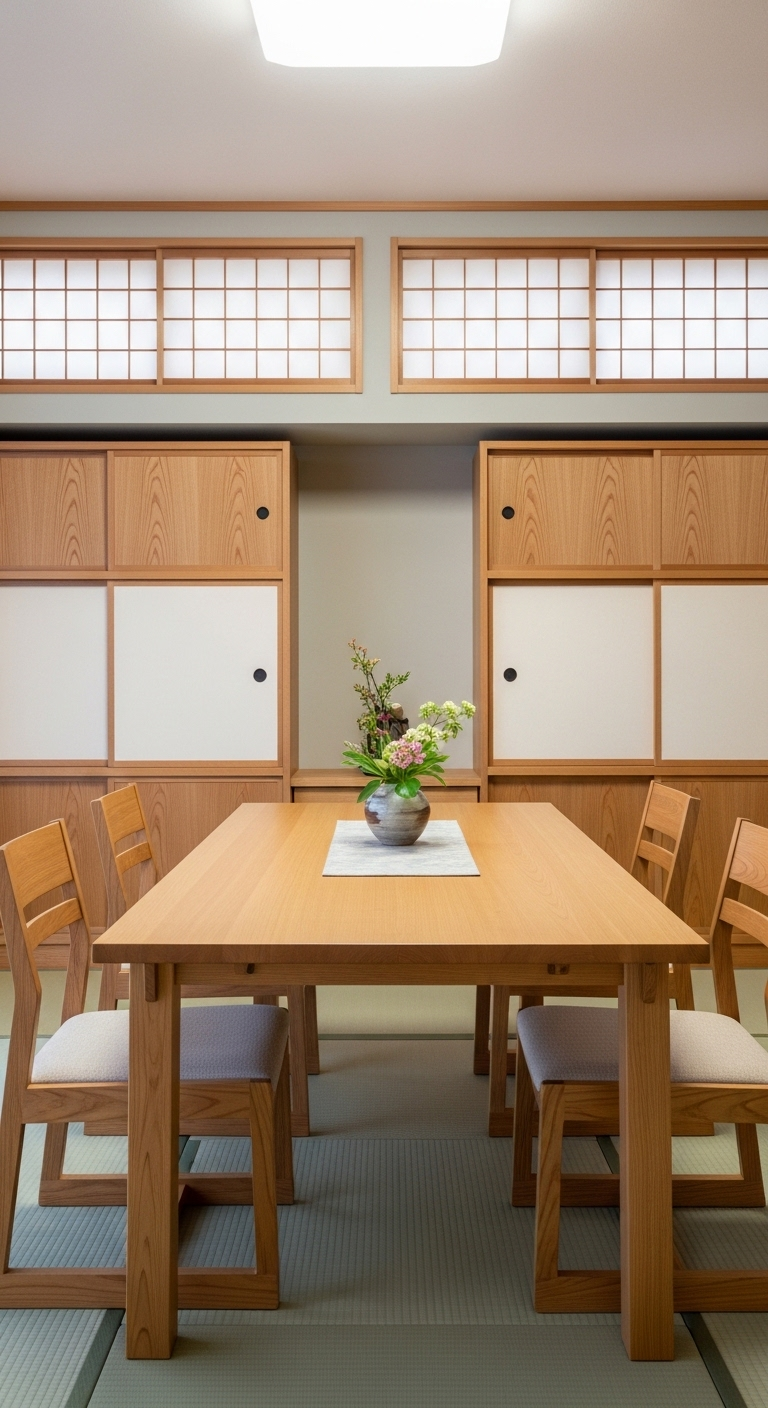
Create a sense of balance and order by placing matching wooden cabinets on either side of a central window or door. Symmetry is a core principle in creating a harmonious and relaxing environment for the mind and body.
This organized approach to storage ensures that everything has a place, reducing the mental stress of a cluttered room. It is a professional design trick for making any dining space feel more expensive and well-planned.
22#. Warm “Incandescent” Tone LEDs
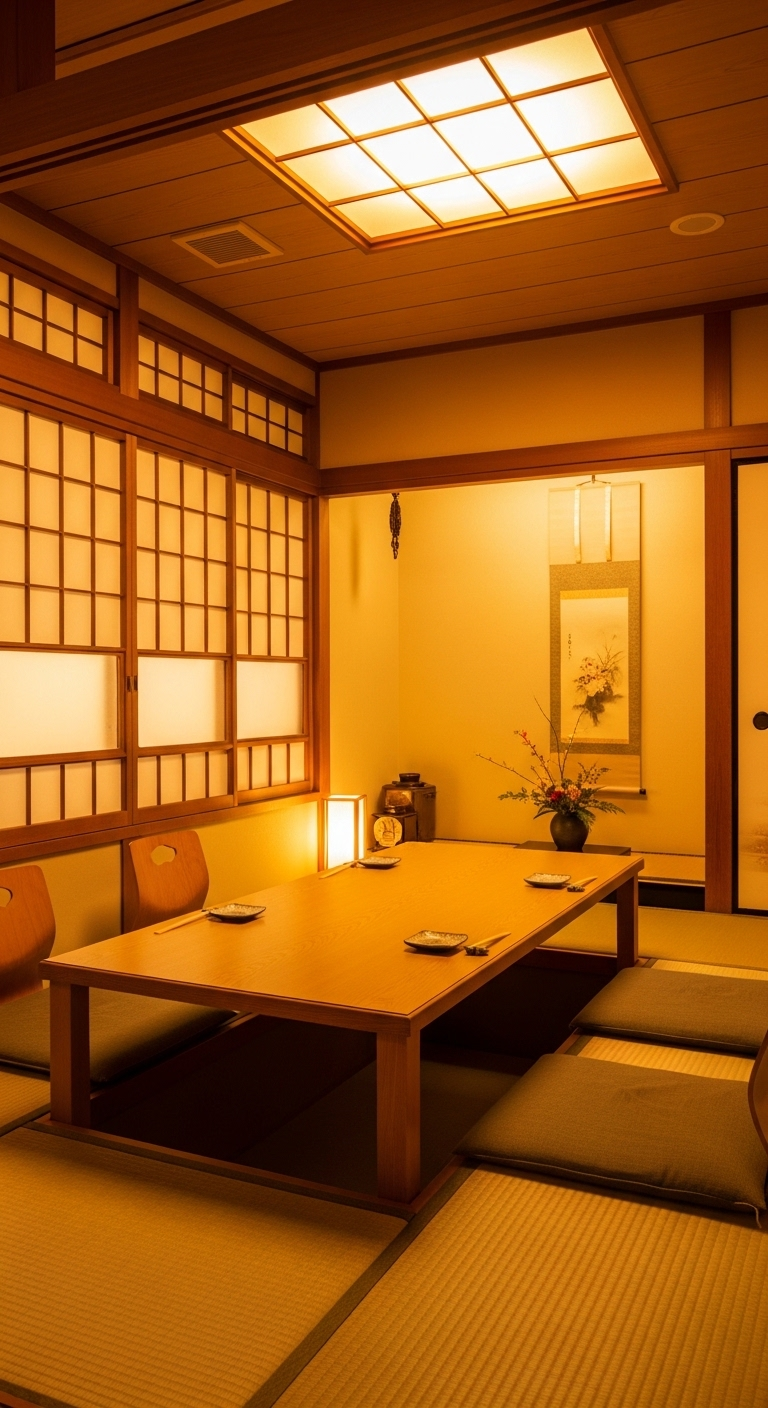
Ensure all your light bulbs are “warm white” to mimic the golden, comforting glow of a traditional paper lantern. Proper color temperature is essential for highlighting the natural beauty of wood and straw textures.
Avoid cool, blue-toned lights, as they can make a minimalist room feel clinical and wash out the earthy colors of the room. Soft lighting is the final, essential step in creating a truly Japanese Dining Room Design Ideas sanctuary.
23#. Natural Indigo Linen Runners
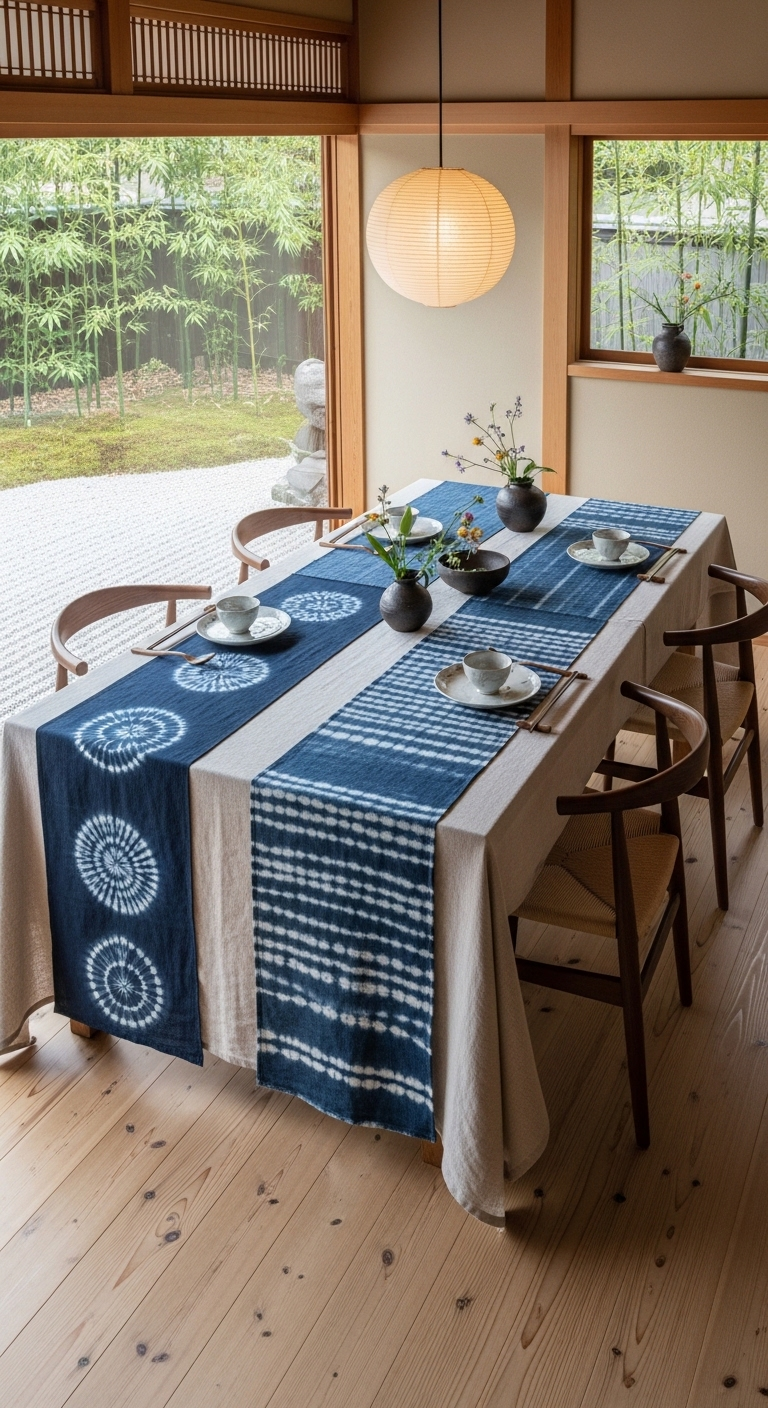
A hand-dyed indigo linen runner adds a splash of traditional “Japan Blue” to your wooden table for a sophisticated look. This deep, natural color provides a beautiful contrast to light oak and white stoneware plates during meals.
Linen is a durable and organic fabric that aligns with the “nature-first” philosophy of the design movement. It adds a layer of “Hygge” warmth and textile detail that makes the table setting feel complete and welcoming.
24#. Sculptural Driftwood Centerpieces
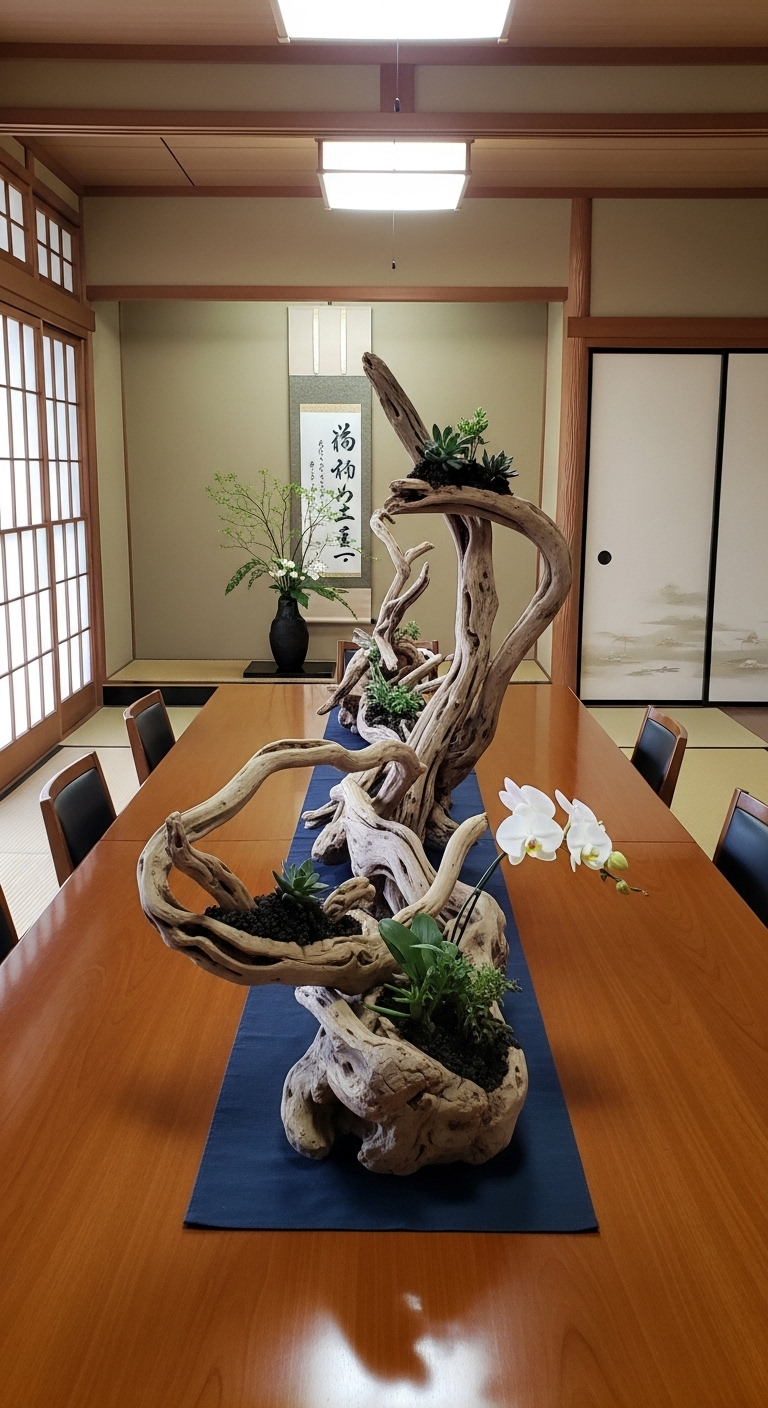
Place a large, uniquely weathered piece of driftwood in the center of your table to add a touch of “Wabi-Sabi” soul. The silvery-grey wood grain adds a sense of history and natural mystery that is completely free and unique.
Pairing driftwood with a few small white candles or an air plant creates a curated, designer-style vignette for every meal. It is a powerful visual reminder of the raw beauty found in the natural world around us.
25#. High-Contrast Black Picture Frames
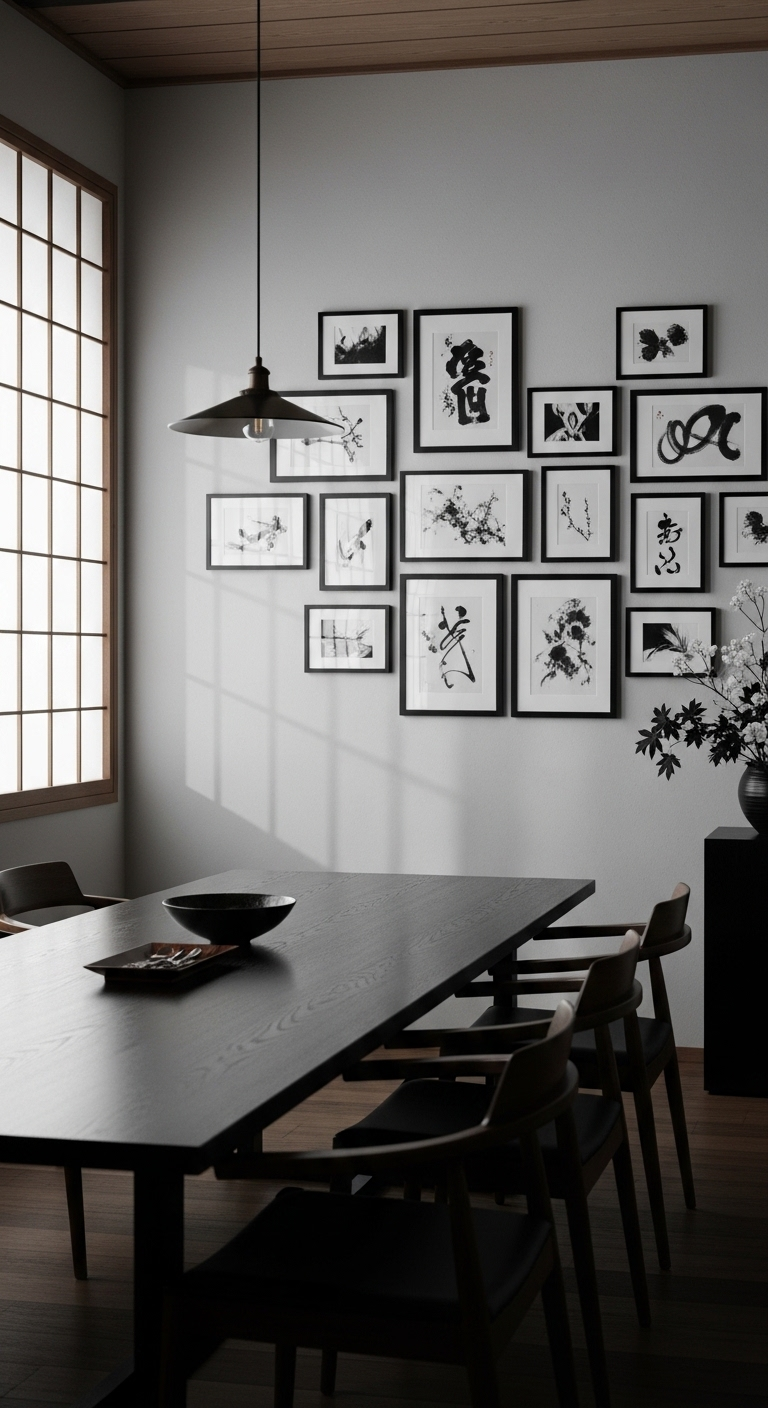
Use thin black frames for your calligraphy or art prints to add a sharp, modern line that breaks up neutral walls. This “graphic” touch ensures the room feels contemporary and well-defined rather than too soft or rustic.
Black frames act as a visual anchor that coordinates perfectly with black hardware and dark stone flooring. It is a simple and effective way to introduce a touch of “modern-city” polish to your Japanese Dining Room Design Ideas.
26#. Inset Wall Niches for Vases
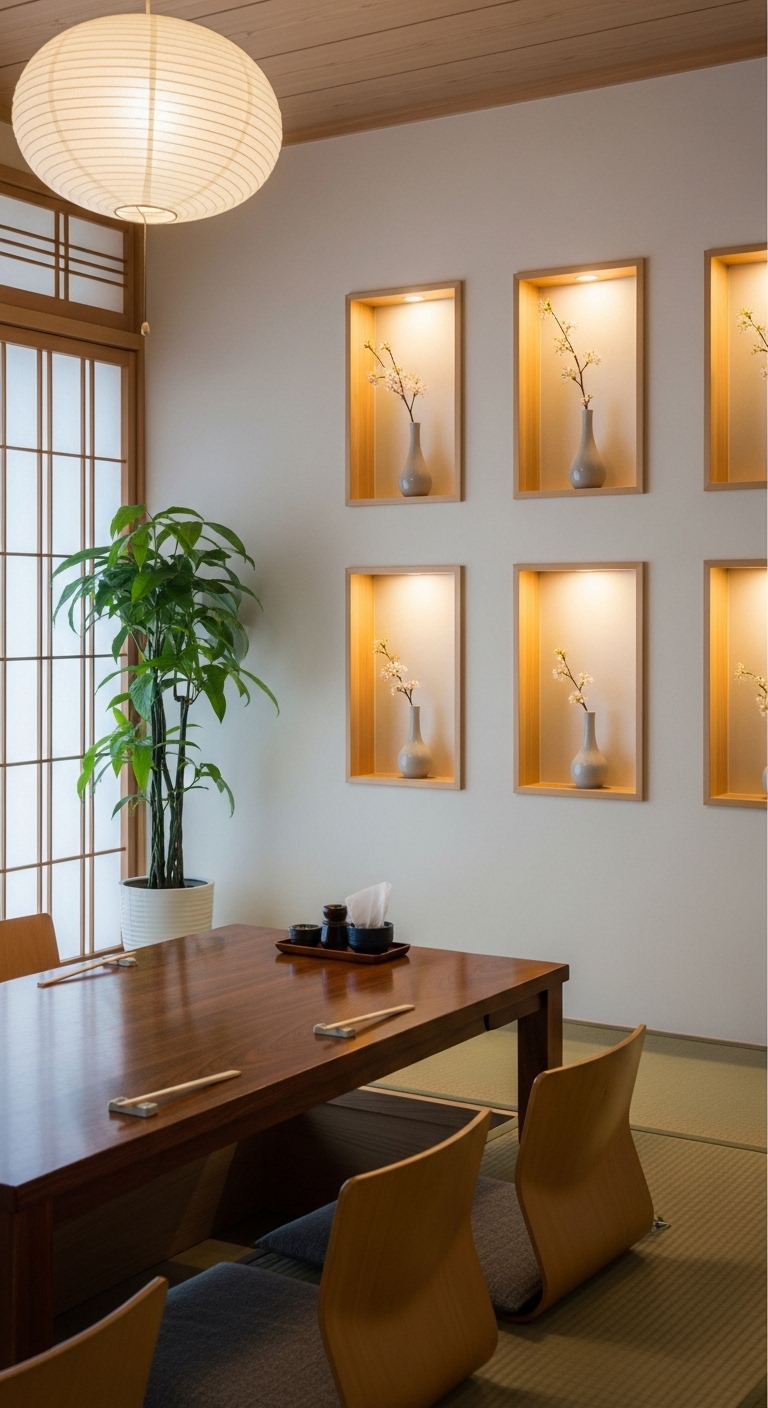
If you’re remodeling, carve out small rectangular niches into the wall to provide a dedicated, recessed space for a single vase. This structural detail adds a sense of architectural honesty and “built-in” quality that feels very custom.
Adding a small spotlight inside the niche highlights the texture and shape of your pottery, creating a dramatic “museum” vibe. It is a brilliant way to incorporate the “less-is-more” philosophy into the very bones of your house.
27#. Subtle Earth-Tone Paint Palettes
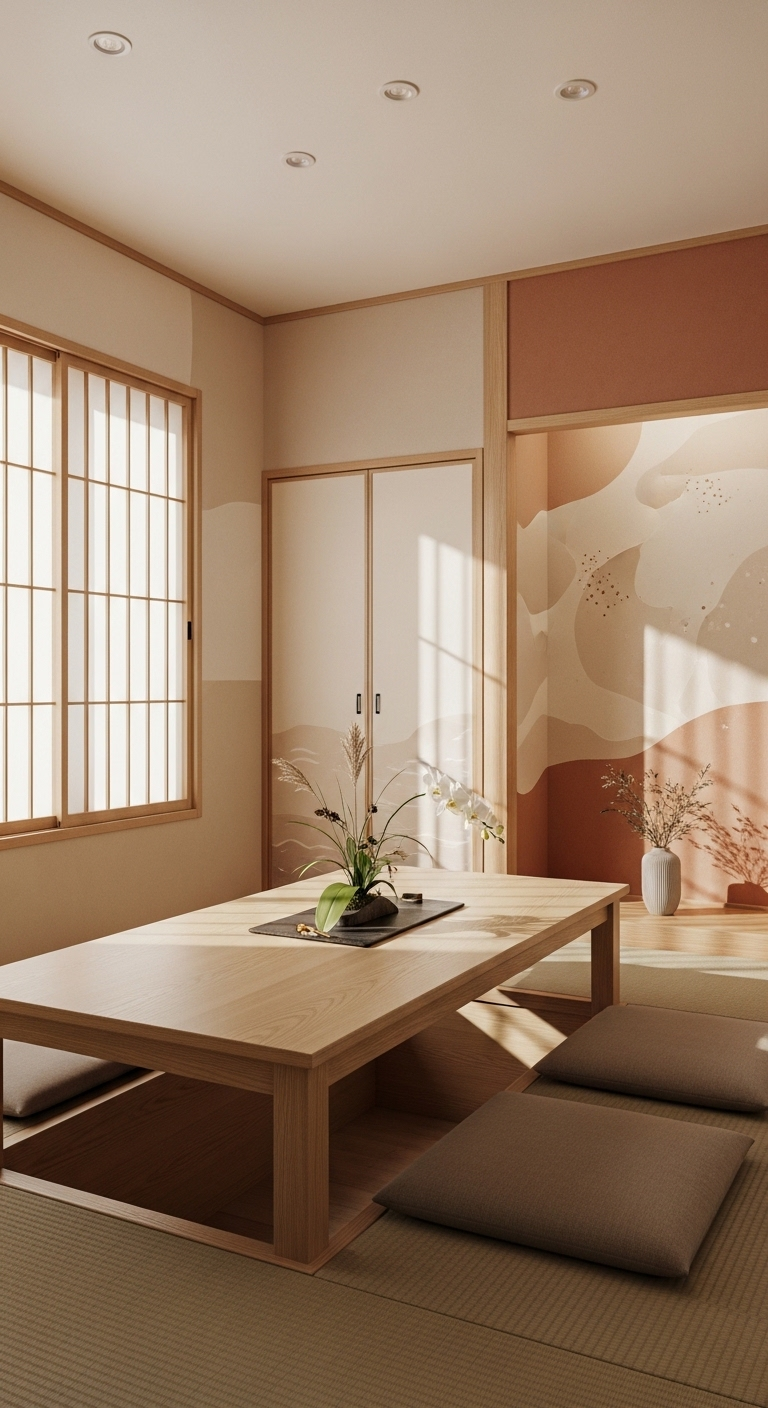
Move away from stark white in favor of warm “greige,” soft sand, or misty sage green for your dining room walls. These earth-toned colors provide a more comforting and cocoon-like backdrop that enhances the natural wood furniture.
A soft-focus color palette is essential for creating the tranquil and restorative energy that defines high-end Japanese Dining Room Design Ideas. It allows the natural textures of the room to be the main star of the show.
28#. Bamboo and Rattan Placemats
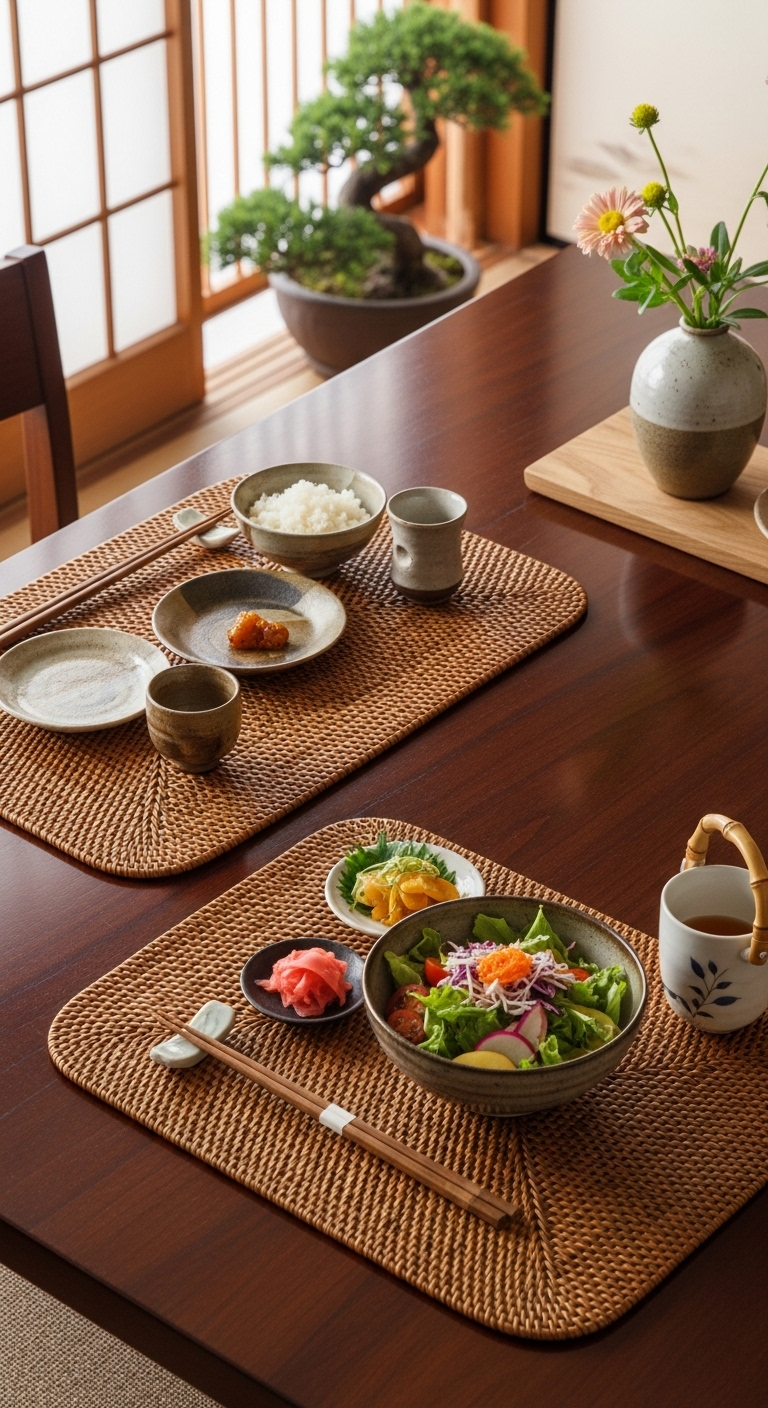
Use woven bamboo or rattan placemats to add a layer of circular texture and Eastern-inspired charm to your table setting. These materials are easy to clean and provide a beautiful, organic frame for your stoneware plates during meals.
The varying natural tones of the weave add a subtle pattern that feels energetic but never cluttered or visually loud. It is a practical and beautiful way to protect your table while supporting the overall aesthetic.
29#. Open Shelf “Curation” Stations
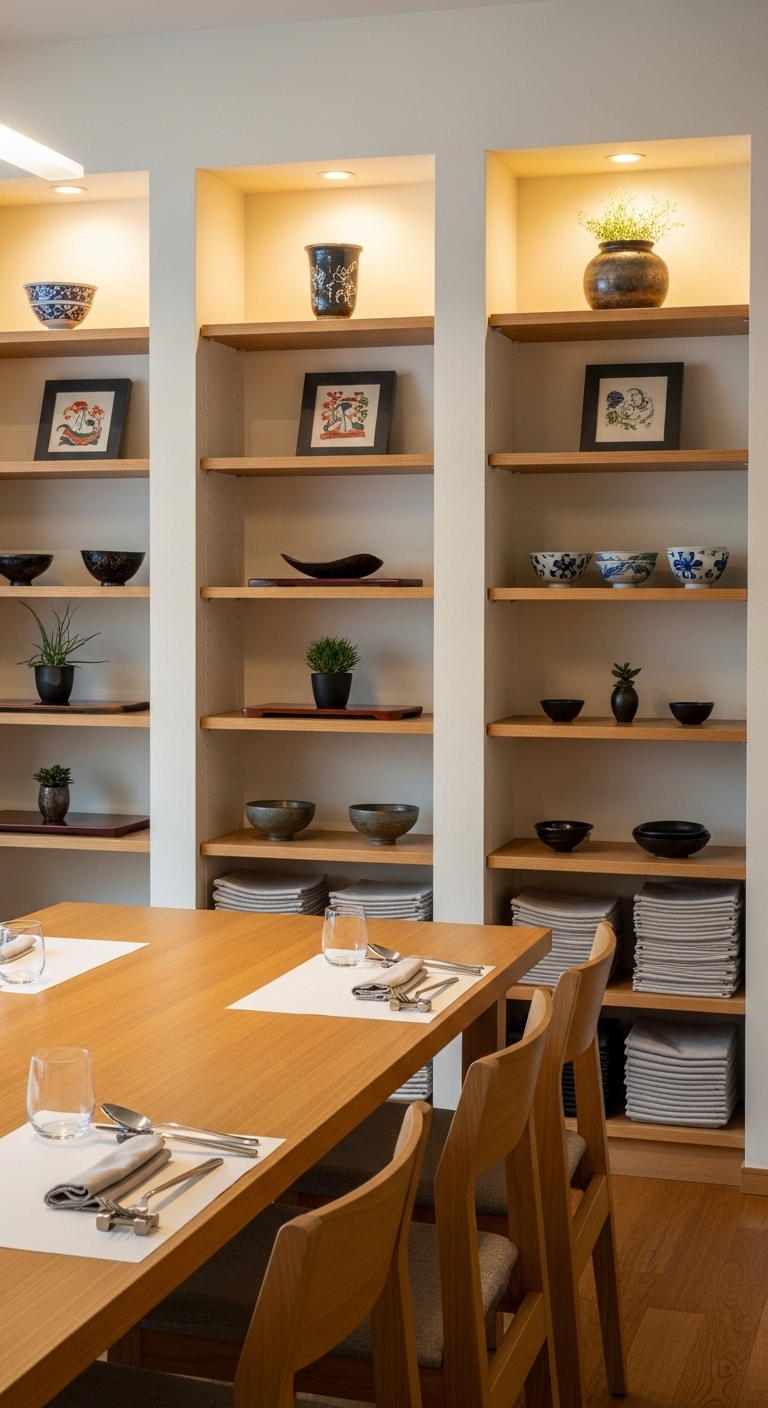
Use a single floating shelf to display your most beautiful tea sets or handmade ceramics in a neat, organized row. This “curation” station allows you to showcase your love for craftsmanship while keeping the rest of the room clear.
By rotating the items on display, you can keep the room feeling fresh and inspiring throughout the different seasons of the year. It’s a creative way to use vertical space while supporting your Japanese Dining Room Design Ideas.
30#. Minimalist Brass Tray Accents
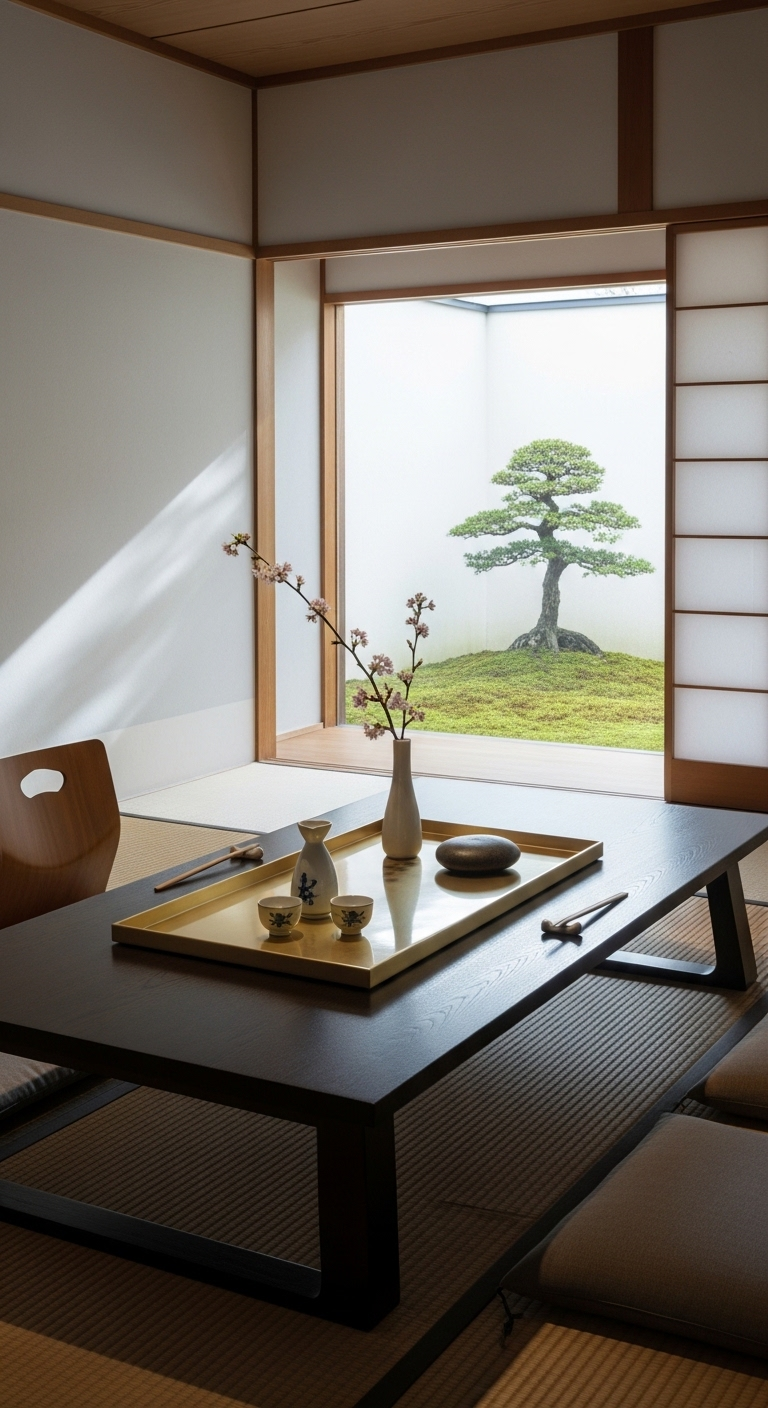
A small, circular brass tray on your sideboard can hold your favorite essential oils or a small stack of textured linen coasters. This touch of metal adds a “warm” shimmer that balances the matte textures of wood and stoneware in the room.
Metallic accents prevent a minimalist room from feeling too one-dimensional or “flat” in terms of its material palette. They add a sense of luxury and polish that makes even the most rustic room feel high-end and curated.
31#. Hidden Multi-Functional Storage
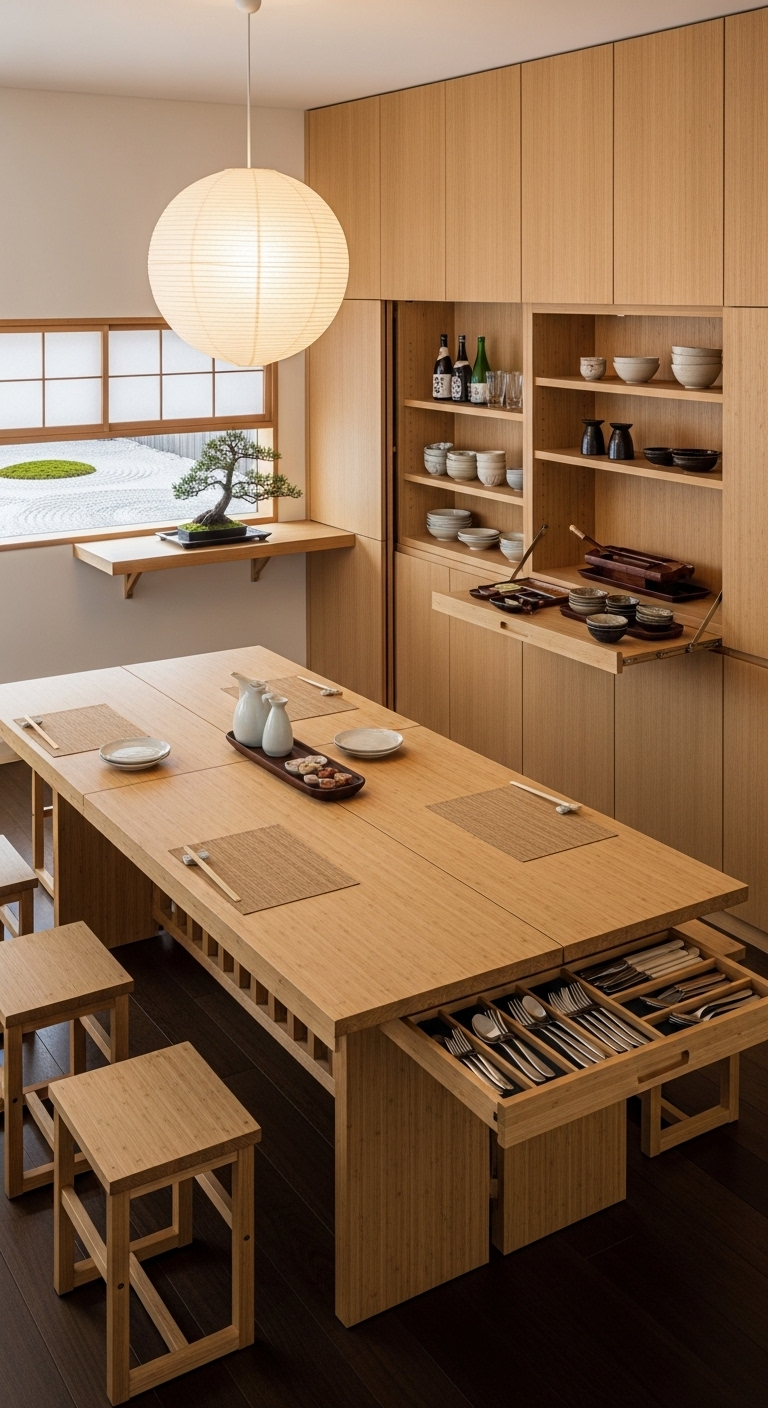
Incorporate furniture with hidden compartments, like a dining bench with a lift-up seat, to store extra cushions and linens. This “secret” storage helps to maintain the clean and uncluttered look that is vital for a Zen-inspired dining room.
Keeping your hosting essentials out of sight makes the space feel more peaceful and ready for mindful dining. It is a smart design move for maintaining the minimalist integrity of your Japanese Dining Room Design Ideas.
32#. Clear Glass Cloches with Nature
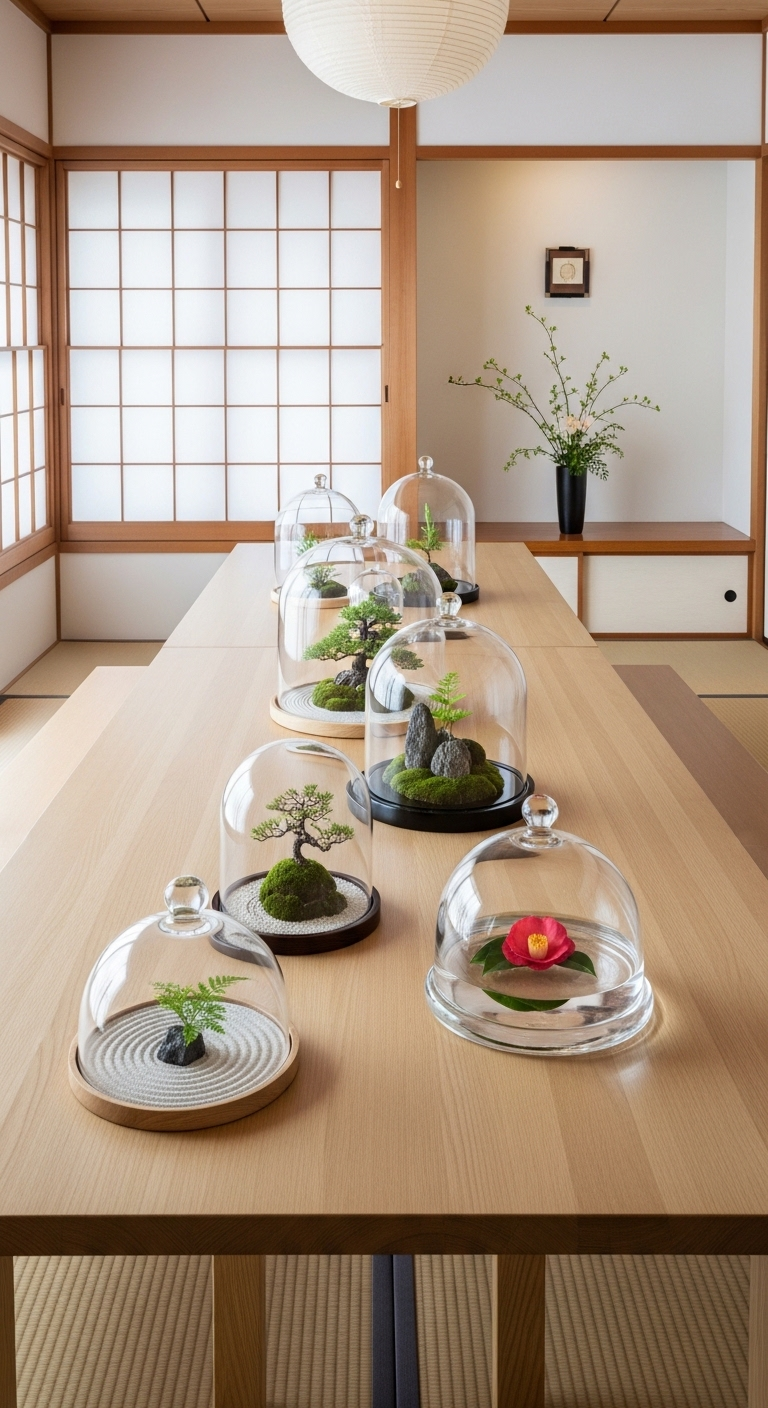
Display a few select “found” objects, like a beautiful shell or a dried lotus pod, under a clear glass cloche on your sideboard. This turns simple natural items into “specimen” art, giving them a sense of importance and protected beauty.
The glass adds a touch of shine to the room, reflecting the light of your lanterns and candles for a dynamic look. It is a simple and elevated way to showcase the small wonders of the natural world in your home.
33#. Natural Wool Pouf Seating
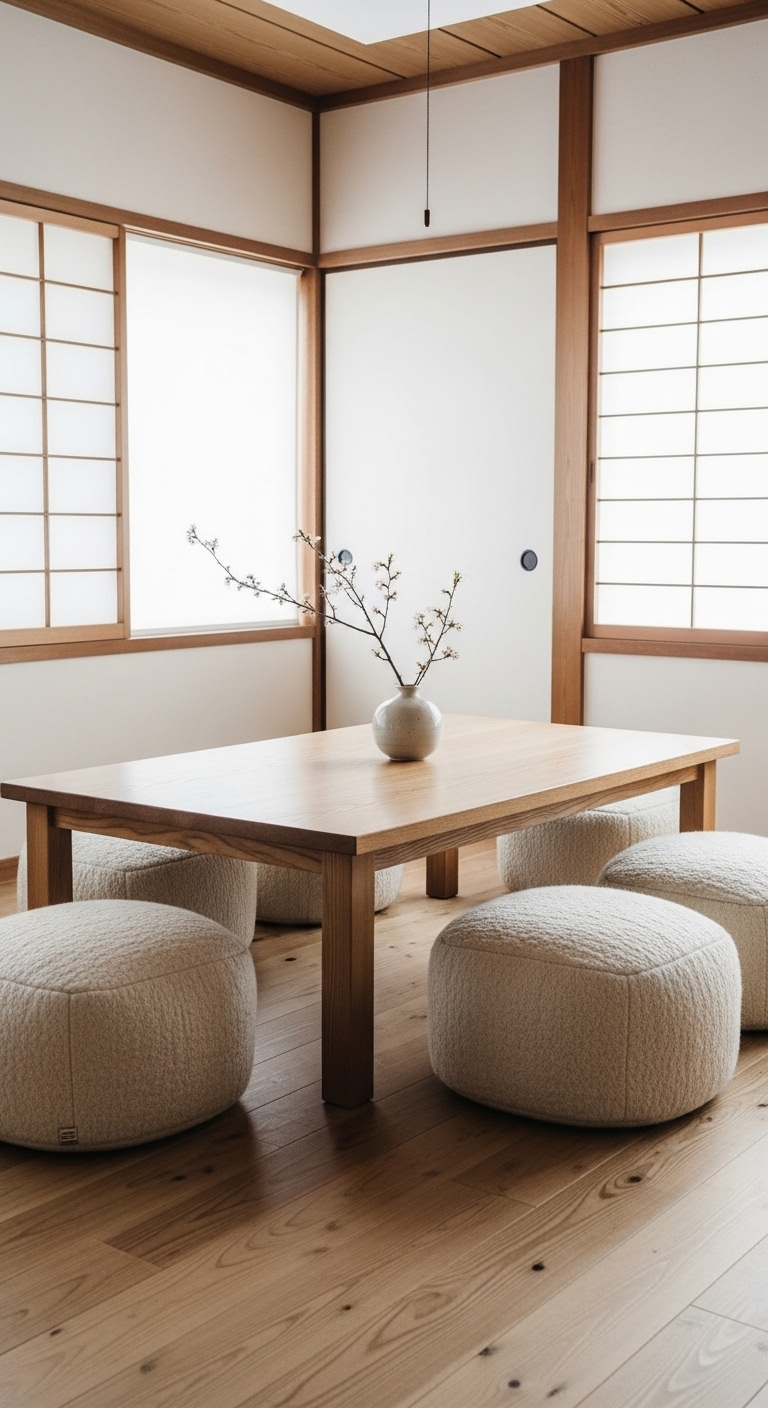
Swap out plastic or metal stools for soft, hand-knotted wool poufs in oatmeal or charcoal grey for extra seating around the room. These poufs provide a soft, tactile experience that is perfect for a cozy and minimalist dining environment.
They are easy to move around and can be used as footrests or even small side tables with the addition of a wooden tray. Wool poufs are a durable and sustainable choice that supports the organic and high-end theme of your home.
34#. Minimalist Black Candle Snuffers
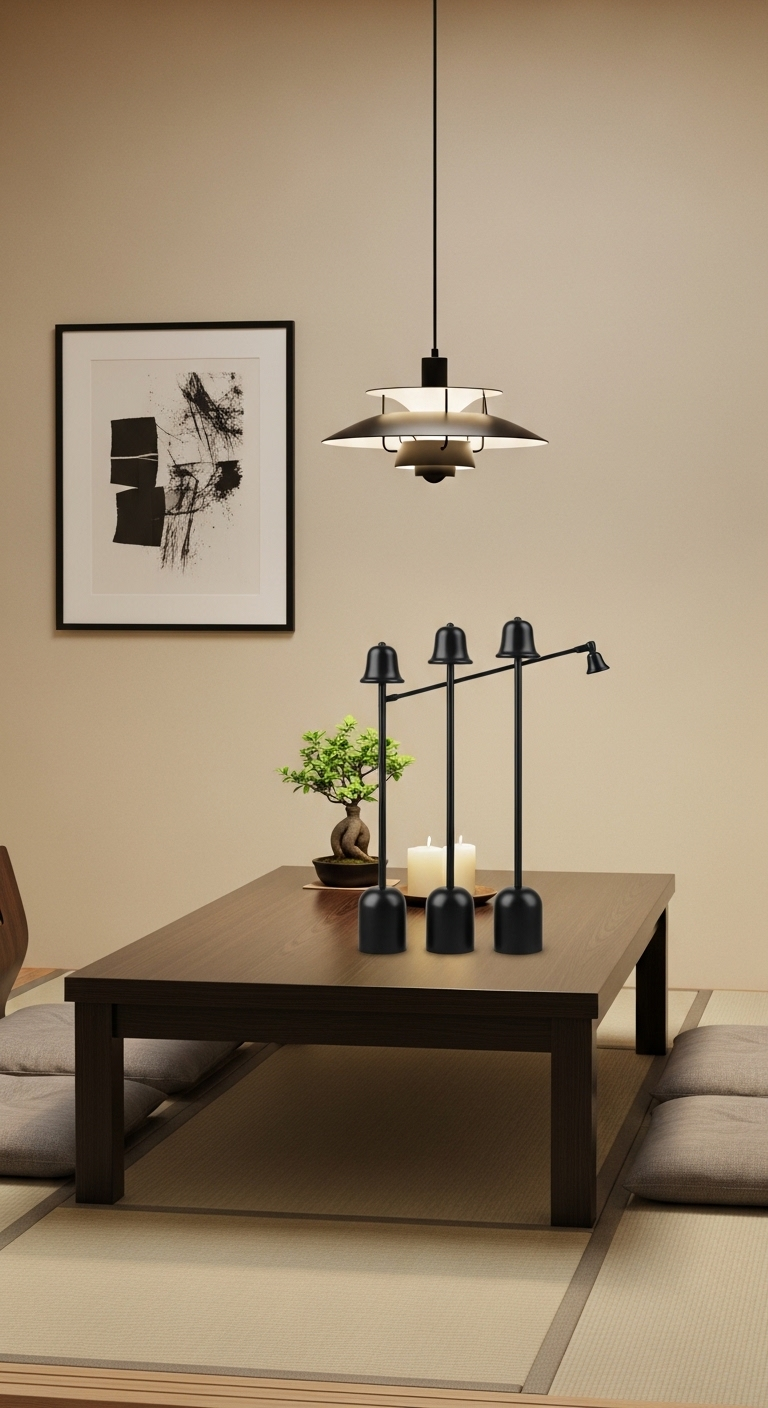
Keep a stylish black metal candle snuffer on your sideboard tray to add a touch of “old-world” ritual to your home. This small, functional tool prevents smoke from filling the room when you extinguish your evening table candles.
It’s a tiny detail that shows you care about the experience of your home and the quality of your atmospheric environment. A candle snuffer is a sophisticated accessory that fits perfectly into the mindful, “slow-living” spirit of Japanese style.
35#. Floor-to-Ceiling Wood Slats
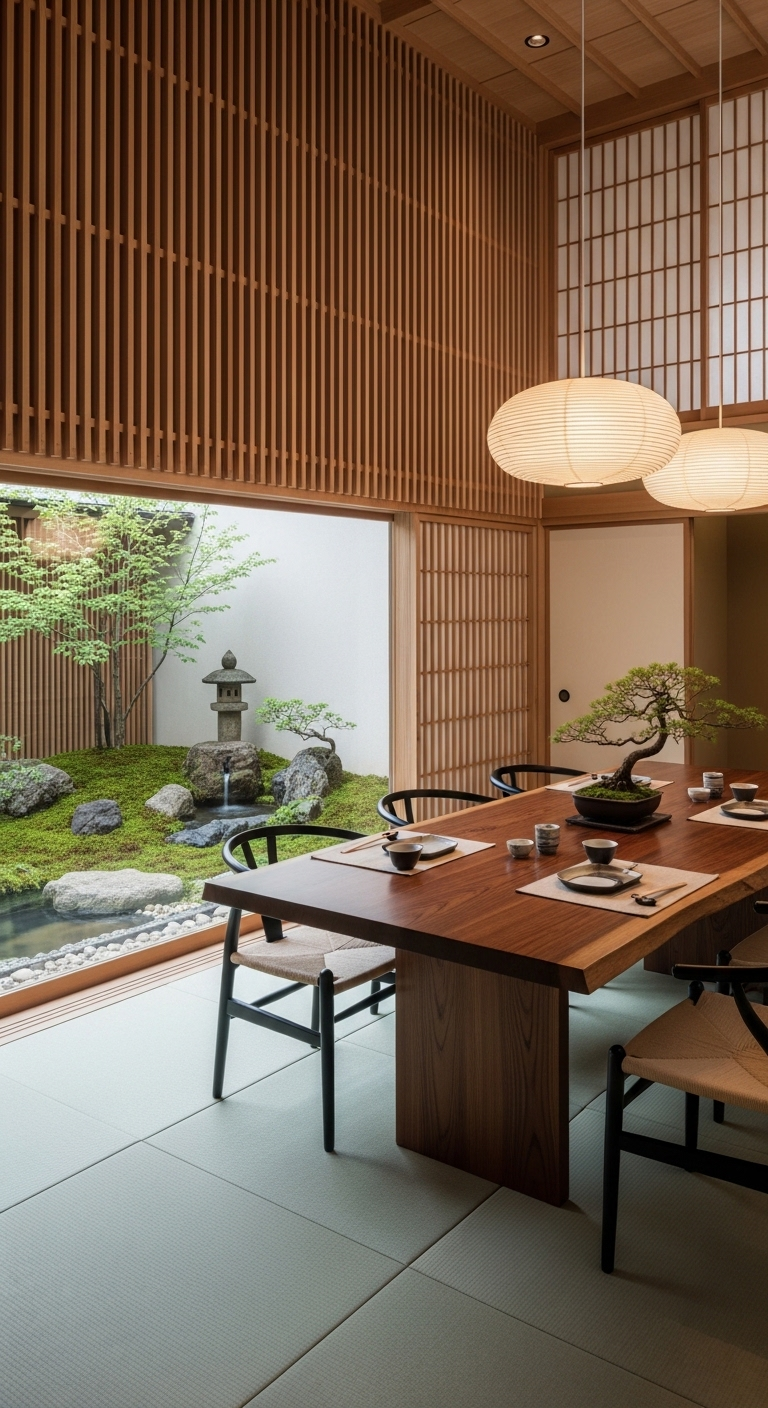
For a major architectural update, install a feature wall made of vertical wood slats in a warm oak or ash finish. This adds incredible texture and a sense of modern, high-end luxury that works perfectly for the Japandi and Japanese aesthetic.
The repetition of the wood lines elongates the room and provides a stunning backdrop for your minimalist furniture and art. It’s a design-forward way to incorporate the warmth of timber into your Japanese Dining Room Design Ideas.
36#. Recessed “Step” Lighting Highlights
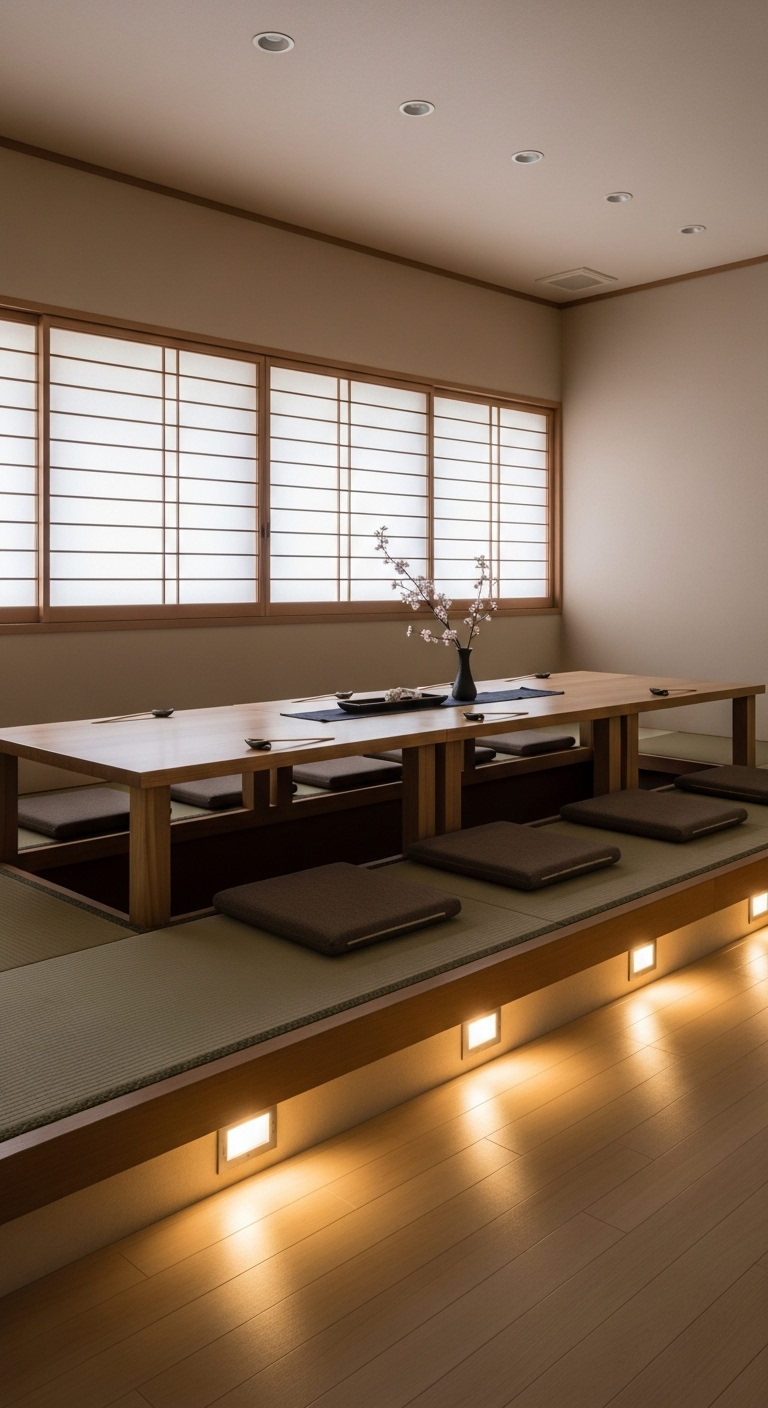
Install low-glare LED lights along the baseboards to guide your path through the dining room with a soft, ethereal glow at night. This architectural lighting adds a sense of safety and a high-end “Zen” atmosphere that is perfect for late-night lounging.
It creates a soft “wash” of light across the floor, highlighting the textures of your tatami mats and polished stone or wood floorboards. This subtle touch is a favorite for those looking to master a professional dining sanctuary.
37#. Sculptural Branch Coat Racks
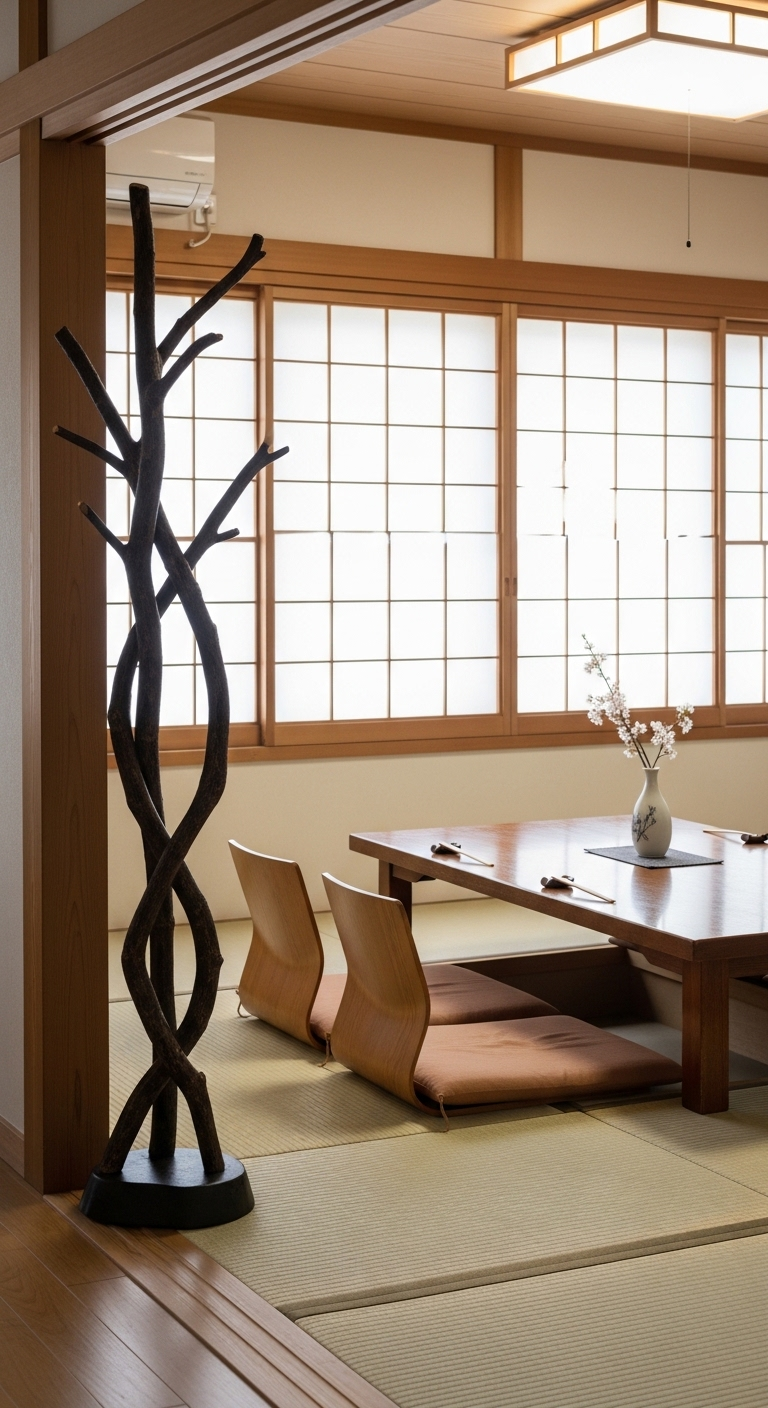
If your dining room is near an entrance, use a coat rack designed to look like a minimalist tree branch made of light wood. This functional piece acts as a sculptural element that brings an organic, forest-inspired silhouette into your home.
It provides a practical spot for guests to hang scarves and bags without cluttering your main seating area or furniture. This “nature-first” accessory reinforces the theme of simplicity and utility that defines the Japanese style.
Wrap up: Cultivating Your Inner Peace
Designing a Japanese-inspired dining room is an intentional journey toward simplicity, honoring the balance between the natural world and the spaces we inhabit.
By stripping away the unnecessary and focusing on quality materials like cedar, washi paper, and stone, you’ve created a sanctuary that nurtures both the body and the soul.
As you gather for your next meal, may the stillness of your surroundings inspire a deeper sense of gratitude and connection with those around you.