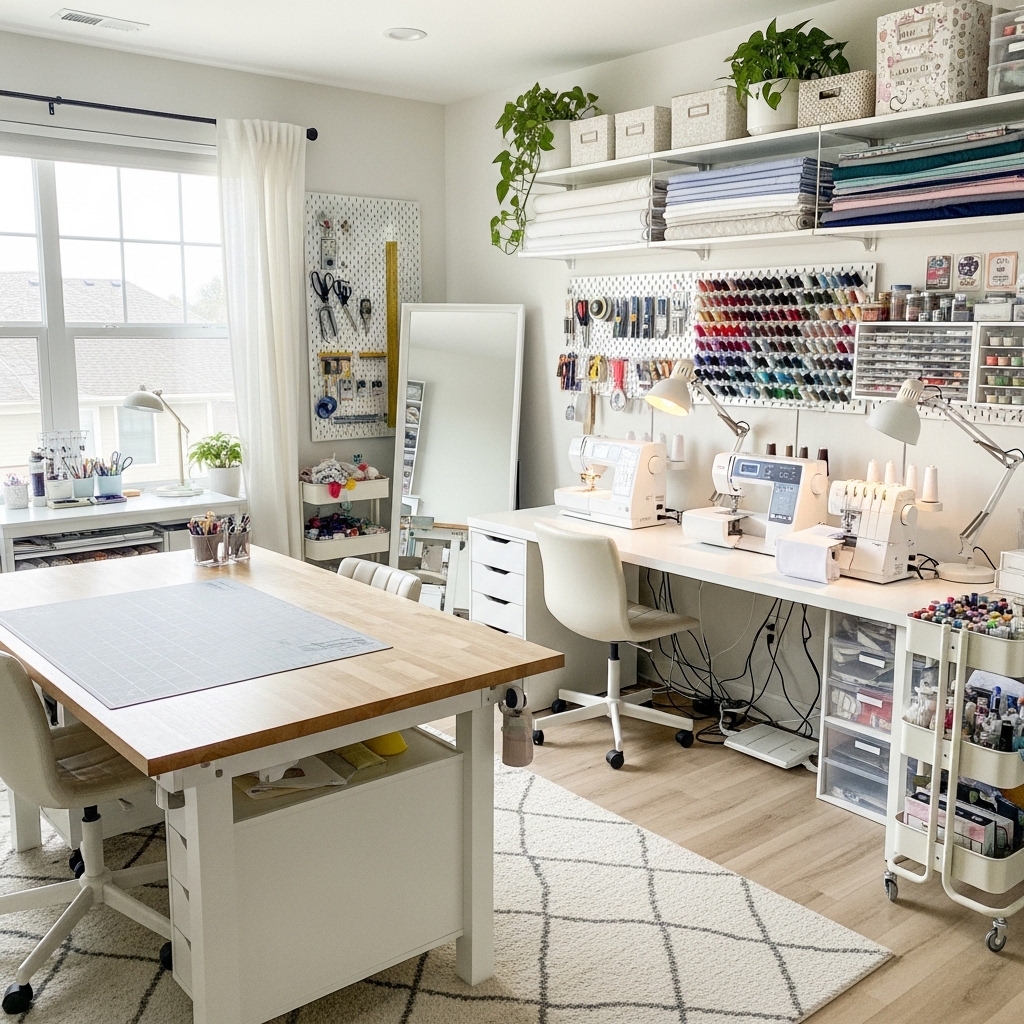
Walking into a room filled with colorful spools of thread and soft fabrics should feel like stepping into a world of pure possibility. Your creative corner is more than just a place to work; it is a sanctuary where your imagination takes a physical form through every single stitch.
Whether you are a master quilter or just starting your first dressmaking project, the environment you inhabit deeply influences your artistic flow and productivity. Let’s dive into every detail you need to master with this how to set up a sewing room complete guide.
1#. Natural Light Optimization
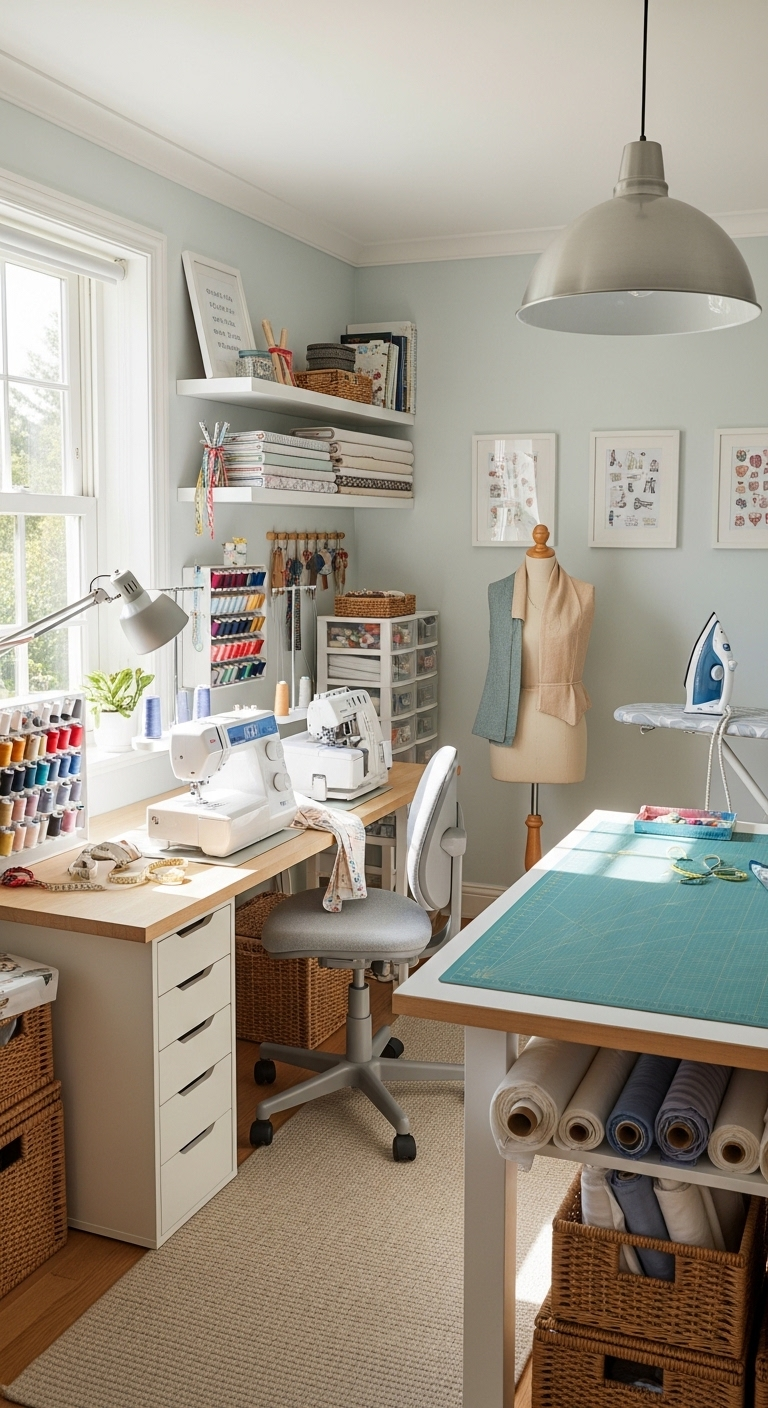
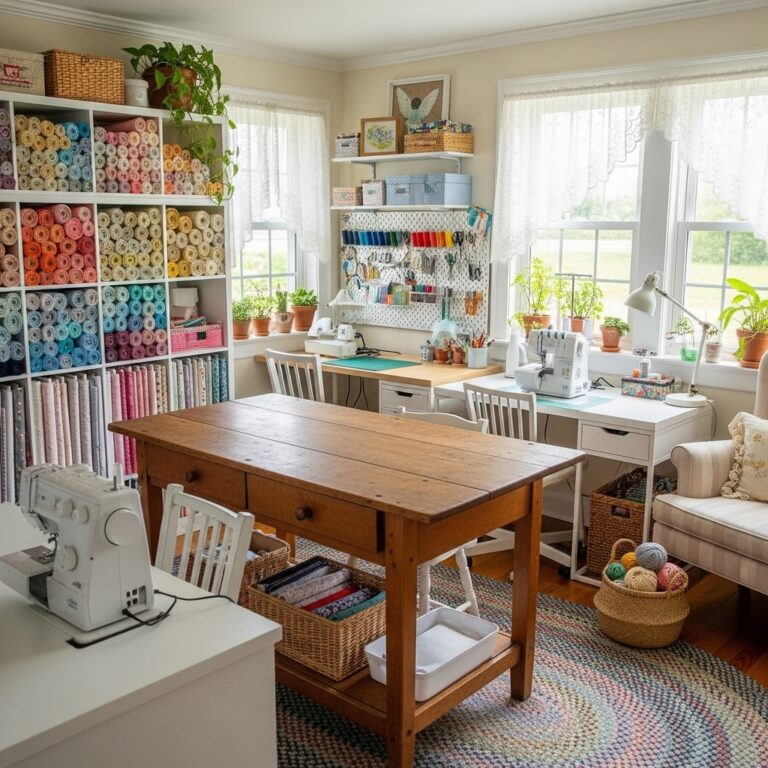
Positioning your primary machine table directly under a window provides the most accurate light for matching delicate fabric hues. It’s a wonderful way to reduce eye strain while enjoying a refreshing view of the garden during long afternoon sessions.
Natural lighting breathes life into your workspace and makes the entire room feel much larger and more inviting for guests. This is a foundational step in our how to set up a sewing room complete guide for a cheerful atmosphere.
2#. Ergonomic Seating Selection
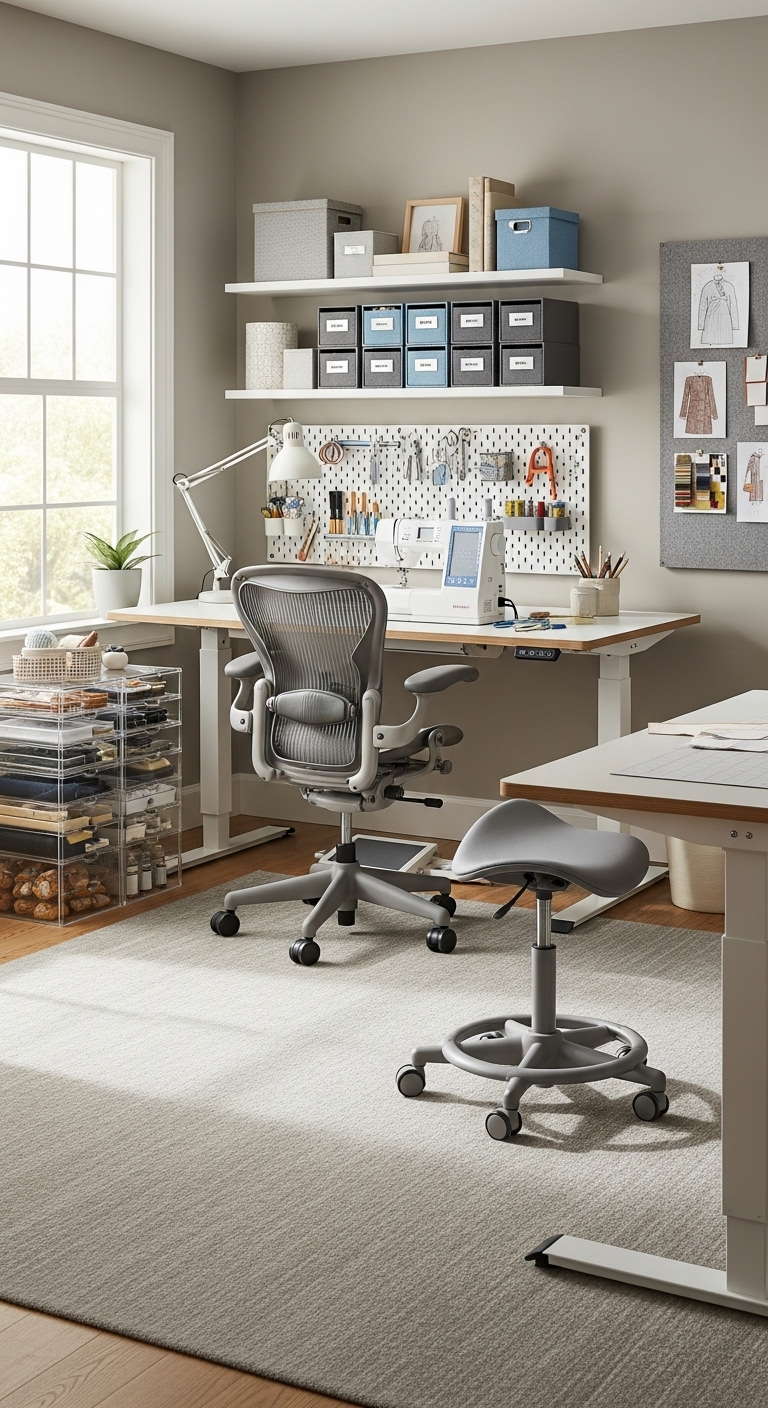
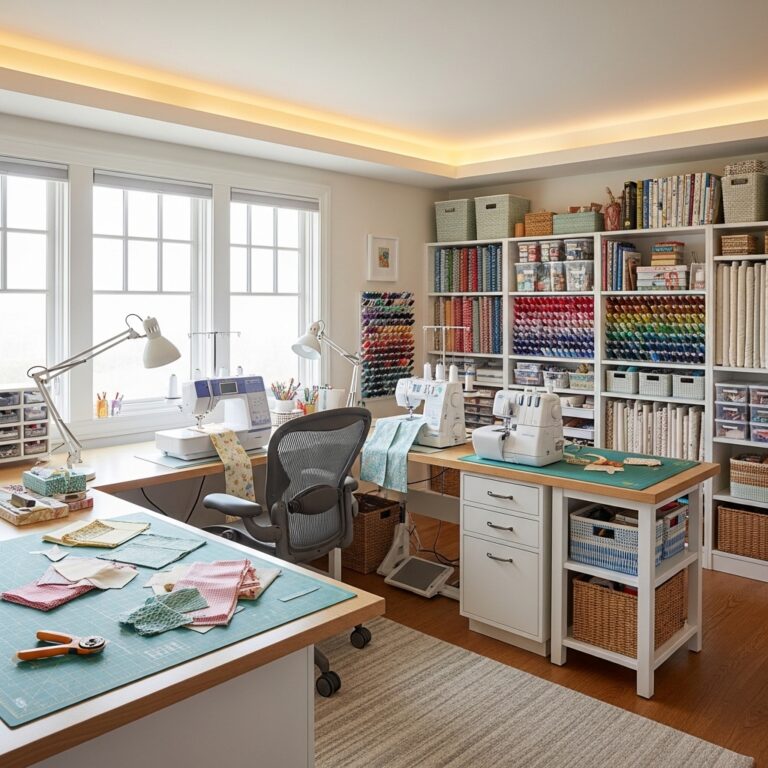
The standard wooden chairs found in most homes are notoriously uncomfortable for the long hours required for intricate garment assembly. Investing in an adjustable, padded office chair can save your back and neck from unnecessary strain over time.
Look for a model with wheels to glide effortlessly between your stitching machine and your nearby cutting table. Comfort is the secret ingredient to maintaining your creative energy through those intense, late-night project marathons.
3#. Counter-Height Cutting Tables
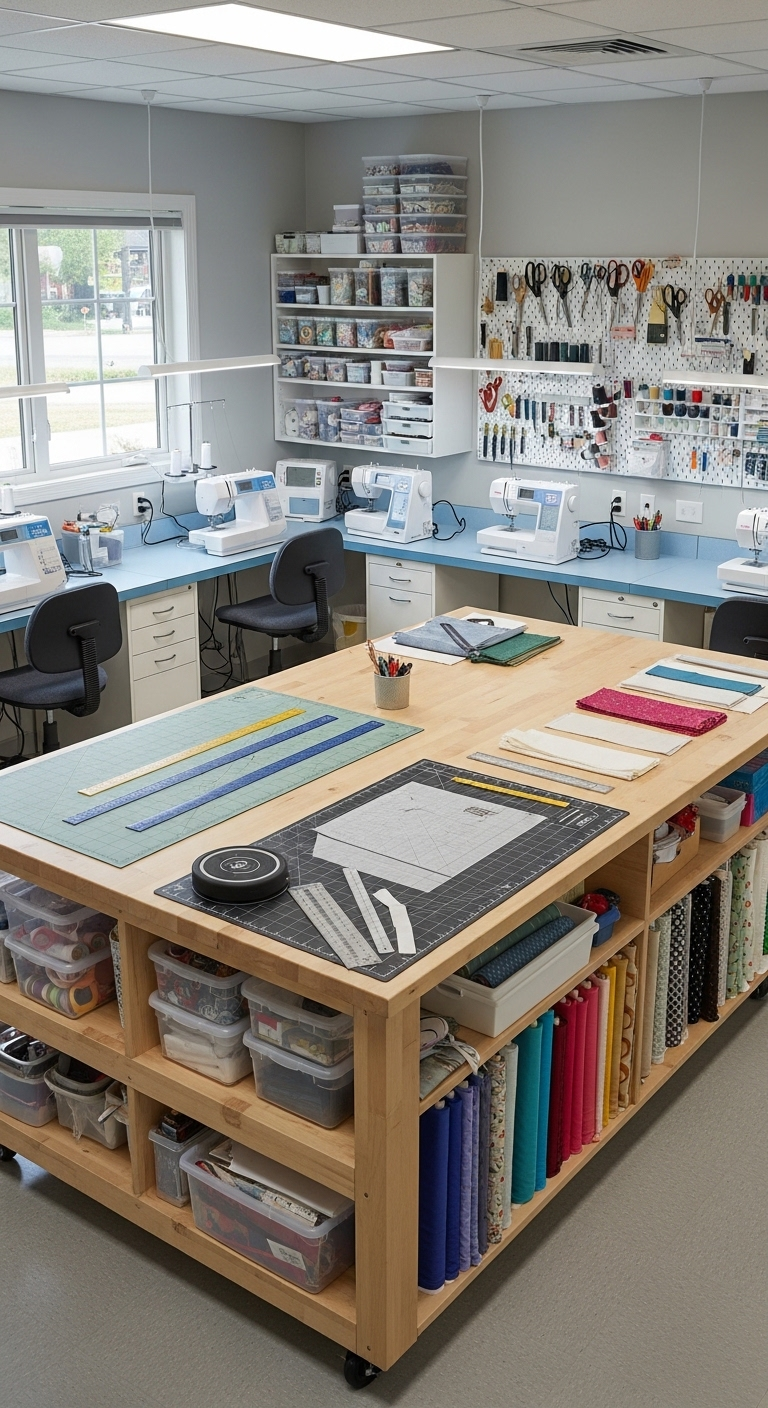
A kitchen-height island allows you to walk around your fabric while cutting out patterns without having to hunch over. This elevated surface protects your posture and gives you better leverage when using a sharp rotary cutter on thick materials.
Having 360-degree access ensures you can reach every corner of a large quilt or a sweeping ballgown with total ease. It creates a professional focal point that anchors the rest of your creative equipment beautifully.
4#. Vertical Pegboard Systems
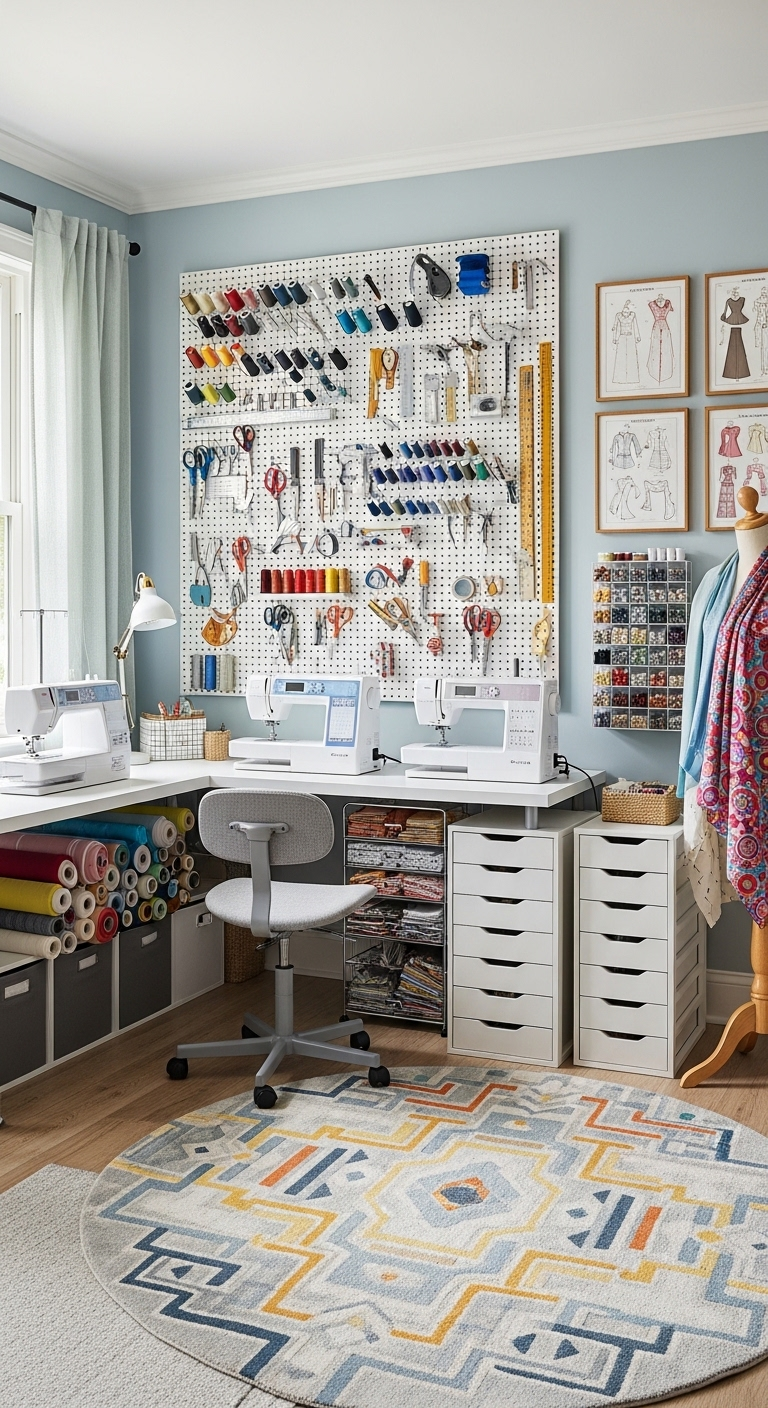
Transforming your wall into a vertical toolkit keeps your most-used rulers, rotary cutters, and shears within arm’s reach. Pegboards offer an adjustable system that can grow and change as your collection of specialized gadgets inevitably expands.
Painting the board in a soft pastel or a bold accent color turns your utility storage into a vibrant piece of art. It’s a classic way to keep your surfaces clear while maintaining a trendy, organized aesthetic.
5#. Rainbow Thread Spool Racks
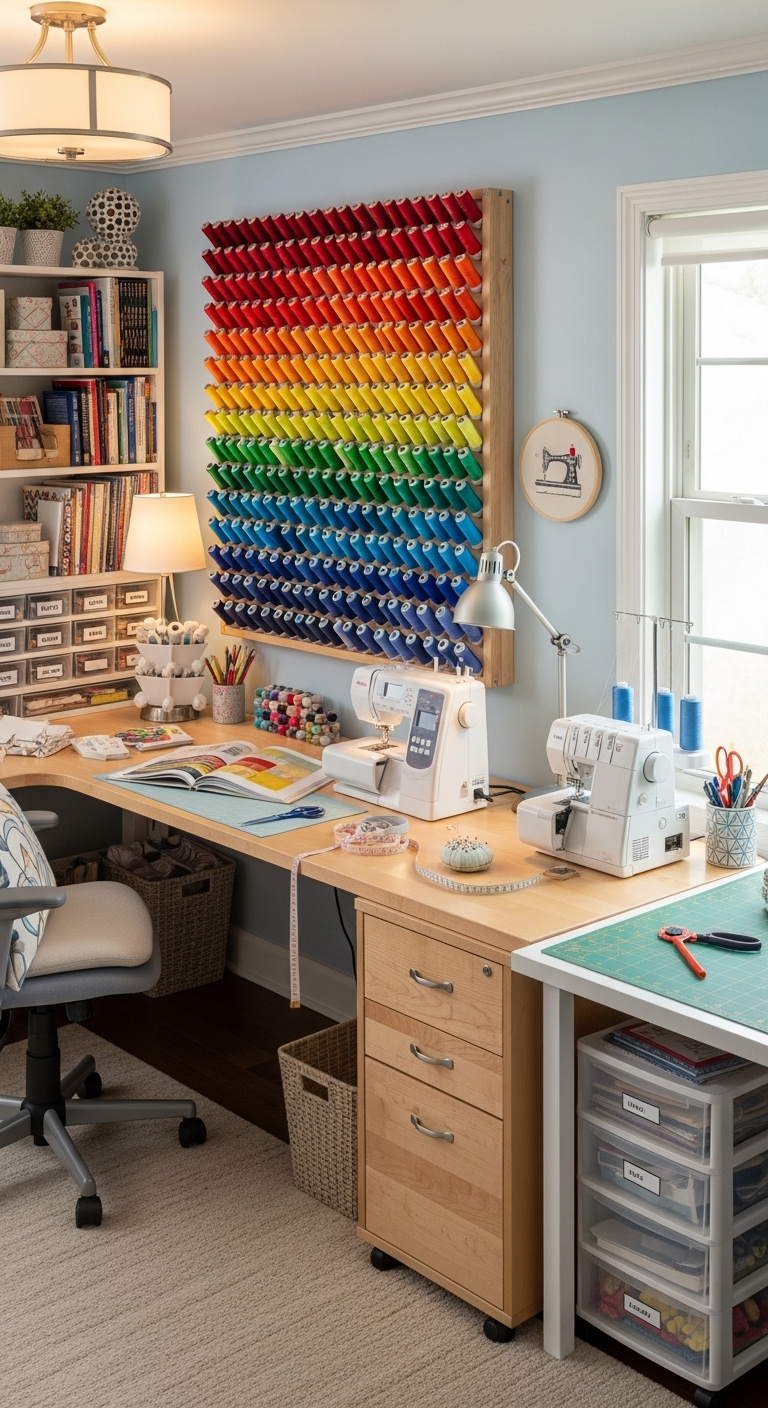
Storing your thread by color on a wall-mounted rack creates a stunning visual spectrum that doubles as textured wallpaper. It makes finding the perfect shade of silk or polyester nearly instantaneous while you’re in the middle of a project.
The organized rows of bobbins and spools add a whimsical, artisanal touch that celebrates the beautiful materials you love. It’s a simple yet high-impact way to beautify your walls while staying strictly organized.
6#. Dedicated Pressing Stations
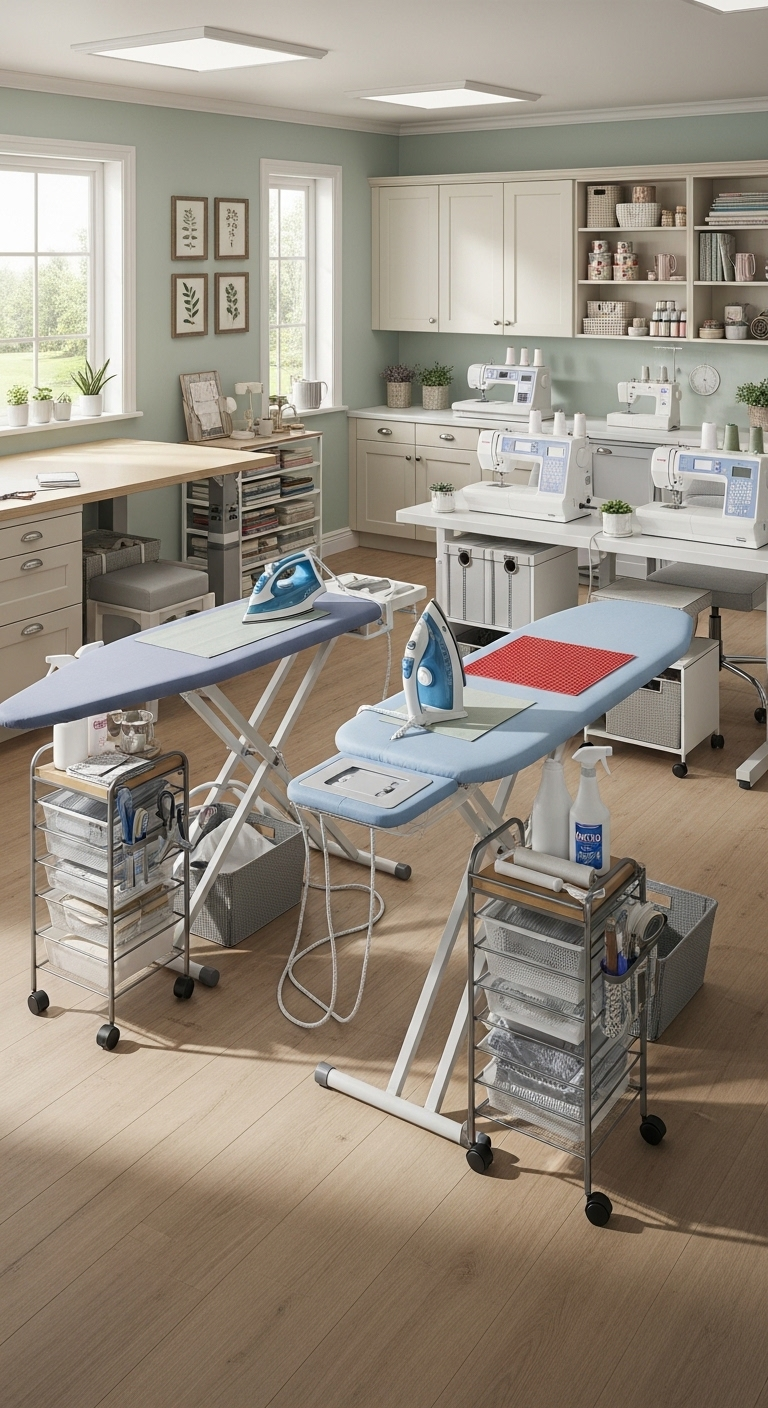
An ironing board that stays permanently set up encourages you to press every seam as you go for a crisp, professional finish. Placing it at a right angle to your machine means you don’t even have to stand up to keep your work flat.
Consider a wide-top pressing table if you frequently work on large-scale items like heavy curtains or bedding sets. Having a dedicated heat zone keeps your fabric looking its best and your project timeline moving forward smoothly.
7#. Floor-to-Ceiling Fabric Cubbies
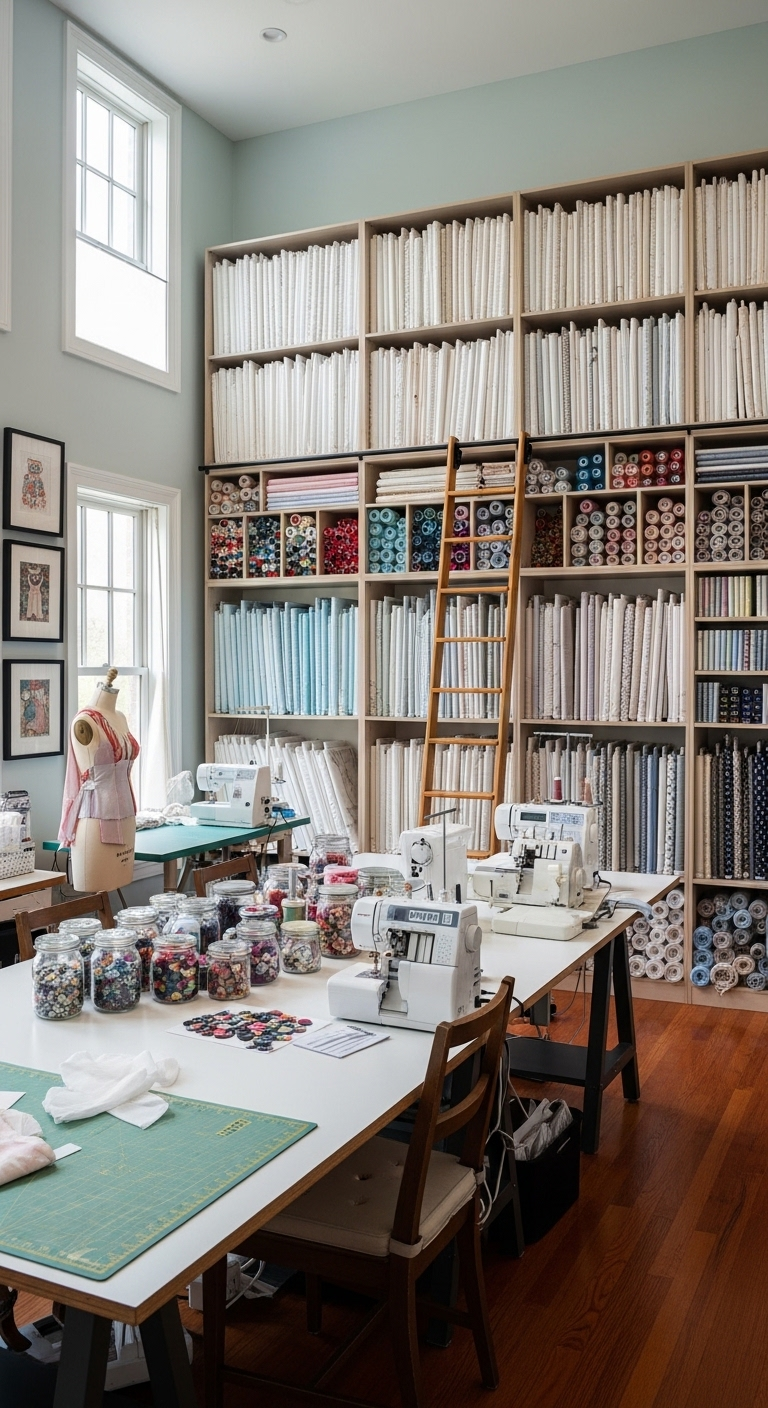
Displaying your fabric stash in open cubbies turns your beautiful textiles into the main decorative feature of the room. It allows you to see exactly what you have on hand, which prevents you from accidentally buying duplicate yardage.
Folding fabrics to a uniform size makes the shelves look tidy and curated, much like a boutique designer shop. This storage method is a staple for those who love a rich, library-like feel in their creative studio.
8#. Rolling Utility Carts
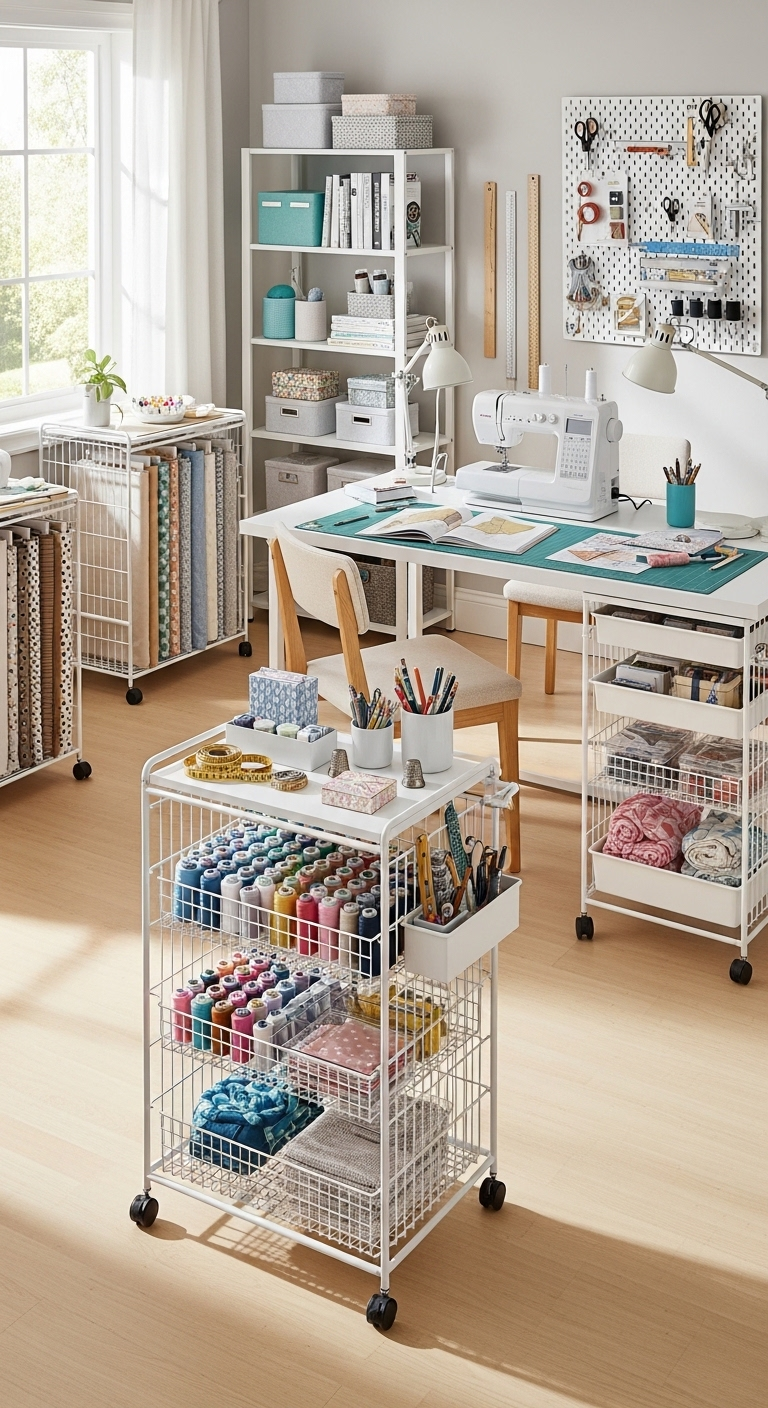
Slim, tiered carts are incredible for holding current project materials that need to move between the iron and the machine. You can easily wheel your “active” supplies out of the way when you need to clear the floor for basting.
These carts fit perfectly under most tables, making them a secret weapon for keeping your workspace adaptable and clean. They provide a mobile home for pins and marking pens that usually wander off during a busy workday.
9#. Recessed Task Lighting
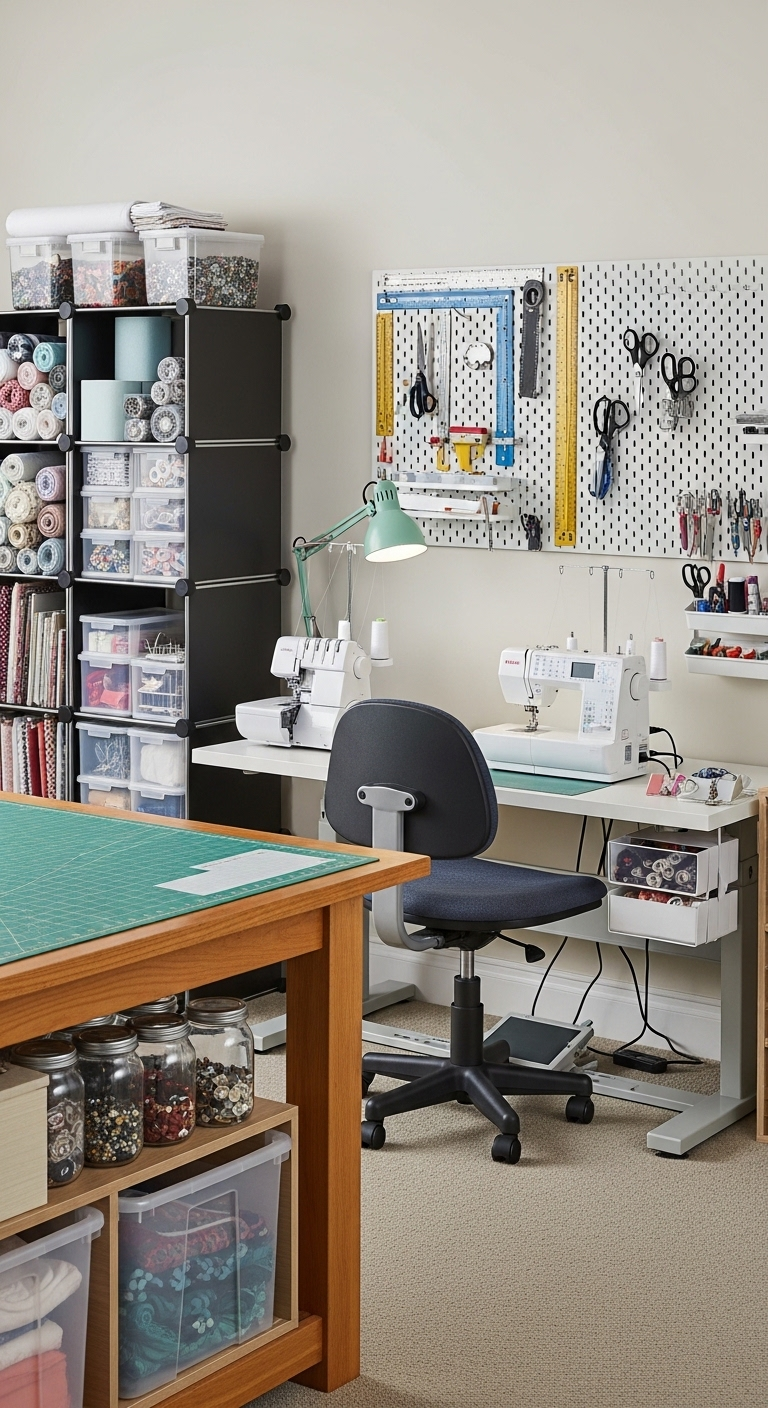
Installing slim LED lights beneath your wall shelves eliminates annoying shadows on your cutting and stitching surfaces. This consistent glow makes it much easier to see small markings and fine thread details during evening hours.
Good task lighting is perhaps the most important functional element you can include in your creative floor plan. It ensures you can keep working comfortably long after the sun has gone down without straining your vision.
10#. Clear Acrylic Organizers
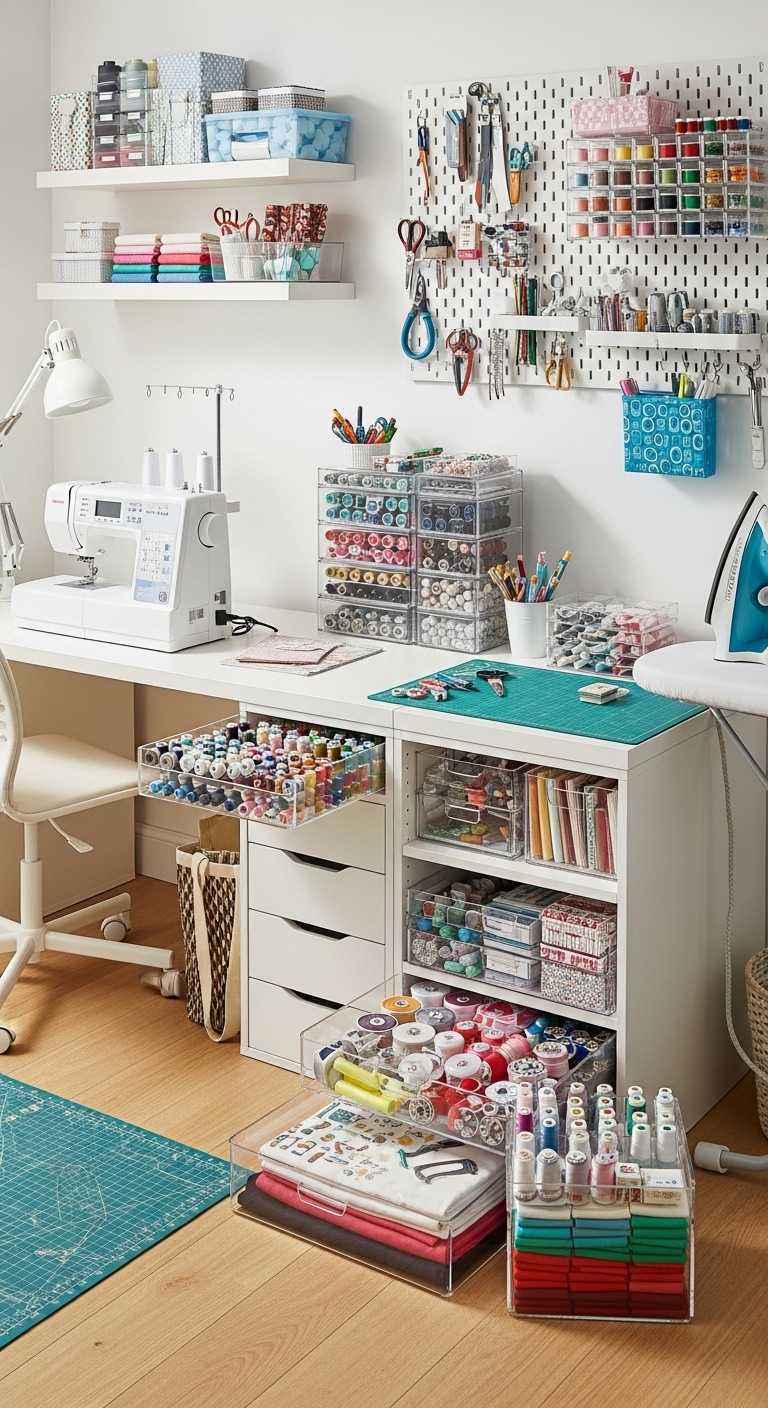
In a small space, visual clutter can make the room feel much smaller and more chaotic than it actually is. Clear acrylic bins and organizers keep your makeup, pens, and notions tidy without adding unnecessary visual weight.
Being able to see exactly what’s inside each drawer saves you time and frustration during the creative process. It’s a clean, modern look that fits perfectly with almost any decor style you choose to implement.
11#. Three-Way Mirror Stations
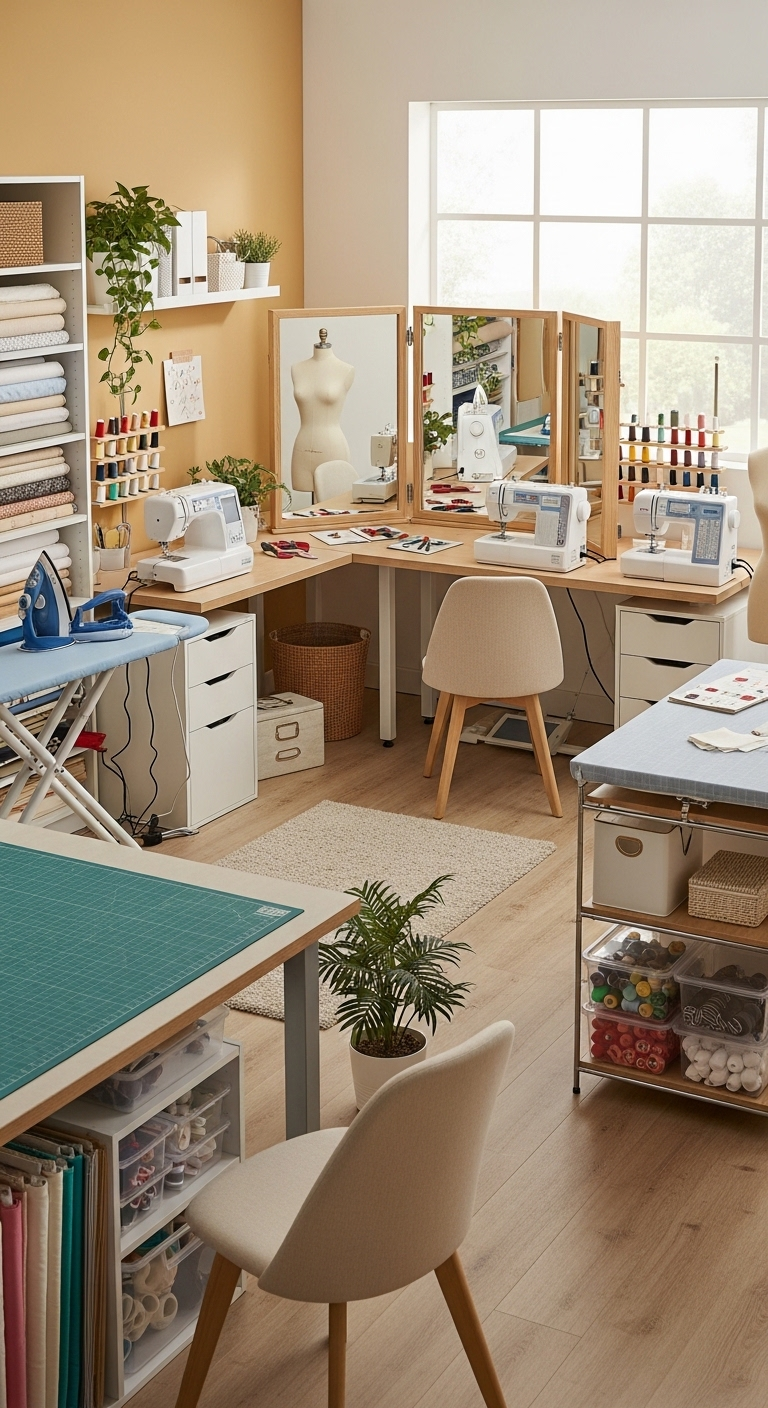
A full-length mirror is an essential tool for any dressmaker who needs to check the fit and drape of a garment. Placing a trio of mirrors in a corner allows you to see your progress from every angle without assistance.
The reflection also helps to double the light in the room, making the whole space feel much more expansive. It turns a simple workspace into a professional fitting room for your custom-tailored creations.
12#. Magnetic Pin Dish Accents
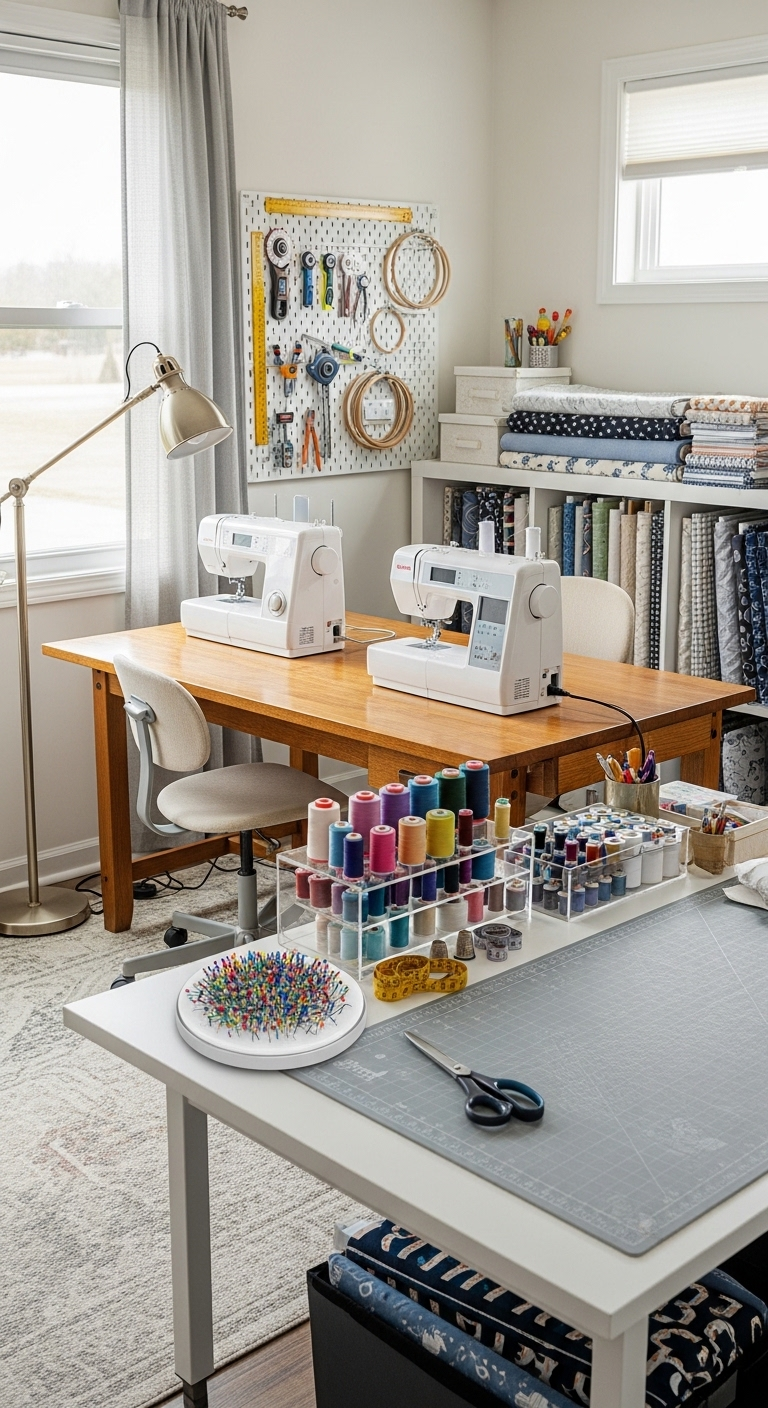
A magnetic dish is a lifesaver for quickly gathering up dropped pins from your table or the hardwood floor. It keeps your sharp tools securely in one place so they don’t end up embedded in your carpet or your foot.
They come in various colors and metallic finishes to match your decor, proving that safety can be stylish too. It’s a small but mighty tool that every creative workspace should have nearby at all times.
13#. Industrial Loft Style Desks
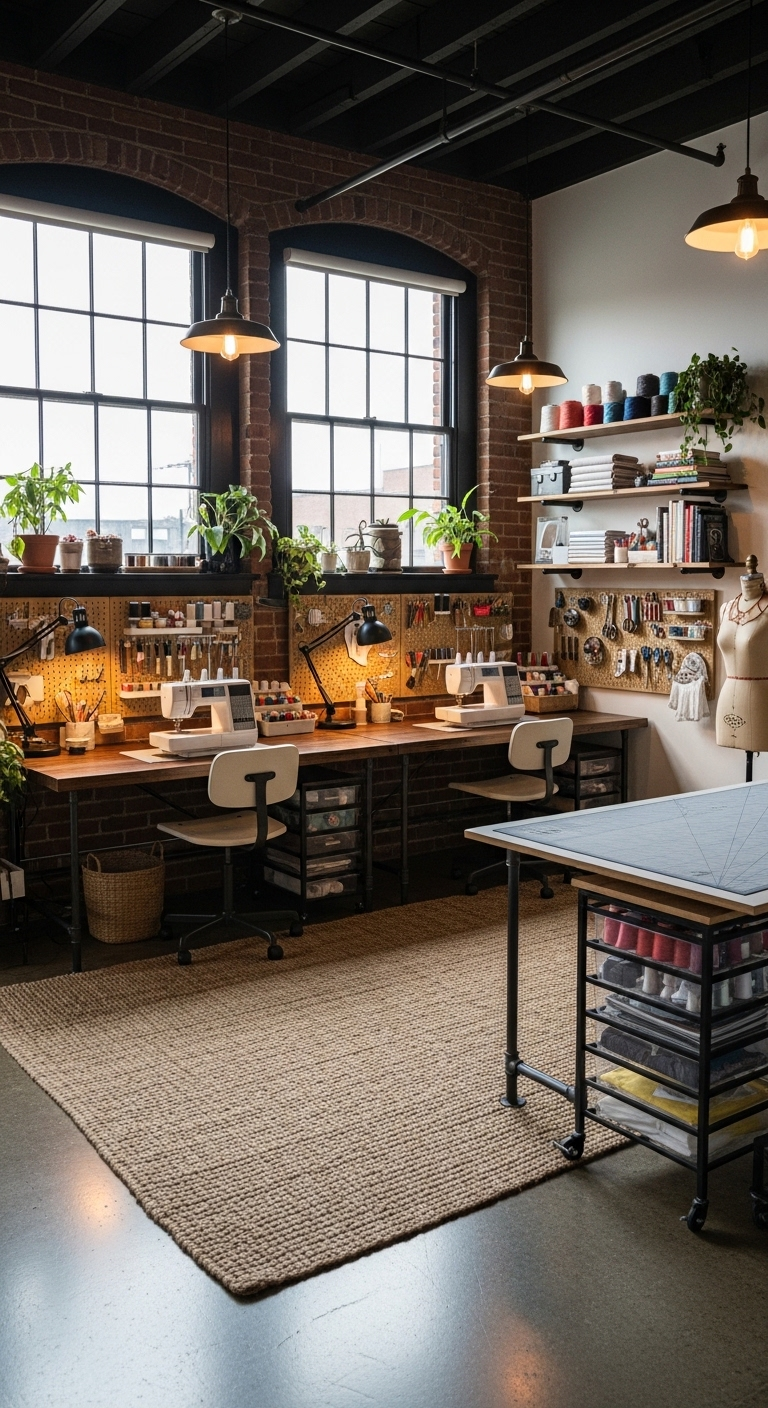
Incorporating metal shelving and reclaimed wood tables gives your creative room a trendy, urban warehouse vibe. This rugged look is incredibly durable and can handle the weight of heavy-duty industrial machines and presses.
The combination of raw materials creates a creative energy that feels both productive and stylishly unrefined. It’s a popular choice for those who prefer a modern, edgy aesthetic over traditional floral home decor.
14#. Hidden Closet Workspaces
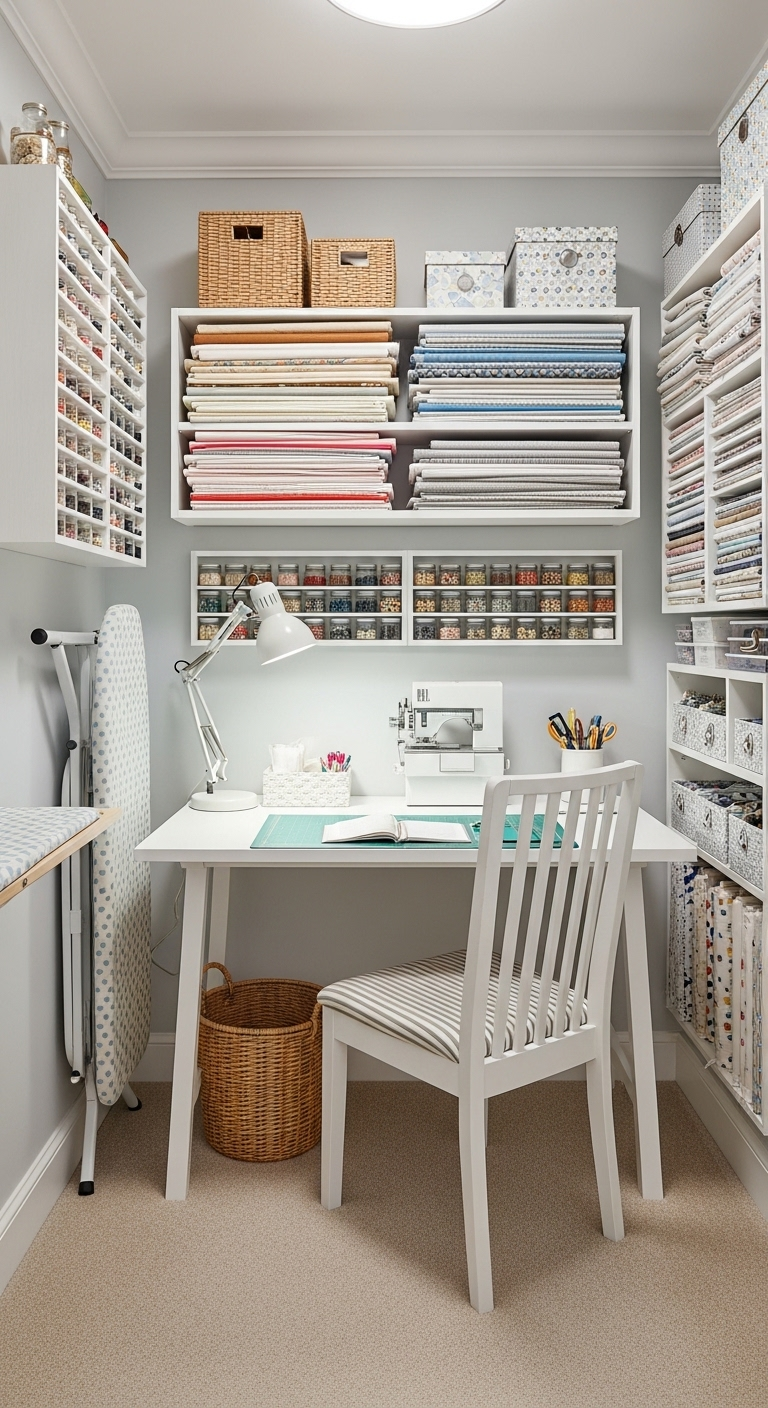
For those living in smaller apartments, converting a spare closet into a “cloffice” style station is a total game-changer. You can simply close the doors to hide your creative chaos whenever guests come over for a visit.
Install some bright LED strip lighting and a few sturdy shelves to make the most of the compact interior space. This is a brilliant strategy for urban dwellers who need to maximize every square inch of their home.
15#. Glass Jar Button Galleries
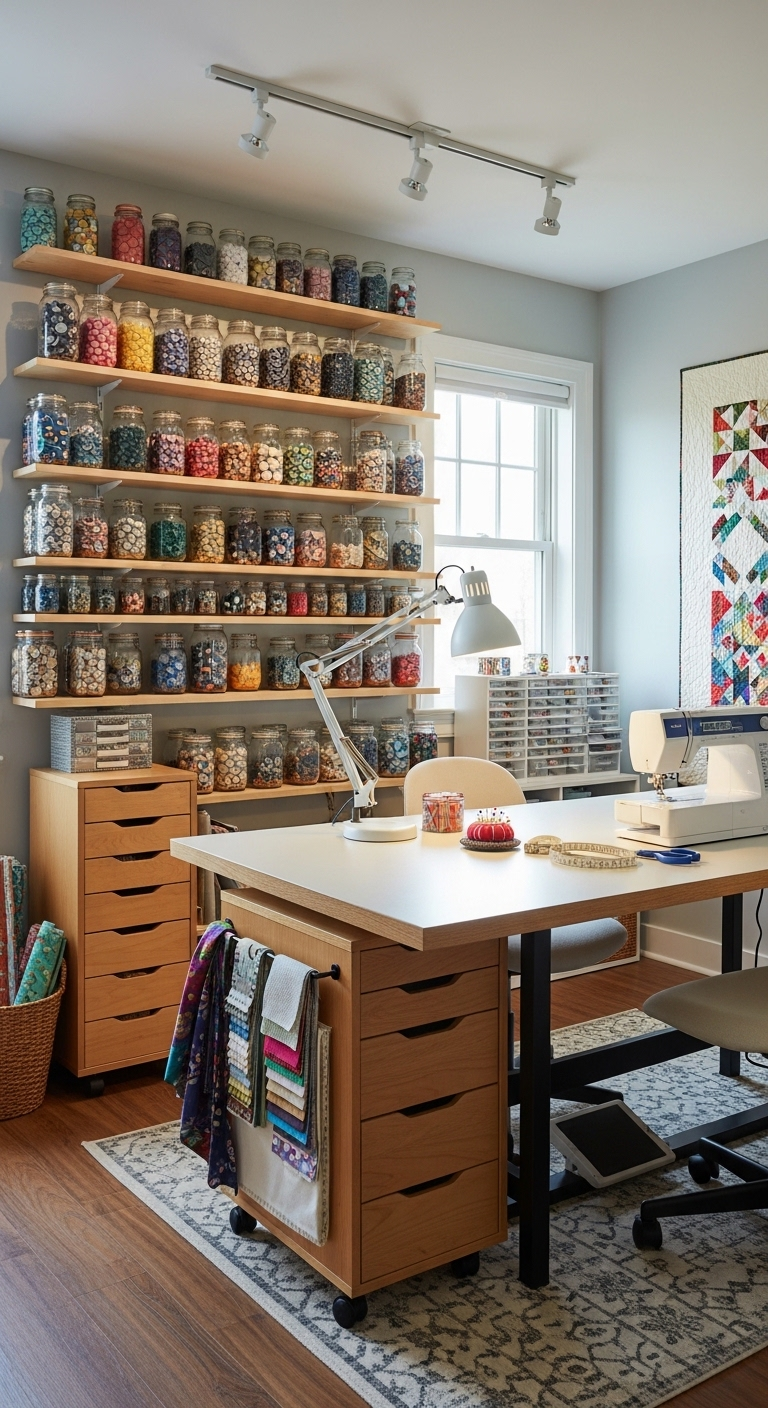
Sorting buttons by size or color in clear glass jars makes them look like jars of candy on your shelf. It’s a nostalgic and beautiful way to store thousands of tiny items that are otherwise easily lost.
Being able to see the buttons through the glass helps you find the perfect match for your project instantly. Plus, it’s a great way to repurpose old kitchen jars into functional and pretty storage pieces.
16#. Ribbon and Lace Spool Rods
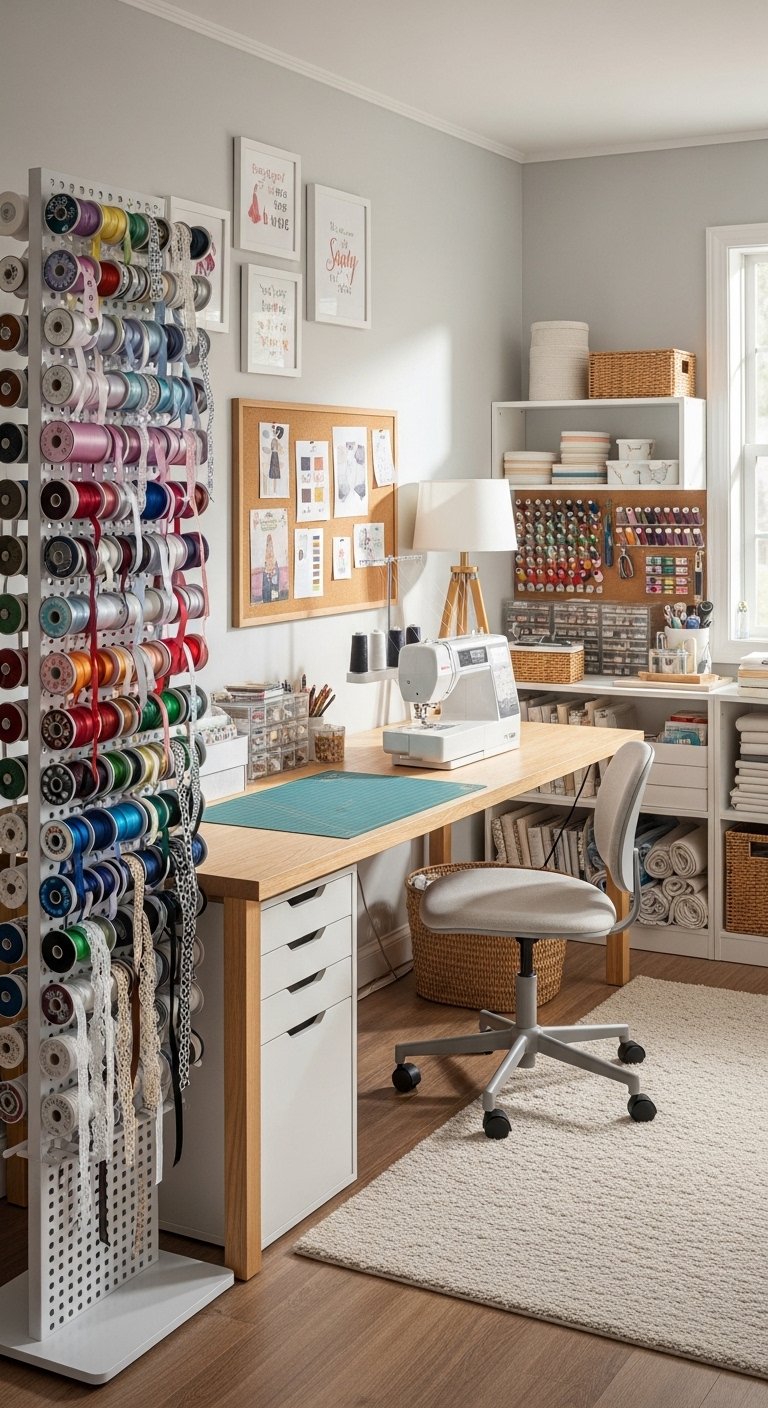
Installing thin dowels or tension rods inside a cabinet keeps your ribbons and trims from becoming a knotted mess. You can simply pull and snip what you need without removing the entire spool from its holder.
It turns your collection of trims into a decorative fringe that looks lovely and stays perfectly organized. This is a favorite trick for detail-oriented crafters who love a tidy, boutique-style shelf display.
17#. Mood Board Inspiration Grids
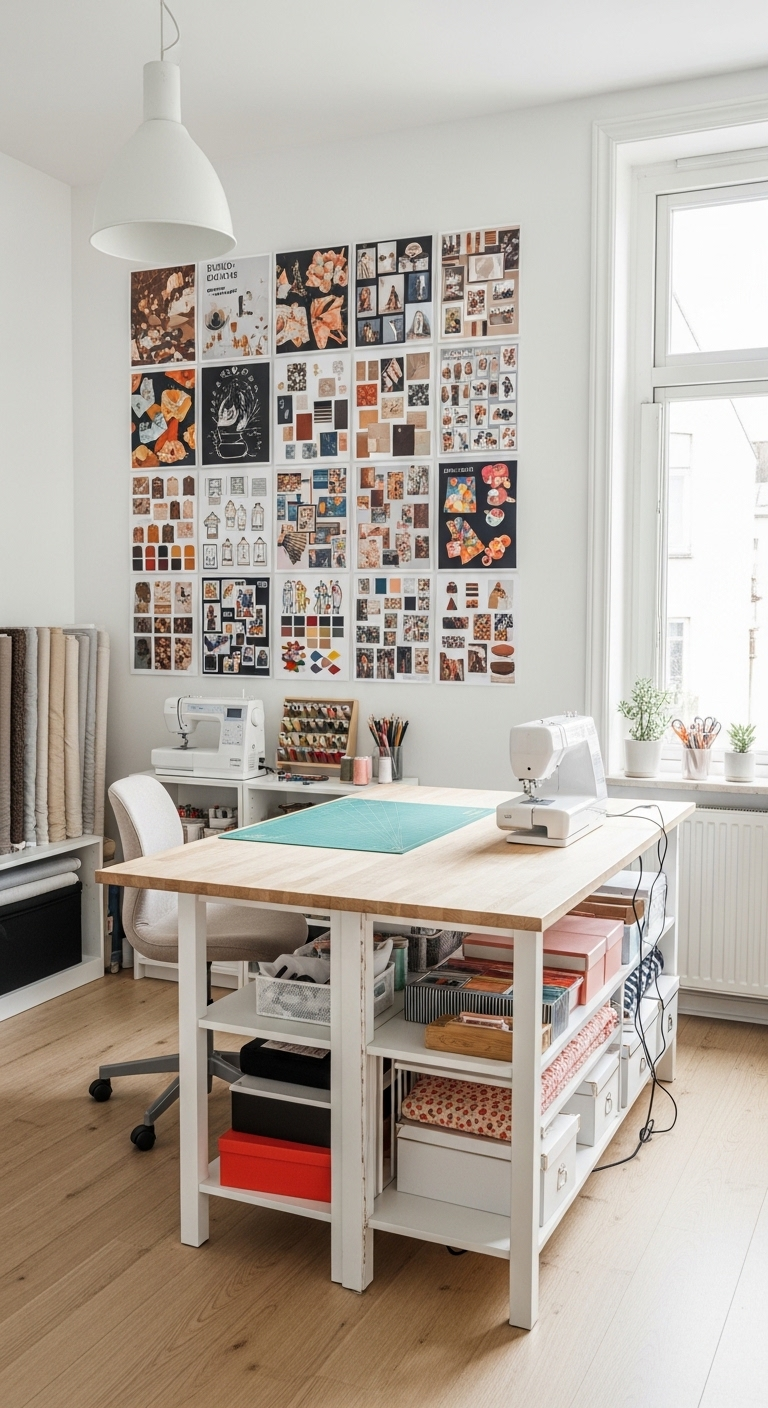
Covering a section of the wall in wire grids or cork creates a space to pin up swatches, sketches, and palettes. It serves as a visual map for your current projects and helps keep your creative vision on the right track.
Changing the board with the seasons keeps your environment feeling fresh and aligned with your current interests. It’s a personal touch that makes the room feel deeply connected to your unique artistic process.
18#. Uniform Storage Bin Aesthetics
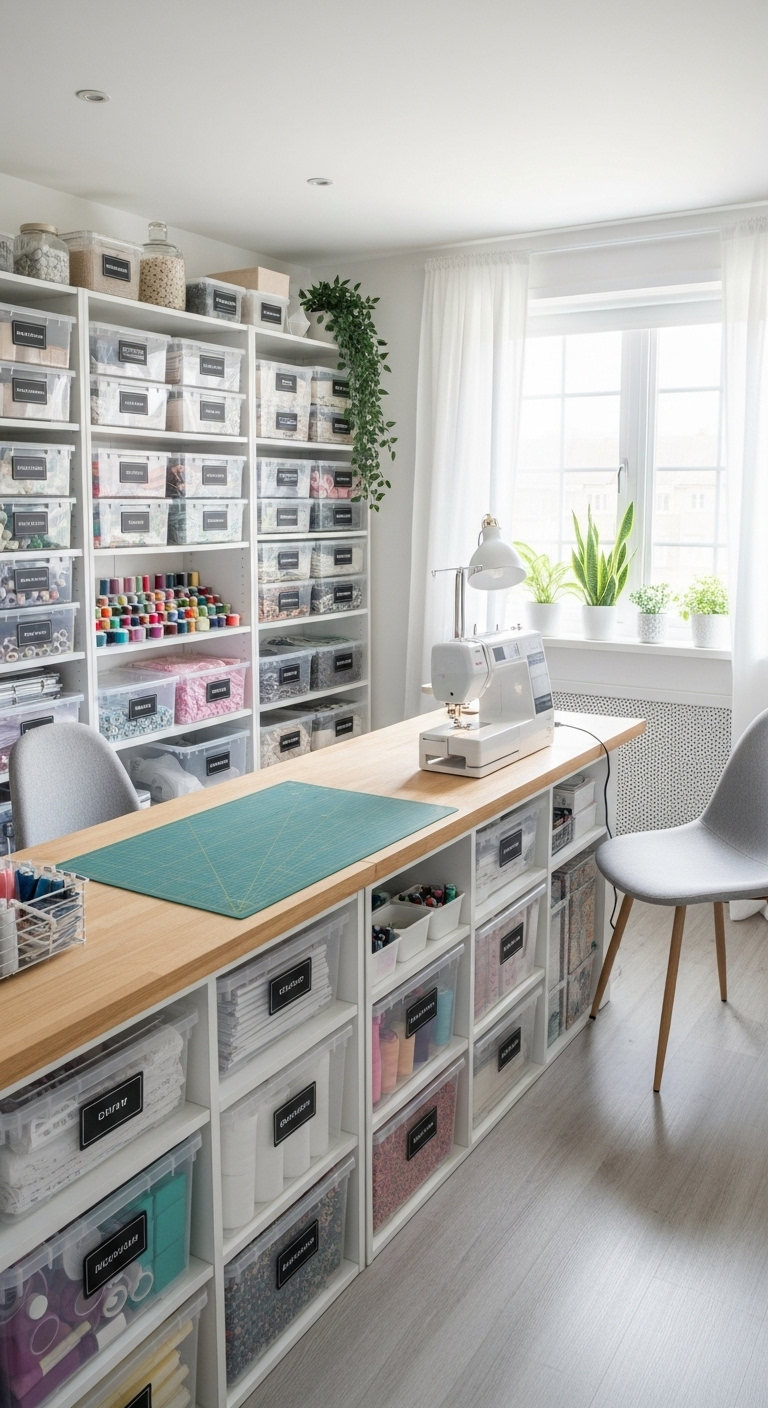
Using a set of matching bins for your notions creates a cohesive, professional look that calms the busy mind. Labeling each bin ensures that you know exactly where the elastic, zippers, and snaps are kept.
A clean, uniform appearance makes even the most crowded room feel more spacious and under control. It’s an easy organizational upgrade that makes your room look like a professionally designed studio.
19#. Hanging Pattern Display Racks
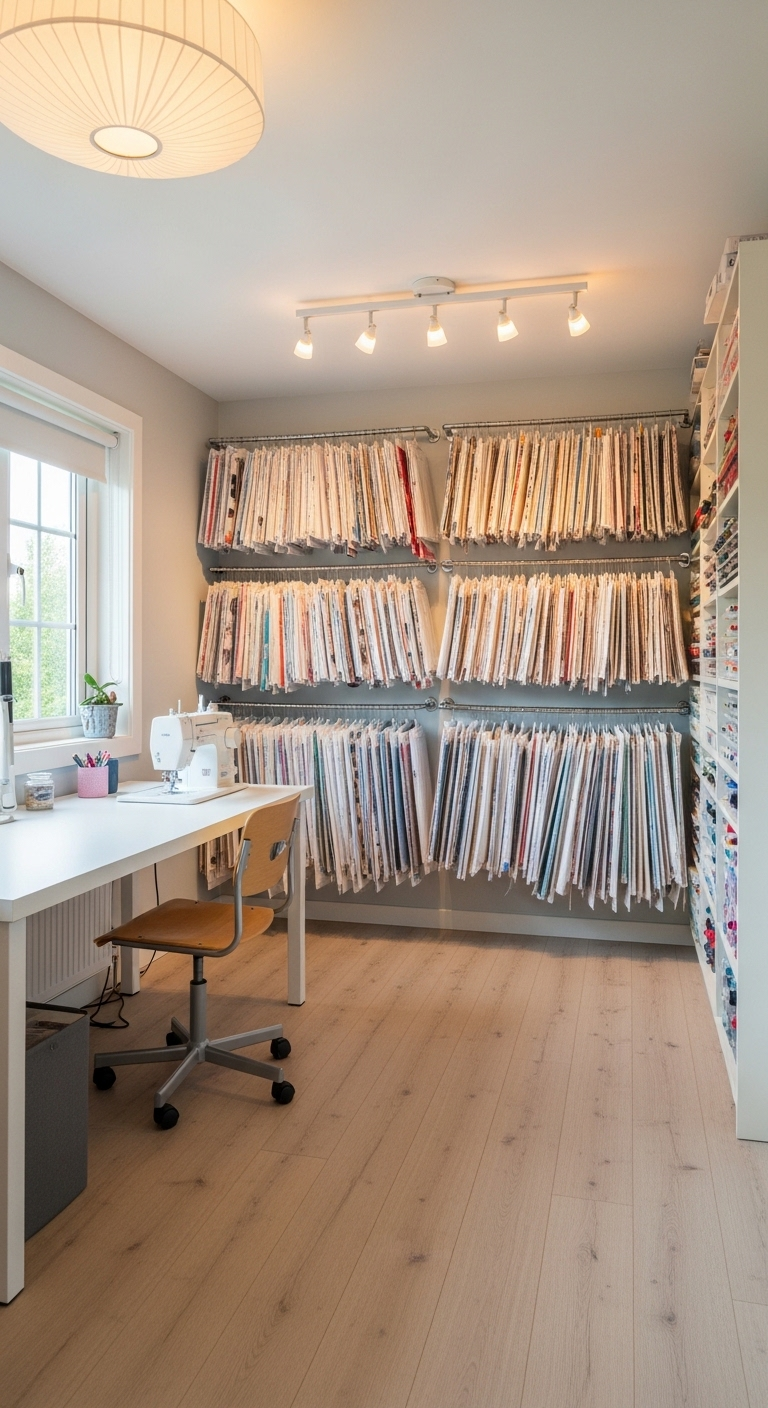
Using a retail-style rack with hangers allows you to see your current “to-do” list of patterns at a glance. It keeps delicate tissue paper off the floor and prevents it from getting lost in a sea of leftover fabric.
This vertical solution is great for small rooms that lack deep drawer space for flat pattern storage. It’s an efficient and professional way to manage your upcoming garment projects with flair and style.
20#. Scrap Sorting Color Bins
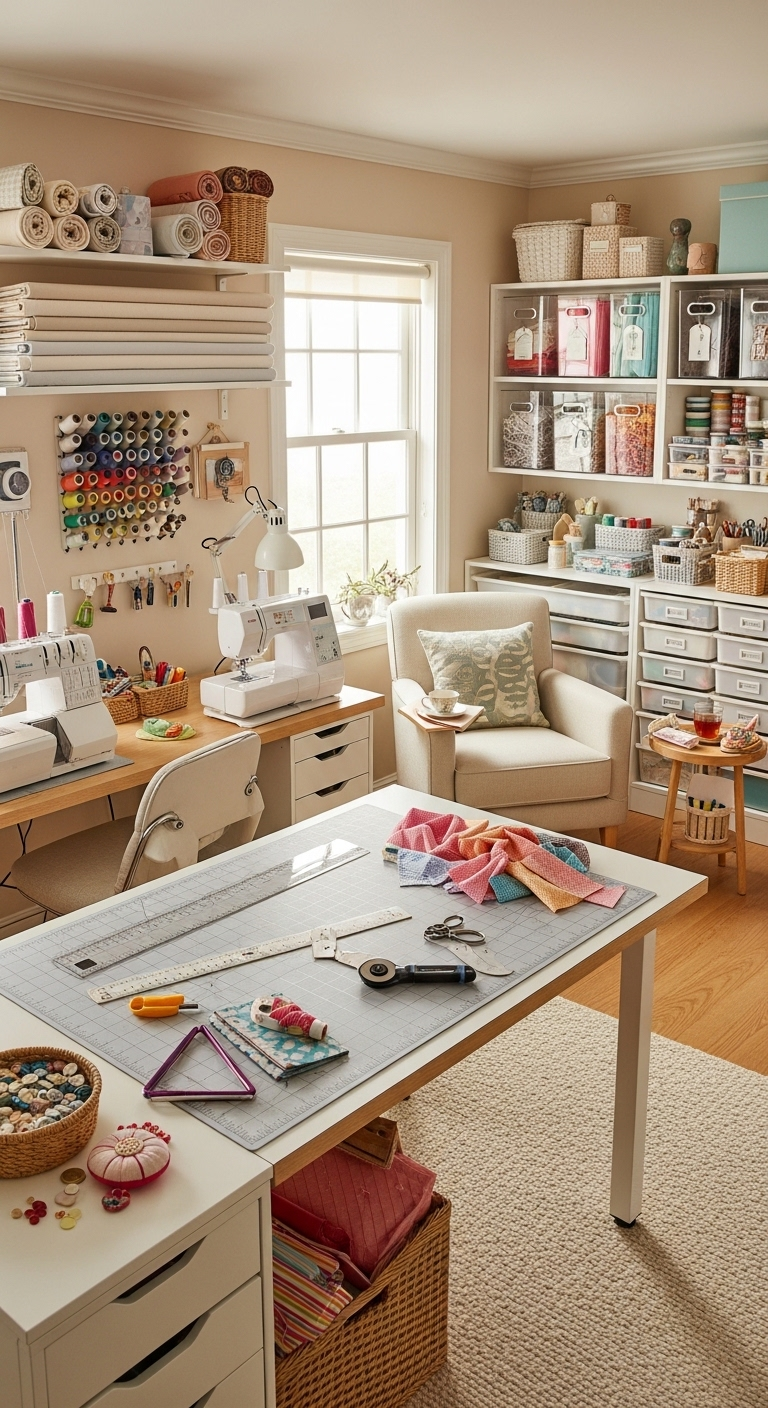
Labeling bins by color for your fabric leftovers makes it easy to find pieces for small applique or quilting projects. This prevents your scraps from becoming an unmanageable pile at the bottom of a dark closet.
Turning your waste into an organized resource encourages more sustainable “zero-waste” habits in your crafting. It’s a tidy way to manage the inevitable leftovers of a productive and creative life.
21#. Vintage Desk Upcycle Projects
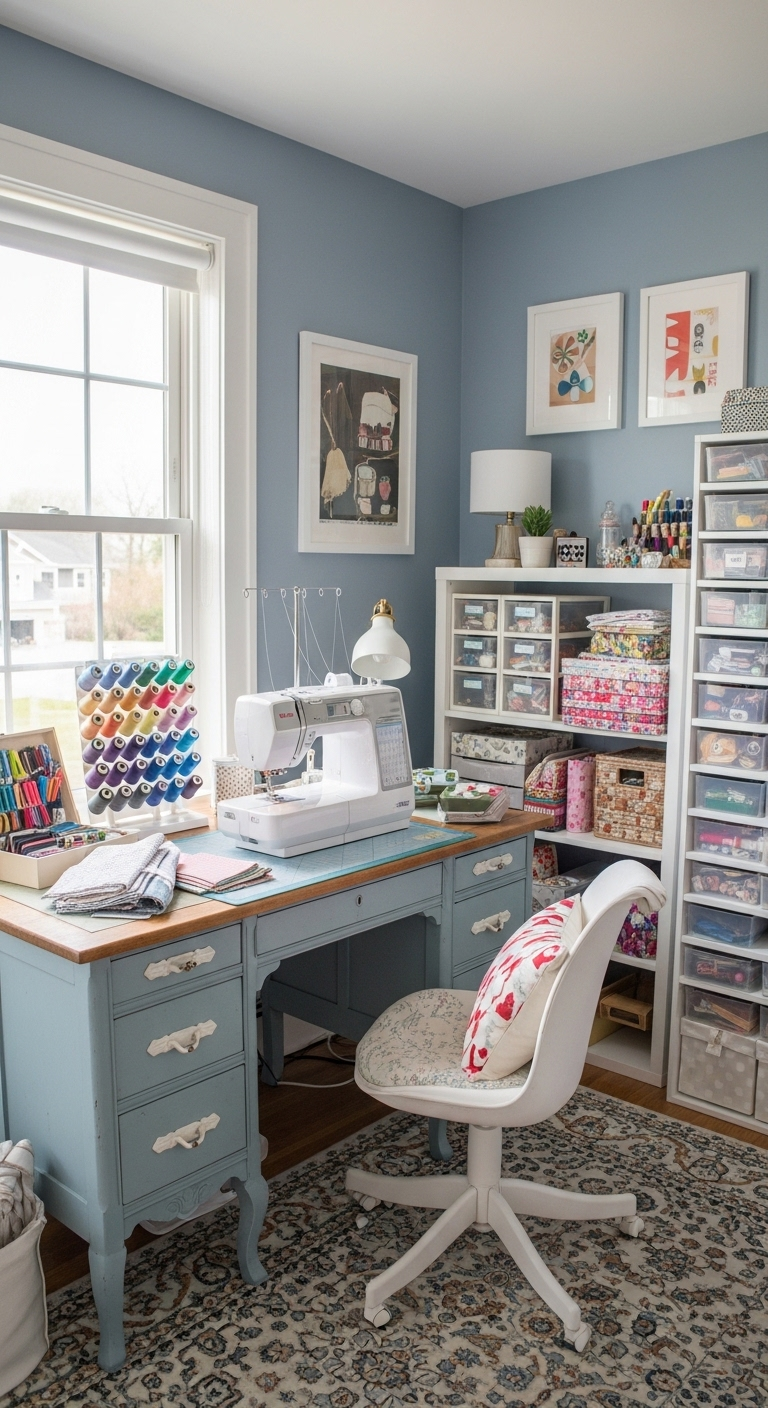
Upcycling an old wooden desk provides a sturdy, character-filled base for your modern stitching equipment. The deep drawers and solid construction offer a sense of history that new flat-pack furniture often lacks.
Painting an antique piece in a bright, modern color creates a beautiful bridge between the old and the new. It’s a sustainable and stylish way to furnish your sanctuary with heart and personality.
22#. Geometric Rug Foundations
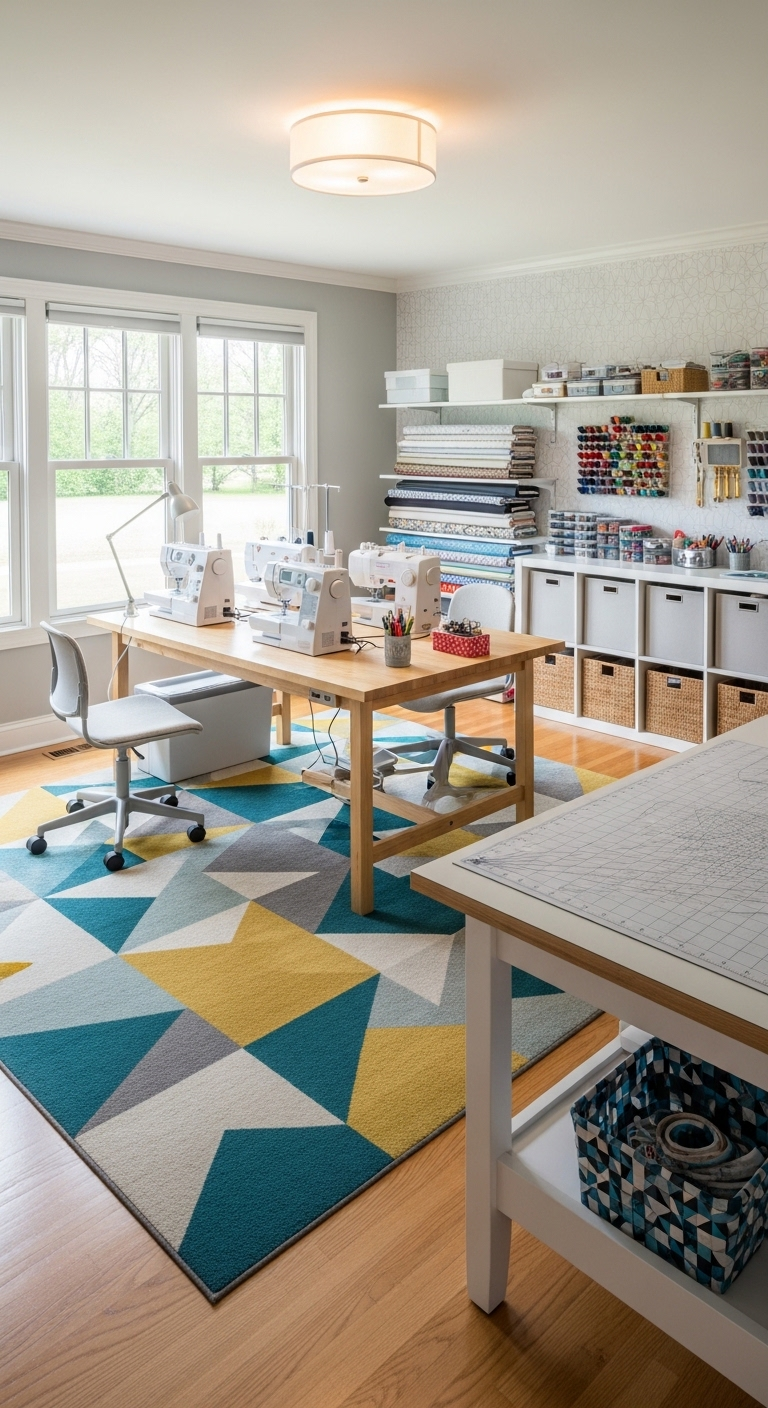
Adding a soft, low-pile rug under your stitching chair makes the room feel warmer and more comfortable. A bold geometric pattern can add a modern flair that complements your vibrant creative energy.
Smooth, tight-weave rugs allow your rolling chair to glide effortlessly between your cutting and stitching stations. This practical foundation is a hidden gem for creating a cozy and functional workspace.
23#. Floating Corner Display Shelves
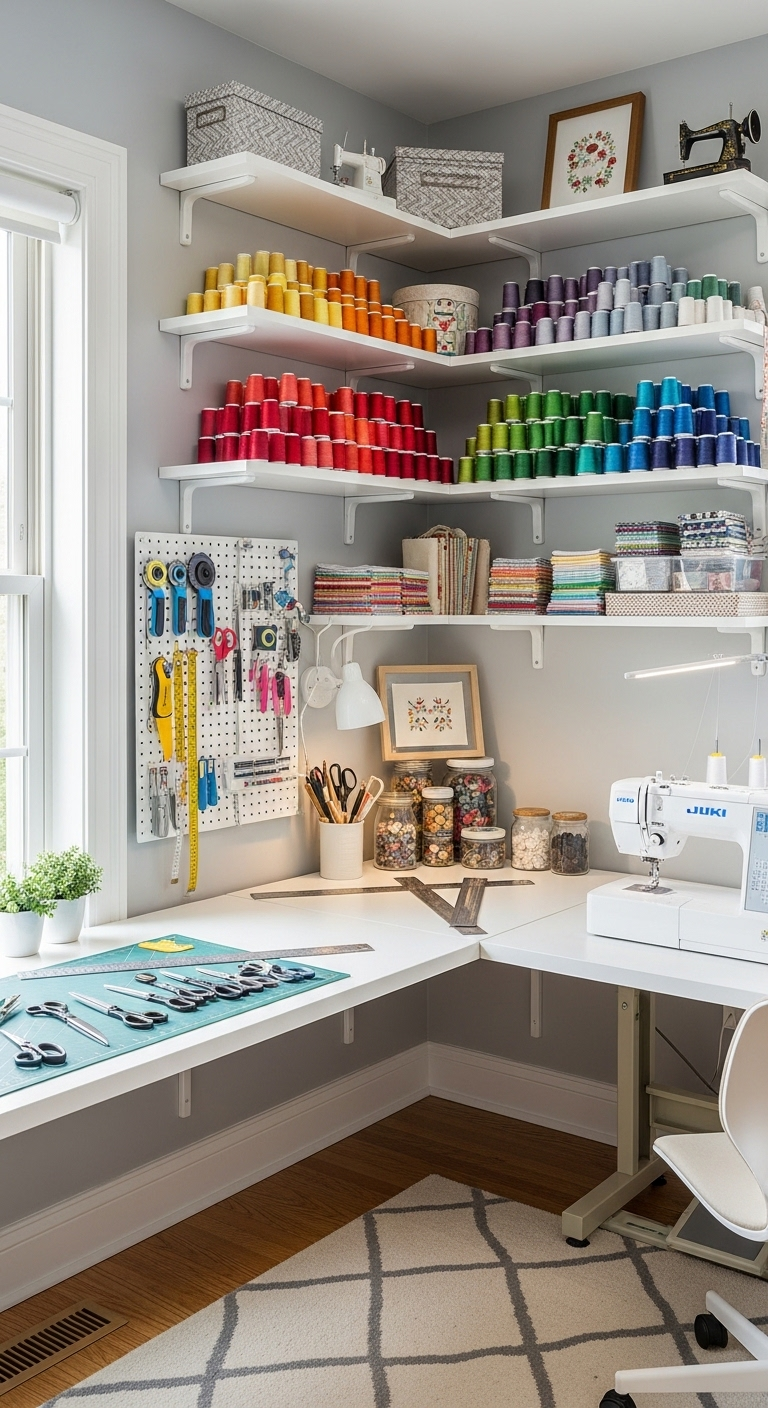
Corners often go to waste, but floating shelves can turn them into a display for your favorite vintage machines. It’s a great way to showcase your passion while keeping your main surfaces clear for active work.
Use these high-up spaces for items you don’t use every day, like seasonal decor or old reference books. This is a smart vertical move for many compact and creative studio floor plans.
24#. Soft Lace Window Treatments
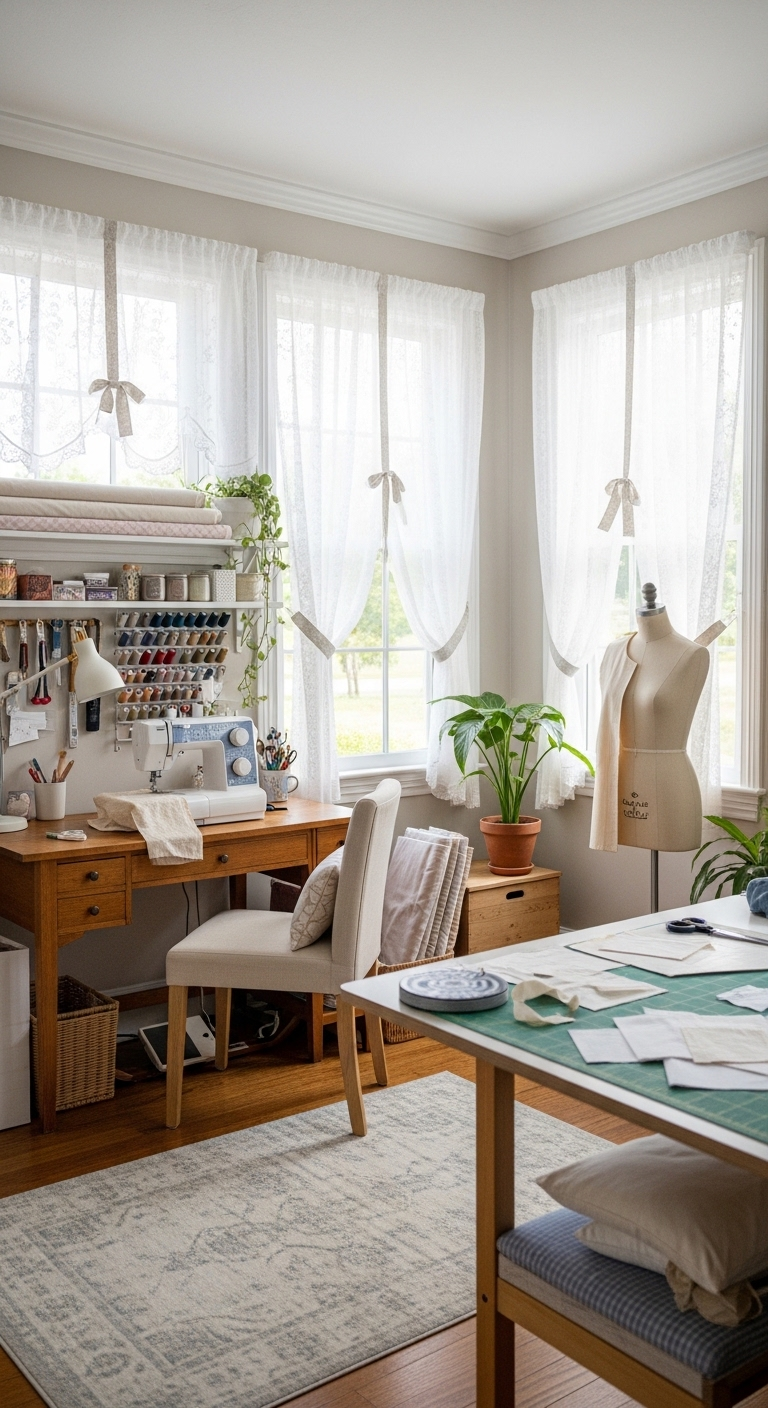
Using sheer lace curtains allows plenty of light to enter while adding a delicate, vintage touch to the room. It creates beautiful shadows across your workspace that make the morning hours feel absolutely magical.
Lace is a nod to the history of garment making and adds a soft, feminine layer to the room. It balances out the hard edges of tables and machines for a more harmonious interior aesthetic.
25#. Dedicated Embroidery Zones
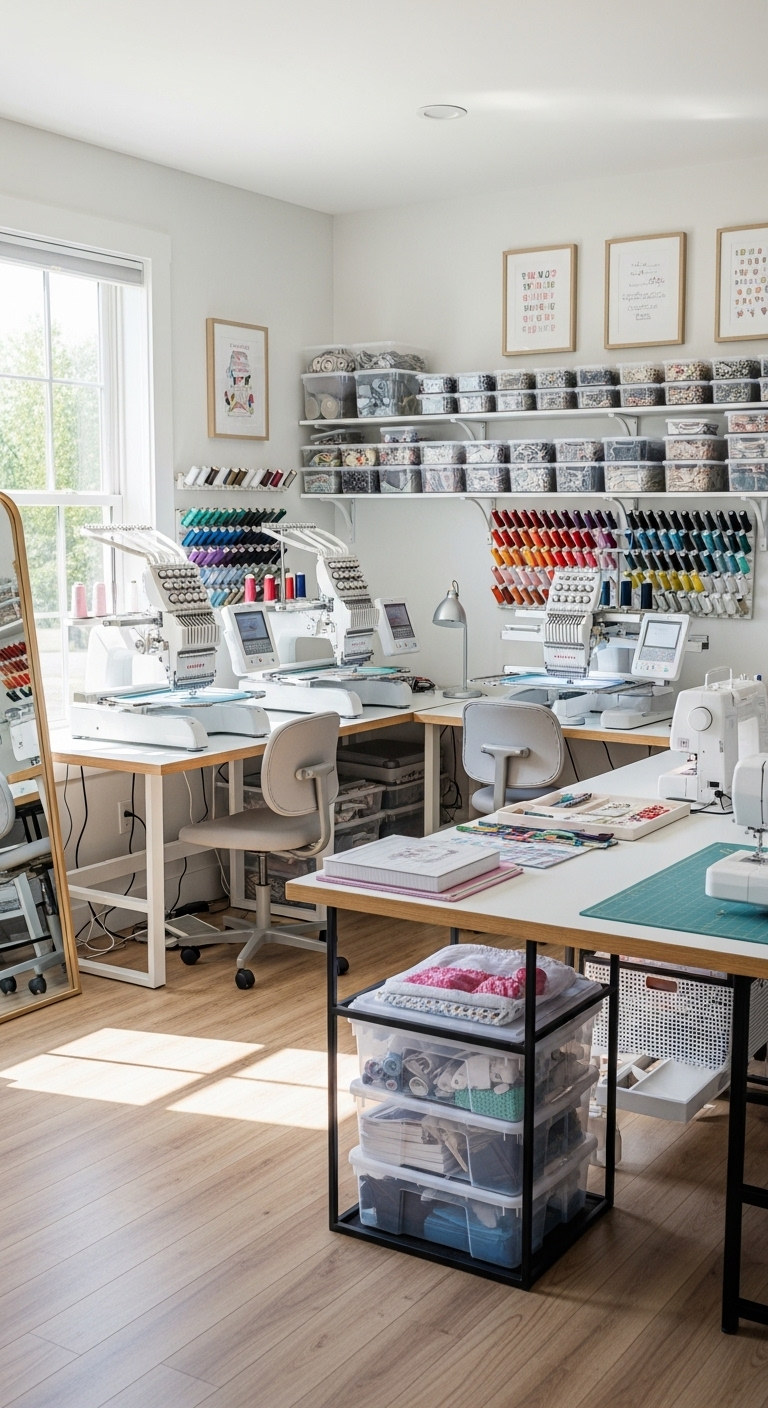
If you love machine embroidery, setting up a separate area for your hoops and stabilizers keeps the mess contained. Having a specialized spot for hooping fabric ensures your designs are always perfectly aligned and ready.
Organize your embroidery threads on their own rack to keep them separate from your standard construction spools. This zoning makes your studio feel professional and highly organized for complex tasks.
26#. Chalkboard Project Trackers
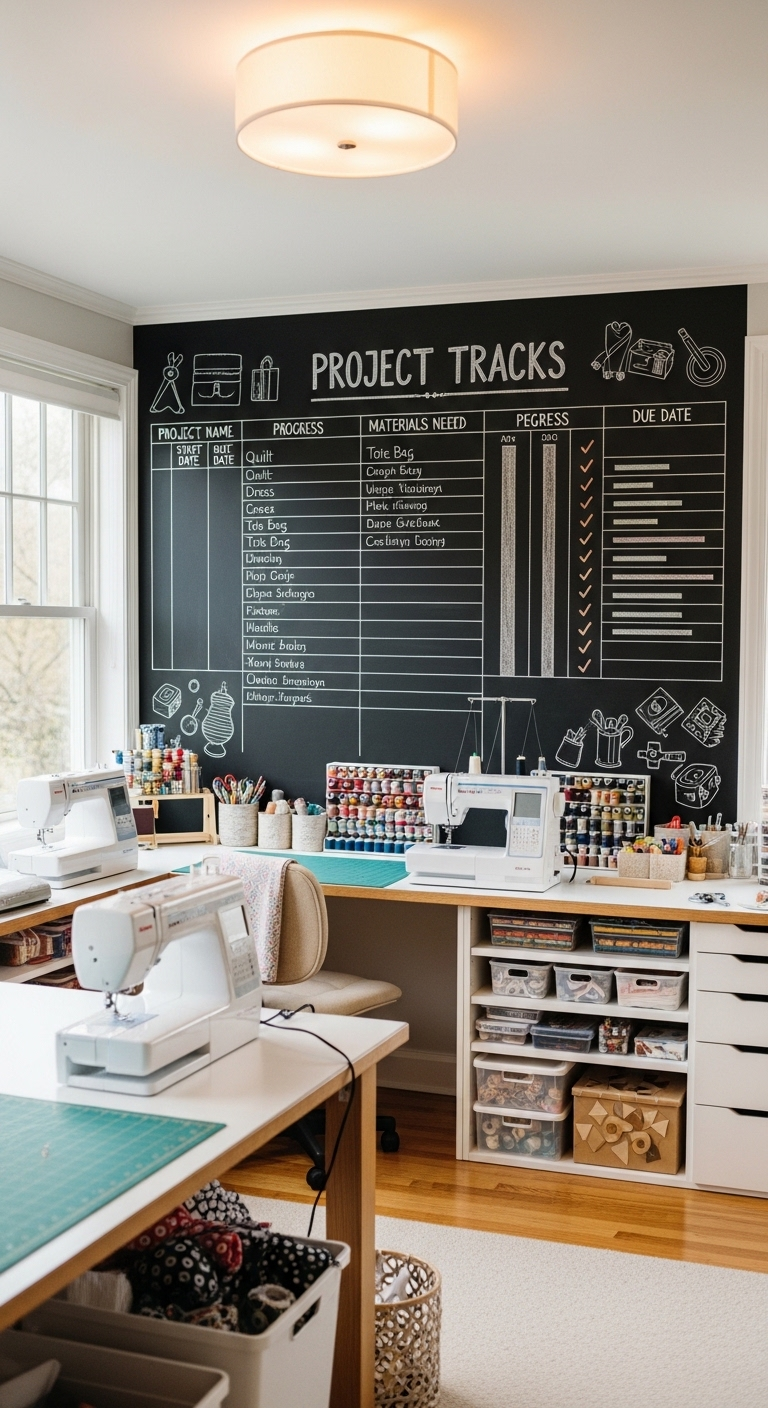
Applying chalkboard paint to a cabinet door is a fun way to keep track of your current project deadlines. You can use it to sketch out quick ideas or list the specific materials you need to buy.
It adds a casual, workshop vibe to the room that feels very productive and engaging for any maker. It’s a practical tool that allows you to be creative even when you aren’t sitting at the machine.
27#. Hanging Scissor Collections
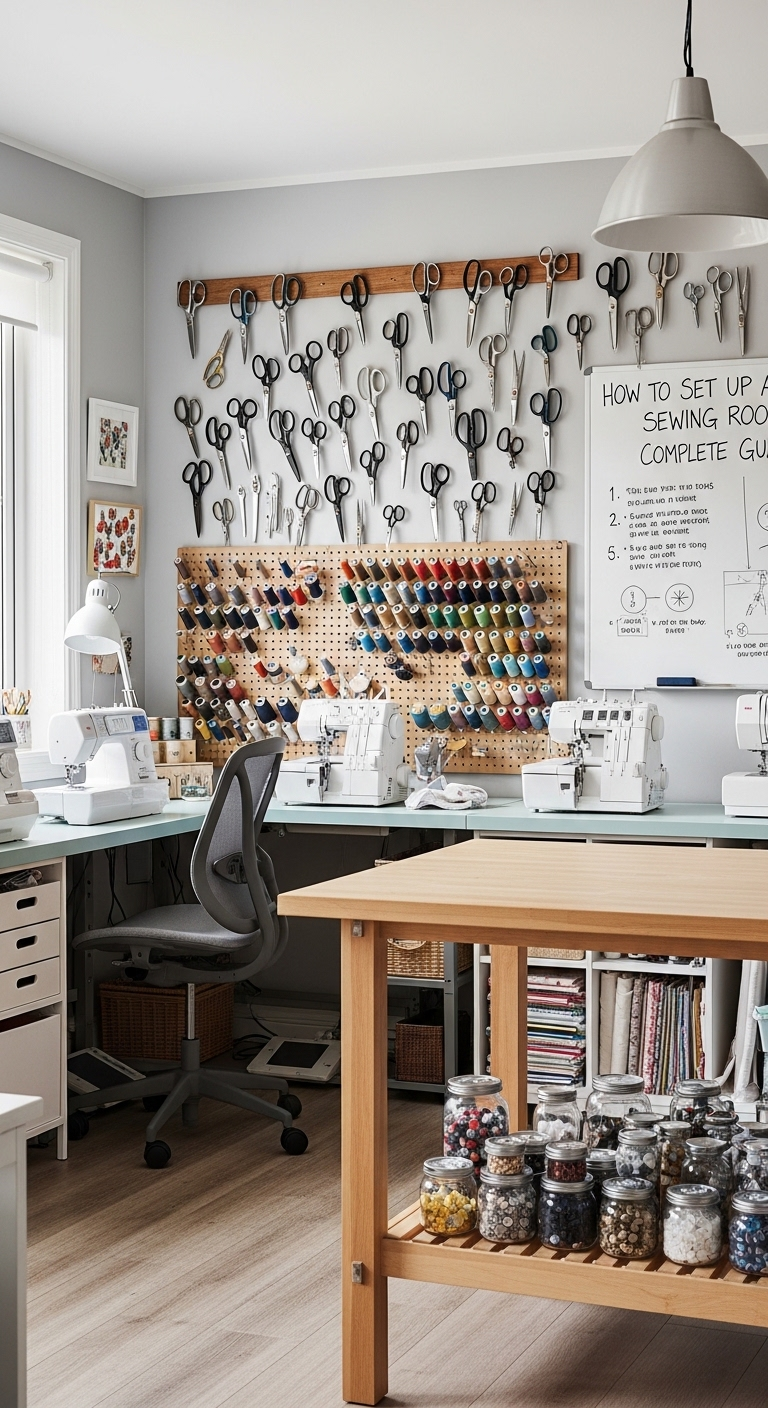
Using a magnetic strip or small hooks to display your various shears keeps them safe and looking sharp. It’s a great way to show off high-quality tools while ensuring they are always right where you need them.
Keeping scissors on the wall prevents them from getting buried under fabric where they might accidentally cut something. It turns your most important tools into a graphic and cool wall display.
28#. Clear Drawer Divider Trays
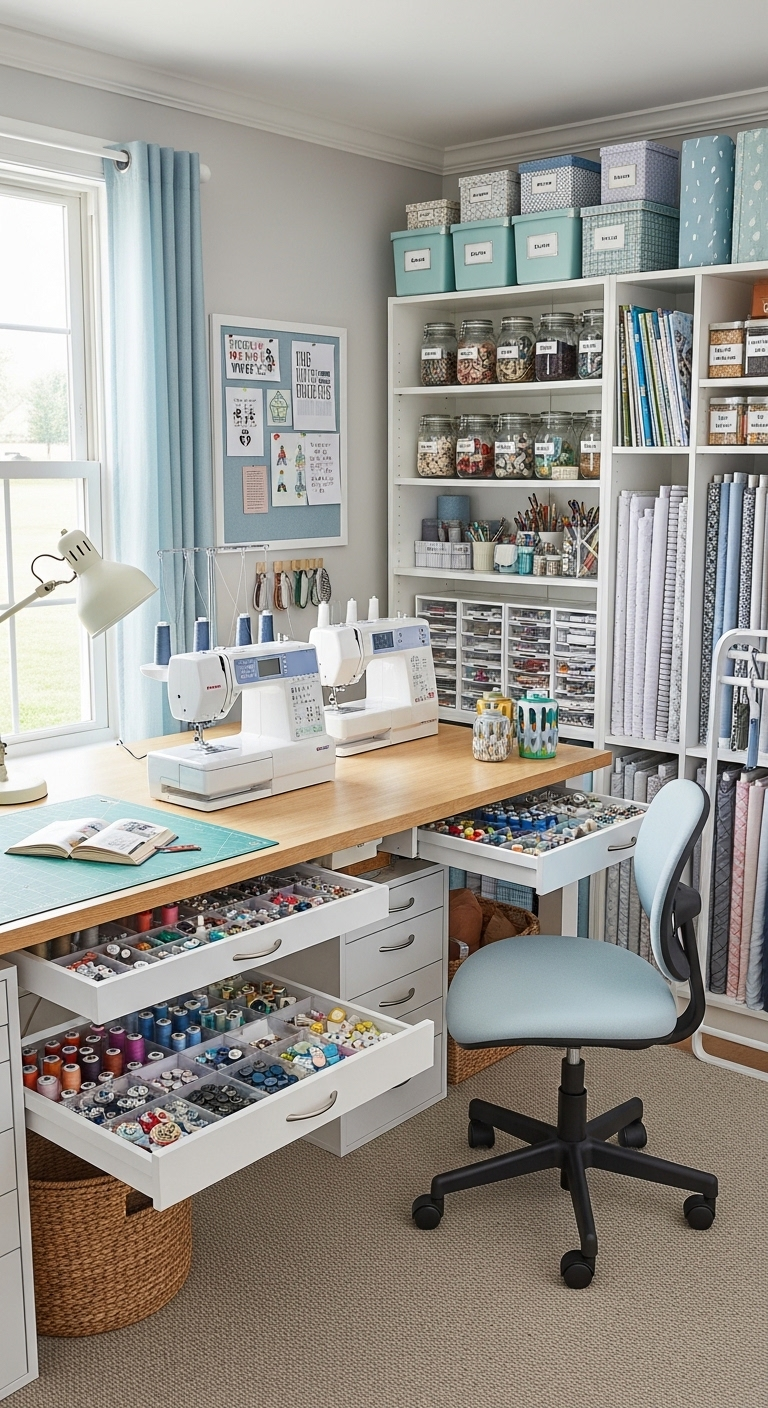
Keeping your bobbins, needles, and seam rippers in separate acrylic trays inside your drawers prevents sliding. It makes the “inside” of your desk look just as beautiful and organized as the outside.
Finding exactly what you need becomes a second-nature habit when every tool has its own clear home. It’s the ultimate finishing touch for any well-planned and inspiring creative environment.
29#. Washi Tape Machine Guides
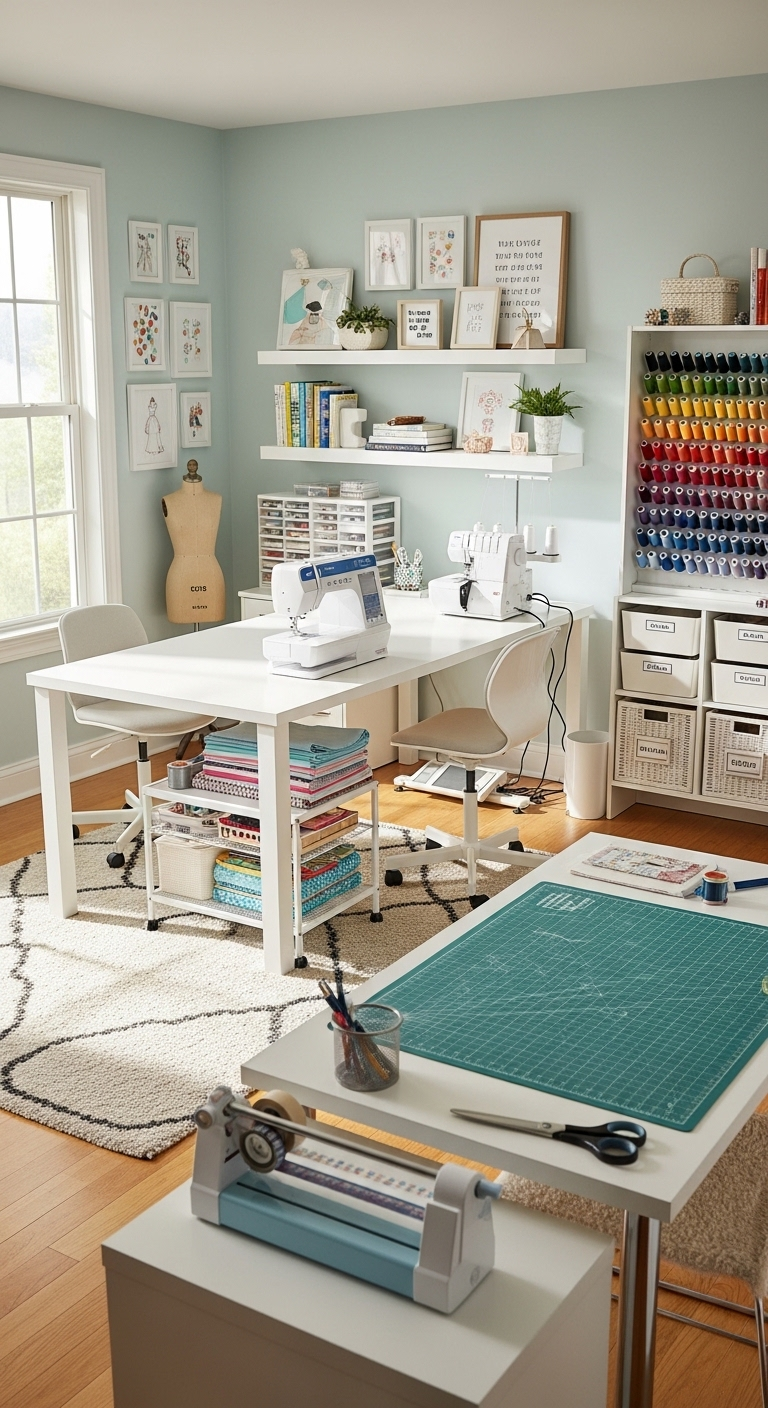
Using colorful washi tape to mark seam allowances on your machine table is a handy and cute trick. It provides a highly visible guide that helps you maintain perfectly straight lines every single time.
It’s easy to peel off and change whenever you need a different guide for a new project type. This is a simple, budget-friendly hack that adds a pop of color to your industrial equipment.
30#. Antique Spool Cabinet Accents
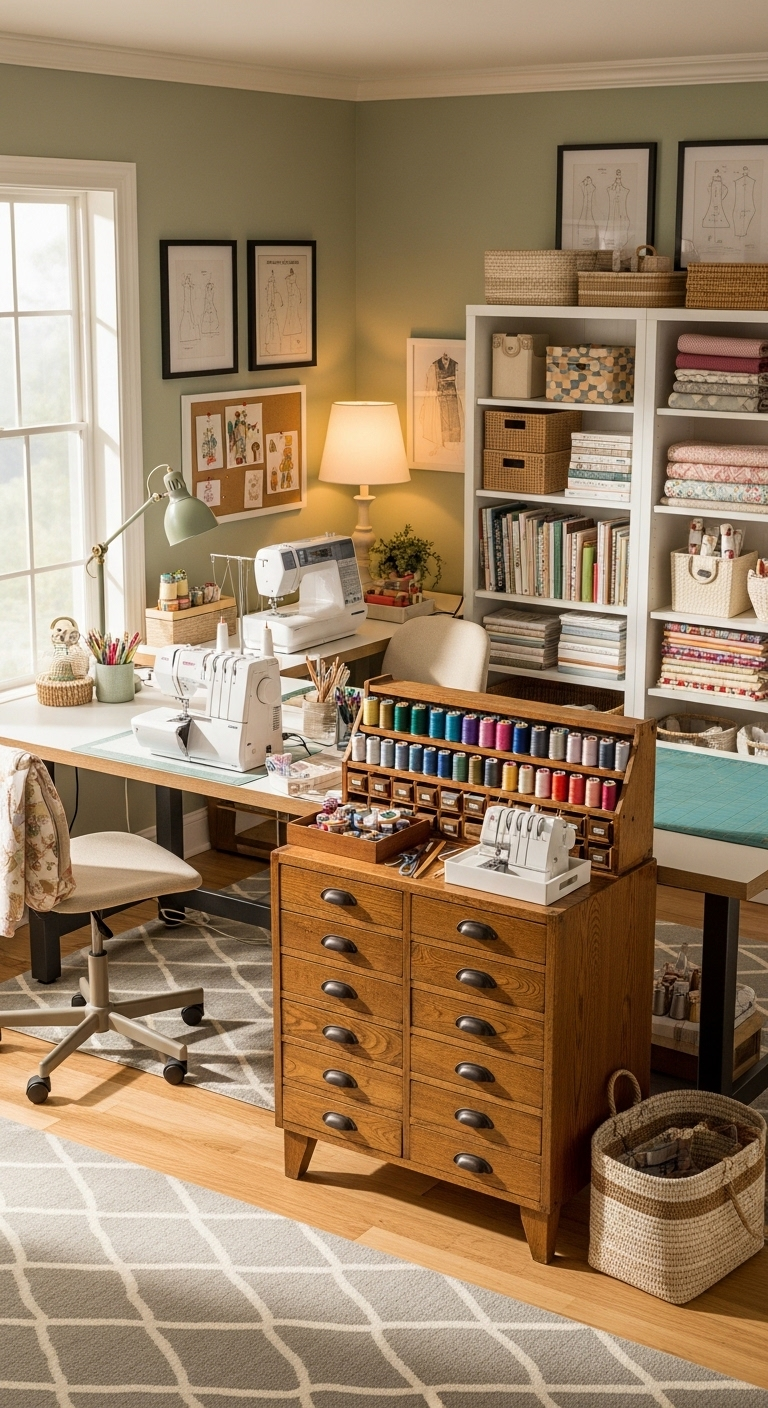
Finding an old wooden spool cabinet at a thrift store adds a massive amount of “maker” charm to your room. These tiny drawers were designed specifically for thread, making them the perfect organizational tool.
The weathered wood adds a rustic, soulful quality that balances out the shiny plastic of modern machines. It’s a statement piece that will have every fellow crafter asking where you found it.
31#. Fresh Greenery and Succulents
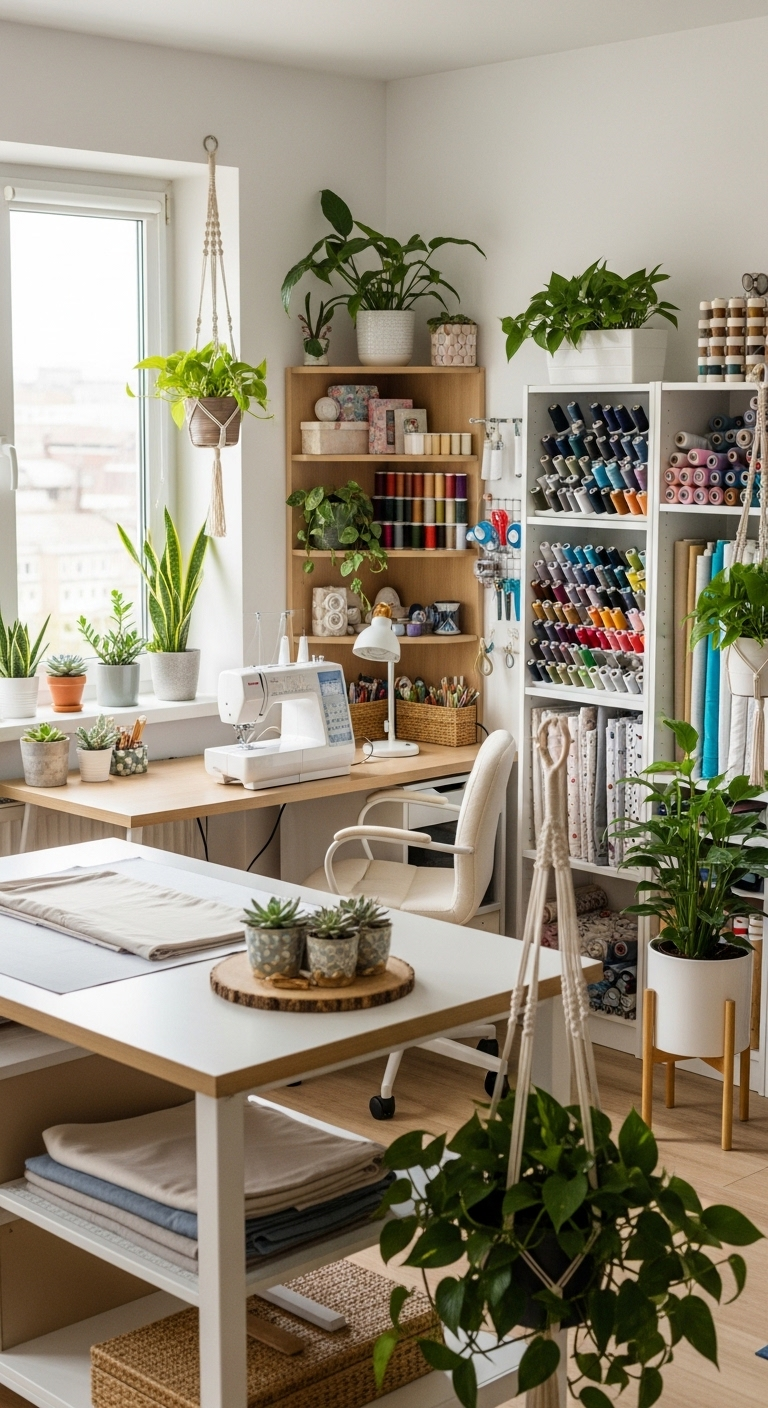
A few low-maintenance plants can brighten up your windowsill and freshen the air in your workspace. Greenery adds an organic touch that makes the room feel more alive and less like a sterile workshop.
Choose plants that don’t drop many leaves to keep your fabric stash clean and dust-free at all times. It’s the final natural layer that makes your creative space feel grounded and peaceful.
32#. Acrylic Thread Organizers
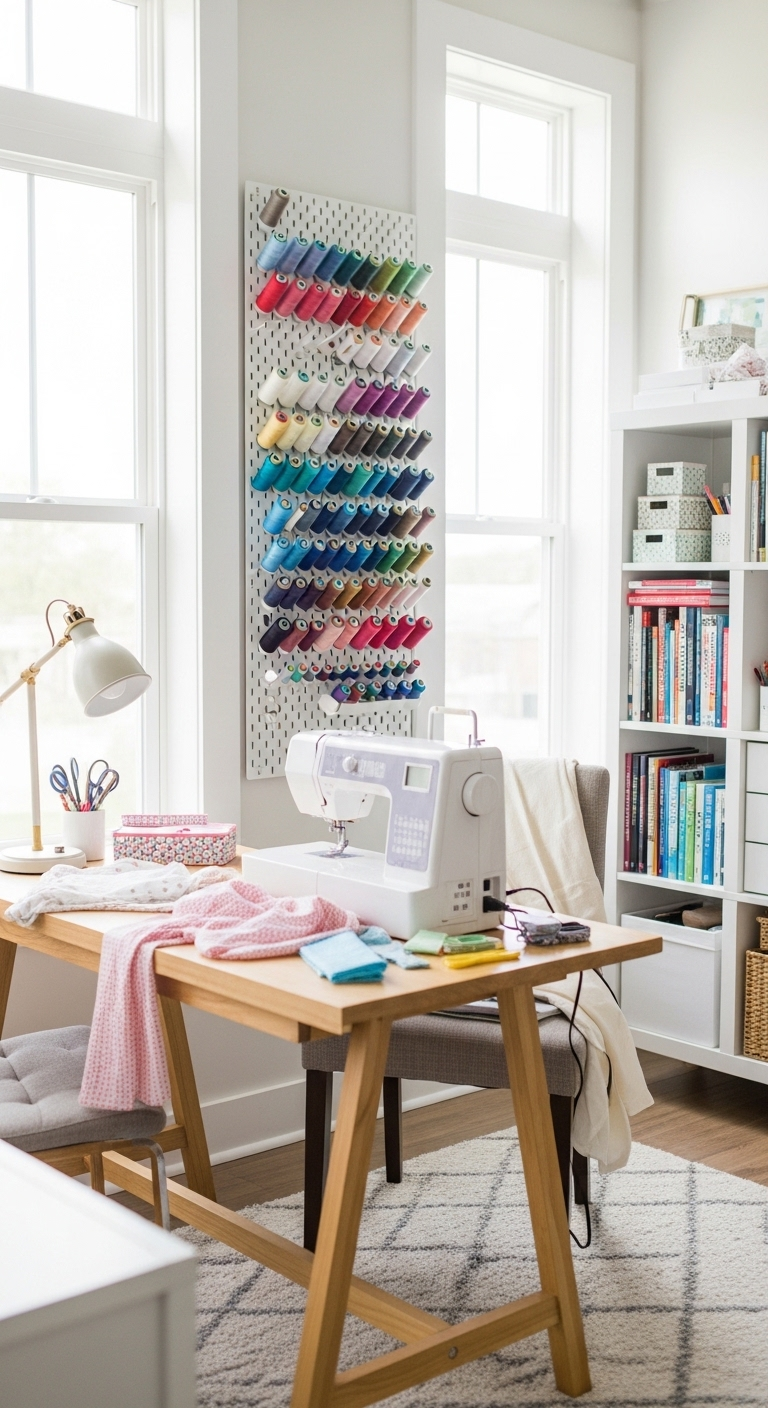
Clear plastic cases allow you to see your thread inventory without having to dig through messy bins. These stackable units keep dust away from your delicate silk and cotton fibers while on display.
Having a clear view of your supplies encourages you to use what you have before buying more. It’s a sleek, modern solution for the organized crafter who loves a clean and tidy aesthetic.
33#. Minimalist White-on-White Designs
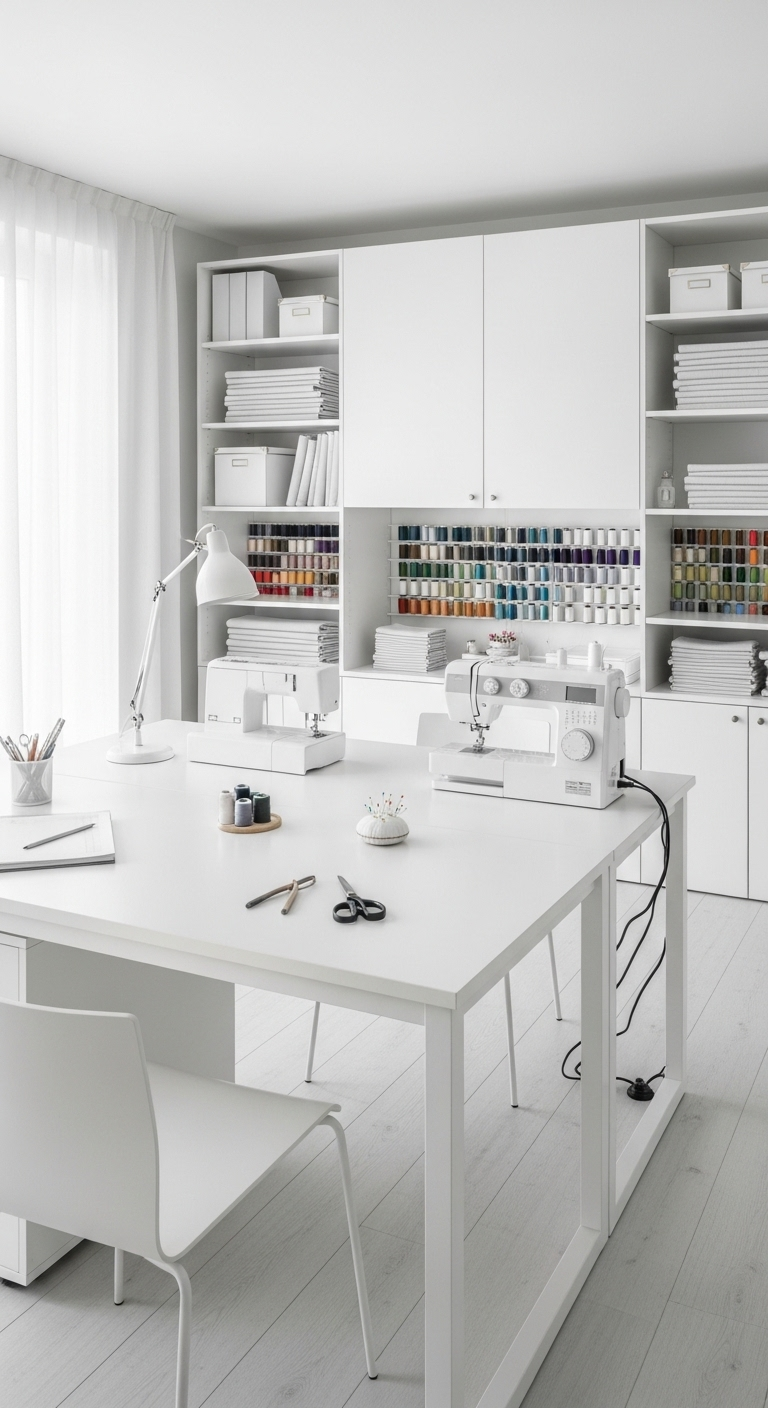
Choosing white furniture and light-colored walls creates a clean, serene backdrop that lets fabrics pop. This minimalist approach reduces visual noise and helps you stay focused on your intricate stitching.
A bright, airy environment reflects light into every corner, making it easier to thread needles and check quality. It’s a timeless look that feels fresh, modern, and incredibly professional for any home.
34#. Pull-Out Pattern Drafting Drawers
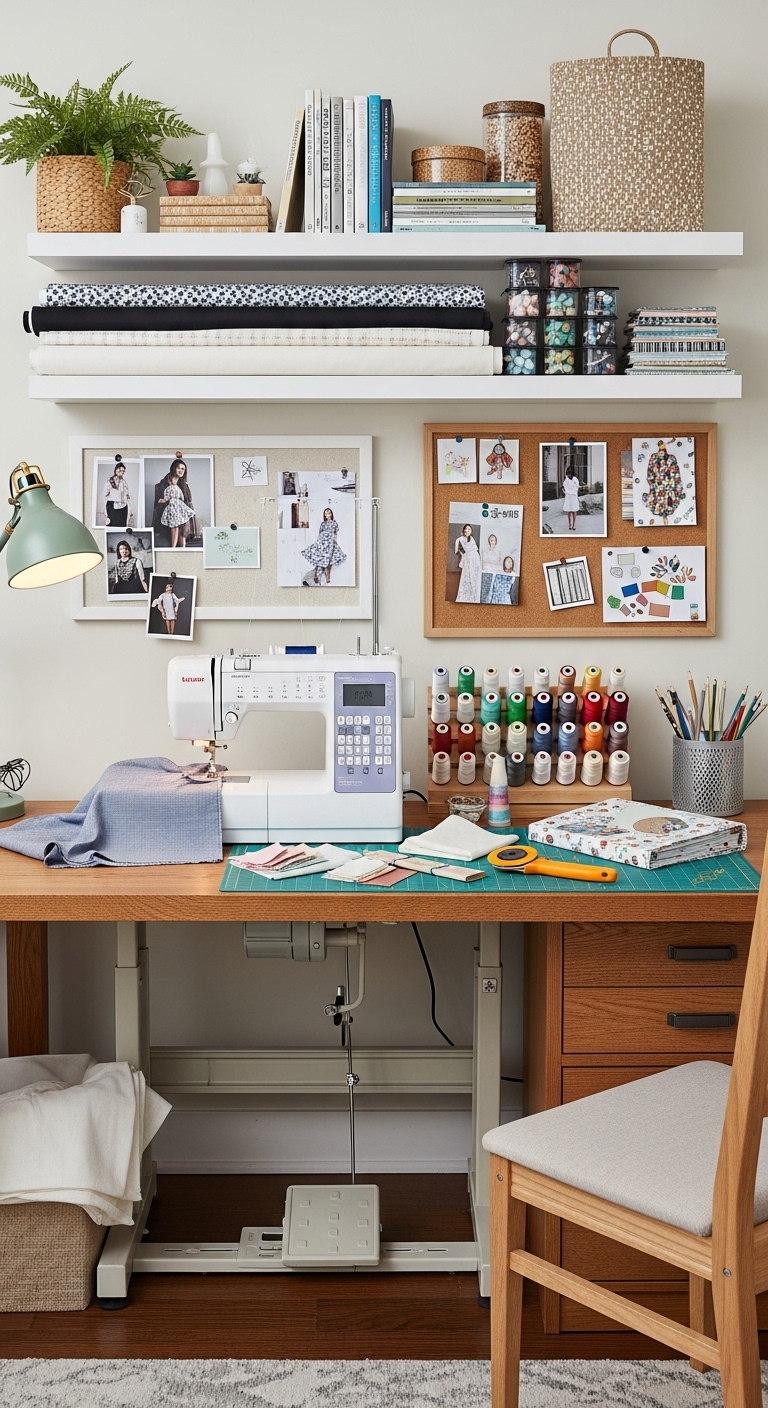
Wide, shallow drawers are the perfect place to store delicate paper patterns without them getting creased. It allows you to organize your library of designs by garment type or brand for quick retrieval.
Keeping patterns flat ensures they are ready to use the moment inspiration strikes for your next outfit. This is one of the most organized features you can include in a professional garment studio.
35#. Under-Cabinet Power Strips
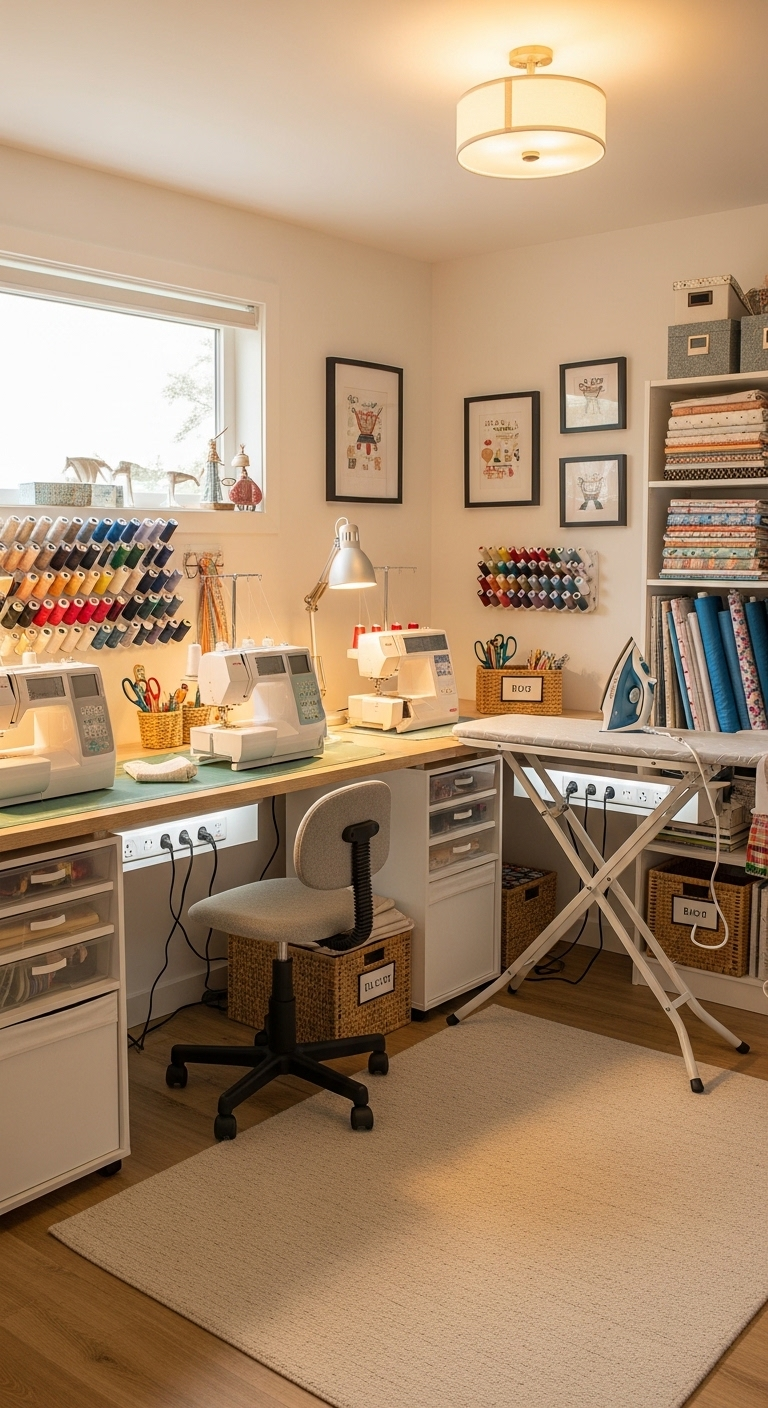
Mounting power strips to the underside of your table keeps cords off the floor and away from your feet. It creates a much cleaner look and prevents tripping hazards in a room filled with electrical equipment.
Having multiple outlets at waist height makes it easy to plug in irons, lamps, and various machines. It’s a small electrical upgrade that makes a massive difference in your daily workflow.
36#. Peg-Rail Finishing Stations
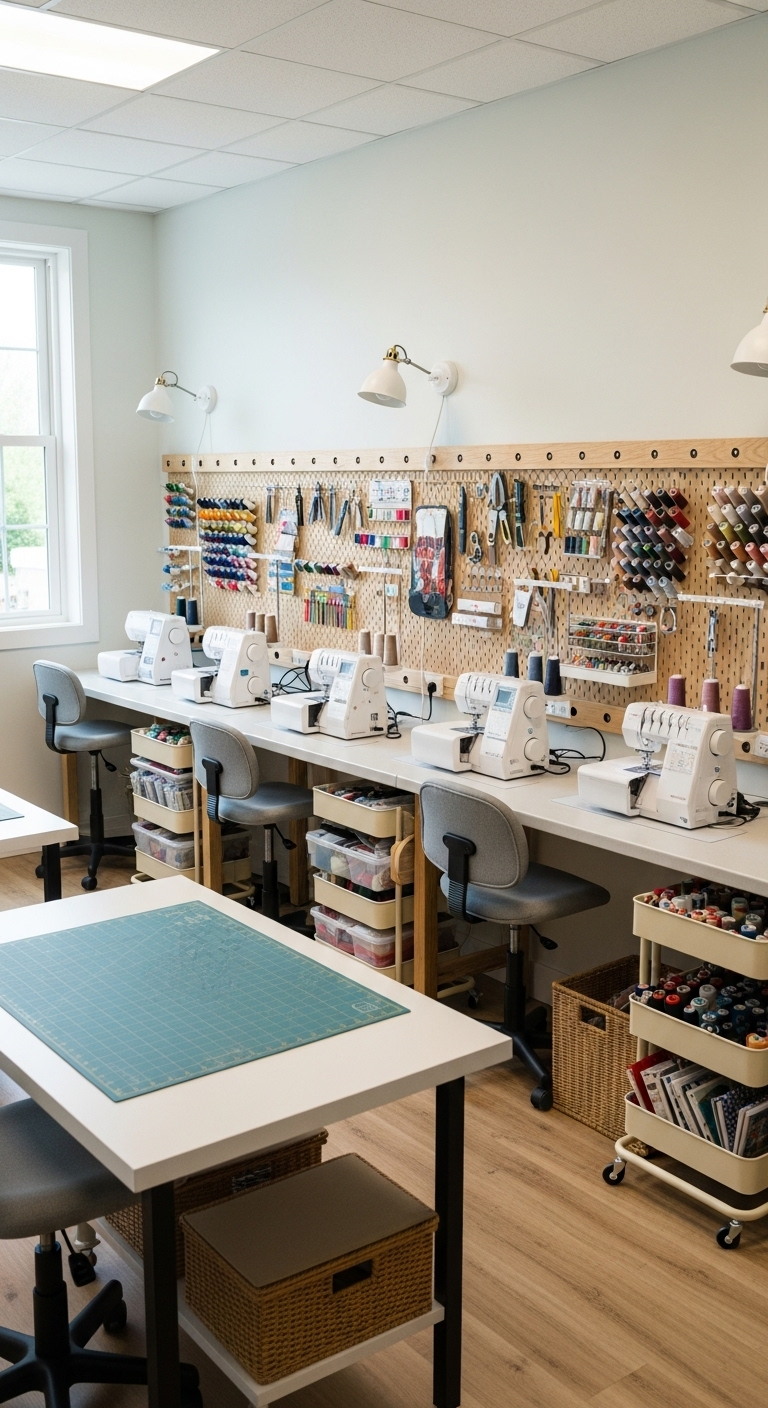
A simple wooden peg rail is perfect for hanging finished garments as they wait for their final pressing. It keeps your newly stitched items off the back of chairs where they might get wrinkled or dusty.
This vertical storage keeps your current “outbox” visible and organized as you wrap up your weekly projects. It adds a charming, traditional look that works well in farmhouse-style creative rooms.
37#. Soft Padded Floor Mats
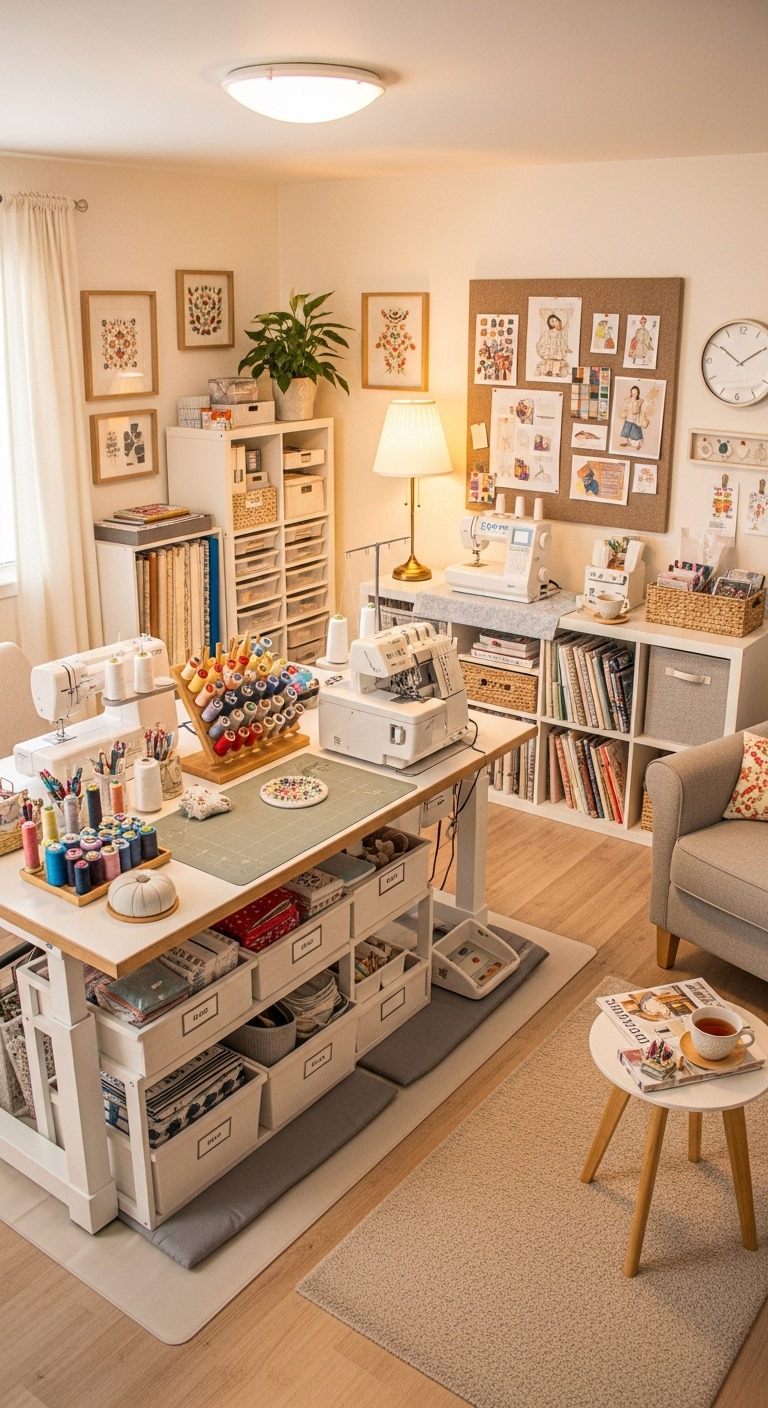
If you spend a lot of time standing at your cutting table, an anti-fatigue mat is a non-negotiable. These padded surfaces reduce the pressure on your joints and keep your legs feeling fresh all day long.
Choose a mat with a wipeable surface so you can easily clear away any dropped threads or fabric scraps. Your body will thank you after a long day of preparing patterns and cutting out pieces.
38#. Fold-Away Cutting Surfaces
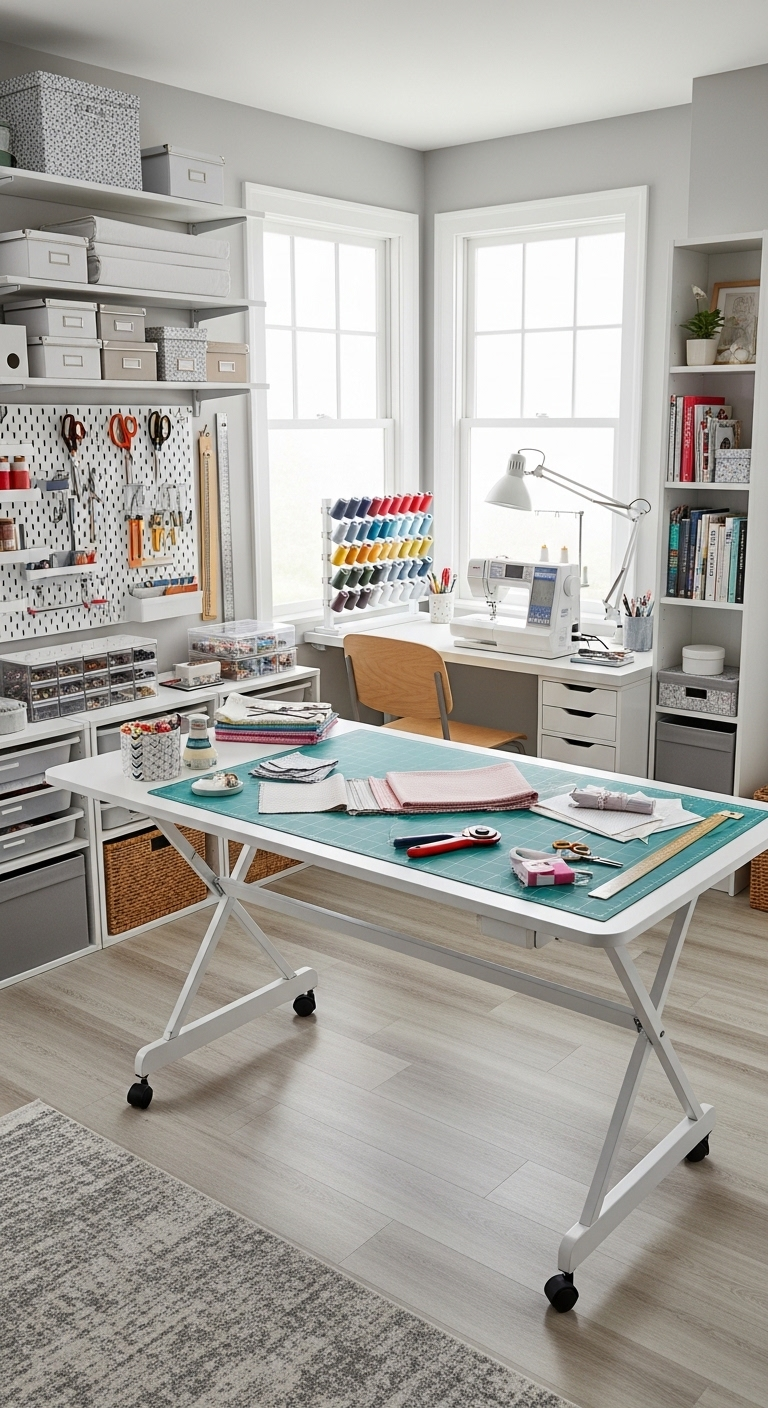
If your room needs to double as a guest bedroom, a fold-down wall table is a brilliant space-saving solution. You can have a massive cutting surface when you need it and a clear floor when you don’t.
This flexibility allows you to pursue your passion without taking over the entire home permanently. It’s a key feature in many multi-functional floor plans for modern, small-space living.
39#. Woven Basket Notion Storage
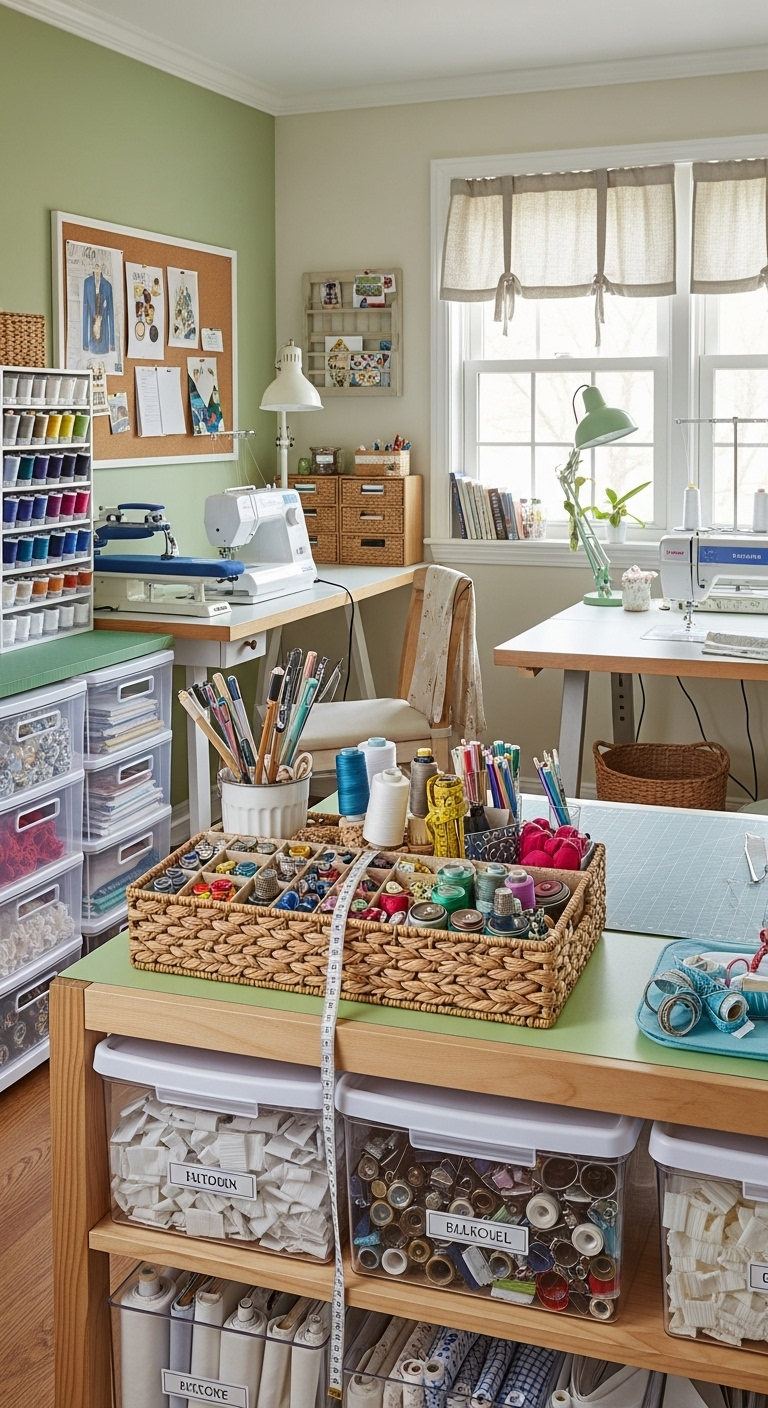
Using natural seagrass baskets to store bulky items like interfacing or stuffing adds a soft, organic texture. They hide the “messy” parts of your supplies while keeping them accessible under your main table.
Baskets are easy to pull out and move around the room as your project needs change throughout the day. They add a touch of warmth that balances out the technical look of machines.
40#. Central Power Pedestals
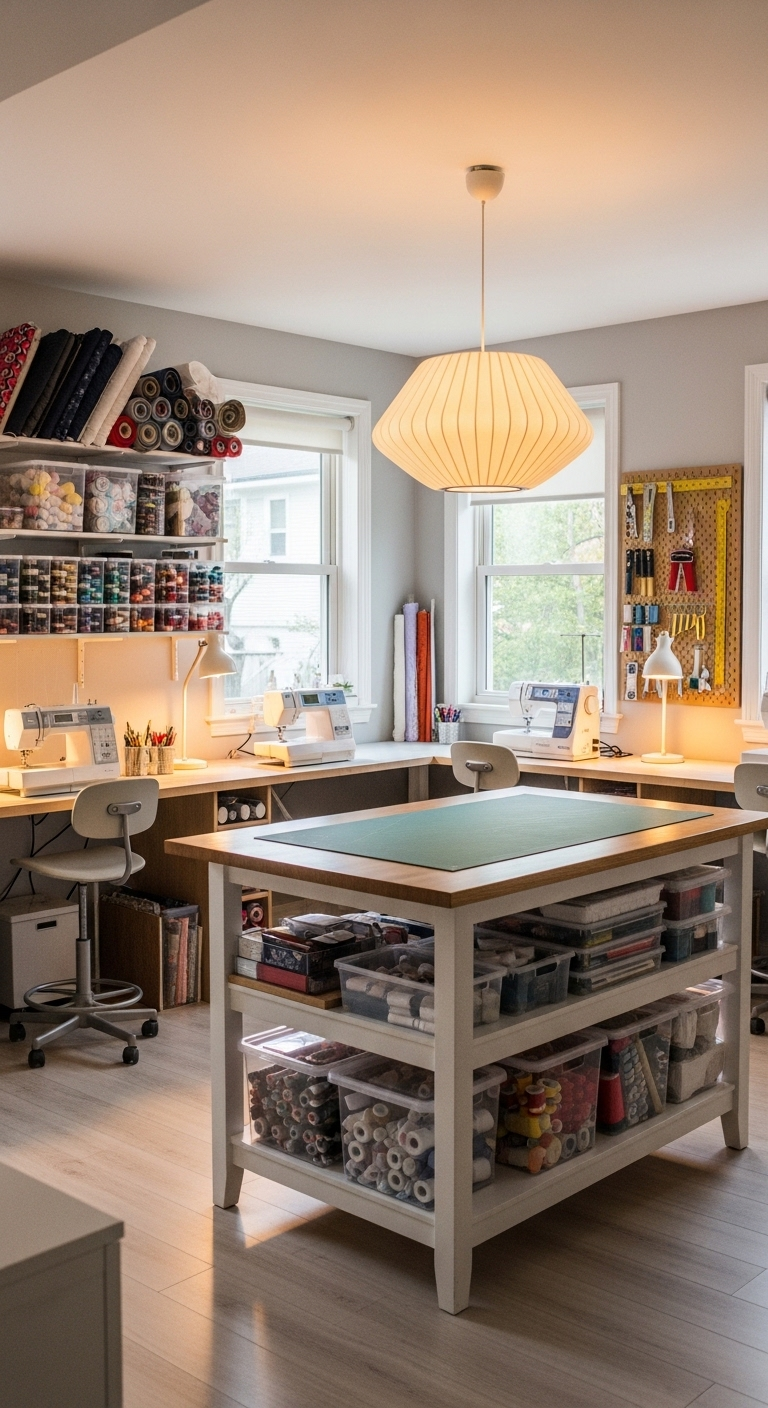
If your machines are in the middle of the room, a floor-mounted power pedestal prevents cords from stretching. It allows you to position your table anywhere without being tethered to a wall outlet.
This professional electrical setup is the gold standard for high-end studio layouts and industrial spaces. It gives you the ultimate freedom to arrange your furniture for the best possible light and flow.
41#. Personalized Scent Profiles
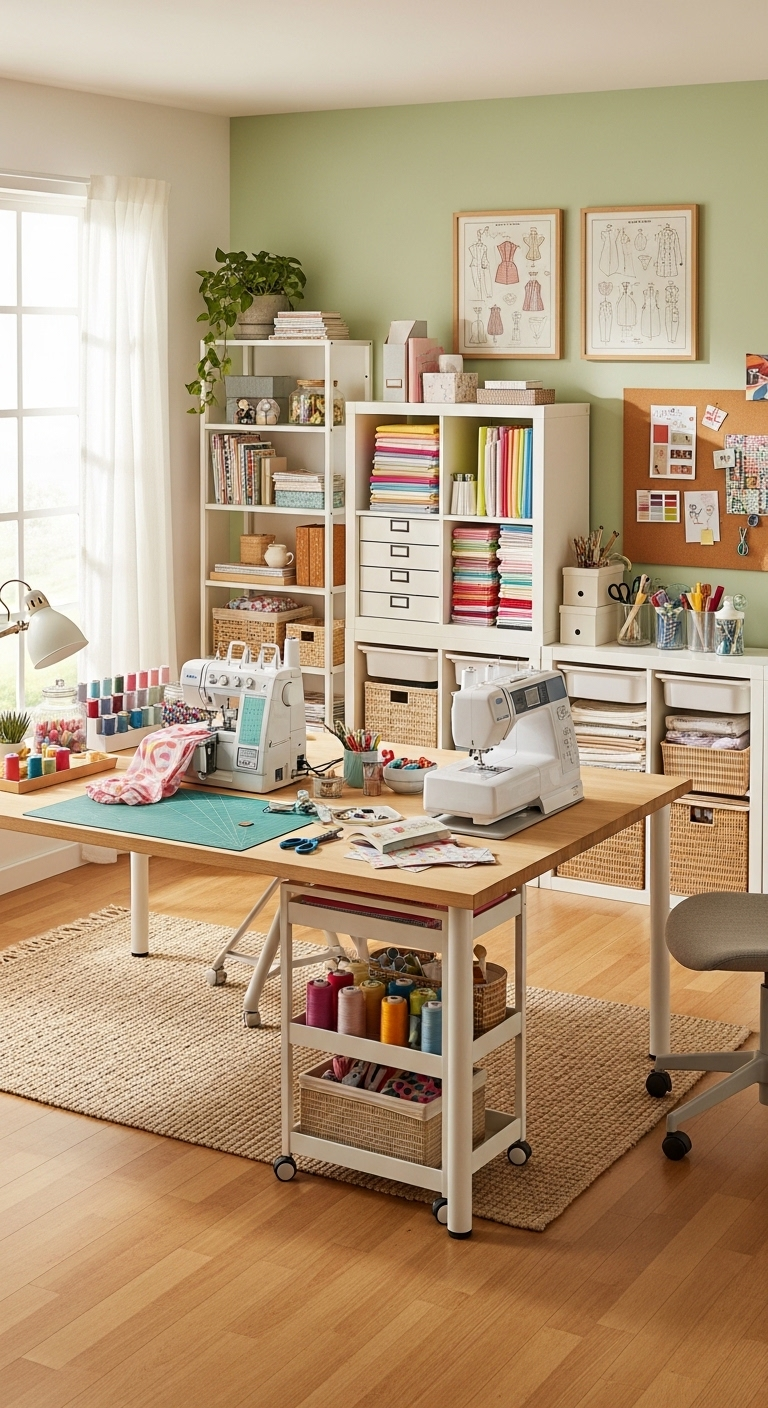
Using a reed diffuser with a calming scent like lavender or eucalyptus makes your studio feel like a true retreat. Aromatherapy can help you stay focused and relaxed during complex or repetitive stitching tasks.
A signature scent becomes part of your creative ritual, signaling to your brain that it’s time to create. It’s the final sensory layer that turns a regular room into a professional-grade sanctuary.
Transforming a spare room into a professional-grade studio is a journey that evolves with every project you finish. By focusing on ergonomic comfort, smart organization, and personal decor, you can create a space that supports both your artistic vision and your well-being.