A designed closet can really make your home feel special. It makes doing everyday things feel like a treat.
- You walk into a room where everything’s in its own spot.
- Your clothes, shoes and stuff are all out, in the open and easy to grab.
Imagine opening a door. Just seeing everything you need right there.Your clothes are neatly arranged your shoes are lined up. Your accessories are right where you can find them.It makes getting ready a lot simpler.
Organizing your wardrobe does not have to be really hard. If you make a simple changes and think of some new ideas you can store more things show off the clothes you like and make your mornings more relaxed. These ideas will help you think about your closet in a way so it is useful and looks nice too.
1#. Maximize Vertical Space
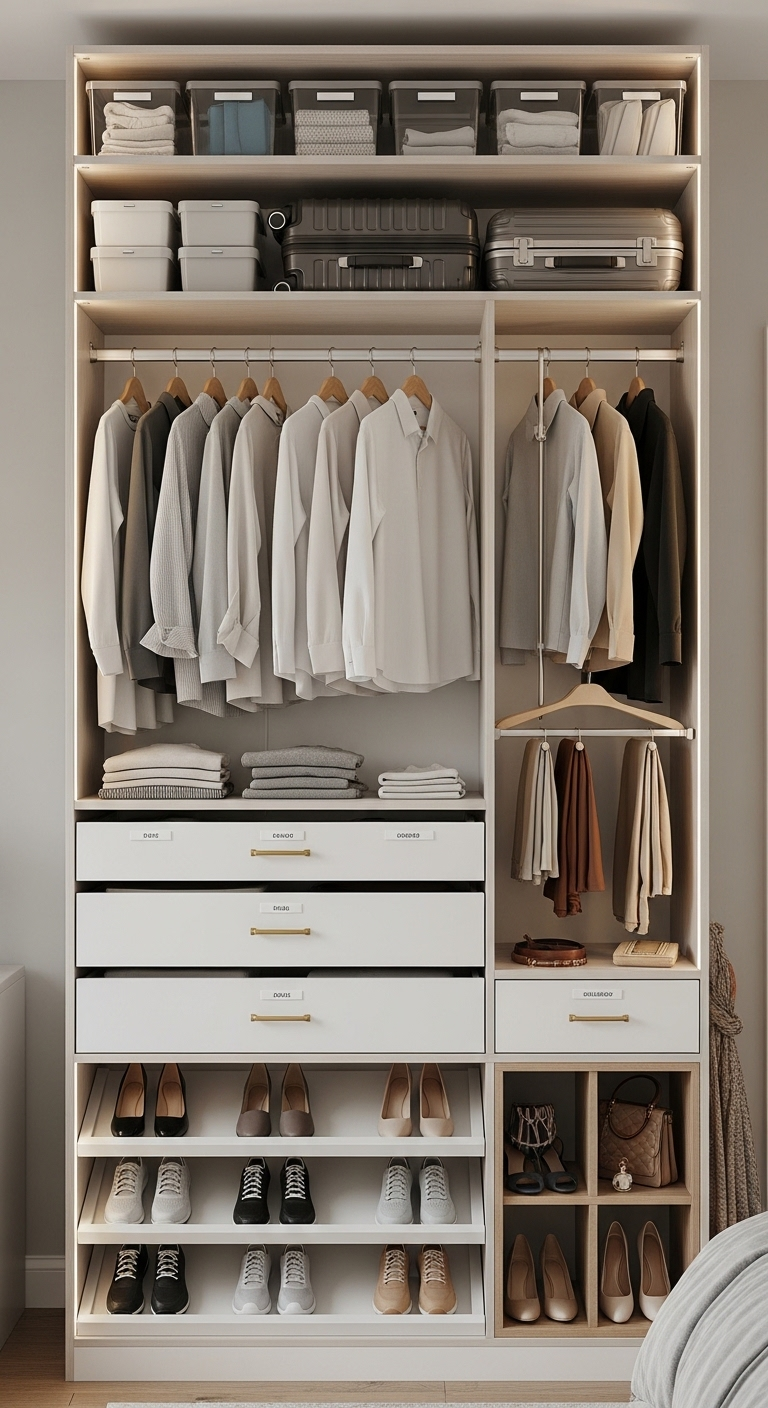
Tall shelves and stacked storage help you use the areas that are often not used. This keeps items out of the way. Essentials stay at eye level.You can add hooks. Hanging rods at different heights. This gives you space, for clothing types.
- Long dresses have their spot.
- Short jackets have their spot too.
- Every piece of clothing has a place.
2#. Open Shelving for Accessories
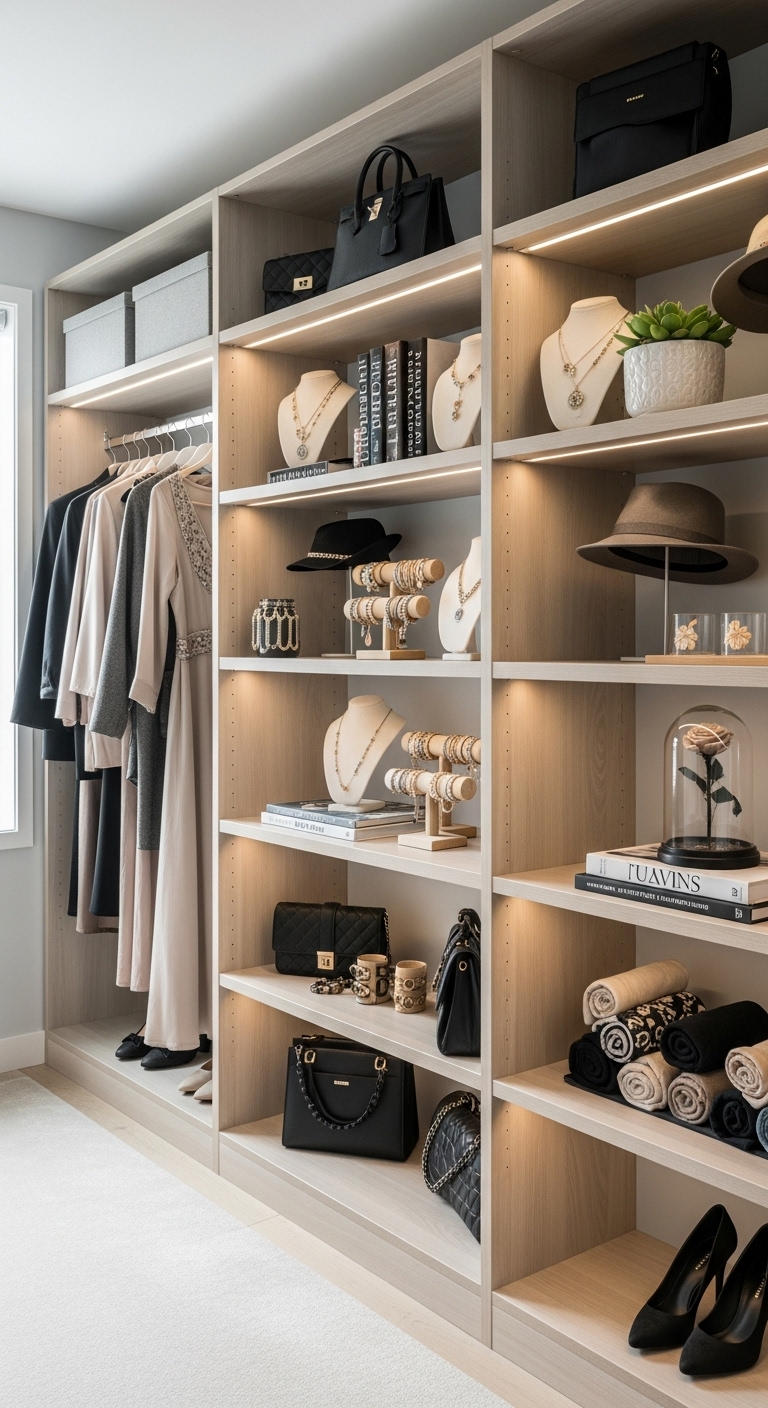
Transforming your closet or bedroom shelving into a curated, store-like display is an exceptional styling technique that blends high-end visual merchandising with daily functionality. When you stop hiding your favorite handbags, structured hats, and statement shoes away in dark bins or crowded floor racks and instead position them prominently on open shelves, your wardrobe instantly takes on the elegant energy of a luxury boutique.
The primary design benefit of this layout is visual accessibility. Having your accessories neatly cataloged at eye level completely removes the friction of getting ready in the morning, making it incredibly easy to coordinate outfits and see exactly what you have to work with.
By treating your personal pieces as sculptural art, you elevate the entire room’s aesthetic. The display adds instant texture, color, and depth to your walls, turning a standard storage area into an inspiring, high-end focal point that makes the simple act of choosing an outfit feel like an upscale shopping experience.
3#. Customized Drawer Inserts
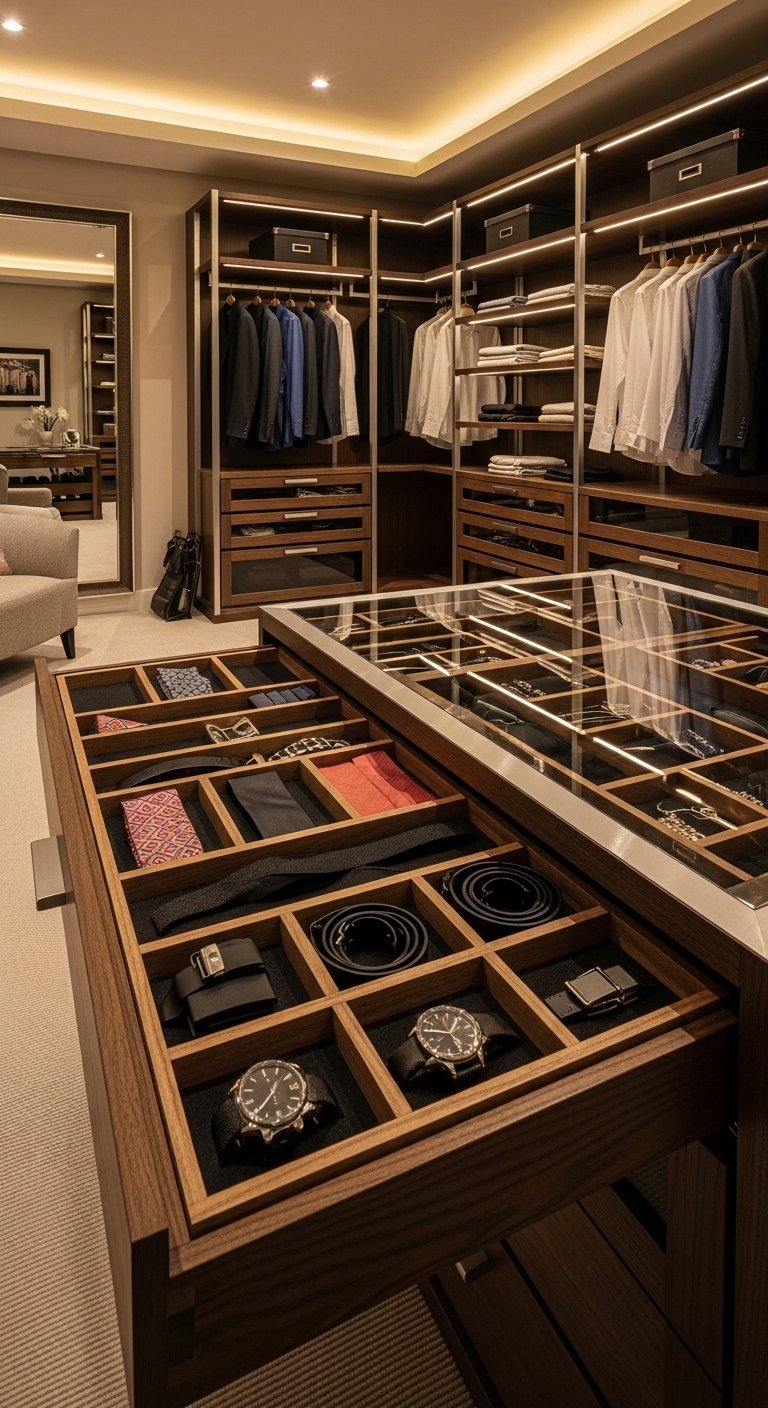
Upgrading the interior of your drawers with custom dividers is an exceptional styling strategy that transforms a chaotic storage void into a beautifully organized display case. Too often, deep drawers become cluttered catching grounds where jewelry tangles, belts uncoil, and delicate silk scarves get buried.
By introducing structured dividers, you establish a permanent architectural grid where every single accessory has a dedicated, tailored boundary. This simple change completely eliminates the frustrating morning routine of digging through layers of clutter, allowing you to instantly scan your collection.
Opening a masterfully divided drawer shifts the daily experience of getting dressed from a chore to a moments-long luxury. The immediate visual order makes your ordinary cabinetry feel deeply premium, intentional, and meticulously curated, bringing the high-end efficiency of a custom walk-in closet right to your existing dresser.
4#. Pull-Out Shoe Racks
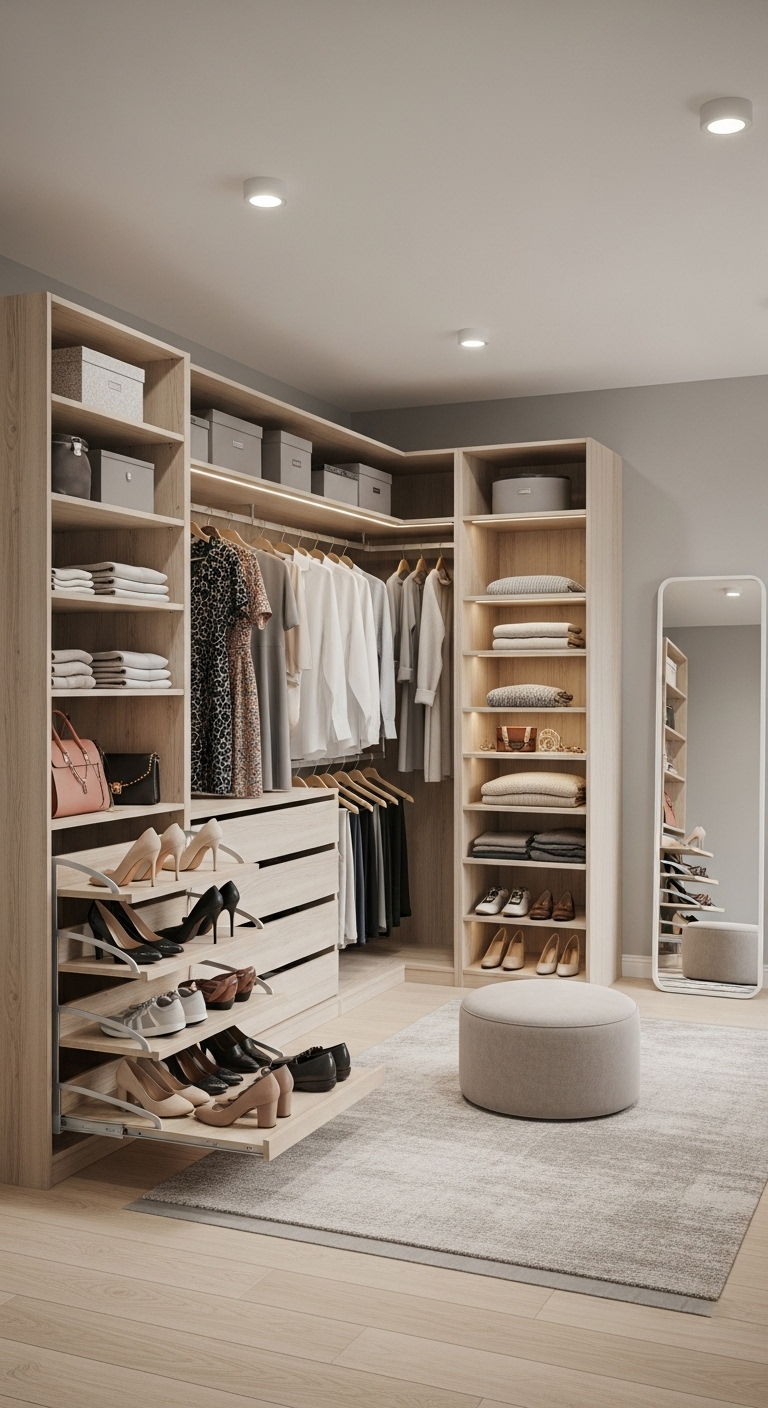
Integrating slide-out mechanisms, angled shelving, and dedicated cubbies into your shoe storage is the ultimate design strategy for maximizing tight spatial footprints while elevating your wardrobe’s aesthetic. A standard flat shelf often forces a frustrating compromise: you either cram pairs behind one another into the dark depths of the cabinet, or you surrender valuable floor space to sprawling racks.
By utilizing dynamic, moving hardware and varied shelf geometries, you convert every square inch of your closet into a high-capacity, high-visibility layout. This comprehensive system effectively transforms an overlooked storage wall into a stunning architectural feature that anchors the entire room.
Having your footwear collection beautifully cataloged and fluidly accessible turns your daily routine into an inspiring experience. It celebrates your personal style while ensuring your living space remains perfectly organized, uncluttered, and effortlessly sophisticated..
5#. Statement Lighting
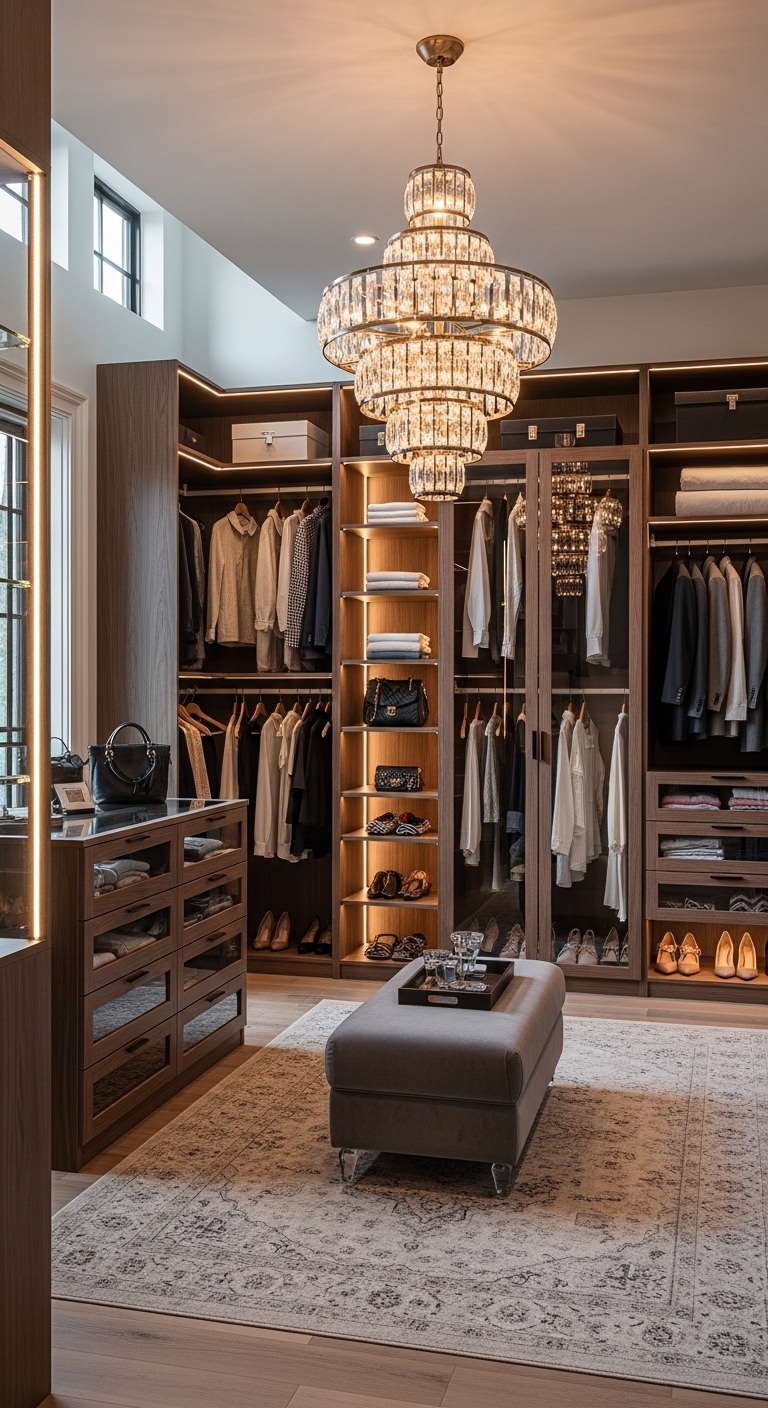
Integrating slide-out mechanisms, angled shelving, and dedicated cubbies into your shoe storage is the ultimate design strategy for maximizing tight spatial footprints while elevating your wardrobe’s aesthetic. A standard flat shelf often forces a frustrating compromise: you either cram pairs behind one another into the dark depths of the cabinet, or you surrender valuable floor space to sprawling racks.
By utilizing dynamic, moving hardware and varied shelf geometries, you convert every square inch of your closet into a high-capacity, high-visibility layout. This comprehensive system effectively transforms an overlooked storage wall into a stunning architectural feature that anchors the entire room.
Having your footwear collection beautifully cataloged and fluidly accessible turns your daily routine into an inspiring experience. It celebrates your personal style while ensuring your living space remains perfectly organized, uncluttered, and effortlessly sophisticated..
6#. Double-Hang Rods
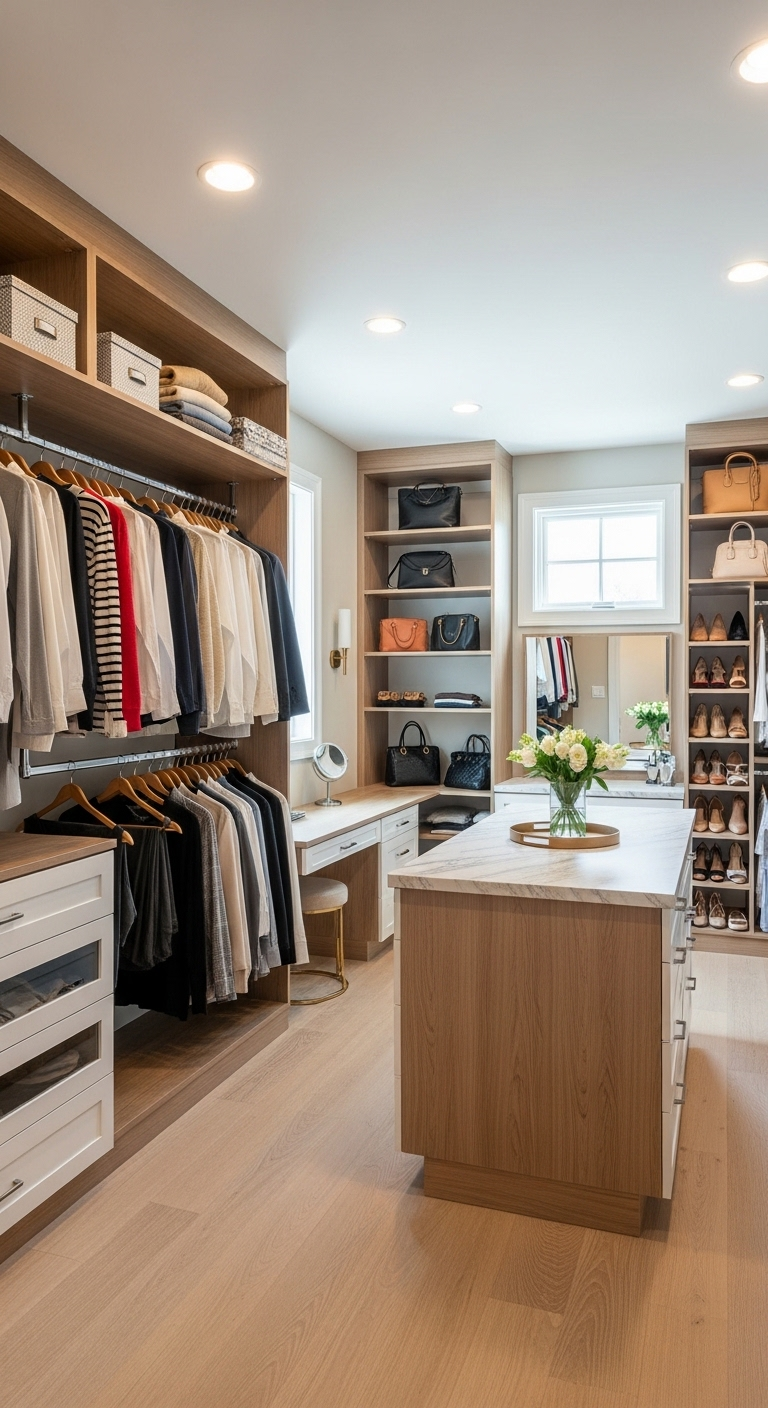
Implementing double-hang rods is arguably the fastest and most impactful design strategy for instantly expanding the capacity of your closet. Traditional closet layouts usually feature a single high rod that leaves a massive amount of empty, underutilized space near the floor. Unless you are hanging a wardrobe full of floor-length evening gowns, that dead space represents lost potential.
By stacking two hanging rods vertically, you split the wall into two highly efficient zones. This simple structural modification effectively doubles your usable hanging mileage without forcing you to expand the physical footprint of the closet.
The immediate result is a wardrobe that feels incredibly roomy, open, and systematically organized. By creating a dedicated home for your shorter separates, you eliminate the visual clutter of clothes bunching at the bottom, shifting your daily dressing space from cramped to beautifully spacious.
7#. Sliding Doors
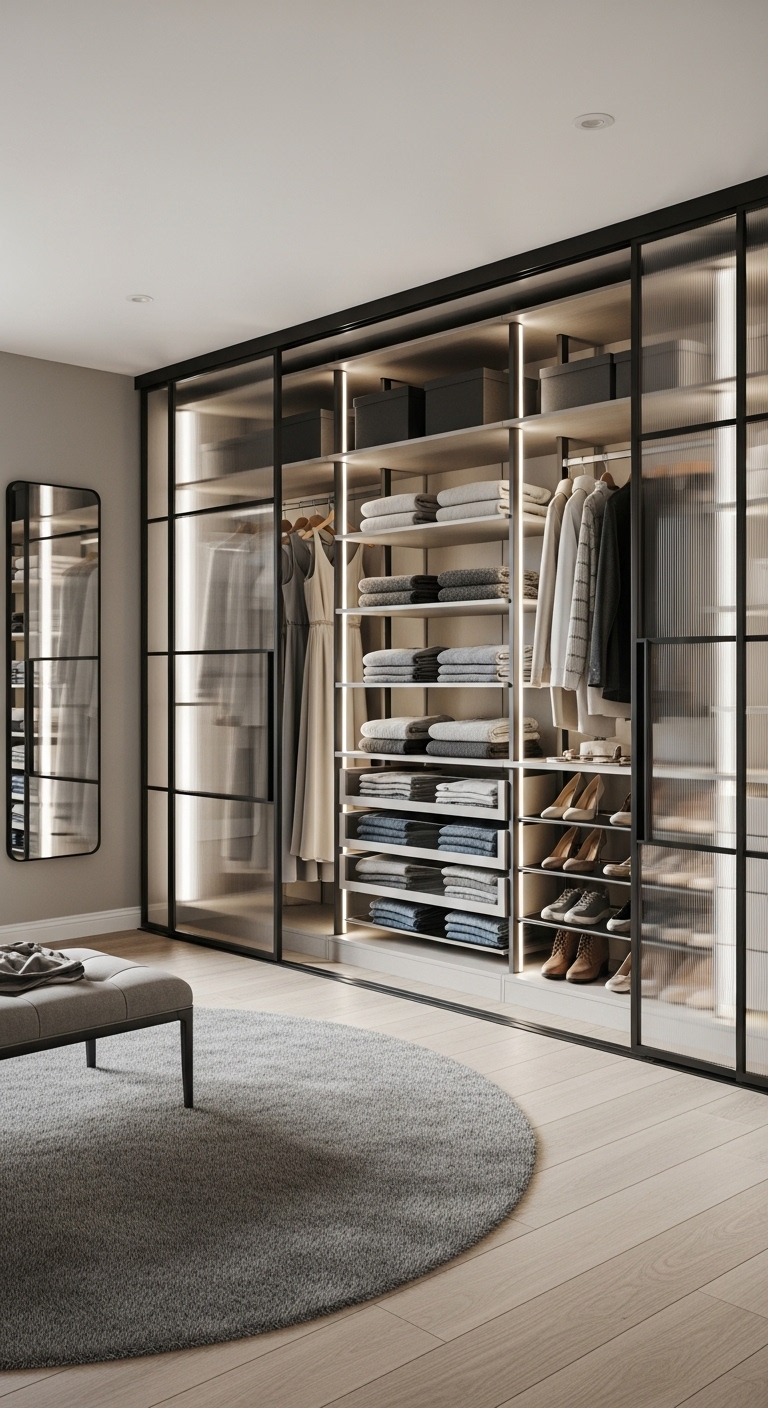
Sliding doors are really good for saving floor space. They also let you have door designs.Mirrored doors are great because they can be a full-length dressing mirror too which is very useful. It looks nice.You can think about using glass or textured panels on the Sliding doors to make them look more interesting. This way the space will still feel open and airy.Sliding doors are an idea, for people who like modern things because they are stylish and practical.
8#. Dressing Area
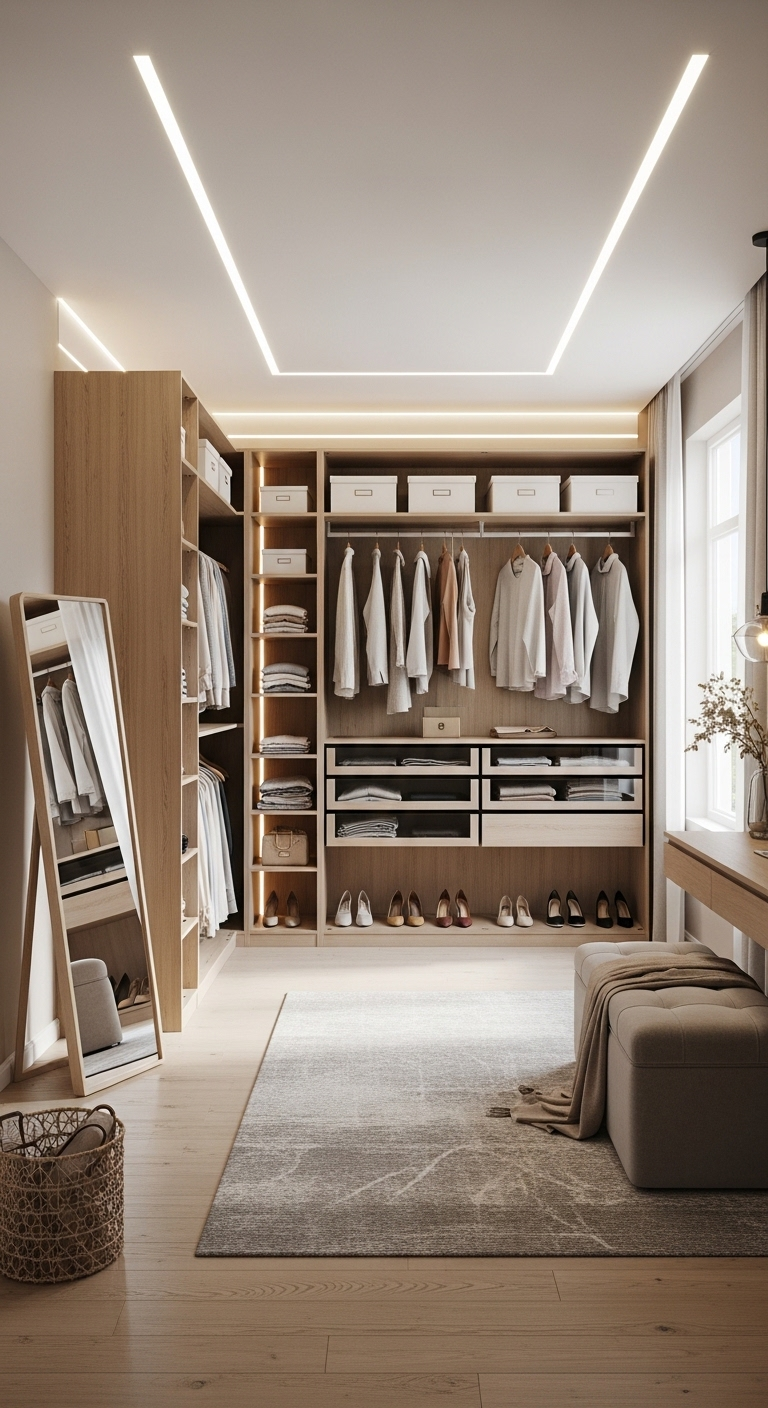
Integrating a small bench, a plush stool, or a multi-functional storage ottoman into your wardrobe layout is the definitive secret to establishing that coveted luxury boutique ambiance. A closet should be more than a storage vault where you hurriedly grab clothing; it functions best when designed as a private, transitional sanctuary where you prepare for the day ahead.
Introducing a dedicated seating element instantly anchors the center or corner of the space, inviting you to slow down, sit comfortably while slipping on footwear, and thoughtfully coordinate your wardrobe combinations.
When you deliberately pair your seating with a beautifully framed mirror and a few curated, sun-drenched accessories, you instantly transform a basic dressing routine into an inspiring daily ritual. This design strategy maximizes both the physical comfort and the visual value of your square footage, making your home wardrobe feel remarkably elevated, warm, and tailored to your personal rhythm.
9#. Color-Code Your Wardrobe
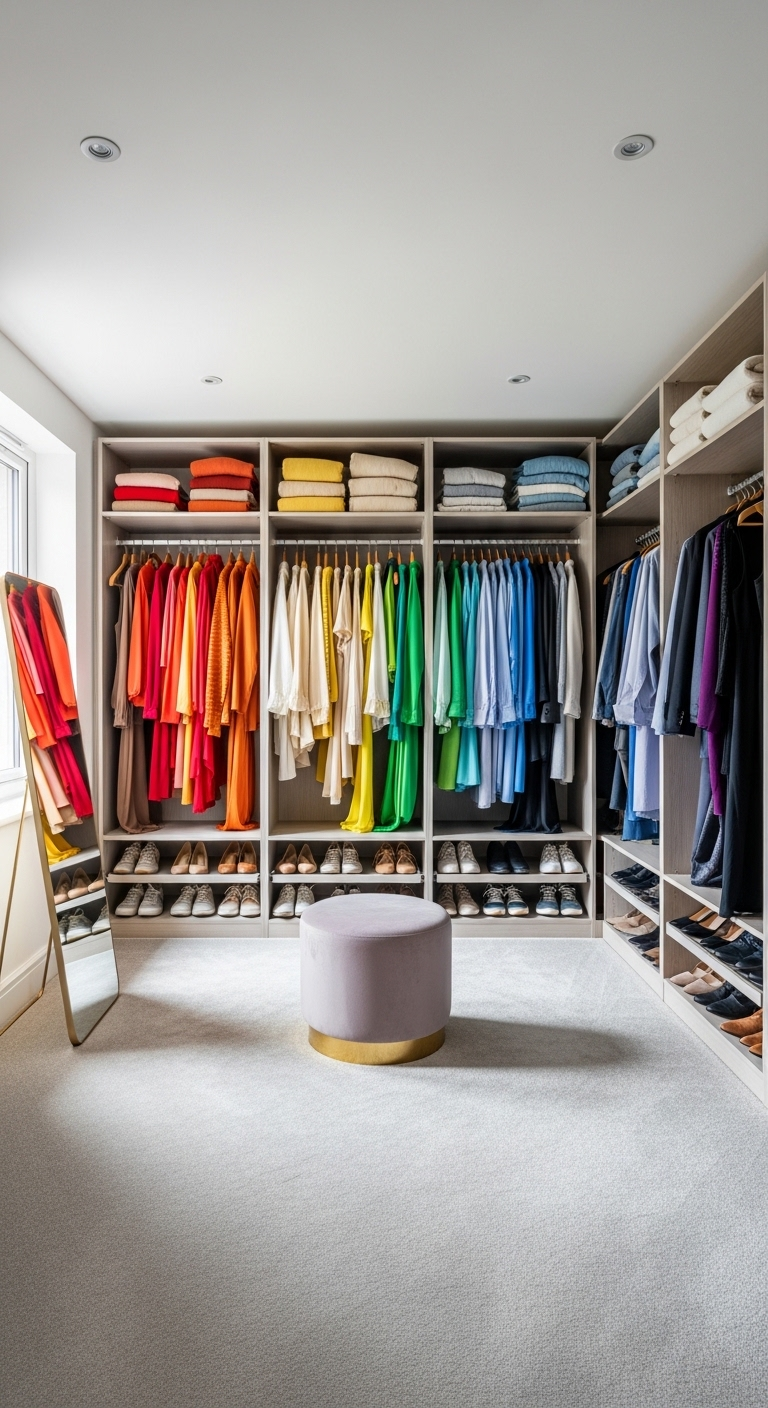
Depending on your room’s spatial footprint and your storage requirements, the type of seating you deploy establishes the overall design and functional narrative of the space:
- The Minimalist Vanity Stool (Acreage Saver): If you are working within a compact walk-in or a bedroom dressing alcove, a round vanity stool with a sleek brass or light wood base keeps the layout feeling incredibly open and airy. It slides completely underneath a floating ledge or console table when not in use, keeping walkways clear.
- The Architectural Bench (Linear Structure): For long, narrow walk-in closets or a blank wall space opposite your clothing rods, a slender upholstered bench adds a beautiful horizontal line. Leaving the space beneath the bench open allows you to neatly tuck your current rotation of house slippers or slides underneath, keeping the floor layout pristine.
- The Hidden Storage Ottoman (The Multi-Tasker): Implementing a tailored, upholstered storage ottoman is the ultimate high-efficiency solution. The lift-off or hinged top conceals a deep, velvety interior basin—providing a secret, dust-free catchment spot to stash extra shoes, winter blankets, or off-season accessories completely out of sight.
10#. Display Favorite Pieces
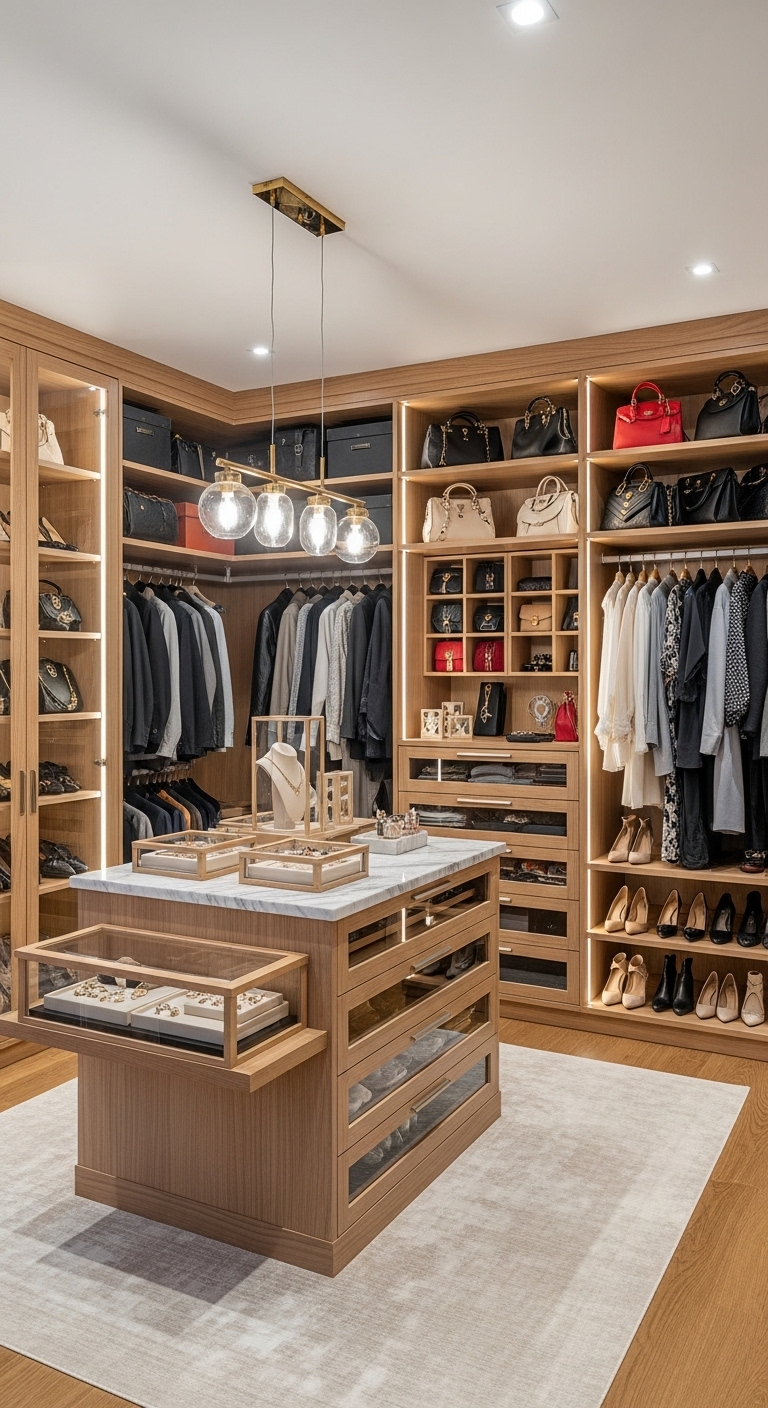
Viewing your personal wardrobe through the lens of a gallery curator completely redefines your relationship with your living space. When high-investment pieces like structured statement coats, textured handbags, and brilliant jewelry are tucked away behind solid doors, they lose their voice. Moving them into dedicated exhibition zones transforms your closet or dressing room into an evolving canvas of self-expression.
The real genius of your seasonal rotation method is that it honors both form and function. It transforms your space into a dynamic environment that mirrors the shifting rhythms of the year.
Bringing these cherished items into your daily line of sight removes the visual stagnation of standard storage, serving as a beautiful sensory reminder to actively style and live in your favorite pieces. Ultimately, a wardrobe shouldn’t just store who you were; it should celebrate who you are today, making your home feel incredibly warm, intentional, and inspiring..
11#. Transparent Storage
Utilizing clear bins and transparent boxes is an exceptional organizational strategy that completely eliminates the guesswork and friction of managing your storage. In traditional closet design, opaque cardboard boxes or dark plastic bins force a frustrating cycle of searching: you have to pull down multiple containers, rip off lids, and dig through layers of items just to find one specific accessory.
By making the shift to crystal-clear acrylic or high-grade transparent polypropylene containers, you create an instant, open-glance index of your belongings.
This immediate visual clarity acts as a powerful barrier against clutter. When you can see exactly where an item lives without opening the box, putting things back where they belong becomes entirely effortless. This layout maintains a pristine, highly organized environment where items are beautifully cataloged, instantly reachable, and perfectly preserved.
12#. Pull-Out Mirrors
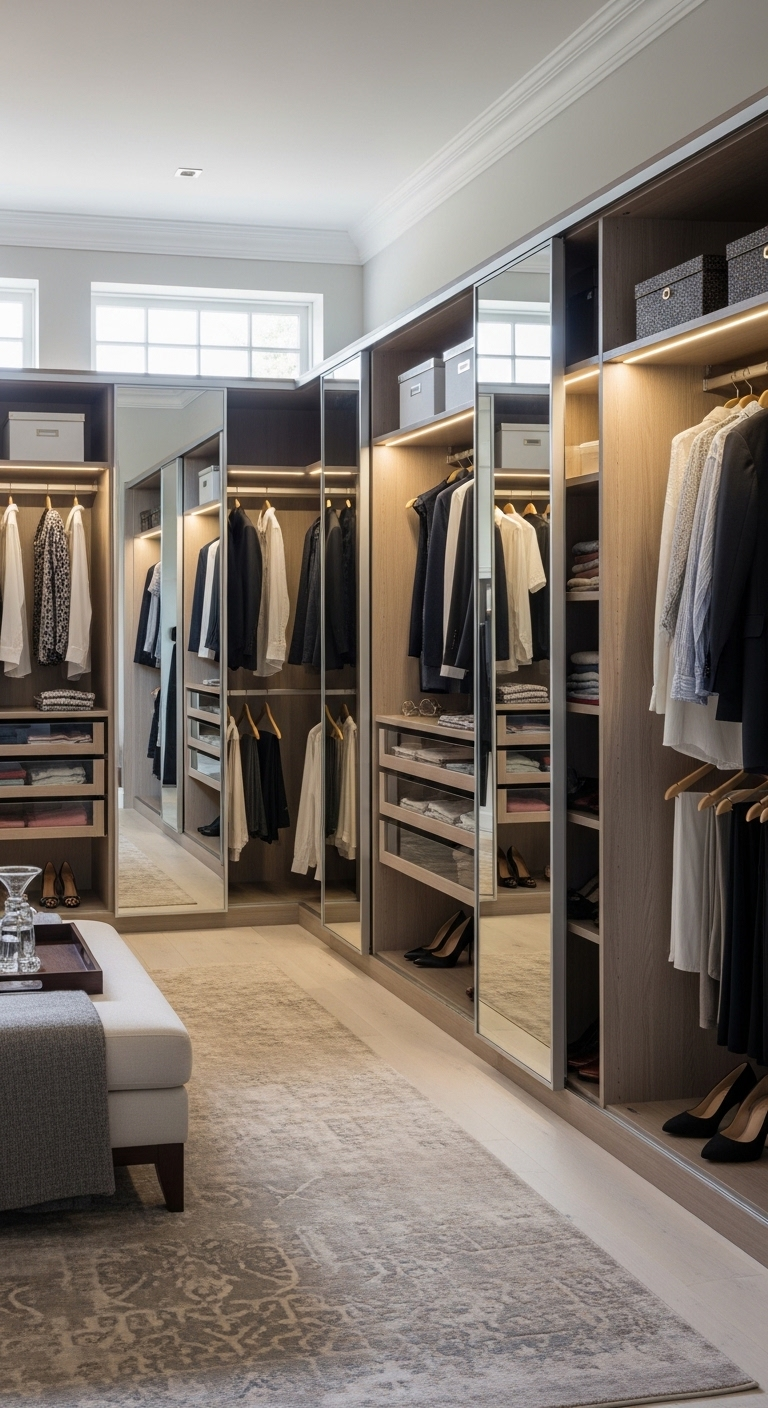
Integrating a retractable, pull-out mirror into your cabinetry is a brilliant interior design strategy that brings luxury-level functionality to the tightest spatial footprints. In a compact walk-in or a standard reach-in wardrobe, wall space is premium real estate usually reserved for hanging rods, drawers, and shoe ledges. Sacrificing an entire vertical panel just to mount a static full-length mirror can severely limit your overall storage capacity.
A retractable mirror elegantly solves this conflict by utilizing high-extension ball-bearing glides to hide the mirror entirely within the dead space between your clothes.
With a simple, fluid pull, the mirror slides smoothly out from the partition wall and pivots up to 180 degrees, instantly creating a private dressing alcove. This clever mechanical integration gives a small closet the spacious, high-end energy of a custom dressing suite, proving that you never have to compromise on utility or style when working with limited square footage.
13#. Multi-Functional Shelving
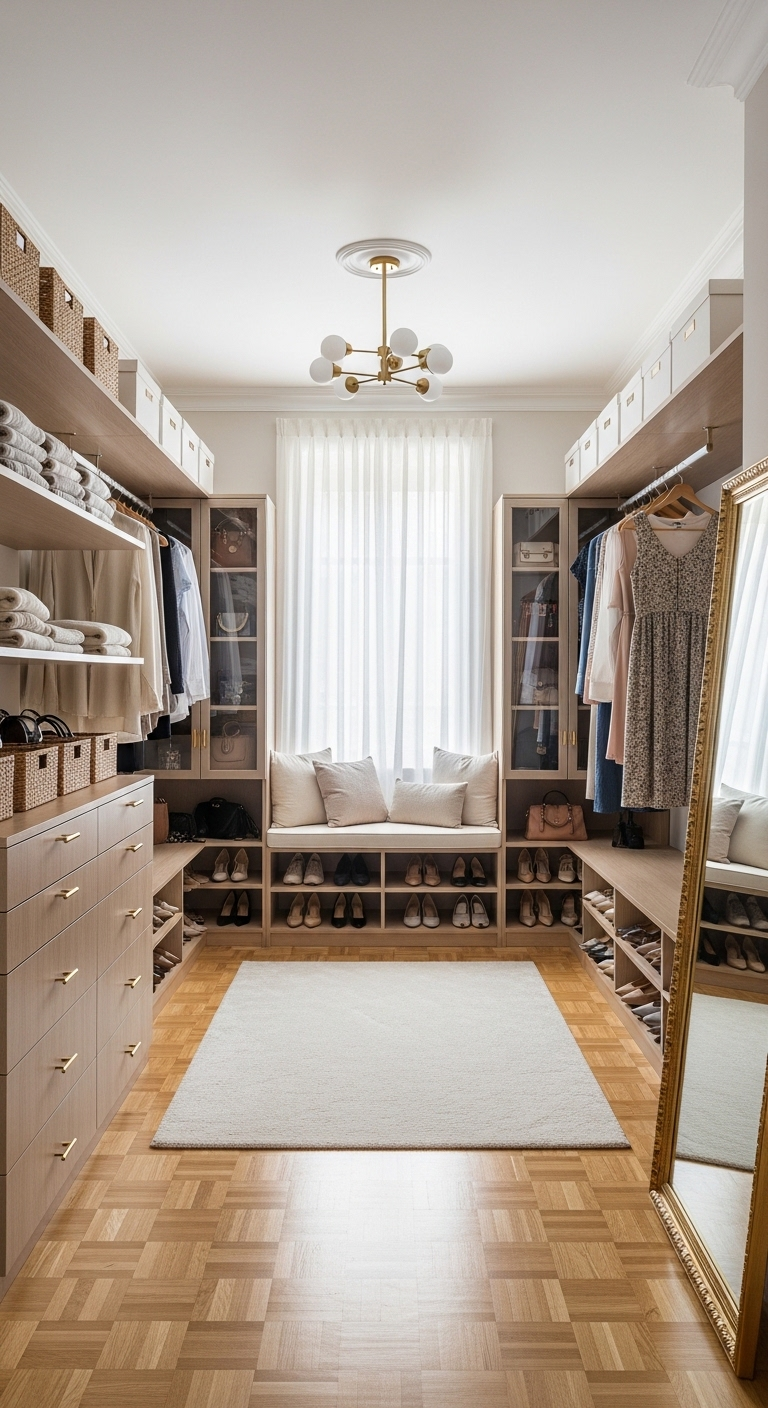
Striking the perfect balance between open display and closed concealment is the defining principle of luxury closet design. When a wardrobe relies entirely on open shelving, it can quickly cross the line from a curated boutique into an overwhelming wall of visual noise. On the other hand, hiding absolutely everything behind solid cabinet doors makes the room feel sterile, flat, and devoid of personality.
The ultimate design solution is a concept interior stylists call the peekaboo rule. By dedicating roughly 60% of your closet to hidden storage (for less glamorous or unruly essentials) and leaving 40% open to the light, you create a dynamic, layered landscape.
This juxtaposition allows you to control the narrative of the space—tucking away bulky winter thermals and gym wear out of sight, while proudly spot-lighting your absolute favorite folded knits, textured woven baskets, and heirloom accessories..
14#. Hooks and Pegboards
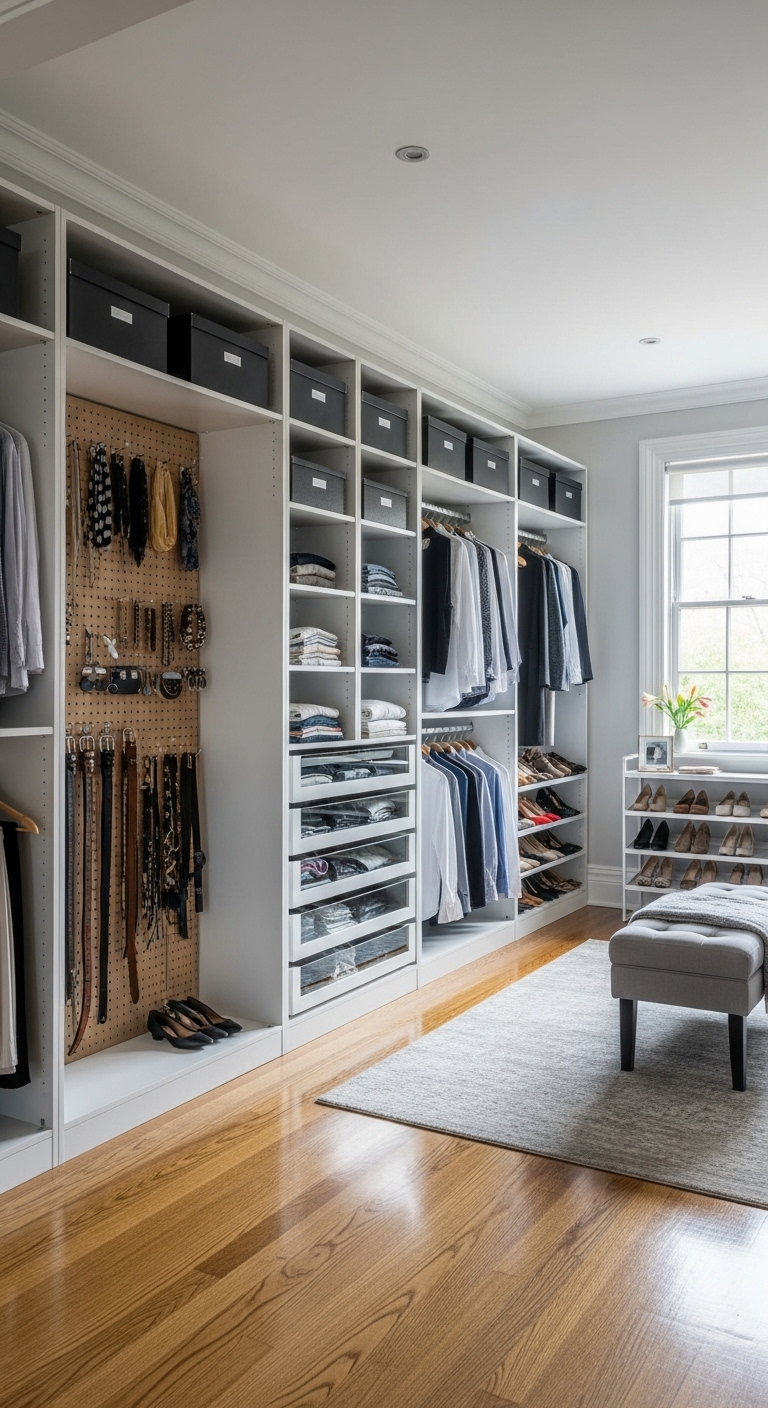
Integrating a custom pegboard system into your closet layout is a premier design strategy for organizing smaller accessories with total fluid freedom. Standard wall hooks offer fantastic accessibility, but once you drill them into your cabinetry or plaster, your layout is locked in. If your collection of handbags expands or you trade your winter blankets for lightweight silk scarves, a fixed hook setup can quickly become crowded or inefficient.
A pegboard effortlessly solves this layout puzzle by acting as a dynamic, reconfigurable grid.
By inserting movable pegs, slim metal brackets, and floating ledges into the pre-drilled matrix, you can shift your layout around at will. This fluid adaptability makes a pegboard the ultimate high-efficiency canvas for keeping belts, structured hats, sunglasses, and shoulder bags perfectly separated and completely visible, giving your dressing space a clean, modern edge.
15#. Separate Seasonal Items
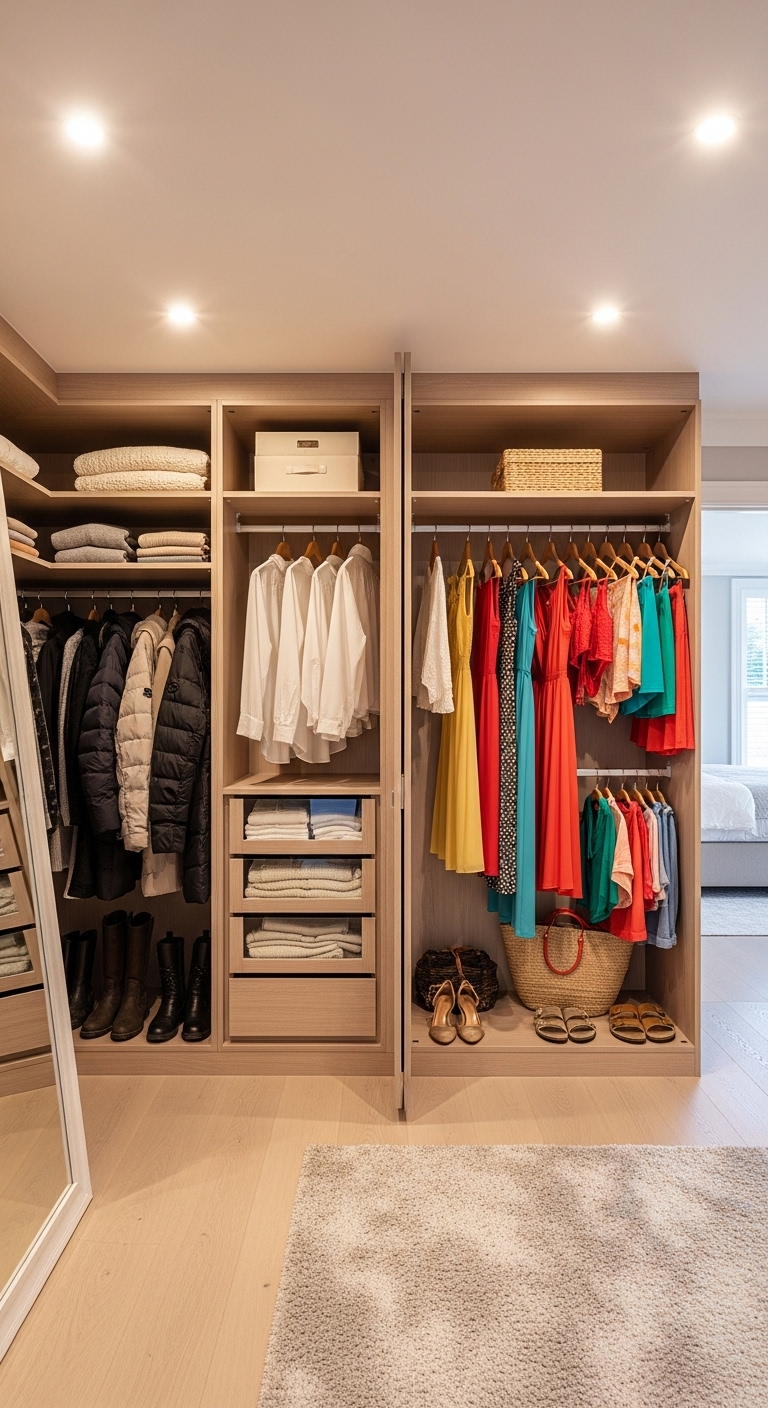
Mastering the art of seasonal rotation is the ultimate strategy for unlocking hidden square footage and cultivating a sense of calm in your wardrobe. When your closet attempts to house heavy winter wools alongside airy summer dresses simultaneously, the rods become congested, fabrics wrinkle, and visual noise skyrockets. This congestion creates a constant subconscious friction every morning when you try to get dressed.
By systematically migrating your off-season apparel out of your active daily line of sight, you provide your current wardrobe with critical breathing room.
This simple boundary allows you to treat your closet like a high-end personal boutique where only your most relevant, immediately wearable pieces reside. The resulting layout looks beautifully tailored, expansive, and highly efficient—ensuring you spend zero time digging through irrelevant items and more time enjoying the pieces you love.
16#. Jewelry Organizer
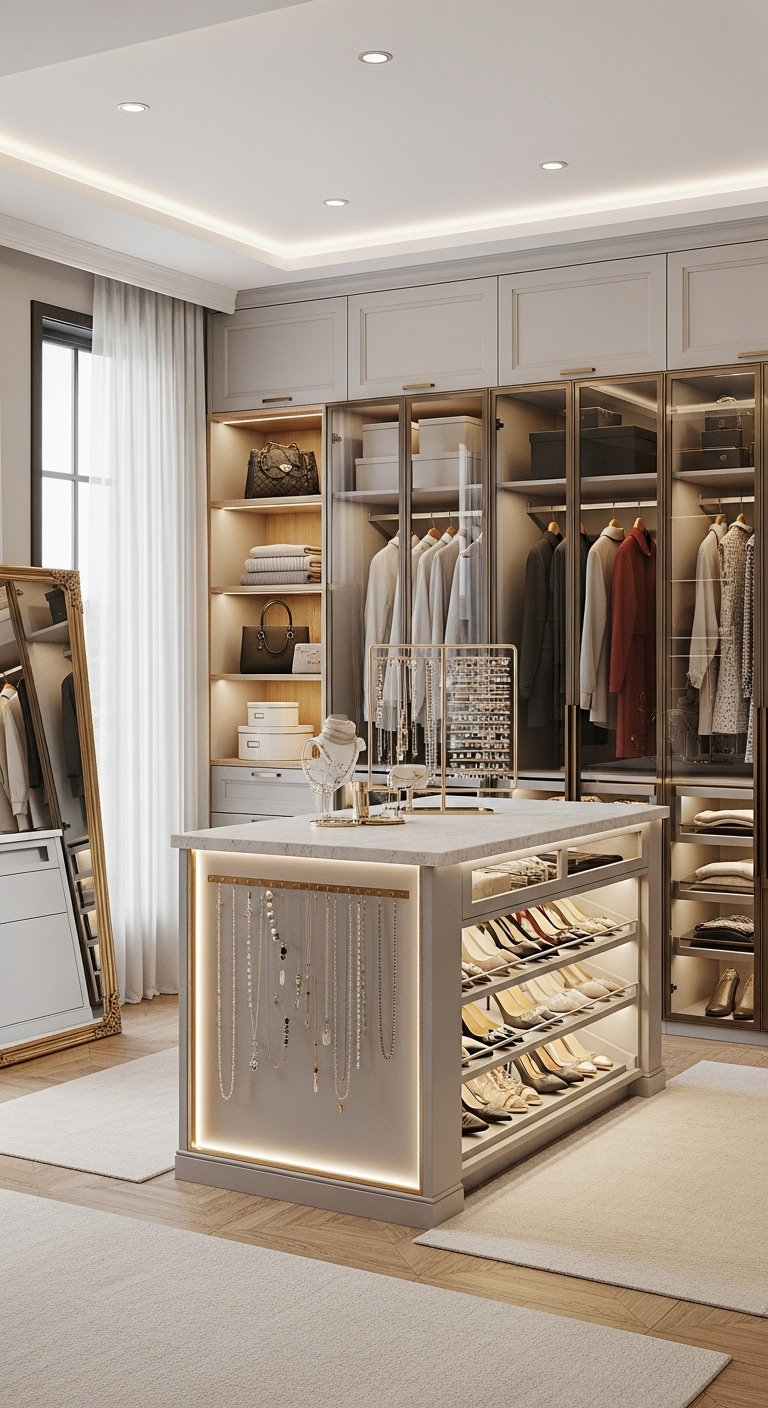
Treating your jewelry collection as a fine visual exhibit is the ultimate secret to injecting a high-end, luxury boutique energy into your dressing space. When precious metals, delicate chains, and statement gemstones are tossed haphazardly into a dark drawer or a cluttered dish, they quickly tangle, tarnish, and lose their brilliance. This chaos turns what should be an inspiring finishing touch to your outfit into a stressful morning hurdle.
By introducing structured velvet trays, dedicated hooks, and sleek wall-mounted layouts, you elevate these small, personal treasures into true architectural accents.
Opening a drawer to see your rings and necklaces perfectly spaced across a plush grid creates an instant psychological shift. It transforms a basic utility closet into a private, sun-drenched sanctuary of design, making the simple act of choosing your jewelry feel incredibly rewarding, intentional, and thoroughly luxurious.
17#. Sliding Drawers
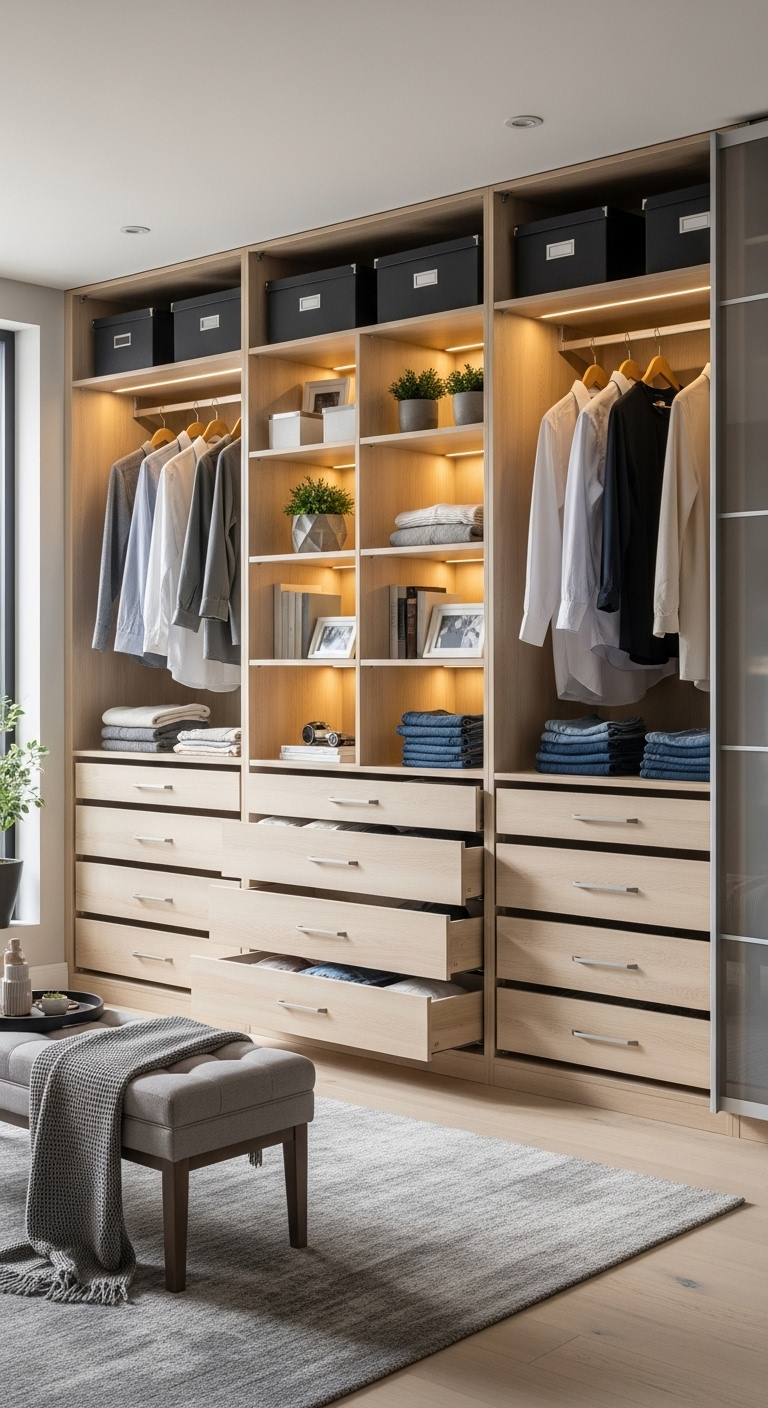
Sliding drawers are the true quiet workhorses of an upscale wardrobe layout. While open hanging rods celebrate your grandest statement pieces, sliding drawers provide a necessary visual boundary—safely concealing your daily essentials, lounge layers, and smaller textiles completely out of sight.
When equipped with high-end features like soft-close under-mount glides, the simple act of shutting a drawer becomes a whisper-quiet, premium experience. It completely eliminates the jarring slam of basic furniture, infusing your morning routine with a sense of deliberate calm.
However, the real magic happens when you look past the beautiful wood or lacquer drawer fronts and focus on the architecture inside. Without intentional boundaries, a sliding drawer quickly devolves into a dark, rolling cavern where loose socks tumble, undergarments become a disorganized jumble, and delicate accessories vanish.
By inserting a tailored internal framework, you conquer this hidden chaos—creating a pristine, structured environment where every single item is held in its own perfect place.
18#. Decorative Baskets
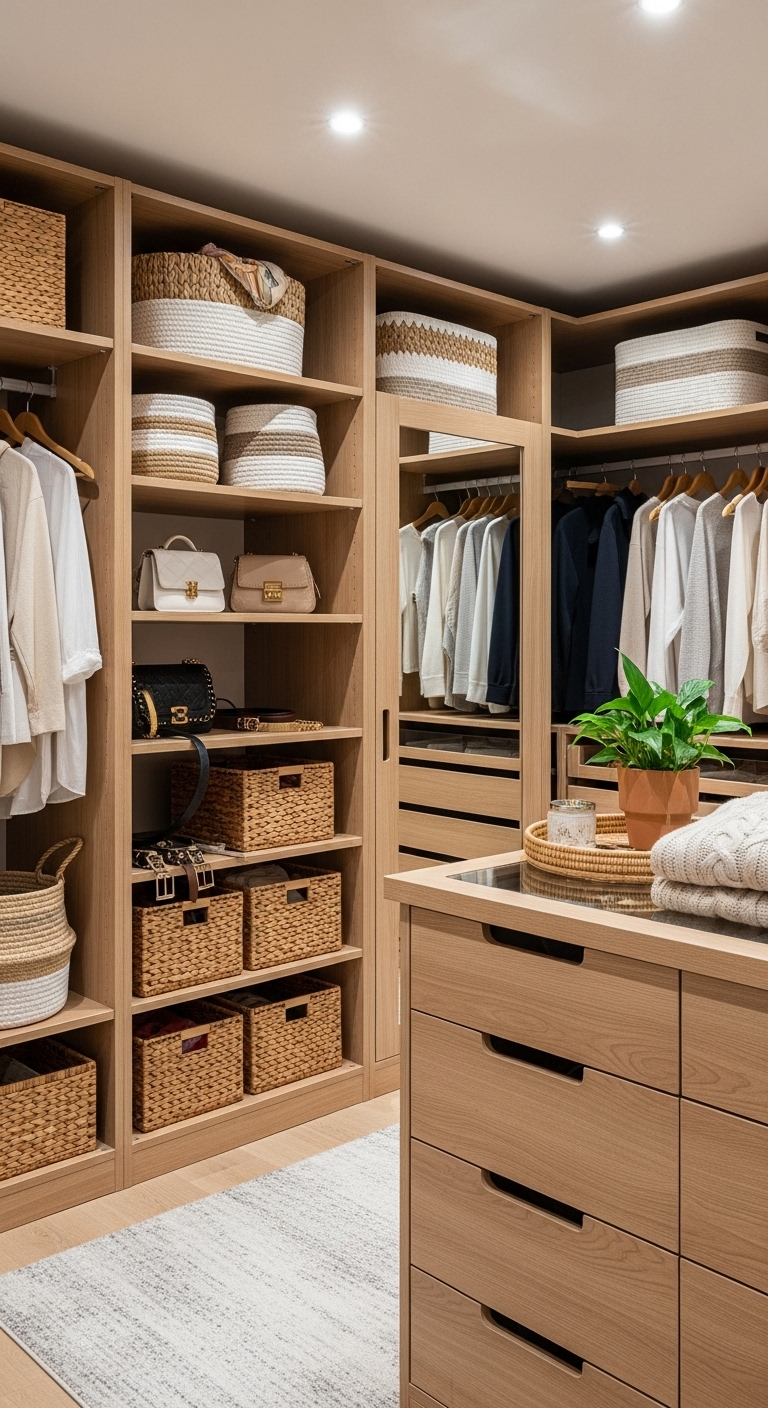
Introducing natural woven baskets, structured fabric bins, and tailored storage boxes is the premier interior design method for infusing warmth, dimension, and luxury boutique styling into an open closet layout. All-wood or all-white custom cabinetry, while clean, can sometimes feel cold, rigid, and strictly utilitarian. Incorporating organic elements beautifully breaks up those sharp linear shelf lines with rich tactile interest.
Beyond their undeniable high-end aesthetic, these containers function as magnificent visual filters.
Heavy, thick items like cable-knit sweaters, plush wool blankets, and seasonal soft goods rarely maintain perfect geometric shapes when stacked directly on an open shelf—they naturally slouch, lean, and quickly look unkempt. Placing them inside uniform, structured bins conceals that inevitable structural breakdown, allowing you to hide the bulk while maintaining a flawlessly organized, serene storefront appearance.
19#. Mirror Panels
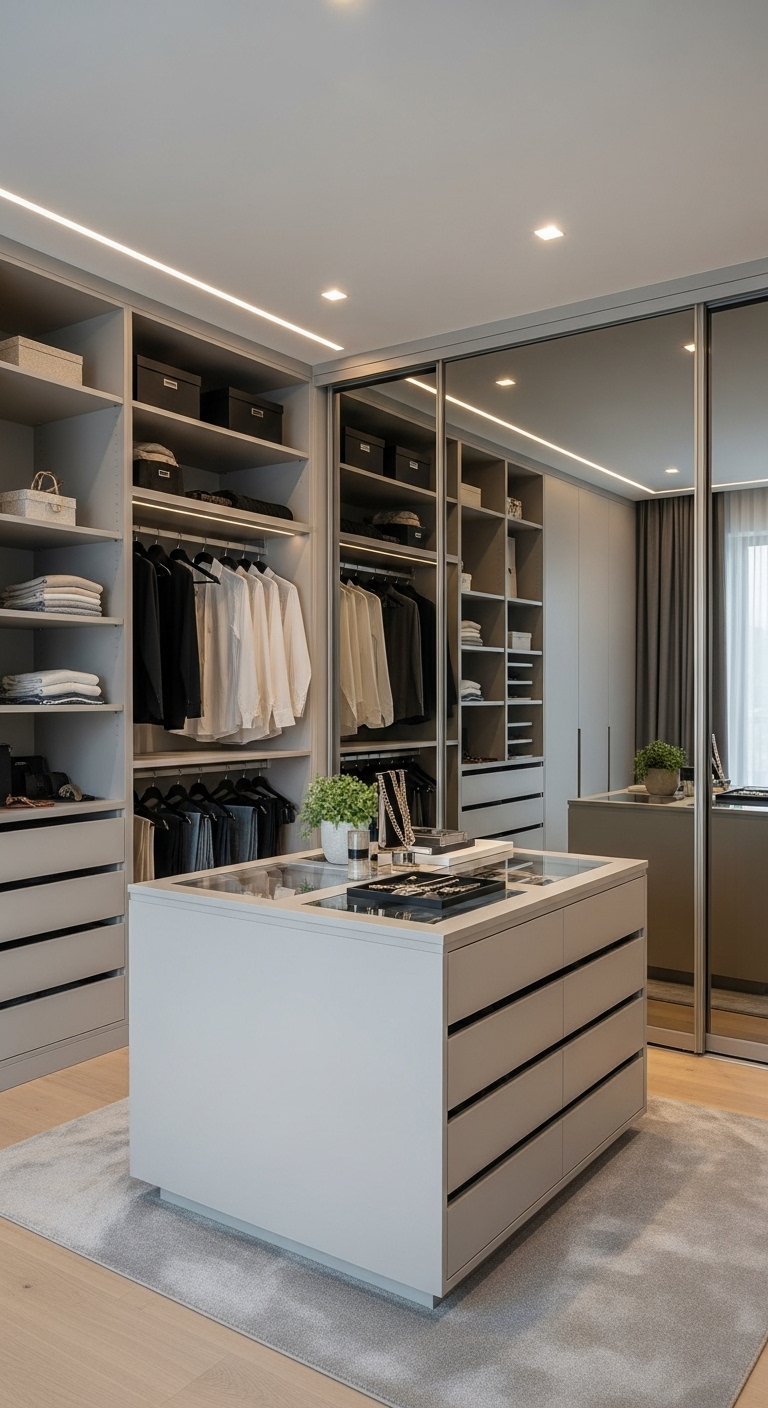
Incorporating full-length mirrors, mirrored wardrobe doors, or reflective wall panels is the ultimate architectural design technique to eliminate the cramped, enclosed feeling of a tight closet. Small closets naturally suffer from a lack of visual breathing room; solid wood paneling and dense clothing rods absorb light and pull the walls inward.
By introducing large, high-quality mirror panes, you trick the eye into seeing an entirely new architectural corridor beyond the actual boundary wall.
The magic of reflection lies in its ability to amplify spatial volume. A mirror doesn’t merely sit on the wall as a passive accessory; it functions as a dynamic design window that captures the opposite side of your wardrobe and reflects it face-forward. This duplication instantly makes your closet footprint feel twice as deep, turning a basic reach-in or narrow walk-in into a bright, airy dressing gallery.
20#. Sliding Shoe Shelves
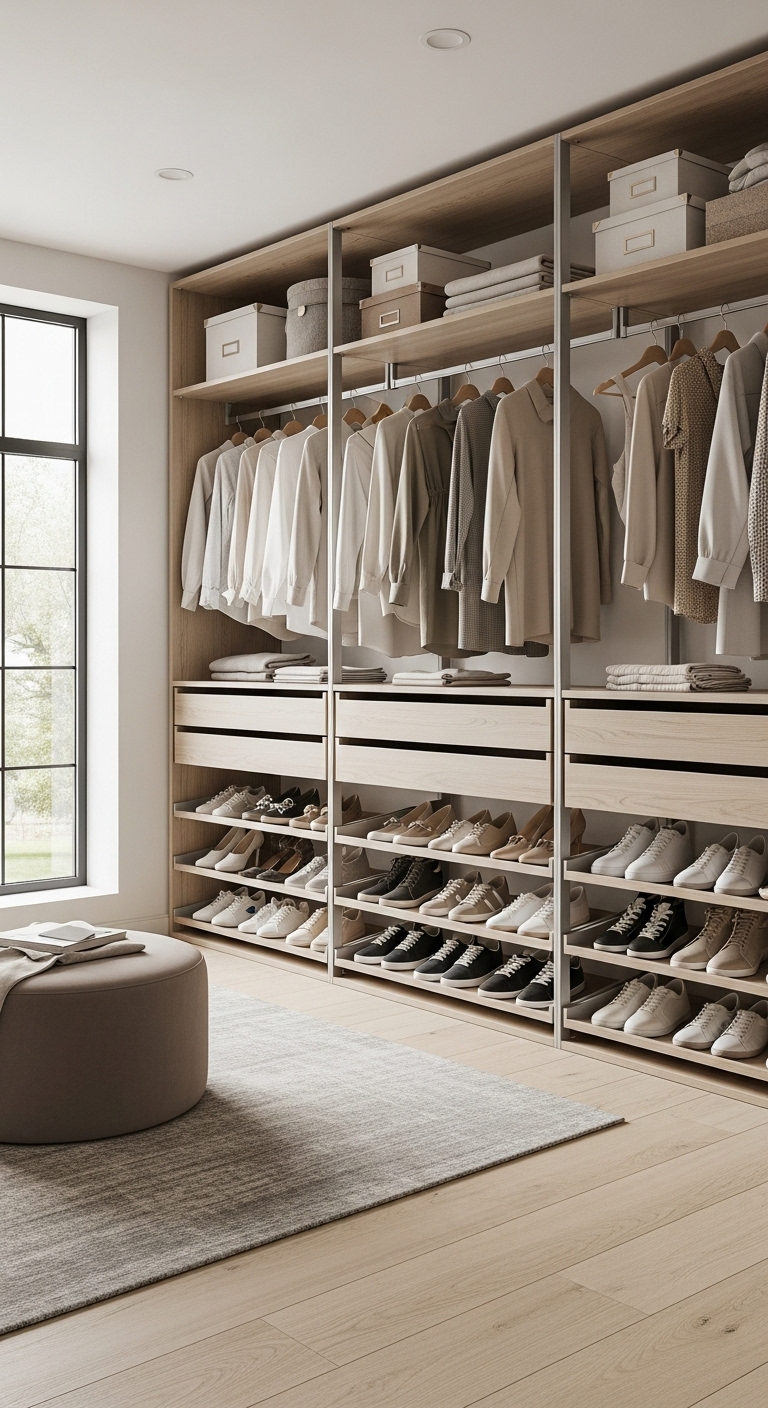
Elevating your shoe organization from flat, dark shelves or floor piles into an intentional, angled display is a premier layout strategy that completely reshapes the character of your wardrobe. On typical flat shelving, shoes are pushed in toe-first, meaning you only ever see the front profile of your footwear. This buries style details, traps shadows between tiers, and leads to a constant cycle of pulling out multiple pairs just to coordinate an outfit.
By introducing angled or sliding shelves, you treat your collection as a dynamic visual design feature.
Slanted ledges pitch the entire silhouette of your shoes forward, exposing the complete heel-to-toe architecture, texture, and color story directly to your line of sight. This conversion instantly shifts your footwear from unorganized floor clutter into an editorial-worthy display panel, streamlining your morning choices while giving your closet a sleek, modern boutique ambiance..
21#. Valet Rod
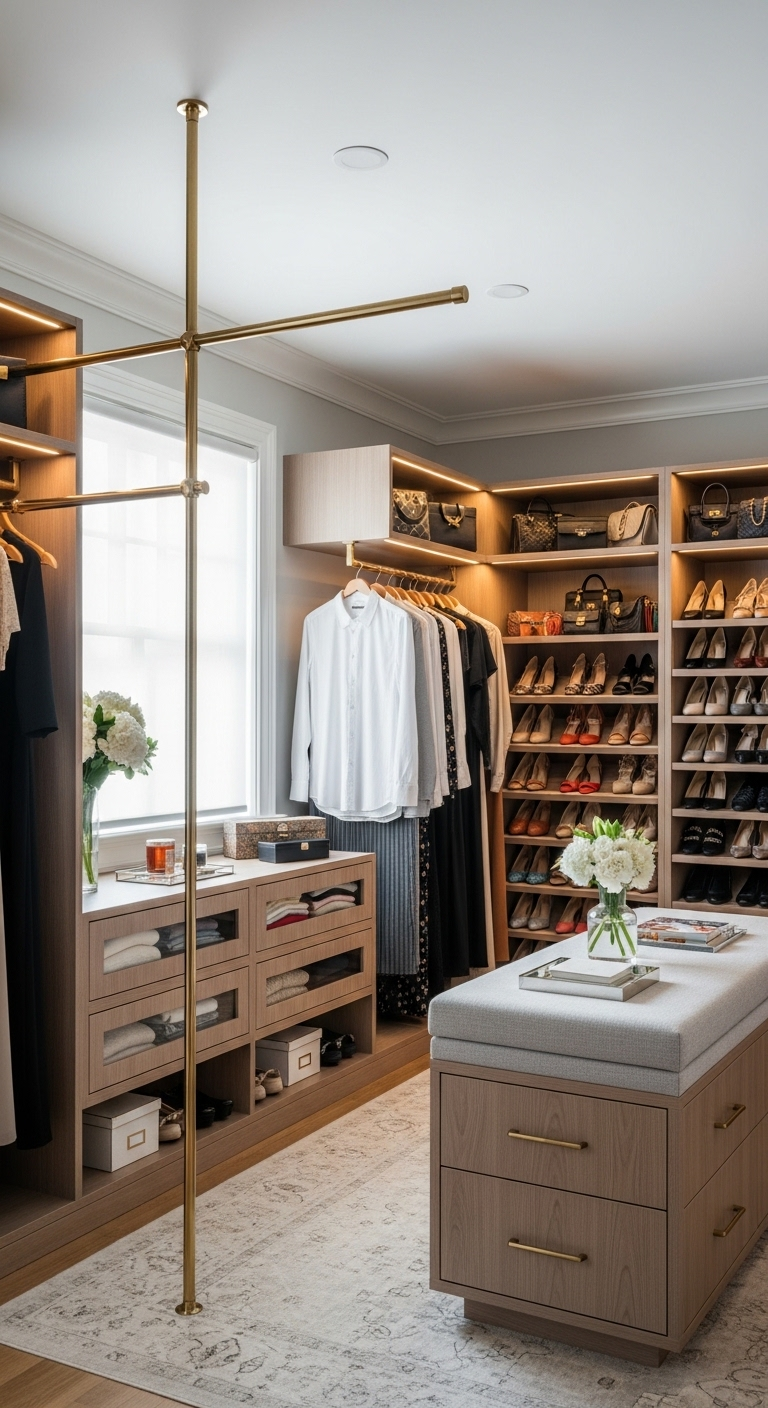
Integrating a pull-out valet rod into your custom wardrobe layout is an exceptional strategy that brings high-efficiency outfit curation and boutique-level prep straight to your daily routine. In a standard closet setting, designing an outfit often requires pulling several pieces from different racks, holding them awkwardly in mid-air, or draping them over furniture to see how they coordinate. This creates immediate physical clutter and disrupts the clean order of your room.
A retractable valet rod serves as a dedicated, temporary staging platform for your style thoughts.
With a quick, satisfying pull, this slim metal rod extends out into the open room, providing an independent hanging hook directly in your path. It acts as an invaluable tool for staging your next morning’s wardrobe ensemble, vetting color combinations, or holding freshly steamed shirts away from tight hanging lines so they remain completely wrinkle-free..
22#. Glass Cabinets
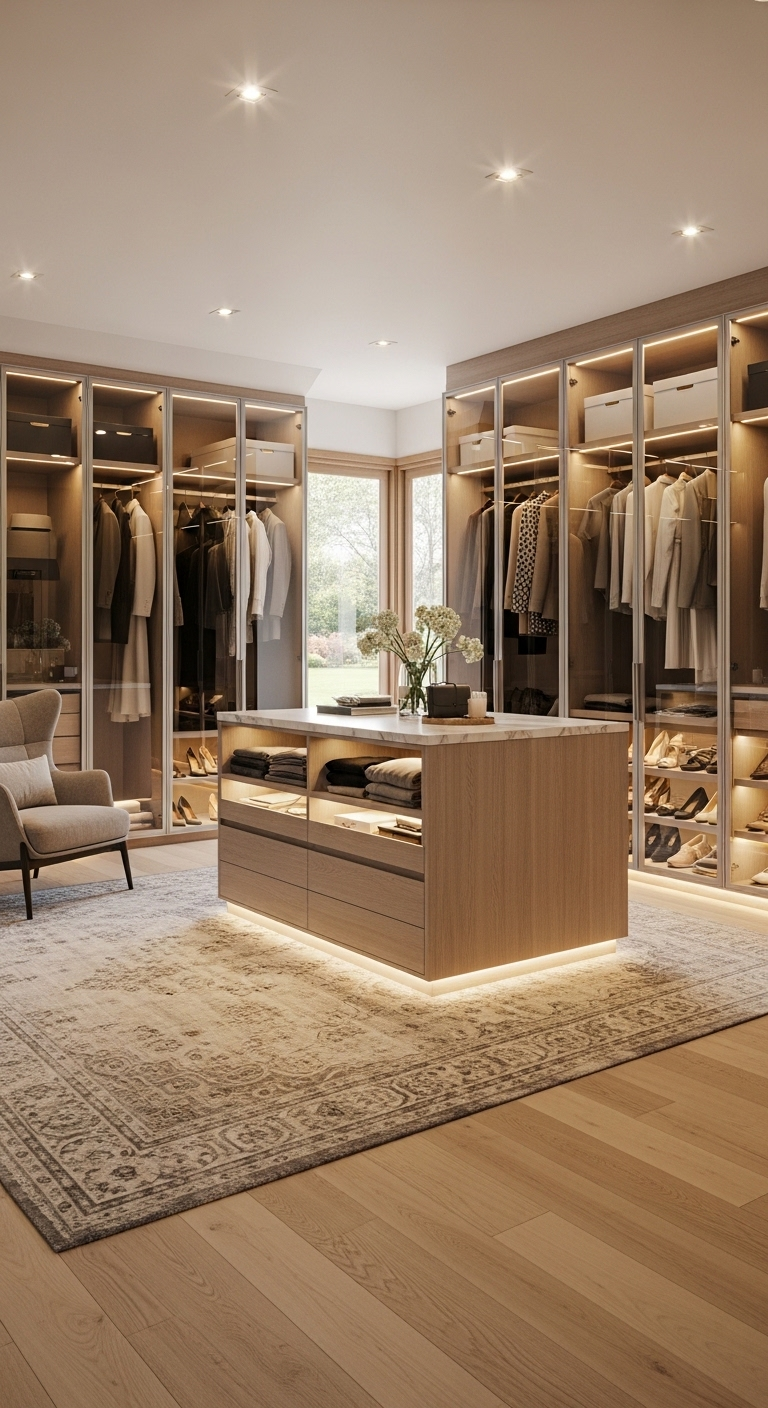
Integrating glass-front cabinets into your wardrobe design is the pinnacle of luxury visual merchandising. It elegantly bridges the gap between open-air vulnerability and solid-door concealment. When you own exquisite statement coats, delicate silk-blend garments, or high-value leather handbags, leaving them entirely exposed to the elements on open shelves invites a slow build-up of microscopic dust, fiber-fading UV rays, and the risk of accidental snags.
Glass-front cabinetry acts as an impeccable physical shield, encapsulating your most treasured pieces in a clean, hermetically controlled environment.
Yet, because the barrier is crystal-clear glass, it completely preserves the immediate visual access of an open layout. This sophisticated setup gives your wardrobe the ultra-refined, high-end energy of an editorial fashion archive or an upscale boutique, turning your finest investments into stunning, dust-free works of art..
23#. Wall-Mounted Storage
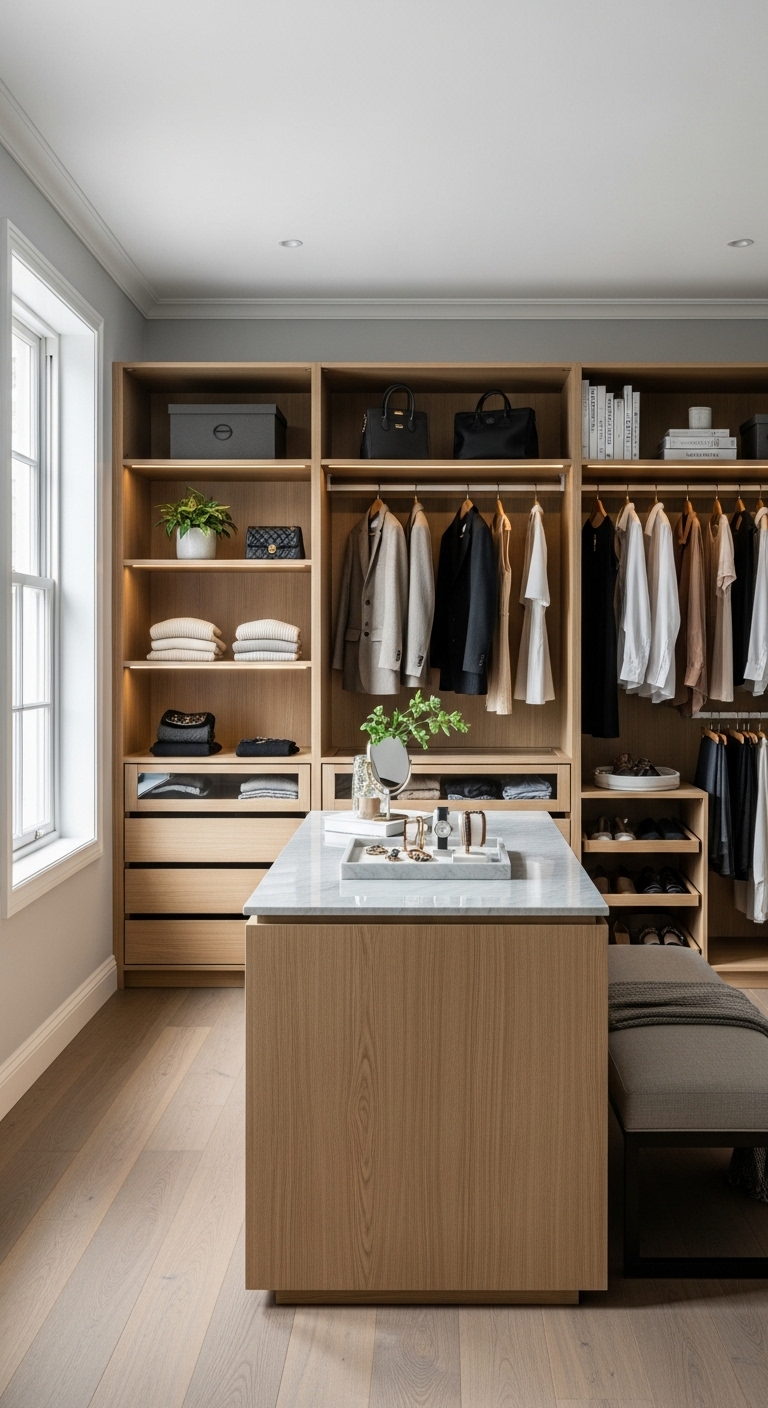
Integrating floating shelves and architectural wall racks into your room layout is a premier design strategy for merging high-efficiency storage with a clean, minimalist aesthetic. In compact rooms or narrow walk-in closets, traditional floor-standing bookcases and heavy dressers act as physical blocks that swallow up valuable floor space. They break up the visual continuity of the room, making walls feel closer and spaces feel significantly more cramped.
By lifting your accessories off the floor and securing them directly to the wall framework, you unlock uninterrupted floor space.
Seeing a completely clear floor line extending all the way to the baseboards instantly tricks the brain into perceiving a room as much larger and more open than it actually is. This floating approach allows you to convert empty, underutilized wall real estate into a dynamic, airy exhibition zone—giving your structured hats, prized handbags, and delicate decorations a crisp, sophisticated gallery presence.
24#. Accent Wall
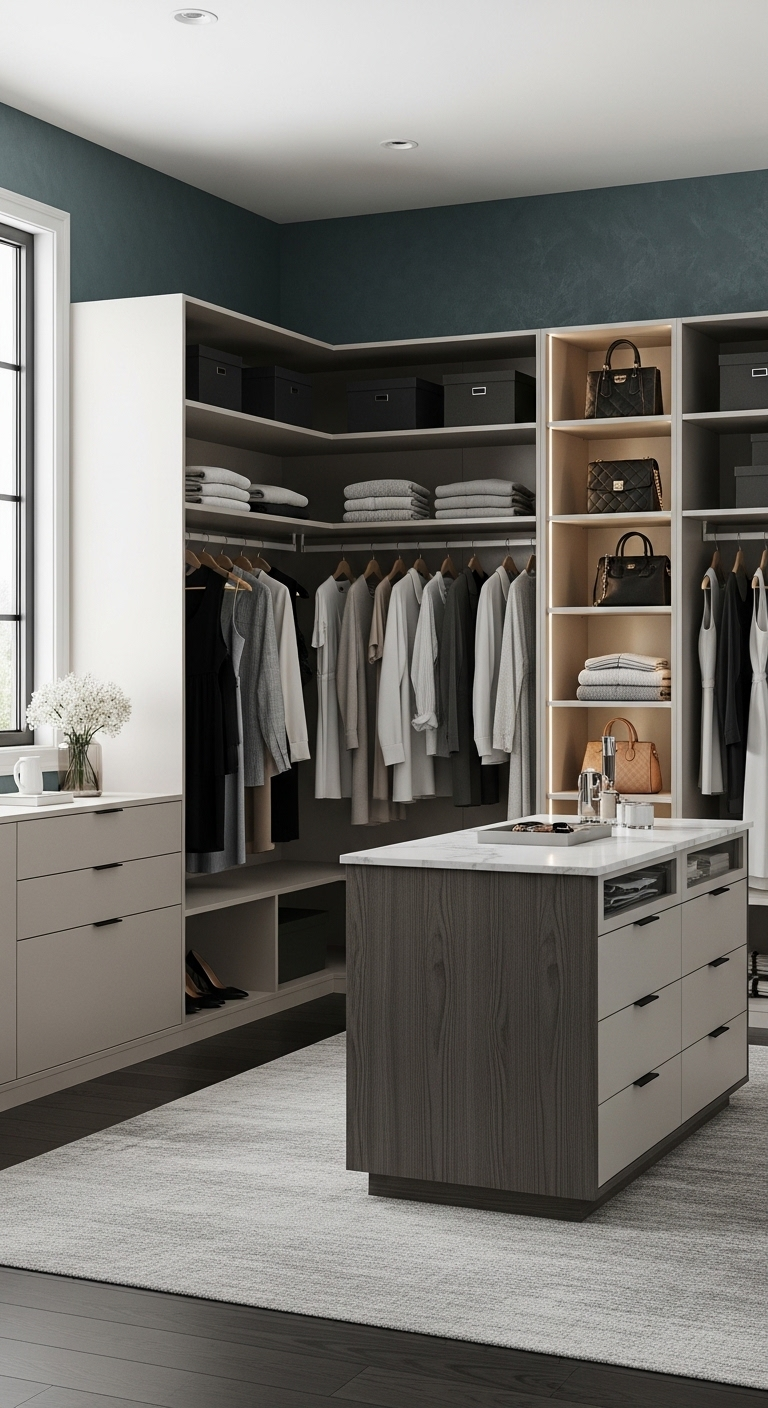
Incorporating a painted wall or a textured wallpapered accent panel is the ultimate interior design secret for turning a passive storage space into a high-octane personal gallery. In standard closet design, plain white or beige walls cause clothes to blend into the background, absorbing the unique textures of your statement coats and the brilliant metal finishes of your jewelry. The space quickly feels flat and purely utilitarian.
By introducing a deliberate accent wall directly behind your open hanging rods or accessory ledges, you create a powerful design principle known as visual framing.
A rich, dark hue or a sophisticated pattern acts as a dramatic stage curtain. It provides an intentional backdrop that forces the colors, silhouettes, and intricate details of your favorite handbags and coats to jump forward into the room light. This simple layer of contrast instantly redefines your closet, changing it from a dense storage locker into an inspiring, high-end design feature.
25#. Smart Lighting
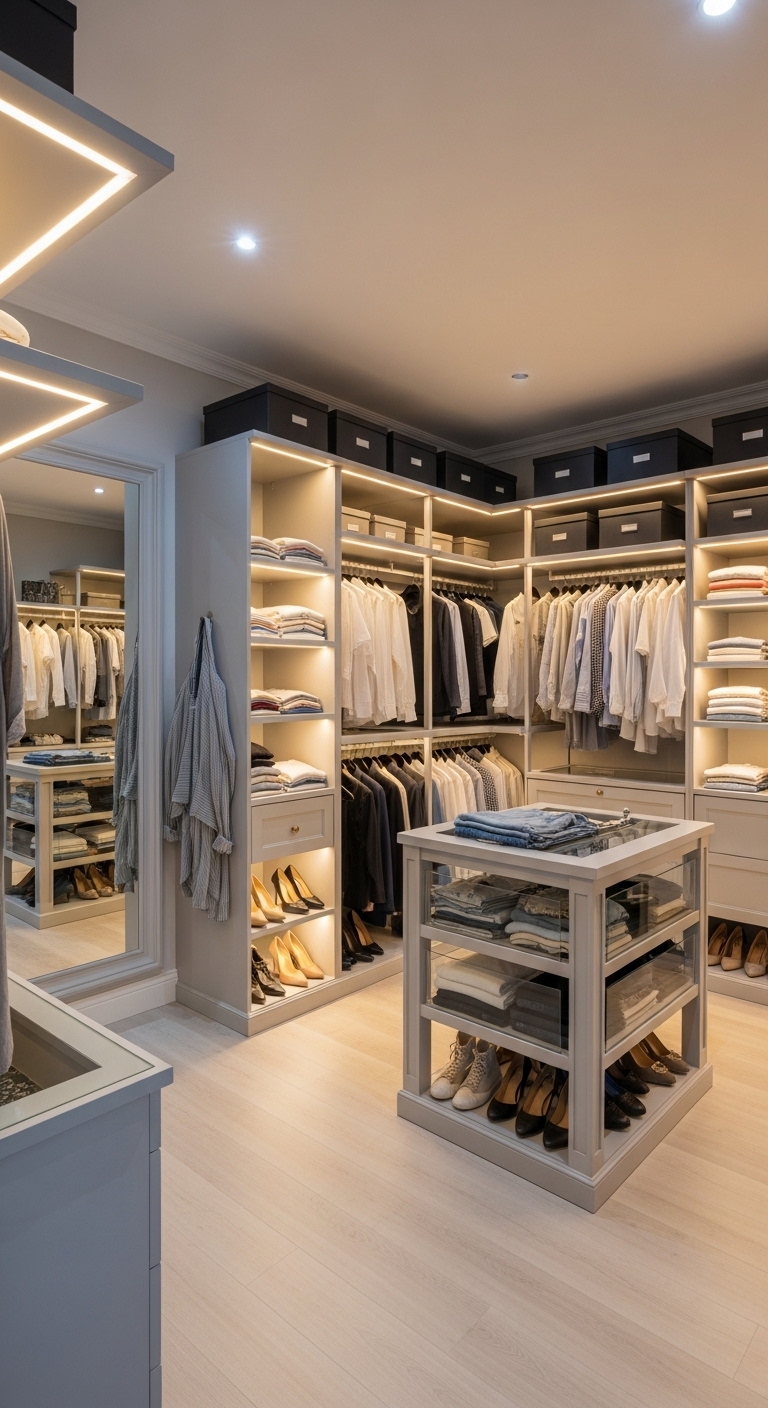
Integrating a smart lighting layout—using flexible LED strips, automated motion sensors, or color-changing RGBW systems—is the single fastest, highest-impact interior design technique to elevate a basic closet space. In typical home architecture, closets are treated as an afterthought, left with a single harsh overhead bulb or trapped in deep room shadows. This dim environment forces you to squint to distinguish deep navy from black, buries your favorite textures, and makes getting dressed feel chaotic.
Upgrading your illumination profile entirely rewrites the mood of the room.
The moment a space is flooded with crisp, strategically targeted light waves, it instantly expands visually, making the walls feel deeper and your clothes look significantly more vibrant. It gives your wardrobe the ultra-clean, intentional energy of a high-end designer showroom, completely transforming your daily routine without requiring a major structural renovation.
26#. Adjustable Shelves
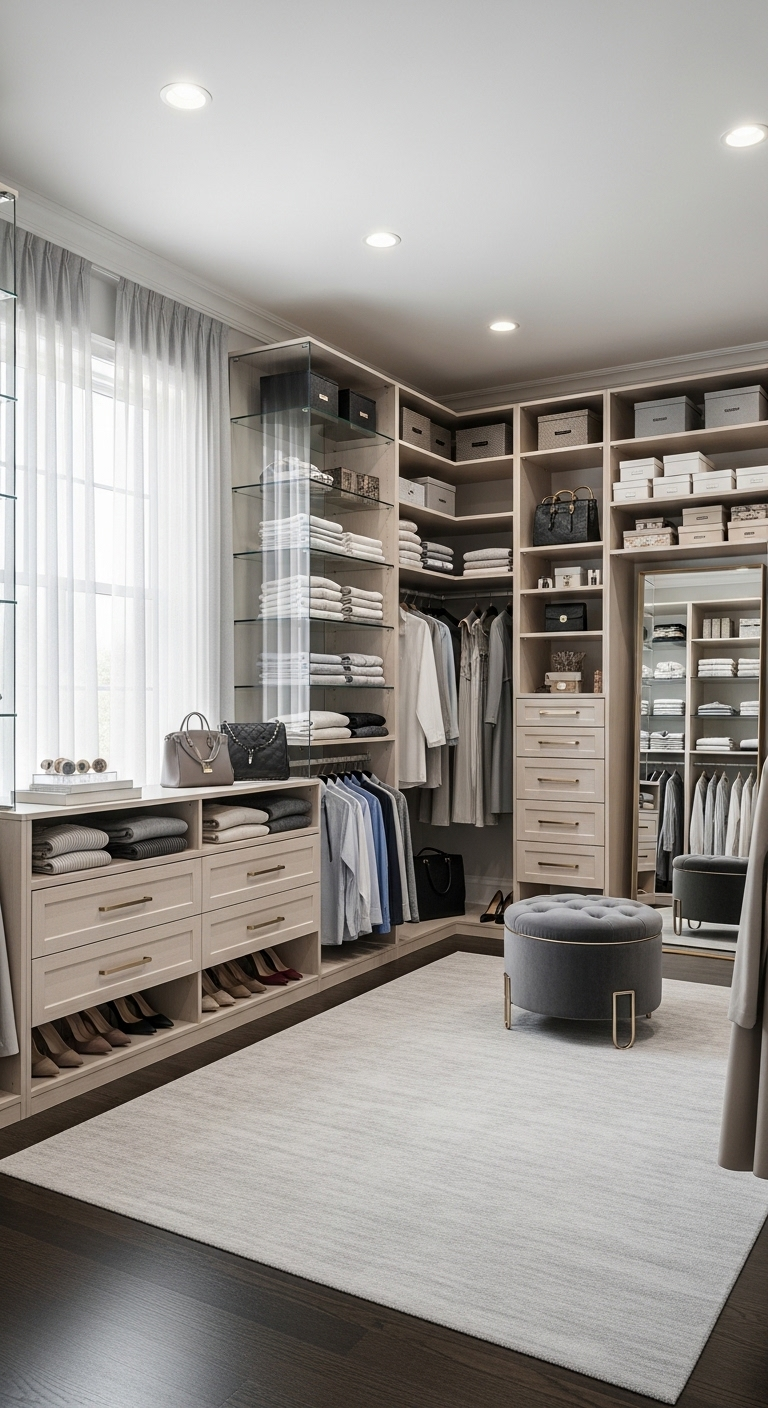
Embracing adjustable shelving is the single most important structural strategy for building a future-proof wardrobe layout. Traditional closets are built with fixed, static shelves that lock you into rigid heights from day one. When your style shifts—perhaps you trade your low-profile summer sandals for a collection of tall leather winter boots, or you swap slim tees for thick, chunky cable-knit sweaters—fixed shelves force you to either cram items together or leave massive gaps of empty, wasted airspace.
An adjustable framework treats your closet as a living, breathing landscape that easily evolves alongside your changing lifestyle.
By utilizing an integrated vertical track or pre-drilled pin-peg grid system, you can instantly break down and rebuild your shelf spacing in less than a minute. This fluid flexibility eliminates empty vertical air gaps and guarantees your closet remains completely optimized, high-yielding, and perfectly balanced, no matter how your collection grows..
27#. Pull-Out Laundry Hampers
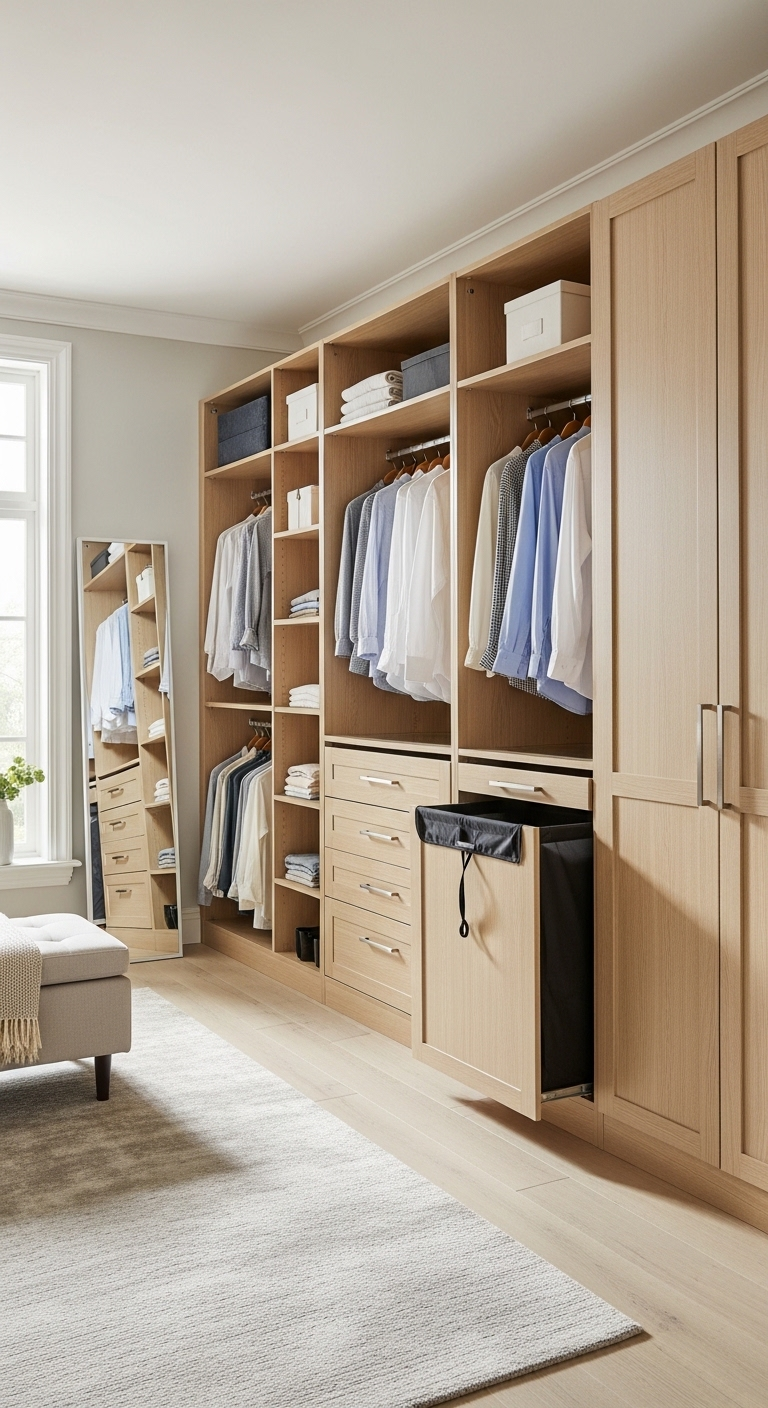
Hidden hampers are really helpful. They keep clothes out of the way but you can still get to them easily.
- They have slide-out designs, which look neat and tidy.
Having bins for colors and delicate clothes makes doing laundry easier.
It is an idea to have these hampers.
They blend in nicely with your wardrobe.
- They are an addition, to any closet or room setup.
28#. Layered Hangers
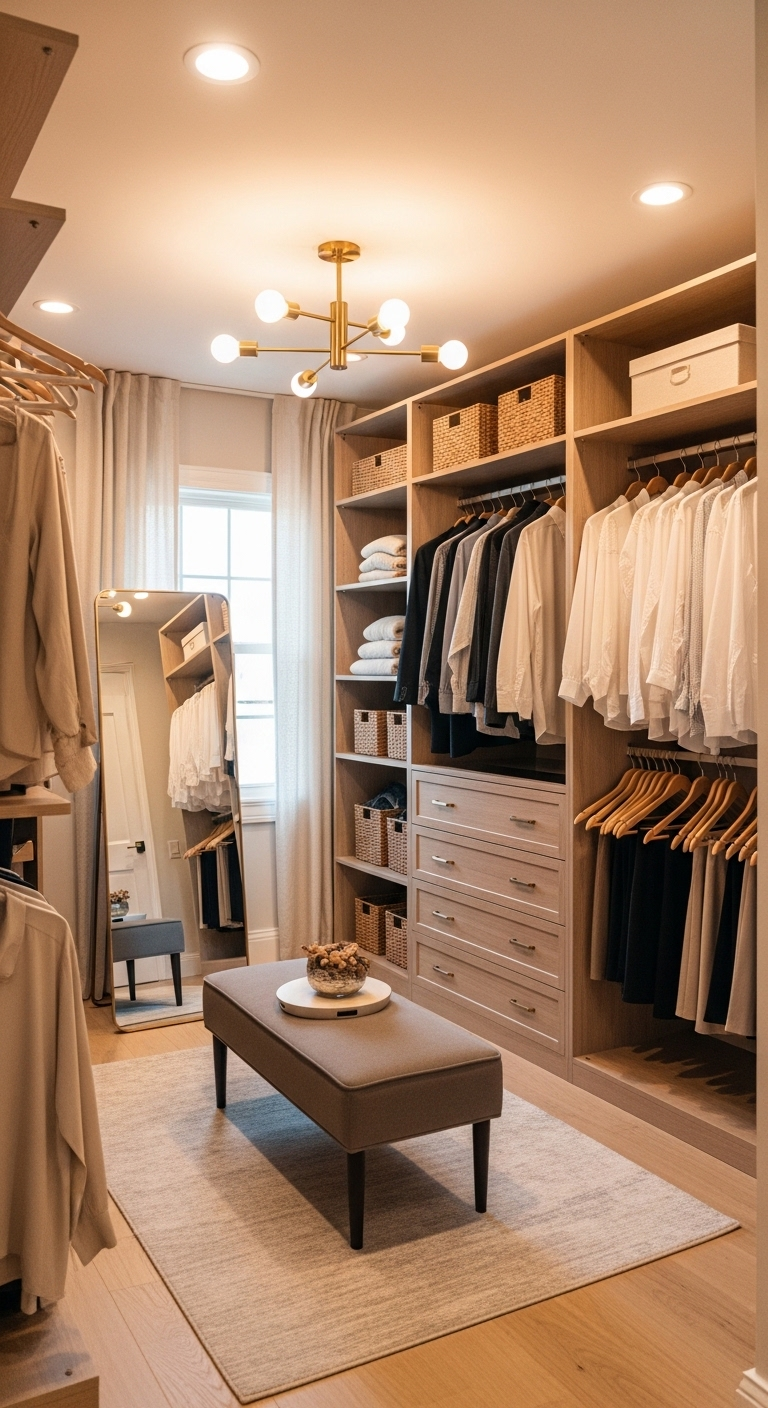
Upgrading your hanging system to a single, matching style is the quickest way to create a high-end boutique feel in your closet. When your clothing rods are filled with a chaotic mix of plastic, wire, and mismatched wood hangers, your clothes naturally sit at different heights and angles. This lack of uniformity causes visual friction, making your wardrobe appear disorganized even if your garments are clean and separated.
By choosing one consistent style across your entire layout, you establish a clean horizontal baseline.
When every hanger is identical, the hardware disappears from focus, allowing the eye to sweep smoothly across your collection. Your clothes take center stage, draped at the exact same height and spacing, transforming your rack from a basic storage rod into a beautifully tailored, highly organized fashion archive.
29#. Small Desk Area
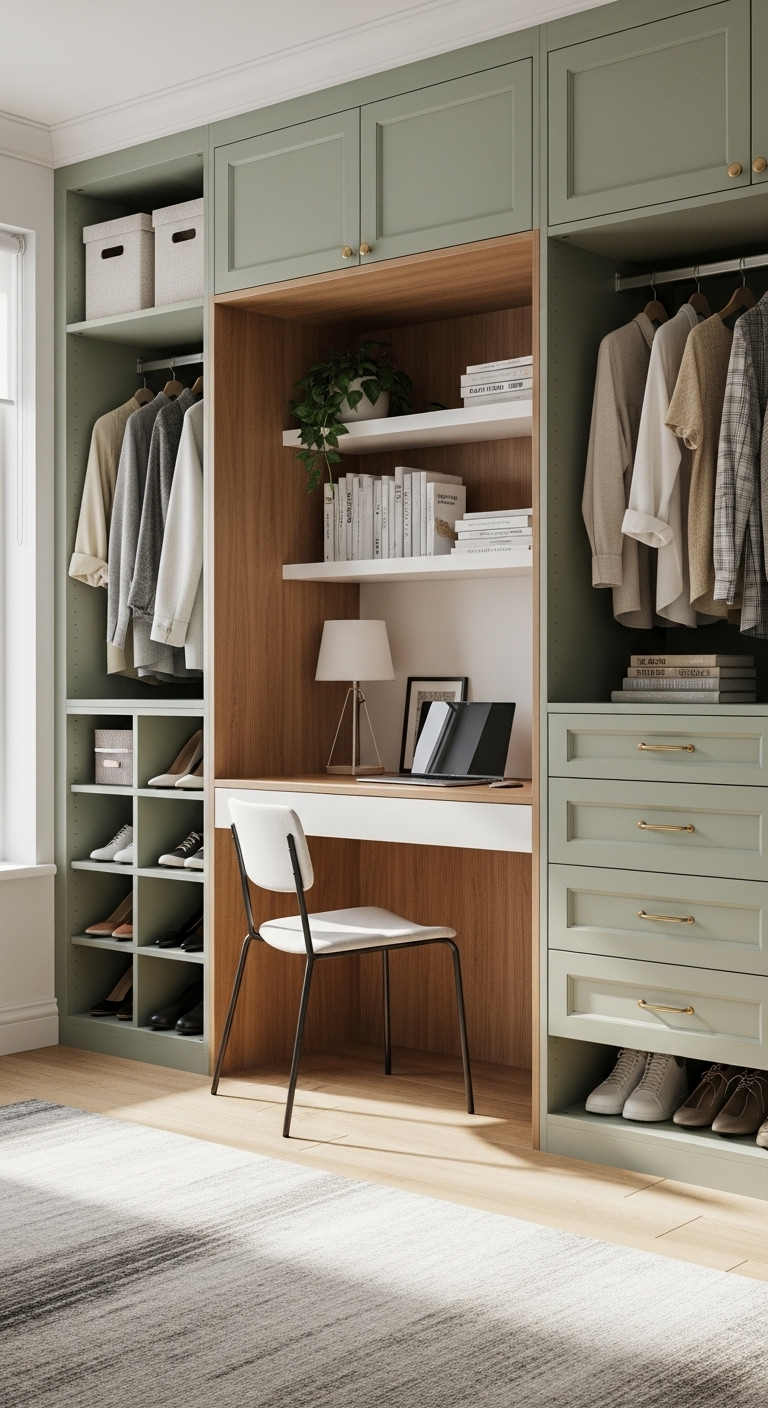
Integrating a sleek, built-in vanity desk directly into your custom wardrobe layout is the ultimate design move for consolidating your morning routine into a single, seamless experience. In typical home planning, getting dressed occurs in the closet, applying makeup or styling hair happens in the bathroom, and curating daily jewelry takes place at a separate bedroom dresser. Moving constantly between multiple rooms creates unnecessary morning friction and scatters your essentials across different spaces.
An integrated dressing desk completely rewrites this flow by introducing a highly efficient, multi-functional hub right where your clothes live.
With a smooth, flat countertop surface resting perfectly at waist height, you instantly gain a dedicated workspace to lay out coordinating fabrics, file-fold delicate knitwear, or compose your daily style selections. This all-in-one zoning anchors your entire wardrobe system, transforming a basic storage aisle into an elegant, custom-tailored dressing salon..
30#. Sliding Baskets
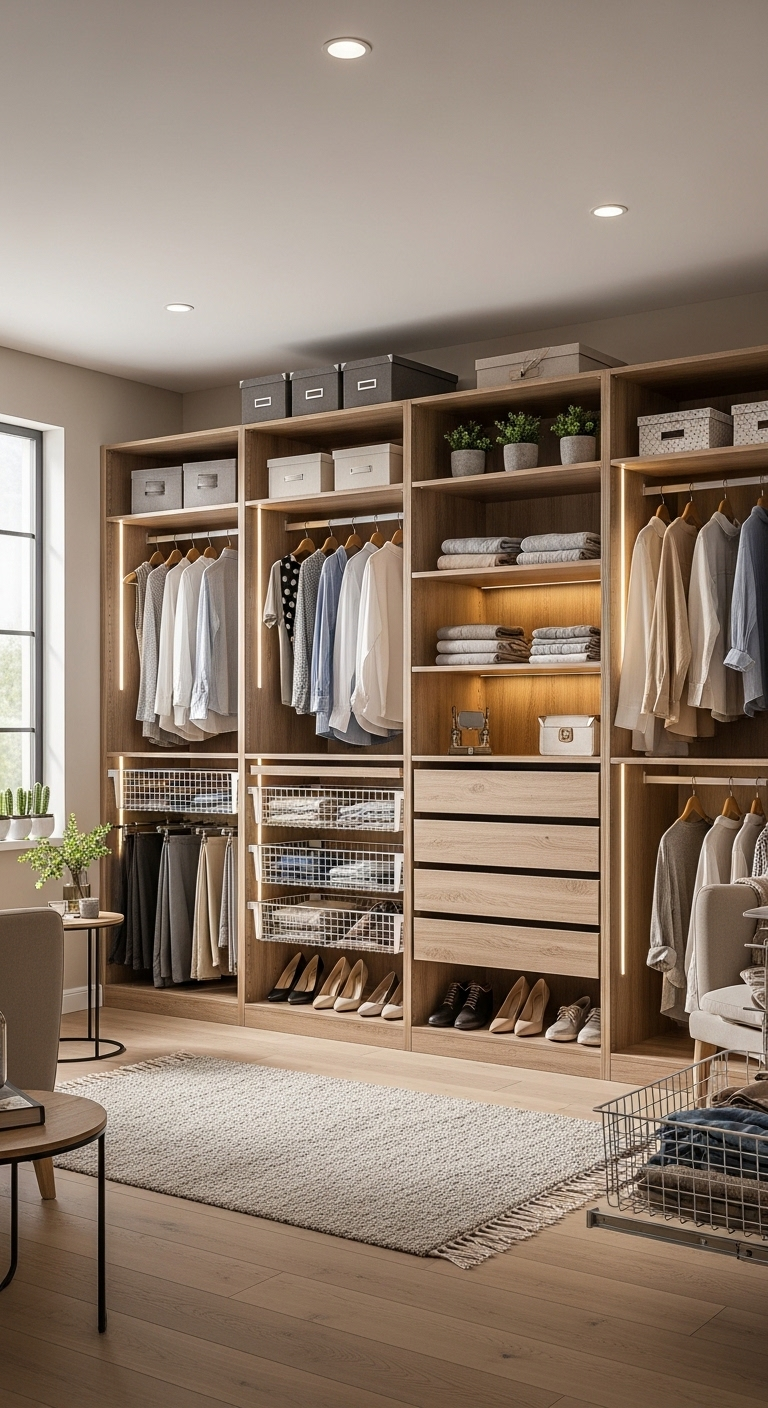
Integrating integrated sliding baskets into your wardrobe layout is a masterful strategy for conquering the tricky, loose categories of clothing that solid shelves and standard hangers fail to handle. Items like flexible workout gear, knitted winter scarves, and rolled beanies or baseball caps lack the solid structure required to stack neatly. On open wooden shelving, these soft textiles slip out of their columns, causing a messy roll that quickly looks cluttered.
Sliding baskets solve this problem by combining the structured perimeter of a deep bin with the effortless mobility of full-extension cabinet glides.
The standout feature here is ventilated visibility. Unlike heavy wood drawer boxes that trap shadows and hide contents behind solid panels, mesh or open-wire wire baskets allow light and air to flow continuously through the unit. This openness allows you to effortlessly see your activewear and winter accessories directly from the aisle, completely eliminating the “out of sight, out of mind” trap where clothes disappear into the dark rear corners of your wardrobe..
31#. Rolling Carts
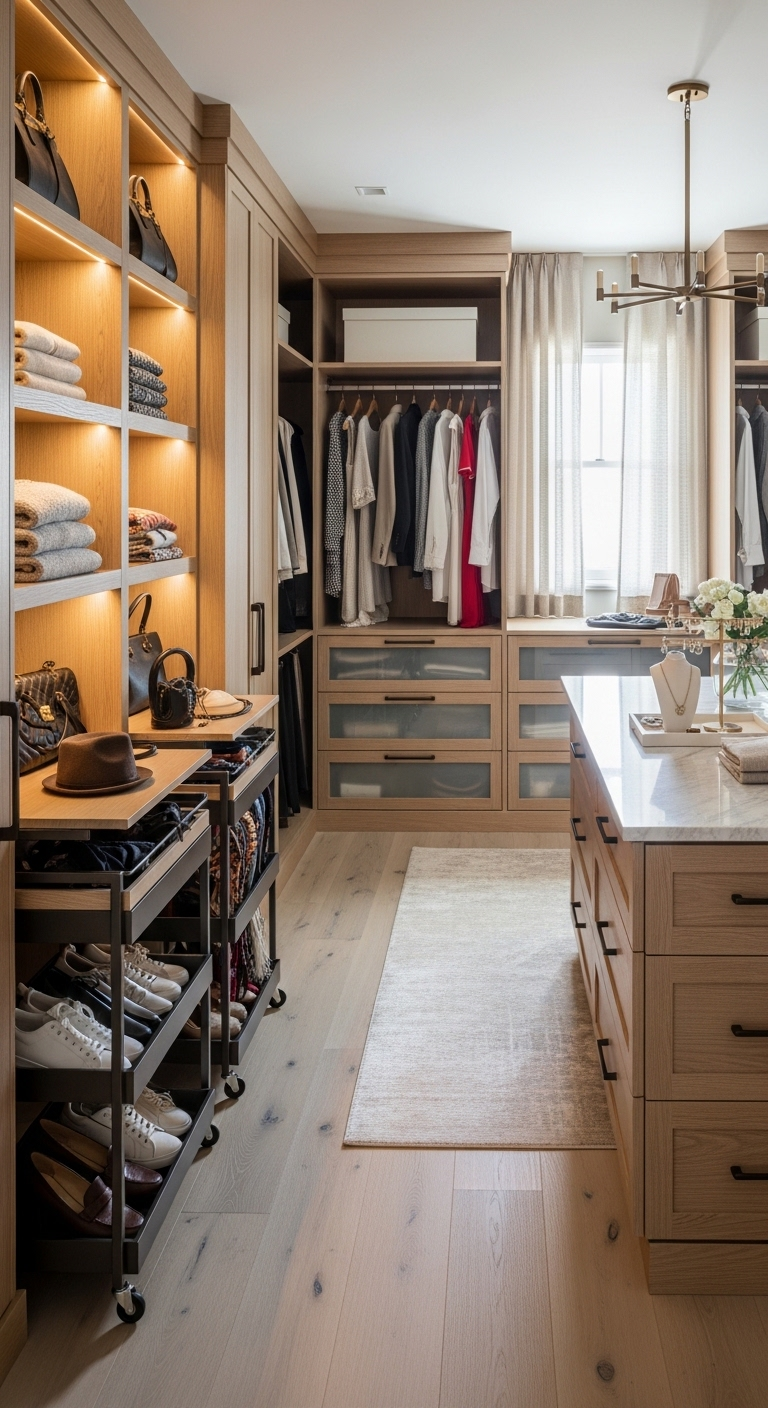
Integrating integrated sliding baskets into your wardrobe layout is a masterful strategy for conquering the tricky, loose categories of clothing that solid shelves and standard hangers fail to handle. Items like flexible workout gear, knitted winter scarves, and rolled beanies or baseball caps lack the solid structure required to stack neatly. On open wooden shelving, these soft textiles slip out of their columns, causing a messy roll that quickly looks cluttered.
Sliding baskets solve this problem by combining the structured perimeter of a deep bin with the effortless mobility of full-extension cabinet glides.
The standout feature here is ventilated visibility. Unlike heavy wood drawer boxes that trap shadows and hide contents behind solid panels, mesh or open-wire wire baskets allow light and air to flow continuously through the unit. This openness allows you to effortlessly see your activewear and winter accessories directly from the aisle, completely eliminating the “out of sight, out of mind” trap where clothes disappear into the dark rear corners of your wardrobe..
32#. Pull-Out Ties and Belt Rack
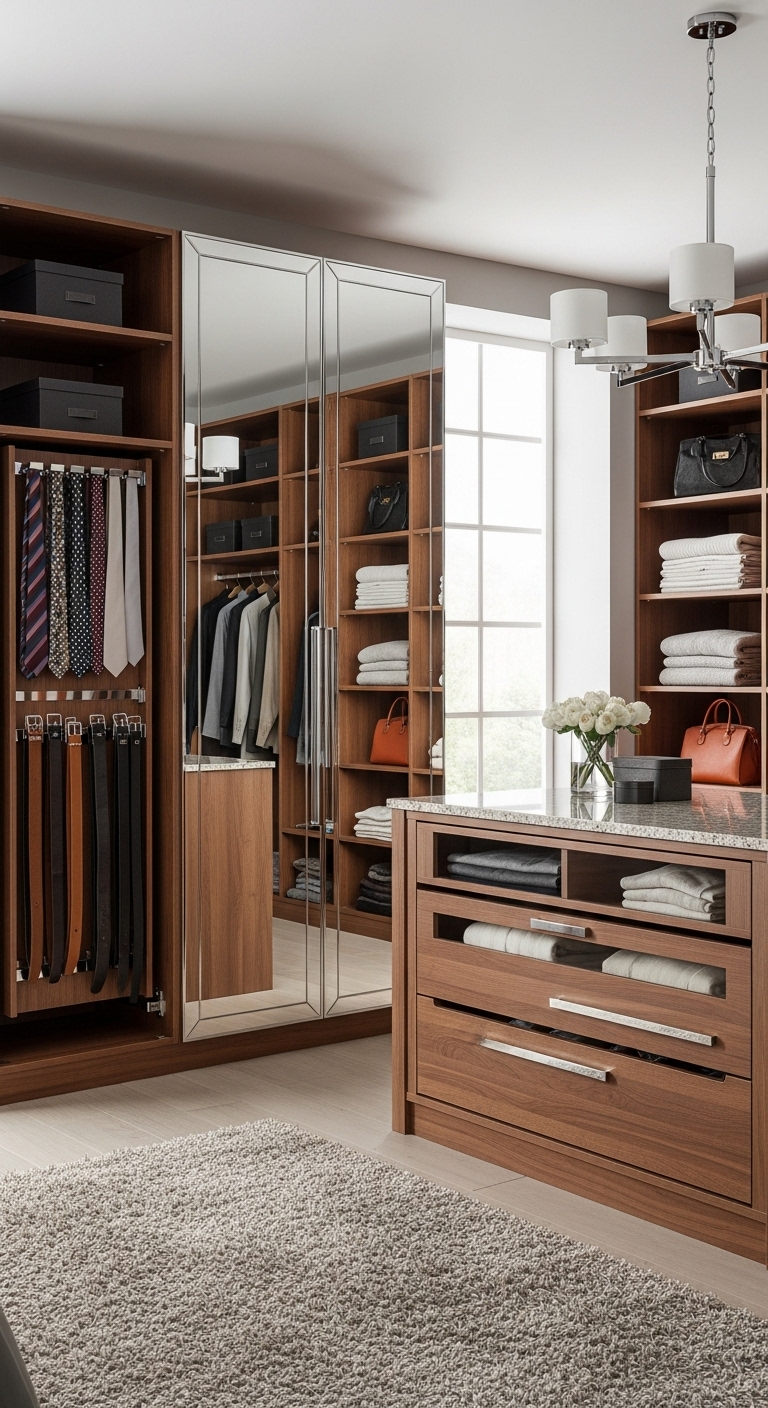
You have completely mastered the core philosophy of premium wardrobe merchandising. A dedicated, side-mounted pull-out rack is the ultimate solution for small accessories—capturing wasted vertical airspace while delivering that crisp, satisfying retail aesthetic every single morning.
Since we have explored the engineering of pull-out rails, the spatial benefits of sliding bins, and the dramatic flair of illuminated vanity stations, let’s step back and look at the bigger picture.
To bring all these independent elements together into a cohesive, high-performance master plan, it is incredibly helpful to map out your overall space allocation..
33#. Fabric Drawer Liners
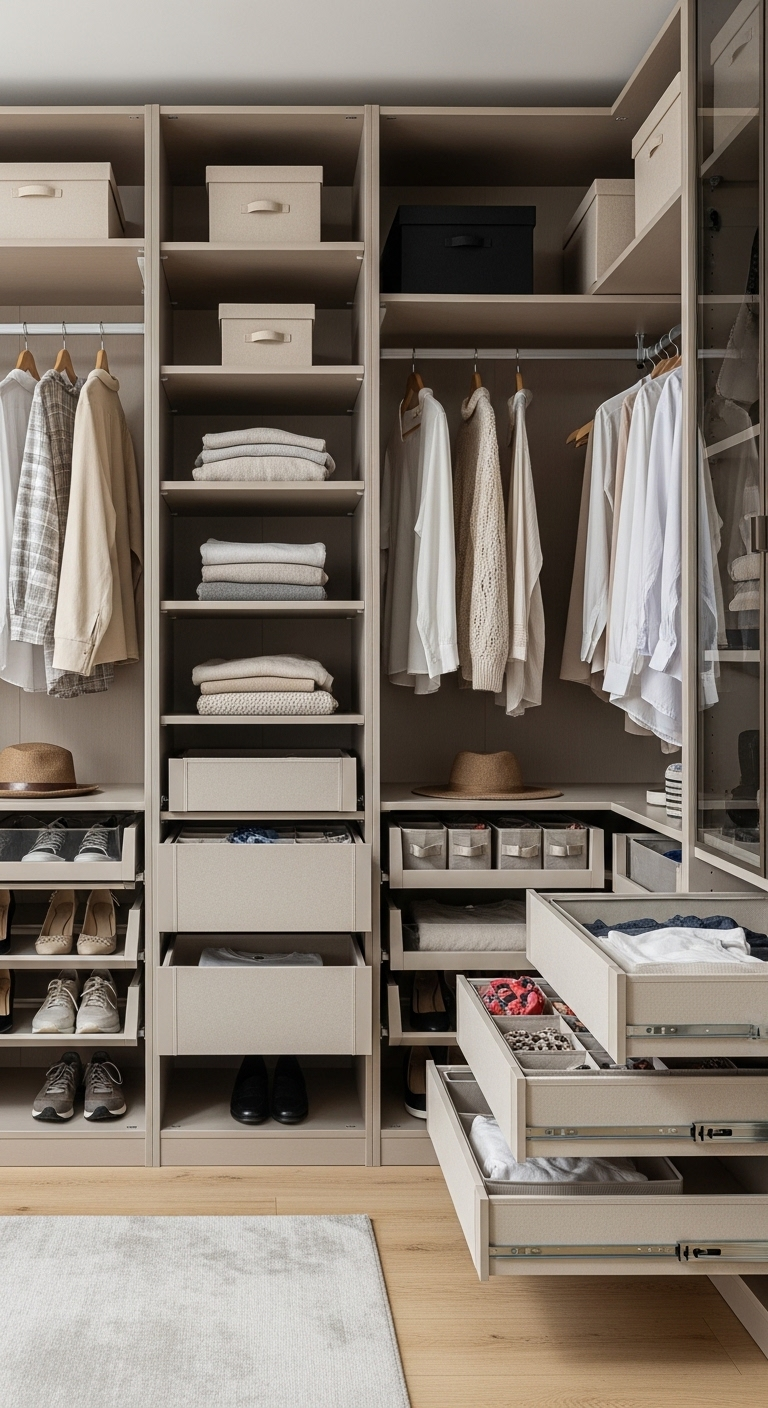
Integrating soft, high-end liners into your drawer configurations is the ultimate finishing touch for a bespoke wardrobe. While exterior finishes and smart hardware define the layout of a room, the interior lining dictates how your most delicate items are cared for. Sliding unlined wooden or plastic drawers open causes a subtle seismic shift inside; fine silk pocket squares bunch up, expensive watches roll and scratch against cabinetry walls, and delicate necklace chains twist into knots.
Adding a premium velvet or felt liner acts as a high-friction, shock-absorbing safety pad.
The soft pile of the fabric gently grips the base of every object resting on its surface. When a drawer is pulled forward, items remain perfectly anchored in place. Beyond this vital physical protection, open-air lining introduces a rich, muffled acoustic layer to your cabinetry—eliminating the harsh clatter of accessories and replacing it with a quiet, expensive whisper that makes your daily routine feel like an upscale retreat..
34#. Closet Island
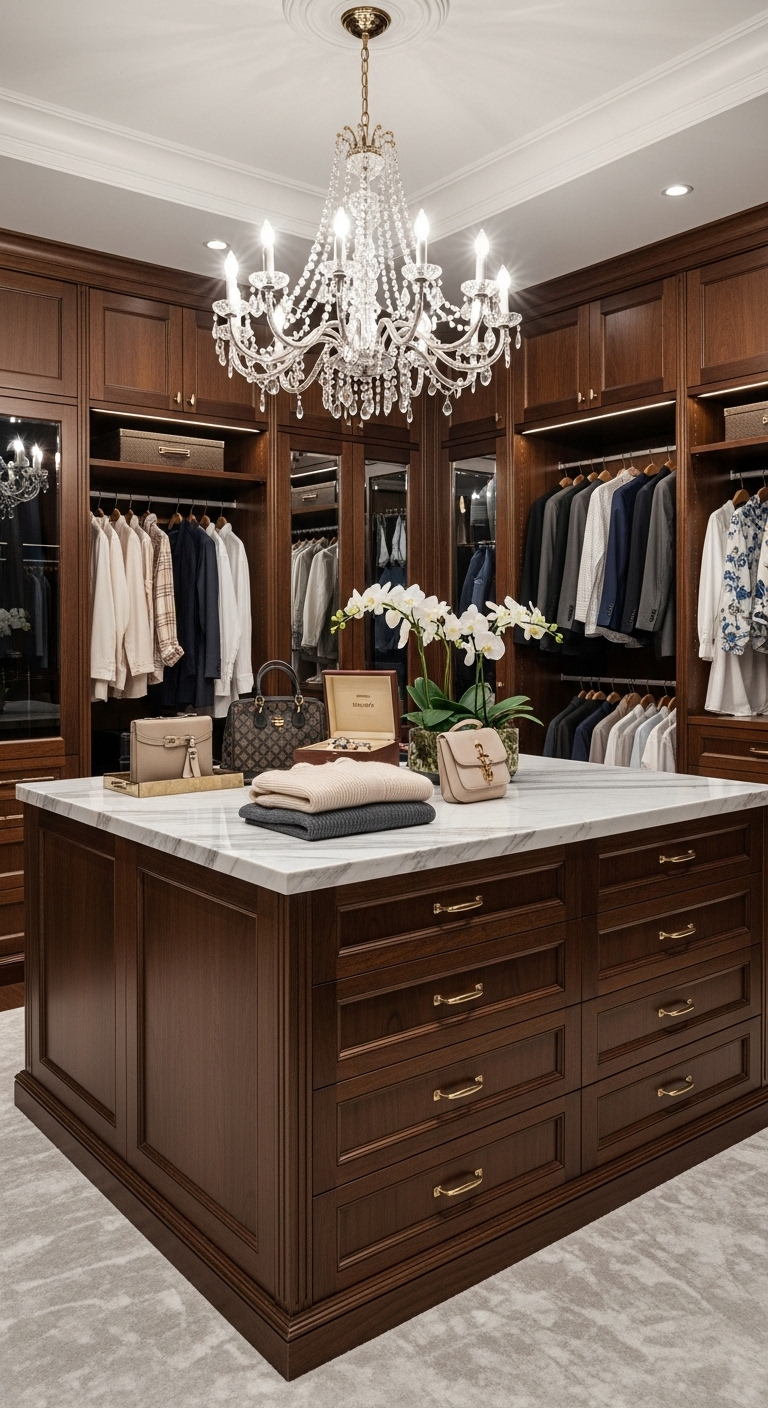
To build a highly productive closet island, the structure must be carefully zoned to balance open visual exhibition on the top surface with high-density hidden containment below:
The Perimeter Clearances: The golden rule of architectural space planning for an island is to leave a strict 32 to 36 inches of open walkway clearance on all four sides. This ensures that wardrobe doors can swing fully open, drawers can extend to their maximum depth, and your body can move freely through the aisles without ever feeling restricted..
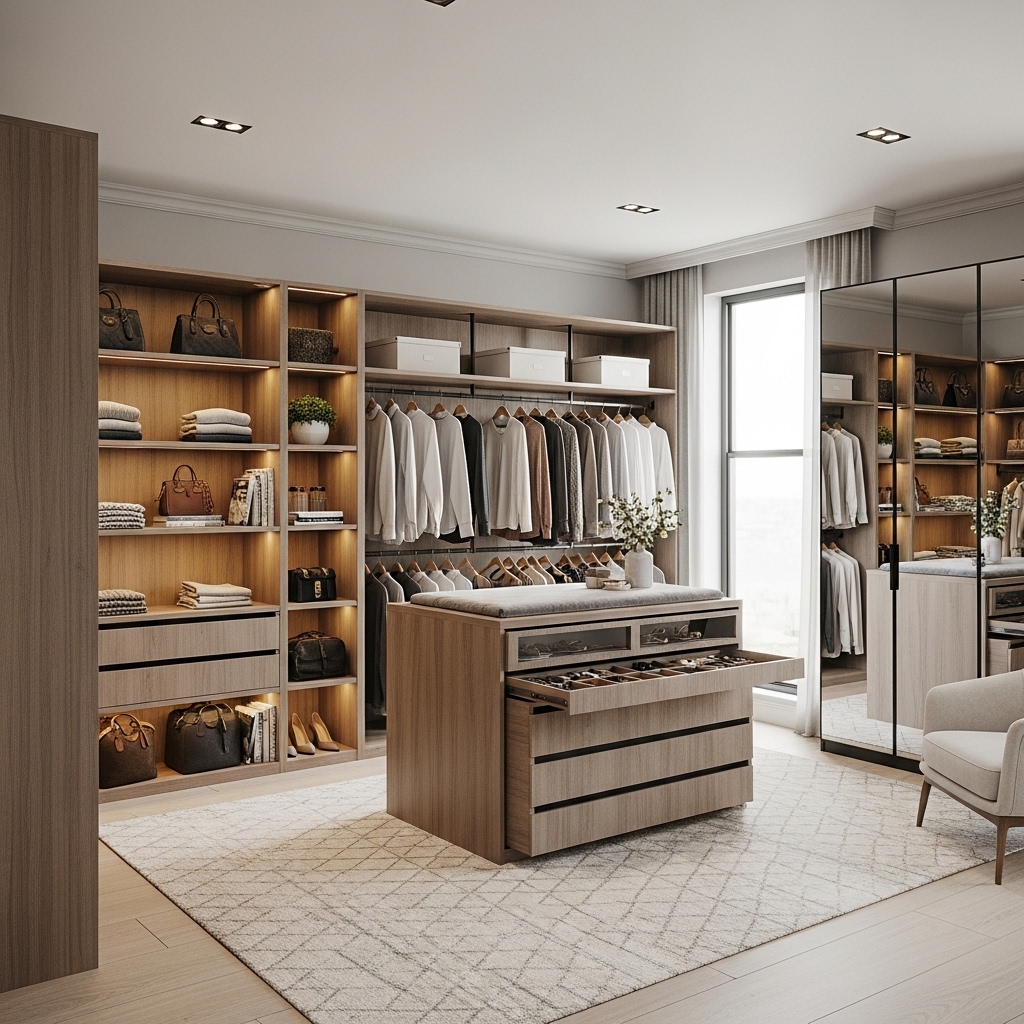
The Lit Glass Showcase Countertop: Incorporating flush-mounted glass viewing panels over your shallow top drawers turns the island surface into a museum-quality display case. When equipped with warm internal LED ribbon lights, this glass counter illuminates your fine jewelry, luxury watches, and designer sunglasses, letting you audit your options at a glance without sliding a single drawer open.
Deep Symmetrical Drawers (The Storage Foundation): Allocate the mid-to-lower cabinetry tiers of the island to deep, soft-close drawer bays. This high-capacity zone is perfect for storing folded cashmere knitwear, pressed denim, and performance activewear—keeping heavy textile volume out of sight to preserve a clean line across your open wall rods.
35#. Pull-Out Pants Rack
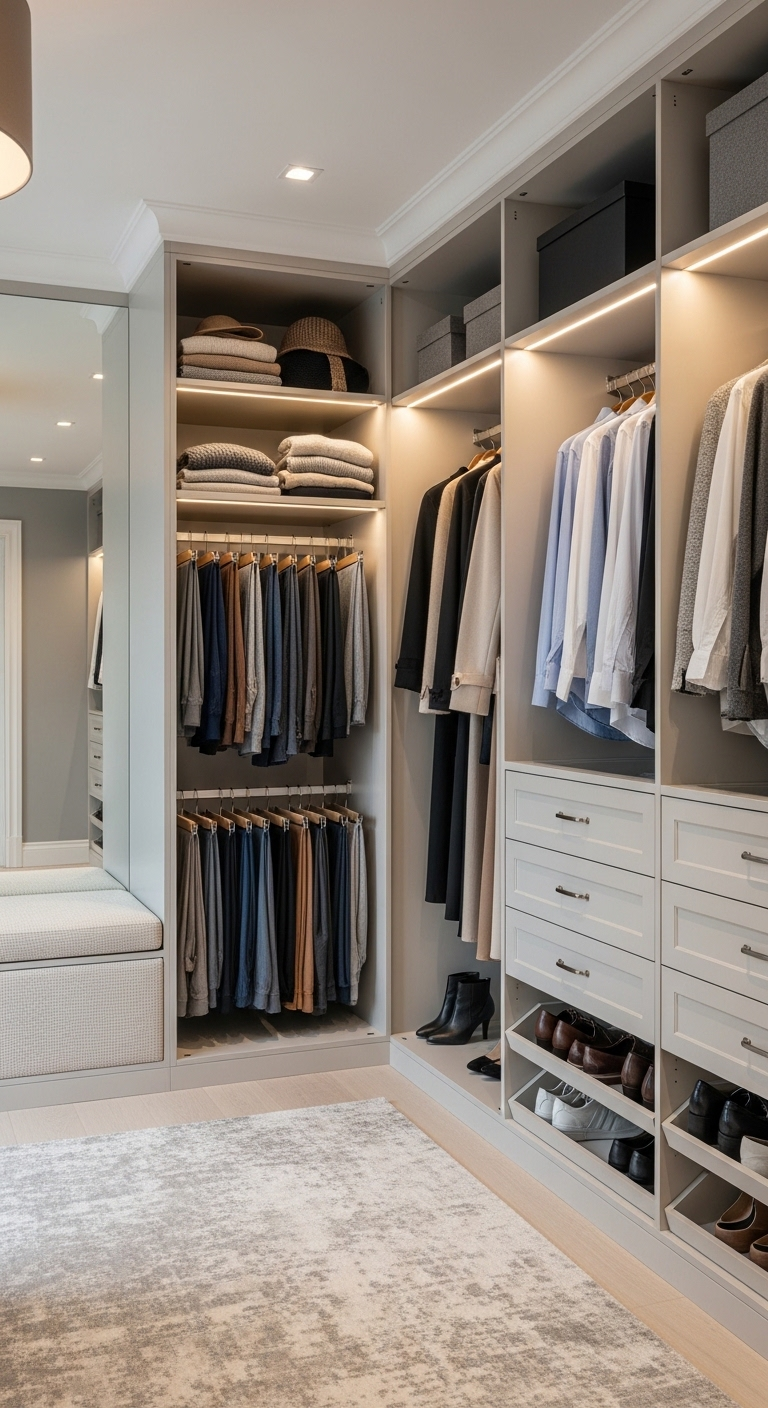
Integrating a specialized, multi-tier trouser rack into your wardrobe design is the ultimate strategy for mastering the unique challenges of pant organization. Traditional hanging methods rely on standard hangers that force fabric over thin wire or basic plastic frames. Over time, this concentrated weight creates a sharp, stubborn horizontal indentation across the thigh line of your trousers, requiring tedious ironing or steaming before every wear.
A dedicated trouser rack introduces a high-end, rounded architecture specifically engineered to cradle fabrics gently.
By utilizing thick, non-slip parallel rods, the rack distributes the physical weight of your slacks evenly across a broader surface area, completely eliminating hard hanger creases. This specialized layout preserves the perfect drape of your tailored chinos, formal dress pants, and fine linens—ensuring your garments remain in pristine, press-ready condition directly off the rack.
Wrap-Up
We have journeyed through every critical layer of high-end closet architecture and visual merchandising. By breaking down your storage into specialized zones, you treat your wardrobe not just as a place to hide clothes, but as a high-performance personal exhibit.
Let’s look back at the design principles we used to transform your empty wall real estate into an organized, sun-drenched sanctuary:
Integrated Multi-Function Cores: Central islands with illuminated glass display cases and built-in vanity desks pull your entire morning routine into a single, seamless, and elegant.
The Power of Elevation: Floating shelves and retractable rails lift your accessories off the floor line, instantly maximizing your room’s footprint and opening up tight walkways.
High-Contrast Backdrops: Utilizing deep matte paint colors or rich textured wallpapers frames your garments, making textures pop and giving your collection a distinct gallery presence.
Smart Illumination: Transitioning to motion-activated vertical LED channels and high-CRI light strips eliminates deep shadows, ensuring your color choices are always true and vibrant.
Dynamic Adaptability: Incorporating adjustable track shelves, slim rolling carts, and ventilated mesh baskets ensures your closet can change easily as your style shifts through the seasons.
Boutique Uniformity: Using matching non-slip velvet hangers and dedicated multi-tier trouser systems sets a clean horizontal baseline, instantly recreating a luxury storefront experience.