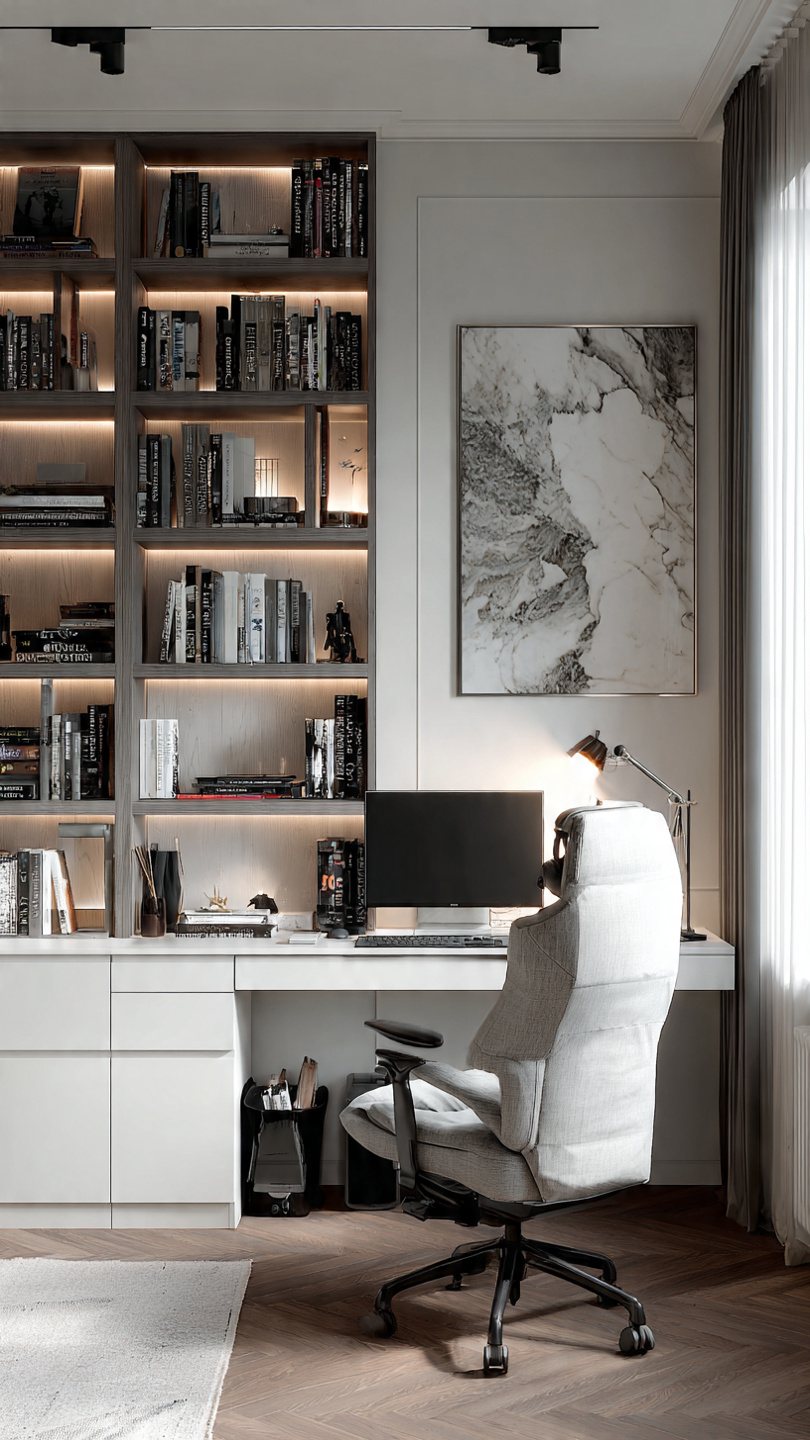
Creating a home office that truly boosts productivity starts with clear zones.
Design a high-productivity home office with clear zones to boost focus, organization, and efficiency.
These 15 ideas guide you in designing a workspace where every area has a purpose, helping you stay focused, organized, and inspired.
From workstations to relaxation corners, clear zoning makes your home office feel both functional and stylish.
1. Define Work, Relaxation, and Storage Zones
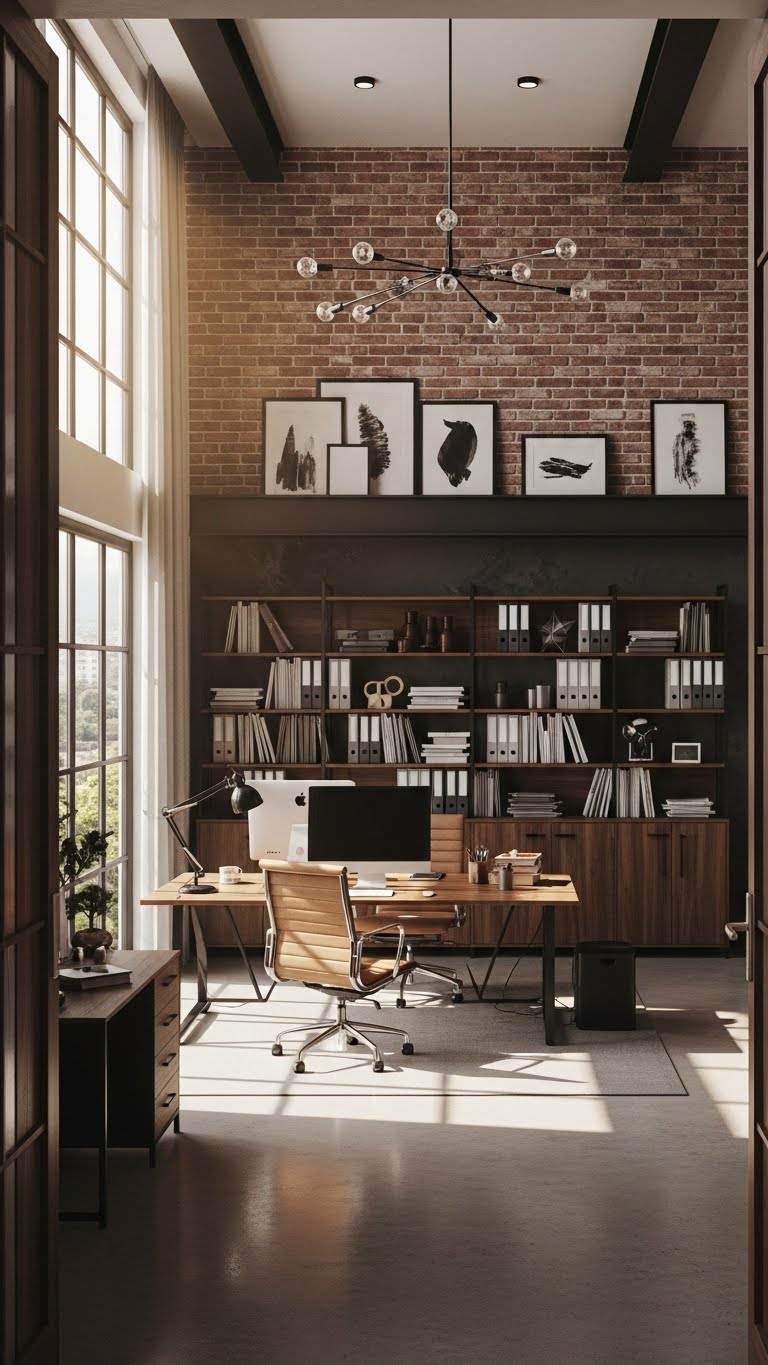
Start by mapping your office into distinct areas for work, storage, and breaks.
Clear separation ensures each activity has a dedicated space, reducing distractions and improving efficiency.
Use furniture placement or rugs to visually separate zones. Even small offices benefit from clear boundaries that signal focus versus downtime.
2. Choose the Right Desk for Your Primary Work Zone
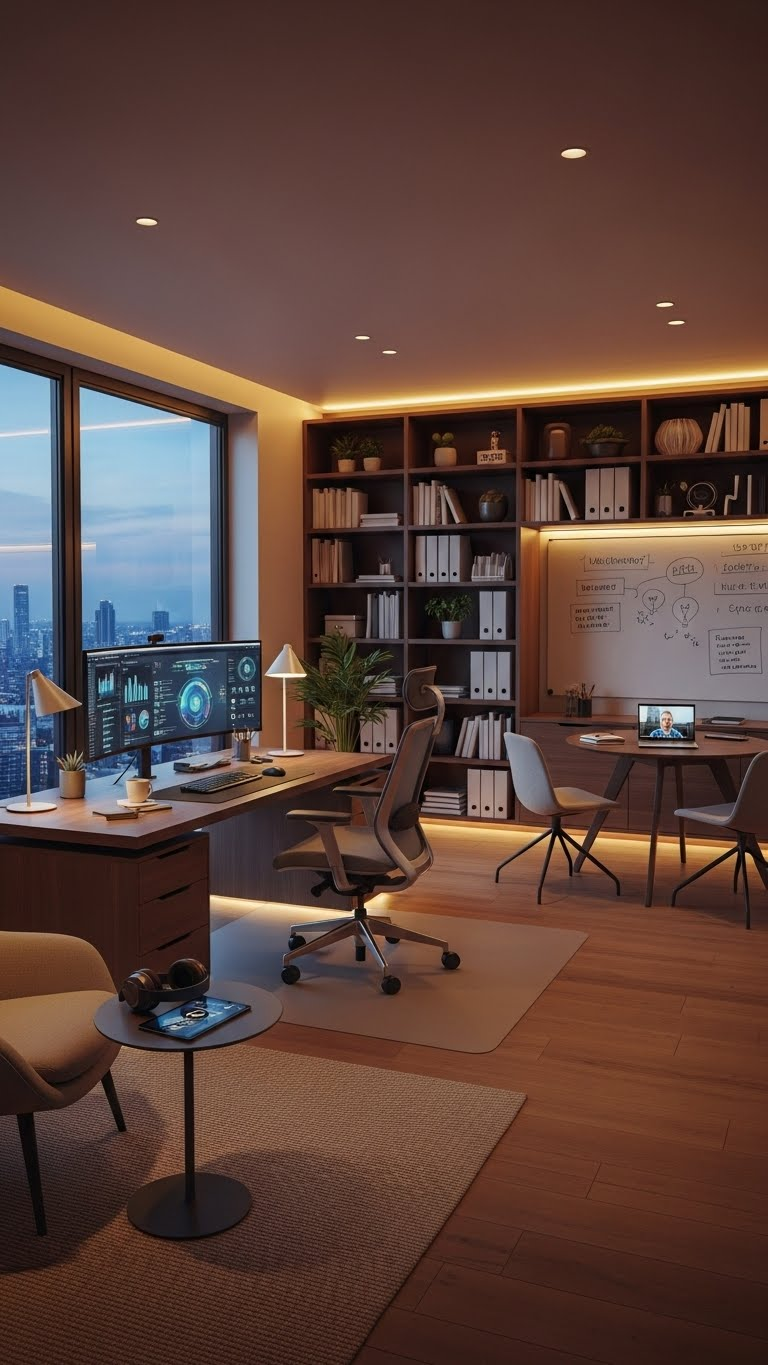
A clean, well-organized desk anchors your main work area. Opt for desks with drawers or minimalistic designs that complement your office layout.
Keep essential tools and technology within reach. A clear desk zone supports focus and helps maintain a clutter-free, productive environment.
3. Ergonomic Seating to Support Long Hours
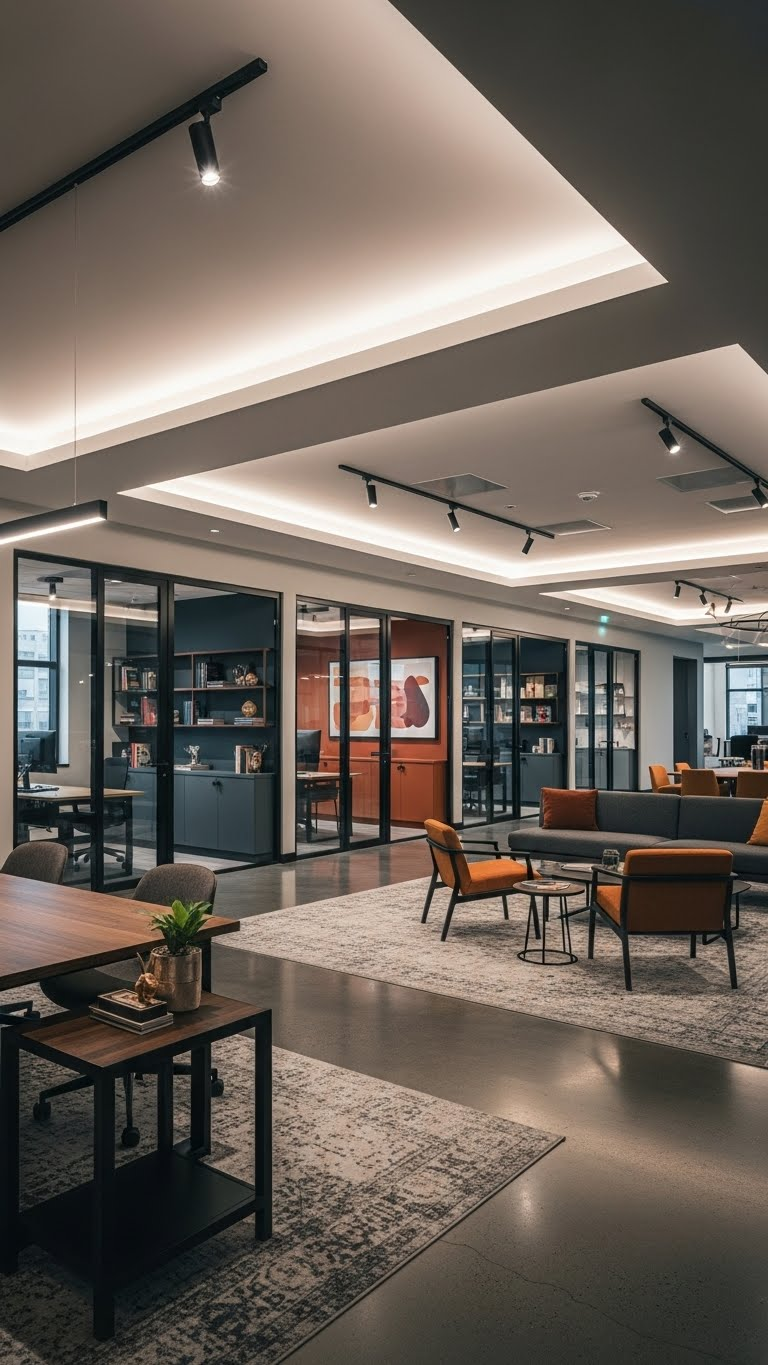
Invest in a comfortable chair for your work zone that promotes good posture. Ergonomic seating reduces fatigue and keeps you productive throughout the day.
Add subtle cushions or lumbar support in neutral tones to match your office design. Your chair should be both functional and visually cohesive with your space.
4. Storage Zones to Declutter and Organize
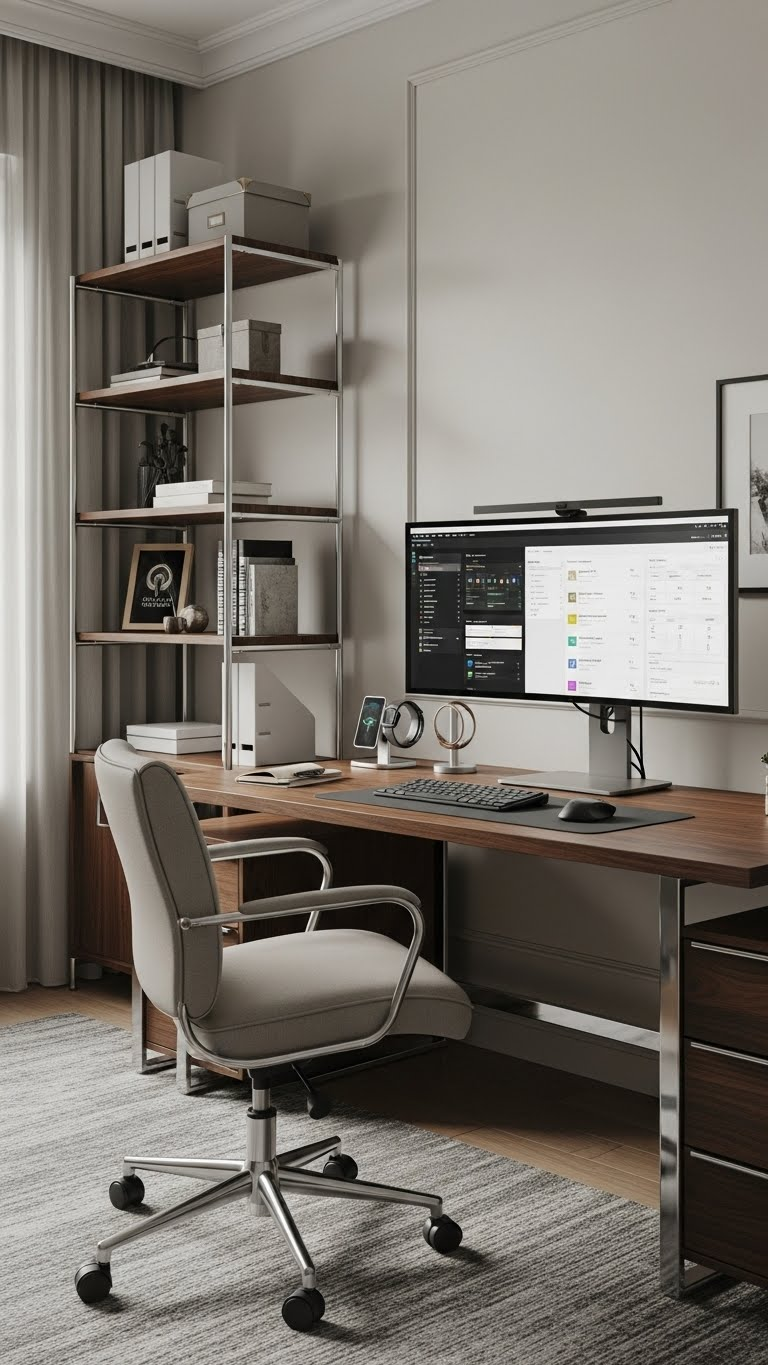
Dedicated storage zones prevent clutter from creeping into your work area. Shelves, filing cabinets, and baskets keep documents and office supplies neatly tucked away.
Label items clearly and maintain a system for quick access. Organized storage zones save time and help sustain focus.
5. Task Lighting for Each Zone
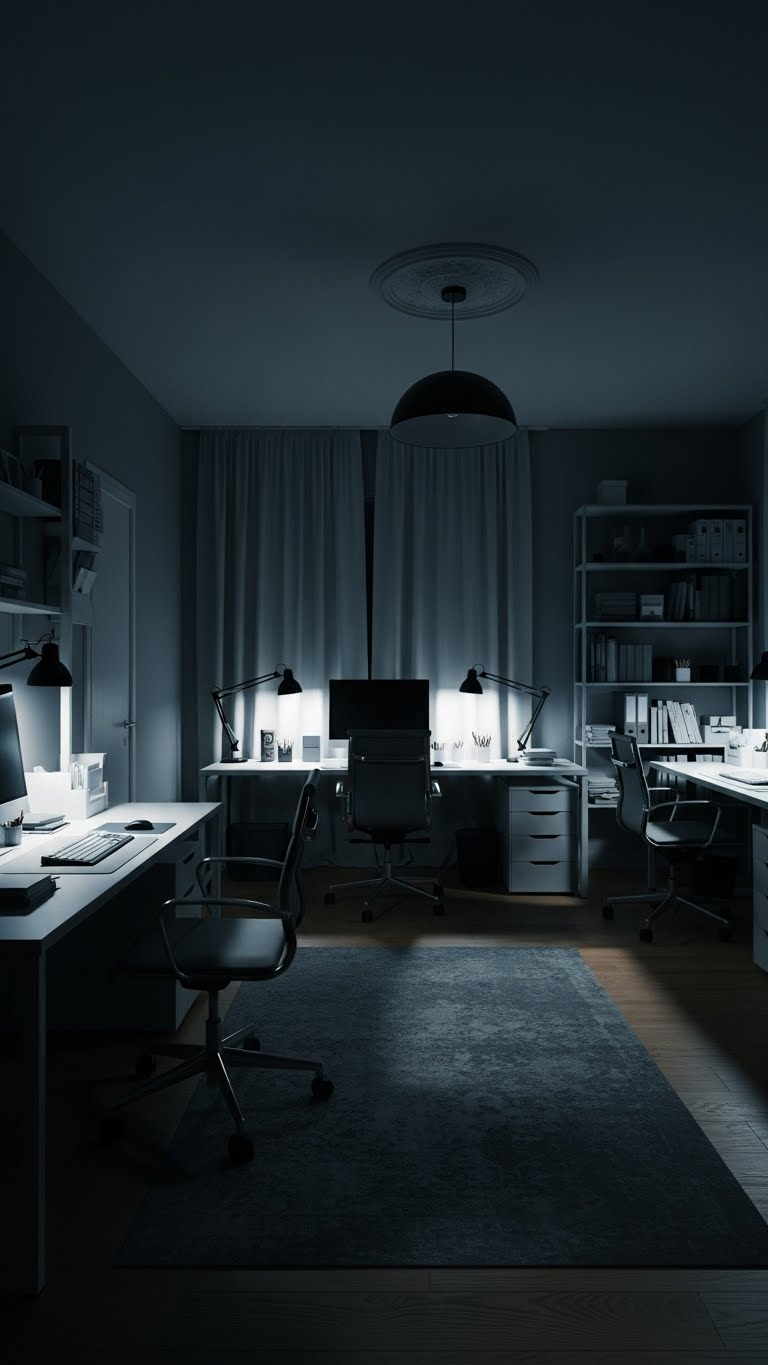
Different zones require appropriate lighting. Bright, focused light in the work zone enhances productivity, while softer lighting in relaxation areas promotes calm.
Adjustable desk lamps and overhead lights ensure every zone is well-lit. Lighting choices reinforce the function of each zone while creating a balanced atmosphere.
6. Use Rugs or Flooring to Separate Zones
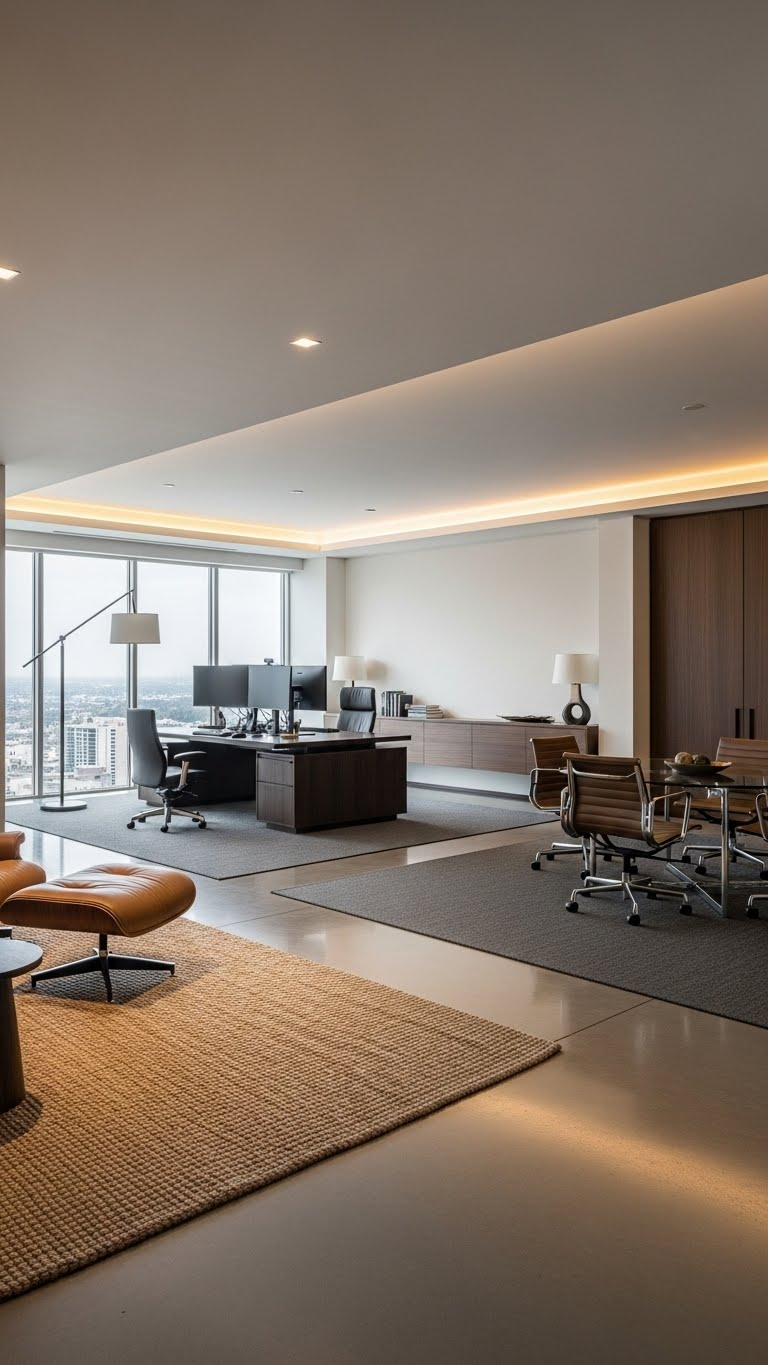
Layering rugs or using distinct flooring visually defines zones. A textured rug under the desk can mark the work area, while smooth floors signal open movement zones.
This simple technique enhances spatial clarity without physical dividers. It’s an easy way to create a structured, high-productivity office.
7. Incorporate Whiteboards or Pinboards in Work Zones
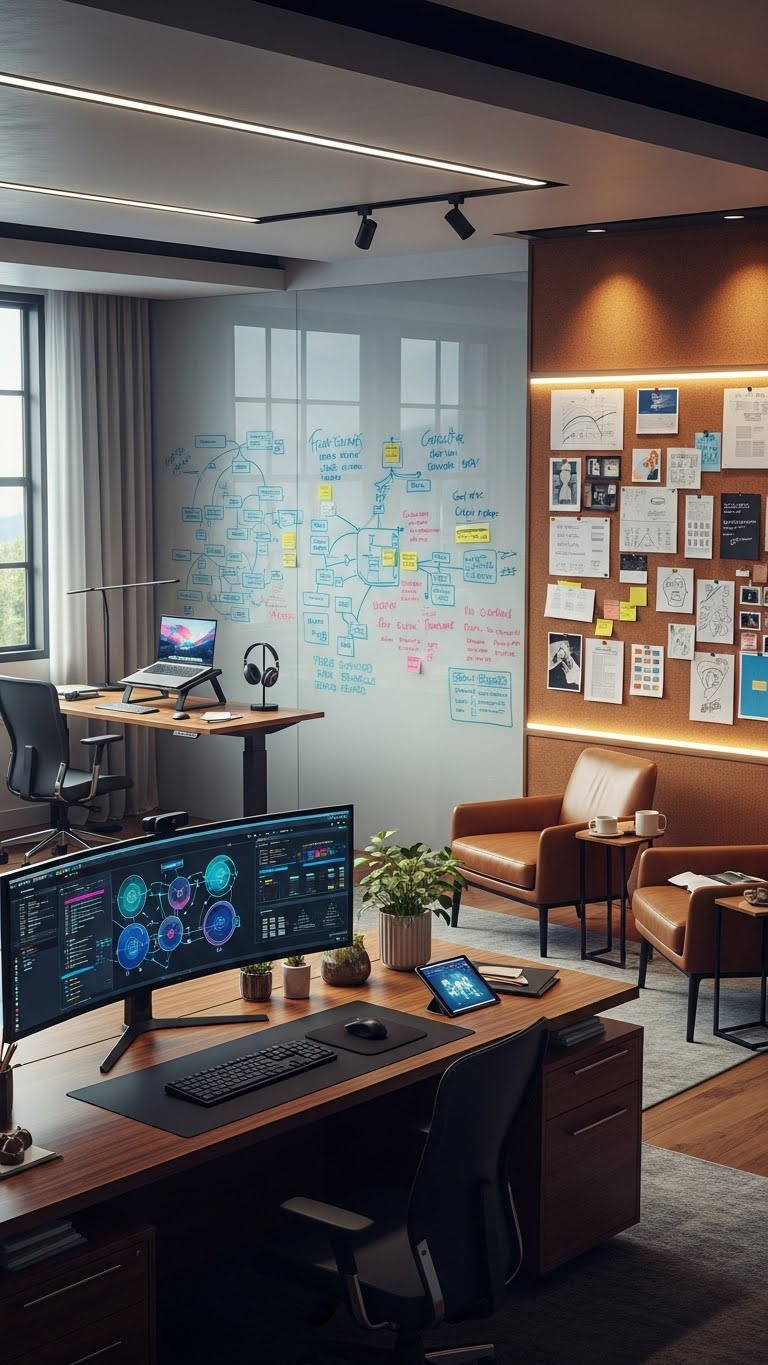
Dedicated whiteboards or pinboards help organize tasks and ideas. Position them near your desk for quick reference and visual reminders.
These boards keep projects visible while preventing clutter. They also clearly define the work-focused area of your office.
8. Personalize Relaxation Corners
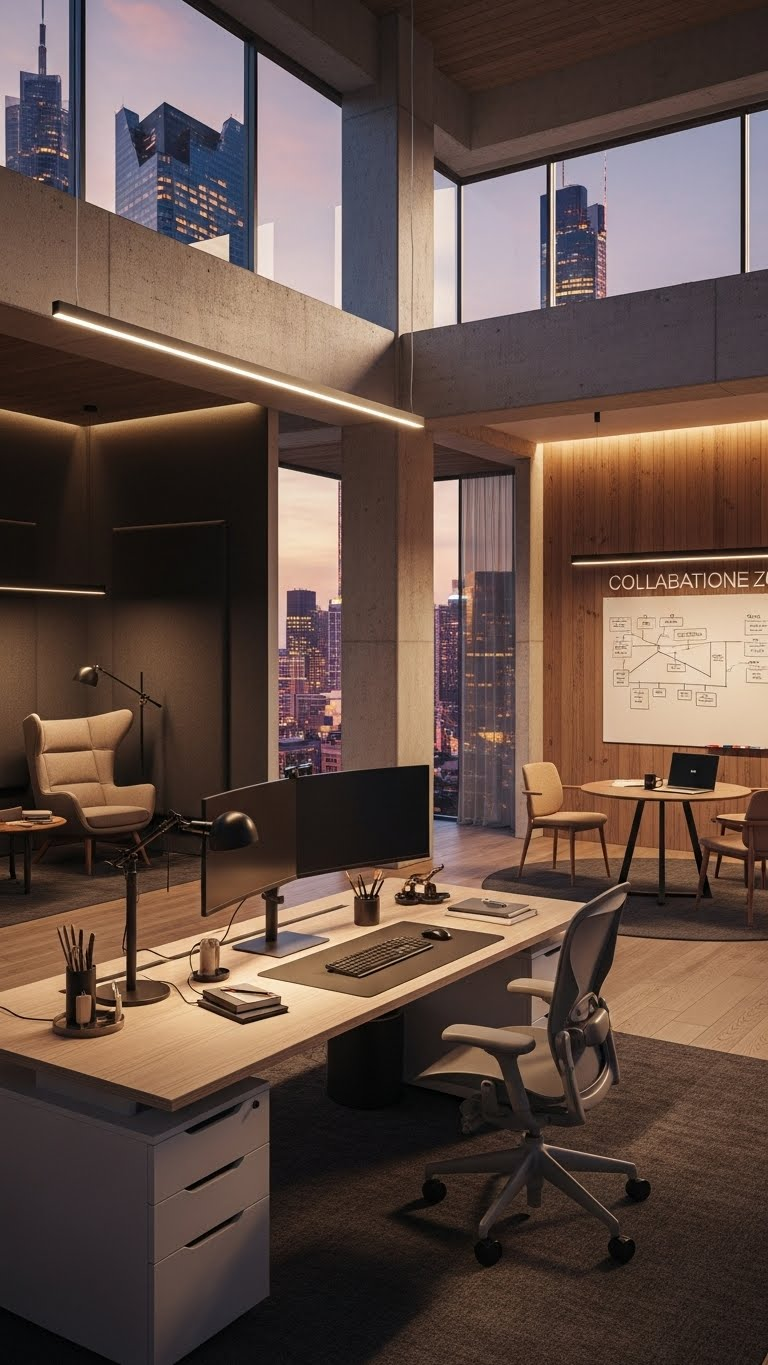
Create a small zone for breaks with comfortable seating or a reading nook. Neutral decor and soft textures make this area inviting without distracting from work zones.
Read more:
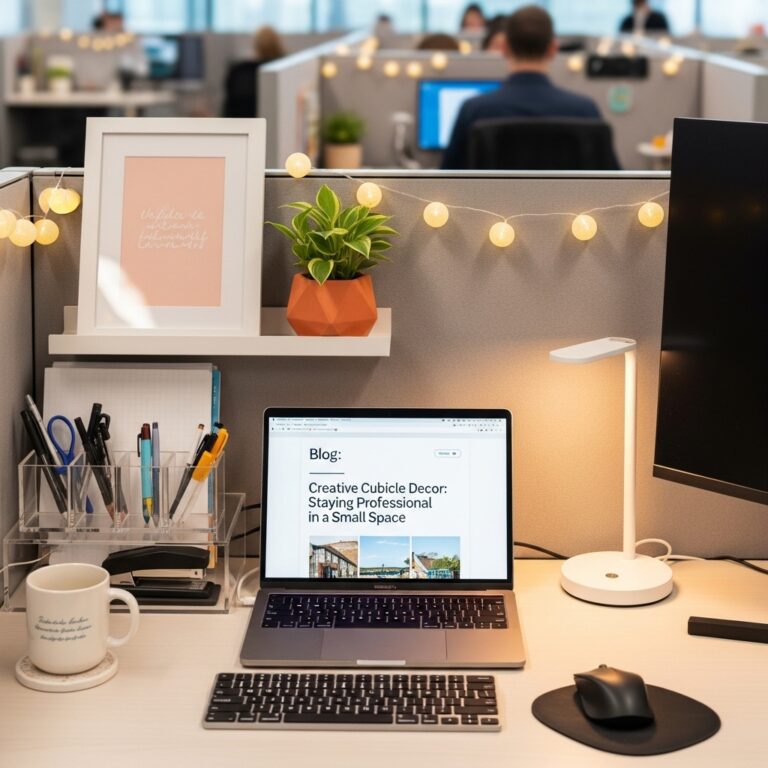
Creative And Professional Small Cubicle Office Decorationhttps://decorpalace.blog/creative-ways-to-decorate-a-small-cubicle-and-still-keep-it-professional/
Even a few minutes in a designated relaxation corner can boost focus and prevent burnout. Clear zoning ensures downtime doesn’t interfere with productivity.
9. Tech Zones for Devices and Charging
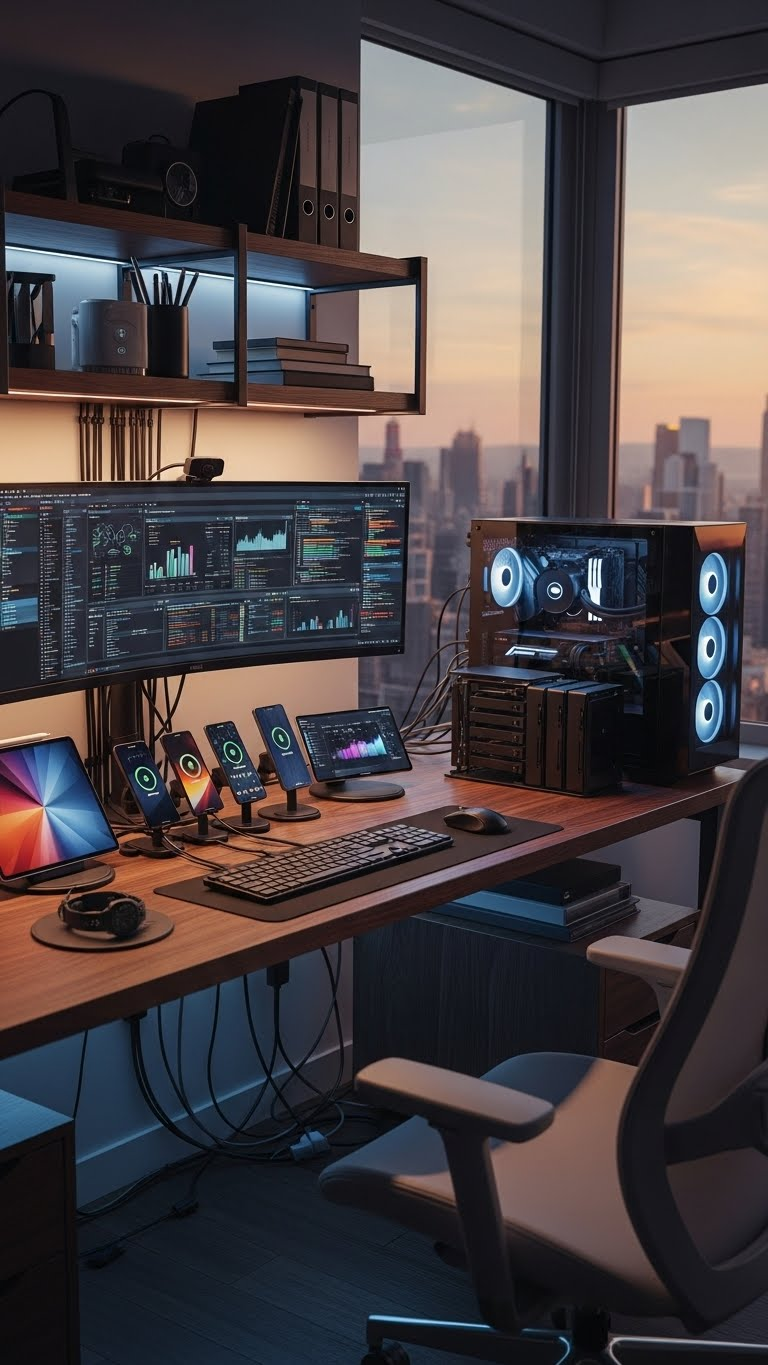
Designate a separate area for tech storage and charging stations. Keeping cables and devices organized prevents clutter in your main work zone.
Use neutral-colored trays or containers to maintain a cohesive aesthetic. Tech zones help you stay organized and focused without sacrificing style.
10. Visual Dividers for Open Floor Plans
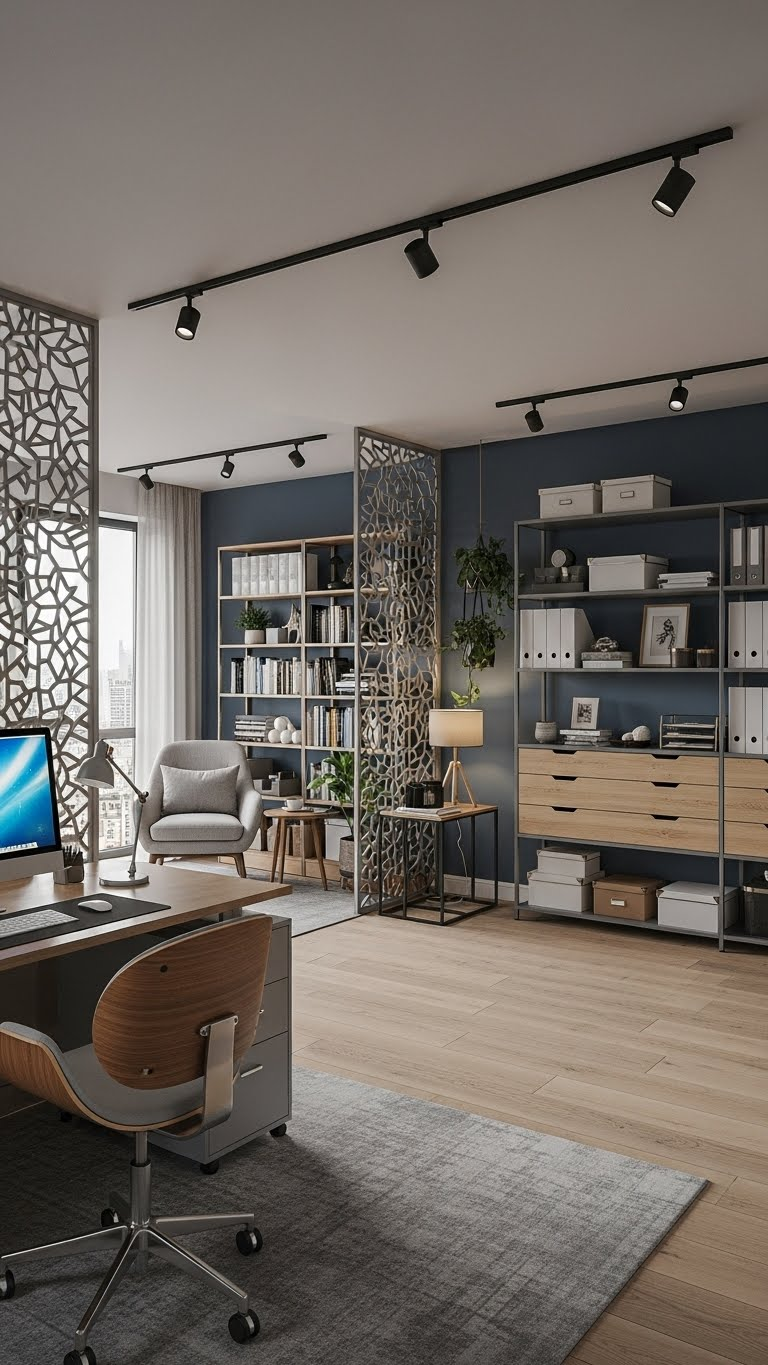
If your office is part of a larger room, visual dividers like screens or shelving units can define zones. These partitions maintain flow while signaling different functional areas.
Dividers also provide privacy for focused work. They keep zones distinct without making the office feel closed off or cramped.
11. Create an Inspiration or Creative Zone
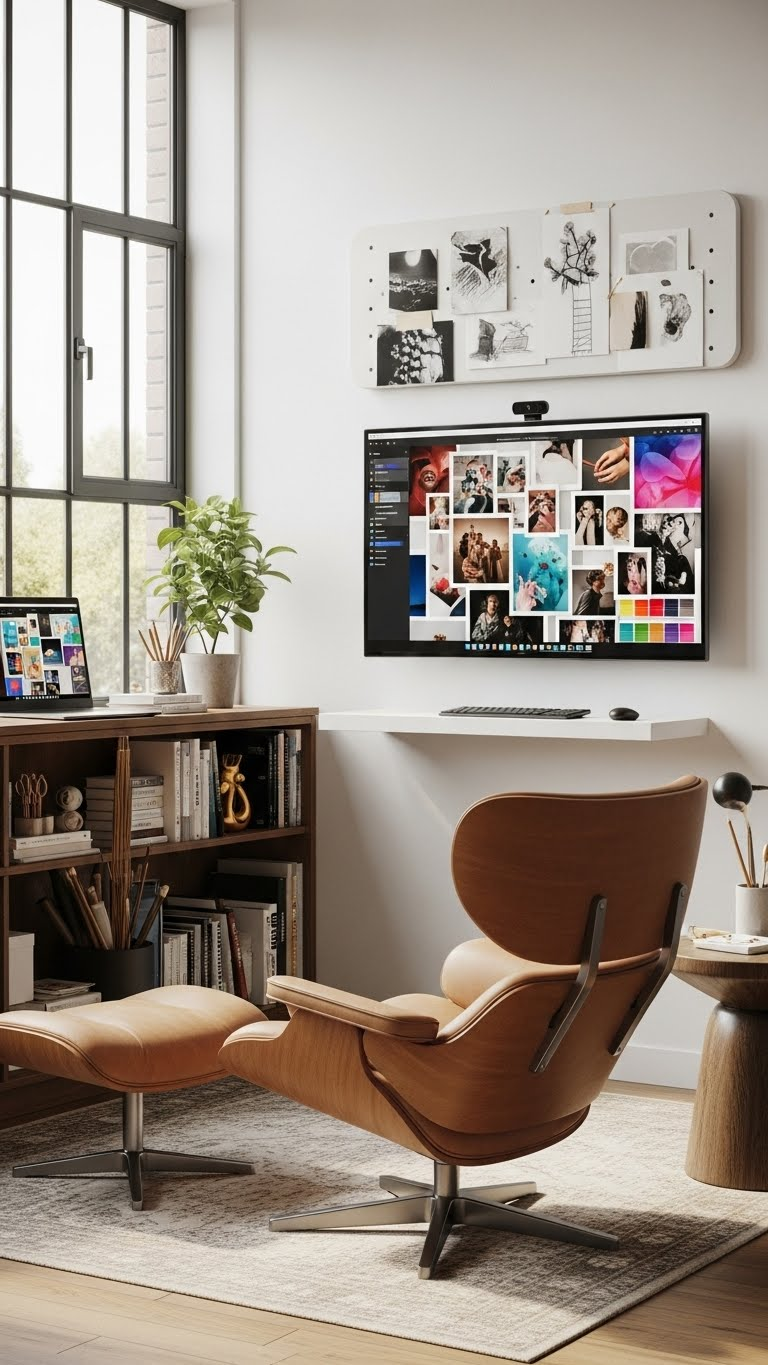
Dedicate a small corner for brainstorming or creative projects. Use pinboards, plants, or inspiring decor to set it apart from focused work zones.
Even minimal touches encourage creativity while maintaining separation from the productivity area. Clear zoning ensures this corner remains intentional and organized.
12. Color-Coded Zones for Clarity
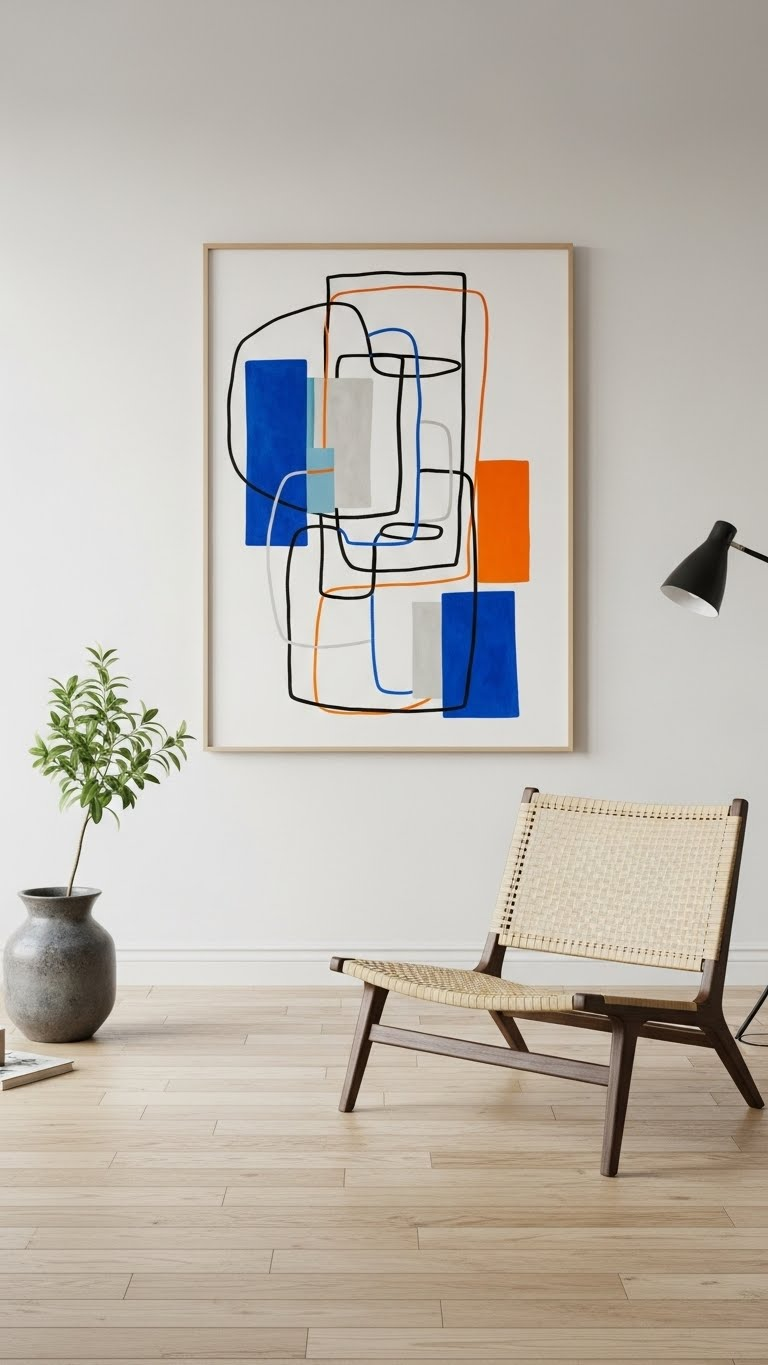
Subtle color cues, like neutral tones for work and soft shades for relaxation, help distinguish zones. Coordinated colors create a visually pleasing, functional layout.
Read more:
45+ Scandinavian Home Office Decoration Ideashttps://decorpalace.blog/45-scandinavian-home-office-decoration-ideas/
Color differentiation guides your brain subconsciously, signaling when to focus versus unwind. This technique reinforces clear zoning without clutter.
13. Multi-Purpose Zones With Boundaries
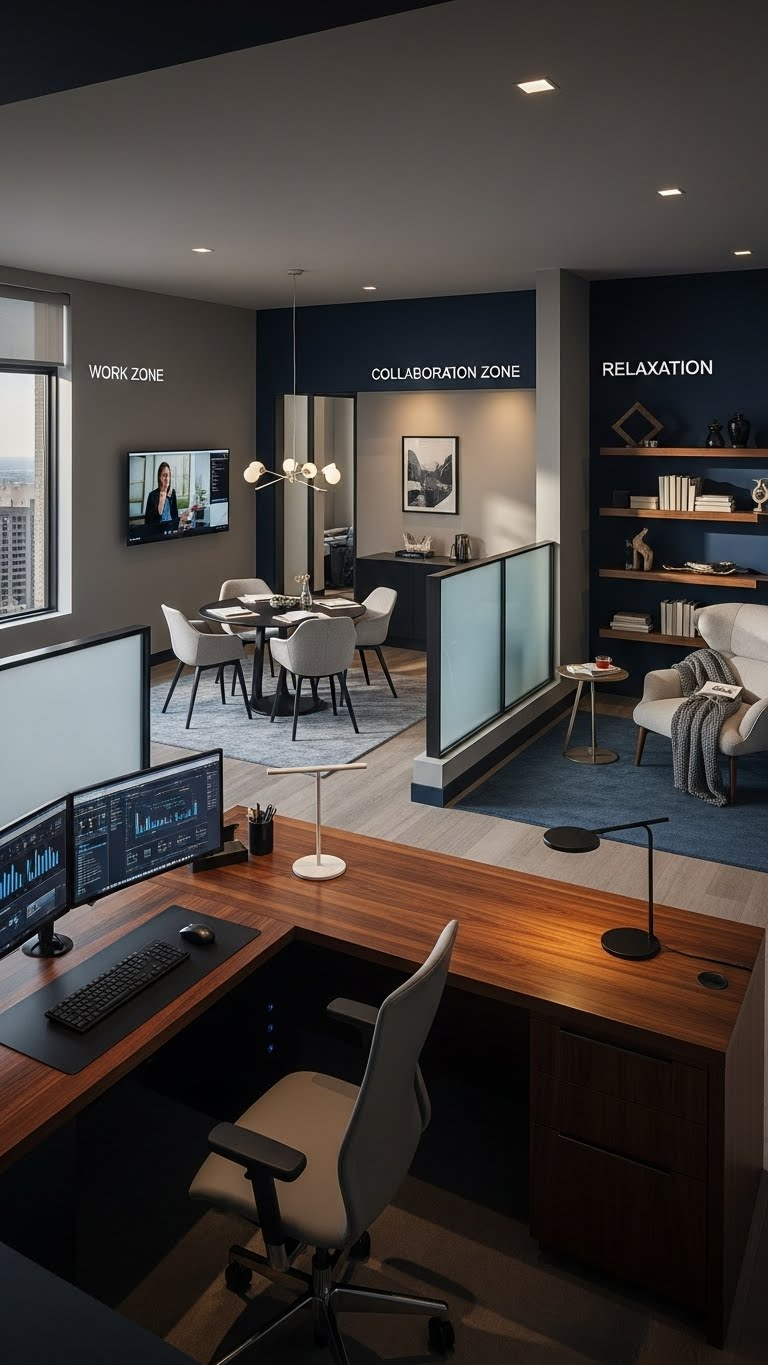
Some zones can serve dual purposes, such as a desk for work and video calls. Use small rugs, plants, or dividers to define boundaries clearly.
Even shared zones maintain functionality and focus when visually separated. This flexibility supports productivity in compact spaces.
14. Keep Pathways Clear Between Zones
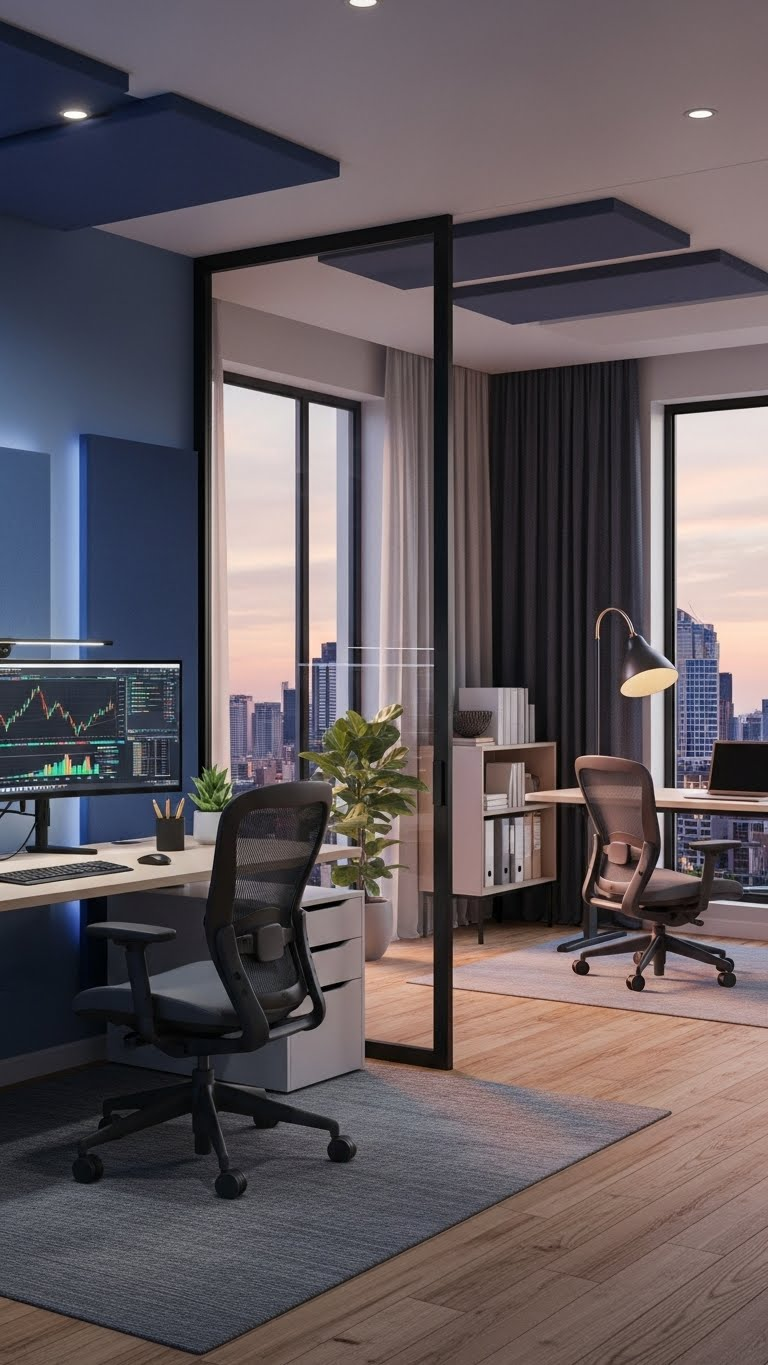
Clear pathways prevent distractions and allow smooth movement between zones. Avoid placing furniture or decor that disrupts natural flow.
Open pathways improve both safety and focus. They make your office feel organized, intentional, and easier to navigate.
15. Regularly Reassess and Adjust Zones
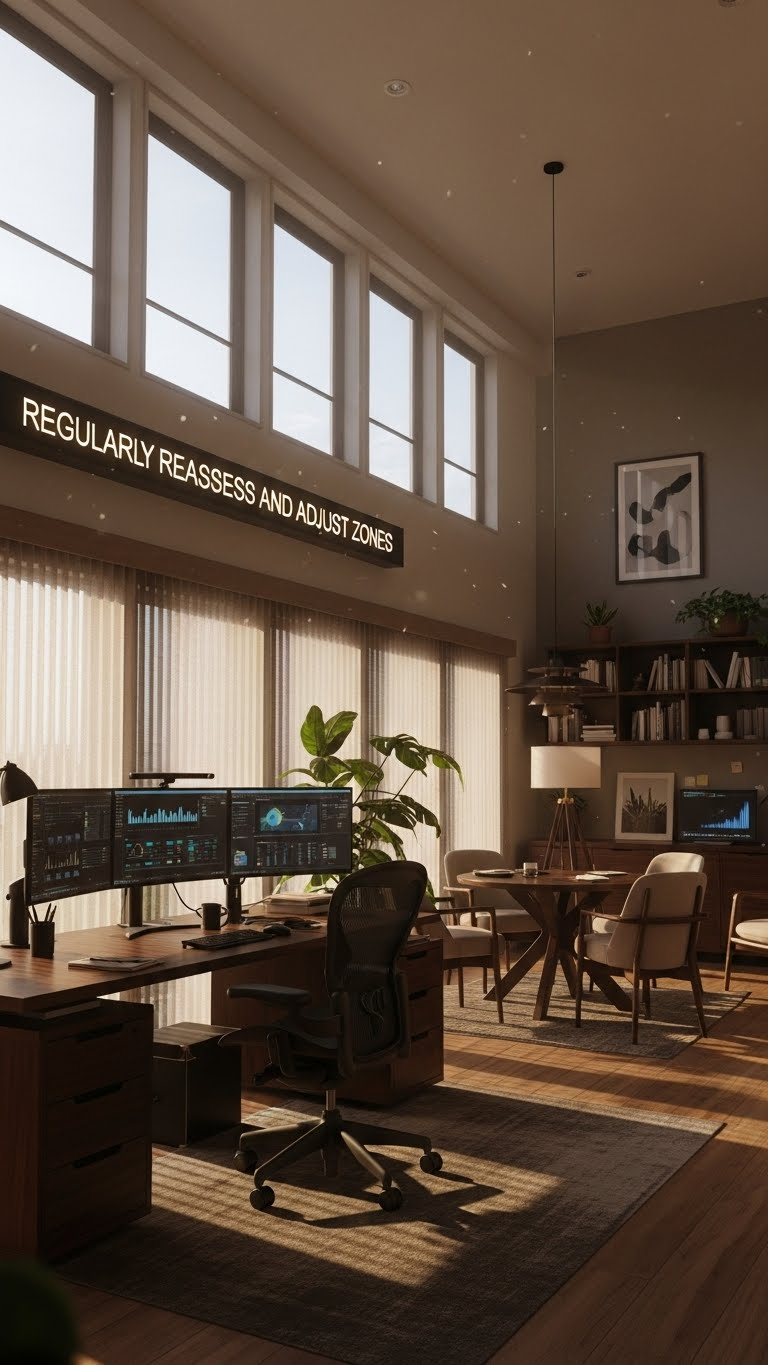
High-productivity offices evolve with your needs. Periodically evaluate whether each zone functions effectively and make adjustments if necessary.
This proactive approach maintains efficiency while keeping your office visually appealing. Clear zones should adapt to your workflow over time.
Wrap-Up
Designing a high-productivity home office starts with intentional zoning. Every area—from work to relaxation and storage—should have a clear purpose, reducing distractions and boosting focus.