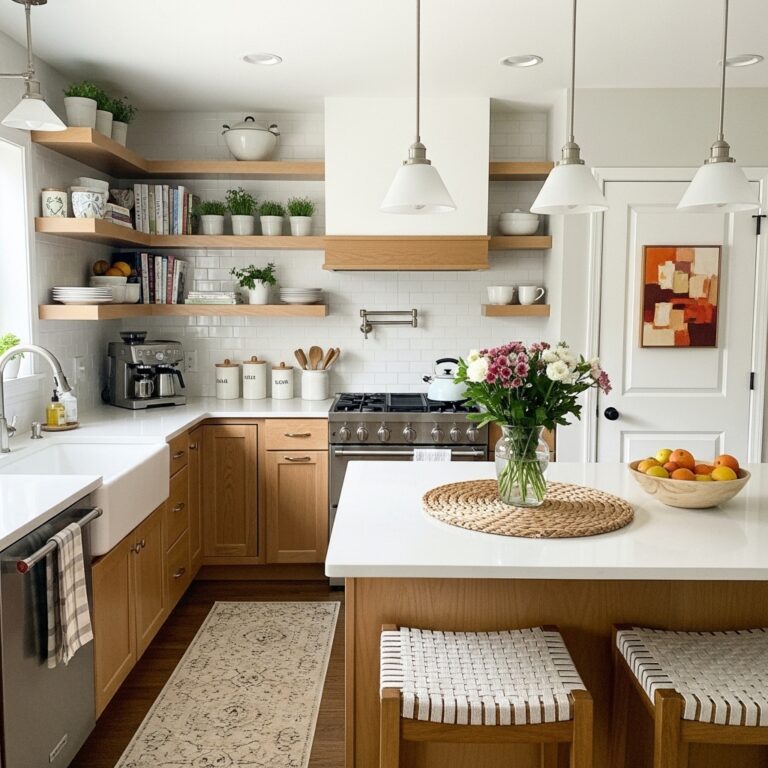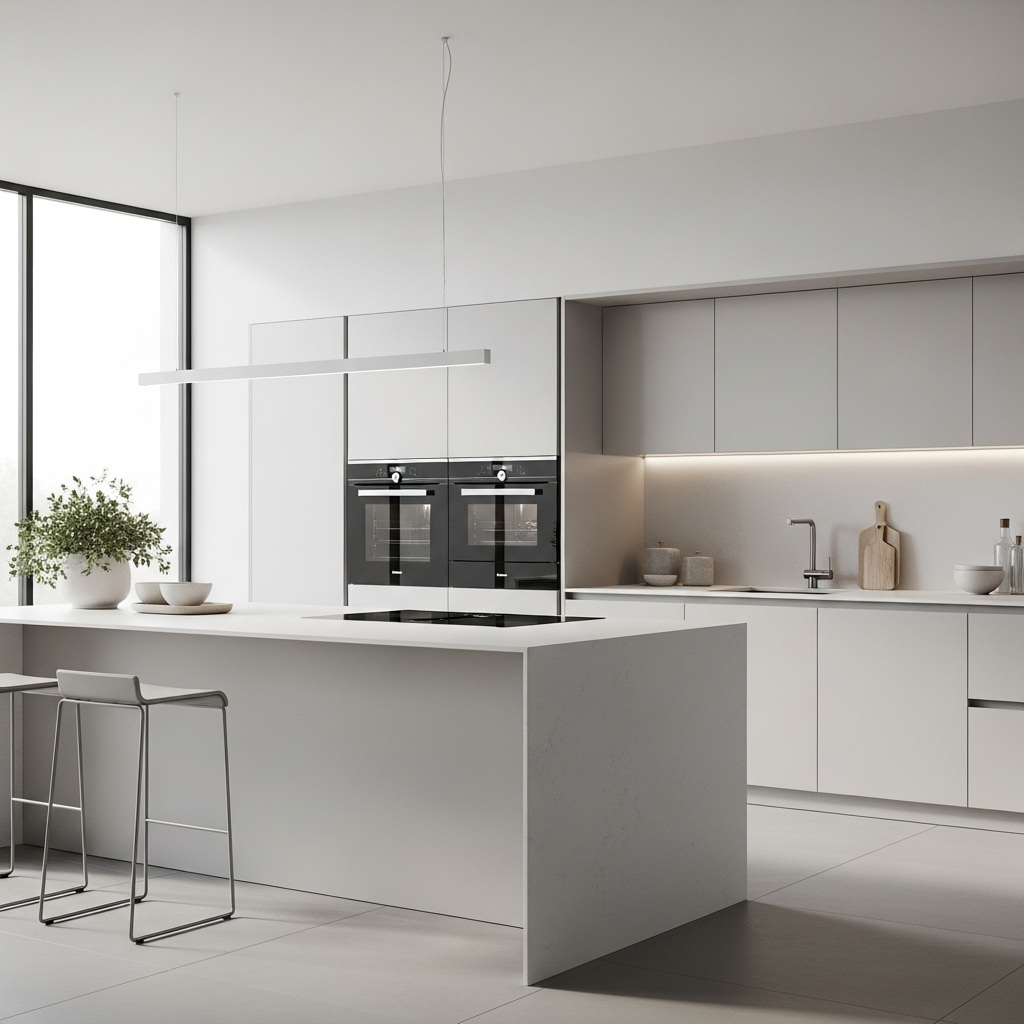
Minimalist Kitchen decoration ideas has evolved from the cold, clinical “white box” into a style known as Warm Minimalism.
This aesthetic prioritizes high-quality natural materials, hidden technology, and a palette of sun-washed neutrals like butter yellow, clay, and soft sage.
Here are 27 attractive ideas for a modern, earthy minimalist kitchen, each designed to balance functionality with organic soul.
1#. Defining the Warm Minimalist Foundation
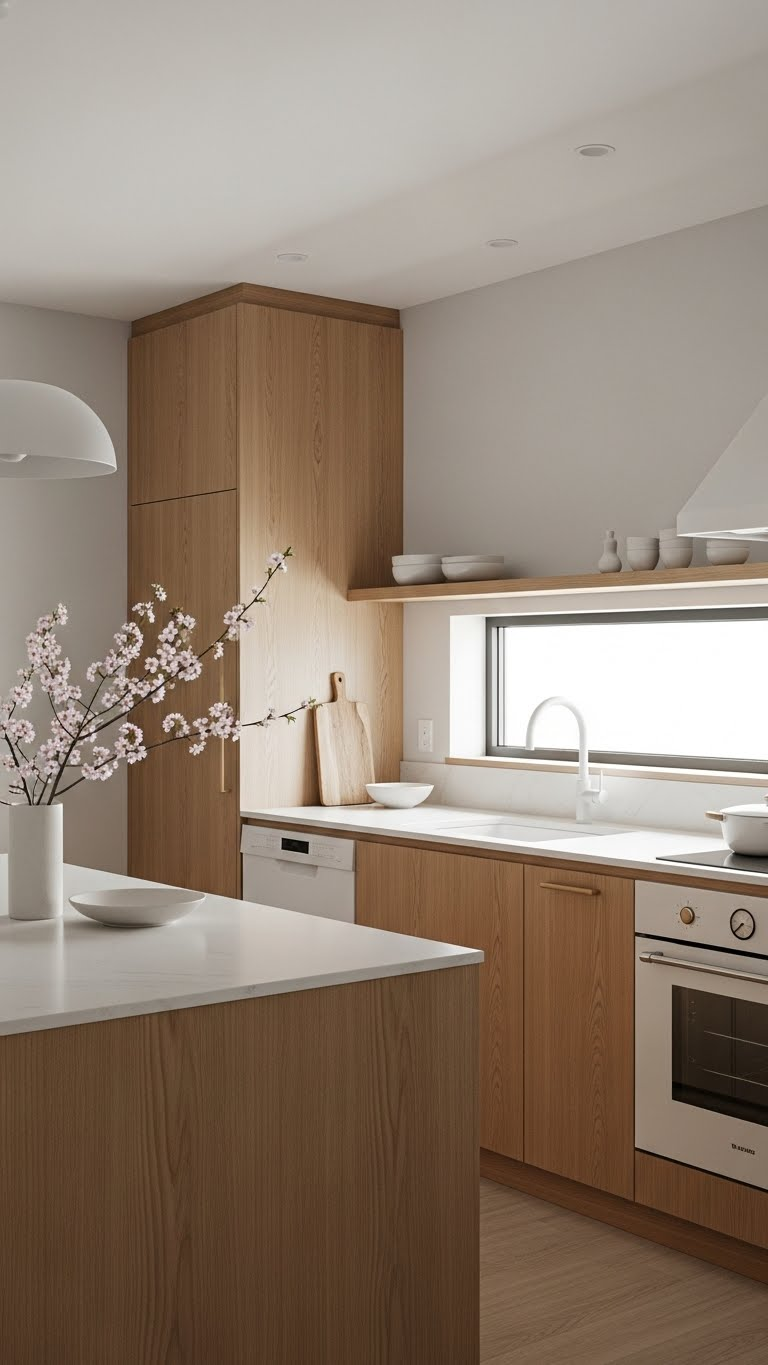
Warm minimalism is the cornerstone of 2026 kitchen design, moving away from stark whites to “human” tones like taupe, oat, and mushroom.
By using a restrained palette, the kitchen feels unified and calm, allowing the architectural lines of the cabinetry to serve as the primary design feature.
The goal is to create a space that feels lived-in but uncluttered. Instead of visual noise, depth is achieved through matte finishes that soften the glare of light and subtle shifts in texture that prevent the room from feeling flat or sterile.
2#. Incorporating Continuous Stone Splashbacks
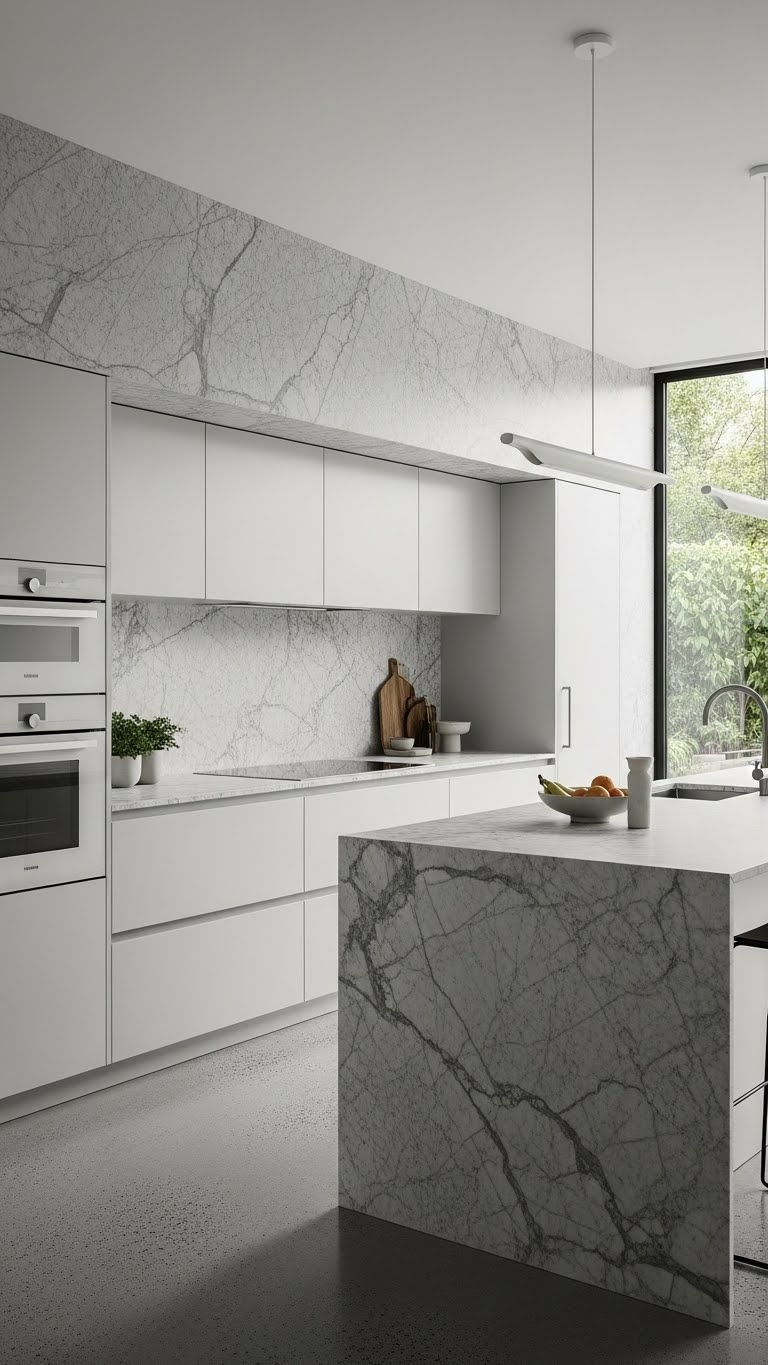
One of the most defining trends this year is the continuous splashback, where the countertop material—usually a heavily veined marble or quartzite—extends all the way up to the ceiling.
This eliminates the visual “seam” between the counter and wall, creating a monolithic, high-end appearance.
This seamless transition visually elongates the kitchen and provides a dramatic, organic backdrop.
It’s a minimalist move that celebrates the raw beauty of stone, turning the wall into a functional piece of art that is both easy to clean and stunning to look at.
3#. Utilizing Timber-Forward Cabinetry
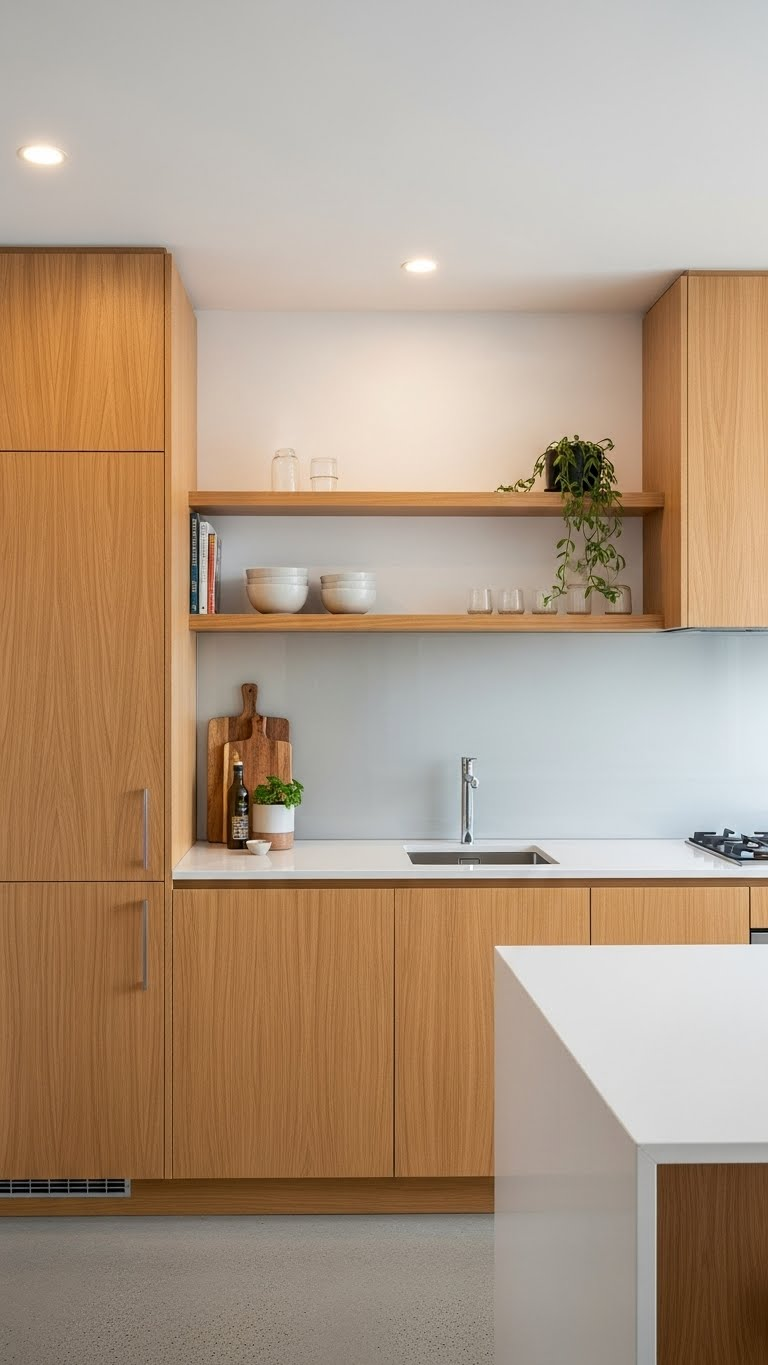
In 2026, visibly textured timber is replacing the high-gloss, flat-colored cabinets of previous years.
Warm oak, honey-toned walnut, and even reclaimed wood provide a tactile “furniture” feel to the kitchen, making it feel less like a utility room and more like a core living space.
To keep it minimalist, designers are favoring vertical grain matching and handle-less “push-to-open” doors.
This keeps the focus on the natural movement of the wood grain, providing a rhythmic, earthy energy that grounds the entire home.
4#. Designing with Curved Sculptural Islands
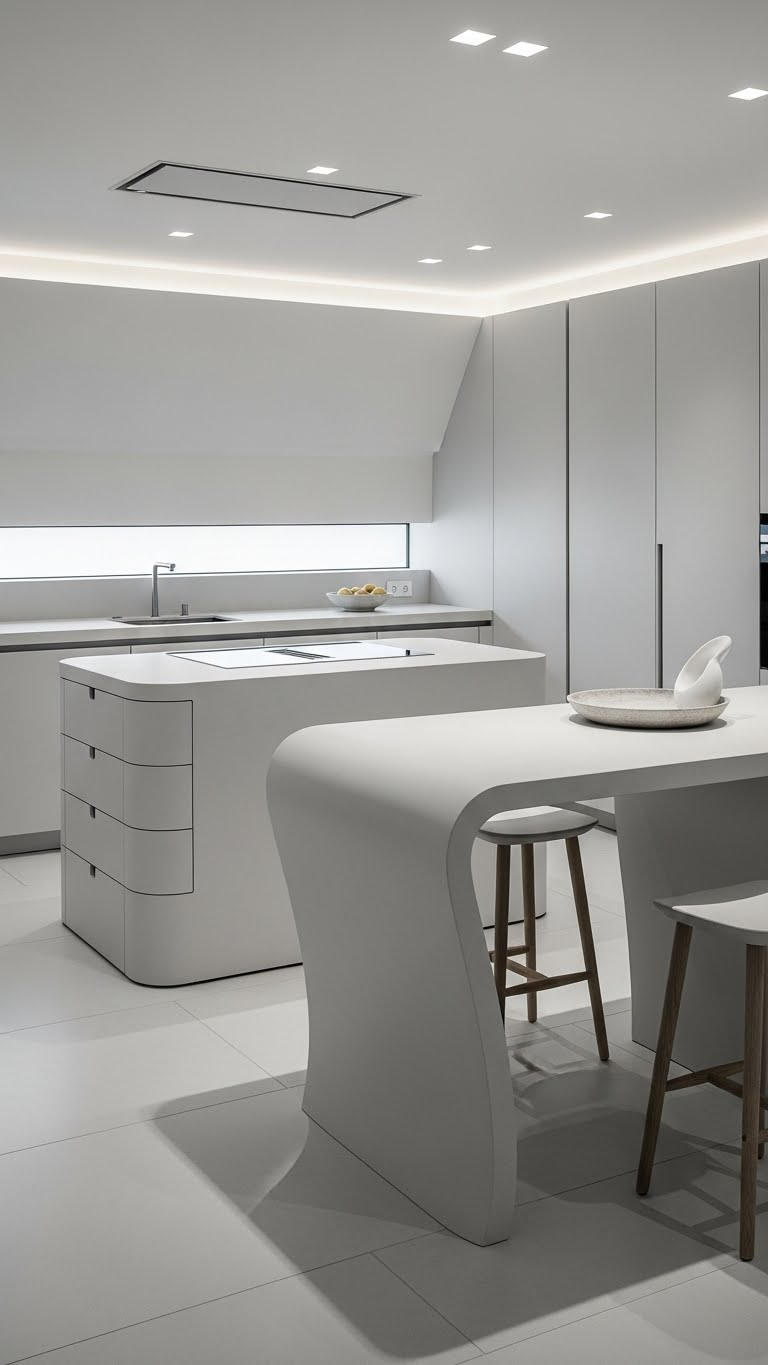
Sharp, industrial corners are being replaced by soft, sculptural curves in the 2026 kitchen.
A curved island not only improves the flow of movement in a busy room but also introduces a feminine, organic silhouette that feels more welcoming and ergonomic.
Rounding the edges of a stone island or using fluted wood panels on a curved base adds a sense of “softness” to the minimalist framework.
It’s a design choice that prioritizes human comfort and gentle transitions over rigid, cold geometry.
5#. Embracing Sun-Washed Butter Yellow Accents
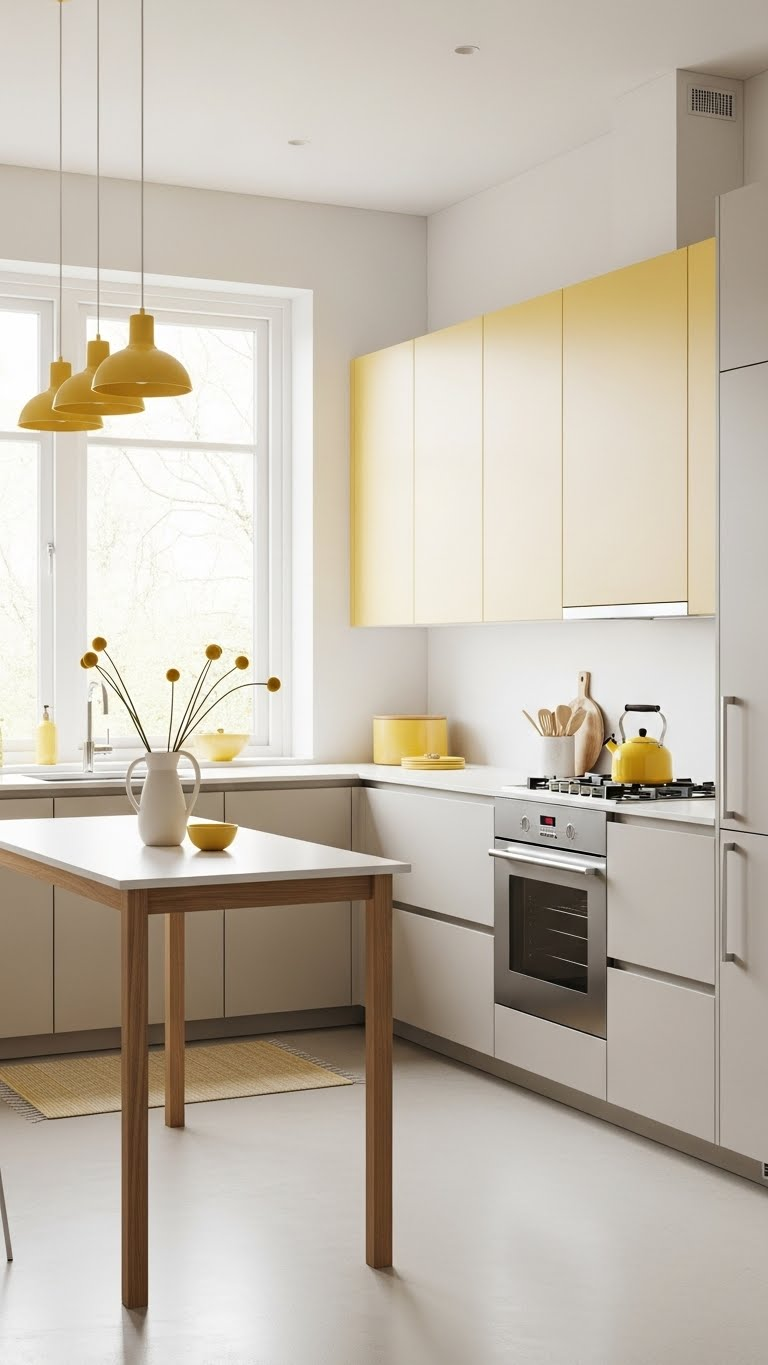
A surprising but major trend for 2026 is the use of butter yellow as a “new neutral.”
This soft, glowing hue adds a brush of optimism and warmth to a kitchen without the aggression of a bold primary color, mimicking the look of natural sunlight hitting a wall.
When paired with warm wood and cream-colored stone, butter yellow creates an atmosphere that feels cheerful and bright even on overcast days.
Use it for a single “block” of cabinetry or as a subtle limewash finish on the walls to lift the mood of the entire space.
6#. Integrating Fluted Glass Cabinet Shutters
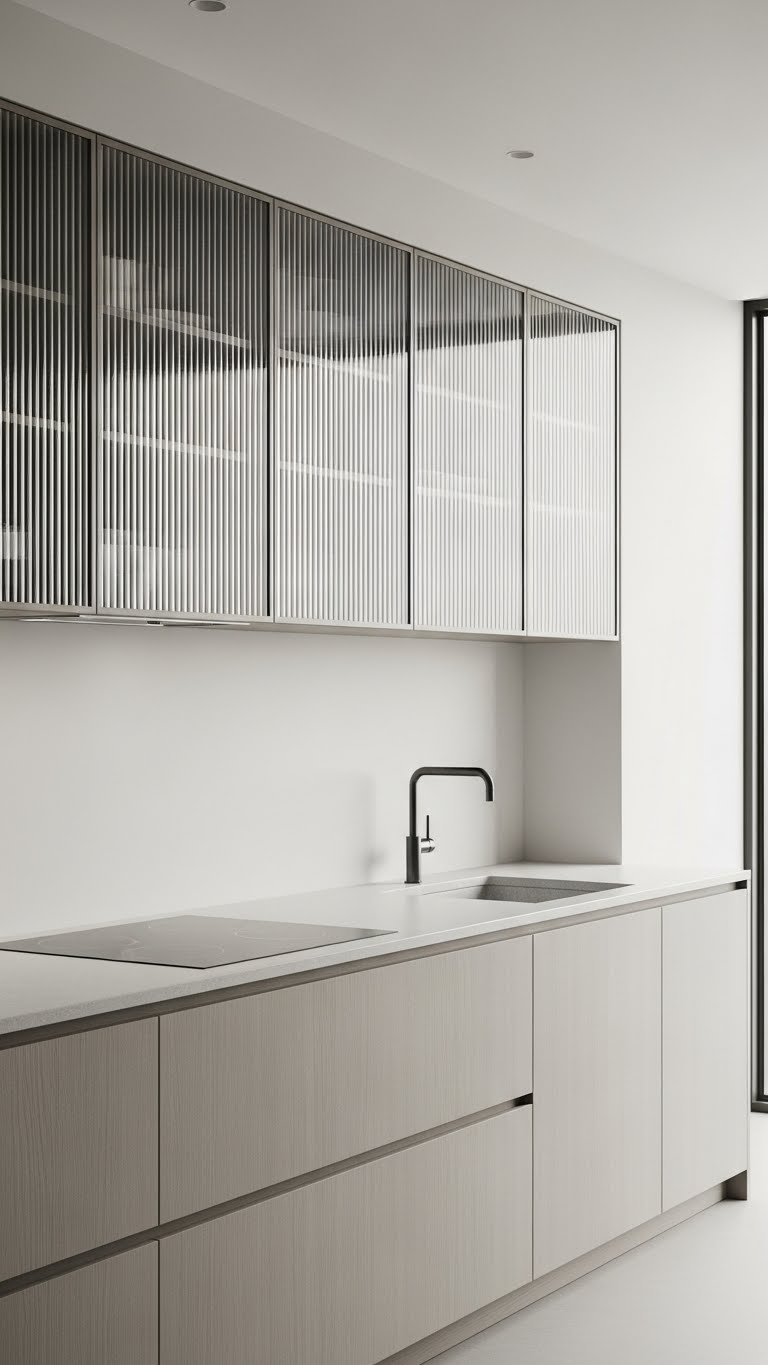
Fluted or “reeded” glass is the preferred choice for upper cabinetry in minimalist kitchens today.
It offers a “semi-private” storage solution that blurs the outlines of cluttered dishes while still allowing light to pass through and bounce around the room.
This textured glass breaks the visual monotony of solid cabinet fronts without sacrificing the “hidden” nature of minimalist storage.
It adds a sophisticated, linear detail that feels both vintage-inspired and unmistakably modern.
7#. Incorporating Poured-Earth or Clay Walls
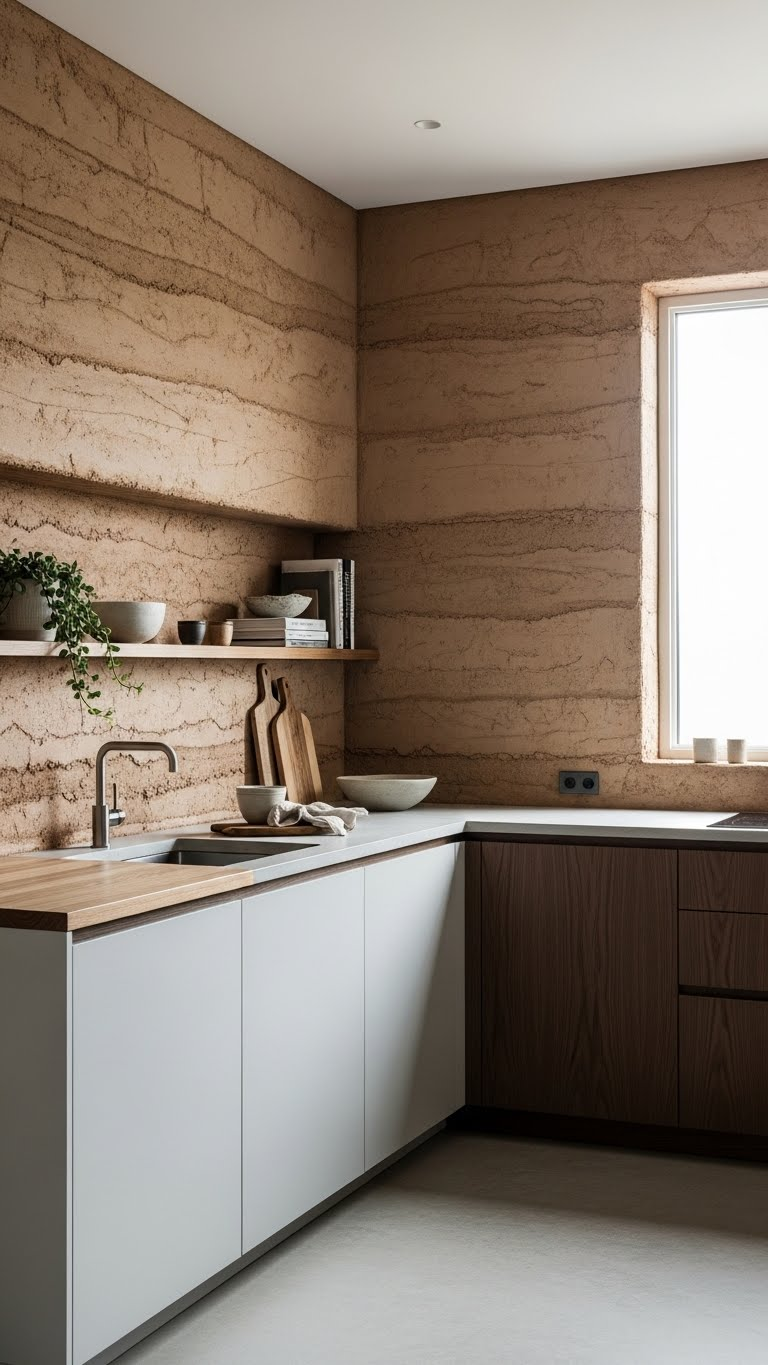
Moving beyond standard drywall, high-concept minimalist kitchens are utilizing poured-earth or clay-plaster walls. These materials are 85% clay, offering a breathable, eco-sensitive alternative that provides a tactile warmth that mirrors the surrounding soil.
The natural, matte finish of clay creates a “hush” in the room, absorbing sound and softening shadows. It provides a primitive, grounding backdrop that makes modern stainless-steel appliances or polished stone counters look even more refined by contrast.
8#. Designing with Integrated Pocket Pantries
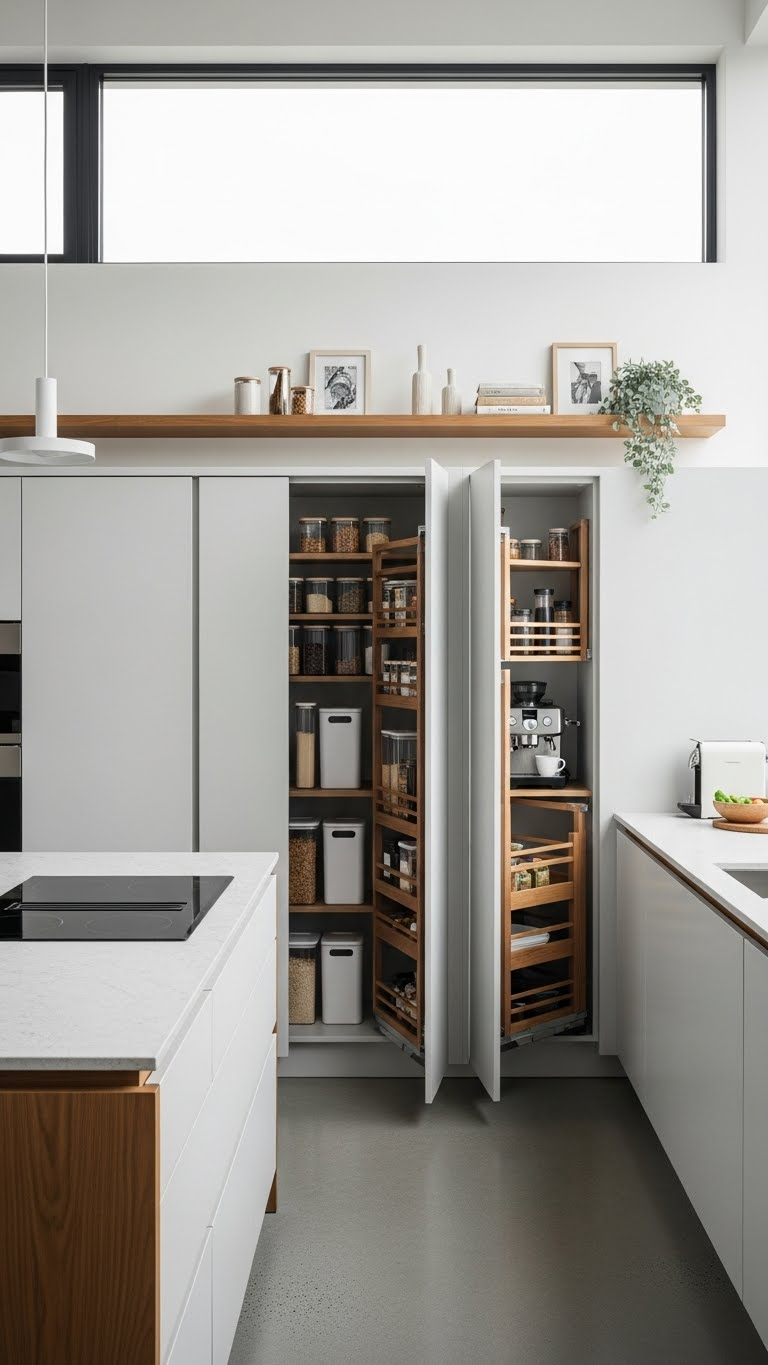
The ultimate minimalist luxury is the pocket pantry—a full-height storage unit with doors that slide back into the walls when open.
This allows you to hide the “mess” of a coffee station or toaster behind a clean, wooden facade when the kitchen is not in use.
This “hidden function” ensures that countertops remain completely clear of small appliances, which is the golden rule of minimalist design.
It allows the kitchen to transition from a high-performance workspace during the day to a serene, furniture-like environment in the evening.
9#. Utilizing Honed Travertine Countertops
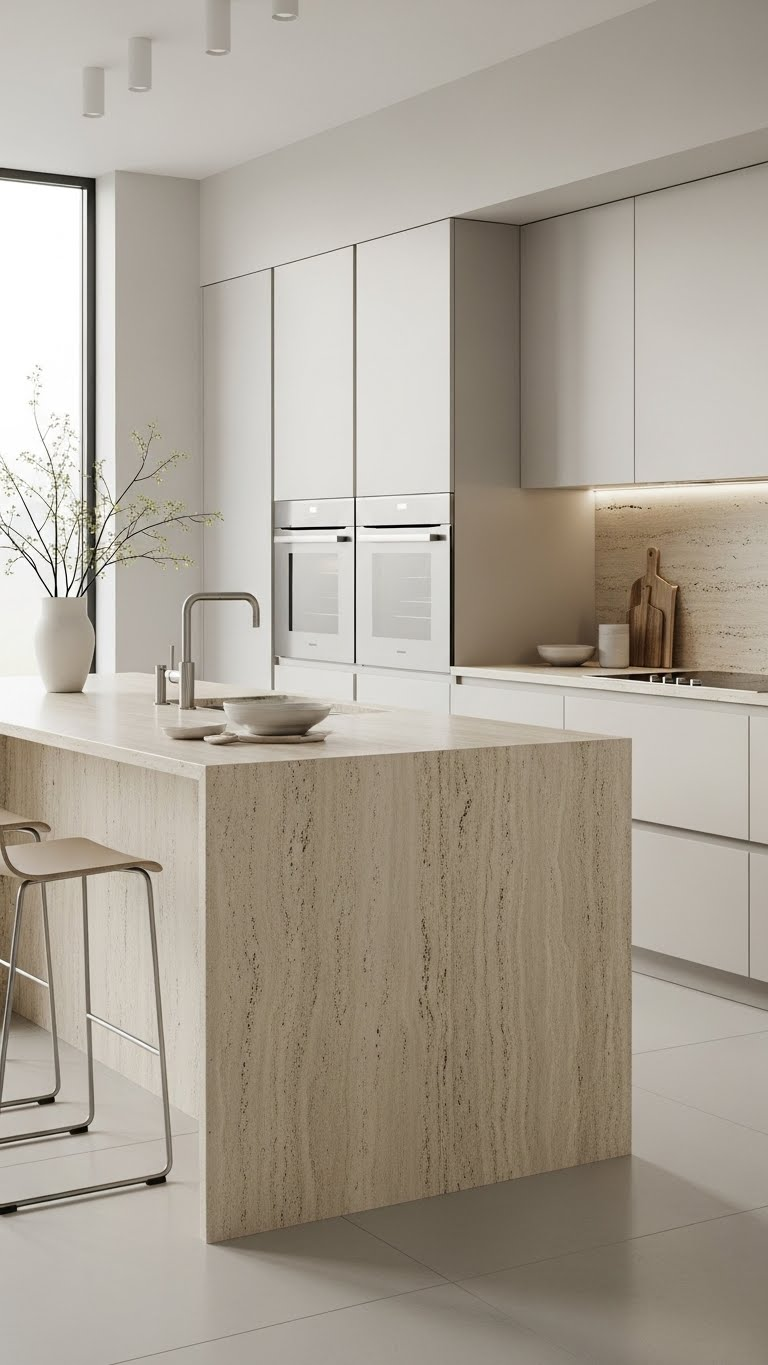
Designers are officially moving away from high-gloss white quartz in favor of honed travertine or leathered limestone.
These non-reflective finishes diffuse light in a way that adds depth and “soul” to the kitchen, making it feel like a space where stories happen.
The warmth of travertine, with its subtle pits and earthy undertones, feels much more organic and “lived-in” than polished stone.
It’s a choice that values character and patina over a factory-perfect, showroom look.
10#. Adding Architectural Brass Rail Systems
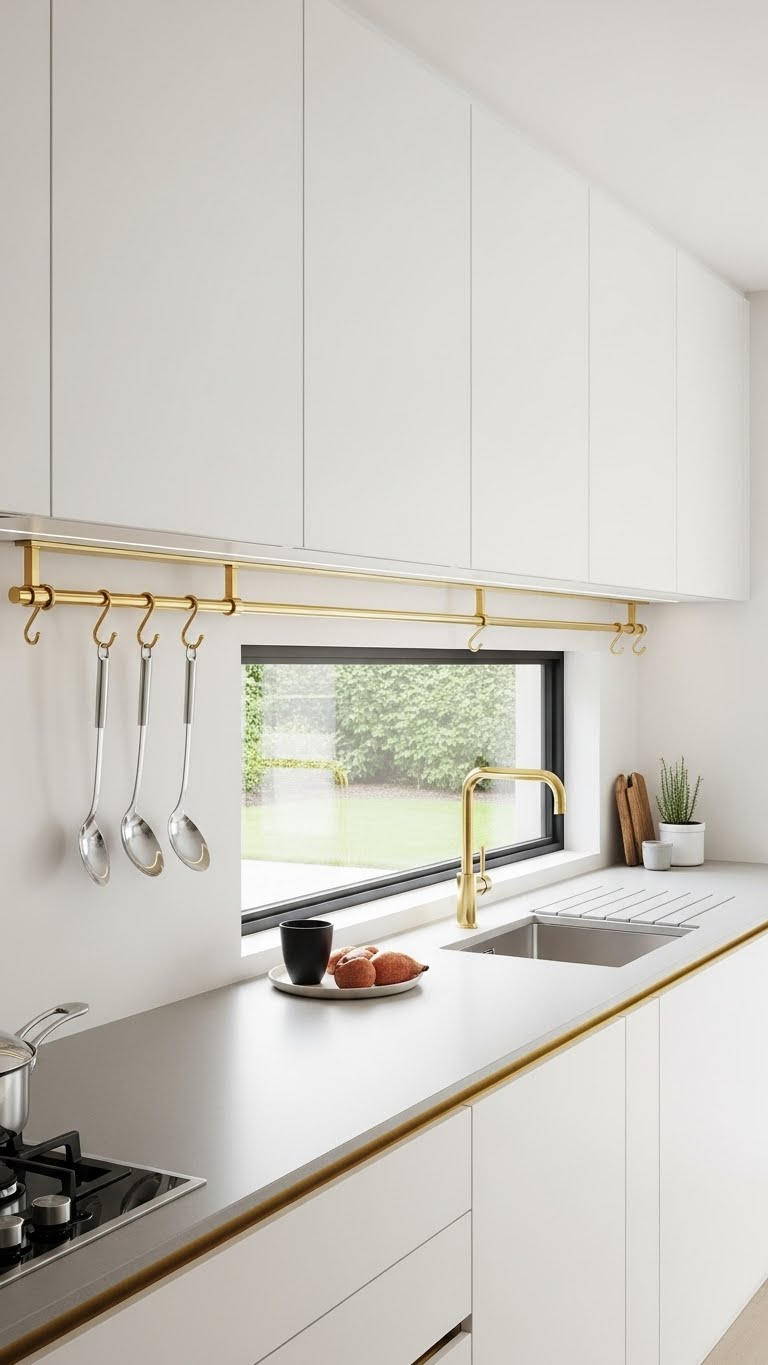
A slim, unlacquered brass hanging rail added to a stone splashback provides “old-world utility” within a modern framework.
It allows for the display of a few curated items—like a single copper pot or a bundle of dried herbs—keeping them off the counter but within reach.
The brass will age and patina naturally, adding to the earthy, authentic feel of the kitchen.
This detail provides a thin, horizontal line that emphasizes the length of the room, acting as a functional jewelry piece for the minimalist wall.
11#. Implementing Stealth Induction Cooktops
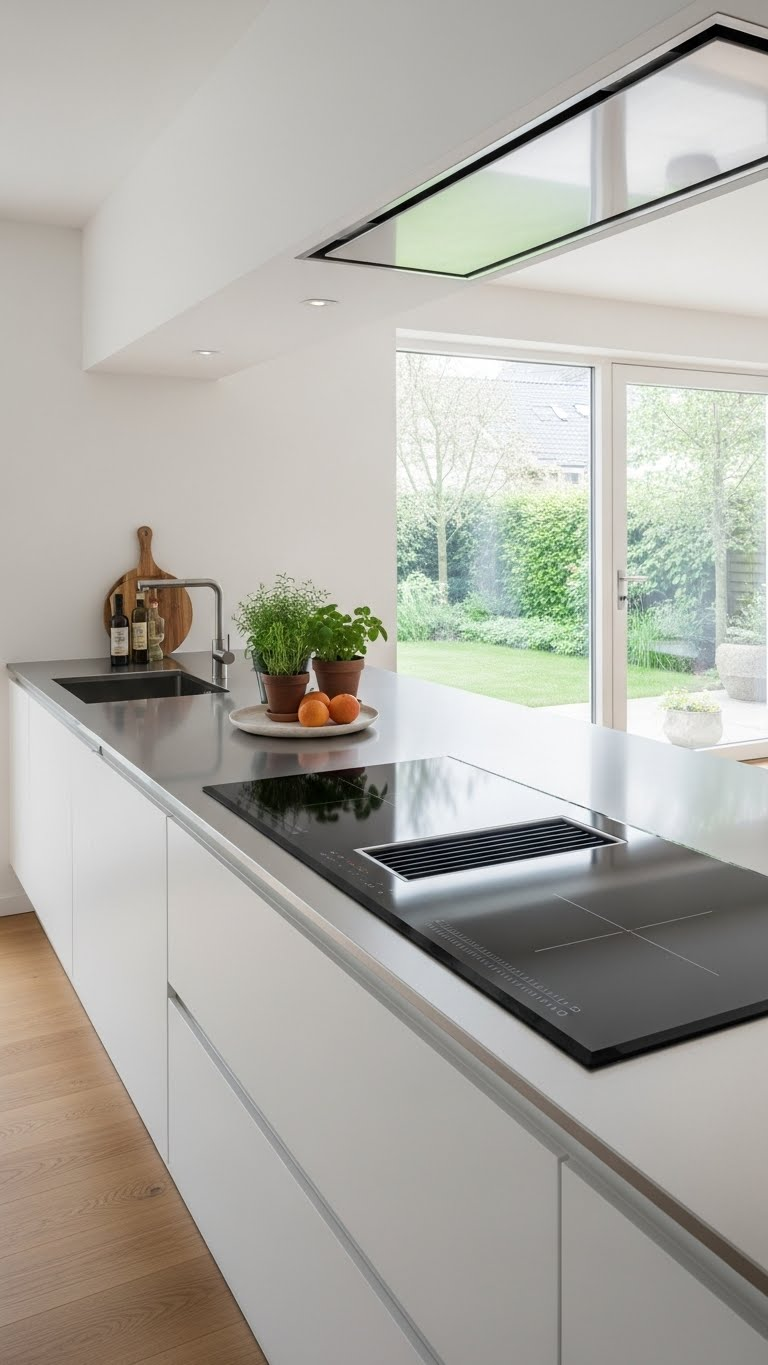
In the ultimate move toward a “non-kitchen” kitchen, invisible induction burners are being installed directly beneath the stone or porcelain countertop.
This technology allows the entire island surface to remain a flat, uninterrupted expanse of stone when not in use, doubling as a workspace or dining table.
By removing the visual clutter of black glass hobs or metal grates, the kitchen maintains a purely architectural look.
This seamless integration is a hallmark of high-end 2026 minimalism, where the “tools” of cooking are secondary to the beauty of the materials themselves.
12#. Elevating with Oversized Ceramic Pendant Lights
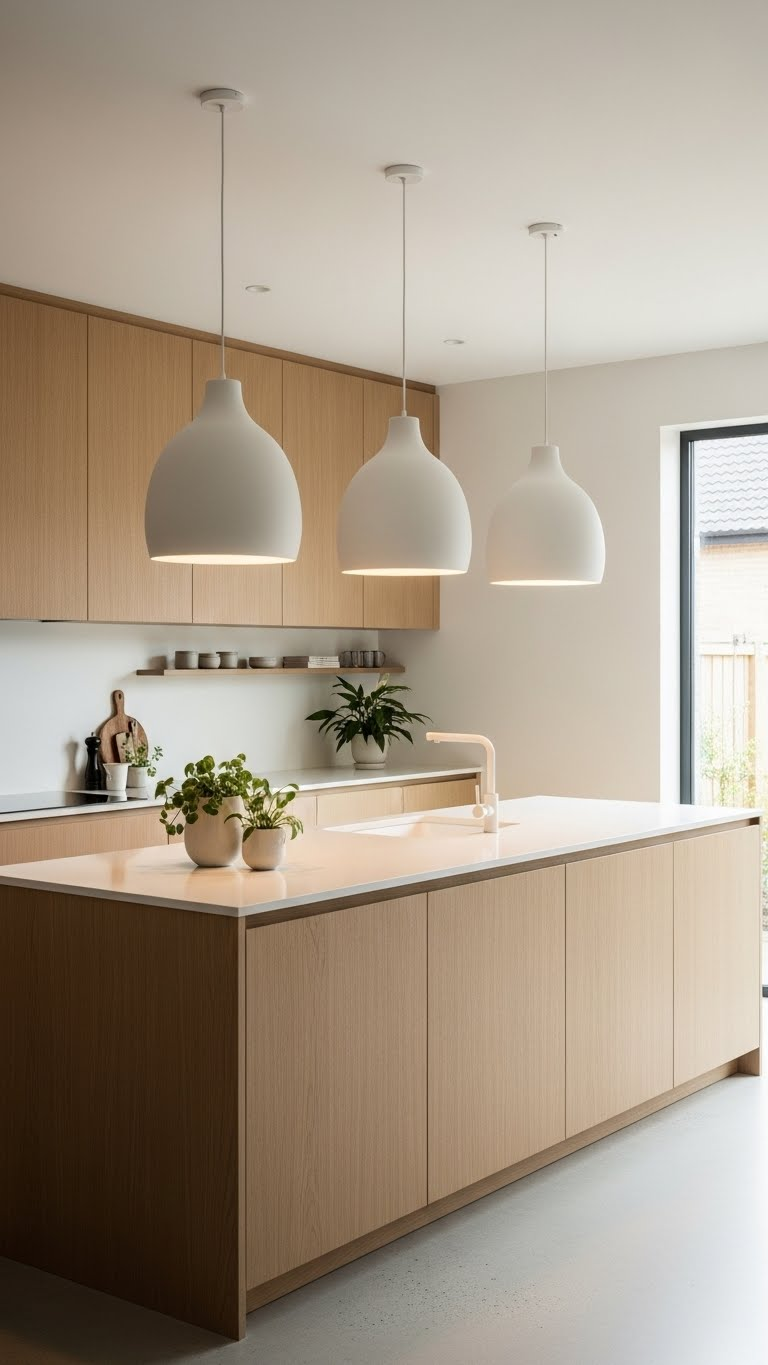
Lighting in a minimalist kitchen should feel like art, and oversized, hand-thrown ceramic pendants are the preferred choice this year.
These fixtures, often in a raw terracotta or chalky white finish, provide a heavy, tactile presence that grounds a high-ceilinged space.
The warm, directional light they cast creates an intimate “pool” over the island, perfect for evening gatherings.
Using a natural material like clay for lighting softens the technical nature of the kitchen, adding a human, artisanal touch to a streamlined design.
13#. Creating a Monolithic Island Base
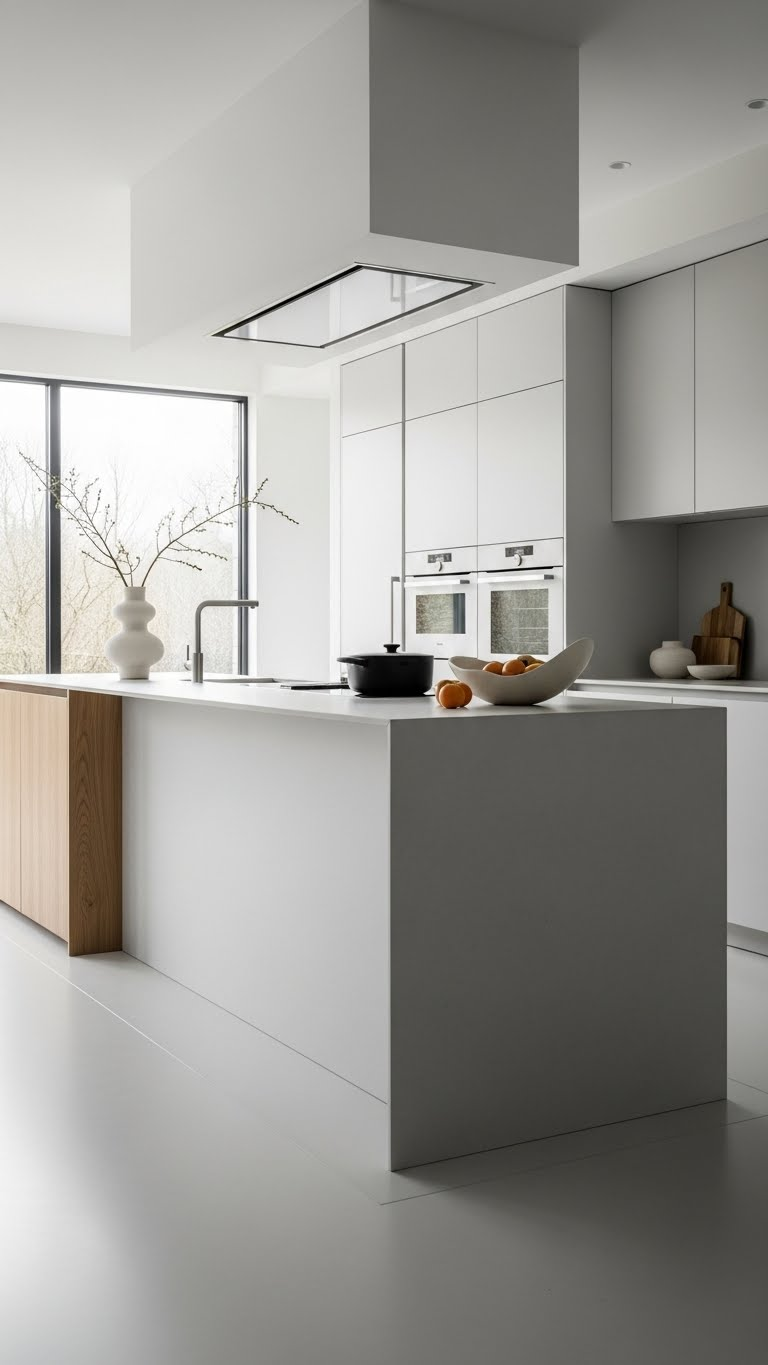
Rather than a traditional cabinet-style island, 2026 designs favor a “monolithic” base where the stone wraps from the counter down to the floor on all sides. This gives the island the appearance of a solid block of mineral rising from the earth, providing a sense of weight and permanence.
To keep it minimalist, drawers and storage are cleverly integrated with touch-to-open mechanisms so no handles disrupt the stone facade. This sculptural approach turns the kitchen’s center into a monumental feature that feels like a piece of permanent architecture.
14#. Designing with Floor-to-Ceiling “Wall of Wood” Storage
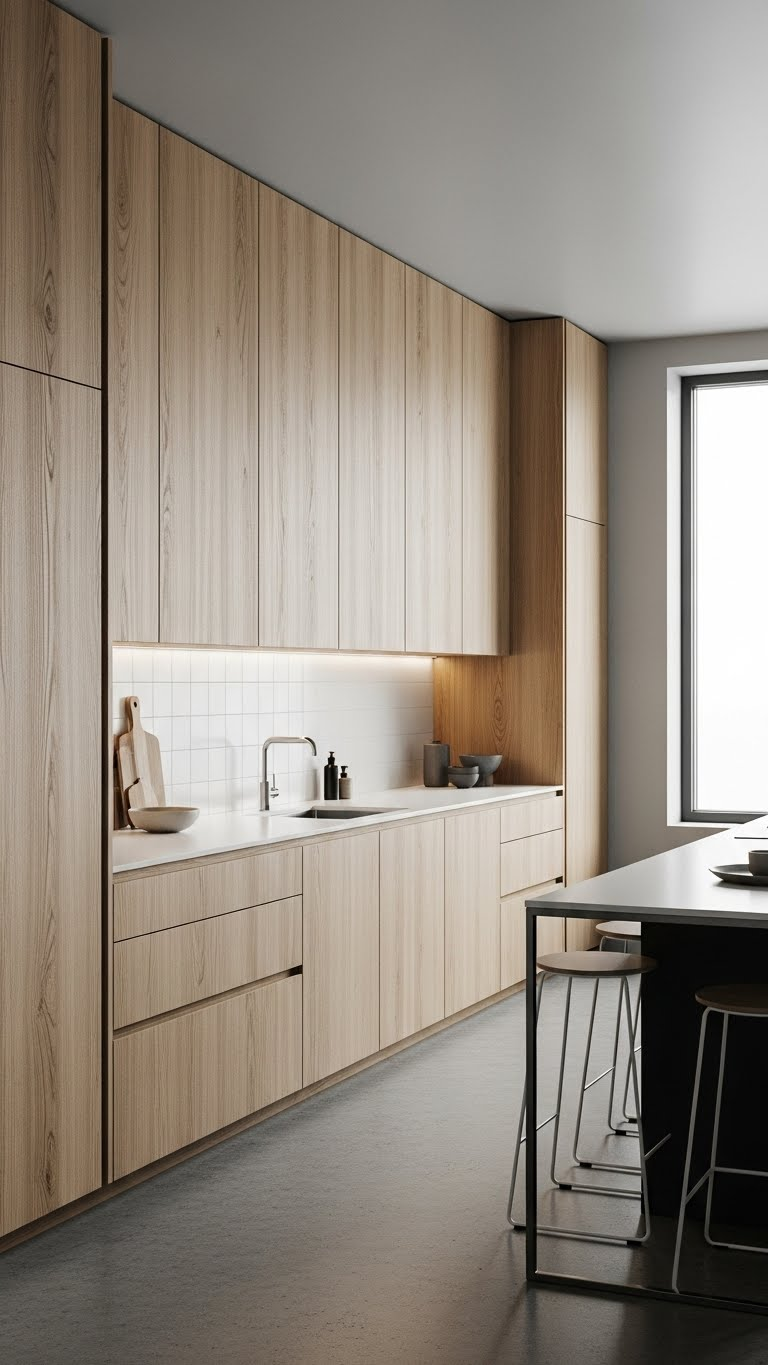
Replacing upper cabinets with a solid, floor-to-ceiling bank of wooden cabinetry creates a clean, streamlined “wall” effect.
This design choice hides refrigerators, ovens, and dry storage behind identical timber panels, eliminating the “visual stutter” of mismatched appliances.
By using a light-colored wood like ash or bleached oak, the massive storage unit feels light and airy rather than imposing.
It provides a warm, organic texture that defines the perimeter of the room and makes the kitchen feel more like a cozy wood-paneled lounge than a utility zone.
15#. Incorporating In-Counter Herb Gardens
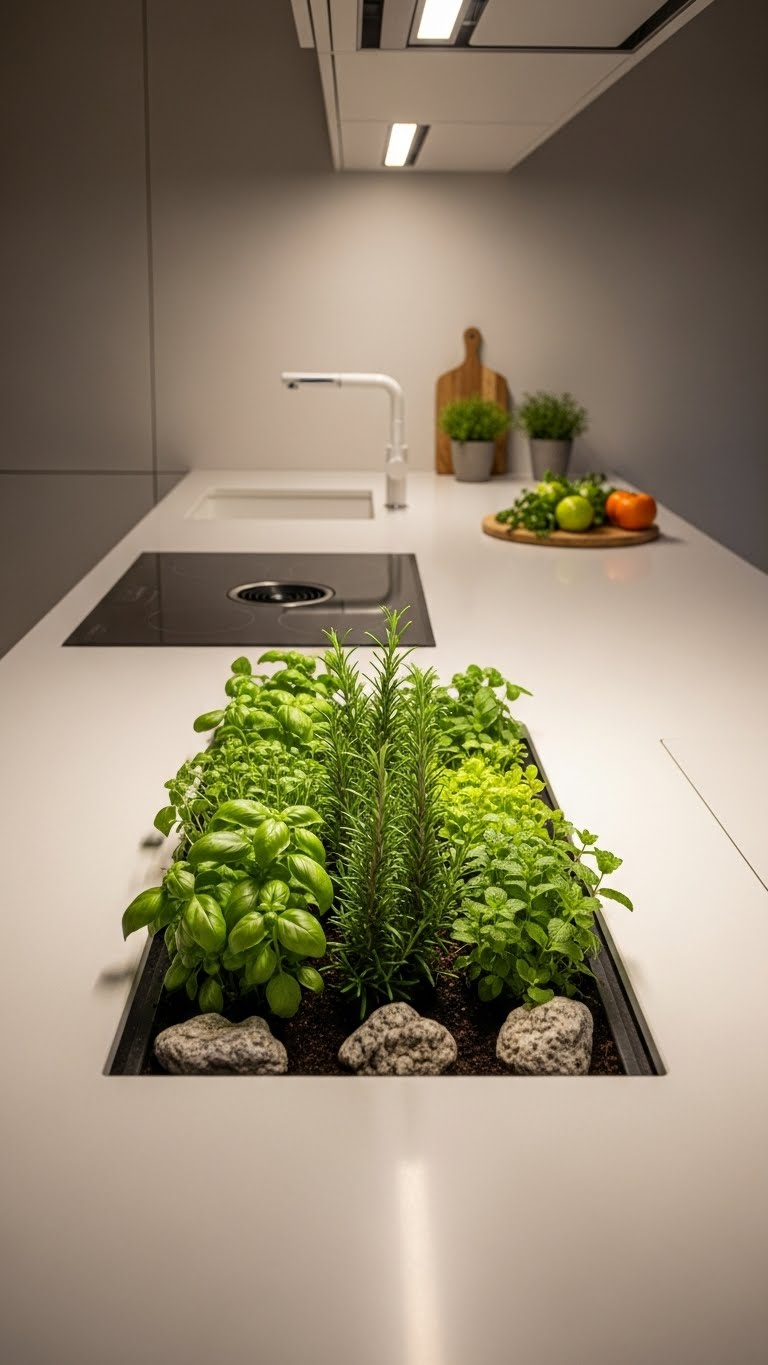
Integrating a narrow, recessed stone trough into the island or countertop allows you to grow fresh culinary herbs exactly where you need them.
This “living” element brings a pop of vibrant green into a neutral minimalist palette, providing both a fresh scent and a connection to the garden.
The trough is often made of the same material as the counter, featuring a hidden drainage system to keep the minimalist lines intact.
It’s a functional piece of biophilic design that reinforces the “earthy” soul of the kitchen through direct interaction with nature.
16#. Utilizing Matte Black Steel Windows
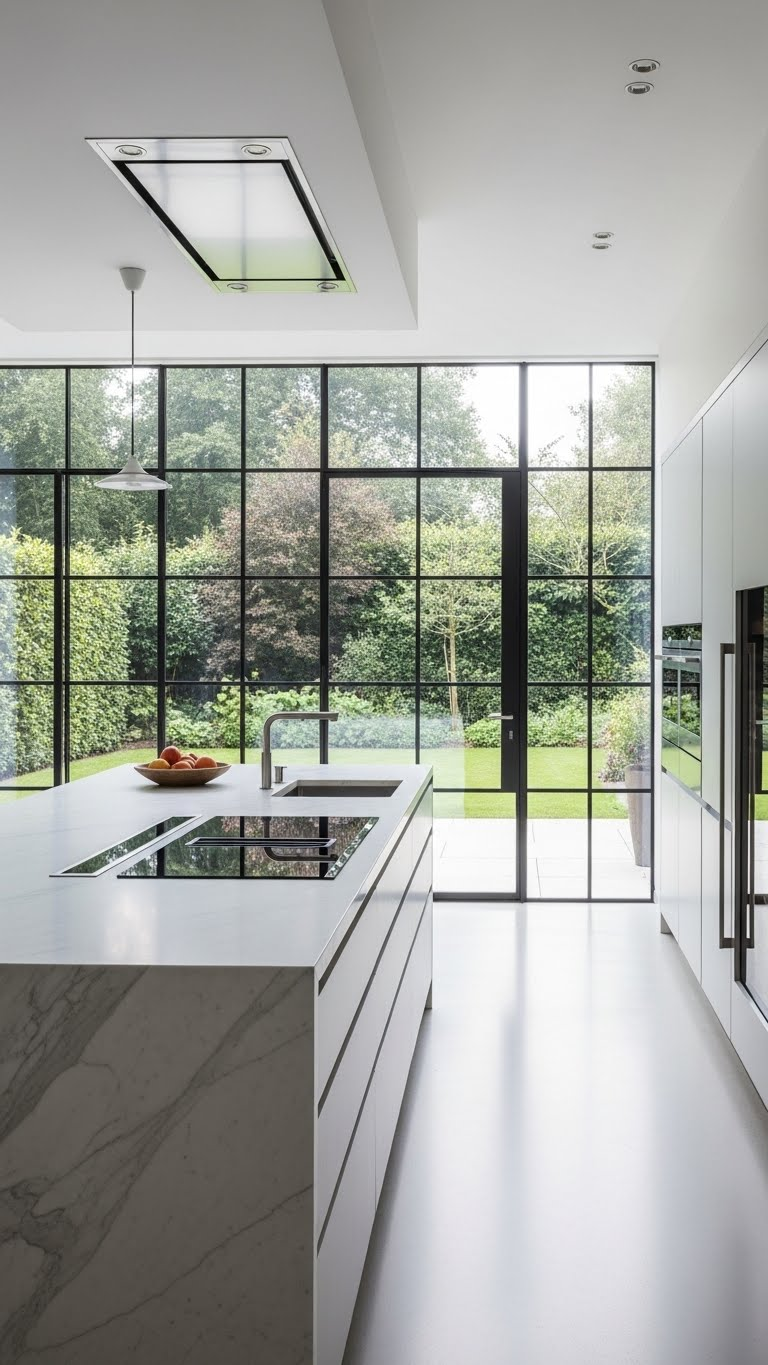
Framing the kitchen view with slim, matte black steel windows provides a sharp, graphic contrast to soft, sun-washed walls.
These frames act like a lens, drawing the eye toward the landscape outside and making the greenery of the garden feel like a part of the interior decor.
The industrial edge of the steel prevents a minimalist kitchen from feeling too “soft” or “cottage-like.”
It introduces a modern, structural backbone that coordinates perfectly with black cabinet hardware or dark stone floors, creating a balanced and sophisticated aesthetic.
17#. Embracing the Depth of Plaster Range Hoods
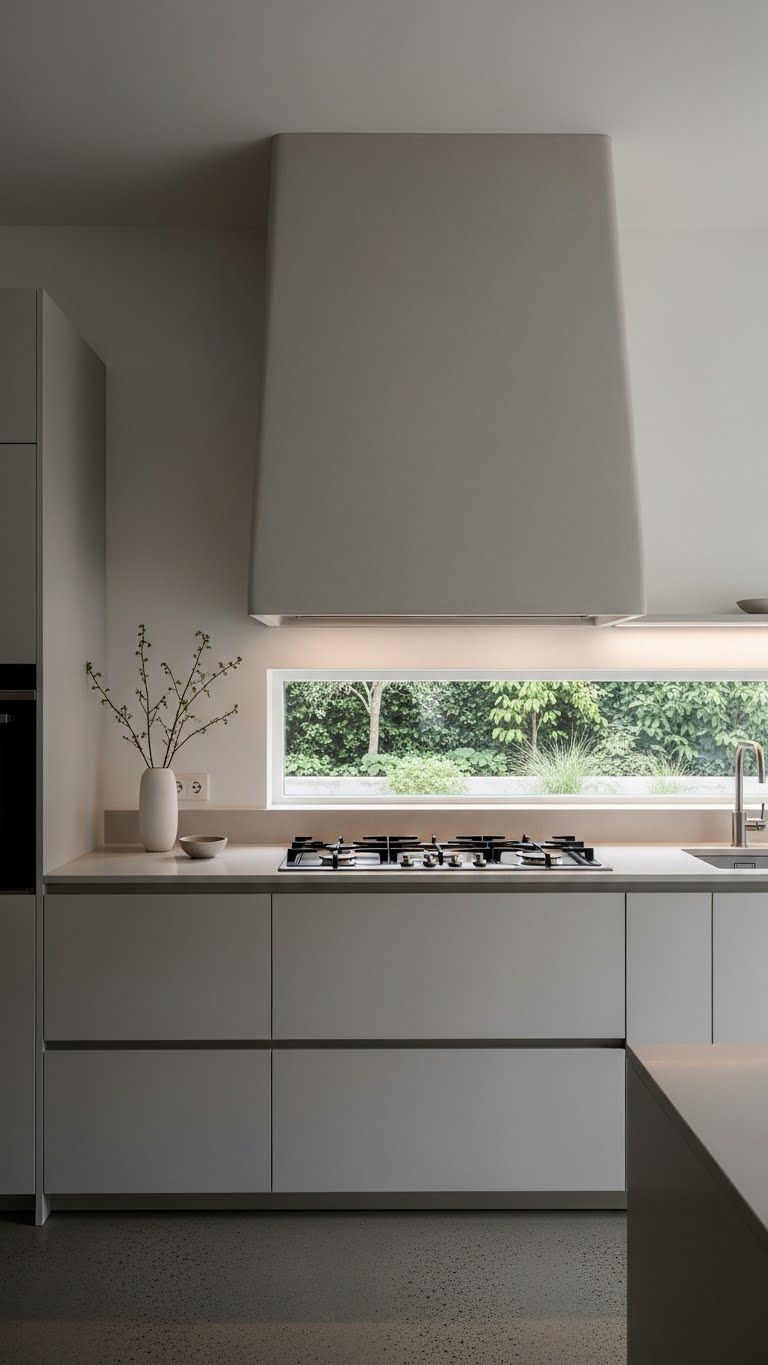
Bulky stainless steel range hoods are being traded for custom-built, plastered versions that blend seamlessly into the wall.
By finishing the hood in the same limewash or clay plaster as the surrounding surfaces, the extraction unit becomes an architectural curve rather than a mechanical appliance.
This “hidden” ventilation allows the focus to remain on the splashback or the wood cabinetry.
The soft, hand-applied texture of the plaster adds a layer of quiet, artisanal luxury that feels far more grounded and intentional than a standard metal hood.
18#. Incorporating Soft Sage Green Cabinetry
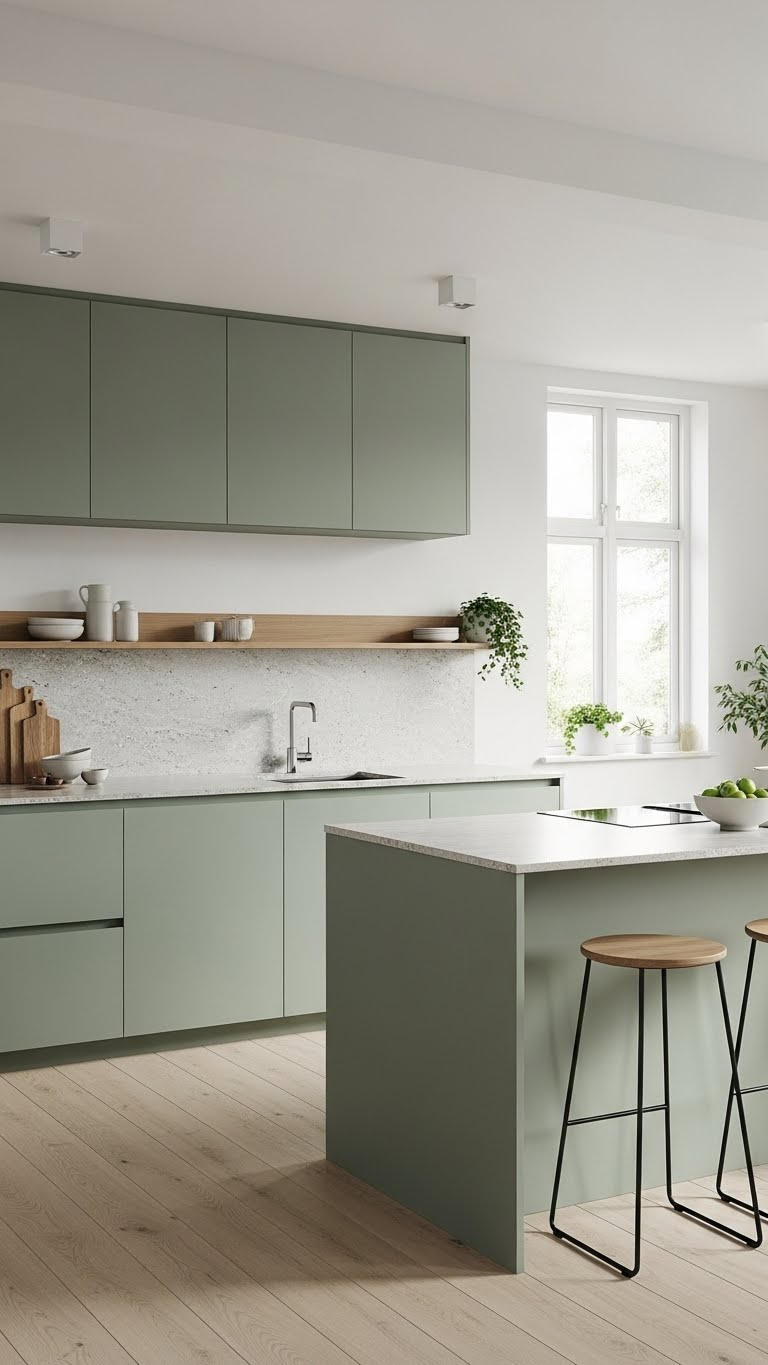
Sage green has become the “new neutral” for those who want a hint of color while maintaining an earthy, minimalist vibe.
This muted, dusty green mimics the tones of dried eucalyptus or olive leaves, providing a soothing backdrop that pairs beautifully with light oak and brass.
To keep it minimalist, the green is typically applied in a matte finish across flat-panel doors.
It’s a color that feels connected to the outdoors and provides a subtle, sophisticated alternative to beige or grey without losing the room’s sense of calm.
19#. Using Solid Wood “Butcher Block” Ends
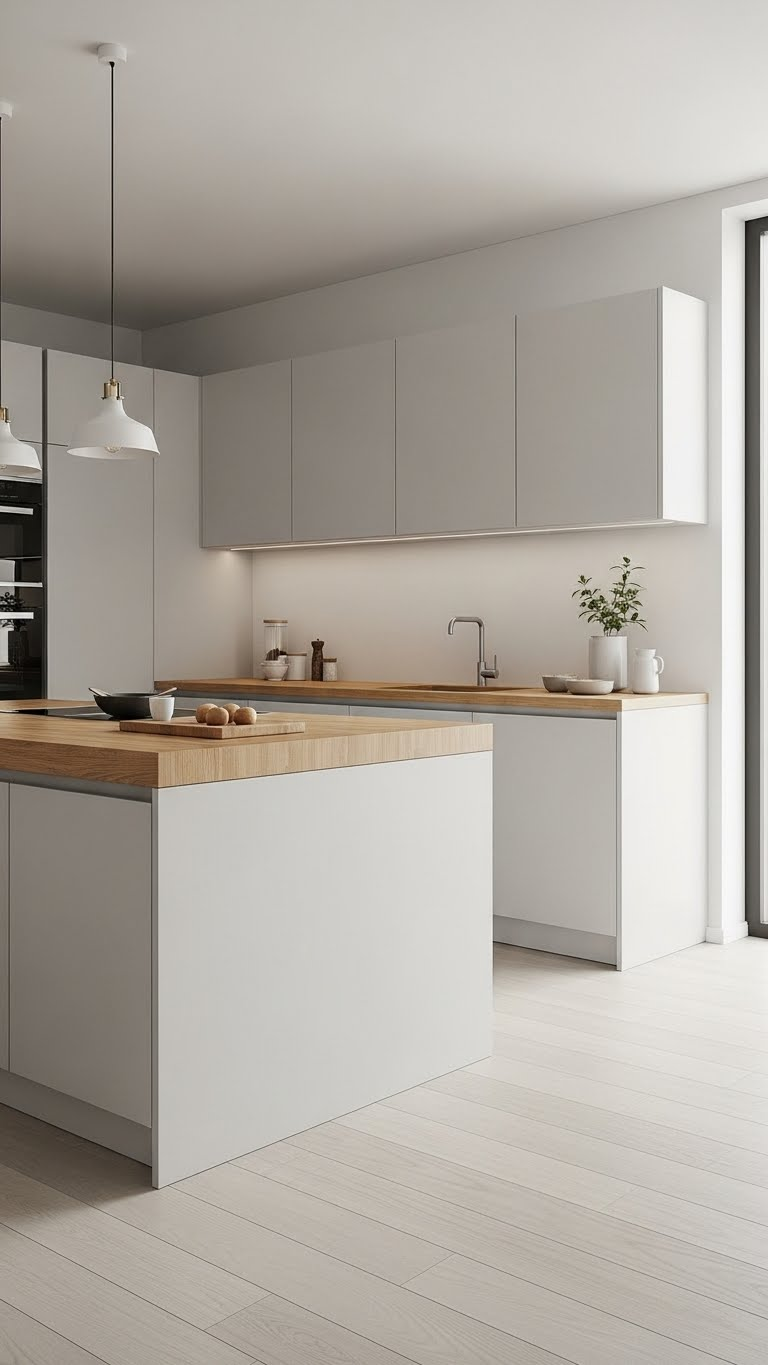
Adding a thick, integrated section of end-grain walnut or maple to the end of a stone island provides a dedicated—and beautiful—chopping surface.
This “warm” insert breaks up the coldness of the stone and adds a layer of professional-grade utility to the kitchen layout.
The rich, varied tones of the wood grains provide a natural pattern that feels artisanal and authentic.
It’s a design move that acknowledges the kitchen as a place of work and craft, adding a “chef’s table” feel to a high-end minimalist environment.
20#. Designing with Integrated Stone Sinks
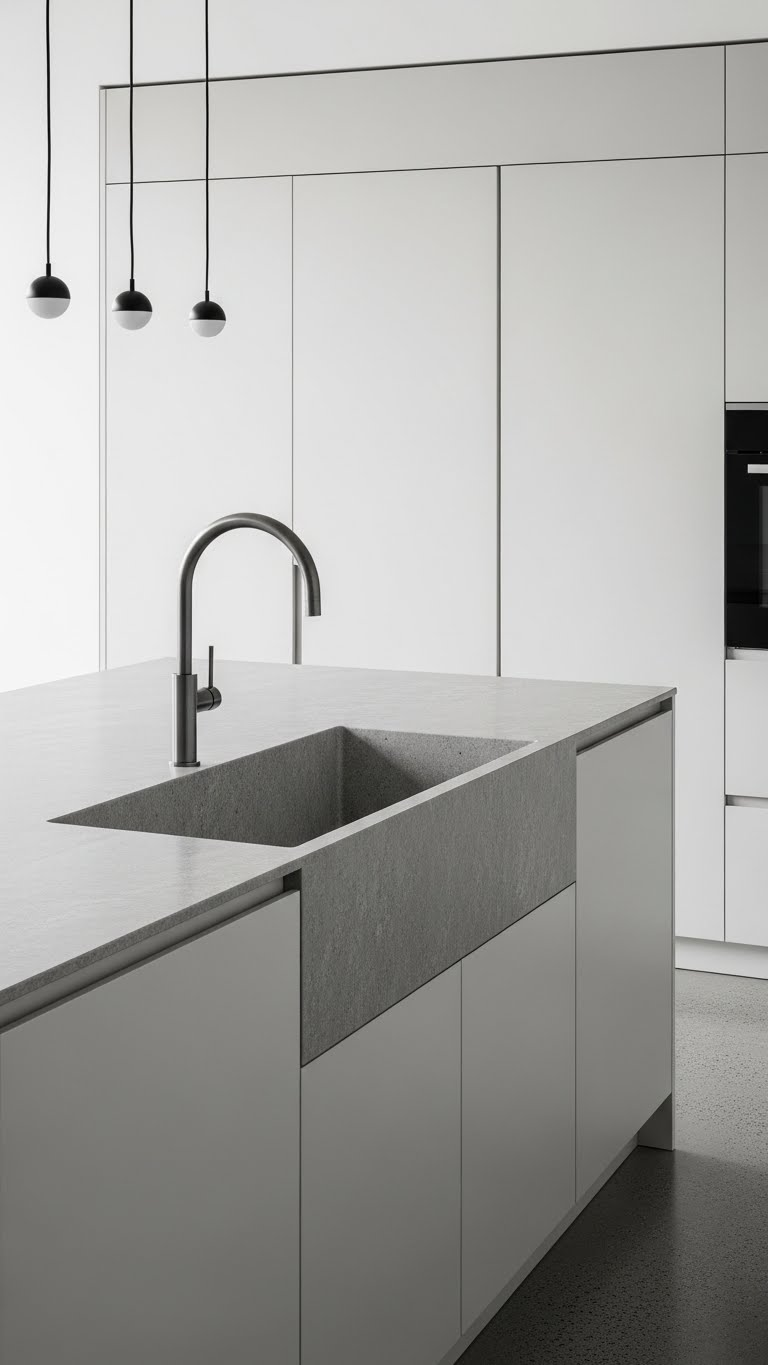
A sink fabricated from the same stone as the countertop creates a seamless, “carved-out” look that is the height of minimalist luxury.
This eliminates the rim of a traditional drop-in sink, resulting in a perfectly smooth transition that is as easy to clean as it is beautiful to look at.
The continuous material makes the work zone feel more cohesive and less like a series of separate parts.
Whether in dark soapstone or light travertine, the integrated sink reinforces the monolithic, organic theme of the 2026 earthy kitchen.
21#. Implementing Vertical Slate Wall Cladding
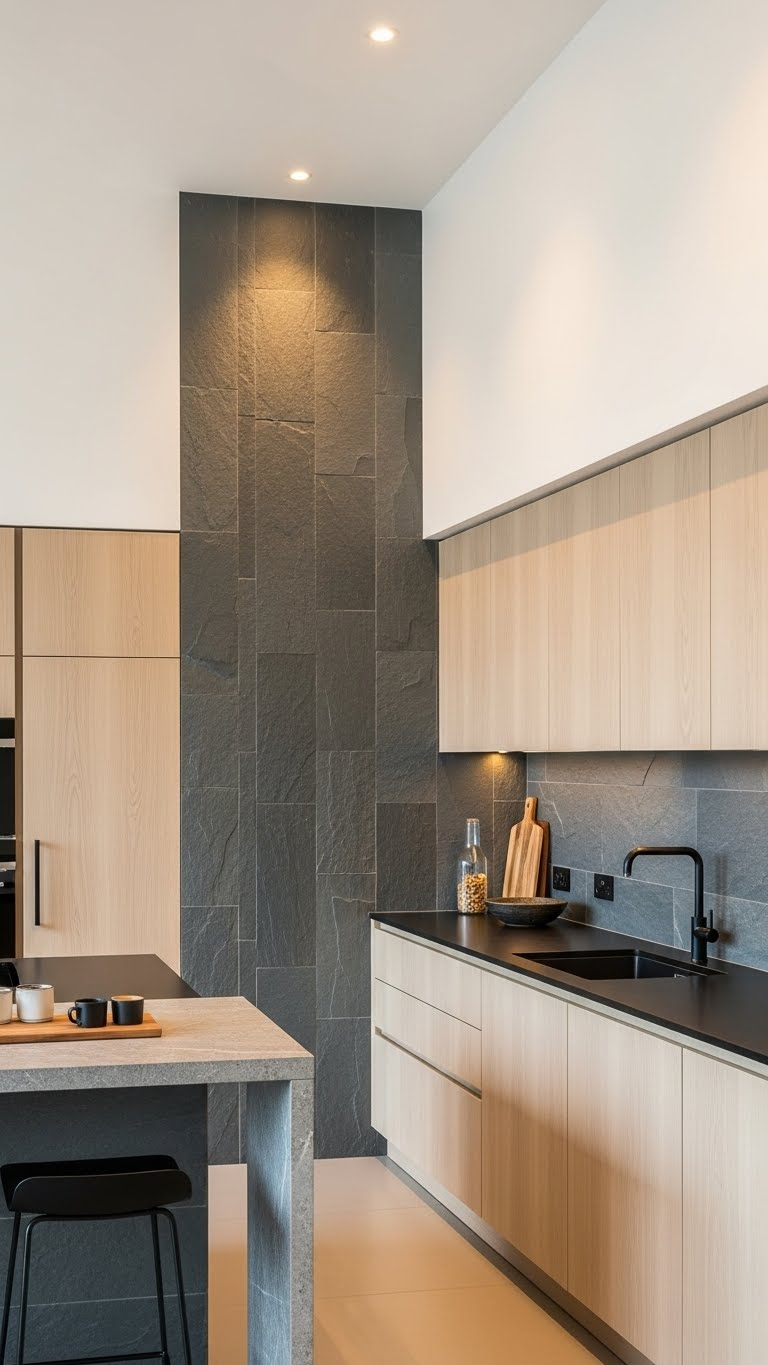
Using thin strips of vertical slate or dark stone as a wall treatment adds a rugged, tectonic feel to a Minimalist Kitchen.
This feature wall provides a deep, moody texture that anchors the room, especially when placed behind a light-colored wooden dining nook or a pale stone island.
The natural cleft of the slate catches the light in a rhythmic way, creating a “living” surface that changes throughout the day.
This move is perfect for those who want a minimalist space that still feels powerful and connected to the raw, unrefined elements of the earth.
22#. Incorporating Reclaimed Timber Open Shelving
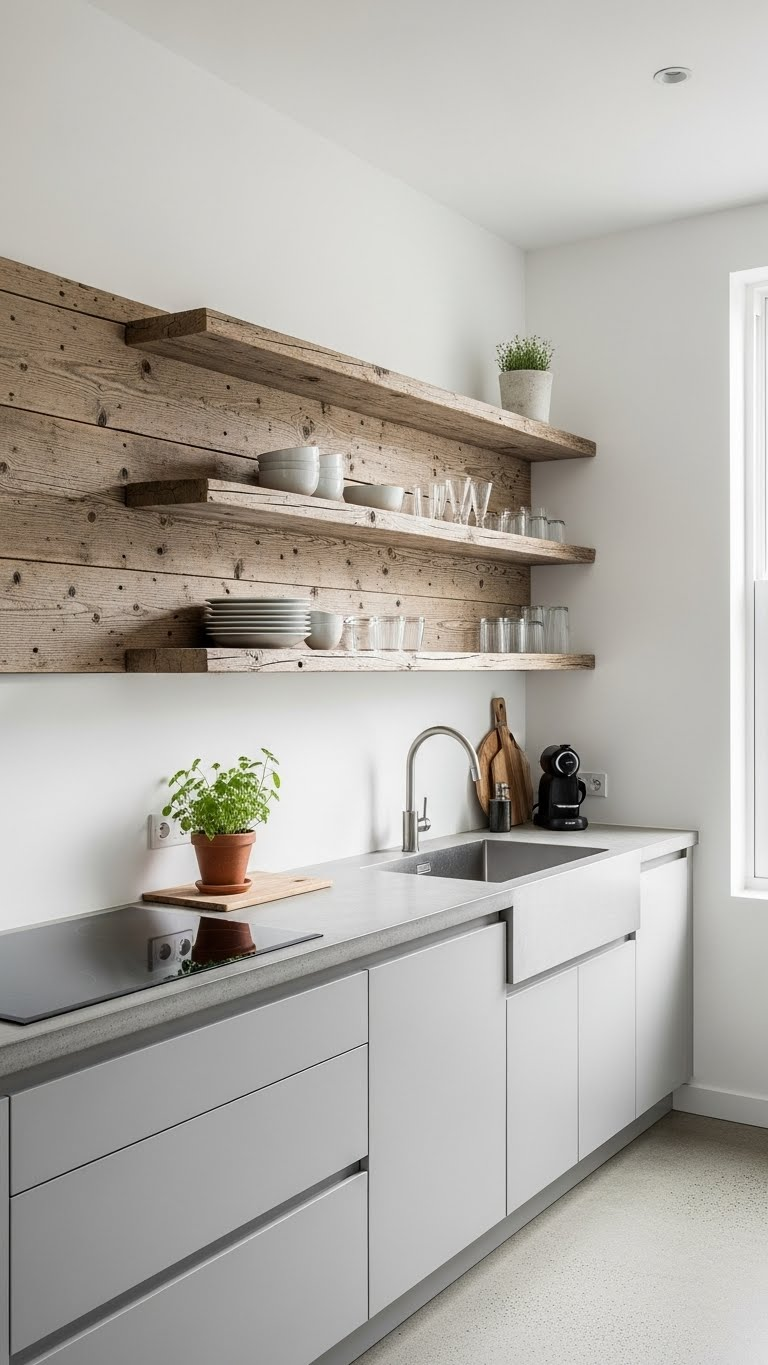
In a minimalist setting, open shelving should be used sparingly, and reclaimed timber “floating” shelves provide the perfect balance of utility and soul. The weathered texture and history of the wood provide a warm counterpoint to the sharp, clean lines of a modern induction area or plaster wall.
To keep it minimalist, use these shelves to display only a few essential, artisanal pieces—like hand-thrown ceramic bowls or a single stone pitcher. This creates a curated “still life” that brings personality and warmth to the kitchen without cluttering the visual field.
23#. Designing with Recessed Kickboards
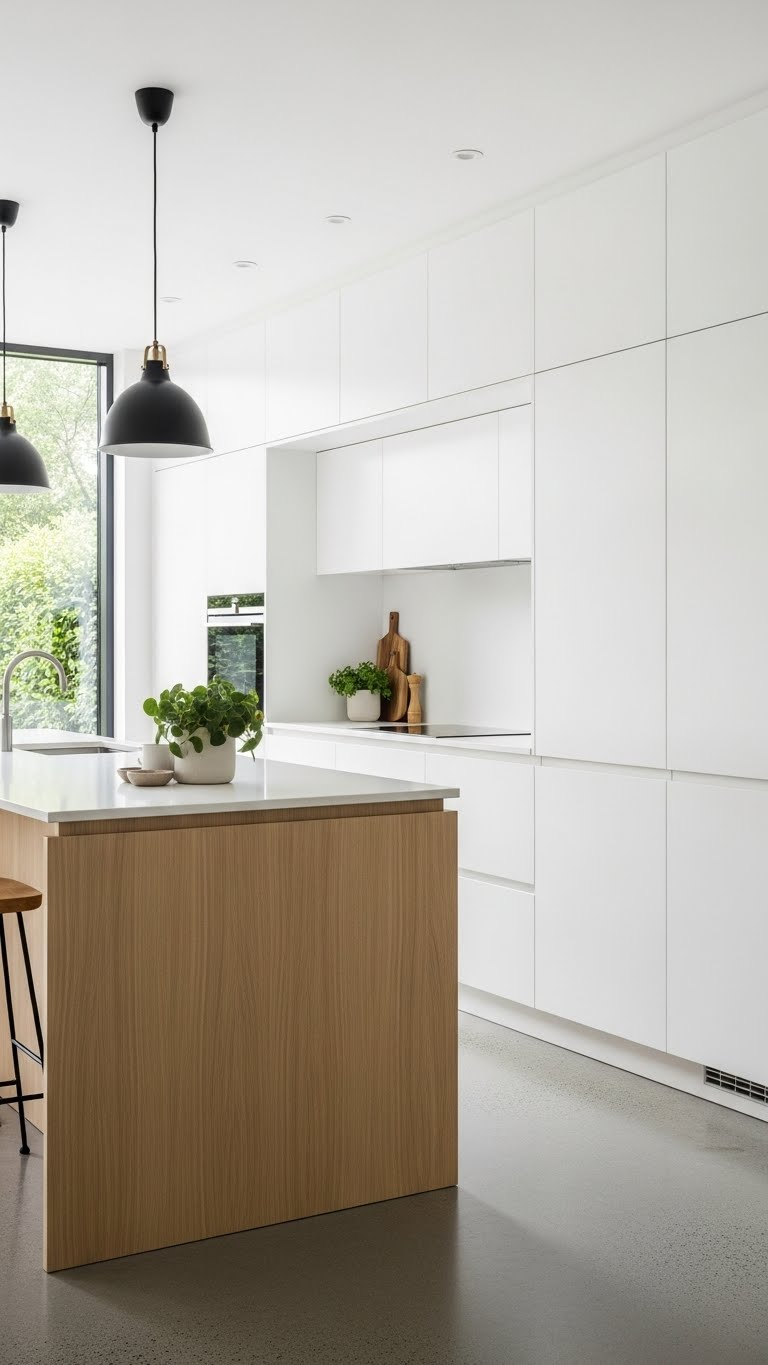
Creating a deep, recessed kickboard (the space at the base of the cabinets) makes the entire bank of cabinetry appear to “float” slightly off the floor.
This architectural trick lightens the visual weight of the room, making a large island or a wall of storage feel more like a piece of high-end furniture.
When paired with subtle floor-level LED strip lighting, the recessed kickboard provides a soft glow that defines the room’s perimeter at night.
This choice emphasizes the “minimalist” aspect of the design by focusing on clean shadows and structural lightness.
24#. Utilizing Leathered Granite Countertops
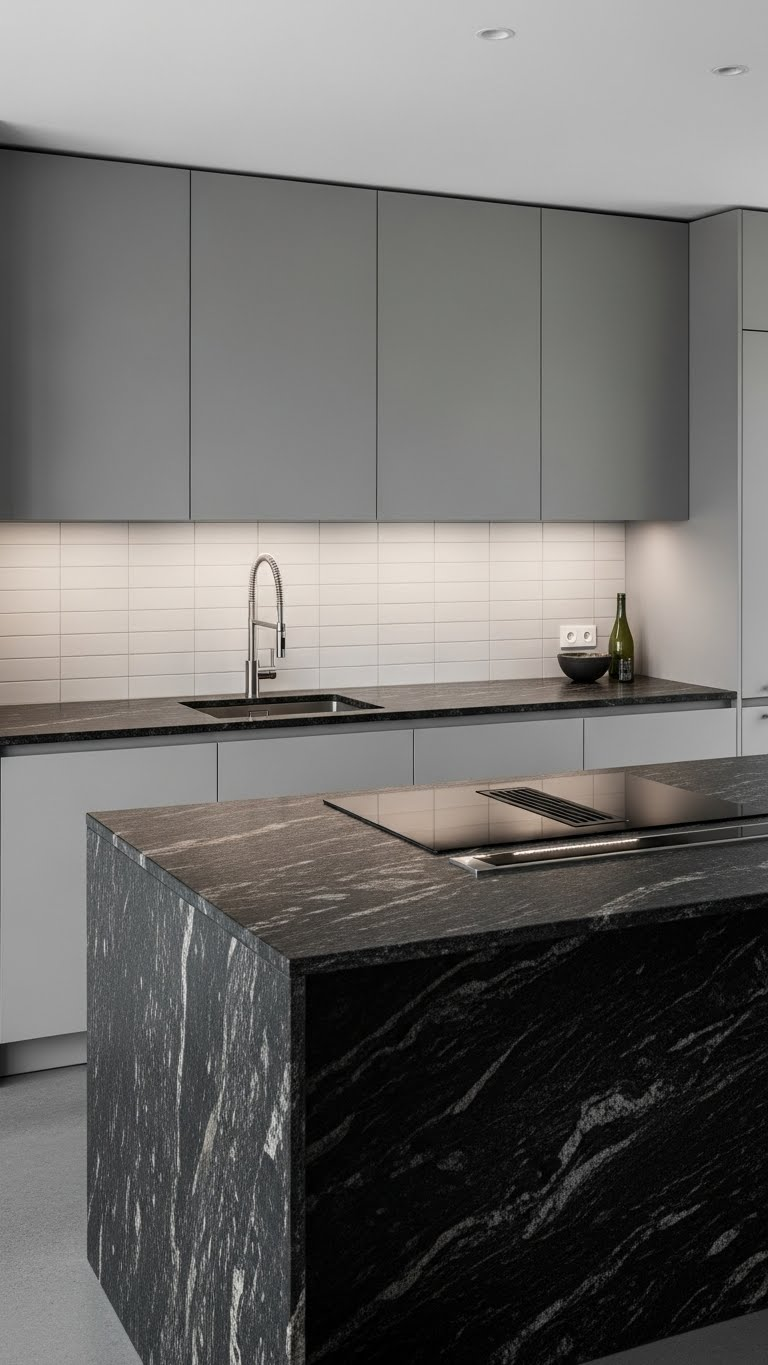
Leathered granite offers a matte, slightly dimpled texture that is much softer and more tactile than traditional polished stone.
In an Earthy Minimalist Kitchen, this finish provides a sophisticated, “anti-glare” surface that feels warm to the touch and hides fingerprints effectively.
The dark, matte surface of leathered granite (especially in tones like “Antique Brown” or “Black Pearl”) acts as a grounding force against light oak or plaster walls.
It celebrates the natural mineral composition of the stone in a way that feels modern, understated, and incredibly durable.
25#. Adding Arched Architectural Doorways
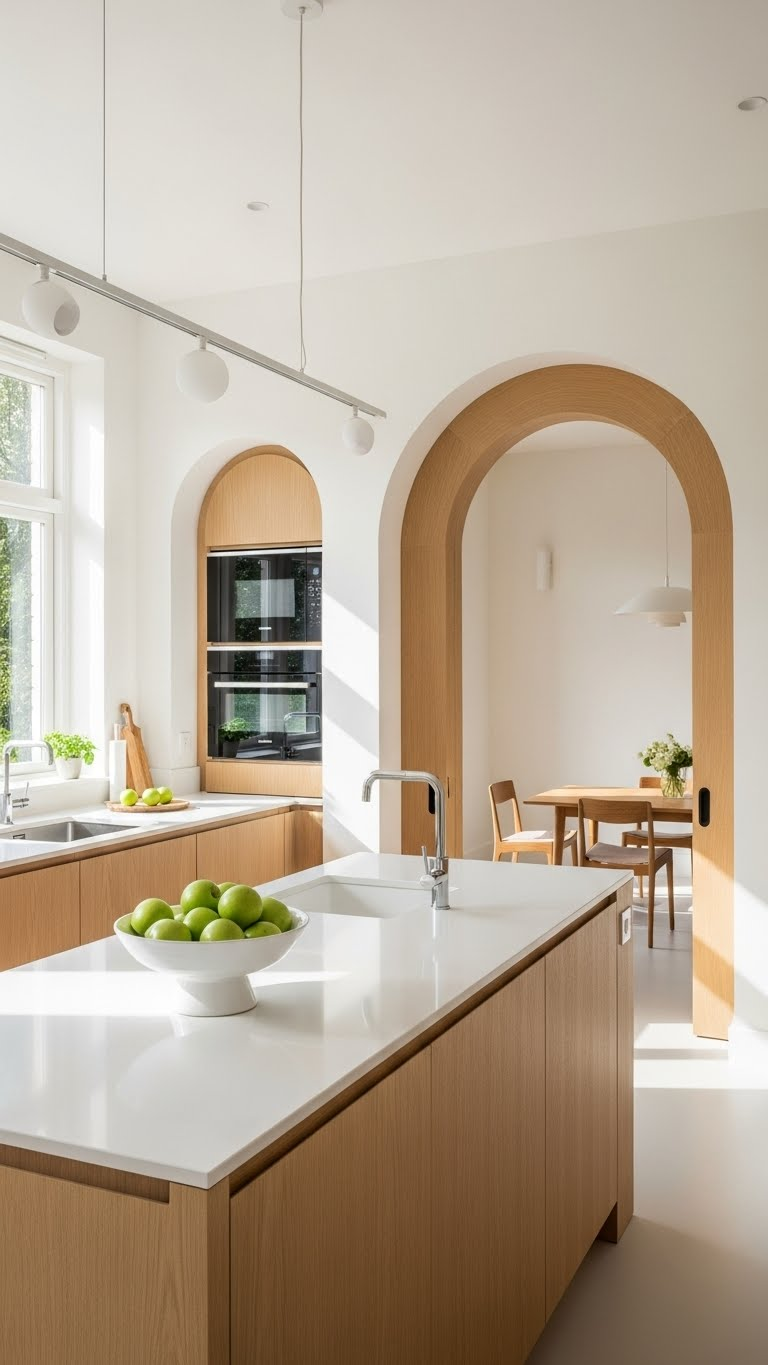
Replacing standard square door frames with soft, plastered arches creates a graceful flow between the kitchen and the rest of the home.
Arches provide a sense of softness and historical “weight” that complements the organic shapes found in curved islands or rounded pendant lights.
The absence of wooden trim or casing around the arch keeps the look firmly in the minimalist camp.
This simple structural change makes the kitchen feel like a custom-sculpted sanctuary, encouraging a sense of calm and fluid movement throughout the space.
26#. Incorporating Hidden Ventilation Grilles
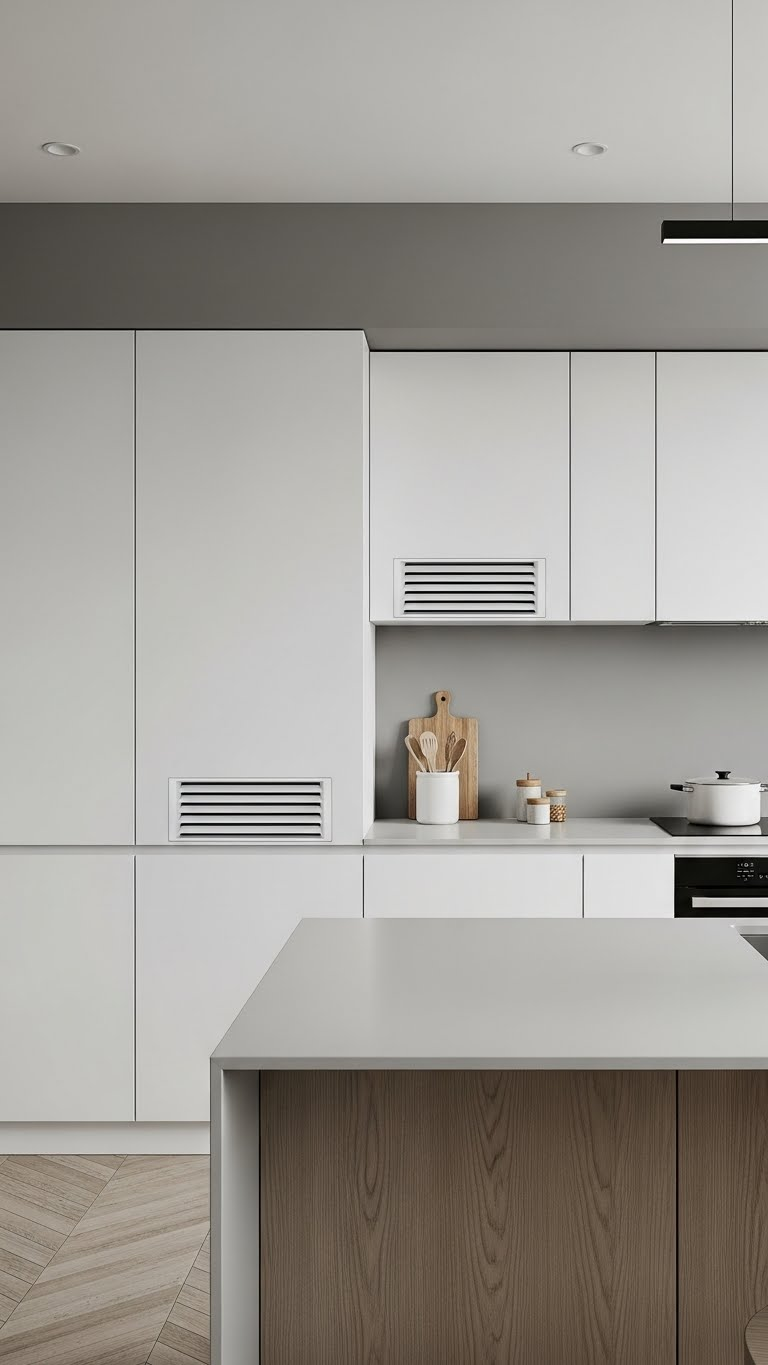
Instead of visible metal vents, 2026 minimalist kitchens use integrated wooden or stone “slotted” grilles built directly into the cabinetry or kickboards.
This ensures that the technical requirements of the kitchen—like fridge ventilation or HVAC—are completely hidden from view.
This attention to detail is what separates a standard kitchen from a truly minimalist masterpiece.
By hiding the “mechanical” elements, you maintain the purity of the materials, ensuring that nothing interrupts the visual harmony of your timber and stone surfaces.
27#. Finishing with Solid Stone “Block” Handles
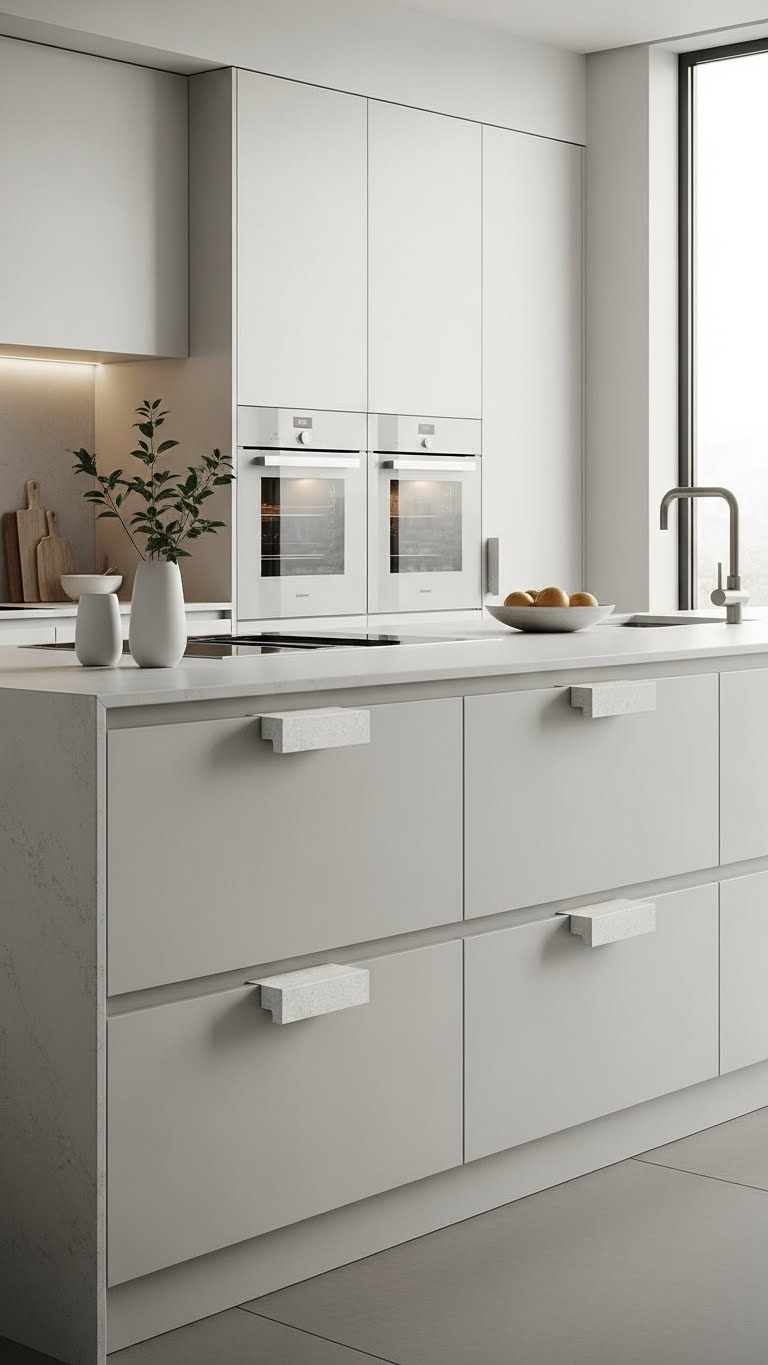
If you prefer handles over “push-to-open” systems, opting for solid stone or wood block handles provides a tactile, earthy touch.
These “D-shaped” or cylindrical pulls are often carved from the same stone as the countertop, creating a subtle, high-end repetition of materials.
The weight and cool temperature of a stone handle add a sensory dimension to the daily act of opening a drawer.
It is a final, thoughtful detail that reinforces the kitchen’s commitment to organic luxury and functional simplicity, completing your 27-idea journey.
Final Thoughts
Completing your Minimalist Kitchen with these 27 ideas ensures a space that is as much a sanctuary as it is a workspace.
By focusing on “Warm Minimalism,” you’ve combined the efficiency of modern technology with the restorative power of natural materials like clay, stone, and timber.
The result is a timeless, “earthy” heart for your home that prioritizes quality over quantity and calm over clutter.
Your kitchen is now a masterclass in organic design, ready to serve as a peaceful backdrop for your daily life.