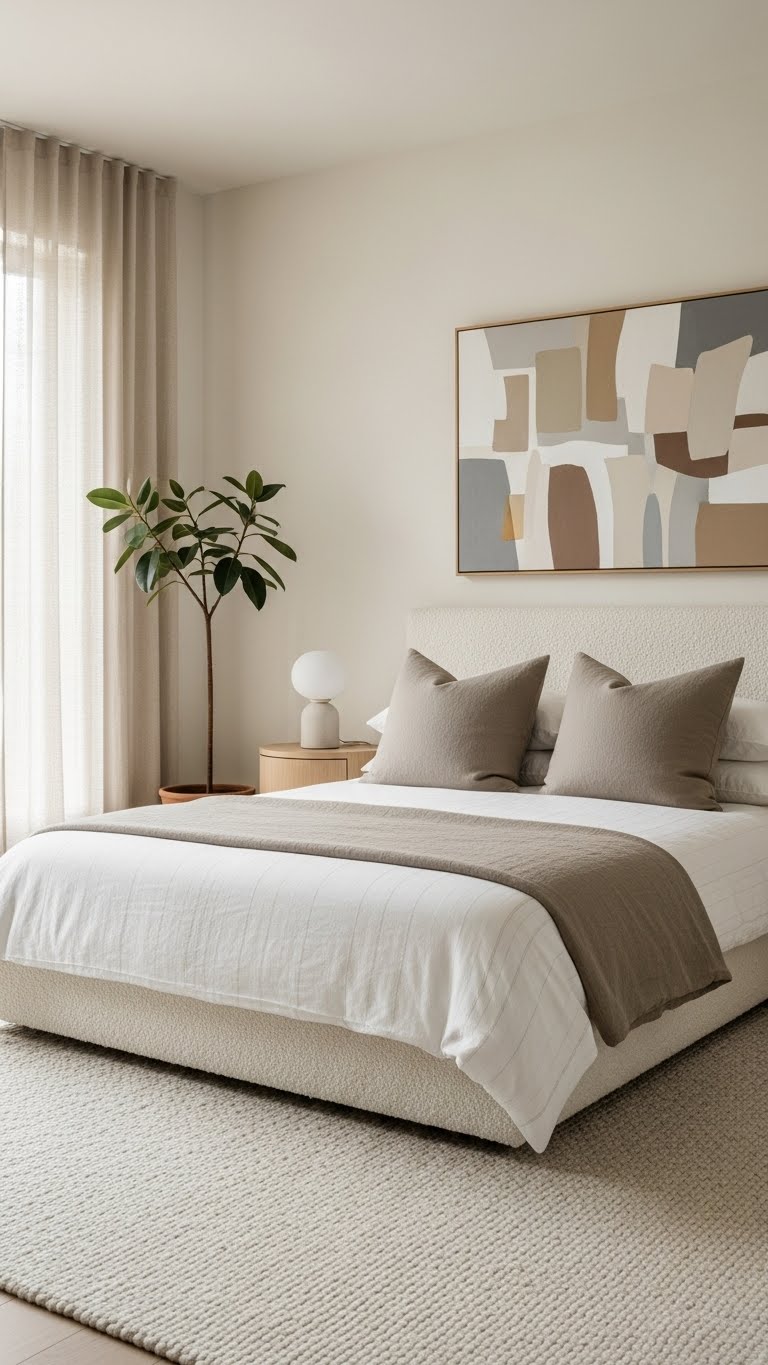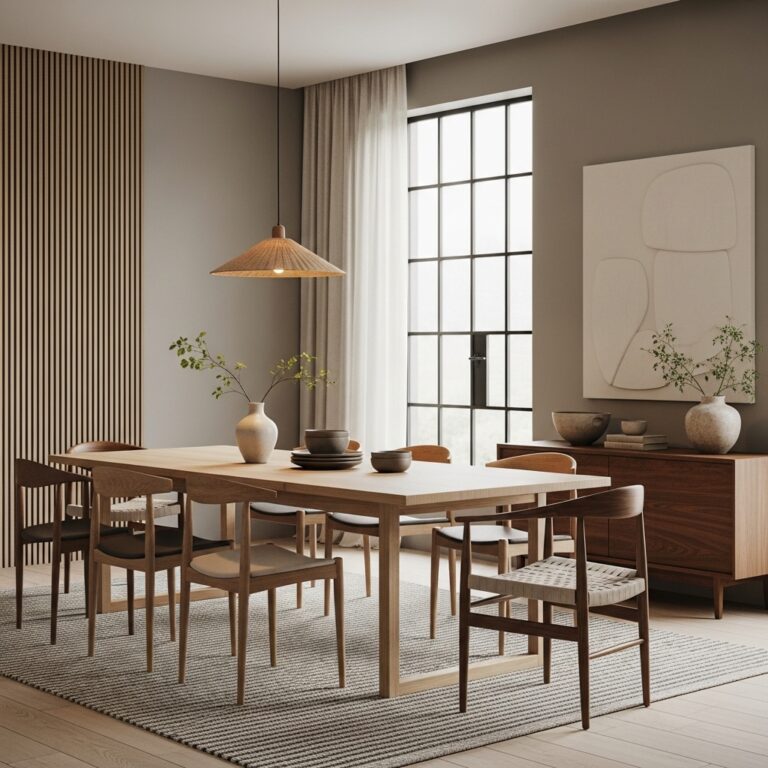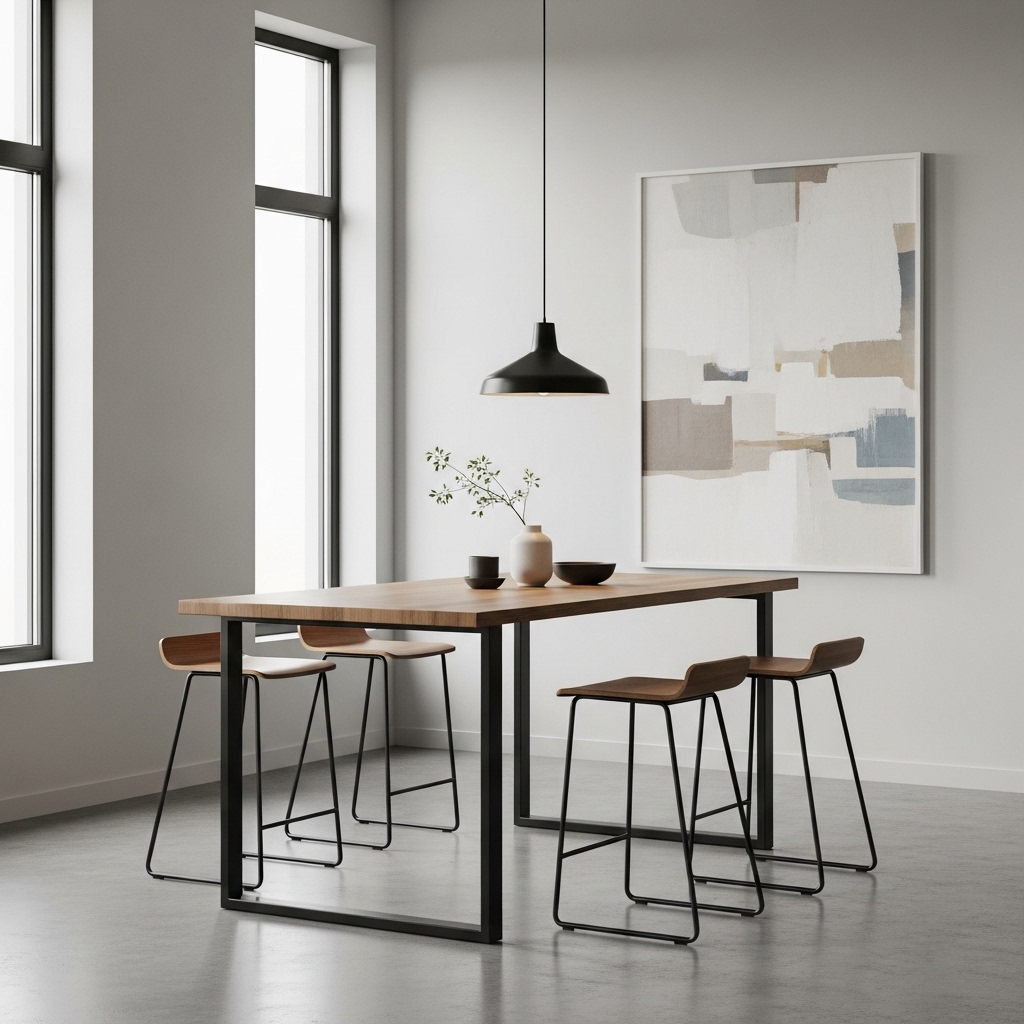
Minimalist Dining Room ideas has shifted away from the “cold gallery” look toward Organic Modernism.
This style focuses on creating a high-end, communal atmosphere where the furniture feels like sculpture and the atmosphere feels like a quiet evening in nature.
Here are 29 attractive ideas to help you craft a dining space that is both visually silent and emotionally warm.
1#. Anchoring with a Solid Live-Edge Table
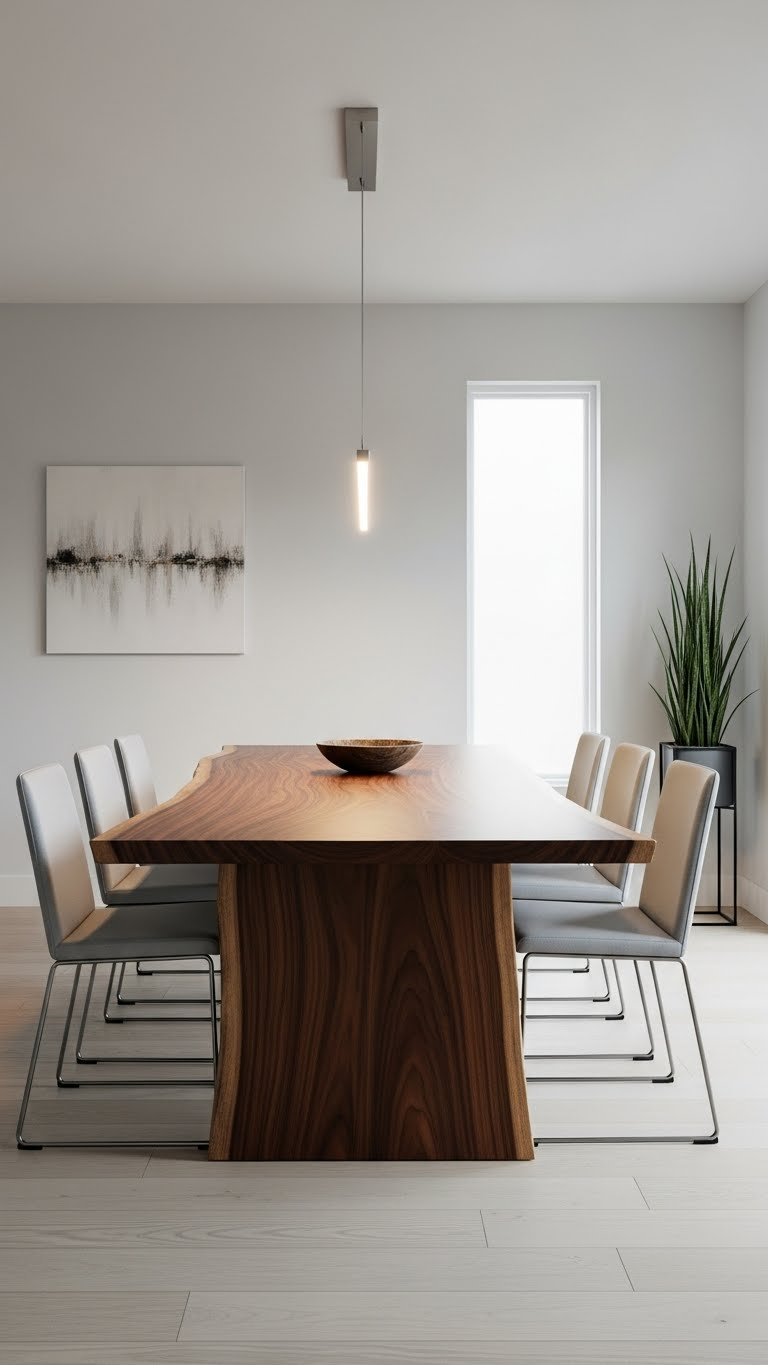
A minimalist dining room starts with a singular, high-impact table.
Choosing a solid slab of oak or walnut with a subtle “live edge” preserves the tree’s natural silhouette while the top remains perfectly smooth and modern.
To keep it minimalist, pair this organic top with a heavy, monolithic base made of the same wood or a contrasting matte plaster.
This creates a “weighty” center for the room that celebrates nature’s imperfections within a very clean, structured environment.
2#. Incorporating Hand-Applied Limewash Walls
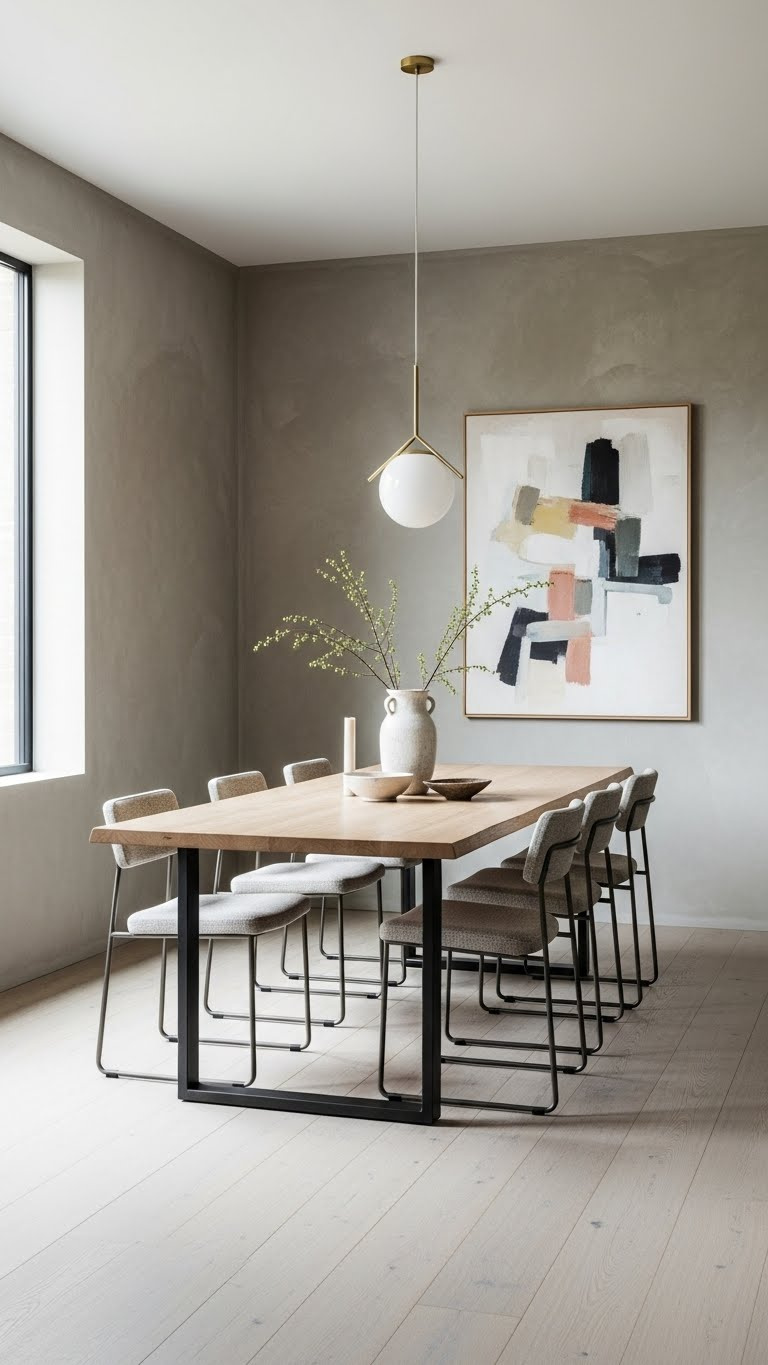
Standard flat paint can make a minimalist room feel hollow.
Limewash paint in a “Warm Bone” or “Soft Sand” tone adds a velvety, mottled texture that reacts beautifully to light, giving the walls a sense of ancient history.
This finish is breathable and eco-friendly, providing a soft, earthy backdrop that makes the silhouette of your dining chairs stand out.
It turns the walls into a quiet decorative element themselves, eliminating the need for excessive art or wallpaper.
3#. Utilizing Sculptural “Wishbone” or Cane Chairs
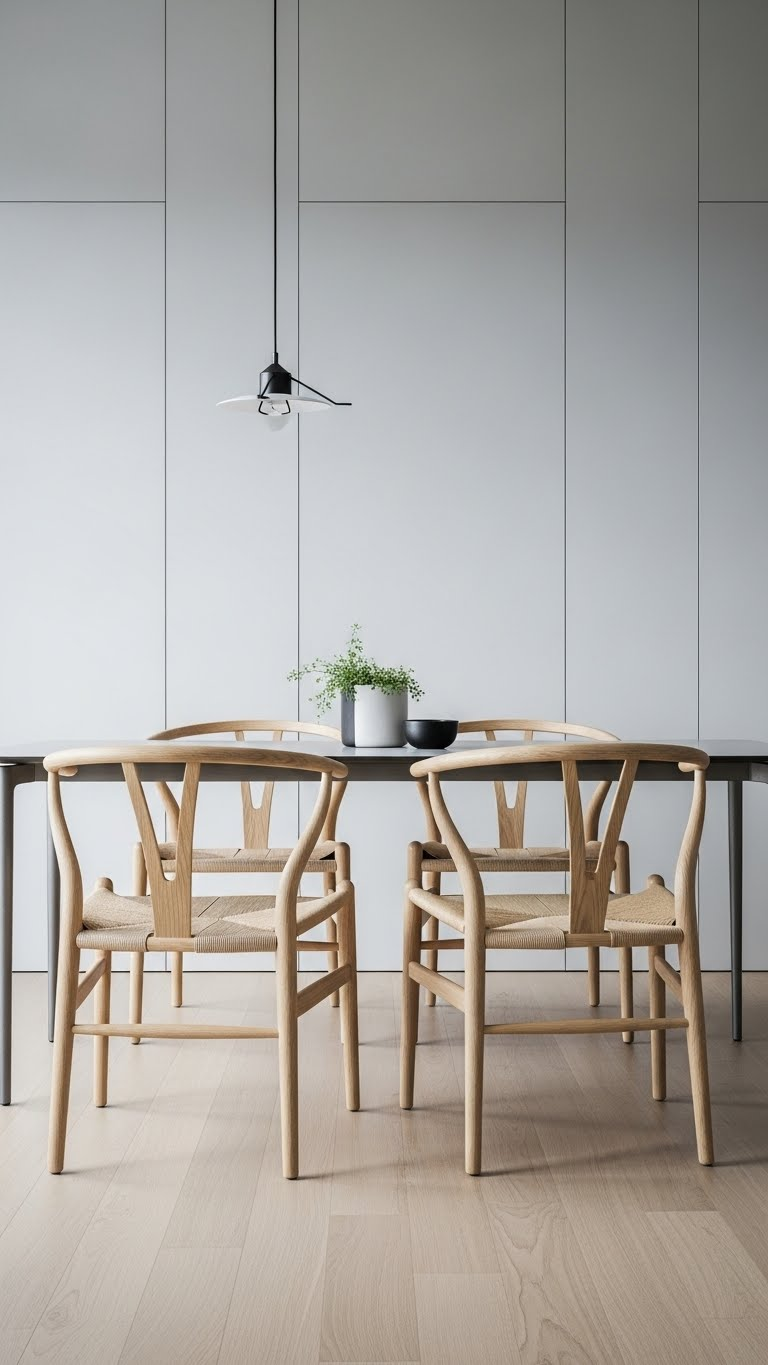
Minimalist seating should be iconic yet lightweight.
Chairs with woven cane seats or the classic “Wishbone” silhouette introduce a natural, fiber-based texture that breaks up the solid surfaces of the table and floor.
The open-back design of these chairs ensures that they don’t block the visual flow of the room.
This “see-through” quality is essential for maintaining an airy, minimalist vibe while providing a tactile warmth that modern plastic or metal chairs often lack.
4#. Designing with an Oversized Linen Pendant
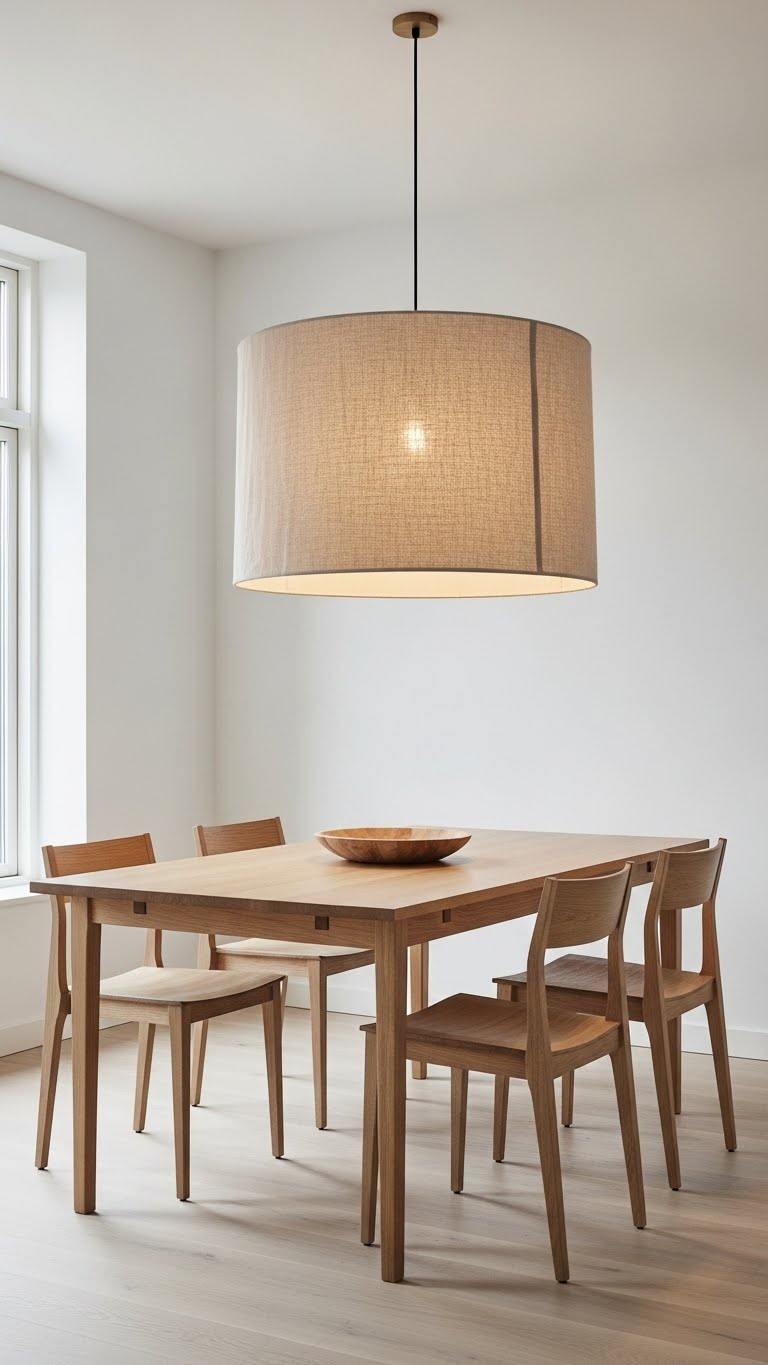
A single, large-scale pendant light made of textured linen or translucent paper acts as a “soft cloud” over the dining table.
The fabric diffuses the light into a warm, amber glow that is perfect for long, intimate dinners.
The sheer size of the fixture provides the necessary architectural “drama” for a minimalist room, but the soft material keeps it from feeling aggressive.
It’s a sophisticated way to fill the vertical space without adding “clutter” to the room’s design.
5#. Embracing a Monochromatic Earthy Palette
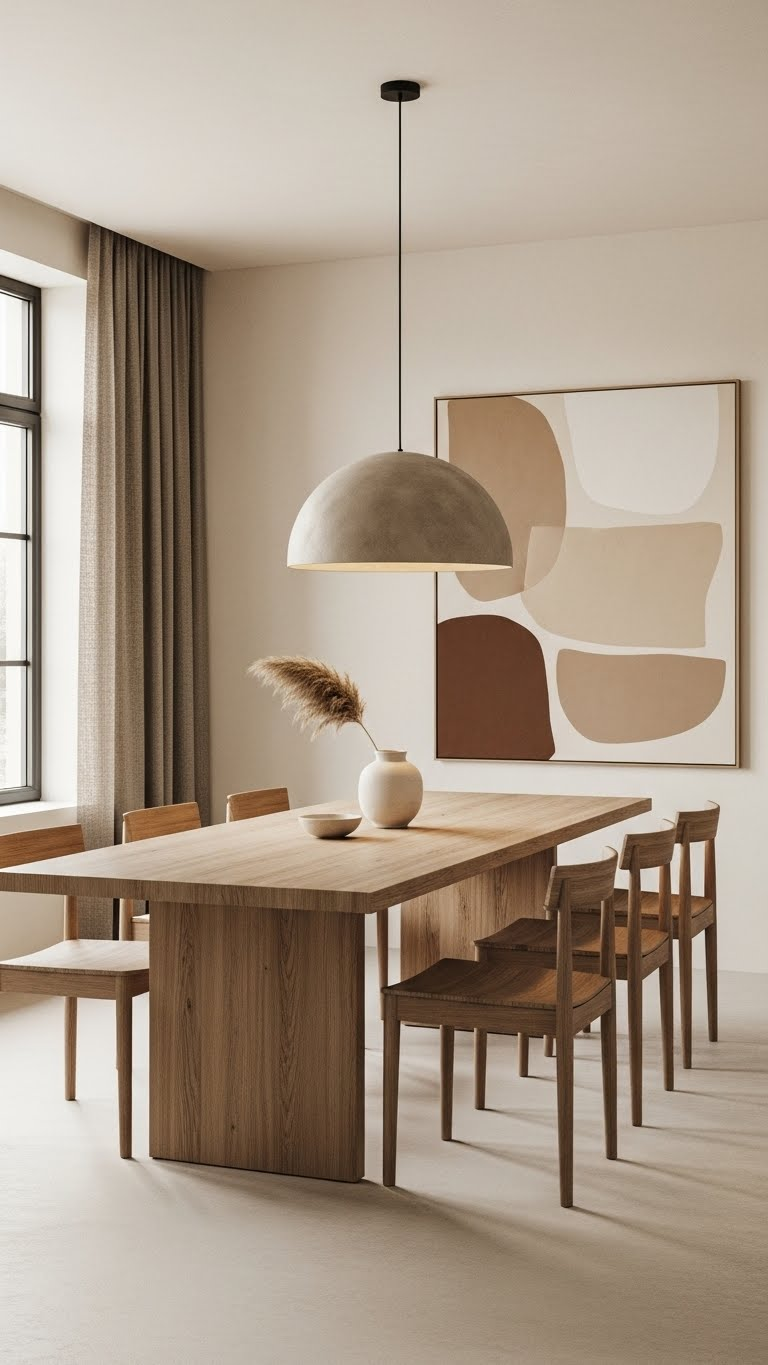
To achieve a high-end look, stick to a “tone-on-tone” color scheme.
Layering different shades of the same color—such as oatmeal, taupe, and mushroom—creates a sophisticated depth that feels incredibly calm.
When your table, rug, and walls all sit within the same color family, the room feels unified and expansive.
The variation comes not from color, but from the different textures of the materials, such as the grain of the wood against the weave of a wool rug.
6#. Incorporating Low-Profile Built-In Sideboards
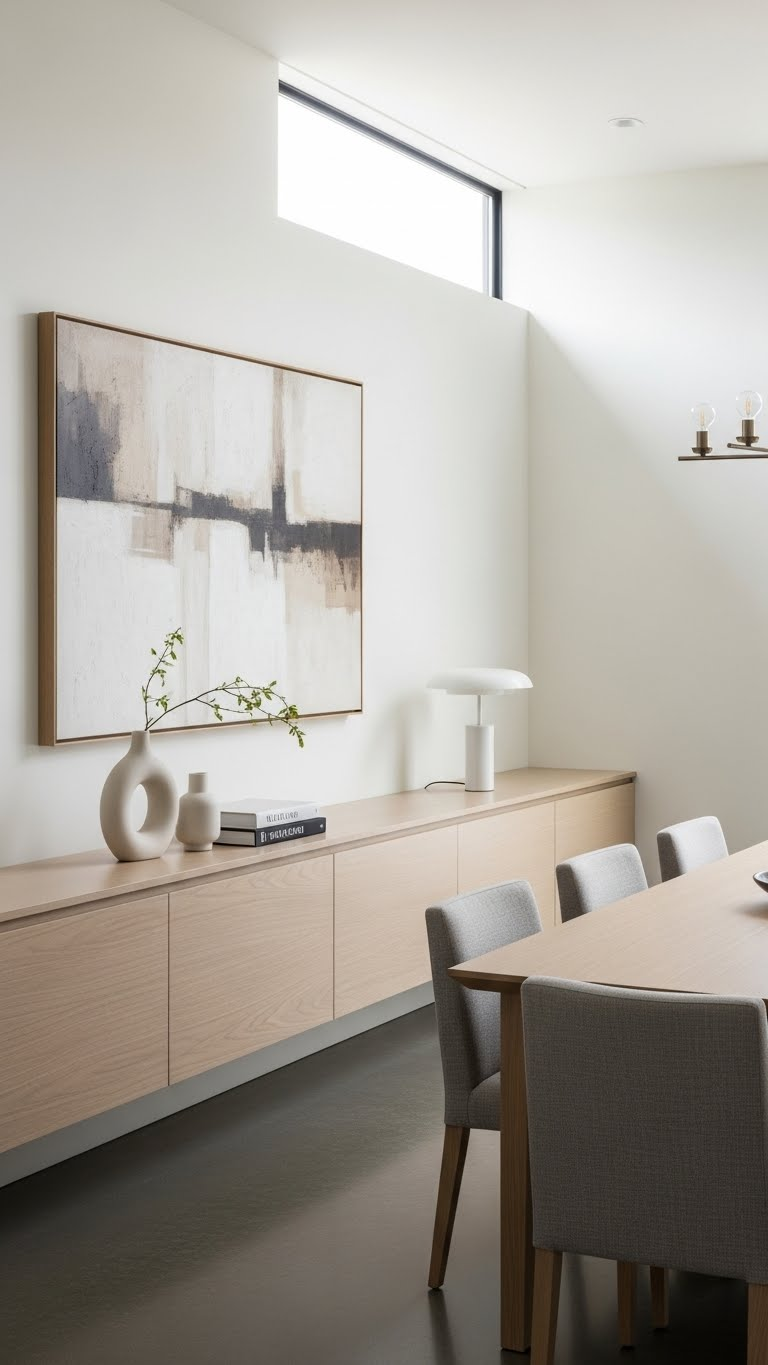
Instead of a bulky, freestanding buffet, opt for a floating, wall-to-wall sideboard.
By mounting the unit to the wall and keeping it in the same color as the plaster, the storage virtually “disappears” into the architecture.
This provides ample space for serving platters and linens while keeping the floor area clear.
A stone or timber top on the sideboard provides a sleek surface for a single ceramic vase or a collection of sculptural candles, maintaining the room’s clean lines.
7#. Utilizing Large-Format Stone Floor Tiles
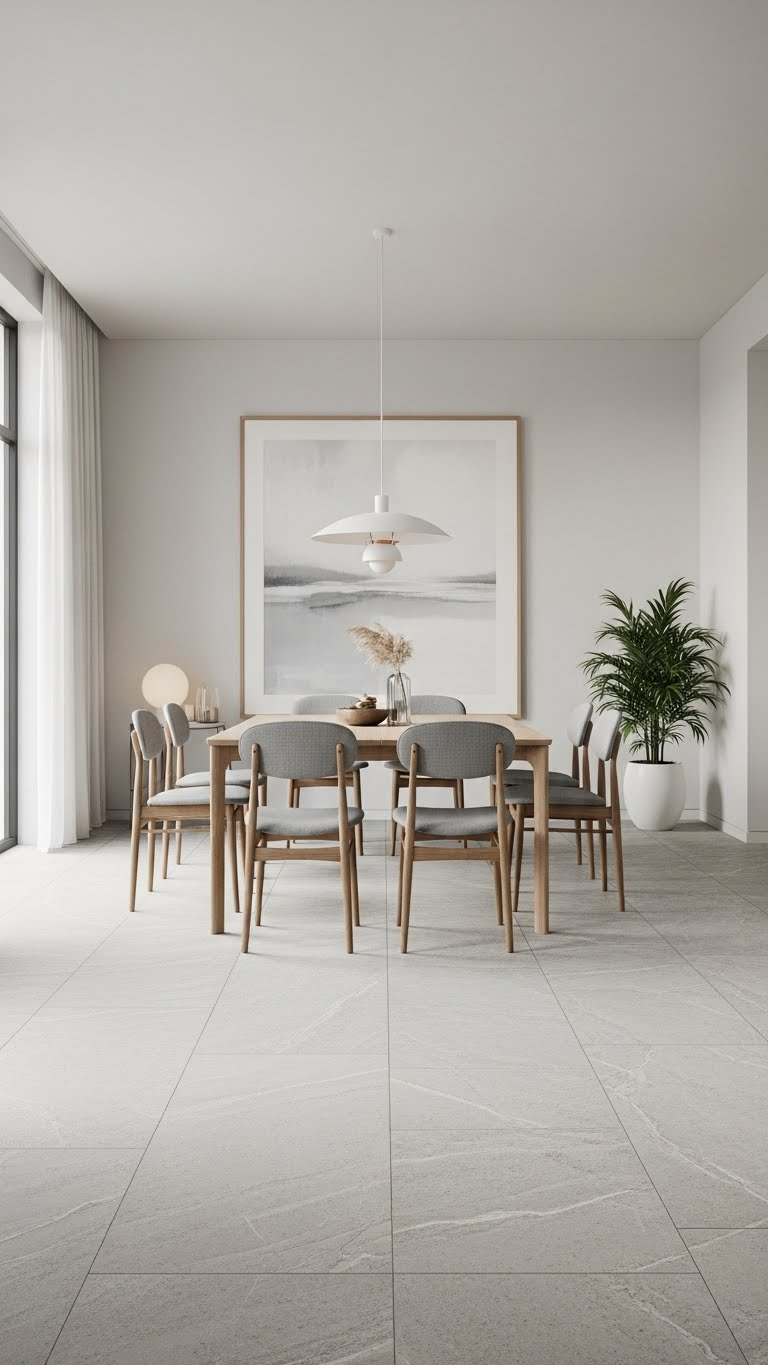
Large-scale tiles made of limestone, travertine, or matte porcelain minimize grout lines and create a “monolithic” floor.
This expansive surface grounds the dining room and provides a cool, mineral-based contrast to warm wooden furniture.
The natural variation in the stone ensures the floor never looks sterile.
In 2026, the trend is to use “honed” (matte) finishes rather than polished ones, prioritizing a soft, tactile feel that is comfortable for bare feet during a relaxed brunch.
8#. Designing with Floor-to-Ceiling Sheer Drapes
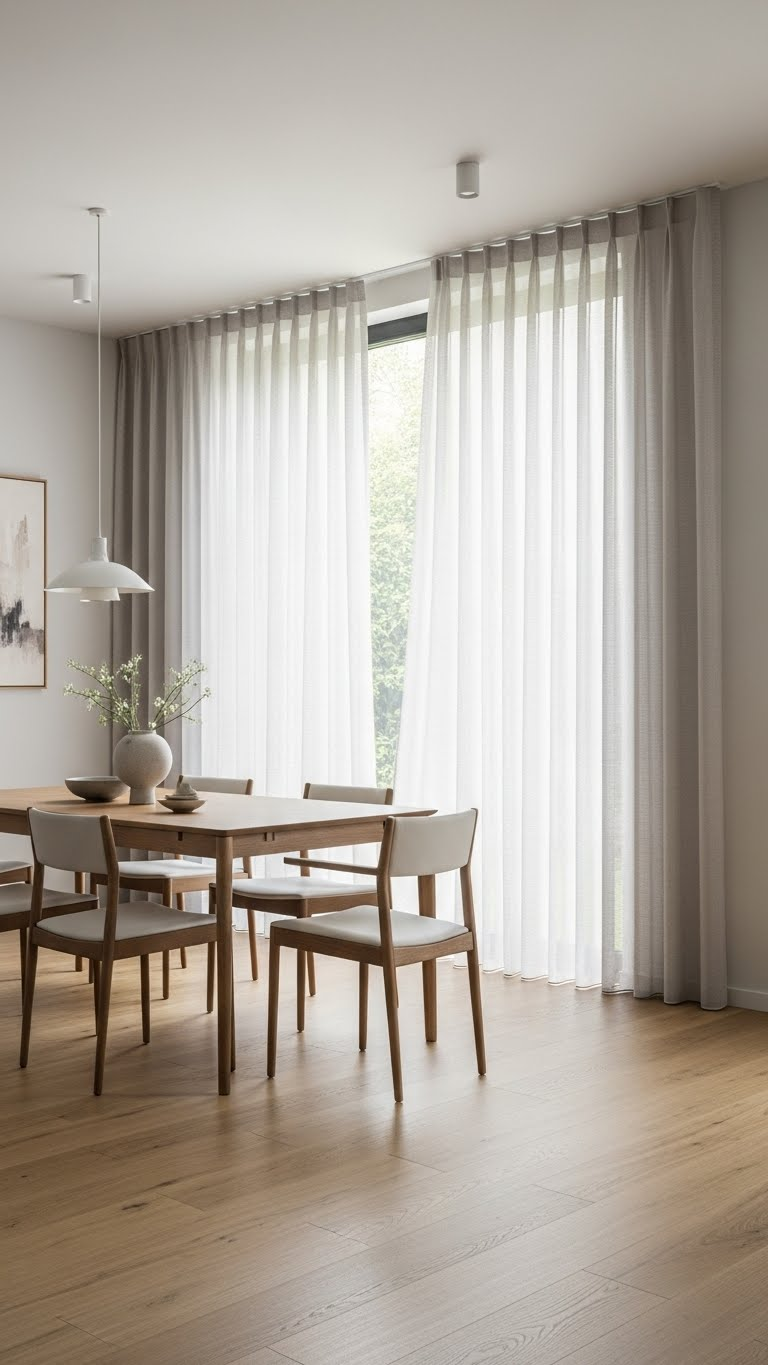
Softening the windows with floor-to-ceiling sheer linen drapes adds a layer of “ethereal” movement to the dining room.
These drapes allow natural light to filter in while providing privacy and a soft acoustic buffer.
By hanging the drapes from a hidden recessed track, you maintain the minimalist “clean ceiling” look.
The vertical folds of the fabric add height to the room and a sense of “soft architecture” that balances the hard edges of the dining table.
9#. Adding a Single Large-Scale Statement Mirror
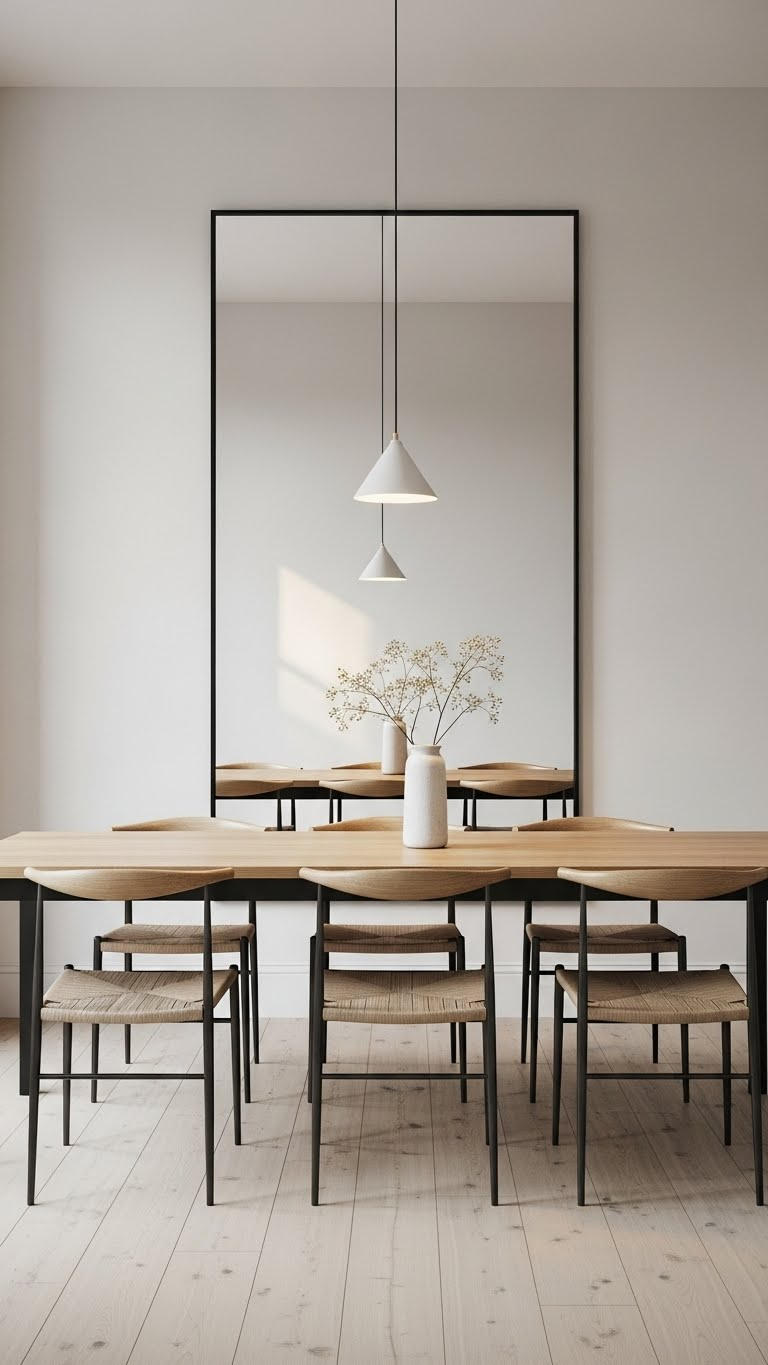
A massive, leaning mirror with a thin oak or metal frame can replace a gallery wall of smaller pictures.
It reflects the dining table and the light from the pendant, instantly making a small dining room feel twice as large.
Choose a mirror with a slightly antiqued or “smoked” glass to add a touch of moody, vintage luxury.
It provides a focal point that is purely visual and non-cluttered, aligning perfectly with the minimalist philosophy of “one great piece.”
10#. Incorporating a Dedicated “Nature Nook”
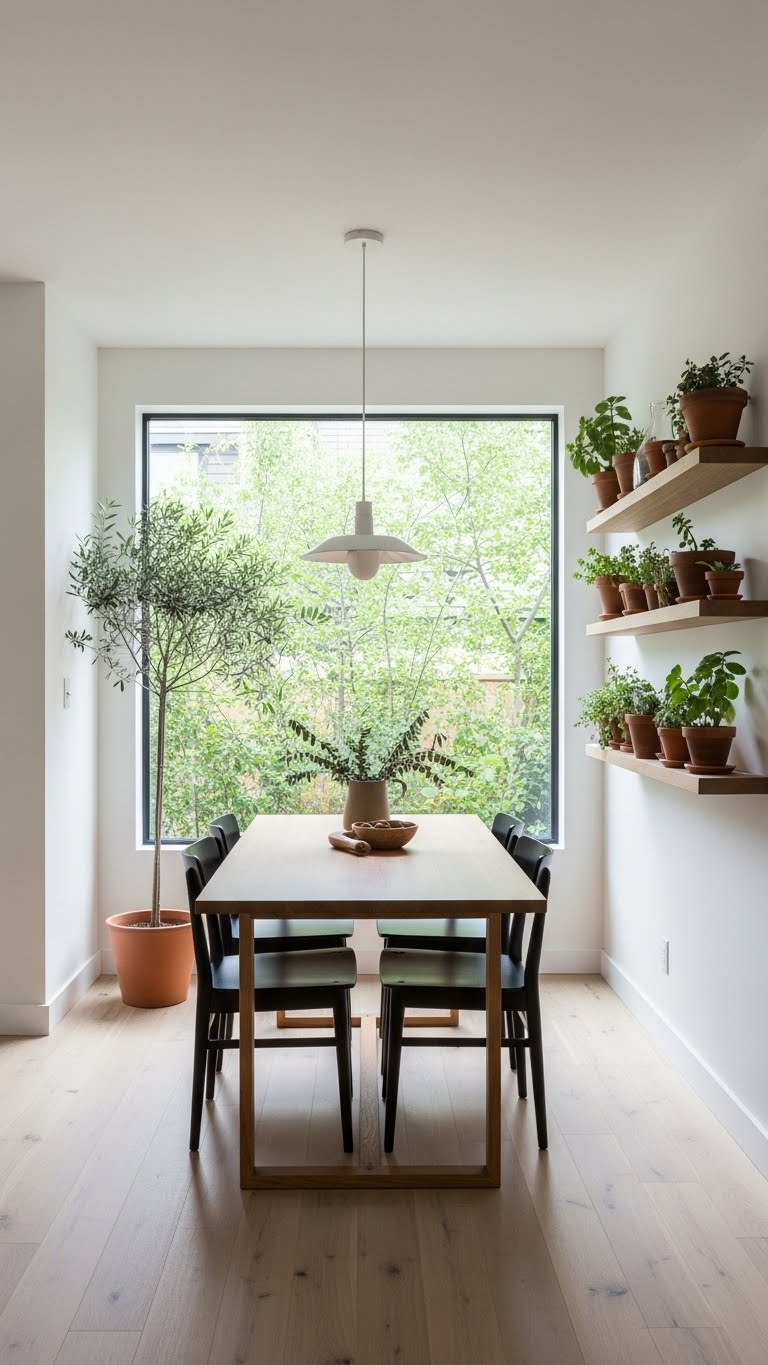
Designate one corner of the room for a single, tall indoor tree, such as a Fiddle Leaf Fig or an Olive Tree, housed in a heavy clay pot.
This “living sculpture” brings life and oxygen into the space, reinforcing the earthy theme.
The greenery acts as a natural “pop” of color against the neutral palette.
Keeping the plant as the only decorative element in the corner ensures it feels intentional and “grand” rather than just another piece of furniture.
11#. Integrating Stealthy Pocket Lighting
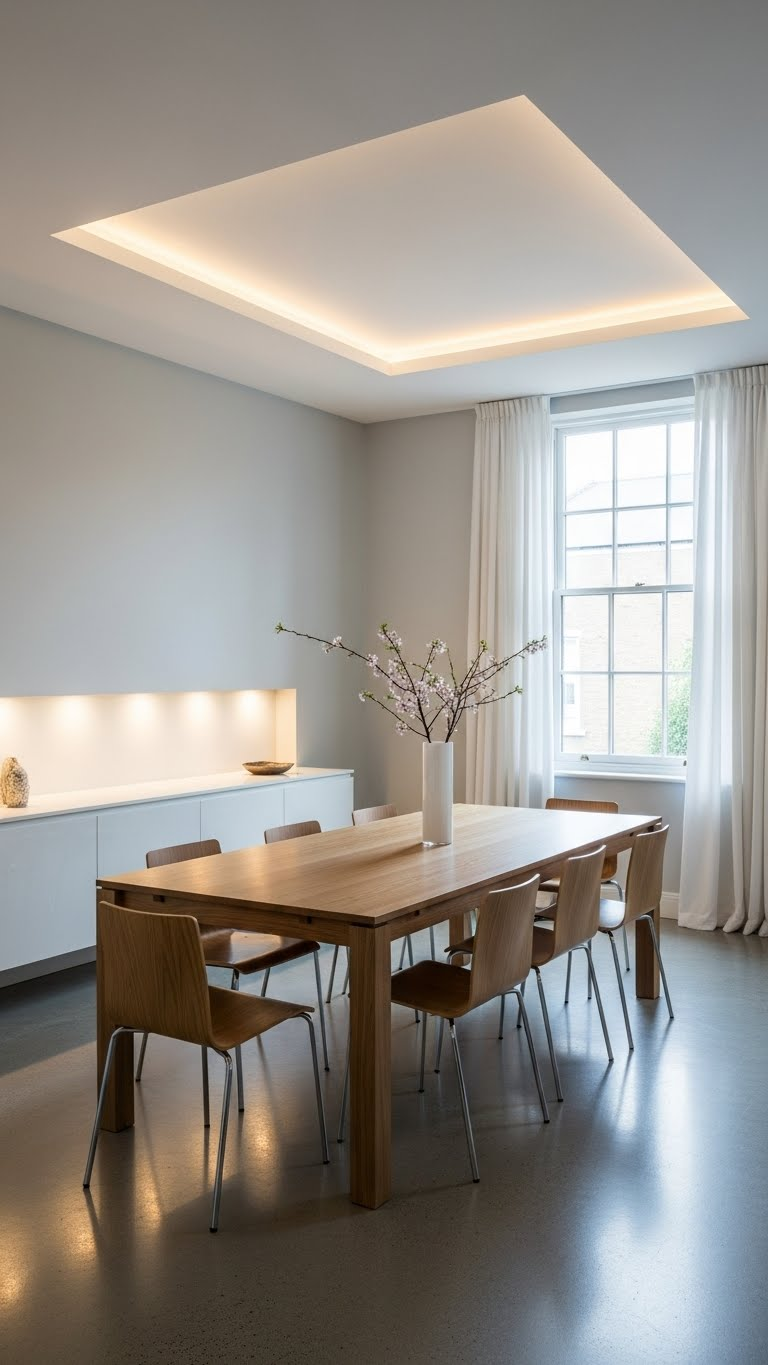
Beyond the central pendant, the most attractive Minimalist Dining Rooms utilize “invisible” light sources.
Recessed LED strips tucked into ceiling coves or behind a floating sideboard allow you to wash the limewash walls with a soft, museum-grade glow.
This layered lighting approach eliminates the need for bulky floor lamps or cluttered table lights.
By adjusting the intensity, you can transition the room from a bright, functional breakfast spot to a moody, atmospheric “cave” for evening entertaining.
12#. Choosing Flat-Weave Jute or Sisal Rugs
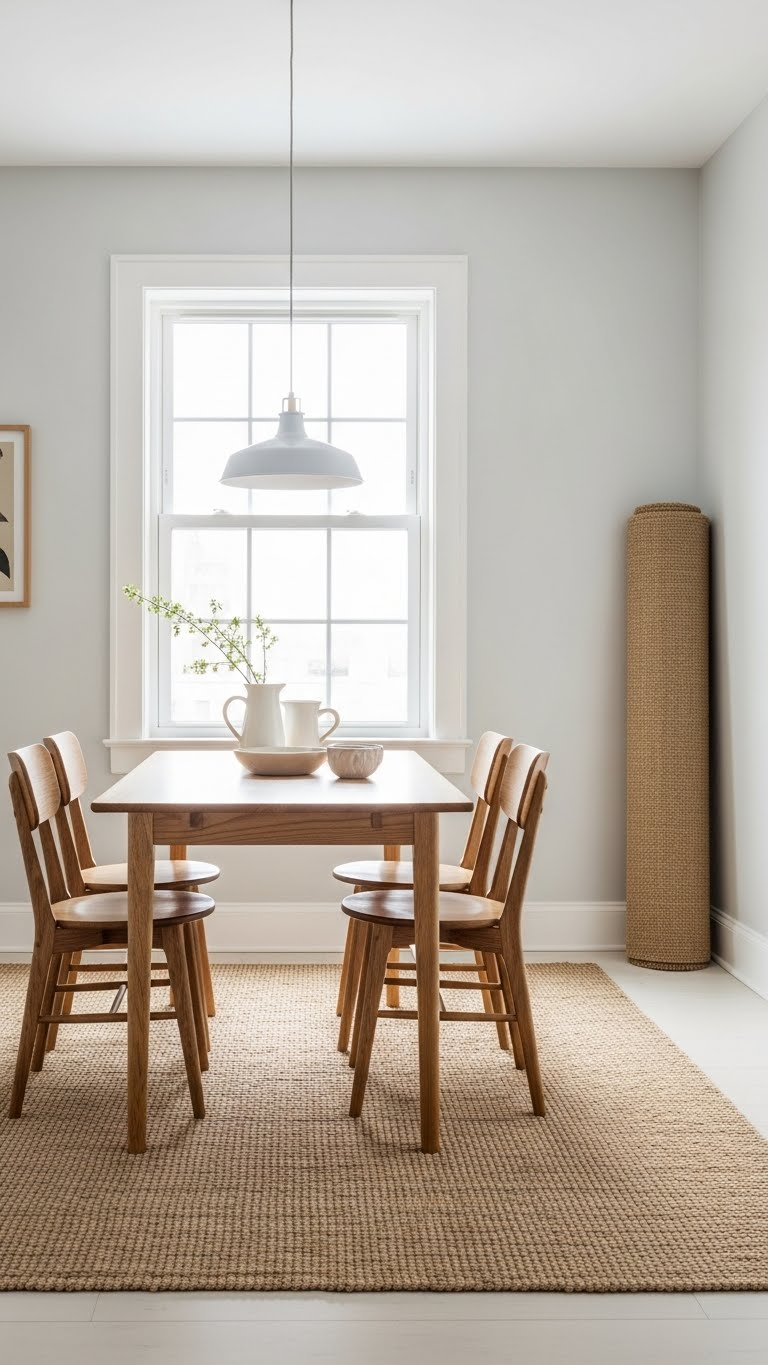
A dining room rug should be low-profile to allow chairs to slide easily while adding a “rugged” foundation.
A chunky jute or sisal rug in an undyed, natural wheat tone provides the perfect tactile contrast to a smooth stone floor or polished wood table.
These natural fibers are incredibly durable and bring a “coastal-minimalist” energy to the space.
The earthy scent and organic texture of the weave reinforce the room’s connection to the outdoors, making the dining experience feel more grounded and authentic.
13#. Designing with Arched Plaster Niches
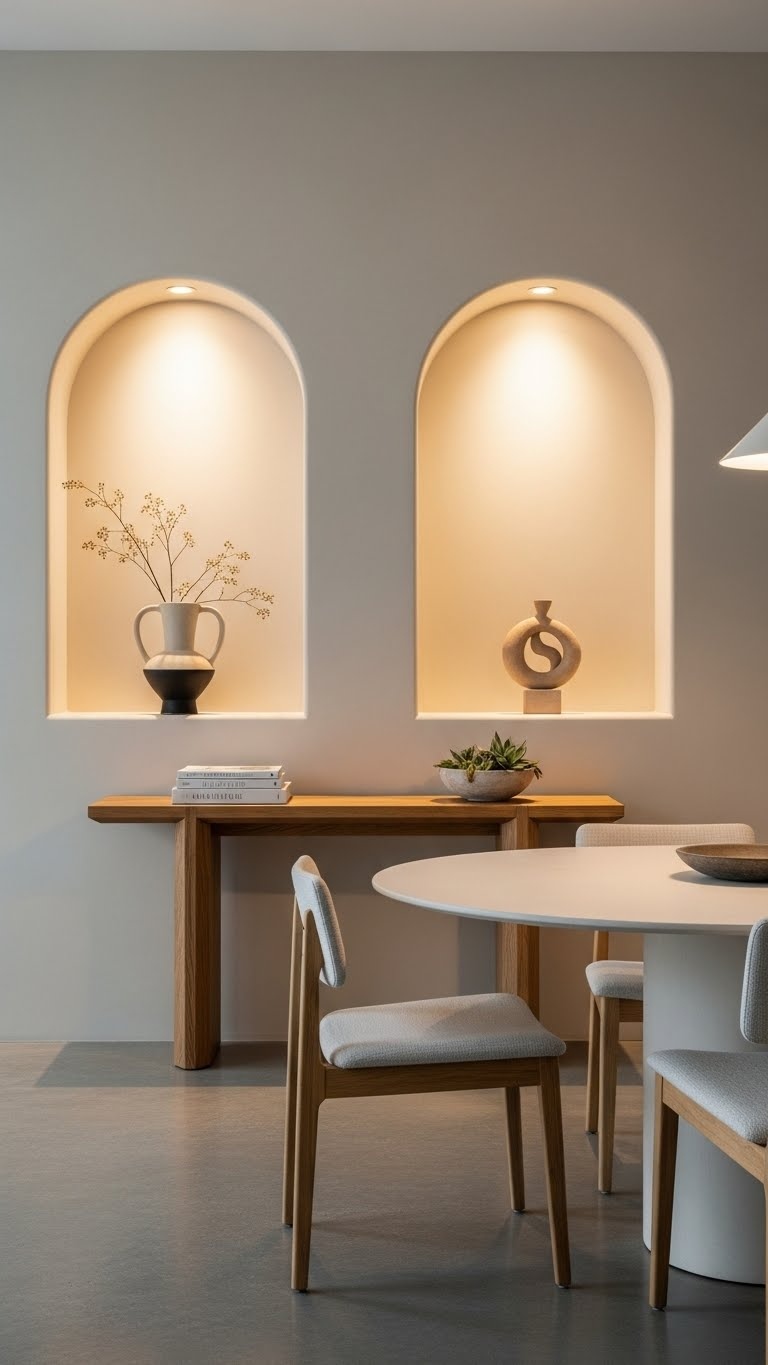
Instead of installing separate shelving units, carve arched niches directly into the wall structure.
These “hollows” provide a minimalist way to display a curated collection of handmade ceramics or stone bowls without the visual weight of brackets or hardware.
The arch mimics the soft curves found in nature and adds a sense of “historical luxury” to a modern space.
Because the shelves are part of the wall itself, the display feels like a permanent, integrated art installation rather than mere storage.
14#. Embracing the Drama of Charred Wood
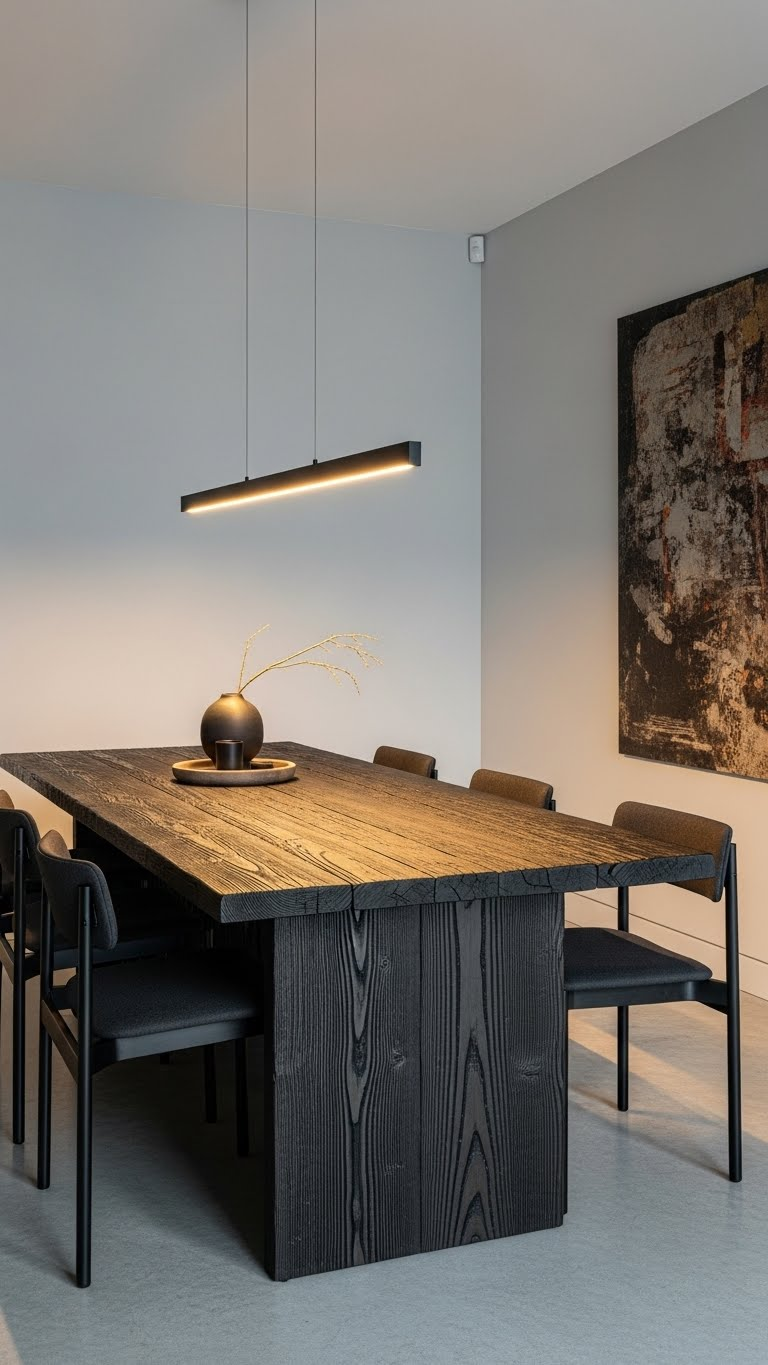
For a bolder Earthy Minimalist look, incorporate “Shou Sugi Ban” (charred wood) elements.
A blackened oak dining table or a set of charred-finish chairs provides a powerful, carbon-like contrast against pale, sun-bleached walls.
This deep, dark texture feels far more organic than black paint, as it preserves the unique ridges and knots of the wood grain.
It introduces a “primitive” elegance that anchors the dining room, making the central furniture piece feel like a monumental sculpture.
15#. Incorporating a Floating Stone Window Ledge
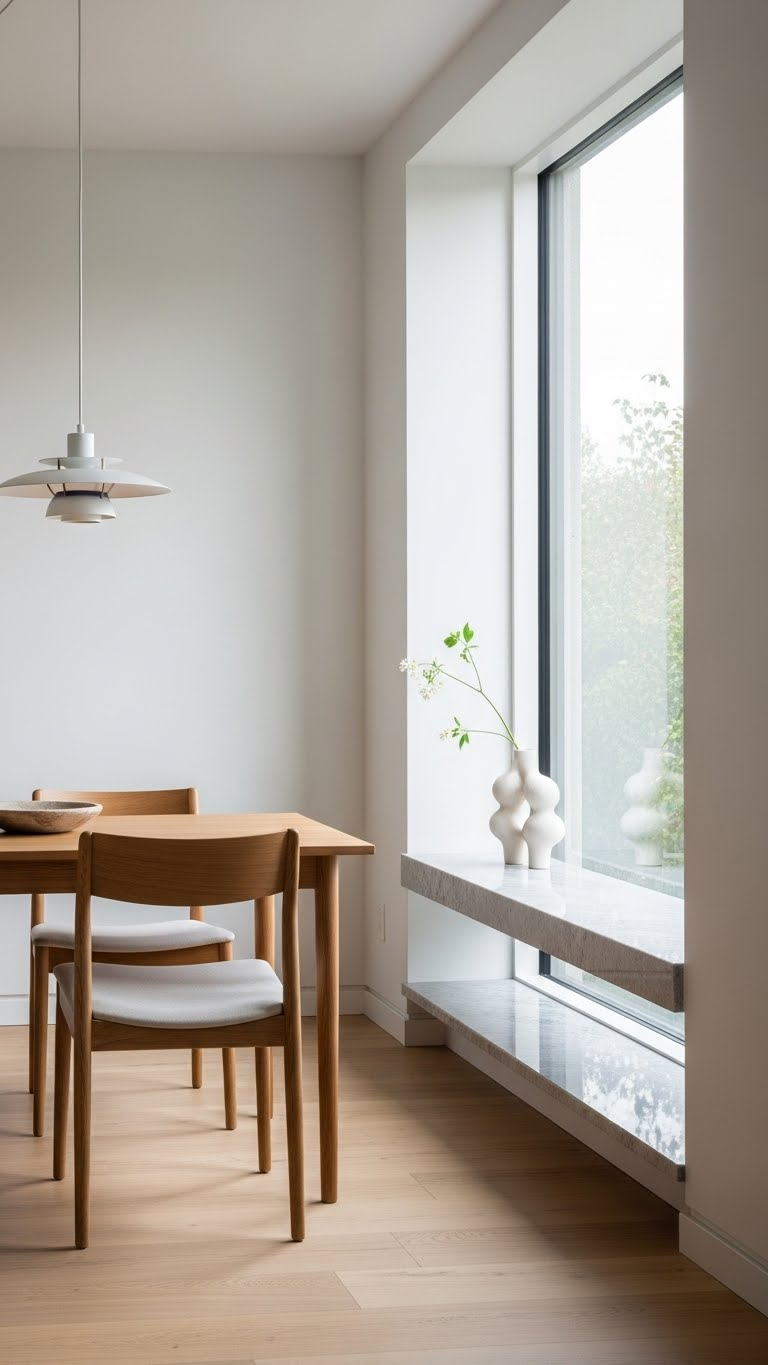
A low, floating ledge made of limestone or slate running beneath a large window serves as a minimalist multipurpose feature.
It can act as additional “perch” seating for large gatherings or as a clean gallery space for a single, tall clay vase.
This architectural move keeps the floor area clear and emphasizes the horizontal lines of the room.
It’s a sophisticated way to utilize the perimeter of the space while maintaining a sleek, “built-in” aesthetic that feels part of the home’s original bones.
16#. Utilizing Heavy Trestle Table Bases
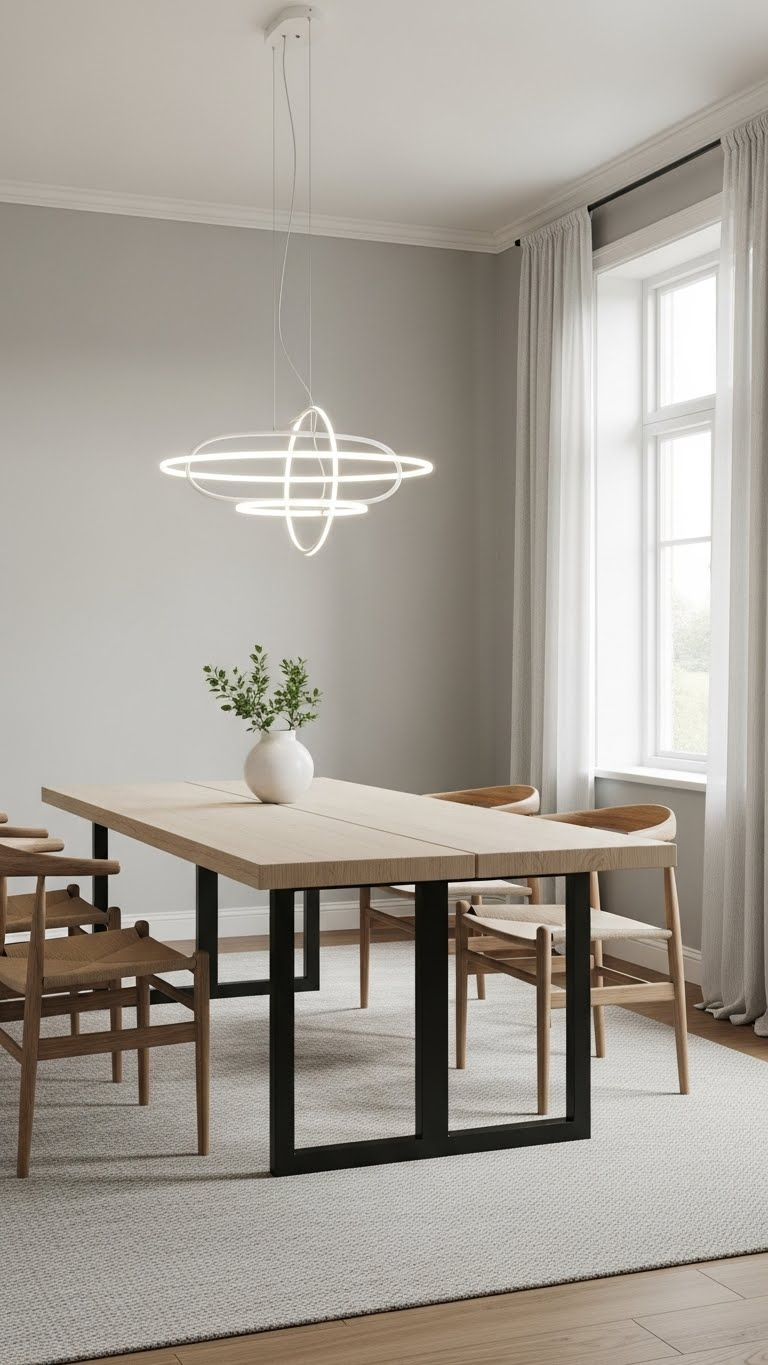
A trestle table with a thick, chunky base offers a “monastic” simplicity that is perfect for a minimalist home.
The heavy, architectural legs provide a sense of stability and permanence, contrasting with the lighter “Wishbone” chairs mentioned earlier.
By keeping the table in a raw, matte-sealed finish, you allow the natural imperfections of the wood to tell a story.
This “primitive-modern” style is a core 2026 trend, focusing on furniture that feels as though it was hand-hewn centuries ago.
17#. Designing with “Hidden” Acoustic Panels
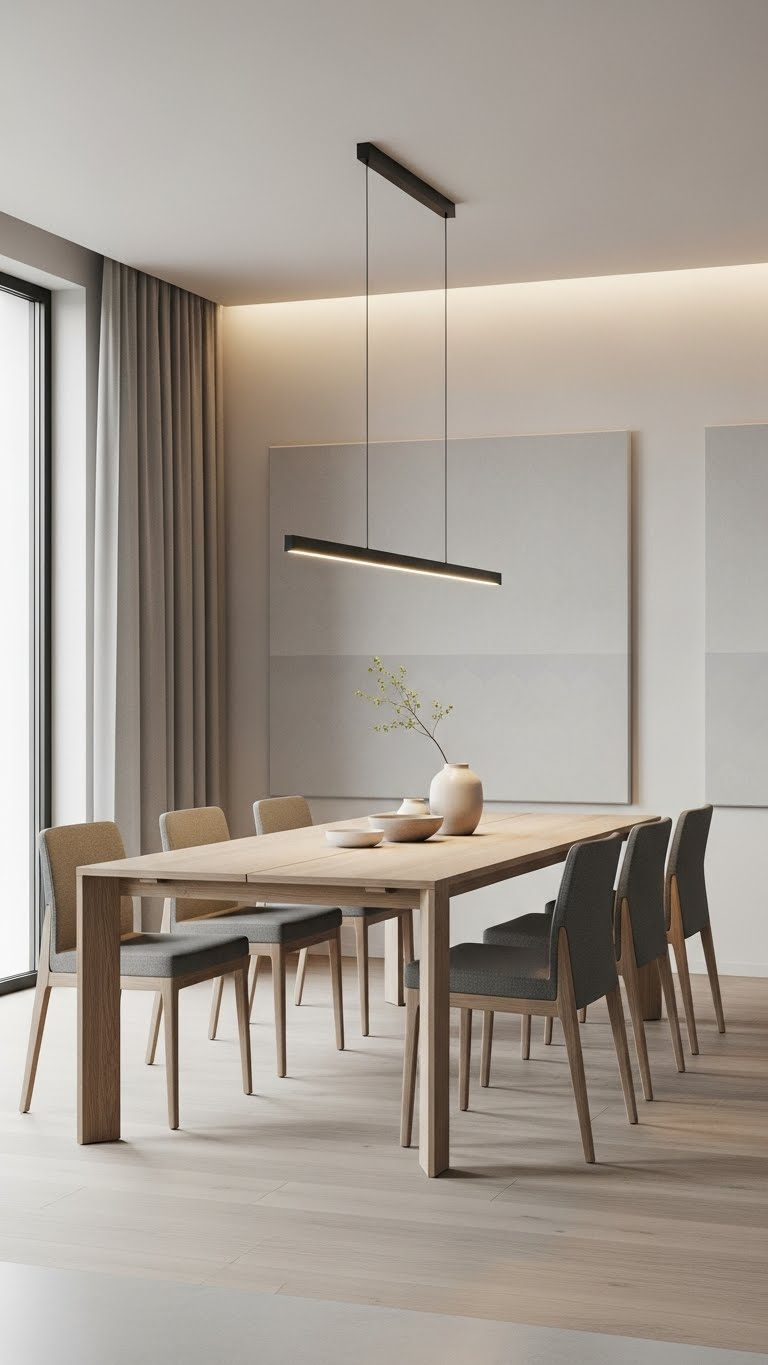
To prevent a minimalist dining room from feeling echoey or cold, utilize acoustic wall panels wrapped in organic fabrics like wool or linen.
These panels can be designed as large-scale, monochromatic art pieces that blend seamlessly with the wall color.
This “soft architecture” absorbs sound, making long conversations over dinner more intimate and comfortable.
It is a functional design choice that prioritizes the feeling of the room just as much as its visual appearance, ensuring the space remains a peaceful sanctuary.
18#. Incorporating Tinted Glass Partitions
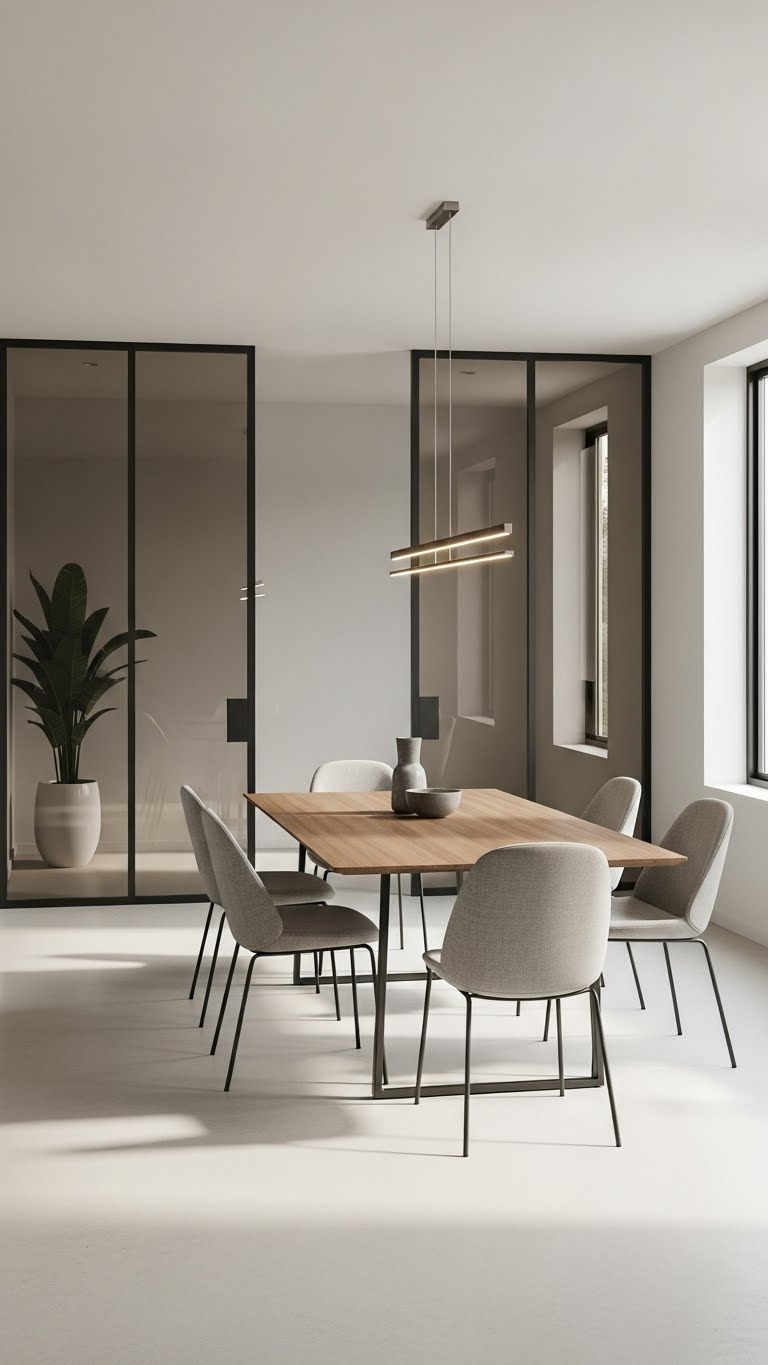
If your dining room is part of an open-plan layout, use a floor-to-ceiling partition of “smoke” or “amber” tinted glass.
This provides a subtle boundary that defines the eating area without blocking light or closing off the room.
The warm tint of the glass coordinates beautifully with earthy wood tones and bronze hardware.
It adds a layer of “architectural jewelry” to the space, creating a sophisticated filter that makes the dining experience feel private and exclusive.
19#. Embracing the Wabi-Sabi of Stone Centerpieces
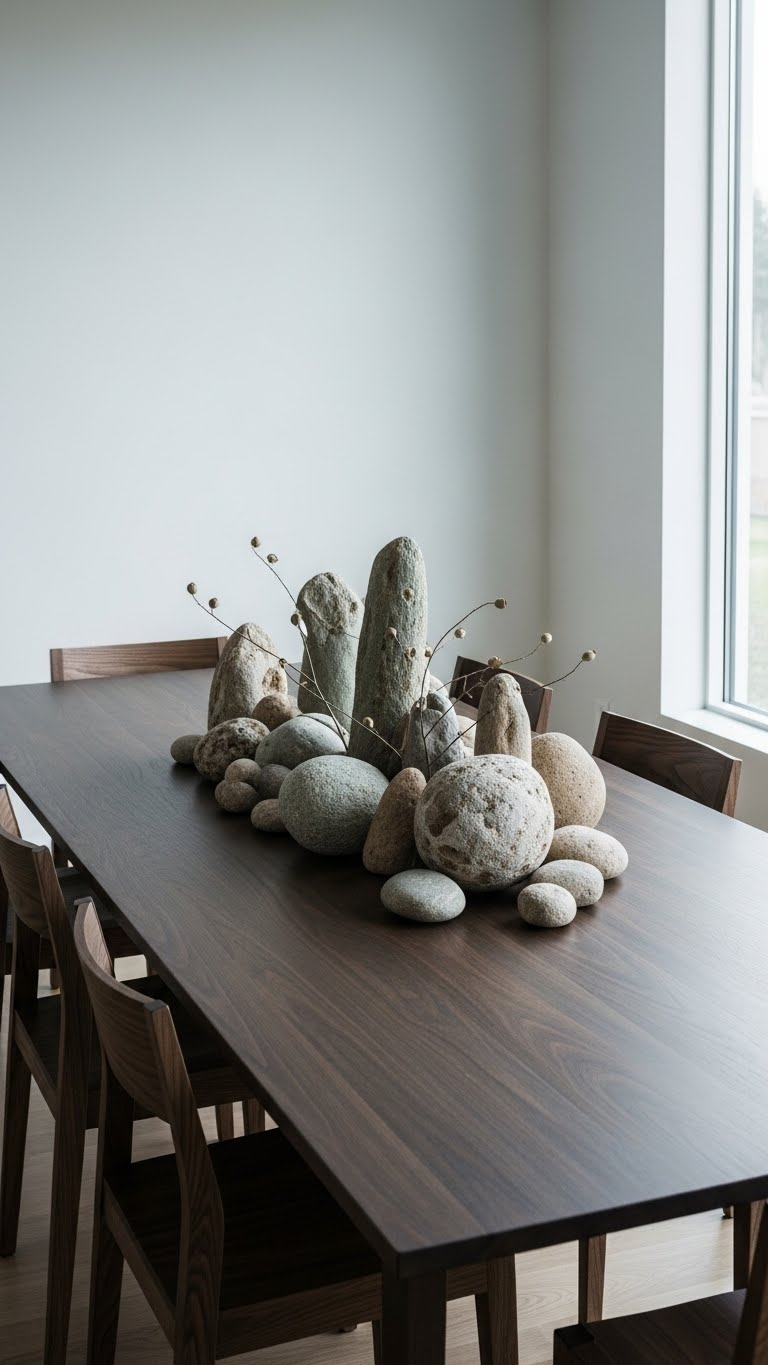
Replace traditional floral arrangements with a single, large piece of raw mineral—like a block of desert rose, a chunk of obsidian, or a smooth river boulder.
This “living stone” centerpiece is a masterclass in minimalist decorating, requiring zero maintenance.
The irregular, unpolished shape of the stone provides a perfect “imperfect” counterpoint to the clean, straight lines of a minimalist table.
It serves as a constant reminder of the earth’s raw beauty and grounds the room in a very literal sense.
20#. Using Bronze or “Aged” Metal Accents
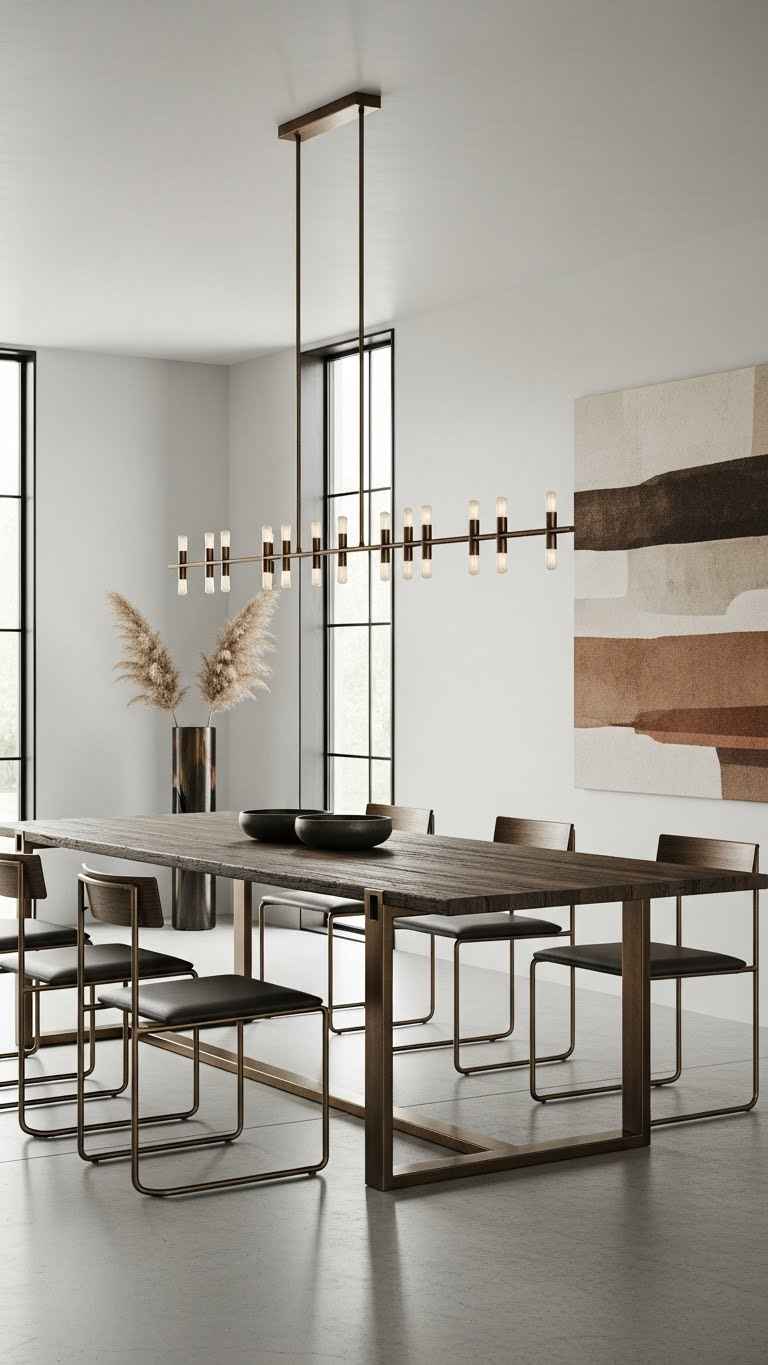
When choosing hardware or small details, look to aged metals like bronze, copper, or unlacquered brass.
These materials possess an “earthy” warmth that cold chrome or steel lacks, and they will develop a unique patina as they age.
Small bronze details—such as the tips of chair legs or a thin table inlay—act as “golden” highlights that catch the evening light.
These subtle metallic touches add a layer of quiet luxury that elevates the minimalist design from simple to sophisticated.
21#. Designing with Vertical Timber Battens
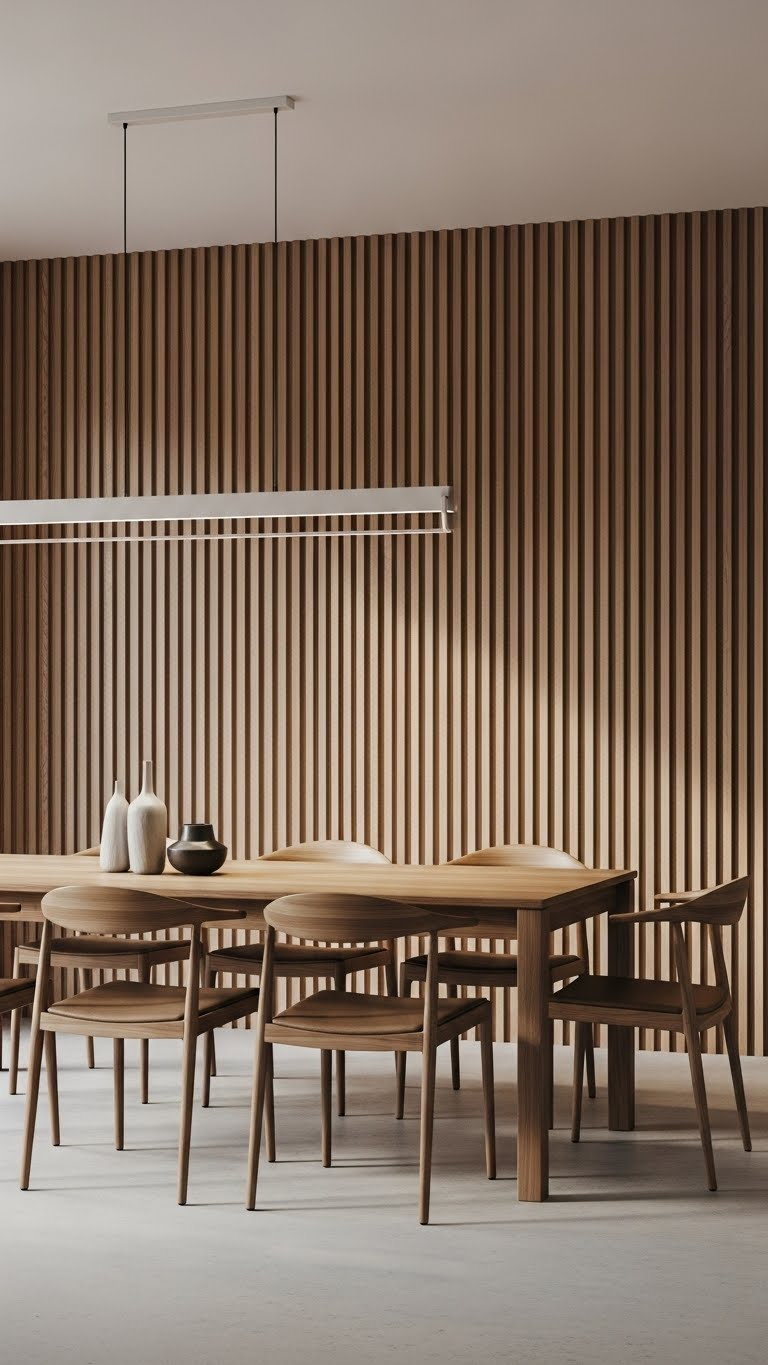
Applying vertical wood battens to a single wall or the back of a built-in nook adds a rhythmic, “forest-like” texture to the room.
This linear detail creates a play of shadow and light that gives the dining room a sense of movement and architectural depth.
The vertical lines also help to “lift” the ceiling, making the space feel more grand.
When paired with a simple, flat-surface table, the textured wall provides the necessary visual interest to keep the room from feeling too empty or sparse.
22#. Incorporating Integrated Wine Voids
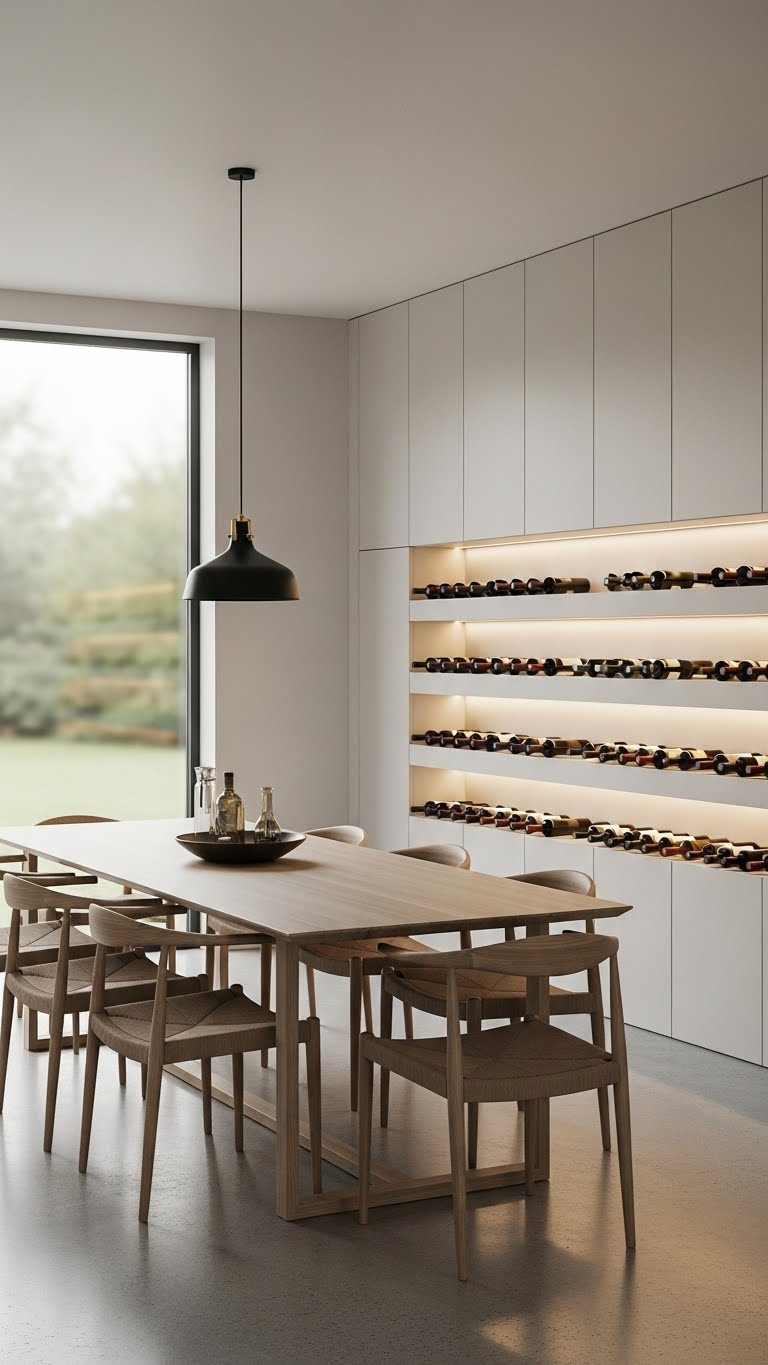
Instead of a separate wine rack, design a series of “voids” or circular cutouts directly into a stone or plaster wall.
This allows wine bottles to be stored horizontally in a way that looks like a sculptural part of the room’s design.
This “invisible” storage keeps the bottles organized and within reach while maintaining the room’s minimalist purity.
It’s a high-end, bespoke detail that turns a functional requirement into a beautiful, earth-centered architectural feature.
23#. Utilizing Large-Scale Organic Art
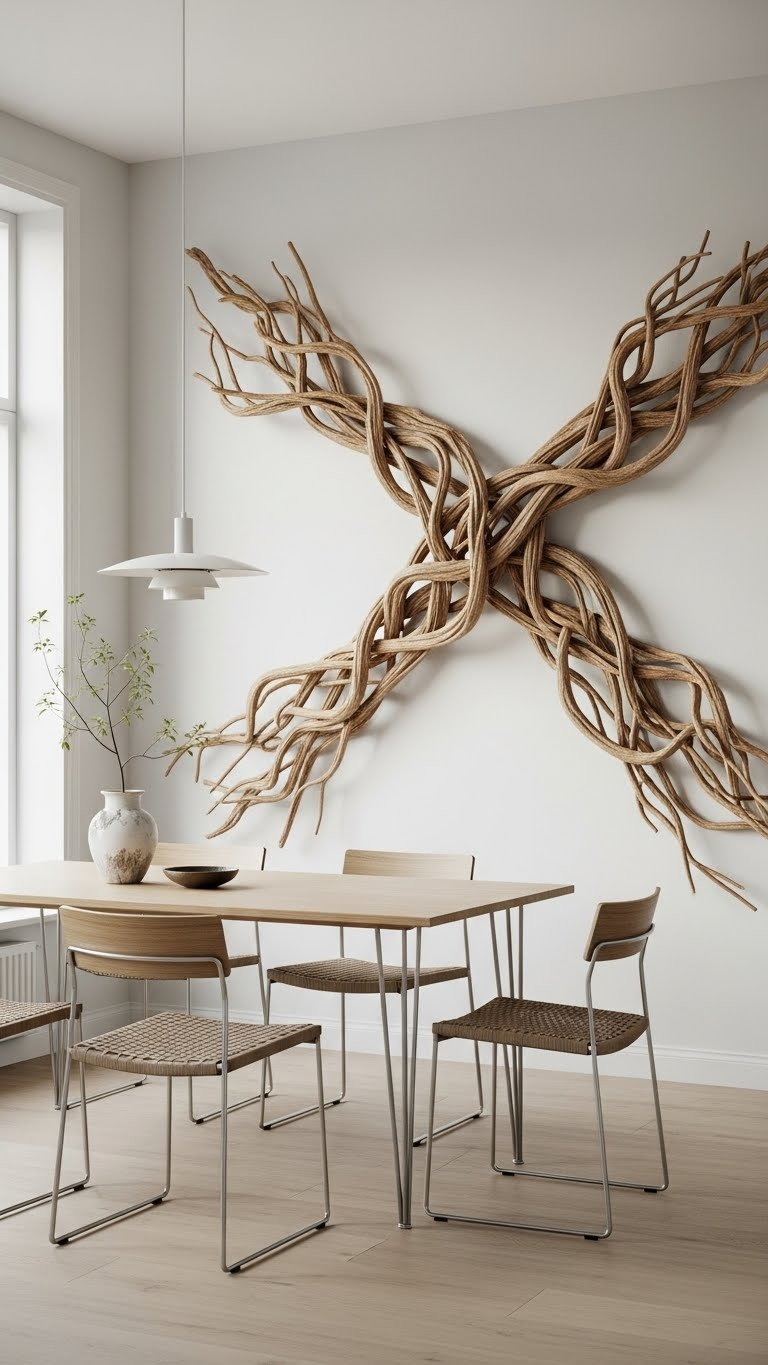
In a minimalist dining room, one giant canvas usually works better than many small ones.
Choose a piece of “textural art”—perhaps a canvas with heavy plaster applications or a woven tapestry made of raw jute and wool fibers.
The art should stay within the room’s earthy color palette but provide a significant shift in texture.
This provides a soft, tactile focus for the room that draws the eye without overwhelming the senses with bright colors or complex patterns.
24#. Adding Minimalist Skylights
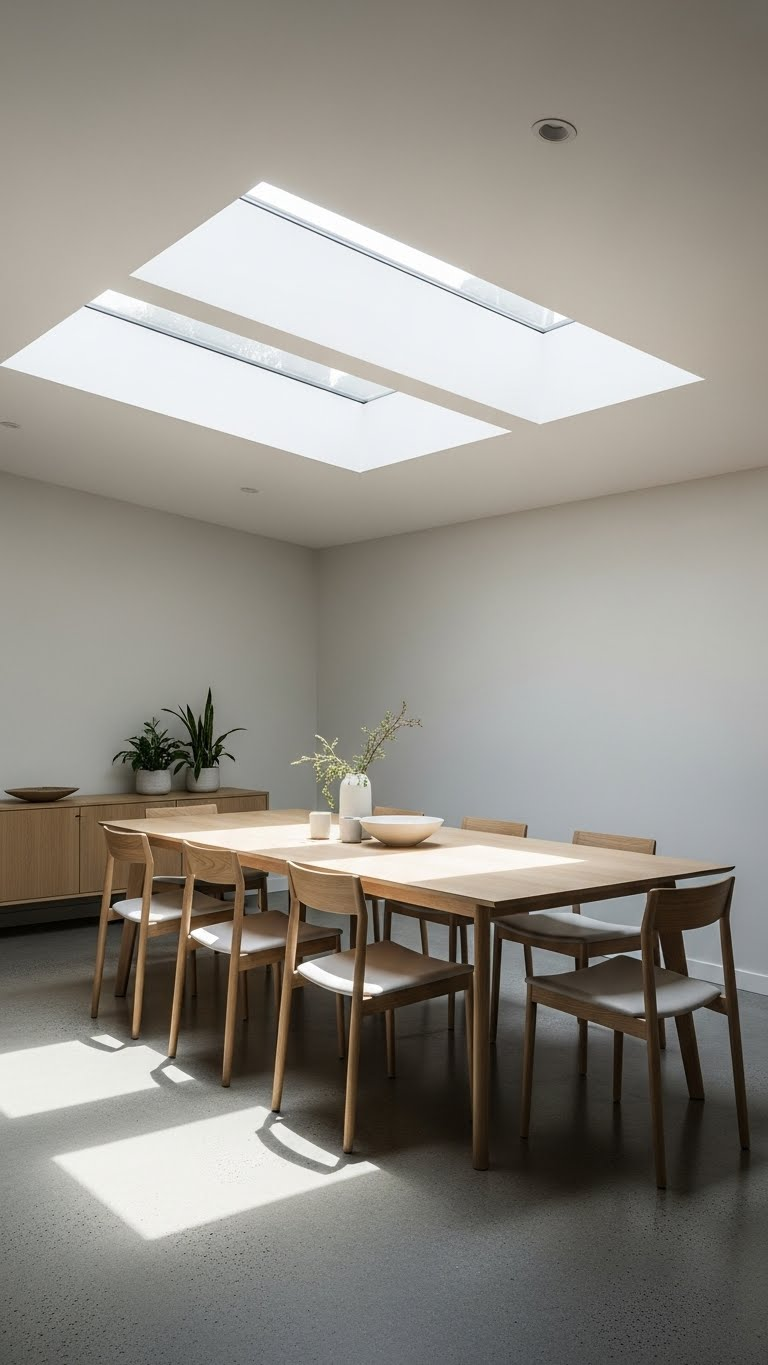
If the dining room is on the top floor, a singular, square skylight directly over the table provides a “shaft of light” that changes throughout the day.
This natural spotlight highlights the grain of the wood and the texture of the plaster walls.
Bathing the table in natural light connects the diners to the rhythm of the day and the sky above.
It’s a powerful architectural move that replaces the need for an electric pendant during daylight hours, reinforcing the “pure” minimalist ethos.
25#. Designing with Low-Slung Bench Seating
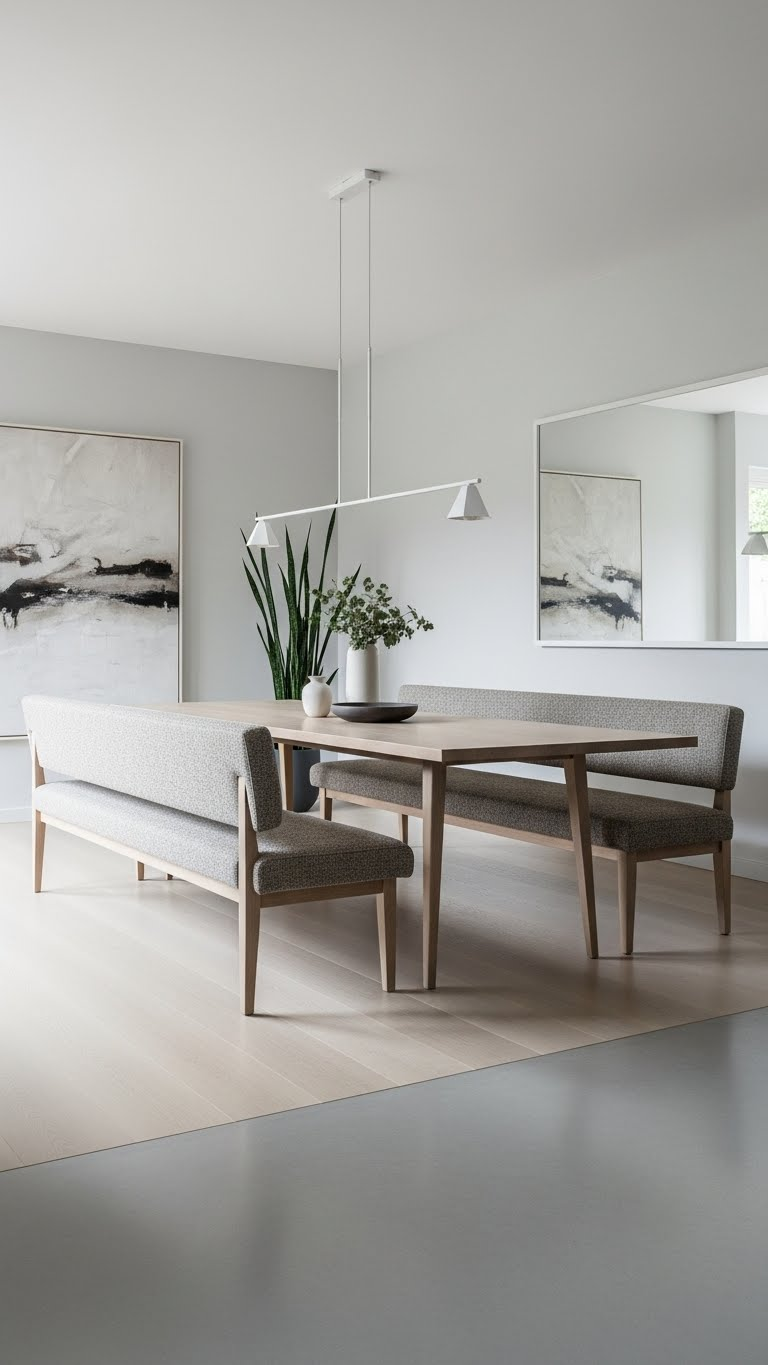
Replacing one side of chairs with a long, low-slung wooden bench creates a more casual, communal feel.
The bench keeps the visual profile of the room low, allowing for unobstructed views of the windows or the rest of the home.
Benches are also highly practical for fitting more guests in a minimalist way.
When covered with a simple, tailored linen cushion, the bench adds a layer of softness and “hygge” to the room while maintaining its clean, geometric lines.
26#. Incorporating “Hidden” Audio Systems
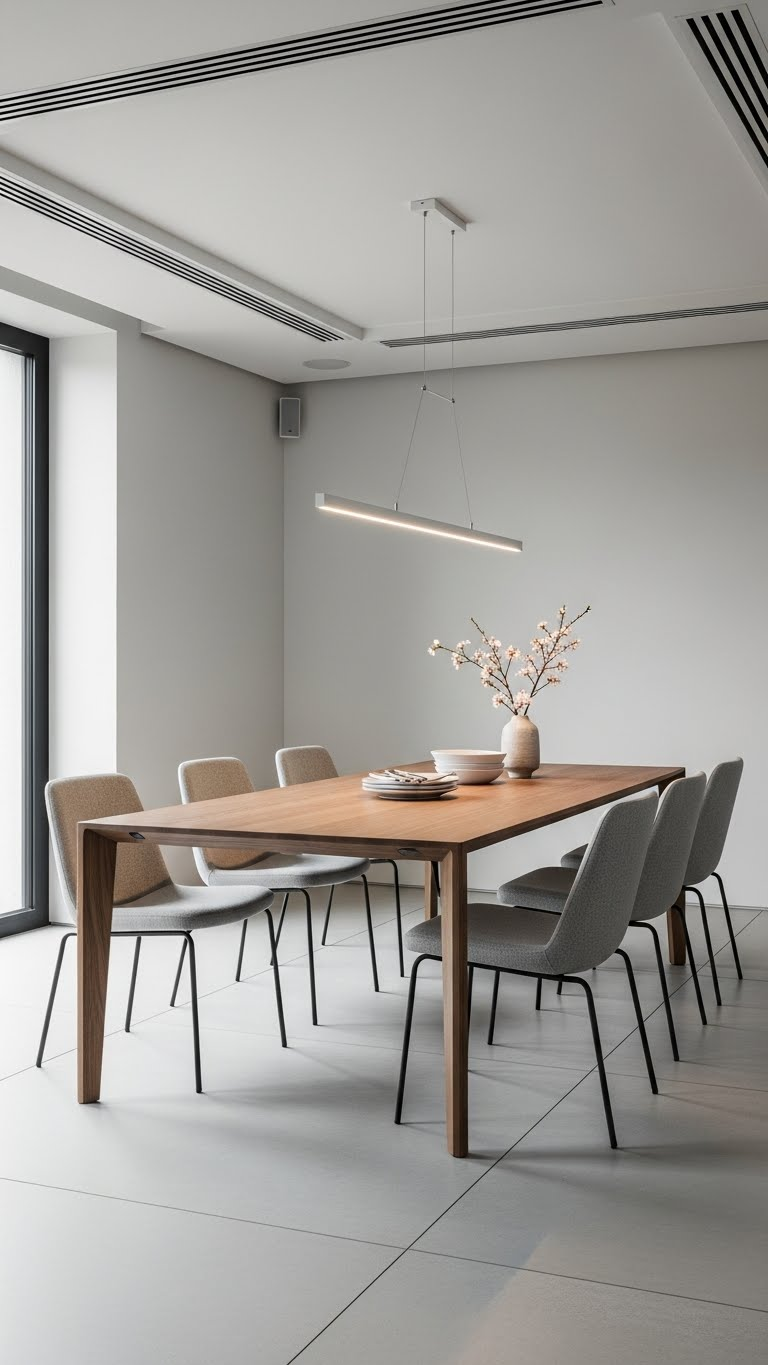
To create the ultimate dining atmosphere, install “invisible” speakers behind the plaster of the walls or ceiling.
This allows for high-quality sound to fill the room without any visible wires or bulky equipment cluttering the design.
The ability to play soft, ambient music that seems to “come from the walls” enhances the spa-like, restorative nature of an Earthy Minimalist space.
It’s a modern luxury that prioritizes the unseen experience of the room.
27#. Embracing Raw Concrete Flooring
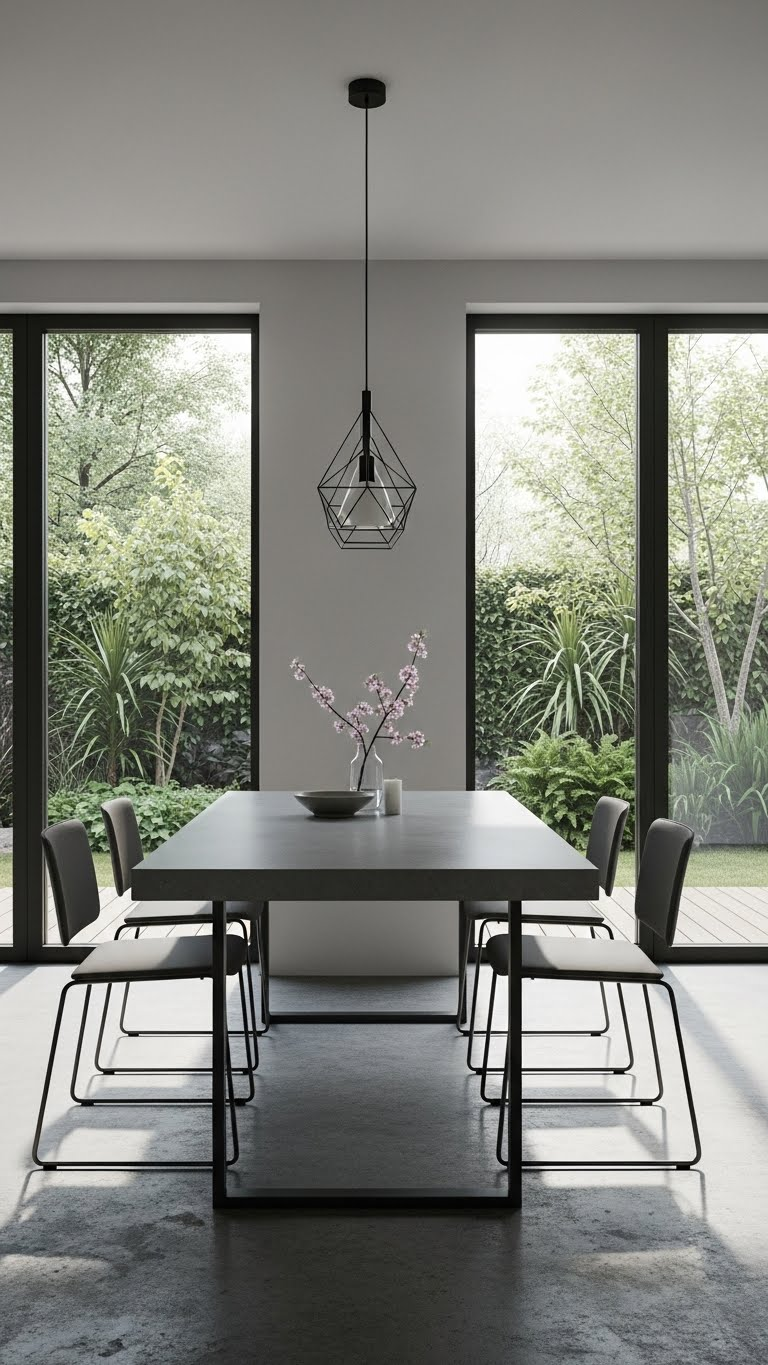
For a more industrial take on minimalism, a polished or matte-sealed concrete floor provides a cool, grey foundation that feels like solid stone.
The natural swirling patterns and variations in the concrete give the floor an “earthy” mineral quality.
Concrete floors are incredibly easy to maintain and act as a neutral “canvas” for your wooden furniture.
When paired with a large wool rug, the combination of hard concrete and soft fiber creates a balanced, sophisticated tension that defines modern minimalist design.
28#. Utilizing “Invisible” Wall-to-Wall Cabinetry
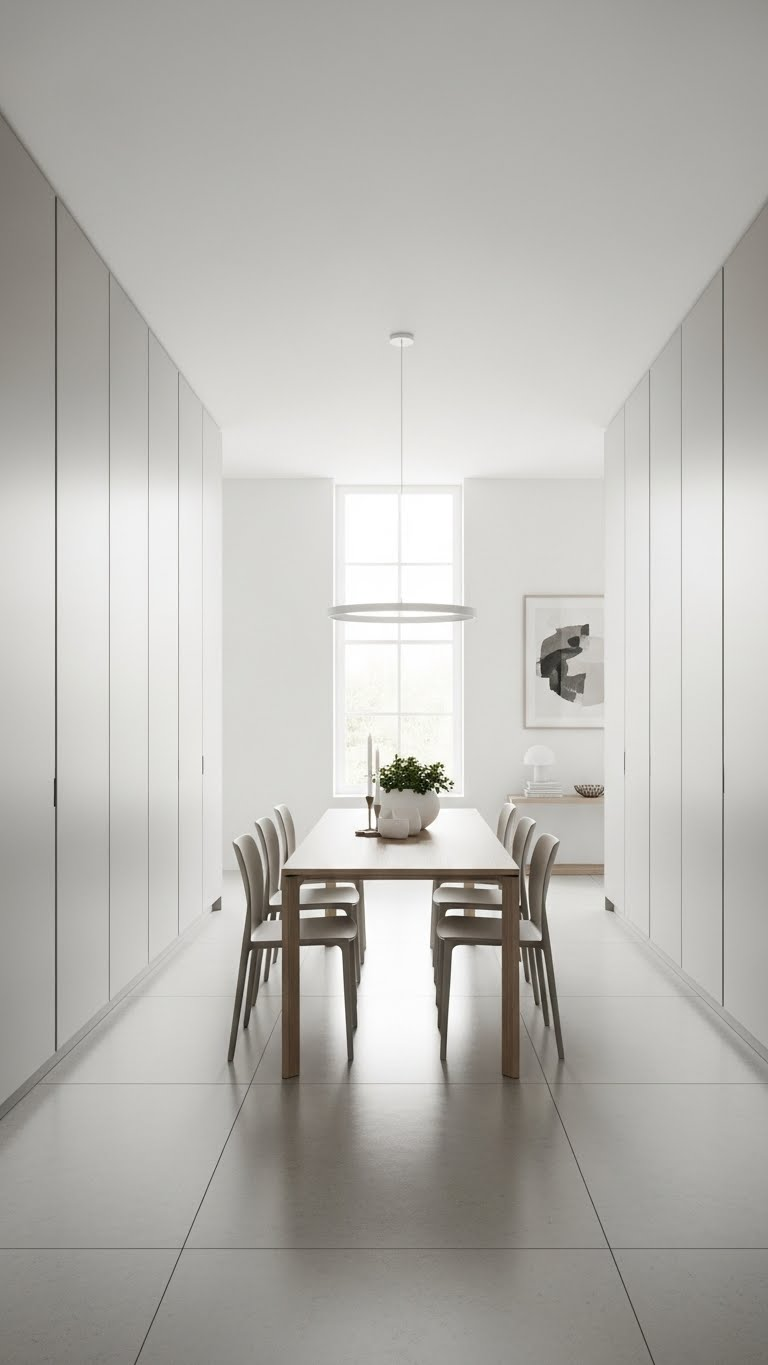
Design a wall of storage that features no handles and no visible seams, finished in the exact same limewash as the surrounding walls.
This “hidden storage” allows you to keep the room perfectly tidy by hiding all dining accessories behind a clean facade.
This “storage wall” approach turns the cabinets into a flat architectural surface.
It provides massive functionality without ever “looking” like a kitchen or a storage room, preserving the dining room’s identity as a place for pure connection and relaxation.
29#. Finishing with Sculptural Ceramic Tableware
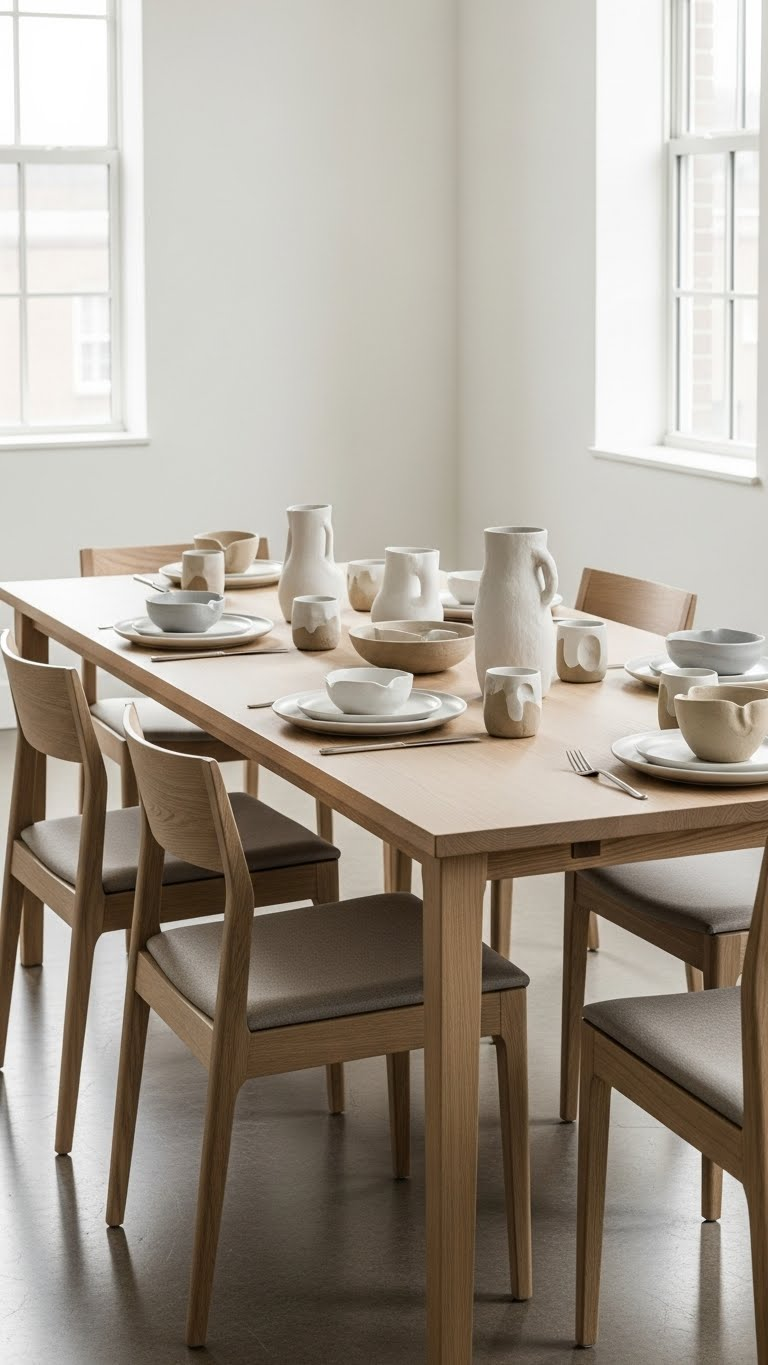
The final idea is to treat your daily tableware as part of the room’s decor.
Choose hand-thrown ceramic plates, stone-carved bowls, and matte-finished cutlery that you keep on display on the dining table or in an open niche.
By selecting items that share the same earthy, organic aesthetic as the room, even your dinnerware reinforces the design theme.
It’s a reminder that minimalism isn’t just about the furniture—it’s about a lifestyle that values quality, craft, and the beauty of the natural world.
Final Thoughts
This journey through 29 Minimalist Dining Room ideas shows that “less” is only more when the few things you choose are of exceptional quality and character.
By focusing on light, raw materials, and “hidden” technology, you’ve created a space that is both a high-end architectural statement and a warm, welcoming heart for your home.