Step into the world of timeless grandeur where dark woods, intricate patterns, and flickering candlelight create an atmosphere of pure romance.
Victorian Dining Room Ideas era was defined by a “more is more” philosophy, turning every dining room into a curated gallery of history and high-end craftsmanship.
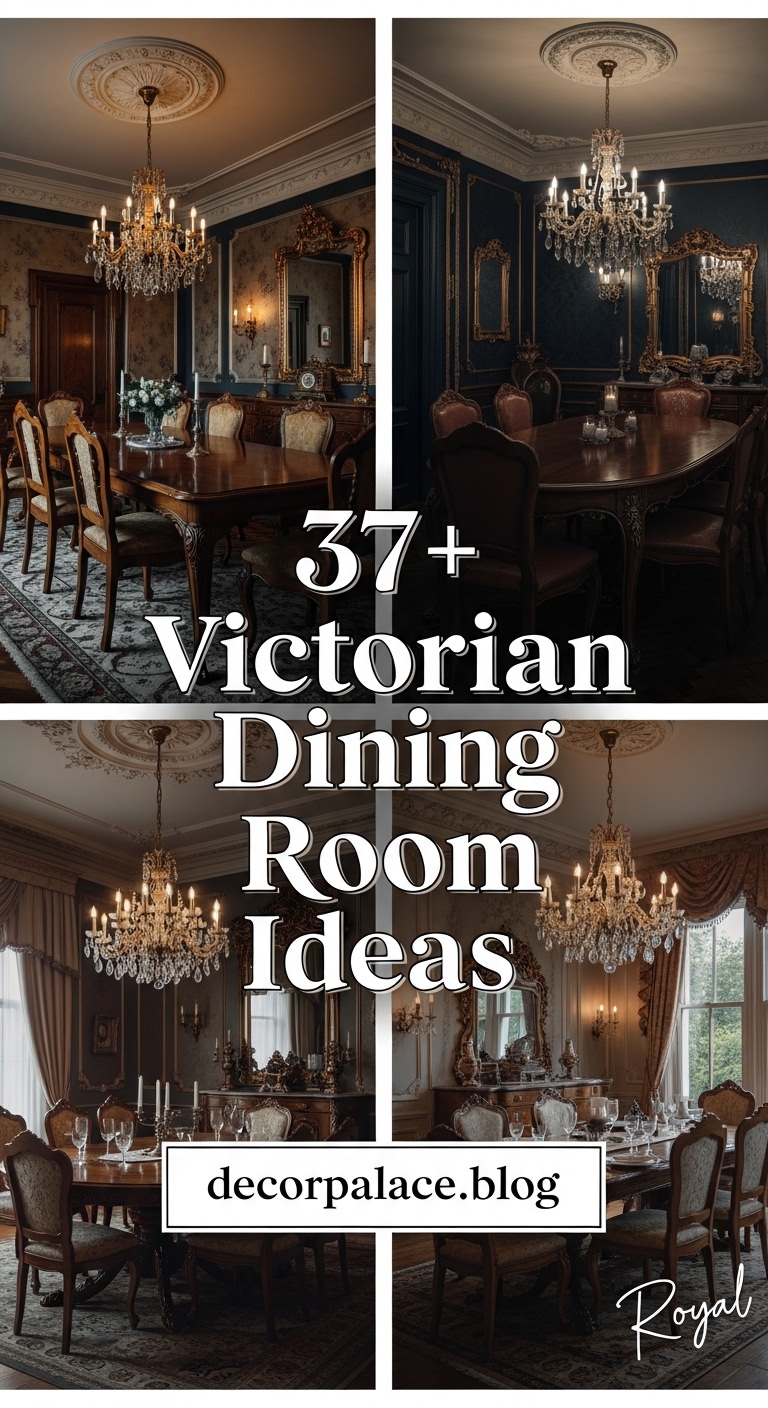
In this guide, we are blending the opulent heritage of the 19th century with modern styling to make these classic looks feel fresh for 2026. Discover how to layer rich textures and dramatic architectural details to create a space that feels both prestigious and soulfully inviting.
1#. Deep Crimson Floral Wallpapers
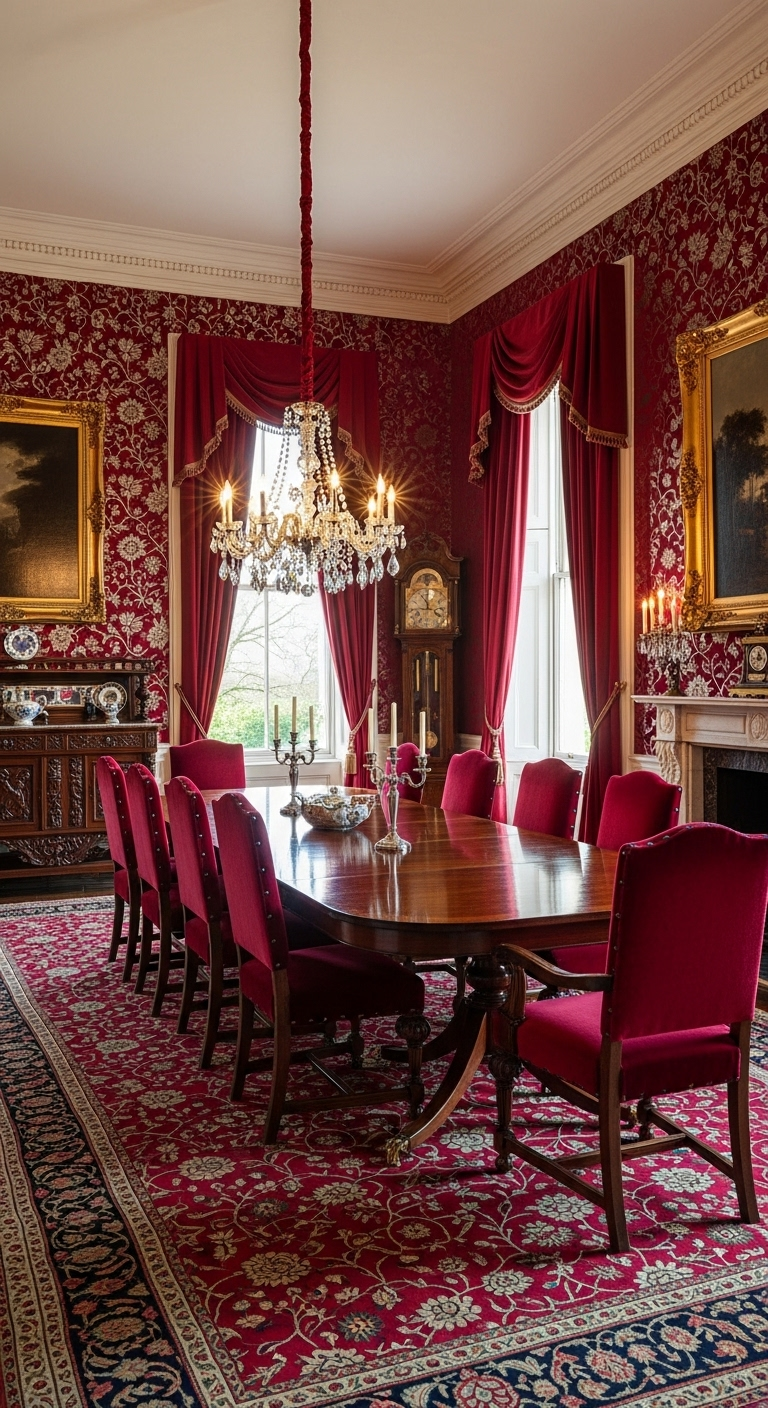
Installing high-quality floral wallpaper in shades of burgundy or forest green provides the dramatic backdrop necessary for authentic period style. This saturated color palette serves as a fundamental step for grounding your Victorian dining room ideas in historical luxury.
To keep the look modern, choose patterns with oversized blooms rather than tiny, busy prints that can feel dated. The rich texture of the paper adds a layer of “jewelry-box” sophistication that instantly elevates the mood of your evening dinners.
Focus your wallpaper application on all four walls to create an immersive, cocoon-like atmosphere that feels intentional and grand. In a formal dining room, full coverage provides the necessary depth to make your furniture, art, and lighting truly pop.
Pair your bold walls with crisp white or cream-colored crown molding and baseboards to break up the color. This high-contrast approach frames the wallpaper beautifully, ensuring the room feels sophisticated and polished rather than dark or cramped.
2#. Carved Mahogany Dining Tables
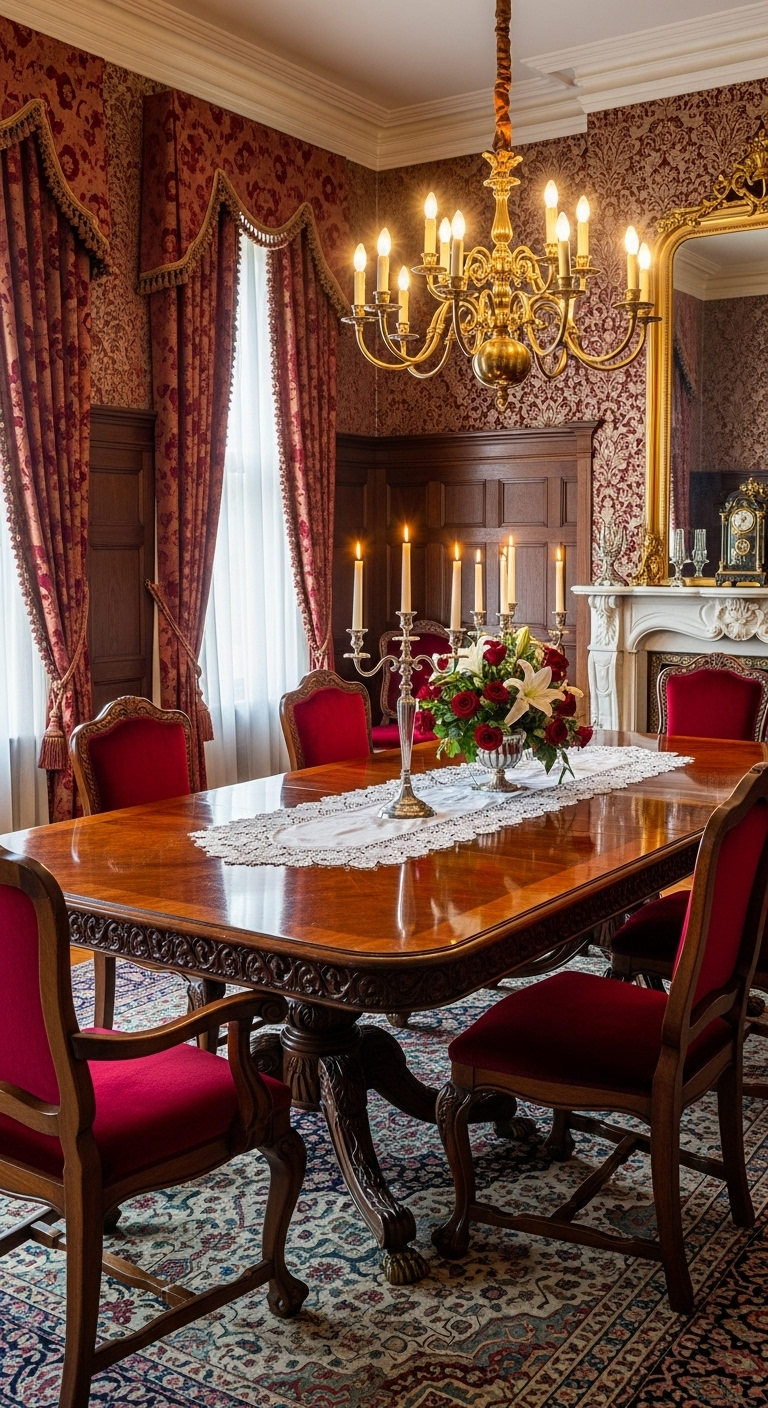
A heavy, dark mahogany or walnut table with ornate cabriole legs acts as the sturdy and prestigious anchor for your dining space. The deep, rich wood tones provide a cooling, natural texture that contrasts beautifully against lighter silk drapes or metallic accents.
Polishing the wood to a soft sheen reflects the light of your chandelier, adding a layer of liquid shine to the center of the room. It is a timeless piece of furniture that celebrates the craftsmanship and permanence of a well-designed, Victorian-inspired home.
Choose a table with a solid wood top to ensure it can withstand the test of time, developing a unique patina that adds history to your dining area. The weight and scale of such a table communicate a sense of grandeur and purpose, inviting guests to sit and linger for hours.
Emphasize the intricate cabriole legs by keeping the surrounding rug choice low-profile or minimalist. This allows the graceful curves of the wood to remain the focal point, reinforcing the period-authentic silhouette of your Victorian design.
3#. Intricate Plaster Ceiling Medallions
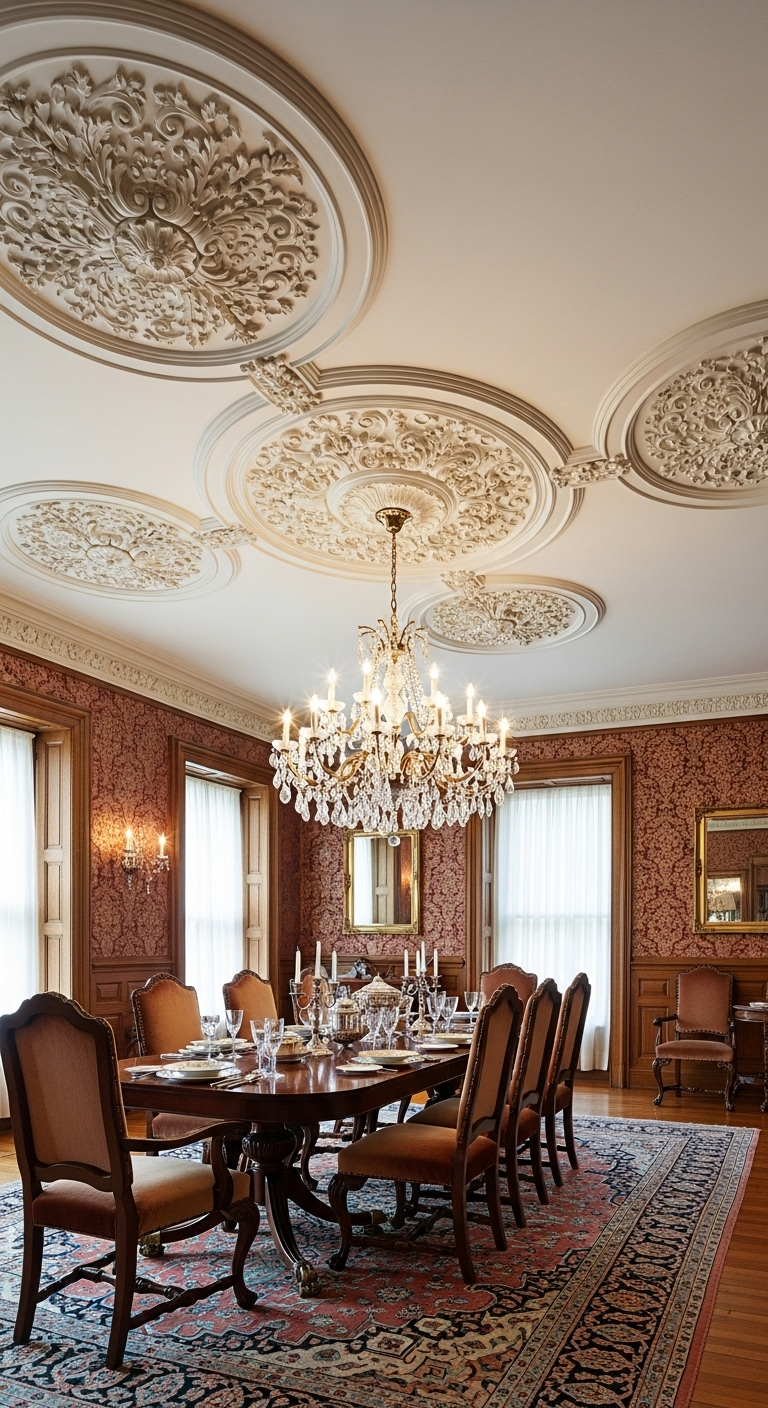
Place an ornate plaster medallion above your central light fixture to add a layer of fine architectural detail to the ceiling. This hidden feature provides a polished finish that makes any chandelier look significantly more expensive and intentionally placed.
Medallions help define the center of the room and provide a sense of “built-in” quality common in historic metropolitan foyers. It is a classic move for adding vertical interest and a touch of royal heritage to your personal dining sanctuary.
Choose a plaster medallion with intricate, deep-relief carvings like acanthus leaves or rosettes for an authentic Victorian look. Unlike lightweight polyurethane versions, true plaster offers a crispness and density that catches the light beautifully, reinforcing the high-end feel.
Ensure your medallion is scaled proportionally to both your chandelier and the table below to maintain visual harmony. A medallion that is too small can look like an afterthought, while one that is correctly sized anchors the fixture, making the entire ceiling feel finished.
4#. Velvet Tufted Armchairs
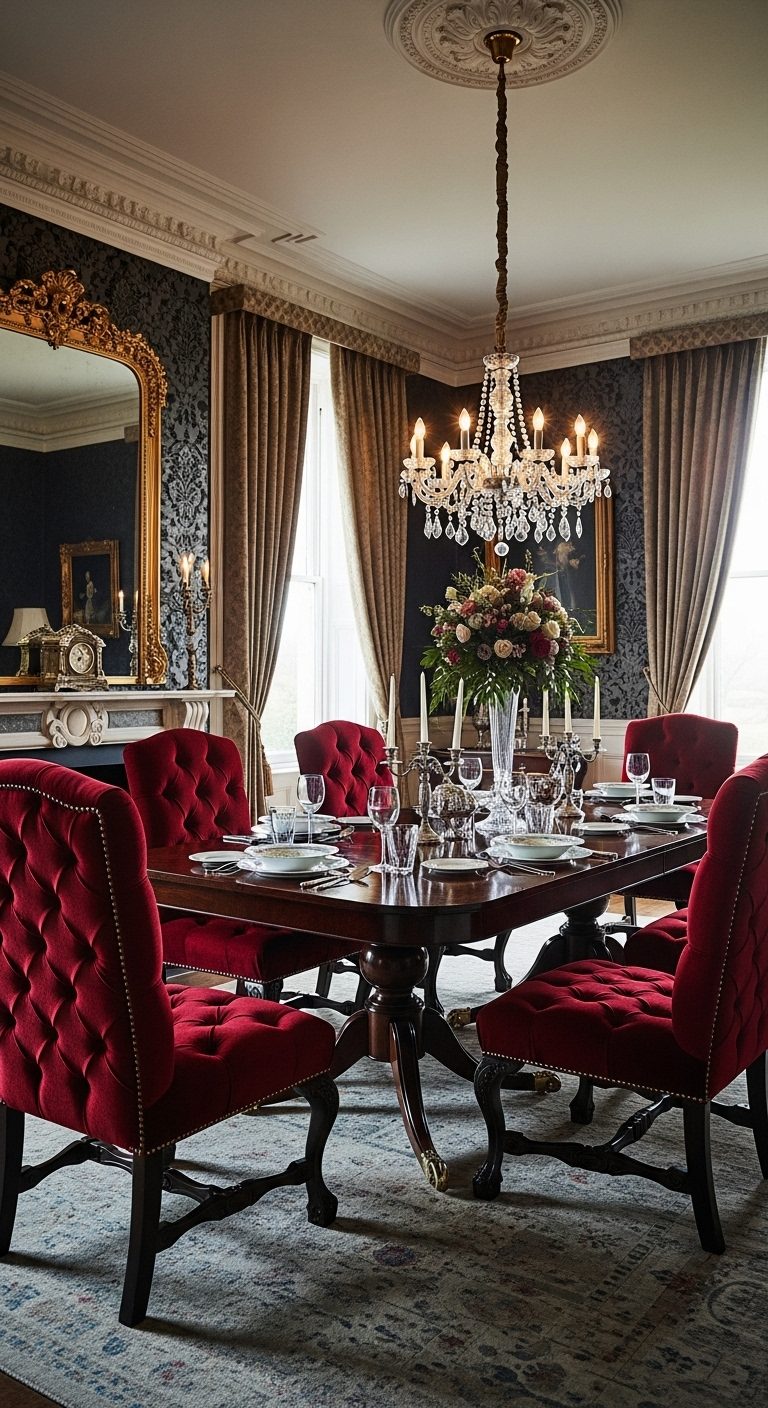
Introduce a layer of plush comfort by choosing dining chairs with high backs and deep button-tufting in jewel-toned velvets. The soft, reflective quality of the velvet adds a tactile warmth that beautifully balances the hard surfaces of polished wood and stone in your dining room.
Mix and match your seating by placing two larger “host” chairs at the ends of the table to create a sense of formal symmetry. These chairs provide a luxurious seating experience that encourages guests to linger over long, meaningful conversations throughout the evening.
Select jewel tones like deep emerald, sapphire, or garnet to ground the space with a sense of Victorian-era grandeur and richness. Velvet naturally absorbs light, making these deep colors feel cozy and intimate, which is perfect for creating an inviting dining atmosphere.
Opt for high-back silhouettes to emphasize the vertical height of your room, drawing the eye upward toward your chandelier and crown molding. This architectural choice adds a sense of formality and stature, making every meal feel like a special, curated event.
5#. Antique Brass Multi-Tiered Chandeliers
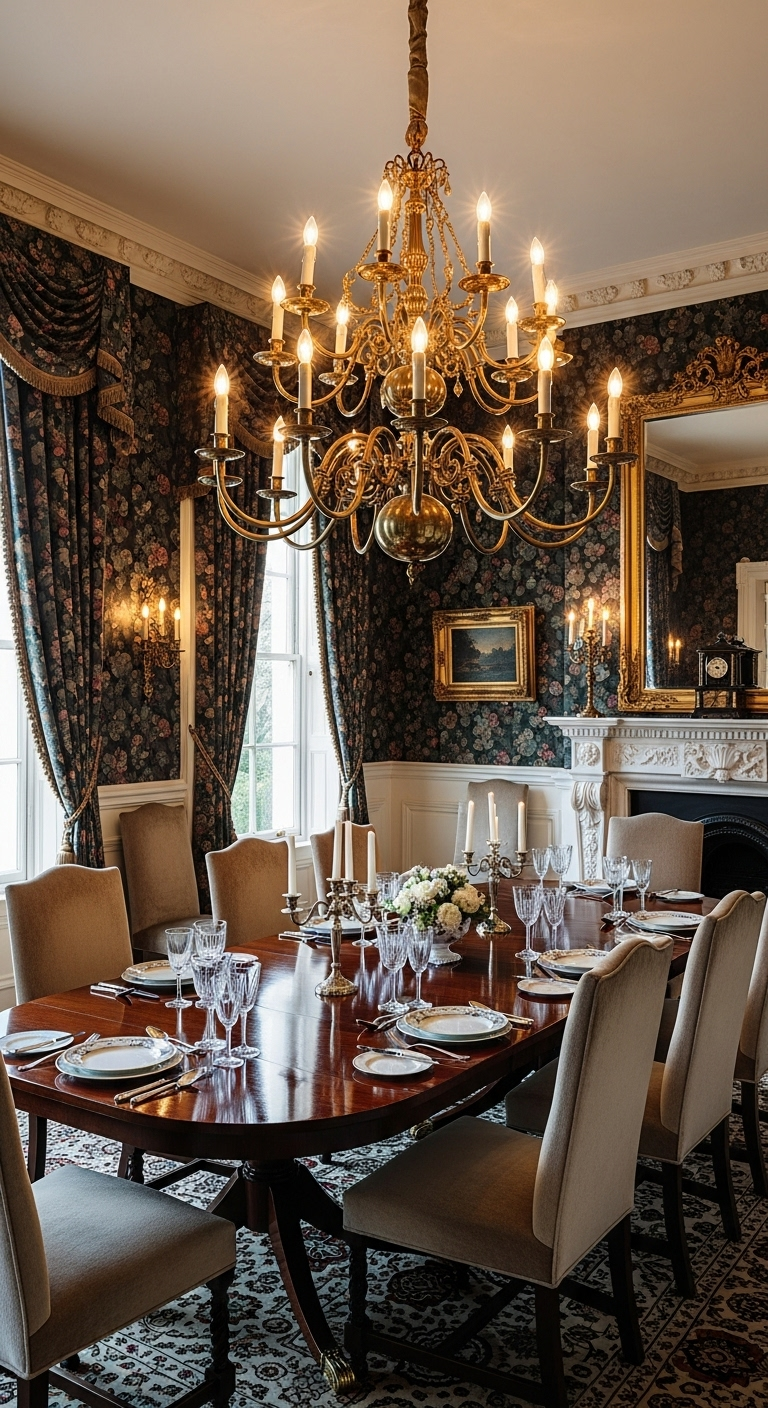
Ensure the scale of the chandelier is balanced by hanging it approximately 30 to 36 inches above the surface of your dining table. This positioning creates a comfortable, immersive zone of light that focuses attention on the meal and the conversation, rather than the entire room.
Pair the brass finish of the chandelier with other metallic accents in the room, such as drawer pulls on your sideboard or picture frames. Cohesive metal tones create a seamless, professional narrative throughout the space, reinforcing the polished, heirloom-quality aesthetic.
Use a dedicated dimmer switch or a smart lighting system to master the intensity of the light throughout your evening. Being able to lower the light as the night progresses is a sophisticated technique that enhances the guest experience and highlights the warmth of your materials.
Dust the arms of the chandelier and the glass of the bulbs regularly with a soft, static-free cloth to maintain its radiant, high-end shimmer. A well-maintained brass fixture serves as the crowning jewel of your Victorian sanctuary, reflecting your dedication to timeless, luxurious detail.
6#. Decorative Wainscoting and Boiserie
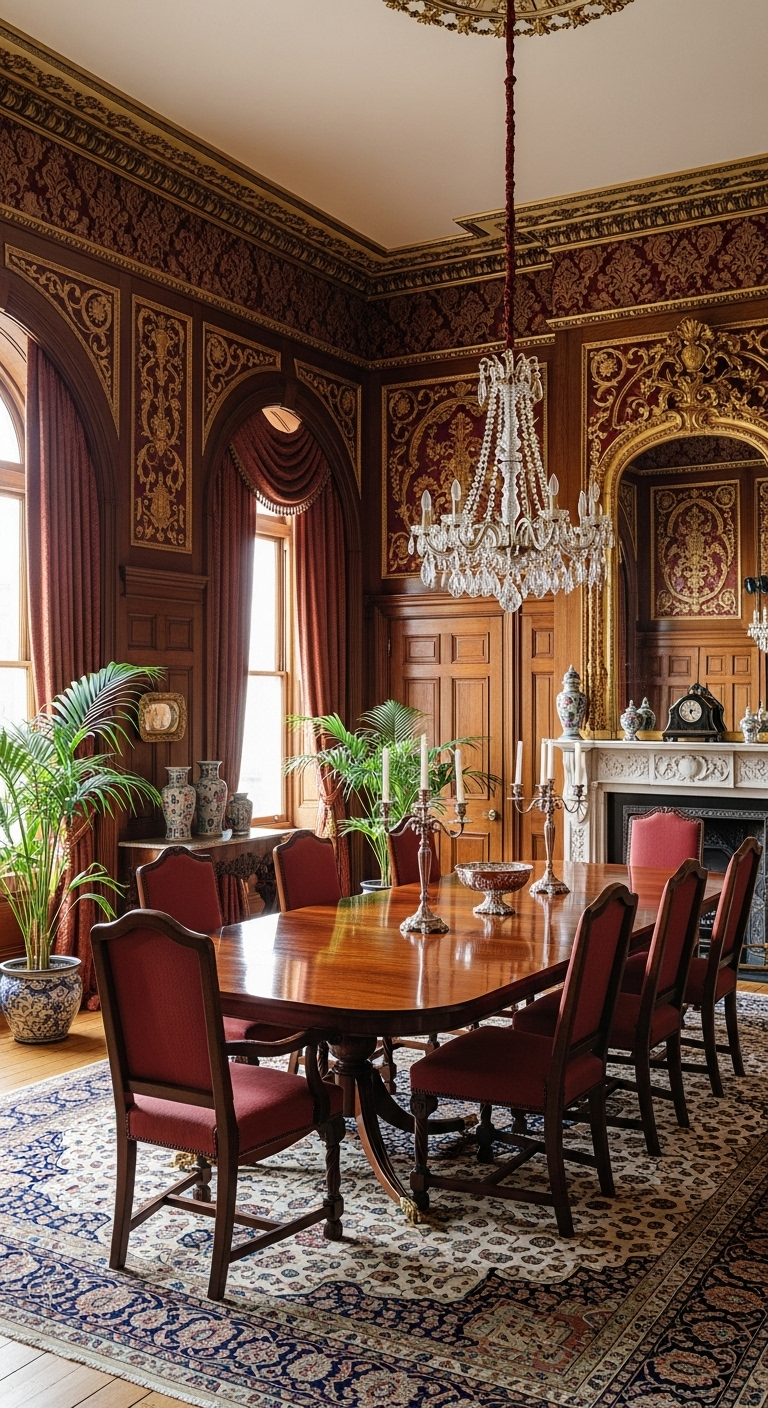
Applying wooden wall panels or wainscoting to the lower third of your walls adds a layer of structural depth and protective, timeless character. This classic detail creates a crisp horizontal line that makes the room feel more intentional and provides a beautiful, tactile contrast to your wallpaper.
Paint the panels in a bright, crisp white to create a sharp, high-contrast look that highlights the architectural geometry of the room. Alternatively, paint them in a matching dark tone to create a seamless, “wrapped” effect that feels deeply moody, sophisticated, and immersive.
Wainscoting is a durable and stylish way to incorporate the “more-is-more” philosophy into the very bones of your house. It transforms flat, plain walls into a rich, storied backdrop that feels as though it has been part of the home’s original design for a century.
7#. Floor-to-Ceiling Damask Drapery
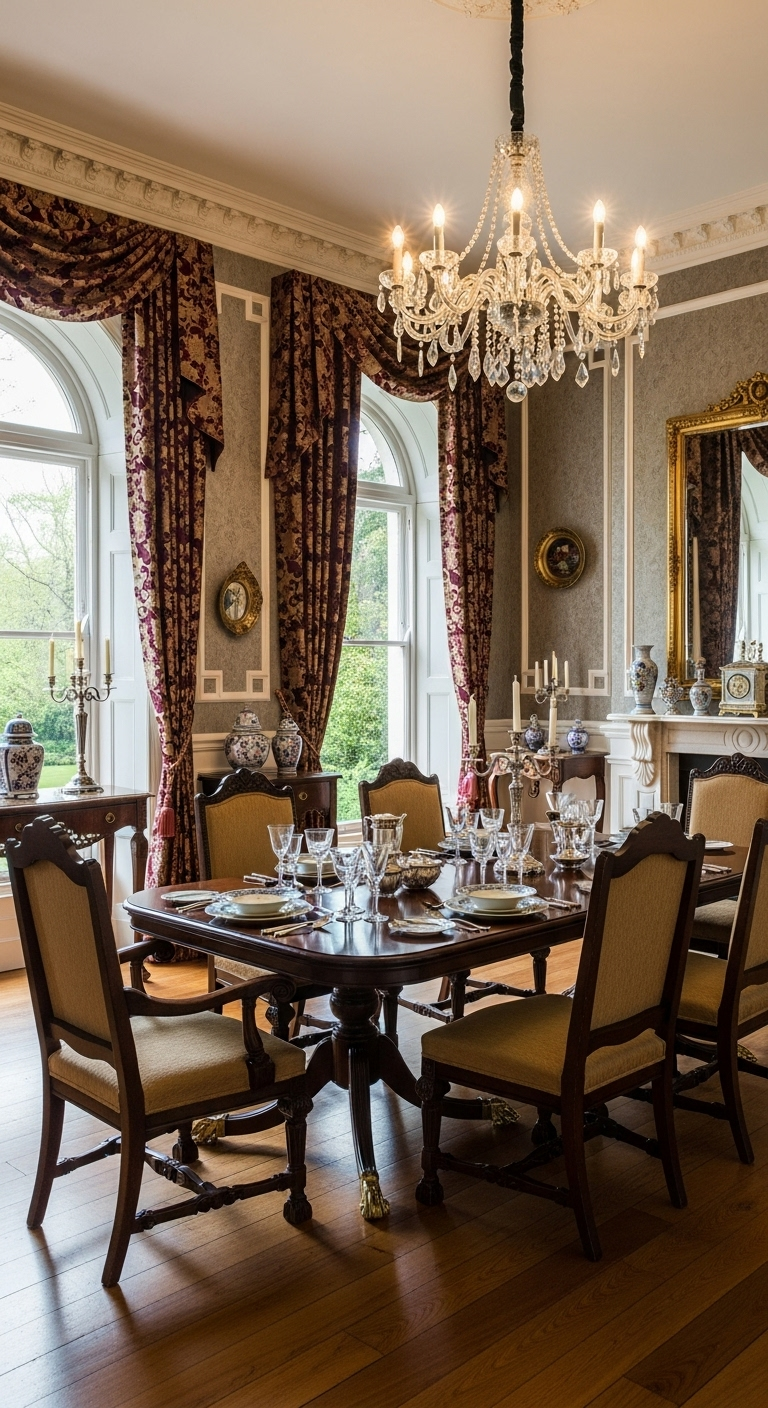
Hang heavy damask or silk curtains with intricate woven patterns to add a layer of theatrical softness and superior sound insulation. Positioning your curtain rod high above the window frame emphasizes the height of your ceilings, instantly making the entire dining space feel grander and more expansive.
Use heavy silk tassels and matching tie-backs to pull the drapes back, allowing beautiful, soft natural light to filter into the room during the day. This tactile textile detail adds a final, quintessential layer of luxury and “Hygge” warmth to your high-end, Victorian-inspired interior.
Select damask patterns that incorporate deep, rich colors—such as gold, burgundy, or midnight blue—to complement your wallpaper and velvet seating. The intricate weave of the fabric provides a subtle, changing texture that feels both historic and impeccably curated.
Opt for floor-to-ceiling lengths, allowing the fabric to “puddle” slightly on the floor for a look that is unapologetically opulent and classic. This extra length enhances the romantic, draped silhouette, reinforcing the room’s sense of purpose and comfort.
8#. Silver and Crystal Candelabras
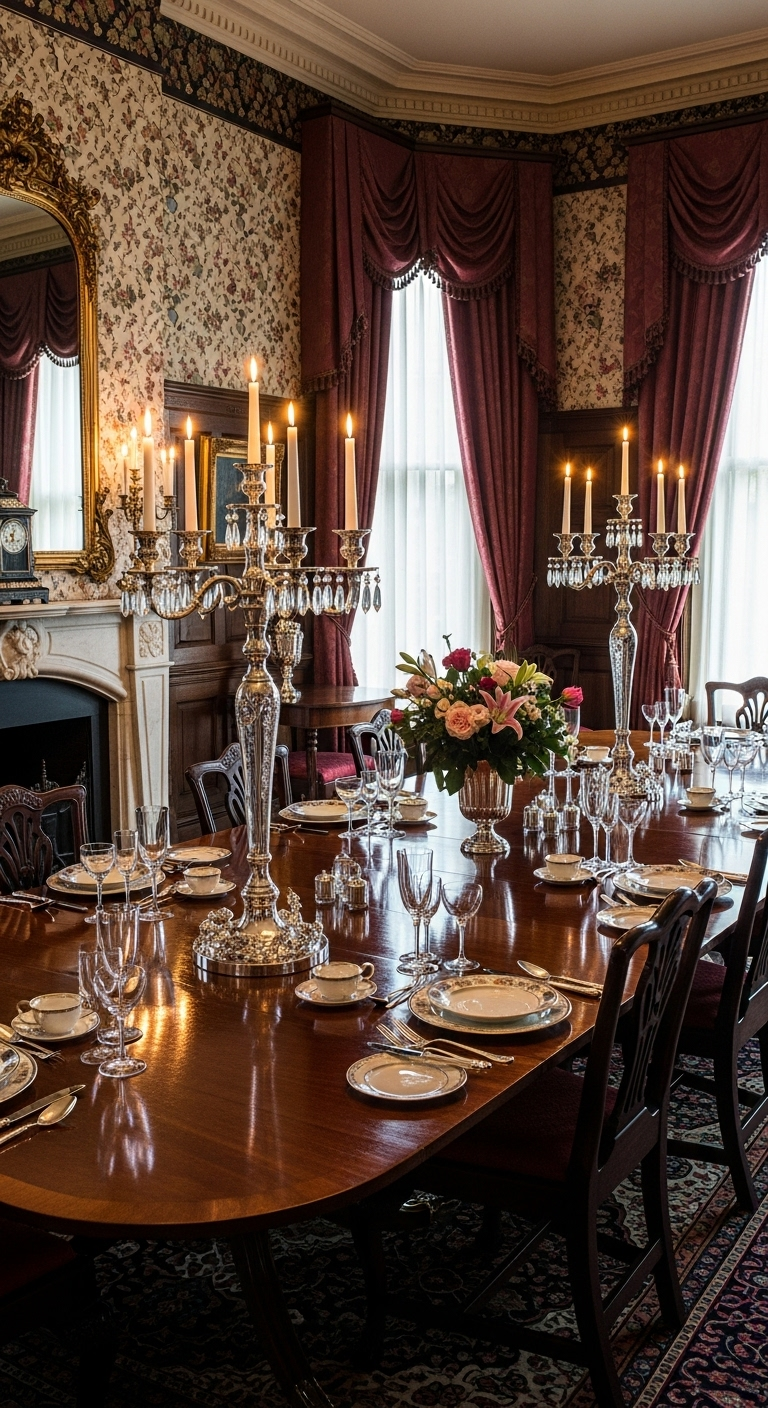
Decorate your table with tall silver candelabras to add a sense of formal elegance and flickering, natural light to your table setting. Candlelight is essential for creating the romantic and “moody” vibe that is a hallmark of the most successful Victorian dining room designs.
The height of the candelabras adds necessary vertical interest to your table without blocking the view of the guests sitting across from you. This traditional accessory is a timeless staple that makes even a simple Tuesday dinner feel like a grand, special celebration.
Choose sterling silver or high-quality silver-plated pieces to introduce a polished, metallic finish that catches the light beautifully. The cool tone of the silver provides a sophisticated contrast to the warmth of brass lighting fixtures or the richness of velvet seating.
Use unscented taper candles to ensure the aroma of your food remains the primary focus during your meal. Select beeswax or high-grade paraffin tapers in ivory or white to maintain a classic, clean aesthetic that complements any color palette.
9#. High-Contrast Checkerboard Flooring
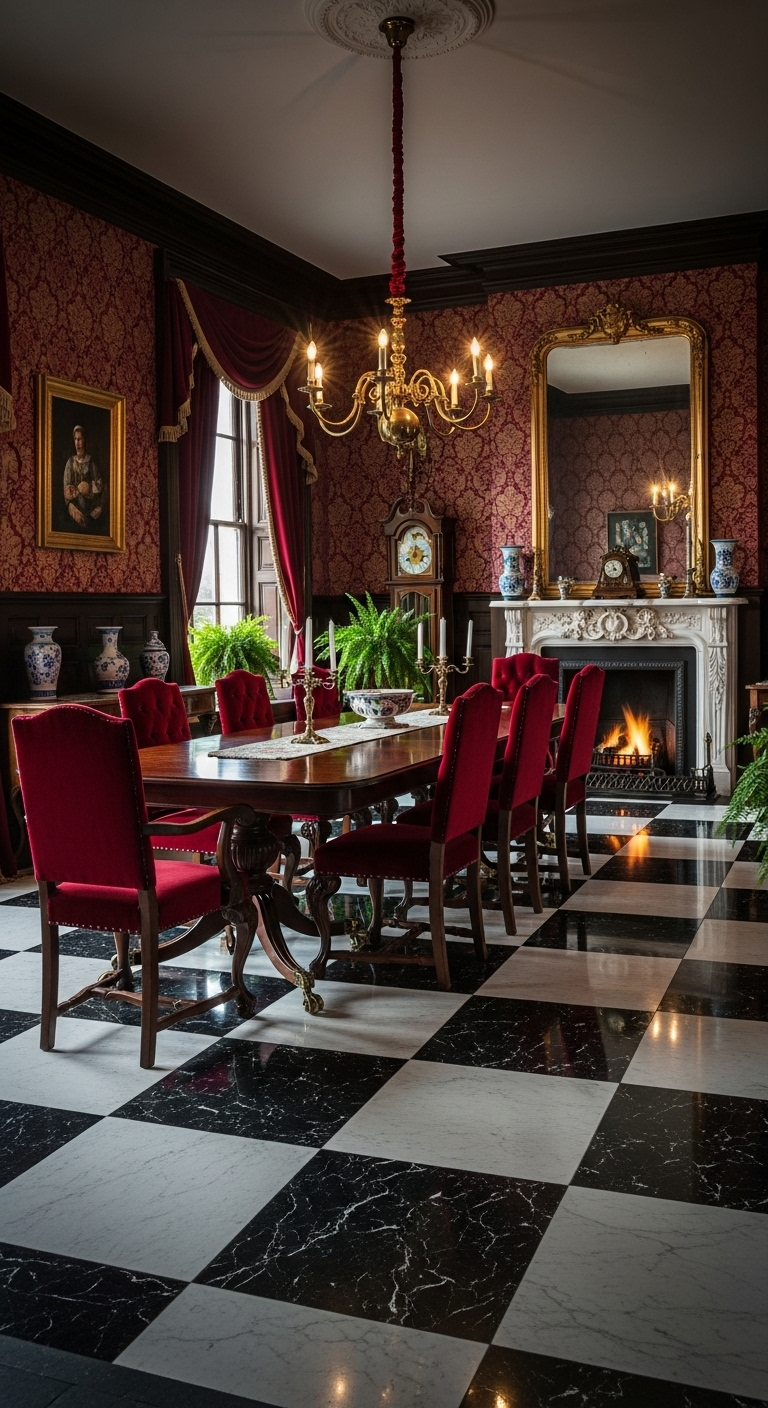
Installing a black and white marble or tile floor in a diagonal checkerboard pattern creates an immediate and dramatic visual impact. This sharp, geometric foundation provides a necessary graphic contrast to the more organic floral patterns found on your walls and plush furniture.
Checkerboard floors are incredibly durable and serve as a timeless luxury statement for your home’s main entertaining and transition areas. This classic flooring choice grounds the room with a sense of historical authority and a polished, designer-led style that feels both grand and permanent.
Choose high-quality marble for a truly authentic, luxurious finish that naturally develops a soft patina over time. For a more modern, low-maintenance approach, select high-grade porcelain tiles that replicate the look of marble while offering superior stain and scratch resistance.
Install the tiles on a diagonal to add dynamic energy to the room and create the illusion of a larger, more expansive floor plan. The diagonal orientation feels more sophisticated and intentional than a standard straight-set grid, perfectly complementing the Victorian focus on architectural detail.
10#. Gilded Ornate Wall Mirrors
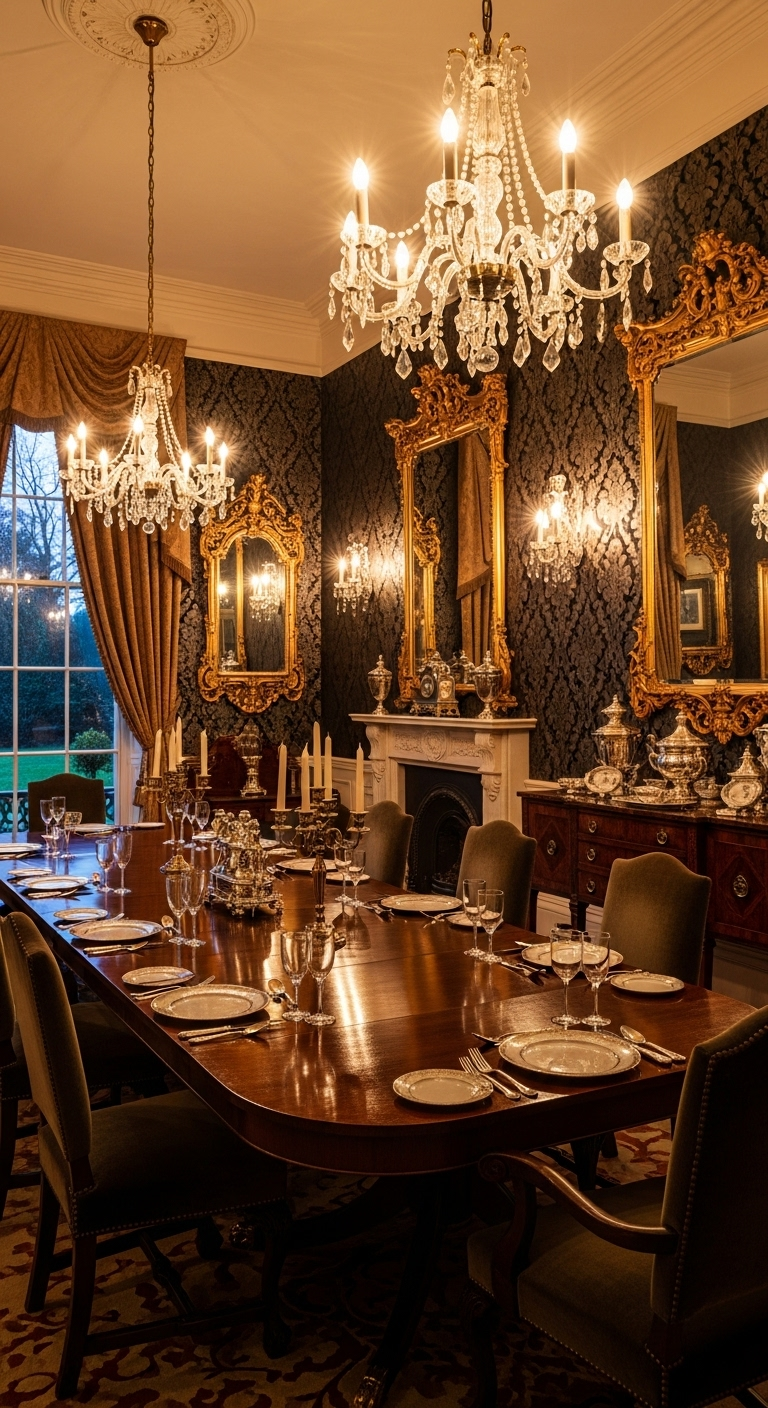
A grand, golden-framed mirror placed above a sideboard or fireplace acts as a radiant focal point that reflects light throughout the space. Mirrors are essential for making a room filled with deep, moody colors feel more expansive, airy, and inviting.
Choose a frame with intricate carvings, acanthus leaves, or bold scrollwork to reinforce the “Old World” luxury that defines the Victorian aesthetic. This single accessory is a powerful tool for adding a touch of instant prestige and cinematic life to your dining area.
Position the mirror to capture the “twinkle” of your tiered chandelier or the flicker of your silver candelabras. This strategic placement doubles the warmth and intimacy of your lighting, creating a magical, layered atmosphere during evening dinner parties.
Select a mirror with beveled glass to add an extra dimension of sparkle and a refined, professional finish. The subtle refraction at the edges of the glass captures even more light, enhancing the mirror’s function as both a design statement and a light-source amplifier.
11#. Dark Marble Fireplace Mantels
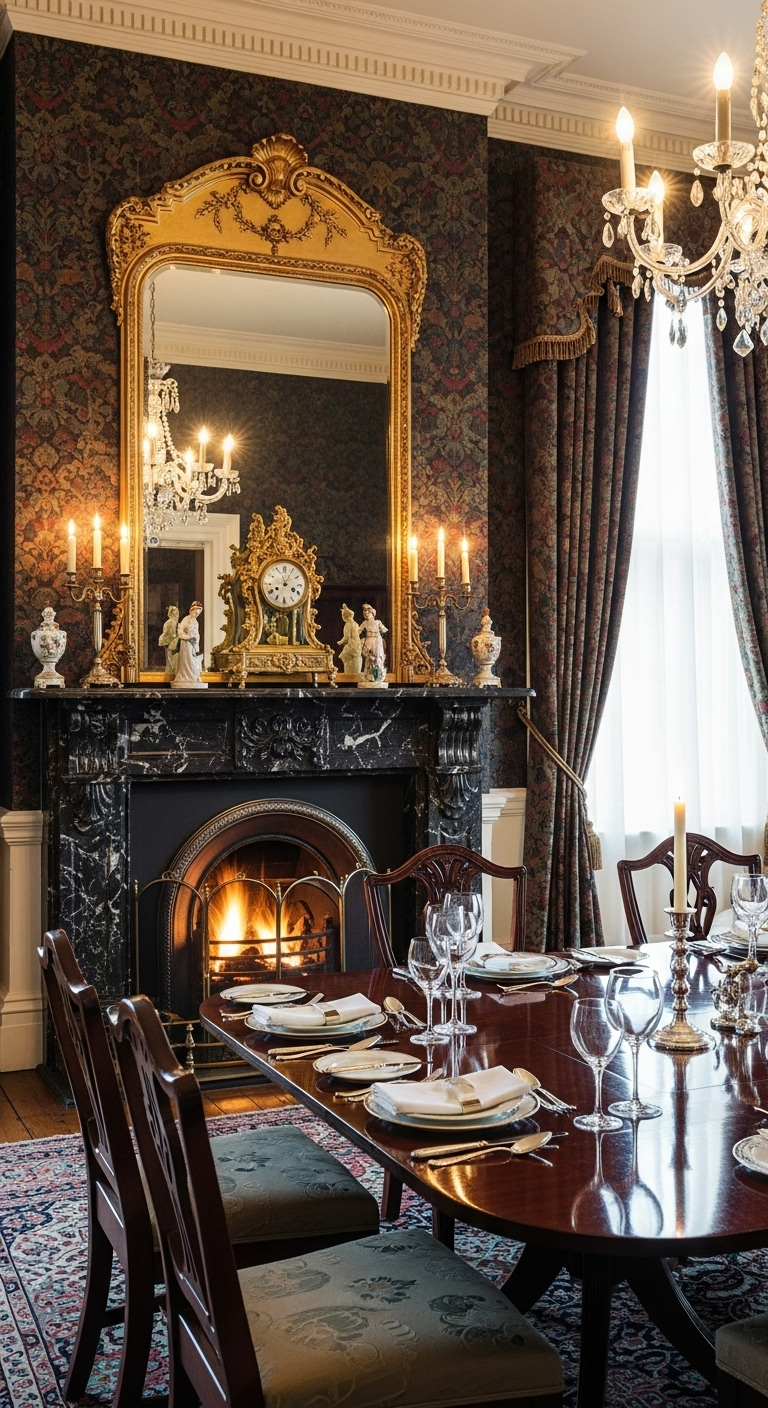
If your architecture allows, a black or dark grey marble mantel provides a sense of profound warmth and history to the dining room. This feature serves as the soul of the room, providing an elevated focal point for styling with vintage clocks, gilded mirrors, and fresh seasonal botanicals.
Even if the fireplace is non-functional, filling the hearth with a variety of pillar candles creates a stunning, cozy glow during your dinner parties. A fireplace is a central, grounding element in traditional Victorian dining room design that instantly fosters a relaxing and intimate atmosphere for your guests.
Choose a mantel with strong, architectural lines or carved corbels to emphasize the period-authentic grandeur of the Victorian era. The cool, dark texture of marble creates a sophisticated contrast against vibrant floral wallpaper or rich, velvet curtains, acting as a structural anchor for your decor.
Treat your mantel as a “changing stage” by rotating your display items—such as brass candlesticks in the winter and delicate porcelain vases in the spring. This continuous curation ensures your room always feels fresh, intentional, and reflective of the current season.
12#. Lace and Linen Table Settings
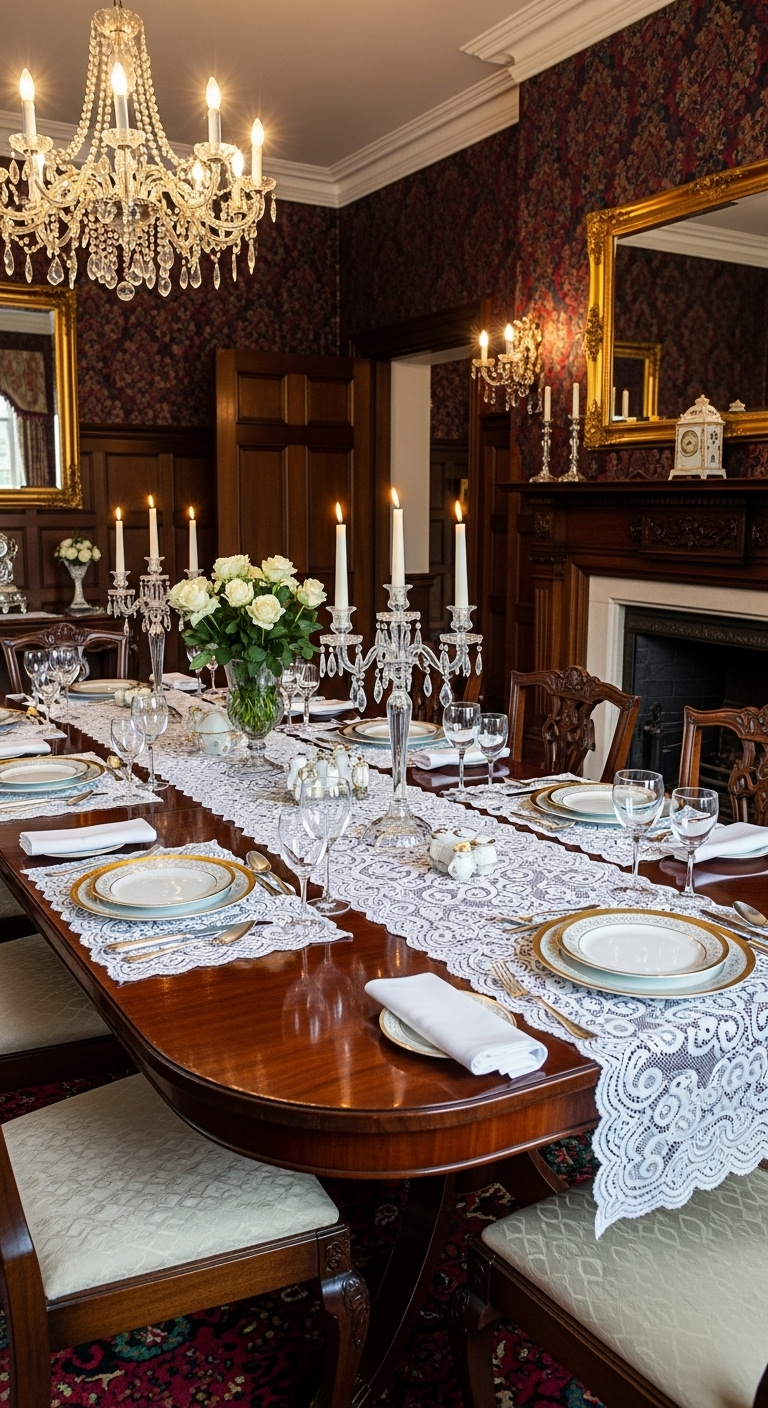
Set your table with a combination of delicate lace runners and crisp white linen napkins for a touch of soft, feminine charm. This thoughtful layering of textures provides a beautiful, tactile contrast to the heavy, dark wood of your table and the brilliant metallic shine of your cutlery.
Lace adds a sense of handcrafted soul and vintage romance that feels incredibly appropriate for a high-end Victorian dining experience. It is a budget-friendly way to introduce intricate patterns and airy “lightness” to your daily table arrangement without overpowering the space.
Choose a vintage-inspired lace runner with scalloped edges to soften the hard, rectangular silhouette of your table. Allowing the runner to drape gracefully over the sides reinforces the fluid, romantic aesthetic essential to period-inspired decor.
Pair the lace with ironed, starch-crisp linen napkins to create a perfect balance between delicate femininity and formal structure. The crispness of the linen ensures the table remains looking tailored and intentional, even when the lace introduces a softer note.
13#. Built-In Glass-Front Buffets
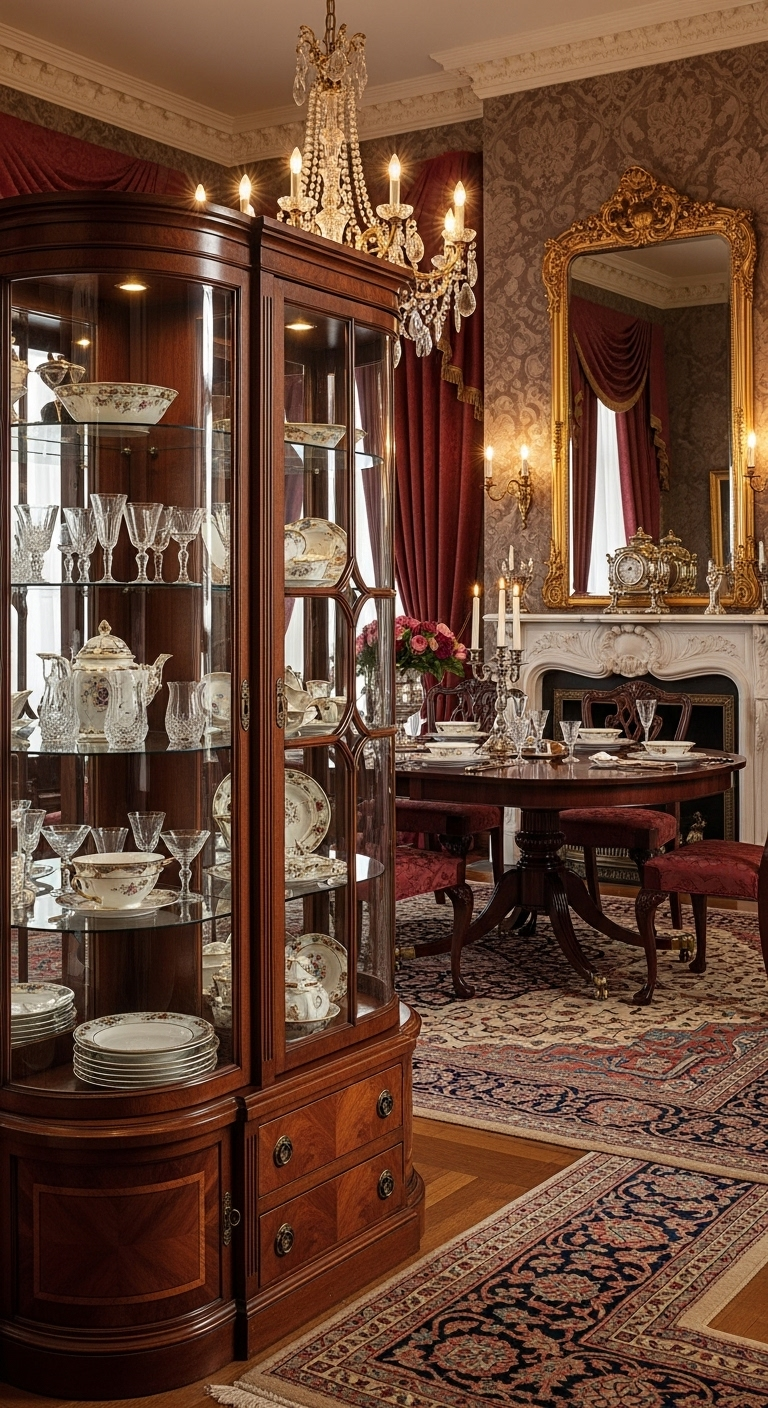
Incorporate a tall, wooden buffet with glass doors to display your collection of fine china, crystal stemware, and antique silver. This functional, substantial piece of furniture keeps your hosting essentials organized while serving as a beautiful, vertical art display that highlights your personal history.
Using internal cabinet lighting can highlight the delicate sparkle of your glass, adding a modern, ethereal “glow” to a traditional storage solution. It is an exceptionally smart way to maximize vertical space while reinforcing the room’s curated, sophisticated, and collected theme.
Select a buffet with fine wood craftsmanship—such as rich mahogany or walnut—to maintain the period-authentic feel of your Victorian-inspired dining room. The warmth of the wood provides a beautiful, grounding contrast to the crystalline brilliance of your stemware and silver housed inside.
Arrange your items by height and material, creating “vignettes” within the shelves rather than overcrowding them. Leaving a bit of space between pieces allows the eye to appreciate the individual details of your china patterns and the intricate silhouettes of your crystal.
14#. Rich Persian and Oriental Rugs
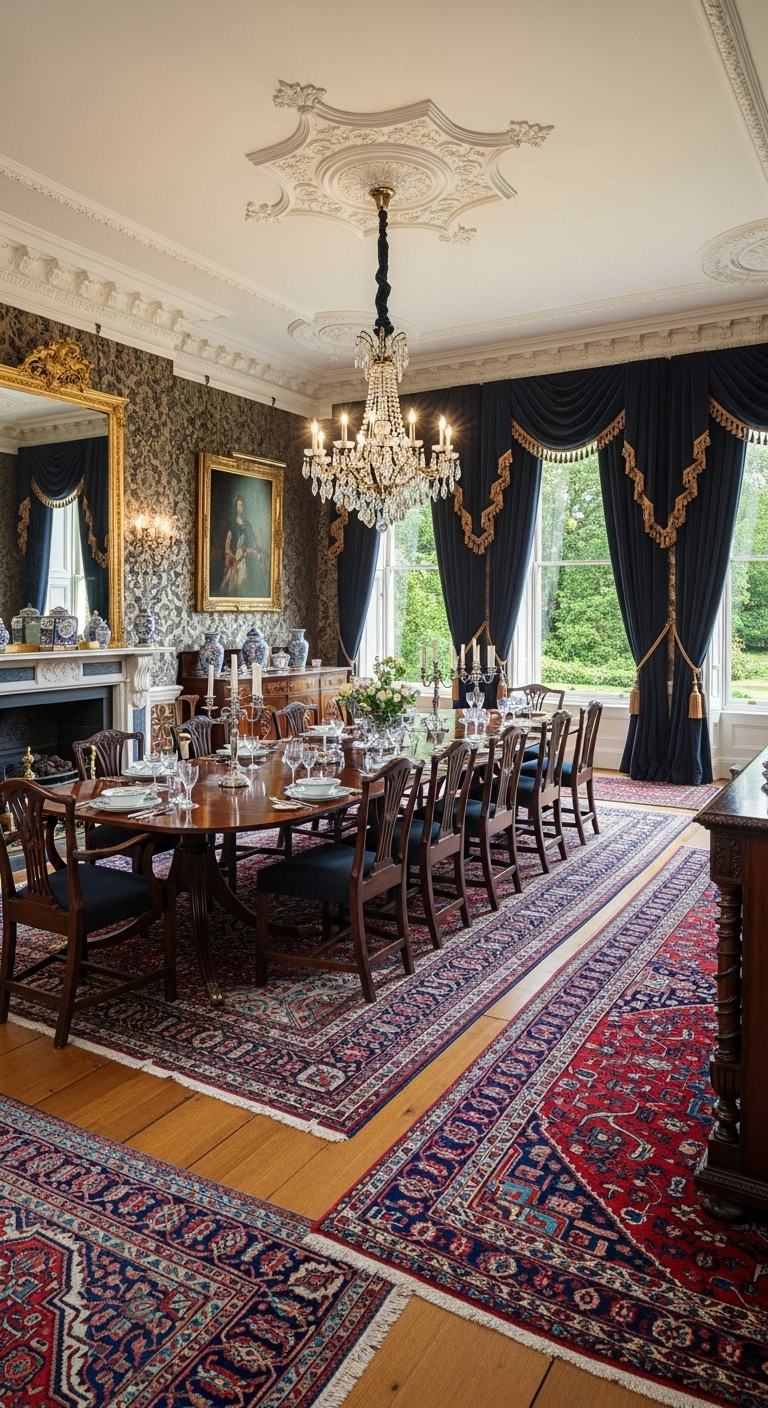
Place a large, hand-knotted rug featuring intricate traditional patterns and deep, saturated reds or blues under your dining furniture set. The dense, luxurious weave provides a soft foundation and helps to dampen sound, making your dining room feel more private, sheltered, and intimate.
Oriental rugs are renowned for their incredible durability and only grow more beautiful with age, making them a wise, long-term investment for a high-traffic home. This vital layer of color and texture is the secret to a cozy and successful execution of your Victorian dining room design.
Choose a rug size that extends at least 24 to 30 inches beyond the edge of your dining table on all sides. This ensures that when guests pull their chairs out to sit, all four legs remain firmly on the rug, preventing any uneven transitions that could detract from your room’s polished flow.
Select deep, rich color palettes—such as wine-reds, indigos, or forest greens—to harmonize with your moody floral wallpapers and mahogany furniture. The complex, traditional motifs found in these rugs naturally complement the “more-is-more” philosophy of the Victorian era, adding depth and narrative to your floor.
15#. Hand-Painted Botanical Art
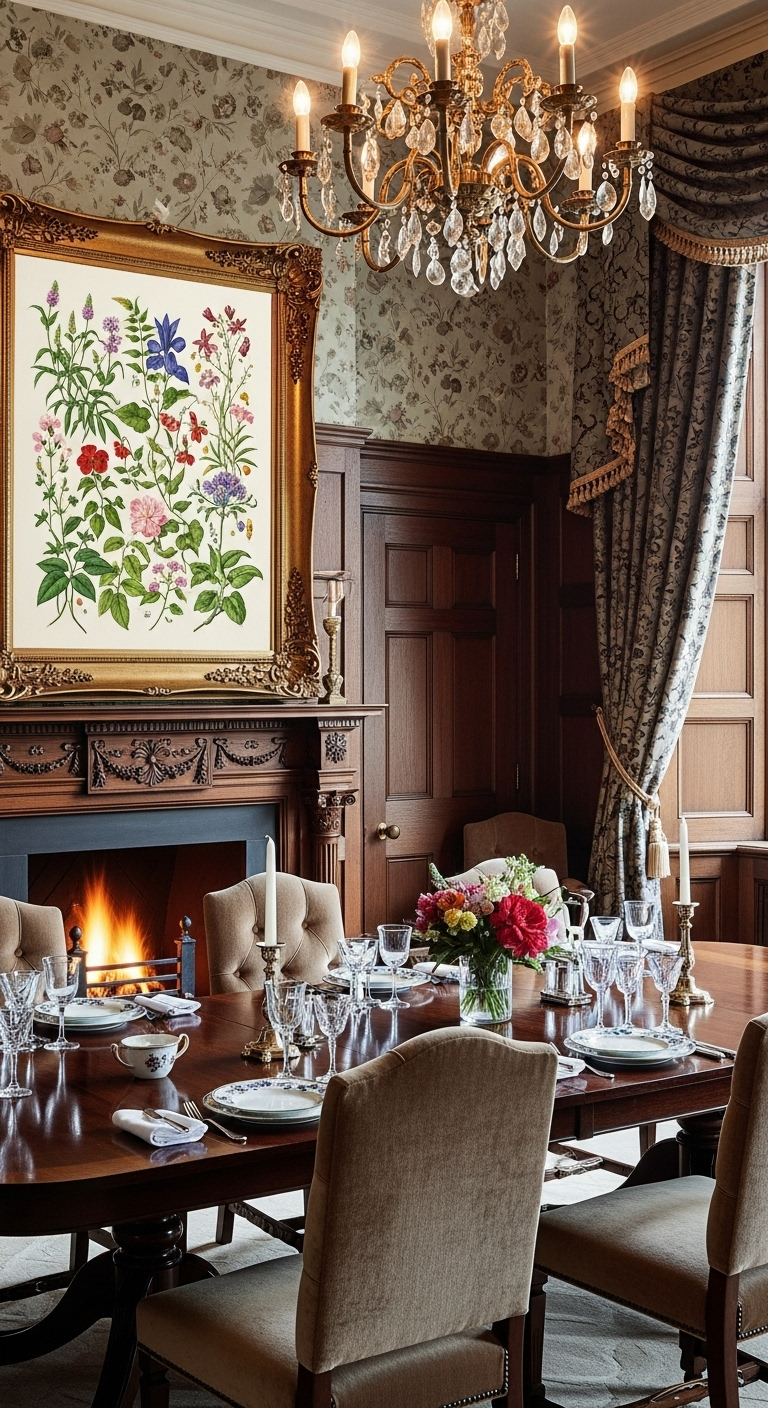
Decorate your walls with a series of framed botanical prints or hand-painted sketches featuring birds, flowers, and natural history. These prints provide a sophisticated, “academic” touch that perfectly reflects the Victorian era’s deep-rooted fascination with the natural world.
Using thin gold frames keeps the look consistent and ensures the art feels like a cohesive part of the room’s overall luxury palette. A gallery wall of botanicals adds personality and movement to a space that values both stillness and curated beauty.
Select prints that feature soft, muted background tones to contrast beautifully against your saturated, dark-colored wallpaper or wainscoting. The delicate lines of the illustrations draw the eye in for a closer look, rewarding guests who appreciate the fine, intricate details of your decor.
Group your frames in a structured grid for a formal, traditional look, or arrange them in a free-form “salon style” to create a more organic, collected aesthetic. Both approaches honor the Victorian preference for maximalist storytelling, turning your dining room walls into a personalized exhibition of history and nature.
16#. Stained Glass Window Inserts
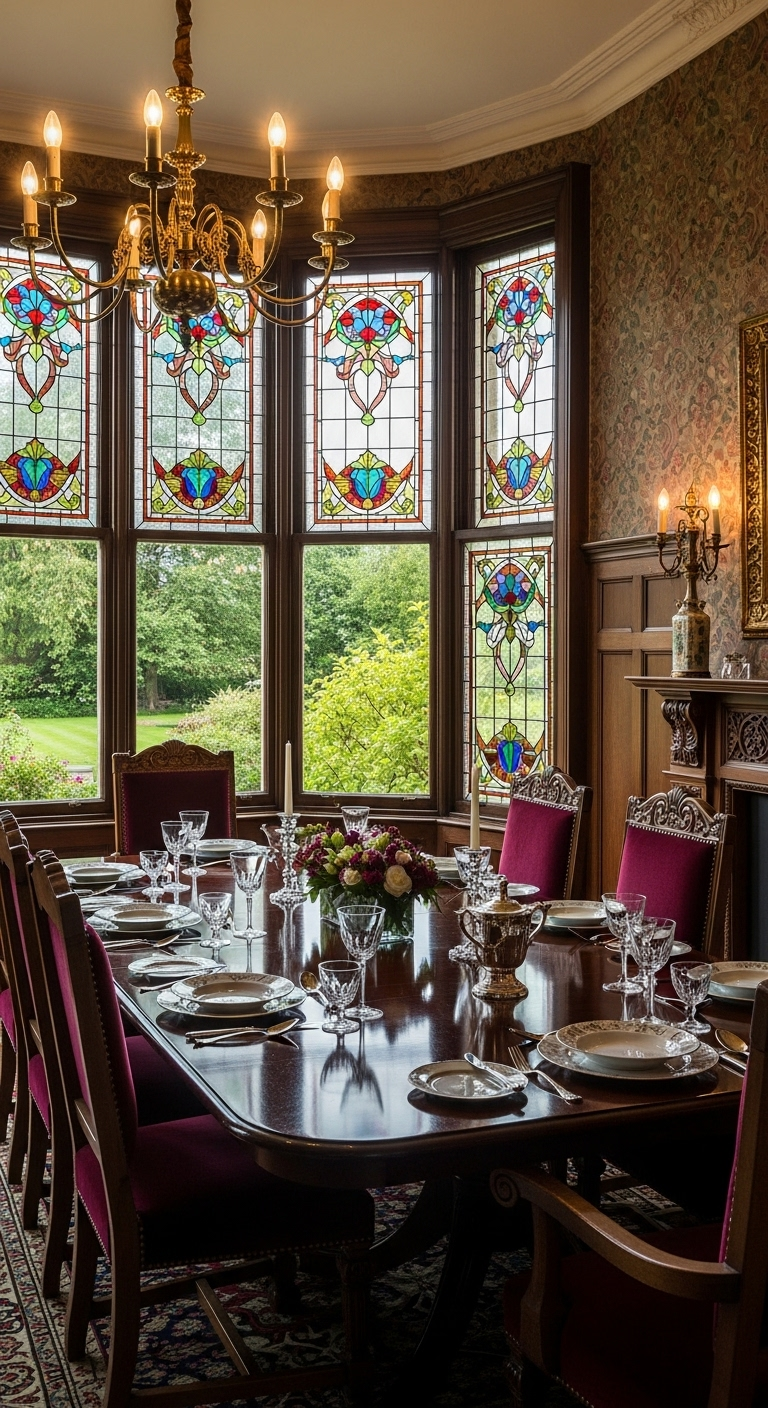
Install small stained glass panels into your windows featuring minimalist floral or geometric designs in shades of deep amber and ruby. These beautiful inserts allow light to filter through in dancing, colorful patterns, naturally changing the mood as the sun moves across.
Stained glass acts as a permanent piece of jewelry for your home, adding a touch of vintage artisanal charm to your dining space. It is a thoughtful way to honor the craftsmanship of the past while keeping your dining room feeling entirely unique and personal.
Choose panels that utilize lead came in a traditional dark finish to provide a sharp structure that complements your heavy furniture. The dark lead lines anchor the colored glass, ensuring the design feels like a cohesive part of your window architecture today.
Opt for these warm tones to lean into a rich palette that glows beautifully when the light hits the glass surface. These specific hues harmonize perfectly with brass chandeliers and dark wallpapers, reinforcing the intimate atmosphere you have worked to create.
17#. Decorative Wood Ceiling Beams
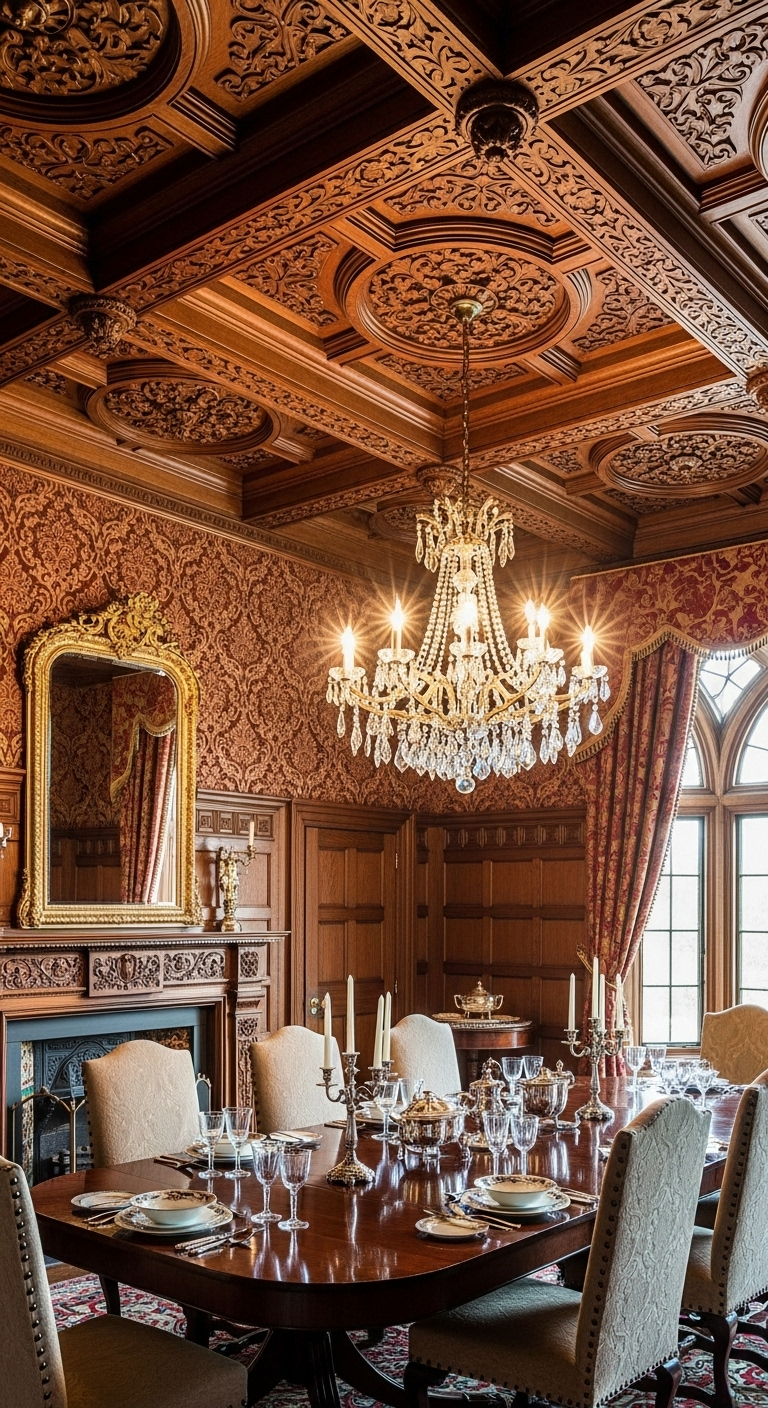
Apply dark wood beams to the ceiling to add a sense of structural honesty and manor-house warmth to your room. The heavy timbers provide a protective feel overhead that makes the dining area feel safe, sturdy, and historically established.
The vertical and horizontal lines of the beams help to define the space, especially in homes with open floor plans. This is a powerful architectural update that distinguishes a high-end Victorian renovation project from a basic, standard home remodel.
Select reclaimed oak or pine to ensure the grain and texture feel authentic, adding an aged character to your ceiling. You can stain these materials in deep espresso or walnut tones to create a bold contrast against lighter plaster ceilings.
Install the beams in a symmetrical grid or parallel pattern to draw the eye upward and emphasize your ceiling height. This layout brings a formal sense of order to the dining area, which is essential for achieving a balanced look.
18#. Polished Silver Serving Trays
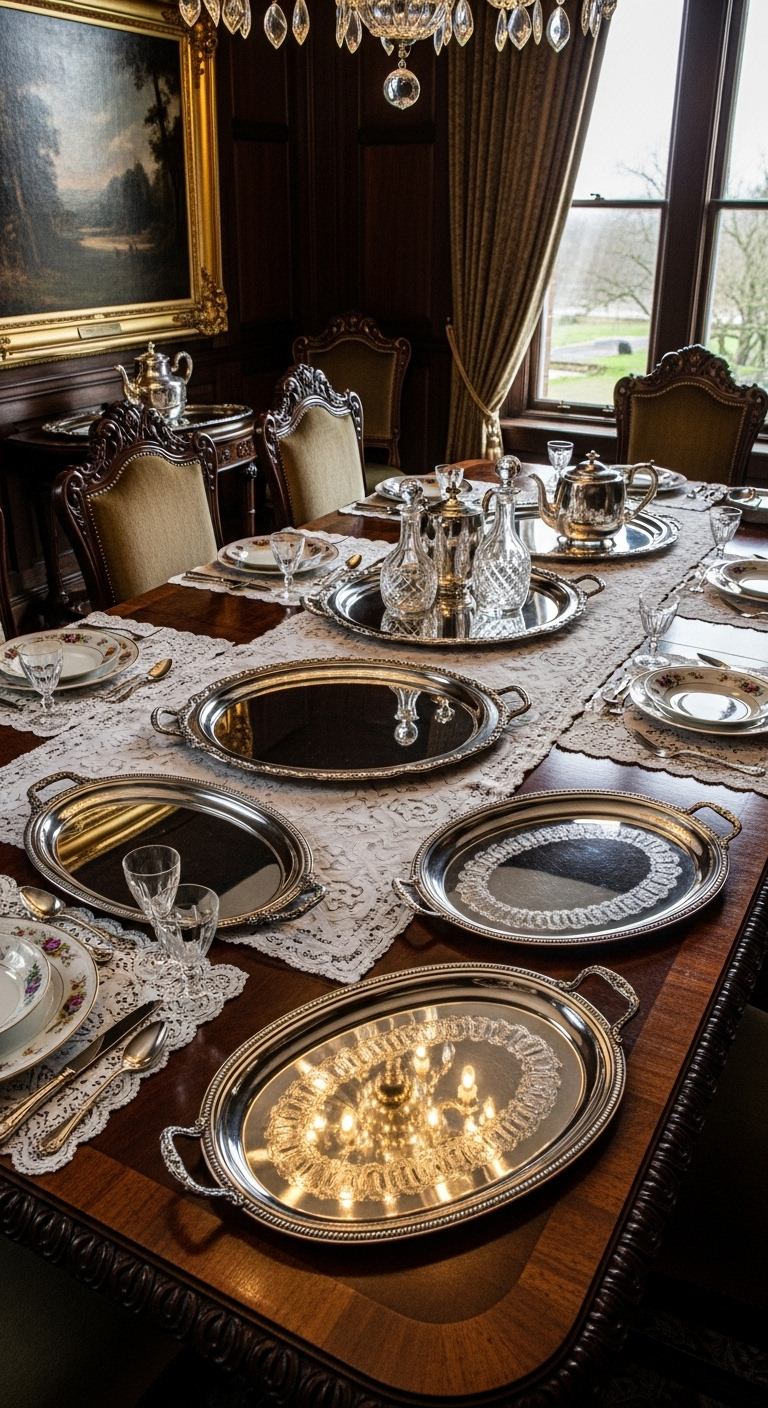
Use a collection of polished silver or pewter trays on your sideboard to hold your favorite crystal decanters and glass. This touch of metal adds a crisp shimmer that balances the warmth of your surrounding velvet, wood, and dark wallpaper.
Metallic accents prevent a moody room from feeling too one-dimensional and add a sense of professional polish to your service. They are a classic accessory that reinforces the gourmet and formal spirit you are aiming for in your dining room.
Group your trays to create a designated bar area, which keeps your serving essentials organized and ready for every guest. Mixing circular and rectangular trays allows you to play with different shapes, adding a layer of visual interest and depth.
Choose trays with detailed edges or handles to mimic the ornamental style popular in historic homes and grand estates. These pieces act as both functional storage and decorative art, elevating your sideboard into a well-curated and practical display.
19#. Sculptural Busts and Statues
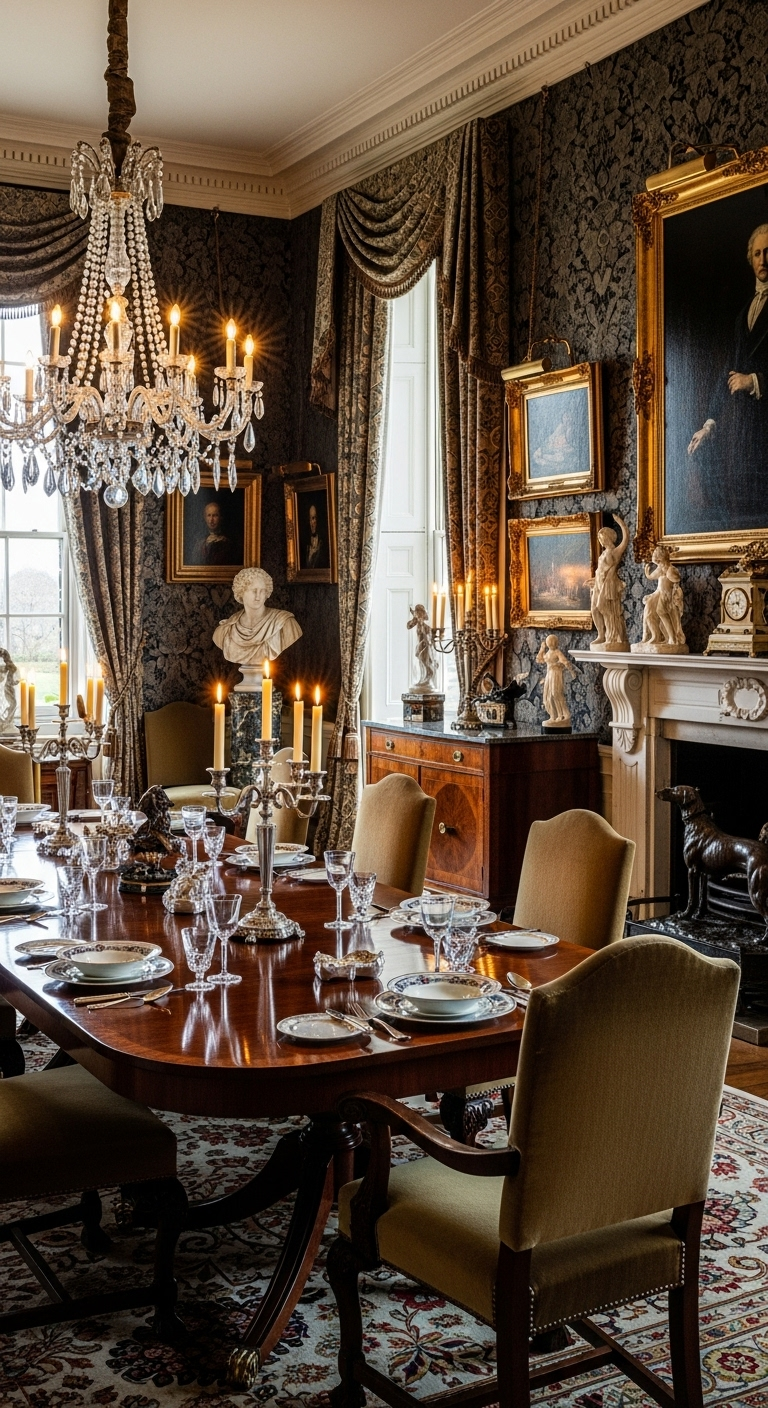
Place a marble or plaster bust of a historic figure on a pedestal or sideboard to add intellectual and classical drama. This gallery approach turns a corner of the dining room into a purposeful destination that celebrates timeless art and history.
Statues add a sense of verticality and importance to your decor, making your home feel like a curated, museum-quality sanctuary. It is a bold and prestigious way to execute the Victorian aesthetic for a master-level home renovation or redesign project.
Select a bust with fine facial details and a weathered patina to ensure it feels authentic rather than mass-produced or new. The classic white or cream finish of the stone creates a beautiful, bright focal point against your dark, moody dining walls.
Position your chosen piece at eye level so that guests can appreciate the craftsmanship from across the dinner table easily. This height ensures the statue commands attention and serves as an anchor for the surrounding decorative accessories and floral arrangements.
20#. Inset Wall Lighting (Art Lights)
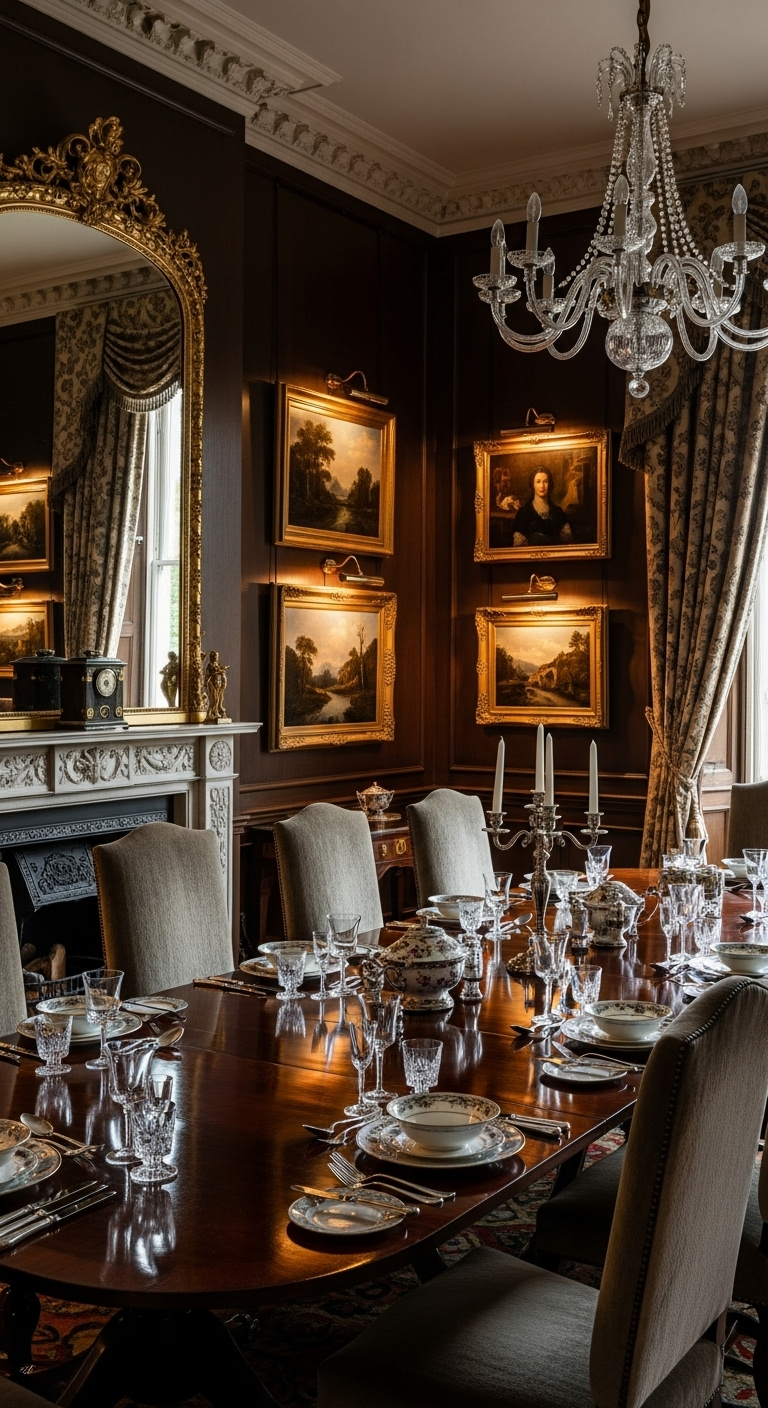
Install slim, horizontal brass lights above your favorite paintings to provide a dedicated, gallery-style illumination for your private collection. These lights make your dining room feel like a professional art space and add a touch of prestige at night.
The metallic finish provides a subtle sparkle at eye-level, enhancing the overall atmospheric glow of the room during dinner parties. It is a functional accessory that makes even simple sketches look like high-value, museum-quality masterpieces for all your guests.
Choose lights with a warm, dimmable color temperature to ensure the illumination feels cozy rather than clinical or overly bright. Adjusting the intensity allows you to match the lighting level to the rest of your room’s soft, ambient evening glow.
Position the light heads to angle perfectly across the canvas, ensuring that the entire image is lit without distracting glare. A professional placement highlights the brushstrokes and textures of your art, creating a dramatic, focused effect on every wall.
21#. Rich Suede Wall Panels
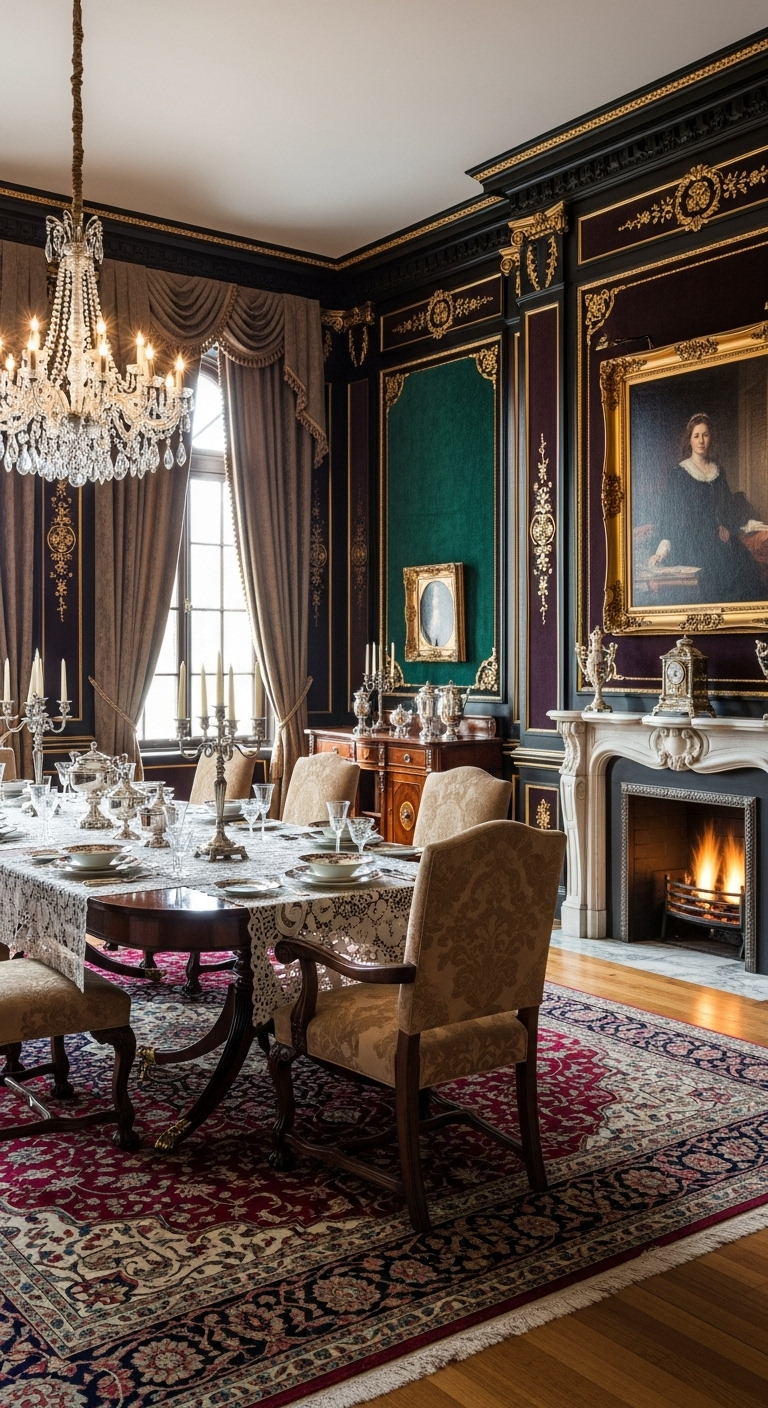
For the ultimate in sensory luxury, consider a feature wall covered in deep emerald or charcoal suede panels. This adds a sophisticated lounge feel that makes your dining room feel exceptionally private, grounded, and completely sheltered.
The soft surface of the suede helps to dampen sound, making your dinner parties feel intimate and much quieter. It is a bold and prestigious way to execute a design project for a truly master-level home renovation outcome.
Select panels with a structured backing to ensure they hang perfectly straight and maintain a crisp, clean architectural edge. The matte finish of the fabric creates a stunning contrast against polished mahogany furniture or gleaming gold metallic accents.
Consider applying the panels to a single focal wall behind your sideboard to draw attention to your curated display. This placement creates a luxurious backdrop that makes your fine china and glassware appear to pop with extra brilliance.
22#. Ornate Wrought Iron Railings
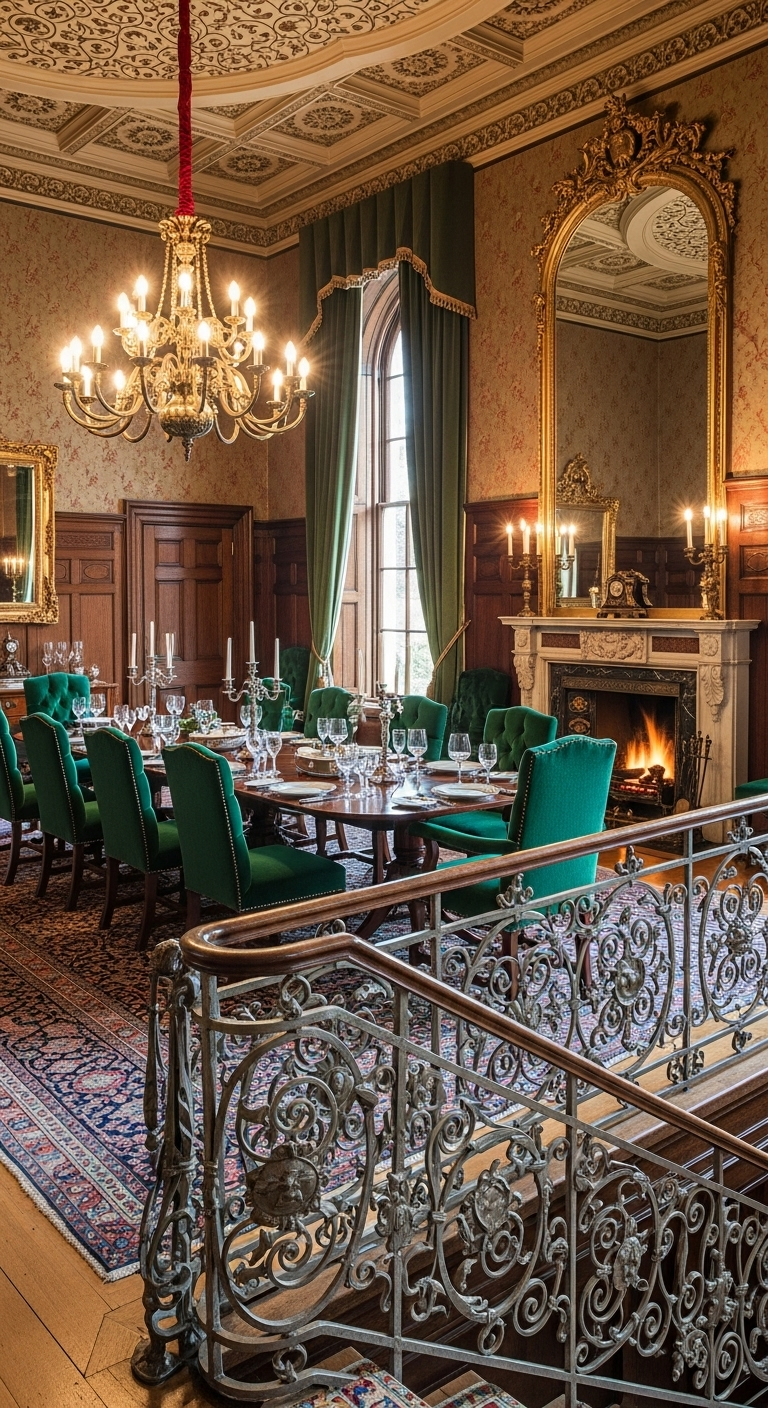
If your dining room is part of a split-level floor plan, use custom wrought iron railings featuring intricate scrollwork. These unique metalwork designs add a sense of permanent, structural art that defines the entire character of your area.
Wrought iron provides a heavy, grounded contrast to airy glass lighting and soft velvet textiles for a balanced aesthetic. It is a high-value architectural feature that bridges the gap between traditional old-world craftsmanship and your modern home design.
Select motifs that mirror the curves in your botanical prints or the shapes of your vintage-inspired chandelier and furniture. Consistency in these subtle, recurring patterns helps to tie the different architectural elements together into one harmonious, cohesive look.
Work with a skilled metalworker to ensure the scrollwork is sized perfectly for your specific staircase or landing height. Custom dimensions prevent the railing from feeling cramped or oversized, ensuring it sits comfortably within the flow of space.
23#. Curated Porcelain Vase Collections
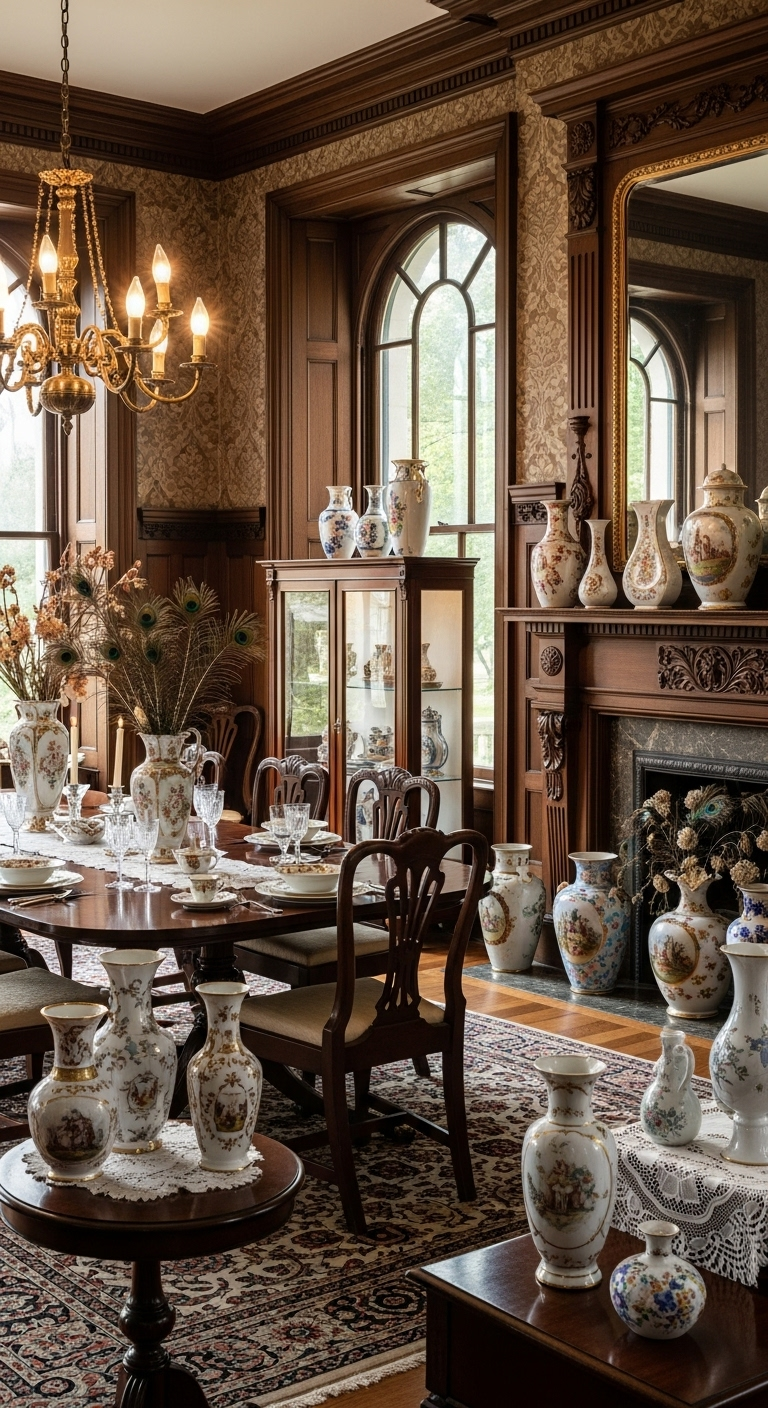
Display a collection of tall, slim porcelain vases in monochromatic white or blue on your sideboard for a refined look. The smooth, glossy surface of the porcelain adds a cooling texture that complements your warm woods and metallic accents.
Grouping vases in varying heights creates a dynamic vignette that draws the eye and showcases your love for fine craftsmanship. It is a simple and effective way to add a layer of personal style to your classic dining room design.
Select pieces with subtle, embossed patterns or delicate hand-painted details to honor the Victorian era’s appreciation for fine china. These fine details provide an interesting tactile element that guests will notice when they are seated at your table.
Position your collection at one end of the sideboard to leave space for other decorative items like silver trays. This asymmetrical arrangement prevents the display from looking too rigid, creating a more natural and balanced visual flow overall.
24#. Silk and Tassel Tie-Backs
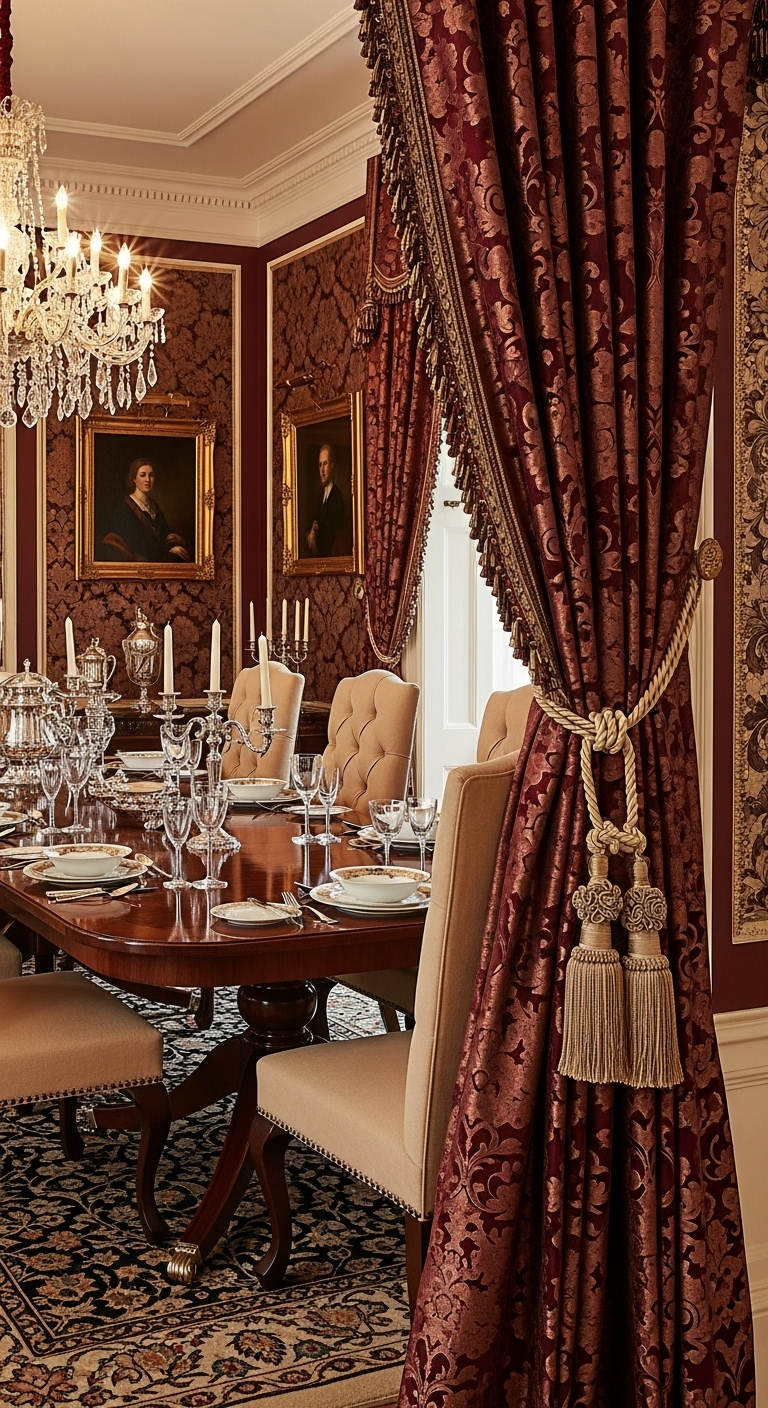
Use heavy silk tassels to pull back your velvet curtains, adding a layer of theatrical detail and warmth to your windows. The weight and texture of the tassels provide a refined finish that feels traditional, high-end, and very intentionally designed.
Tie-backs allow you to control the amount of light entering the room while maintaining a beautiful, draped curtain silhouette. This small textile detail adds a final layer of luxury to your high-end Victorian-inspired dining room sanctuary and space.
Select tassels in a deep, saturated color that matches your velvet fabric to create a subtle, monochromatic and cohesive look. Alternatively, choose gold or bronze accents to coordinate with your metallic light fixtures and other hardware throughout the room.
Mount your decorative hooks at a height that allows the velvet to fall in soft, graceful folds toward the floor. Proper positioning ensures the curtains frame your windows perfectly, maximizing the natural light while keeping the edges neatly secured.
25#. Ebony and Ivory Color Schemes
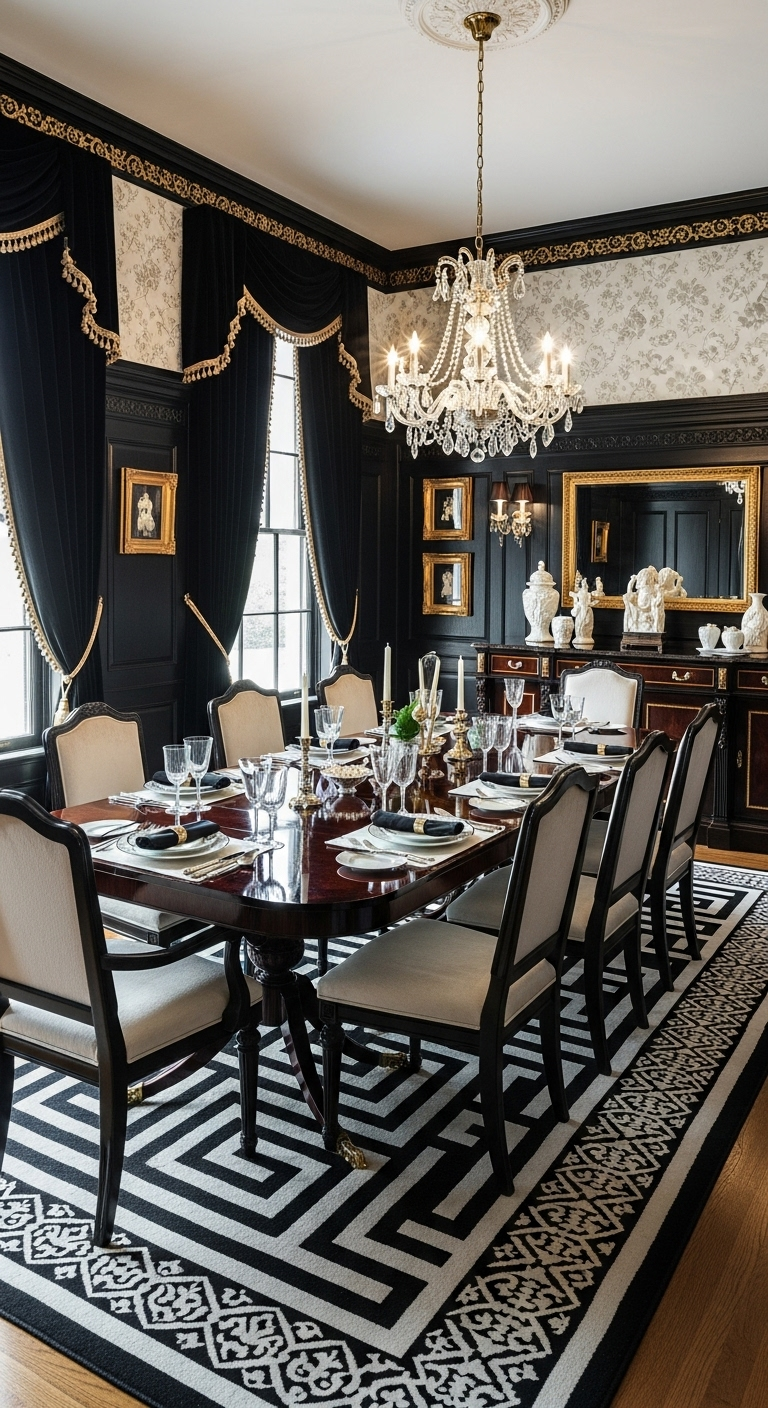
Embrace the “Piano Key” palette by using a strict black-and-white color story for your walls, furniture, and decorative accessories. This high-contrast look is incredibly sophisticated and allows you to play with complex textures without overwhelming the eyes.
The simplicity of the colors makes the intricate carvings of your Victorian furniture stand out with much more graphic clarity. This monochromatic approach is a foolproof way to achieve a timeless and expensive-looking aesthetic for your entire home.
Use pure white on your walls to create a bright, airy foundation that allows your darker, dramatic furniture to shine. Layering in black accents—like ebony-stained chairs or ornate frames—creates a rhythmic, sharp contrast that feels balanced and expertly curated.
Incorporate varied finishes like glossy lacquer, matte wood, and soft linen to keep the space from feeling flat or clinical. The interplay of light and shadow across these different surfaces adds necessary depth to your stark black-and-white dining room.
26#. Inset Wall Niches for Vases
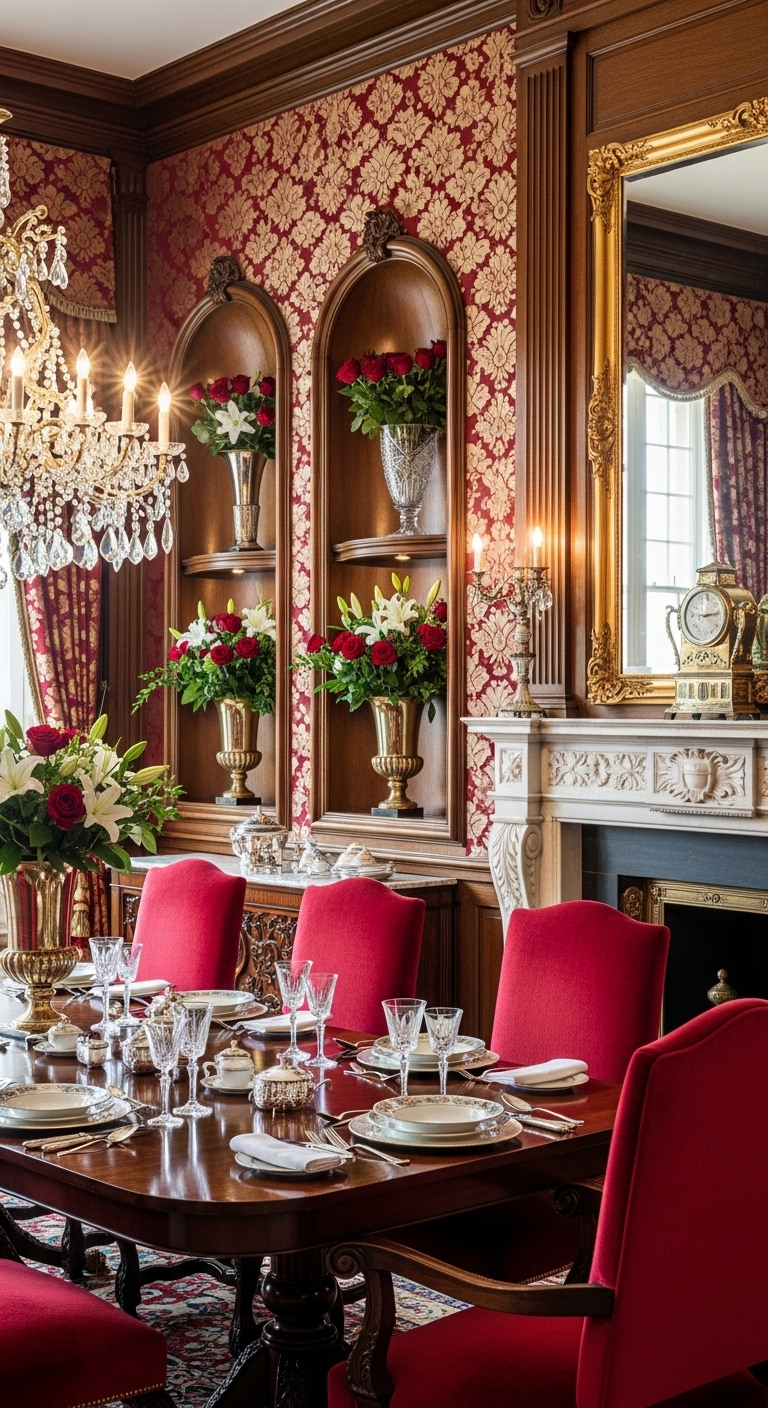
If you are remodeling, carve out small arched niches into the wall to provide a dedicated, recessed display space. This structural detail adds a sense of architectural honesty and built-in quality that feels custom and historically very accurate.
Adding a small spotlight inside the niche highlights the texture and shape of your pottery, creating a dramatic vibe. It is a brilliant way to incorporate Victorian design ideas into the very bones of your modern, updated house.
Select a location that serves as a visual focal point, such as flanking a fireplace or framing a sideboard. Creating this symmetry brings a formal sense of order to your dining area, which is vital for a polished, classic look.
Paint the interior of the niche in a contrasting color or add wallpaper to make your displayed items pop. This simple design choice creates a beautiful, framed stage for your most treasured antique pieces to take center stage.
27#. Subtle Earth-Tone Paint Palettes
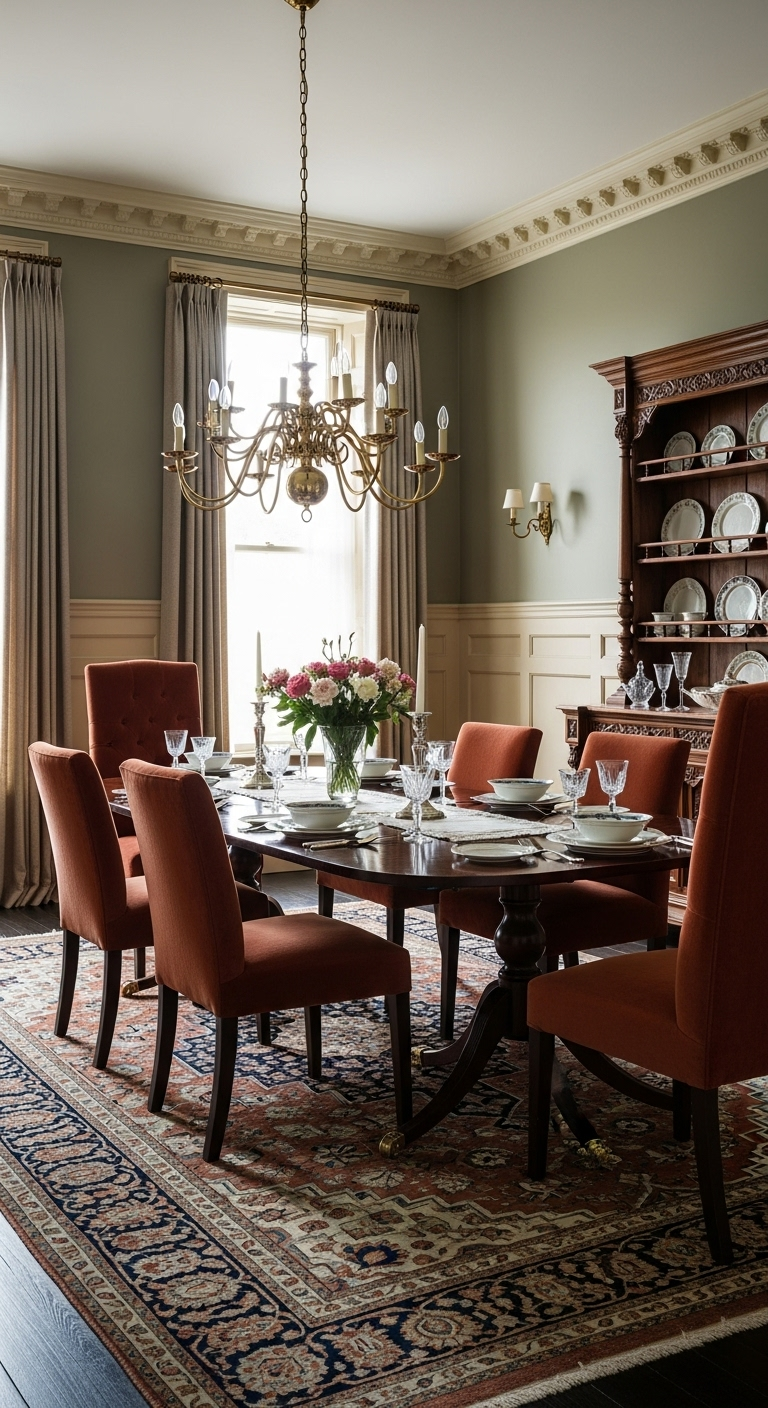
If wallpaper is not for you, choose warm greige, soft sand, or misty sage green to enhance your wood furniture. These earth-toned colors provide a comforting and cocoon-like backdrop that emphasizes the natural wood grain throughout the dining room.
A soft-focus color palette is essential for creating the tranquil and restorative energy that defines high-end period home interiors. It allows the intricate carvings and gold accents of the room to be the main star of the show daily.
Select a flat or matte paint finish to diffuse the light gently, creating a sophisticated and elegant atmosphere for guests. Matte surfaces hide minor wall imperfections, ensuring that your background remains smooth and doesn’t distract from your primary decor elements.
Apply a slightly darker shade of your chosen wall color on the trim to create a subtle, high-end architectural contrast. This technique adds dimension to the space, making your walls feel more intentional and expertly finished than a plain coat.
28#. Faux-Marble Wall Finishes
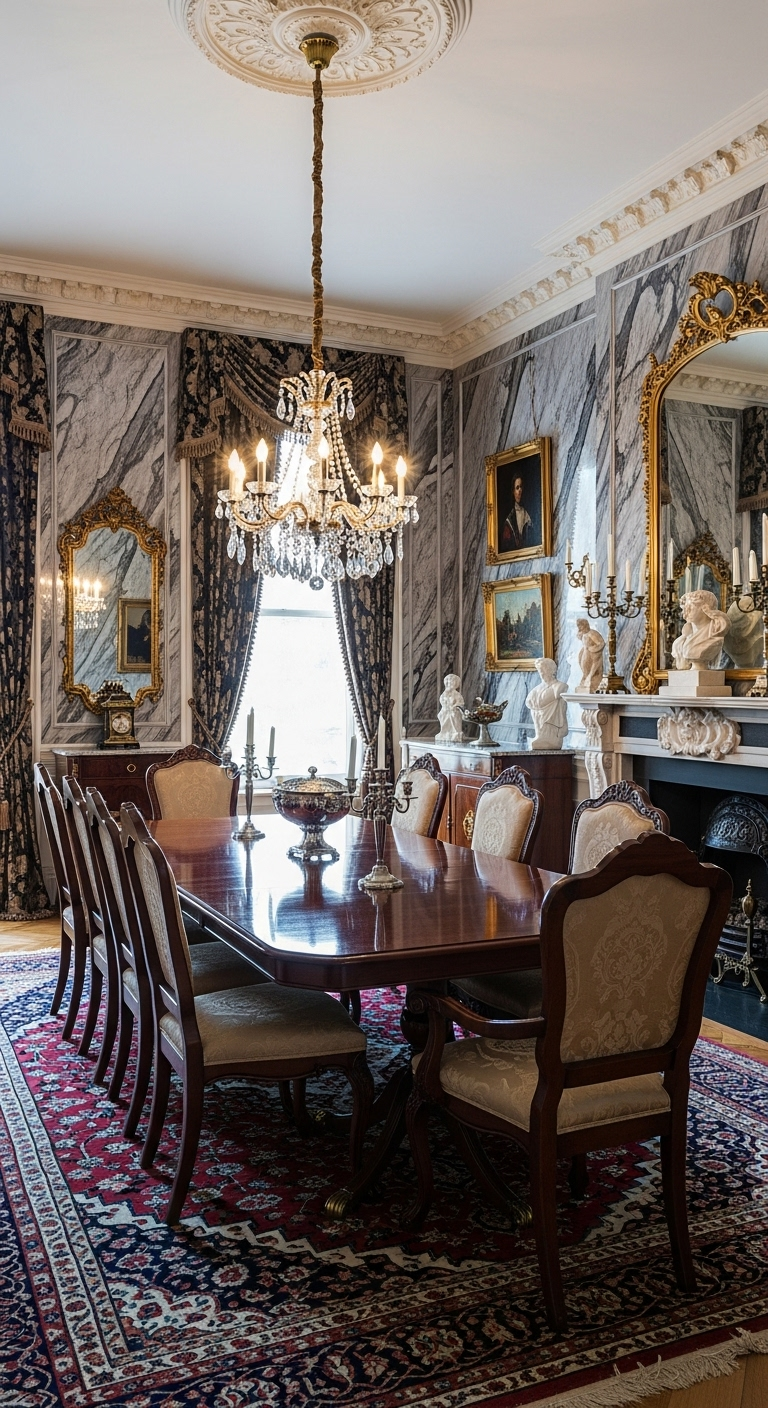
If solid stone is out of budget, use a high-quality faux-marble paint technique to create the look of expensive walls. This adds a sense of classical luxury and permanent weight to your entrance without needing heavy, expensive structural requirements.
Faux-finishing allows you to customize the color and veining of the stone to match your specific dining room ideas. It is a creative way to achieve a palazzo feel in a modern suburban home for a fraction of the cost.
Select a base color that mimics the natural, creamy undertones of real marble to provide an authentic, warm foundation. Using multiple glazes allows you to build depth and luminosity, ensuring the surface looks like real stone rather than paint.
Work in small, manageable sections to ensure you maintain control over the veining patterns for a natural, flowing appearance. Applying the paint in layers mimics the organic process of geological formation, resulting in a unique and high-end finish.
29#. Linear Brass Picture Lights
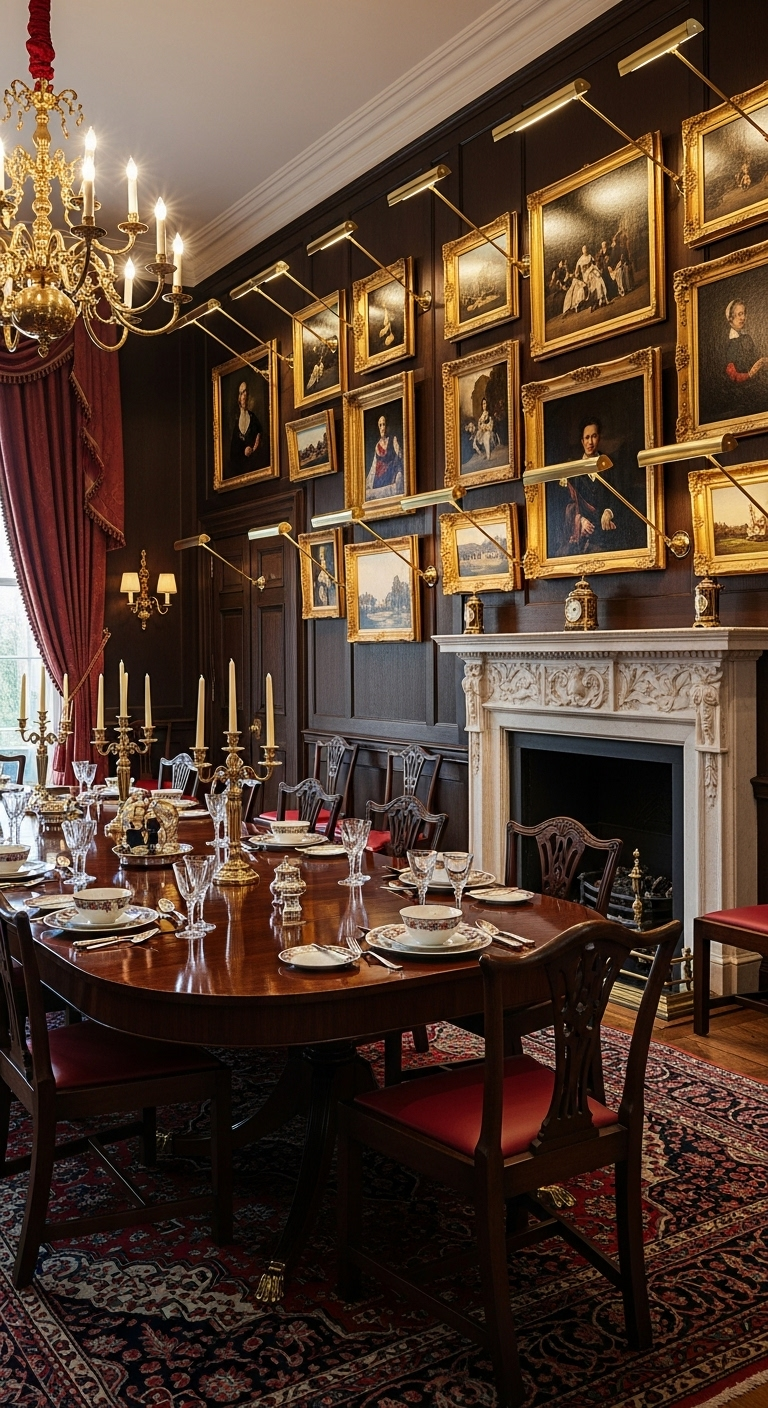
Install slim, horizontal brass lights above your favorite paintings to provide a dedicated, gallery-style illumination for your private collection. These lights make your dining room feel like a professional art space and add a touch of prestige at night.
The metallic finish provides a subtle sparkle at eye-level, enhancing the overall atmospheric glow of the room during dinner parties. It is a functional accessory that makes even simple sketches look like high-value, museum-quality masterpieces for all your guests.
Choose lights with a warm, dimmable color temperature to ensure the illumination feels cozy rather than clinical or overly bright. Adjusting the intensity allows you to match the lighting level to the rest of your room’s soft, ambient evening glow.
Position the light heads to angle perfectly across the canvas, ensuring that the entire image is lit without distracting glare. A professional placement highlights the brushstrokes and textures of your art, creating a dramatic, focused effect on every wall.
30#. Tasseled Velvet Drapery
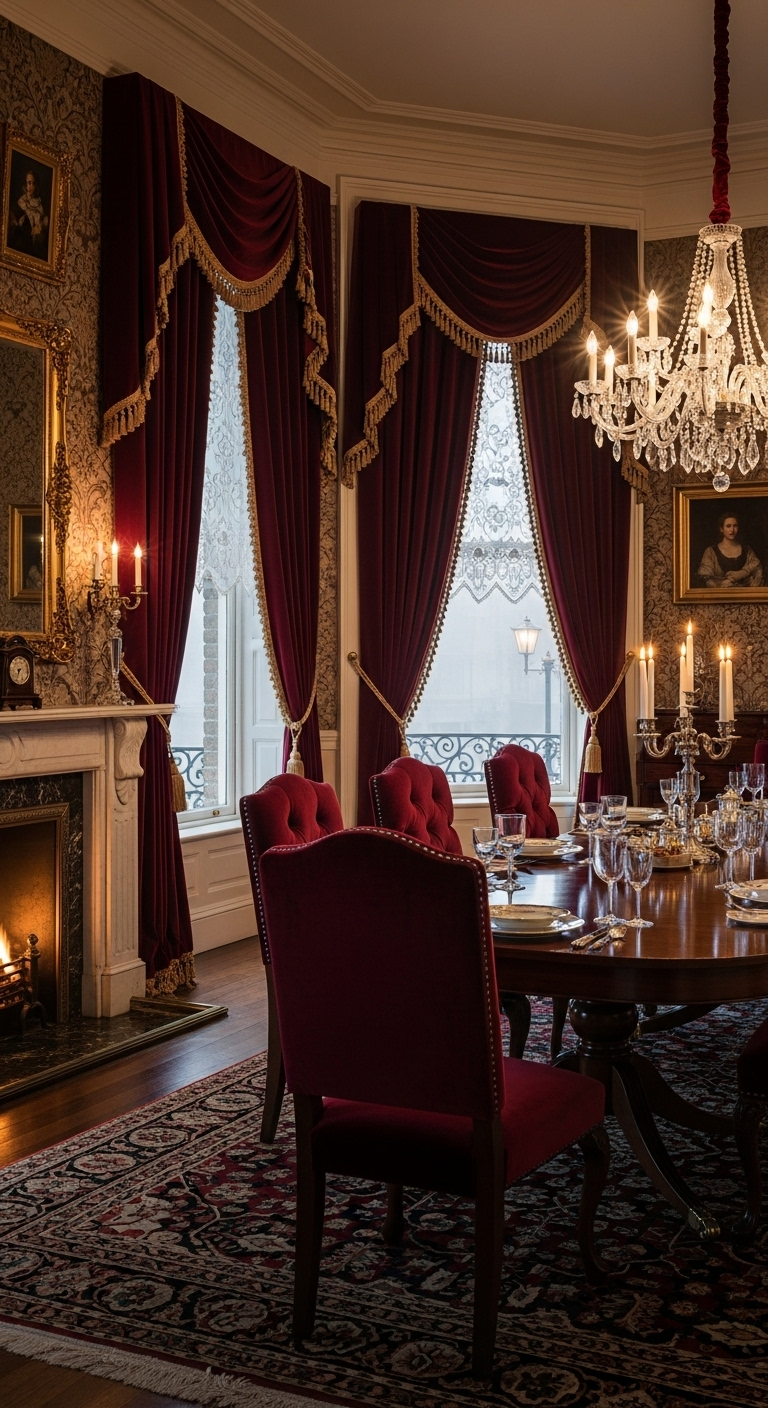
Hang heavy velvet curtains in a shade that matches your walls to create a seamless, wrapped effect during the evening. This monochromatic approach makes your windows feel like a natural part of the architecture rather than a separate design element.
Long drapes provide excellent sound insulation, making your dinner parties feel more private and incredibly peaceful for your guests. They add a soft, vertical texture that breaks up the hard lines of walls and furniture for a perfectly balanced look.
Choose floor-to-ceiling mounting to emphasize the height of your room, creating a grander sense of scale and luxury. This installation technique draws the eye upward, giving your dining area a taller, more imposing, and sophisticated architectural presence.
Select high-quality, dense velvet to ensure the fabric hangs with enough weight to create deep, consistent, and elegant folds. A heavy drape feels more substantial and luxurious, reinforcing the high-end, period-inspired theme you are creating in your home.
31#. Geometric Ceiling Medallions
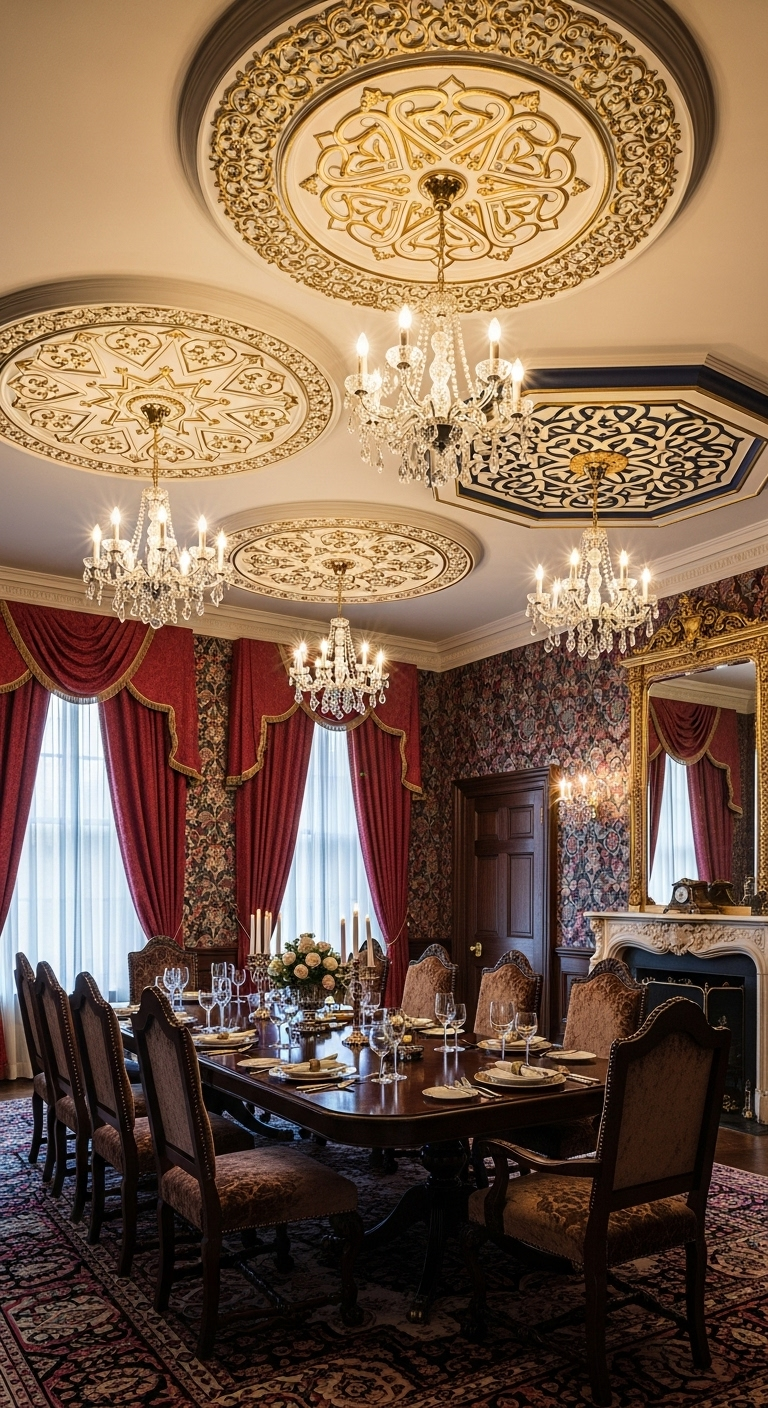
Place a stepped or floral-patterned medallion above your chandelier to add a layer of fine detail to the ceiling. This “hidden” architectural feature provides a polished finish that makes your lighting fixtures look more expensive and intentional.
Medallions help to define the center of the room and provide a sense of permanence and built-in quality to your design. It is a classic move for creating a dining space that feels like a historic metropolitan foyer or grand estate.
Select a medallion size that is proportionate to your chandelier—it should be slightly larger than the canopy base. A well-scaled medallion creates a harmonious focal point that grounds the lighting fixture and frames it beautifully against the ceiling.
Choose materials like high-density polyurethane for a lightweight, durable option that resists cracking and is easy to install. These modern materials replicate the look of traditional plaster perfectly, offering a high-end look without the weight or installation challenges.
32#. Sculptural Black Lacquer Seating
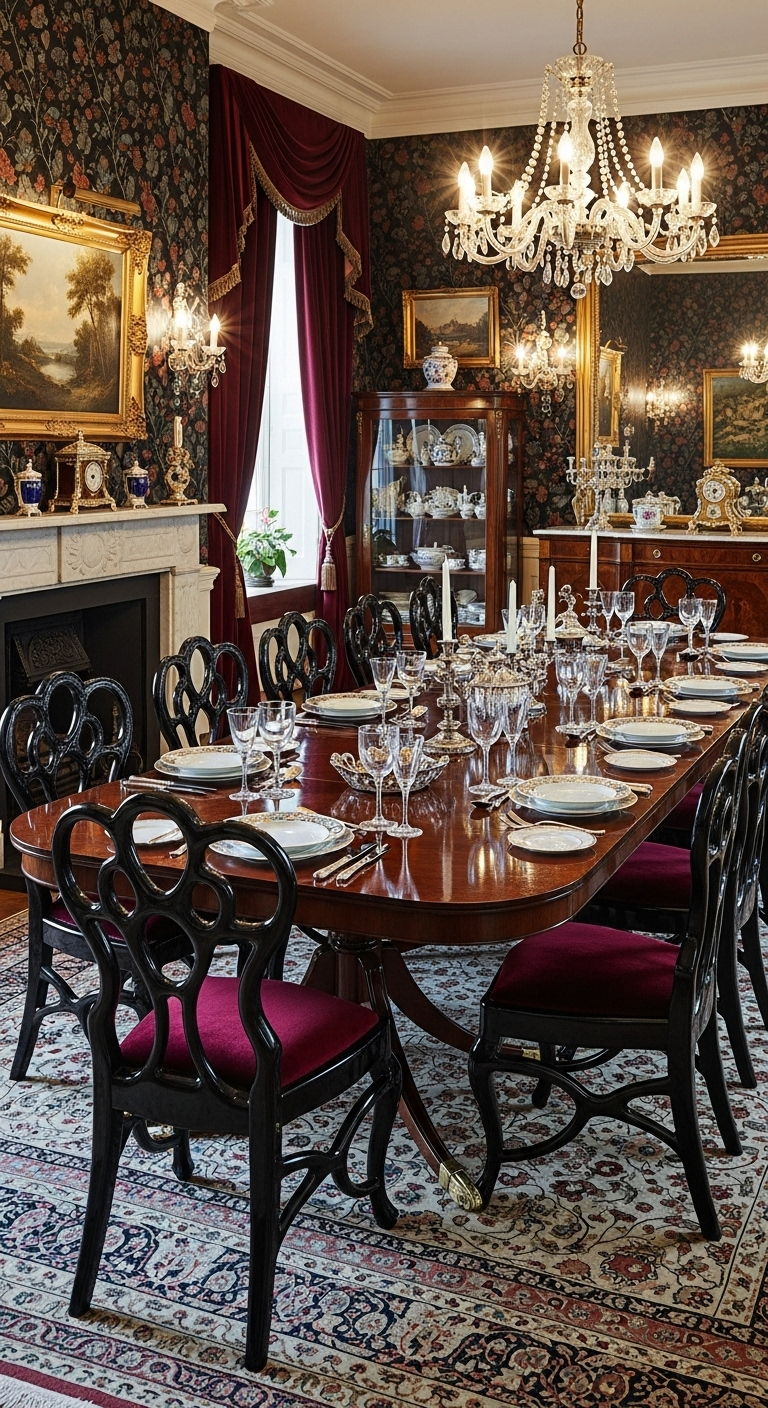
Choose a single, uniquely shaped chair in high-gloss black lacquer to act as a piece of functional art in an empty corner. This dark, shimmering silhouette provides a modern and graphic contrast to your light-colored walls and metallic accents.
A statement chair adds personality and readiness for guests, making the room feel like a lived-in and curated gallery space. It is a sophisticated way to incorporate Victorian-inspired elements that feel like a high-end designer showroom or boutique estate.
Select a design with ornate, curved lines—such as a balloon-back or cabriole leg style—to honor traditional Victorian silhouettes. The juxtaposition of a historic shape finished in a modern, ultra-glossy lacquer creates a striking, conversation-starting piece of furniture.
Position the chair next to a small pedestal or a floor lamp to turn a neglected corner into a purposeful, styled vignette. This deliberate placement ensures the piece contributes to the overall flow of the room rather than feeling like an afterthought.
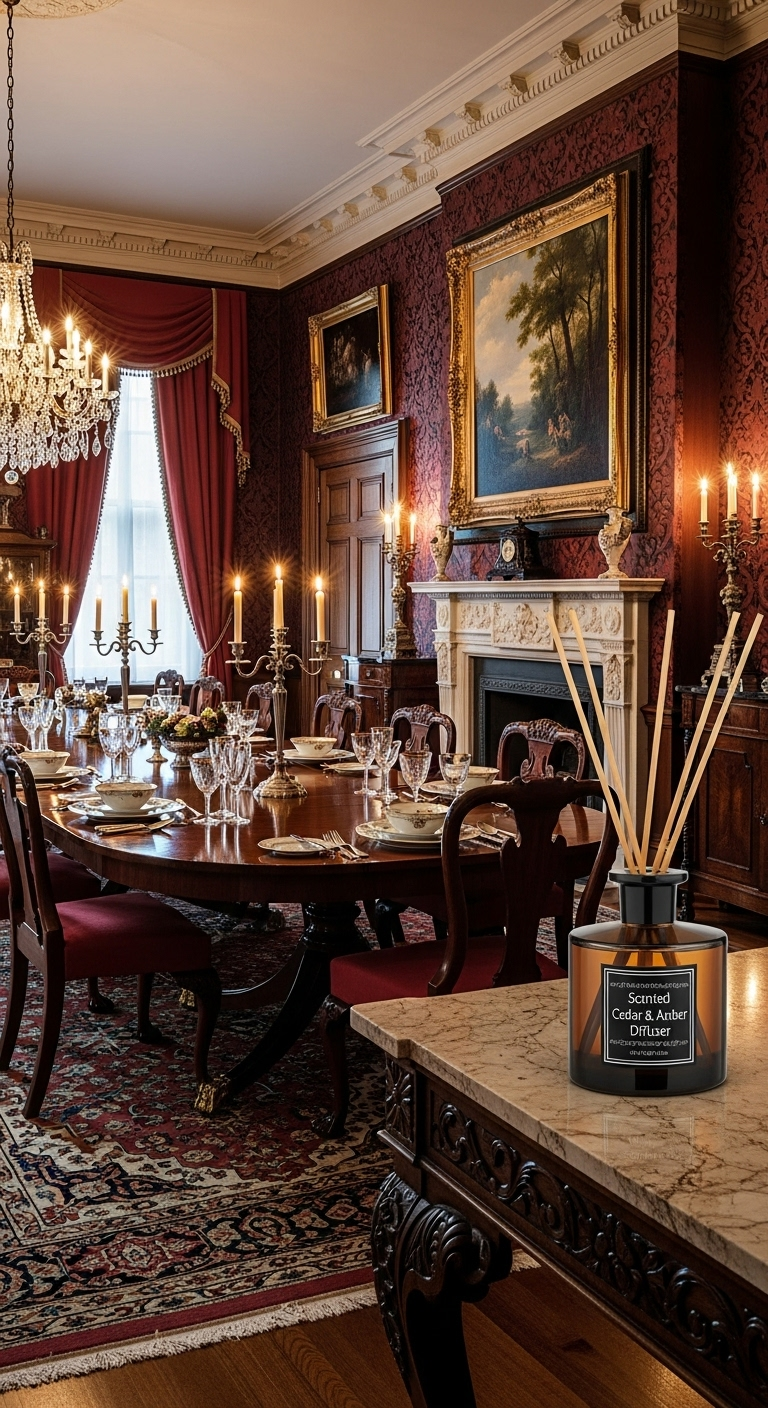
33#. Scented Cedar and Amber Diffusers
Choose a single, uniquely shaped chair in high-gloss black lacquer to act as a piece of functional art in an empty corner. This dark, shimmering silhouette provides a modern and graphic contrast to your light-colored walls and metallic accents.
A statement chair adds personality and readiness for guests, making the room feel like a lived-in and curated gallery space. It is a sophisticated way to incorporate Victorian-inspired elements that feel like a high-end designer showroom or boutique estate.
Select a design with ornate, curved lines—such as a balloon-back or cabriole leg style—to honor traditional Victorian silhouettes. The juxtaposition of a historic shape finished in a modern, ultra-glossy lacquer creates a striking, conversation-starting piece of furniture.
Position the chair next to a small pedestal or a floor lamp to turn a neglected corner into a purposeful, styled vignette. This deliberate placement ensures the piece contributes to the overall flow of the room rather than feeling like an afterthought.
34#. Minimalist Glass Cloches
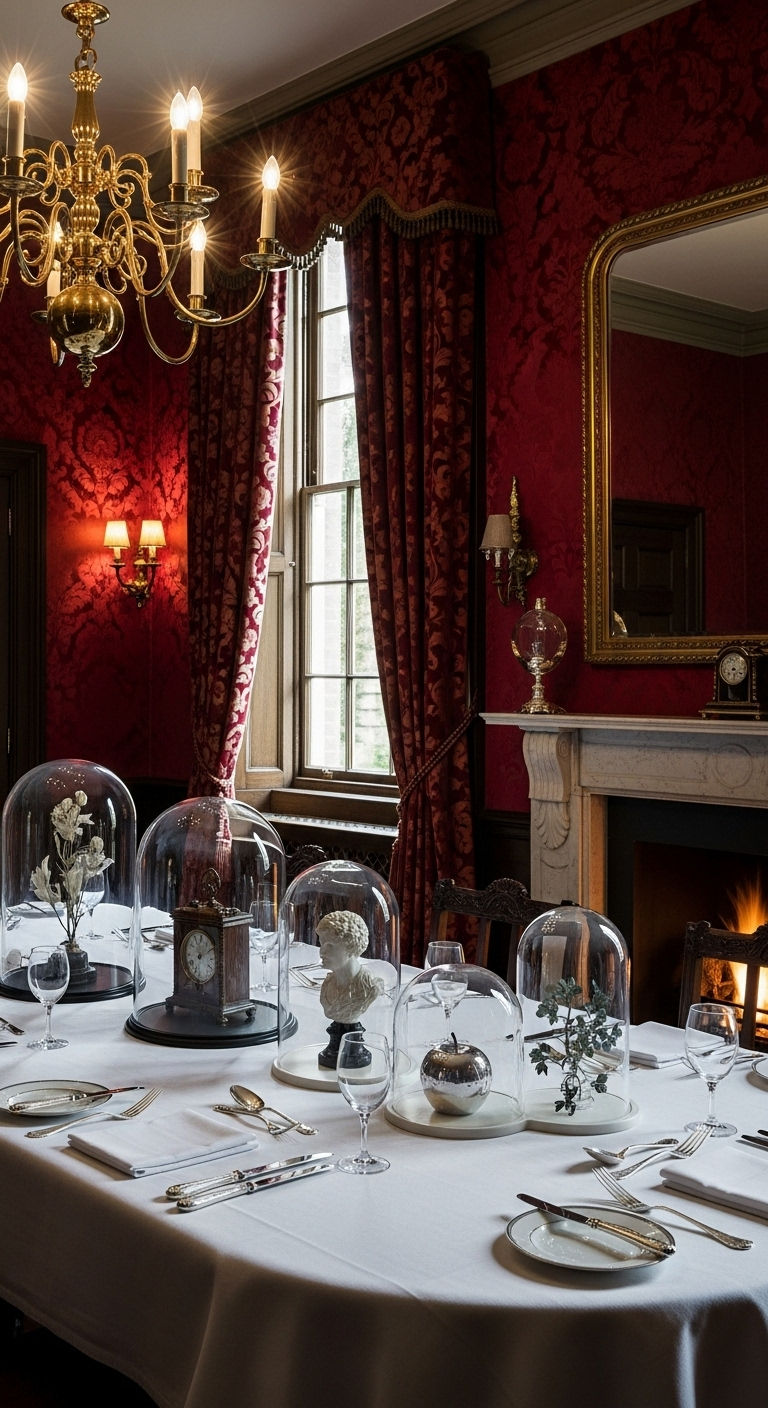
Display a few select “found” objects, like a beautiful shell or a dried flower, under a clear glass cloche on your sideboard tray. This turns simple items into specimen art, giving them a sense of importance and protected beauty within your dining room.
The glass adds a touch of shine, reflecting the light of your chandelier and candles for a dynamic, sparkling look. It is a simple and elevated way to showcase the small wonders of the natural world in your curated home sanctuary.
Select objects with intricate textures—such as a weathered nautilus shell, a single preserved rose, or a unique mineral—to maximize the visual interest. The cloche acts as a lens, drawing the eye toward these minute details that might otherwise go unnoticed in your decor.
Group your cloches on a silver or mirrored tray to amplify the reflective quality and provide a clean, unified base. Using a tray keeps your “specimens” from looking cluttered, turning a collection of items into a purposeful, professional display.
35#. Natural Silk Table Runners
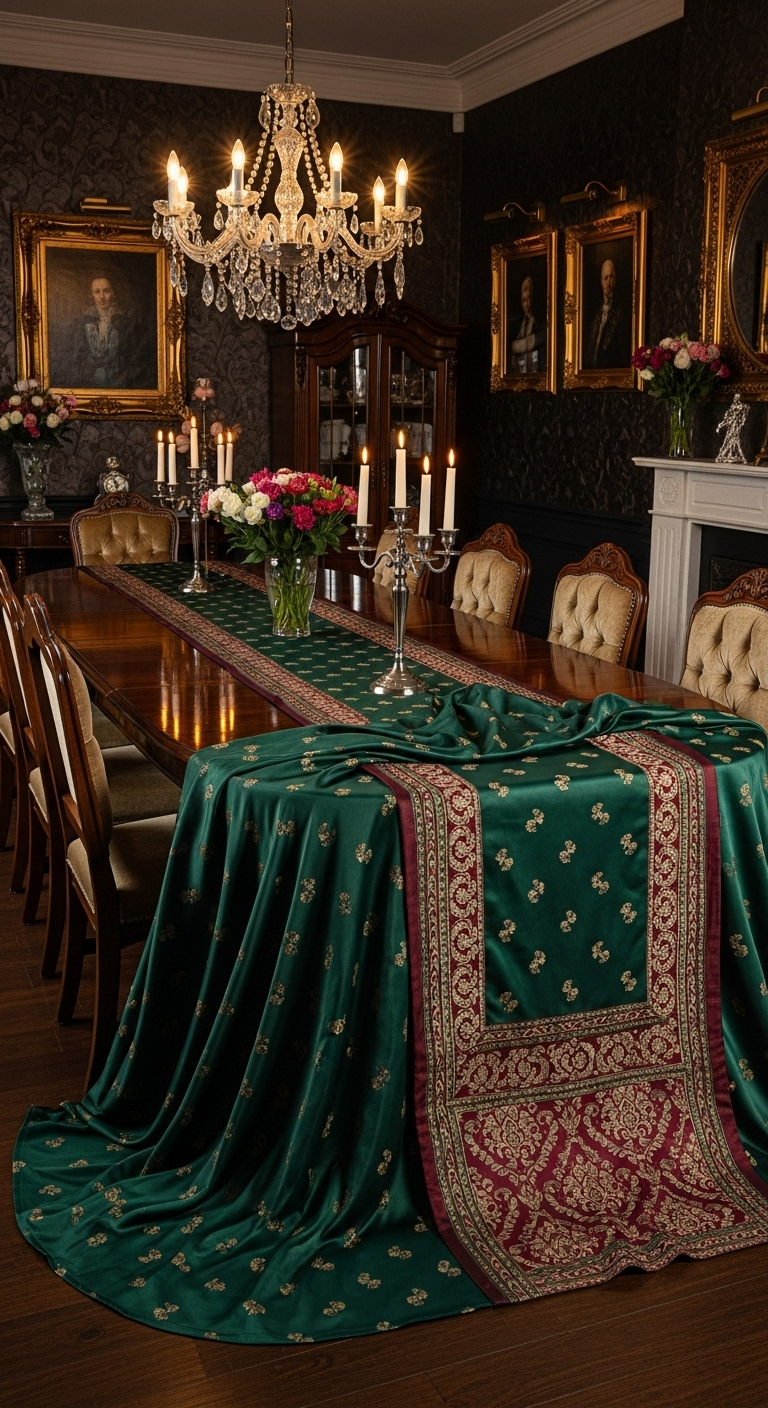
A light, ivory silk table runner provides a soft and luxurious foundation for your daily table setting and crystal glassware collection. The subtle shimmer of the fabric adds a layer of formal elegance that feels traditional, high-end, and beautifully refined.
Layering silk over a marble or dark wood table creates a beautiful contrast that feels both sophisticated and very approachable. It is a budget-friendly way to add a touch of “glam” warmth to your classic, Victorian-inspired dining room ideas and decor.
Choose a runner with finished, weighted ends—such as delicate tassels or embroidered hems—to ensure the silk drapes gracefully over the table edge. These subtle, heavy details prevent the fabric from shifting and provide the clean, tailored look necessary for a formal dining space.
Select a length that hangs approximately 6 to 10 inches off each end of the table, creating a balanced and proportional silhouette. Proper length is key to achieving that polished, designer-showroom aesthetic that frames your central centerpiece without feeling overly cluttered or messy.
36#. Recessed “Step” Lighting Highlights
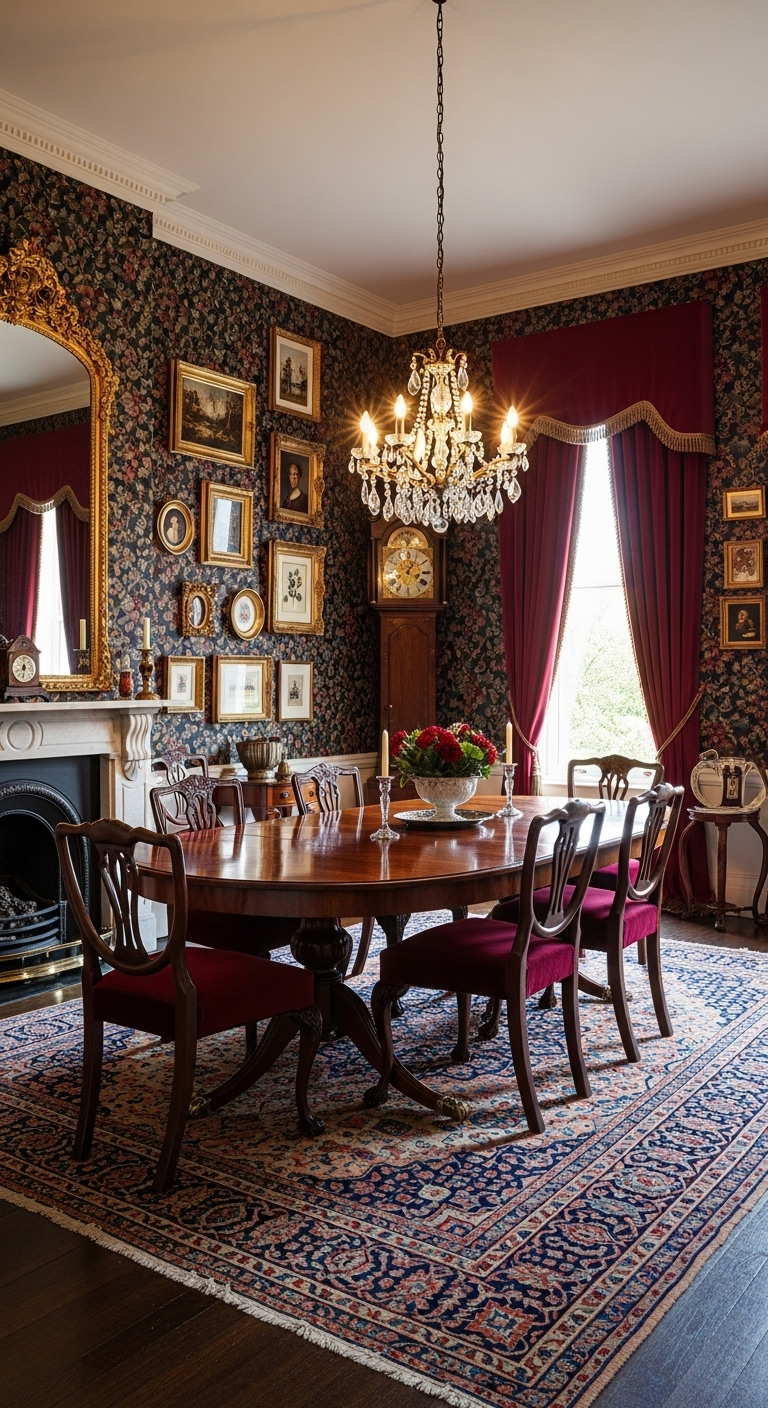
Install low-glare LED lights along the baseboards to guide your path through the dining room with a soft, ethereal glow. This architectural lighting adds a sense of safety and a high-end lounge atmosphere that is perfect for late-night movement.
It creates a soft wash of light across the floor, highlighting the textures of your rugs and polished wood or tile. This subtle touch is a favorite for those looking to master a professional, moody, and sophisticated dining sanctuary.
Choose a “warm white” color temperature (around 2700K) to ensure the light feels inviting and comfortable rather than cold or clinical. Warm light beautifully enhances the richness of wood grains and the deep tones of your rugs, creating a cozy and luxurious evening environment.
Use aluminum channels with frosted covers to diffuse the individual LED dots into a single, continuous, and seamless line of light. Diffusion is essential for a professional look, as it prevents harsh hotspots and creates that smooth, high-end “glow” characteristic of luxury design.
37#. Floating Dark Wood Ledges for Art
Install a few floating ebony or walnut ledges to display your monochromatic art and photos without the need for multiple wall holes. This allows you to easily swap out your decor as the seasons change, keeping the room feeling fresh and constantly inspiring.
The ledges themselves add a clean, sharp horizontal line that makes the room feel wider and more expansive than it actually is. It is a versatile, modern solution for those who love to update their Victorian dining room ideas and style frequently.
Select wood finishes that match or complement your existing dining furniture to ensure the ledges look like an intentional, built-in feature. Using matching woods creates a sense of cohesive flow, making your art display feel like a permanent and well-considered architectural choice.
Mount the ledges at eye level when standing, or slightly lower if you prefer to appreciate the art while seated during dinner. Consistent placement ensures your collection is always perfectly positioned for viewing, turning your wall into a dynamic, personal gallery.
Conclusion: A Heritage of Elegance
Designing a Victorian-inspired dining room is an exercise in honoring the grandeur of the past while embracing the comforts of modern living.
By layering deep colors, intricate patterns, and rich materials like mahogany and velvet, you have built a space that celebrates the “art of the home” in every detail.
As you host your next gathering, may the romantic and sophisticated environment you’ve curated inspire long conversations and lasting memories for years to come.