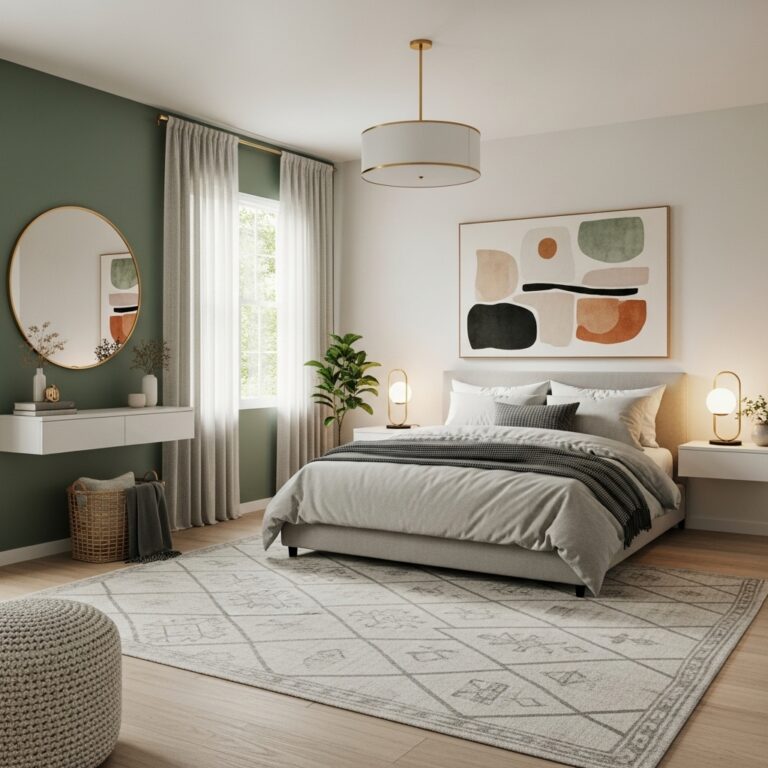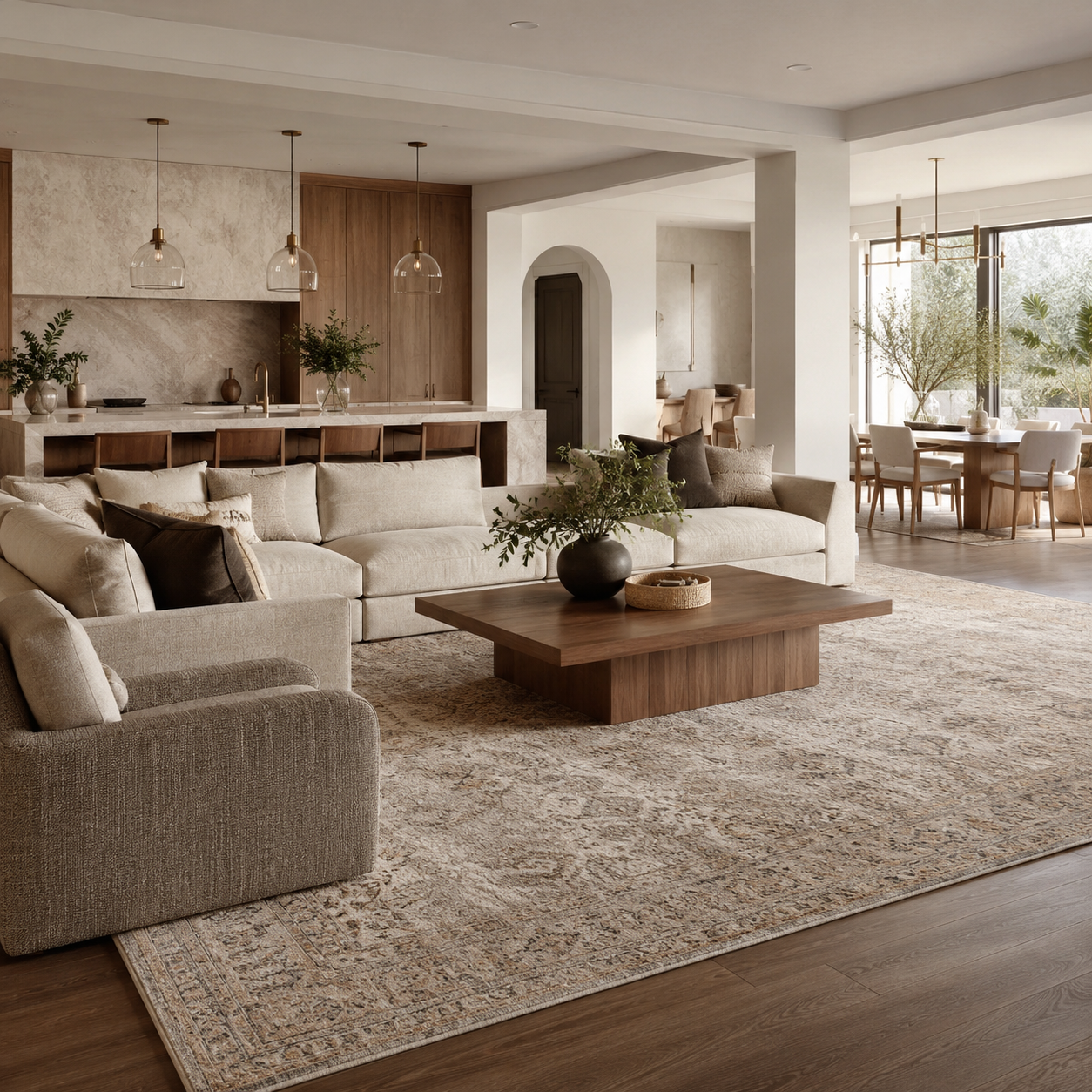
Open-concept living is the hallmark of modern architecture. By tearing down walls and uniting the kitchen, dining, and living areas into a singular, sun-drenched expanse, modern homes offer an undeniable sense of freedom and flow. Yet, this architectural liberation comes with a notorious interior design dilemma: the “floating furniture” syndrome. Without physical boundaries, beautiful furniture can look less like an inviting room and more like a high-end warehouse showroom.
The ultimate antidote to this design challenge is the premium large area rug. Far more than a decorative afterthought, a luxury rug serves as the invisible architecture of an open-concept home. It anchors your furniture, defines your functional zones, absorbs acoustic echoing, and introduces a cohesive sensory experience.
Choosing the right premium rug requires an understanding of scale, fiber science, and visual choreography. Here is a comprehensive guide to navigating the selection process and transforming your expansive layout into a balanced, sophisticated haven.
1. Why Open-Concept Layouts Require Rugs
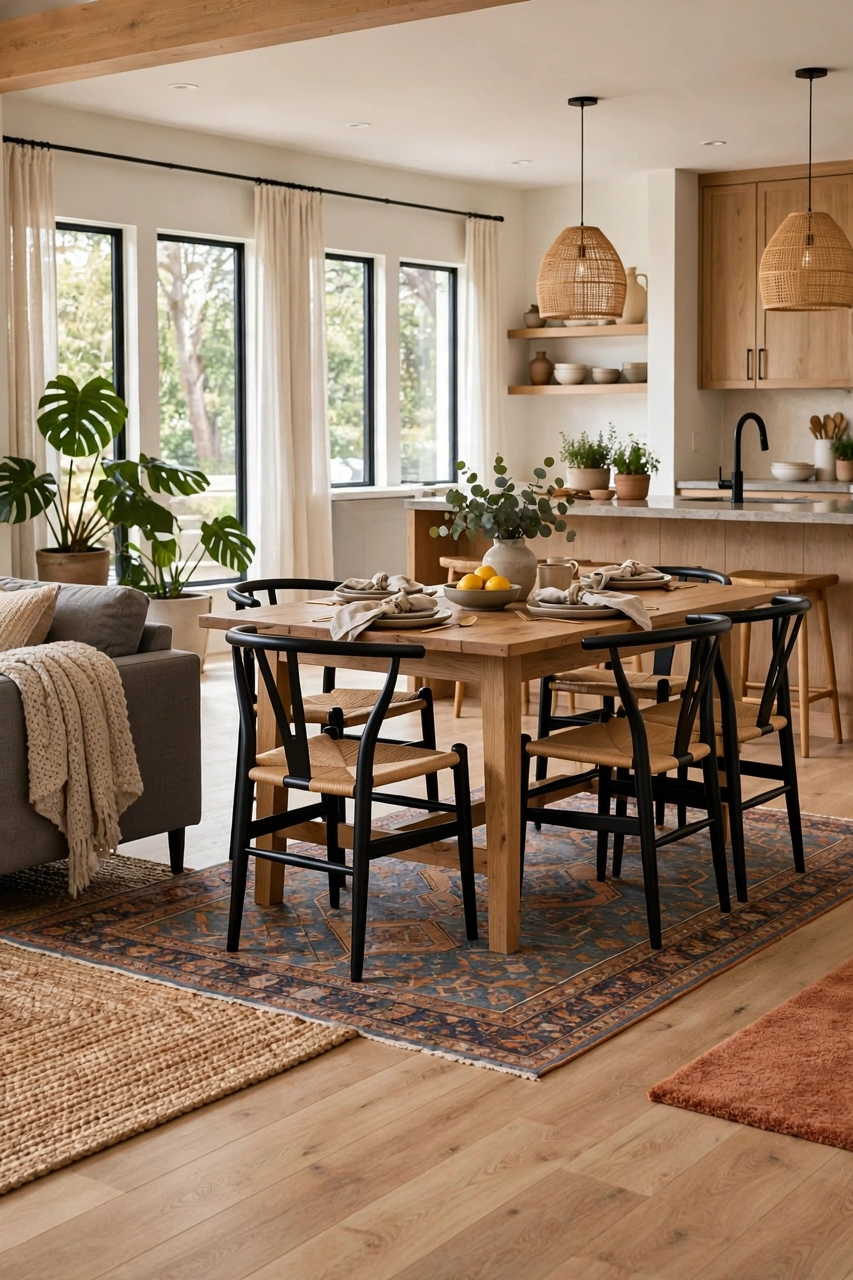
An open floor plan relies on visual cues rather than drywall to dictate how a space should be used. Human psychology inherently craves a sense of enclosure and security—often referred to in design as “prospect and refuge.” While the open view provides the “prospect,” the area rug delivers the “refuge.”
Without a premium rug to ground a seating arrangement or dining set, the human eye struggles to find a focal point. The mind perceives the vast emptiness as chaotic or unfinished.
By placing a large, high-quality area rug beneath a furniture grouping, you create a psychological boundary. It signals to guests and residents alike where a conversation zone begins, where a dining experience is contained, and where pathways exist. This foundational anchoring completely changes how the scale of the room is felt, turning an overwhelming space into an intimate retreat.
2. Unified vs. Multi-Zoned Areas
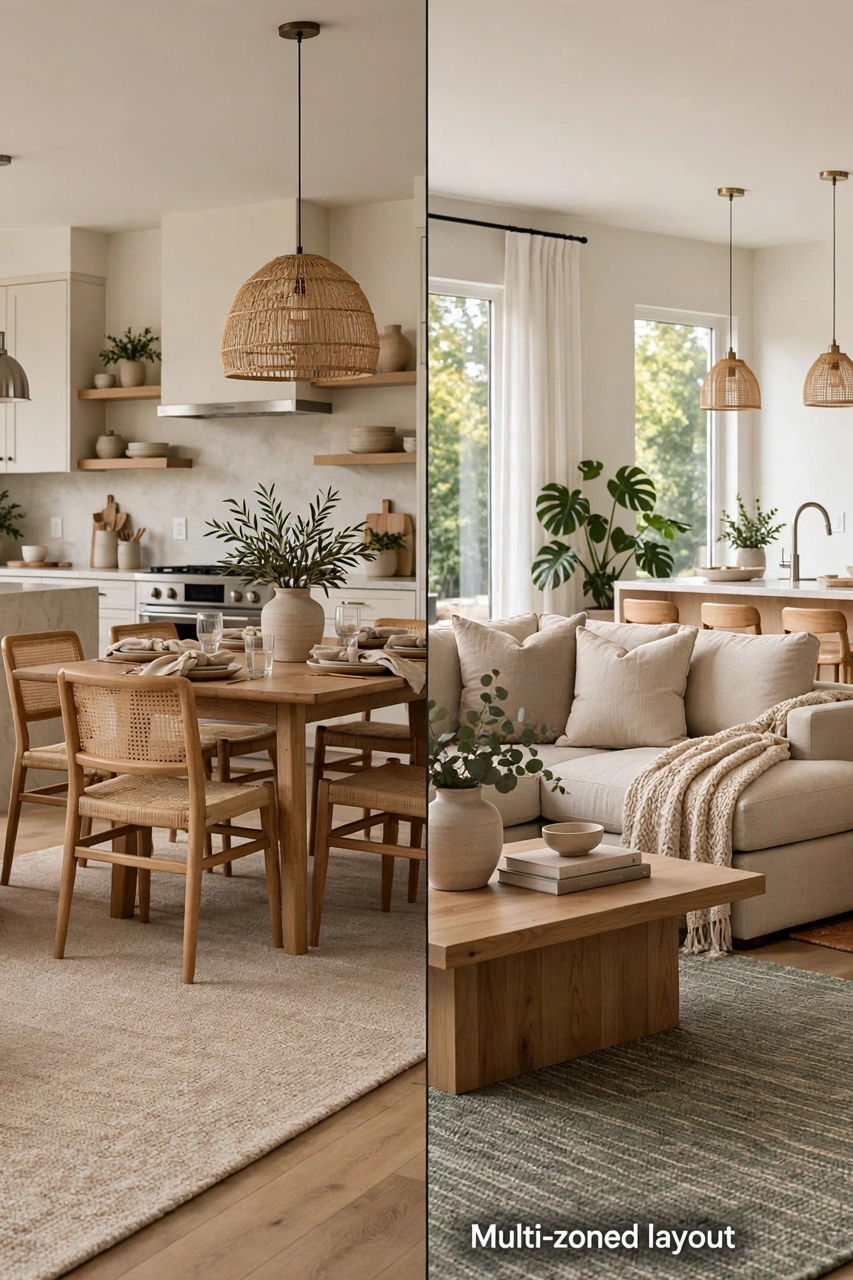
Before browsing patterns or materials, you must determine your macro design strategy for the entire open floor plan. There are two primary schools of thought when treating an open-concept space with premium rugs:
The Unified Strategy
This approach utilizes one massive, oversized rug to span across multiple functional areas—for instance, flowing directly from the living room seating area into an adjacent reading nook. Alternatively, it means using identical rugs in different zones. This strategy creates a serene, highly minimalist, and minimalist aesthetic that visually expands smaller open floor plans.
The Multi-Zoned Strategy
The multi-zoned strategy employs distinct rugs to mark separate functional domains, such as one for the living area and another for the dining space. This is the preferred method for large expanses because it breaks up visual monotony. The challenge here is ensuring that the rugs don’t compete with one another, but rather converse like well-traveled relatives sharing a common design lineage.
3. The Golden Rules of Sizing for Open Spaces
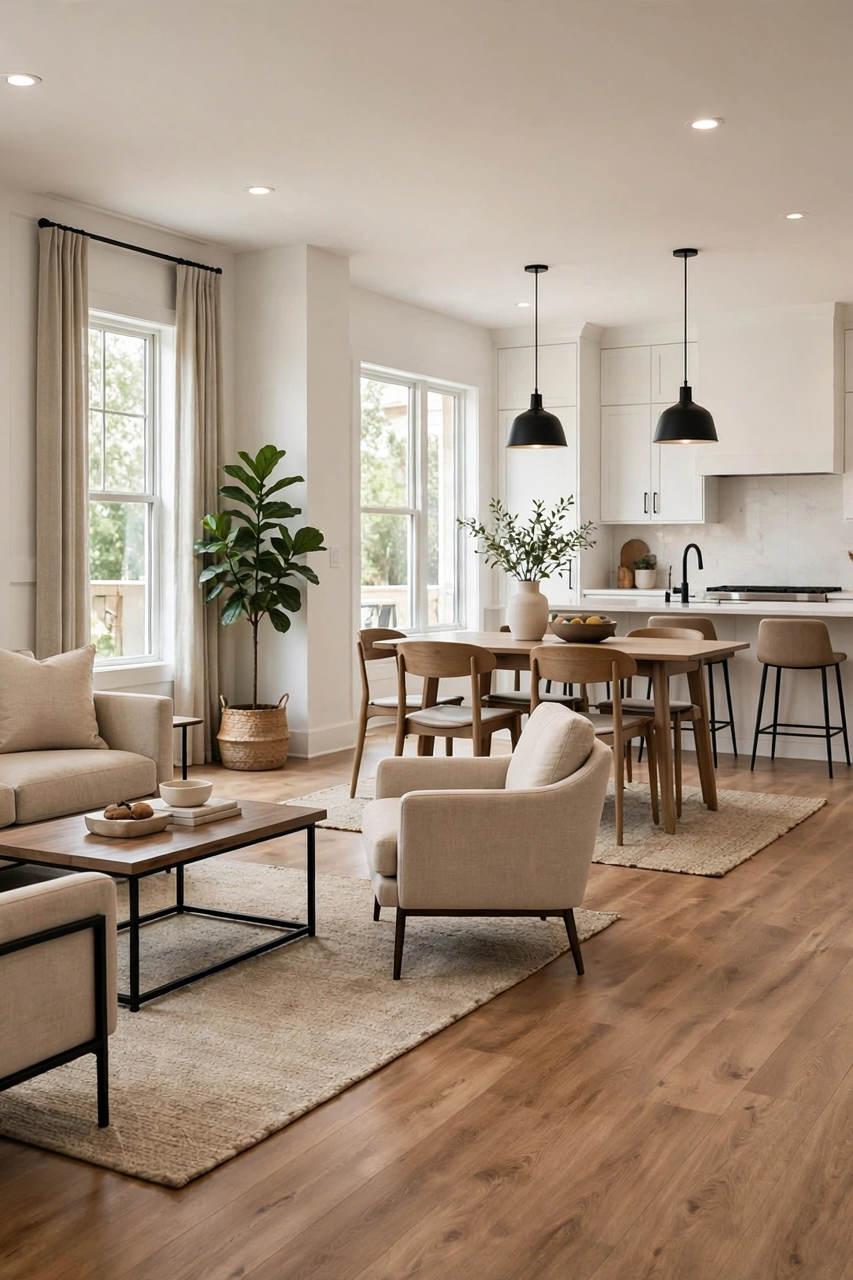
The most frequent mistake made in open-concept design is buying a rug that is far too small. A standard $8 \times 10$ foot rug that works perfectly in a closed bedroom will look like a postage stamp when dropped into a vast great room. In a large open-concept layout, you should default to looking at $9 \times 12$ feet, $10 \times 14$ feet, or even custom-cut dimensions.
To establish proper scale, apply the “All Legs On” or “Front Legs On” rule. For a premium, luxurious feel, the “All Legs On” approach is unmatched. This means your sofa, accent chairs, side tables, and coffee table sit entirely on the rug’s surface, leaving a uniform border of rug extending roughly 12 to 18 inches beyond the furniture.
If space doesn’t permit this, the “Front Legs On” rule requires at least the front third of all seating components to rest firmly on the rug. This physical connection bridges the pieces together, preventing the furniture from looking as though it’s drifting away.
The Dining Room Exception: When sizing a rug for an open-concept dining zone, you must measure the table and add a minimum of 24 to 36 inches to all sides. This ensures that when guests pull their chairs out to sit down, the back legs of the chairs remain safely on the rug surface, preventing annoying catches and uneven seating.
4. Selecting Premium Fibers That Last
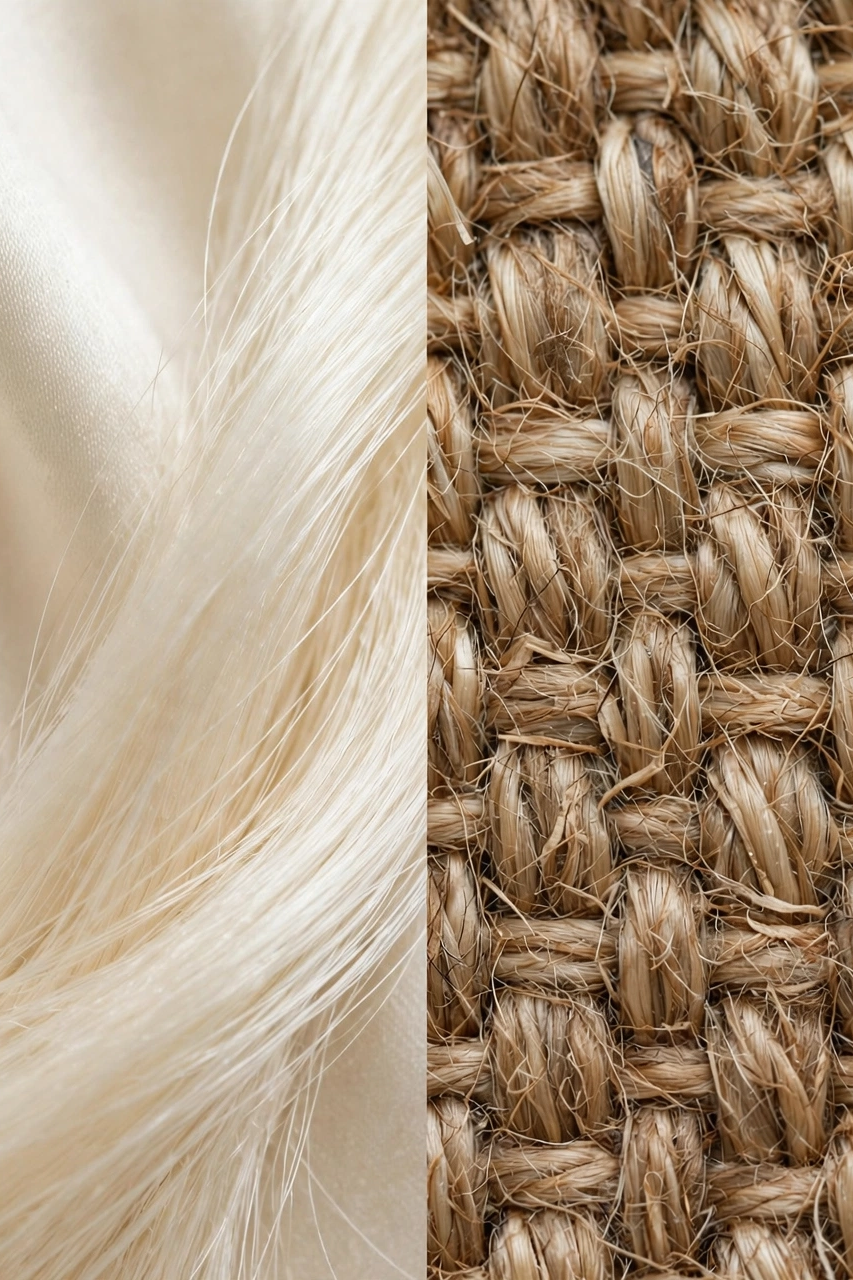
A premium area rug is a significant investment, and its longevity depends entirely on its material makeup. In an open-concept space, foot traffic patterns are complex, often crossing directly over the corners and centers of your rug zones. You need a fiber that balances exquisite texture with structural resilience.
Premium Wool
The gold standard of rug fibers. High-quality New Zealand or Tibetan wool possesses a natural coating of lanolin, making it inherently stain-resistant, flame-retardant, and incredibly resilient to crushing. Wool fibers bounce back after being compressed by heavy sofa legs, making it ideal for high-traffic zones.
Pure Silk vs. Bamboo Silk
Pure silk adds an ethereal, luminous sheen and unparalleled softness to a rug, but it is delicate and best reserved for low-traffic formal spaces. For a busy open layout, modern luxury rugs often utilize bamboo silk or viscose blended with wool. This pairing provides the radiant luster of silk with the structural integrity of wool.
| Fiber Type | Durability | Texture/Sheen | Best Suited For |
| 100% New Zealand Wool | Exceptionally High | Matte, Plush, Warm | Main Living Zone & High-Traffic Pathways |
| Wool & Bamboo Silk Blend | High | Sophisticated Subtle Luster | Formal Living Space or Primary Conversation Area |
| Natural Hydrated Silk | Medium-Low | Brilliant Luminescence | Low-Traffic Nooks, Showpiece Zones |
| Premium Performance Synthetics | High | Mimics Matte Wool | Dining Spaces Near Kitchen Zones |
5. Hand-Knotted vs. Hand-Tufted Luxury
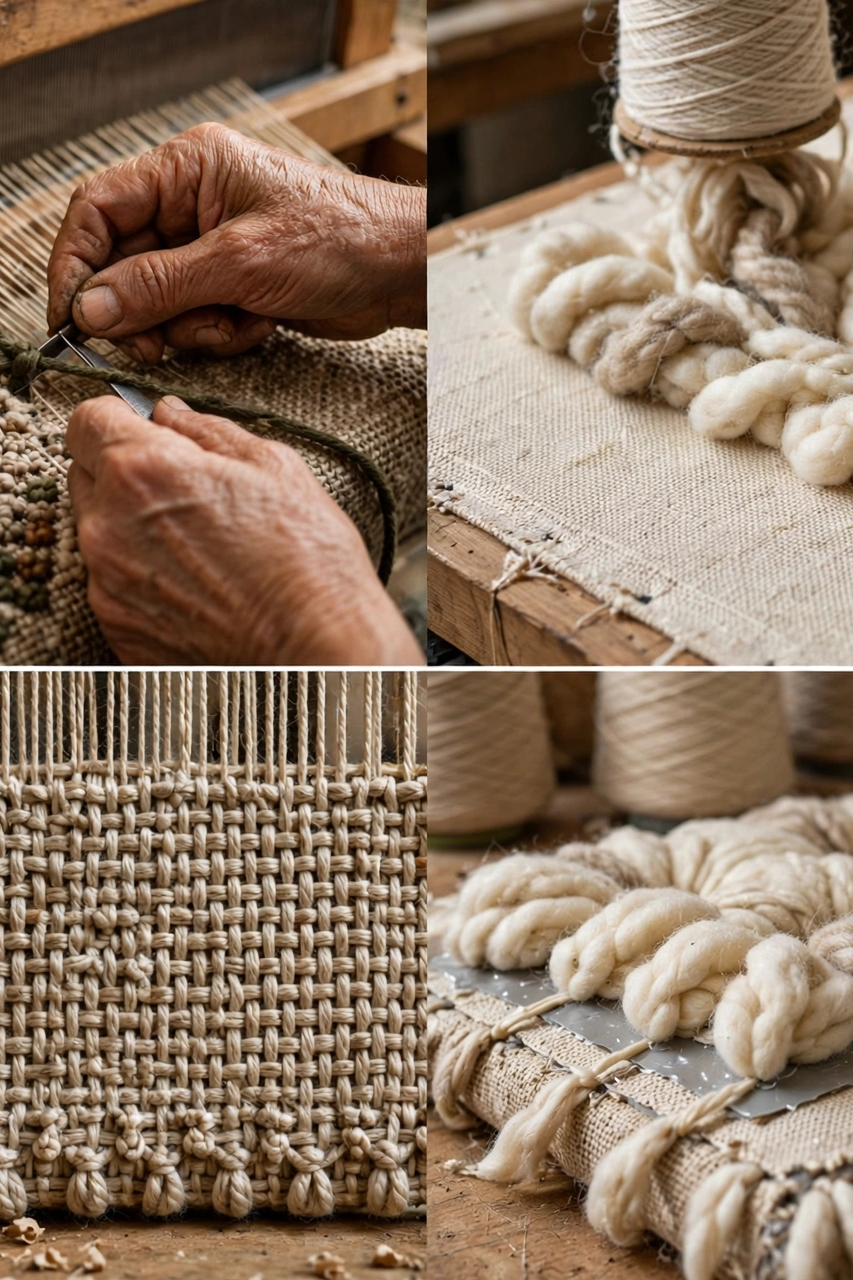
The way a rug is constructed dictates how it catches the light, how it feels underfoot, and how long it will endure. When investing in a premium large area rug, you will primarily choose between two high-end methods:
Hand-Knotted Rugs
The absolute pinnacle of textile art. Master artisans tie individual knots onto a vertical loom warp. A single large hand-knotted rug can take months or even years to complete. These rugs have no synthetic backing, meaning they are incredibly flexible, breathe beautifully, and can last for generations, often becoming treasured family heirlooms that appreciate in value.
Hand-Tufted Rugs
Created using a hand-operated tufting gun to punch loops of yarn into a canvas stretched across a frame. Once the pattern is completed, a latex backing is applied to secure the tufts, followed by a protective scrim. While hand-tufted rugs can feel incredibly dense and luxurious underfoot, the latex backing will eventually degrade over decades. They represent a more accessible entryway into premium interior design.
6. The Art of Color Mixing in an Unobstructed Space
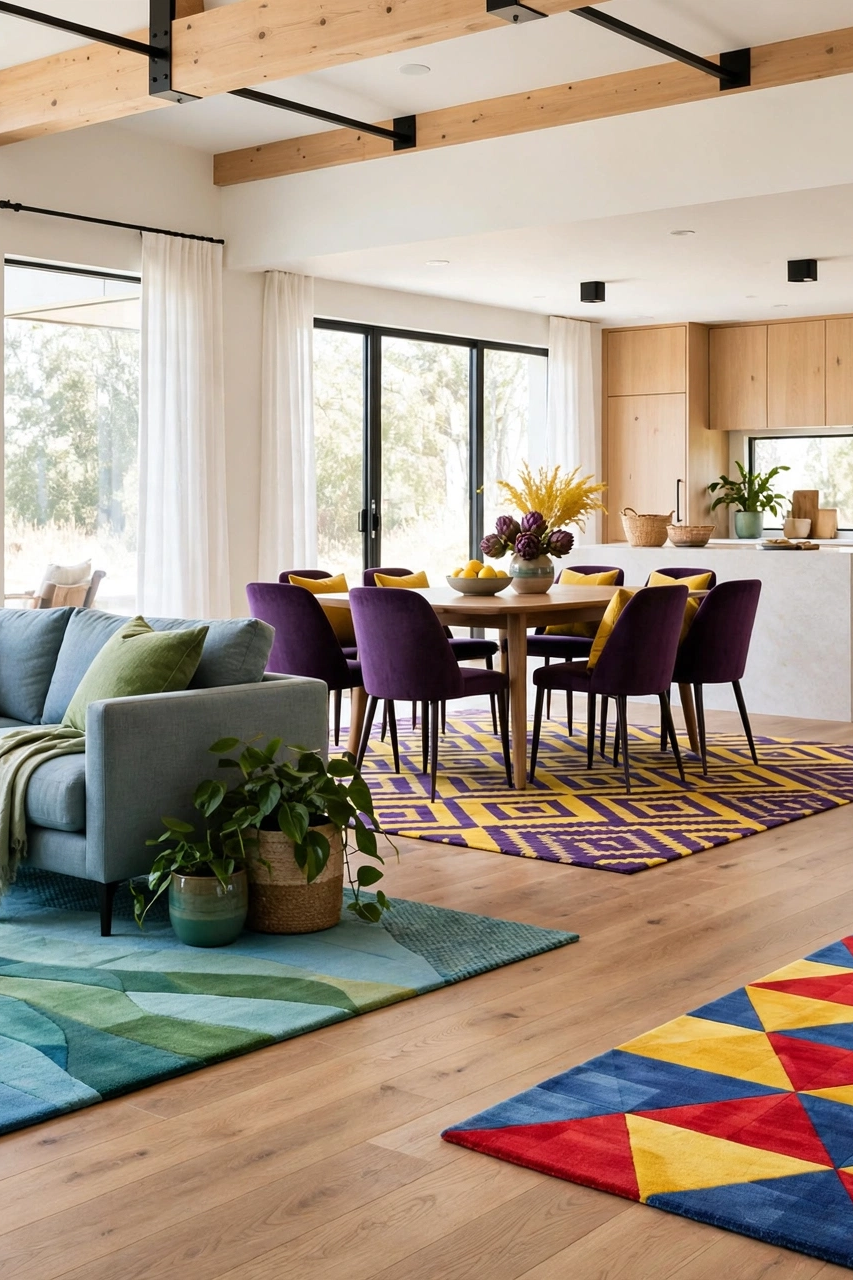
Color selection in an open floor plan requires a holistic view of the entire home’s palette. You cannot view the living room rug in isolation from the kitchen cabinetry or the dining room wall art.
If you are using multiple rugs to zone your open-concept space, avoid using identical matching rugs in every area, as this can look unimaginative and rigid. Instead, select a common color thread to weave throughout the layout.
For instance, if your primary living room rug features a bold, intricate pattern with hints of slate blue, terracotta, and cream, your dining room rug could be a solid, deeply textured terracotta piece, or a subtle cream tone-on-tone geometric pattern. This design choice creates a sophisticated visual dialogue across the floor plan without repeating the same statement twice.
7. Balancing Statements and Solids
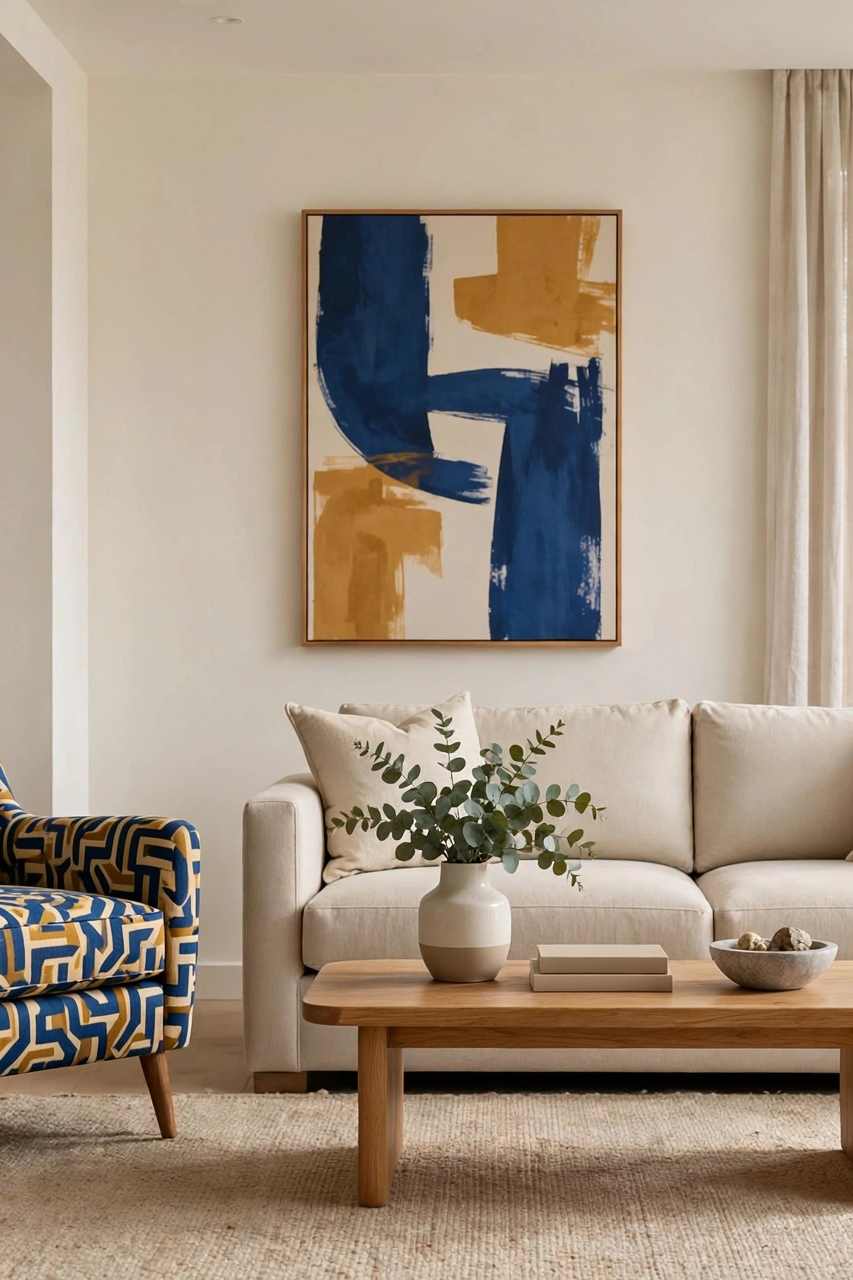
Mixing patterns across an open floor plan is an excellent way to express your design personality, provided you balance scale and intensity. If your living room is anchored by a large, expressive traditional Heriz or a bold modern abstract rug, the adjacent dining or reading zones need a place for the eyes to rest.
Pair a highly expressive “statement” rug with a solid, heavily textured counterpart, such as a premium braided wool piece or a subtle low-pile ribbing. If you do wish to use patterns on both rugs, vary the scale dramatically.
Pair a large-scale, sweeping organic motif in the living area with a tight, small-scale micro-geometric pattern in the dining room. This variance prevents the patterns from clashing or competing for dominance within your sightlines.
8. Navigating Texture and Pile Height for Seamless Transitions
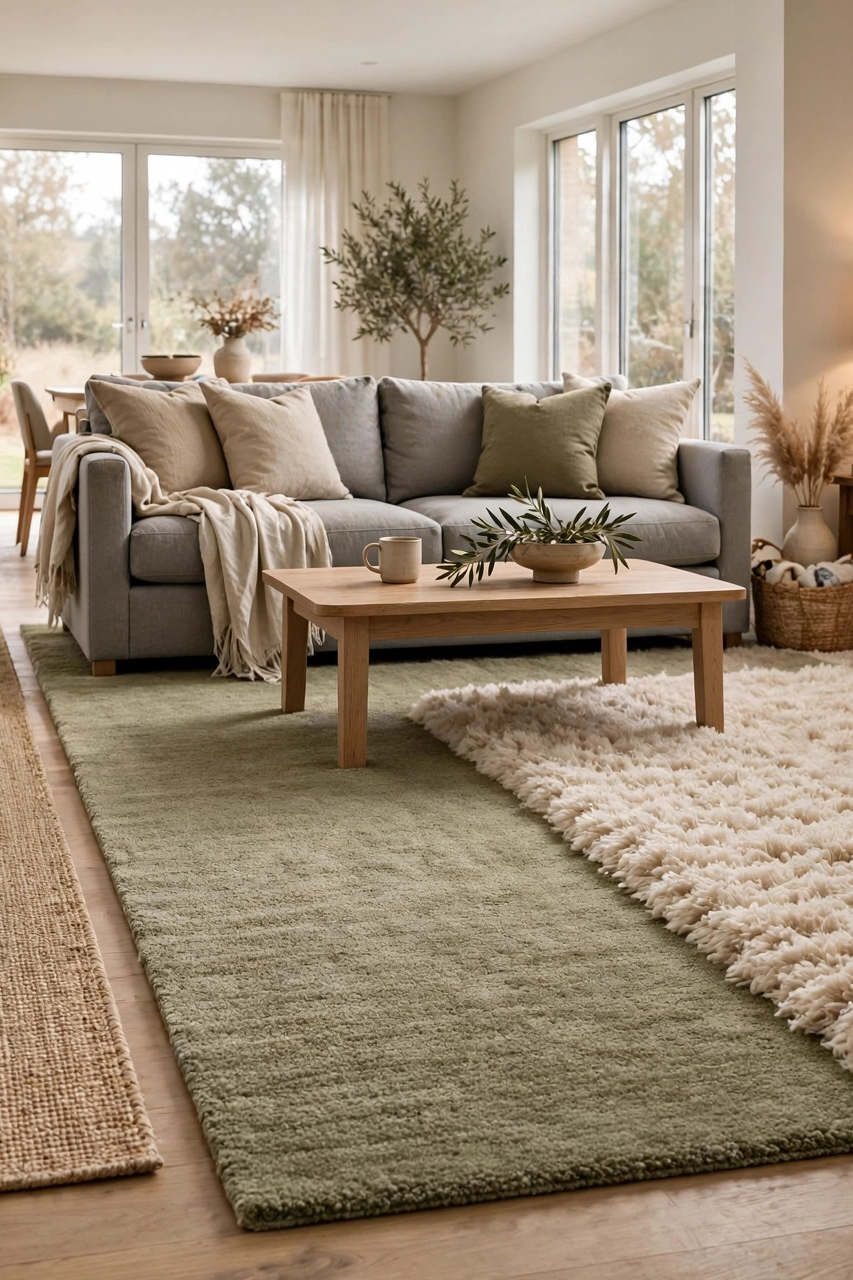
In an open layout, physical comfort and safety are just as important as visual aesthetics. Pile height plays a crucial role in how easily people move from one zone to another.
For the main living area where relaxation is the priority, a medium-to-high pile ($1/2 \text{ inch}$ to $3/4 \text{ inch}$) or a luxurious cut-and-loop texture offers a plush, inviting underfoot experience. This pile depth welcomes family and guests to kick off their shoes and settle into the space.
However, as you transition toward the kitchen island or dining table, you should intentionally lower the pile height. A low-profile, densely woven rug ($1/4 \text{ inch}$ or less) is essential in dining spaces to allow chairs to slide effortlessly and to make cleanup simple. Keeping the rug profiles balanced prevents tripping hazards along the natural walking paths of your home.
9. Aligning Rugs with Sightlines and Lighting
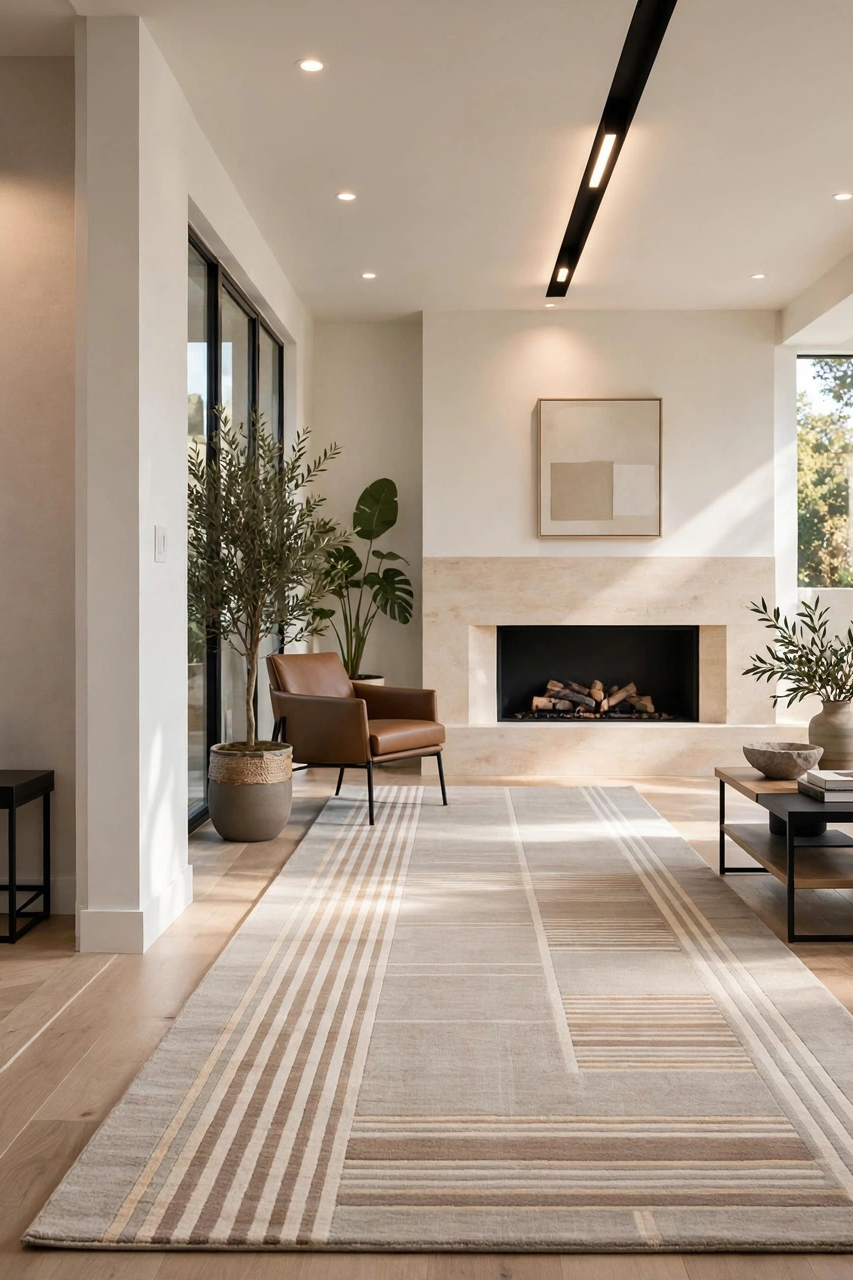
A truly premium interior feels cohesive because every element responds to the home’s architecture. When positioning large area rugs in an open-concept space, look upward and outward to find your placement cues.
Align your rugs with major architectural features such as large floor-to-ceiling windows, exposed structural beams, or fireplace mantels. For instance, centering your main living room rug directly with a fireplace hearth creates an immediate sense of symmetry and balance.
Furthermore, consider your overhead lighting. A spectacular dining chandelier or a modern living room track system should hang directly over the center of its corresponding rug zone. When your rugs and lighting fixtures are perfectly aligned, it creates an invisible vertical axis that makes the layout feel beautifully intentional.
10 : Sound Dampening in Large, Open Volumes
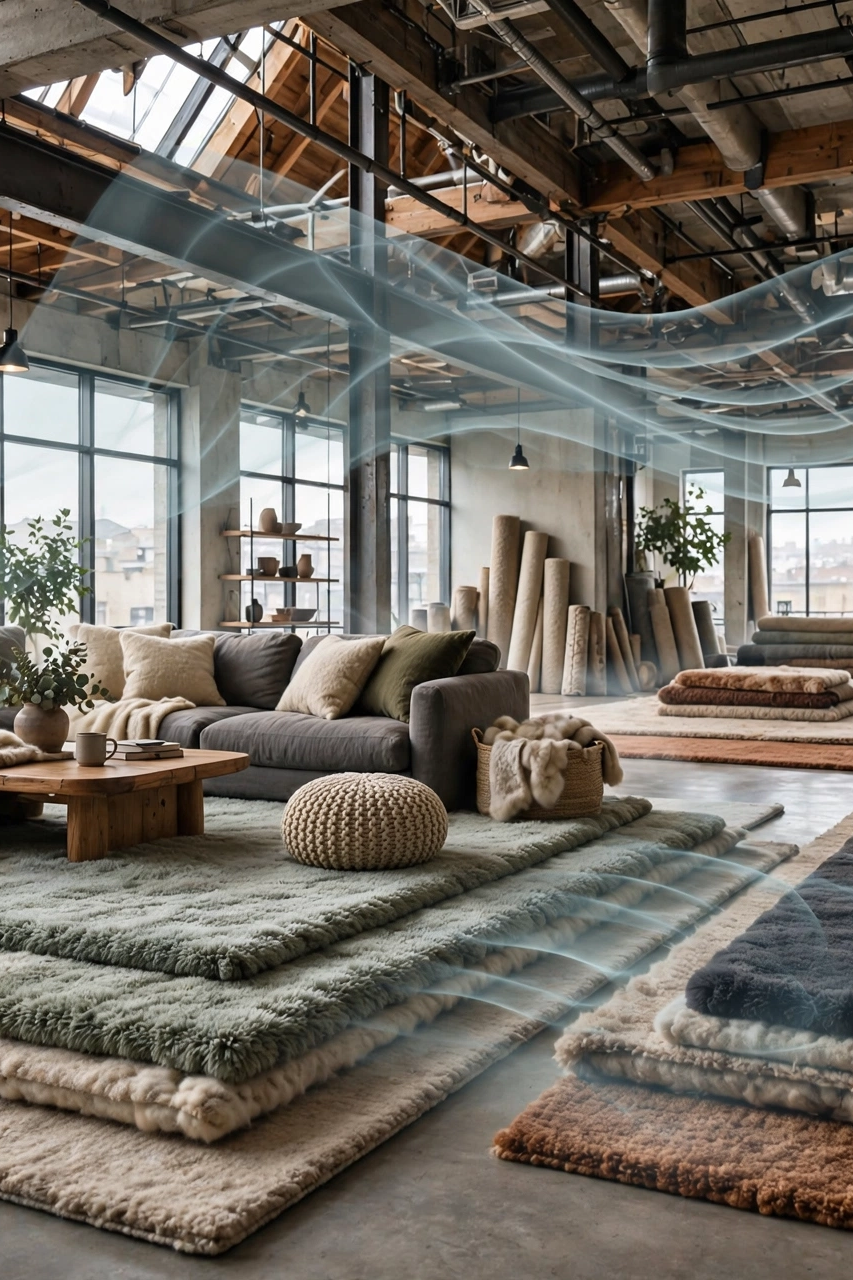
One of the most overlooked challenges of open-concept living is the acoustics. High ceilings, hardwood or polished concrete floors, and expansive glass windows create a perfect environment for sound waves to bounce around, resulting in a cold, echoing, and noisy home.
Premium large area rugs act as highly effective acoustic panels for your floors. Thick, dense wool fibers are excellent natural sound absorbers.
By placing large rugs across your main living and dining zones, you drastically reduce reverberation times. This acoustic softening makes conversations easier to follow, dampens the sound of footsteps, and prevents the noise of kitchen prep from disrupting someone watching a movie or reading a book in the adjacent living area.
11. Caring for Luxury Investments
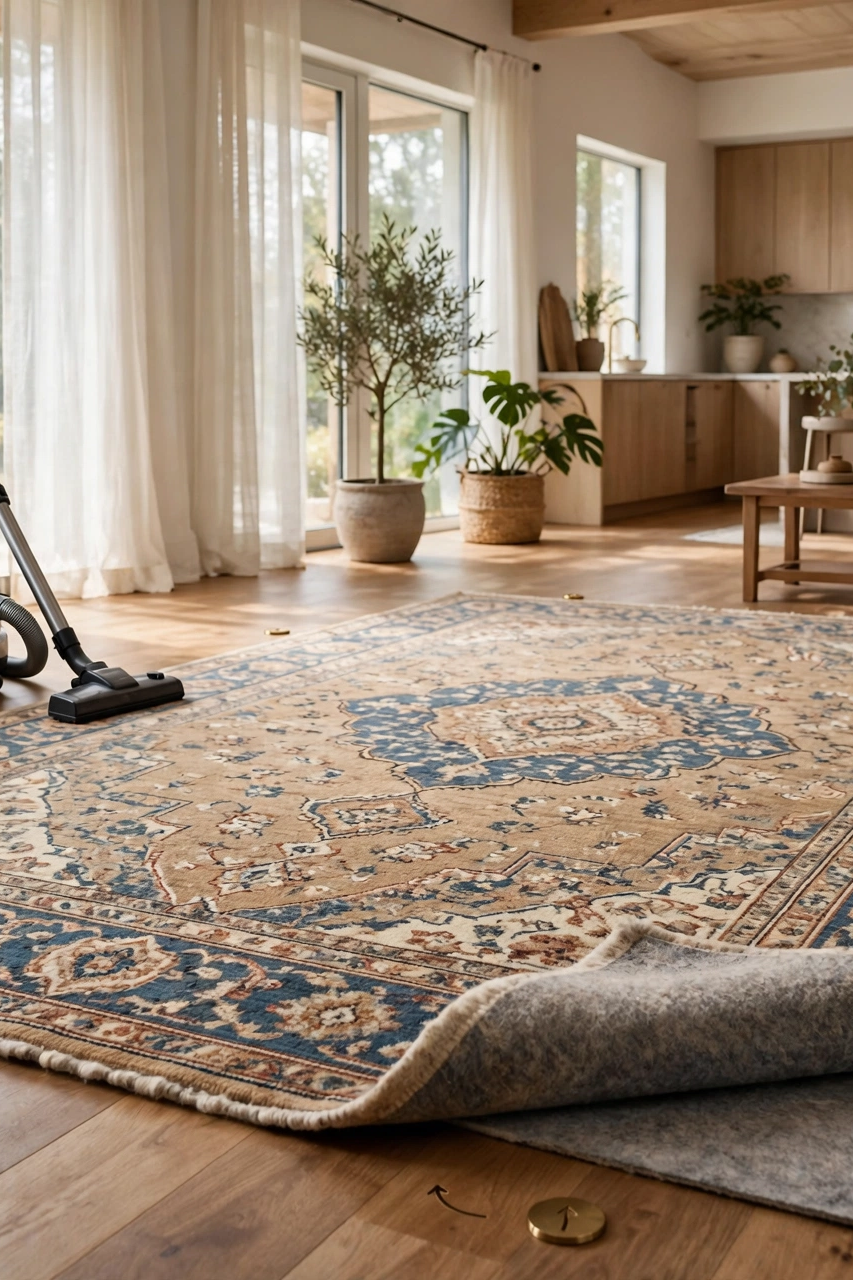
Owning a premium artisan rug means caring for it properly to ensure it lasts for decades. Because open-concept rugs are exposed to sunlight from multiple angles and varied foot traffic, they require a regular maintenance routine:
- Rotation: Rotate your large area rugs $180^\circ$ at least once a year. This ensures that sun exposure from large windows and foot traffic wear are distributed evenly across the fibers, preventing uneven fading or path wear.
- Vacuuming Technique: Vacuum your rugs regularly, but disengage the rotating brush or beater bar on your vacuum cleaner. Aggressive beater bars can pull and fray premium wool and silk fibers, gradually diminishing the rug’s density.
- Immediate Spot Cleaning: In an open layout close to the kitchen, spills will happen. Always blot spills immediately with a clean, dry white cotton cloth—never scrub, as scrubbing twists and permanently damages the delicate pile fibers.
12. The Imperative of a Premium Rug Pad
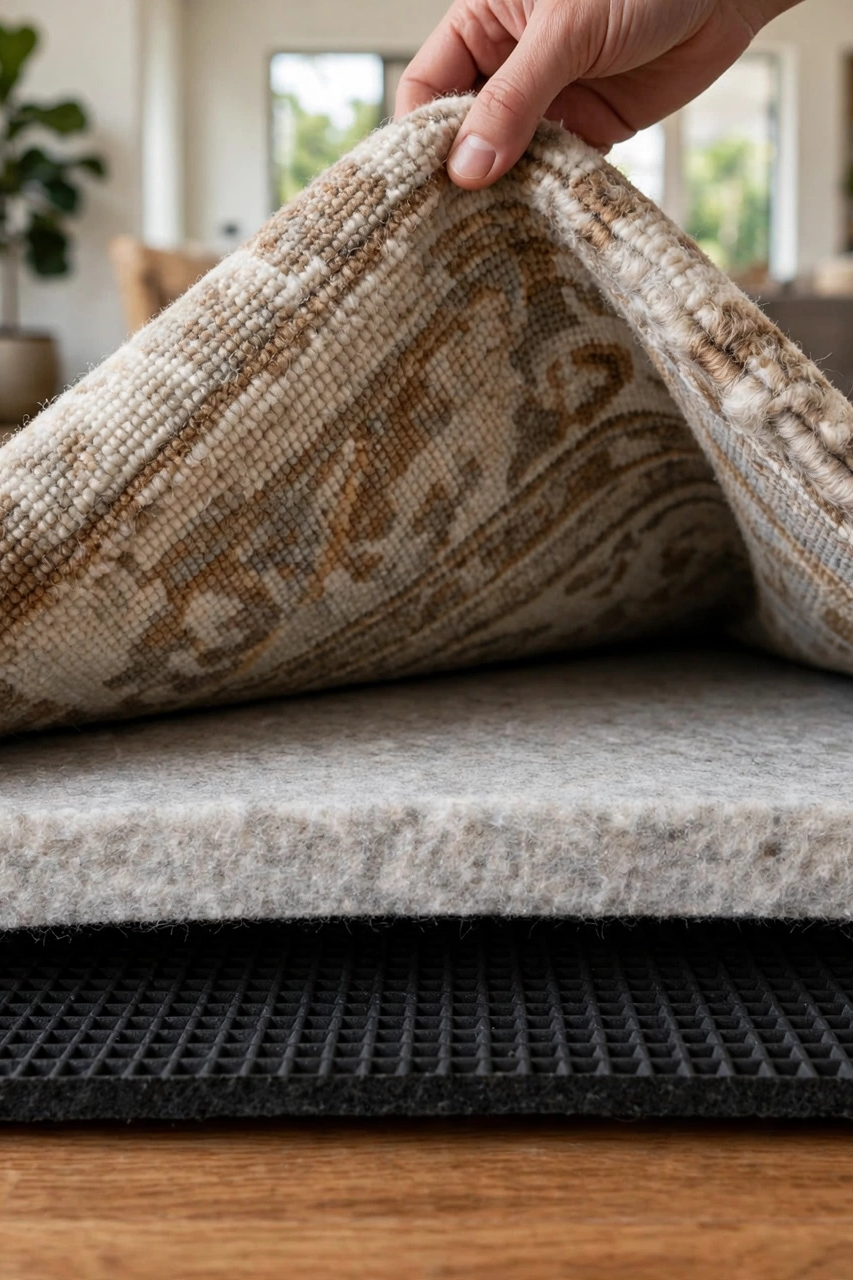
The final step in your premium rug journey is one you will never see, but will always feel: the rug pad. Many homeowners make the mistake of buying an expensive luxury rug and placing it over a cheap, thin plastic pad.
For an open-concept layout, a high-quality, dual-surface rug pad—typically made of 100% heat-compressed felt blended with a natural rubber backing—is an absolute necessity. The natural rubber prevents the large rug from shifting or bunching on slick hardwood or tile floors, keeping your layout perfectly aligned.
WRAP UP
Meanwhile, the dense felt core provides an extra layer of luxurious cushioning underfoot, protects the underside of your rug from friction wear against the subfloor, and significantly boosts the rug’s built-in sound-dampening capabilities. It is the secret foundation that completes your open-concept transformation.