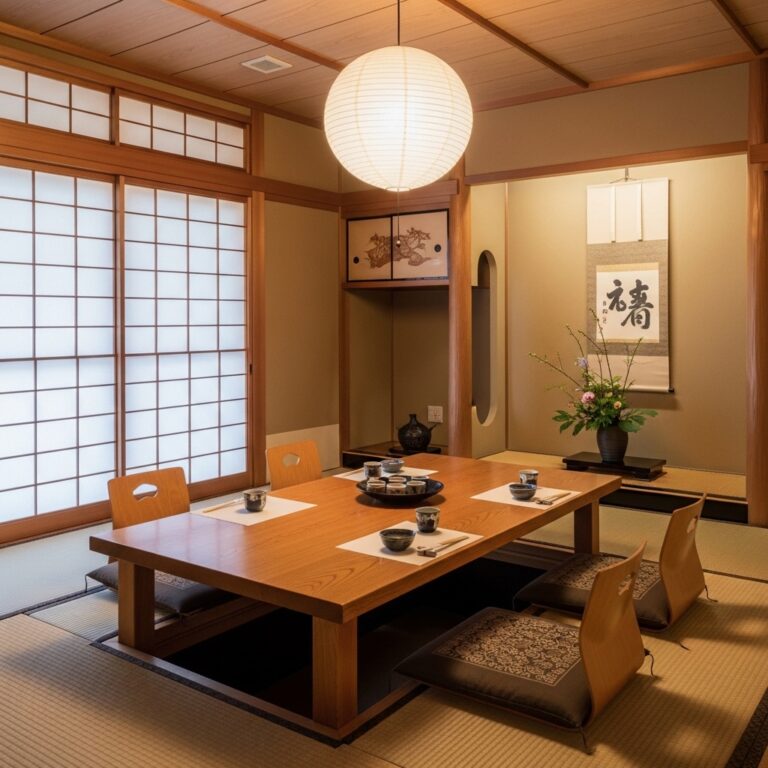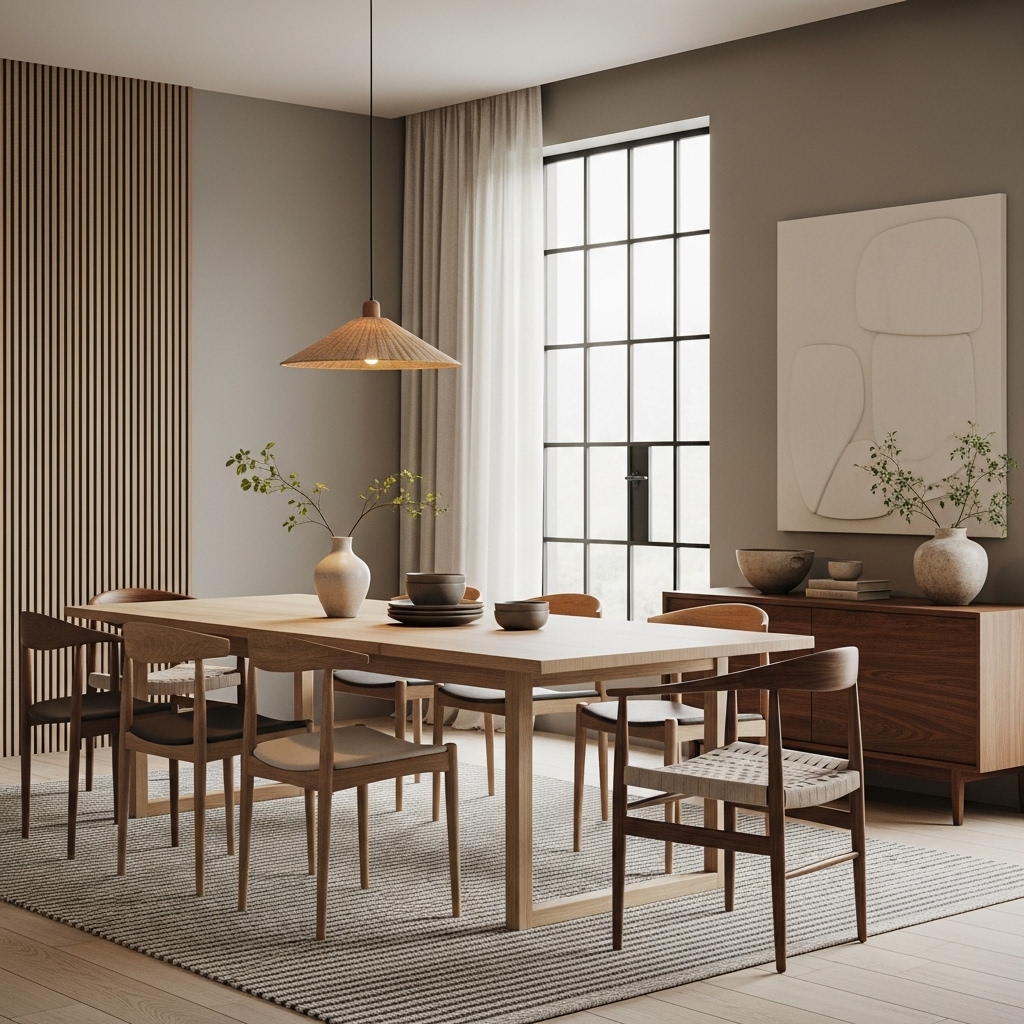
In a world that often feels cluttered and loud, the dining room should serve as a quiet anchor for the soul.
Japandi Dining Room Designs Ideas—the harmonious fusion of Japanese “Wabi-Sabi” and Scandinavian “Hygge”—offers a masterful solution for those seeking a space that is both functional and profoundly peaceful.
By stripping away the unnecessary and focusing on organic textures and intentional craftsmanship, you can turn every meal into a mindful ritual. Let’s explore how to blend the warmth of timber with the coolness of stone to create your ultimate minimalist sanctuary.
Zen Dining: Modern Japandi Interior Art
1#. Light Oak Tapered Tables
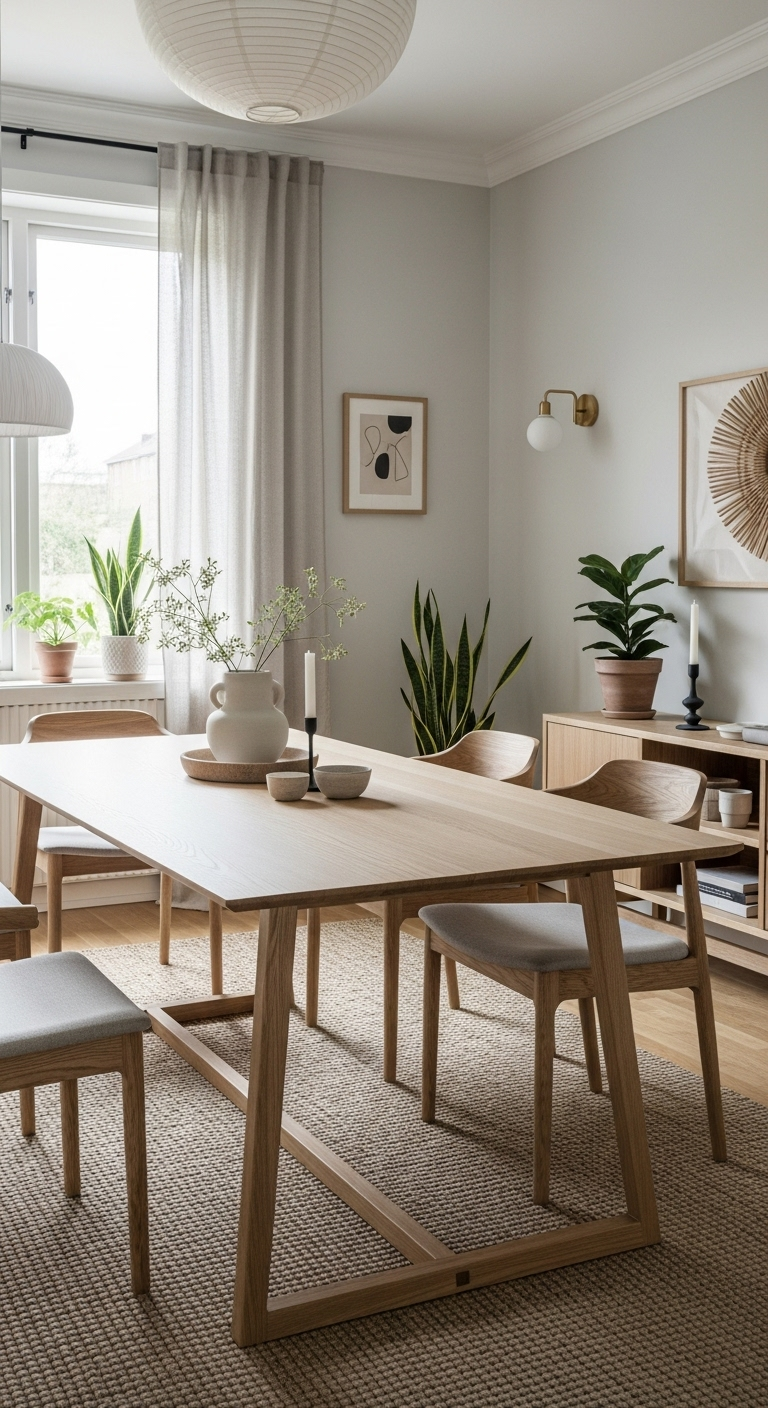
The centerpiece of most Japandi Dining Room Designs is a high-quality light oak table featuring slim, tapered legs for an airy feel. This natural wood tone provides a warm, organic foundation that bridges the gap between Nordic and Eastern aesthetics perfectly.
Choose a matte finish to celebrate the raw grain and texture of the timber rather than a shiny, artificial lacquer. A simple rectangular or circular shape ensures the room remains grounded and focused on the connection between your family and guests.
2#. Black Spindle Dining Chairs
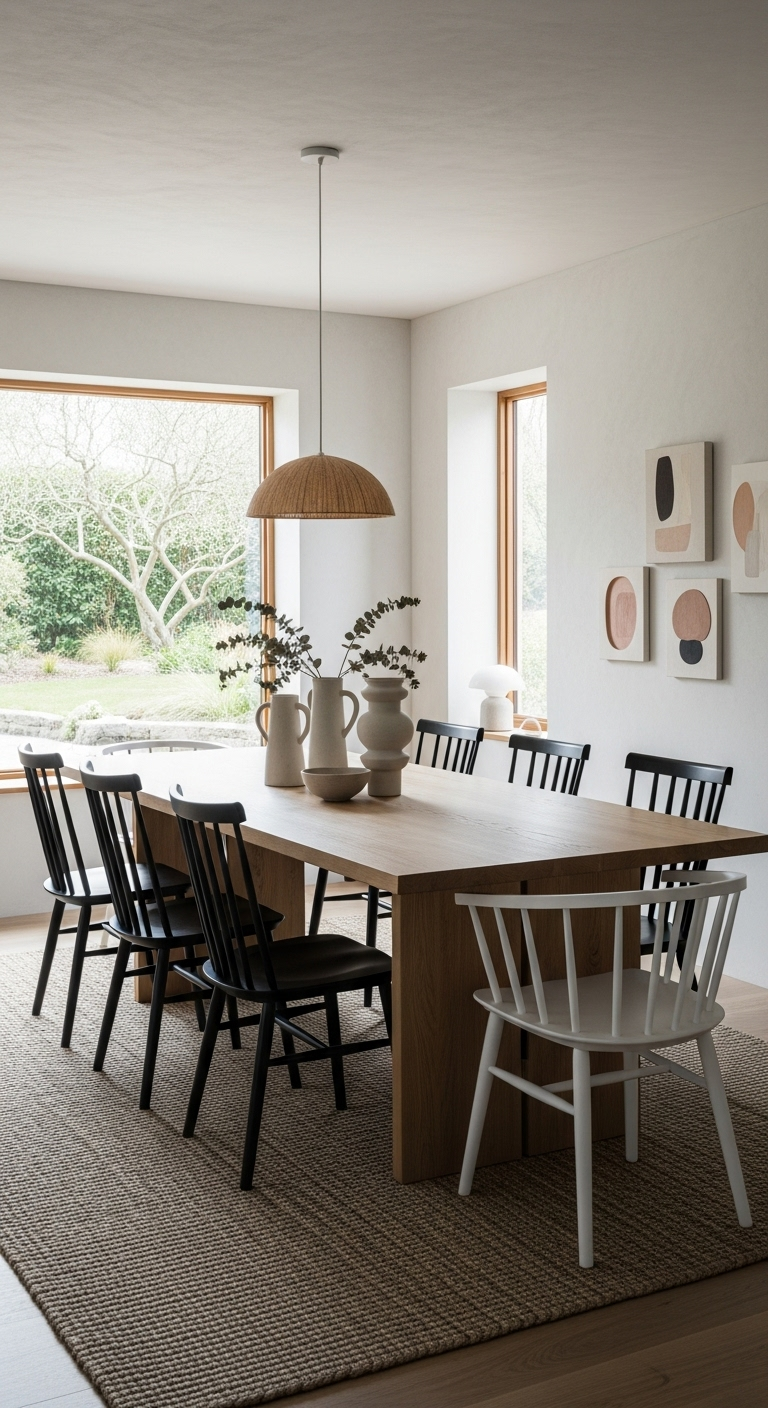
Contrast your light wood table with a set of sleek, black spindle chairs to add a touch of modern graphic definition. This “Visual Anchor” prevents a neutral-colored room from feeling flat and provides a sharp, sophisticated silhouette against light walls.
The thin lines of the spindles mimic the bamboo structures found in Japanese design while maintaining a classic Scandinavian profile. It is a timeless seating choice that feels both lightweight and incredibly sturdy for daily use in a busy home.
3#. Oversized Paper Lantern Pendants
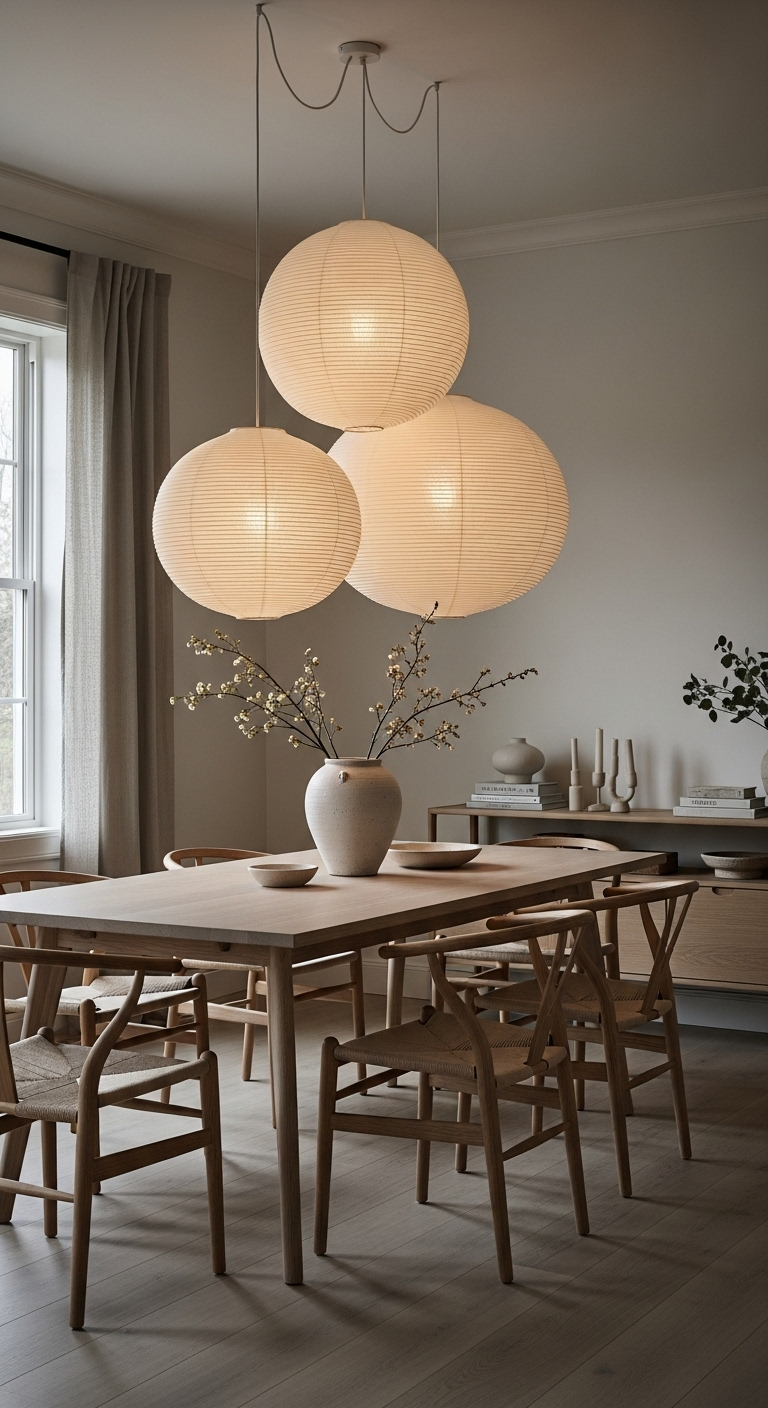
Hang a large, sculptural paper lantern over your dining table to cast a soft, diffused glow that mimics natural moonlight. The delicate texture of the washi paper adds a layer of fragile beauty and handcrafted soul to a minimalist room.
The large scale of the pendant creates a stunning focal point without adding any unnecessary visual “weight” or clutter to the ceiling. This lighting choice is essential for establishing the peaceful, “Zen” atmosphere that defines the best Japandi Dining Room Designs.
4#. Low-Profile Slatted Sideboards
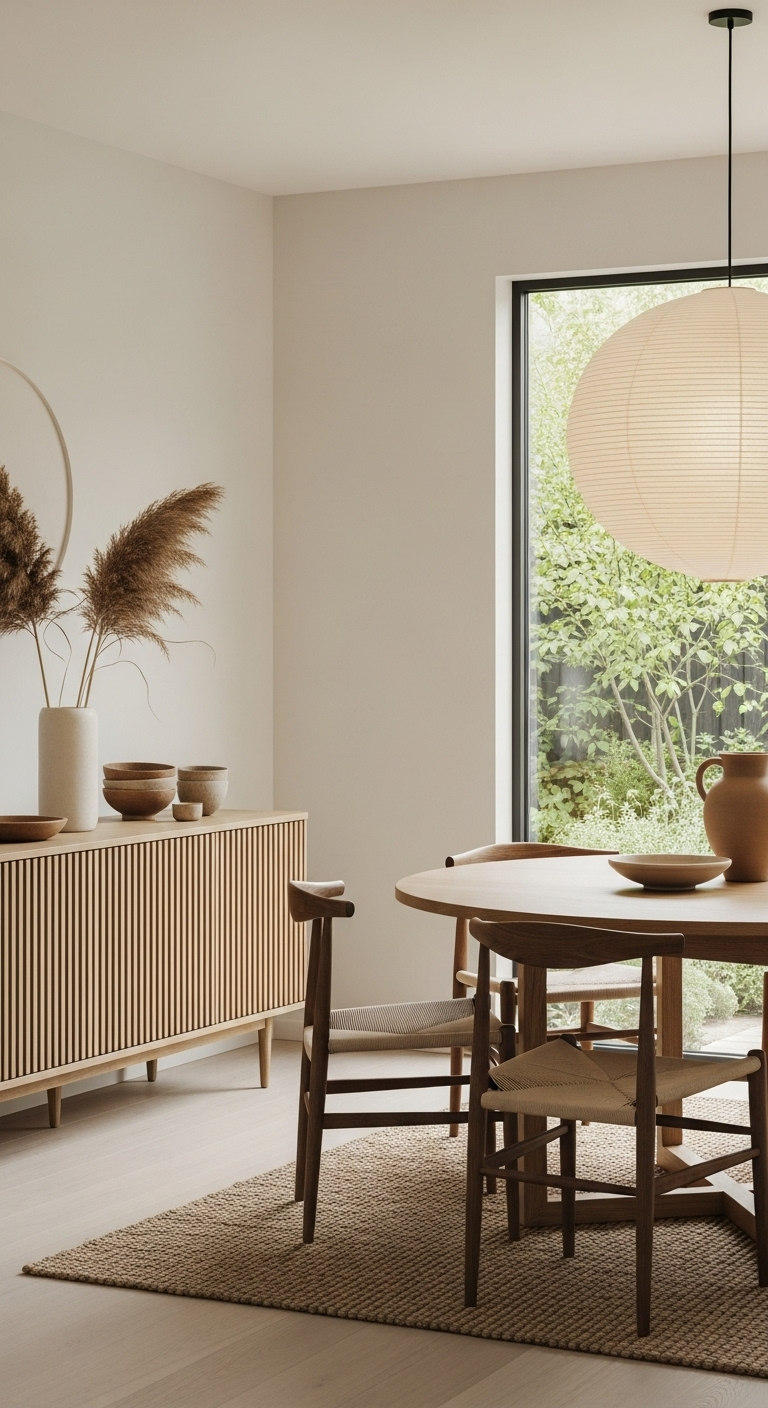
Incorporate a low-slung wooden sideboard featuring vertical slats to provide hidden storage for your minimalist dinnerware and linens. The repetitive lines of the slats add a rhythmic, architectural texture that is a hallmark of Japanese craftsmanship and order.
Keeping your furniture low to the ground helps the room feel more expansive and connected to the earth, rather than crowded and tall. This functional piece keeps your surfaces clear, supporting the “less-is-more” philosophy that makes this style so restorative.
5#. Hand-Knotted Jute Rugs
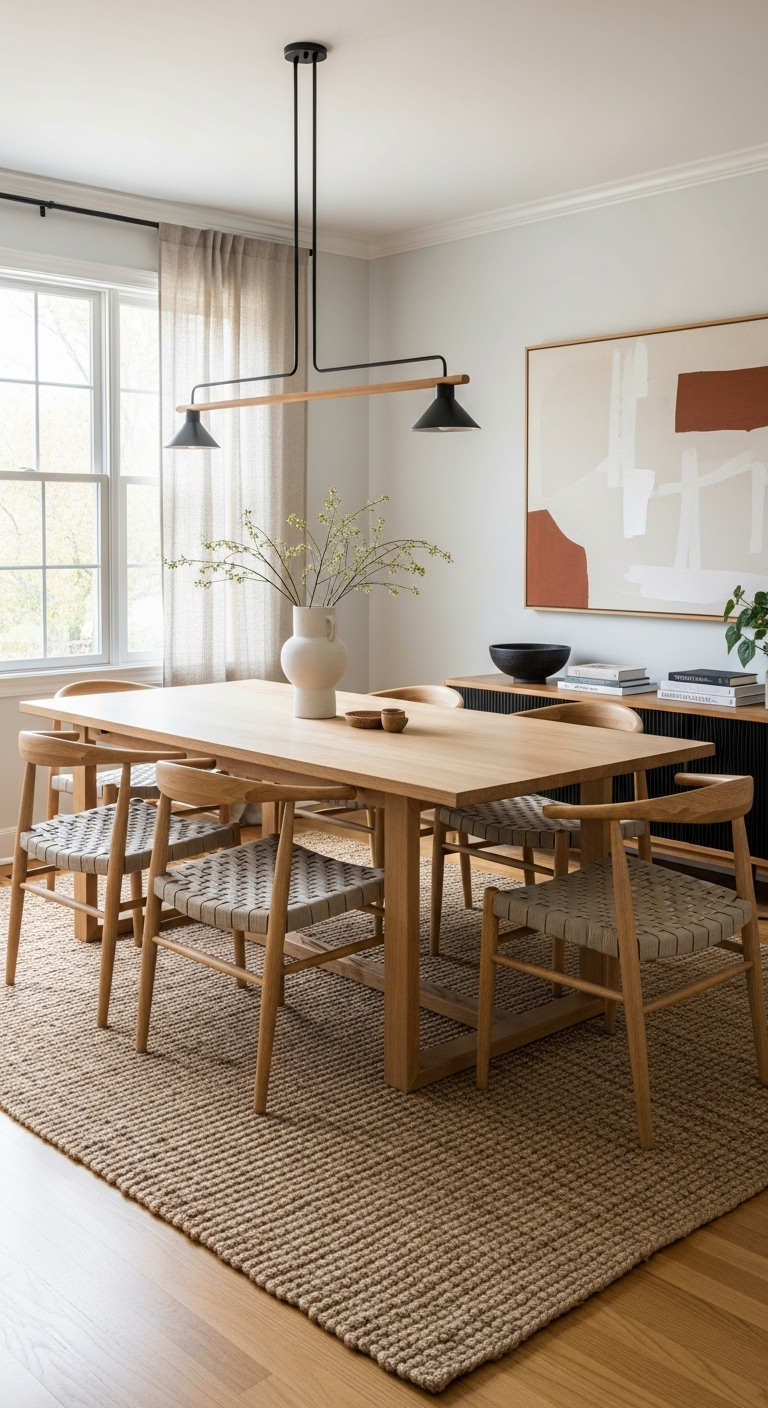
Place a large jute or sisal rug under your dining set to introduce a rugged, tactile foundation that grounds the entire space. The golden-brown tones of the natural fibers coordinate perfectly with wood floors and add a necessary layer of “Hygge” warmth.
Natural fiber rugs are incredibly durable and eco-friendly, aligning with the sustainable values of modern Japandi Dining Room Designs. They provide a “sand-like” texture underfoot that helps to blur the lines between your interior and the natural world.
6#. Minimalist Ikebana Arrangements
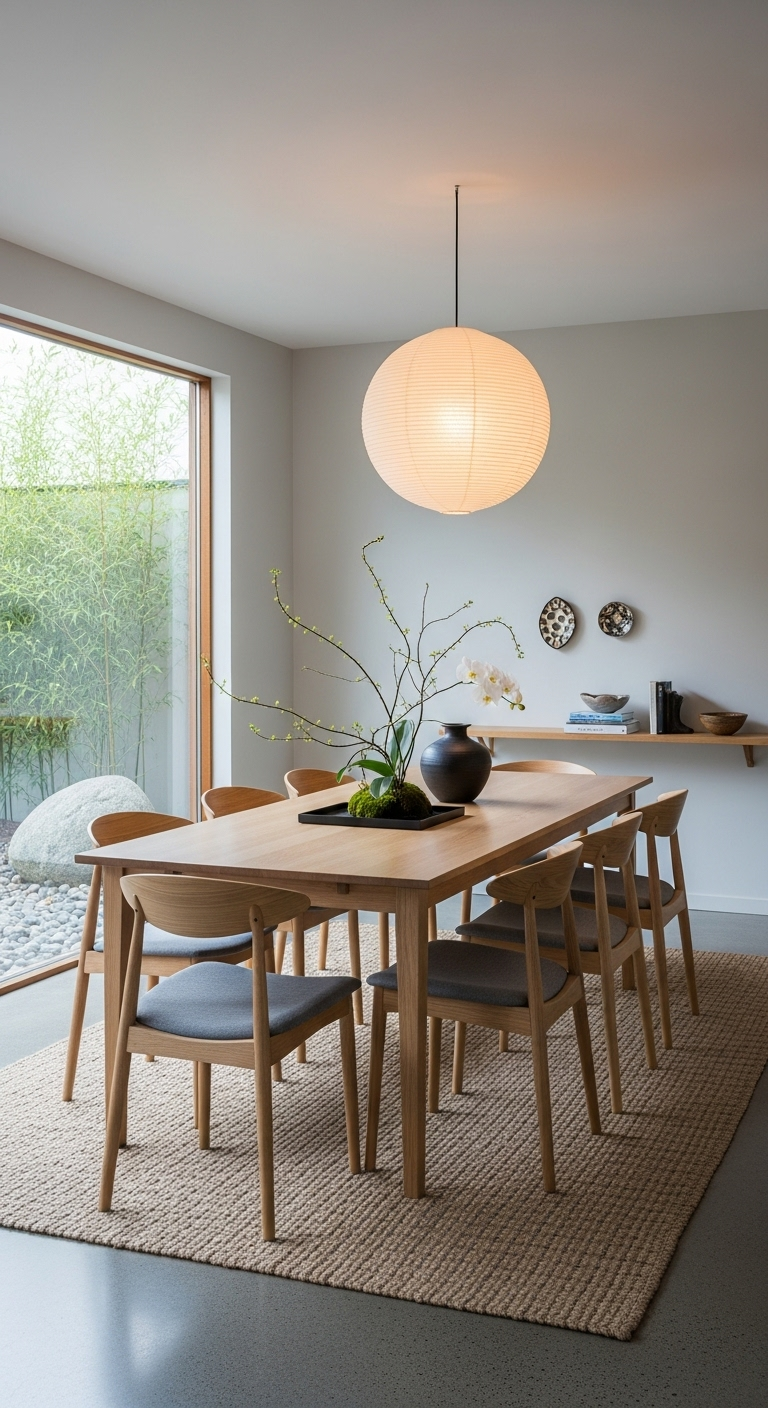
Instead of a crowded bouquet, choose a single, uniquely shaped branch or a lone stem in a tall ceramic vase for your table. This practice of Ikebana celebrates the beauty of negative space and the specific character of a single living element.
The sculptural silhouette of the branch adds a sense of “living art” that changes as the plant naturally ages and grows. It is a quiet, contemplative detail that brings a touch of the forest directly to your daily dining experience.
7#. Matte Stoneware Place Settings
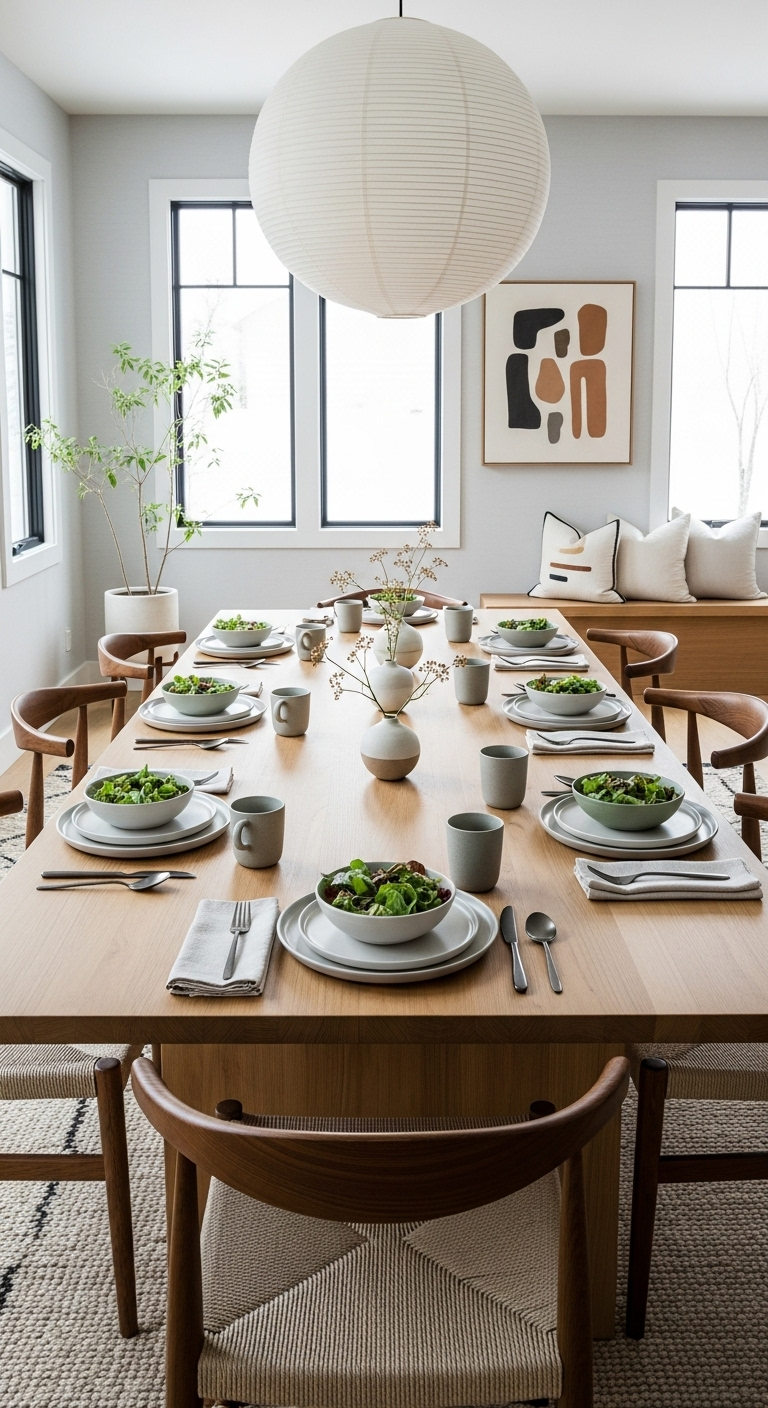
Set your table with handmade stoneware plates in muted tones like charcoal, sand, or misty grey for an artisanal feel. The irregular edges and matte surfaces of the ceramic celebrate the beauty of imperfection, a core tenet of the Wabi-Sabi philosophy.
Mixing different shades within the same neutral palette creates a sophisticated, tonal look that feels very curated and high-end. Stoneware adds a cooling, stony texture that balances the warmth of your wooden furniture and woven textiles.
8#. Linen Drapery in Oatmeal
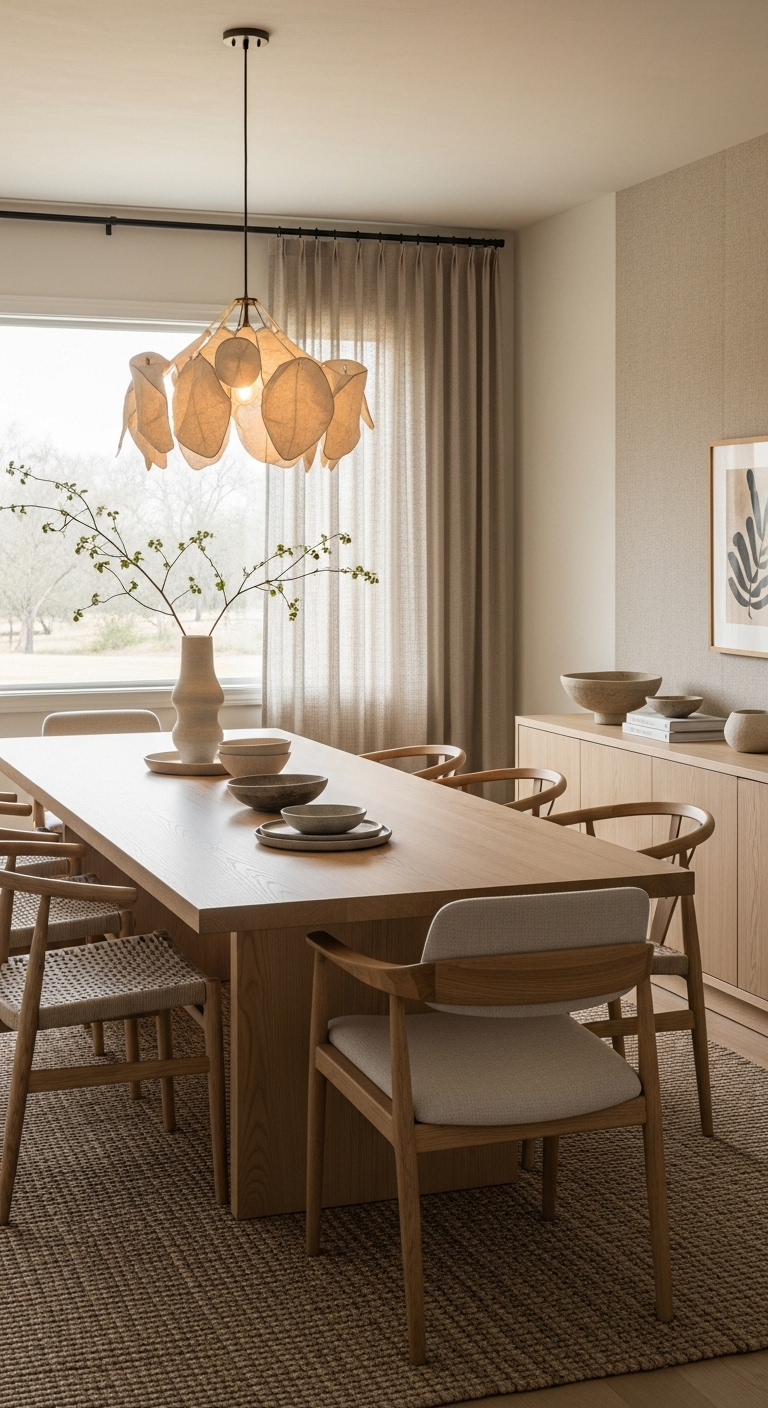
Hang floor-length linen curtains in a soft oatmeal or bone white shade to allow soft, filtered sunlight to fill the dining room. The breathable fabric moves gently with the breeze, adding a peaceful and airy movement that feels incredibly refreshing.
Linen window treatments provide a layer of privacy without making the room feel enclosed or dark during the daylight hours. This “breezy” detail is a favorite in modern Japandi Dining Room Designs for creating a sanctuary-like environment.
9#. Integrated Floating Wood Ledges
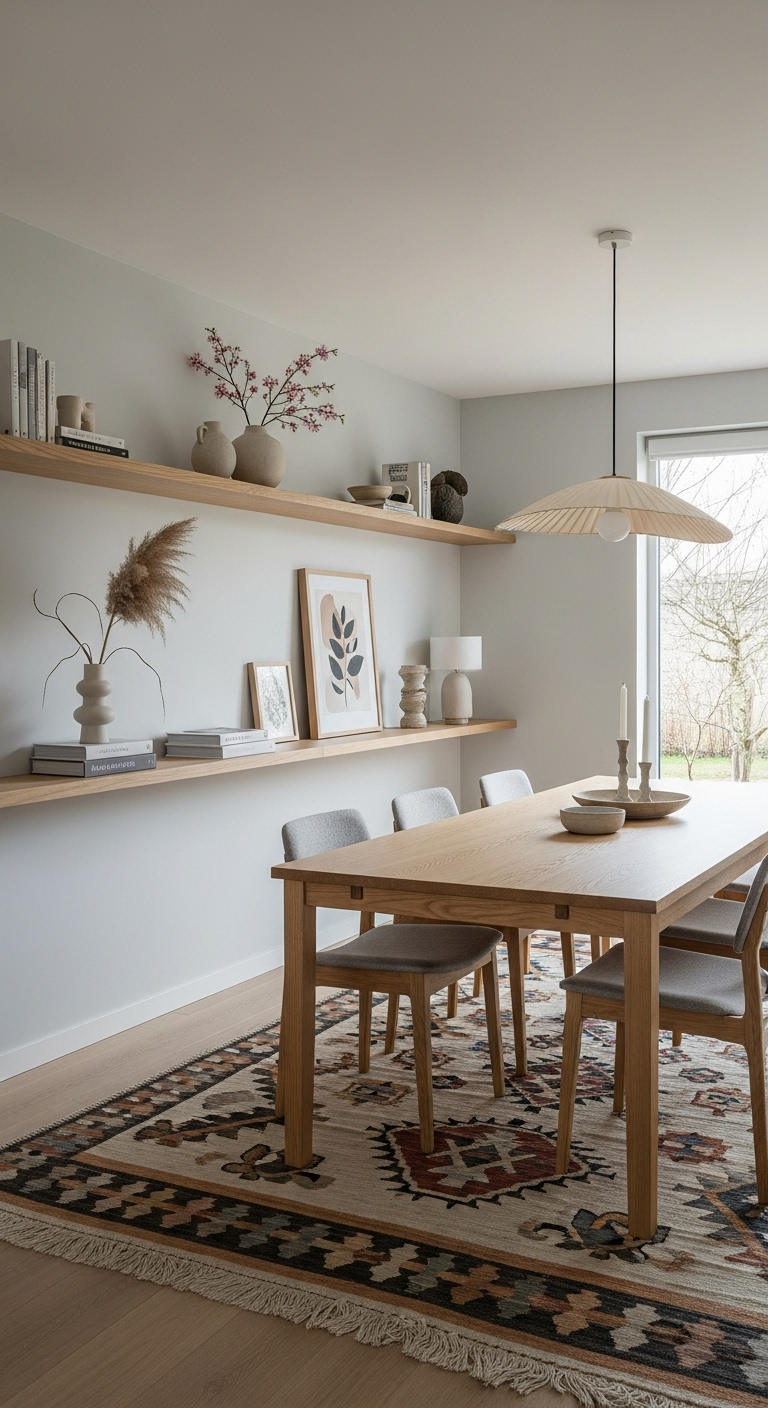
Install thin floating ledges made of the same wood as your table to display a few select ceramics or minimalist art prints. This keeps your floor space clear while adding a sense of verticality and personal character to your dining room walls.
By limiting the number of items on display, you ensure that each piece has “room to breathe” and is truly appreciated by the eye. It is a smart way to maximize storage while maintaining a clean, gallery-like atmosphere in your home.
10#. Subtle Bamboo Room Dividers
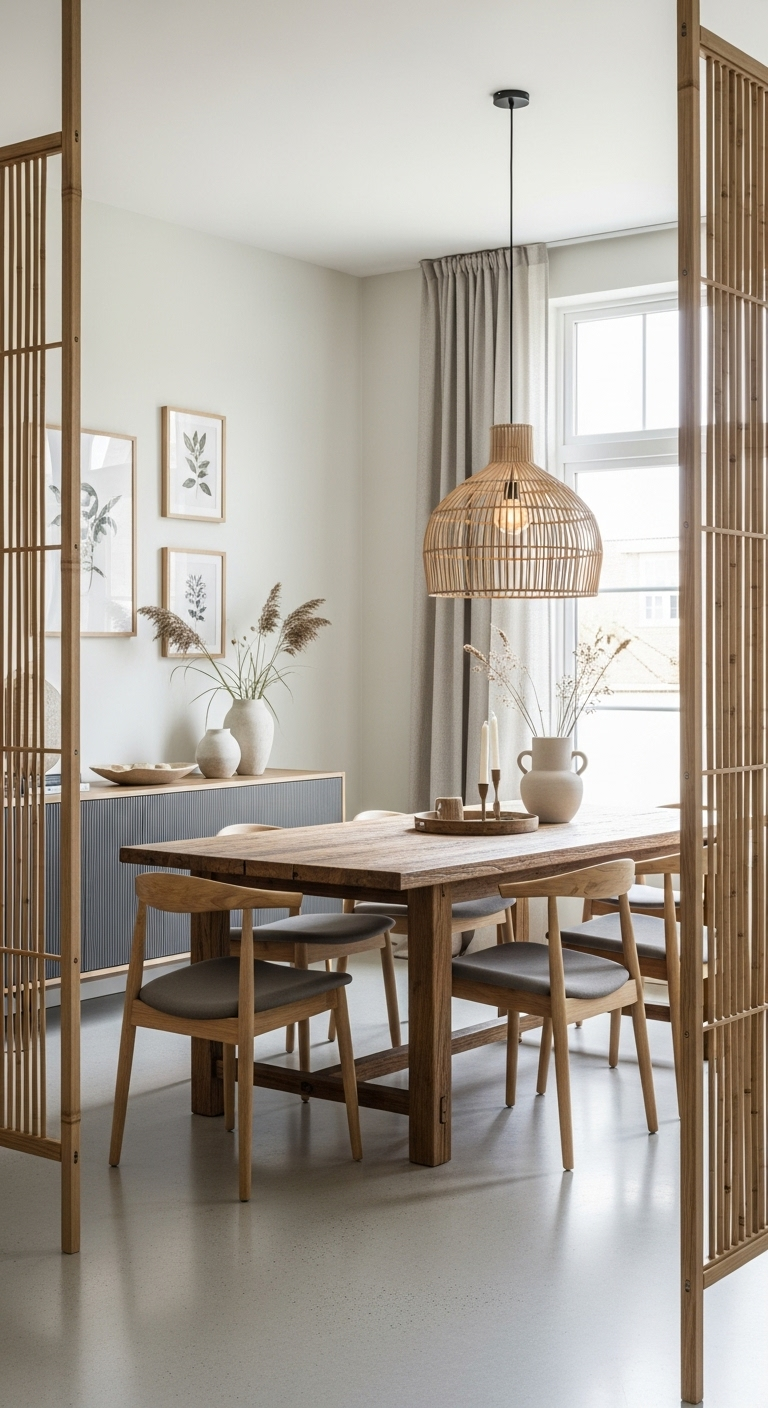
Use a slatted bamboo screen to subtly separate the dining area from an open-concept kitchen or living room for a sense of privacy. This “semi-transparent” barrier allows light to pass through while creating a dedicated and intimate nook for your meals.
The natural vertical lines of the bamboo add a touch of Eastern-inspired architectural detail that feels very grounded and peaceful. It is a versatile design tool for those looking to master the flow of their Japandi Dining Room Designs.
11#. Sculptural Abstract Canvas Art
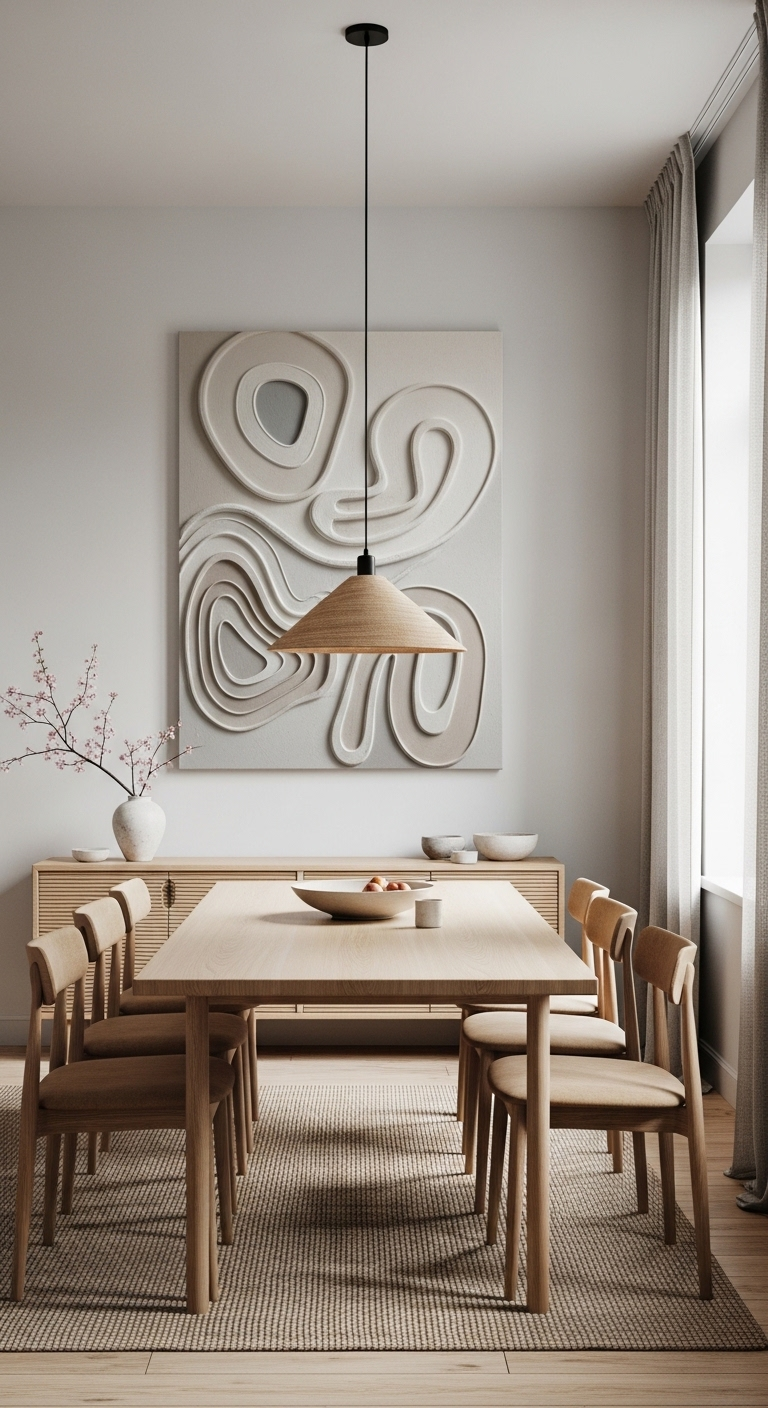
Decorate your walls with large-scale abstract paintings featuring soft, earthy brushstrokes and plenty of white negative space. This type of art reflects the quiet, introspective energy of the room and serves as a sophisticated focal point for guests.
Choose thin, light wood frames to keep the look consistent with your furniture and ensure the art feels like a part of the architecture. A single large canvas is more effective than many small ones for maintaining a minimalist and “Zen” aesthetic.
12#. Concrete and Stone Centerpieces
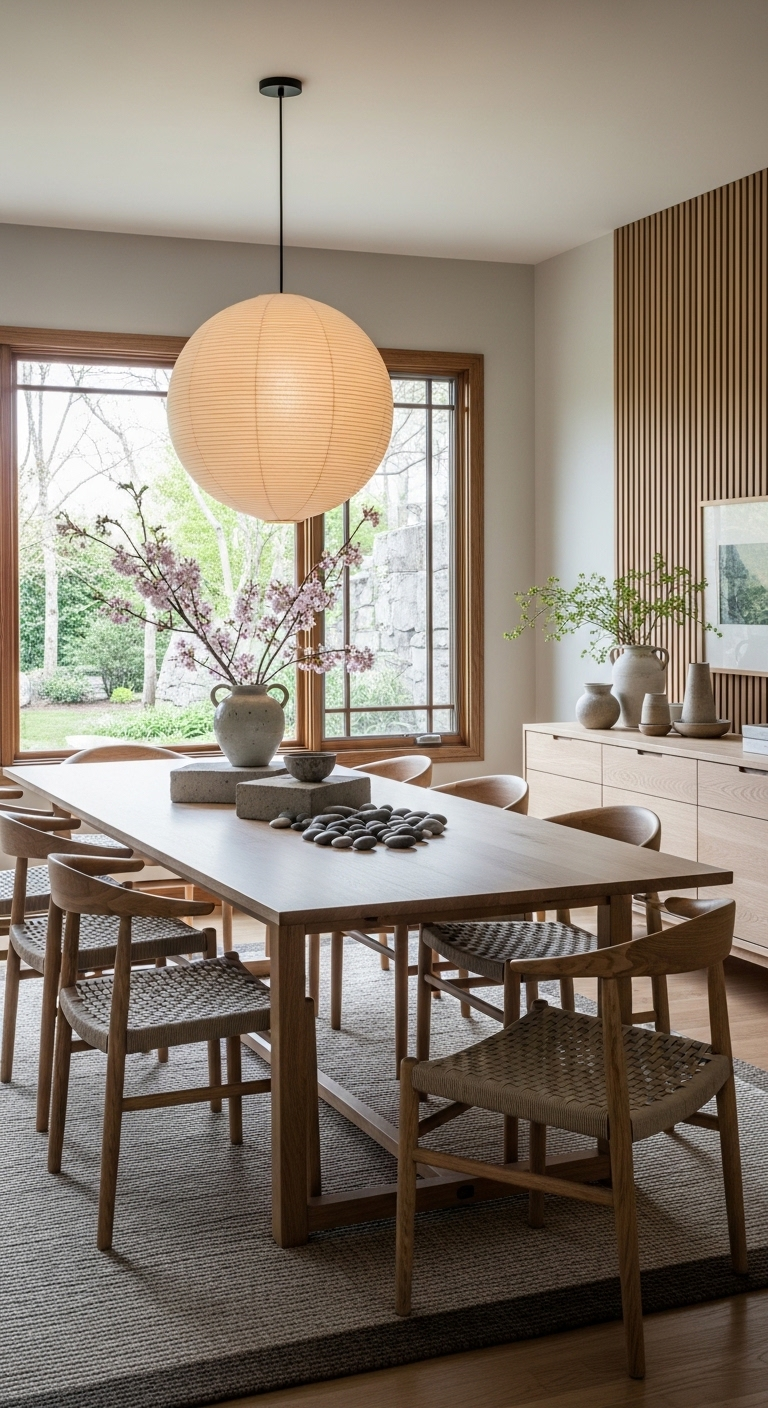
A heavy, cast-concrete bowl or a smoothed river stone tray can serve as a sturdy and organic centerpiece for your dining table. The cool, grey texture of the stone provides a beautiful contrast to the warm, honey-toned wood of the tabletop.
Using materials that feel like they were taken directly from nature helps to ground the room and foster a sense of permanence. It is a simple, low-maintenance way to introduce the “stony” side of Japandi Dining Room Designs.
13#. Tasseled Cotton Floor Poufs
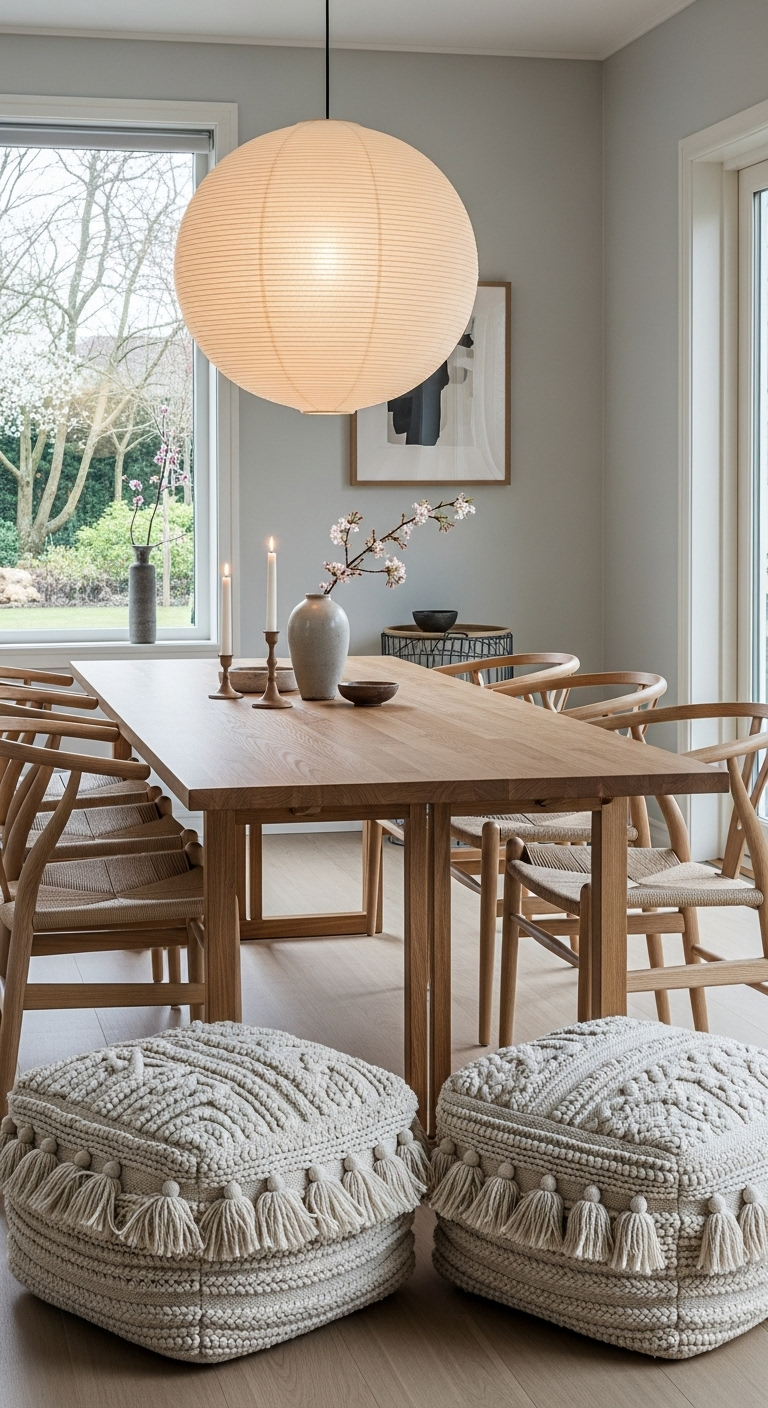
Incorporate a few soft cotton poufs in neutral colors around the room to provide extra, casual seating for family or pets. These low-profile accessories encourage a more relaxed, floor-focused way of living that is common in traditional Japanese homes.
The soft texture of the cotton adds a layer of comfort and “Hygge” that balances the hard surfaces of the table and chairs. Poufs are easy to move around and can be tucked under the table when not in use for an open flow.
14#. Black Metal Track Lighting
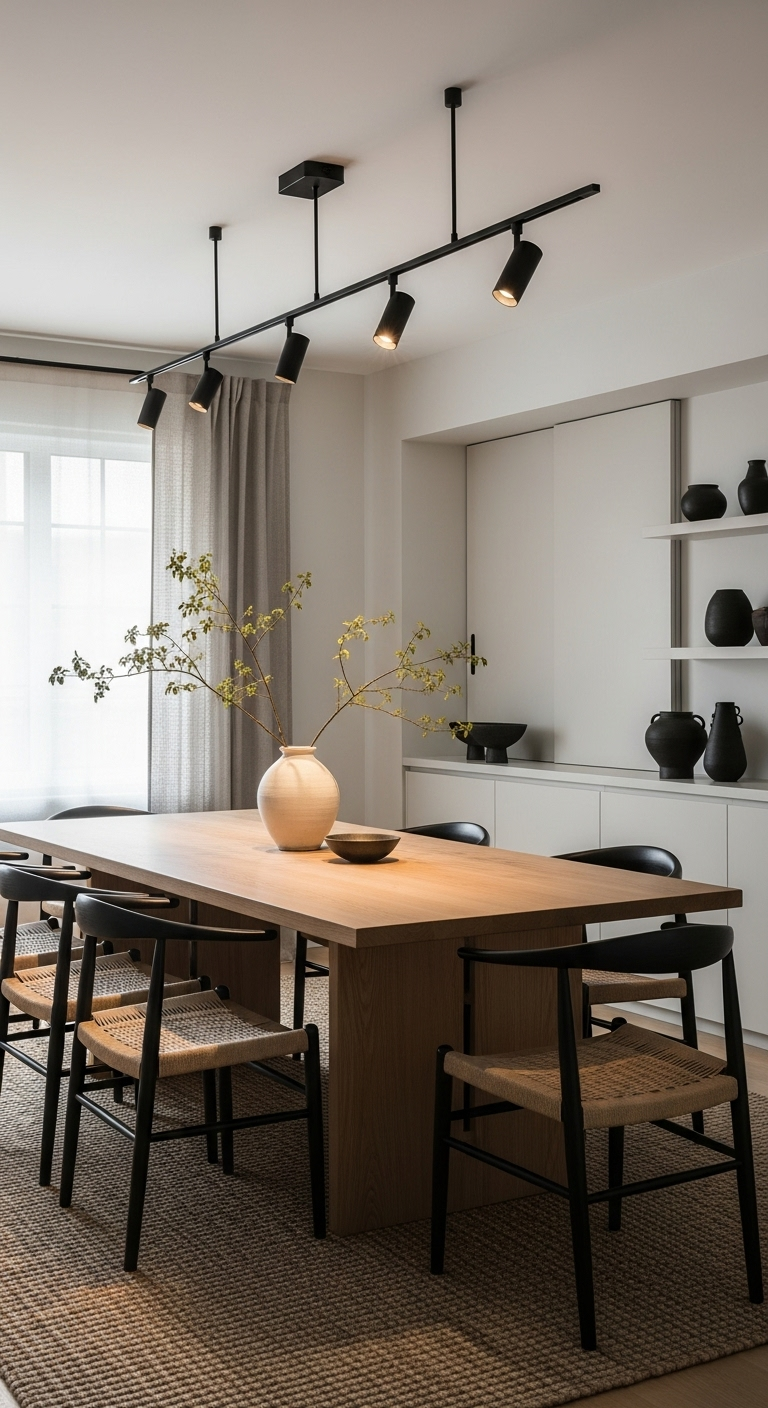
For a more contemporary edge, use slim black metal track lighting to provide targeted task lighting for your dining table and art. The dark, graphic lines of the tracks add a sharp modern definition that coordinates perfectly with black spindle chairs.
Track lighting allows you to adjust the focus of the light, ensuring your Japandi Dining Room Designs are functional for both eating and working. It is a sleek, “studio-style” solution that feels very current and professionally designed.
15#. Hand-Woven Seagrass Baskets
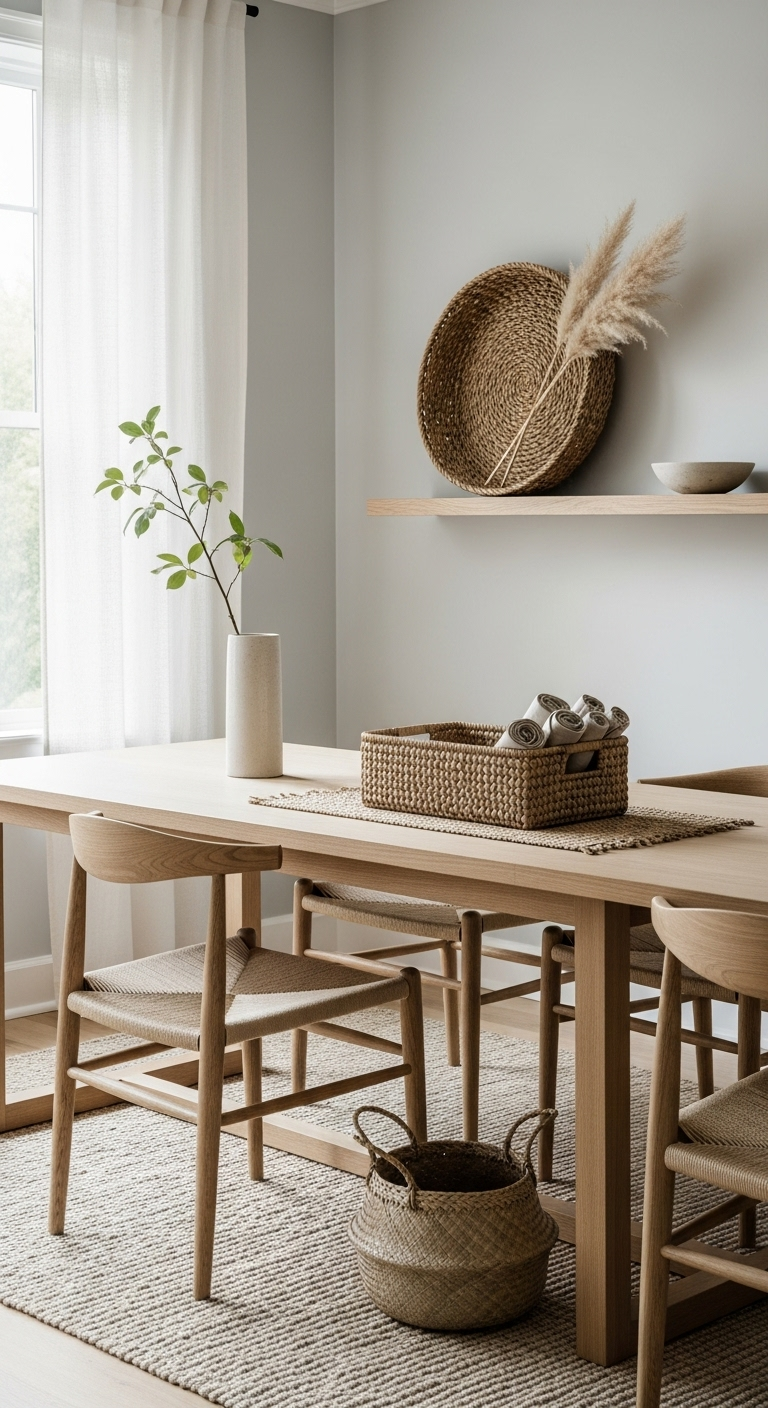
Keep extra linens or small dining accessories organized in large, hand-woven seagrass baskets placed on the floor or a low shelf. These natural containers add a rustic, tactile element that softens the clean lines of minimalist furniture.
The weave of the seagrass introduces a new organic pattern that celebrates traditional craftsmanship and sustainable materials. It is a functional and beautiful way to keep your dining sanctuary tidy and “Pinterest-ready” at all times.
16#. Warm “Amber” Light Bulbs
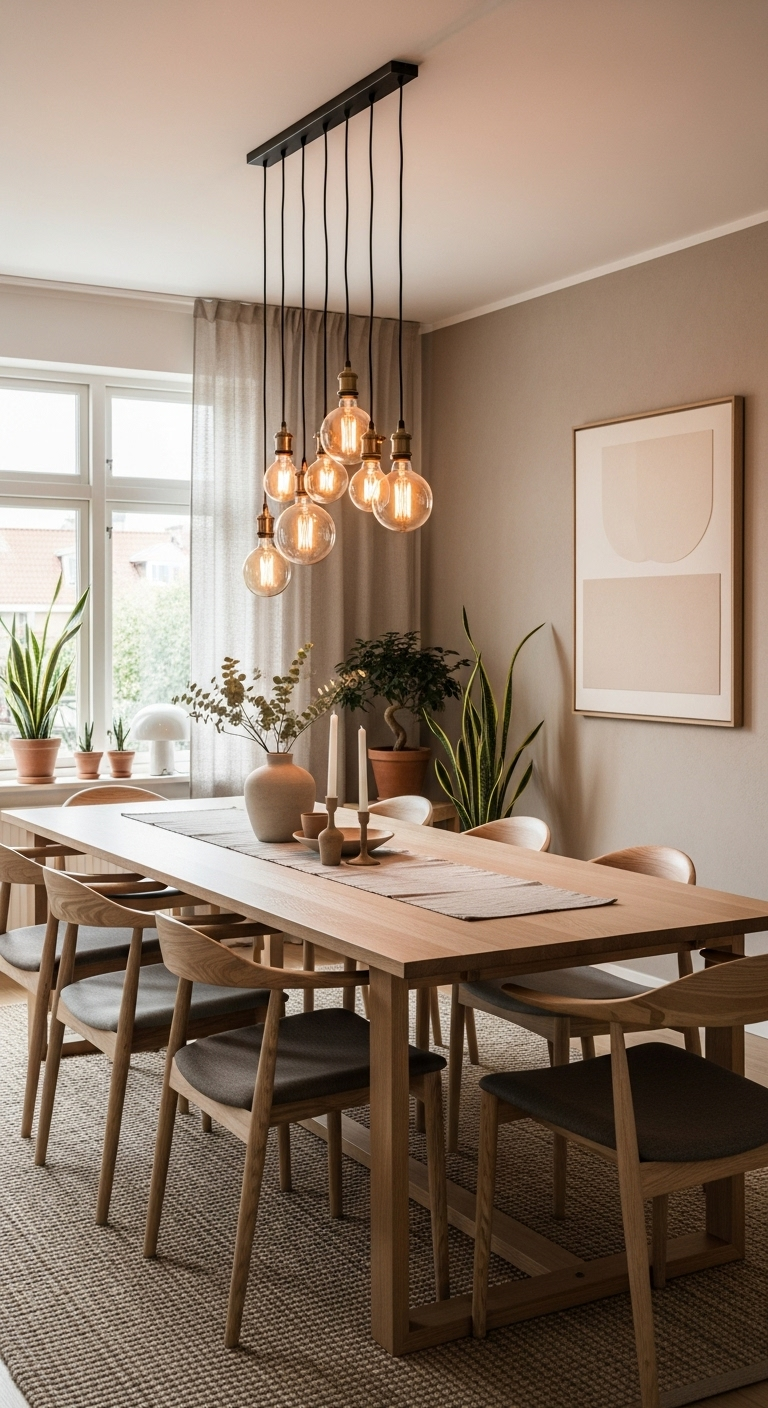
Ensure all your light fixtures use warm-toned LED bulbs to create a golden, candle-like glow that feels incredibly welcoming in the evening. Proper lighting temperature is essential for making a minimalist room feel like a cozy home rather than a cold museum.
Avoid blue-toned or “daylight” bulbs, as they can wash out the natural wood tones and make the room feel clinical and uninspired. The soft amber glow enhances the “Hygge” factor of your Japandi Dining Room Designs.
17#. Raw Edge Wood Benches
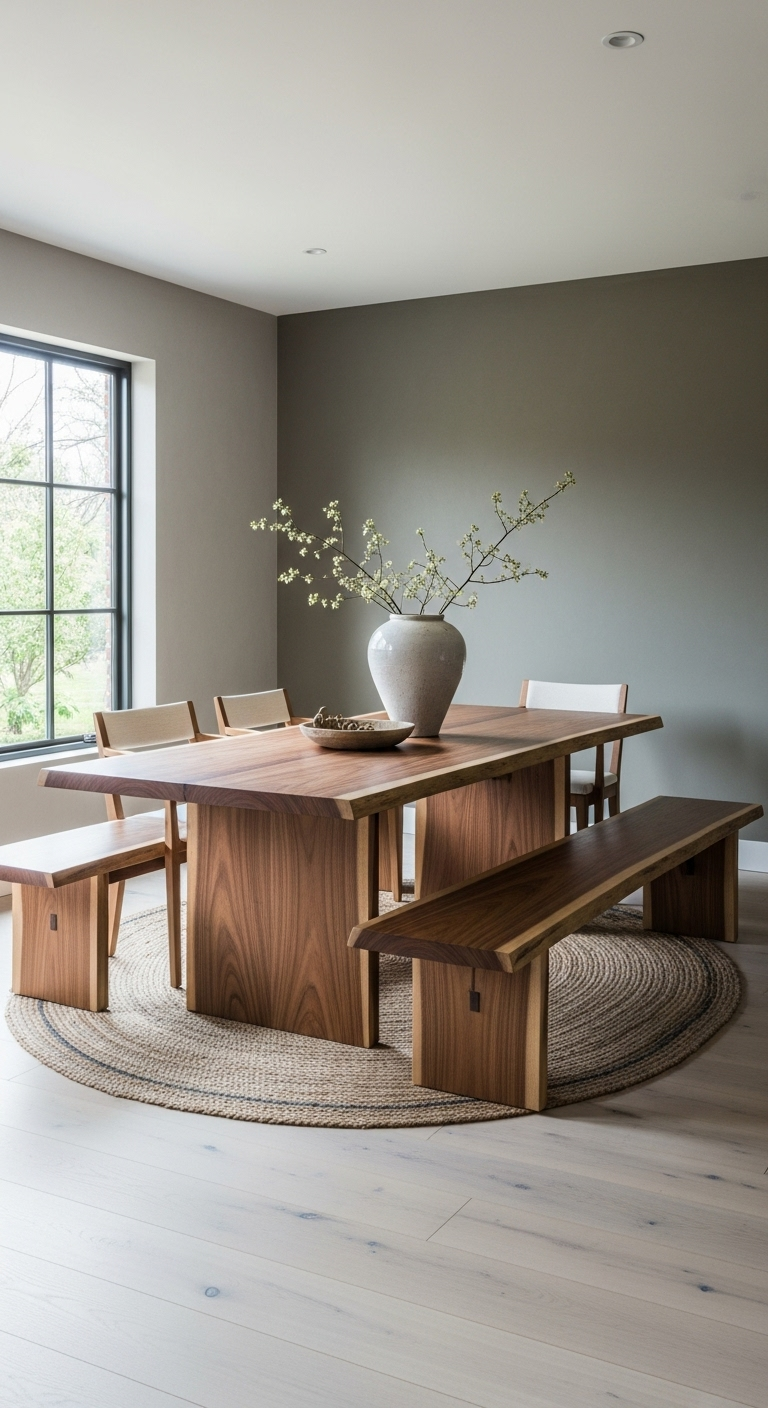
Swap out a set of chairs for a long, raw-edge wood bench on one side of the table to create a more communal and open feel. The natural, irregular edge of the wood celebrates the life of the tree and adds an organic “Wabi-Sabi” soul to the room.
Benches are a great space-saving solution that allows you to seat more people without the visual clutter of multiple chair backs. This seating choice fosters a sense of togetherness and informal warmth during your family meals.
18#. Minimalist Wall Clocks in Wood
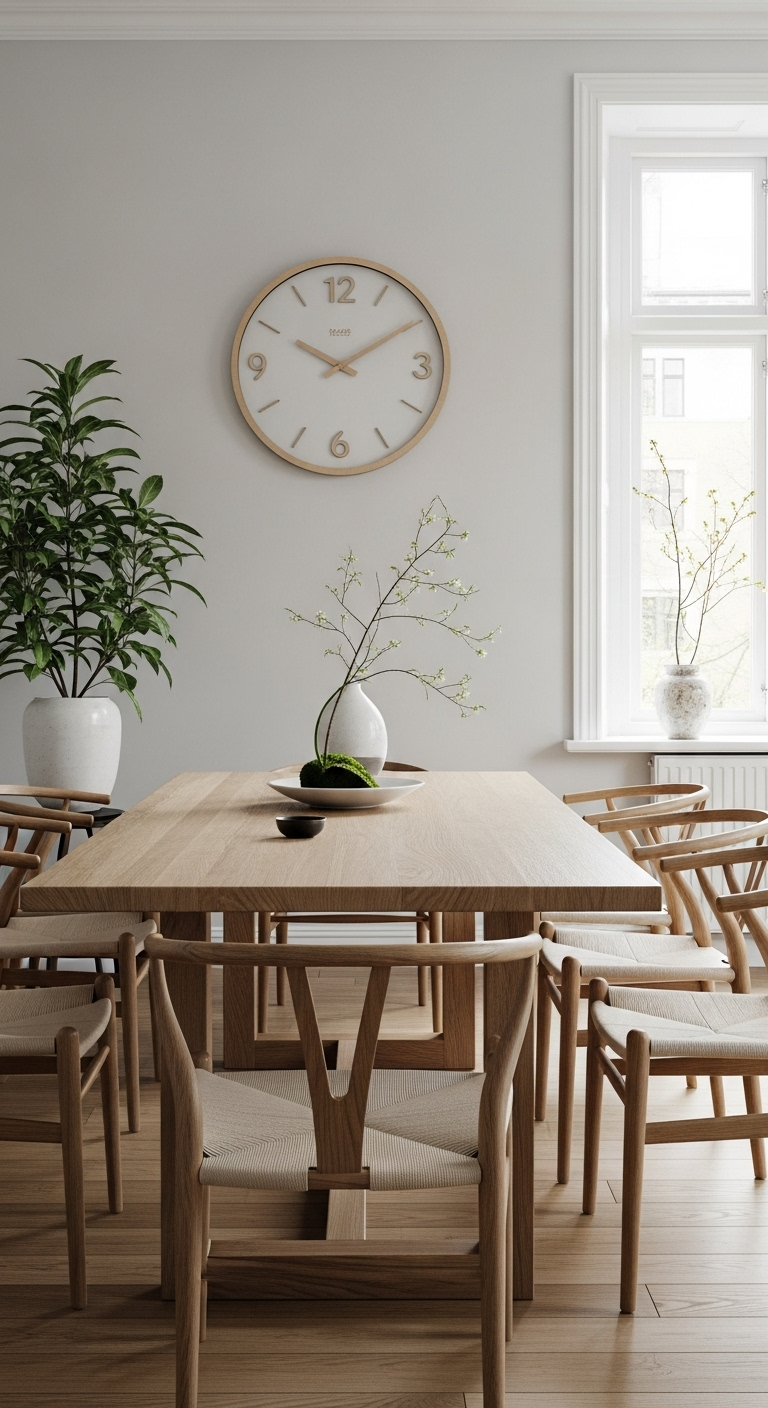
A simple wooden wall clock with no numbers and thin metal hands can be a functional and stylish addition to your Japandi decor. It helps you keep track of time during a busy day without adding any visual noise or distraction to the walls.
The light wood material fits perfectly within the room’s organic palette and honors the “less-is-more” philosophy of the design movement. It is a quiet, practical detail that completes the look of a well-organized and peaceful dining space.
19#. Sheer Rice Paper Window Films
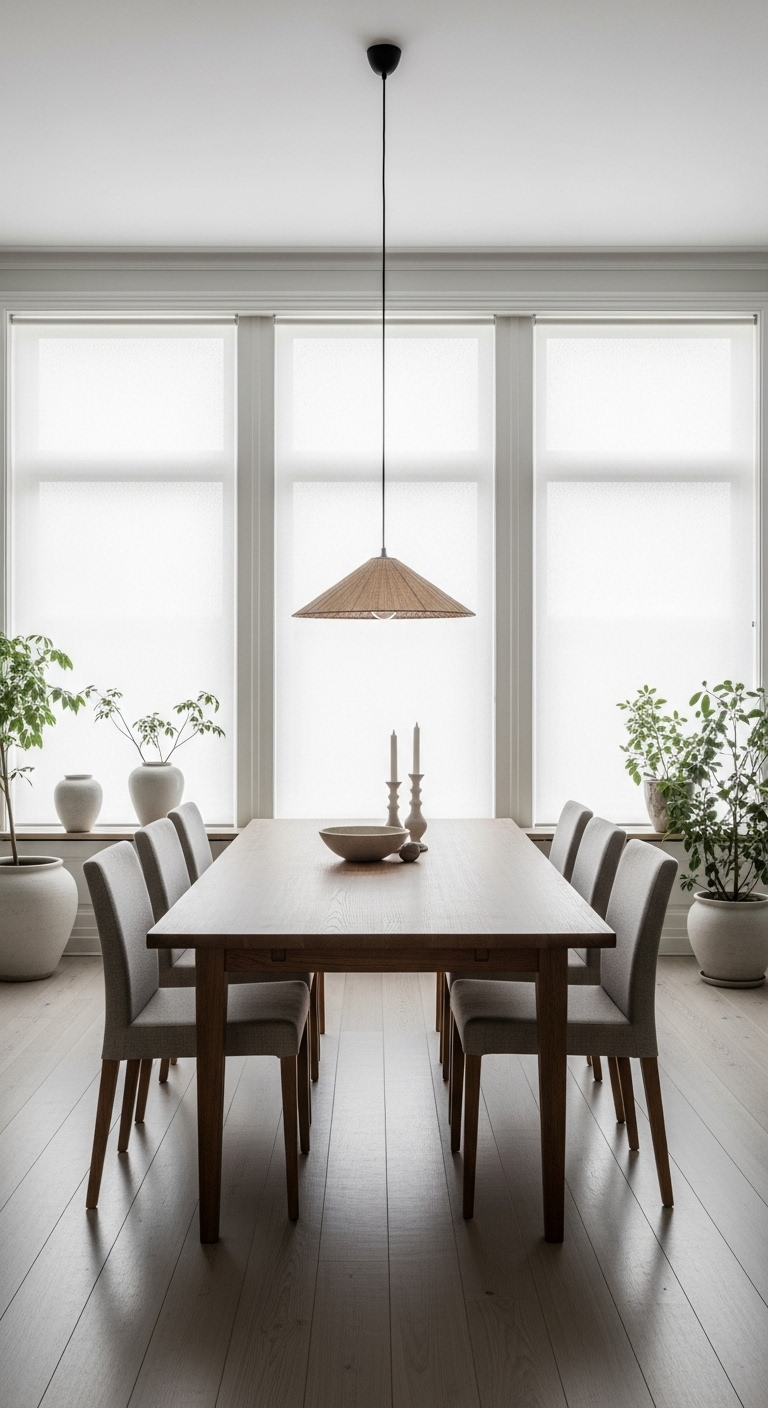
If you lack a view, use frosted or rice-paper style window films to provide privacy while still allowing maximum light to enter. This technique mimics the “Shoji” screens of traditional Japanese architecture, creating a soft and luminous backdrop.
The diffused light eliminates harsh shadows and creates a serene, constant glow that is perfect for a mindful dining environment. This is an affordable and high-impact update for urban Japandi Dining Room Designs.
20#. Subtle Moss and Terrarium Displays
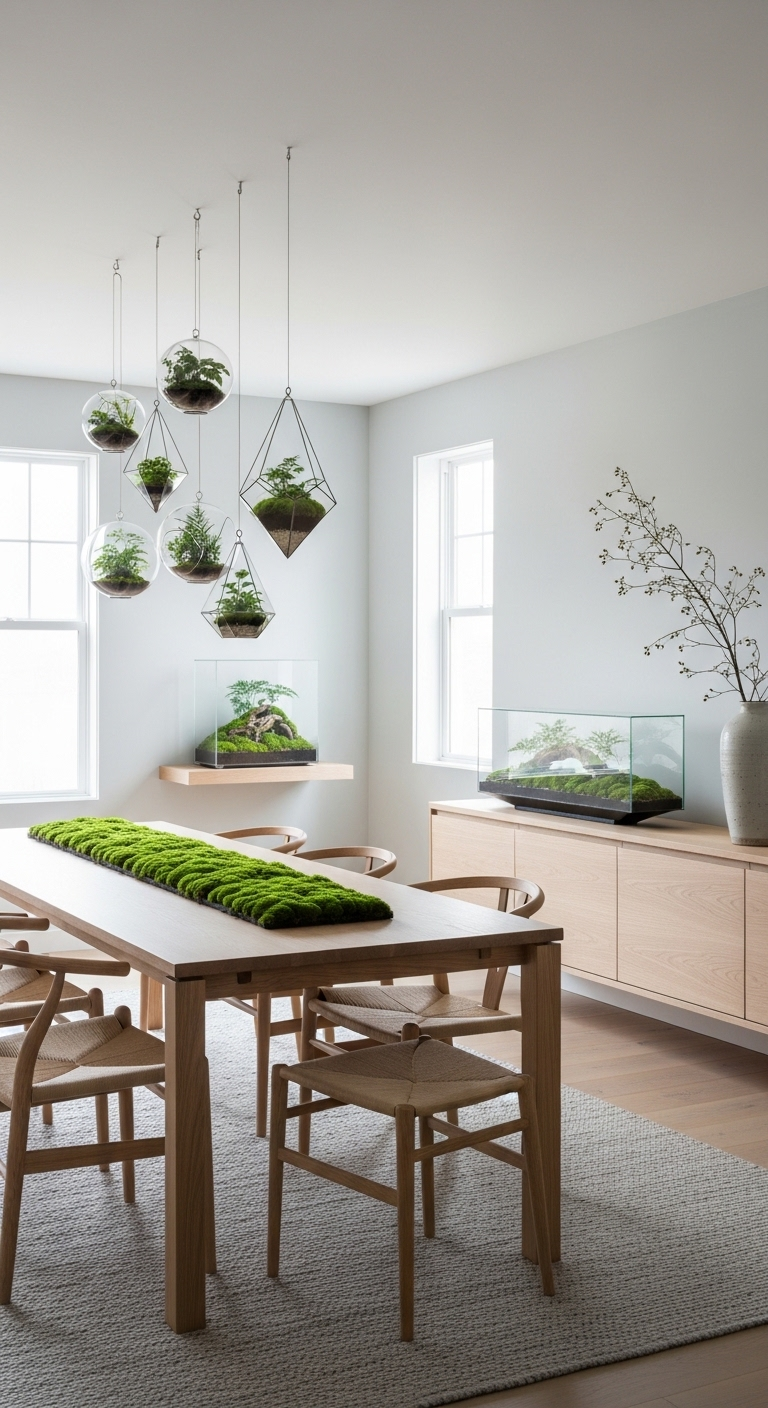
Add a small, enclosed moss terrarium or a flat tray of preserved moss to your sideboard to bring a touch of the deep forest indoors. Moss provides a vibrant, velvet-like green texture that feels incredibly peaceful and requires zero maintenance.
This “micro-landscape” acts as a tiny, living art piece that reminds you of the beauty of the natural world every day. It is a unique way to introduce green life into your room without the need for large, high-maintenance plants.
21#. Symmetrical Sideboard Styling
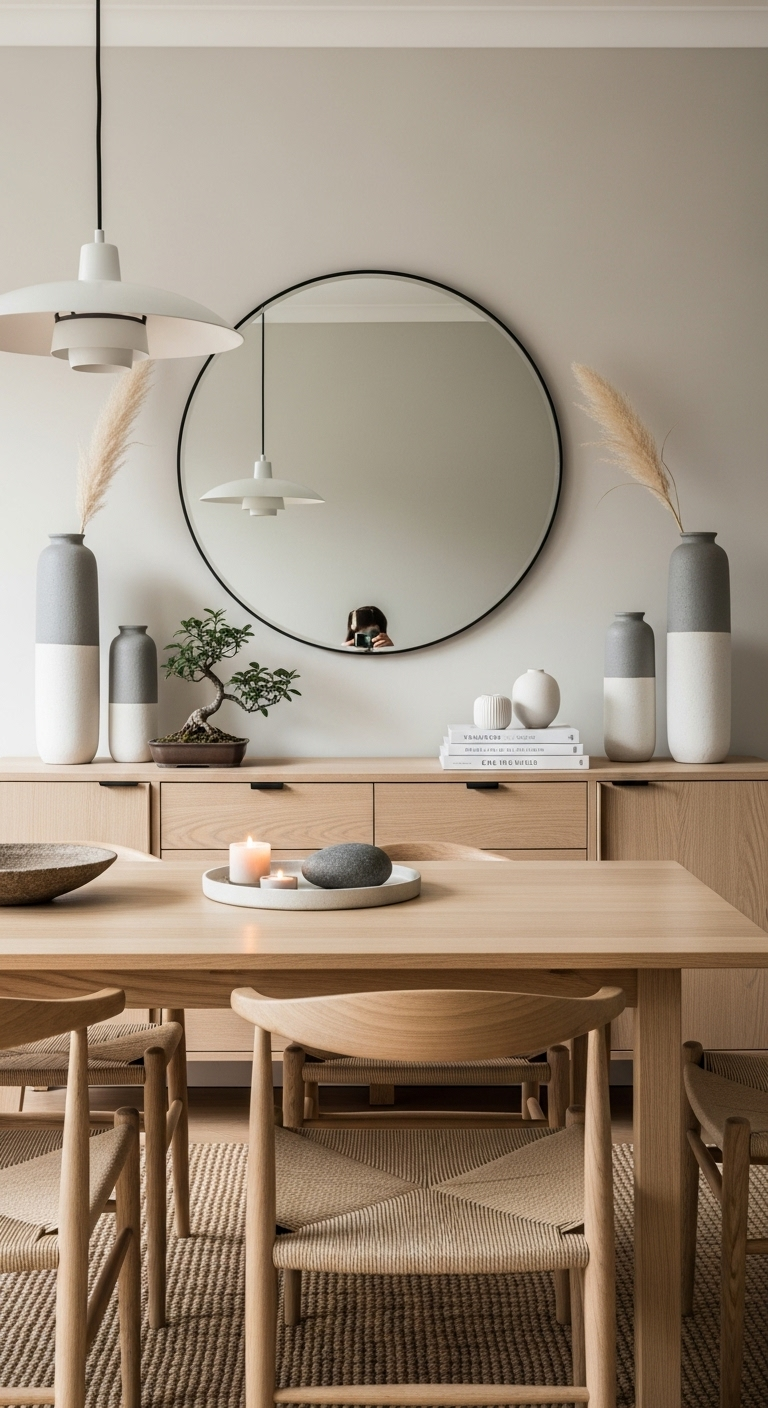
Create a sense of order and peace by styling your sideboard with two identical lamps or vases placed at each end. This symmetrical arrangement is very relaxing to the eye and makes the dining room feel more professionally designed and balanced.
Incorporate a few small, asymmetric objects in the middle to provide a touch of “Wabi-Sabi” character and visual interest. Balance is a core principle in achieving the “Zen” atmosphere of modern Japandi Dining Room Designs.
22#. Recessed Baseboard LED Strips
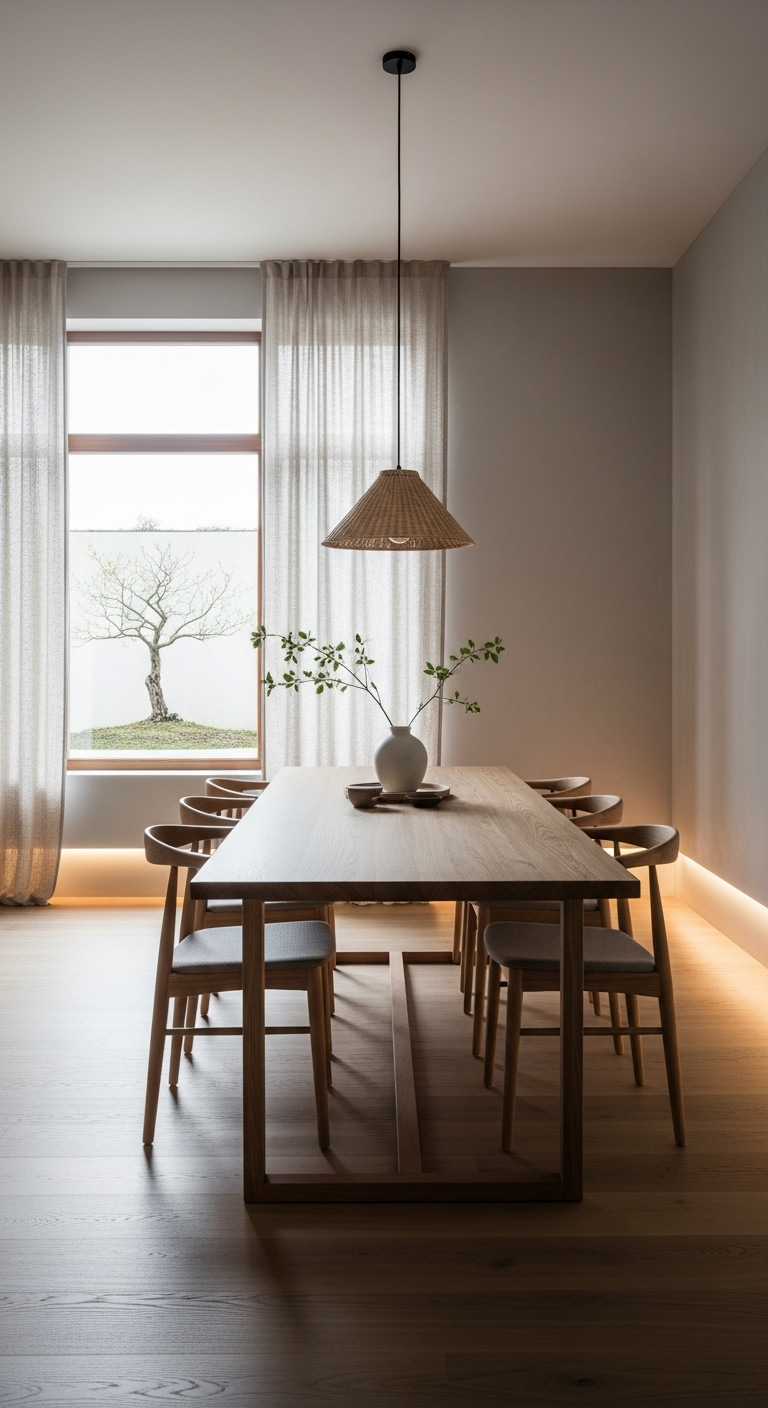
Install low-glare LED strips along the baseboards to guide your path through the dining room with a soft, ethereal glow at night. This architectural lighting adds a sense of safety and a high-end “boutique hotel” vibe to your minimalist home.
It highlights the texture of your floors and makes the room feel more three-dimensional and interesting after the sun goes down. This is a high-tech addition that bridges the gap between traditional peace and modern convenience.
23#. Natural Linen Table Runners
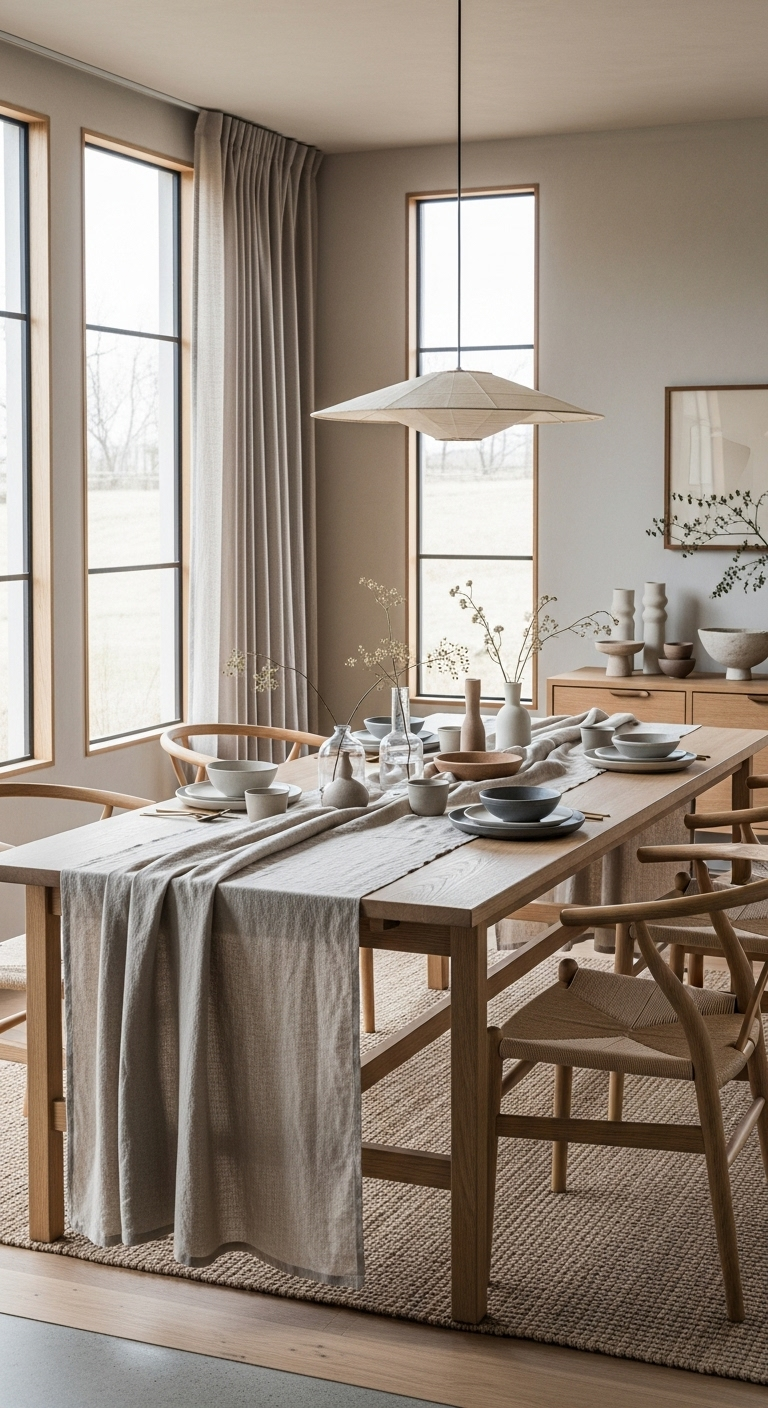
A light, unbleached linen table runner provides a soft and rustic “Nordic-meets-Eastern” look for your daily table setting. The slightly wrinkled texture adds a layer of effortless, lived-in charm that doesn’t require ironing or a perfect finish.
Layering this over a light oak table creates a beautiful, tonal contrast that feels both sophisticated and very approachable. It is a budget-friendly way to add a touch of “Hygge” warmth to your Japandi Dining Room Designs.
24#. Sculptural Branch Coat Racks
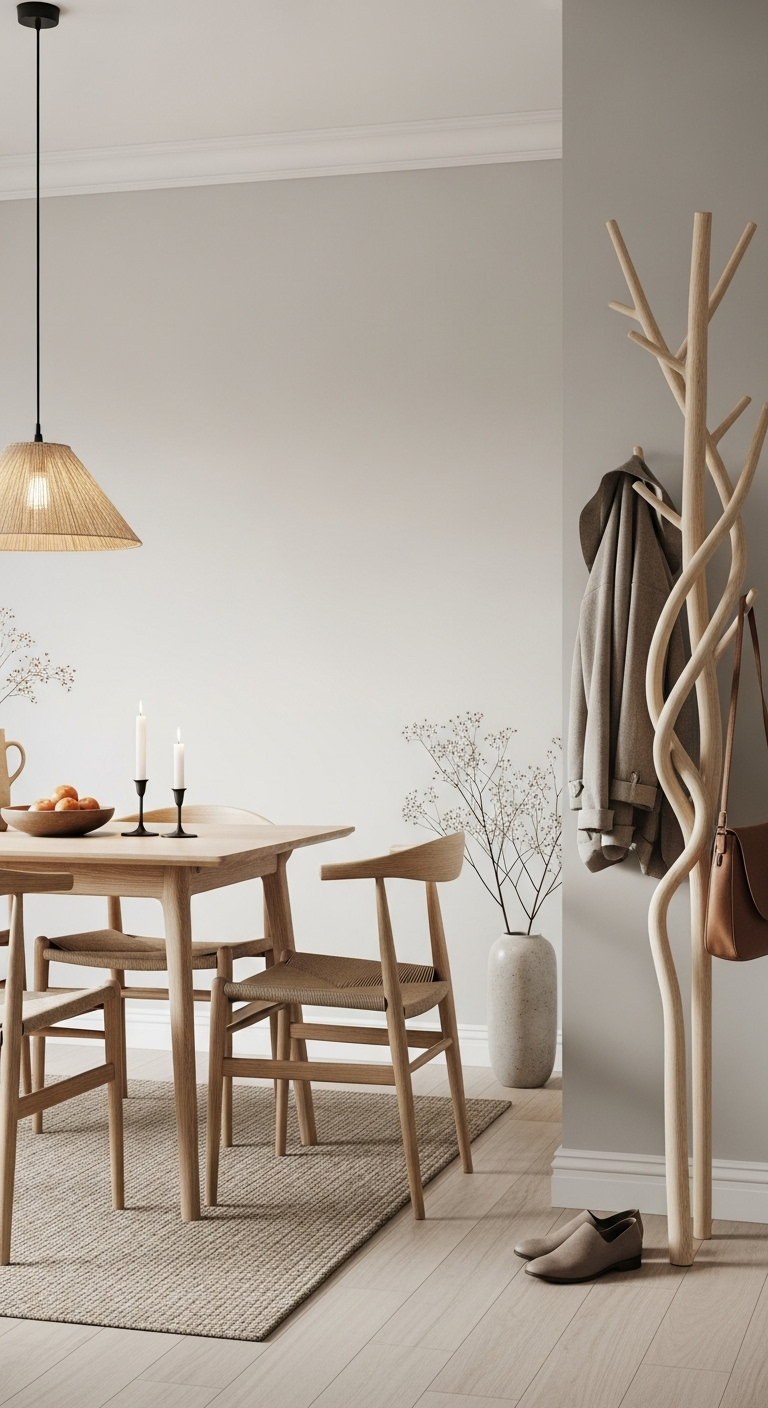
If your dining room is near an entrance, use a coat rack designed to look like a minimalist tree branch made of light wood. This functional piece acts as a sculptural element that brings an organic, forest-inspired silhouette into your home.
It provides a practical spot for guests to hang scarves and bags without cluttering your main seating area or furniture. This “nature-first” accessory reinforces the theme of simplicity and utility that defines the Japandi style.
25#. High-Contrast Black Picture Frames
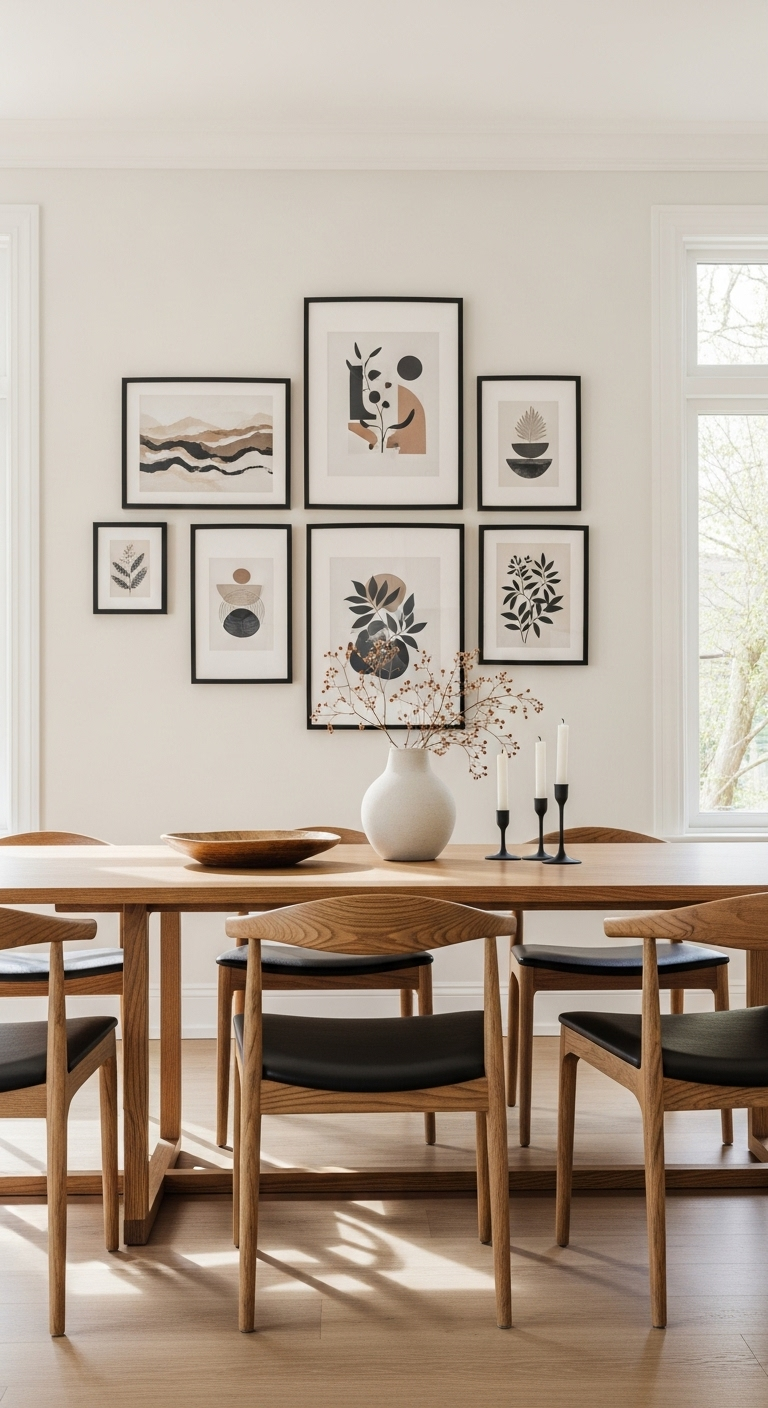
Use thin black frames for your botanical prints or photos to add a sharp, modern line that breaks up the neutral walls. This “graphic” touch ensures the room feels contemporary and well-defined rather than too soft or washed out.
Black frames act as a visual anchor that coordinates perfectly with your black spindle chairs and metal light fixtures. It is a simple and effective way to introduce a touch of “designer” polish to your Japandi Dining Room Designs.
26#. Inset Wall Niches for Vases
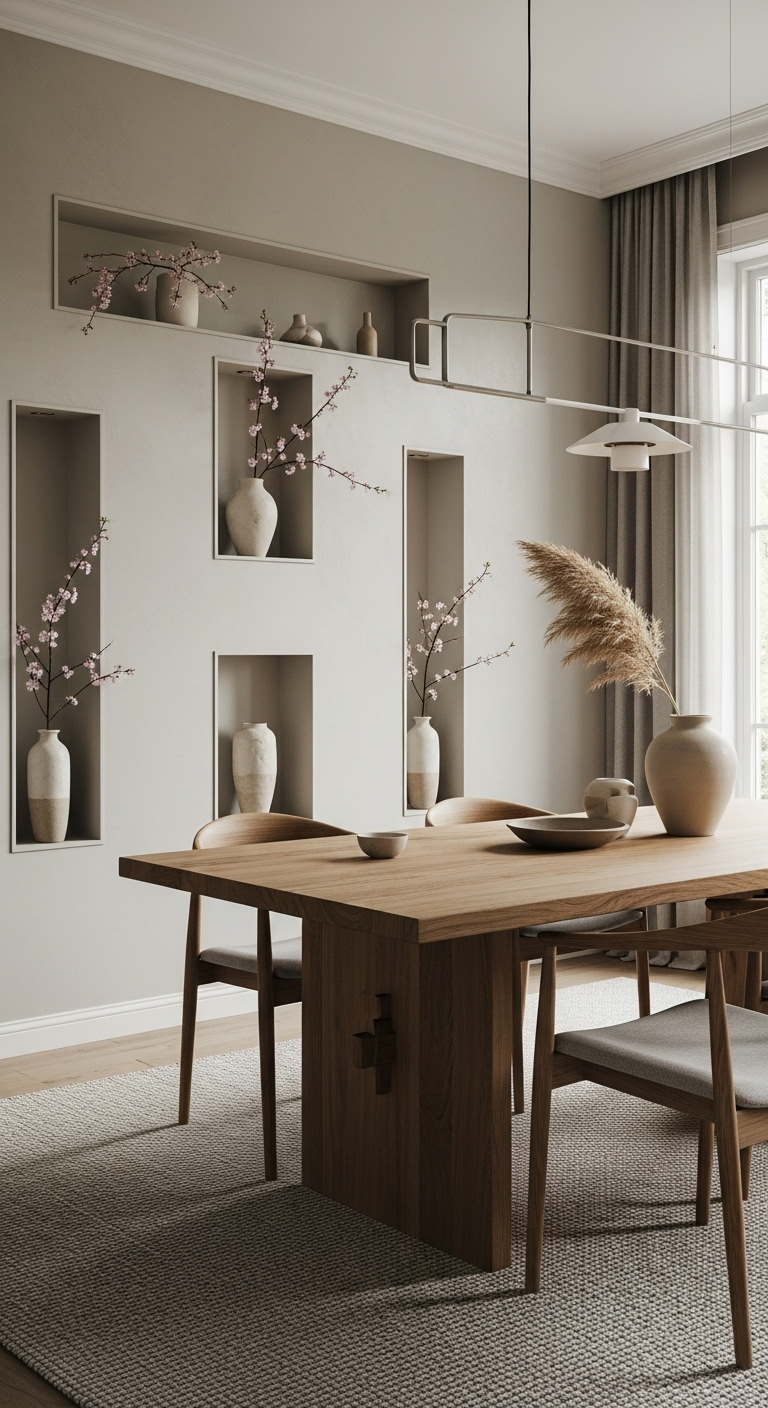
If you’re remodeling, carve out a small rectangular niche into the wall to provide a dedicated, recessed space for a single ceramic vase. This structural detail adds a sense of architectural honesty and “built-in” quality that feels very custom.
Adding a small spotlight inside the niche highlights the texture and shape of your pottery, creating a dramatic and moody “museum” vibe. It is a brilliant way to incorporate the “less-is-more” philosophy into the very bones of your house.
27#. Subtle Earth-Tone Paint Palettes
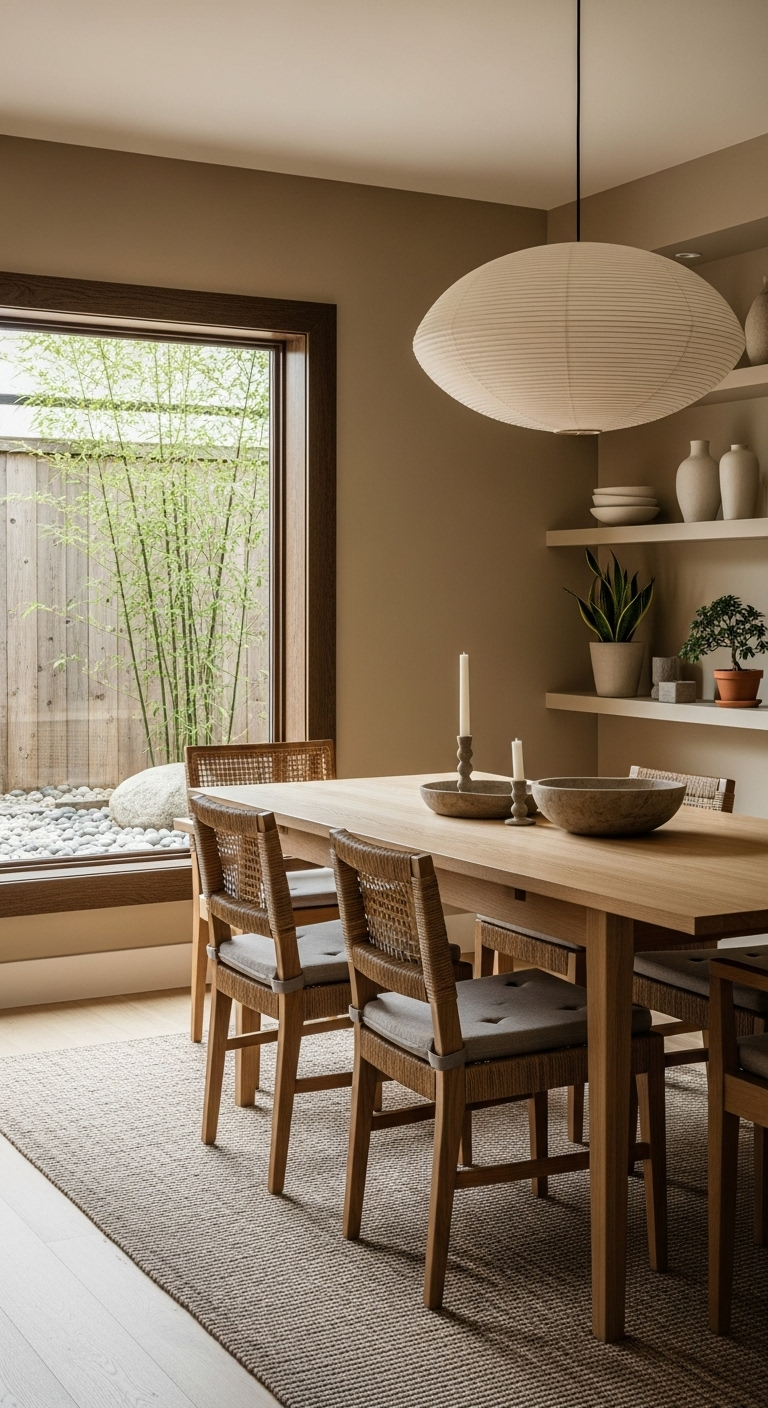
Move away from stark white in favor of warm “greige,” soft sand, or misty sage green for your dining room walls. These earth-toned colors provide a more comforting and cocoon-like backdrop that enhances the natural wood furniture.
A soft-focus color palette is essential for creating the tranquil and restorative energy that defines high-end Japandi Dining Room Designs. It allows the natural textures of the room to be the main star of the show.
28#. Cork and Timber Coasters
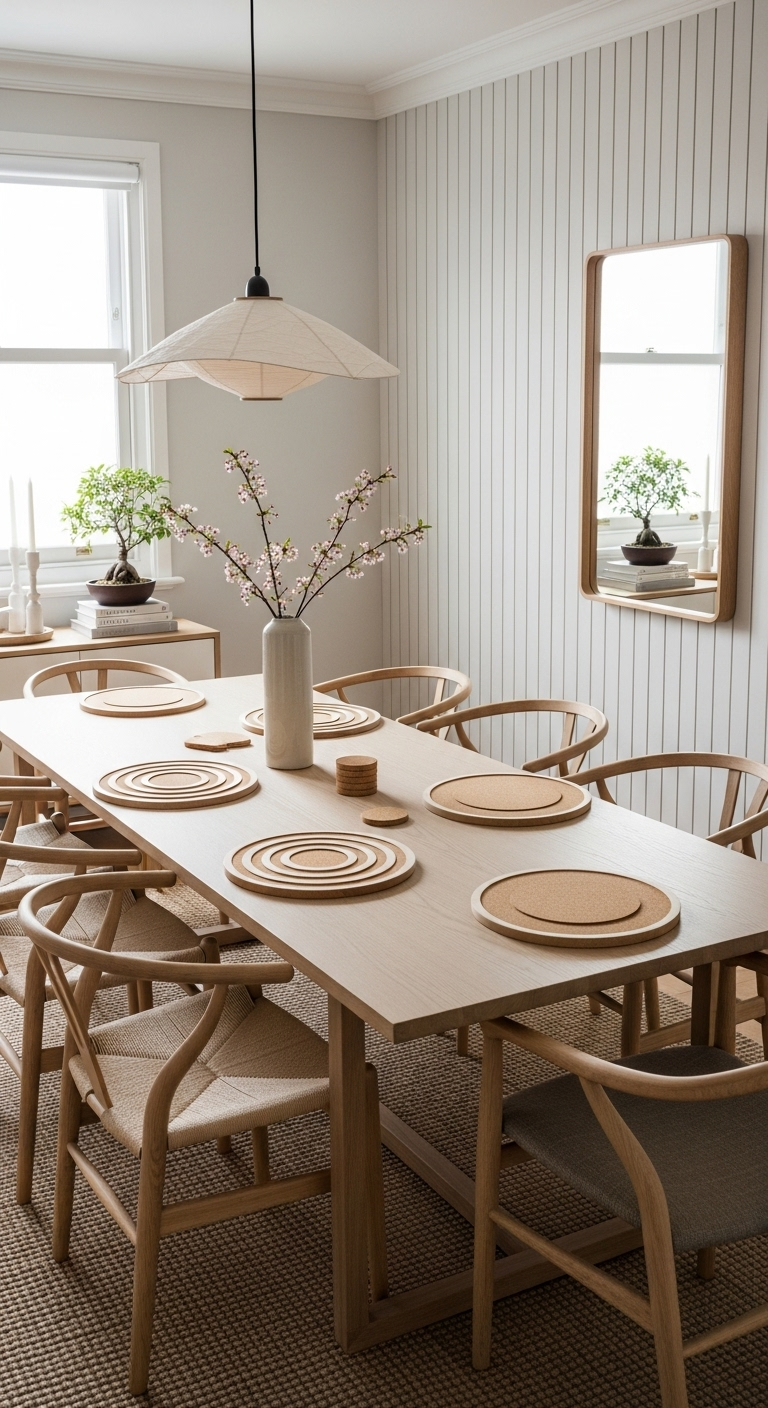
Protect your wooden surfaces with simple coasters made from natural cork or cross-sections of light-colored tree branches. These small, organic details feel great to the touch and reinforce the “natural materials” theme of your home.
They are an affordable and easy way to lean into the tactile, “Hygge” side of the design without being overwhelming or busy. Natural cork is a sustainable material that aligns perfectly with the Japandi movement’s eco-friendly goals.
29#. Open Shelf “Curation” Stations
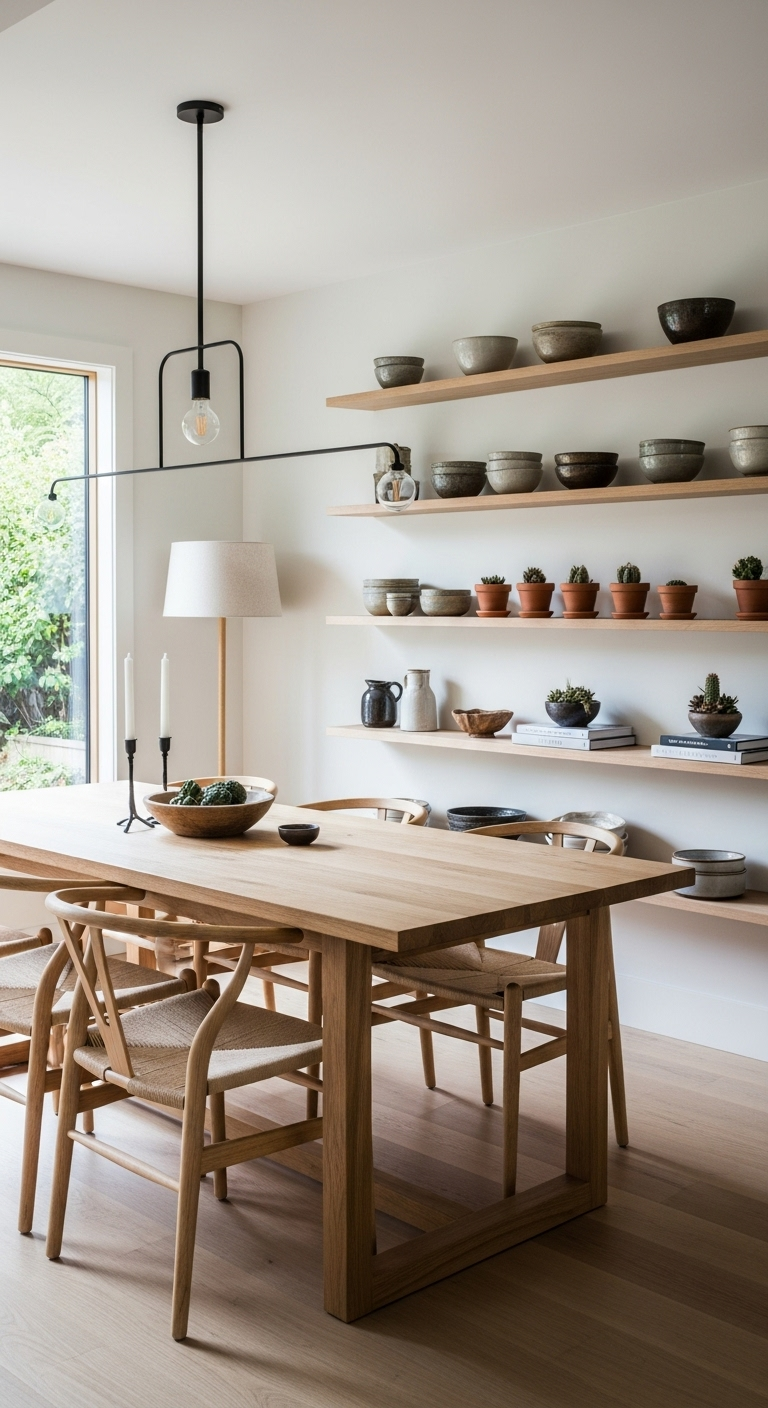
Use a single floating shelf to display your most beautiful tea sets or handmade ceramics in a neat, organized row. This “curation” station allows you to showcase your love for craftsmanship while keeping the rest of the room clear.
By rotating the items on display, you can keep the room feeling fresh and inspiring throughout the different seasons of the year. It’s a creative way to use vertical space while supporting the overall Japandi Dining Room Designs theme.
30#. Minimalist Brass Tray Accents
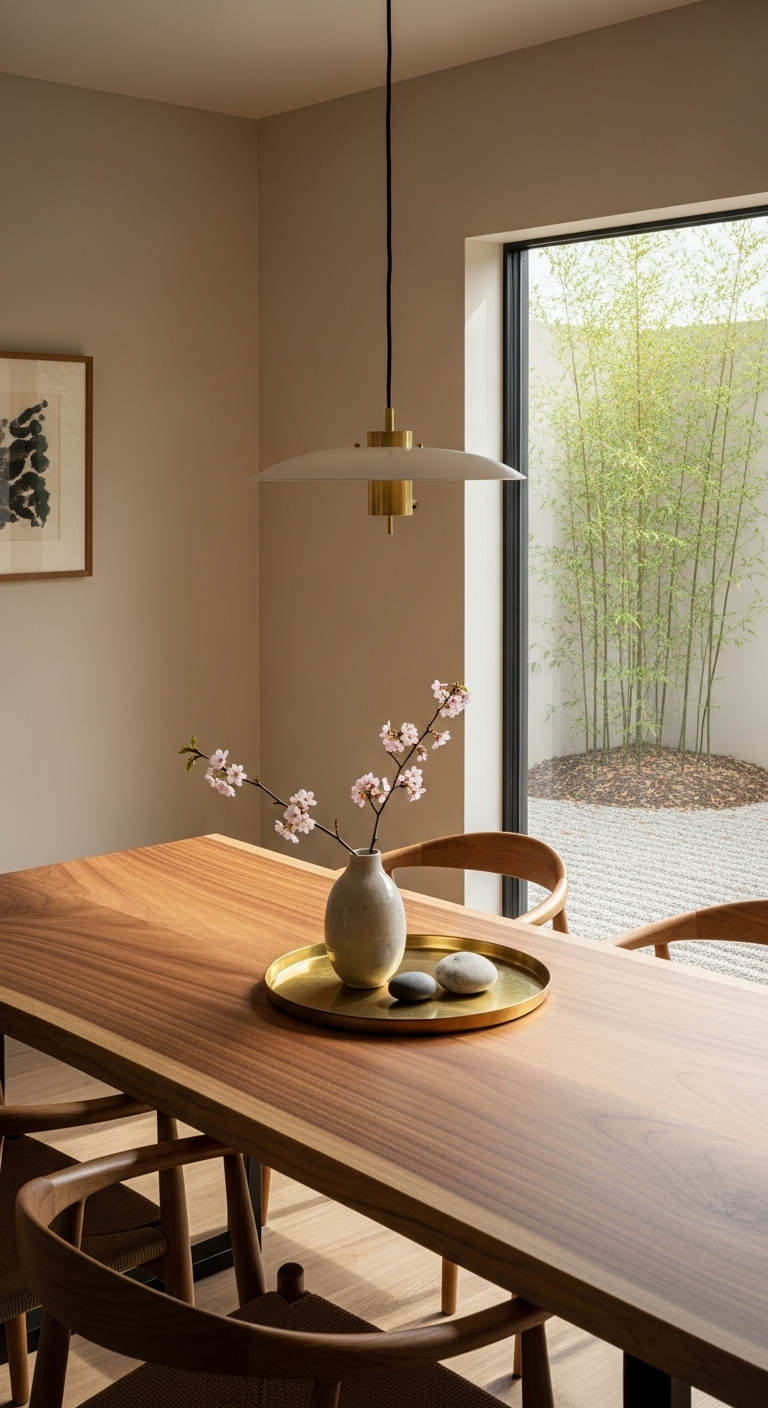
A small, circular brass tray on your sideboard can hold your favorite essential oils or a small stack of textured linen coasters. This touch of metal adds a “warm” shimmer that balances the matte textures of wood and stoneware in the room.
Metallic accents prevent a minimalist room from feeling too one-dimensional or “flat” in terms of its material palette. They add a sense of luxury and polish that makes even the most rustic room feel high-end and curated.
31#. Bamboo and Rattan Placemats
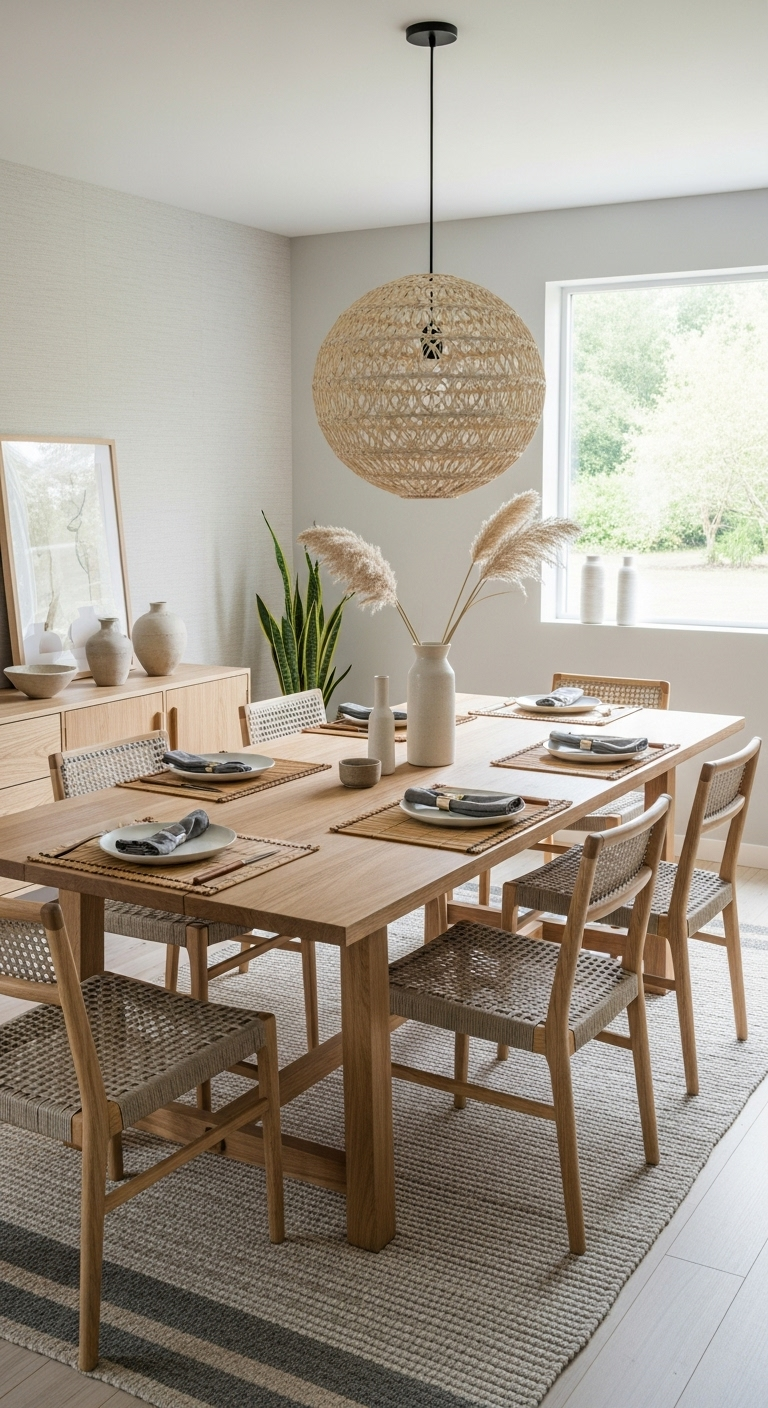
Use woven bamboo or rattan placemats to add a layer of circular texture and Eastern-inspired charm to your table setting. These materials are easy to clean and provide a beautiful, organic frame for your stoneware plates during meals.
The varying natural tones of the weave add a subtle pattern that feels energetic but never cluttered or visually loud. It is a practical and beautiful way to protect your table while supporting the Japandi Dining Room Designs aesthetic.
32#. Clear Glass Cloches with Nature
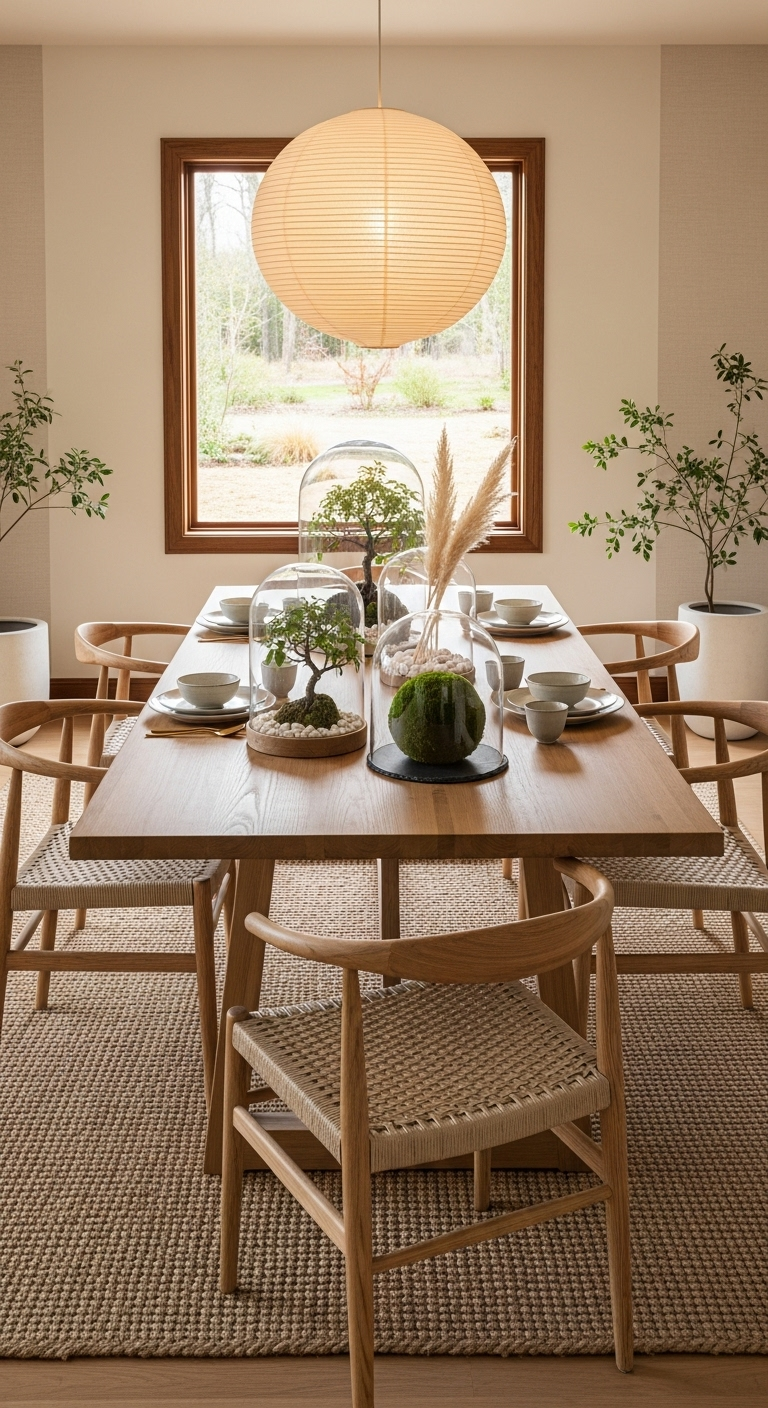
Display a few select “found” objects, like a beautiful pinecone or a dried flower, under a clear glass cloche on your sideboard. This turns simple natural items into “specimen” art, giving them a sense of importance and protected beauty.
The glass adds a touch of shine to the room, reflecting the light of your paper lanterns and candles for a dynamic look. It is a simple and elevated way to showcase the small wonders of the natural world in your home.
33#. Natural Wool Pouf Seating
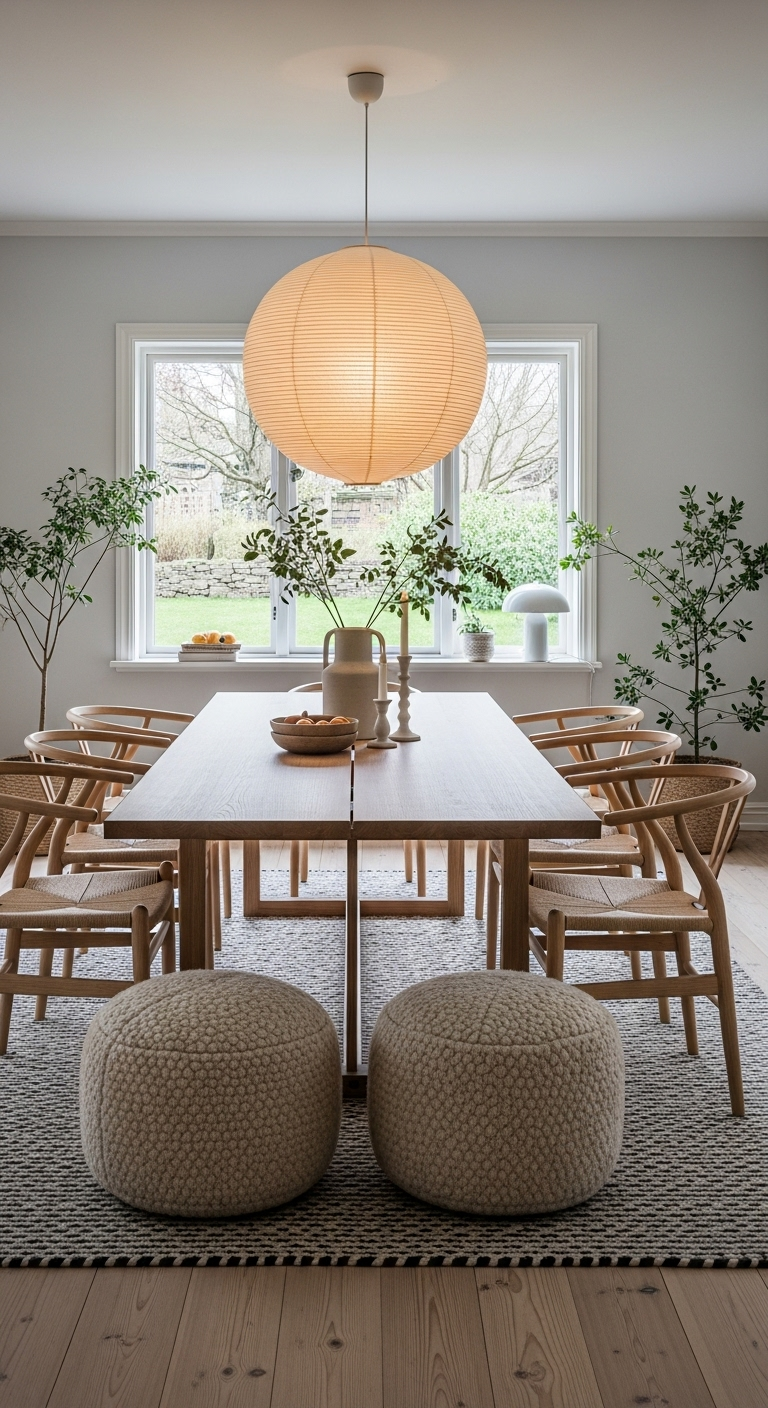
Swap out plastic or metal stools for soft, hand-knotted wool poufs in oatmeal or charcoal grey for extra seating around the room. These poufs provide a soft, tactile experience that is perfect for a cozy and minimalist dining environment.
They are easy to move around and can be used as footrests or even small side tables with the addition of a wooden tray. Wool poufs are a durable and sustainable choice that supports the organic and high-end theme of your Japandi Dining Room Designs.
34#. Minimalist Black Candle Snuffers
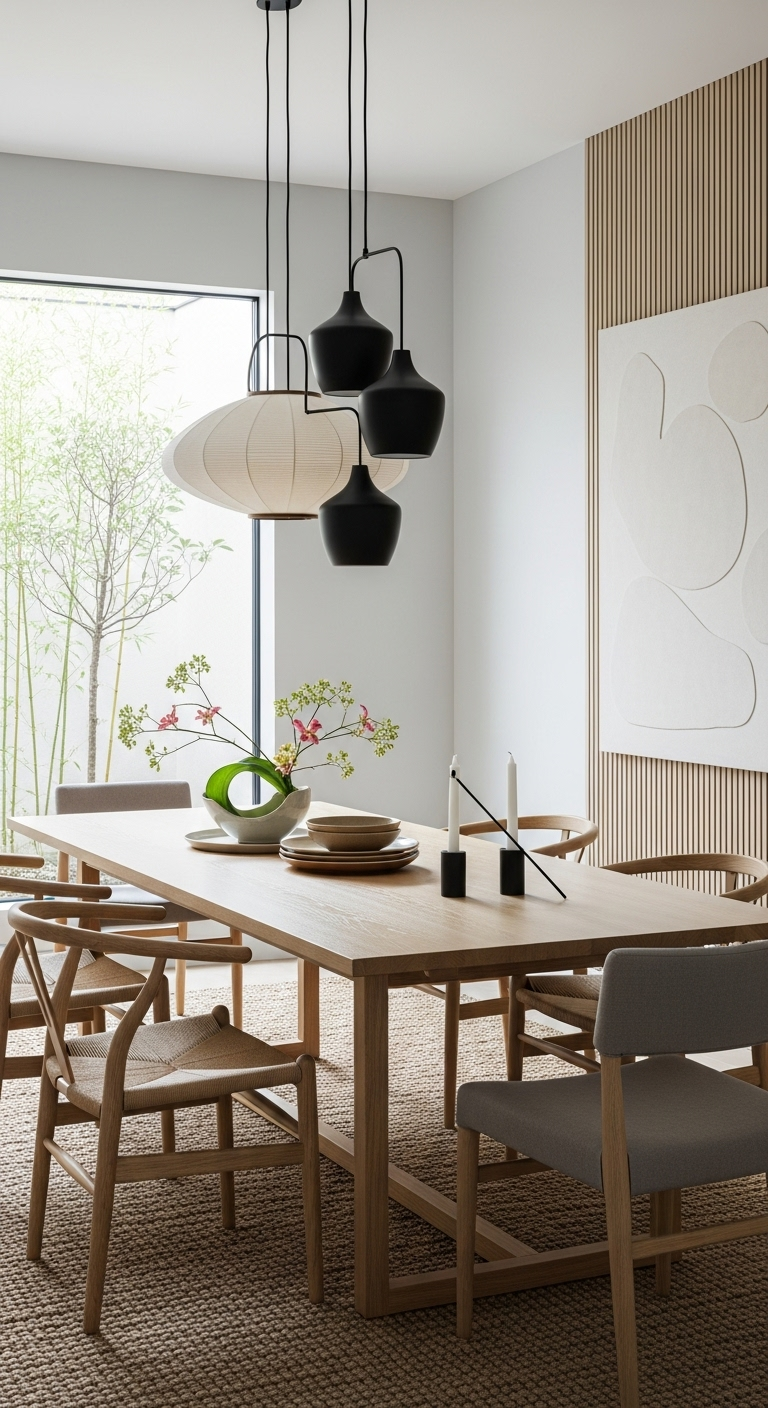
Keep a stylish black metal candle snuffer on your sideboard tray to add a touch of “old-world” ritual to your home. This small, functional tool prevents smoke from filling the room when you extinguish your evening table candles.
It’s a tiny detail that shows you care about the experience of your home and the quality of your atmospheric environment. A candle snuffer is a sophisticated accessory that fits perfectly into the mindful, “slow-living” spirit of Japandi style.
35#. Floor-to-Ceiling Wood Slats
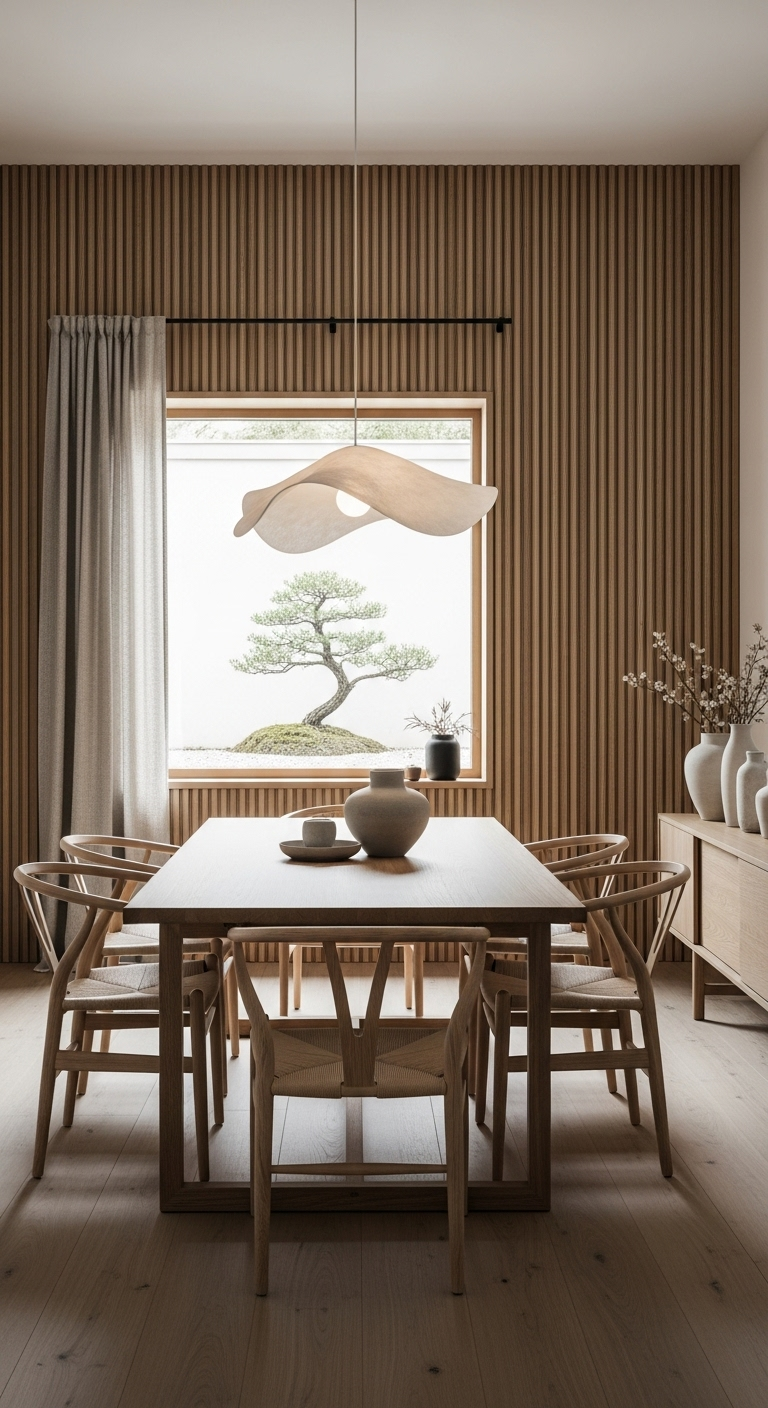
For a major architectural update, install a feature wall made of vertical wood slats in a warm oak or ash finish. This adds incredible texture and a sense of modern, high-end luxury that works perfectly for the Japandi aesthetic and beyond.
The repetition of the wood lines elongates the room and provides a stunning backdrop for your minimalist furniture and art. It’s a design-forward way to incorporate the warmth of timber into your Japandi Dining Room Designs.
Wrap up
Mastering the Japandi aesthetic in your dining room is an exercise in intentionality—pairing the cozy warmth of Scandinavian living with the refined, minimalist order of Japanese design.
By choosing natural materials, organic textures, and a soft, earthy palette, you’ve created a space that celebrates the beauty of simplicity and the joy of a quiet home.
As you gather for your next meal, may the peaceful environment you’ve curated serve as a constant source of rest and inspiration for you and your loved ones.