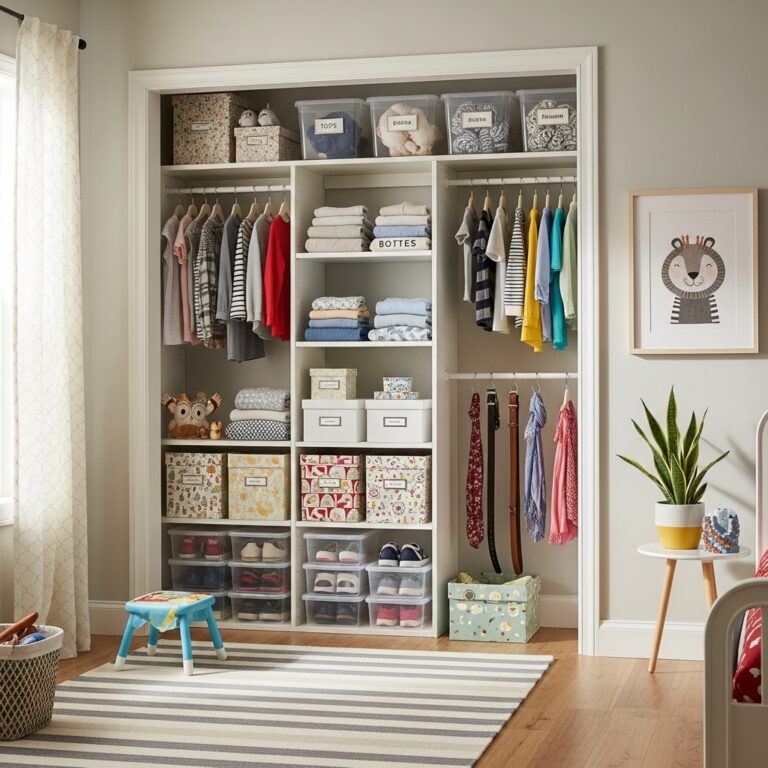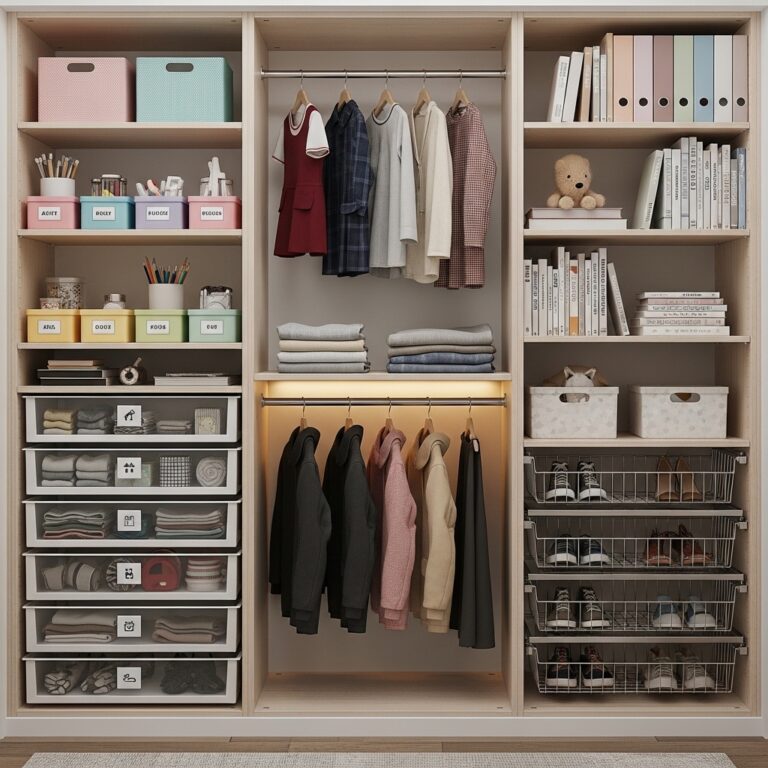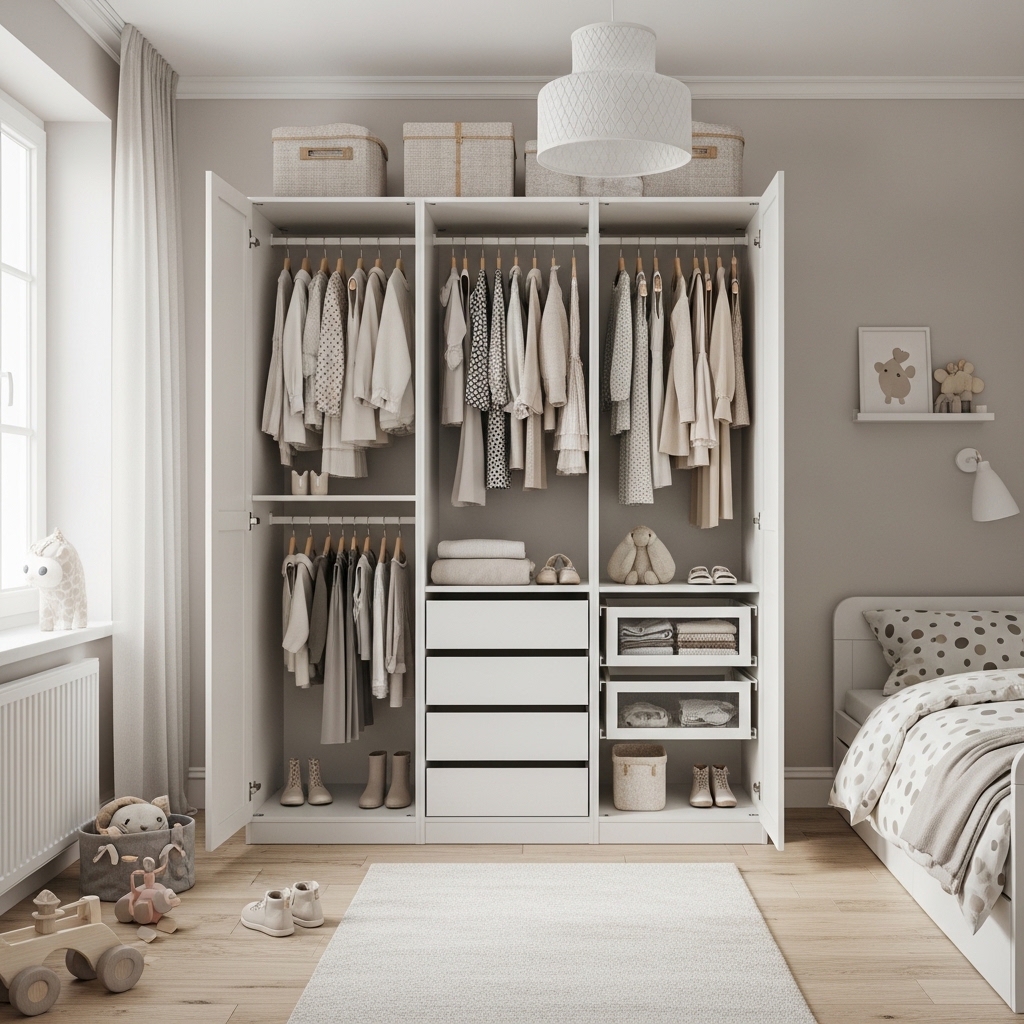
Keeping kids’ wardrobes organized can feel like a never-ending task. Clothes, shoes, and accessories seem to multiply overnight, making mornings stressful.
These wardrobe organization ideas for daily routines focus on easy, functional, and kid-friendly strategies that save time, reduce clutter, and create a smooth start to every day.
1# Color-Coded Clothing Sections
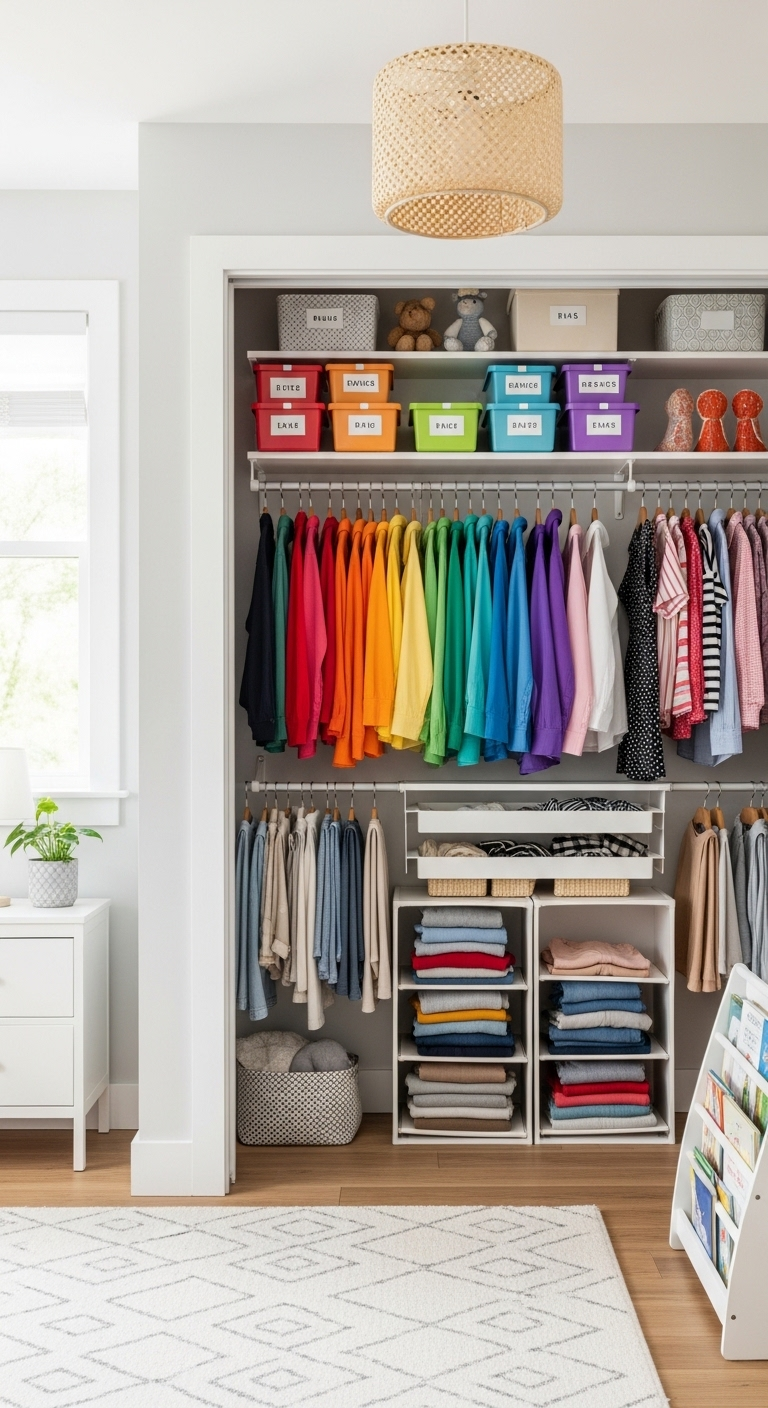
Assign colors to different types of clothing such as shirts, pants, and pajamas. This visual cue makes it easy for kids to find and return their clothes.
Color-coding adds a playful touch while keeping the wardrobe organized. It encourages independence and speeds up morning routines.
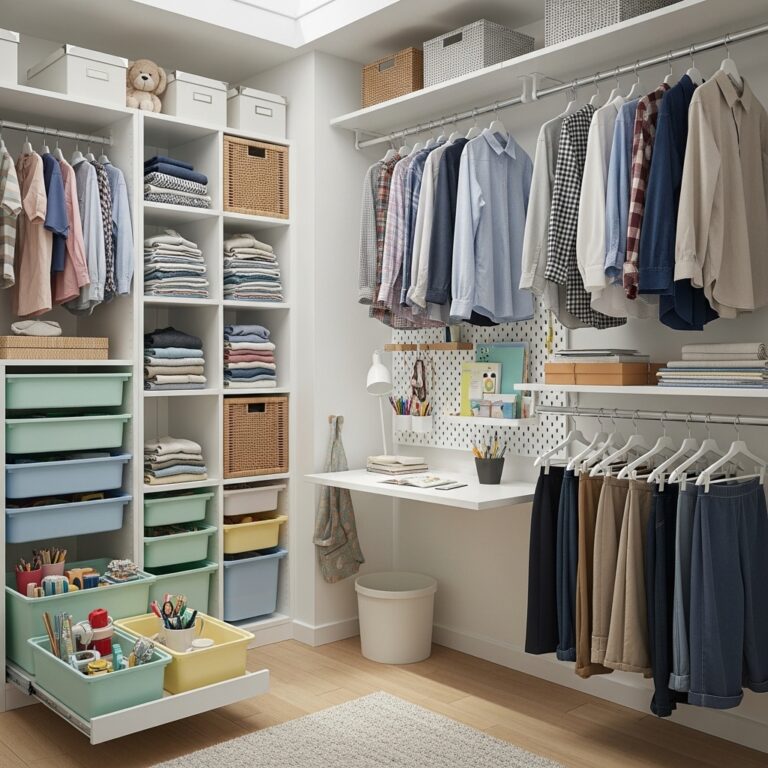
2# Stackable Bins for Folded Clothes
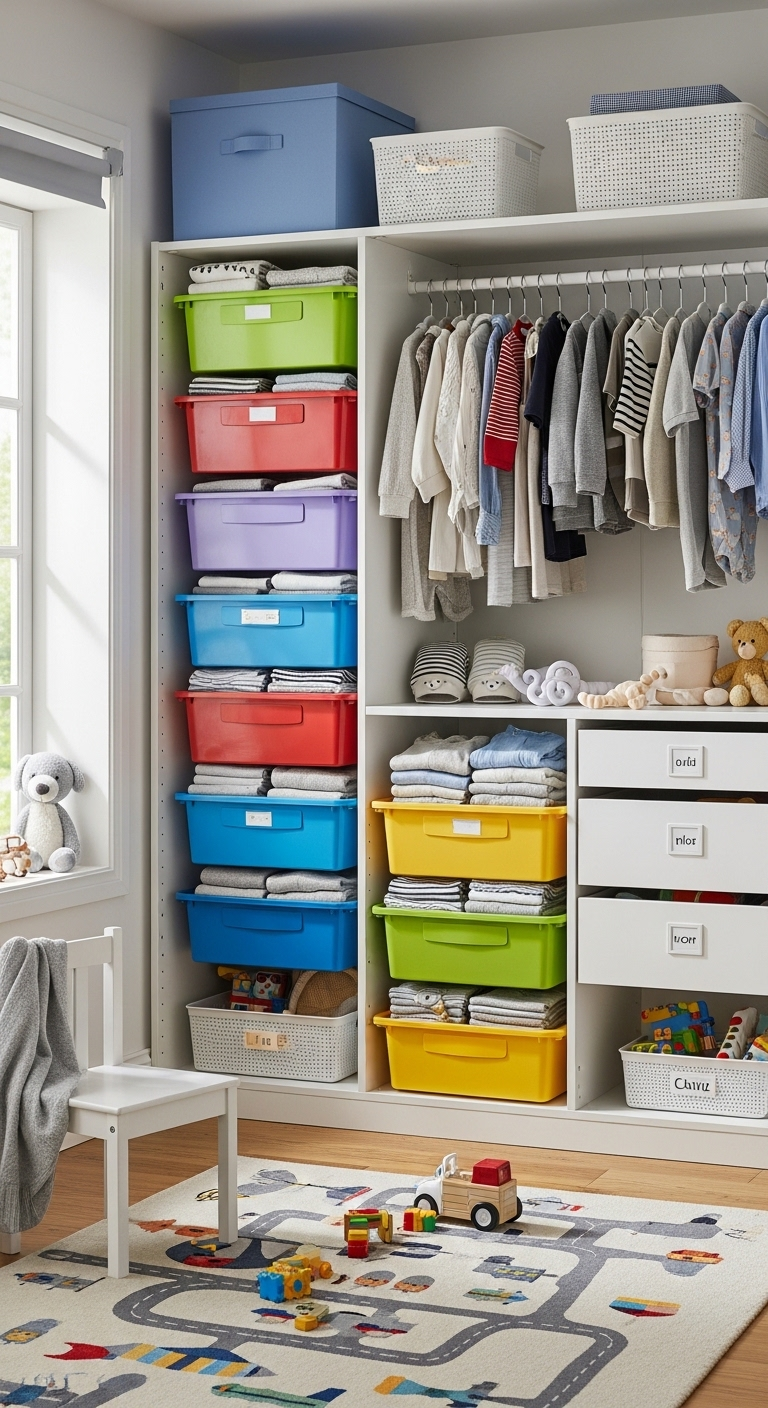
Stackable bins help separate everyday essentials like socks, underwear, and pajamas. They’re compact and versatile for growing kids.
Binned organization reduces mess and makes everything easy to locate. Kids can independently grab what they need without extra guidance.
3# Adjustable Hanging Rods
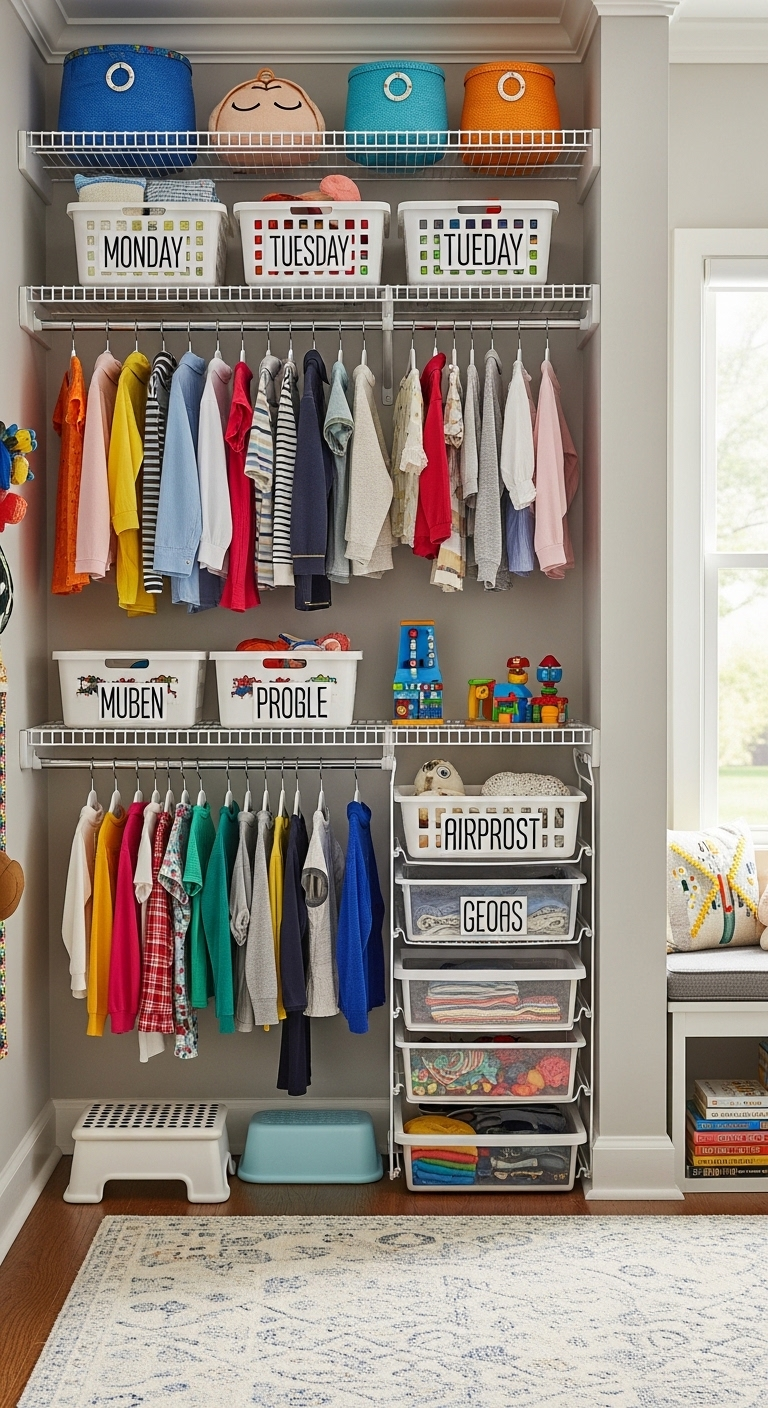
Lower rods for younger kids allow easy access to their clothing. Adjustable rods grow with your child, keeping the system practical over time.
This setup fosters self-sufficiency and reduces morning frustration. Kids can hang and retrieve clothes with ease.
4# Over-the-Door Organizers
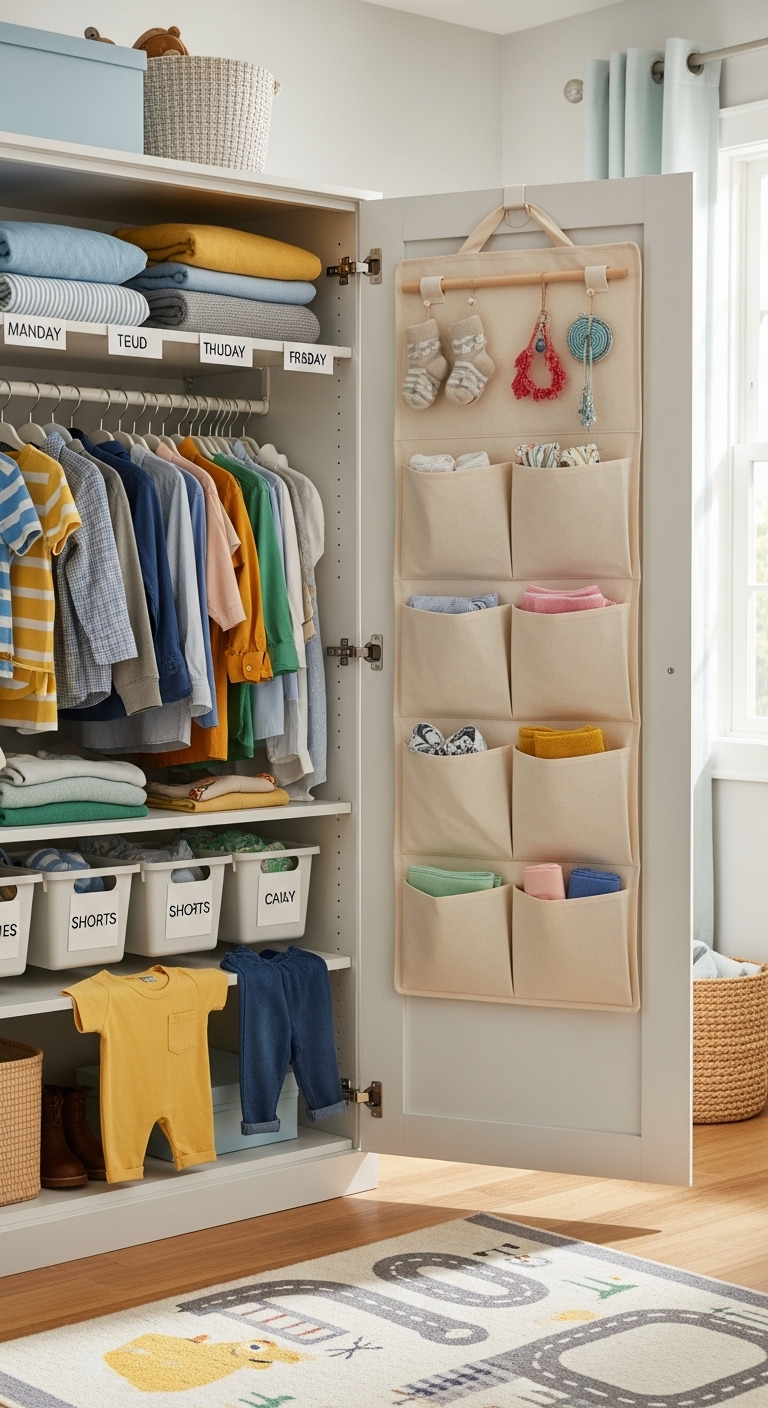
Over-the-door pocket organizers store small items like hats, belts, or hair accessories. They make use of otherwise wasted space.
This strategy keeps frequently used items visible and reachable. It’s an affordable solution to avoid cluttered drawers.
5# Rotating Outfit Bins
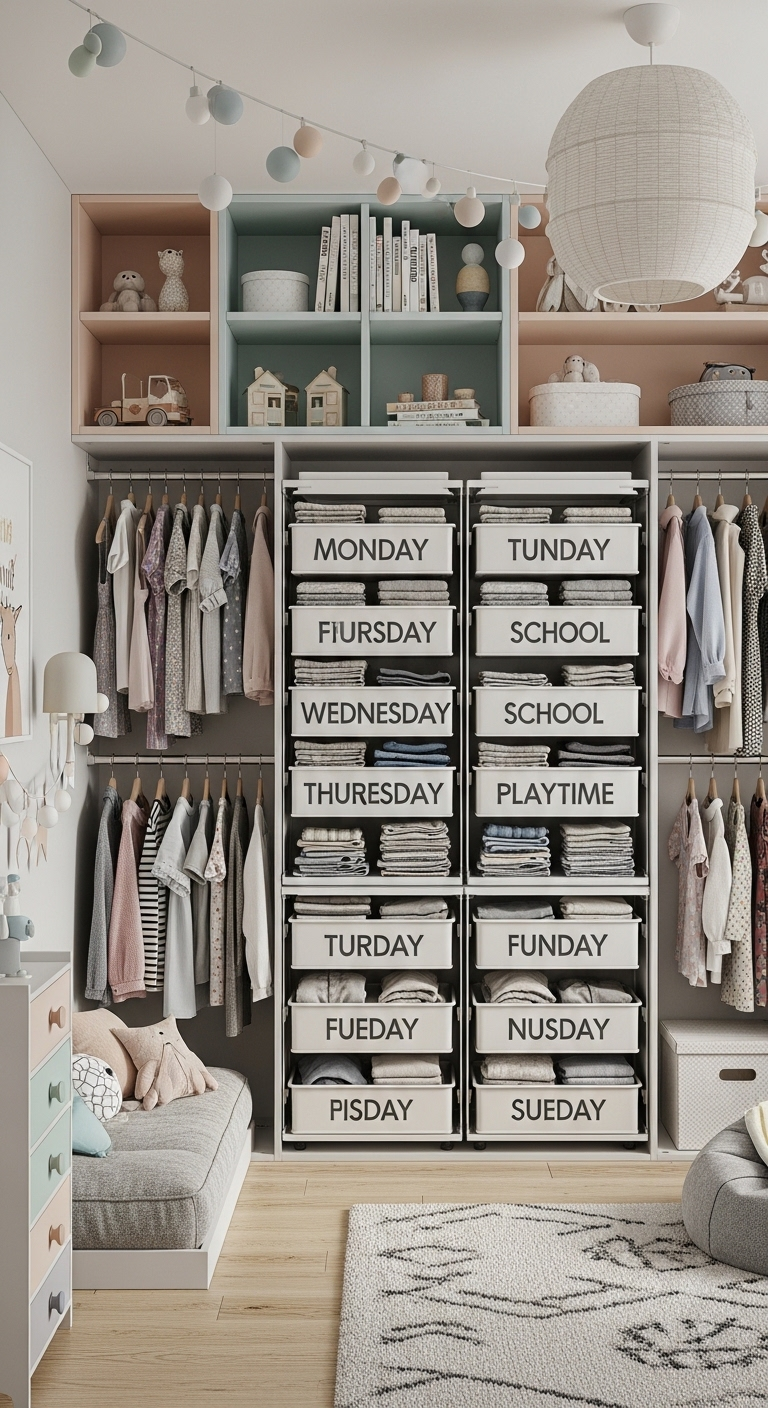
Use bins or small baskets to organize outfits by day or week. This reduces decision fatigue in busy mornings.
Children can pick their daily outfit independently. It’s a simple hack that saves time and fosters routine.
6# Hooks for Jackets and Bags
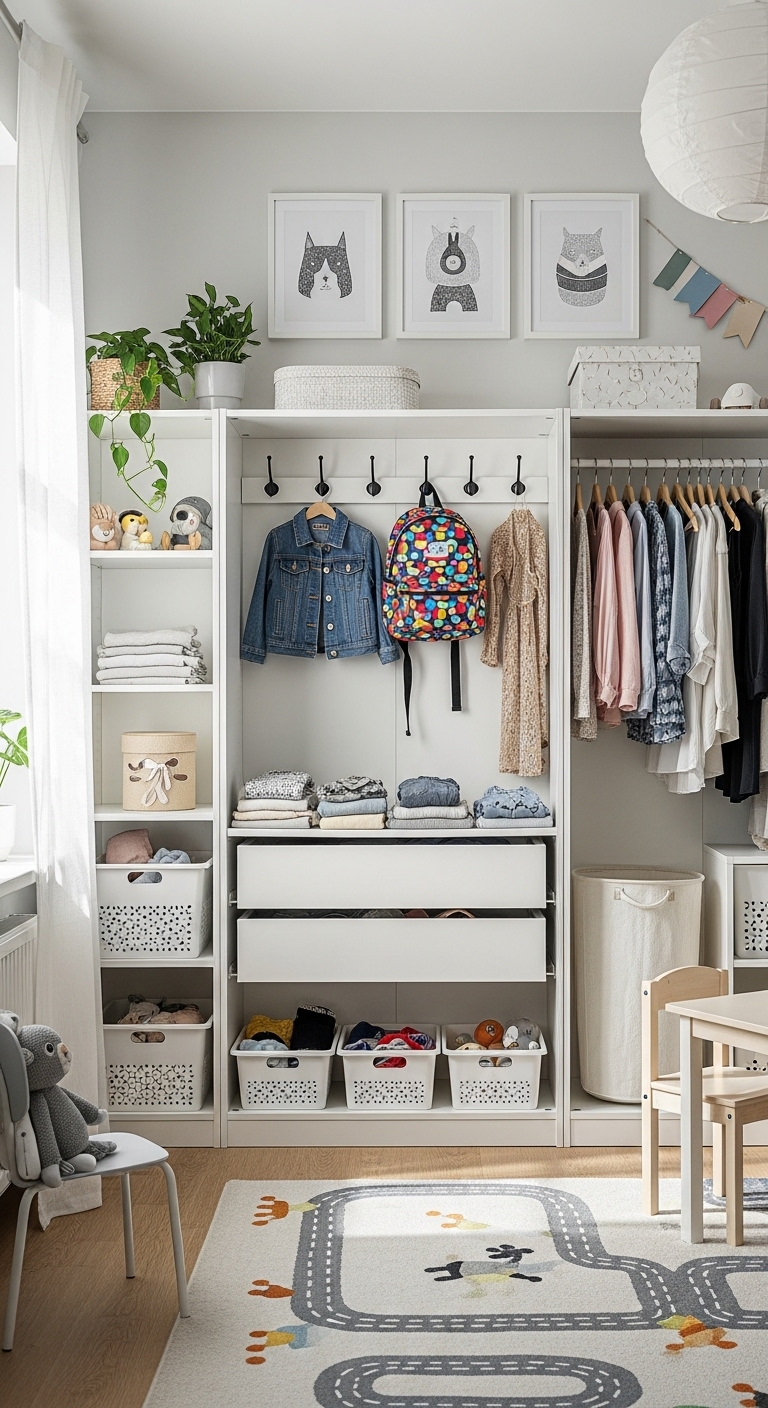
Install hooks at kid-friendly heights for jackets, bags, or hats. Hooks keep frequently used items accessible and organized.
This practical solution clears floor space while teaching kids responsibility. It’s inexpensive and effective.
7# Drawer Dividers for Small Accessories
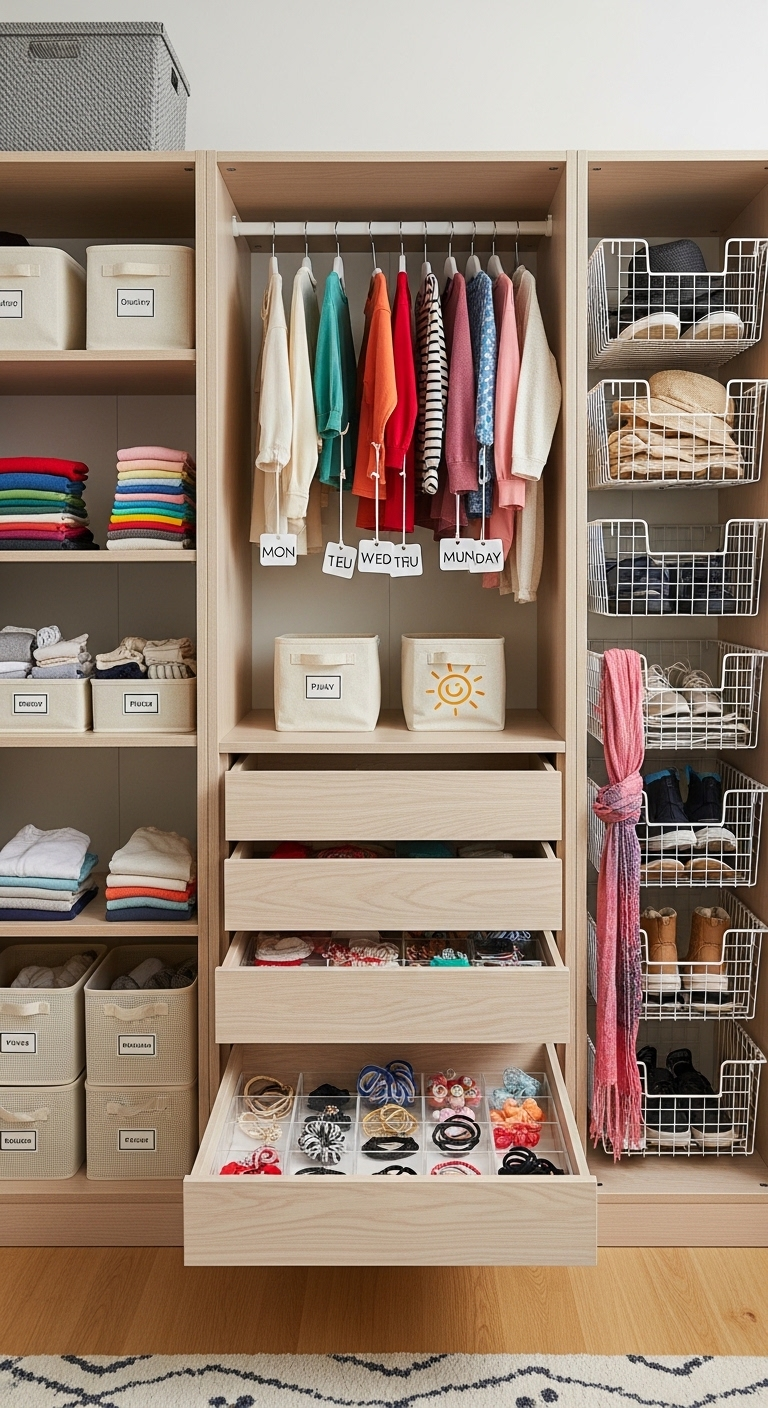
Dividers separate socks, gloves, and underwear in drawers. It prevents items from getting mixed up or lost.
Dividers make it simple for kids to keep their drawers tidy. Cleanup is faster, and locating items is stress-free.
8# Personalized Closet Sections
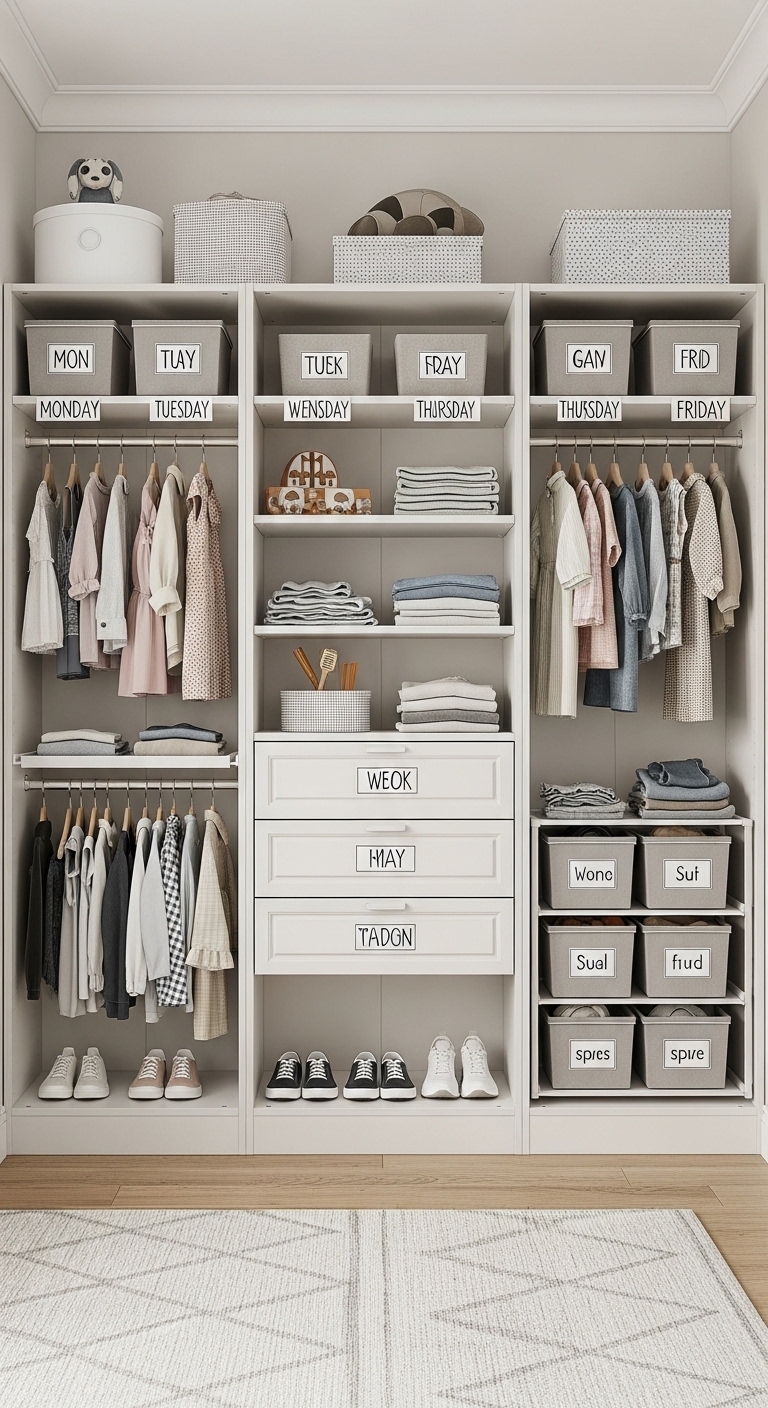
Create designated sections for each child in shared wardrobes. Personal zones make it easier for kids to maintain order.
Ownership encourages responsibility and keeps their belongings separate. It also reduces sibling mix-ups.
9# Shoe Storage Solutions
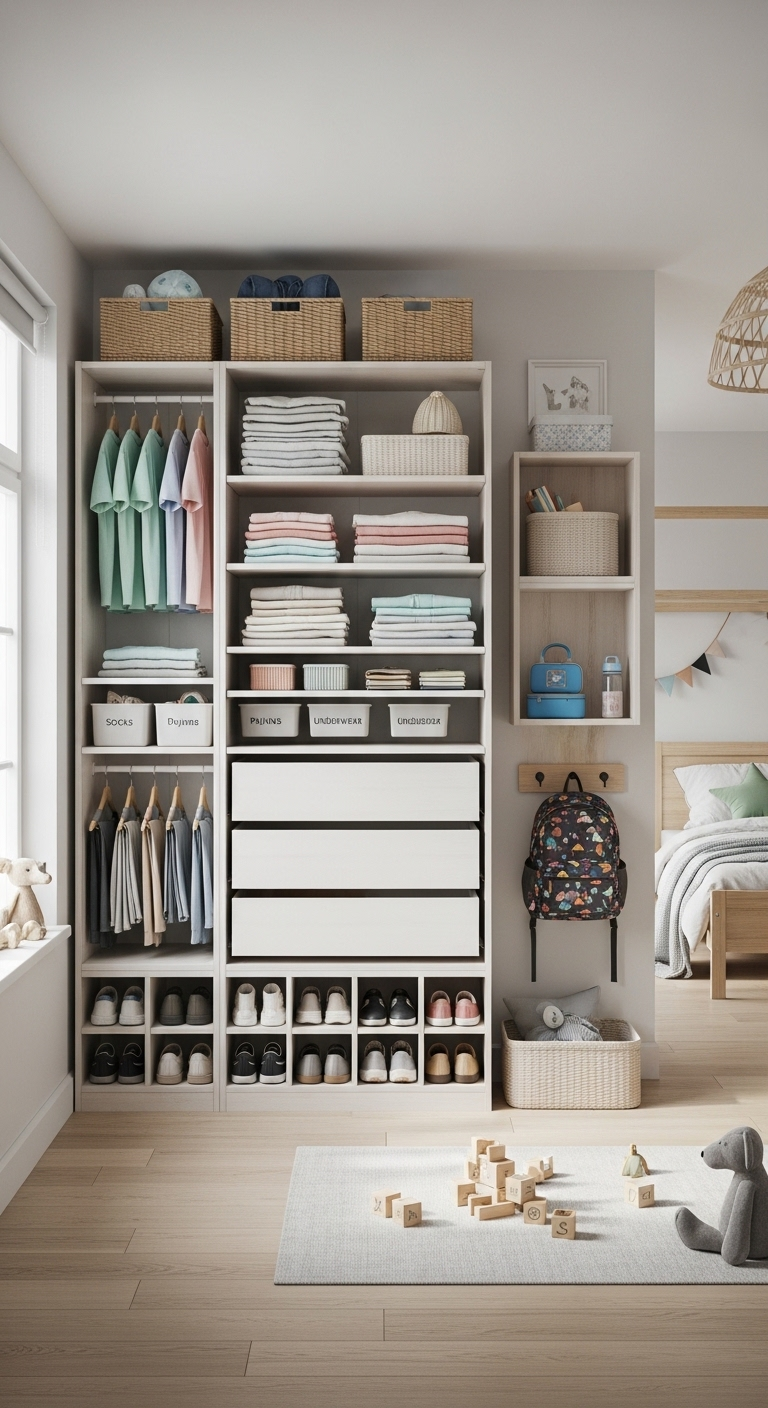
Low shoe racks or cubbies keep footwear neat and accessible. Label each section for easy identification.
This keeps the floor clear and makes pairing shoes fast. It’s a simple way to manage a growing collection.
10# Seasonal Rotation Bins
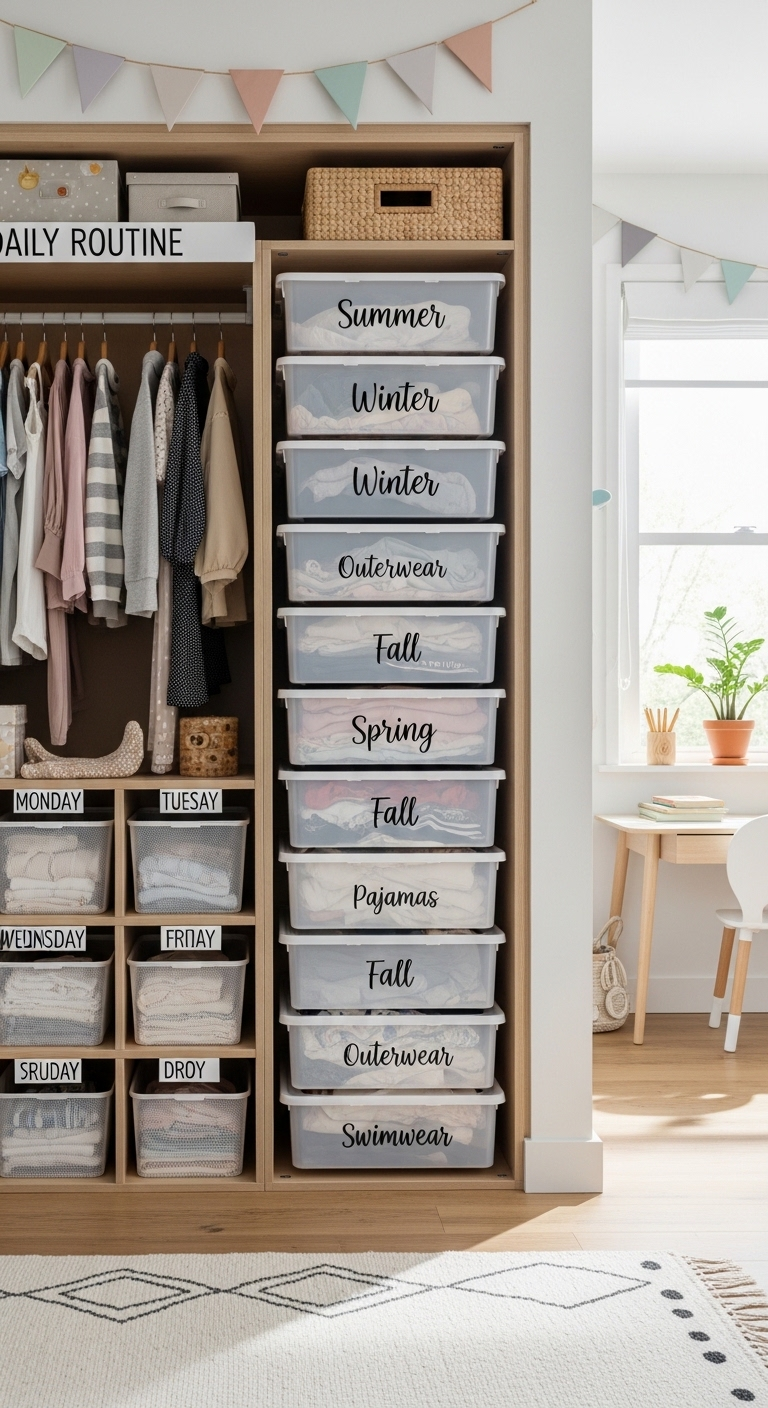
Store off-season clothing in labeled bins or under-bed containers. Rotate items as the weather changes to keep the wardrobe relevant.
This reduces clutter and ensures that only current items are in daily use. It also saves space for everyday essentials.
11# Hanging Accessory Organizers
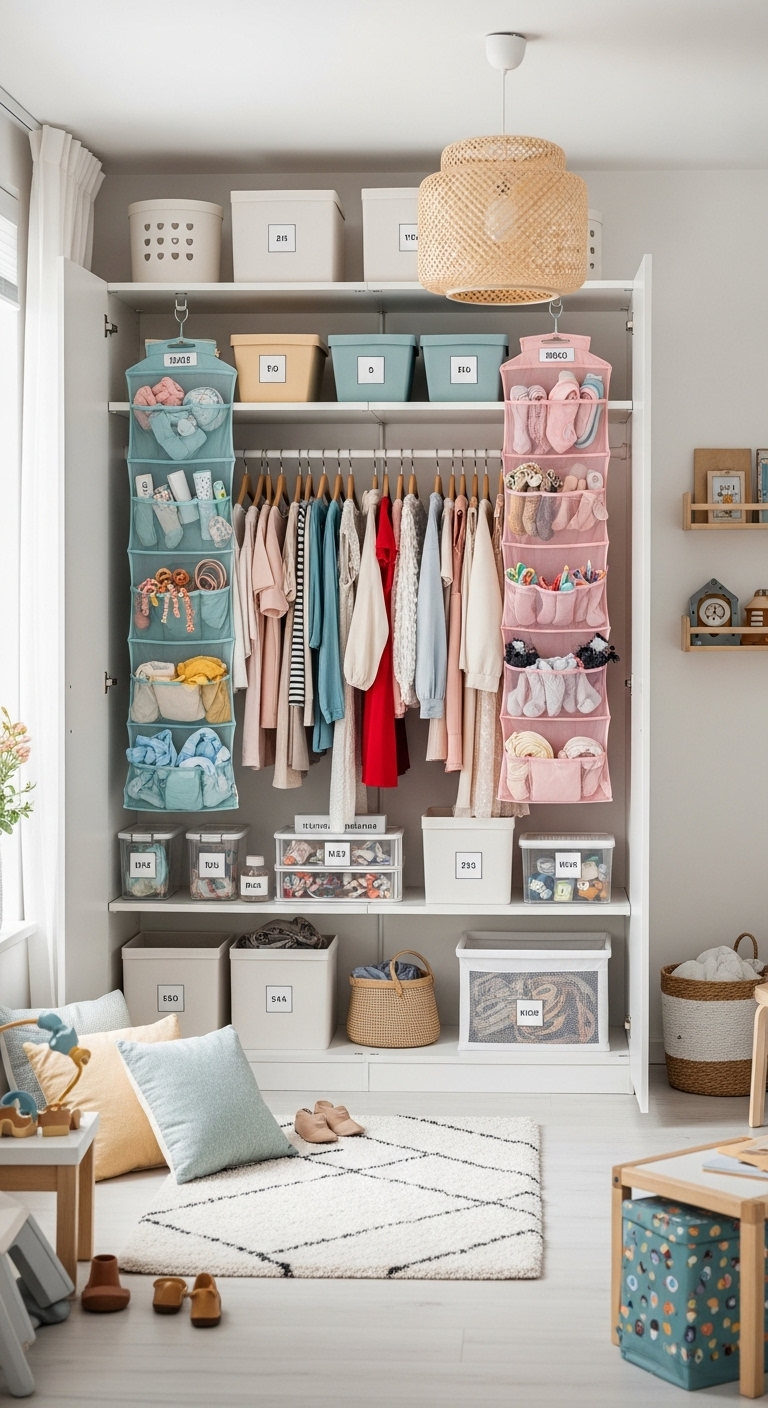
Small hanging organizers can hold scarves, belts, or headbands. They make accessories visible and easy to reach.
This approach keeps small items organized and prevents them from getting lost. Kids can choose accessories independently.
12# DIY Labeling System
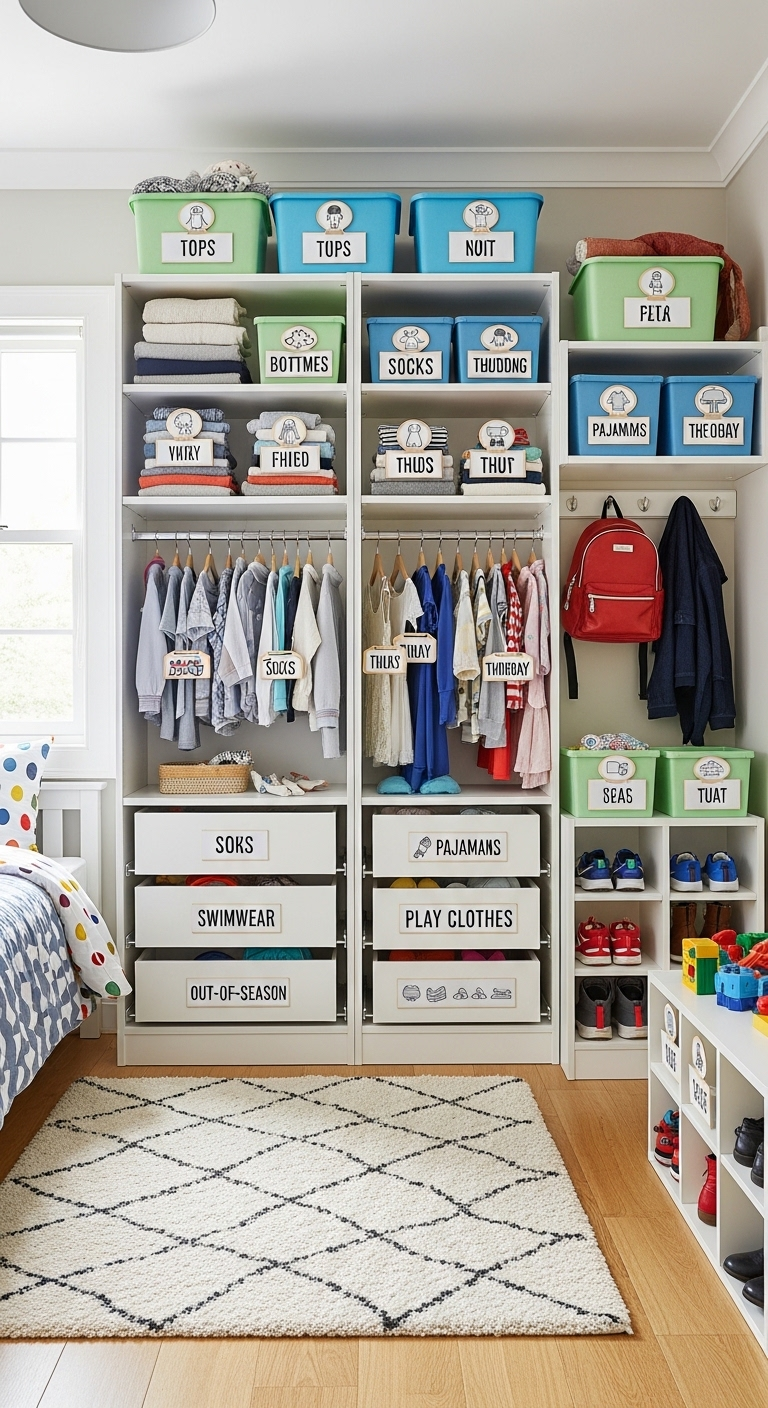
Use labels or pictures to indicate where items belong. This works for bins, shelves, and drawers.
Labels help children learn organization and build habits. It’s a low-cost way to keep wardrobes neat consistently.
13# Multi-Purpose Storage Boxes
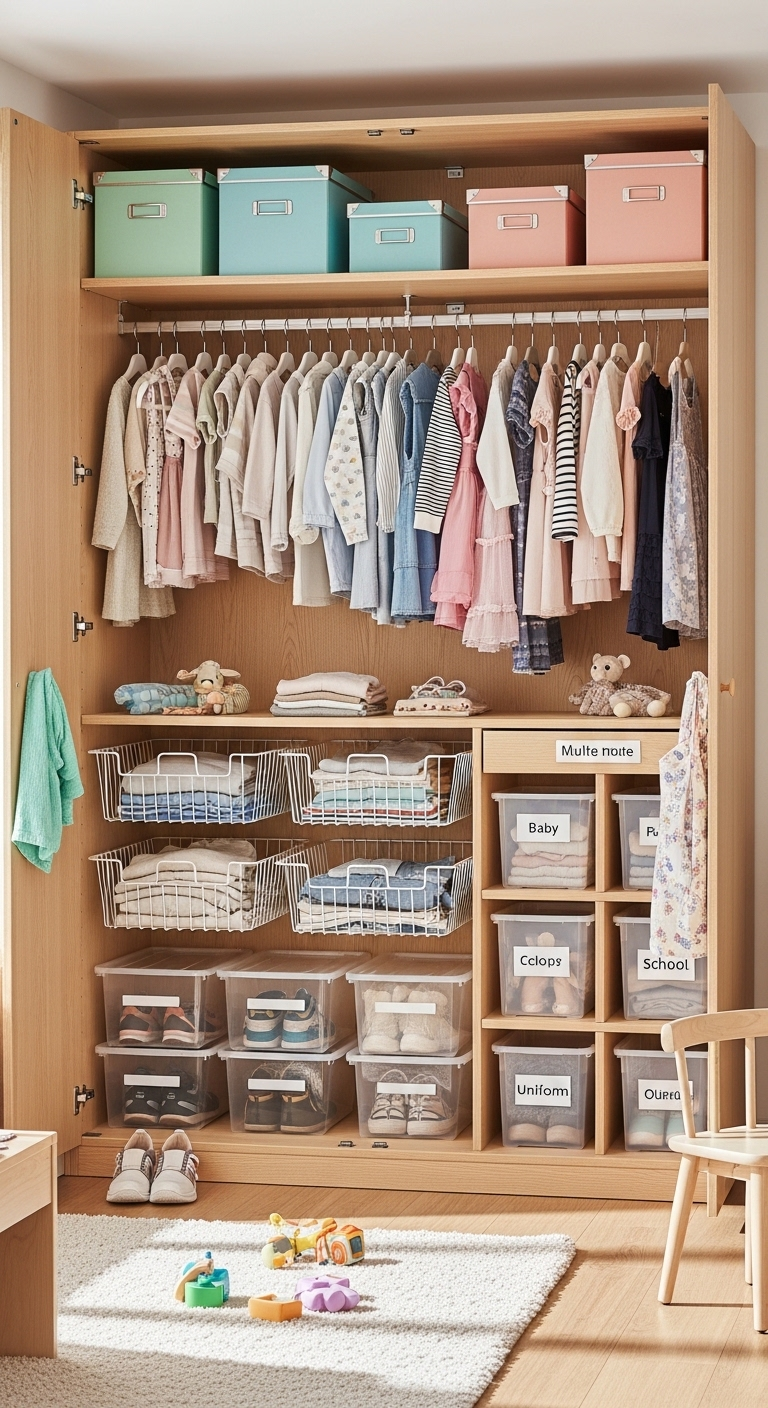
Boxes are perfect for extra items like pajamas, hats, or seasonal wear. They can be stacked to maximize space.
This solution keeps seldom-used items out of the main wardrobe. It’s practical, flexible, and budget-friendly.
14# Hanging Dividers
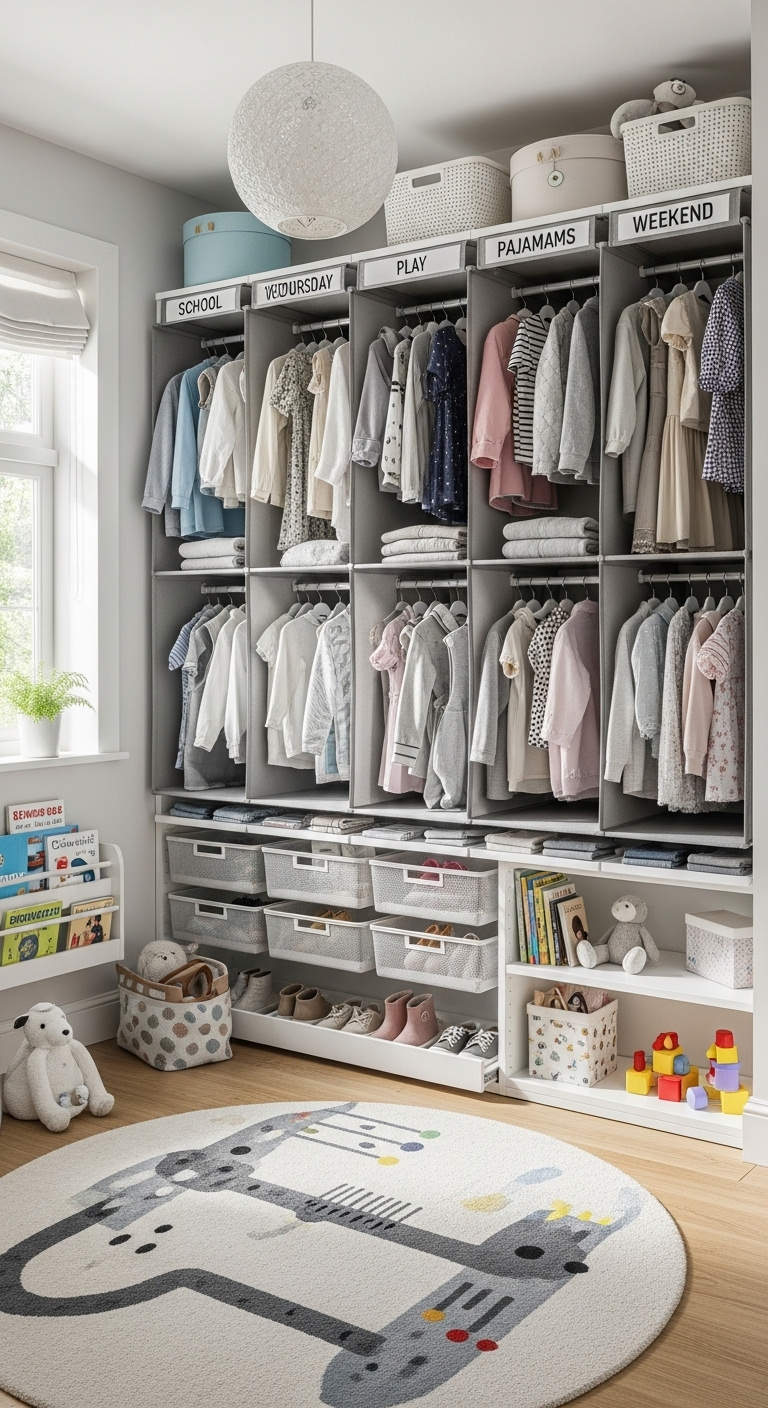
Closet dividers separate outfits or clothing types. They help children quickly locate items in busy wardrobes.
Dividers simplify mornings and keep things visually organized. It’s a small investment with a big payoff in time saved.
15# Minimalist Approach
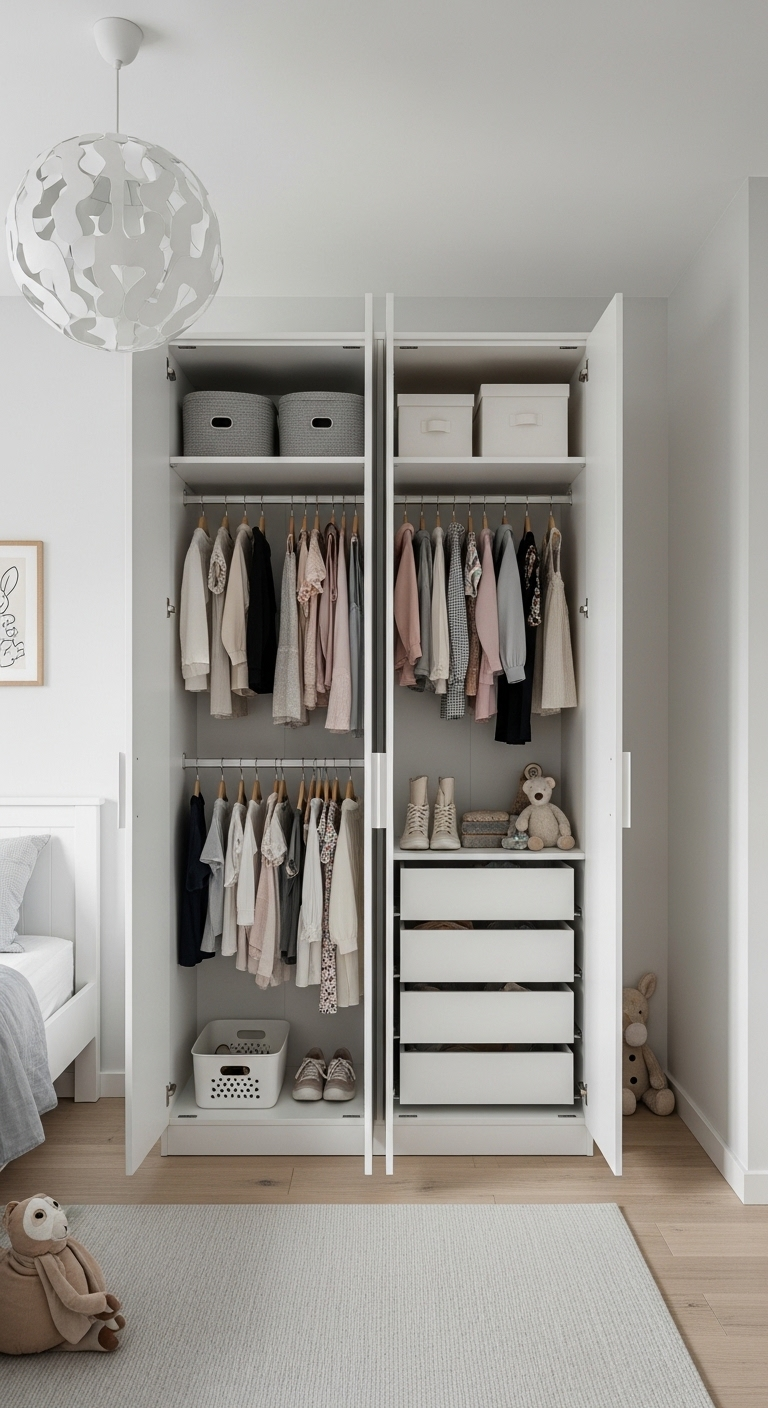
Keep only essential and frequently worn items in easy reach. Rotate the rest to storage or donate old clothes.
A minimalist wardrobe reduces clutter and speeds up outfit selection. It teaches kids to value simplicity and organization.
16# Repurposed Craft Organizers
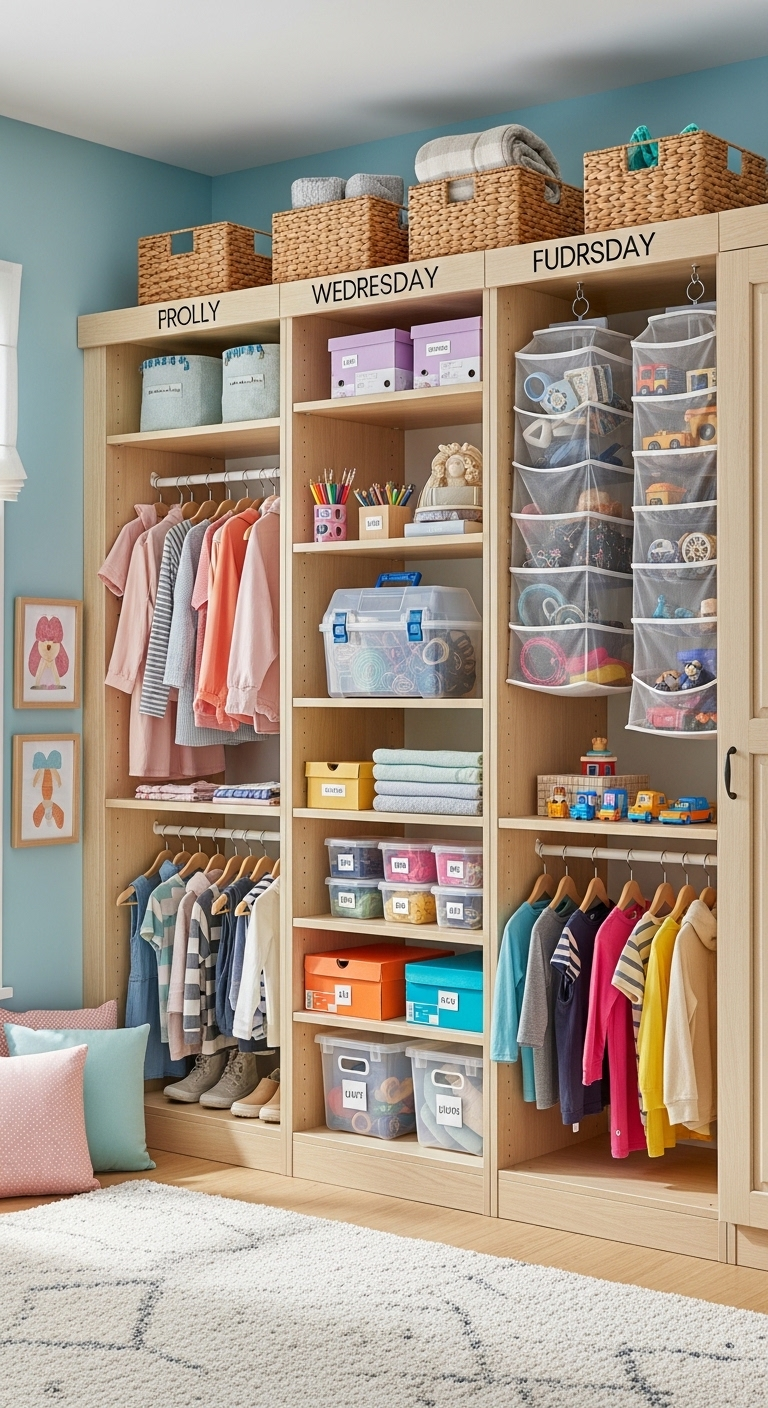
Small craft organizers can hold socks, hair ties, and other tiny items. They’re affordable and compact.
This solution keeps small essentials in order. Kids can quickly grab what they need without creating a mess.
17# Tension Rod Systems
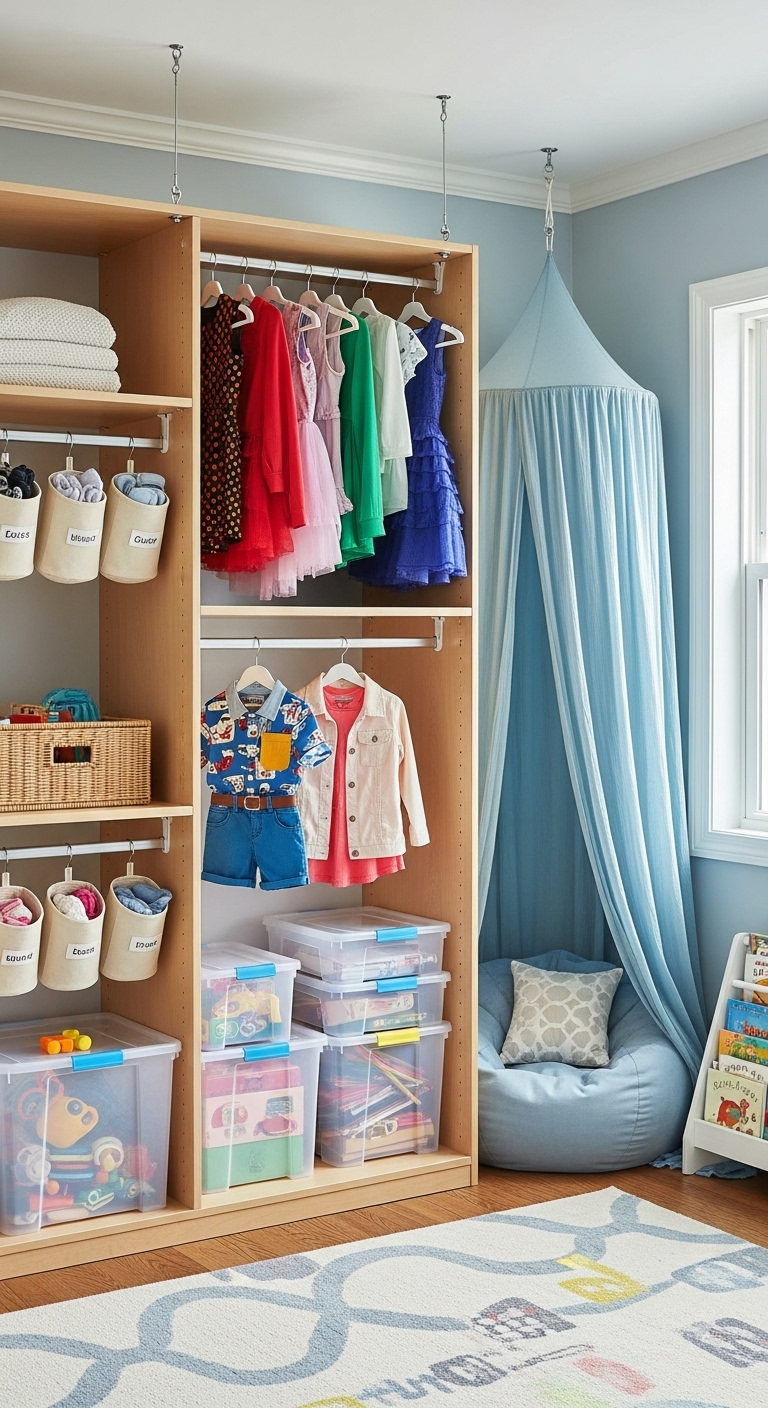
Tension rods can create extra hanging space for skirts, pants, or accessories. They’re adjustable and easy to reposition.
This maximizes vertical space without permanent installation. It’s practical for growing wardrobes with limited space.
18# Folded Outfit Stacking
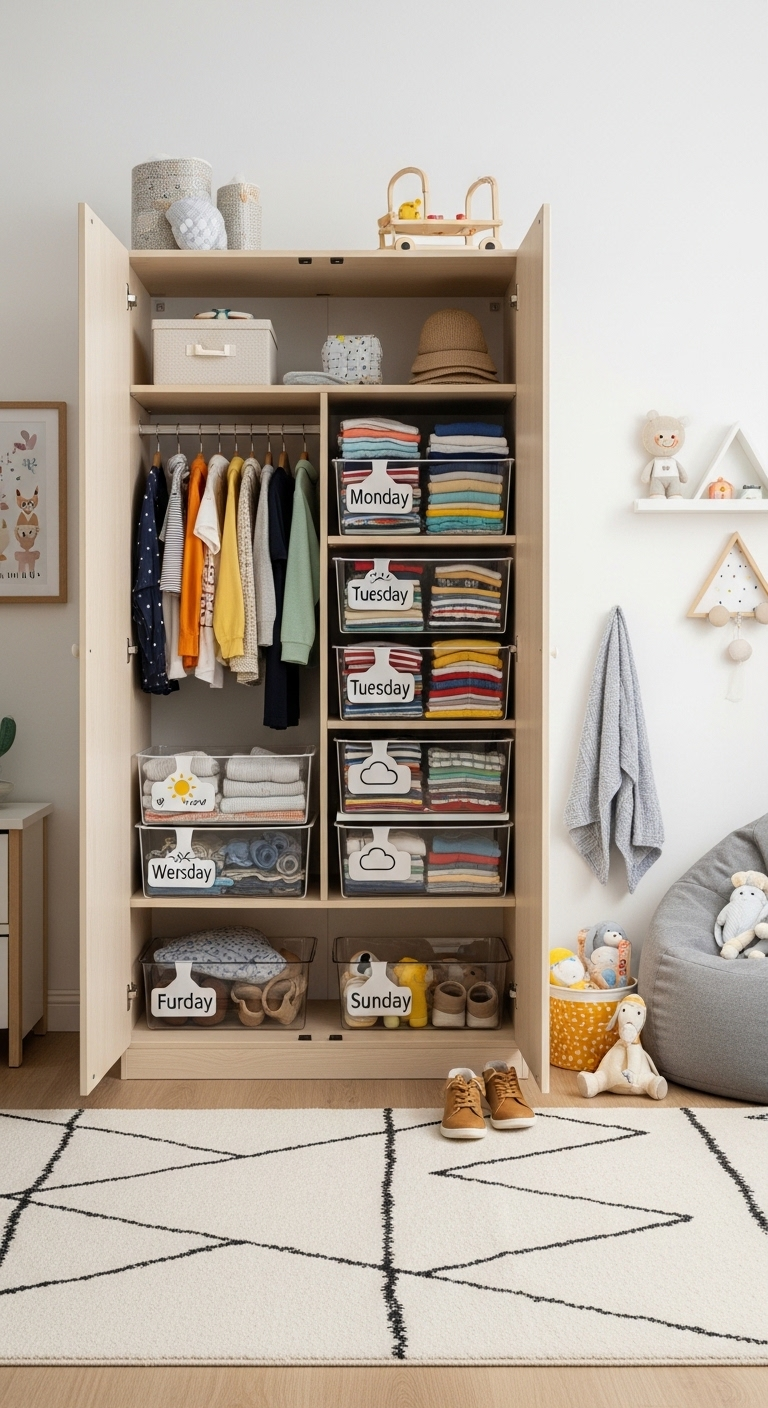
Fold and stack complete outfits for quick access. This reduces the morning scramble to coordinate tops and bottoms.
Kids can pick a ready-to-go outfit themselves. It saves time while teaching organization skills.
19# Clear Storage Containers
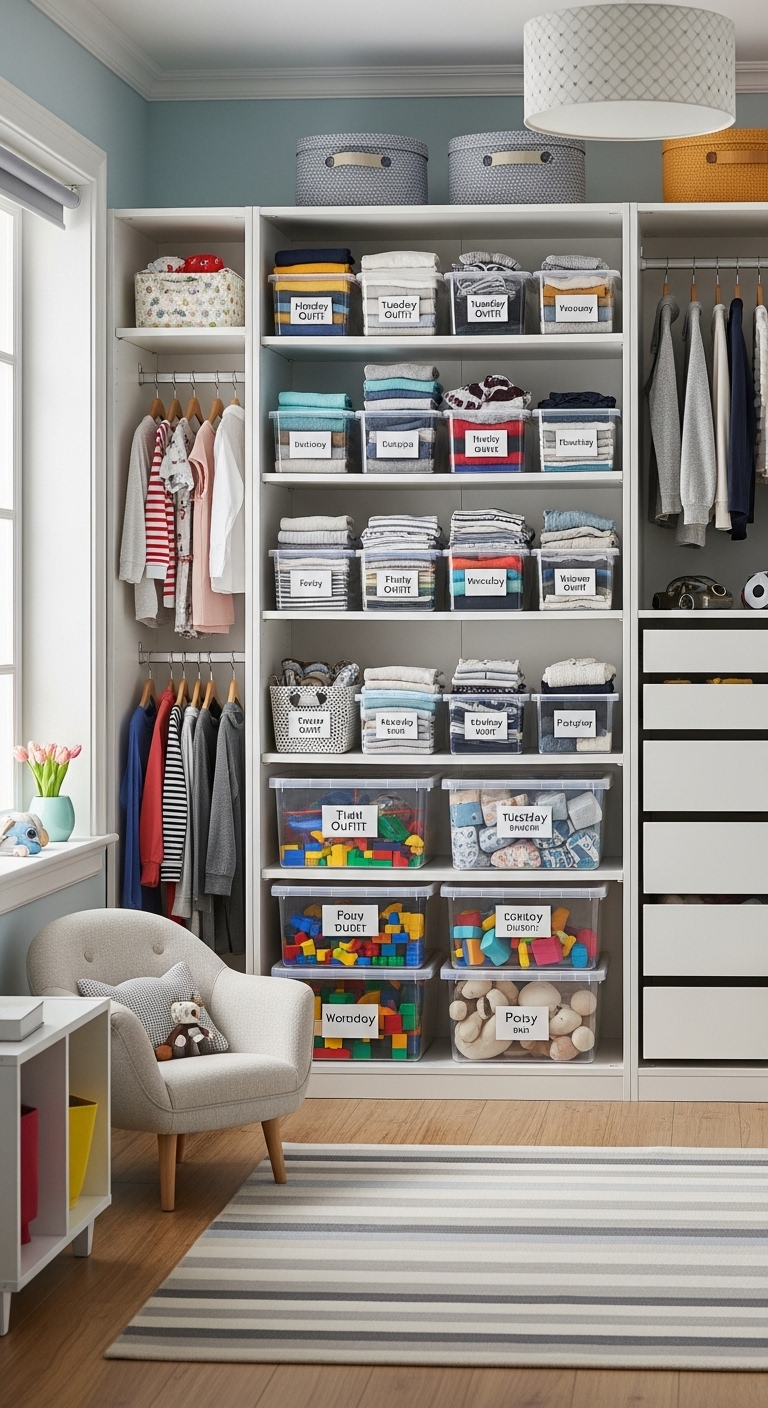
Use clear bins for easy visibility of contents. Kids can see exactly what’s inside without rummaging.
This keeps items accessible and reduces the need to unpack multiple boxes. It’s simple and efficient.
20# Personalized Hooks and Bins
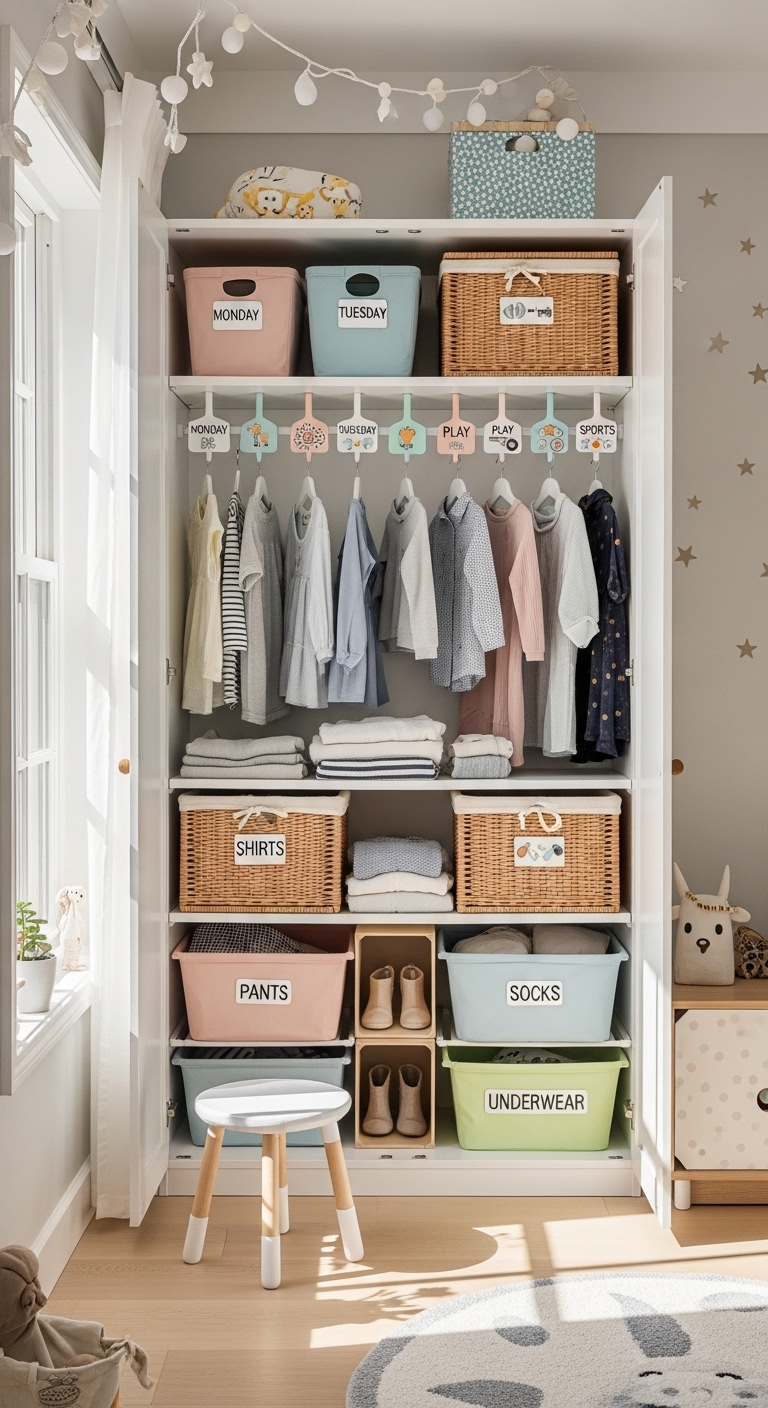
Label hooks and bins with each child’s name or picture. Personalized storage helps children quickly identify their belongings.
This encourages responsibility and reduces disputes over items. It’s a fun, easy addition to any shared wardrobe.
21# Routine-Friendly Zones
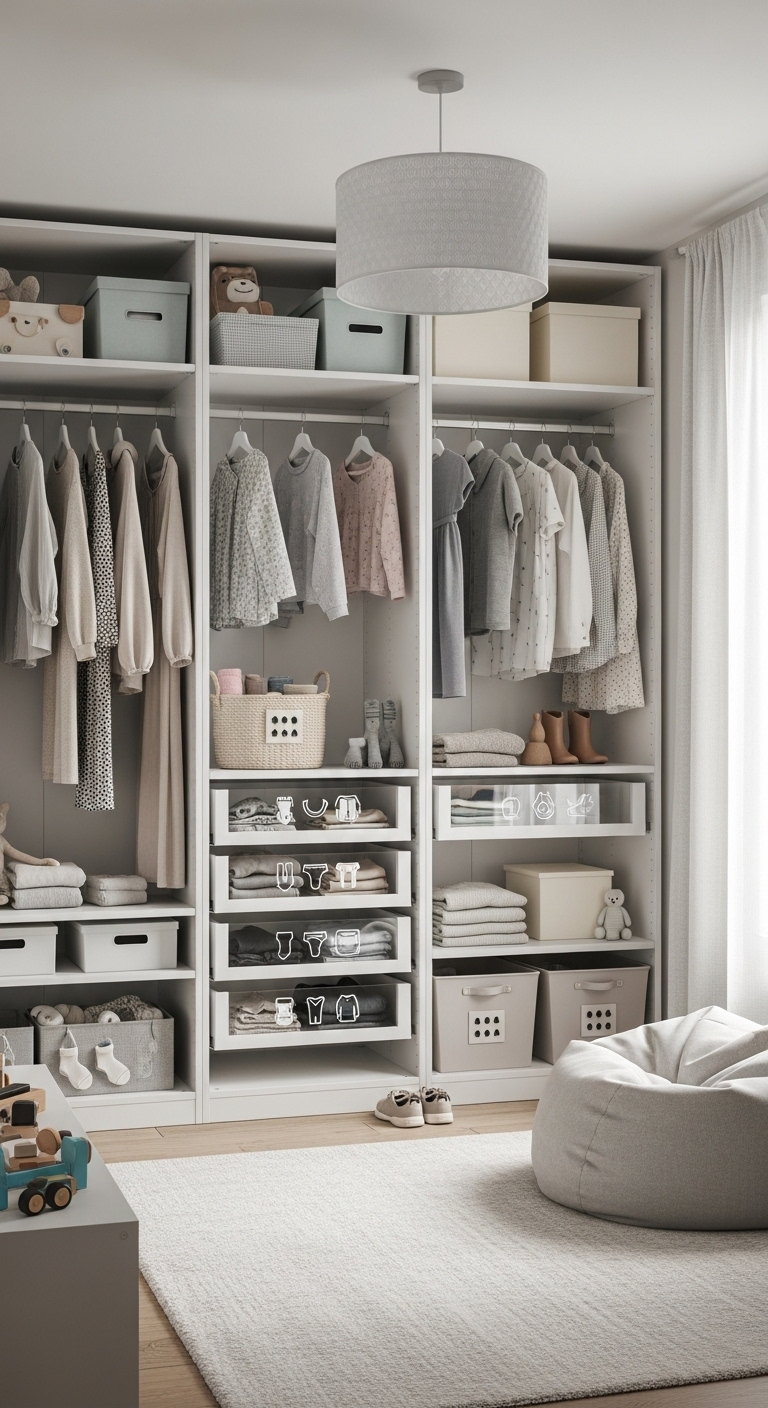
Organize clothing by routine: school, sports, or play. Dedicated zones make it easier to prepare for specific activities.
This system saves time and teaches kids to plan ahead. It keeps the wardrobe functional and orderly daily.
Wrap-Up
Creating a wardrobe that works for kids’ daily routines doesn’t require expensive solutions. With these organization ideas, you can maximize space, simplify mornings, and foster independence. Small, intentional changes in storage and layout make a huge difference, turning chaotic mornings into calm, stress-free starts for the entire family.