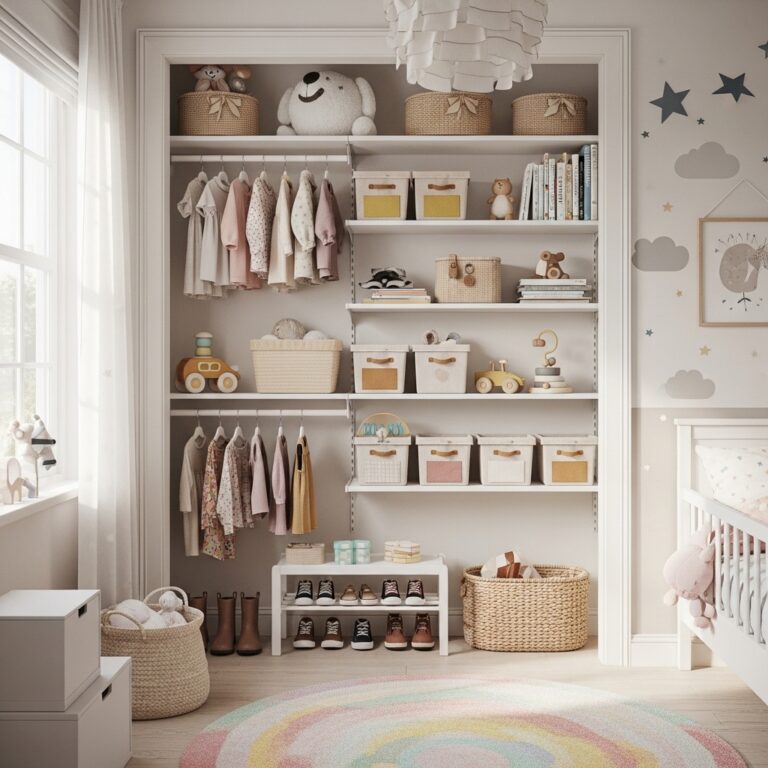
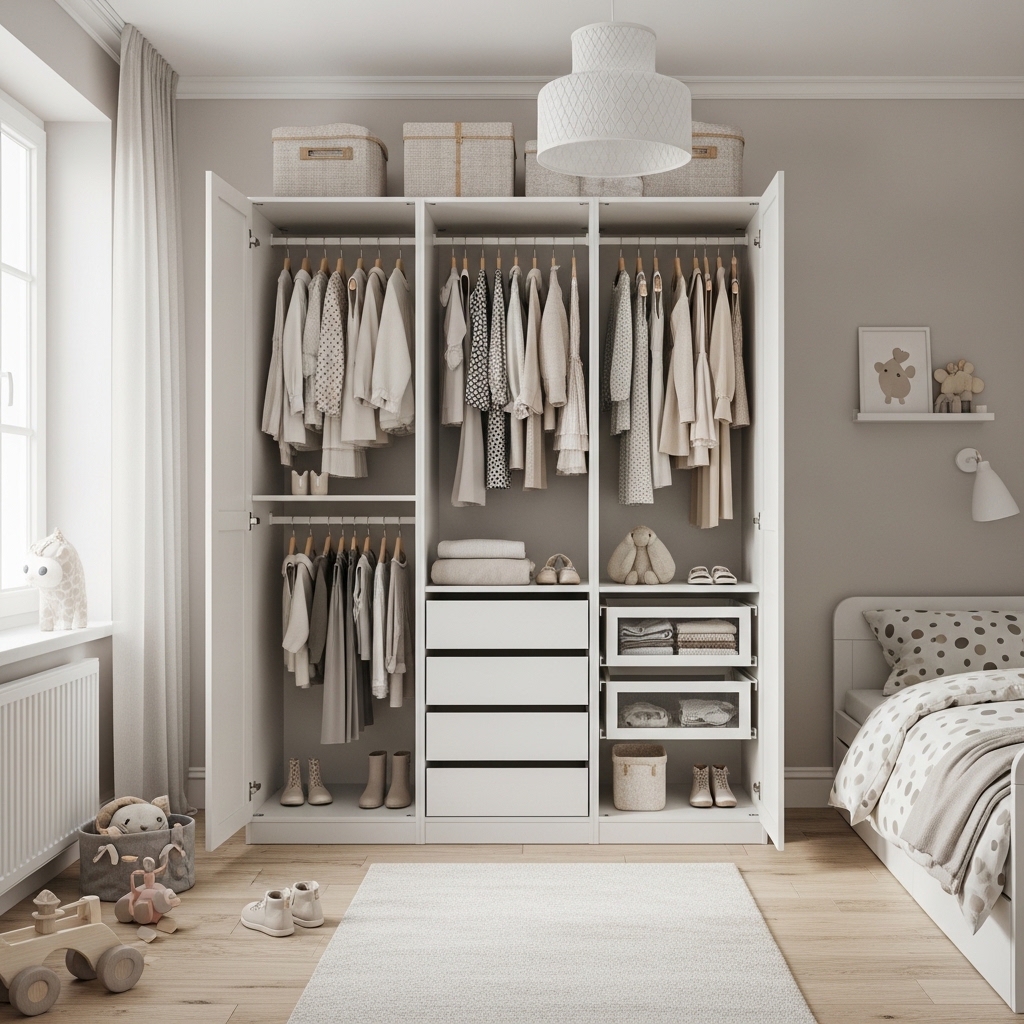
Keeping kids’ wardrobes organized can feel like a never-ending task. Clothes, shoes, and accessories seem to multiply overnight, making mornings stressful.
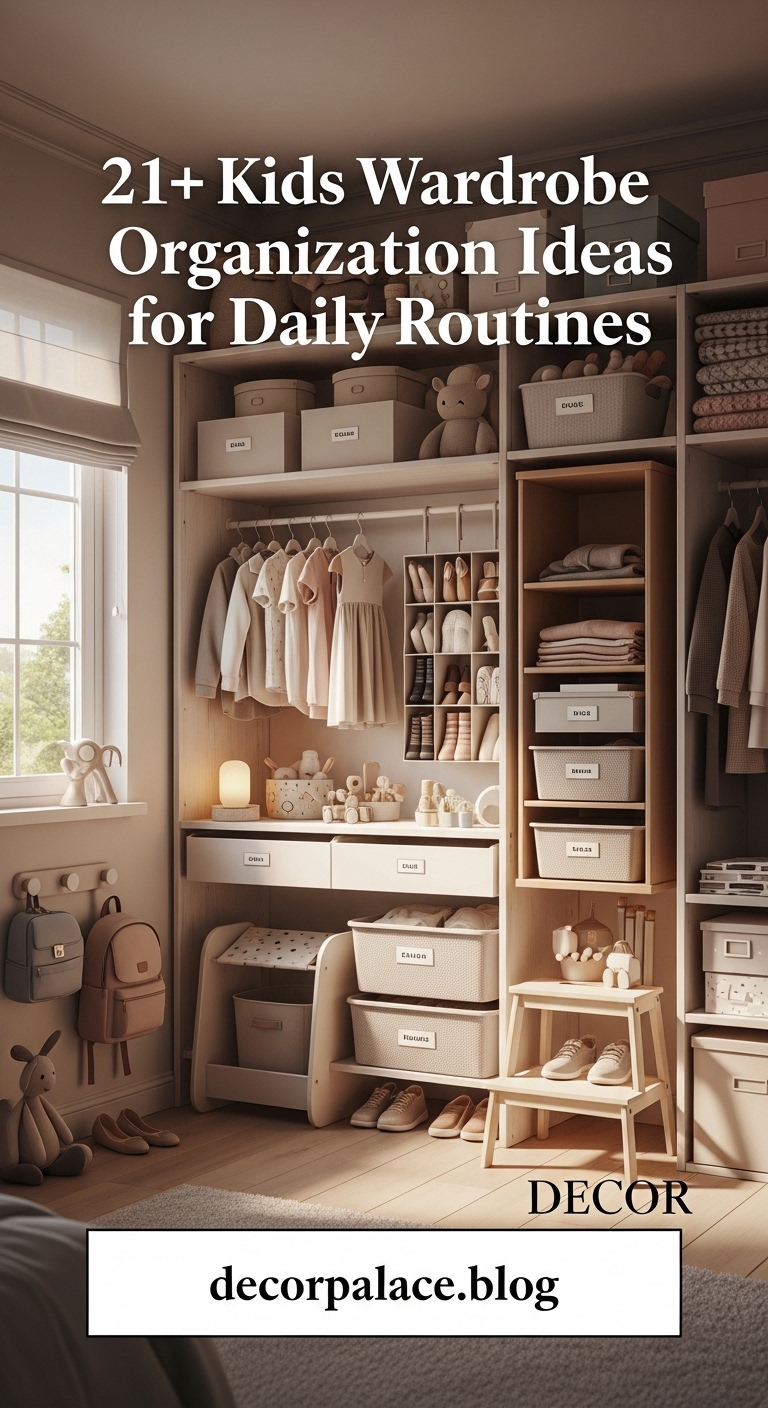
Organizing your wardrobe with a focus on daily function turns a chaotic morning into a smooth experience. You can save significant time by grouping outfits that make sense for your specific schedule.
Designated spots for everyday essentials ensure that you never waste time hunting for missing items. This simple change creates a sense of calm that carries over into the rest of your day.
Kid-friendly storage solutions encourage independence by placing their most-used items within easy reach. When children can access their own clothes, they feel empowered to manage their own routines.
Functionality is the cornerstone of a stress-free wardrobe that works for the whole family. Implementing these smart layout choices will immediately reduce the clutter in your bedroom today.
1# Color-Coded Clothing Sections
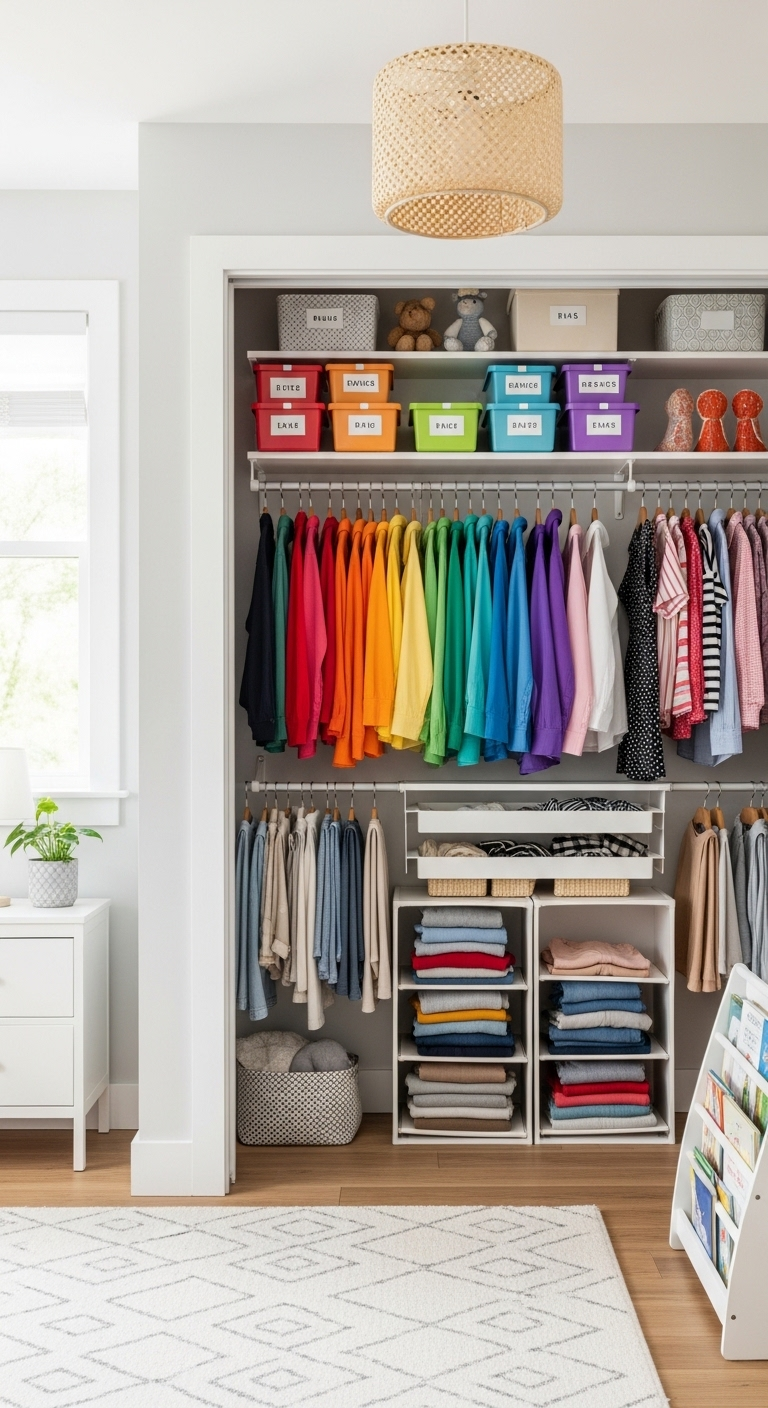
Assigning specific colors to clothing categories creates a clear visual system for your children. You can use blue for shirts, green for pants, and yellow for pajamas to build clarity.
This strategy acts as a guide, making it simple for kids to navigate their space. They will quickly learn where each item belongs without needing constant help from you.
Visual cues are incredibly effective for younger children who are still learning to read labels. By associating colors with types, you turn tidying up into a fun and productive game.
Consistency is key to making this system work long-term for your family’s morning routine. When every item has a assigned color, your wardrobe stays structured and easy to maintain.
2# Stackable Bins for Folded Clothes
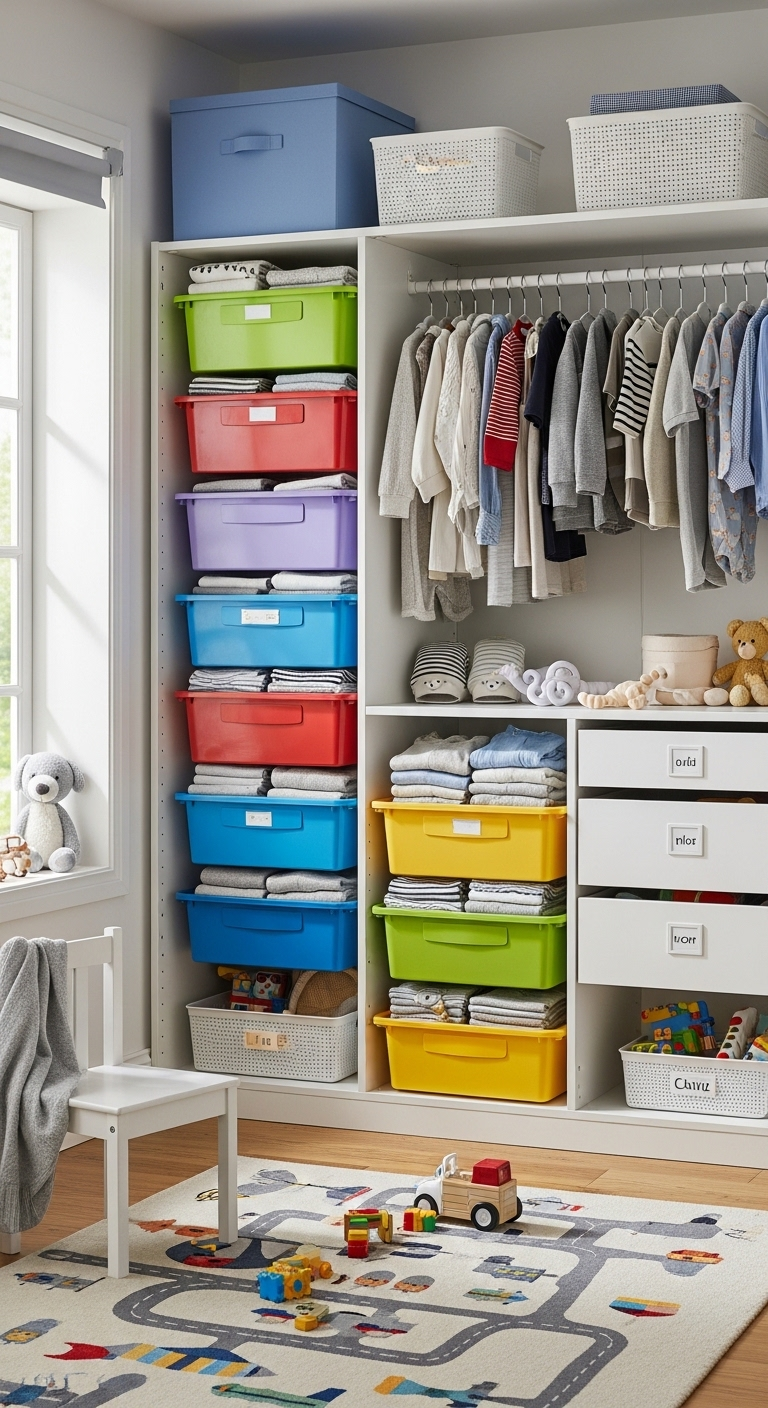
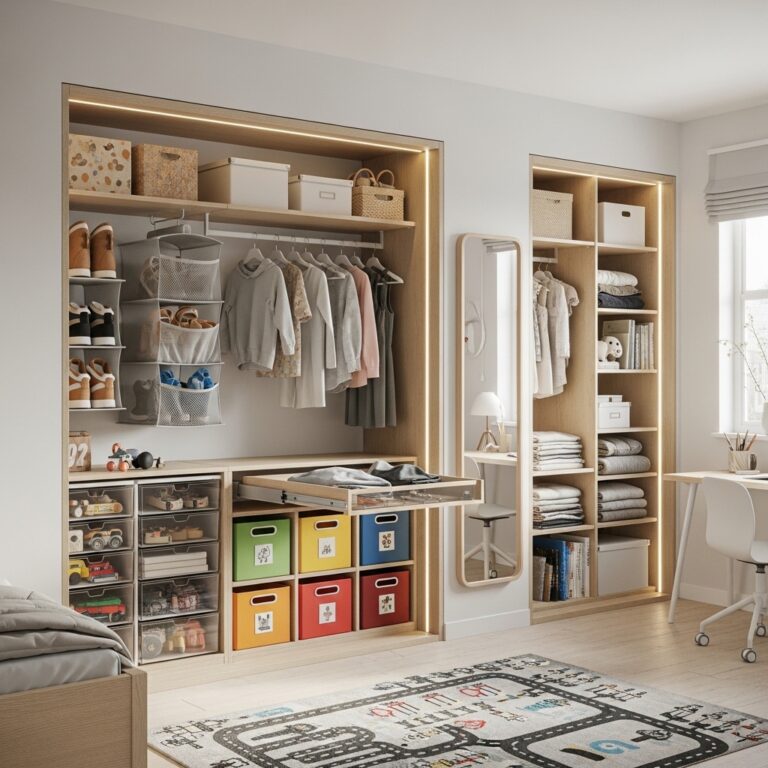
Stackable bins offer a compact solution for keeping smaller clothing items tidy and very accessible. You can use these modular units to separate socks, underwear, and pajamas into distinct piles.
This organization method is perfect for maximizing space in closets that feel a bit cramped. Because they are vertical, you save valuable floor space while keeping everything neat and visible.
As your children grow, you can easily rearrange these bins to suit their changing needs. This flexibility makes them a long-term investment for a wardrobe that evolves with time.
Efficiency in your closet starts with simple tools that provide order for every small item. Stackable storage is a practical way to ensure your bedroom remains a calm, functional retreat.
3# Adjustable Hanging Rods
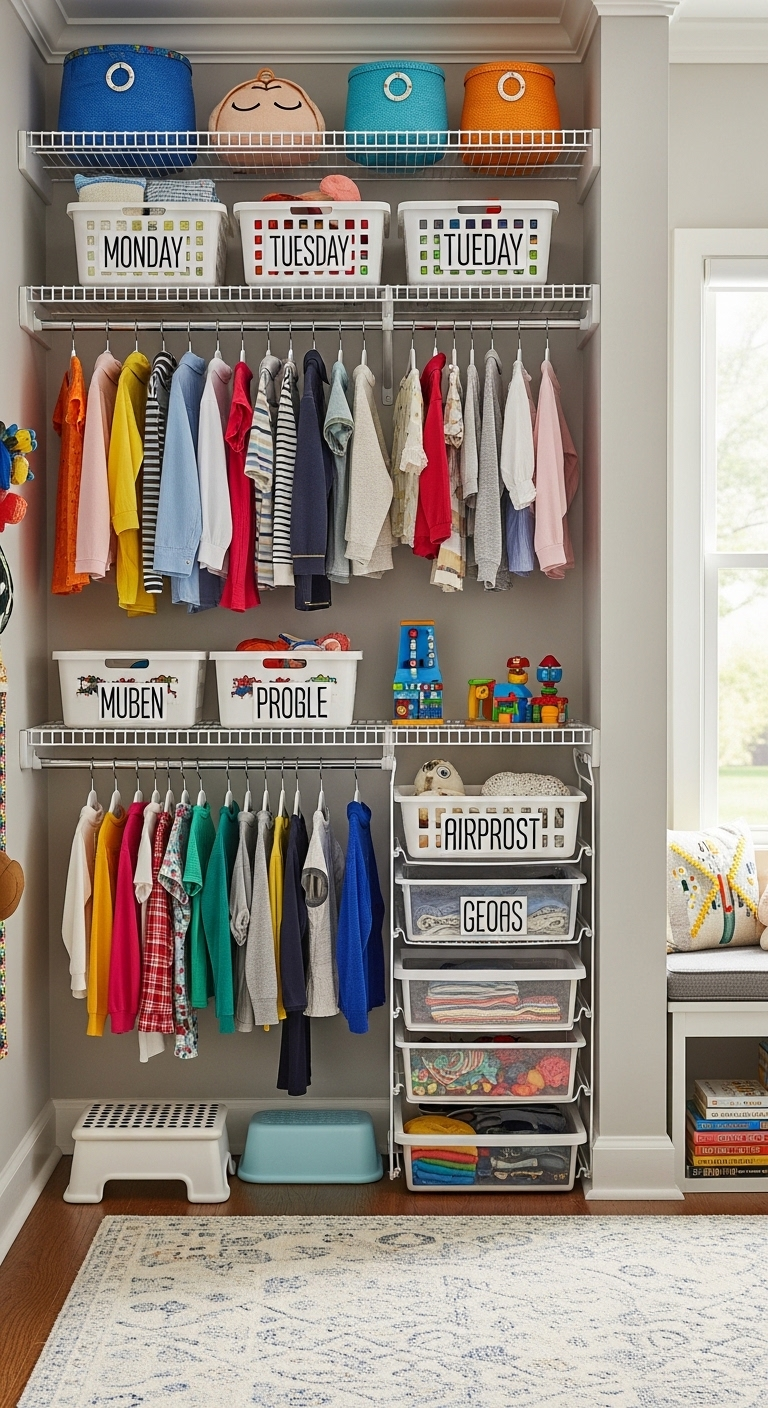
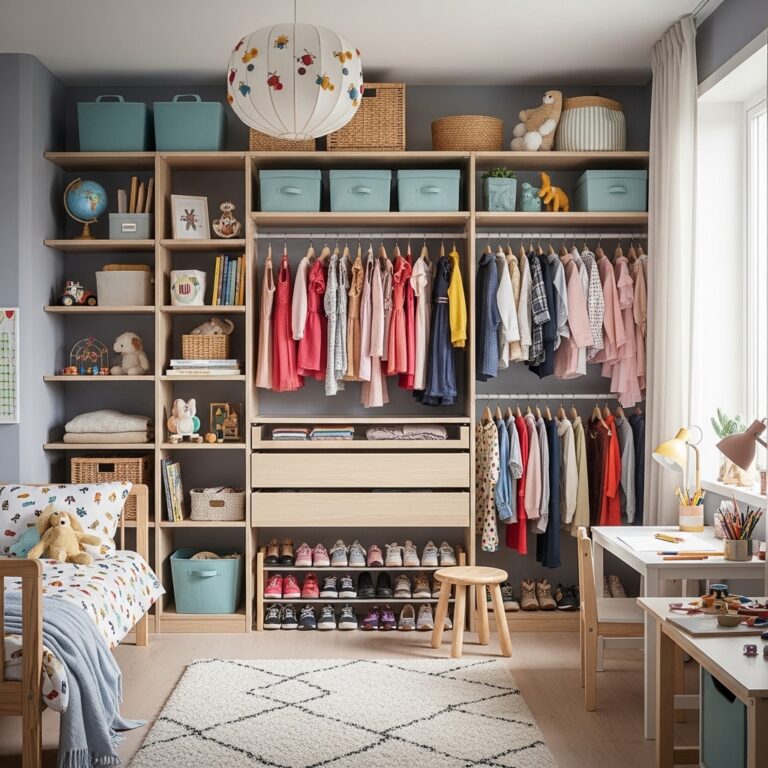
Installing lower rods in your child’s closet makes their clothing instantly accessible and very manageable. This simple change allows even young kids to reach their outfits without needing your assistance.
When everything is within their reach, the entire process of getting dressed becomes much faster. They can see all their options clearly, which prevents the frustration of searching through piles.
These rods provide a dedicated space for them to take ownership of their own daily attire. It is an essential step for parents who want to simplify their own morning routine now.
Creating a child-sized environment helps them feel more comfortable and organized in their room today. You will quickly notice how much easier it is to get ready when they participate.
4# Over-the-Door Organizers
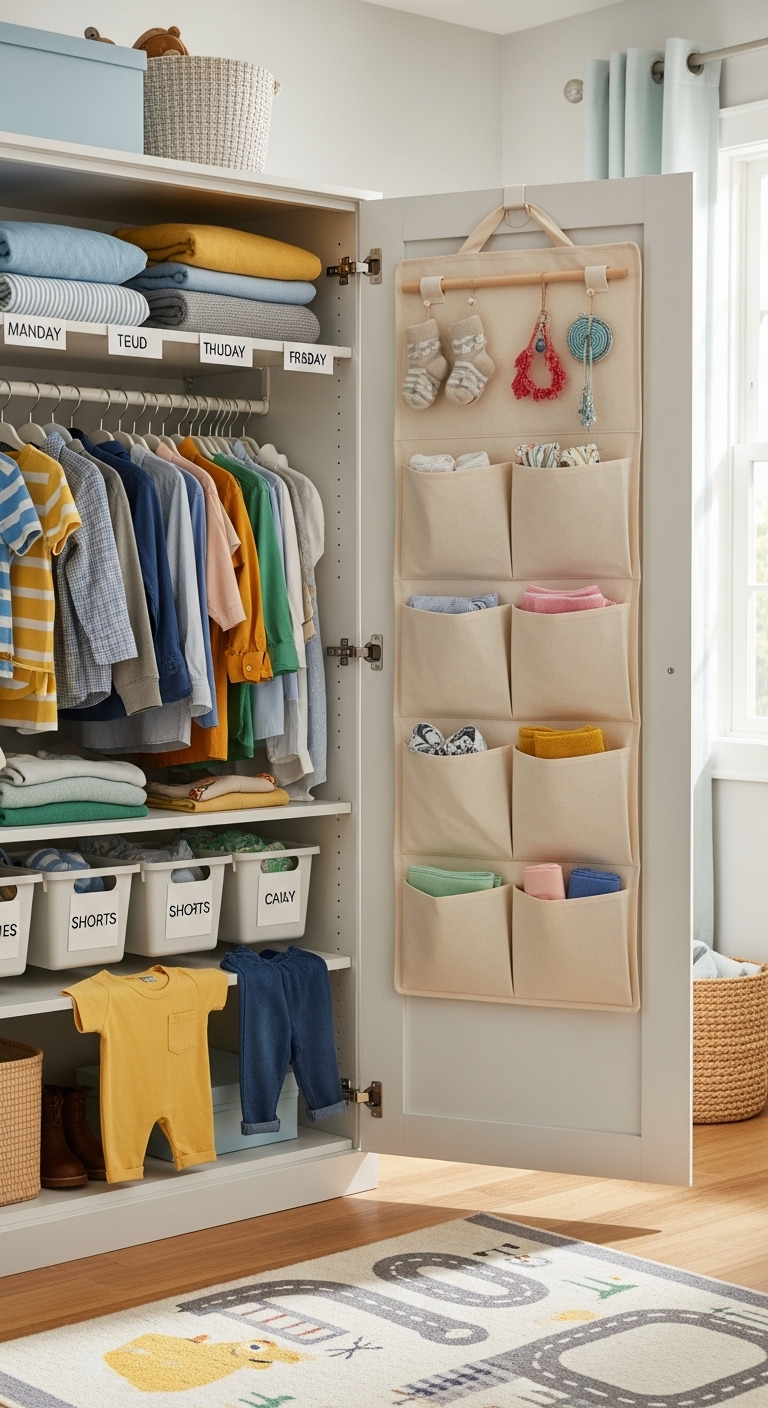
Over-the-door pocket organizers are a brilliant way to capture space that often goes completely unnoticed. You can use these handy pouches to store small items like hats, belts, or hair accessories.
This strategy ensures that your most frequently used accessories remain visible and within your reach. It turns a blank surface into a functional storage zone that declutters your existing bedroom furniture.
These organizers are incredibly affordable and install in seconds without the need for complex tools. They provide a dedicated home for loose items that would otherwise end up buried inside drawers.
Making use of this wasted vertical space creates a cleaner and more professional look daily. It is a simple design hack that immediately improves the functionality of your entire wardrobe area.
5# Rotating Outfit Bins
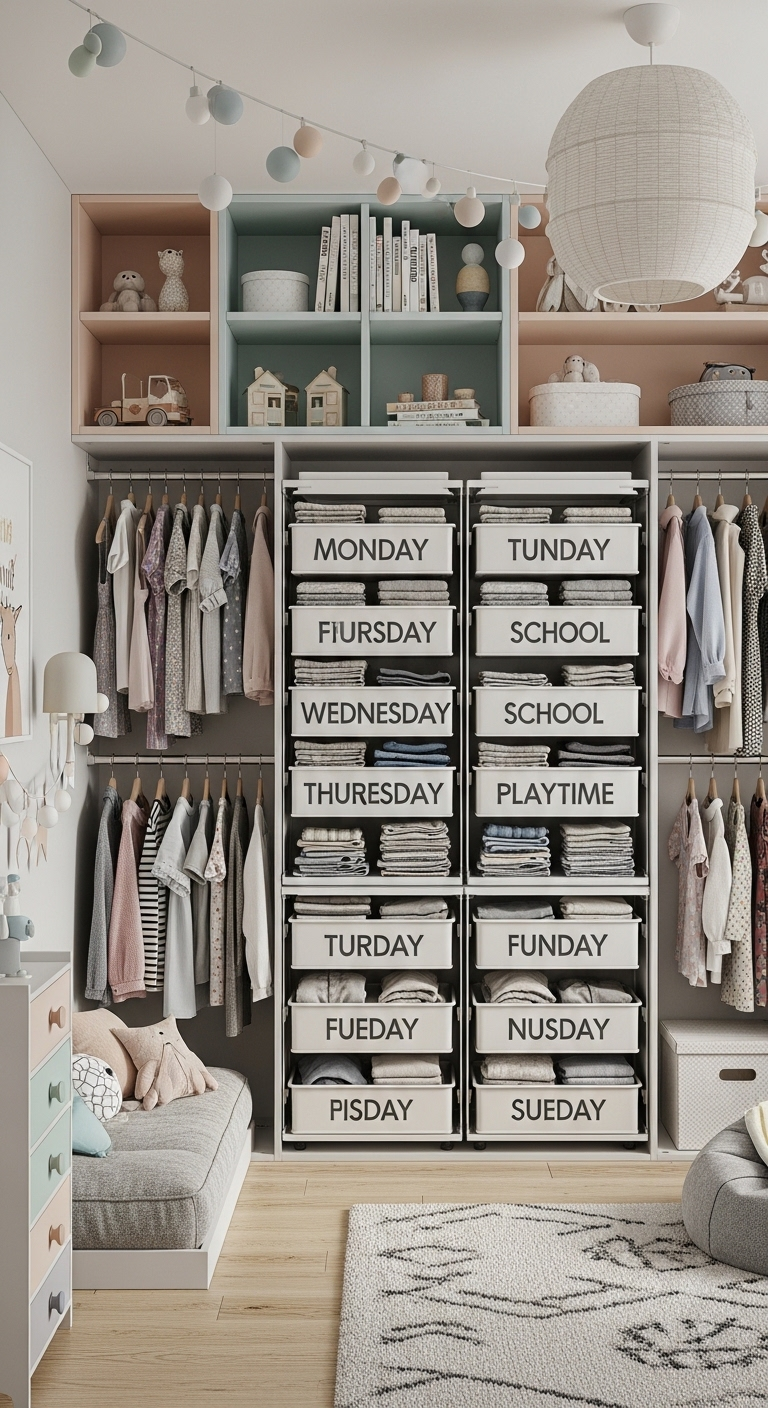
Using bins or small baskets to prepare outfits for the week eliminates stress every morning. You can pre-select clothes for each day and place them into these dedicated containers today.
This preparation method significantly reduces decision fatigue for both you and your children now. When the morning begins, there is no need to think about what to wear next.
It transforms your daily routine from a chaotic rush into a calm, planned, professional start. Having everything ready ensures you stay on schedule regardless of how busy life gets.
Implementing this system is a great way to guarantee that everyone is dressed appropriately always. Your wardrobe will feel more organized and your mornings will be much more efficient now.
6# Hooks for Jackets and Bags
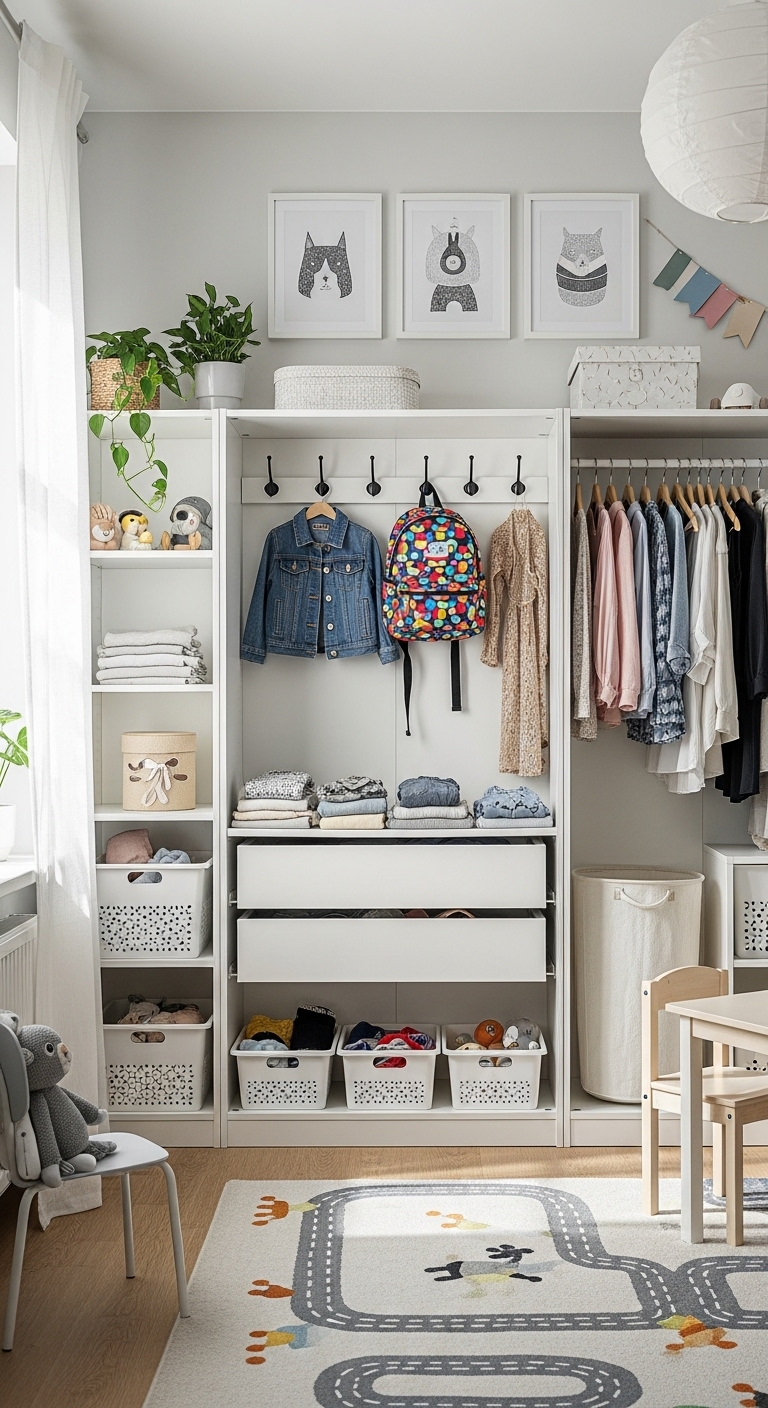
Installing hooks at a height suitable for your children makes their daily gear very accessible. You can place these sturdy fixtures in the bedroom or near the entryway for convenience.
This simple addition ensures that jackets, bags, and hats have a designated home every day. Everything stays off the floor, which instantly makes your bedroom feel much more professional now.
Hooks are incredibly practical because they allow kids to hang items without any extra help. They provide a clear visual cue that encourages them to tidy up their belongings today.
This solution is both inexpensive and highly effective for any family wanting better daily order. You will quickly notice that your space stays much cleaner with these tools in place.
7# Drawer Dividers for Small Accessories
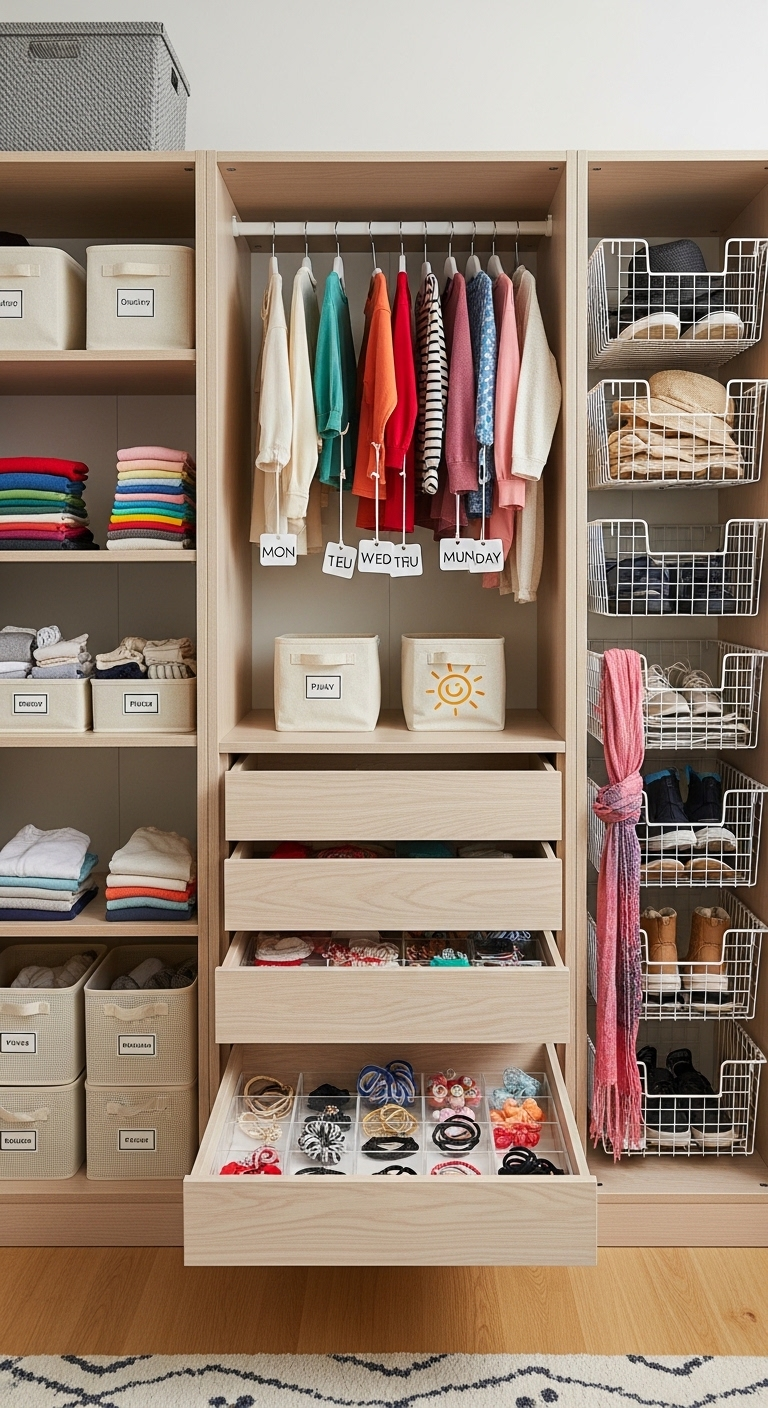
Drawer dividers are the ultimate solution for keeping small accessories neat and perfectly sorted today. You can use them to create custom sections for items like jewelry, watches, or hair ties.
This simple tool prevents small pieces from becoming a tangled mess in the back corners. It turns a chaotic drawer into a structured space where every accessory has a home.
Dividers make it easy to see exactly what you own without spending time searching through. They help you maintain a clean and professional look in every part of your bedroom.
You will find that organizing your smaller items is the secret to a stress-free wardrobe. A well-divided drawer keeps your daily routine efficient and your accessories in perfect condition.
8# Personalized Closet Sections
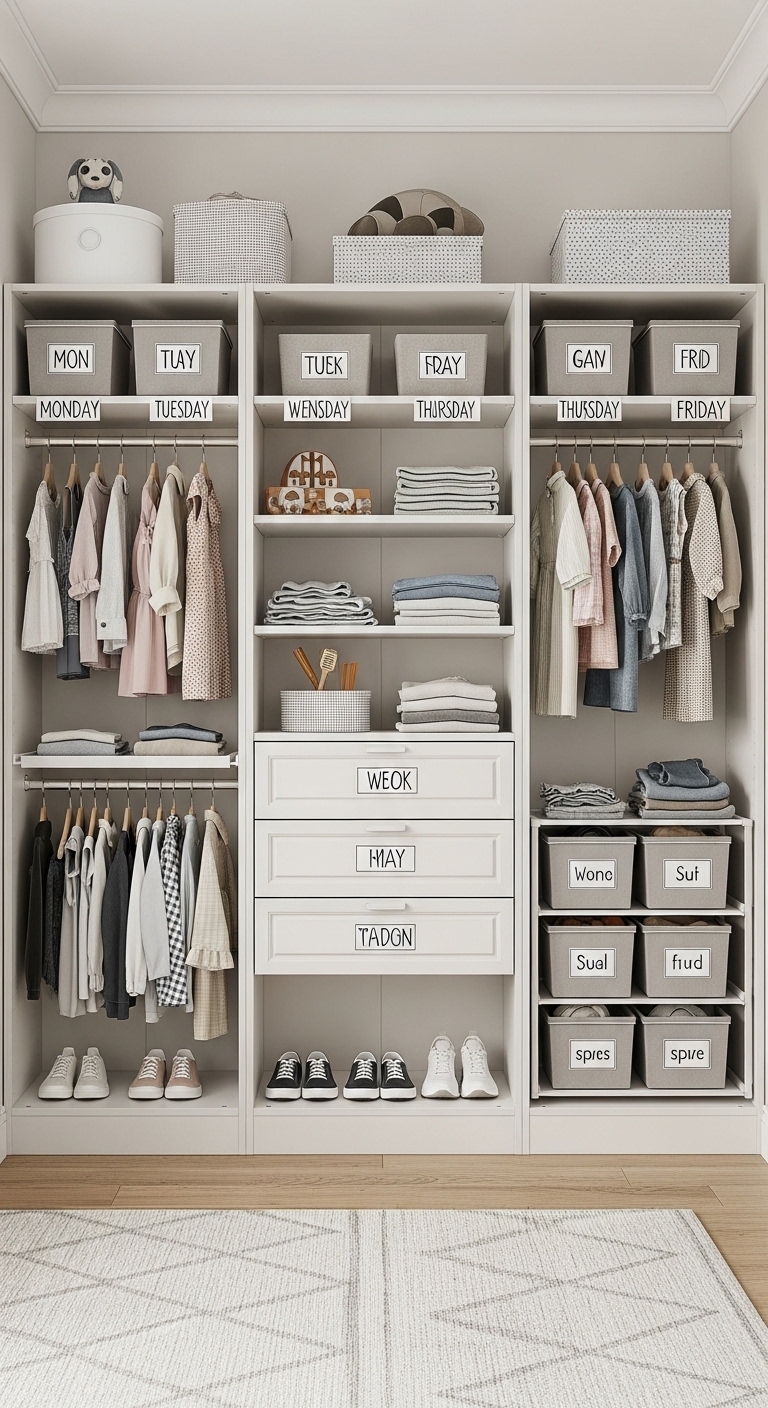
Creating designated sections in a shared wardrobe gives each child a sense of ownership. You can use colorful bins or labels to clearly mark where one zone ends today.
This simple layout choice helps prevent sibling mix-ups that often lead to unnecessary morning arguments. When each child knows exactly which area is theirs, they become more careful with items.
Personal zones reduce the clutter that naturally happens when siblings share a single large space. You gain a more organized home and they gain a clear place to store things.
Establishing these boundaries is the first step toward a well-managed and peaceful shared bedroom. Every child deserves a defined area to help them stay organized and feel truly comfortable.
9# Shoe Storage Solutions
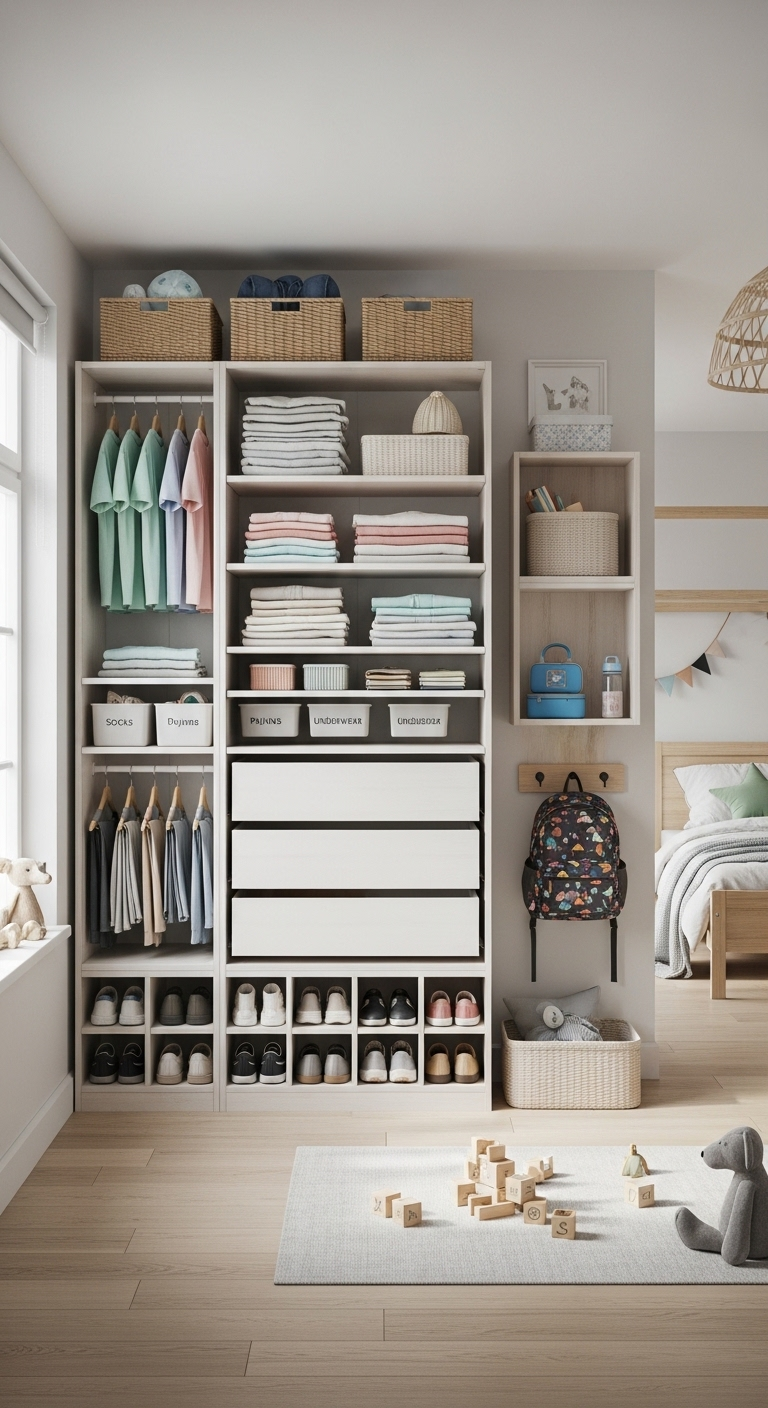
Low shoe racks or cubbies provide a dedicated home for every pair in your collection today. You can place these units on the floor to ensure that all footwear remains neat.
This layout allows even younger children to reach their own shoes without needing your help. By keeping shoes on racks, you instantly clear the floor and create a wider look.
Labels on each individual section make it incredibly fast to identify the right pair now. This visual aid prevents the typical frustration of searching for matching shoes during mornings.
A tidy floor is the hallmark of a bedroom that feels organized and very professional. You will find that managing a growing collection becomes effortless with this simple storage tool.
10# Seasonal Rotation Bins
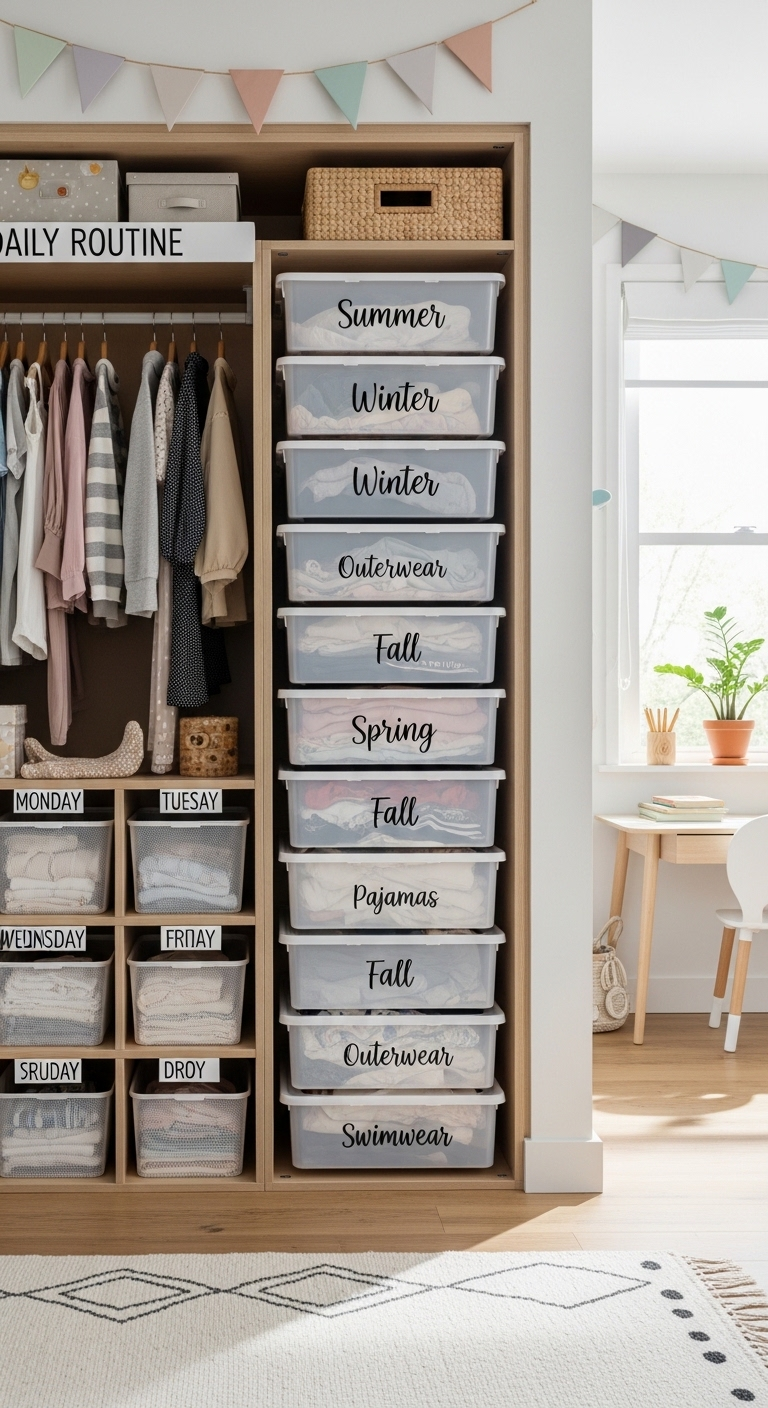
Storing off-season clothing in labeled bins keeps your active wardrobe feeling light and very functional. You can use clear containers to quickly identify what is inside without needing to open them.
This rotation strategy ensures that only current, weather-appropriate items occupy your primary closet space today. It prevents the buildup of excess clothes that clutter your daily view and create stress.
You will find that your daily routine feels much more focused when the closet is lean. Every item in your active wardrobe serves a purpose for the current season you inhabit.
Making this simple adjustment twice a year keeps your entire home running with professional efficiency. A curated space is the secret to a fast and calm morning for your family.
11# Hanging Accessory Organizers
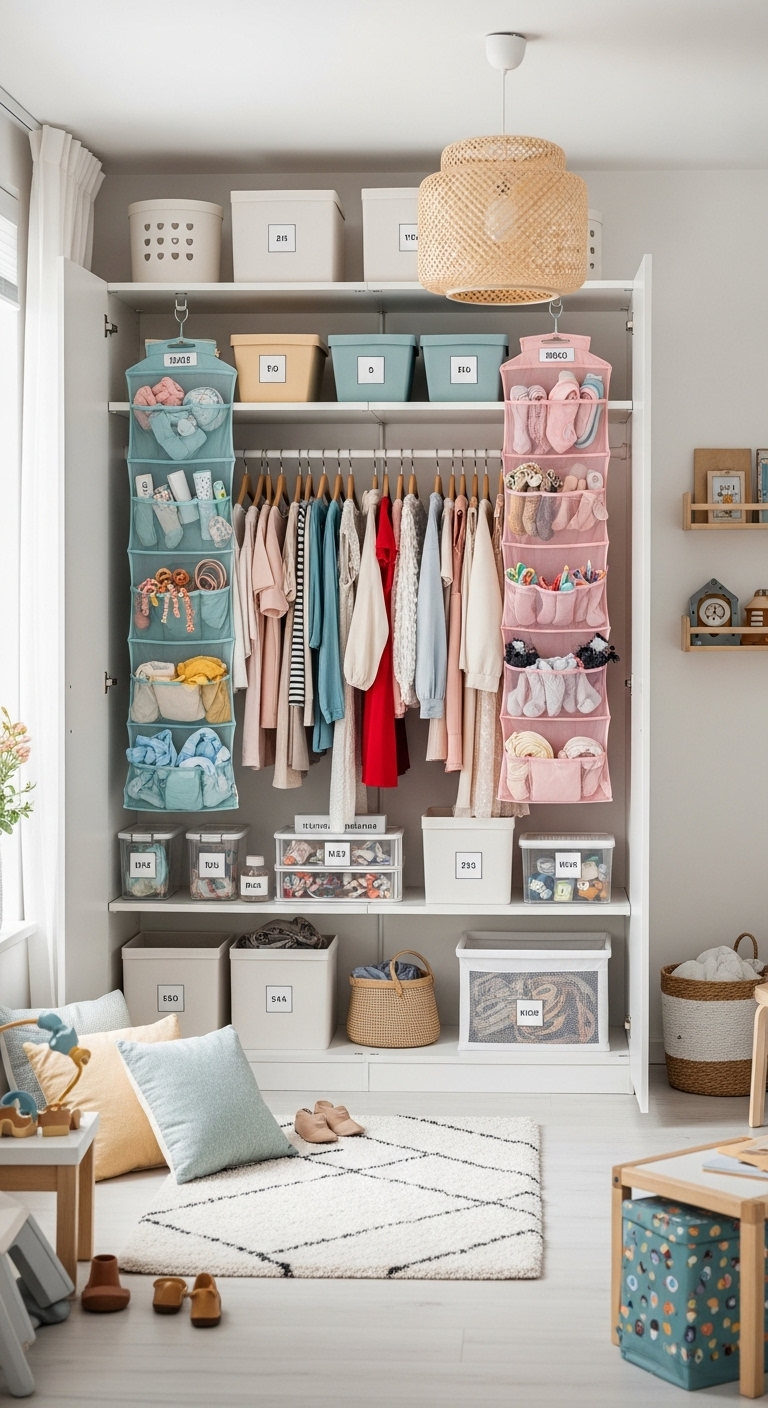
Small hanging organizers provide a dedicated spot for scarves, belts, or delicate headbands today. You can easily mount these behind the closet door to keep every accessory neatly contained.
This method keeps your small items visible, which makes choosing the right piece very simple. You no longer have to worry about losing these loose accessories in dark, cluttered drawers.
They are incredibly effective for maintaining a tidy wardrobe that feels both high-end and functional. Every item stays in its designated space, allowing you to access it with total ease.
Adding this storage tool is a great way to elevate your bedroom’s overall organization level. It creates a professional atmosphere where your style elements are always ready for daily use.
12# DIY Labeling System
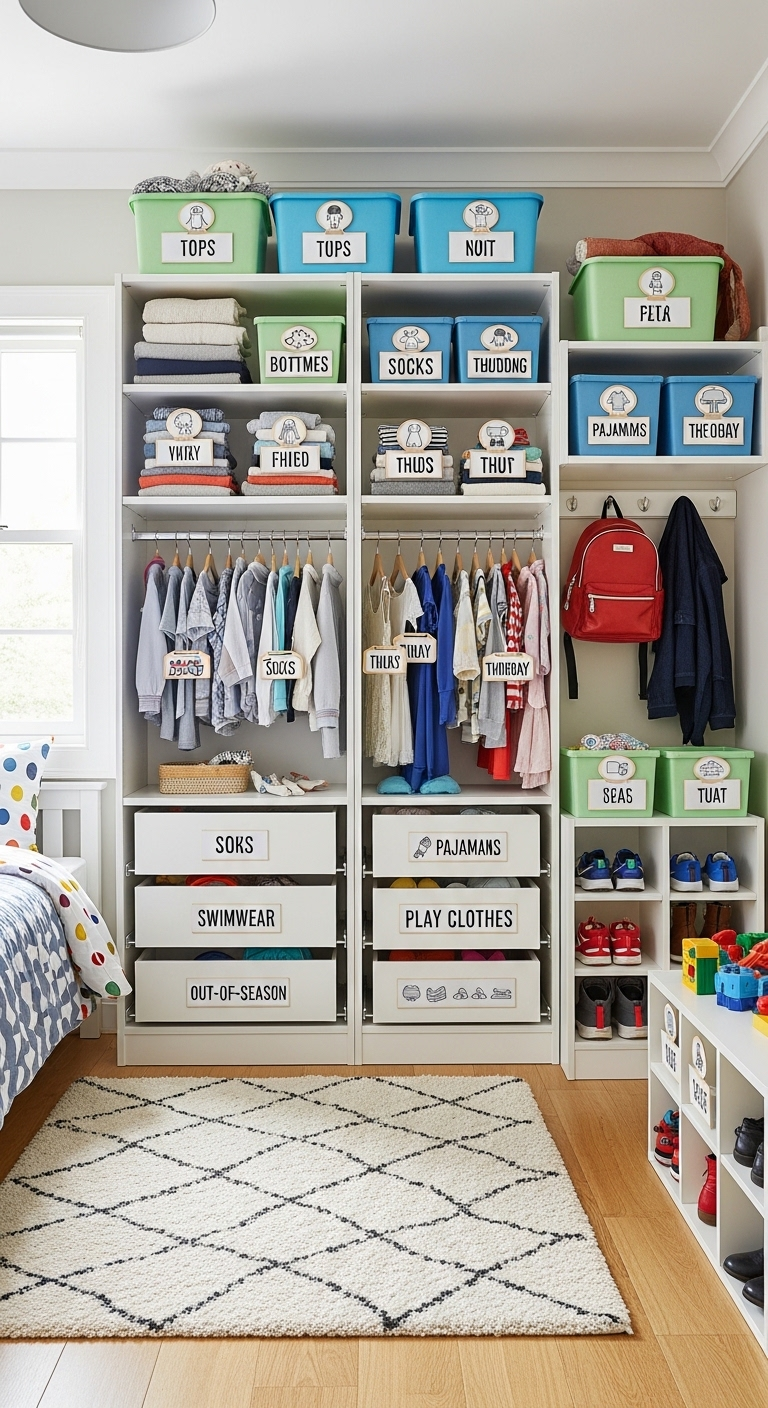
Using clear labels or simple pictures on your storage makes it obvious where items belong. You can place these visual cues on bins, shelves, and drawers to define each space.
This method works because it provides a permanent guide for everyone in the family today. When the system is visually intuitive, the guesswork disappears from your daily cleaning routine now.
Labels are especially powerful for younger children who are still learning to read or sort. They quickly associate the picture with the specific clothing type, making tidying a simple task.
This small, low-cost investment transforms your wardrobe into a highly structured and professional environment. You will notice an immediate improvement in how your family maintains order throughout the week.
13# Multi-Purpose Storage Boxes
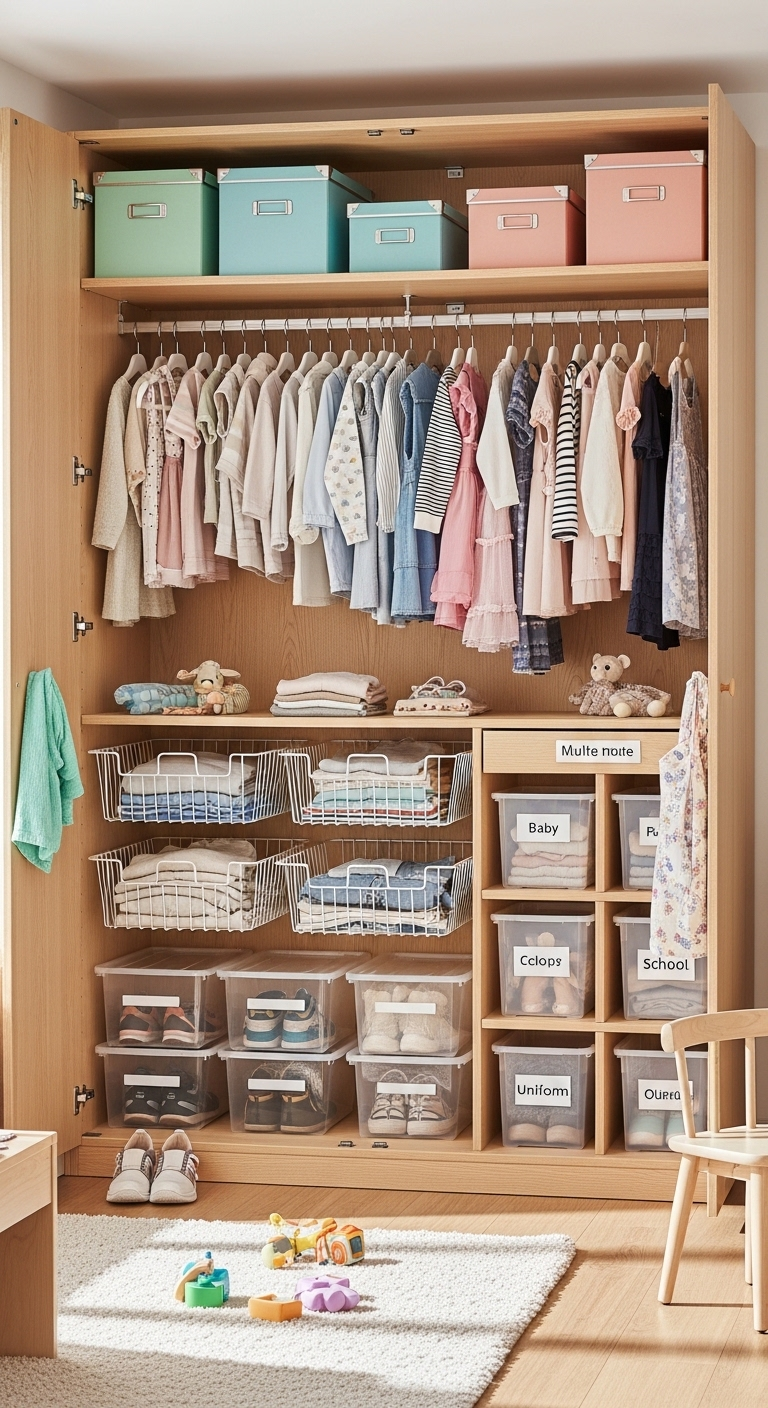
Using clear labels or simple pictures on your storage makes it obvious where items belong. You can place these visual cues on bins, shelves, and drawers to define each space.
This method works because it provides a permanent guide for everyone in the family today. When the system is visually intuitive, the guesswork disappears from your daily cleaning routine now.
Labels are especially powerful for younger children who are still learning to read or sort. They quickly associate the picture with the specific clothing type, making tidying a simple task.
This small, low-cost investment transforms your wardrobe into a highly structured and professional environment. You will notice an immediate improvement in how your family maintains order throughout the week.
14# Hanging Dividers
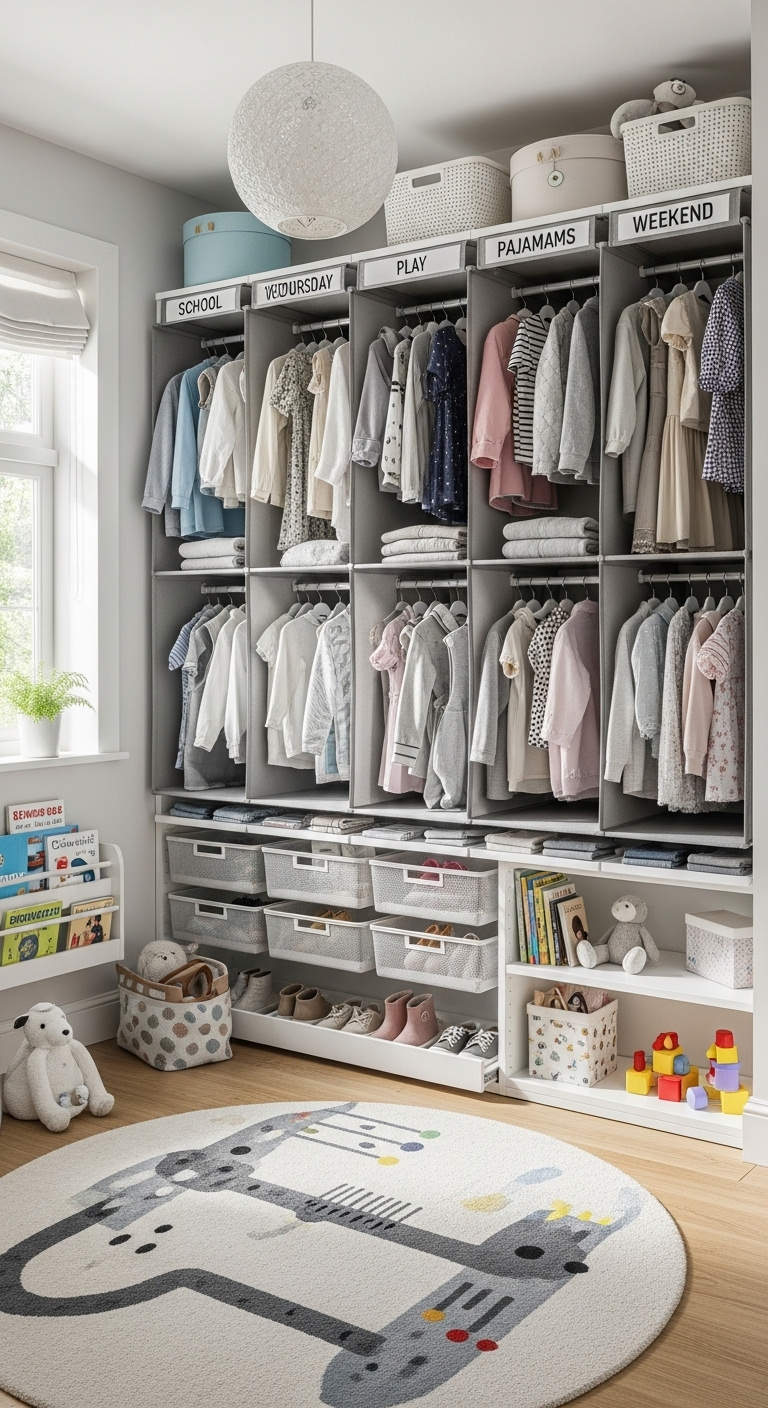
Closet dividers are an essential tool for separating clothing types within your child’s busy wardrobe. You can use these simple markers to define sections for shirts, pants, or seasonal attire.
They act as a visual guide that helps your children quickly locate items each morning. When the closet is clearly segmented, the chaos of a messy wardrobe disappears very fast.
These dividers provide a structured environment that feels intentional and highly professional for your home. Every single item stays in its proper place, ensuring you never waste time hunting again.
A small investment in these tools creates a massive payoff in your daily scheduling efficiency. Your bedroom remains organized, calm, and ready to support your family’s busy, active lifestyle today.
15# Minimalist Approach
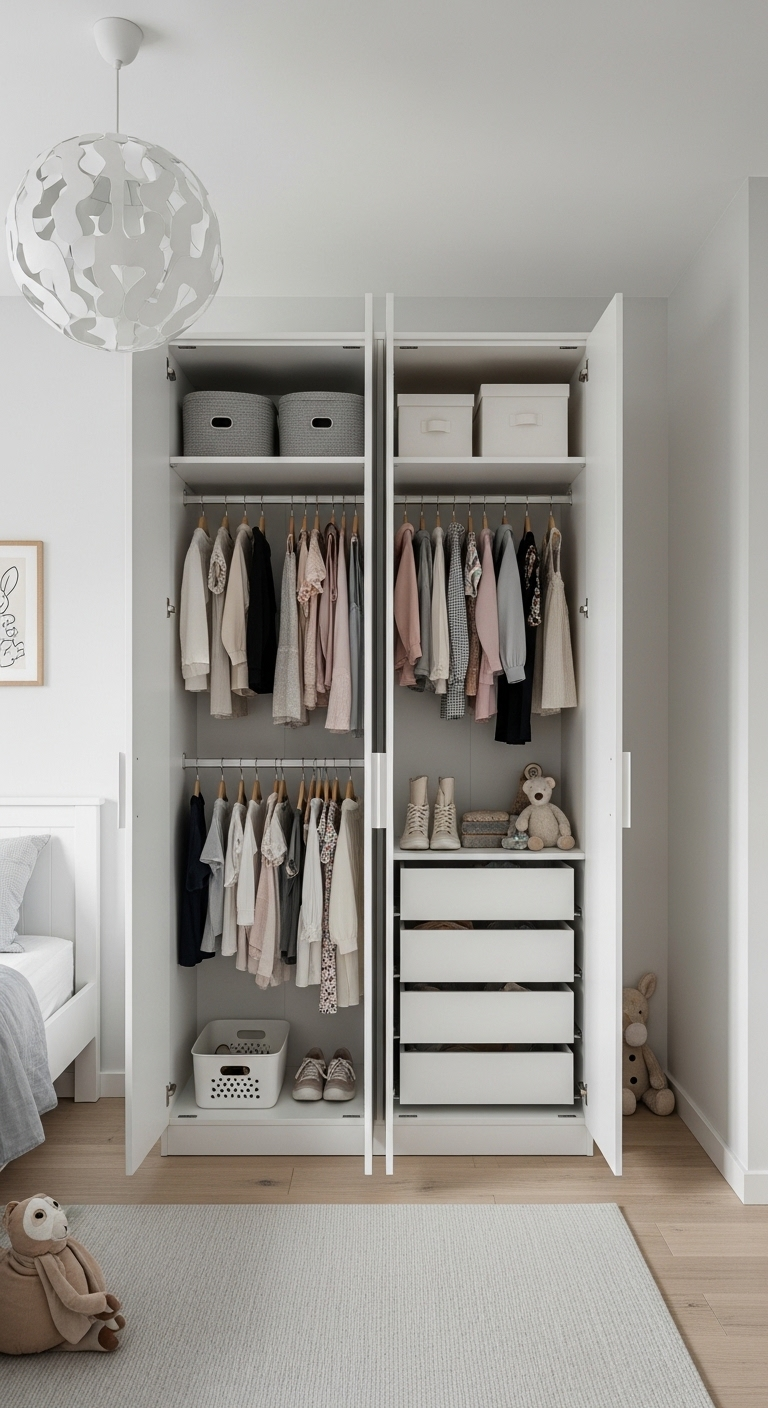
Keeping only the essential items within easy reach creates an accessible and highly efficient wardrobe. You can store less frequent outfits in separate bins to keep the primary closet clear.
This minimalist approach ensures that your kids always have access to what they need daily. It stops the clutter from building up because the space is never overloaded with clothes.
You will find that your daily routine flows much faster when options are kept focused. A clean and lean closet environment makes getting dressed a simple, positive part of life.
Prioritizing your essentials is the secret to a bedroom that feels calm, light, and professional. Small, intentional choices regarding what stays out help maintain a perfect, stress-free daily space.
16# Repurposed Craft Organizers
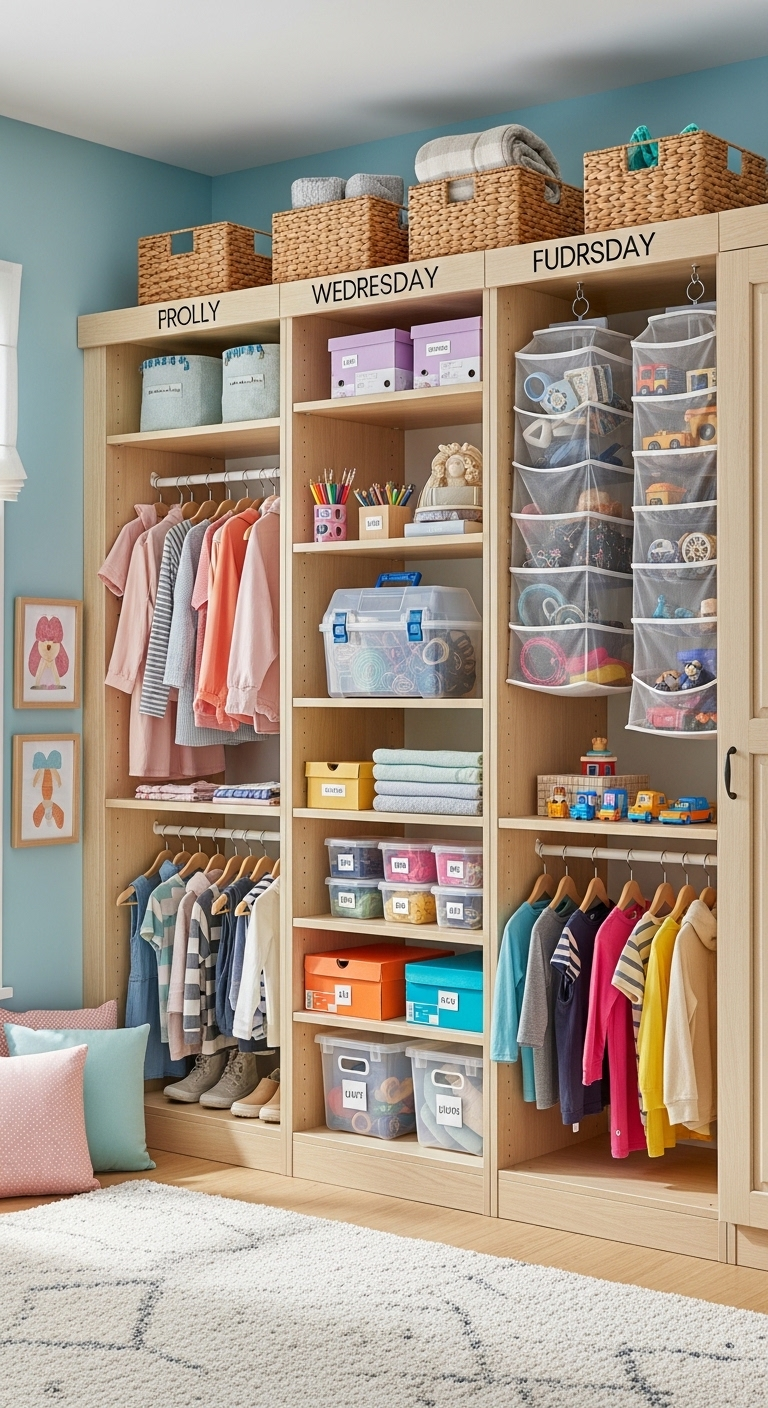
Small craft organizers provide the perfect solution for keeping socks and hair ties tidy. You can place these compact units inside drawers to create instant order for tiny accessories.
This approach is incredibly affordable while offering a professional, high-end look for your storage. Because the bins are small and modular, they fit perfectly into any existing closet space.
You will find that organizing these frequently used essentials prevents them from scattering everywhere. A place for everything ensures that your bedroom remains clean and ready for daily use.
These organizers are a simple way to maintain a polished, well-kept environment for your family. Every small item stays visible and protected within its own dedicated, clean, and accessible section.
17# Tension Rod Systems
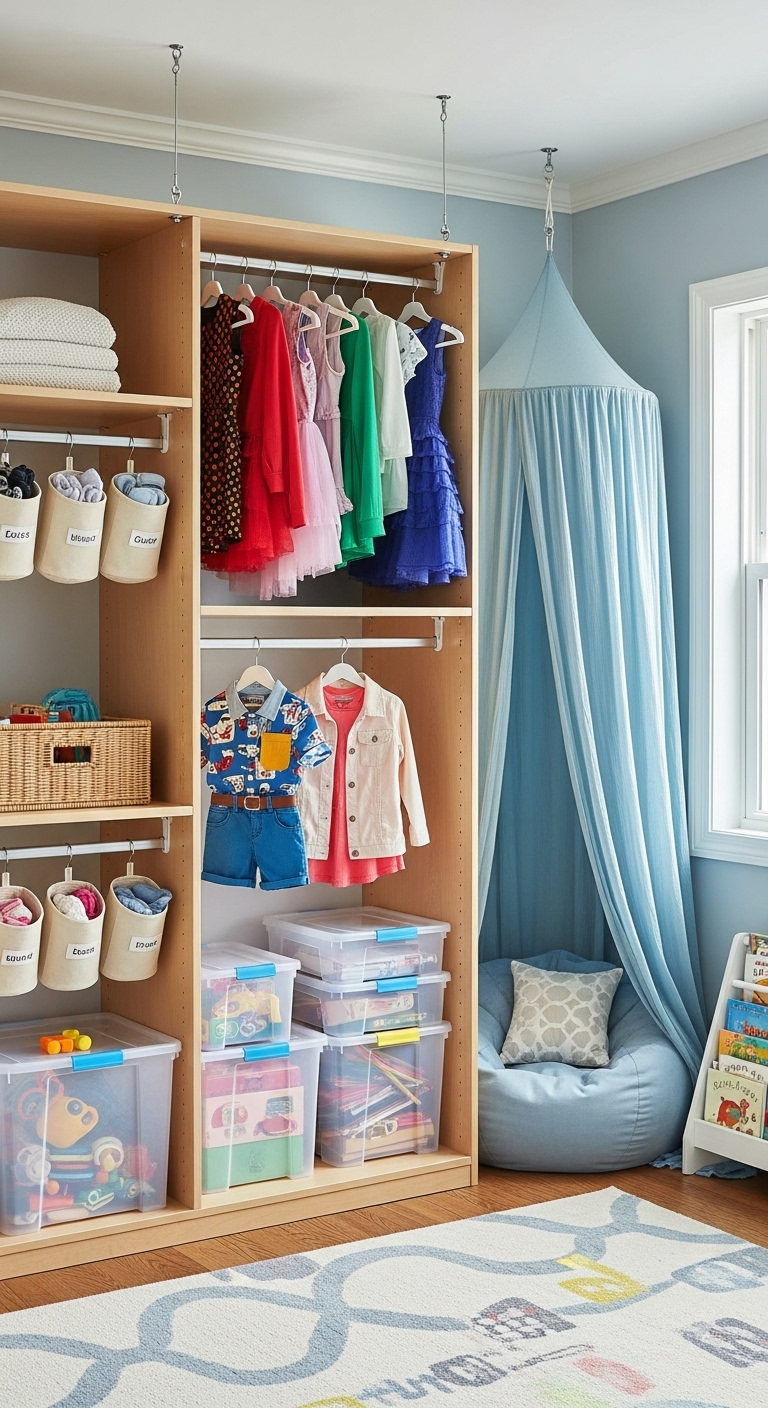
Tension rods are a brilliant way to instantly create extra hanging space within any closet. You can easily position them to hold skirts, pants, or lightweight accessories like colorful scarves.
These rods are fully adjustable, meaning they fit perfectly into a wide variety of widths. Because they do not require screws, you can reposition them whenever your storage needs change.
They maximize your vertical space, allowing you to use every inch of your existing wardrobe. This practical solution ensures that your closet remains highly functional without any permanent installation work.
You will find that these simple rods offer a professional look for a very low cost. They are a smart addition for anyone looking to optimize their current storage layout right now.
18# Folded Outfit Stacking
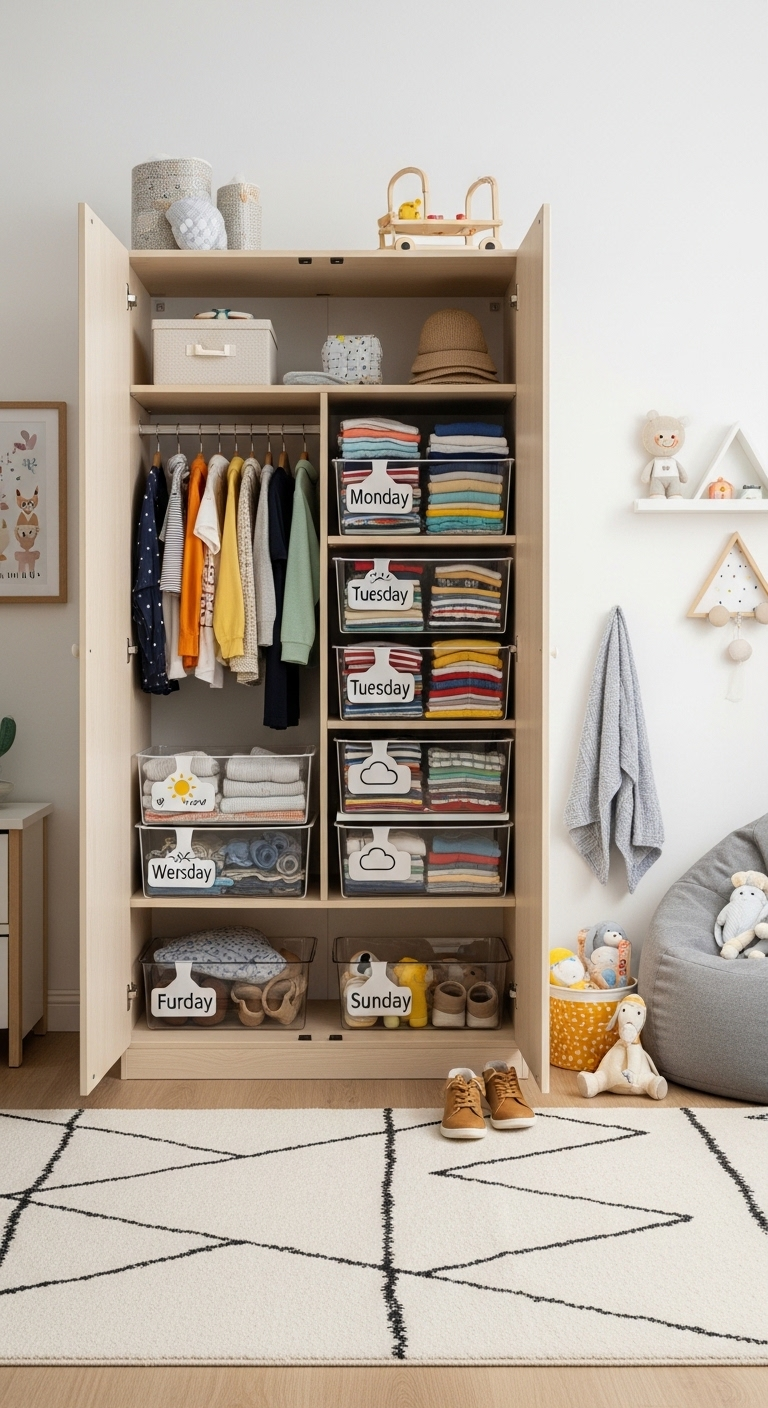
Folding and stacking complete outfits together eliminates the morning scramble to coordinate your daily clothes. You can combine a matching top and bottom into a neat, single stack for convenience.
This simple method ensures that you have a ready-to-go outfit for every single day. It transforms your wardrobe from a collection of separates into a system of finished looks.
You will find that your daily routine feels significantly more professional and organized each morning. Everything you need is pre-selected, allowing you to grab an outfit and move on instantly.
This technique is a game-changer for anyone wanting to maintain a clean and structured closet. Small shifts in how you prepare your clothes yield massive benefits for your daily productivity.
19# Clear Storage Containers
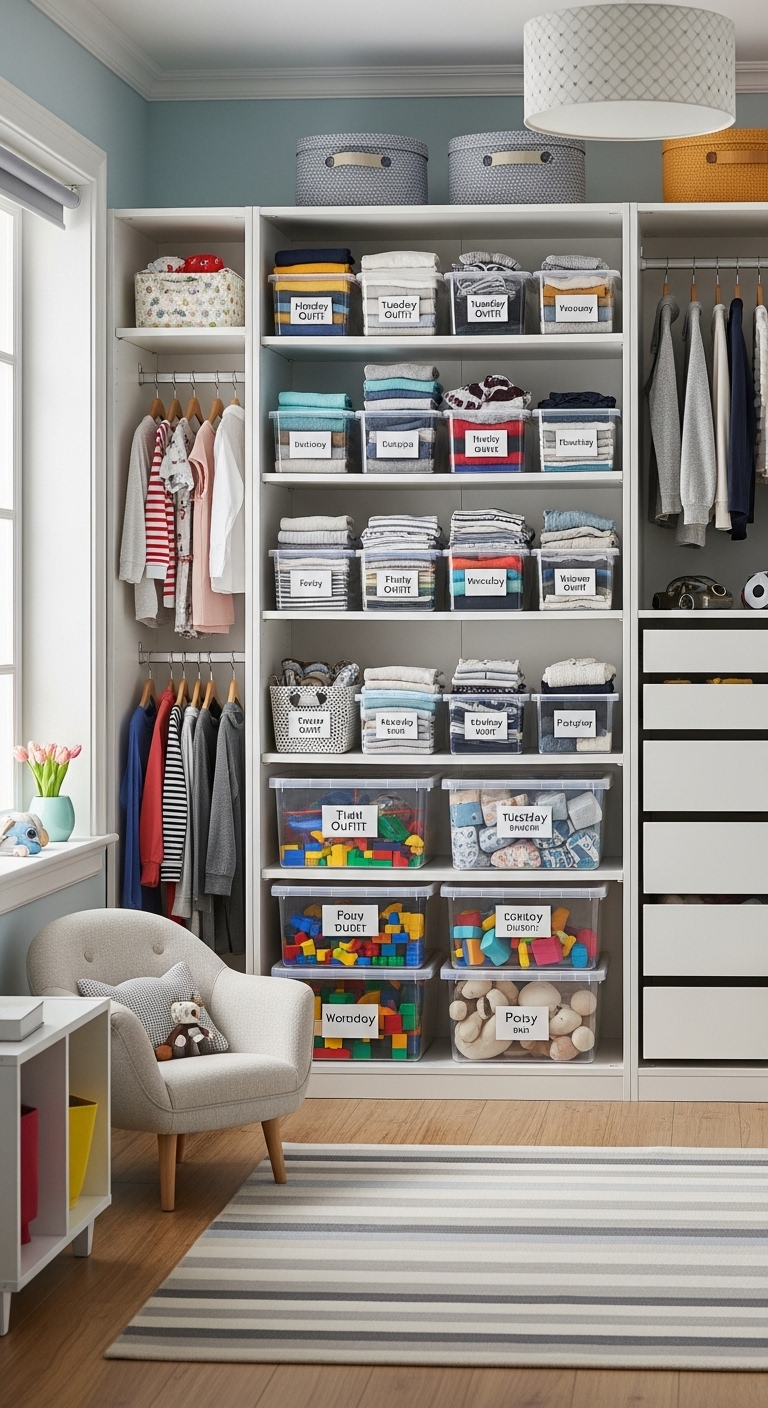
Clear bins are the ultimate tool for maintaining a bedroom that feels organized and professional. You can easily see every single item inside without needing to open or move anything.
This visibility ensures that your kids know exactly where their belongings are located at all times. It prevents the frustrating habit of rummaging through piles and creating a mess in closets.
You will find that keeping items visible is the secret to a fast morning routine. These bins turn your storage into a functional, high-end system that serves your family daily.
Choose a variety of sizes to fit different items while maintaining a cohesive aesthetic look. A transparent storage solution keeps your wardrobe feeling open, bright, and very well maintained.
20# Personalized Hooks and Bins
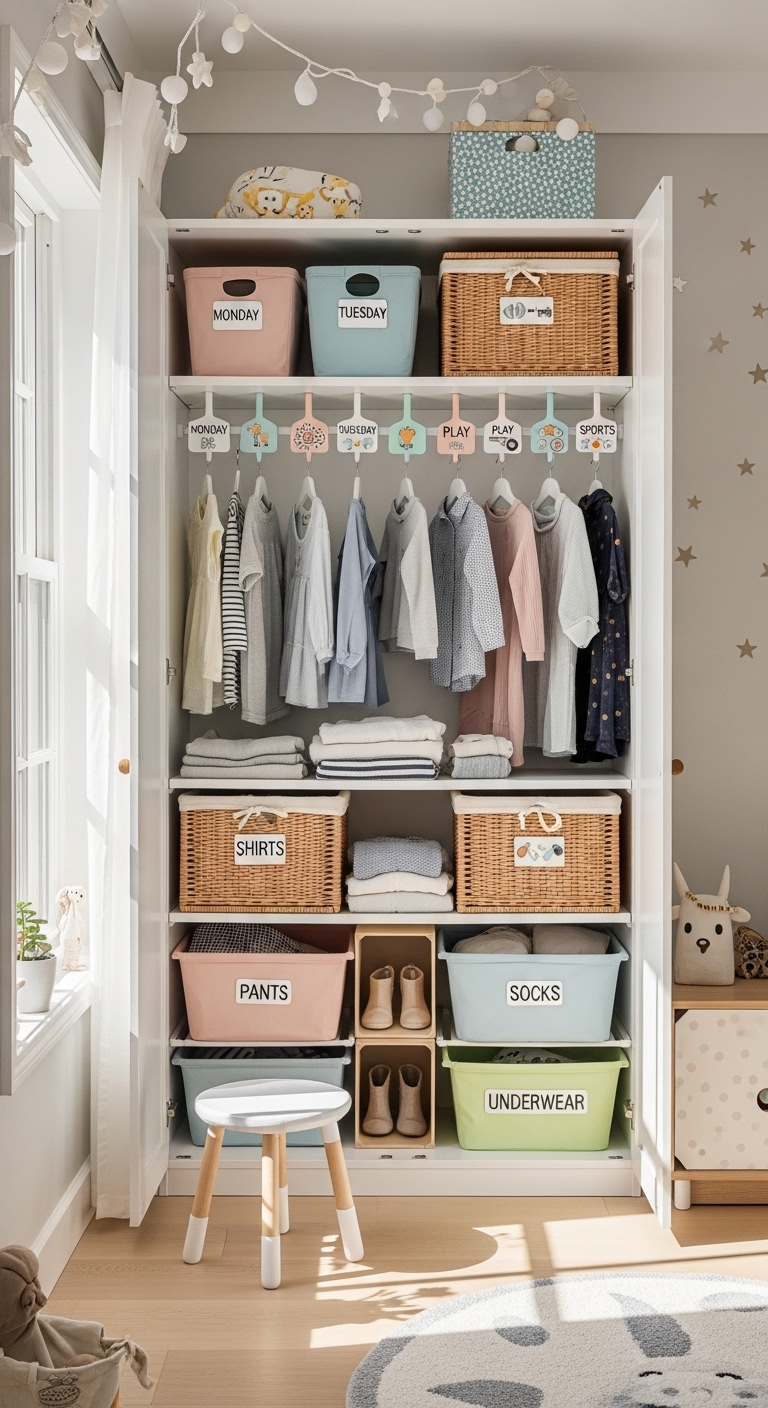
Labeling hooks and bins with your child’s name or a picture defines their personal space. You can create custom markers that match your home decor to keep everything feeling cohesive.
This simple act of personalization helps children quickly identify their own gear in the closet. It turns a generic shared wardrobe into a collection of specific, dedicated zones for everyone.
Personalized storage is a fantastic way to ensure your children feel ownership over their items. You will find that this clarity eliminates the need to constantly monitor their organization efforts.
Every piece of clothing now has a home that is clearly marked for daily success. Your family’s wardrobe will look more intentional and well-designed with these custom touch points today.
21# Routine-Friendly Zones
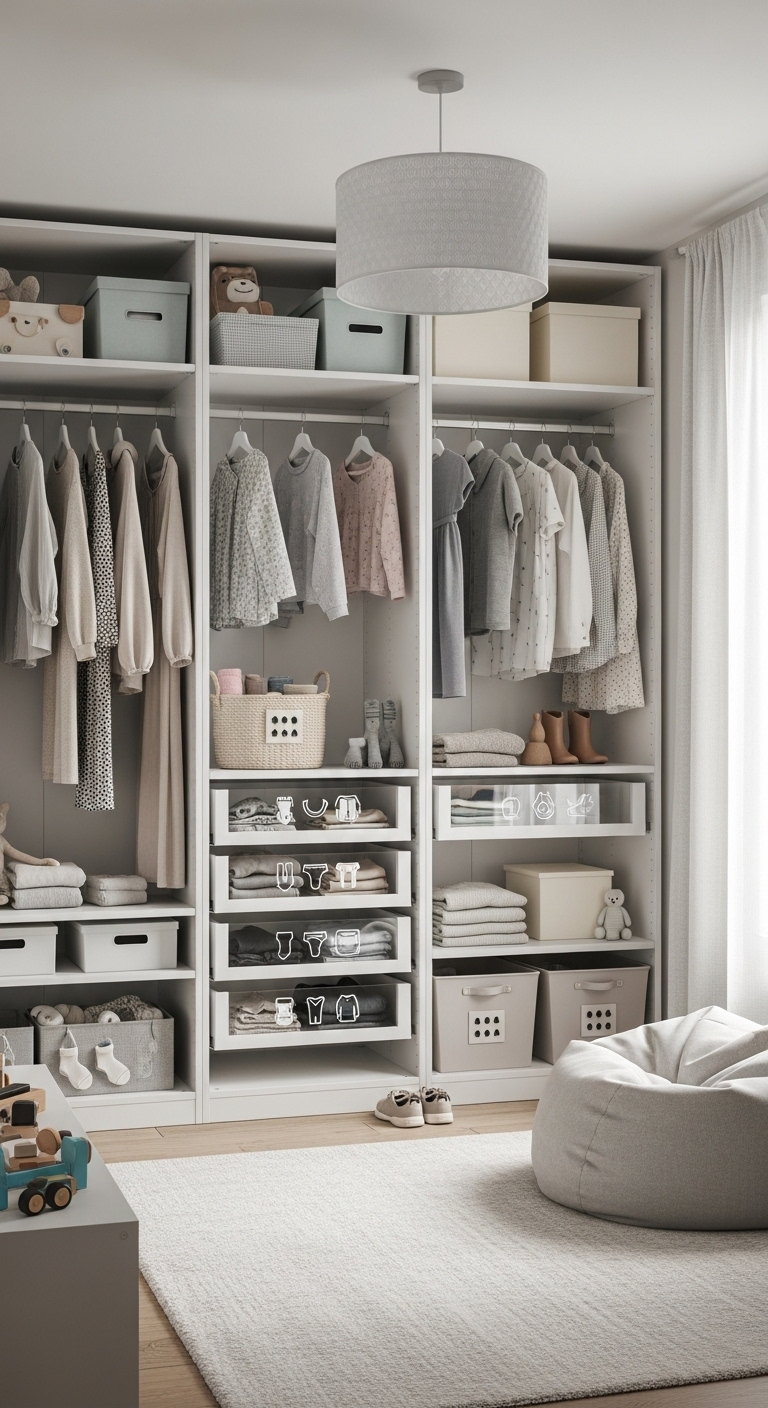
Organizing your child’s wardrobe by their daily routine makes every morning significantly faster and easier. You can create dedicated zones for school uniforms, active sports gear, and comfortable play clothes.
This logical layout helps your children immediately understand what they need for the upcoming day. It removes the stress of digging through a mixed-up closet during your busy morning schedule.
You will find that grouping by activity creates a highly professional and very functional closet. Everything is positioned exactly where it should be, supporting your family’s needs with perfect clarity.
A structured wardrobe allows your kids to start their day with confidence and total focus. Small organizational shifts like this ensure that your home remains calm and very well managed.
Wrap-Up
Creating a wardrobe that works for kids’ daily routines doesn’t require expensive solutions. With these organization ideas, you can maximize space, simplify mornings, and foster independence. Small, intentional changes in storage and layout make a huge difference, turning chaotic mornings into calm, stress-free starts for the entire family.