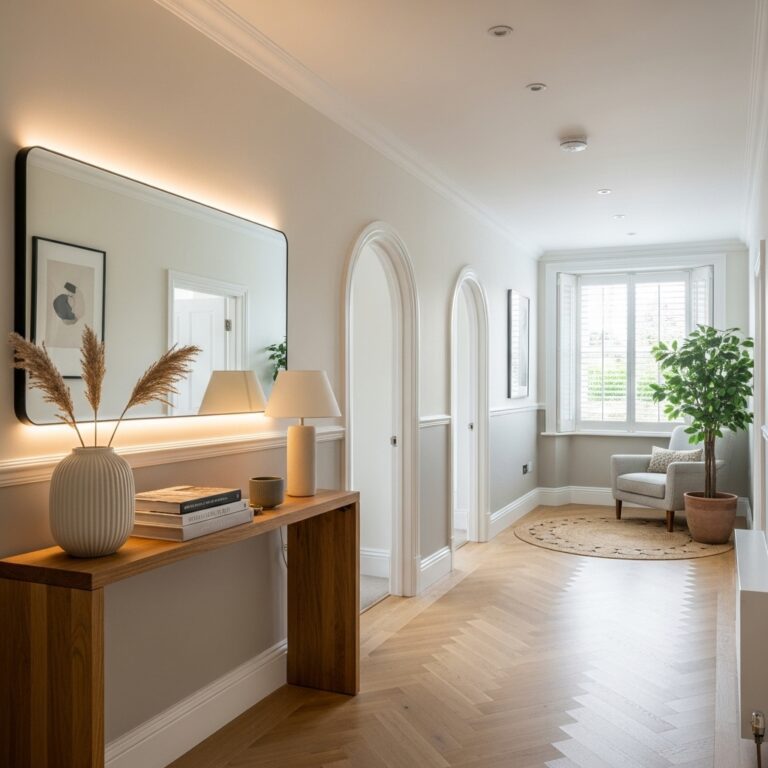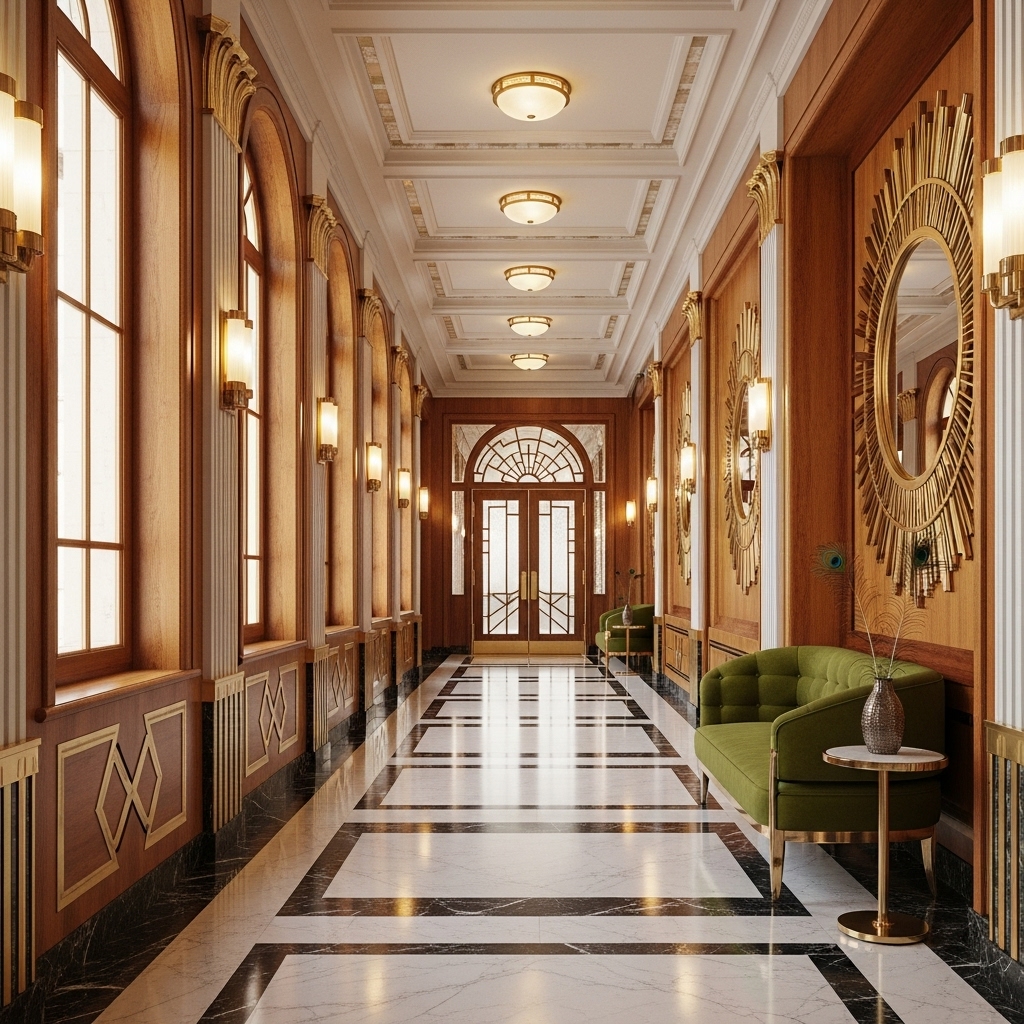
Hallway is the first chapter of your home’s story, and there is no better way to make a grand entrance than with the unapologetic glamour of the Roaring Twenties.
Art Deco Hallway Design Ideas is celebration of geometry, luxury, and bold expression, turning narrow transition spaces into high-fashion galleries.
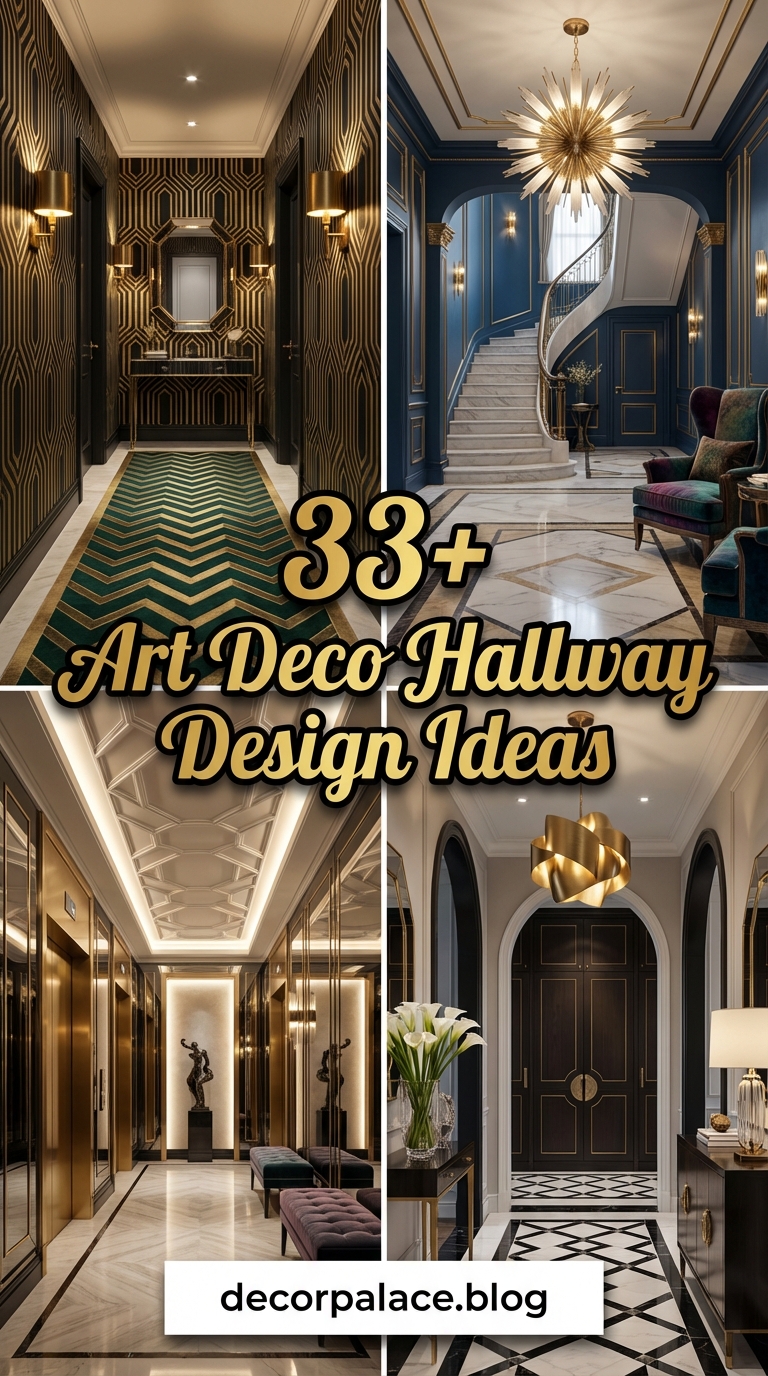
In this guide, we’ll explore how to blend vintage opulence with modern sensibilities to create a passage that feels like a portal to a more elegant era.
From sunburst mirrors to shimmering metallic accents, let’s rediscover the timeless allure of the Gatsby aesthetic for your home.
High-End Art Deco Masterpiece
1#. Bold Geometric Floor Tiles
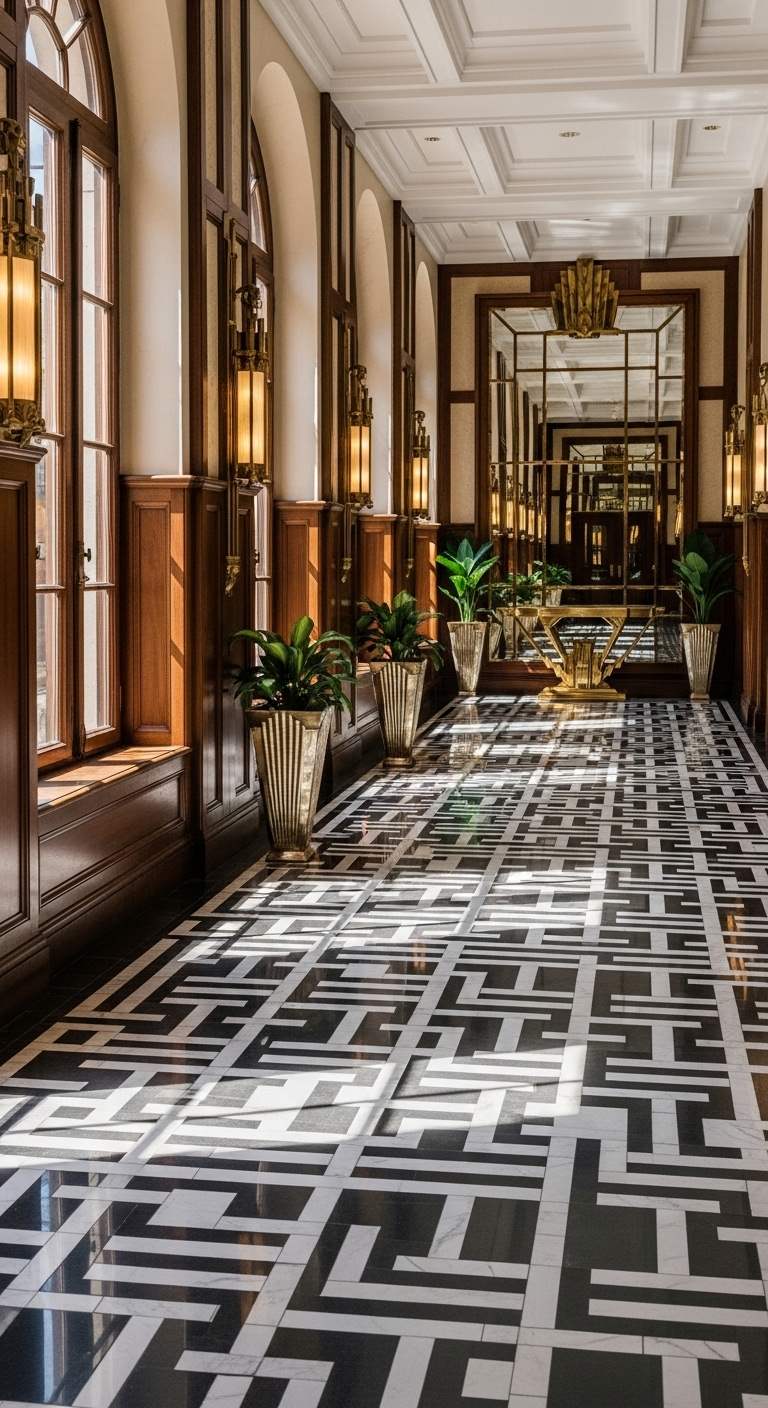
Installing high-contrast black and white marble tiles in a fan or chevron pattern creates an immediate, high-impact aesthetic. These geometric foundations are essential for grounding any successful Art Deco Hallway Design project, providing both historical accuracy and a sophisticated sense of order.
The rhythmic repetition of the shapes draws the eye down the length of the hall, elongating the perspective and making the space feel both wider and more structured. This classic flooring choice is incredibly durable, offering a timeless luxury statement that immediately defines the character of your home’s entrance.
Select honed marble rather than polished to create a softer, more sophisticated finish that avoids excessive glare while remaining easy to clean. The juxtaposition of deep nero marquina and crisp bianco carrara provides the perfect high-contrast palette for this bold, architectural look.
Ensure the pattern alignment is precise, particularly where the tiles meet the baseboards; a crisp, professional installation is the difference between a high-end foyer and an unfinished space. Using a thin-set mortar designed for natural stone is vital to ensure long-term durability in a high-traffic entryway.
2#. Sunburst Statement Mirrors
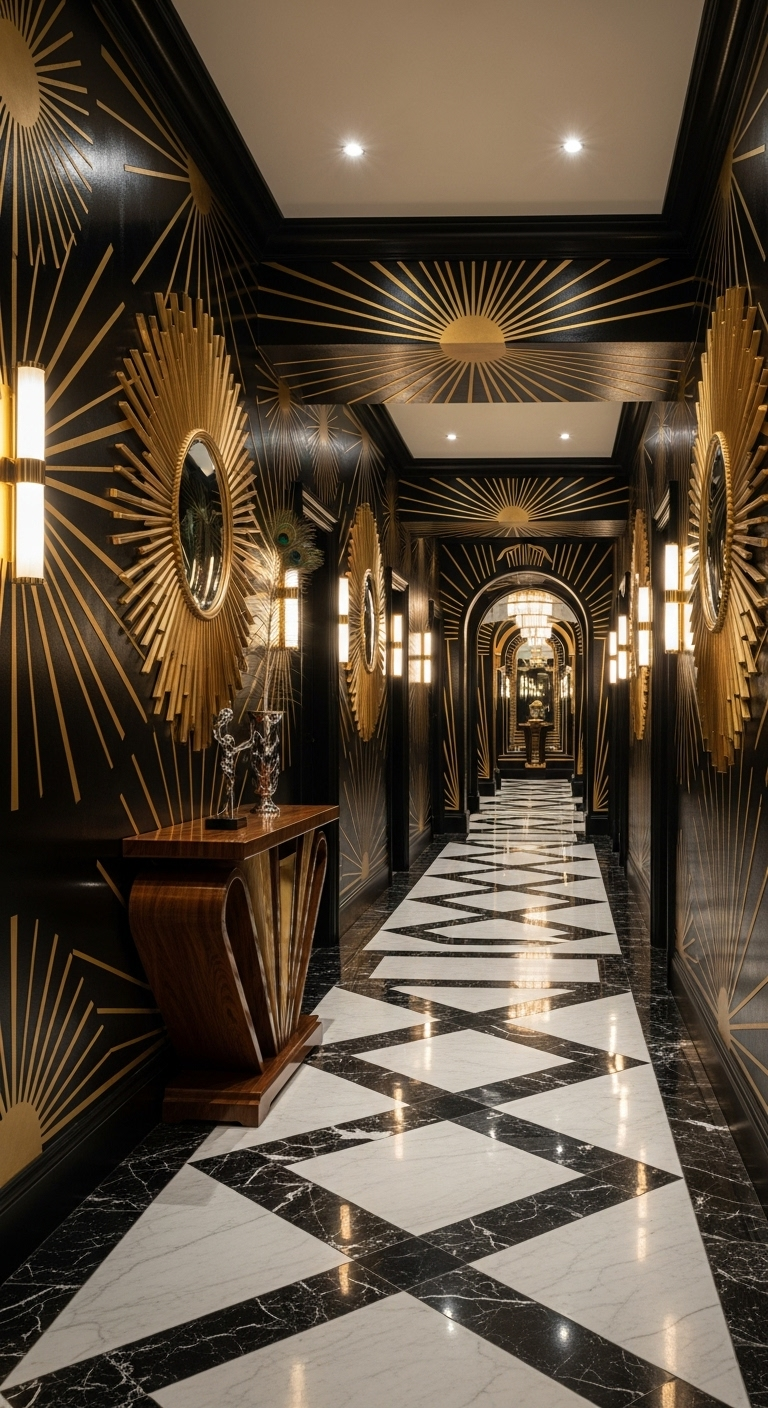
A gold or brass sunburst mirror serves as a radiant, sculptural focal point that captures light and injects a sense of “cosmic” energy into your walls. Its sharp, linear rays pay homage to the architectural honesty and creative optimism that defined the early twentieth-century design movement.
Placing a mirror at the end of a narrow passage is a classic designer technique; it bounces light into darker corners, making the entire area feel more expansive and inviting. This iconic accessory is a must-have for anyone looking to achieve a professional-grade vintage or Art Deco aesthetic with immediate, high-impact results.
Select a mirror with high-quality metal rays—ideally finished in antique brass or satin gold—to ensure the piece feels like a deliberate, sophisticated antique rather than a modern reproduction. The weight and construction of the metal should feel substantial, reflecting the superior craftsmanship of the era you are emulating.
Mount the mirror at eye level to ensure it functions as the central “anchor” of your hallway vignette, drawing the eye instantly upon entering the space. Precision alignment with your entryway lighting or floor pattern will create a cohesive, balanced design narrative that feels both intentional and polished.
3#. Velvet Upholstered Benches
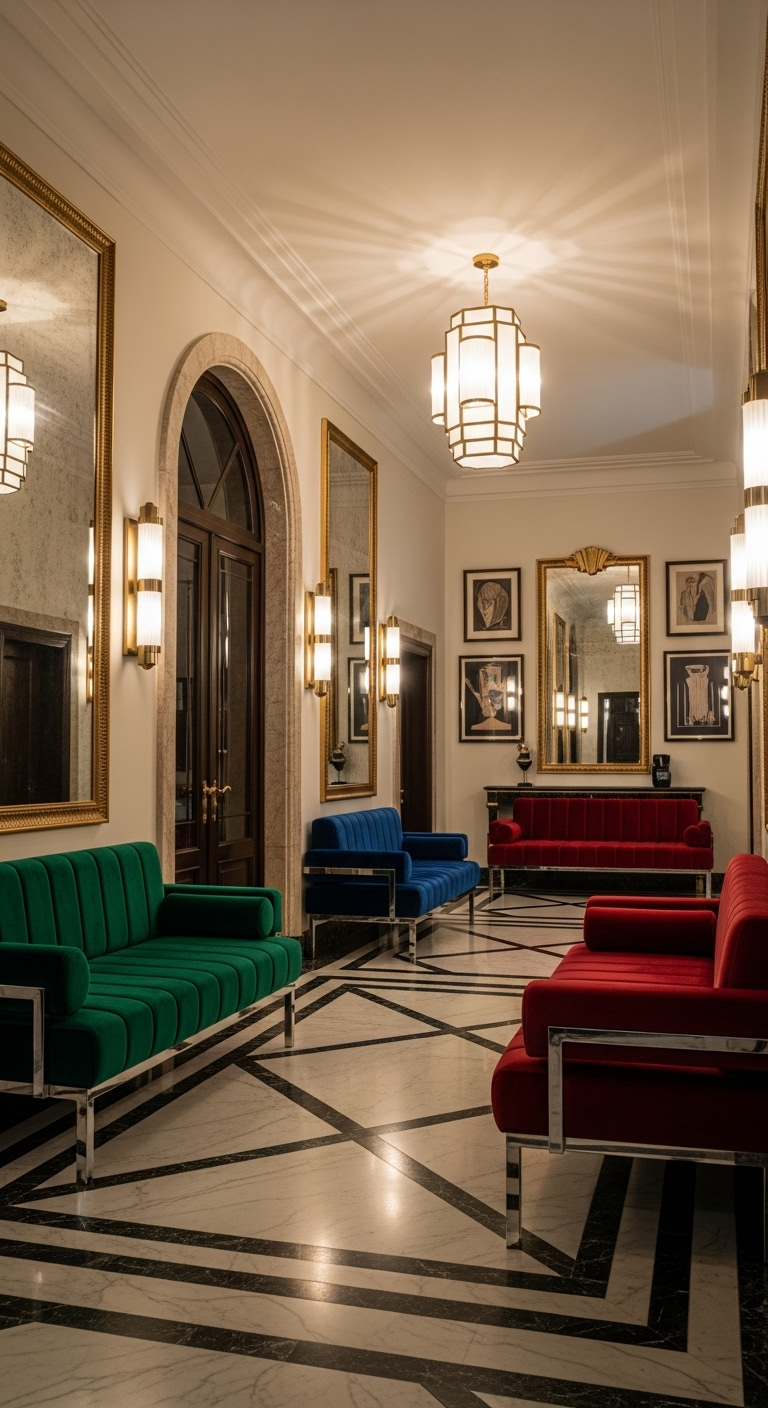
Introduce a touch of soft, tactile luxury by placing a slim velvet bench in a deep jewel tone—like emerald green or sapphire blue—against a side wall of your hallway. The plush, light-absorbing texture of velvet provides a sophisticated, sensual contrast to the hard surfaces of polished marble floors and metallic wall sconces.
A bench offers a practical, welcoming spot for guests to sit while removing shoes, seamlessly blending high-end Parisian-inspired style with everyday functionality. Choosing a design with gold-capped, tapered legs reinforces the metallic themes found throughout your Art Deco hallway design, creating a cohesive and polished look.
Select a bench with a high-density foam cushion and a refined, slim profile to ensure it doesn’t crowd the hallway or impede traffic flow. A bench that is approximately 14 to 18 inches deep strikes the perfect balance between providing a comfortable seat and maintaining the necessary circulation space.
Position the bench against a blank stretch of wall, perhaps centering it beneath a piece of large-scale, framed art to create a deliberate and grounded vignette. This placement turns a functional piece of furniture into an intentional design feature that elevates the entire passage.
4#. High-Gloss Lacquered Walls
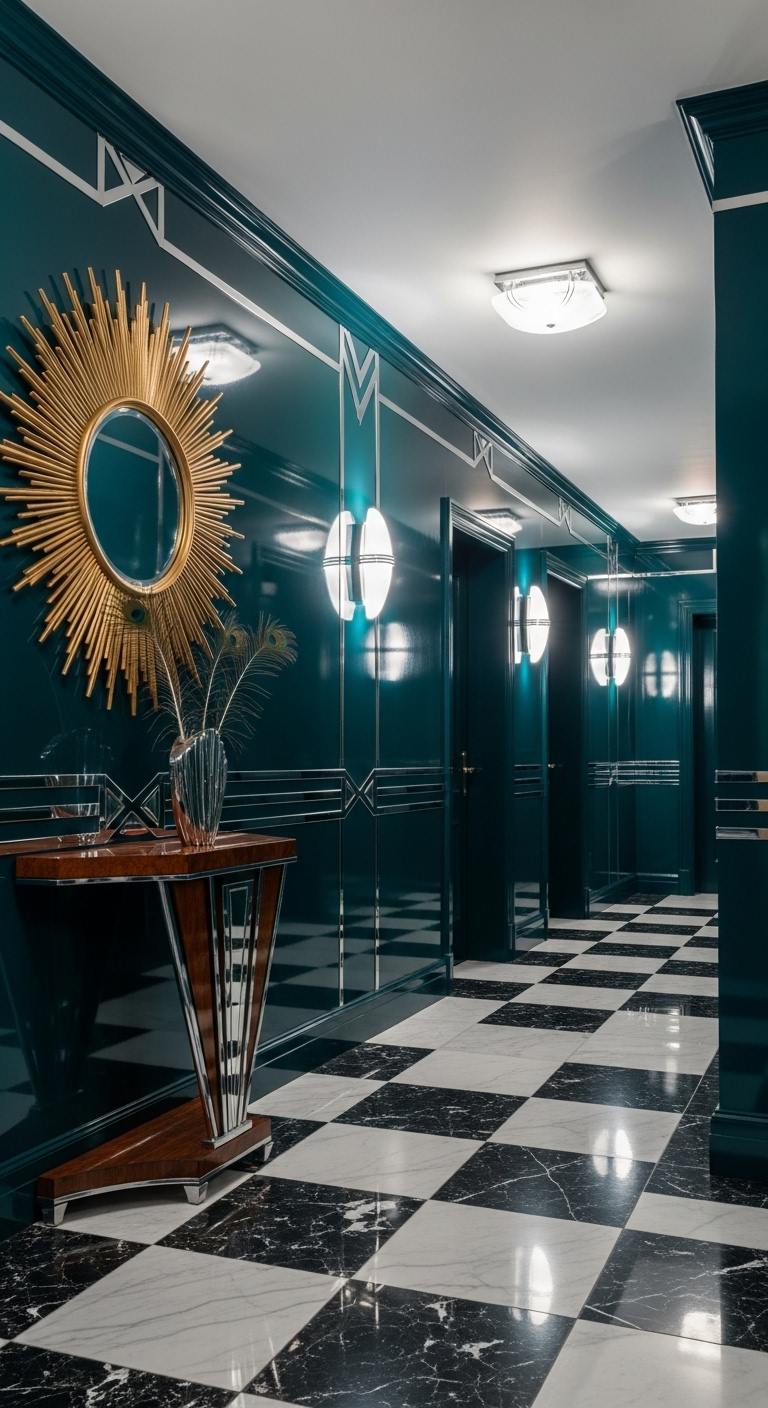
Applying a high-gloss paint finish—in sophisticated tones like deep navy, charcoal, or creamy off-white—creates a reflective, mirror-like surface that feels exceptionally prestigious. This liquid-shine finish adds a profound layer of depth, luminosity, and mystery that standard matte or eggshell paints simply cannot replicate.
The glossy walls capture the ambient glow from your wall sconces, bouncing light across the space to create a shimmering, ethereal atmosphere reminiscent of an exclusive boutique hotel foyer. It is a bold, confident design choice that highlights every architectural detail, molding, and trim, effectively turning your hallway into a cinematic, immersive experience.
Select a professional-grade, oil-based, or high-performance waterborne alkyd enamel to achieve that signature “liquid glass” look. Because high-gloss paint is unforgiving, the underlying drywall must be finished to a “Level 5” smoothness; any imperfection will be magnified by the reflection, so meticulous preparation is non-negotiable for a professional result.
Use a high-quality, fine-bristle synthetic brush for cutting in and a professional foam or ultra-short nap roller for the surfaces to minimize texture and ensure an even, flawless application. Applying multiple thin coats—with light sanding in between—is the secret to creating that deep, wet-look finish that separates amateur DIY projects from high-end interior design.
5#. Tiered Glass Chandeliers
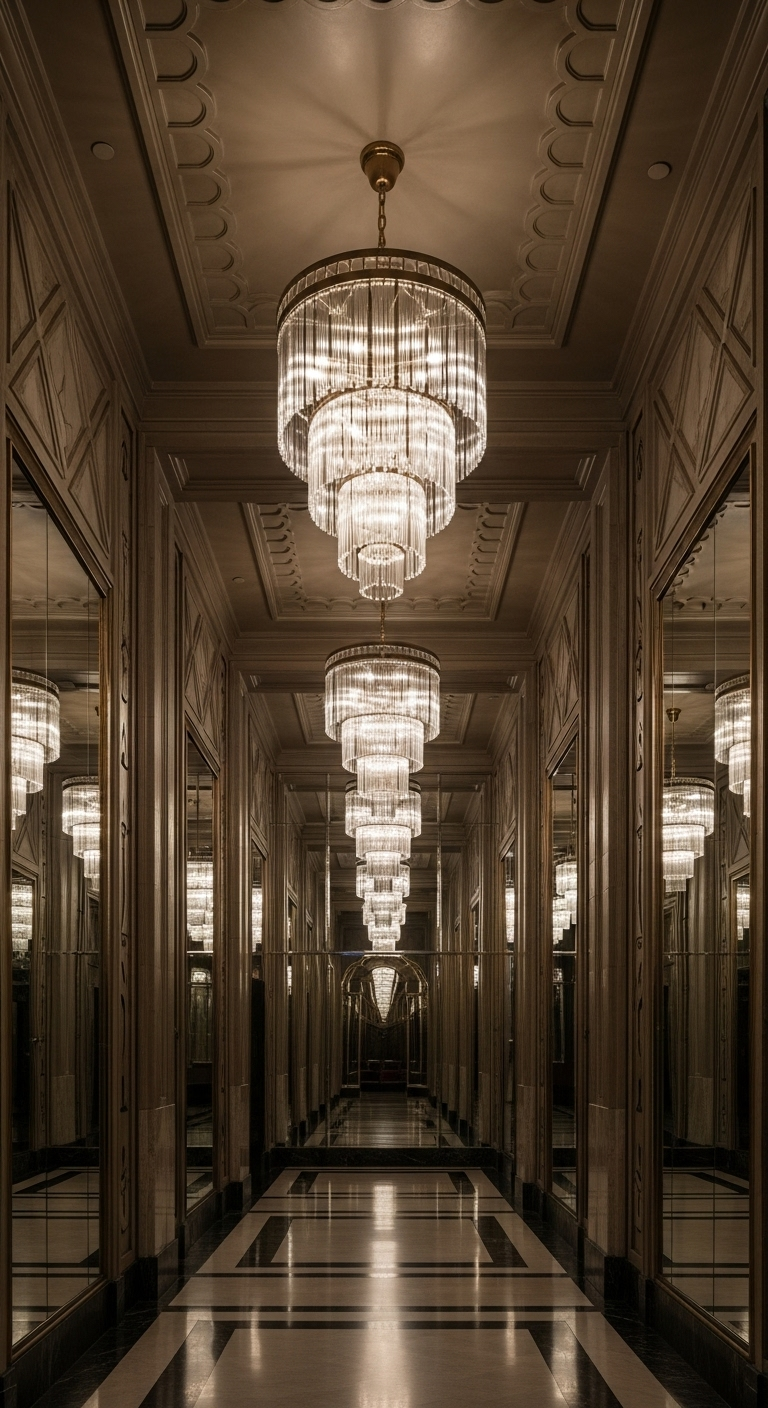
Replace standard flush mounts with tiered glass or crystal chandeliers that feature stepped, ziggurat silhouettes to inject immediate, Art Deco-inspired drama. These fixtures act as functional jewelry for your ceiling, transforming a mundane transition space into a sophisticated gallery by providing a soft, sparkling, and multi-dimensional diffused light.
The vertical layering of the glass or crystal mimics the iconic, soaring skyscrapers of the 1920s, drawing the eye upward and adding an essential sense of height and grandeur to the hallway. Proper, tiered lighting is the secret to making your transition areas feel intentional, deeply layered, and luxuriously designed rather than merely functional.
Select fixtures with polished nickel or antique brass hardware to ensure they harmonize with the metallic finishes found in your sconces and console hardware. The quality of the glass—look for hand-cut or high-clarity leaded crystal—is crucial; it should catch and refract light to create complex, elegant shadow play on the ceiling and walls.
Mount your chandeliers at a height that allows for visual clearance, typically keeping the bottom of the fixture at least 7 to 8 feet from the floor to maintain a grand yet spacious feel. In a long hallway, space your chandeliers at regular, measured intervals to create a rhythmic, corridor-defining light path that guides the eye forward.
6#. Symmetrical Wall Sconces
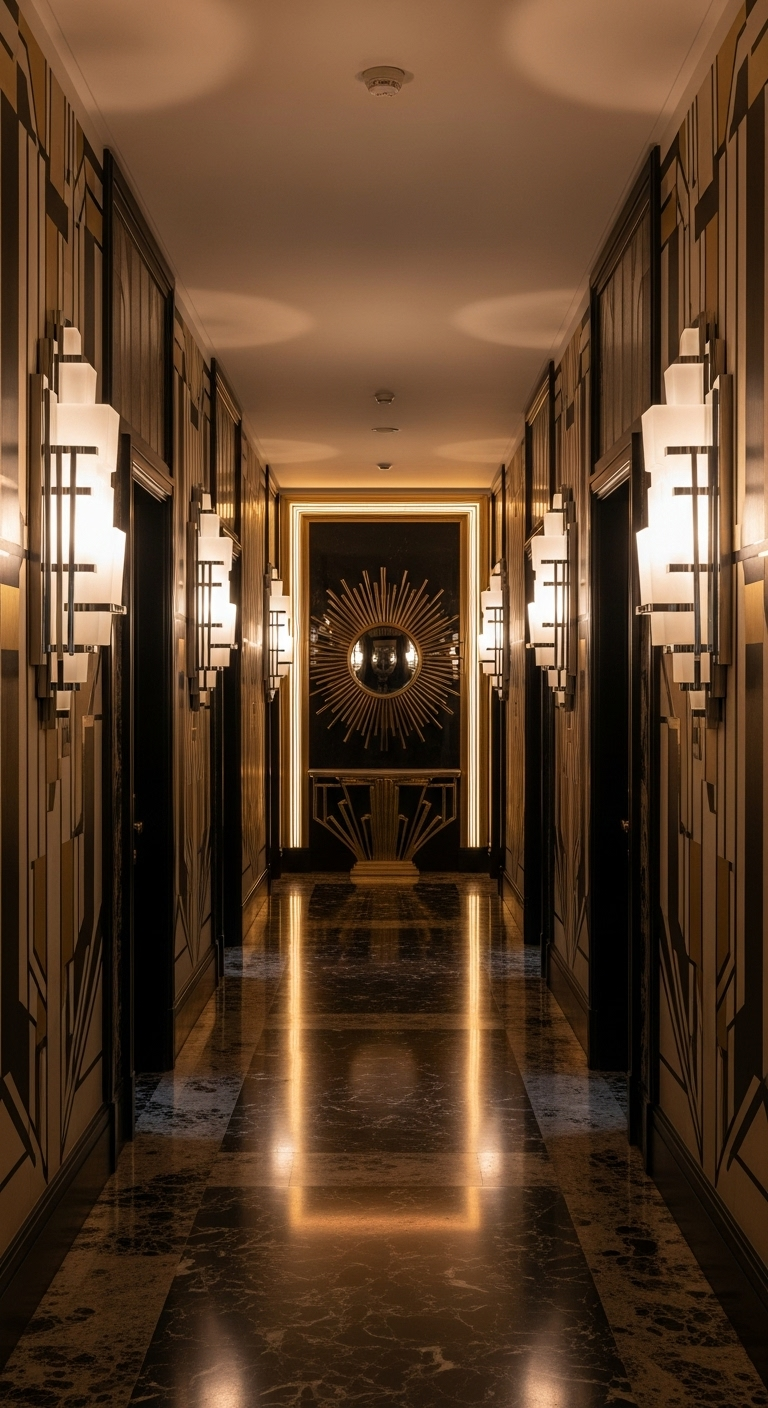
Using a pair of matching frosted glass and brass sconces to flank a mirror or doorway creates an immediate sense of “Zen” balance and structural order. Symmetry is a core principle of this design style, transforming a narrow or busy hallway into a space that feels curated, serene, and profoundly organized.
Sconces provide atmospheric, eye-level lighting that eliminates the harsh, top-down shadows of standard overhead bulbs, making your home feel more intimate and welcoming during the evening hours. This specific lighting layout is a fundamental staple for those seeking a polished, high-end, and historically informed Art Deco aesthetic.
Select sconces with a high-quality brushed brass finish and thick, hand-blown frosted glass to ensure they feel substantial and timeless rather than decorative. The quality of the materials should be visible; a well-crafted brass fitting should feel heavy to the touch, while the frosted glass should diffuse light without creating distracting hotspots.
Position your sconces at approximately 60 to 66 inches from the floor, measured to the center of the fixture, to provide optimal eye-level illumination. When flanking a mirror or doorway, ensure they are spaced equally from the center point, as precision is the key to achieving that professional, “perfectly balanced” designer look.
7#. Brass and Gold Metallic Inlays
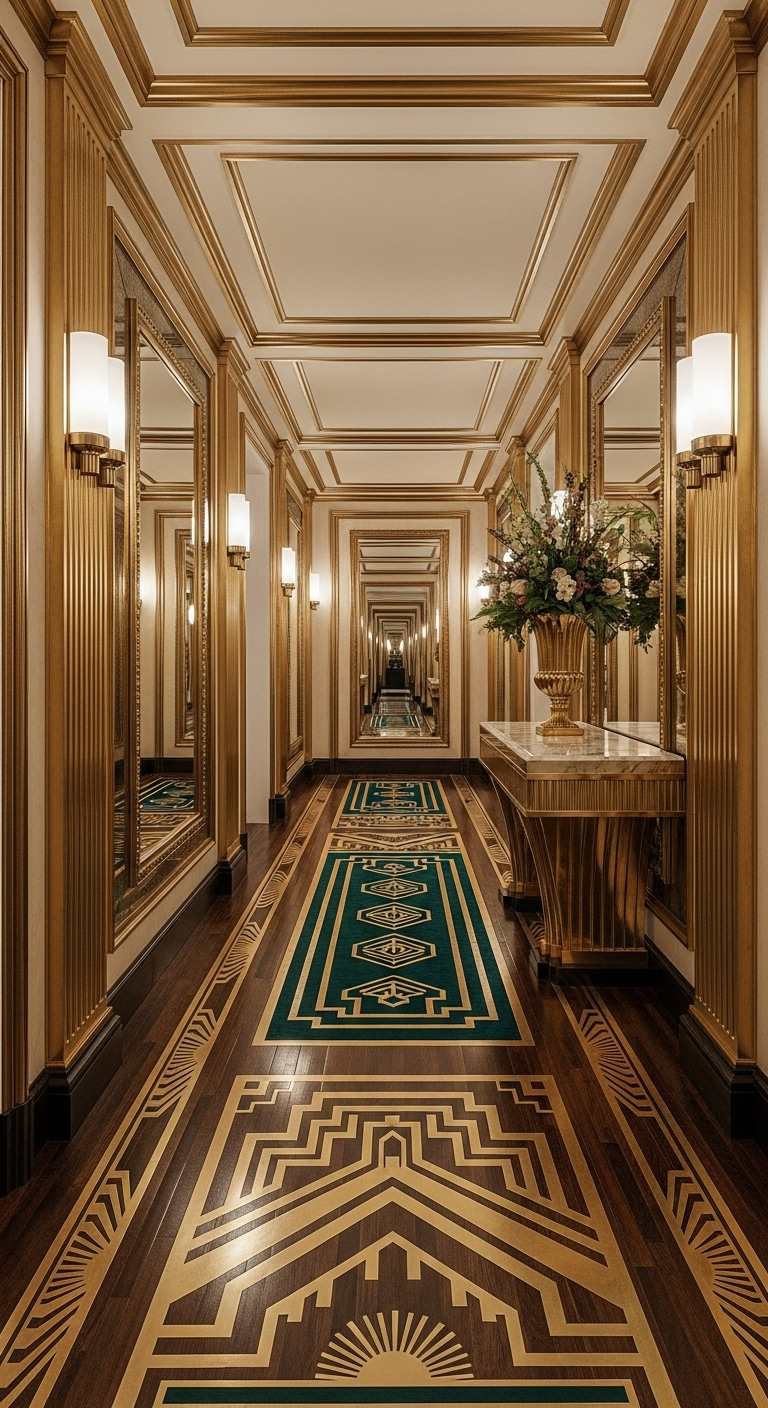
Incorporate thin, precision-cut metallic strips into your hardwood flooring or along the perimeter of your wall paneling to add a sharp, graphic shimmer. These deliberate “inlays” provide a sense of elevated craftsmanship, echoing the celebration of industrial materials that defined the early machine age.
The warm, understated glow of gold or brass accents elevates standard building materials, transforming a minimalist hallway into a curated, high-end passage. It is an exceptionally subtle way to weave a consistent thread of opulence throughout your home’s architectural transitions, signaling an attention to detail that is the hallmark of professional design.
Select solid brass or high-quality anodized aluminum strips for these inlays to ensure they stand up to foot traffic and retain their metallic brilliance over time. The thickness of the strip should be minimal—typically between 1/8 and 1/4 inch—to maintain a clean, modern aesthetic that feels intentional rather than ornate.
Work with a professional installer to ensure the grooves are routed with millimetric precision, especially if you are integrating these into existing wood flooring. A perfectly flush installation is non-negotiable; the metal should feel like an integrated part of the substrate rather than an added surface layer, ensuring a seamless, high-end finish.
8#. Abstract Geometric Wall Art
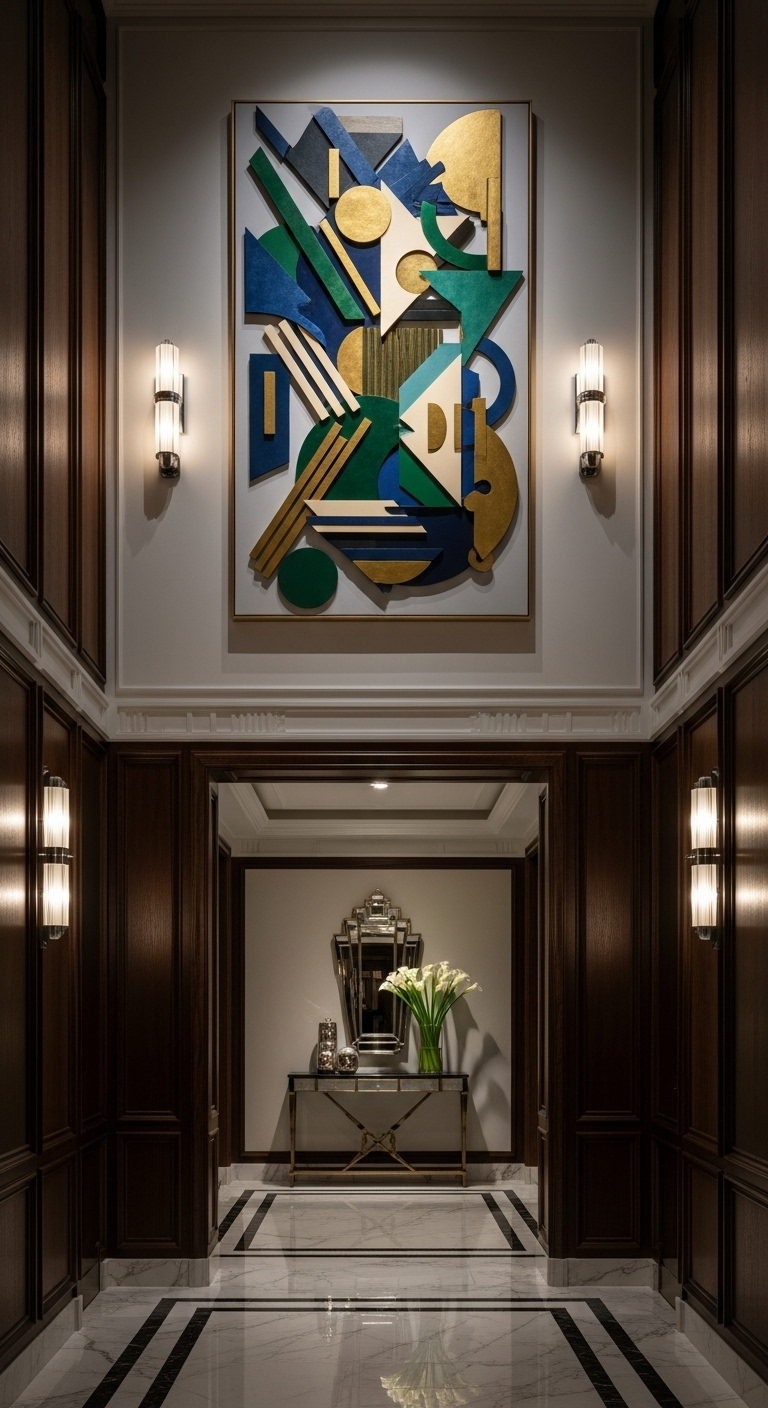
Decorate your walls with large-scale abstract prints featuring bold lines, circular geometries, and metallic accents in a high-contrast color palette. This type of art perfectly reflects the forward-thinking, optimistic, and artistic spirit that made the Art Deco movement such an influential force in design history.
Using thin, matte-black frames keeps the visual focus entirely on the graphic patterns, preventing the wall from feeling cluttered, heavy, or dated. It is an efficient, high-impact way to introduce immediate personality, sophistication, and modern artistic flair to your hallway renovation.
Select prints that utilize negative space effectively; the balance between the bold graphic elements and the blank space is what creates that clean, high-end “gallery” feel. High-quality, archival paper and non-reflective glass are essential to ensure the art looks professionally curated rather than mass-produced.
Mount your pieces at the standard gallery height—with the center of the artwork at approximately 57 to 60 inches from the floor—to ensure a comfortable, immersive viewing experience. When hanging multiple prints, maintain consistent spacing between frames to reinforce the sense of order and structural rhythm that defines the hallway.
9#. Polished Chrome Hardware
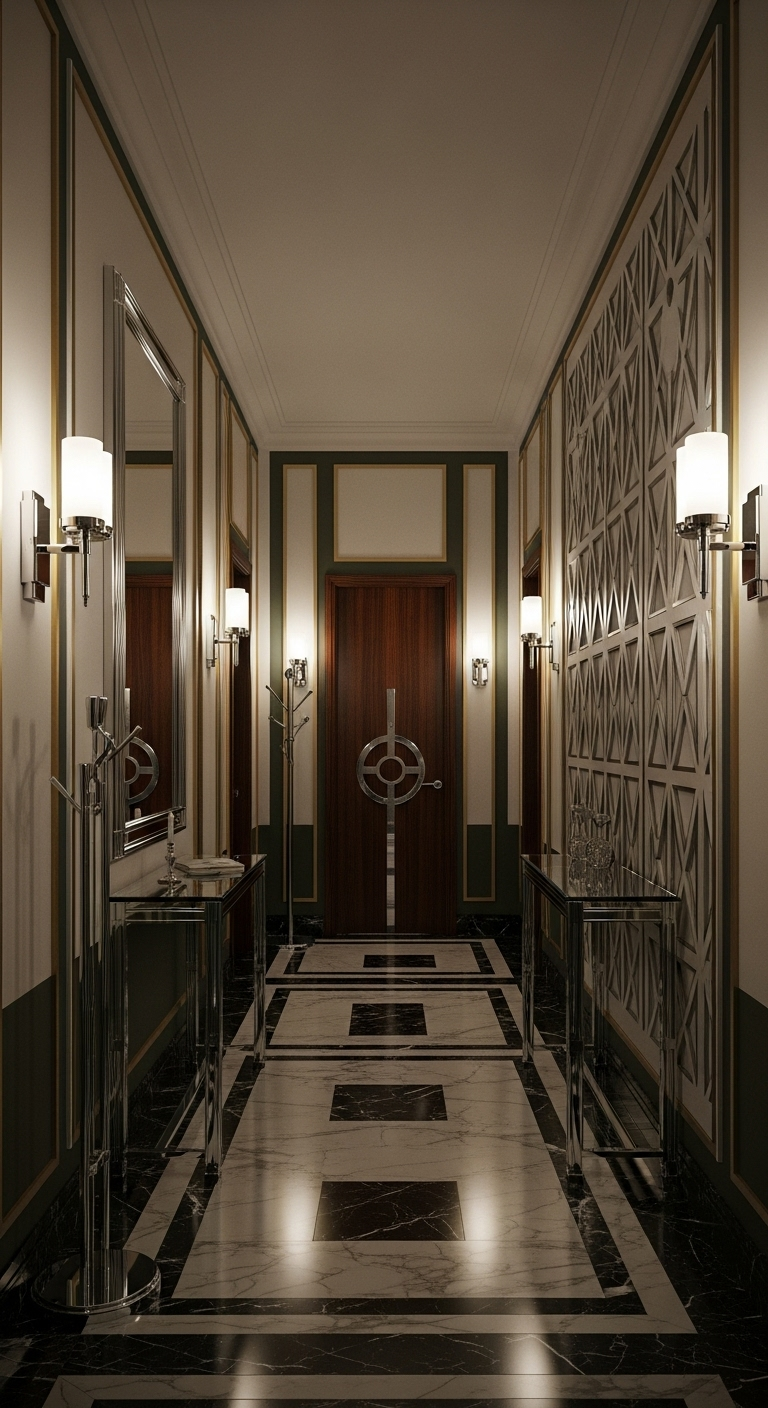
Swap out dated, standard-issue doorknobs and hinges for streamlined, polished chrome hardware to provide your entryways with a sleek, futuristic, and high-shine edge. Chrome was a quintessential material of the Art Deco era, celebrated for its brilliant “silver” finish that pairs beautifully with dark, moody woods and polished stone surfaces.
The cool-toned, reflective surface of chrome provides a refreshing, sharp contrast to any warm brass or gold elements in your home, creating a curated, multi-layered metallic palette that feels intentionally designed. This hardware update is a highly effective, cost-conscious strategy to refine your Art Deco Hallway and elevate the architectural quality of your transitions.
Select heavy-duty, solid brass-core hardware that is plated in high-quality chrome; the weight of the handle in your hand is an immediate indicator of professional-grade quality. Look for geometric, stepped, or waterfall-style lever designs that lean into the linear architectural aesthetics of the 1920s while maintaining a modern, clean-lined profile.
Ensure that all hardware—from door hinges to backplates—is finished in the same polished chrome to maintain a cohesive, high-fashion narrative throughout the hallway. Precision installation is critical; ensure every hinge is set perfectly flush with the door frame, as modern chrome highlights even the smallest misalignment.
10#. Ornate Wrought Iron Railings
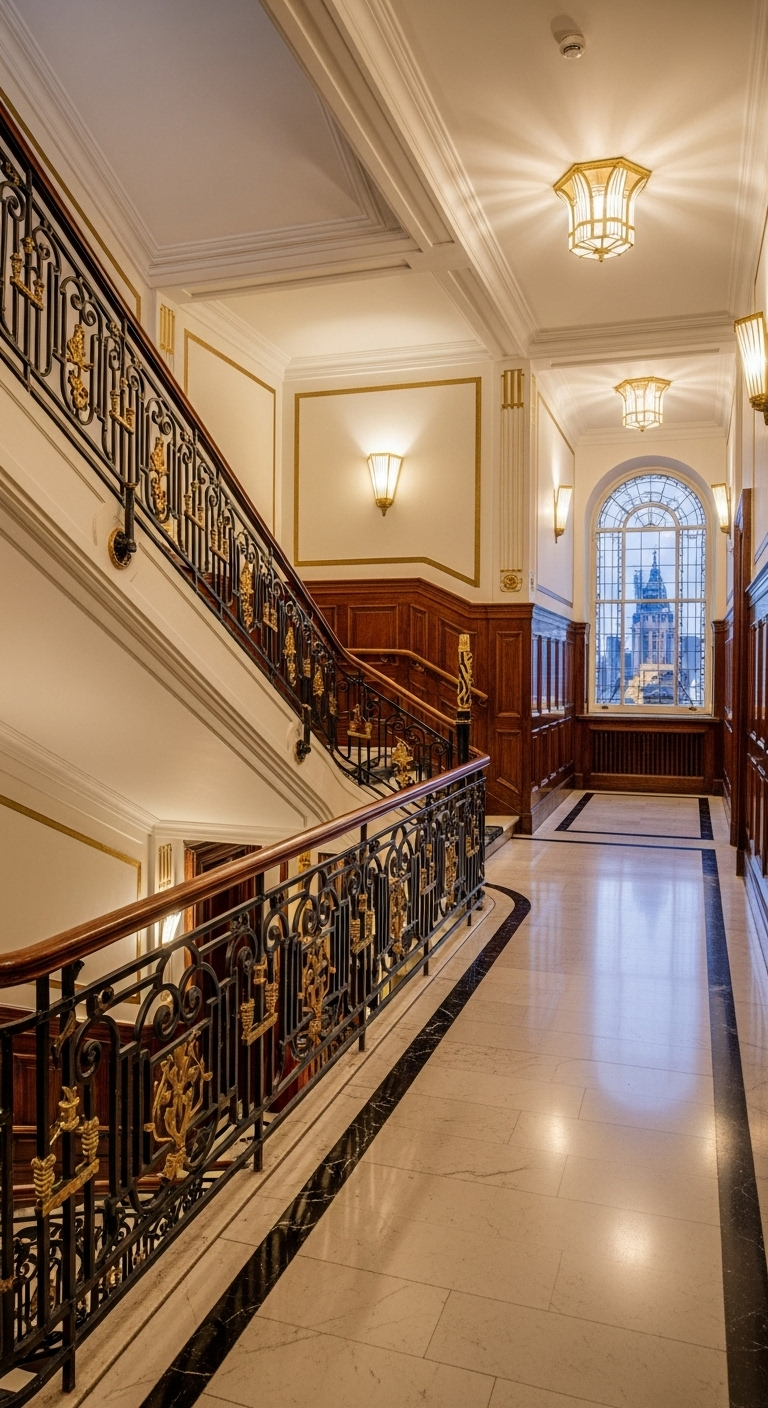
If your hallway includes a staircase, consider installing a custom wrought iron railing featuring intricate fan or leaf-inspired motifs to anchor the space. These bespoke metalwork designs act as permanent, structural art that instantly defines the character and historical pedigree of your entrance.
Wrought iron provides a heavy, grounded, and sophisticated contrast to airy glass lighting fixtures and soft, plush velvet textiles, creating a perfectly balanced, multi-dimensional aesthetic. It is a high-value architectural feature that bridges the gap between traditional blacksmithing craftsmanship and the clean, rhythmic style of modern interiors.
Select a railing design that prioritizes “negative space”—ensure the fan or leaf motifs are balanced with clean, straight vertical bars to prevent the staircase from feeling visually overwhelming or heavy. The matte black or deep charcoal finish of the iron should be applied via a professional powder-coating process to ensure a smooth, durable, and rust-resistant surface that will stand the test of time.
Work with a specialist metalworker to ensure the transition where the railing meets the floor or the wall is seamless and secure, as these points of contact are where the quality of the craftsmanship is truly revealed. A custom-fabricated piece should feel like an integrated part of the staircase’s architecture, rather than an afterthought, which is the hallmark of a high-end renovation.
11#. Dark Wood Console Tables
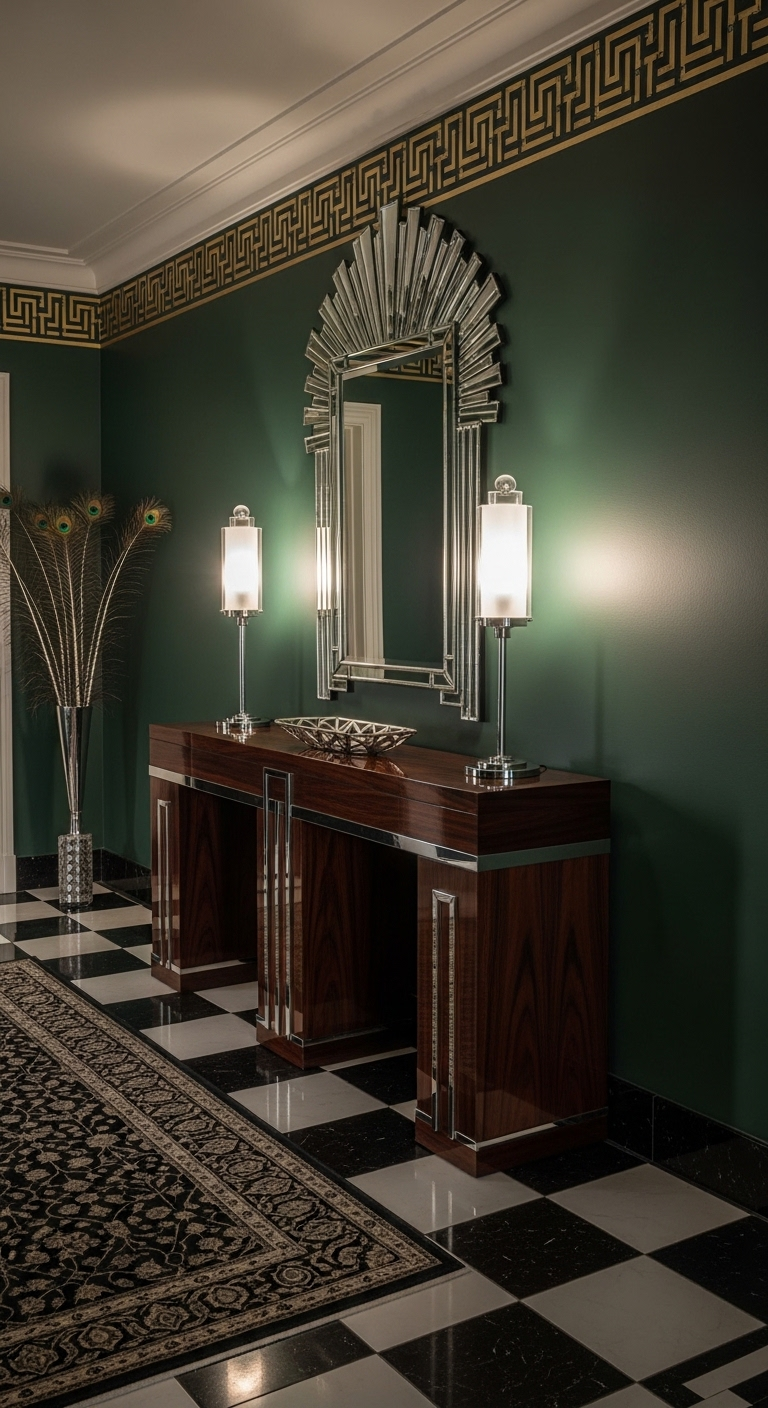
Pair your console with a piece of large-scale graphic art or an iconic mirror mounted directly above it to create a balanced, intentional “focal point” display. This vertical pairing guides the eye upward, maximizing the perceived scale of your hallway and creating a sophisticated, boutique-hotel arrival experience.
Keep the surface of the console edited and purposeful; a single sculptural vase, a small tray for keys, and one balanced lighting element are enough to convey luxury without clutter. The “less is more” approach highlights your eye for design and maintains the serene, orderly atmosphere essential to high-end interior styling.
Maintain the beauty of your exotic wood by using a high-quality, oil-based wood conditioner periodically, keeping the grain hydrated and vibrant. Regular, gentle dusting with a microfiber cloth ensures that the wood’s natural richness remains the hero of your hallway’s design narrative.
Use this console as the cornerstone of your entryway; it is a sophisticated, functional piece that bridges the gap between historical glamour and modern, organized living.
12#. Arched Interior Doorways
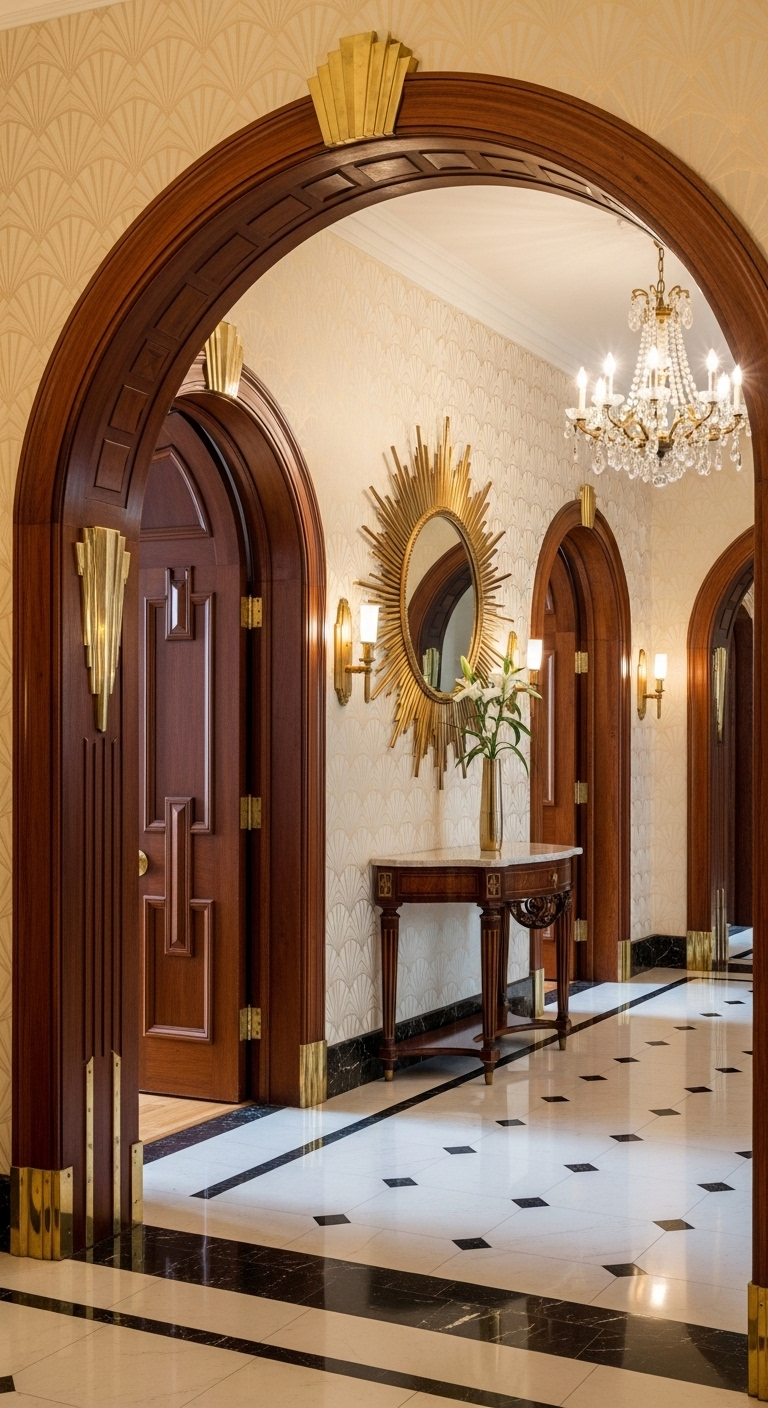
Remodel your standard, rigid rectangular doorways into elegant, sweeping arches to soften the harsh lines of your hallway and introduce an immediate sense of architectural grace. The curve of a well-proportioned arch provides a natural sense of “flow,” making the transition from one room to the next feel fluid, organic, and intentionally connected.
Arched architecture is a definitive hallmark of both Mediterranean and Art Deco design movements, instantly imbuing your home with a sense of timelessness and elevated, high-end character. This structural update is arguably the most impactful modification you can make for a total home transformation, shifting the very geometry of your interior environment.
Select a “catenary” or “true” arch shape based on your ceiling height; for a standard eight-foot ceiling, a subtle, lower-profile arch keeps the space feeling open while still delivering that necessary visual softness. Work with a professional contractor to ensure the radius of the arch is consistent across all doorways in the hallway to maintain a cohesive, rhythmic “visual language.”
Finish the archway with clean, minimalist drywall or add a thin trim profile in a contrasting material—like wood or painted molding—to further emphasize the curve as a deliberate design feature. A crisp, seamless transition between the arch and the wall surface is essential for a professional, “built-in” look that avoids appearing as a DIY alteration.
13#. Stepped Ceiling Mouldings
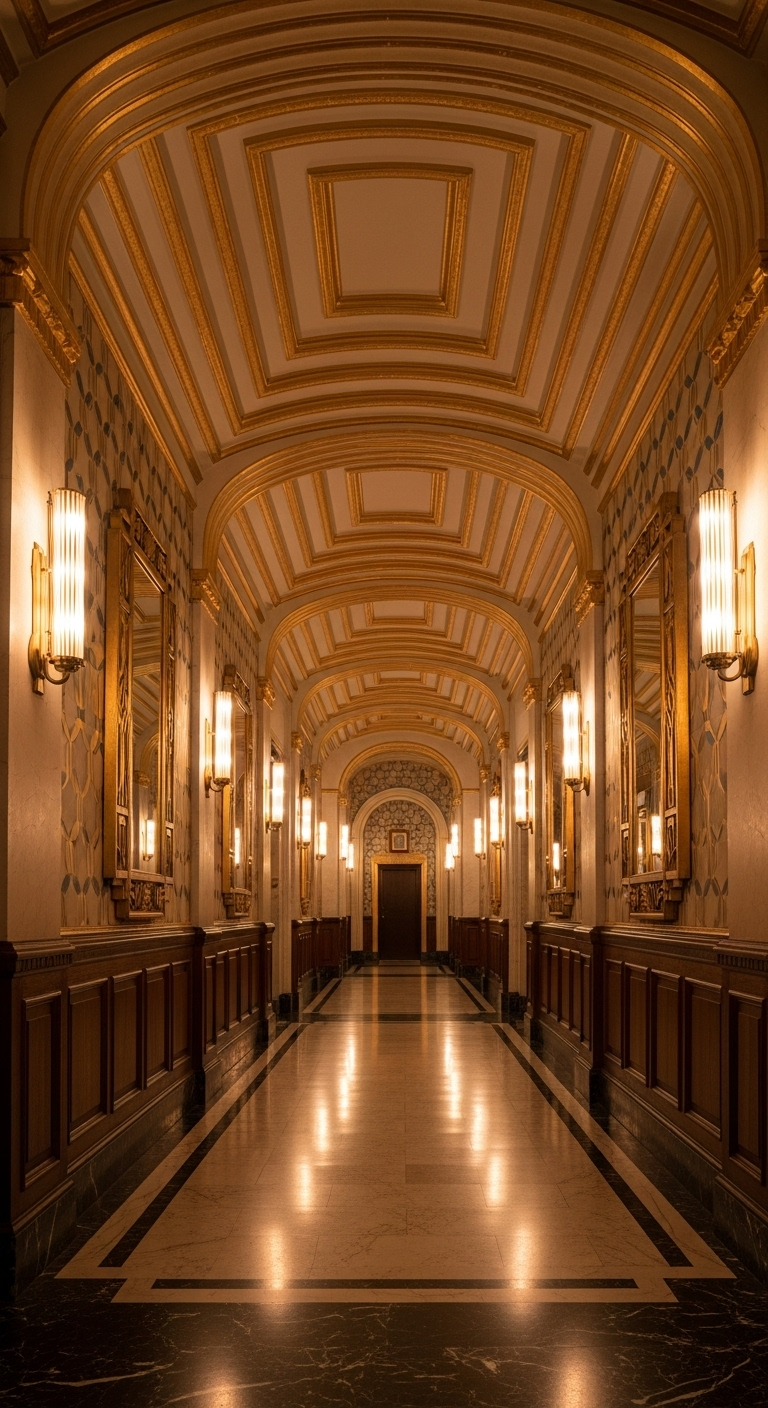
Pair your tiered ceiling with a high-gloss wall finish or a metallic-accented wallpaper to create a shimmering, luxurious envelope that complements the graphic nature of the trim. The combination of layered architectural detail and reflective wall surfaces creates a “jewel-box” effect that is a hallmark of professional, high-end residential design.
Keep your lighting fixtures consistent with the scale of the moulding; a tiered, ziggurat-style chandelier will harmonize perfectly with the ceiling detail, reinforcing the cohesive, historical design language. By aligning the ceiling geometry with your light fixtures, you create a seamless, total-room experience that feels planned, intentional, and expensive.
Maintain your ceiling detail by using a soft, long-handled duster periodically to prevent dust from settling in the “steps” of the moulding. A crisp, pristine paint job on your ceiling trim reflects your commitment to a high-maintenance, high-reward design that values precision and lasting, timeless elegance.
Use these stepped mouldings as the final structural “crowning” of your hallway; they are the sophisticated, upward-looking details that turn a simple corridor into a powerful, architectural statement.
14#. Fan-Patterned Wallpaper
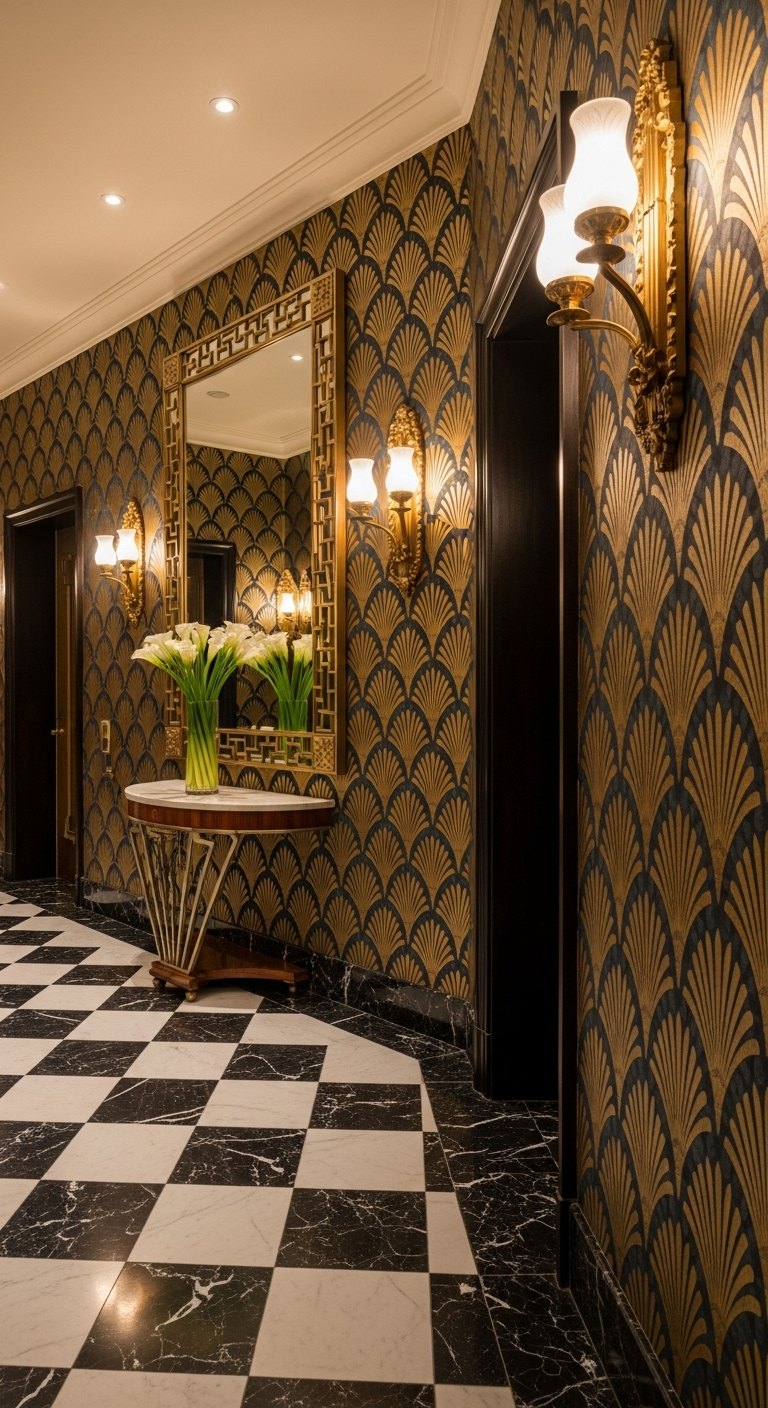
Create a stunning, high-impact accent wall using premium wallpaper that features the classic Art Deco fan or “peacock” motif in a sophisticated metallic or pearlized finish. This repetitive, geometric pattern provides a rhythmic visual energy that feels both dynamic and incredibly organized, serving as a masterclass in controlled maximalism.
Wallpaper is a superior medium for introducing the complex textures, layered motifs, and light-reflective qualities that are difficult to achieve with paint alone. Choose a high-quality, heavy-duty vinyl or grasscloth-backed wallpaper to ensure maximum durability and easy maintenance in the high-traffic zones of your entrance.
Select a color palette that leans into the moody luxury of the era—think deep charcoal with gold foil, or cream with soft, shimmering champagne accents. The sheen of the metallic finish will interact with your hallway sconces, making the wall appear to “glow” and shift as you move past it, creating a captivating, cinematic experience.
Ensure the pattern alignment is absolutely precise during installation, particularly where the wallpaper meets the ceiling, baseboards, or doorways. A professional, seamless installation—where the fan motifs appear to continue uninterrupted across the entire wall—is what separates a boutique-quality look from an amateur attempt.
15#. Integrated Pedestal Displays
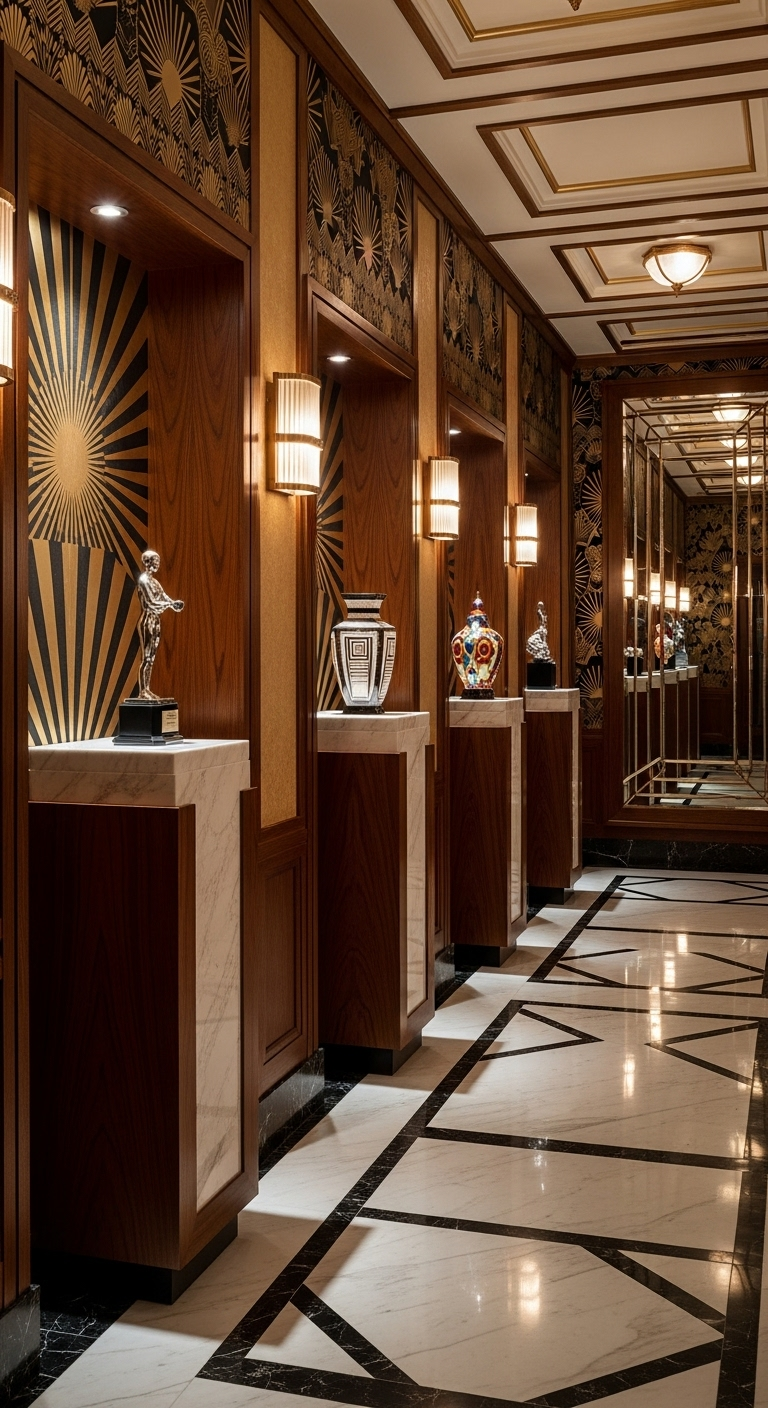
Use tall, sleek pedestals—finished in polished marble or high-gloss black lacquer—to elevate sculptural art pieces or lush, trailing ferns at the end of your hallway. This “gallery” approach turns a previously underutilized dead-end space into a purposeful, curated destination that celebrates your unique design identity.
Pedestals introduce a sense of verticality, importance, and intentionality to your decorative objects, making even simple items feel like museum-quality treasures. It is a classic, professional designer trick that transforms a mundane hallway into an immersive, lived-in art collection that invites exploration.
Select pedestals that contrast with your wall color to ensure they register as distinct, architectural features. A black lacquer pedestal against a neutral wall creates a sharp, graphic silhouette, while a marble pedestal adds a touch of organic, veined texture that complements high-end flooring.
Position your pedestals precisely at the end of the line of sight to serve as the “anchor” of your hallway’s visual journey. Ensuring the pedestal is of the correct height—typically between 36 and 42 inches—is key to presenting your art at an optimal, comfortable viewing level for someone standing in the space.
16#. Marble Baseboards and Trim
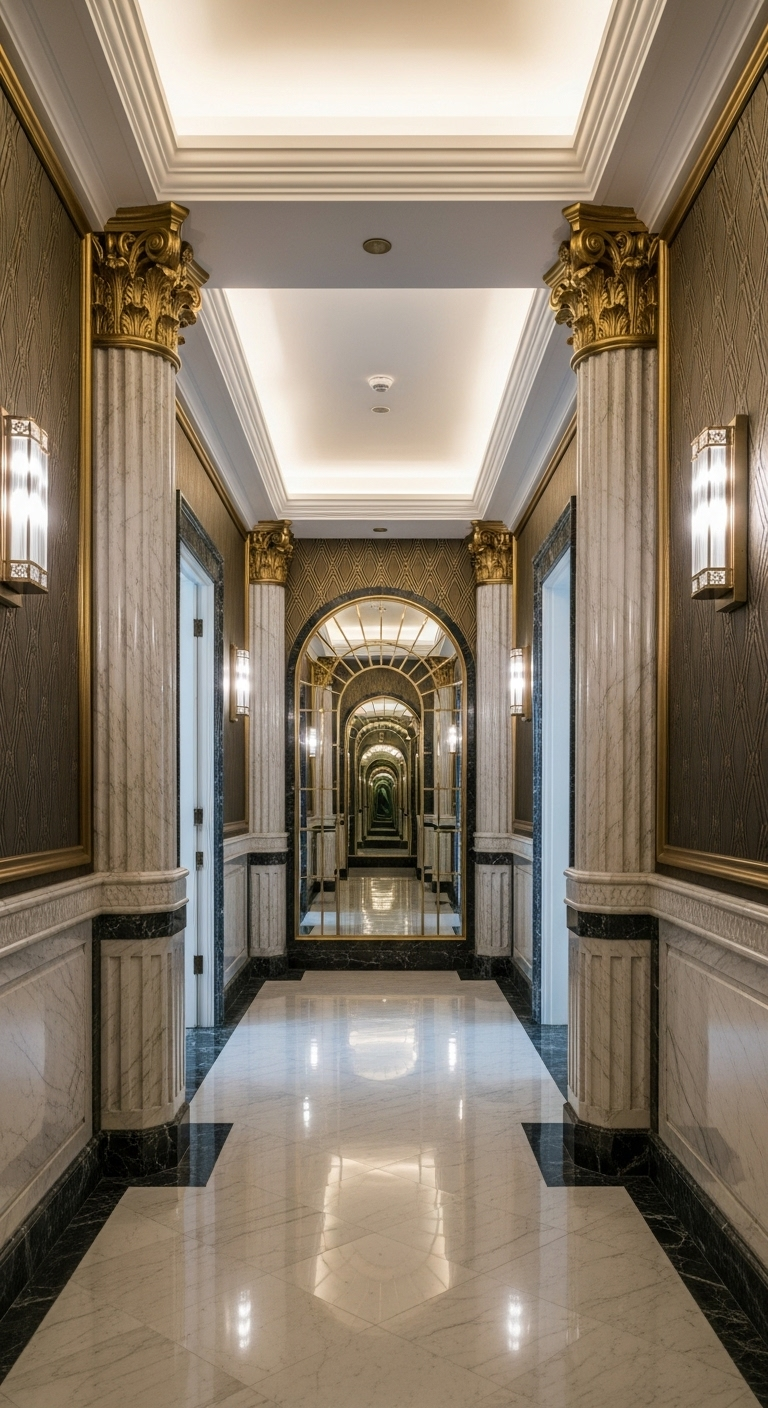
Replacing standard wooden baseboards with thin, precision-cut strips of polished black or white marble adds a layer of unexpected, architectural detail that feels undeniably luxurious. This “heavy,” grounded foundation prevents your walls from appearing two-dimensional and offers superior protection against the inevitable scuffs and wear of daily life.
The stone trim creates a clean, seamless, and high-contrast transition between your geometric floor tiles and your lacquered or papered walls. It is a definitive, high-end touch that distinguishes a truly professional Art Deco hallway renovation from a standard design update.
Select a stone that complements the overall palette of your space—polished Nero Marquina (black marble with white veining) for a dramatic, moody aesthetic, or Carrara (white marble with soft grey veining) for a brighter, more classic look. Ensure the marble is cut into thin, uniform strips with a subtle eased or bevelled top edge to prevent it from looking too bulky or protruding too far from the wall surface.
Work with a professional stone fabricator to ensure the strips are installed with minimal grout lines, creating that monolithic “custom-built” appearance. A seamless, perfectly flush installation is essential; the stone should feel like an integrated architectural component rather than an applied decoration.
17#. Stained Glass Transom Windows
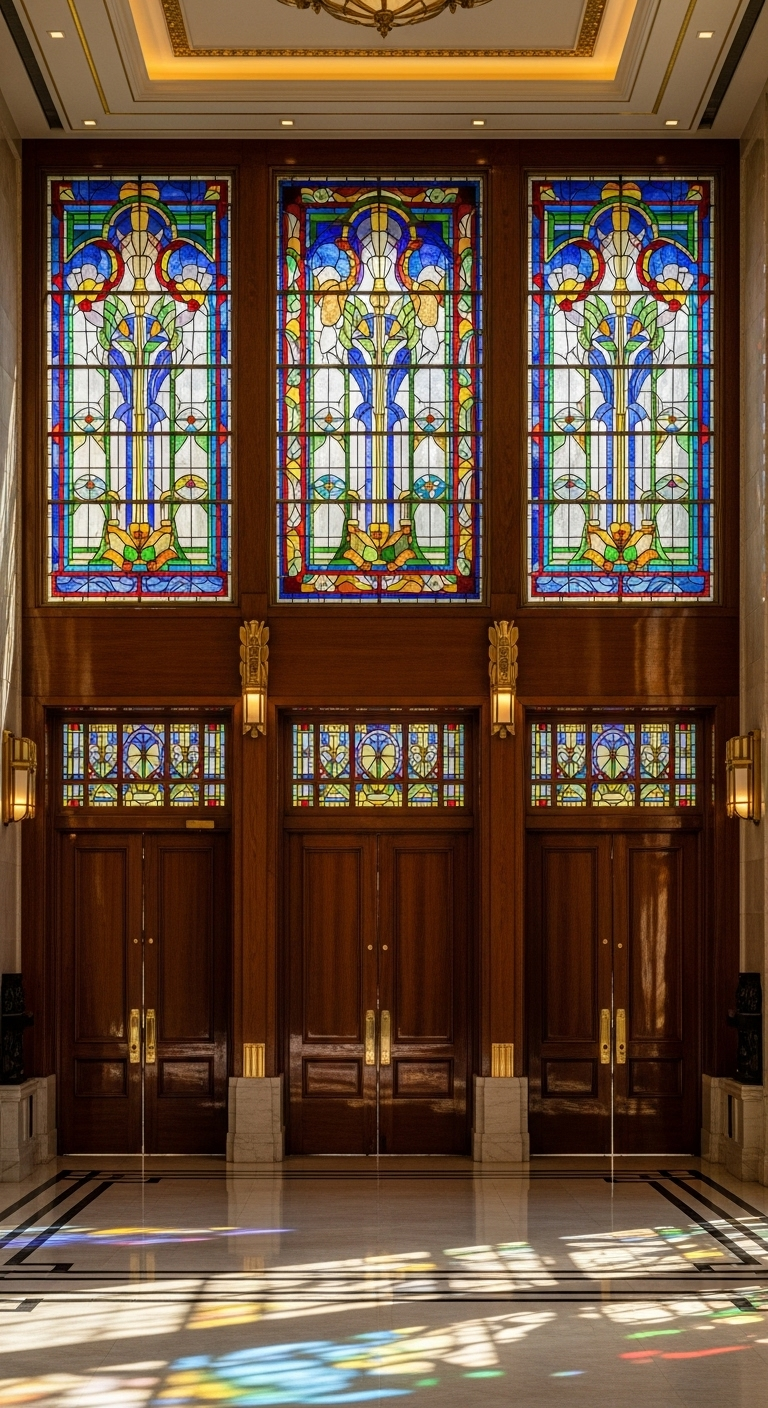
Install small, custom-fabricated stained glass panels—known as transoms—directly above your interior doors, utilizing minimalist, geometric patterns in sophisticated shades of amber, smoke, and soft charcoal. These glass inserts act as architectural filters, allowing natural light to travel between rooms while adding an invaluable touch of vintage, artisanal charm to the upper planes of your walls.
Stained glass functions as a permanent piece of “ceiling jewelry” for your home, dynamically altering the mood and color temperature of the hallway as the sun shifts throughout the day. It is an exceptionally elegant way to honor the rich, decorative craftsmanship of the past while ensuring your home retains a crisp, modern, and curated sensibility.
Select high-quality, rolled cathedral glass for the amber sections to achieve a warm, glowing diffusion, and pair them with cool, textured “seeded” glass in smoke tones to maintain that essential Art Deco geometric contrast. Work with a local glass artisan to ensure the lead or zinc caming is kept minimal and slim, reinforcing the clean, linear aesthetic rather than a traditional, heavy-leaded look.
Ensure the transom frames are perfectly integrated into the existing door header to maintain structural continuity. The frame should be finished to match your door casing—such as a deep ebony stain or a high-gloss lacquer—creating a seamless, “meant-to-be” look that defines high-end custom carpentry.
18#. Leopard and Animal Print Runners
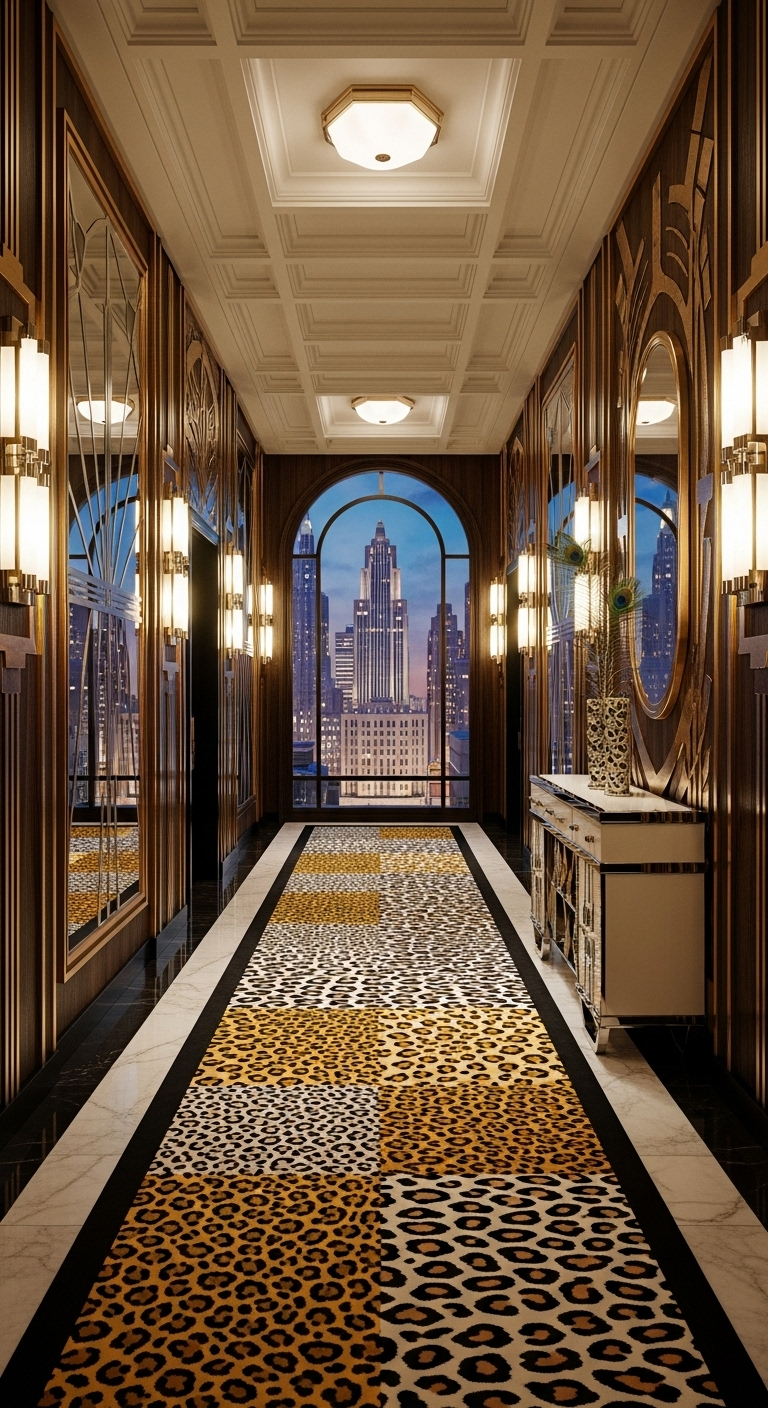
For an infusion of adventurous, “Safari-Deco” energy, lay a high-quality animal print rug runner—such as stylized zebra or leopard—the entire length of your hallway floor. This bold, rhythmic pattern injects a layer of unexpected whimsy and exotic luxury that perfectly balances the strict, linear geometry of the surrounding Art Deco architecture.
Keep the surrounding walls, ceiling, and console decor strictly neutral and monochromatic to ensure the runner acts as the primary “star” of the hallway, preventing the space from feeling cluttered or chaotic. Animal prints serve as a classic, high-fashion tool for introducing organic texture and visual movement into an environment dominated by hard surfaces like lacquer, marble, and polished metal.
Select a low-pile, high-density wool or silk-blend runner to ensure it lies perfectly flat and withstands high-traffic wear while retaining a premium feel underfoot. The quality of the print is non-negotiable; choose a design with high-definition pattern clarity and naturalistic, sophisticated tonal variations rather than a cartoonish, mass-produced graphic.
Use a professional-grade rug pad beneath the runner to ensure it remains perfectly centered and slip-free, maintaining the orderly, intentional aesthetic that is the hallmark of your professional hallway design.
19#. Frosted Glass Globe Pendants
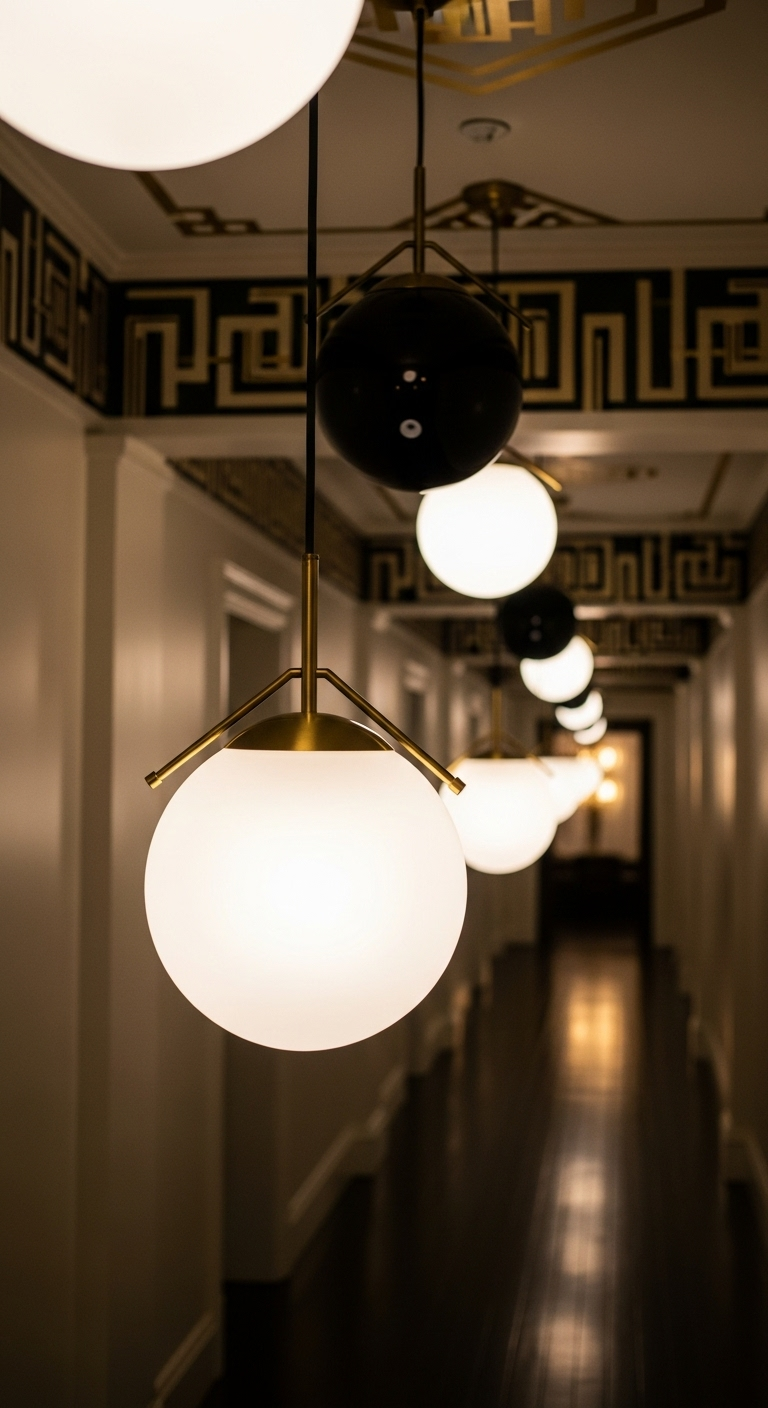
Utilize simple, large-scale frosted glass globes anchored by brushed or polished brass hardware to achieve a lighting solution that is both clean and quintessentially “Mid-Century-Deco.” The soft, even diffusion of light from these spheres eliminates harsh glare, bathing your hallway in a serene, moon-like glow that feels both calming and ethereal.
Globes are inherently timeless, fitting perfectly into the “Streamline Moderne” branch of the Art Deco movement, which prioritized aerodynamic efficiency, smooth surfaces, and the reduction of unnecessary ornamentation. They are a superior choice for hallways with lower ceilings or narrower proportions, where the grandeur of tiered crystal chandeliers might otherwise feel visually heavy or physically restrictive.
Select globes with a high-quality “satin” or “opal” finish; the glass should be thick enough to fully hide the bulb and diffuse the light, yet translucent enough to cast a warm, radiant illumination. Look for hardware with architectural, stepped detailing at the canopy or the globe attachment point to inject that subtle nod to 1920s geometry without compromising the minimalist silhouette.
Install your globes in a rhythmic, repeating sequence down the length of the corridor to create a guided, gallery-like experience. Consistent, evenly spaced lighting is the professional secret to making a hallway feel like a well-planned, intentional architectural passage rather than a leftover space.
20#. Inset Wall Niches for Sculpture
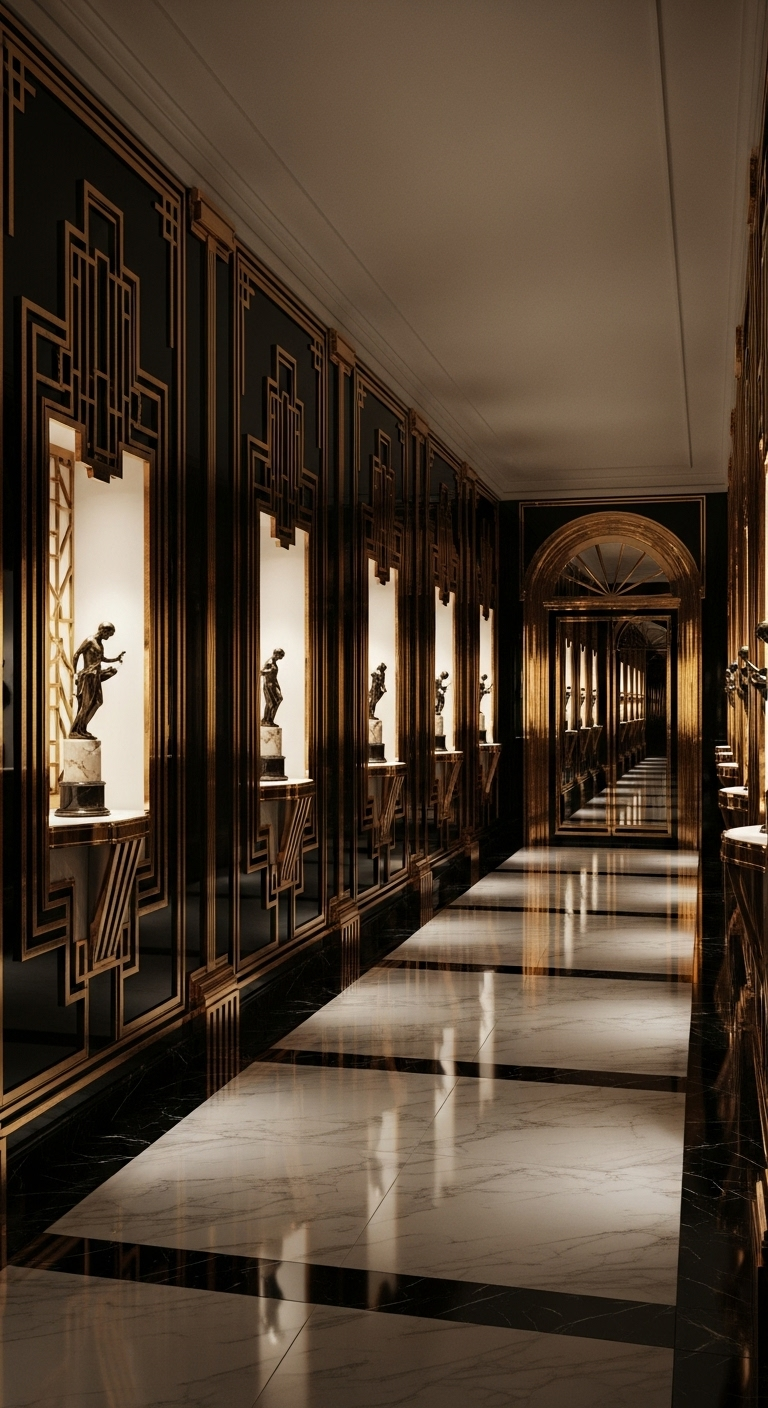
Carve out elegant, arched niches directly into your hallway walls to provide a dedicated, museum-quality stage for your favorite bronze or ceramic statues. This structural modification adds immense depth and a sense of architectural honesty, immediately signaling that your home is a bespoke, custom-built environment rather than a standard developer layout.
Adding a small, recessed LED spotlight inside each niche highlights the intricate texture and form of your art, creating a dramatic, moody, and highly sophisticated “gallery” atmosphere. It is a brilliant, high-impact way to bake your Art Deco aesthetic into the very “bones” of your house, turning simple walls into storied, structural displays.
Select a consistent, slender arch profile that mimics the curves of your doorways, ensuring that the rhythm of your home’s geometry remains unbroken. The depth of the niche should be sufficient to fully recess the statue, creating a shadow-play effect that draws the eye inward and creates an illusion of extra space within the hallway.
Work with a skilled contractor to ensure the niches are perfectly aligned and spaced at regular intervals, as a “rhythmic” gallery wall is the hallmark of professional interior design. Finishing the interior of the niche with a smooth, matte paint or even a subtle metallic leaf will amplify the light, making your sculptures appear as if they are glowing from within.
21#. Ebony and Ivory Color Schemes
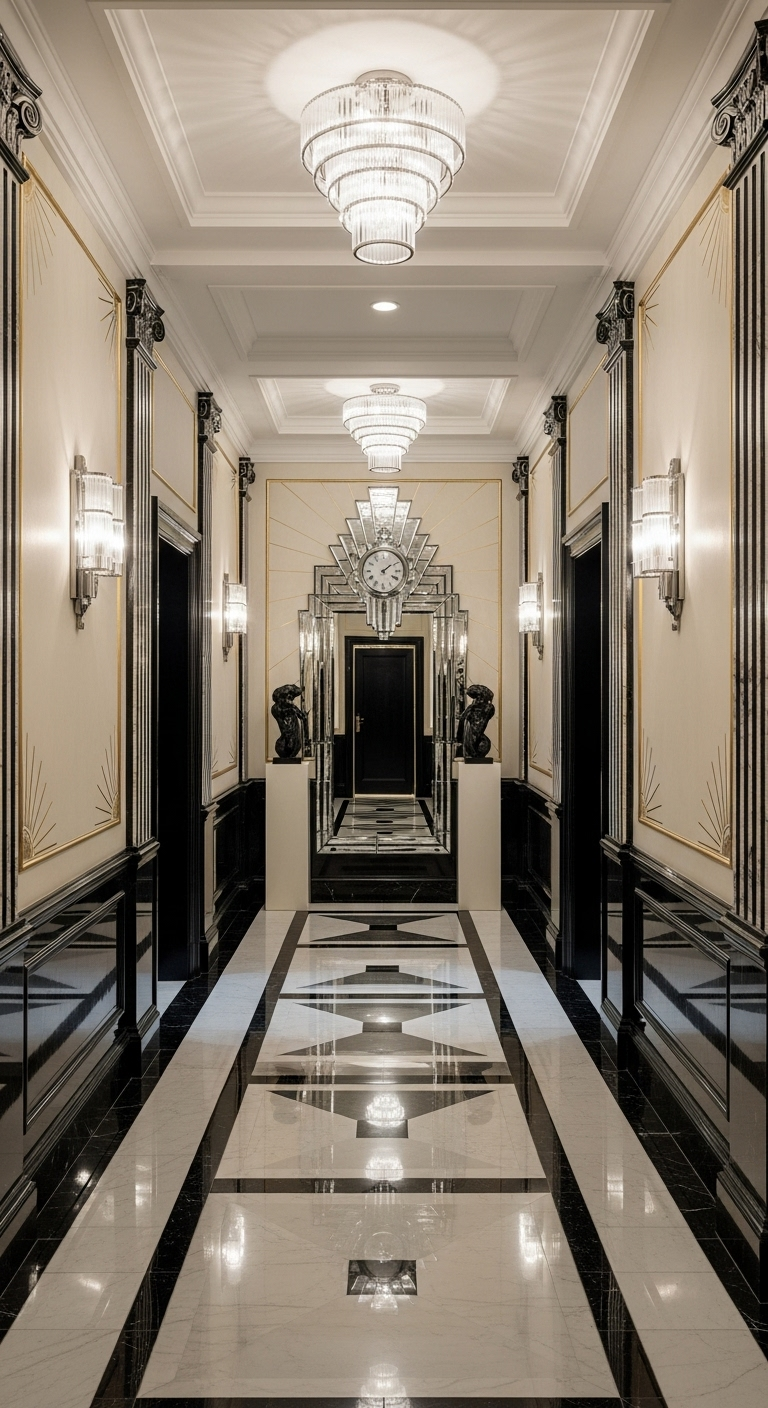
Embrace the “Piano Key” palette by committing to a strict, high-contrast black-and-white color story across your walls, furniture, and decorative accessories. This powerful, binary approach is inherently sophisticated, allowing you to experiment with complex, layered textures—like high-gloss lacquer against matte stone—without overwhelming the senses.
The absolute simplicity of the palette ensures that the geometric shapes of your floor patterns, the silhouettes of your furniture, and the lines of your wall art stand out with unparalleled clarity. This monochromatic discipline is a foolproof, time-tested strategy to achieve an expensive, gallery-grade aesthetic that transcends passing trends.
Select a crisp, “gallery white” for the primary wall surfaces to maximize light reflection, and use a deep, “obsidian black” for trim, doors, and hardware to ground the space and define its architectural boundaries. The tension between these two extremes creates a sharp, graphic rhythm that is essential for a high-end Art Deco-inspired narrative.
Work with varied surface finishes to prevent the room from feeling flat; combine a matte-finish wall with polished-marble flooring and silk-finished textiles. This variety in how materials reflect light adds a subtle, “hidden” dimension that rewards the observant eye and makes the hallway feel like a meticulously curated, luxury space.
22#. Sculptural Glass Door Insets
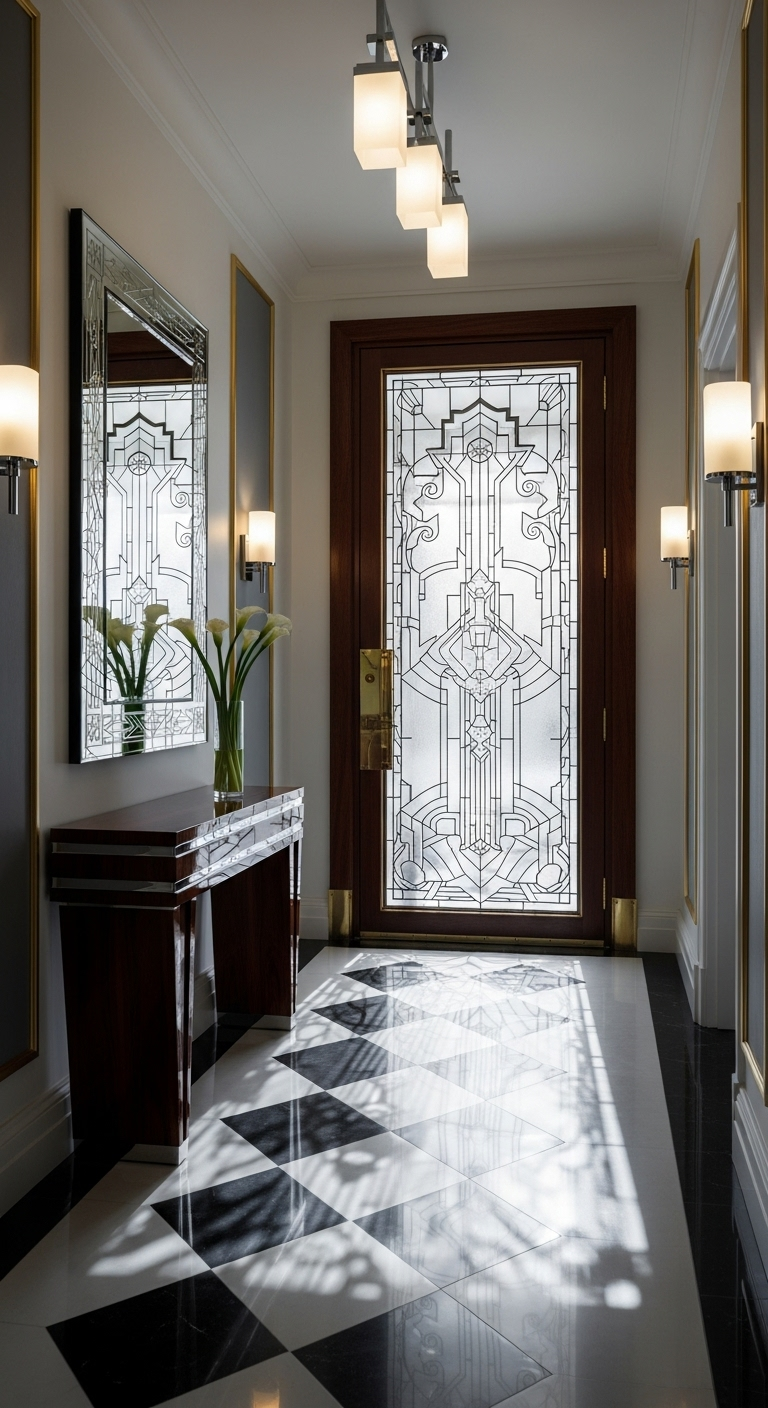
Choose interior doors featuring frosted glass insets etched with precise geometric lines or sophisticated fan-shaped patterns to provide a touch of refined, historical detail. These doors are more than just transitions; they act as architectural filters, allowing natural light to flow between rooms while maintaining a necessary sense of privacy and boutique-style sophistication.
The glass adds a vital layer of transparency and visual “lightness” that expertly balances the weight of dark-stained wooden furniture and moody, high-contrast walls. It is an elegant, functional way to weave your Gatsby-inspired theme directly into the functional portals of your home, ensuring the design narrative remains cohesive from room to room.
Select tempered safety glass for all insets, ensuring the etched patterns are applied via professional sandblasting or laser-etching for a crisp, permanent finish. The frame surrounding the glass should be finished in a deep, high-gloss lacquer or a rich, dark wood stain, mirroring the other architectural trim in your hallway to reinforce the sense of “built-in” luxury.
Work with a custom millwork specialist to ensure the proportions of the glass insets align with the scale of the door; a taller, narrower inset will emphasize the verticality of the hallway, enhancing the feeling of grandeur. Consistency is key—use the same glass pattern across all door insets in the hallway to create a rhythmic, repetitive visual language that feels deeply intentional.
23#. Mirror-Topped Console Tables
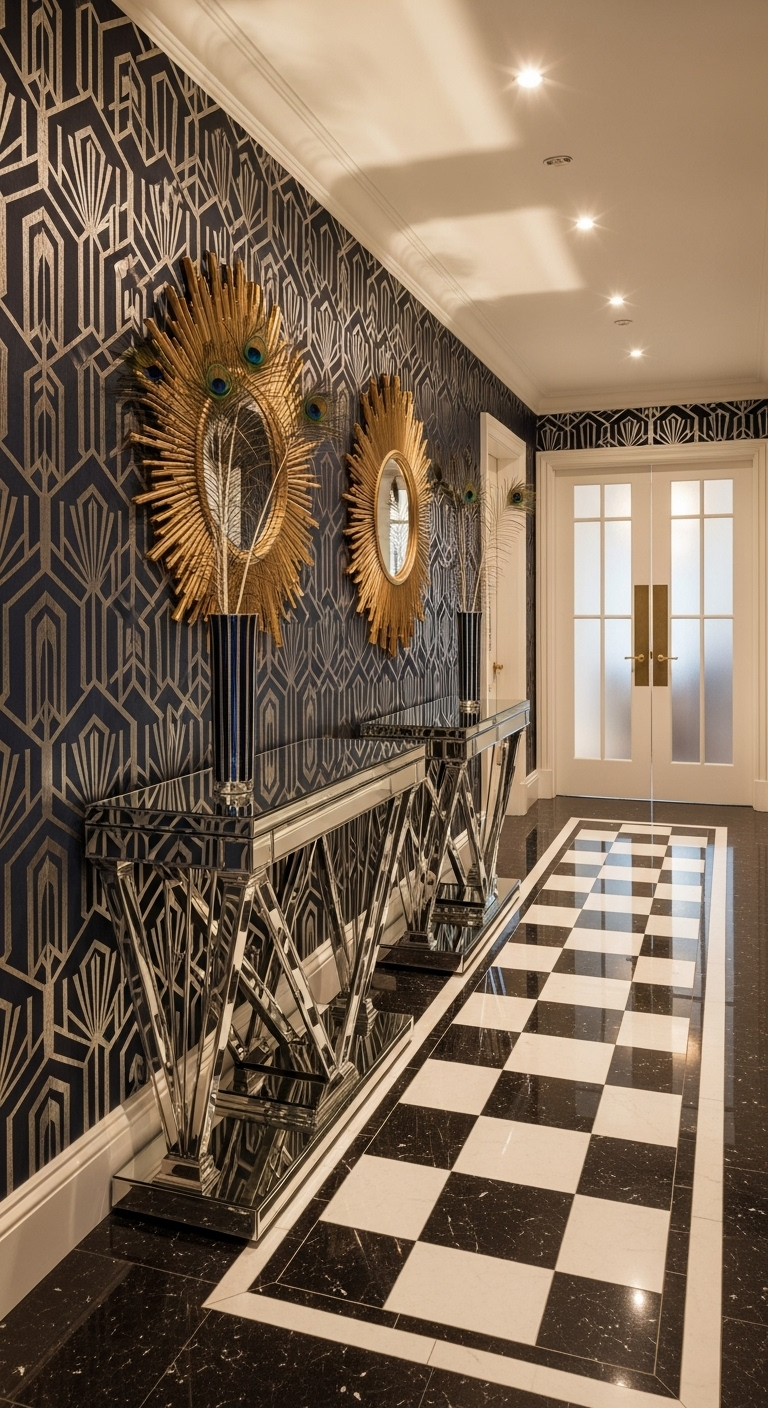
Incorporate a console table featuring a smoked or antiqued mirror top to introduce a layer of shimmering, moody surface area that actively reflects and amplifies your curated wall art. This “double-reflection” technique is a masterclass in visual expansion, making even the smallest, most delicate decorative items feel more substantial, complex, and visually intriguing.
Mirror-topped furniture provides an immediate infusion of Hollywood Regency glam that fits perfectly within the broader, high-fashion Art Deco design philosophy. It is an undeniably elegant, professional-grade strategy to ensure your hallway feels bright, polished, deeply layered, and full of life.
Select an antiqued mirror finish with a subtle, distressed patina—rather than a perfect, silvered surface—to achieve a softer, more sophisticated light reflection that avoids harsh glare. The frame of the console should be constructed from a high-quality, metallic-finished material like polished chrome, brass, or even a dark, high-gloss lacquered wood to provide a grounding architectural border for the mirror top.
Ensure the dimensions of the console are perfectly proportional to your hallway width, allowing for at least 30 inches of clearance for comfortable passage. A console that feels “just right” in the space, rather than too large or too small, is essential for maintaining the clean, intentional flow that defines professional interior design.
24#. Metallic Coved Ceilings
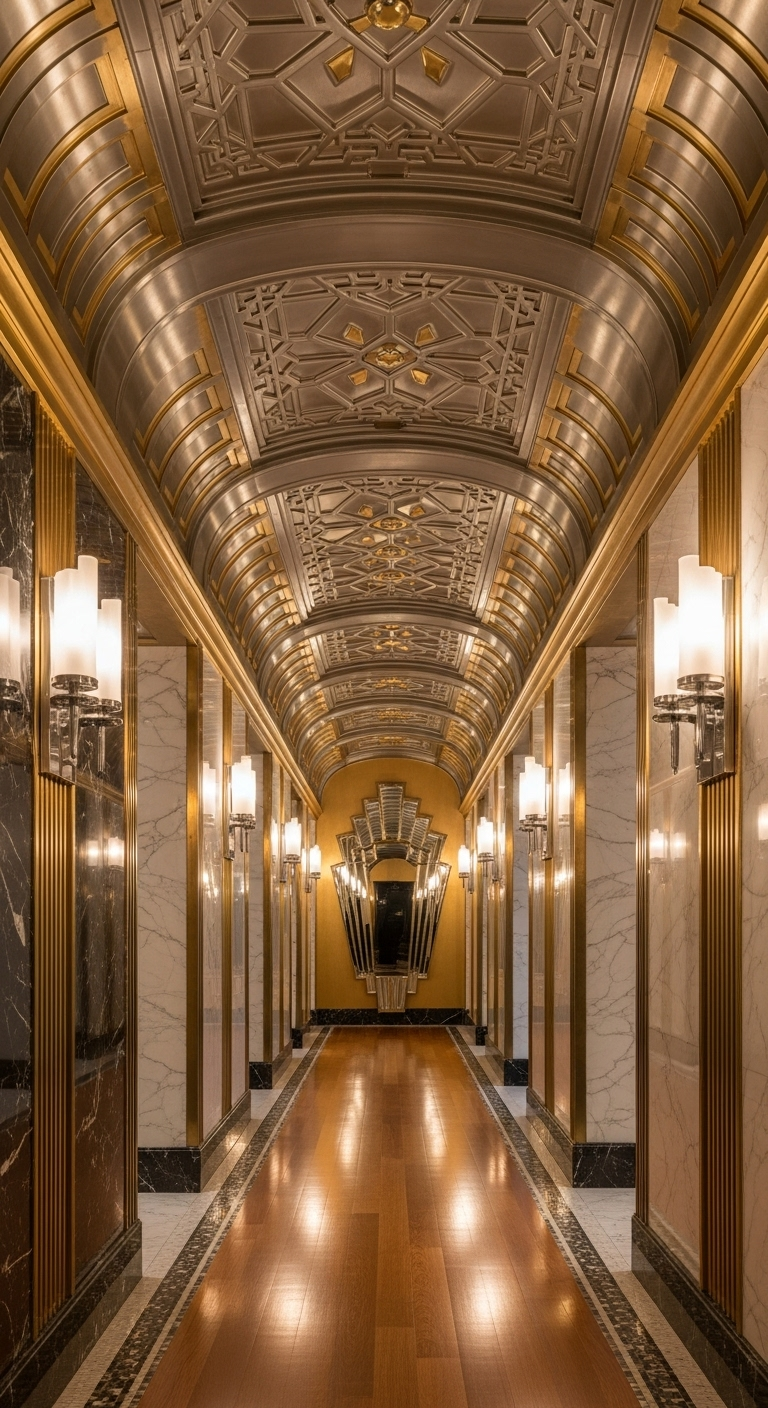
Paint the interior of a recessed, coved ceiling in a soft gold or silver leaf finish to create a permanent, glowing “halo” effect that elevates the atmosphere of your corridor. This luxurious, high-end detail captures the light from your chandeliers and sconces, bouncing a warm, diffused radiance back down to soften the hard lines of the space.
Coved ceilings add a necessary sense of architectural softness and perceived vertical height, preventing even the narrowest hallway from feeling boxy, sterile, or claustrophobic. It is an exceptionally sophisticated architectural feature that functions as the “crowning glory” of a comprehensive, high-end hallway remodel, signaling an expert eye for atmospheric design.
Select a genuine gold leaf for a rich, warm glow or a champagne-silver leaf for a cooler, more contemporary “ice-like” shimmer, depending on the warmth of your primary metallic hardware. The application of leafing should be done by a professional finisher to ensure a uniform, seamless surface that reflects light evenly without visible seams or patchy application.
If budget or complexity is a concern, a high-quality metallic paint with a high-pigment load can achieve a similar effect, provided it is applied over a perfectly smooth, level-five drywall finish. The goal is a surface so smooth that it acts like a liquid mirror, amplifying every flicker of light in the space.
25#. High-Contrast Base and Crown Molding
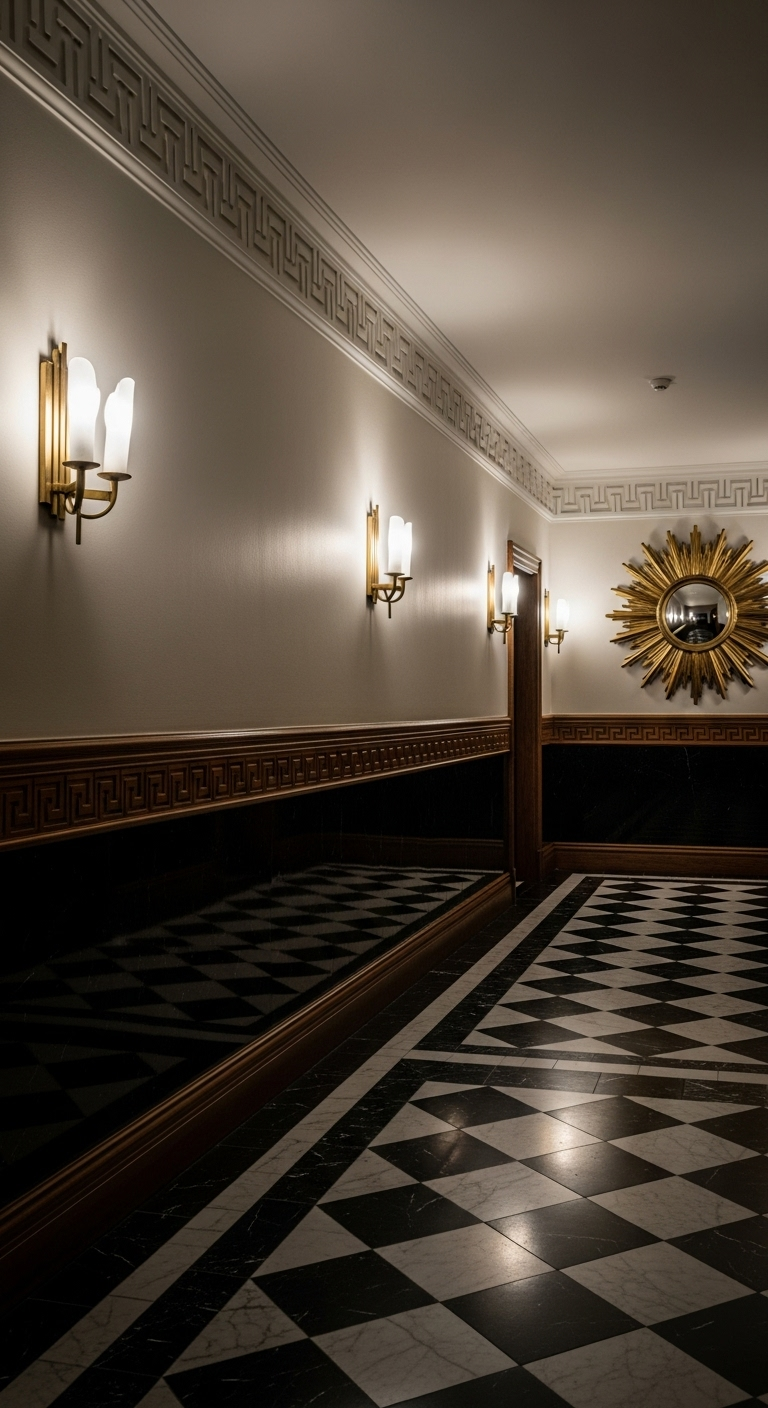
Using high-contrast black moldings against crisp white walls—or the inverse, for a bolder “negative” effect—provides a sharp, graphic frame for your entire hallway. This sophisticated, high-contrast detail emphasizes the architectural geometry of the space, effectively turning your walls into a structured, curated piece of art.
Graphic trim is an exceptionally modern way to interpret classic Art Deco styles, offering a clean, “designer-led” look that remains a pinnacle of interior styling in 2026. It is an accessible, high-impact method to add massive stylistic weight to your home, transforming basic transitions into intentional, architectural portals.
Select a simple, clean-lined profile for your moldings—such as a modern “step” or “bead” trim—rather than heavily ornate traditional styles. The precision of the line is what creates the “graphic” impact, and a minimalist profile ensures the focus remains on the contrast and the geometry of the room.
Work with a professional painter to ensure the finish is perfectly crisp; the edge where the black meets the white must be razor-sharp to maintain the illusion of a graphic, hand-drawn frame. Using a high-gloss finish for the trim against a matte finish for the wall adds a subtle, tactile dimension that makes the architectural lines feel even more substantial and deliberate.
26#. Inset Wall Lighting (Step Lights)
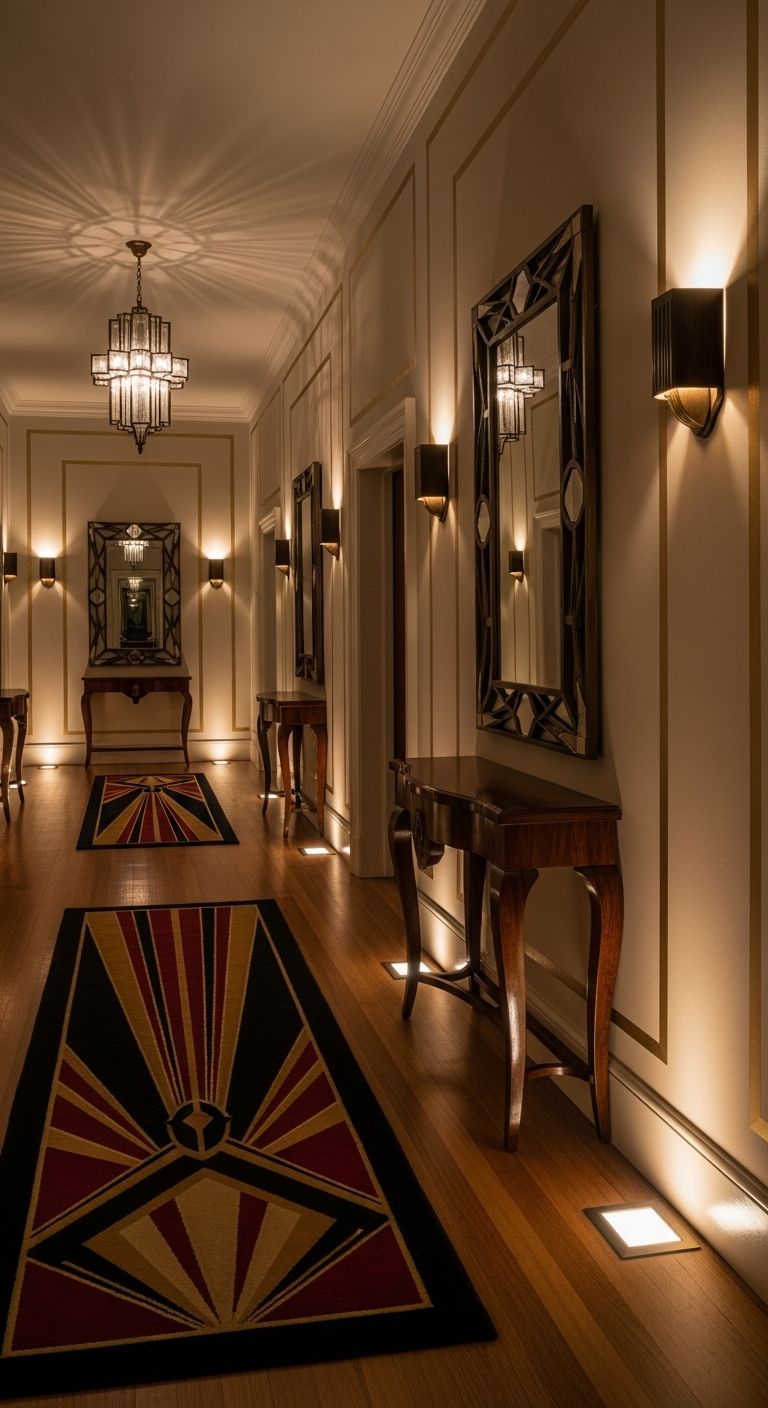
Install small, circular, recessed LED step lights low along the length of your hallway walls to provide a soft, dramatic “wash” of illumination across your geometric floor tiles. This low-level lighting scheme introduces an immediate sense of safety and effortless navigation while cultivating an exclusive, high-end “lounge” atmosphere that is perfect for late-night movement.
Step lights serve a dual purpose: they highlight the intricate patterns and textures of your flooring, while simultaneously making the hallway feel significantly more three-dimensional and architecturally grounded. This is a sophisticated, high-tech addition that masterfully bridges the gap between the vintage opulence of Art Deco design and the sleek, high-utility requirements of a modern, professional home.
Select warm-spectrum LEDs (typically 2700K) to ensure the light feels inviting and luxurious rather than sterile or cold; the goal is a “glow” that complements the metallic and stone finishes in your hallway. Look for high-quality, flush-mount fixtures with refined metallic bezels in brass, matte black, or brushed chrome to ensure the hardware itself looks like a deliberate design feature, even when turned off.
Work with a professional electrician to space the lights rhythmically—typically every 4 to 6 feet—to create a balanced, cinematic guide path that prevents “spotty” illumination. The goal is a continuous, overlapping pool of light that directs the eye forward, emphasizing the length of the hall without creating harsh, vertical distractions on the walls.
27#. Curated Porcelain Vase Collections
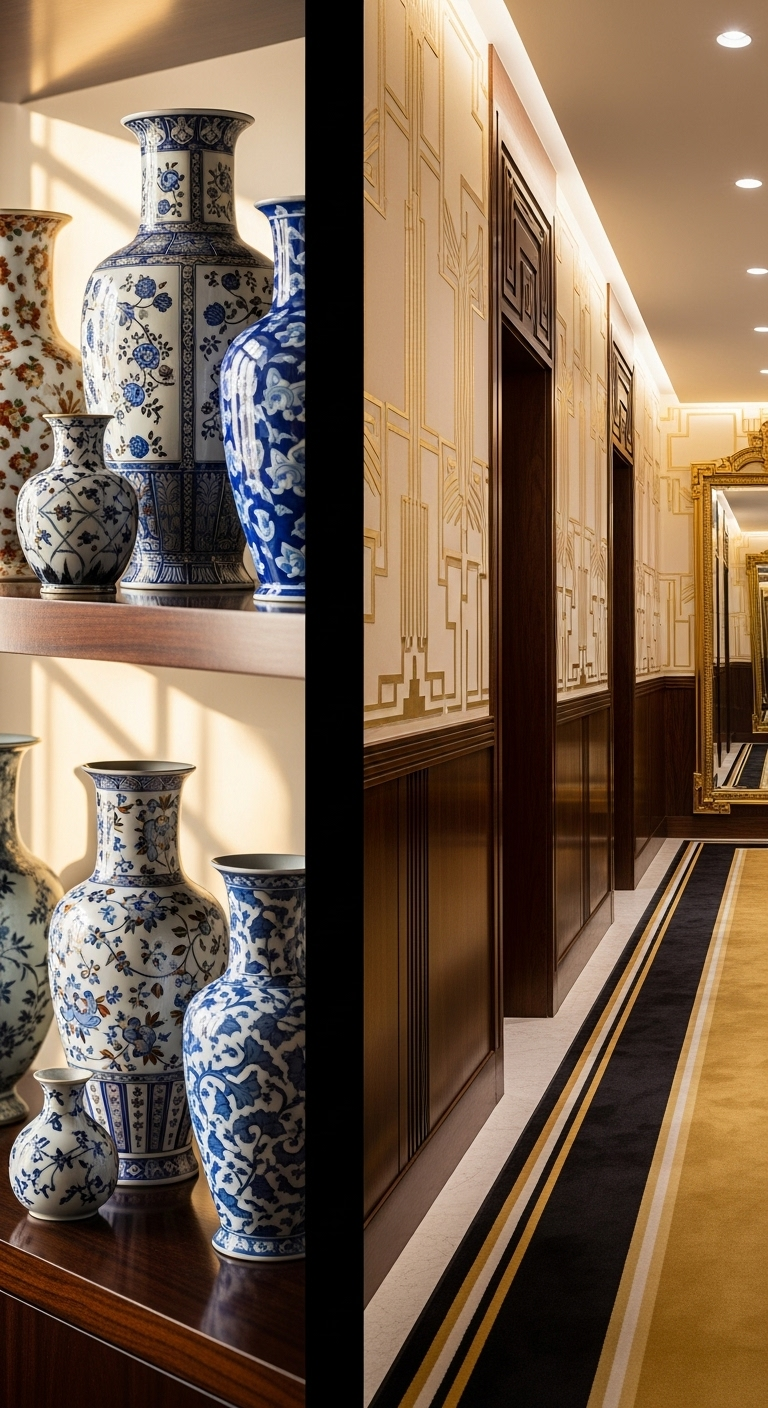
Curate a collection of tall, slim porcelain vases in a unified monochromatic palette to anchor your console table with a refined, “academic” sensibility. The smooth, high-gloss surface of the porcelain introduces a cool, tactile texture that acts as the perfect counterpoint to the warmth of dark wood furniture and the sharp, reflective quality of metallic accents.
Grouping these vessels in varying heights creates a dynamic, architectural “vignette” that immediately draws the eye, showcasing a sophisticated appreciation for artisanal craftsmanship. It is an effortlessly simple, yet profoundly effective way to layer a sense of personal, intellectual style into your hallway’s decor, moving the space beyond mere utility into the realm of curated design.
Select vases that share a singular color—such as matte cream, obsidian black, or deep cobalt—but vary their silhouettes to keep the arrangement from feeling static. A mixture of tapered, cylindrical, and slightly organic forms, all within the same color family, creates a cohesive narrative that feels both collected and deliberate.
Work with the “Rule of Three” or “Rule of Five”—arranging your vases in odd-numbered groupings—to create a balanced, asymmetrical visual rhythm that feels natural and professionally styled. Ensure the tallest vase is placed slightly off-center to break the symmetry, which adds a sense of “movement” to the display as one walks past it.
28#. Faux-Marble Wall Finishes
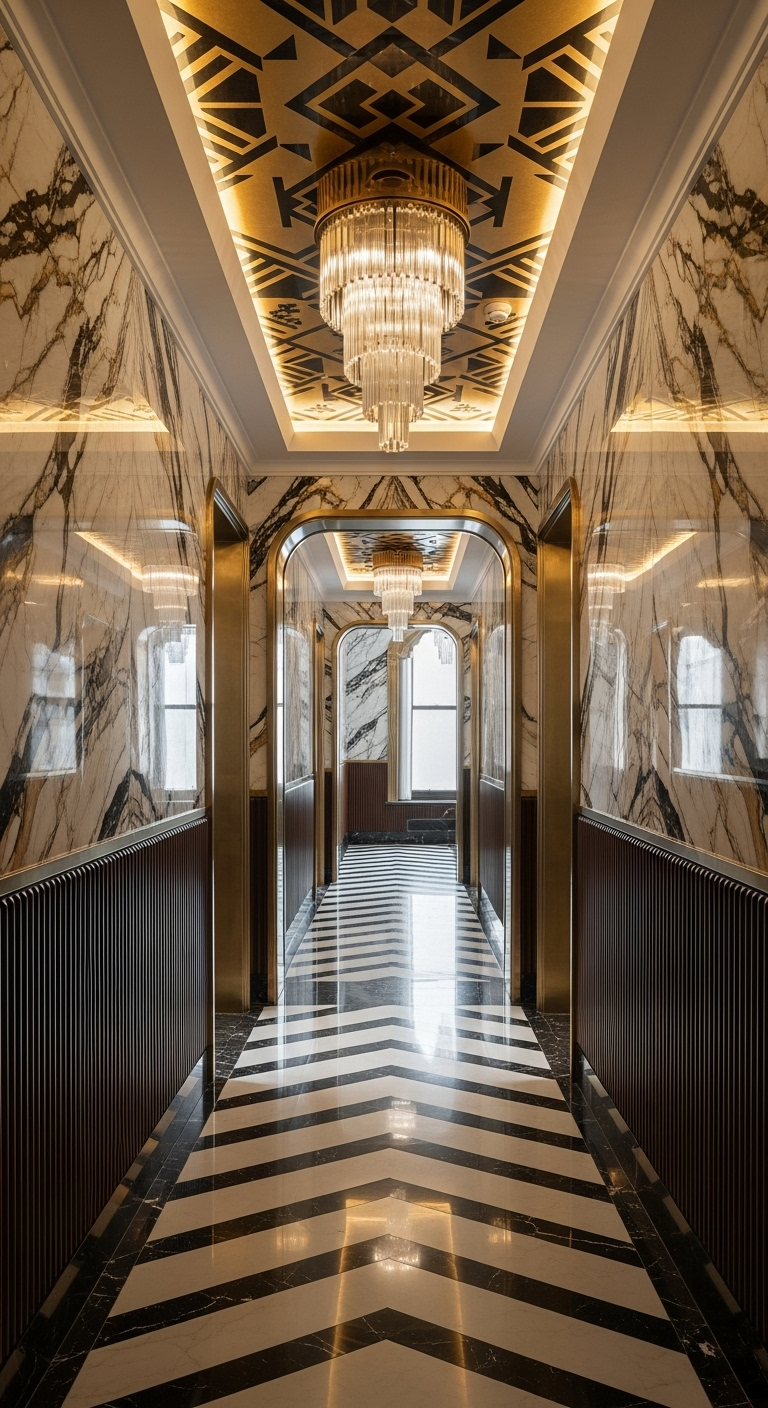
When genuine solid stone exceeds your remodeling budget, professional faux-marble or scagliola paint techniques offer a sophisticated alternative. These methods replicate the visual depth and character of quarried stone walls without needing structural reinforcements or heavy installation labor.
This approach creates a sense of classical luxury and permanent weight within your entrance that feels entirely authentic to the eye. You gain the high-end aesthetic of an old-world estate while maintaining the practical flexibility required for modern residential building standards.
Faux-finishing also allows you to precisely customize the color palette and veining patterns to harmonize with your specific Art Deco Hallway Design Ideas. By selecting custom pigments, you ensure the final wall treatment complements your existing lighting fixtures and surrounding metallic accents perfectly.
It is a clever and highly effective way to achieve a grand “Palazzo” atmosphere in a modern suburban home setting. This artistic investment elevates your entryway from a simple passage to a curated space that feels established, expensive, and intentionally designed.
29#. Linear Brass Picture Lights
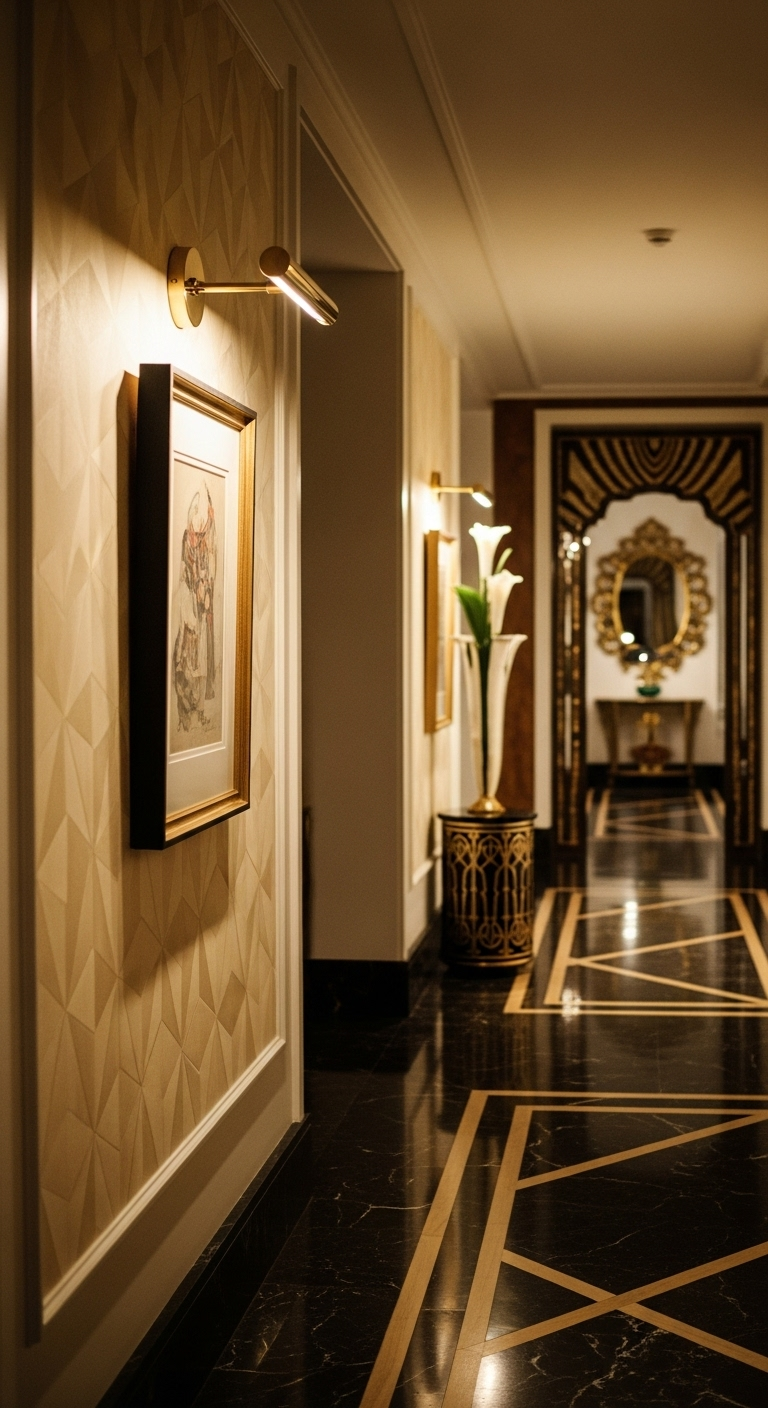
Installing slim, horizontal brass lights above your framed artwork creates an immediate, professional-grade atmosphere for your curated hallway collection. These fixtures provide dedicated downward illumination that highlights the textures and colors of your pieces, making the entire corridor feel like a private gallery.
This targeted lighting technique effectively draws the eye toward your display, turning a standard hallway into a purposeful artistic space. Adding these lights introduces a touch of old-world prestige that elevates the visual interest of your home beyond basic, overhead residential lighting.
The metallic finish of high-quality picture lights provides a subtle, warm sparkle at eye level that enhances the overall glow of the room. When the lights are on, they cast a soft radiance that makes your home feel more intimate and intentionally styled during the evening.
This functional accessory ensures that even simple prints or personal sketches look like museum-quality masterpieces when properly framed and lit. It is an affordable upgrade that adds significant polish to your design, providing a high-end finish that guests will certainly appreciate upon entry.
30#. Tasseled Velvet Drapery
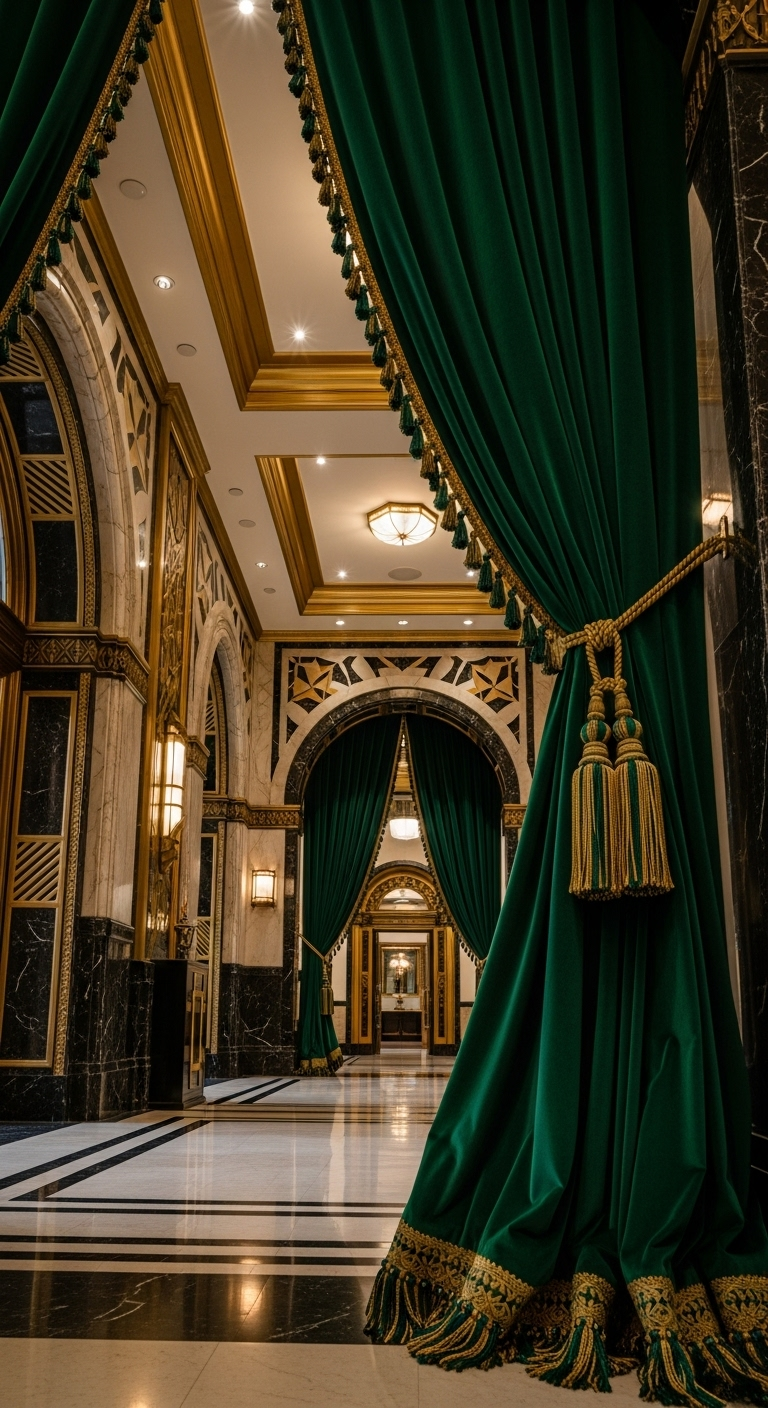
When your hallway features a window, incorporating heavy velvet curtains with large silk tassels adds an immediate sense of theatrical depth. The thick fabric provides functional insulation while transforming a standard window into a commanding architectural feature that anchors the entire hallway space.
Choosing such substantial textiles introduces a profound level of warmth and character that makes the transition between rooms feel intentional. This approach successfully blends the cozy, inviting principles of Hygge with the structured, refined elegance typically found in high-end classic design.
The addition of oversized silk tassels brings a touch of lighthearted, eclectic whimsy that keeps the space from appearing overly rigid. These decorative elements soften the sharp lines often found in hallways, creating a balanced environment that feels both sophisticated and remarkably comfortable.
This textile detail serves as the final layer of luxury to complete your sophisticated Art Deco Hallway Design Ideas perfectly. By focusing on high-quality materials and thoughtful accessories, you ensure your home achieves a professional, curated finish that feels completely cohesive and inviting.
31#. Geometric Ceiling Medallions
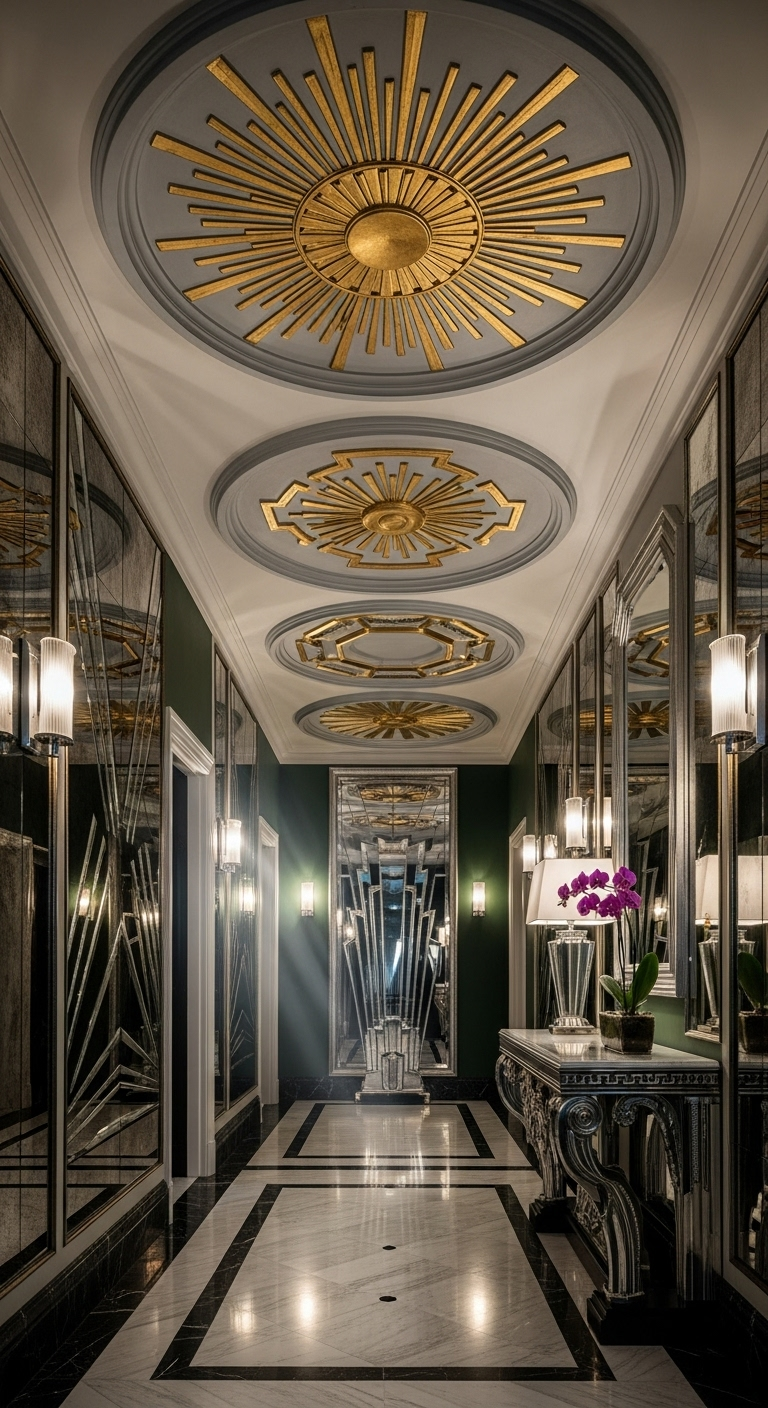
Placing a stepped or sunburst-patterned ceiling medallion above your chandelier introduces a layer of refined detail to your upper walls. This subtle architectural feature provides a remarkably polished finish that makes even standard lighting fixtures appear significantly more expensive and custom.
These decorative elements effectively draw the eye upward, highlighting the height and scale of your ceiling space. By incorporating this historical design element, you transform a plain overhead light into a deliberate, eye-catching centerpiece that anchors your entire hallway design.
Medallions help to clearly define the center of the room while providing a sense of permanence and built-in quality. This classic technique is highly effective for creating a hallway that feels like a historic metropolitan foyer rather than just a pass-through space.
It is a simple yet high-impact design choice that creates visual interest where many homeowners often leave a blank surface. When paired with the right lighting, these medallions add the exact level of architectural sophistication needed to elevate your home to professional standards.
32#. Sculptural Black Lacquer Seating
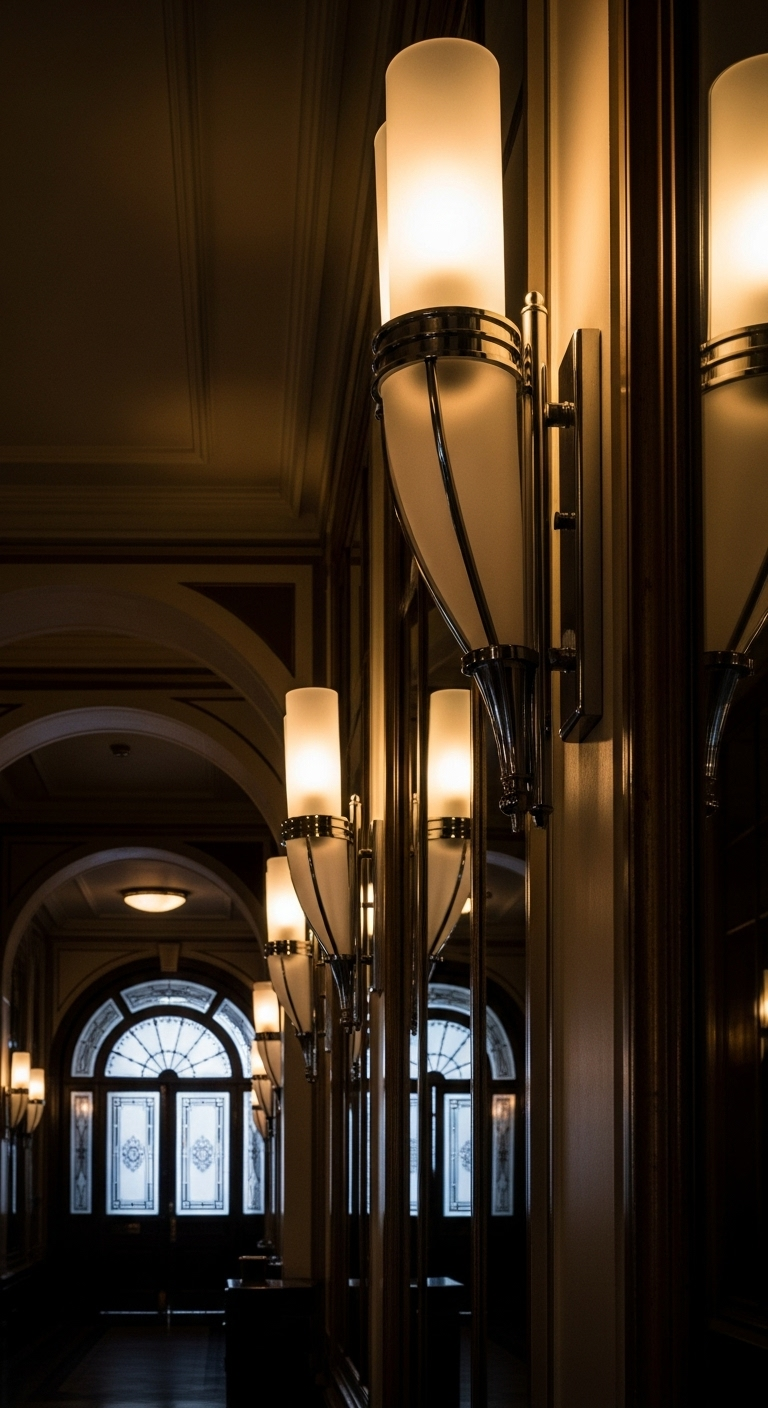
Selecting a single, uniquely shaped chair in a high-gloss black lacquer transforms an empty corner into a striking focal point. This piece acts as functional furniture, grounding the space while offering a sharp, sophisticated aesthetic that instantly elevates the surrounding hallway design.
The dark, shimmering silhouette provides a bold and graphic contrast against lighter wall tones or subtle metallic hardware accents. This interplay between light and shadow creates visual tension, ensuring the area feels intentional, curated, and deeply connected to your modern interior vision.
Including a statement chair adds an immediate sense of personality and readiness for guests, making your transit space feel welcoming. It shifts the hallway from a mere transition point into a lived-in room that invites a moment of pause during the day.
This approach is an exceptionally trendy way to incorporate specific Art Deco Hallway Design Ideas into your home. The final look mirrors the curated feel of a high-end designer showroom, proving that even small, vacant corners can hold significant style.
33#. Scented Cedar and Amber Diffusers
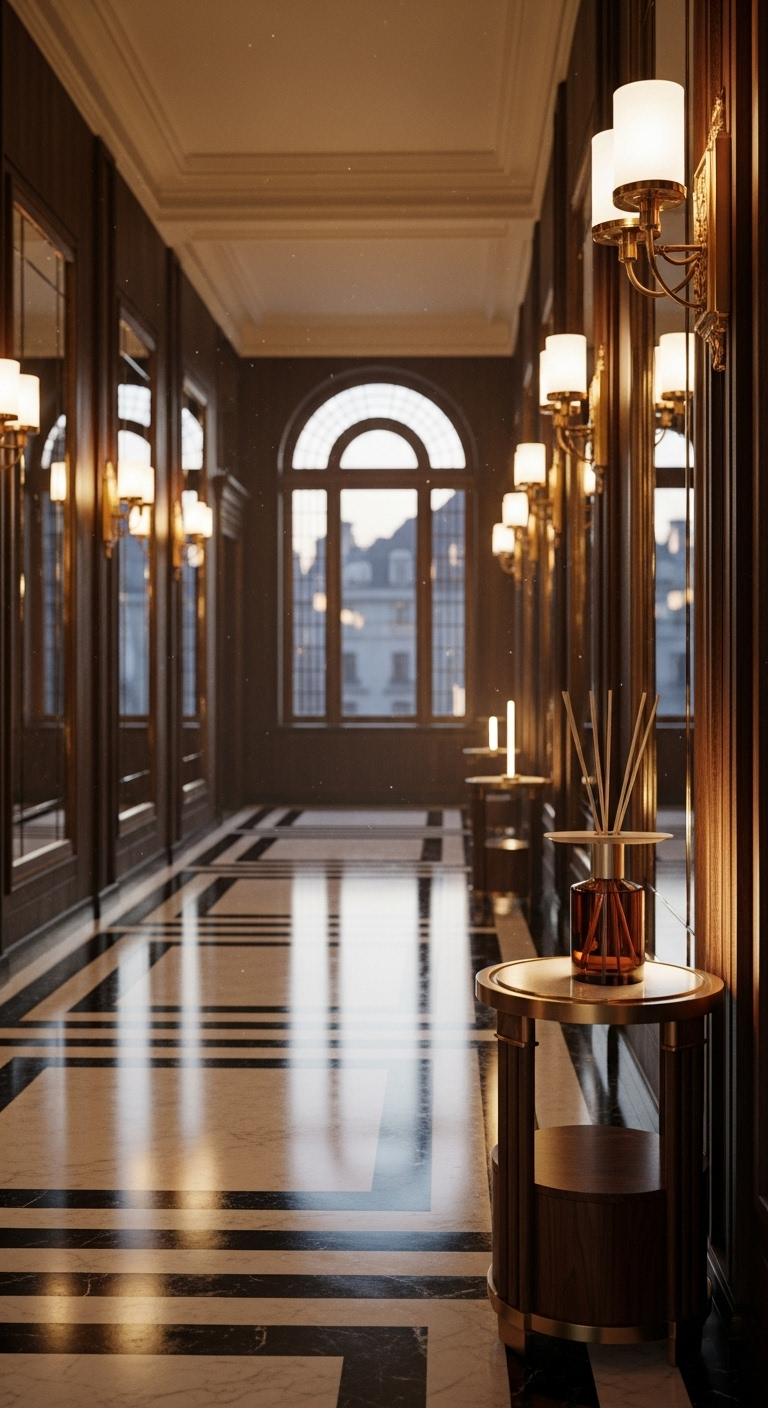
Complete the full sensory experience of your home by selecting a high-quality diffuser featuring deep notes of amber, cedarwood, and sandalwood. These rich, moody, and woody scents act as a subtle nod to historic private libraries and the grandest luxury hotels.
Choosing a scent that mimics these timeless spaces creates an immediate atmosphere of history and intentionality the moment someone enters. Unlike generic household fragrances, these earthy undertones feel grounded, purposeful, and reflective of a refined, curated lifestyle that favors classic elegance.
The scent of your home is often the first impression guests have, making this choice essential for setting the right tone. By opting for a vintage-inspired profile, you bridge the gap between visual design and the actual experience of living within your space.
This final layer ensures your Art Deco transition feels fully immersive, cohesive, and genuinely unforgettable to anyone who visits. It is the invisible but powerful detail that separates a beautifully styled hallway from one that truly resonates on an emotional level.
Wrap up: Step Into a Timeless Legacy
Transforming your hallway with Art Deco inspiration is about more than just matching patterns; it is about reclaiming a sense of occasion and architectural pride.
By layering bold geometry, luxurious materials, and atmospheric lighting, you’ve created a passage that honors the past while feeling entirely current. As you walk through your home, may this grand entrance remind you that every transition is an opportunity for beauty and elegance.