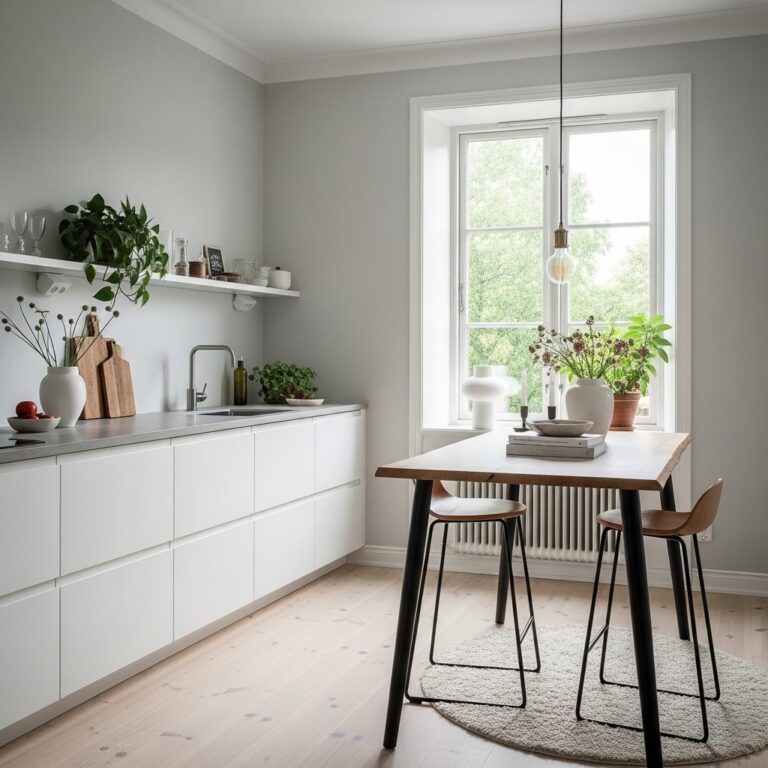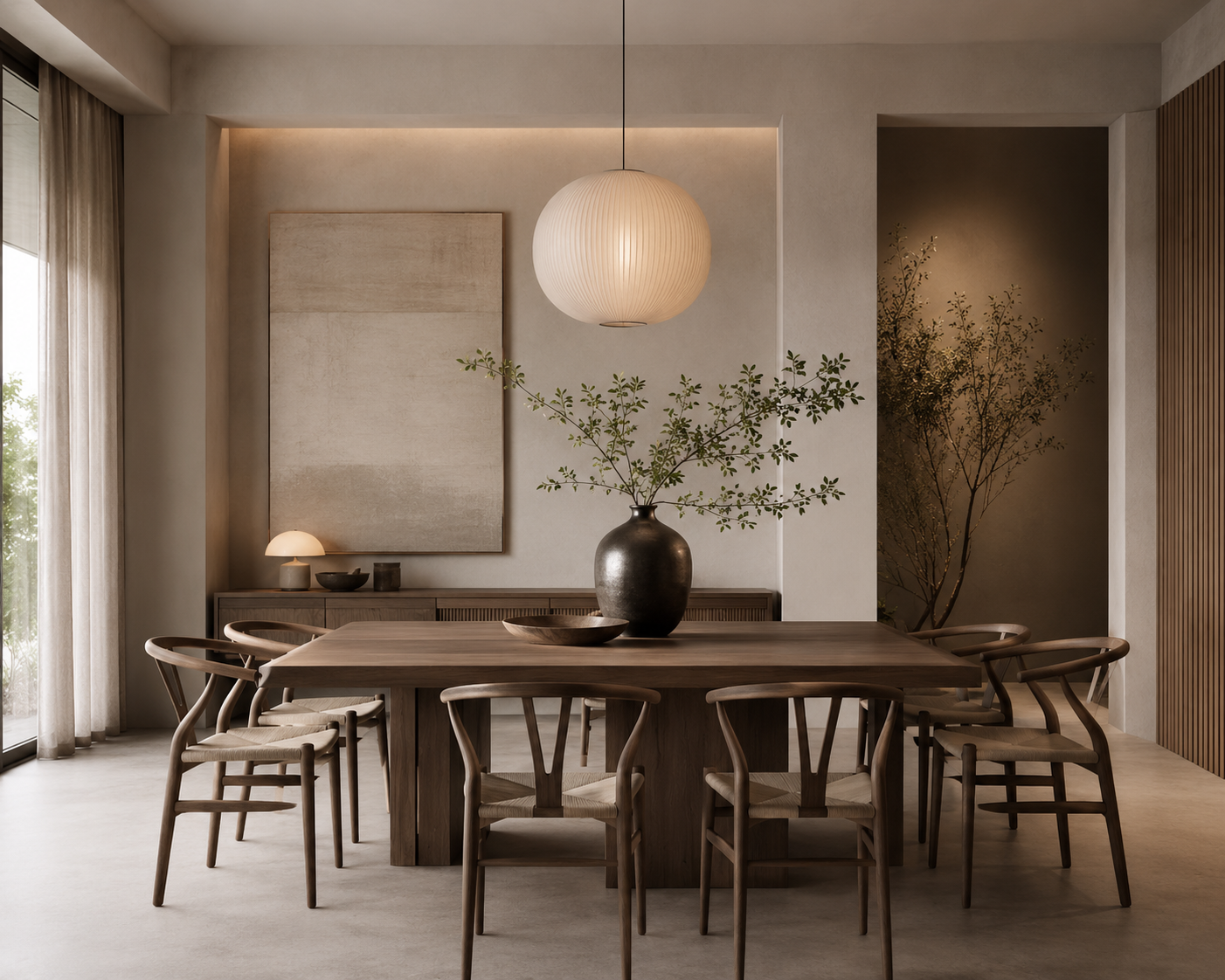
Elevating your eating area into a sophisticated, high-end sanctuary requires a brilliant mix of Japanese minimalism and warm Scandinavian utility. By focusing on monolithic timber shapes, bespoke textures, and sculptural lighting, you can easily design a dining space that channels understated luxury.
1# Elevate the Look with Fluted Wood
Investing in a solid white oak or rich walnut dining table with chunky pillar legs immediately establishes an expensive architectural anchor. The heavy, unvarnished wood grain provides a beautiful organic center point that commands full attention without relying on flashy ornamentation.
Choosing a capsule or oval-shaped tabletop introduces soft, flowing contours that ease the traffic movement around your main eating area. These smooth, continuous edges capture natural daylight beautifully, preventing your foundational furniture from looking blocky, rigid, or entirely mass-produced.
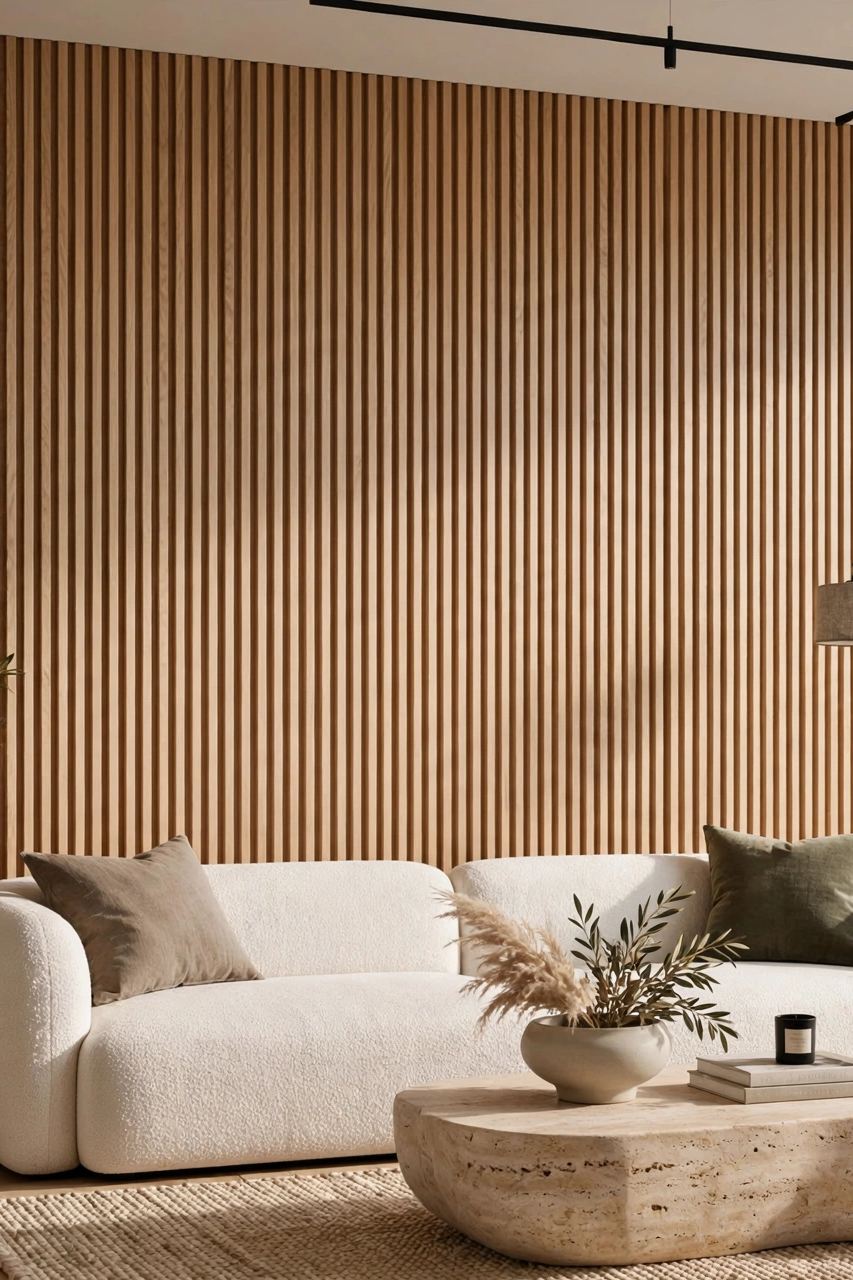
Opting for a table base featuring subtle fluted timber detailing adds a highly customized, artisan layer to your minimalist room. This three-dimensional woodwork mimics high-end millwork, throwing elegant linear shadows across the floor plane throughout the changing daylight hours.
Pairing your heavy wooden table with a completely bare top surface highlights the unadulterated purity of the raw timber. This intentional, edited restraint is a classic calling card of premium interior styling, proving that high-quality craftsmanship needs zero coverage.
2# Iconic Seating
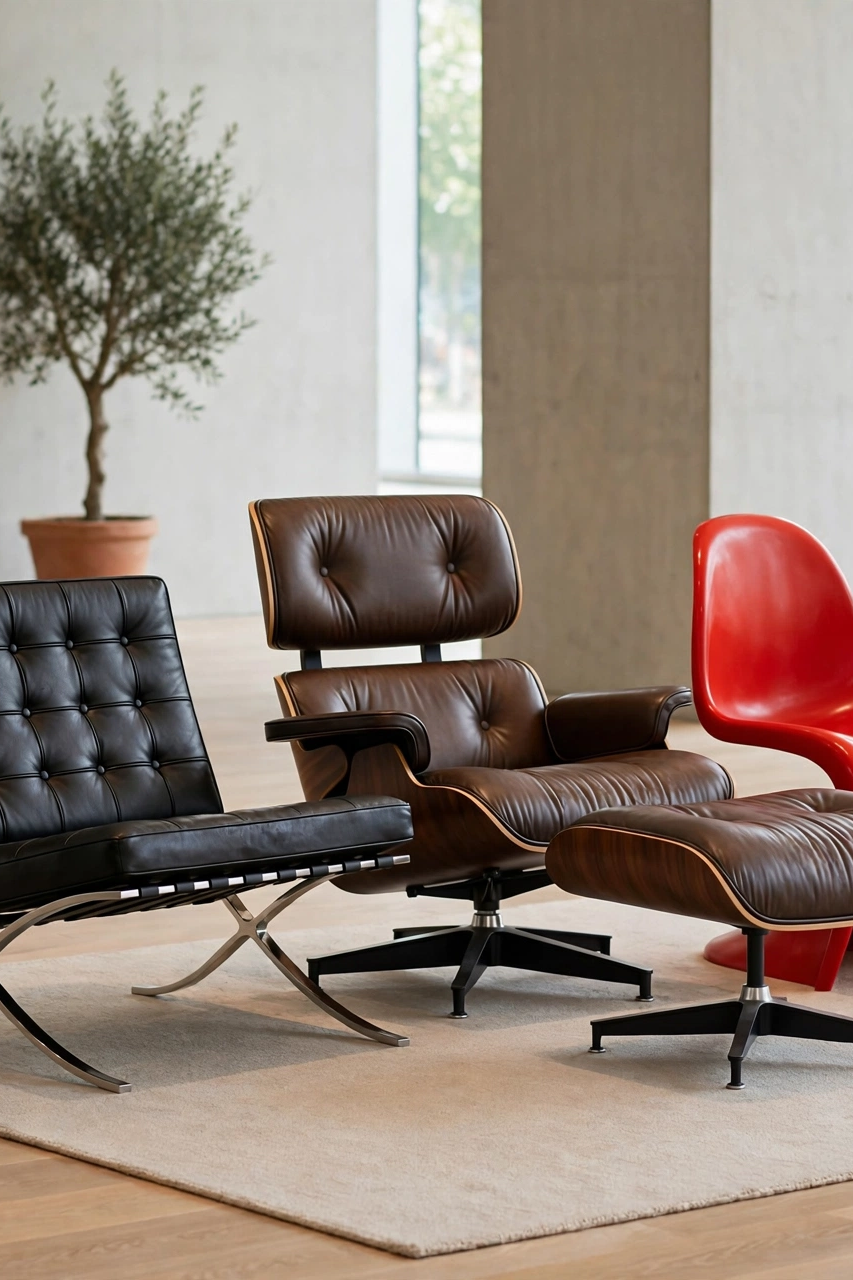
Selecting classic Danish wishbone chairs or sculptural Japanese-style wooden dining seats wraps your table configuration in timeless, collector-level sophistication. The delicate, open-backed profiles keep your room layout feeling light and breezy while offering incredible ergonomics for lengthy dinner parties.
Choosing seats crafted with hand-woven paper cord or organic cane webbing introduces an exceptional layer of historic, old-world texture. This natural fiber element prevents your modern dining set from feeling cold, clinical, or like a corporate conference room.
Mix a long, minimalist oak bench on one side of the table with standalone chairs on the opposite side to set a relaxed vibe. This asymmetric furniture arrangement mimics high-end architectural layouts, maximizing your available seating while maintaining a clean visual profile.
Ensuring your dining chair wood species matches the finish of your main table perfectly creates a highly cohesive material loop. This strict discipline in material curation makes your entire dining arrangement look bespoke, custom-ordered, and incredibly expensive.
3# Sculptural Lighting
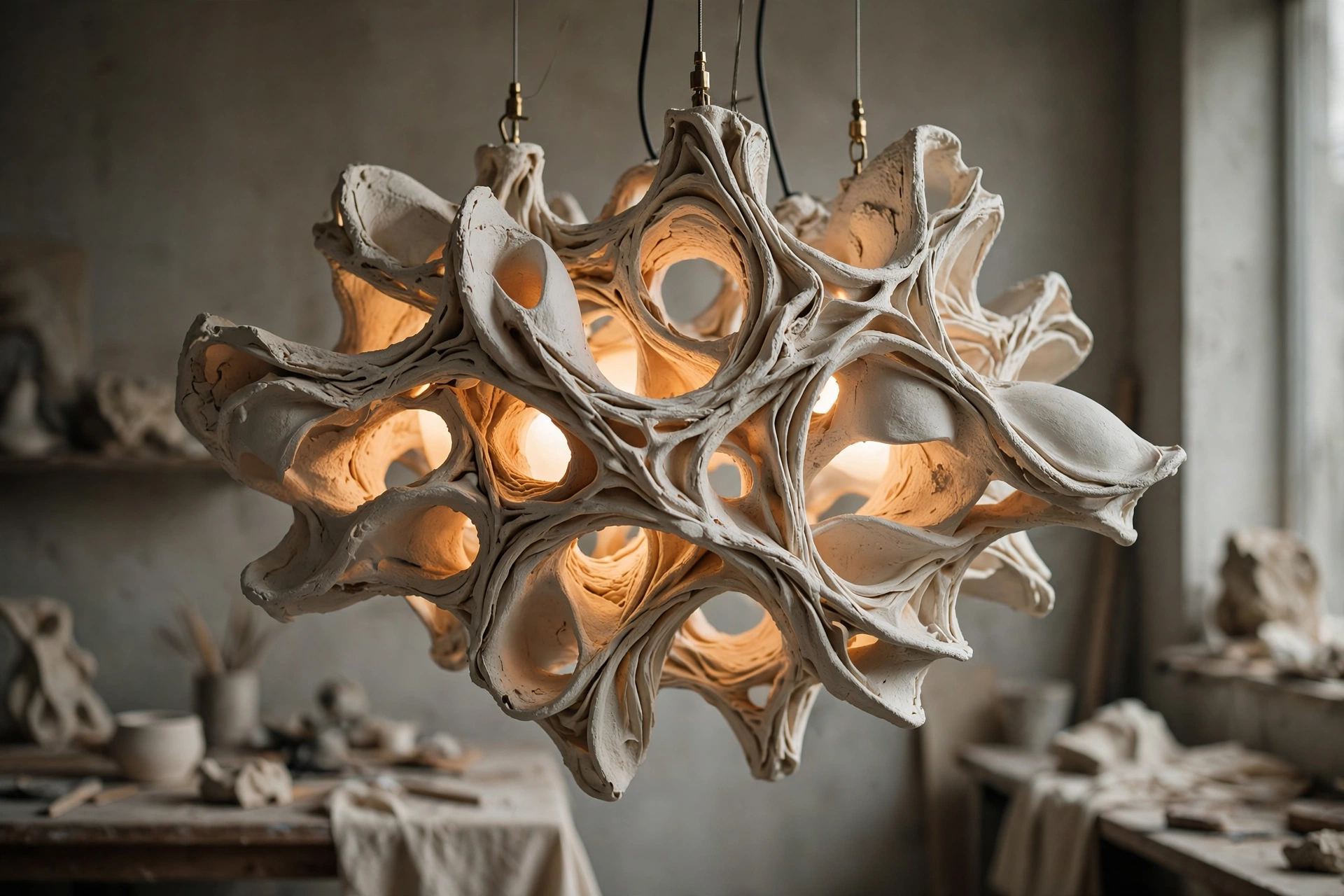
Hanging an oversized paper pendant light or a woven bamboo dome directly over your table center creates a striking artistic statement. These lightweight, cloud-like fixtures filter raw bulb brightness into a soft, velvety glow that instantly warms your dinner environment.
Selecting a light fixture with a matte black asymmetric metal frame slices through neutral walls with incredible graphic precision. This ink-black line acts like a beautiful brush stroke on canvas, bringing a contemporary edge that balances the rustic elements.
Utilizing hidden, recessed plaster-in ceiling spotlights allows you to wash your dining walls in light without adding bulky fixtures. This concealed installation method keeps the ceiling plane entirely clean, directing your guests’ eyes straight down to your beautiful furniture.
Placing dimmable, rechargeable wireless table lamps along your sideboard lets you adjust the evening mood with absolute flexibility. These portable light sources eliminate unsightly power cords, keeping your minimalist surfaces looking perfectly pristine and uncluttered.
4# Artisan Ceramics
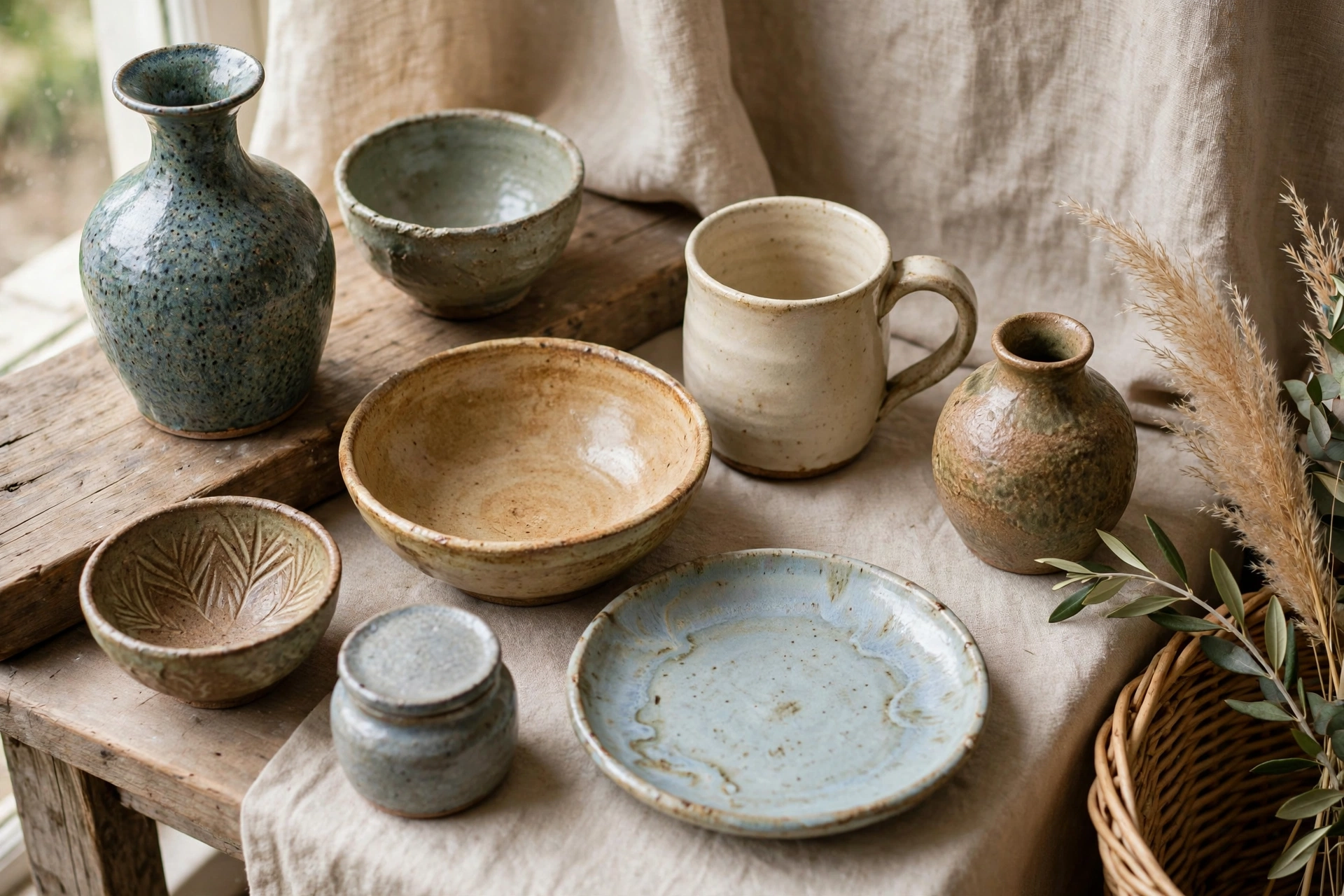
Styling your dining sideboard with a few large, hand-thrown stoneware vessels introduces a high-end, gallery-style aesthetic to the room. The matte, rough clay finishes and irregular, organic contours celebrate human imperfection in a way that feels intensely soulful.
Using a single, wide ceramic bowl filled with dark river stones as your primary table centerpiece radiates absolute quiet confidence. This minimalist approach replaces temporary floral arrangements with a permanent graphic anchor that looks thoughtfully styled across all seasons.
Investing in a set of matte-glazed ceramic dinnerware featuring organic, slightly uneven edges elevates your daily meal presentation effortlessly. The tactile, stone-like feel of artisanal plates enhances your sensory experience, making casual breakfasts feel like five-star dining.
Displaying your curated pottery pieces inside built-in wall niches finished with soft lime-wash paint creates an elegant museum-like display. This architectural integration turns functional serving ware into high art, ensuring your dining space looks meticulously planned and executed.
5# Textural Foundations
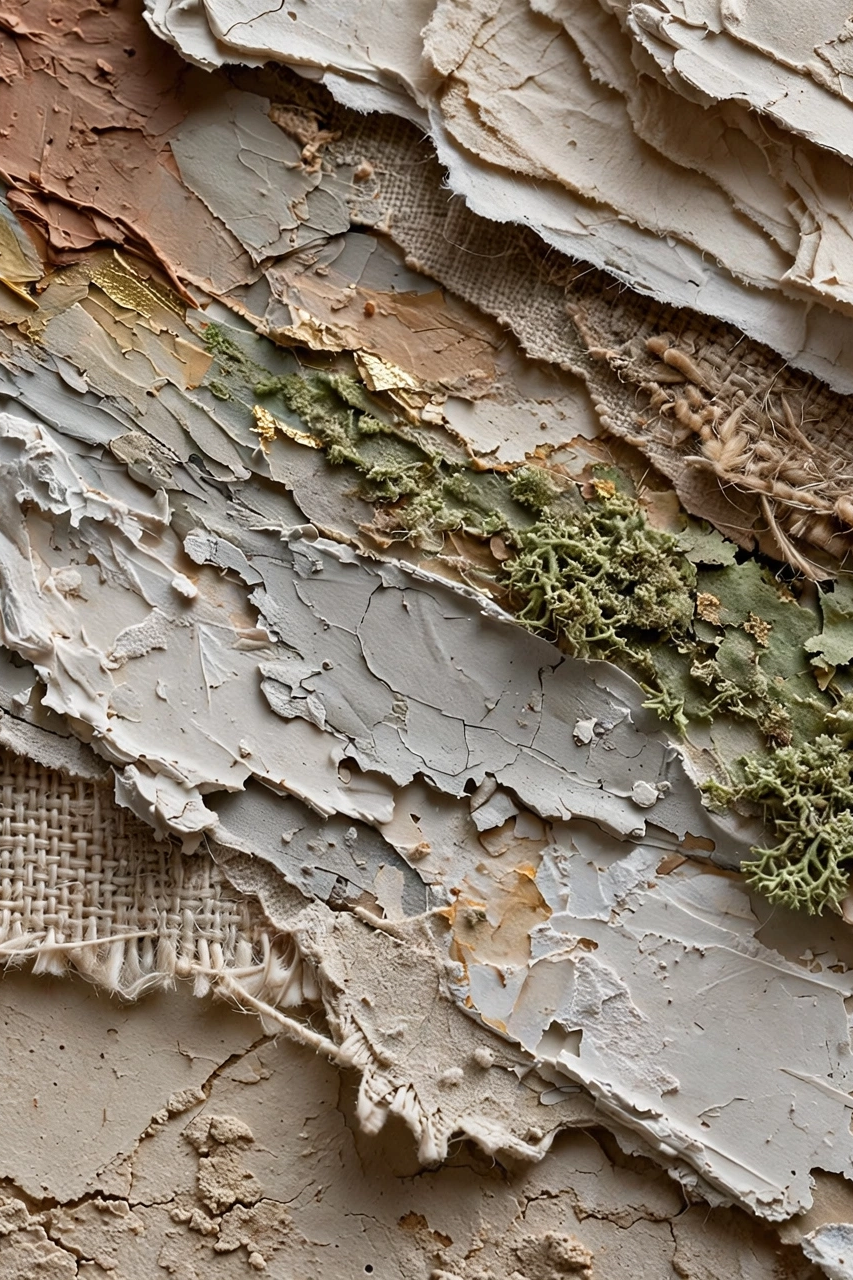
Laying a massive, low-profile jute area rug under the dining set anchors the entire room configuration with raw texture. This sustainable organic fiber introduces an earth-scented grounding element that instantly deadens harsh echo and sharp dining chair movement.
Selecting an un-dyed wool flat-weave carpet featuring subtle horizontal ribbing brings high-end Scandi warmth directly to your floorboards. The pale cream and sand tones brighten up dark wood floors, keeping the entire footprint feeling incredibly spacious.
Ensuring the rug boundary extends at least thirty inches beyond the table edge allows chairs to slide out safely. This professional spatial measurement prevents irritating uneven chair legs, creating a smooth and seamless dining experience for all your guests.
Foregoing a rug completely and prioritizing wide-plank, matte oak flooring presents a striking, highly intentional minimalist look to visitors. This design path celebrates pure structural volume, allowing your statement furniture pieces to stand out with museum-like clarity.
6# Architectural Buffets
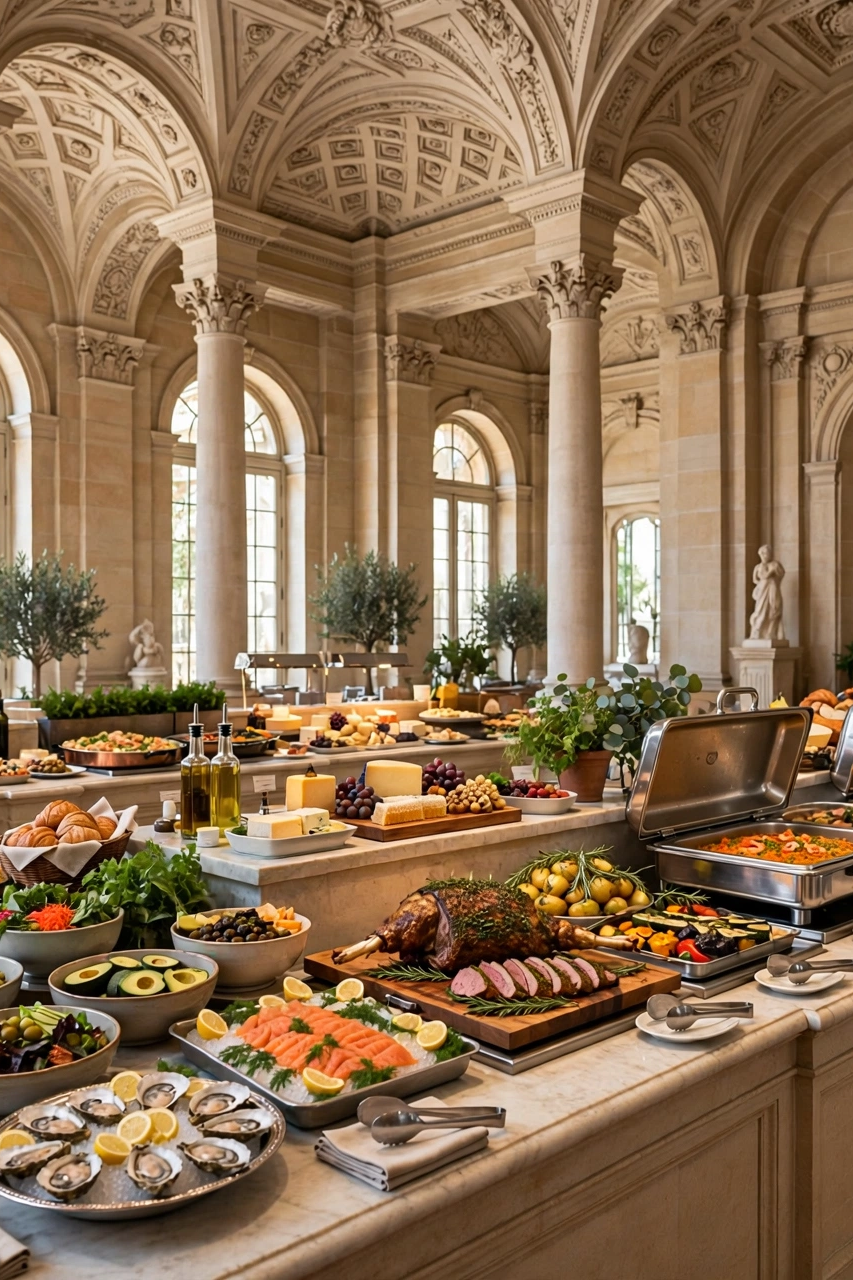
Choosing a floating, wall-mounted oak credenza keeps your floor space wide open, creating a luxurious sense of weightless design. The uninterrupted line along the floorboards stretches the perceived width of your room, making standard spaces feel grand.
Opting for sliding tambour doors on your storage units completely eliminates the need for swinging door clearances. The delicate wooden slats match your table base geometry perfectly, providing an expensive custom-millwork aesthetic to your accent walls.
Using heavy, honed travertine slabs as the top surface for your wooden console adds an extraordinary mix of materials. This cool stone topper balances the warm timber tones below, offering a sophisticated canvas for styling your favorite glassware.
Concealing all necessary barware, table linens, and extra candles inside deep handle-less drawers preserves an unblemished architectural facade. This strict clutter-elimination habit ensures your main entertainment zone stays calm, organized, and constantly ready for guests.
7# Minimalist Window Dressing
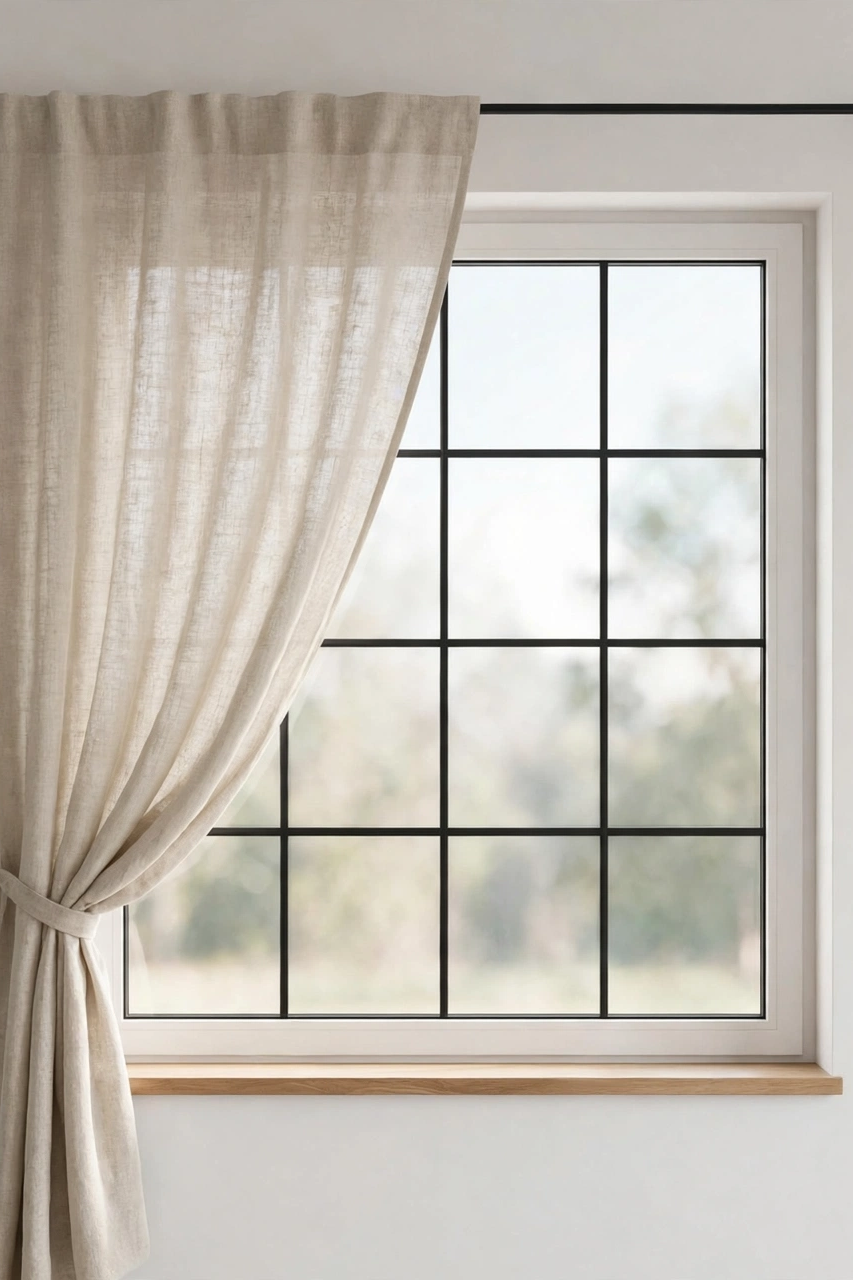
Draping your dining windows in floor-to-ceiling sheer linen panels introduces a soft, hazy filter to the room’s natural light. The light linen flax flows elegantly with the slightest afternoon breeze, softening the clean, rigid lines of your table layout.
Selecting a concealed recessed ceiling track completely hides standard bulky metal rods, keeping your window borders flawlessly clean. This high-end architectural detail makes your curtains appear to cascade down straight from the sky, expanding vertical room scale.
Choosing entirely unlined drapery fabrics in ivory, soft beige, or pale wheat hues supports the organic monochromatic color story beautifully. This material selection maximizes the available winter daylight, honoring the classic Nordic obsession with chasing natural light sources.
Pairing sheer curtains with a secondary layer of woven bamboo roller shades offers absolute privacy control during intimate night dinners. The rich bamboo texture layers over the soft linen fabric, adding an expensive-looking dimension to your dining room boundaries.
8# Curated Wall Art
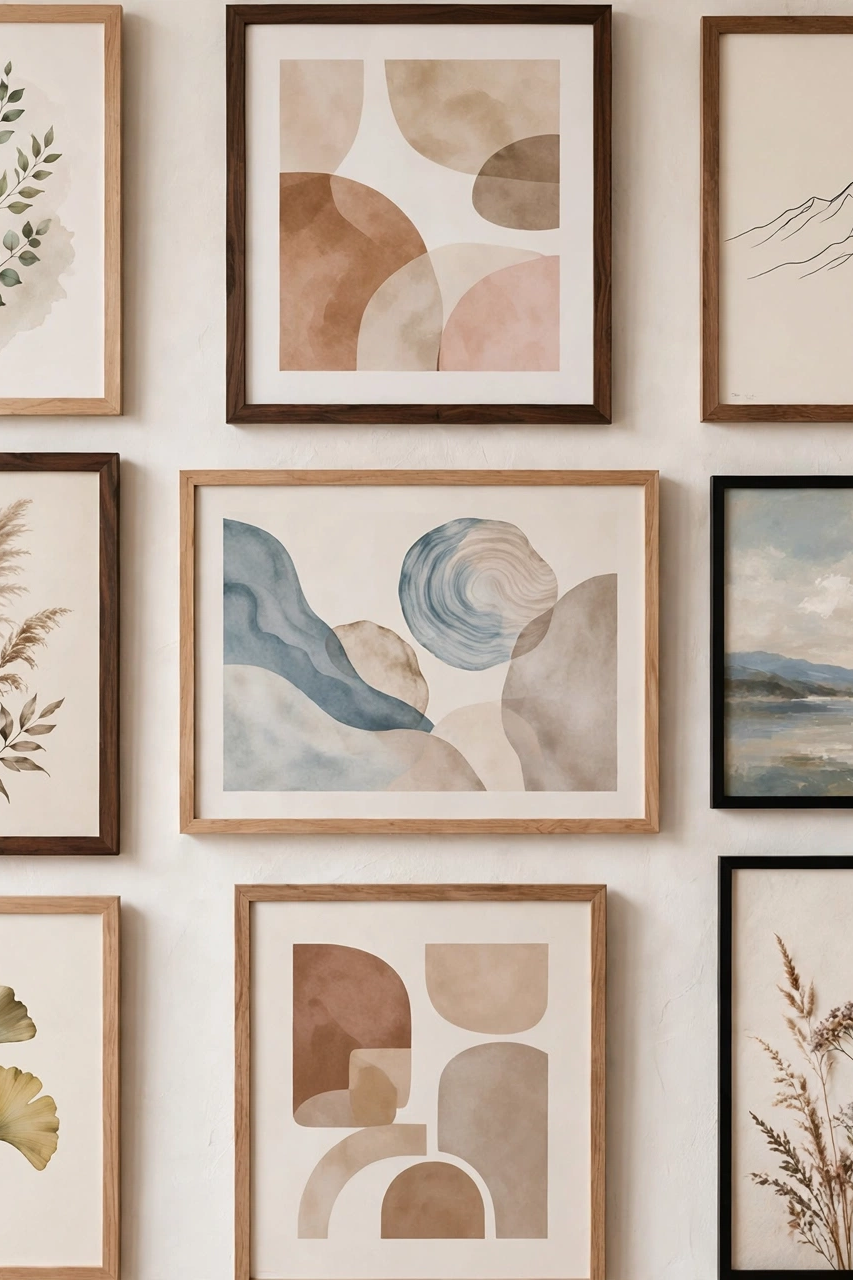
Hanging a singular, oversized abstract canvas featuring heavily textured plaster strokes sets a highly sophisticated, museum-like tone for dinner. This large-scale minimalist approach focuses the mind on form and shadow, completely removing the need for busy gallery walls.
Framing your statement artwork in thin, raw timber frames that match your dining wood species ensures absolute material harmony. This thoughtful coordination ties the wall decor straight down to your seating group, proving your high-level attention to detail.
Positioning your primary artwork lower on the wall aligns the piece beautifully with your seated guests’ eye level. This intimate placement technique is a staple of refined Japanese design, turning meal times into a cozy, deeply contemplative experience.
Leaving wide sections of your dining walls completely bare creates a beautiful frame of negative space around your art. This intentional editing discipline lets your chosen pieces breathe, boosting their perceived artistic value and overall luxury feel.
9# Textural Wall Plaster
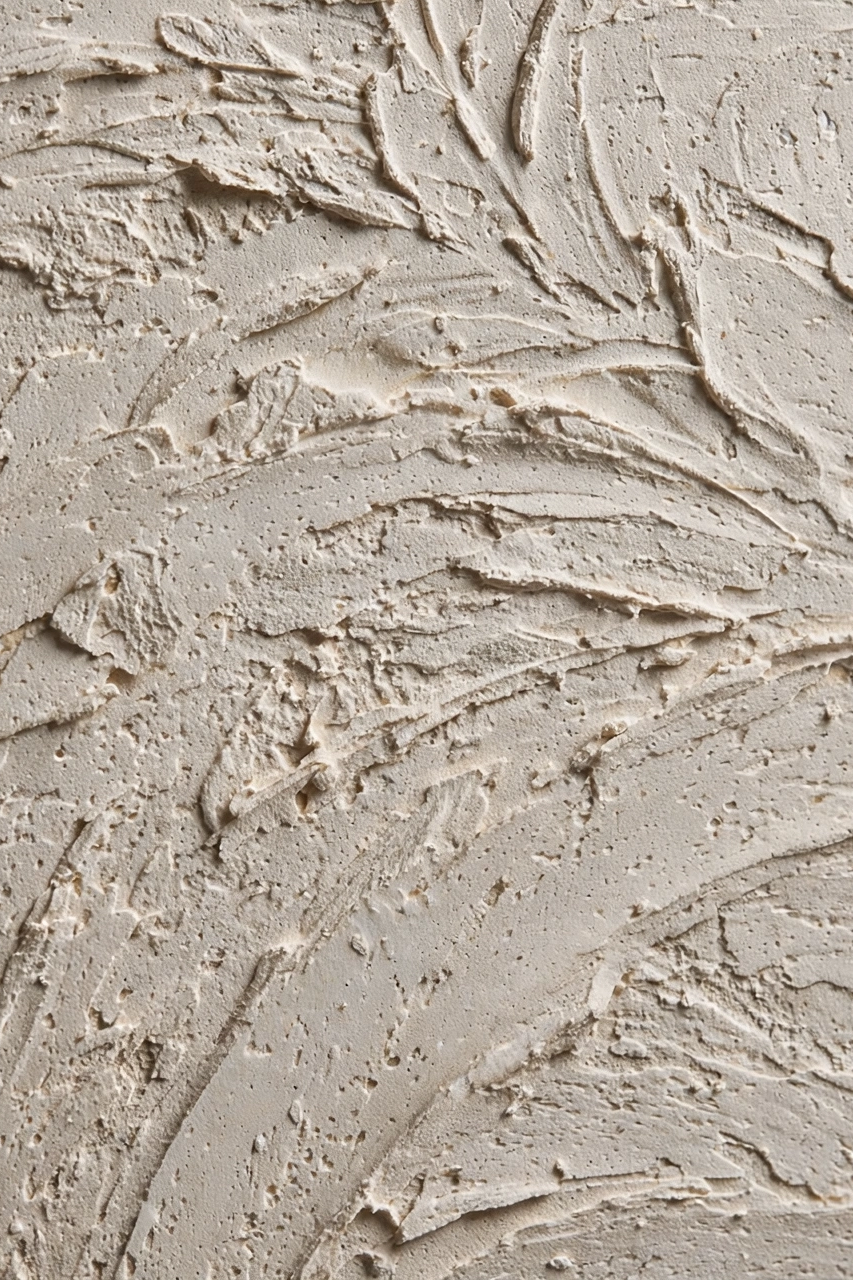
Finishing your main dining walls with hand-applied lime-wash paint introduces a gorgeous, cloud-like movement to ordinary flat drywall. This ancient natural finish catches low-angle evening sunlight beautifully, creating subtle shifts in tone that feel deeply historic.
Utilizing a clay-based plaster coat provides an organic matte surface that absorbs light rather than bouncing it harshly. This velvet texture wraps your guests in a soft, cocoon-like warmth, making long dinner conversations feel incredibly intimate.
Choosing a warm sand or pale stone tint for your plaster walls replaces cold apartment white with premium character. This architectural texture mimics the earthy surfaces of traditional Japanese tea houses, elevating your room’s background into fine art.
Contrasting these rough, textured walls with the razor-sharp edges of a modern black steel light fixture creates design tension. This deliberate mix of primitive and contemporary styles is the absolute secret to achieving that coveted effortlessly expensive look.
10# Styled Alcoves
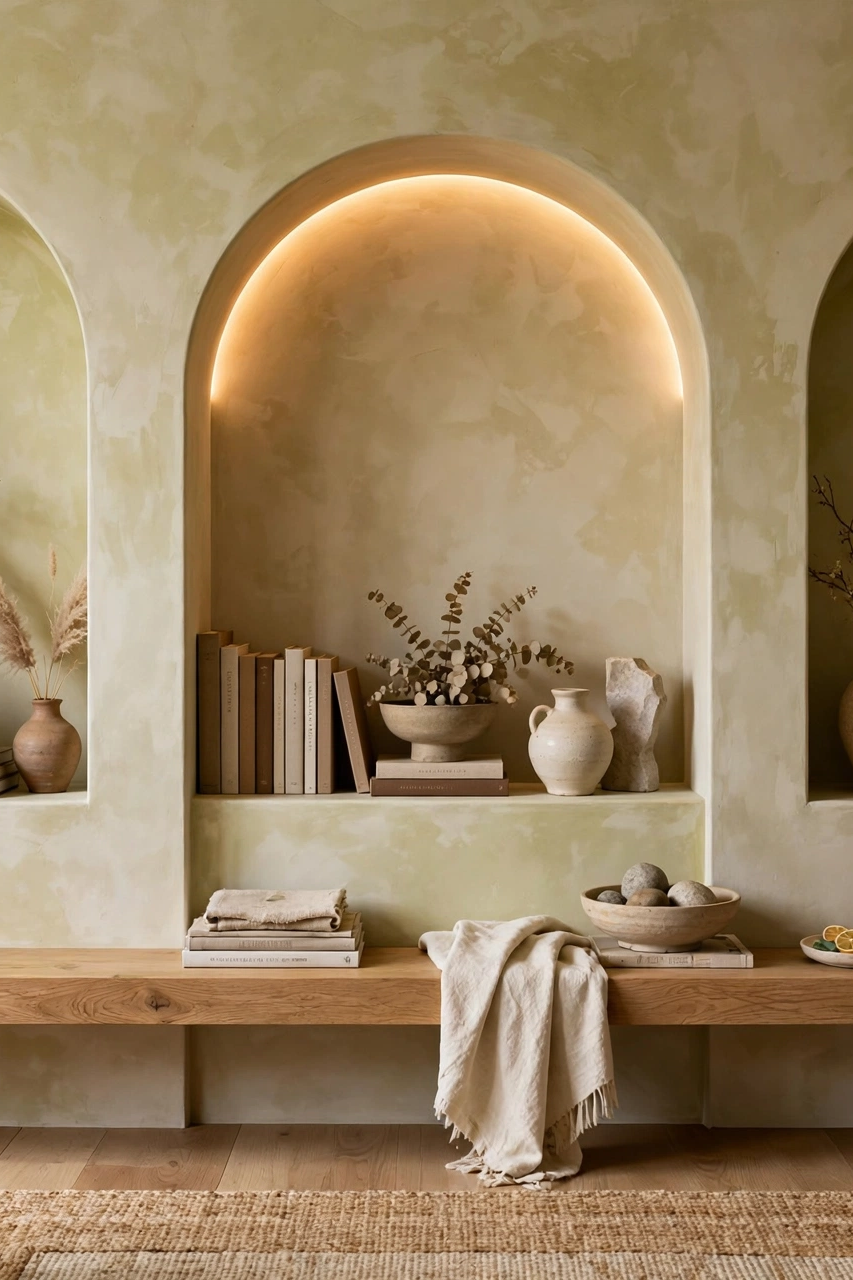
Carving out built-in arched wall niches provides an incredibly sophisticated, custom-architectural home for displaying your favorite design items. These recessed display pockets break up long, flat walls, adding depth and shadow play to your minimalist dining space.
Illuminating the interior of each wall niche with concealed low-voltage LED micro-spots creates a breathtaking gallery glow at night. This soft, targeted lighting highlights the contours of your ceramics, turning simple storage into an expensive visual experience.
Displaying only a single, hand-crafted item per shelf demonstrates immense design restraint and premium curatorial confidence to your guests. Leaving plenty of empty space inside the alcove ensures that each unique sculpture receives undivided visual attention.
Finishing the inside of your display niches with the exact same plaster texture as your walls maintains architectural continuity. This seamless detail integrates your decorative vignettes straight into the room’s skeleton, avoiding cheap, stuck-on retail shelving looks.
11# Premium Tabletop Linens
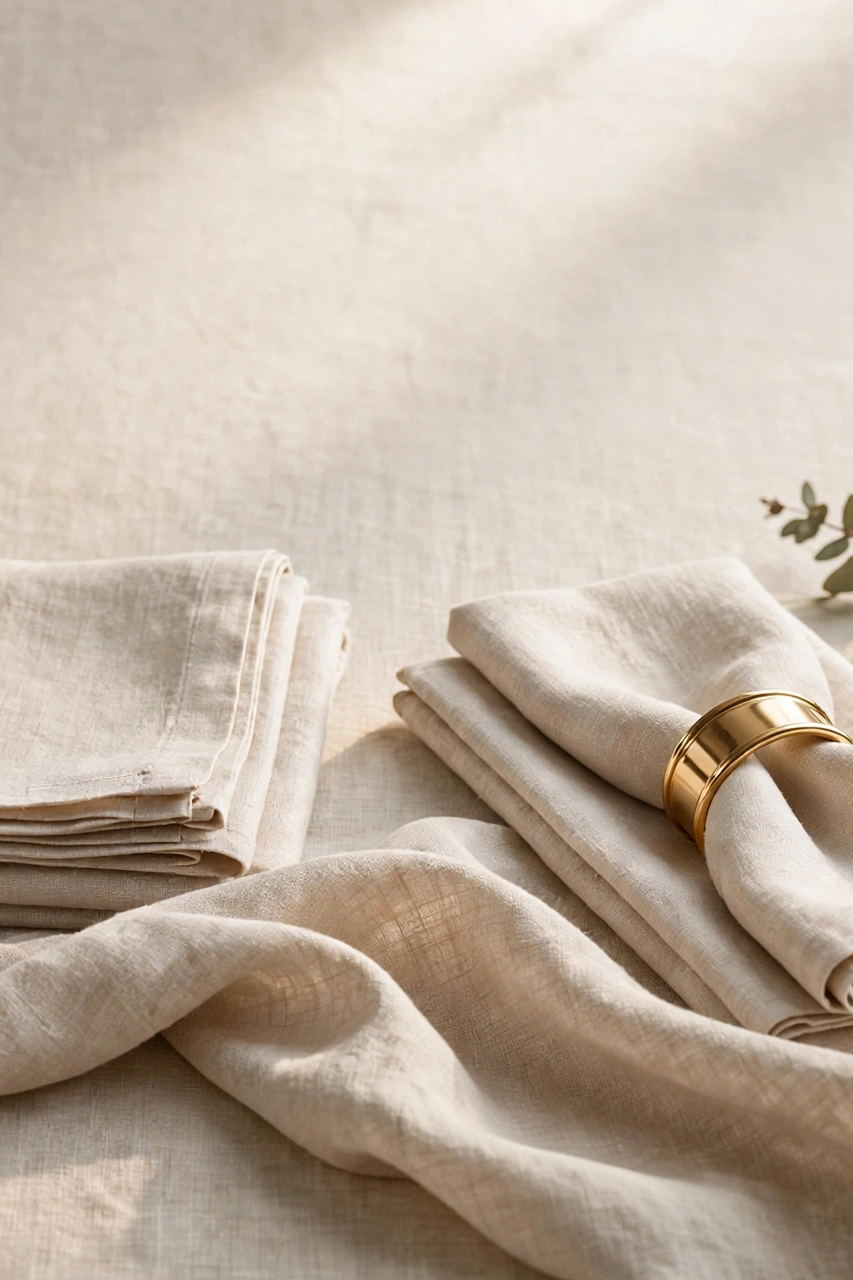
Forgoing giant, formal tablecloths in favor of raw, loose linen table runners lets your premium wood grain stay beautifully visible. The frayed or simple hemmed edges of organic linen drape over the wood ends, introducing an inviting Scandi casualness.
Selecting napkins woven from pure, un-dyed hemp fibers brings a heavy, luxurious weight and an authentic tactile quality to place settings. These textured linens soften the clean geometry of your plates, making every seat feel personalized and carefully prepared.
Layering muted earth-toned linen placemats in alternating shades of charcoal and oatmeal outlines each guest’s dining zone with precision. This low-contrast textile framing enhances your table arrangement without relying on colorful, busy pattern prints.
Washing your dining linens with organic, scent-free soaps preserves the crisp, slightly stiff natural hand of the raw plant fibers. This honest preservation of fabric characteristics aligns perfectly with the eco-conscious luxury of modern Japandi living.
12# Monochromatic Glassware

Setting your table with hand-blown, smoky gray or amber-tinted wine glasses injects a gorgeous layer of moody modernism. The subtle coloration of the glass catches ambient candle flame beautifully, throwing colored light reflections across your wood table.
Choosing glassware shapes that feature clean, cylindrical profiles or sharp conical angles highlights a refined Japanese silhouette. These structured designs stand like tiny architectural towers at each setting, contrasting beautifully with organic pottery plates.
Displaying your premium crystal stemware on an open wooden shelf turns everyday utility items into a major design feature. This transparent storage solution keeps the dining area feeling airy, light, and remarkably unburdened by heavy wooden cabinets.
Mixing clear water tumblers with tinted wine chalices adds a delicate layer of visual depth to your ongoing tabletop styling. This low-contrast pairing keeps your entertainment settings looking dynamic and curated without breaking your strict color rules.
13# Asymmetric Design
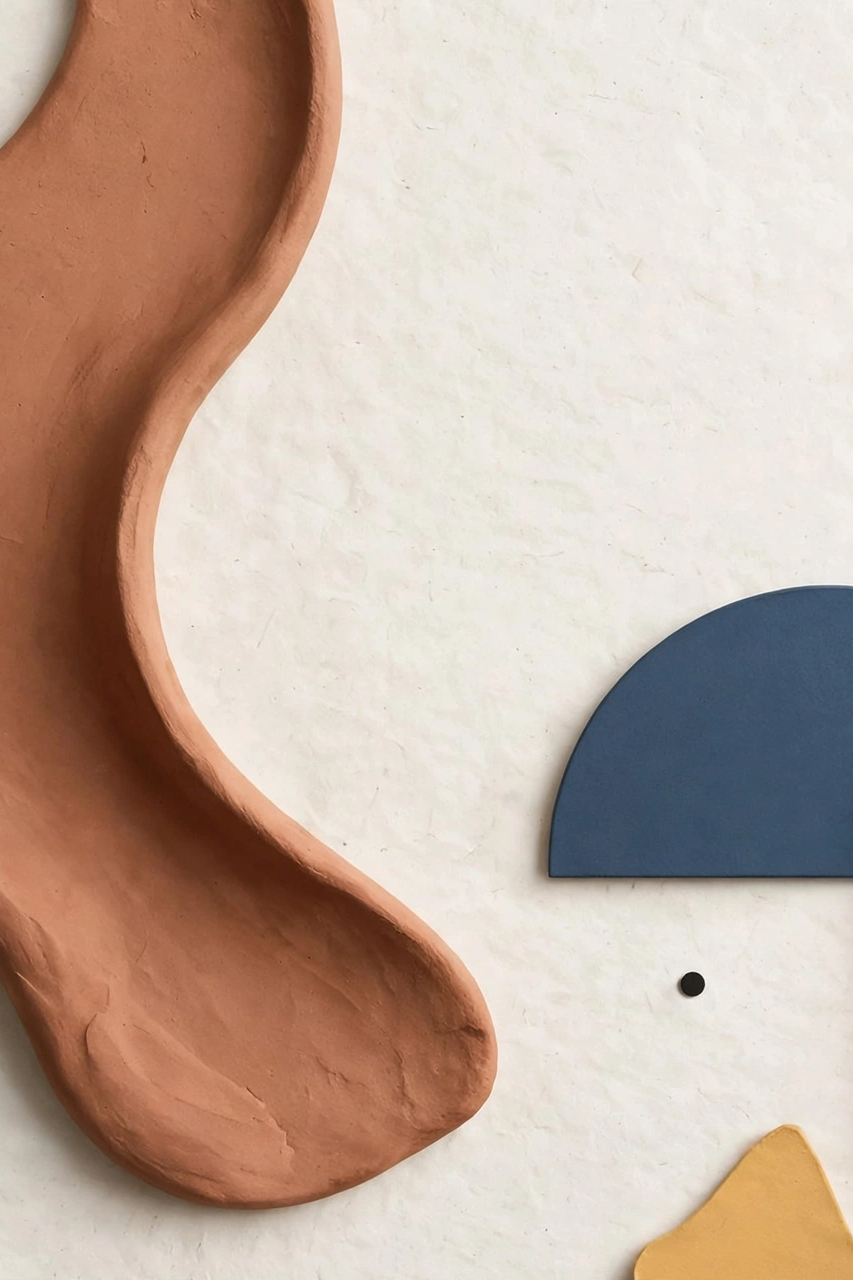
Arranging your decorative sideboard objects in uneven numbers like three or five creates a natural visual rhythm that feels casual. This asymmetric balance avoids the stiff, forced formality of traditional dining layouts, embracing the beautiful Japanese concept of wabi-sabi.
Placing a massive floor vase on just one side of your credenza balances a low stack of art books positioned opposite. This clever play on varying heights and weights keeps the eye moving across your room, making the layout feel curated over time.
Offsetting your main ceiling pendant light slightly to one side of a long bench arrangement breaks up predictable center lines. This unexpected layout choice mimics high-end architectural gallery designs, adding a confident, professional signature to your home.
Choosing dining chairs with slightly varied organic silhouettes while keeping their timber species identical creates a rich look. This subtle variation keeps your seating layout looking like a collection of unique sculptures rather than a standard showroom package.
14# Sleek Stoneware Plates
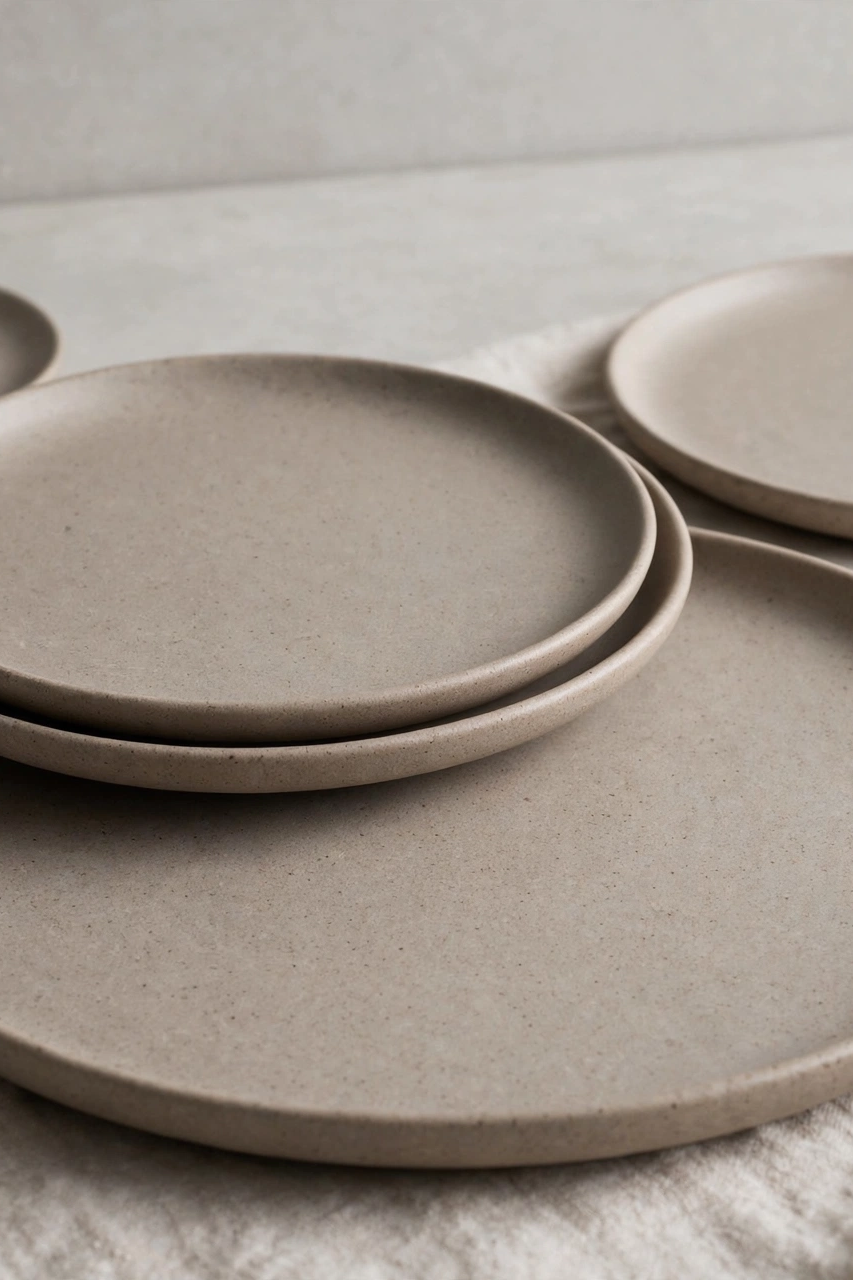
Investing in heavy, unpolished stoneware dinner plates brings an authentic, stone-like texture to every single family mealtime. The matte, slightly gritty underside of artisan pottery offers a satisfying weight that screams luxury craftsmanship.
Selecting plate glazes in muted charcoal, matte ivory, or specked eggshell keeps your food presentation looking incredibly artful. These neutral, non-reflective backgrounds let the colors of your fresh ingredients take center stage, turning dinners into visual art.
Stacking your artisan plates on open kitchen shelving or glass buffets showcases their beautiful, irregular profiles to visitors. This display method integrates your daily dishware straight into the room’s aesthetic, blurring the line between utility and decor.
Pairing these rustic ceramic plates with modern, brushed black steel cutlery creates a stunning balance of styles. The clean metal lines cut through the irregular pottery shapes, delivering a premium dining experience that feels balanced.
wrap up
The secret to a Japandi dining room that looks effortlessly expensive is the unwavering commitment to editing out the noise to let premium, natural elements speak for themselves. By pairing a heavy monolithic table with iconic woven seating and soft, diffused paper lighting, you create a timeless gathering space that feels incredibly luxurious yet completely approachable. Take a moment to examine your current dining layout, determine where you can remove visual distraction, and pin this article to your favorite boards to guide your next weekend design project!