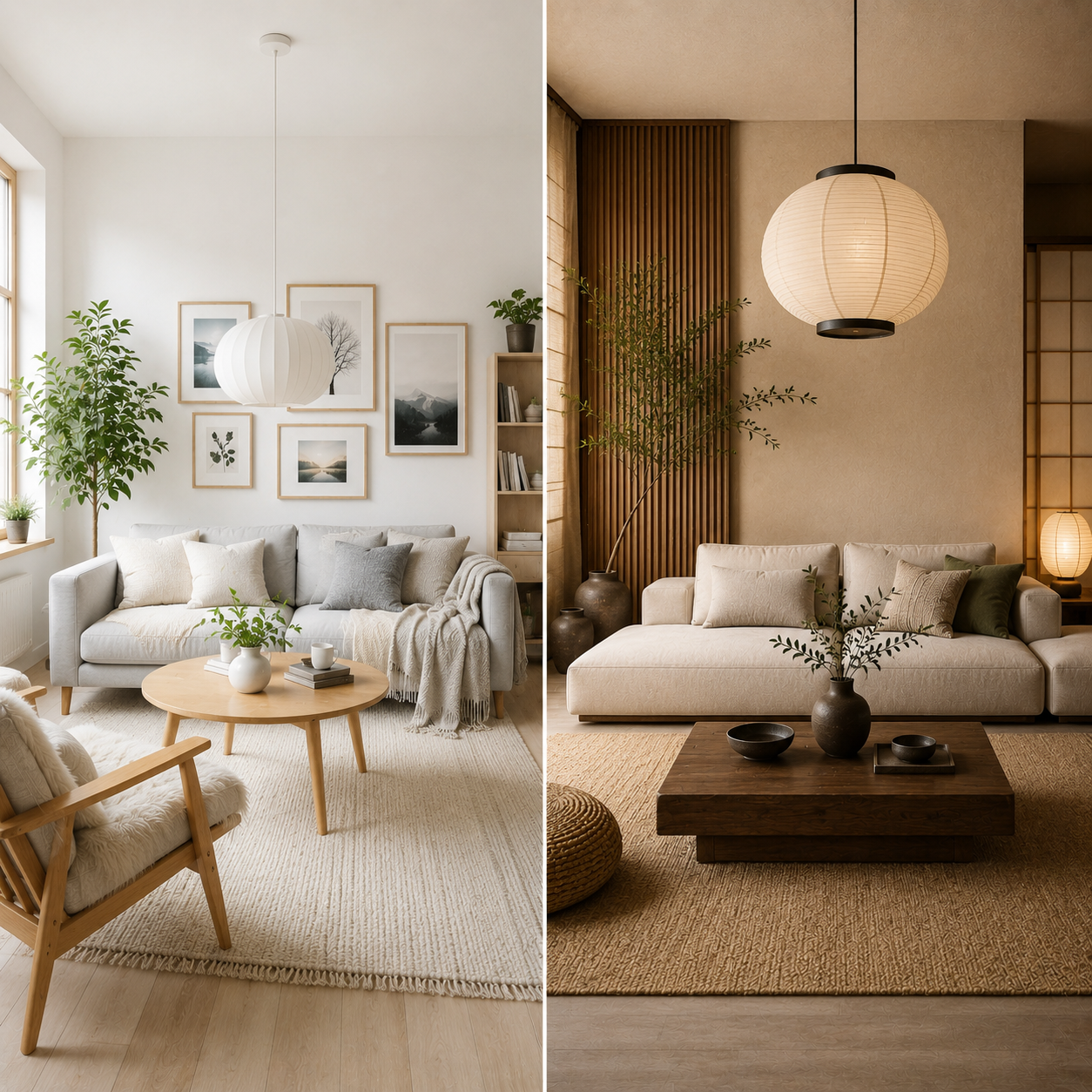
If you’ve spent any time scrolling through Pinterest or browsing home décor inspiration, you’ve probably come across both Scandinavian and Japandi interiors. At first, they seem almost impossible to tell apart. Both feature soft neutral colors, natural materials, and beautifully simple spaces that feel calm and welcoming. So why do so many designers treat them as completely different styles?
The truth is that while Scandinavian and Japandi design share some similarities, they create very different feelings once you start paying attention to the details. One leans into cozy comfort and everyday warmth, while the other embraces a quieter, more intentional approach to living. These subtle differences can completely change the atmosphere of a room.
Many homeowners fall in love with photos of both styles but struggle to decide which one fits their home best. Is it the bright, airy charm of Scandinavian design that makes a space feel inviting? Or is it the peaceful simplicity of Japandi that creates a sense of balance and calm? Understanding the difference can save you from decorating mistakes and help you create a space you’ll truly enjoy living in.
In this guide, we’re taking a closer look at Scandinavian vs. Japandi interior design in a simple and easy-to-understand way. By the end, you’ll know exactly what makes each style unique and which one feels most like home to you.
Style Comparison
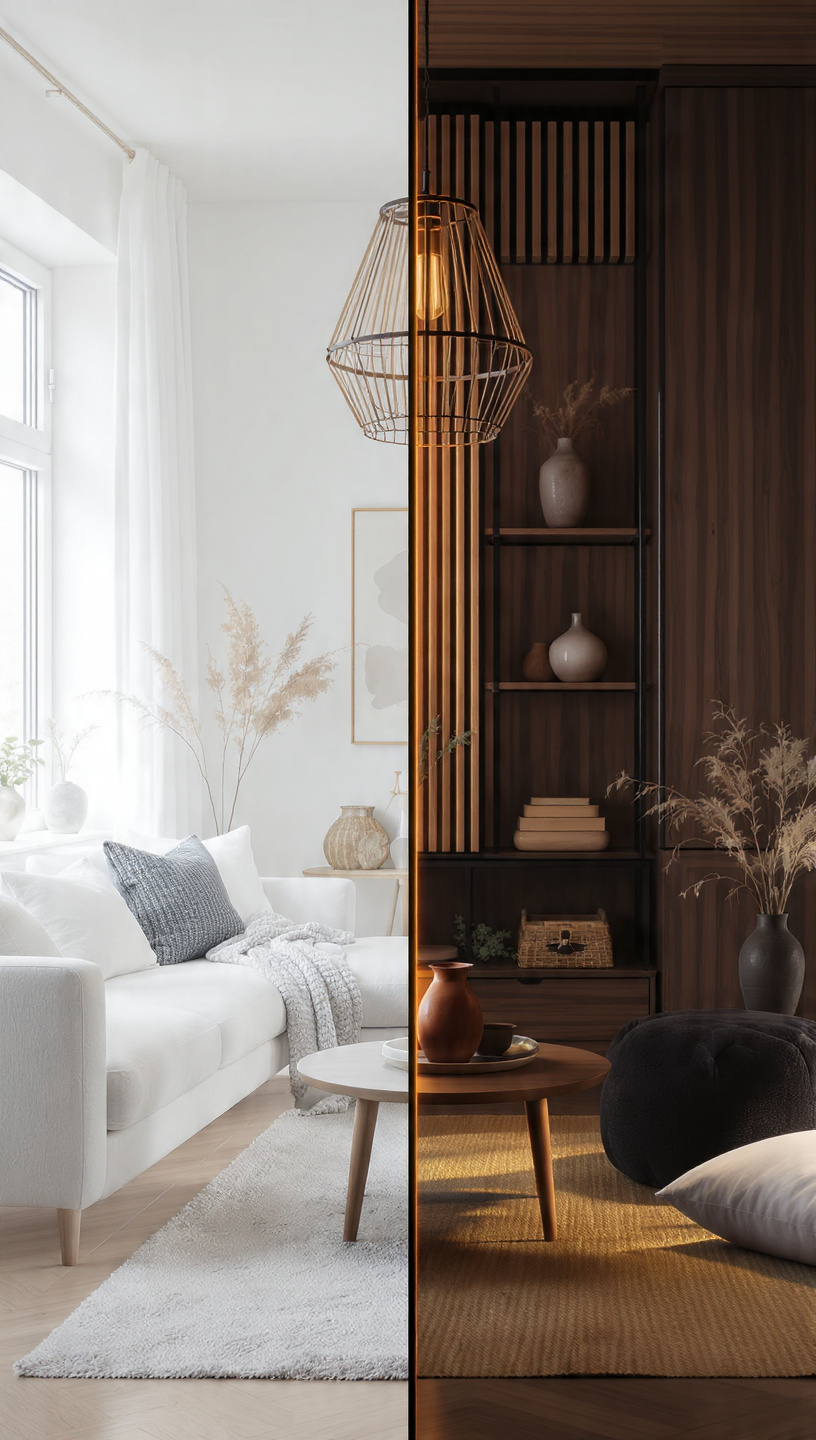
To help you visualize how these two design worlds differ, it helps to look at a direct breakdown of their features. This quick comparison shows how changing simple elements alters the entire feeling of a decorated room.
| Design Feature | Scandinavian Design Style | Japandi Design Style |
| Primary Wood Tones | Very light woods like blonde timber, ash, and pale pine | Warm, dark woods like rich walnut, oak, and stained cedar |
| Color Palette | Bright white bases with soft pastel accents and cool grays | Warm neutral bases with rich earthy tones and deep charcoal black |
| Textile Choices | Thick chunky knit blankets, faux fur rugs, and heavy wool | Smooth woven linen, organic cotton, and rustic textured bamboo |
| Overall Vibe | Bright, airy, cheerful, and focused on maximum indoor cozy vibes | Ultra-calm, grounded, peaceful, and closely connected to nature |
Ultimate Minimalist Design Guide
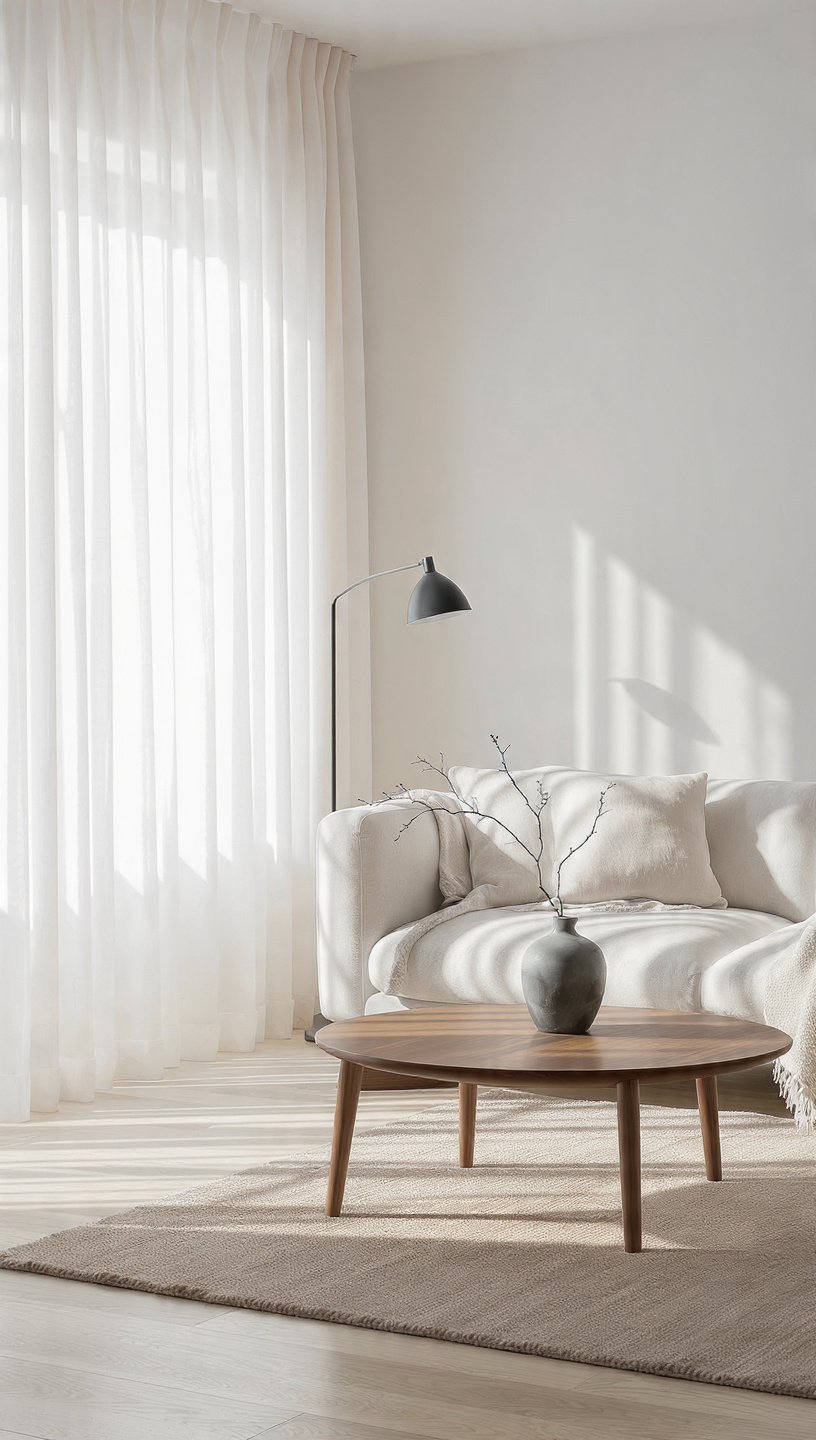
Walking into a home decor store or scrolling through Pinterest can feel incredibly confusing when you see two very similar, beautiful styles. Many people think Scandinavian and Japandi are the exact same thing because both design movements love clean lines and clutter-free spaces.
The good news is that telling them apart is actually very easy once you learn to look closely at the details. With a clear understanding of their unique histories, you can easily pick the perfect look for your own bedroom or living room.
By focusing on small elements like wood tones, fabric textures, and color palettes, you can build a gorgeous space that feels incredibly intentional. Let us dive into the actual differences between these two incredibly popular design trends so you can style like a pro.
Design Core
Scandinavian design comes from Northern Europe where winters are incredibly long, dark, and freezing cold. Because of this weather, the style focuses on a concept called Hygge, which is all about creating a super cozy and warm indoor feeling.
Japandi design is a beautiful modern mashup that blends that Western comfort with traditional Japanese design ideas. This style is deeply rooted in a philosophy called Wabi-Sabi, which teaches people to find peace in natural imperfections and raw materials.
While both styles completely reject messy clutter, they use totally different paths to make a room feel calm and welcoming. Scandinavian spaces focus on creating a bright, cheerful escape from the snow, while Japandi spaces focus on deep, quiet relaxation.
Understanding these core ideas helps you realize that your choice is not just about furniture, but about the daily mood you want to build. One style acts like a bright morning smile, while the other feels like a peaceful deep breath after a long day.
Color Palettes
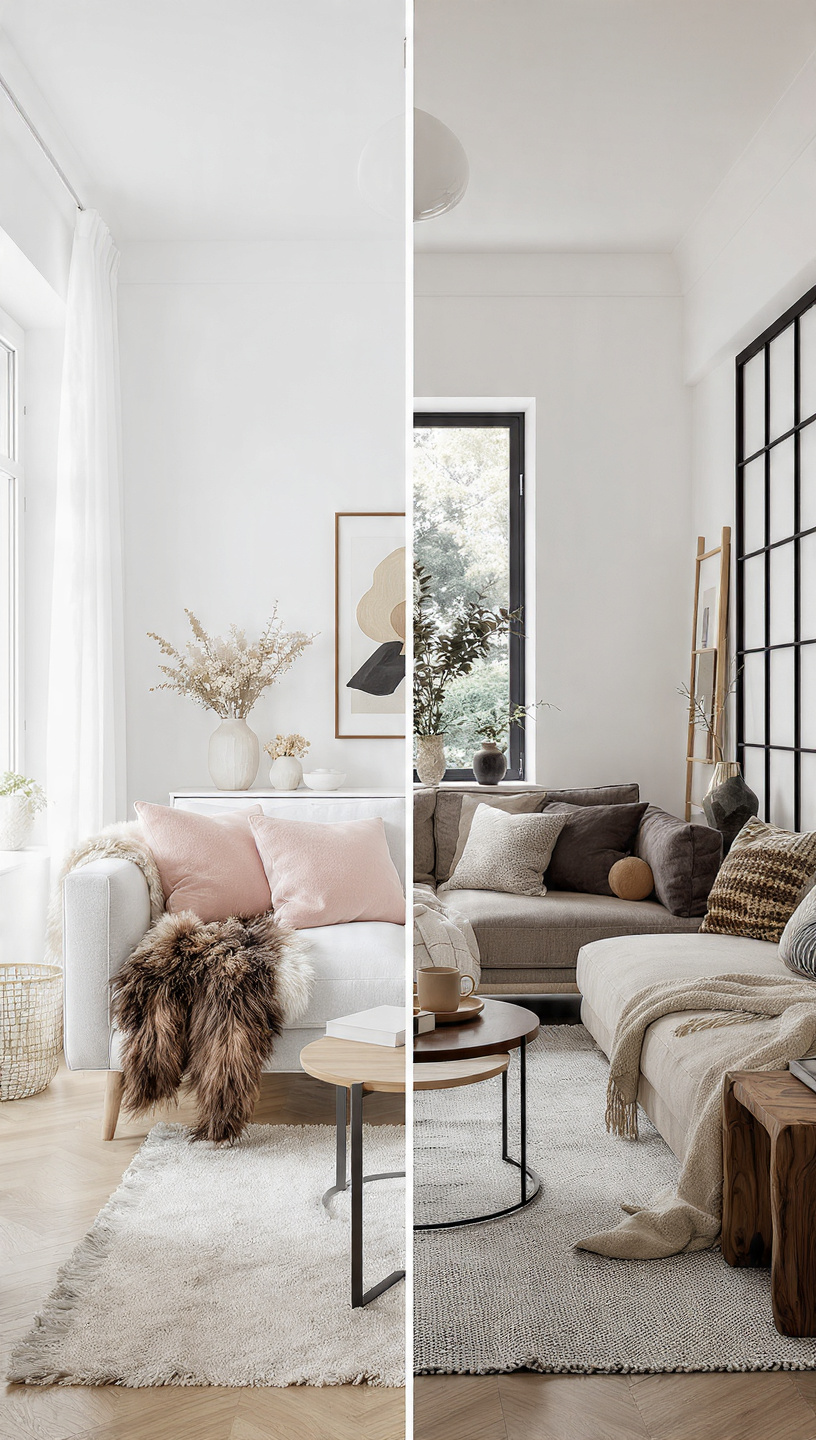
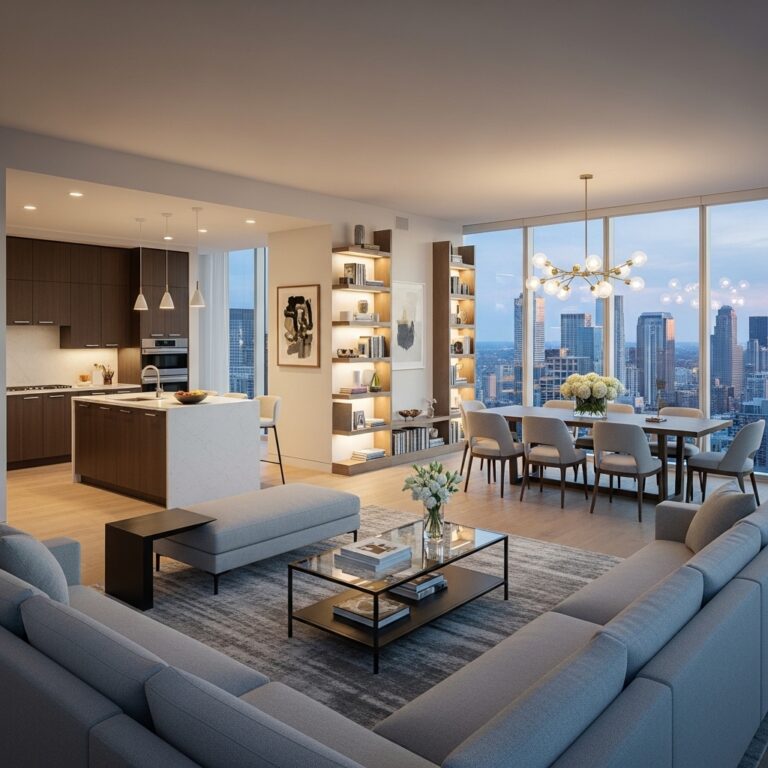
Scandinavian rooms always start with a base of crisp, bright white paint spread across every single wall. This design trick is used to capture the tiny bit of natural winter sunlight available and bounce it all around the living space.
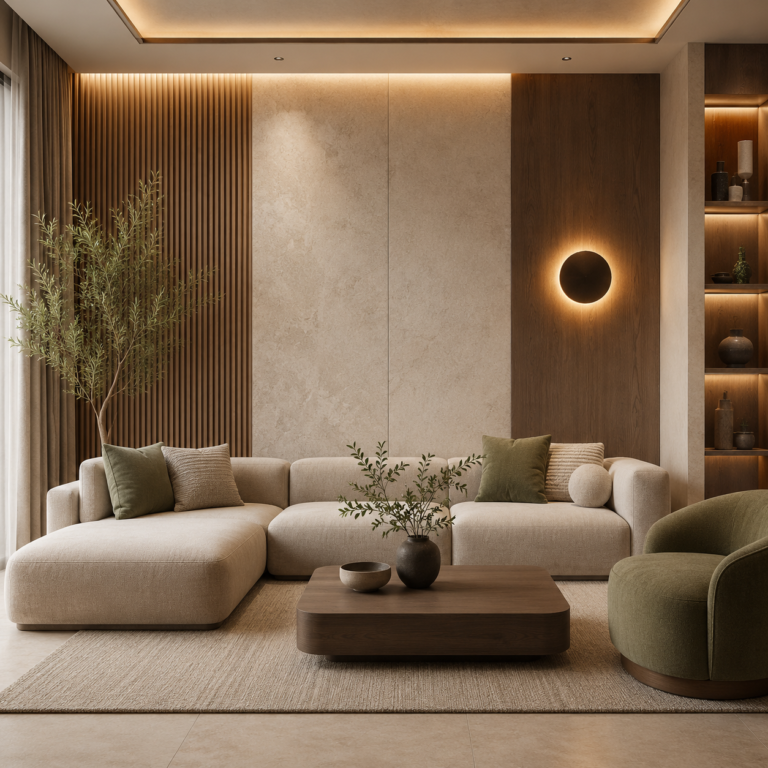
Japandi rooms completely skip the clinical white walls and choose much warmer, earthier background tones instead. Builders use soft shades of creamy beige, light tan, and warm terracotta clay to make the room feel instantly grounded and cozy.
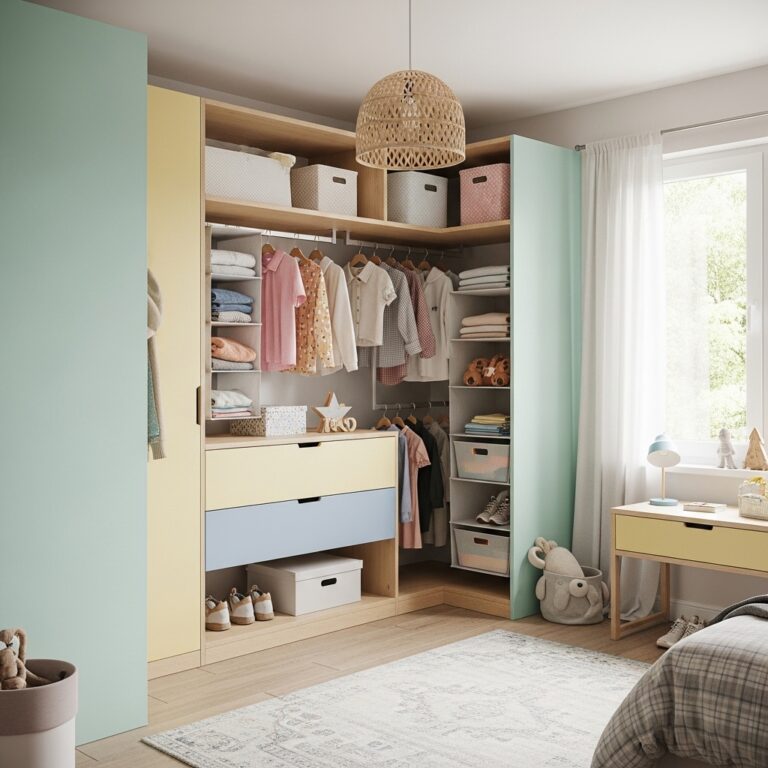
When it comes to accent colors, Scandinavian styles love to introduce playful, happy pops of soft pastel shades. You will often see gentle blush pink, pale mint green, or icy sky blue scattered across pillows and art prints.
Japandi accents are much more dramatic and focus on creating sleek, high-contrast lines throughout the room. Designers use jet black, deep olive green, or dark charcoal grey to frame the space and give it a crisp edge.
Furniture Shapes
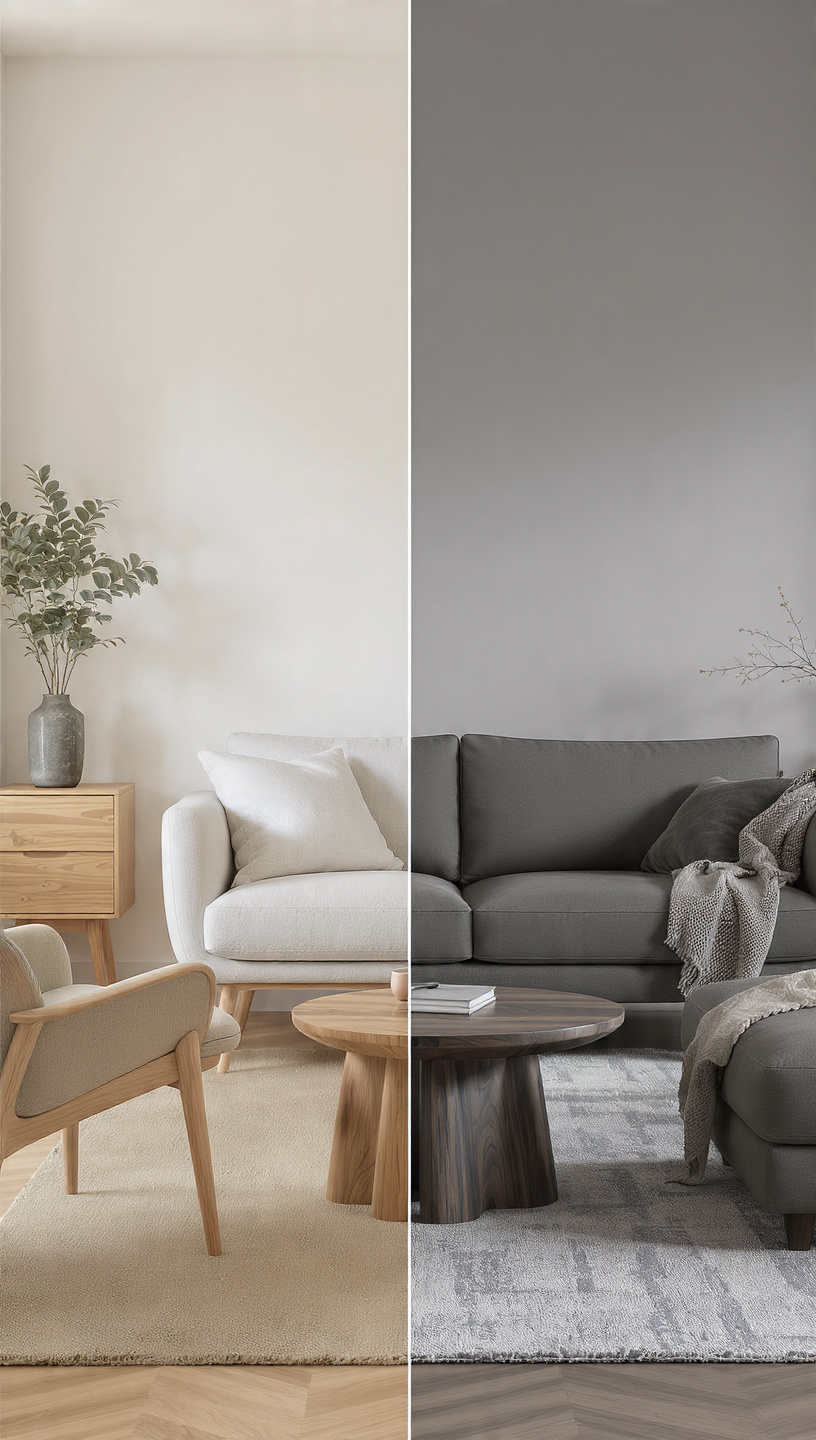
Scandinavian furniture is famous for being incredibly practical and functional for everyday family life. Chairs and tables are built with thin, tapered legs that keep the floor space looking completely open, airy, and spacious.
Japandi furniture takes a different approach by sitting extremely low to the ground to match old Japanese customs. Low-profile platform beds and low coffee tables make small apartment rooms feel much taller than they actually are.
The wood choices also differ greatly because Scandinavian styles strictly use smooth, light factory-made timbers like pine or ash. Japandi favors raw, hand-stained pieces that proudly display natural knots and beautiful imperfections in the grain.
No matter which shapes you prefer, both styles require you to arrange your items with wide paths for walking. Keeping the center of the room open ensures that energy flows freely without hitting bulky decorative obstacles.
Cozy Textiles
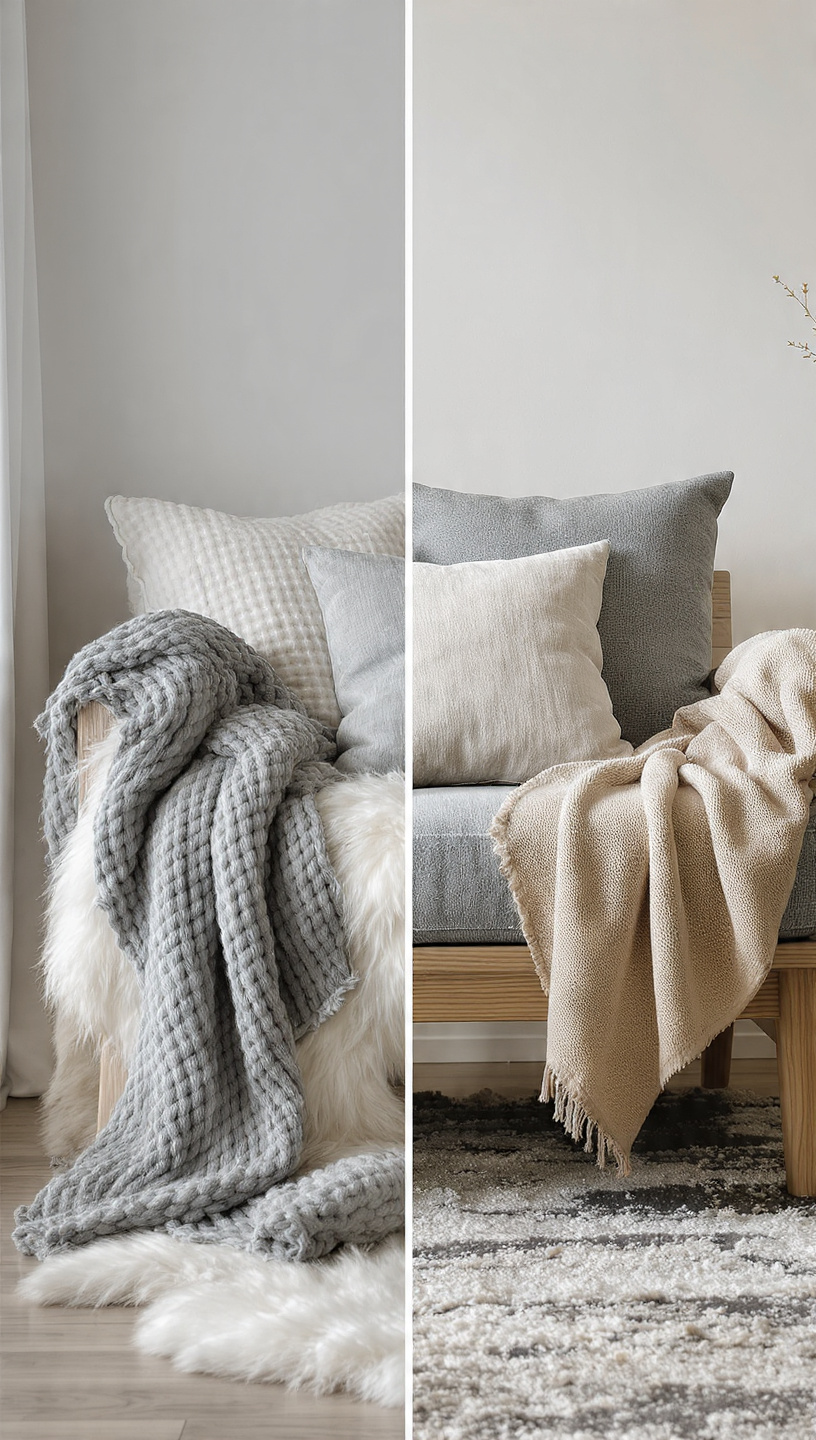
To fight off the freezing European weather, Scandinavian decor relies on layering lots of heavy, warm fabrics together. You will find chunky knit blankets, fluffy faux fur rugs, and thick wool throws piled high on sofas and chairs.
Japandi design strips away those bulky winter layers in favor of lightweight, breathable, and highly textured materials. Curtains and cushions are made from crisp woven linen, organic cotton, and rustic mats made of dried river grass.
Mixing different fabric textures is a secret weapon that keeps a simple minimalist room from looking flat and boring. Using varied materials adds beautiful depth so the space feels welcoming rather than looking like a cold hospital room.
Window styling is another huge factor because both looks avoid heavy, dark drapes that block out the beautiful afternoon sun. Windows are either left completely bare or dressed in sheer fabrics that create gorgeous shadows on the floor.
Decor Pieces
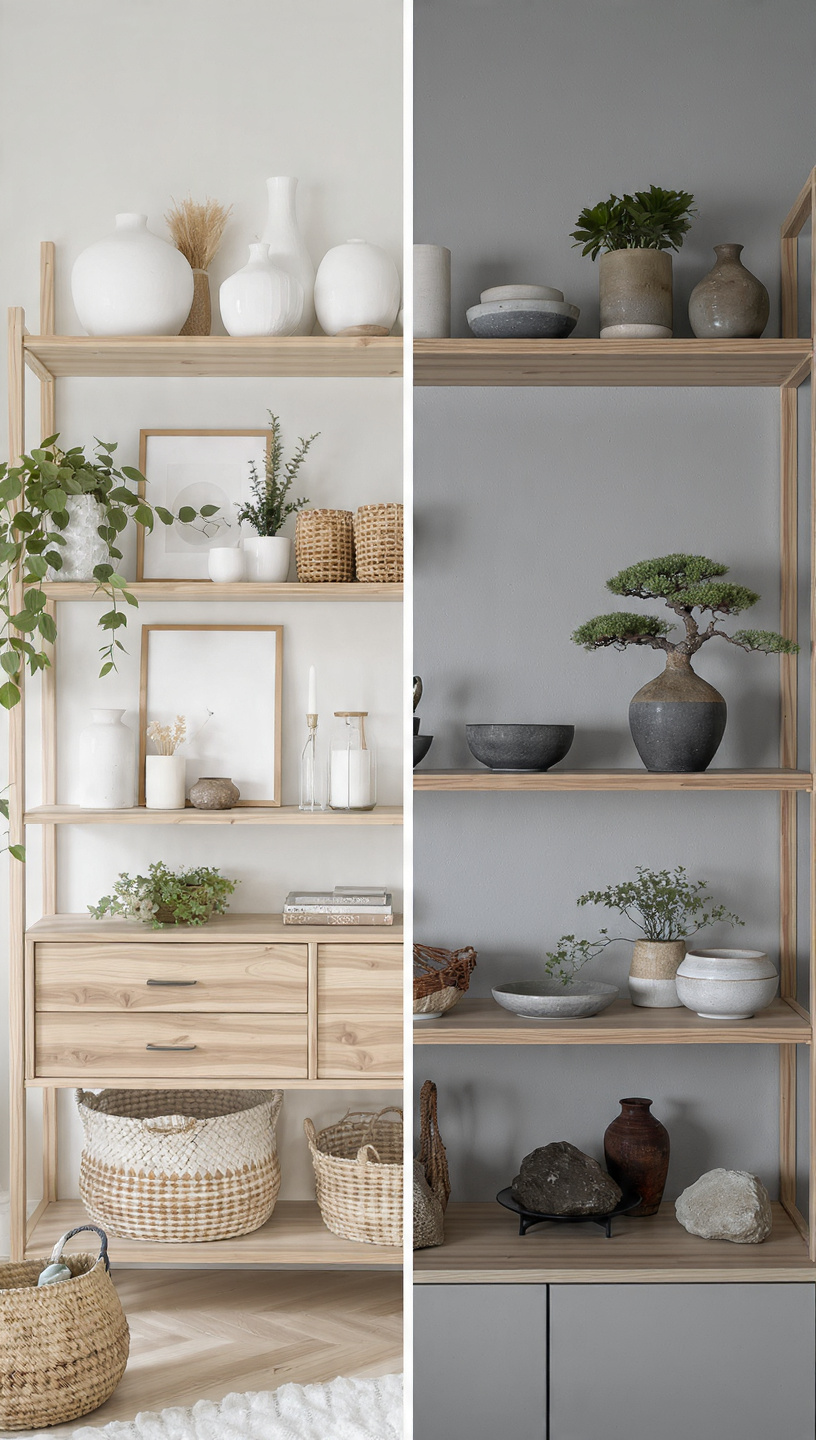
Scandinavian decor choices include playful geometric patterns, bright metal lamps, and lots of green potted plants. Homeowners love placing leafy ferns and ivy into bright white ceramic pots to bring a touch of nature indoors.
Japandi decor is much more quiet and focuses on handmade ceramic vases, raw stone sculptures, and sleek bamboo stalks. Instead of colorful fresh flowers, a Japandi room will feature a single, beautiful dry branch arranged inside a rustic clay pot.
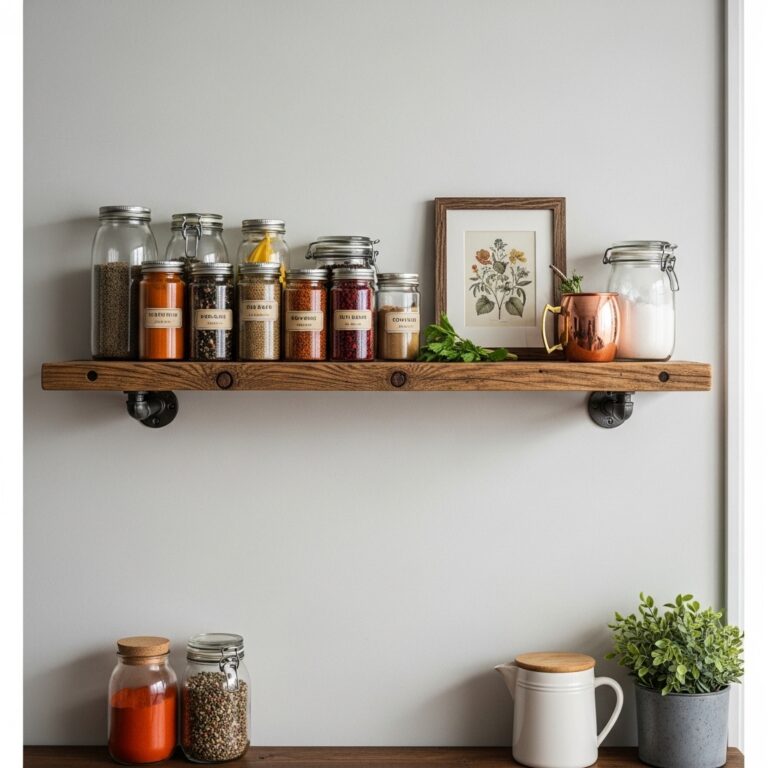
The absolute golden rule for both styles is to mercilessly clear away unnecessary knick-knacks and random plastic clutter. Every single object left out on display must either have a real daily purpose or hold deep personal meaning.
Limiting your shelf decorations allows your eyes to rest and appreciate the pure shape of your high-quality items. This intentional editing process is what transforms a messy, chaotic room into a peaceful sanctuary you love.
Shopping Strategy
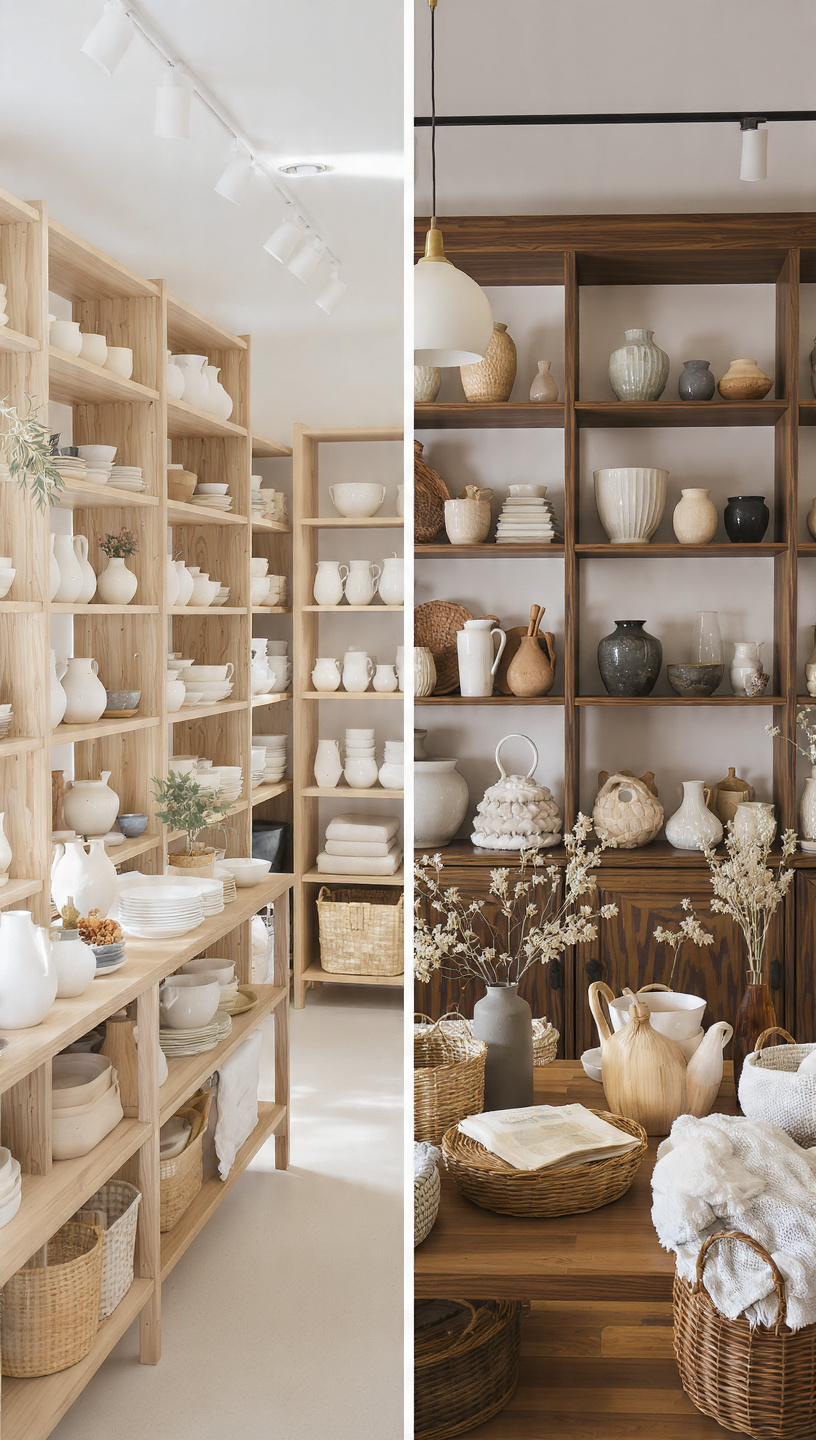
To bring these beautiful minimalist styles into your own home, use this quick guide to shop for the right elements. Focus on these specific materials to ensure your space looks authentic and professionally designed.
| Target Style | What to Shop For | Materials to Avoid |
| Scandinavian Look | Light pine wood, pastel pillows, and fluffy white rugs | Dark heavy metals and shiny plastic surfaces |
| Japandi Look | Low walnut tables, linen curtains, and handmade clay pottery | Bright neon colors and perfectly shiny factory items |
Wrap-Up
In conclusion, the main difference between these two styles comes down to color, warmth, and texture. Scandinavian design relies on bright white walls, cool gray tones, and light-colored woods to keep a room feeling open and airy.
On the other hand, Japandi design introduces warmer earth tones, darker wood accents, and sleek, low-profile furniture that feels grounded and peaceful. Both styles prove that you do not need a lot of clutter to create a beautiful home, so your choice simply depends on whether you prefer a bright, cozy European vibe or a warm, calm Japanese aesthetic.