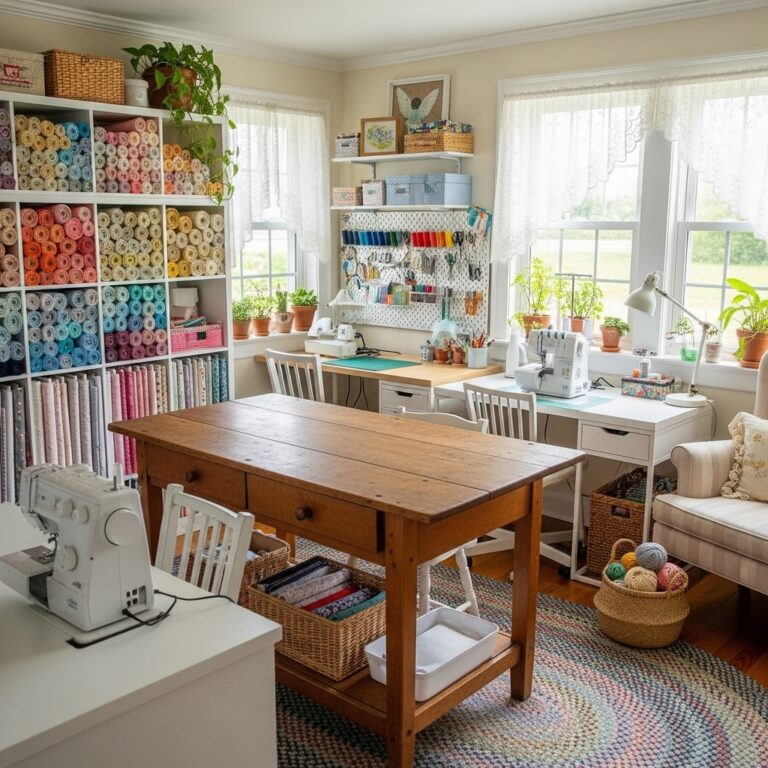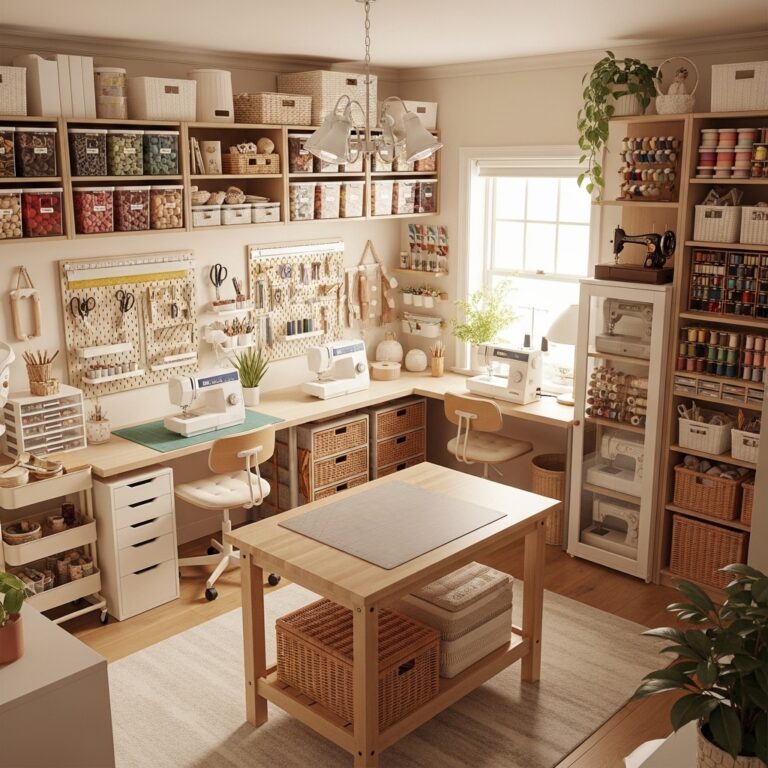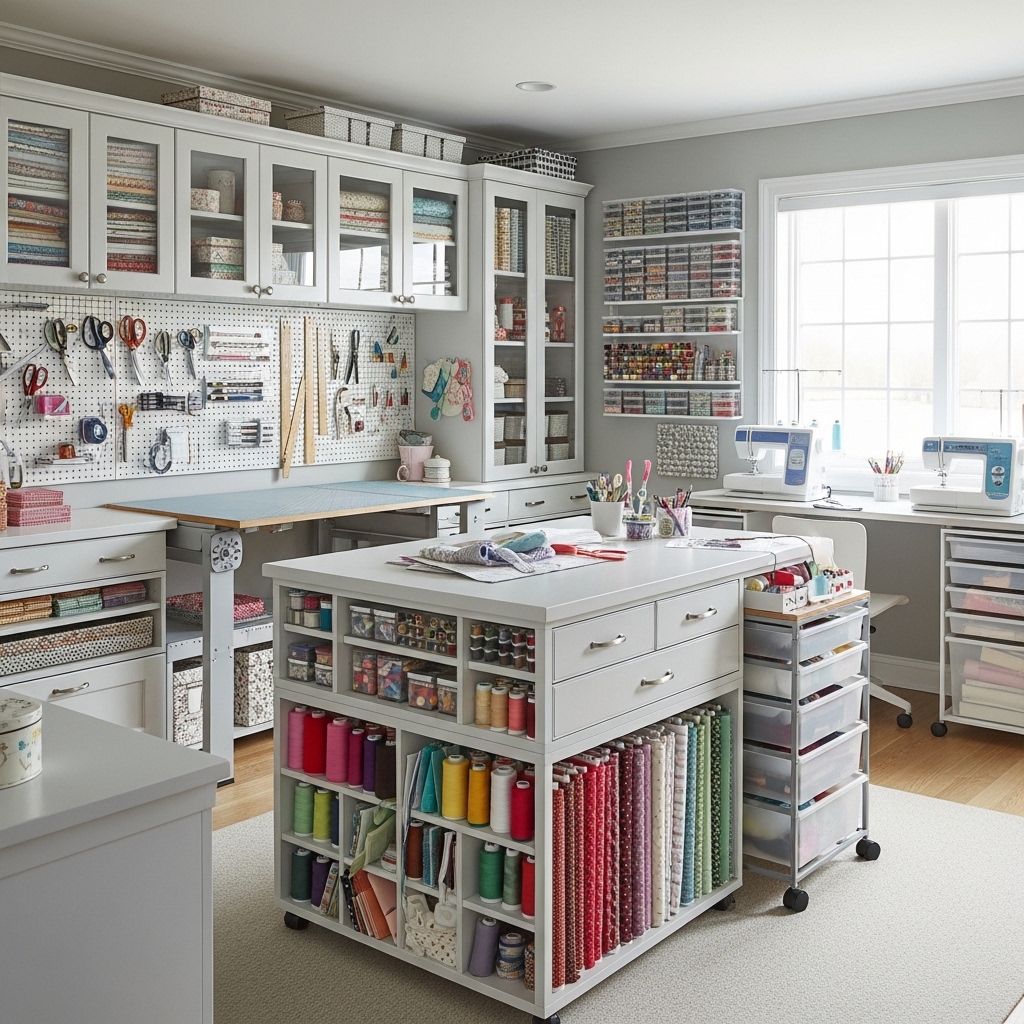
When you walk into a room that’s full of colorful fabrics and threads that shine it should make you feel happy and calm. It should not make you feel stressed out like you are searching for something. If your sewing things are put away in an tidy way but you can still see them you can really be creative, without getting annoyed by the mess. Your creativity can really. Get stronger when your room is organized and easy to work with.

Whether you have a studio or a small apartment corner the right setup makes a big difference in your daily sewing process. Lets look at some sewing room storage solutions to make your workspace tidy. You can transform your space into a sanctuary with the right storage solutions, for your sewing room.
1#. Wall-Mounted Pegboard Systems
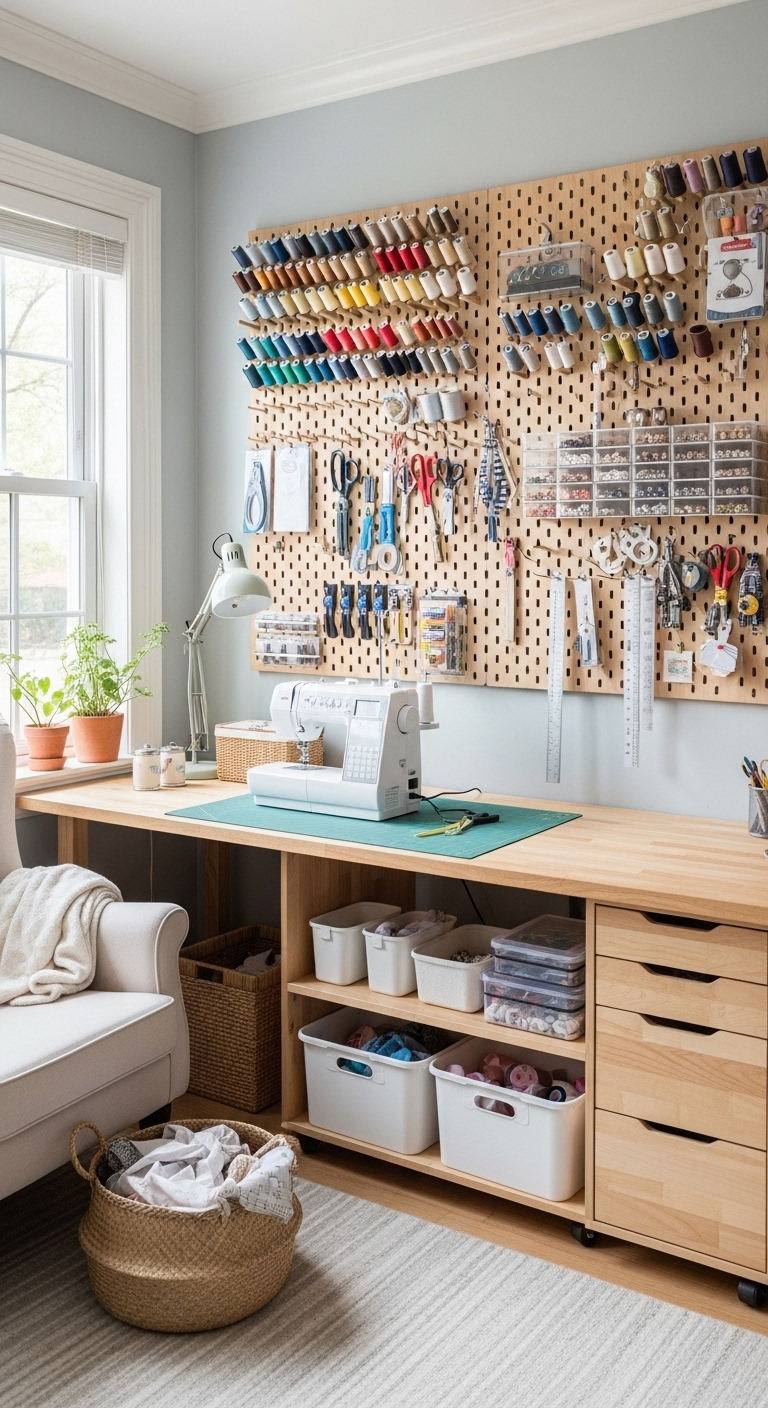
The space above your workstation is often ignored, yet it represents the most valuable real estate for organizing your essential sewing tools. By installing a high-quality pegboard, you transform that dead wall area into a highly functional hub for your fabric shears and rotary cutters.
A well-organized pegboard ensures that your most frequently used items, like clear rulers and rotary blades, remain within arm’s reach at all times. This setup eliminates the frustration of digging through cluttered drawers, allowing you to maintain your creative momentum during complex garment construction projects.
Choosing the right color for your pegboard allows the utility piece to blend seamlessly into your overall interior design scheme. A crisp white finish keeps the workspace feeling bright and airy, while a soft pastel shade adds a personalized, modern touch that complements your room’s palette.
This storage approach elevates your functional equipment into a curated display that feels intentional rather than utilitarian. It serves as a perfect example of how intentional organization creates a clean, professional aesthetic that makes your time in the sewing studio feel much more productive.
2#. Rainbow Thread Spool Racks
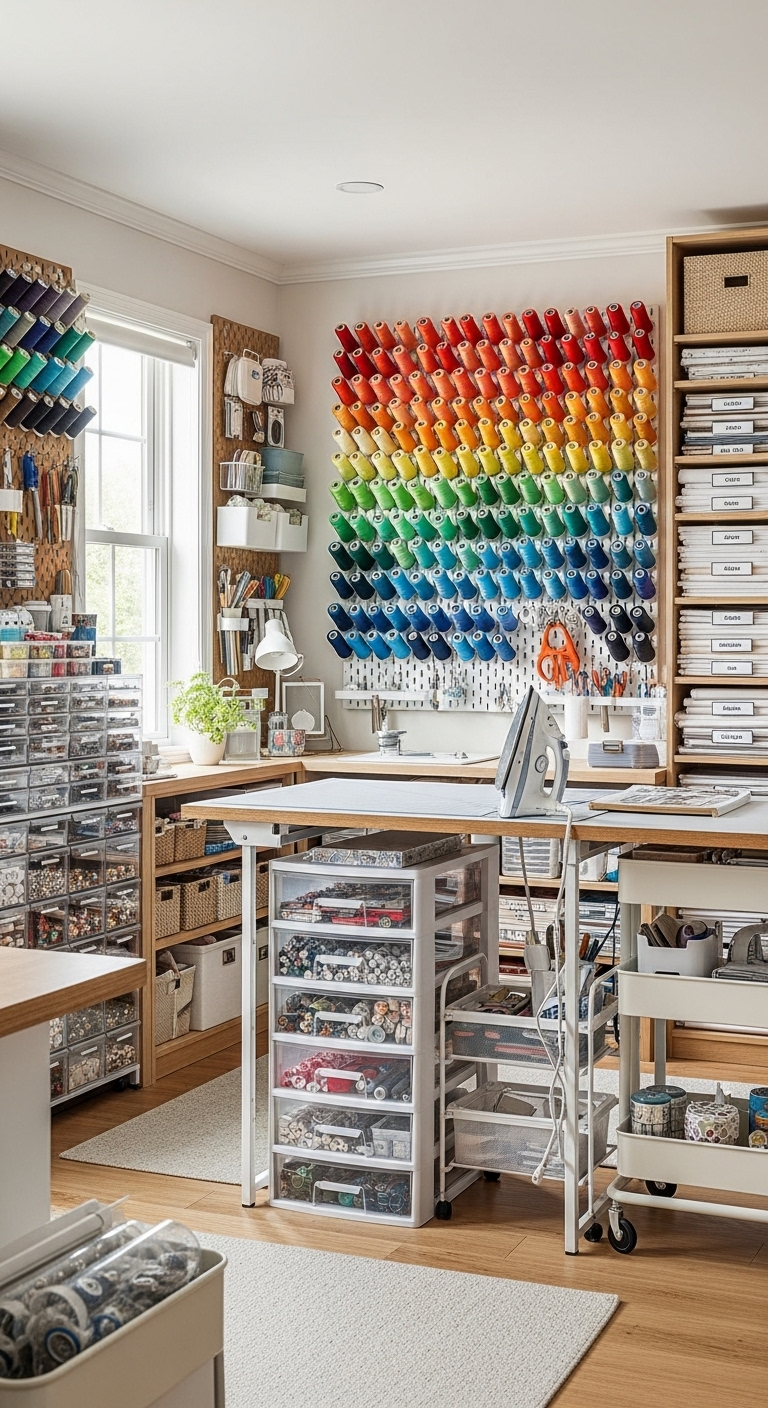
Storing your collection on a multi-tiered wall rack turns your essential supplies into a striking focal point for the room. You gain the benefit of seeing your entire range of colors at once, which functions as a vibrant piece of art for your studio wall.
The primary advantage of this vertical storage method is the speed at which you can locate the perfect shade for a project. Instead of rummaging through cluttered boxes or deep drawers, you simply scan the rack to identify the exact thread that matches your fabric.
These organized rows of bobbins and spools add a sophisticated, professional character to your workspace by highlighting your materials. This approach allows you to appreciate the quality of your supplies while keeping them perfectly accessible for whenever inspiration strikes during your sewing process.
Implementing this system is a brilliant way to balance high-level functionality with a clean, curated aesthetic in your creative space. You effectively maintain order for all your small notions while ensuring the room remains both beautiful and easy to navigate for every new garment.
3#. Clear Acrylic Drawer Dividers
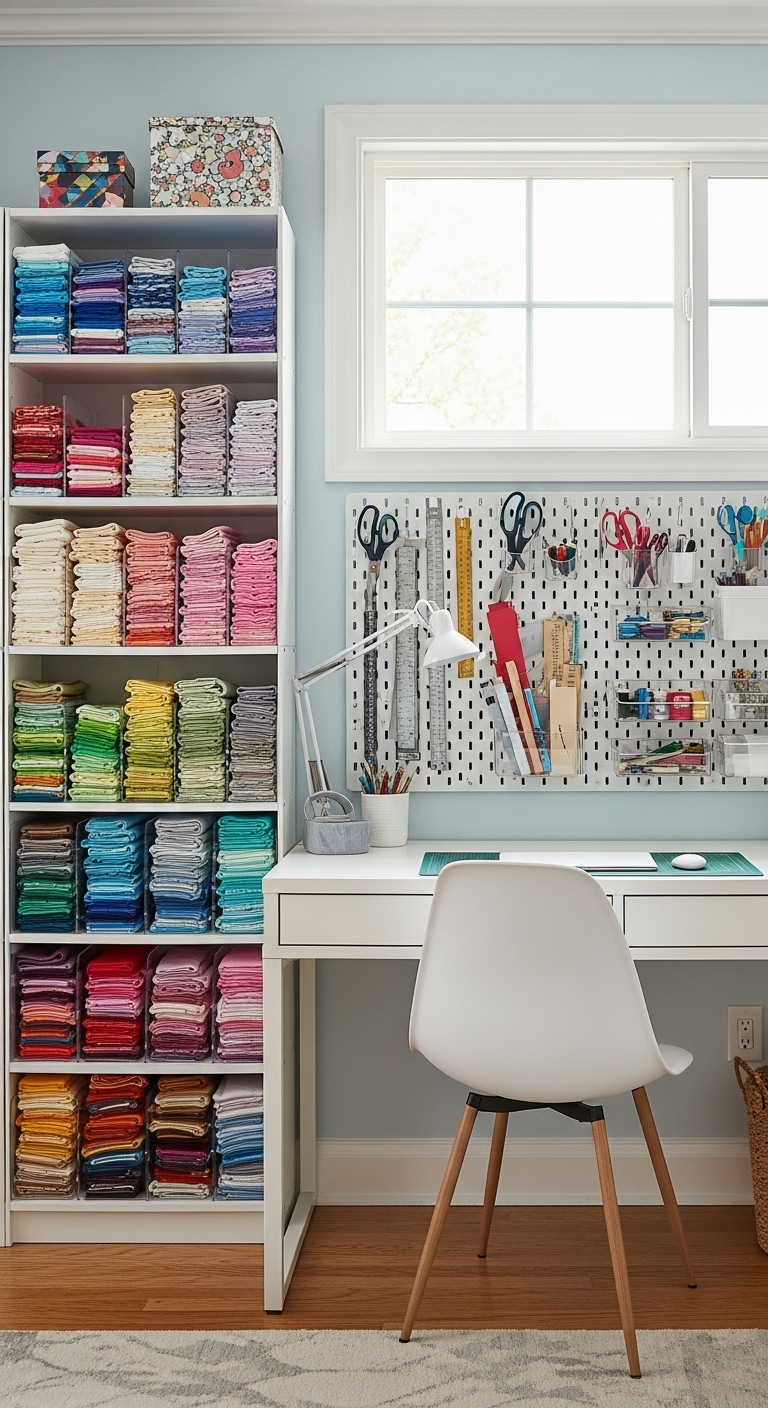
Organizing your desk drawers becomes significantly easier when you create dedicated zones for small essentials like tailor’s chalk and pins. Utilizing custom dividers allows you to designate specific spots for seam rippers and safety pins, ensuring they are always visible and within reach.
You will no longer need to spend time searching through piles of equipment because every small tool has its own clearly defined home. This level of organization simplifies your workflow, allowing you to transition between tasks without the interruption of hunting for misplaced notions.
Separating these items effectively prevents them from sliding around or creating a tangled mess every time you open the drawer. A structured interior keeps your workspace pristine, reflecting a level of discipline that is essential for maintaining focus during complex sewing sessions.
Investing time in these storage solutions helps you maintain long-term order inside your primary stitching workstation. Keeping your small tools sorted in this manner ensures your desk remains a functional, beautiful environment that supports your creativity from start to finish.
4#. Floor-to-Ceiling Fabric Cubbies
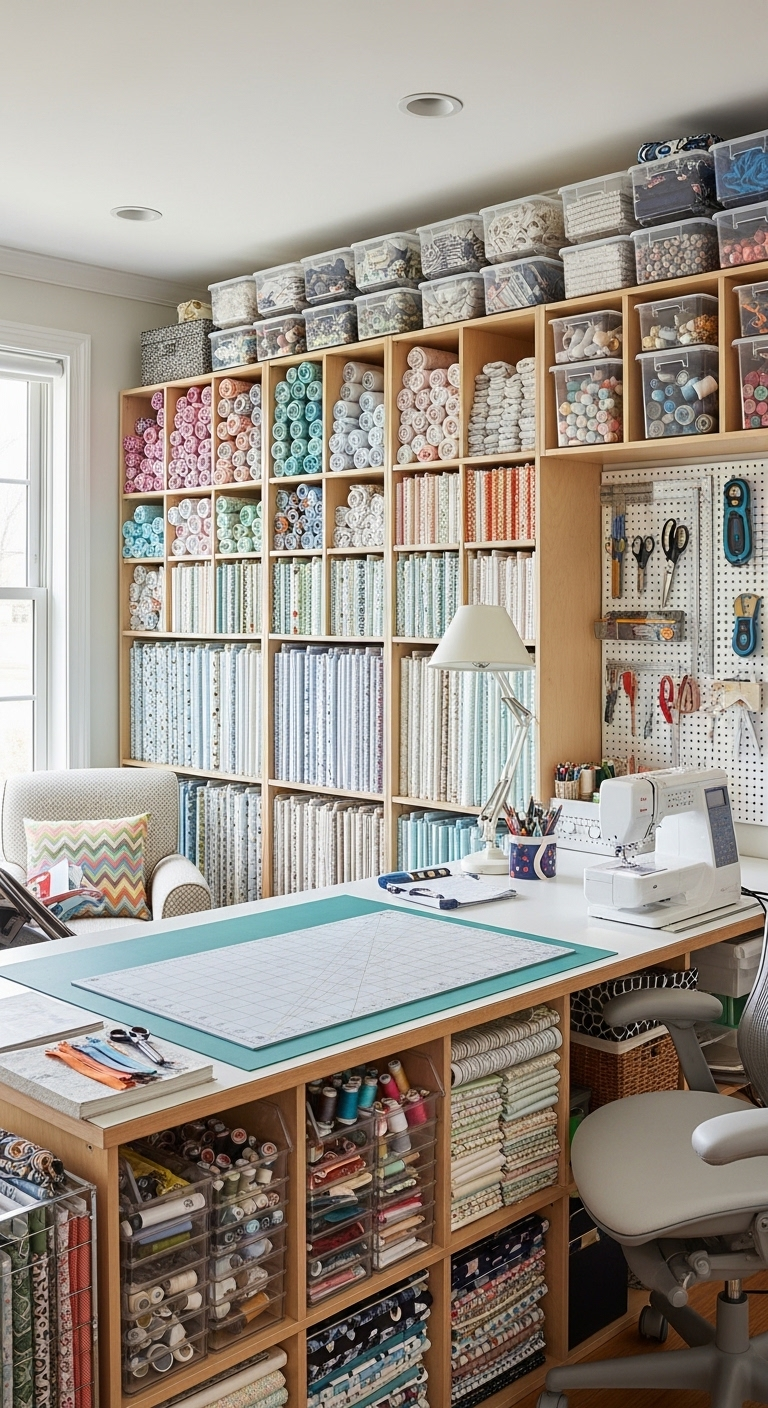
Installing open shelving for your fabric stash provides the unique feeling of owning a professional boutique within your own home. By displaying your materials on shelves, you gain a clear, immediate view of your entire collection, which helps keep your inventory manageable and visible.
Uniformly folding your yardage into consistent, neat stacks transforms the aesthetic of the room entirely. This disciplined approach ensures that your piles remain stable and prevents the typical chaos that occurs when fabric starts to shift or lean over time.
Maintaining such a tidy arrangement makes it significantly easier to audit your supplies before you head out to shop for new materials. You will quickly see exactly what is on hand, which helps prevent the accidental purchase of duplicates during your next supply run.
This storage method is a game changer for anyone who manages a substantial volume of textiles in their creative studio. Organizing your fabric this way creates a beautiful, store-like atmosphere while ensuring your workspace remains highly functional for every future sewing project.
5#. Rolling Tiered Utility Carts
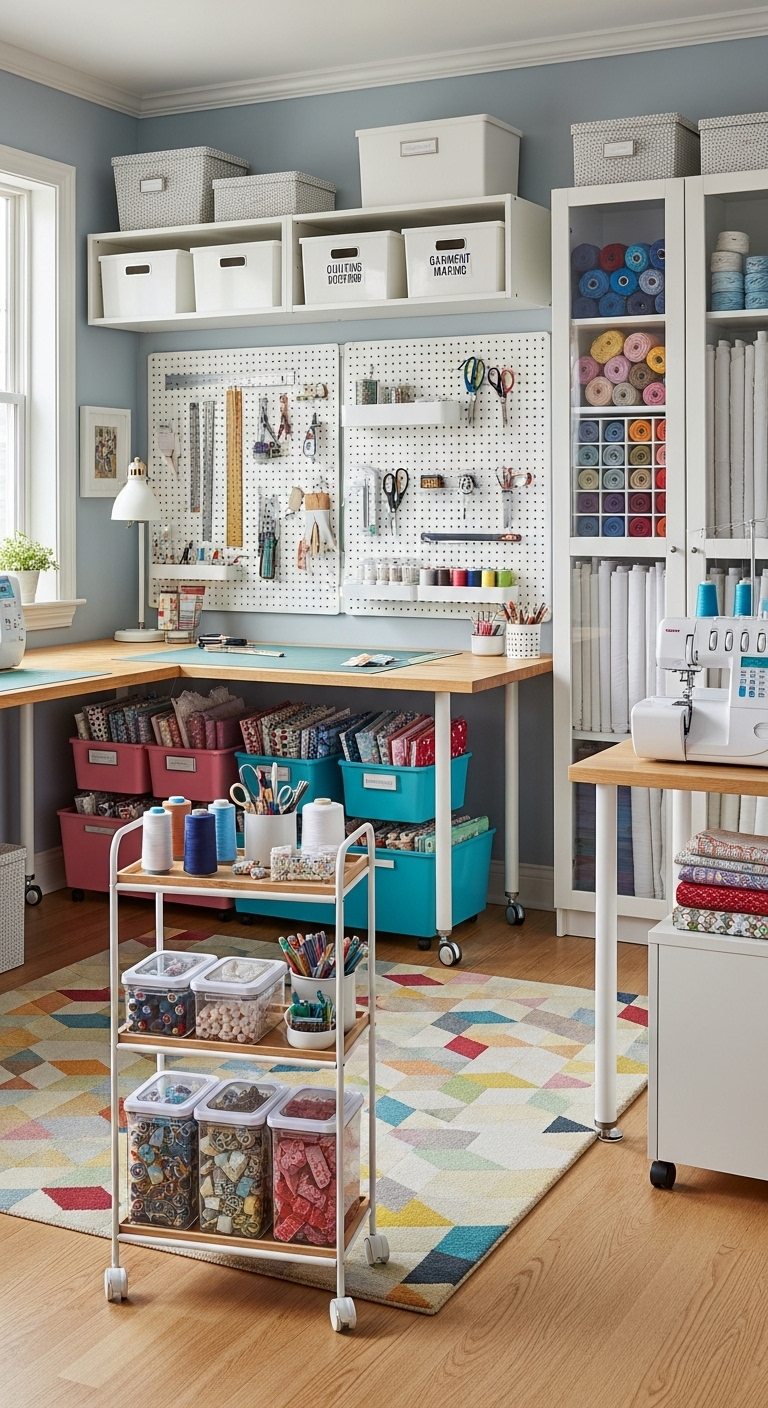
Rolling carts serve as an incredibly versatile solution for holding the specific tools required for your current sewing project. Since these carts feature smooth-gliding casters, you can easily transport your materials between your primary stitching station and the ironing board.
When you need to clear your desk for tasks requiring more surface area or floor space, these carts allow for instant adjustments. You simply wheel your entire project kit to a secondary location, keeping your main workspace open and completely free of clutter.
These units are particularly effective because they fit seamlessly under standard tables, tucked away until they are needed again. They provide a dedicated home for essential items like spray starch and marking pens, ensuring your most-used accessories remain within easy reach.
This flexibility makes mobile storage a top choice for creators who require a workspace that adapts to their changing project needs. By keeping your supplies organized in a portable format, you gain the freedom to move effortlessly throughout your studio during any phase of construction.
6#. Glass Jar Notion Galleries
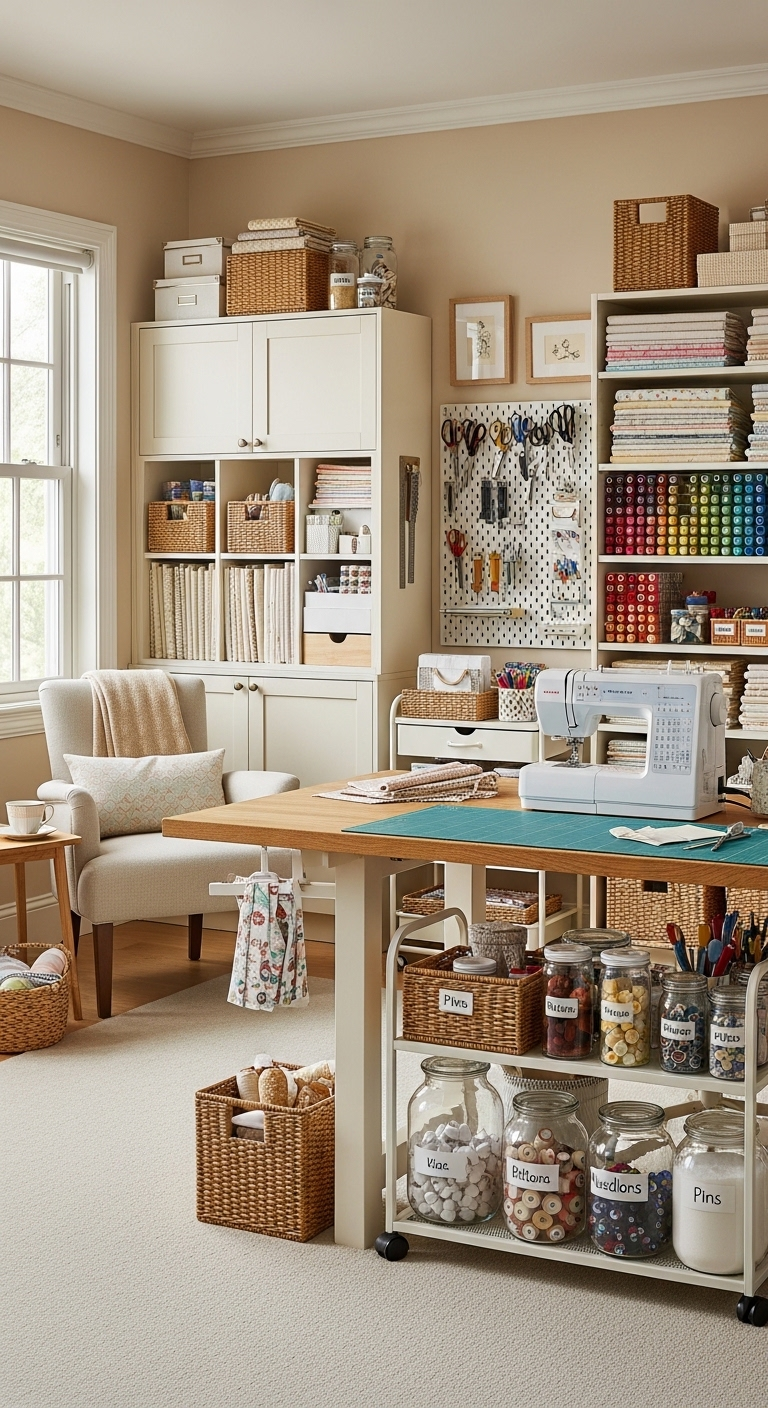
Sorting your buttons, zippers, and vintage lace into clear glass jars transforms these small items into a colorful, candy-like display on your shelves. This method provides an ideal way to secure thousands of tiny pieces that would otherwise be difficult to track.
Because the containers are transparent, you gain a complete visual overview of your entire collection at a single glance. Having these supplies visible ensures that nothing gets lost in the depths of a drawer, maintaining order throughout your creative studio.
Being able to see the specific colors and intricate textures through the glass helps you instantly identify the perfect match for your current project. This approach simplifies the search process significantly, allowing you to focus your energy on the actual assembly of your garments.
You can easily repurpose old kitchen jars into beautiful, functional decor that adds character to your sewing workspace. This sustainable storage solution keeps your smaller materials tidy while turning your essential supplies into an engaging, artistic feature of your room.
7#. Magnetic Pin Dish Accents
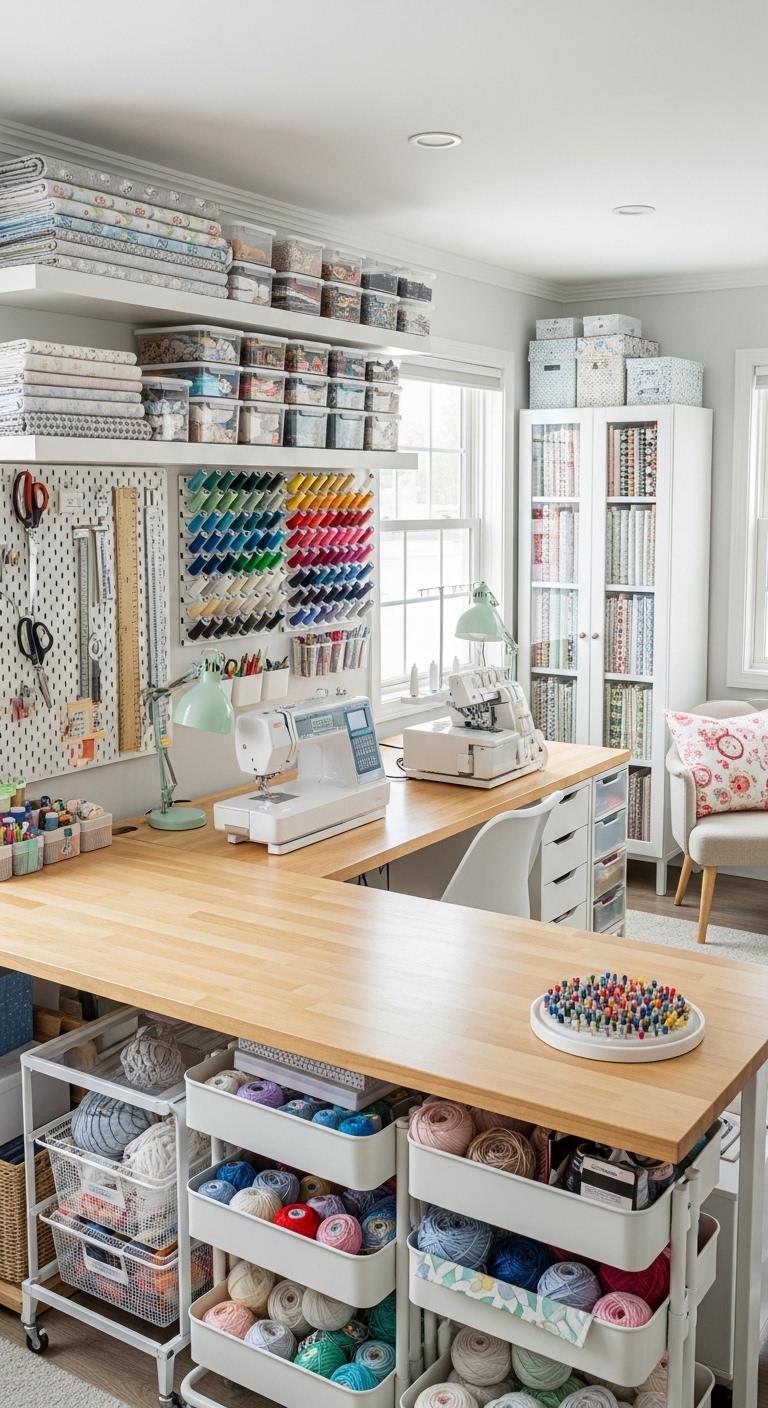
A magnetic dish is an essential tool for quickly gathering up pins that inevitably drop on your table or floor. This simple device keeps your workspace safe by ensuring loose, sharp pins stay contained rather than scattering across your floor.
Using a magnetic dish prevents the painful risk of stepping on rogue pins while you move around your studio. It provides a centralized, secure location for your hardware, allowing you to work with confidence even when you are rushing through a project.
These bowls come in a wide variety of metallic finishes and bright colors to match the aesthetic of your sewing area. They represent a perfect marriage of form and function, proving that even the most utilitarian tools can contribute to your room’s decor.
Although they are small in stature, these magnetic dishes perform a critical role in keeping your floor clear and your mind focused. Every organized creative workspace should feature one of these positioned right next to the machine for maximum efficiency and safety.
8#. Under-Shelf Ribbon Rods
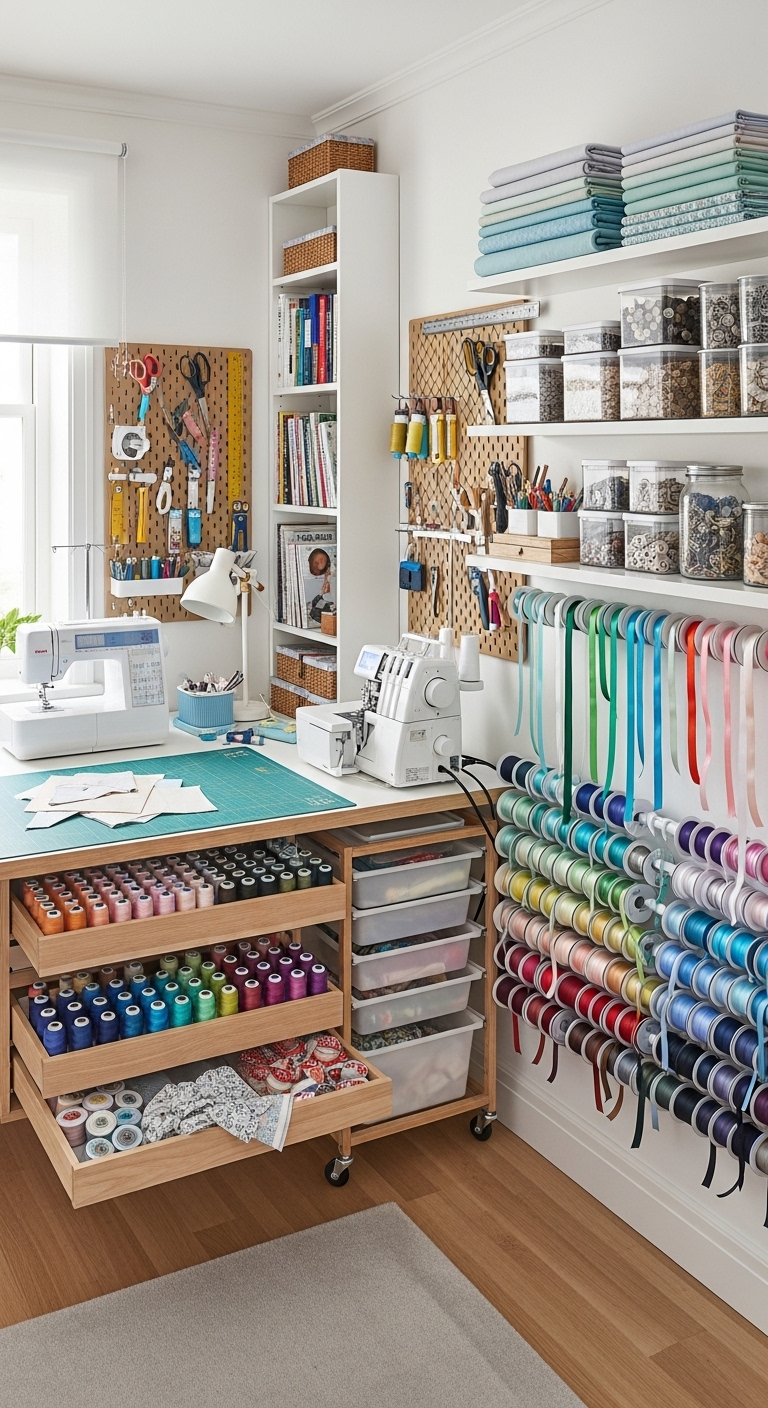
Installing wooden dowels or tension rods beneath your existing wall shelves is a highly effective way to keep delicate ribbons and trims tidy. This simple mounting system ensures that your materials stay perfectly aligned and prevents the frustrating tangles that often happen in boxes.
You can effortlessly pull out the exact length of trim needed for a project and cut it without removing the spool. This streamlined process saves valuable time and keeps your workstation free from unnecessary mess while you are busy measuring or pinning your fabrics.
Keeping your collection visible in this manner turns your functional supplies into a decorative fringe that adds texture to your studio walls. The arrangement is especially satisfying for those who frequently work with delicate laces or colorful silk ribbons, as it highlights their beauty.
These rods provide a perfect, accessible display for anyone who values the artistic potential of their material stash. By treating your trimmings as both a tool and a design element, you maintain a clean, professional aesthetic that makes every sewing session more enjoyable.
9#. Pattern Display Ring Binders
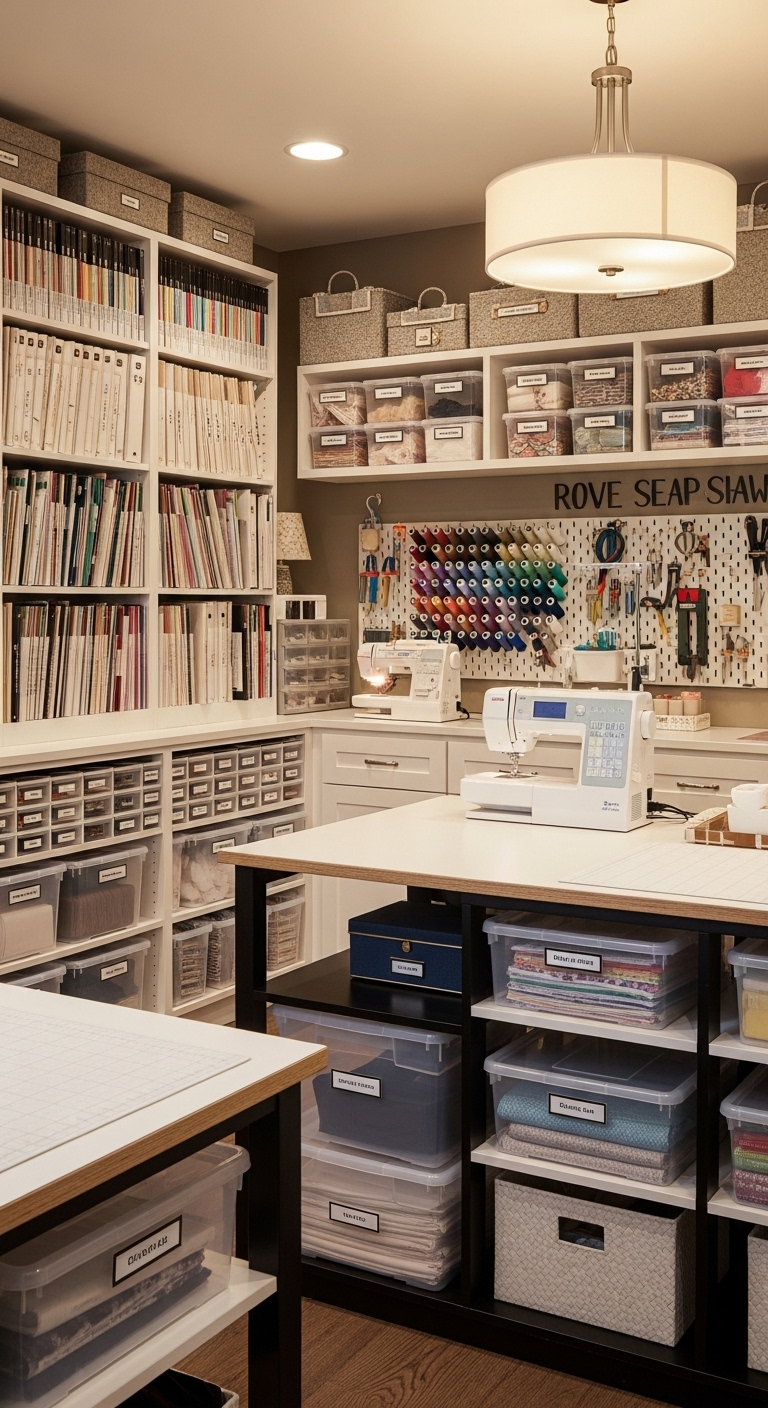
Storing your paper patterns in protective plastic sleeves inside large ring binders is the best way to prevent damage and dust accumulation. This method ensures that your collection remains in pristine condition, ready for use whenever you decide to start a new project.
Clearly labeling the spine of each binder by garment type or brand allows you to locate specific designs in seconds. This level of organization eliminates the frustration of searching through loose sheets, making your design process feel much more efficient and professional.
Flipping through these binders feels exactly like reading a high-end fashion magazine, providing plenty of inspiration for your next creation. You can easily browse your available designs and visualize the final result before you even pull the pattern from its sleeve.
This storage system is an excellent space-saving solution for anyone who keeps a large library of sewing patterns. Keeping your files consolidated in one location allows you to manage a substantial collection without needing a dedicated closet or massive amount of storage furniture.
10#. Hanging Fabric Bolt Racks
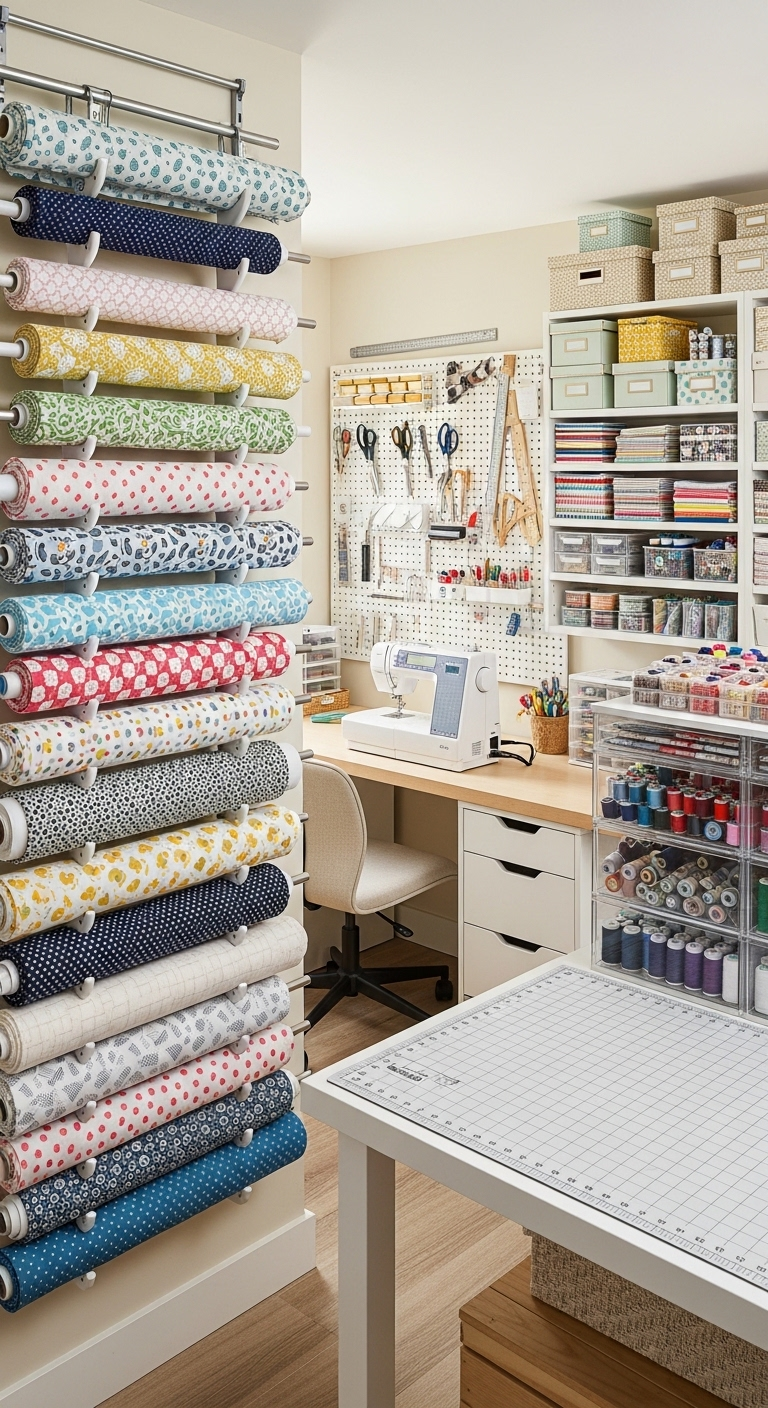
When you purchase fabric by the bolt, investing in a dedicated rack system is the most effective way to keep your inventory professional. These racks allow you to store your bolts in an upright position, which prevents the material from becoming squished or losing its shape over time.
This storage method mimics the organizational standards found in a real design studio, ensuring your workspace remains high-functioning. By choosing a vertical racking system, you maximize the use of your available area, utilizing space from the floor all the way up to the ceiling.
Keeping your fabric bolts off the floor is essential for maintaining the quality of your textiles and preventing dust accumulation. Elevated storage protects your investment while simultaneously making your sewing room feel much larger and more open to the eye.
Implementing this setup is a smart choice for anyone who maintains a significant collection of yardage for frequent sewing projects. Your studio becomes a well-organized environment where you can easily access your materials, ensuring your workspace remains both functional and visually appealing.
11#. Slim Pull-Out Pantries
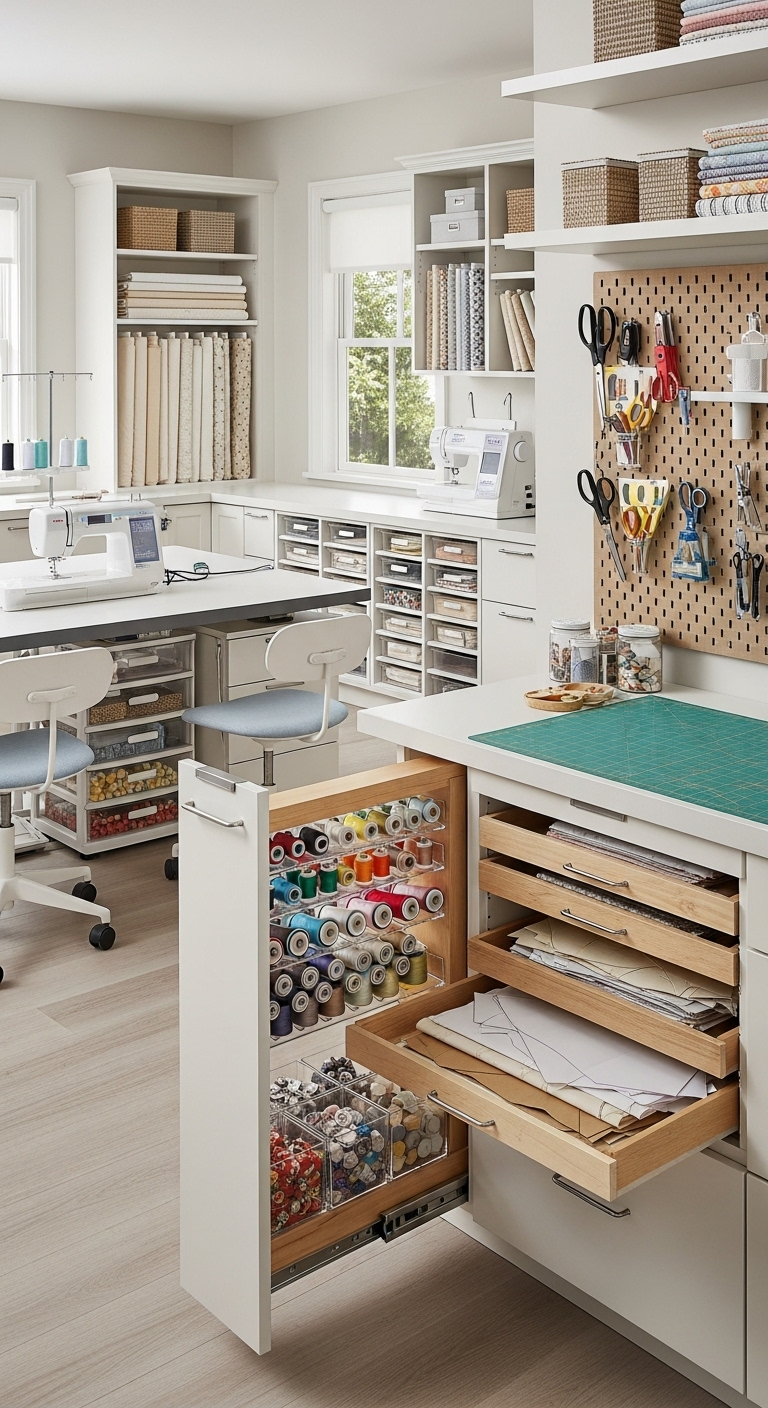
The neglected void between your desk and the wall is usually a catch-all for dust, yet it offers incredible potential for a custom pull-out shelf. By utilizing this tight, vertical gap, you gain a dedicated spot for items that rarely see the light of day but need to be ready at a moment’s notice.
This hidden storage is perfect for storing bottles of stabilizer, various fabric glues, and essential machine maintenance oils. These supplies often clutter your primary workspace, so tucking them away keeps your desk surfaces clear while ensuring they remain accessible whenever you need them for a project.
A slim, rolling unit allows you to keep these technical supplies perfectly organized and completely out of sight. This clever addition to your studio setup ensures that every single inch of your floor plan is working as hard as you are throughout your design process.
This secret storage trick is a game changer for anyone operating out of a narrow or compact craft room. By reclaiming this overlooked space, you transform a useless corner into a powerhouse of efficiency that keeps your sewing station looking sharp and professional.
12#. Overhead Loft Storage Bins
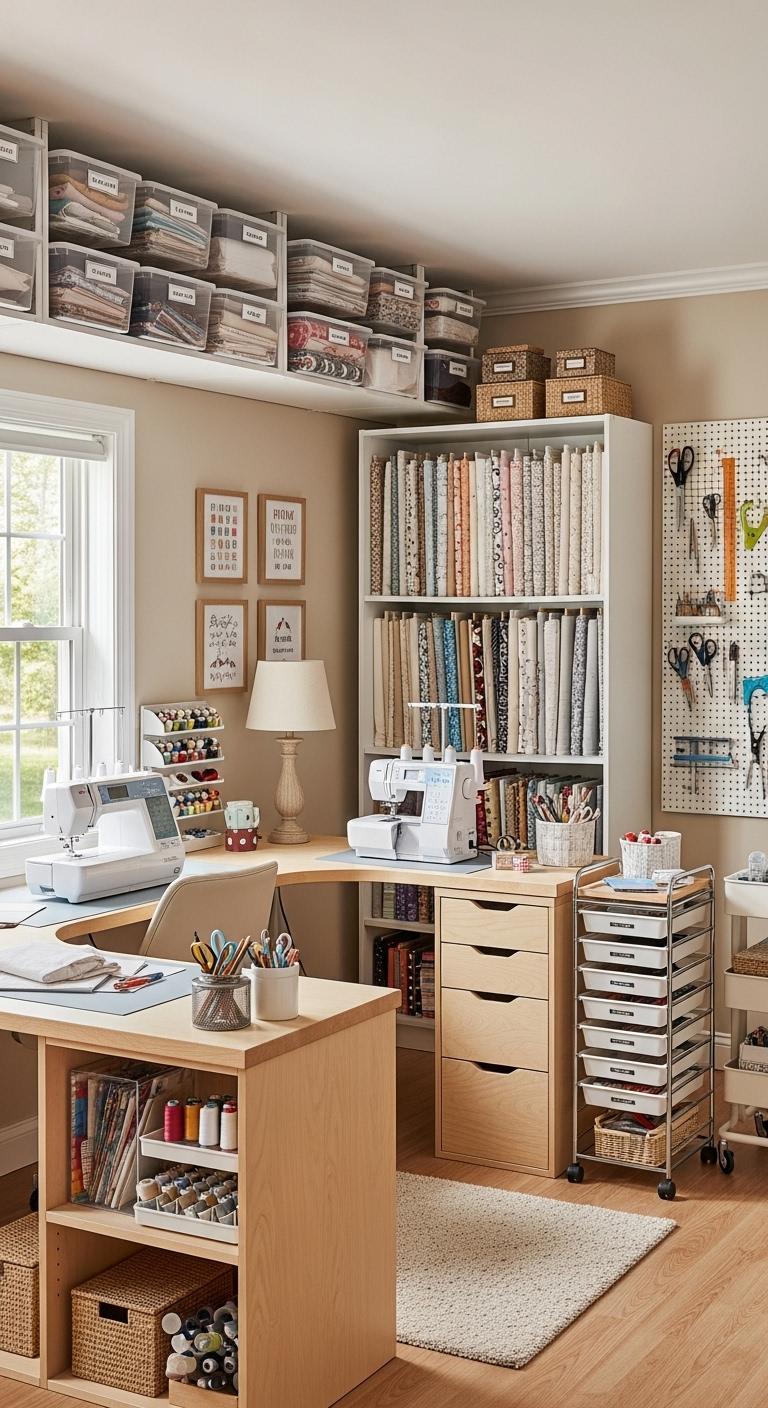
The expanse of wall space above your doors is frequently overlooked, yet it provides an ideal location for stowing bulkier items like batting rolls. By moving these larger supplies to this elevated position, you keep your primary floor area completely clear for active work.
Using labeled storage bins is essential for this high-up location so you can identify contents without having to climb for a look. This organization strategy ensures you stay mindful of your inventory, even for supplies you only rotate into your workflow once or twice a year.
This specific zone is perfectly suited for seasonal goods, such as holiday-themed fabrics or extra stuffing for your festive projects. Placing these items out of the way allows you to reclaim valuable square footage while ensuring your materials remain accessible when the timing is right.
Storing supplies up high is a strategic move for maximizing your capacity without making the room feel visually crowded at eye level. By shifting these bulky essentials toward the ceiling, you maintain a calm, open environment that supports better focus and efficiency in your studio.
13#. Industrial Bobbin Storage Cases
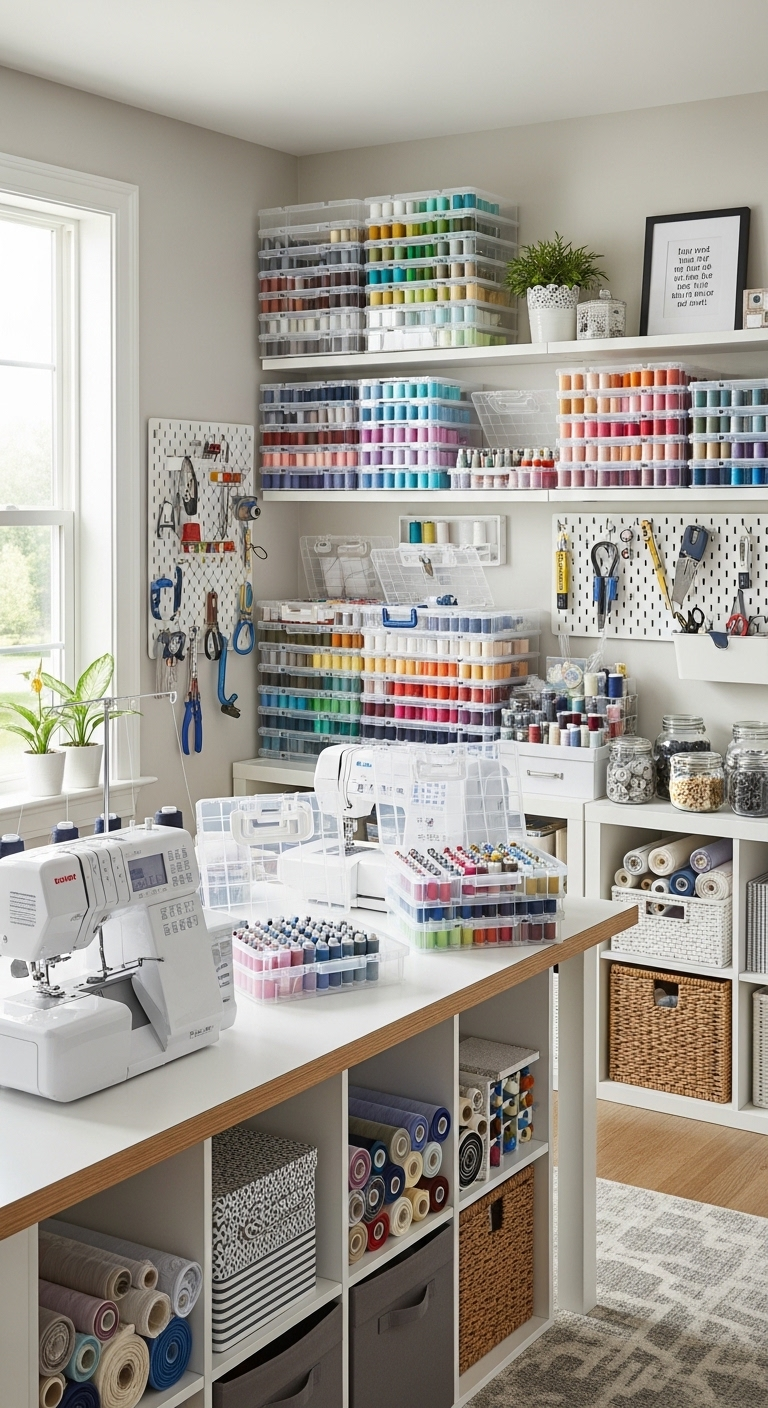
Clear plastic cases featuring custom foam slots are essential for keeping your pre-wound bobbins from becoming a tangled, unusable mess. These cases allow you to sort your collection by specific thread types and colors, ensuring every piece is ready for immediate deployment.
You can easily swap between different thread colors during a complex project in a matter of seconds. This level of organization streamlines your workflow significantly, removing the friction of hunting for supplies and allowing you to maintain your focus on the actual stitching.
Storing your bobbins in a dedicated case prevents them from rolling around inside your desk drawers and collecting unwanted lint. A clean bobbin ensures smoother machine tension and prevents the mechanical issues that frequently arise from using debris-covered or improperly stored components.
Investing in a high-quality case makes a massive difference in your daily efficiency and overall project satisfaction. When your bobbins are kept in perfect order, you save valuable time during every phase of your work, making your creative process feel much more professional.
14#. Hanging Scissor Magnet Strips
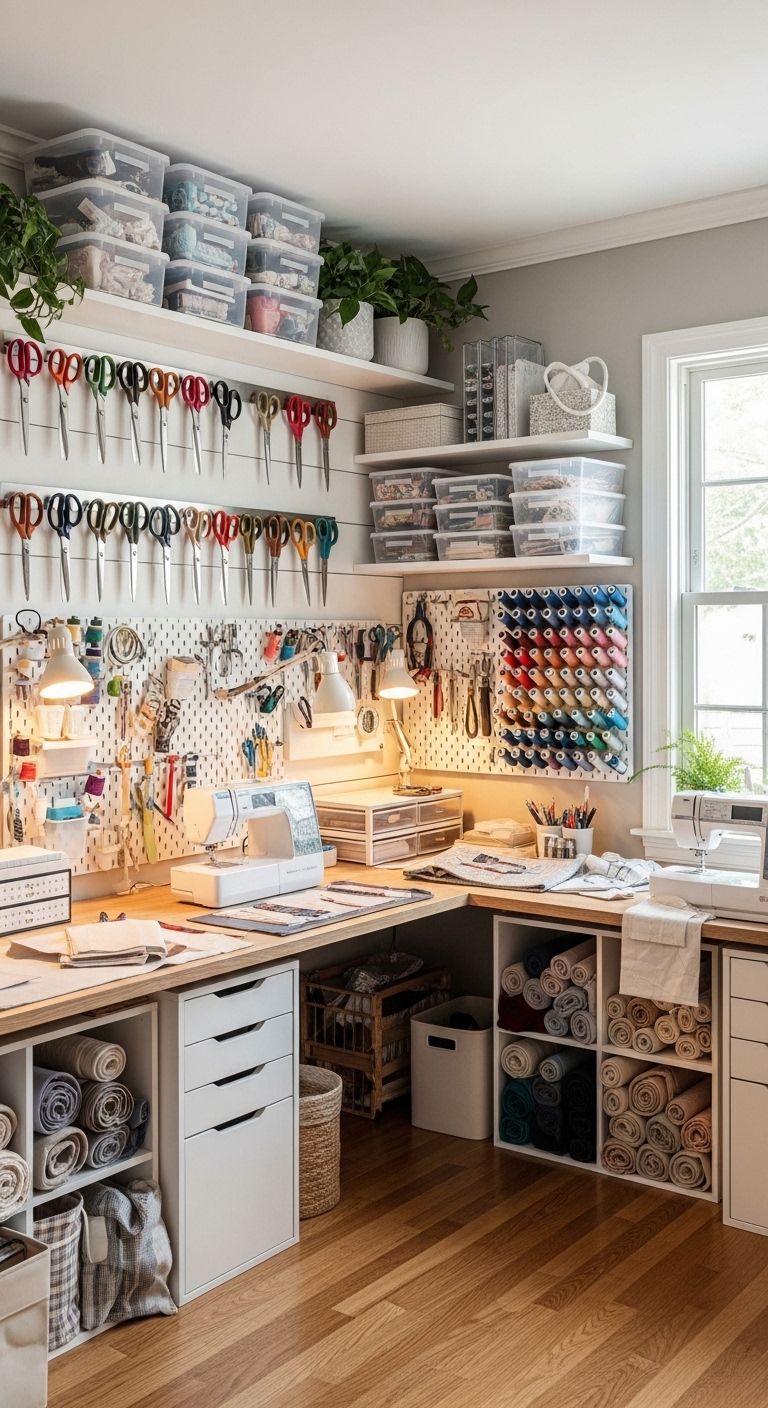
Mounting a heavy-duty magnetic strip directly to your wall is a brilliant way to keep your essential shears and snips perfectly organized. This storage solution transforms your cutting tools into a professional-grade display that adds a clean, industrial character to your creative workspace.
Beyond the visual appeal, this method actively protects the delicate edges of your blades from the damage that occurs when tools collide in a drawer. Keeping your scissors separate and suspended ensures that every snip remains sharp and precise for your most demanding textile projects.
I personally prefer keeping my primary cutting tools out in the open where they are always within immediate reach. This approach eliminates the frustration of digging through piles of fabric or scraps just to locate a pair of snips, allowing your creative workflow to stay uninterrupted.
Displaying your scissors on the wall creates a functional, workshop-style aesthetic that turns your everyday equipment into a decorative feature. It is a highly effective way to manage your tools while giving the room a professional atmosphere that feels both productive and inspiring.
15#. Woven Basket Scrap Sorting
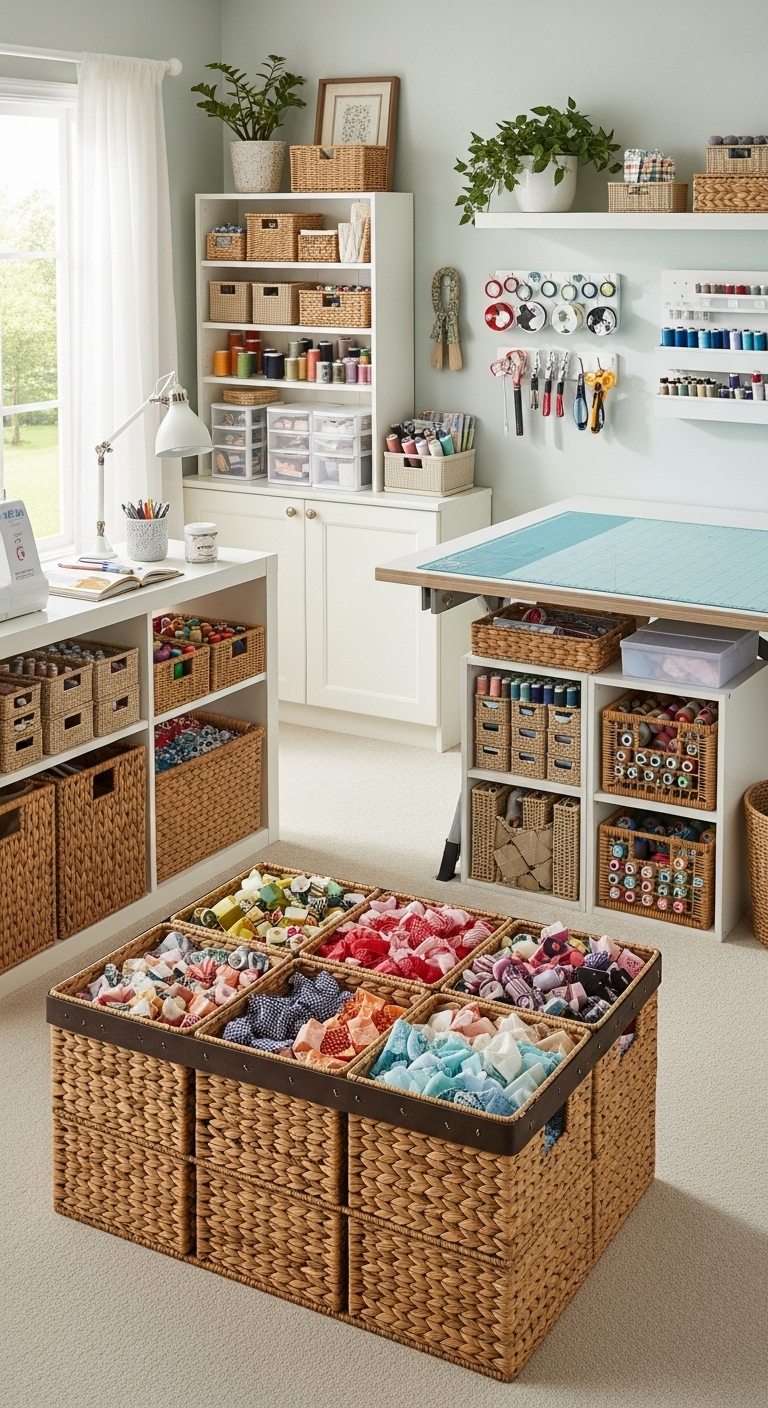
Using baskets crafted from seagrass or wicker beneath your workstation provides an excellent way to maintain a clean, organized studio environment. These vessels offer a practical solution for corralling fabric scraps, allowing you to categorize your leftovers by color or material type.
Sorting your remnants this way ensures you have quick access to the perfect pieces for delicate tasks like applique or quilting. You will no longer need to sift through chaotic piles, as your materials will be neatly contained within easy reach of your sewing machine.
Because these baskets are lightweight and portable, you can easily pull them out or relocate them as your project needs evolve throughout the day. This flexibility is vital for maintaining a fluid, efficient workflow during long sessions of garment construction or intricate textile work.
The organic texture of woven baskets adds a necessary touch of warmth to a space typically filled with rigid machines and cold metal shelving. Integrating these natural elements makes your workspace feel significantly more welcoming, balancing out the industrial components of your studio to create a cozy, inspiring atmosphere.
16#. Swing-Arm Lamp Attachments
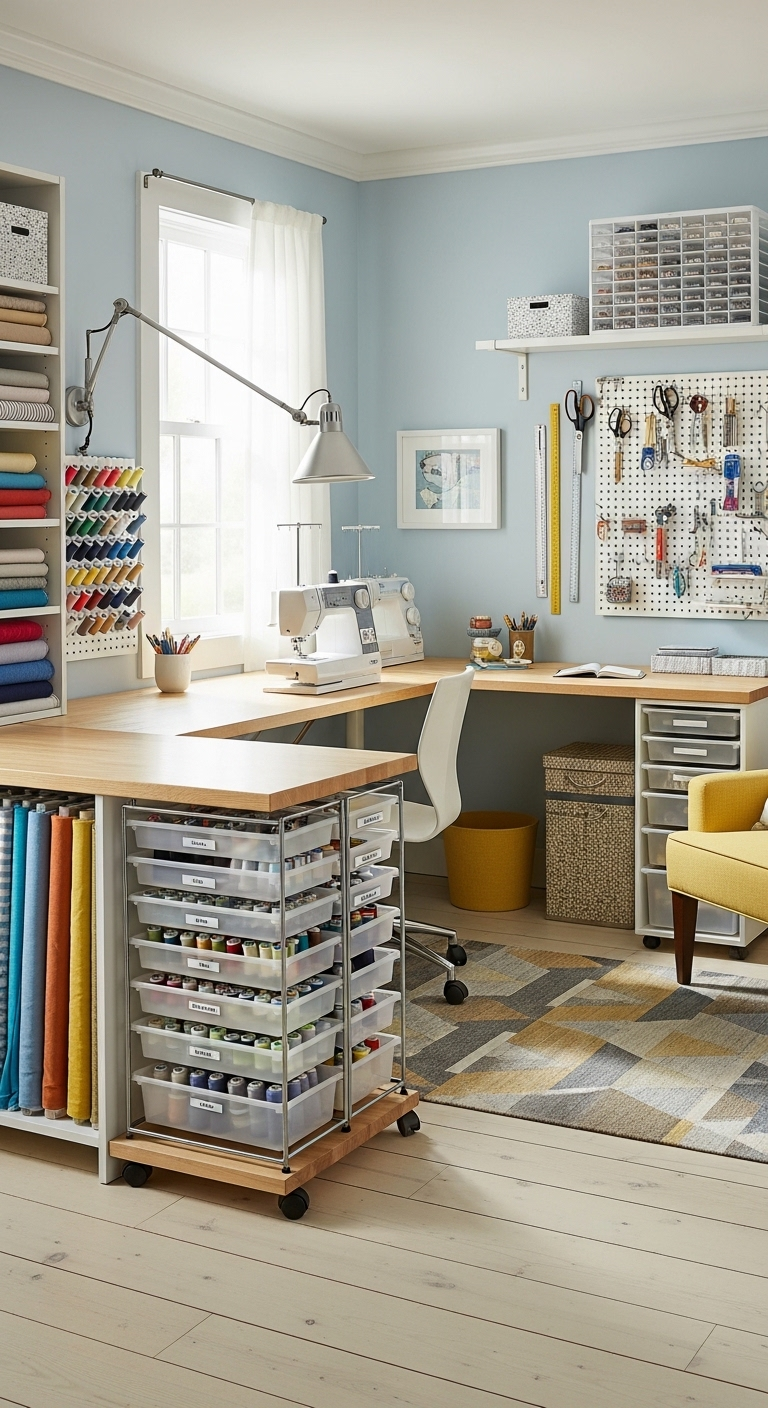
Proper lighting acts as an essential partner for your eyes, ensuring you can clearly see every detail of your work. A high-quality swing-arm lamp is particularly effective because it delivers focused illumination exactly where you need it most, whether you are at your cutting table or your sewing machine.
These lamps are designed to be space-efficient, mounting easily to the edge of your desk so they do not clutter your limited workspace. Investing in superior task lighting is a critical step in preventing common mistakes that occur when you struggle to see fine details or intricate stitch lines.
The right lamp also reduces strain on your eyes, allowing you to work for longer periods without feeling fatigued or uncomfortable. When your studio is illuminated with intention, you find that your overall efficiency increases and your creative time becomes much more relaxing.
A professional studio should prioritize this type of versatile lighting to keep your environment both productive and enjoyable. Incorporating a clear, adjustable light source transforms your creative process, ensuring every stitch is accurate while keeping your workspace feeling bright and inviting.
17#. Dedicated Interfacing Drawers
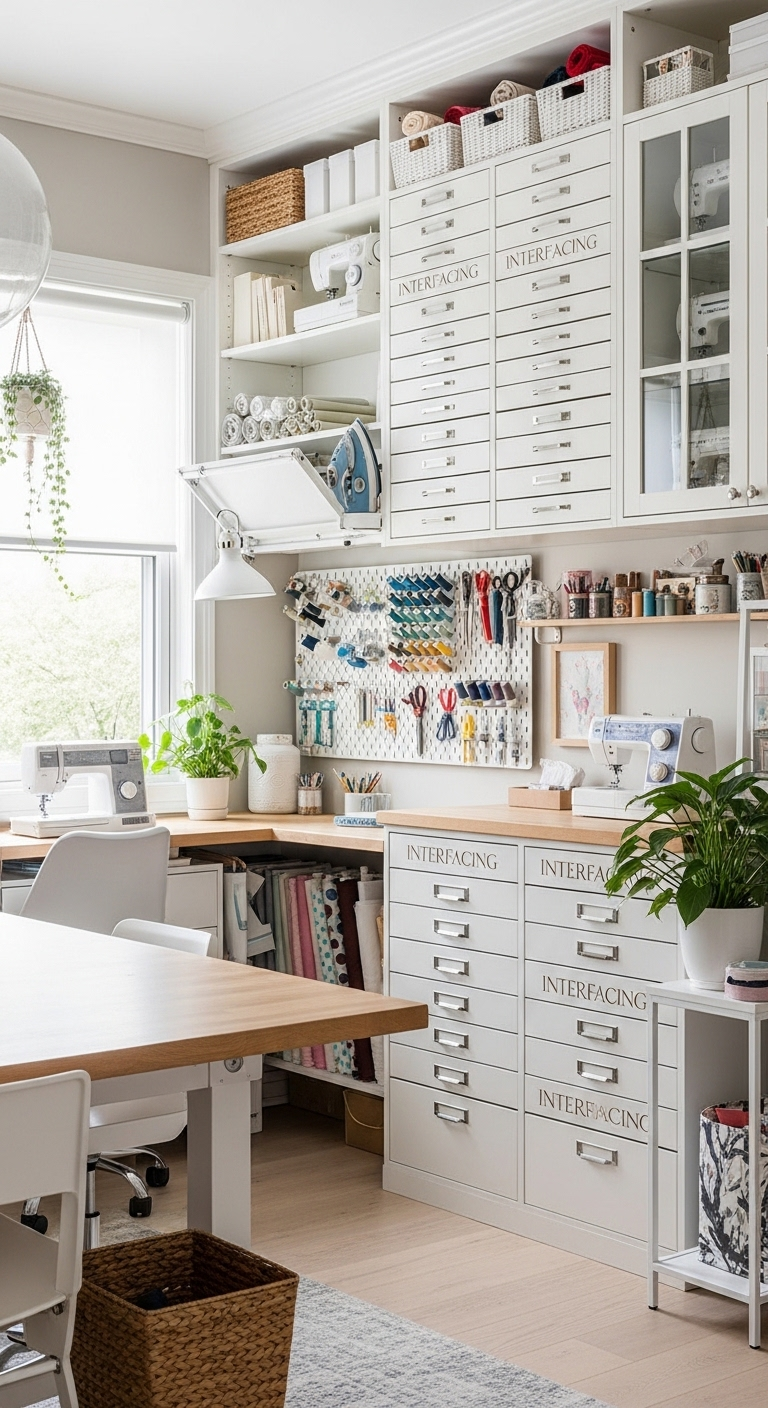
Interfacing and stabilizers often look remarkably similar once removed from their original packaging, which can lead to frustrating mistakes during construction. Maintaining dedicated, clearly labeled drawers for these essentials ensures you never accidentally use the wrong product for a delicate or specific project requirement.
Taking the time to sort these materials by weight and function prevents the common error of choosing a permanent interfacing when a wash-away stabilizer is needed. This level of oversight is essential for maintaining the high standards required for quality garment construction and professional finishes.
A systematic approach to storing these textiles allows you to quickly identify exactly what you need without checking dozens of loose rolls. You will find that keeping these supplies organized by their technical properties significantly speeds up your preparation time before you ever begin the actual sewing.
Creating this structured environment for your stabilizers and interfacing contributes to consistent, reliable results across every single project you undertake. A well-organized supply closet is a hallmark of a serious creative space, ensuring your materials are always properly utilized and expertly managed.
18#. Antique Spool Cabinet Accents
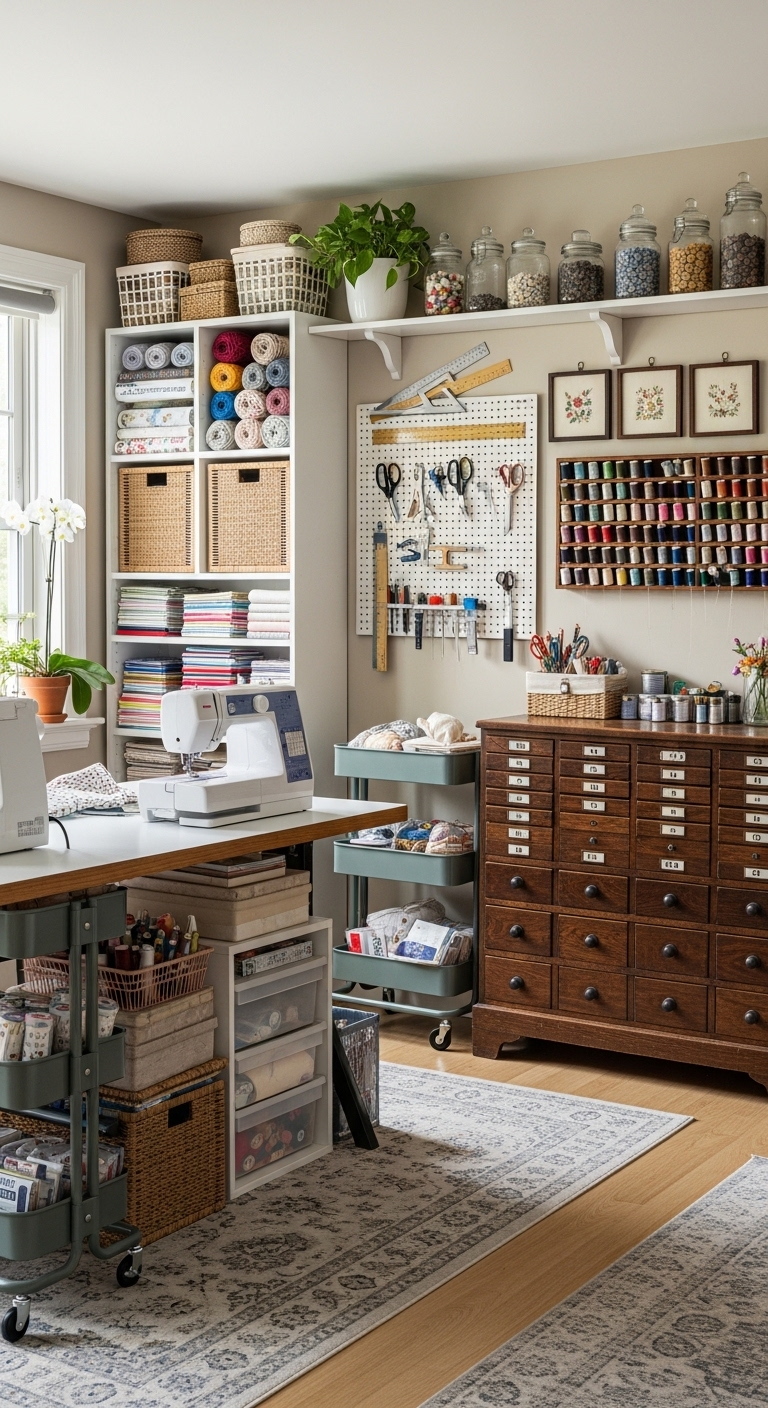
Finding a vintage wooden spool cabinet at a thrift store is a fantastic win that instantly adds authentic character to your creative workspace. While these charming pieces were originally designed to house thread collections, their small, partitioned drawers offer endless possibilities for organizing your various notions and supplies.
Using a cabinet like this introduces a sense of history and warmth that perfectly complements a modern studio environment. The structured, drawer-heavy design keeps your small items tidy and sorted, ensuring that everything from needles to bobbins remains neatly tucked away until you need them.
The natural, weathered wood provides a beautiful visual counterpoint to the sleek, often sterile plastic components of modern sewing machines. This contrast helps ground your space, making your workstation feel like a dedicated, soulful studio rather than a purely functional area filled with equipment.
Such a unique piece will surely become the focal point of your room, prompting fellow crafters to admire your eye for vintage decor. Incorporating these tactile, wooden elements into your organization system transforms your workspace into a cozy, professional environment that is as beautiful as it is useful.
19#. Pattern Drafting Paper Rolls
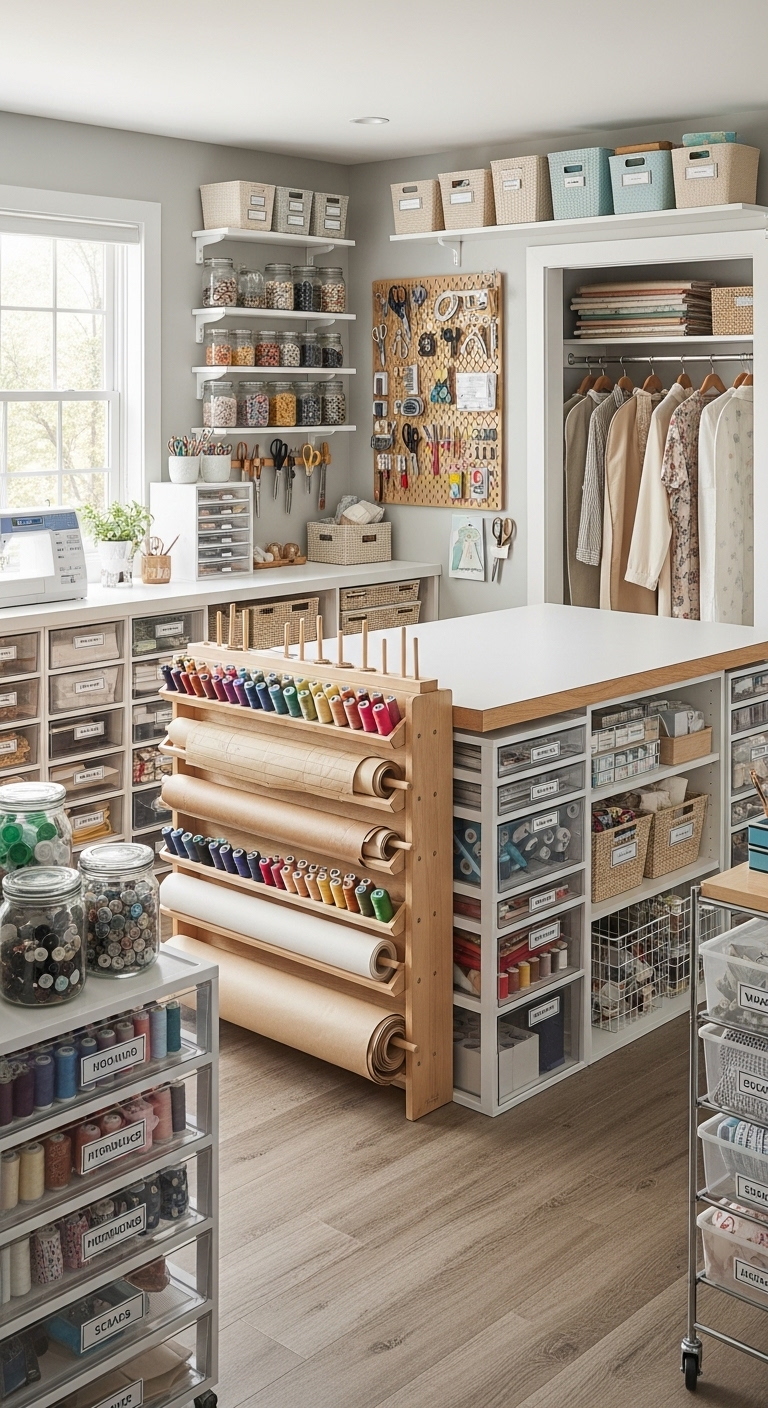
Mounting a large roll of brown or white kraft paper directly to your studio wall provides an incredibly efficient surface for drafting new designs. By installing this system, you can pull down exactly the amount of paper you need, ensuring your workspace remains flat and free from wrinkles.
This method guarantees that you always have a dedicated, clean surface ready for sketching or pattern drafting at a moment’s notice. You will no longer struggle with loose sheets or crumpled rolls, as the paper remains perfectly tensioned and accessible whenever inspiration strikes for a new project.
This vertical mounting setup is far superior to keeping loose rolls standing in a corner where they are prone to falling over or gathering dust. By reclaiming your floor area, you create a cleaner, safer environment that allows you to move freely throughout your design and stitching sessions.
A professional, high-functioning studio often features this exact type of wall-mounted paper system to streamline the design process. Incorporating this simple tool into your workflow makes your creative space feel significantly more organized, ensuring you have the room necessary to execute your most ambitious sewing ideas.
20#. Stackable Notion Suitcases
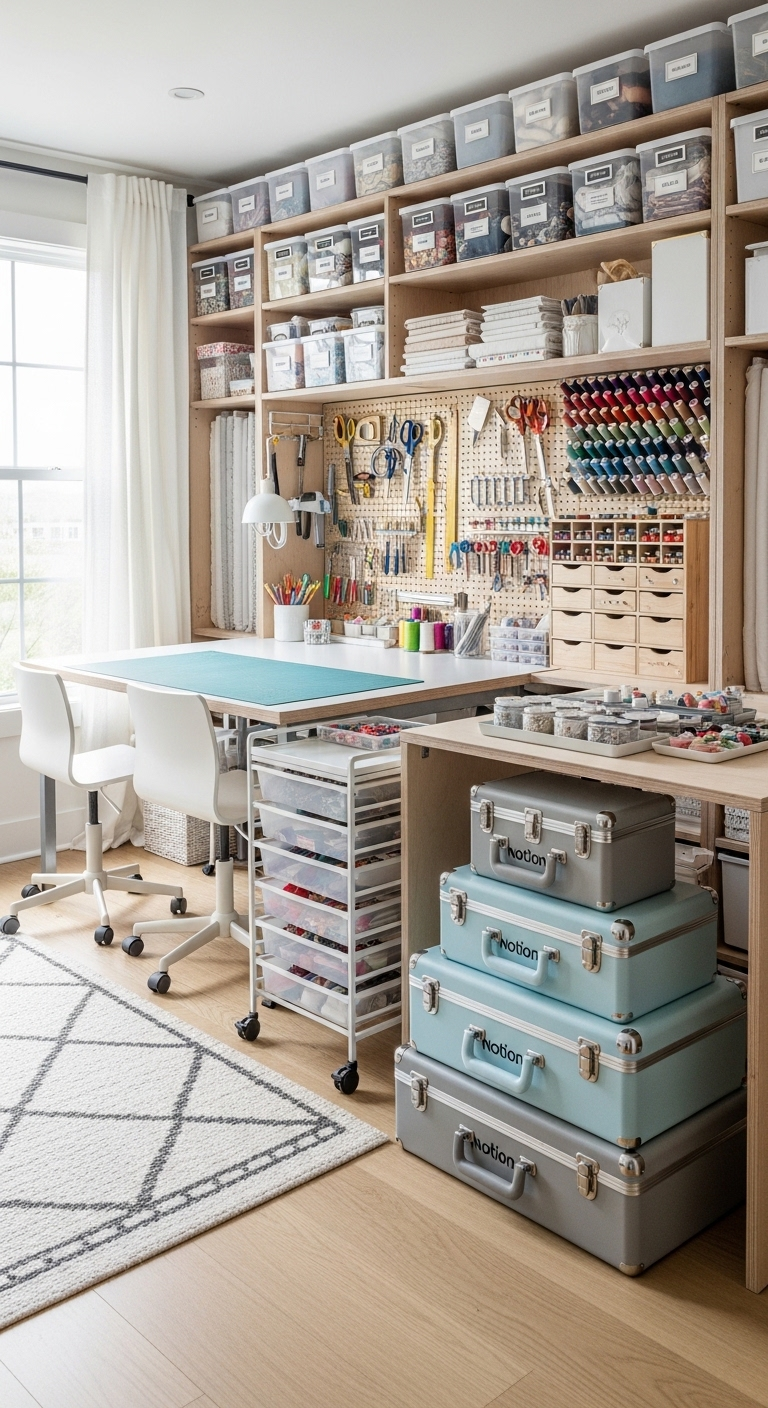
Utilizing vintage-style suitcases or clear plastic boxes is an excellent way to categorize and store small sewing hardware, such as elastics, zippers, and hook-and-eye closures. By applying a clear label to each container, you create a systematic retrieval process, ensuring you can locate specific notions for any project without delay.
The primary advantage of these containers is their stackable nature, which allows you to optimize your vertical storage space on shelves or inside closets. This approach transforms chaotic piles of loose supplies into a neatly ordered archive that makes the most of your studio’s square footage.
Having a uniform set of stackable containers is a game-changer for those with extensive collections of buttons, threads, and fasteners. You can maintain a large inventory of materials without cluttering your work surfaces, as the items remain safely tucked away yet easy to access.
Whether you prefer the aesthetic charm of old-fashioned cases or the functional visibility of modern plastic bins, this storage solution keeps your hardware orderly and protected. It is an essential strategy for any organized creative space, allowing you to focus on your design work rather than searching for missing components.
21#. Under-Table Storage Hammocks
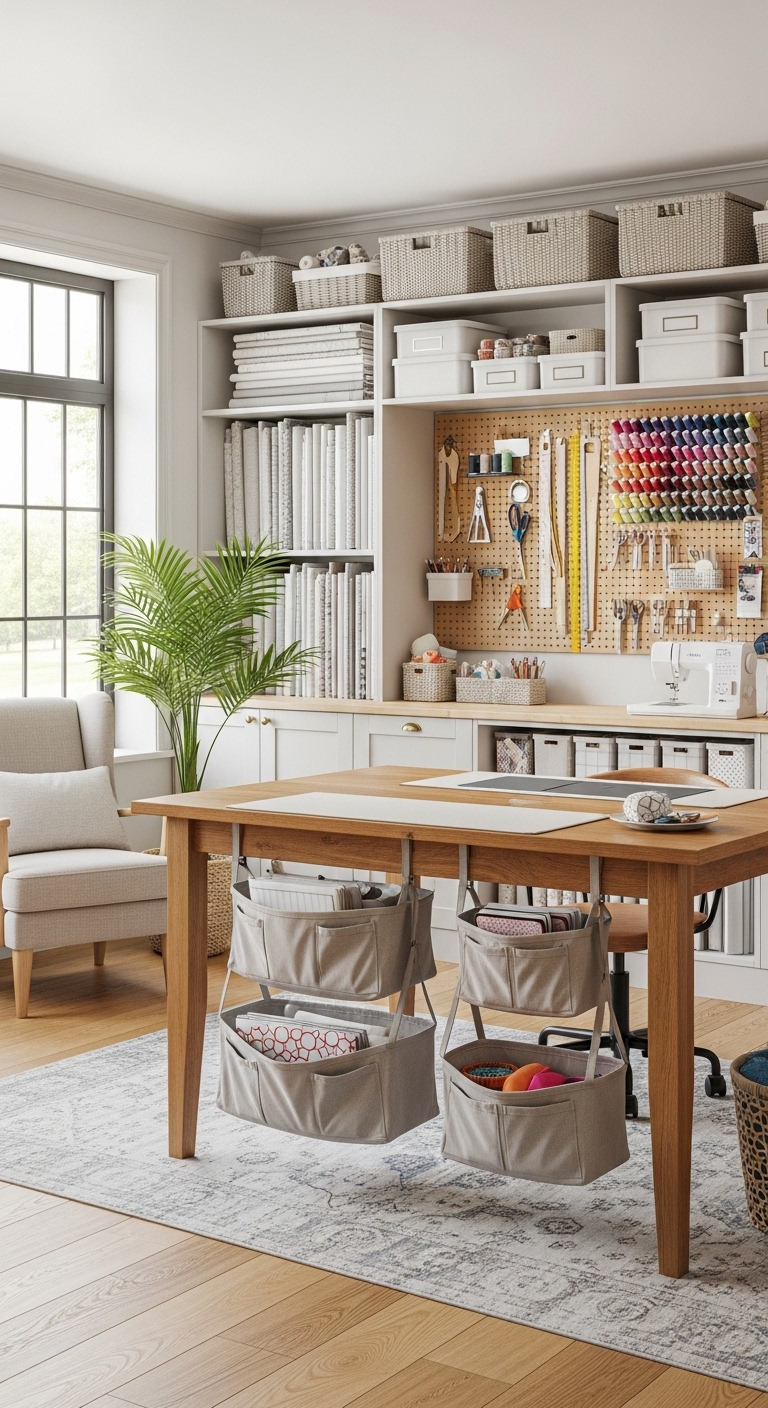
Installing a custom fabric hammock beneath your cutting table is a brilliant, space-saving hack for managing bulky essentials. This hidden storage system is perfectly suited for rolls of batting, large fabric cuts, or remnants, keeping them safely off the floor while maintaining easy access for your active projects.
By reclaiming the often-wasted area beneath your work surface, you effectively double your storage capacity without crowding your floor plan. This solution prevents materials from accumulating in corners, ensuring your studio remains clear and functional even when you are working with large-scale projects.
The hammock acts as an elegant concealment tool, tucking away the “messier” parts of your supply stash while keeping them within arm’s reach. This approach helps maintain an open, airy aesthetic in your room, which is particularly beneficial if you prefer a clean and minimalist look for your sewing space.
For those seeking unique, space-conscious organization, this fabric hammock is a standout choice that prioritizes both order and design. It transforms the negative space under your table into a purposeful zone, proving that even the most unconventional storage solutions can lead to a tidier and more professional creative environment.
22#. Peg-Rail Finishing Stations
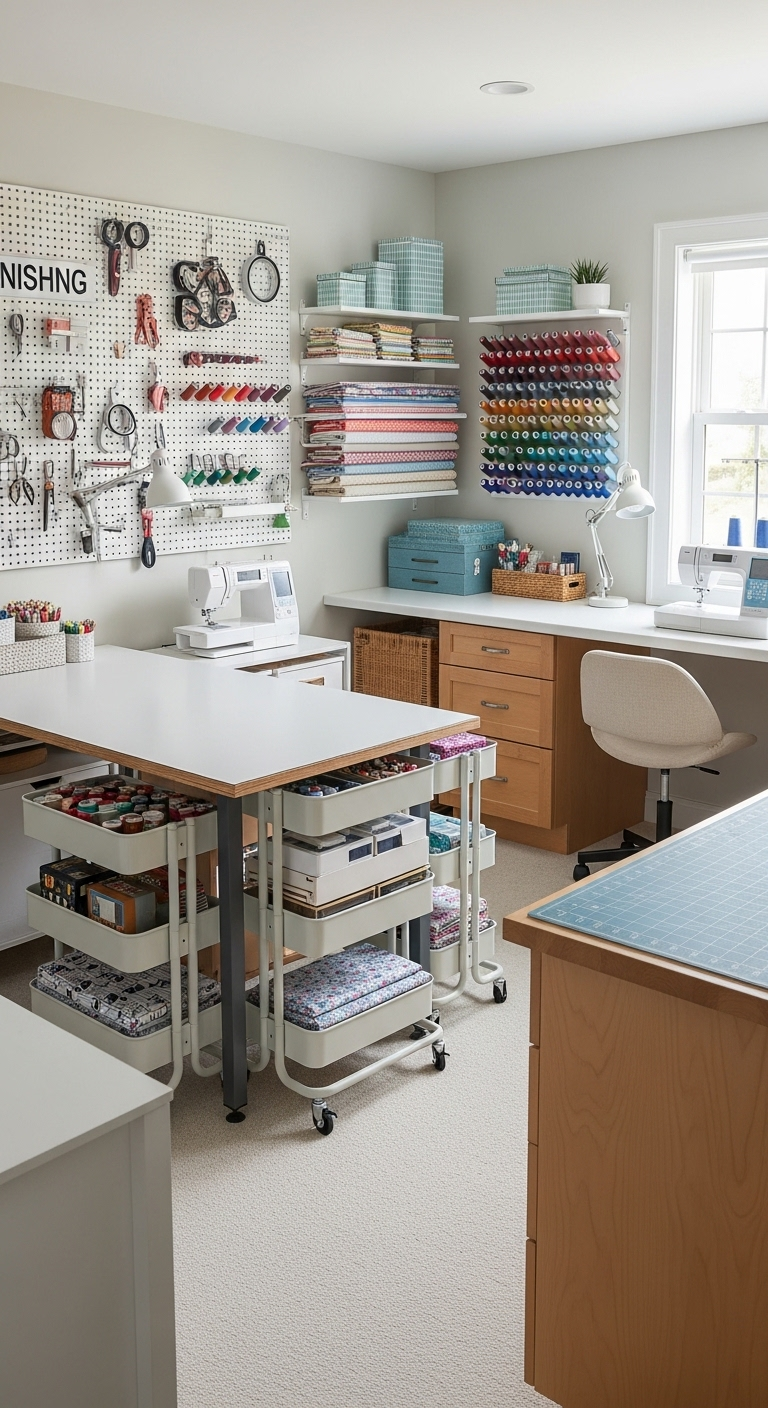
A classic wooden peg rail is an incredibly functional addition to any studio, offering the perfect spot to hang freshly sewn garments or pressing cloths while they await the next phase of construction. By providing a dedicated space for these items, you ensure they remain crisp and clean, avoiding the common issue of wrinkling or collecting lint from chair backs or cluttered tabletops.
Using a peg rail keeps your “outbox”—those pieces in progress or awaiting final touches—neatly organized and highly visible. This arrangement allows you to monitor your workflow efficiently, ensuring that your finished projects are treated with care until they are ready for their final reveal.
Beyond utility, peg rails bring a timeless, tactile warmth to your workspace. The natural wood grain pairs beautifully with the farmhouse aesthetic, adding a touch of rustic charm that balances the more mechanical aspects of a sewing studio.
This storage solution creates a sense of order that makes finishing your creative projects feel satisfying and professional. By incorporating a peg rail, you transform a simple storage need into a beautiful display element that keeps your studio looking intentional, organized, and inviting.
23#. Retractable Measuring Tapes
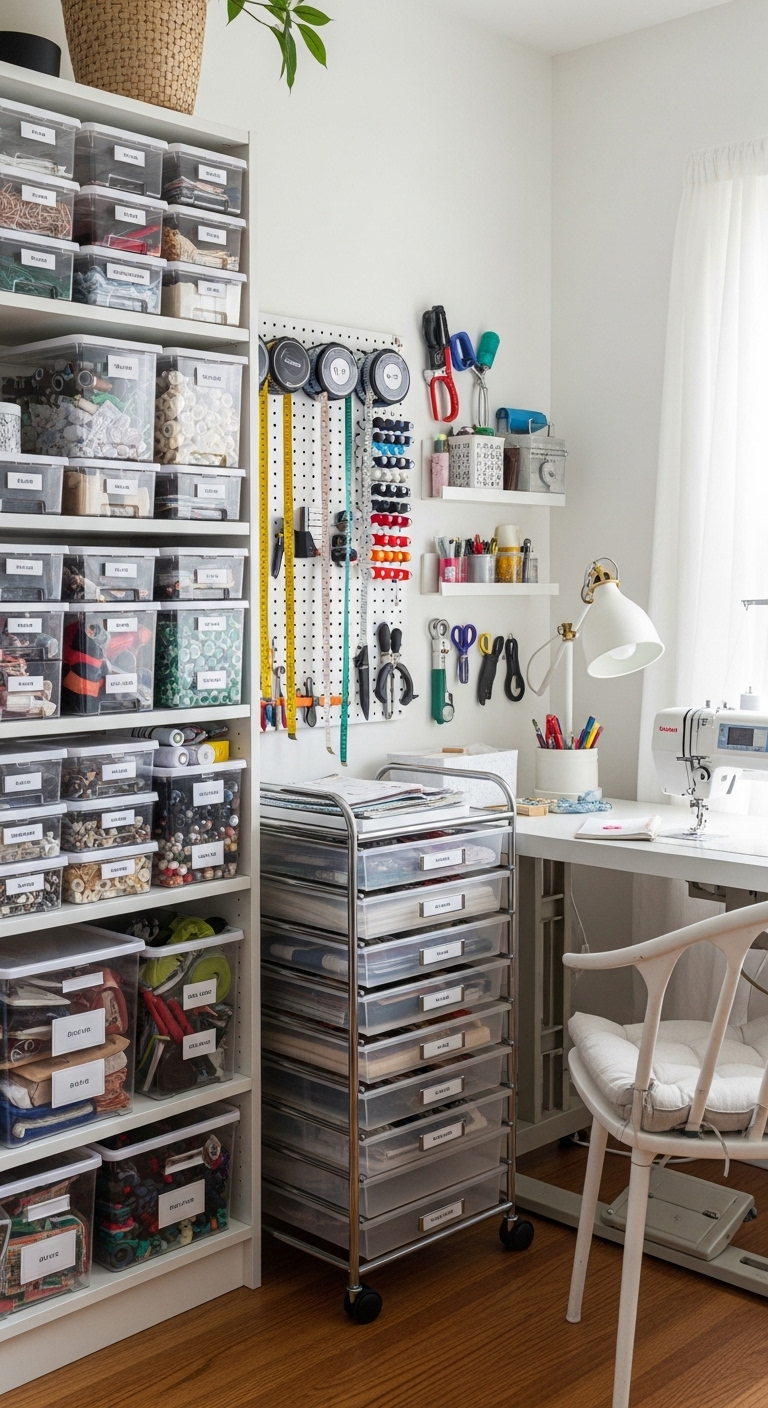
Mounting a retractable measuring tape directly to the side of your machine table ensures that a precise ruler is always within immediate reach. By anchoring your tape in a fixed location, you eliminate the constant frustration of hunting for misplaced tools buried beneath layers of fabric scraps or project materials.
This simple yet effective setup allows you to measure and mark with speed, keeping your workflow fluid and uninterrupted. Because the tape is always exactly where you need it, you can maintain your focus on the task at hand, ensuring every measurement is accurate without the hassle of searching.
This convenience is particularly beneficial when you are working on intricate sewing tasks or managing complex patterns. The retractable mechanism keeps the tape neatly stored when not in use, preventing clutter while ensuring it never “wanders off” to another part of your studio.
Incorporating this small, specialized hack makes a noticeable difference in your daily efficiency. It is a hallmark of a professional workstation—where every tool is optimized for quick access, allowing you to spend more time on your creative process and less time managing your workspace.
24#. Acrylic Pattern Weight Trays
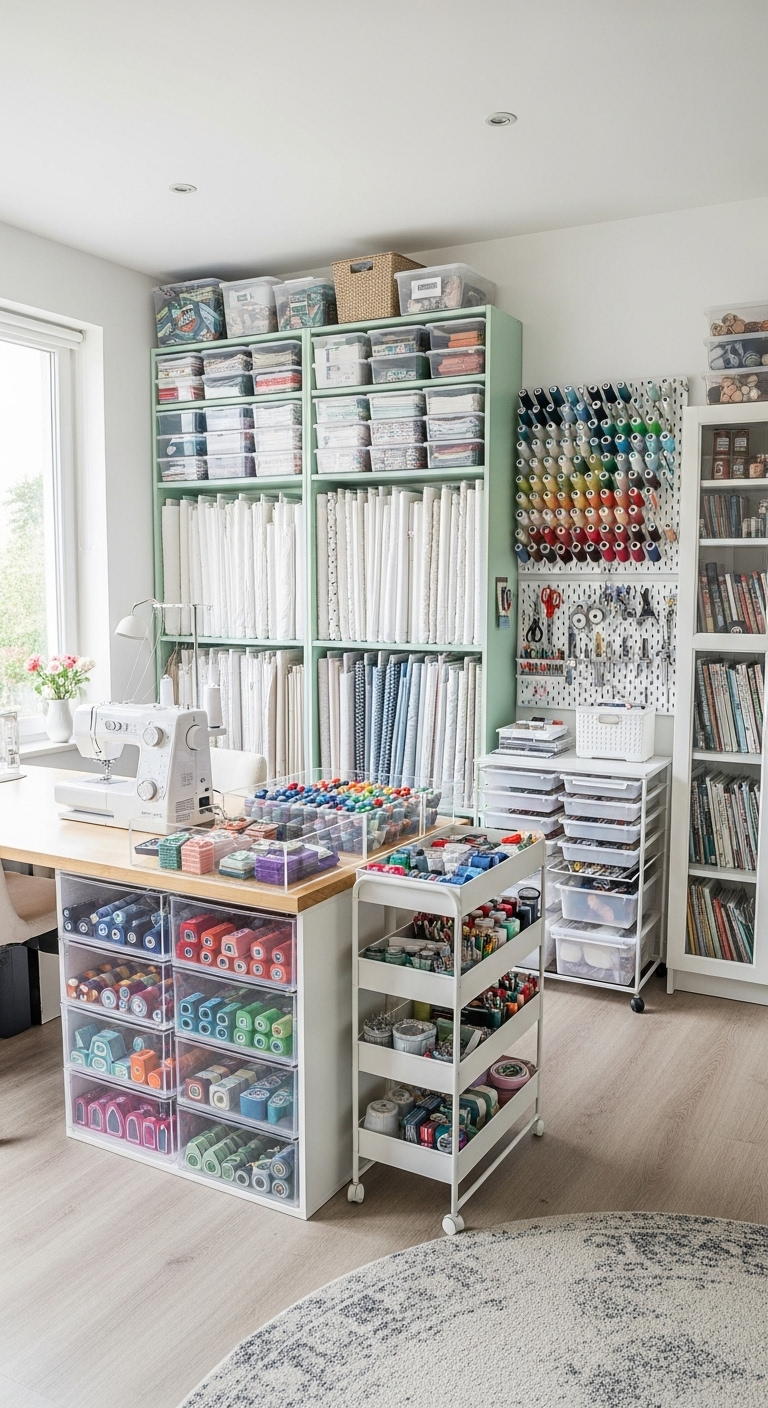
Keeping your pattern weights in a dedicated tray directly on your cutting table is a simple yet essential strategy to prevent them from rolling away or disappearing into the clutter. By providing a permanent “home” for these tools, you ensure they are always right where you need them when it is time to pin, cut, and begin your next construction step.
A well-placed tray elevates the visual appeal of your workstation, making the inside of your creative area look just as polished and intentional as the rest of your studio. This level of detail transforms a standard desk into a highly curated space that reflects your professional approach to garment construction.
When your weights have a fixed spot, accessing them becomes second nature, allowing you to develop a seamless, efficient habit that saves time during your drafting process. You will find that knowing exactly where your tools are removes a common source of friction, leaving you more mental energy to focus on the creative aspects of your work.
An organized, planned environment is inherently more inspiring, providing the calm backdrop necessary for ambitious projects. By treating your smallest tools with the same level of care as your machines, you solidify the identity of your room as a functional, high-performance studio that supports your best work.
25#. Desktop Needle Organizers
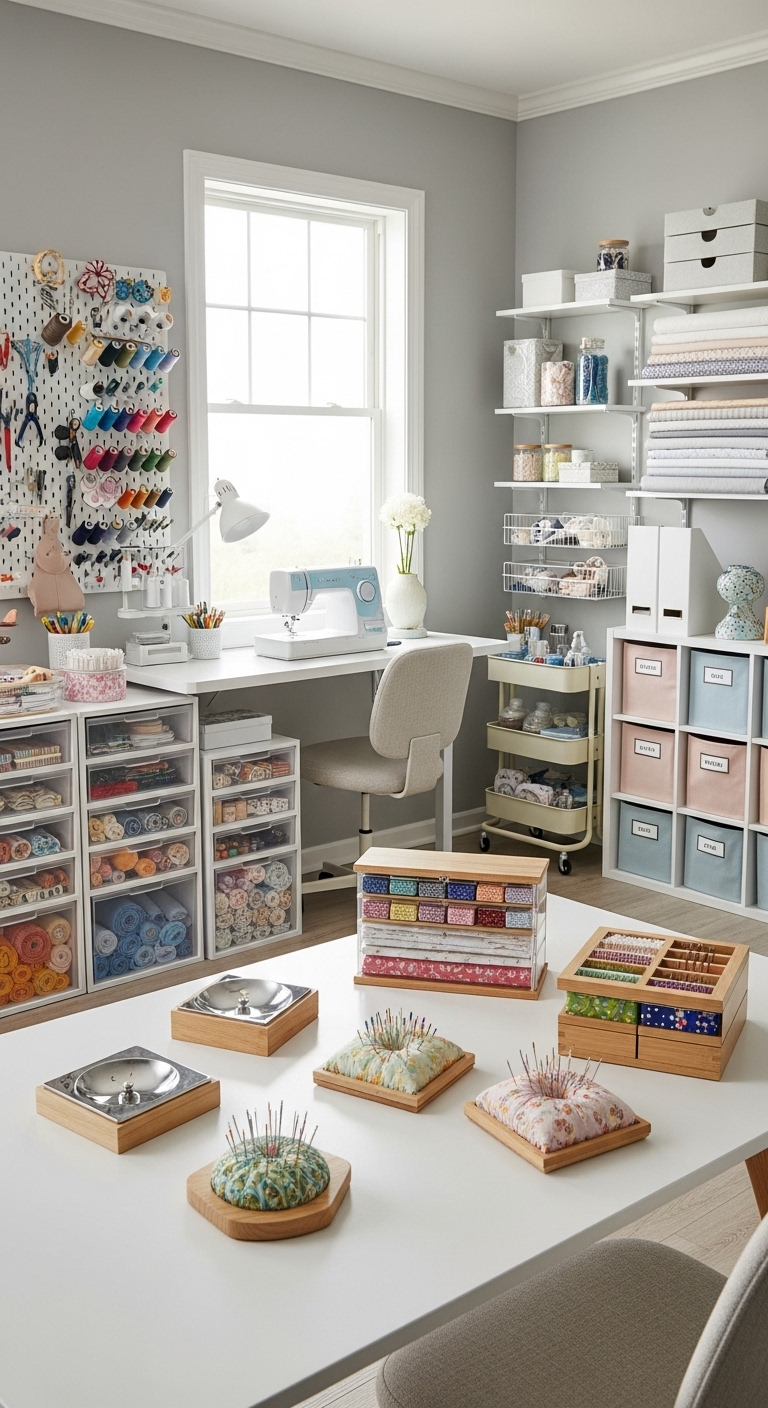
Utilizing a partitioned dish to separate “sharps” from “ballpoint” needles is a critical practice for maintaining precision in your sewing workflow. This simple system ensures you never accidentally reach for the wrong needle type, safeguarding your delicate fabrics from snags, skipped stitches, or unnecessary damage.
Sorting your needles by category and size within a dedicated dish allows you to swap them out in seconds, even while deep into a complex project. This effortless accessibility keeps your creative rhythm smooth and prevents the frustration of mid-project mishaps, ensuring every stitch is as professional as intended.
Beyond the efficiency of quick selection, this method preserves the integrity of your work. Using the correct needle for your specific textile—whether it is a fine silk or a heavy knit—dramatically improves the quality of the finish and prevents mechanical issues with your sewing machine.
Adding this small, organized zone to your supply station is a hallmark of an expert sewer. By prioritizing the care and order of your smallest tools, you create a more reliable foundation for your work, ensuring that every garment you produce meets your highest standards of quality and detail.
26#. Uniform Plastic Scrap Bins
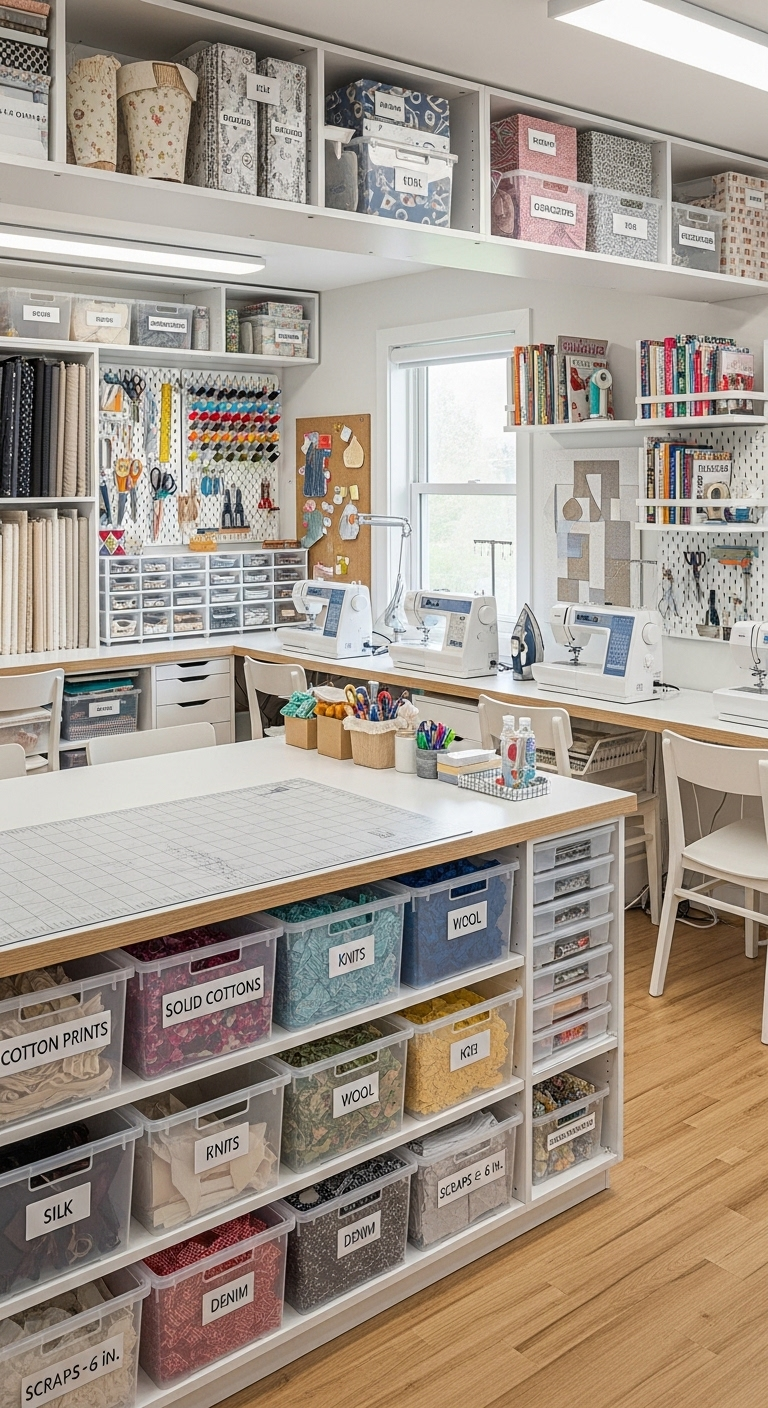
Labeling your storage bins by color for your fabric leftovers is a highly effective strategy for maintaining a clean and functional studio. By categorizing your scraps at the source, you transform a potential heap of clutter into an accessible, vibrant resource that is ready for your next quilting or applique project.
This system ensures that your materials remain in sight and in mind, rather than disappearing into the depths of a dark closet. When every scrap has a designated place, you can quickly pull the exact color palette you need for a new design, significantly reducing your preparation time.
Beyond the immediate organizational benefits, this practice fosters a sustainable, zero-waste approach to your crafting life. By actively managing your remnants, you create a system where almost every piece of fabric is eventually utilized, minimizing waste while maximizing your creative output.
Adopting these habits allows you to be more intentional with your materials, turning what might be considered “trash” into a valuable inventory of textures and hues. This level of stewardship over your supplies makes your daily crafting routine more productive, environmentally conscious, and deeply satisfying.
27#. Hanging Ironing Board Hooks
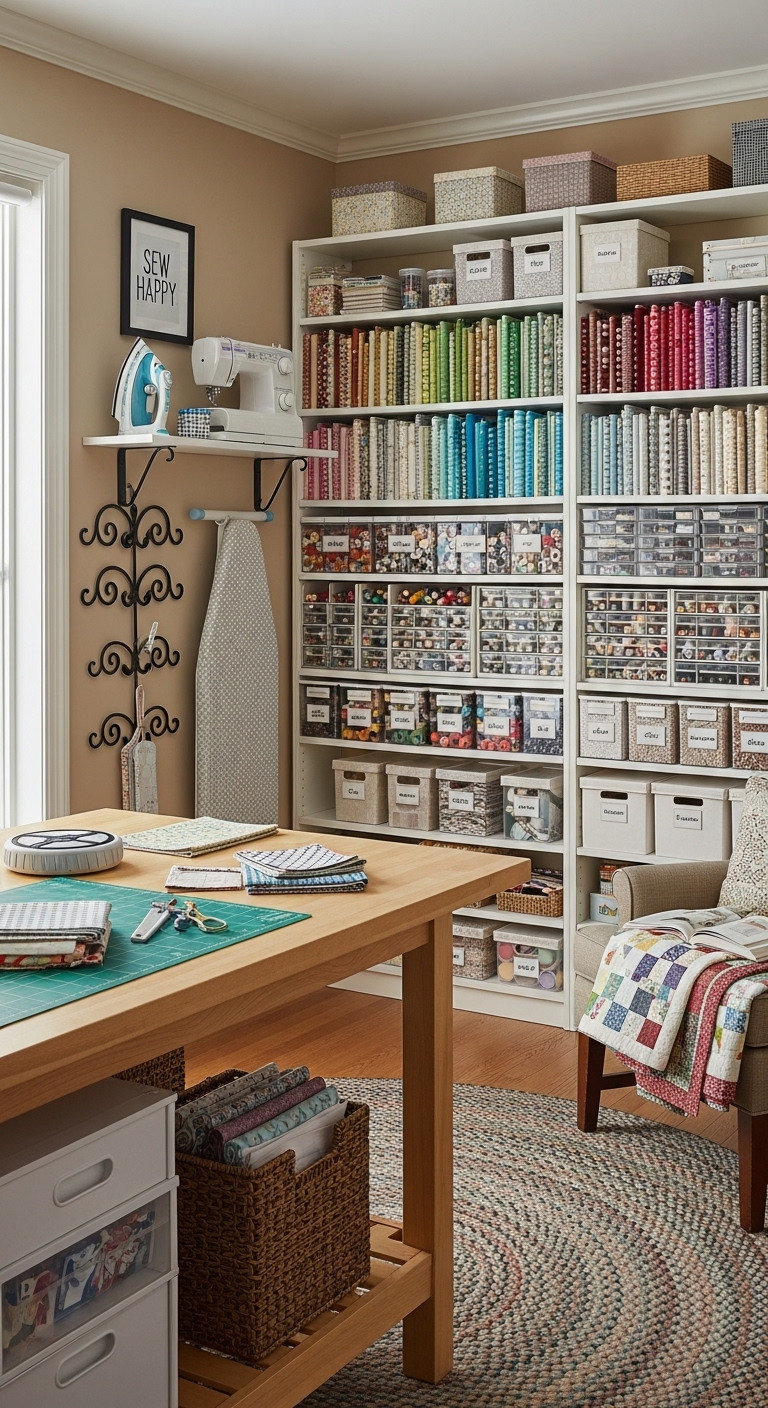
Mounting your ironing board to the back of a door or directly onto the wall is an ideal way to reclaim valuable floor space while keeping your pressing station fully accessible. By moving the board off the ground, you eliminate a major source of clutter, ensuring your studio remains open and easy to navigate even during the most complex projects.
This setup means your equipment is always ready for immediate use—you can simply lift it down, press your seams, and return it to its vertical position without interrupting your workflow. It is a highly efficient solution for smaller rooms where every square inch counts and versatility is key to managing multiple stages of design and assembly.
Beyond the space-saving benefits, storing your ironing board vertically helps maintain the cleanliness of your workspace. Keeping the board elevated keeps the cover away from dust and debris that naturally accumulates on the floor, which in turn protects your fabrics from unwanted marks and lint during the pressing process.
For anyone managing a multi-purpose studio, this approach demonstrates how careful storage planning can make a room feel larger and more professional. It creates a streamlined environment where your tools work for you, allowing you to transition between cutting, sewing, and pressing with total ease and efficiency.
28#. Tiered Ruler Display Racks
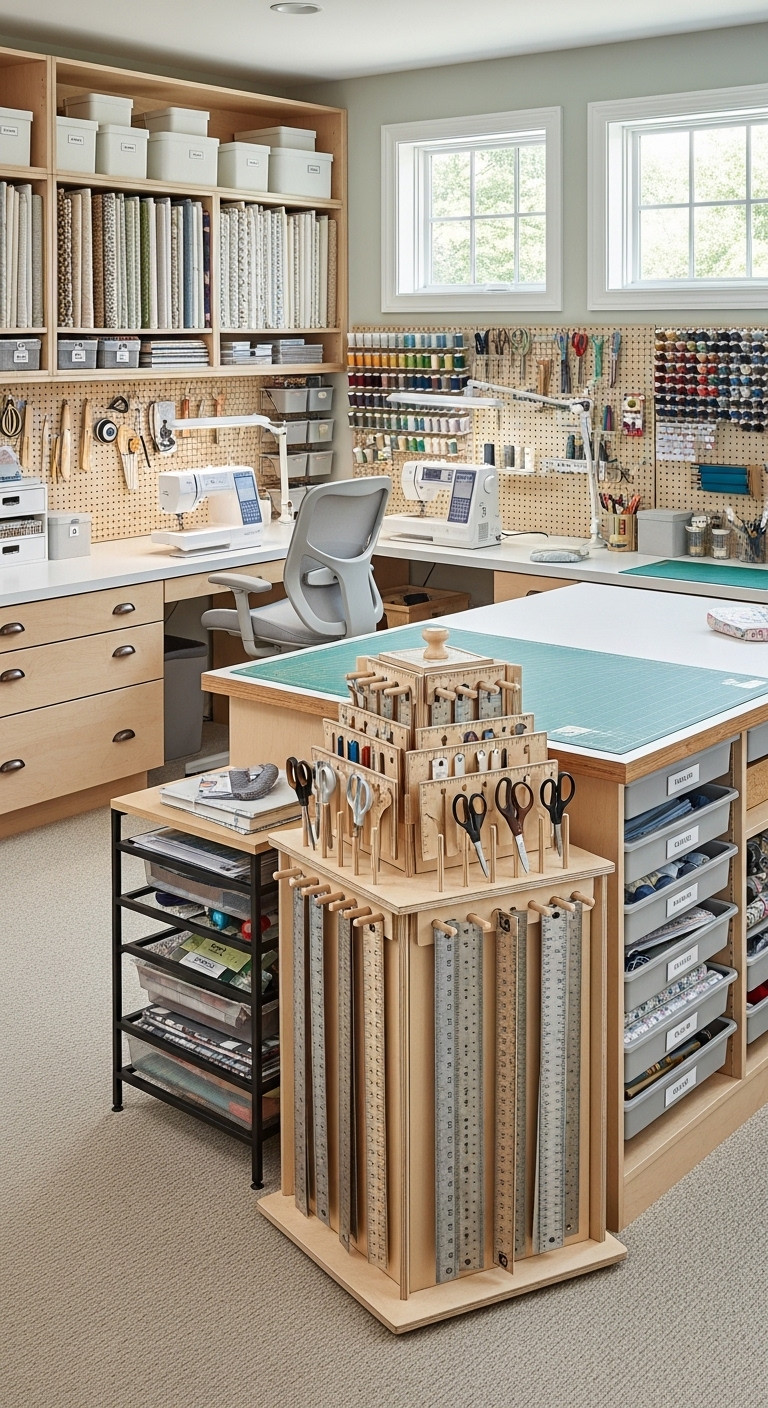
Implementing a slotted rack to store your acrylic rulers is a highly effective way to keep your tools organized by size while maintaining their pristine condition. By giving each ruler its own dedicated slot, you prevent them from sliding against one another, effectively eliminating the surface scratches that can obscure your sightlines over time.
This storage method turns a collection of loose tools into a professional, high-visibility display that adds an air of precision to your cutting table. When your rulers are neatly upright and accessible, you can instantly identify and grab the exact size required for your current project without sifting through a messy pile.
Storing your rulers in this manner is also a crucial safety measure, as it keeps sharp edges protected and prevents them from accidentally slipping off the table. For quilting enthusiasts who rely on exact measurements for every block, having a designated “home” for these essential instruments ensures that your workspace remains functional and clutter-free.
Investing in a slotted rack is a small change that yields significant results for your workflow. It transforms your cutting area into a streamlined, professional environment, providing the order needed to focus on the intricate, precise work that goes into creating beautiful, high-quality quilts.
29#. Vertical Stabilizer Tubes
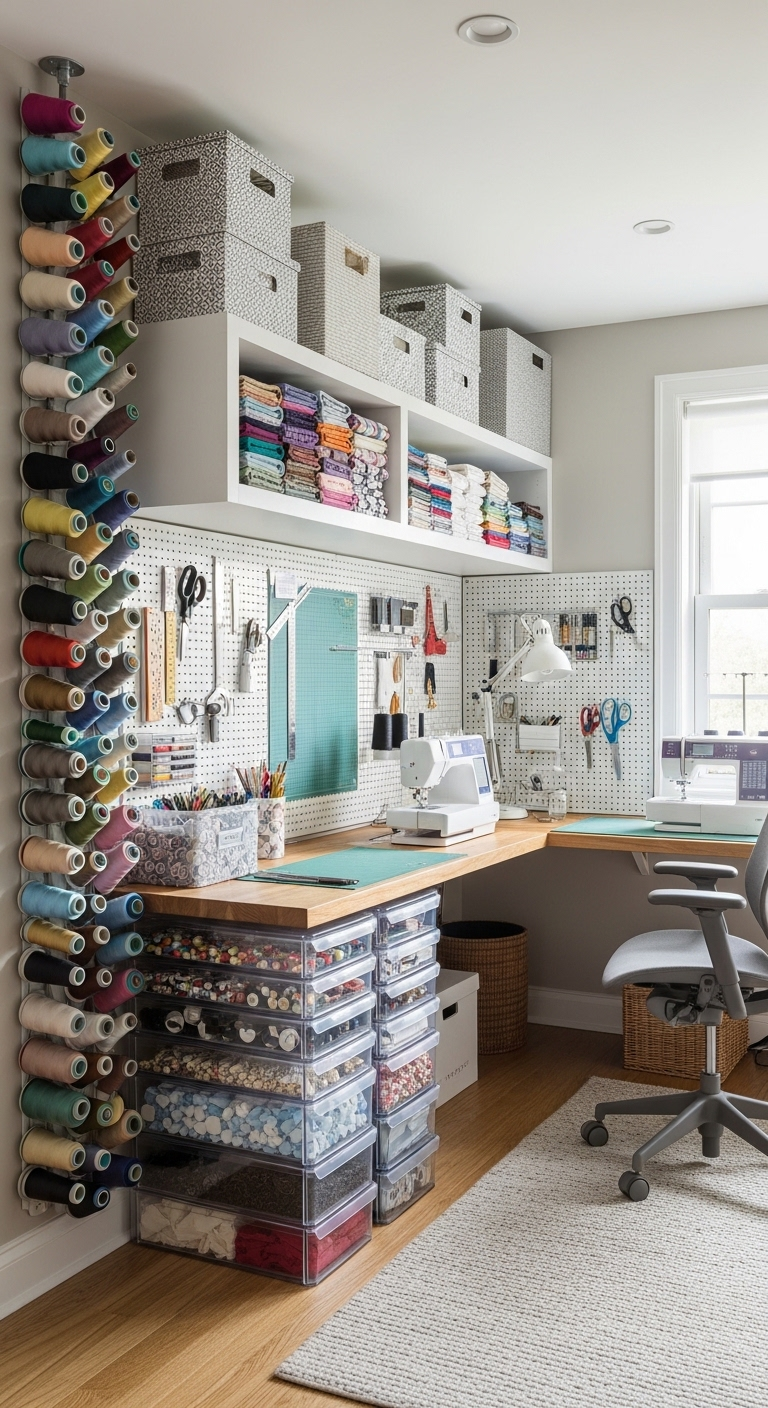
Storing rolls of stabilizer and interfacing in upright cardboard or plastic tubes is an incredibly effective way to keep your inventory visible and accessible on open shelving. By standing these rolls vertically, you prevent the common issue of materials becoming tangled in deep drawers or losing their shape in overcrowded storage bins.
This method allows you to see your entire collection at a glance, making it simple to track how much of each product you have on hand. Labeling the top rim of each tube further enhances this system, enabling you to identify the specific weight or type of stabilizer instantly without having to pull every roll out.
This storage strategy is both cost-effective and highly practical, transforming unruly rolls into a neat, library-like display. It removes the friction of searching for materials, ensuring that when inspiration strikes or a project requires a specific interfacing, you have the exact solution ready within seconds.
For anyone managing diverse fabric projects, this organized approach protects the integrity of your stabilizers and keeps your studio looking intentional and clean. It is a simple, budget-friendly fix that brings professional-level order to your sewing supplies, ensuring you can focus entirely on the quality of your work.
30#. Transparent Button Chests
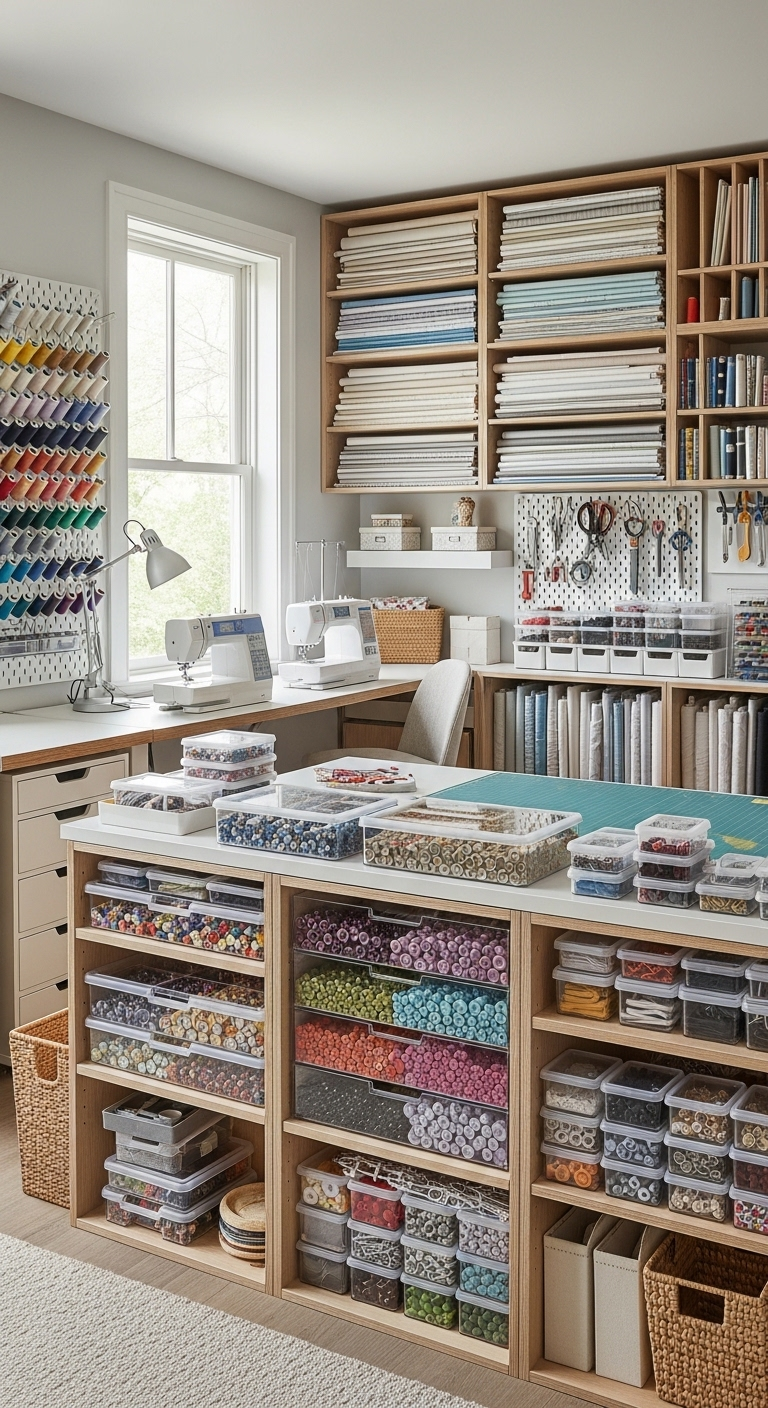
A chest of clear drawers is a perfect solution for organizing your button collection, allowing you to categorize items by color, size, and material with ease. Because the contents are fully visible, you can quickly scan your entire inventory, turning the simple act of choosing the right fastener into a fun and creative part of your design process.
This setup eliminates the frustration of digging through tangled jars or opaque bins, as everything you need is right in front of you. Having a dedicated drawer for each category makes it simple to maintain order and keep your collection expanding without creating clutter.
These chests are highly versatile and compact, making them an excellent choice for placement on a desk or a nearby bookshelf. They occupy minimal footprint while maximizing your vertical storage, keeping your workspace clear for active garment construction.
Displaying your buttons in this way serves a dual purpose: it keeps your supplies perfectly sorted and adds a beautiful, tactile element to your studio decor. A well-organized button chest is both a functional tool and a visual highlight, ensuring your most detailed accents are always ready to elevate your latest project.
31#. Custom Thread Caddies
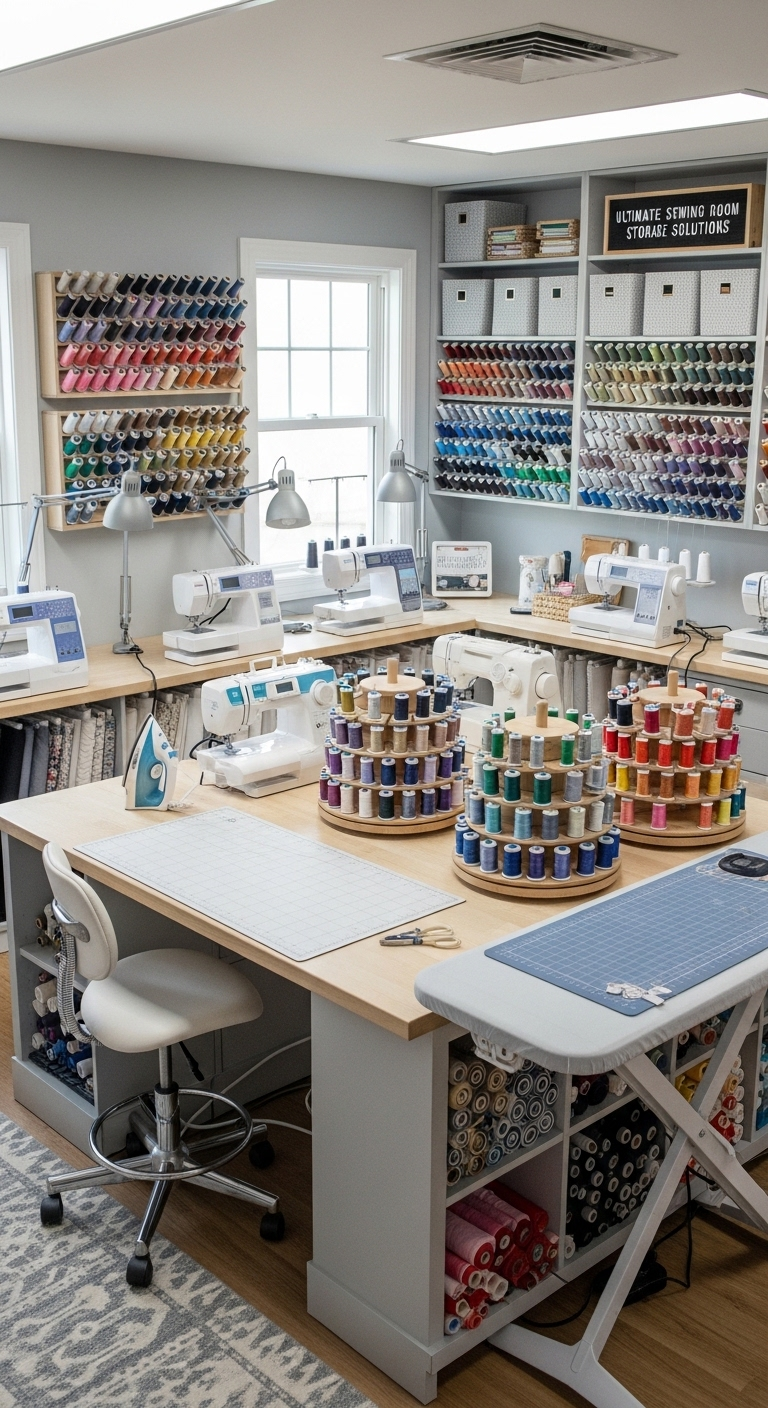
Crafting a dedicated, removable box for your thread collection is an excellent way to maintain a clean workspace while ensuring your supplies remain accessible. By sizing this box to fit perfectly within a drawer, you create a mobile station that you can simply lift out when starting a project and tuck away the moment you finish.
This system encourages a clutter-free environment, keeping your primary work surfaces clear of excess items. Storing your threads in a drawer-contained box also provides essential protection from dust and direct sunlight, which can weaken fibers and cause vibrant colors to fade over time.
Keeping your spools standing upright within this container allows you to see every color at a glance, making it easy to select the perfect match for your fabric. This level of order ensures your threads remain pristine, tangle-free, and organized, contributing to a more professional and efficient sewing process.
A mobile storage solution like this is ideal for those who value both a tidy studio and the convenience of having their essential tools within arm’s reach. It is a thoughtful approach to sewing room storage that balances aesthetic minimalism with high-functioning organization, ensuring your workspace remains an inspiring place to create.
32#. Under-Cabinet Task Lighting
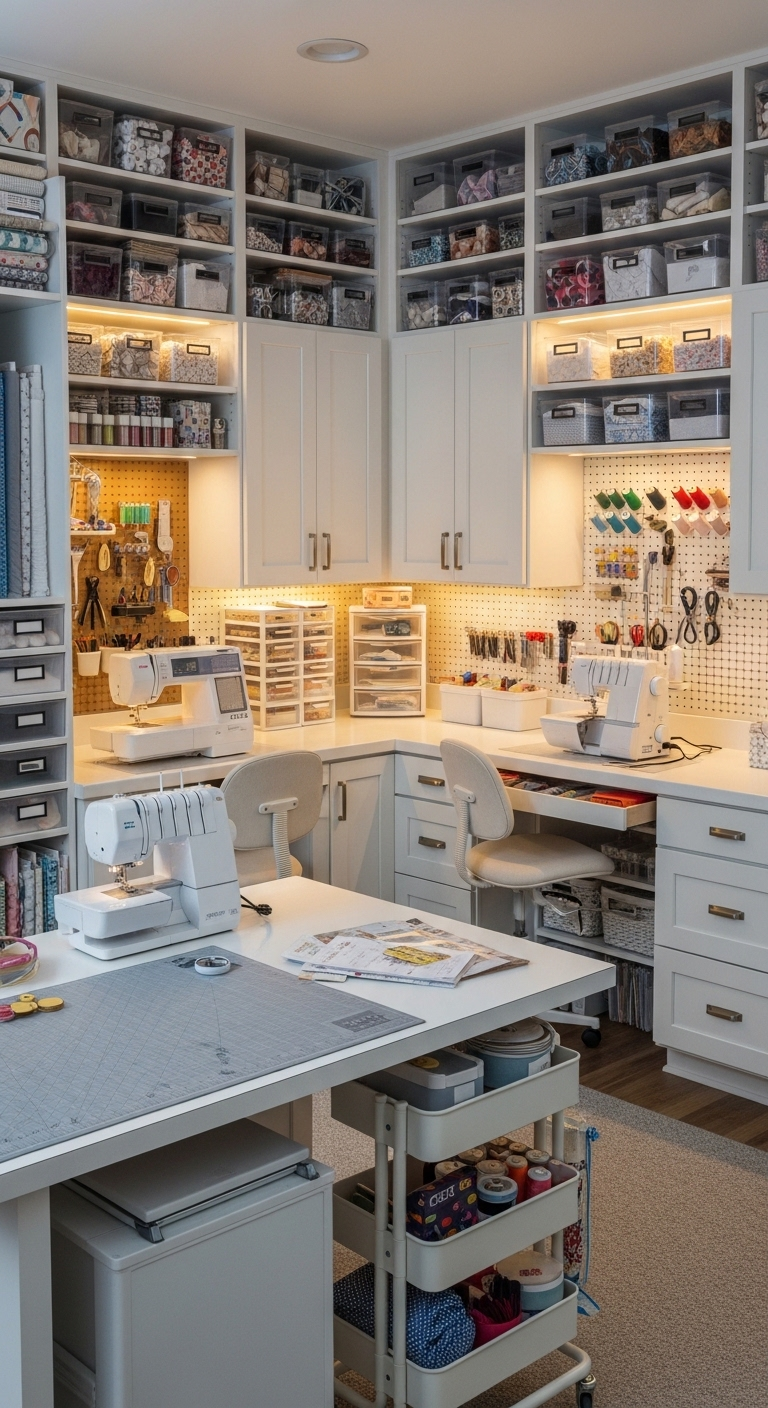
Installing LED strips beneath your wall-mounted shelves is a transformative upgrade for any sewing studio, effectively eliminating the harsh, distracting shadows that often plague cutting and sewing surfaces. By providing consistent, localized illumination, these lights ensure that fine thread details, subtle fabric textures, and precise marking lines are always clearly visible, regardless of the time of day.
This steady, high-quality light source is essential for evening sessions, allowing you to maintain your focus and accuracy without straining your eyes. When your workspace is properly lit, you can work with confidence, knowing that every detail of your design—from the smallest seam to the most intricate applique—is illuminated to perfection.
Beyond the immediate functional benefits, professional task lighting significantly contributes to the overall order of your room. A well-lit studio is inherently easier to keep tidy, as you can quickly spot stray threads, fabric scraps, or misplaced tools that might otherwise go unnoticed in dim corners. This level of clarity helps reduce common errors, streamlining your process and minimizing the need for rework.
Ultimately, integrating LED task lighting creates a more sophisticated and capable creative environment. It elevates the professional feel of your studio, turning your workspace into a bright, inviting, and highly efficient hub where you can execute your most precise projects with ease and enjoyment.
33#. Hanging Macramé Project Bags
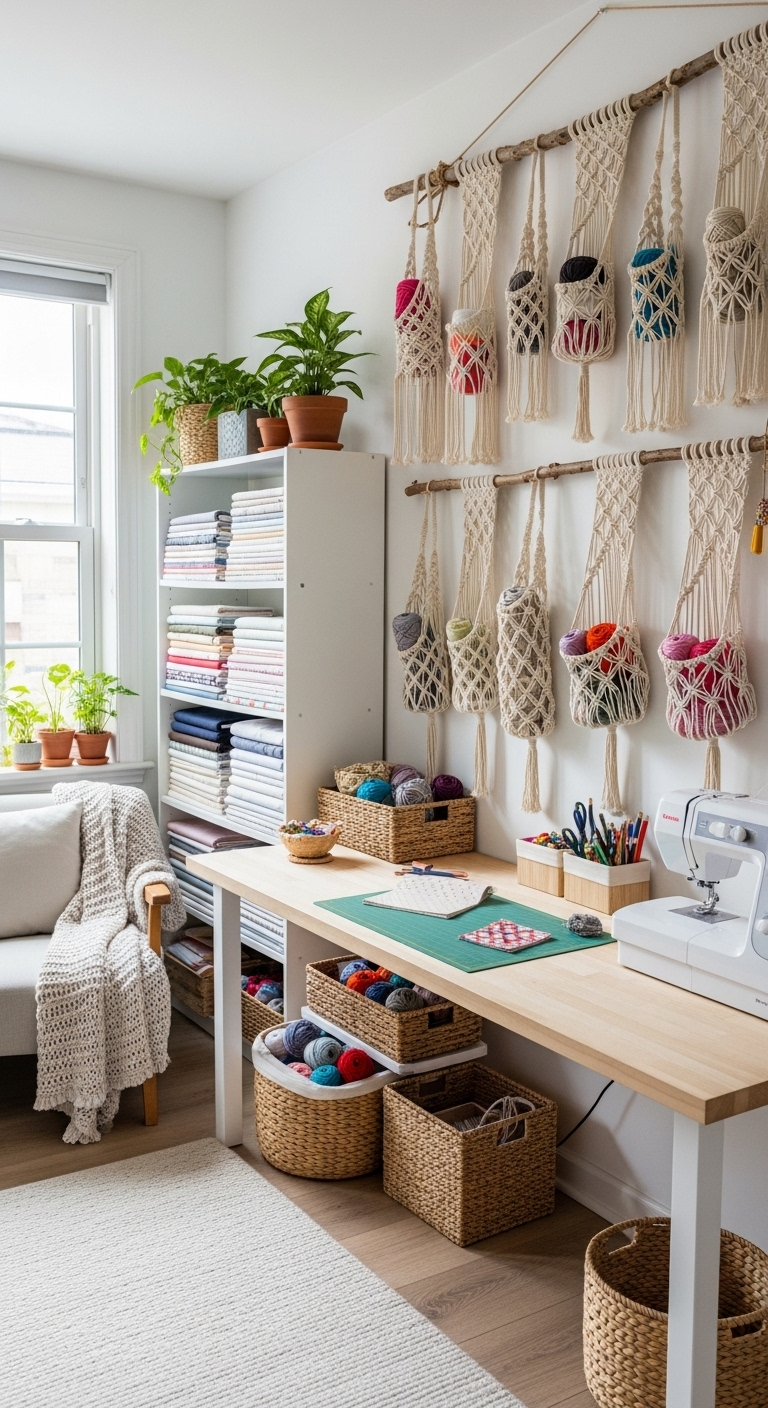
Using woven bags to house your active “in-progress” projects is a sophisticated way to keep your studio organized while maintaining a personal, inspiring atmosphere. By hanging these bags on a pegboard or sturdy door hooks, you lift your work off the floor, shielding delicate fabrics from dust, pet hair, and accidental damage.
This vertical storage approach is exceptionally effective for managing multiple projects simultaneously without overwhelming your floor plan. Because the bags are suspended, your studio maintains an open, airy feel, allowing you to move freely between your cutting table and sewing machine. Seeing your projects displayed in this way serves as a wonderful visual reminder of your creative journey, turning your works-in-progress into part of the room’s decor.
The use of woven materials introduces a delightful bohemian charm, softening the mechanical nature of the sewing equipment and helping your workspace feel like a true personal retreat. It creates a balance between functional productivity and aesthetic comfort, making the room a place where you genuinely want to spend your time.
By utilizing this storage method, you ensure that your most ambitious endeavors stay protected, orderly, and highly visible. It is a seamless way to keep your creative momentum going, proving that smart storage choices can contribute just as much to your inspiration as they do to your studio’s overall tidiness.
34#. Clear Pattern Envelope Bins
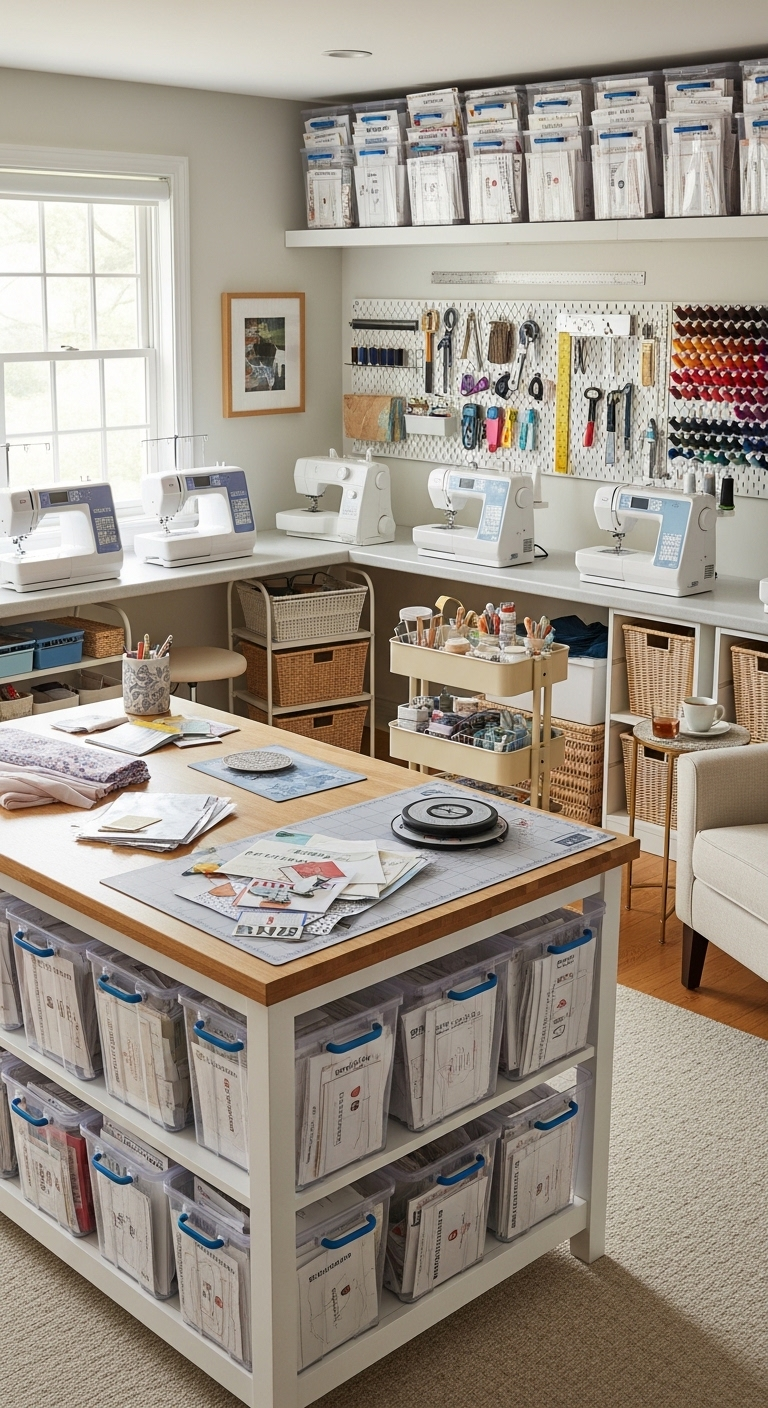
Using clear plastic bins to house your pattern collection is a highly effective way to transform a potentially chaotic archive into a streamlined, accessible library. By storing patterns in upright, transparent containers, you can browse through your collection visually, quickly identifying the design you need without having to handle every single envelope.
To maximize efficiency, consider categorizing your patterns by garment type—grouping dresses, tops, trousers, and outerwear into dedicated bins. This logical filing system saves significant time during your planning phase, allowing you to focus on design rather than searching. Labeling each bin further ensures that you can locate the correct category at a glance.
These bins are perfectly scaled for standard bookshelves, keeping your patterns protected from dust, bending, or misplacement. The uniform appearance of the bins creates a sense of order in your studio, turning your pattern collection into a professional-looking library that is both visually pleasing and highly functional.
This storage method safeguards your investment in patterns and keeps your workspace tidy. By maintaining a clean, well-organized library, you create a more professional creative environment that allows you to easily reference your past work and plan your future projects with total clarity.
35#. Magnetic Bobbin Rings
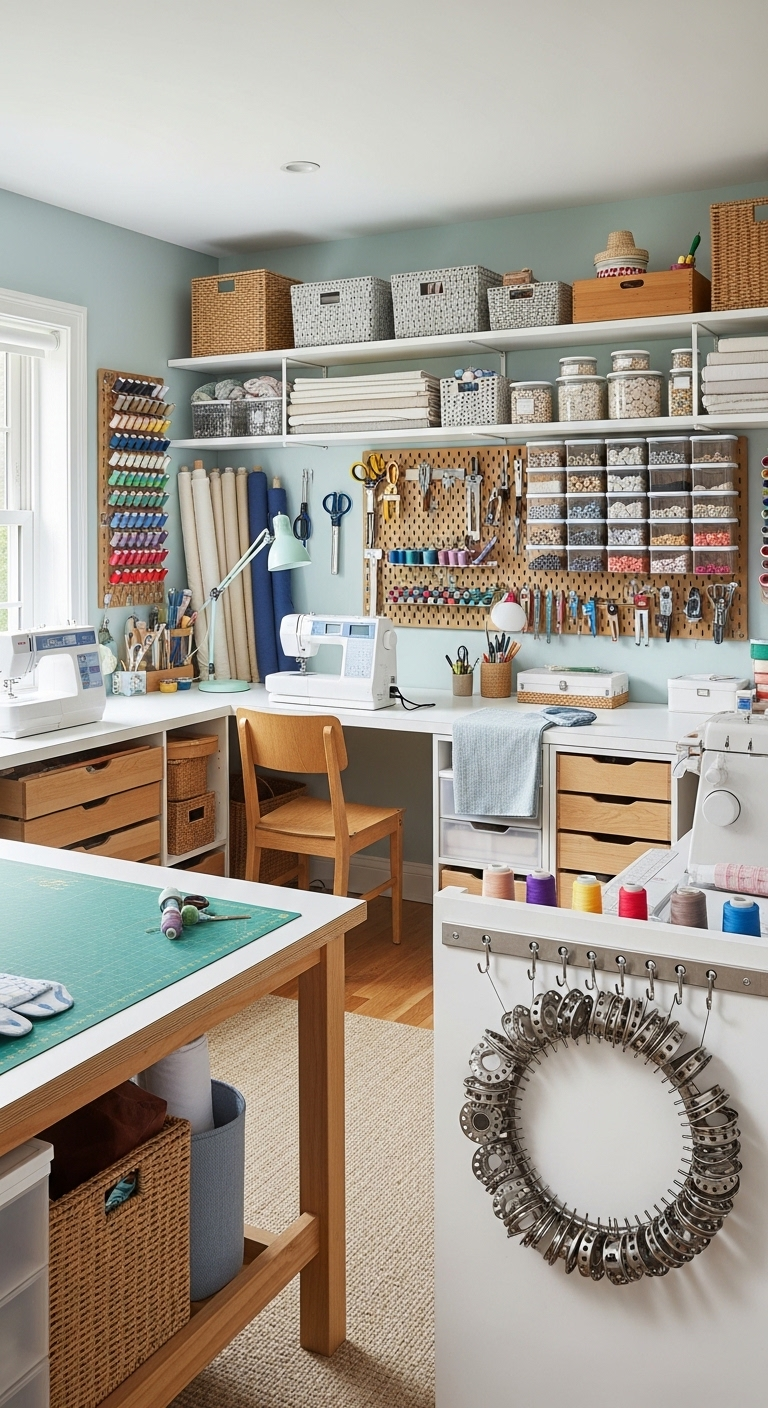
A soft silicone bobbin ring is an essential, high-utility tool for any sewing workspace. Its flexible design grips bobbins securely in its center, effectively preventing the common frustration of bobbins rolling off your table or unwinding into a tangled mess of thread.
Keeping this ring within arm’s reach of your machine ensures that your frequently used thread colors are always instantly accessible. This creates a highly efficient workflow, allowing you to swap between colors mid-project without breaking your creative momentum.
Beyond simply preventing chaos, this tool is an excellent way to maintain a polished, professional work area. By centralizing your bobbins in one dedicated spot, you eliminate the clutter of loose spools and keep your tabletop clean and ready for precision work.
For any sewer looking to improve their daily efficiency, the silicone ring is a small but impactful upgrade. It simplifies the handling of threads, saves time during color changes, and ensures your bobbins are always protected and ready for action. By integrating this simple tool into your machine station, you make the repetitive task of changing threads effortless and organized.
36#. Rolling Cutting Table Extensions
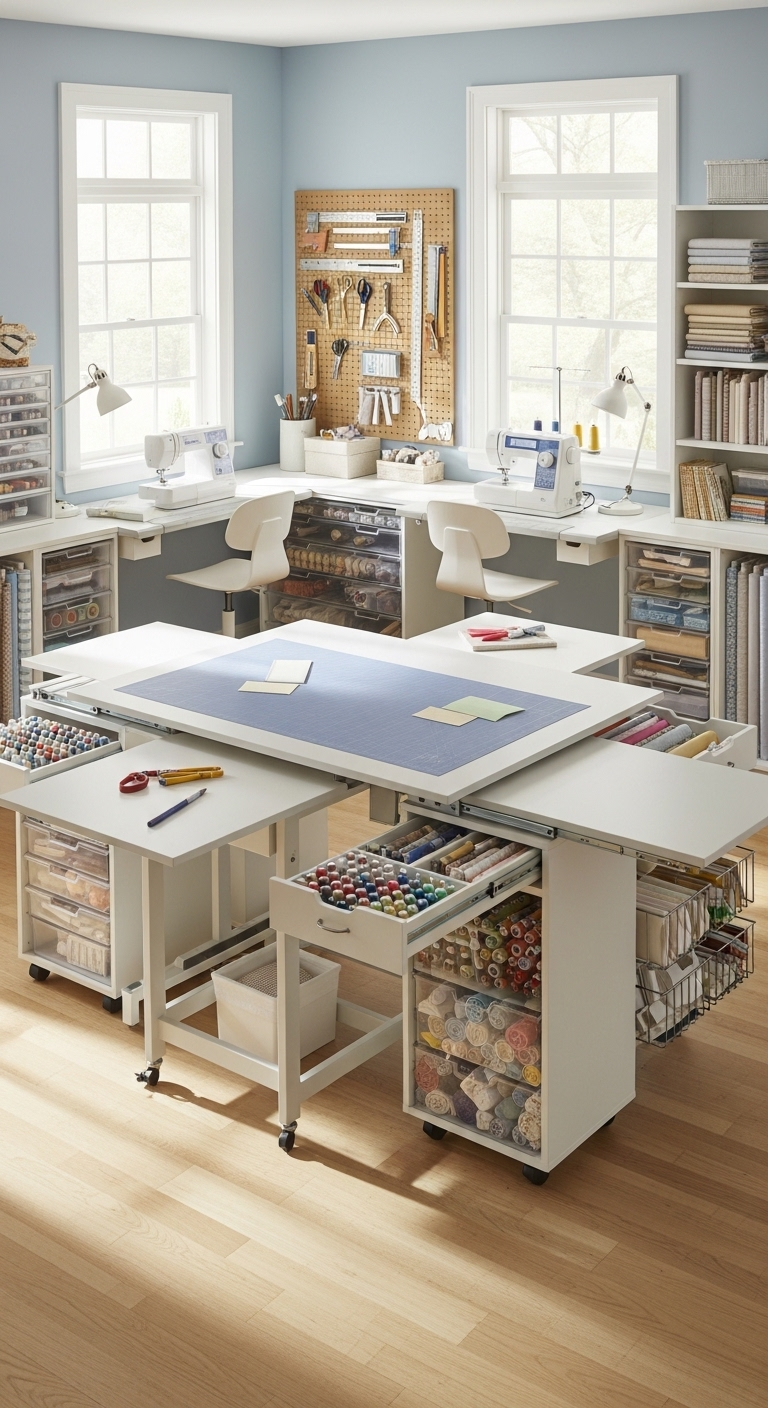
A rolling extension table is a transformative solution for anyone balancing large-scale projects like quilting with the reality of a limited studio footprint. By providing a generous, flat surface that can be deployed exactly when you need it and tucked away when you don’t, it bridges the gap between professional-grade workspace and everyday room utility.
The versatility of a rolling table cannot be overstated. During the intensive phases of a quilt project—cutting massive yardage or squaring up large blocks—this table provides the necessary stability and room to maneuver. Once the heavy lifting is done, it can be seamlessly moved against a wall or slid beneath existing shelving, instantly returning your room to an airy, open space.
This adaptability makes it an essential asset for multi-purpose studios. It allows you to shift effortlessly from high-output construction to more intimate tasks without feeling hemmed in by your equipment. The ability to reclaim your floor space after a project is finished is key to maintaining a studio that feels like a clean, professional environment rather than a crowded workspace.
Investing in a rolling extension table means you no longer have to compromise on the size of your projects due to space constraints. It is a strategic tool that supports your creative ambitions by providing a large, supportive surface on demand, ensuring your environment remains organized and functional no matter what scale of work you are tackling.
37#. Wall-Mounted Template Hooks
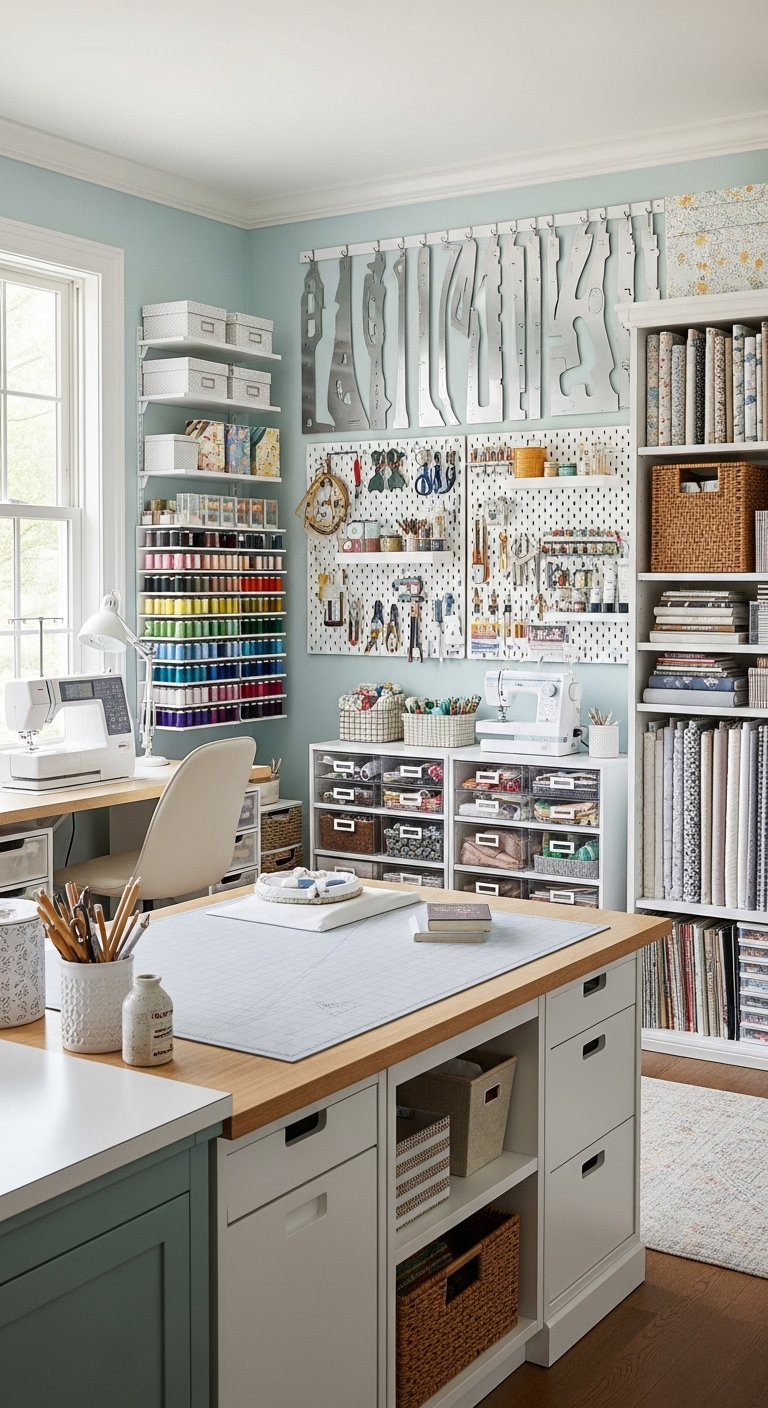
Hanging large pattern templates directly on your wall is a masterstroke of both preservation and design. By keeping these oversized pieces vertical, you eliminate the risk of creases, tears, or the distortion that often occurs when patterns are crammed into drawers or folded away. This ensures your templates remain in perfect, usable condition for years to come.
Beyond the functional protection, this method elevates your studio’s aesthetic. A collection of architectural-style pattern pieces displayed against a wall lends a sophisticated, designer-focused feel to your room, signaling a high level of professional craft. It effectively transforms your most functional tools into a piece of art that reflects your personal creative identity.
Having these templates visible provides a constant, inspiring reminder of your ongoing projects and future possibilities. This spatial arrangement helps you manage even the most cumbersome or intricate pieces with ease, as they remain accessible and uncluttered. It keeps your workflow efficient, allowing you to move from inspiration to action without the frustration of unrolling or flattening mismanaged sheets.
By treating your templates as a central part of your studio decor, you create a space that is as intellectually stimulating as it is functional. It is a brilliant way to keep your most complex projects organized, safe, and always ready for the moment inspiration strikes.
38#. Clear Vinyl Project Envelopes
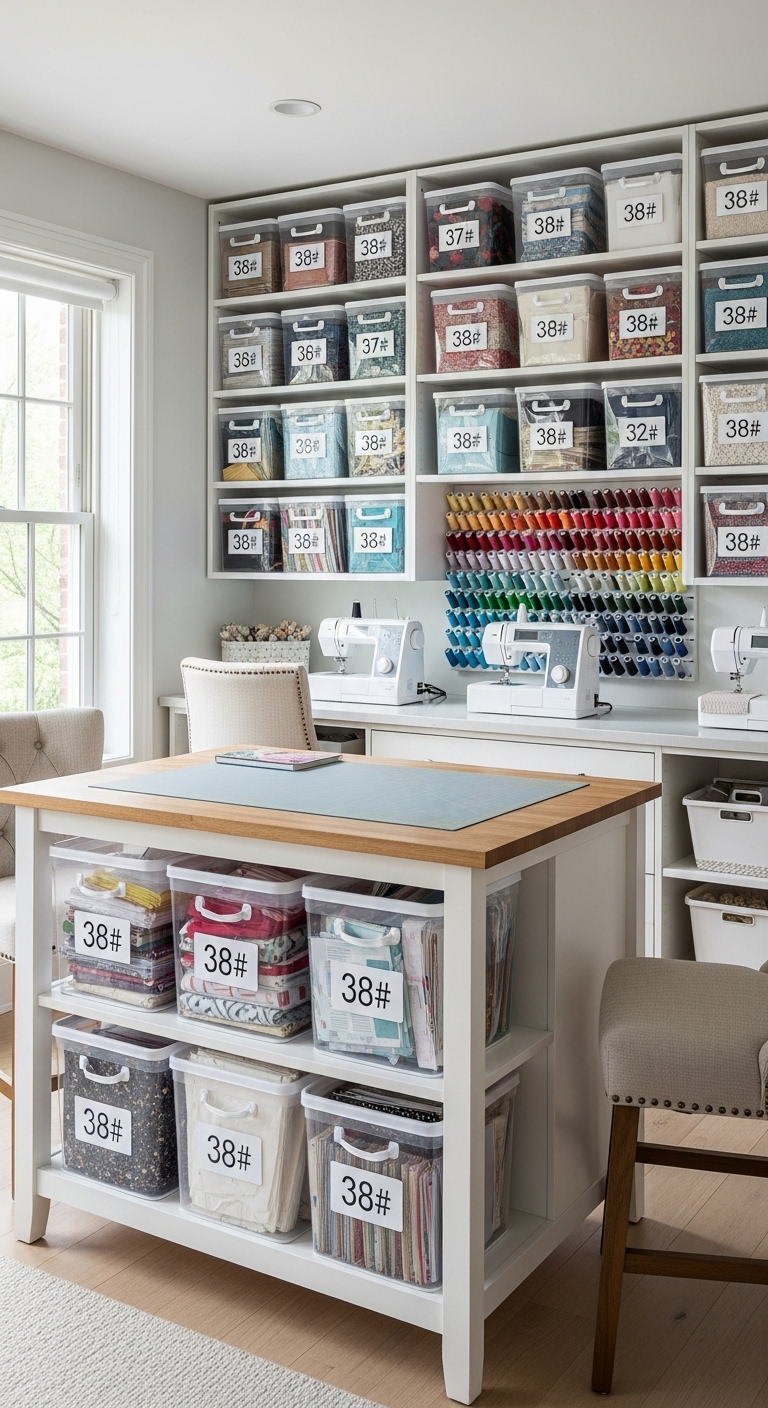
Grouping each project’s fabric, pattern, and coordinating thread into a dedicated envelope is a foundational strategy for maintaining momentum from initial concept to the final stitch. By creating these comprehensive project “kits” at the start, you eliminate the friction of gathering supplies later, allowing you to dive straight into the creative work whenever you have a moment to sew.
This method transforms your pending projects into tidy, manageable units. Whether stacked neatly on a bookshelf or filed vertically in a storage bin, these envelopes provide a clear, visual inventory of your upcoming work. This organization ensures that you never lose track of a specific garment idea or the carefully curated materials intended for it.
Adopting this system keeps your studio clear of scattered remnants and prevents the loss of crucial components like matching thread or unique notions. It creates a predictable, highly professional workflow that helps you track progress across multiple projects simultaneously without the confusion of intermingled supplies.
Using these envelopes is a hallmark of a thoughtful, well-planned studio environment. It preserves the integrity of your materials and provides the mental clarity needed to focus on the precision of your craft, ensuring that your most exciting ideas stay organized, protected, and ready to become reality.
39#. Tiered Button Sorting Trays
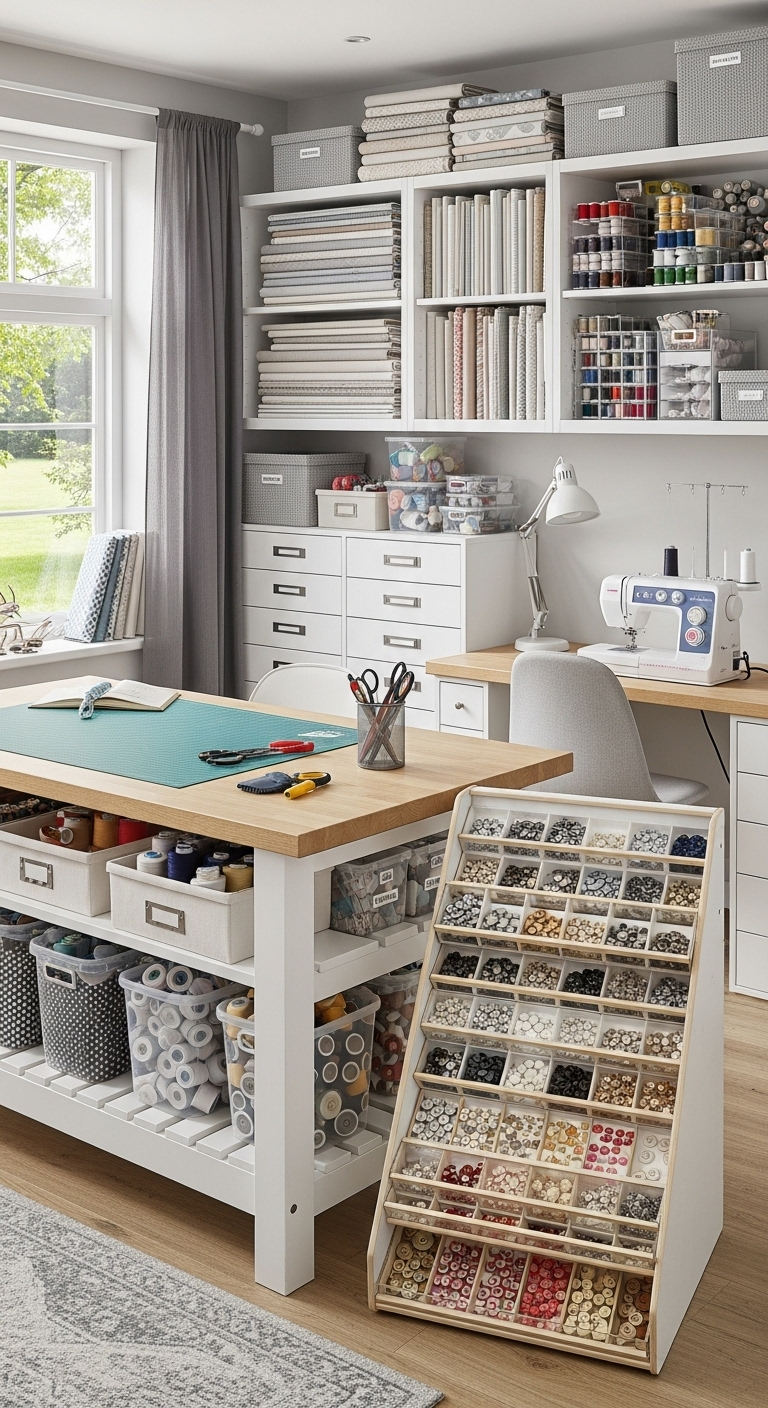
A tiered tray is an elegant and highly functional solution for organizing the small details that make garment construction special. By utilizing vertical space on your desk, you keep your beads, buttons, and other delicate notions perfectly sorted for a specific project without consuming valuable workspace.
This stacked design ensures that your materials are always within arm’s reach while preventing small, easily lost items from wandering across your table. Because everything is neatly contained in its own tier, you can switch between different embellishments with ease, turning the process of selecting details into a smooth, deliberate part of your creative flow.
Beyond the organizational benefits, a tiered tray adds a sophisticated, boutique-like charm to your sewing room. Its structured appearance keeps your workspace looking curated and professional, reflecting the care you put into your work. It is the perfect balance of aesthetic appeal and practical storage for anyone who values the finer details of their craft.
40#. Under-Shelf Magnet Strips
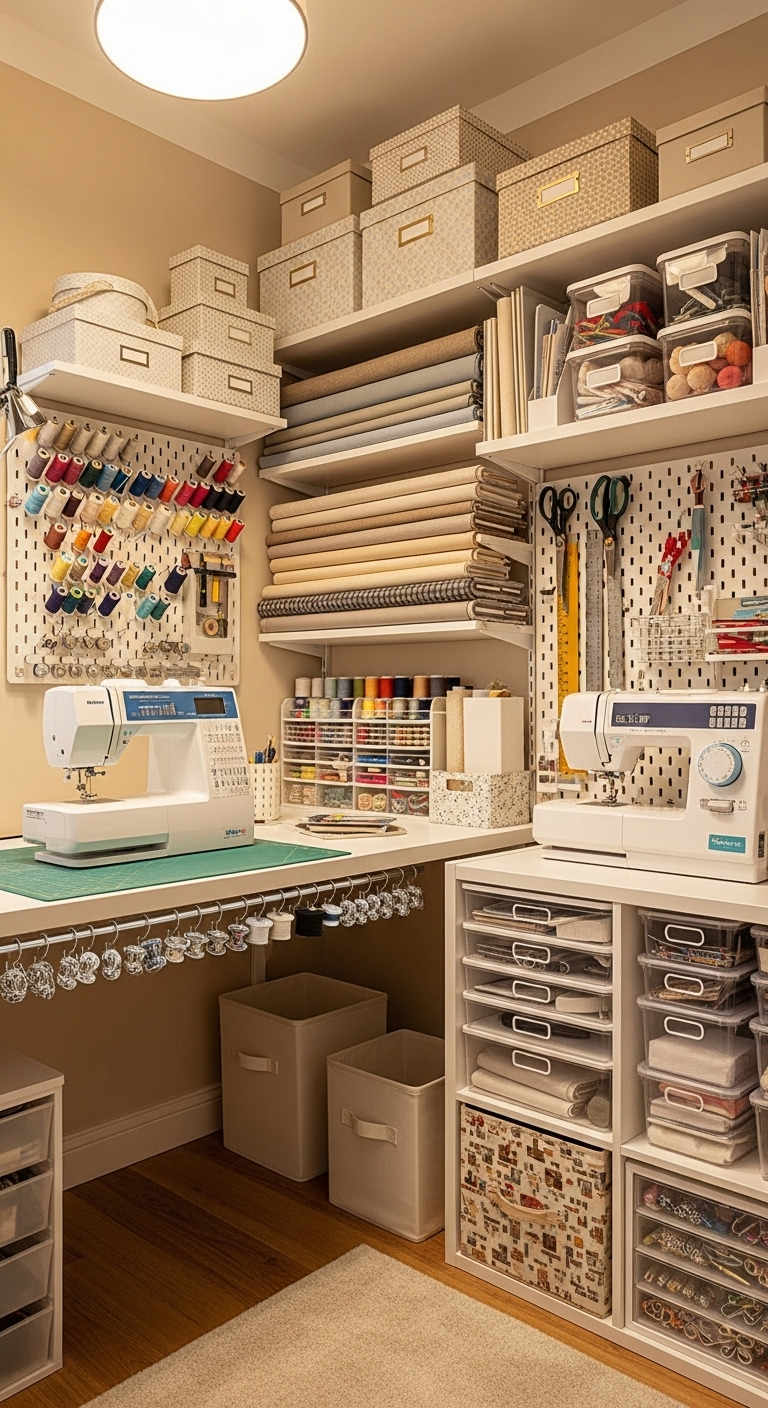
Installing a magnetic strip to the underside of a shelf is a brilliant way to reclaim “dead space” while keeping essential metal tools, such as bobbins and snips, perfectly organized. By utilizing the area beneath your shelving, you transform an empty gap into a high-functioning tool station that keeps your desktop completely free for cutting and fabric layout.
This hidden storage method ensures that your most frequently used items are always within an arm’s reach, yet completely out of your direct line of sight when you are focusing on your work. The result is a clean, uncluttered desk surface that fosters a sense of calm and precision. It eliminates the need to rummage through drawers or containers, allowing you to grab what you need with one swift motion and return it just as easily.
For those dedicated to maintaining a professional-grade creative environment, this trick is a game-changer. It demonstrates an intentional approach to studio management, prioritizing both efficiency and aesthetic minimalism. By keeping your tools suspended and ready, you create a seamless workflow that allows you to transition between tasks without interruption.
41#. Floating Fabric Display Rods
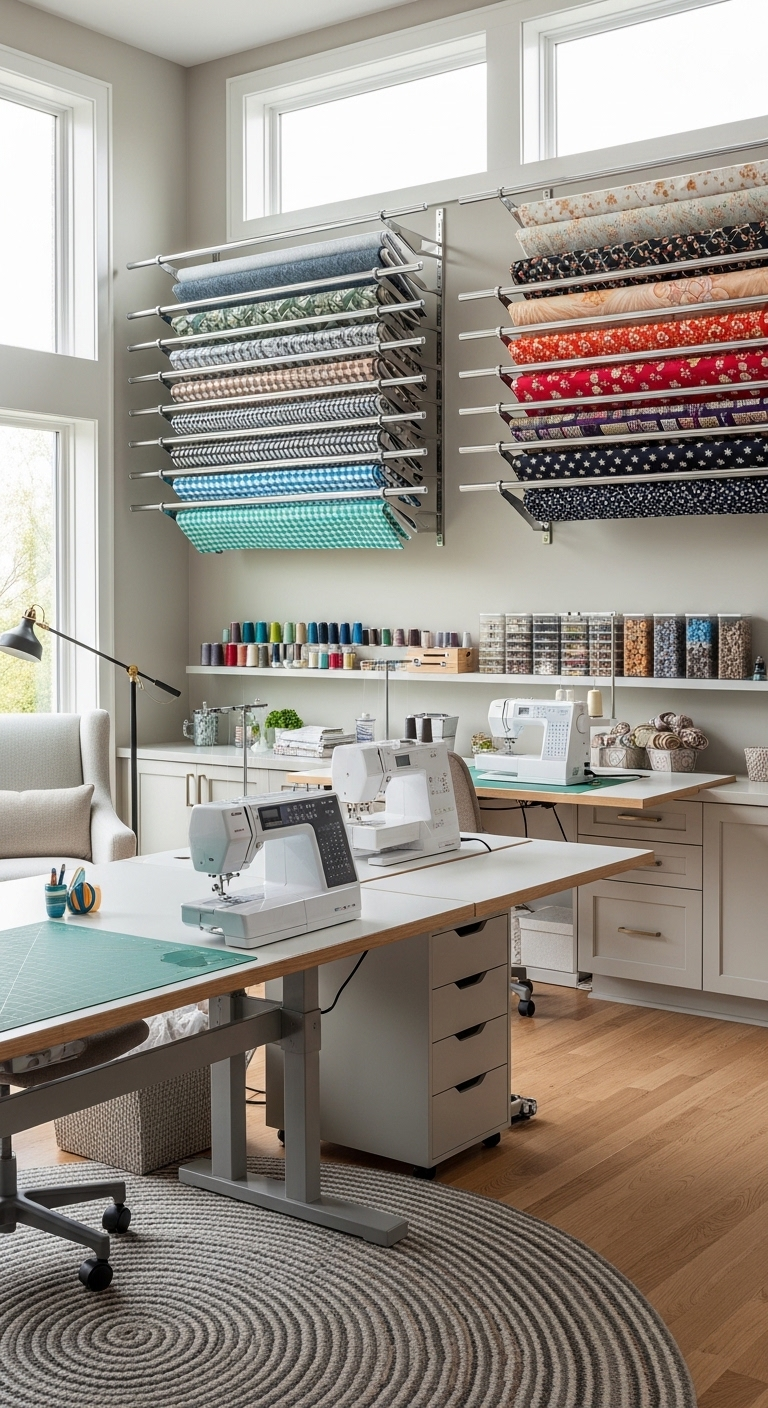
Hanging your finest fabrics vertically protects them from the heavy creases that often ruin delicate fibers when folded in stacks. This simple method keeps your expensive textiles smooth, pristine, and ready for your next project without any need for ironing.
By displaying these materials on open racks or hangers, you turn your supply closet into a curated collection of beautiful textures and colors. The vertical arrangement allows you to appreciate the drape and hand of your fabrics while they wait to be transformed.
This approach adds a sophisticated, artistic element to your studio that feels more like a high-end design atelier than a standard storage room. It transforms everyday materials into a visually stunning backdrop that keeps your creative workspace feeling inspired and organized.
Integrating these vertical systems provides a practical way to manage your growing collection while ensuring your most precious materials remain safe. It is a smart, aesthetic upgrade that keeps your sewing room functional and makes selecting fabric for your next design a joy.
42#. Clear Top Notion Bins
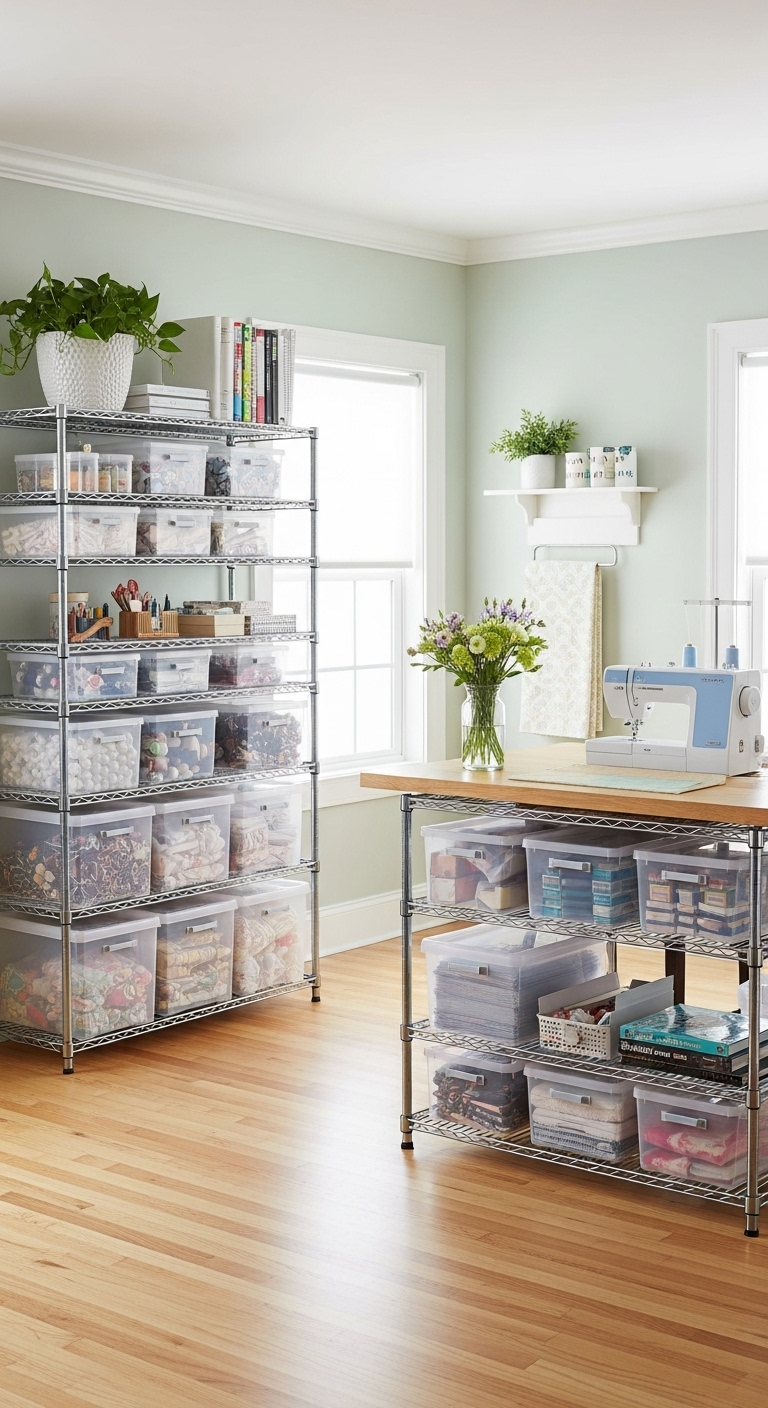
Clear bins with lids provide an instant visual audit of your bulk notions, allowing you to see contents without lifting a single heavy container. This is the ideal way to house bulky items like elastic rolls, shoulder pads, or oversized collections of zippers.
By keeping these supplies visible, you save significant time during your creative process by eliminating the need to search through opaque boxes. These sturdy containers protect your materials from dust and damage while keeping your workspace floor completely clear.
Maintaining a clear view of your inventory acts as a natural safeguard against overbuying supplies you already own in your stash. It brings a new level of efficiency to your project planning phase by showing you exactly what is available at a glance.
Smart inventory management keeps your studio environment functioning at a professional level by reducing clutter and wasted resources. Staying organized ensures you can focus your energy on the actual sewing rather than managing a messy collection of supplies.
43#. Hanging Pattern Weight Pouch
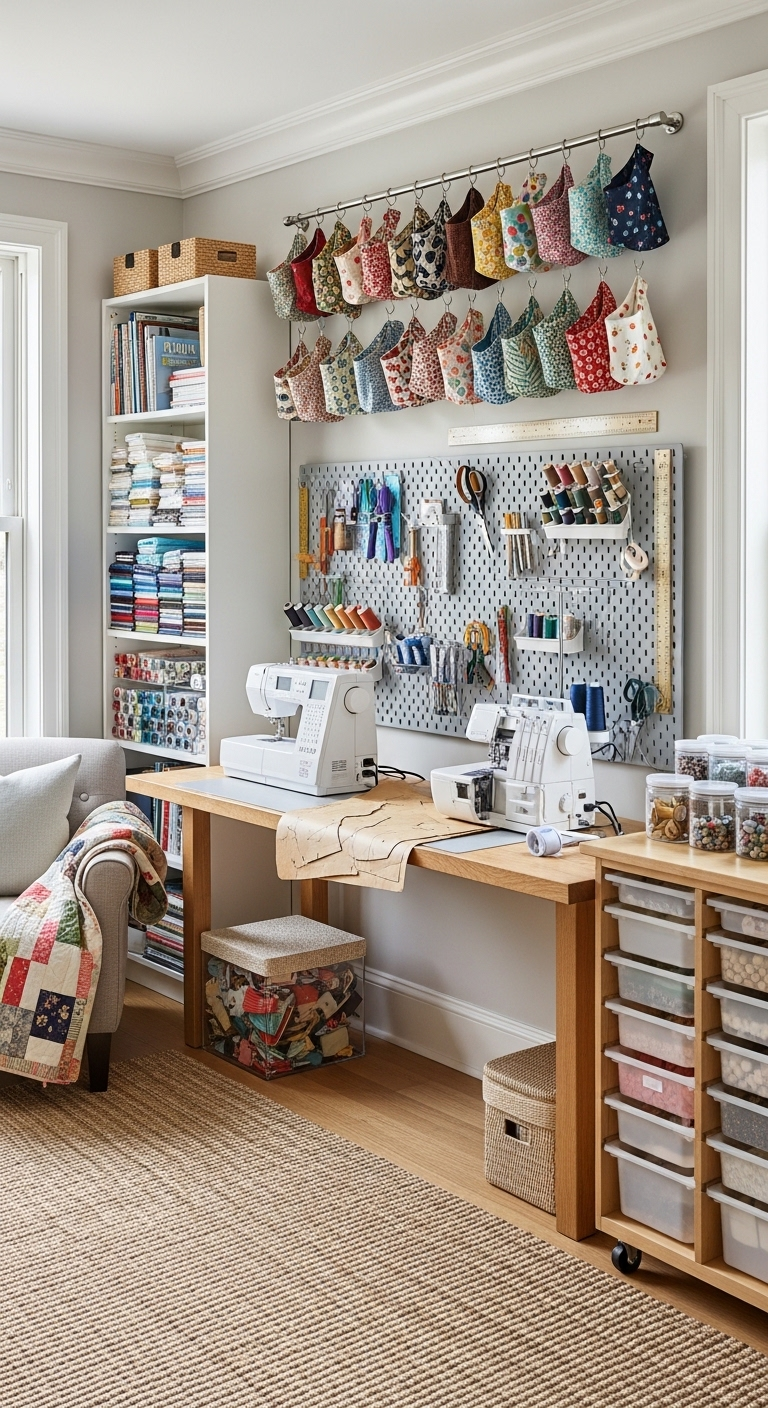
Sewing a custom fabric pouch to hang directly from your cutting table is a clever way to keep heavy pattern weights organized and secure. This simple addition ensures your tools stay neatly contained and accessible without cluttering your valuable workspace surface.
By using a scrap of your favorite fabric for this pouch, you create a personalized accessory that keeps your weights within arm’s reach while you work. It keeps your cutting area clear, allowing you to focus entirely on your fabric layout.
This small project is a fantastic opportunity to repurpose leftover textile scraps into a highly functional storage solution for your studio. It adds a unique, handmade touch to your equipment while solving the common issue of stray weights causing distractions.
A dedicated pocket creates a more focused cutting environment by ensuring every tool has a specific place to return to after use. Transforming your scrap fabric into an organizational tool helps you maintain a clean and professional space for every project.
44#. Tiered Thread Cone Racks
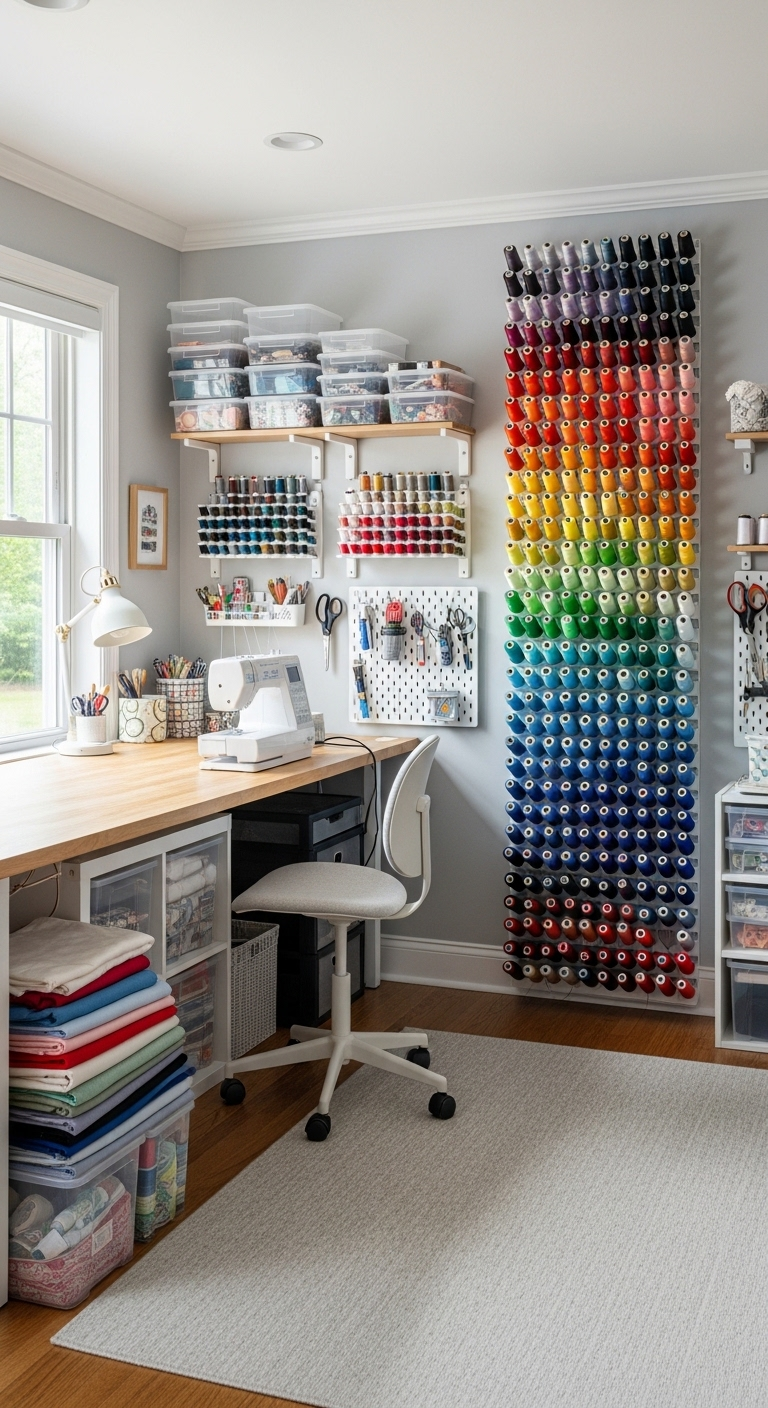
A dedicated rack for your serger thread cones is essential to keep your high-volume supplies from becoming a chaotic mess. By storing these large cones in a tiered system, you ensure that every color is visible and ready for your machine.
Organizing your threads by color family allows you to instantly locate the exact match for your fabric before starting a seam. This logical sorting method eliminates the frustration of digging through loose cones and speeds up your machine setup.
These versatile racks can be mounted directly to your wall to save space or placed on a desktop for maximum convenience. Keeping your serger supplies in this orderly fashion helps you maintain a clean, professional studio environment at all times.
Adding a specialized rack to your storage system is a smart investment that supports your overall productivity. When your thread collection is properly organized, you can focus on achieving high-quality finishes and precise seams on every project.
45#. Rotating Notion Carousels
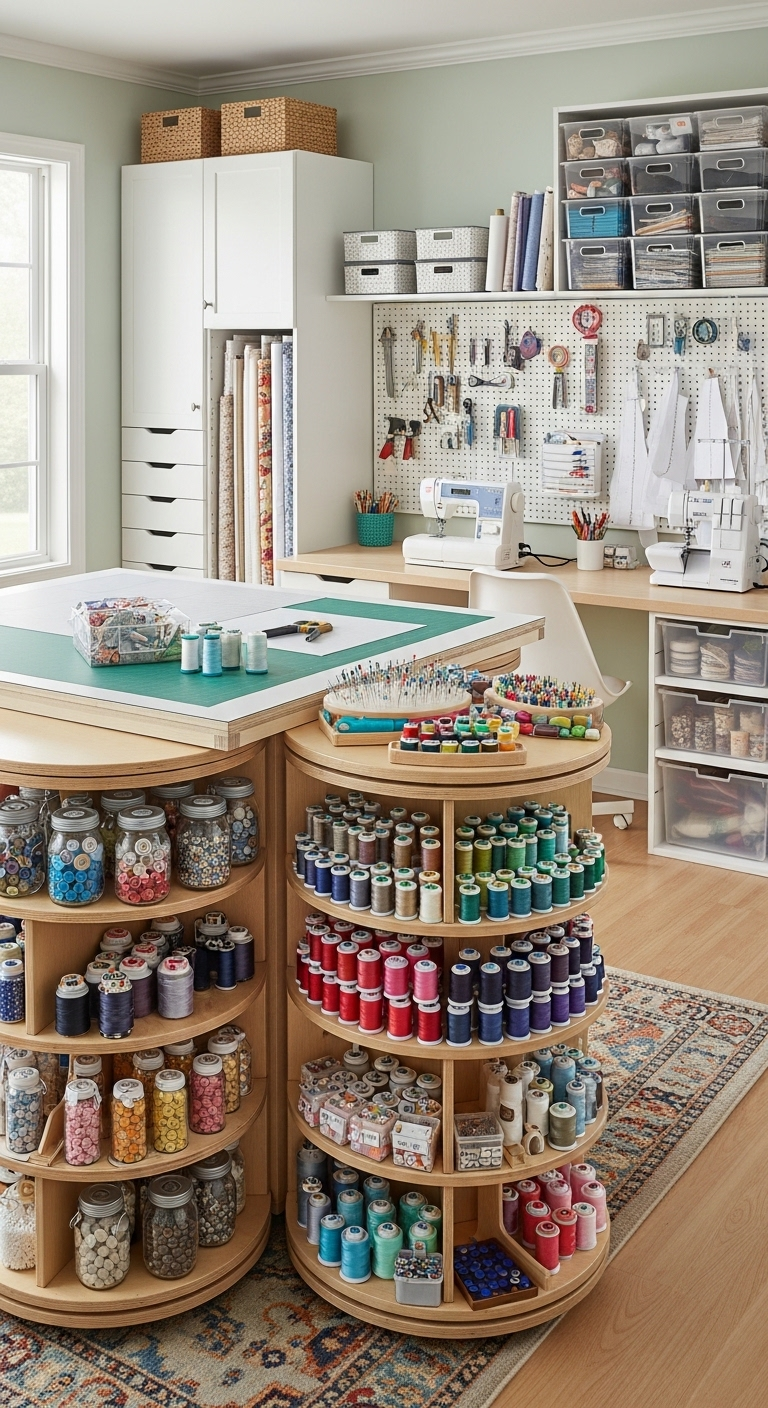
A rotating desk organizer is an essential tool for keeping your most frequently used items like pens, pencils, and scissors within immediate reach. By consolidating these small tools into one spinning hub, you save time and eliminate the need to leave your seat during a project.
The ability to simply rotate your storage unit means you can access every tool without creating a cluttered pile of supplies on your workstation. This quick-access design keeps your workflow fluid and ensures that every necessary instrument is ready exactly when inspiration strikes.
This storage choice is ideal for any busy creative workstation because it maintains a clean surface while keeping your essential tools visible and organized. It is a timeless, reliable solution that works perfectly for those who need their tools nearby at all times.
Implementing a central organizer helps you maintain a professional and tidy environment that fosters better focus during your creative sessions. Your most important items stay securely in place, allowing you to dedicate your full attention to the precision of your craft.
wrap up :
Implementing these organizational strategies ensures your sewing room remains a sanctuary for productivity rather than a source of stress. By choosing vertical storage and dedicated systems, you create a professional environment that honors your craft.
Every adjustment you make, from wall-mounted racks to clear bins, allows you to spend more time creating and less time searching. A tidy, well-thought-out studio provides the mental clarity needed to tackle even the most ambitious projects.
Transforming your space into an efficient retreat is a continuous process that evolves alongside your growing collection of patterns and fabrics. These tailored solutions help you maintain order while keeping your unique creative identity front and center.
With your materials protected, organized, and visible, you are free to explore new designs with total confidence. Embrace these functional upgrades today and enjoy the peaceful, high-performing studio you have worked so hard to build.