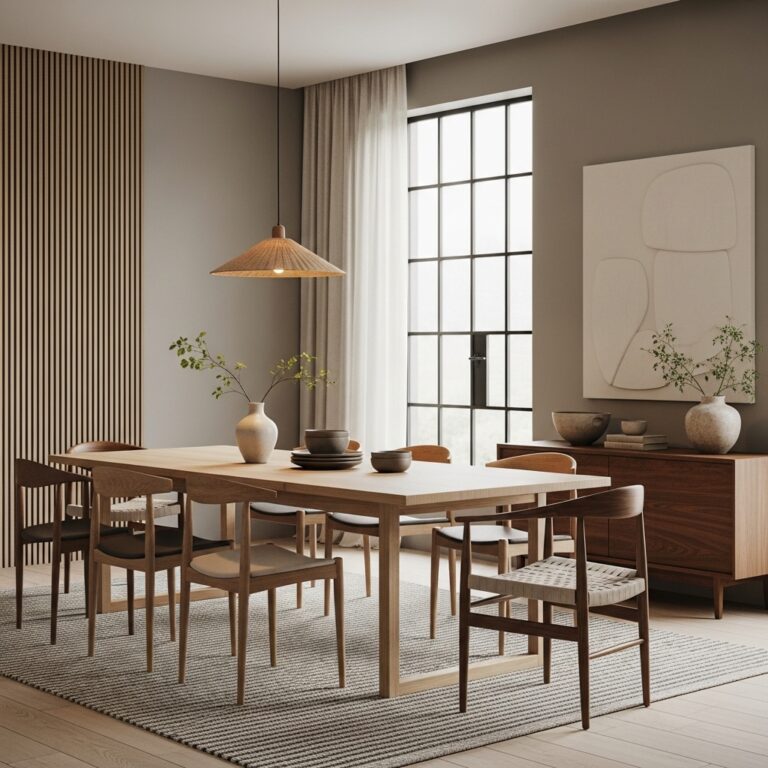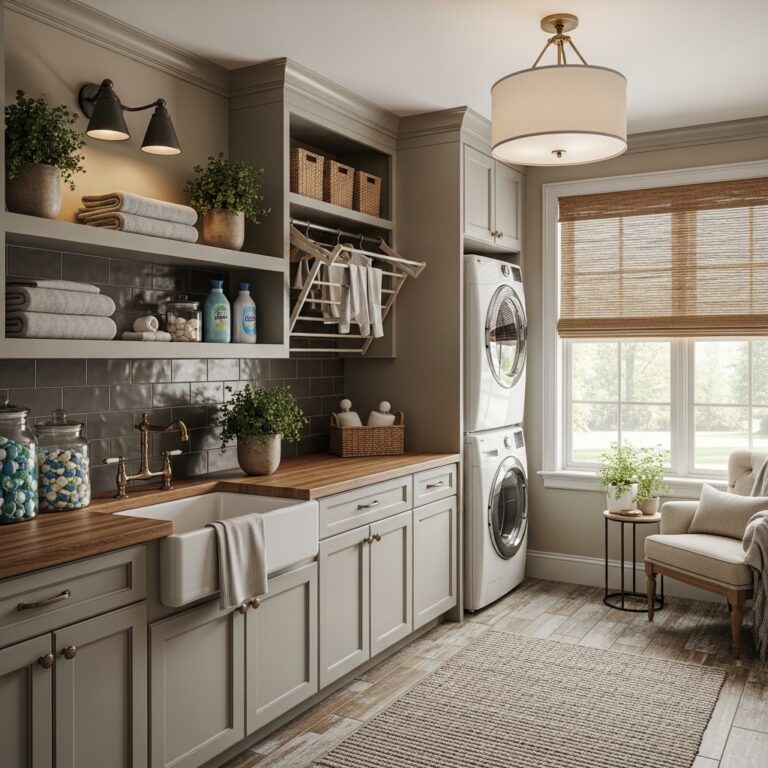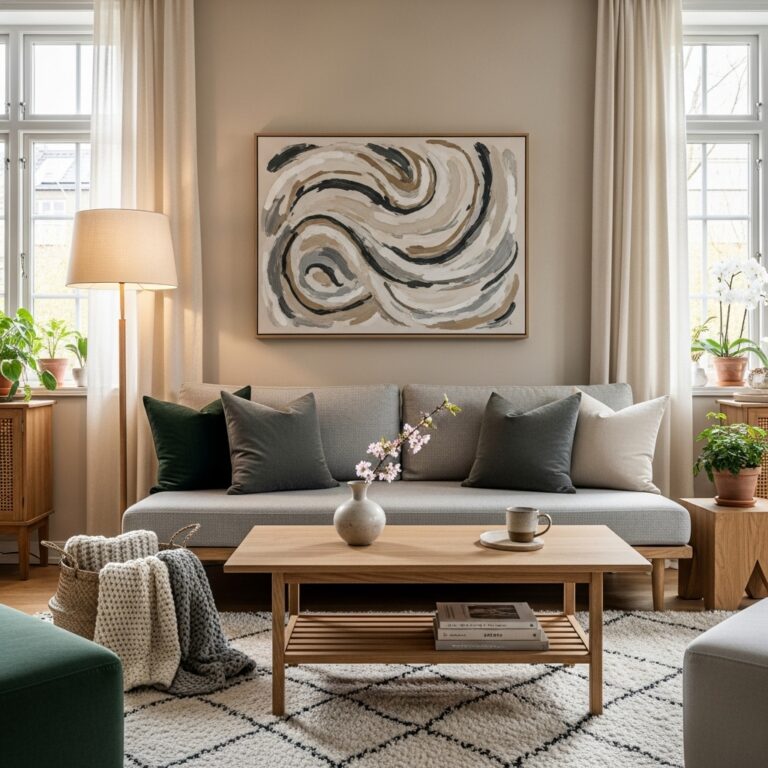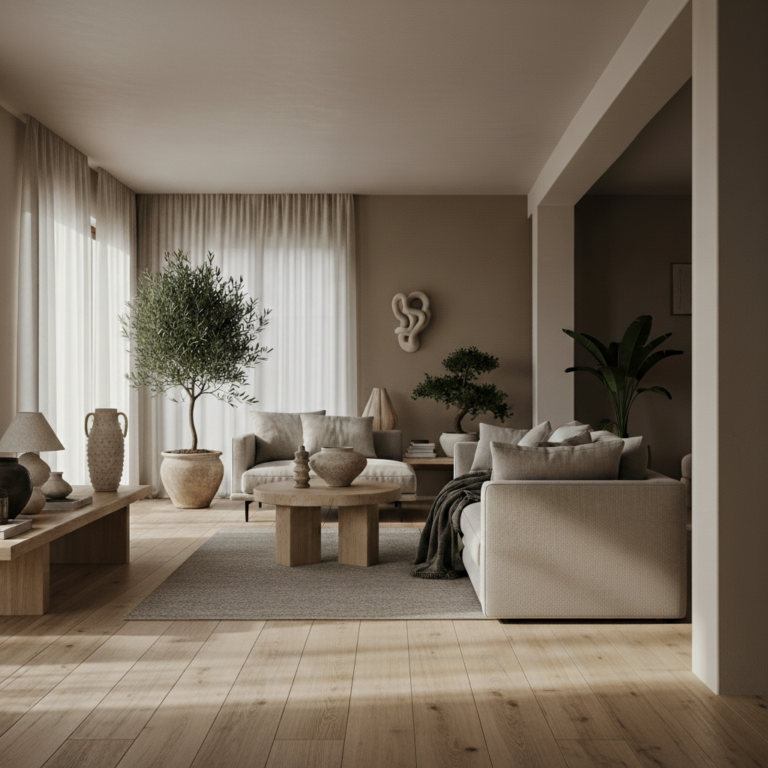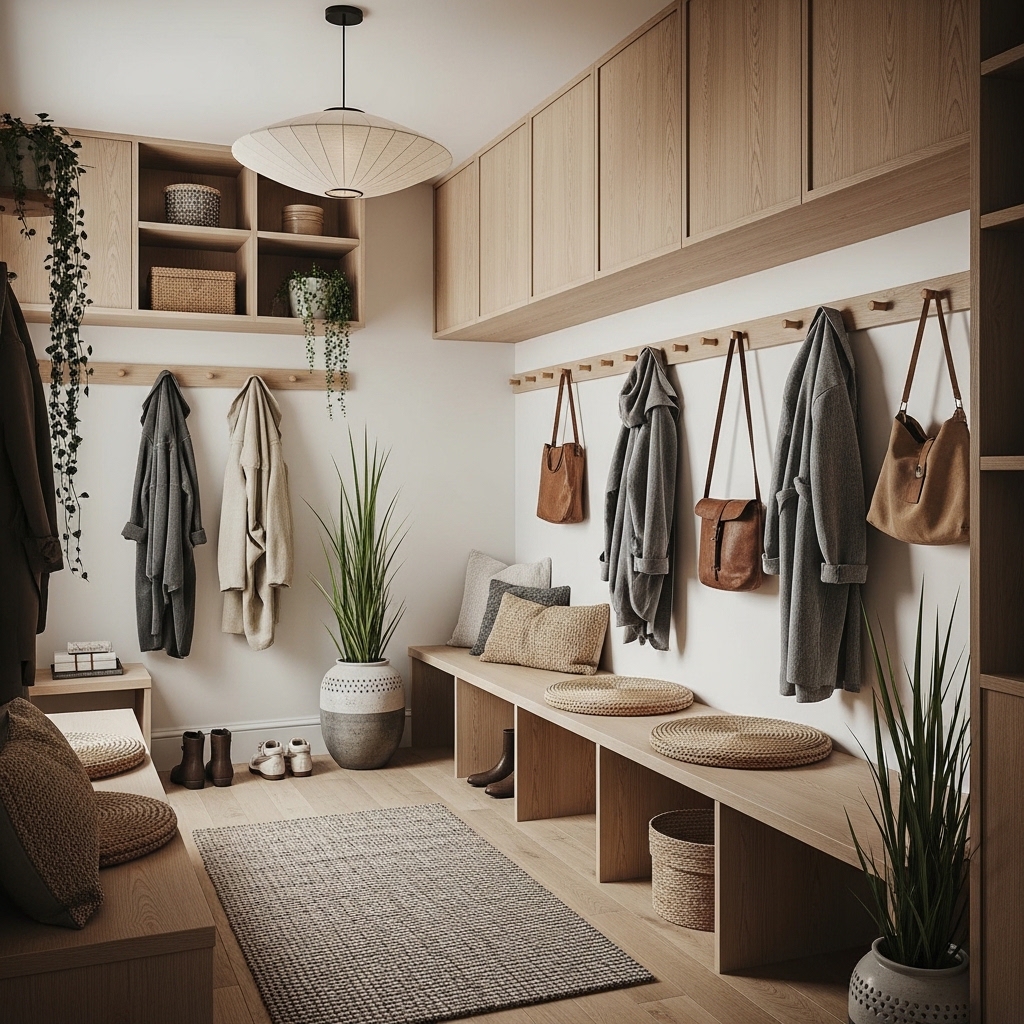
Entrance to your home sets the tone for your entire living space, and nothing balances tranquility with utility quite like Japandi Style Mudroom Decor Ideas
By merging the rustic warmth of Scandinavian “Hygge” with the sleek, timeless functionalism of Japanese “Wabi-Sabi,” you can turn a chaotic entryway into a zen sanctuary.
Whether you’re dealing with a cramped hallway or a dedicated transition room, these ideas will help you master the art of the organized entrance.
1#. Sustainable Bamboo Storage Benches
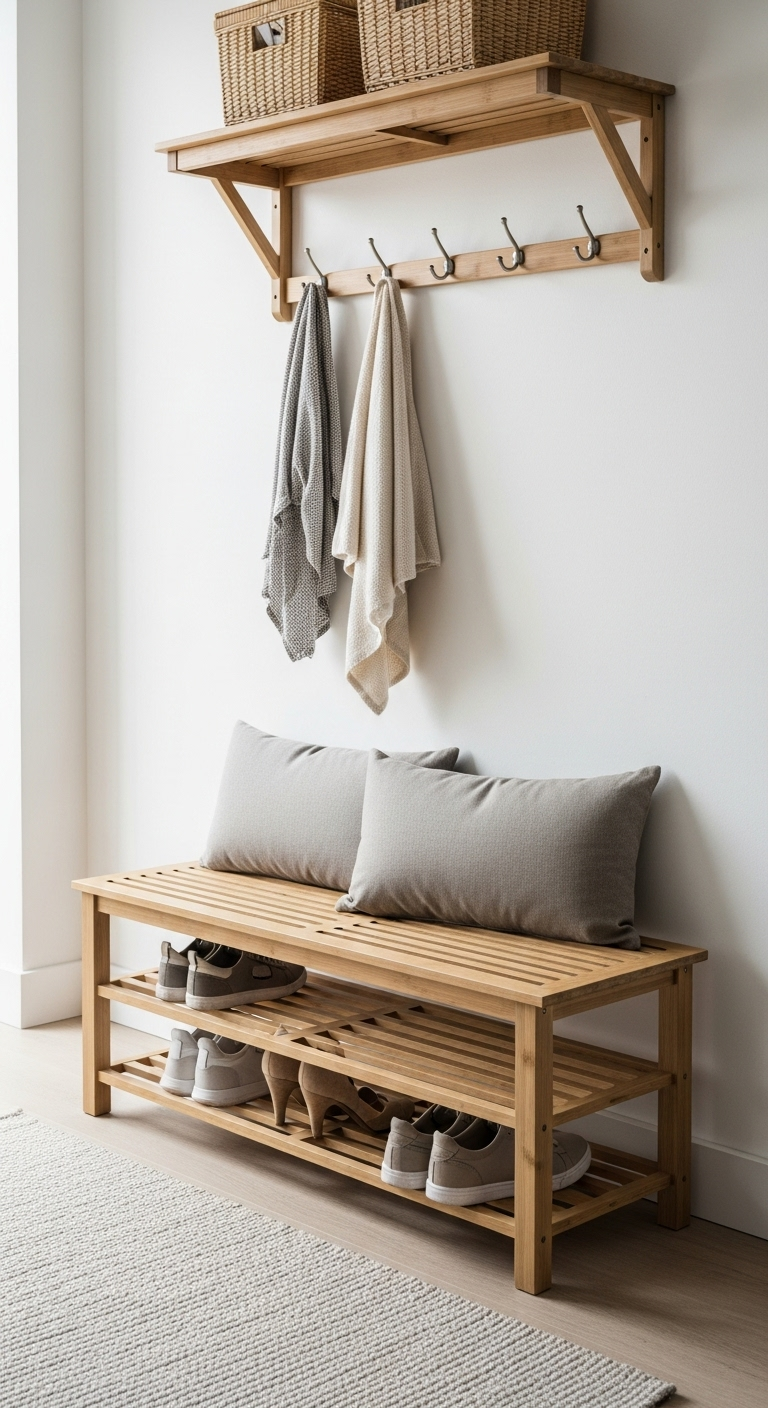
The foundation of any great entryway is a sturdy place to sit while removing your shoes. Choosing bamboo or light oak for your seating perfectly captures the essence of Japandi mudroom style.
These sustainable materials provide a warm, organic feel that welcomes guests with a sense of peace. Pairing a simple slatted bench with neutral cushions blends Japanese precision with cozy Scandinavian comfort effortlessly.
You should position the bench near the door to establish a clear zone for daily arrival routines. This dedicated seating area ensures that your home stays tidy while maintaining a high-end visual appeal.
The natural grain of the wood adds visual depth to an otherwise simple and minimalist hallway space. Selecting this type of furniture creates a functional anchor that balances practicality with your interior design goals.
2#. Minimalist Slatted Wood Wall Panels
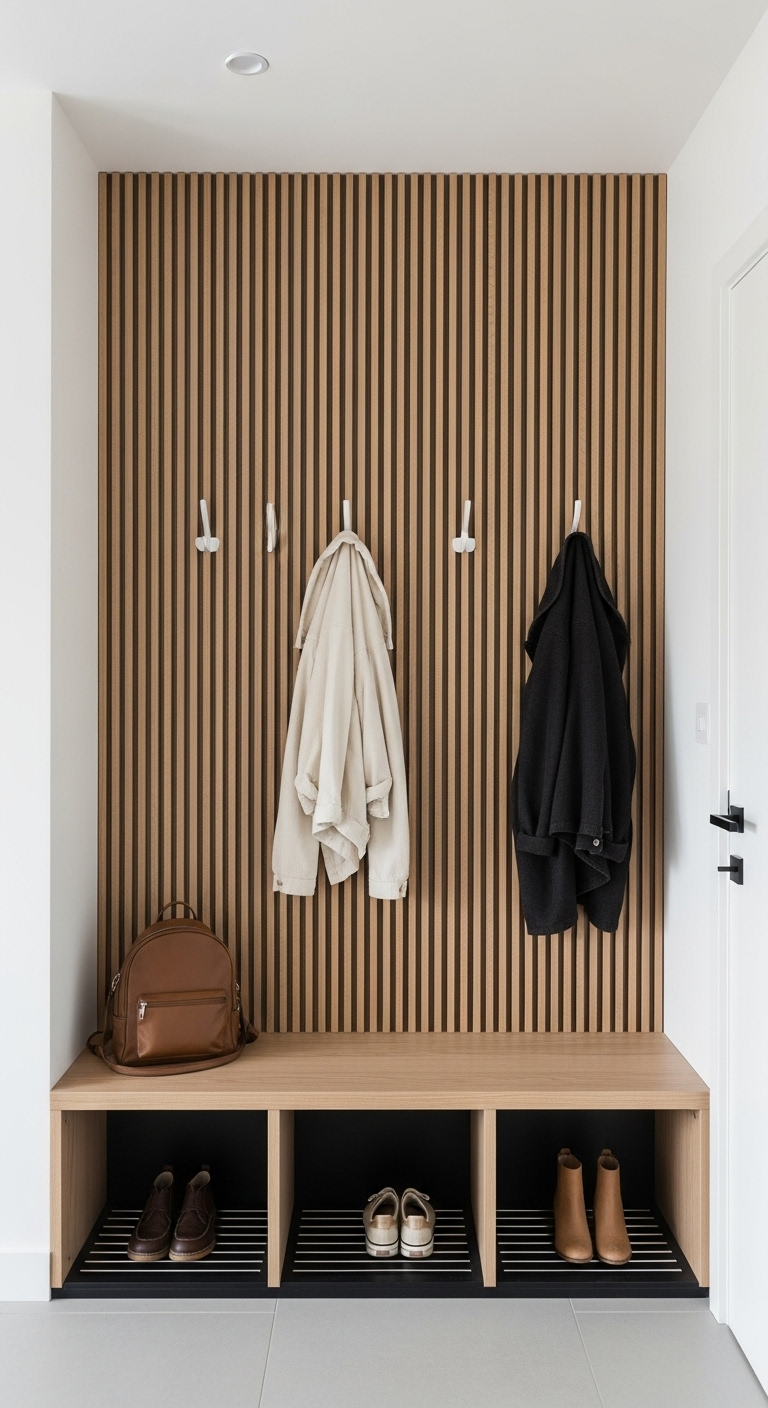
Vertical wood slats, often referred to as shoji-inspired panels, add instant architectural interest to any mudroom wall. This design choice creates a stunning backdrop while providing a place to mount sleek, hidden hooks.
The repetition of the wood lines elongates the room, making even small entryways feel taller and spacious. It is a sophisticated way to introduce texture without the visual noise of traditional wallpaper or paint.
These panels draw the eye upward and create a focal point that feels both modern and structured. You can use light ash or oak to maintain a bright, airy feeling throughout your entrance area.
The integrated hooks allow you to keep coats off the floor while maintaining a perfectly clean look. This clever arrangement maximizes your available space while ensuring that every detail feels intentional and high-end.
3#. Earthy Stone and Slate Flooring
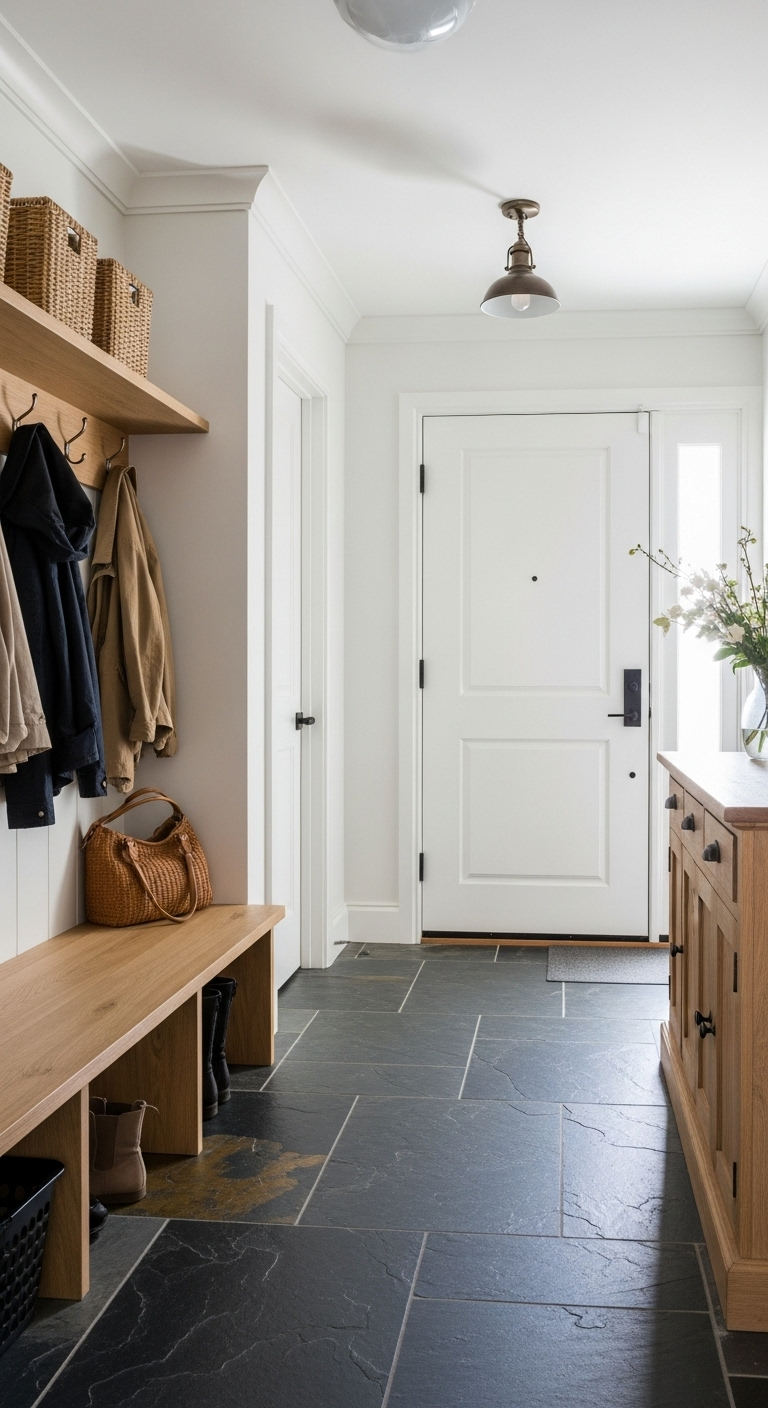
Durability is key in a mudroom, but style should never be sacrificed for function when selecting materials. Natural stone or large-format slate tiles provide a grounded, earthy base that hides dirt quite effectively.
These cool, dark surfaces create a beautiful visual contrast against light wood furniture and white walls. This balance of light and dark elements is a signature move for mastering Japandi design aesthetic.
Slate is inherently slip-resistant and stands up well to heavy foot traffic from family members or guests. The subtle texture of the stone prevents the floor from feeling cold or clinical in your space.
You can maintain this clean look by choosing a dark grout color to match the stone tiles. This practical design choice ensures your entryway remains sharp and high-end for many years of use.
4#. Woven Seagrass Baskets for Clutter
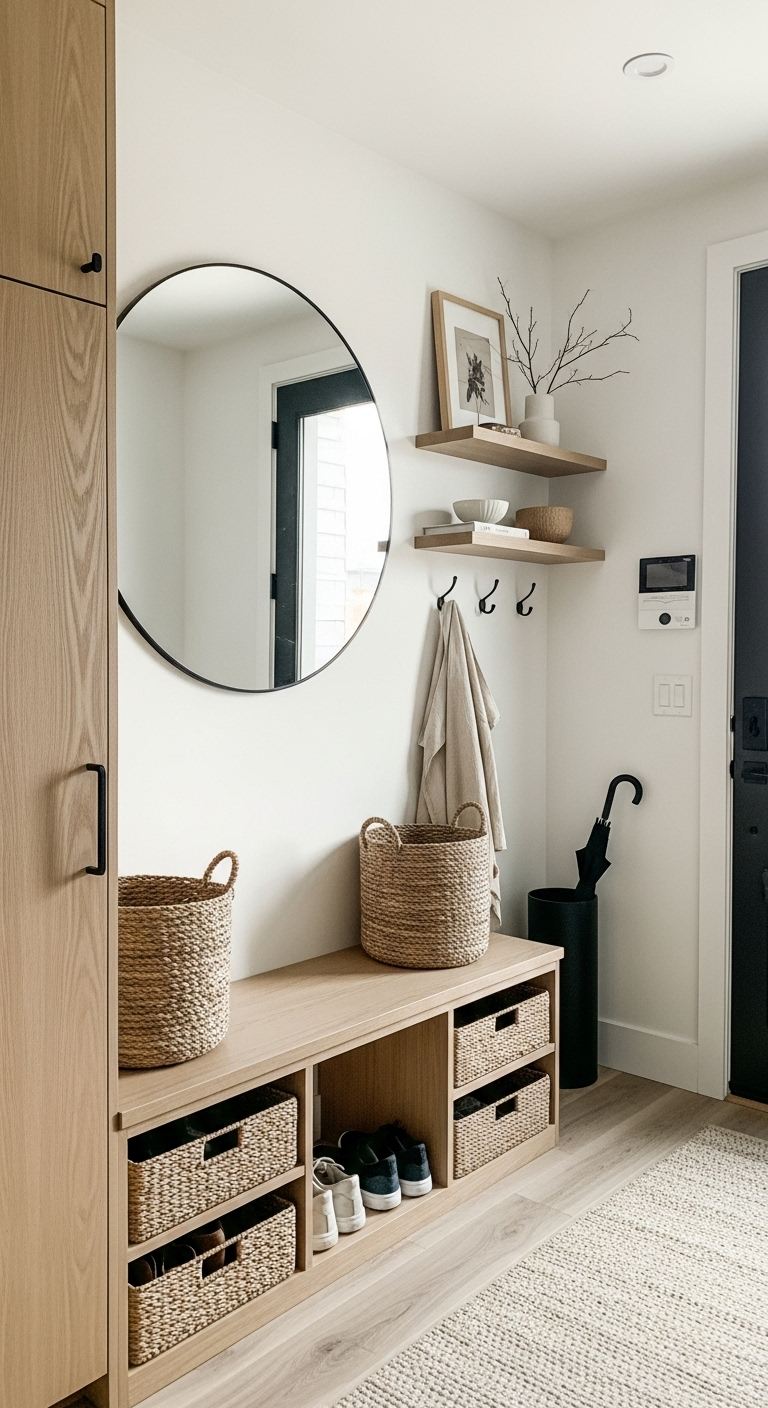
Concealing everyday chaos is easy when you utilize deep, hand-woven baskets made from natural seagrass or jute. These containers offer a soft, tactile alternative to plastic bins, keeping your shoes and accessories tucked away.
Place them on open lower shelves to maintain the everything in its place philosophy of Japandi lifestyle. The natural variation in the weave adds a layer of rustic charm that feels intentional and relaxed.
These baskets provide a warm contrast to the clean lines and hard surfaces found in most entryways. You can easily label the handles to ensure every family member knows where their belongings belong today.
Using sustainable materials helps your home feel grounded while keeping your high-traffic zones feeling completely tidy. This storage method transforms a messy pile of items into a cohesive and visually pleasing design feature.
5#. The Power of Circular Entryway Mirrors
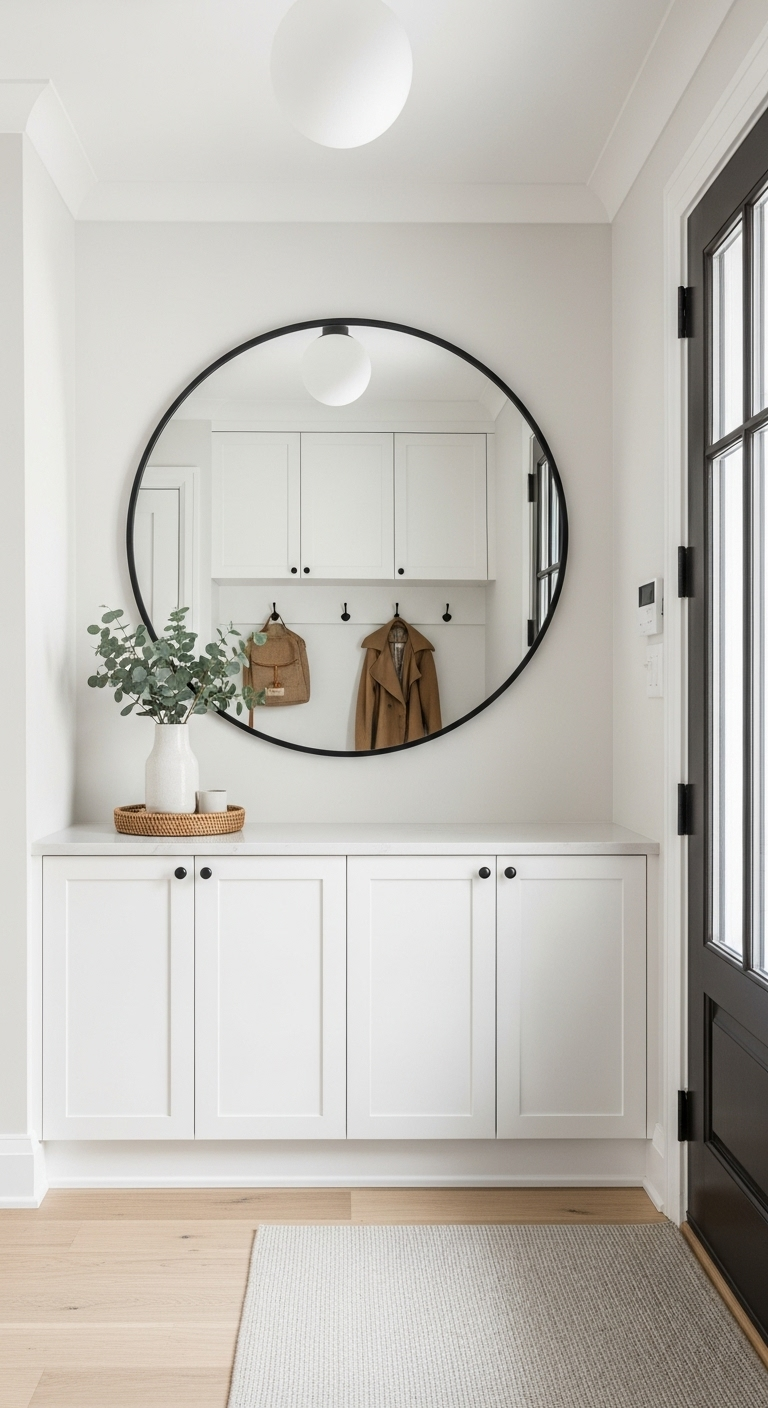
A large, round mirror with a thin black or wooden frame serves as the perfect focal point. The circular shape breaks up the straight lines of your cabinetry and reflects light throughout the area.
Positioning a mirror near the door is practical for last-minute checks while pulling surrounding decor together. It helps to open up narrow hallways, creating an inviting and airy transition from the outside world.
The clean silhouette complements the minimalist approach while providing a functional utility you will use daily. Choose a size that feels proportionate to your bench to ensure the entire wall looks well-balanced.
This simple addition adds depth to your entrance, making even the smallest floor plans feel expansive. By maximizing reflected light, you create a bright, welcoming atmosphere that greets everyone who enters your home.
6#. Matte Black Hardware Accents
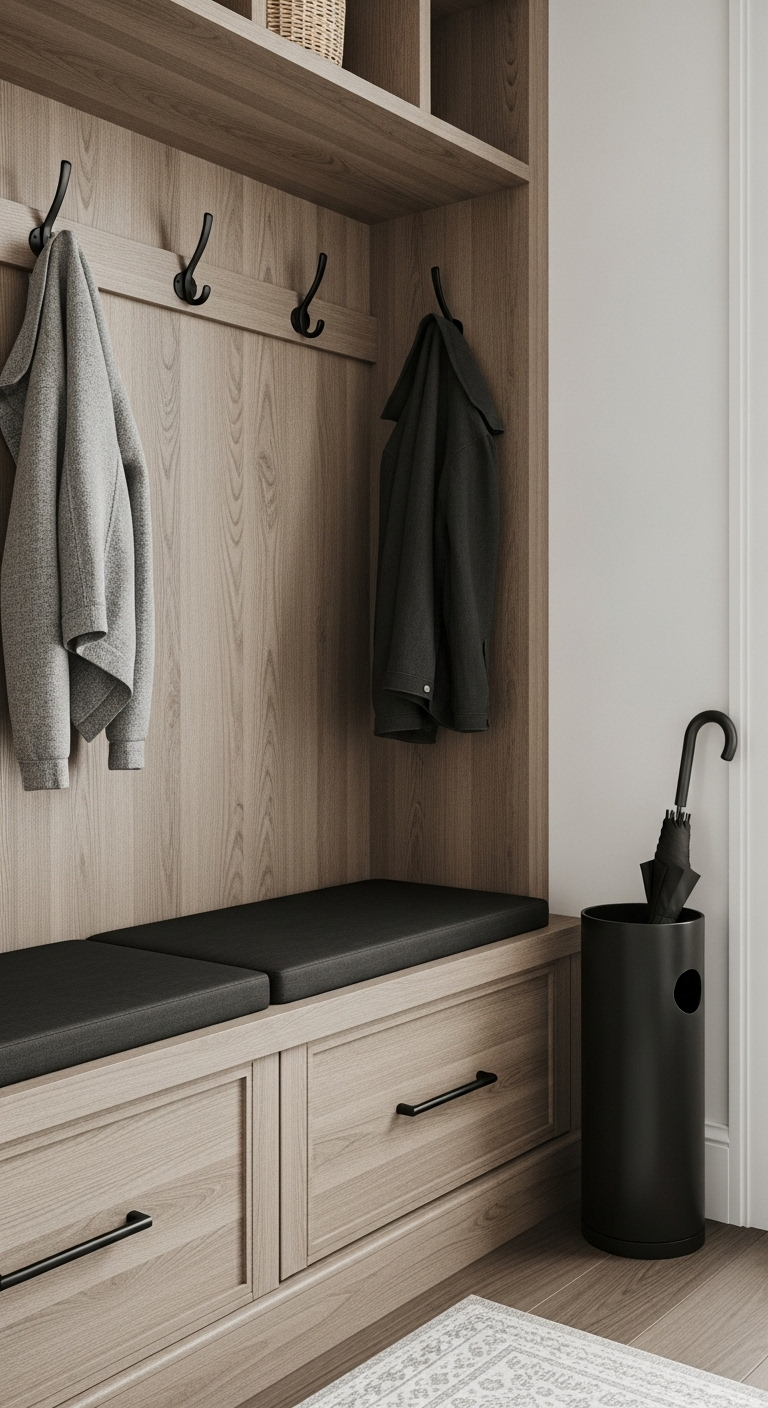
To give your mudroom a modern edge, incorporate matte black metal through hooks, drawer pulls, or an umbrella stand. This sharp, dark contrast provides the necessary definition to anchor a primarily neutral and light-toned room.
These small details act like visual punctuation marks, adding a sense of modern craftsmanship to rustic elements. It is an affordable way to elevate the aesthetic and achieve a professionally designed, curated look.
Black hardware stands out beautifully against light oak or white walls, creating a crisp and defined silhouette. Using this metallic finish consistently across your entryway ensures the entire space feels cohesive and intentional.
You will find that these functional elements look better over time as they patina slightly with use. By focusing on high-quality hardware, you turn simple, everyday objects into striking design features that define your style.
7#. Floating Shelves for “Wabi-Sabi” Decor
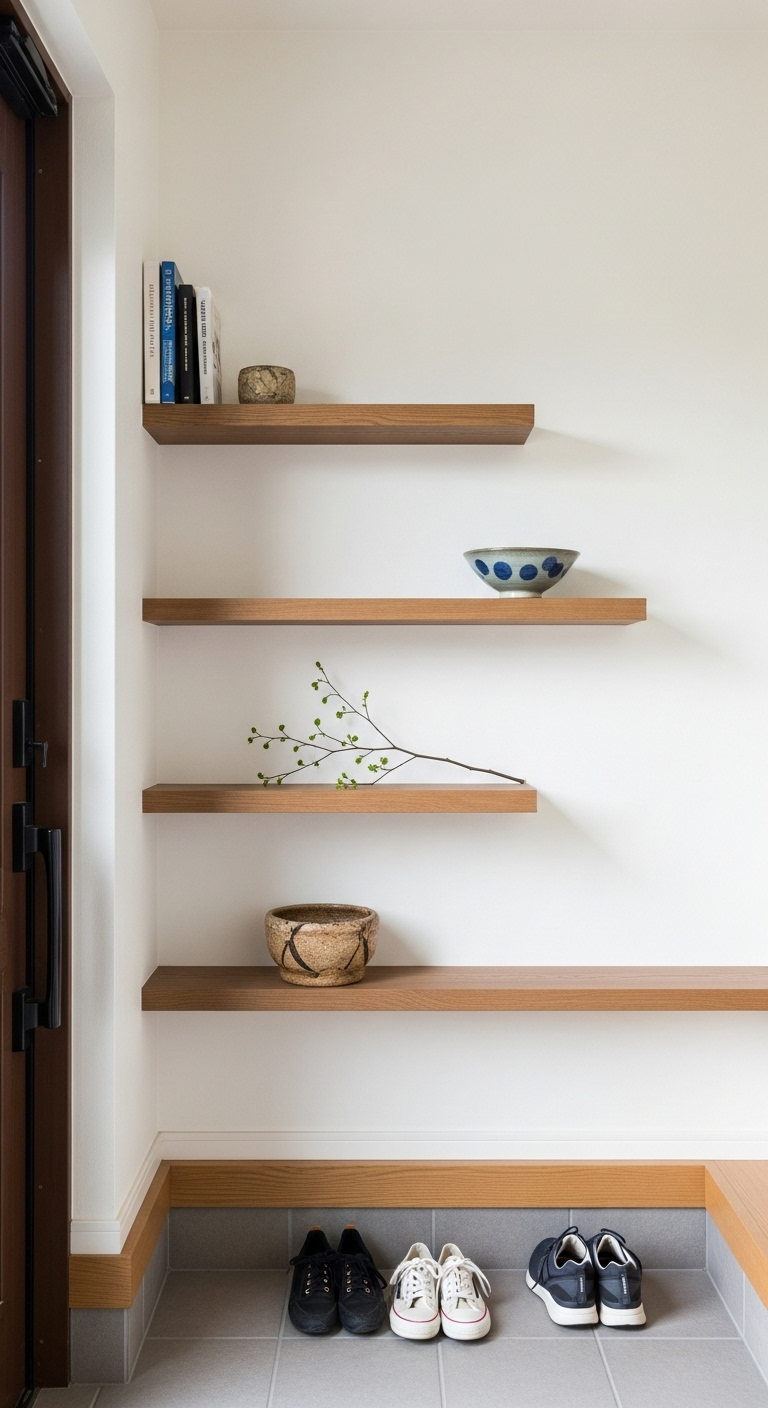
Floating shelves offer a minimalist way to display a few curated items, such as a handmade bowl or a single branch. This approach encourages you to find beauty in imperfection and simplicity, which is core to Japanese influence.
Avoid overcrowding these shelves to ensure the space remains calm and does not become a catch-all. A well-styled shelf acts as a breathing space for the eyes, reinforcing the tranquil atmosphere of your entryway.
Choose solid, natural wood with hidden brackets to maintain the seamless, architectural look of your wall. Keeping the shelves at eye level allows your curated objects to stand out as intentional, artistic statements.
By limiting the items you display, you emphasize the importance of every single piece you choose to feature. This curated storage method transforms a plain wall into a gallery-like display that feels both peaceful and refined.
8#. Linen and Hemp Textile Layers
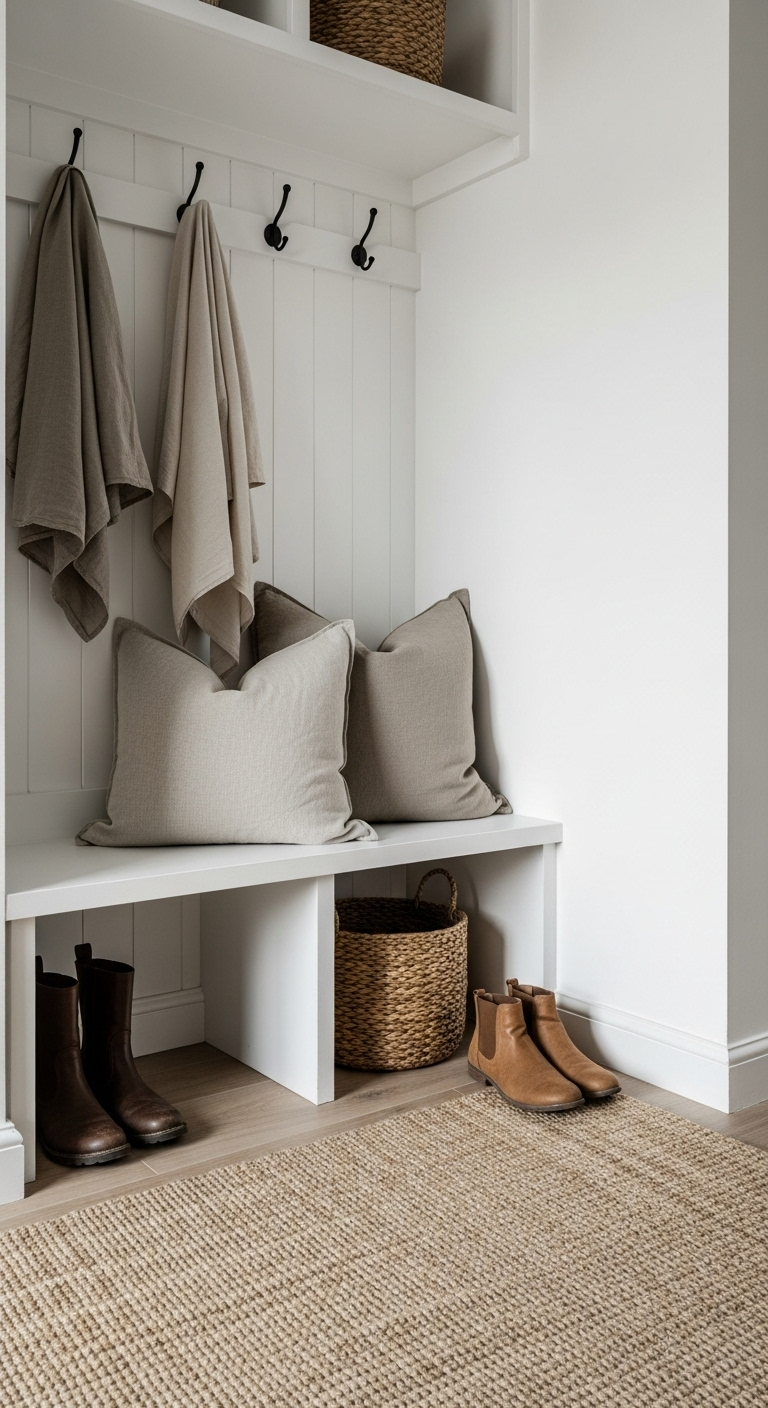
Soften the hard surfaces of your mudroom by incorporating high-quality natural textiles like linen pillows or a hemp rug. These materials are durable enough for high-traffic areas while providing the necessary warmth for a cozy home.
Stick to a palette of oatmeal, sand, and charcoal to keep textiles feeling grounded and consistent. These soft touches make the transition into your living space feel more gradual, welcoming, and thoughtfully designed.
A rugged, textured hemp rug underfoot provides a tactile, earthy foundation that holds up well against daily wear. Layering a simple linen cushion on your bench adds comfort and a subtle, sophisticated layer of softness.
By selecting natural fibers, you enhance the organic feel of the room without sacrificing your minimalist aesthetic. These carefully chosen fabrics ensure your entryway feels less like a utility zone and more like an extension of your living room.
9#. Integrated Indoor Greenery
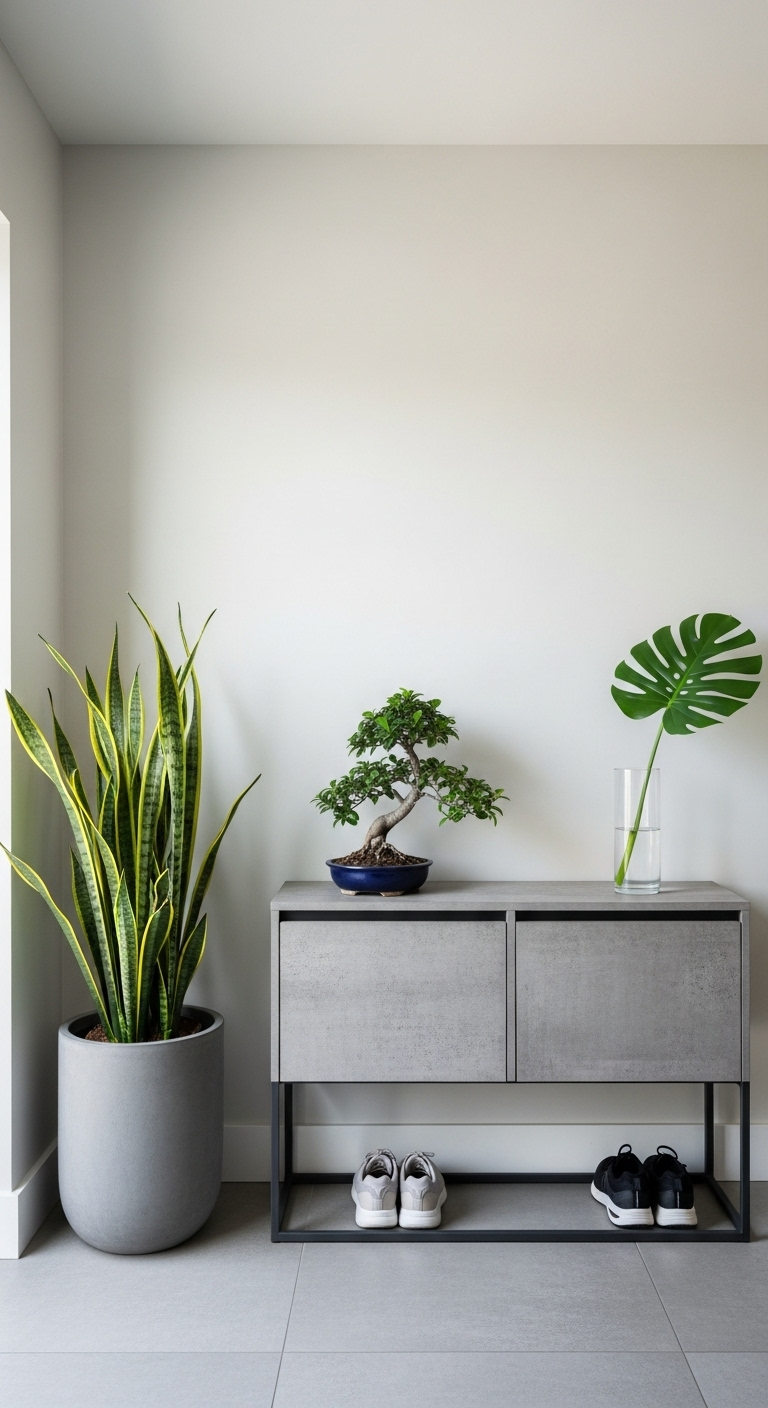
No Japandi space is complete without a living element, such as a tall snake plant or a delicate Bonsai. Plants bring a sense of vitality and fresh air into the mudroom, blurring the line between indoors and nature.
Choose planters in matte ceramic or concrete to maintain the raw, industrial-meets-nature aesthetic that defines this style. Even a single green leaf in a glass vase can transform the energy of your mudroom into a peaceful retreat.
Placing greenery near your entryway creates an immediate sense of calm the moment you walk through the door. The organic forms of your plants provide a beautiful, living contrast to the clean, structured lines of your cabinetry.
You can select low-maintenance varieties to ensure your space stays lush even if your entry receives limited natural light. By integrating nature directly into your storage zones, you create a home that feels both grounded and incredibly refreshed.
10#. Hidden “Drop Zone” Cabinets
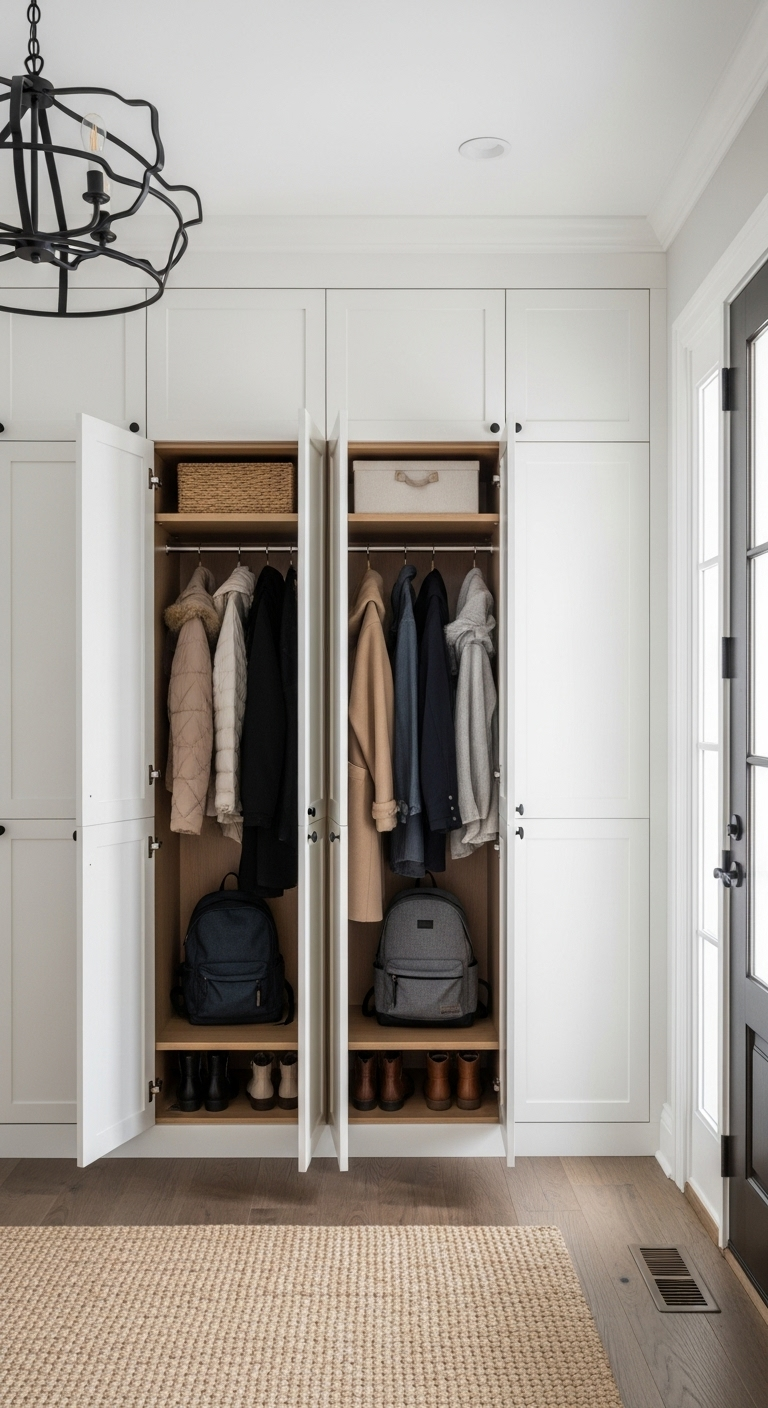
For those who prefer a completely clear view, floor-to-ceiling cabinets with push-to-open doors are the ultimate storage solution. This creates a seamless wall of wood or white that hides everything from bulky winter coats to heavy backpacks.
Integrating your storage into the architecture of the room is a top strategy in Japandi mudroom design. It ensures that your entryway always looks Pinterest-ready, regardless of how many items are stored inside.
By extending your cabinetry to the ceiling, you maximize vertical space while eliminating awkward dust-collecting gaps. The flat, unbroken surface of the doors reinforces the minimalist principle of removing visual clutter for a calm environment.
Choosing this design allows you to create a hidden utility zone that keeps daily essentials organized and accessible. When you close the doors, the entire wall disappears, leaving your home feeling serene, tidy, and perfectly composed.
11#. Sculptural Clay and Ceramic Bowls
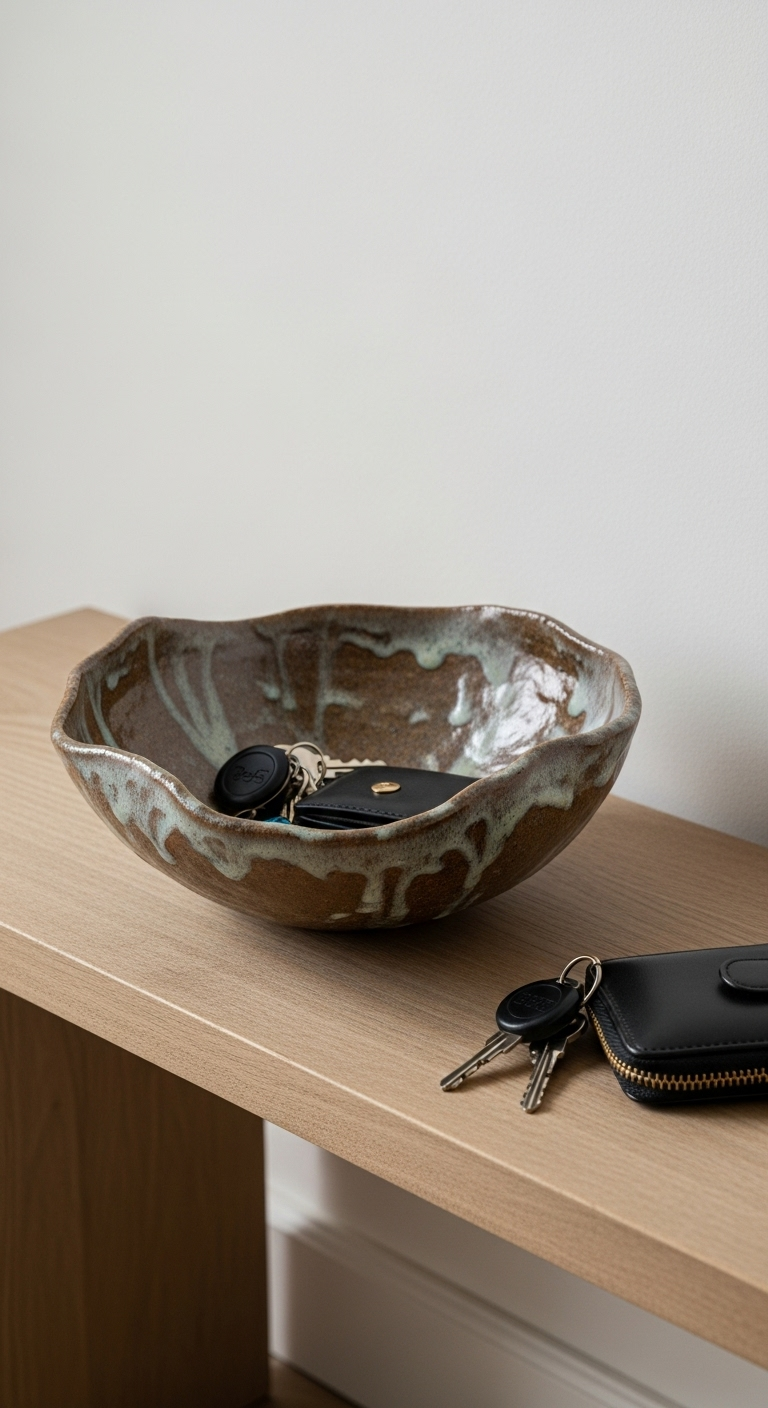
A heavy, shallow clay bowl on a bench or shelf provides a dedicated home for your keys, wallets, and daily essentials. Choosing a piece with an organic, uneven shape celebrates the artisan spirit and adds a touch of quiet luxury.
This simple addition prevents small items from being scattered across surfaces, maintaining the organized flow of the room. It is a functional piece of art that serves as a daily reminder to be mindful as you enter and leave your home.
The tactile, earthy texture of the clay creates a grounding contrast against smooth wood or metal surfaces. Placing this bowl near the entry ensures you always know exactly where your belongings are kept.
You can select a neutral glaze to ensure the bowl complements your existing color palette without creating visual noise. This mindful approach to storage keeps your surfaces clear while highlighting the beauty of everyday, useful objects.
12#. Subtle Paper Lantern Lighting
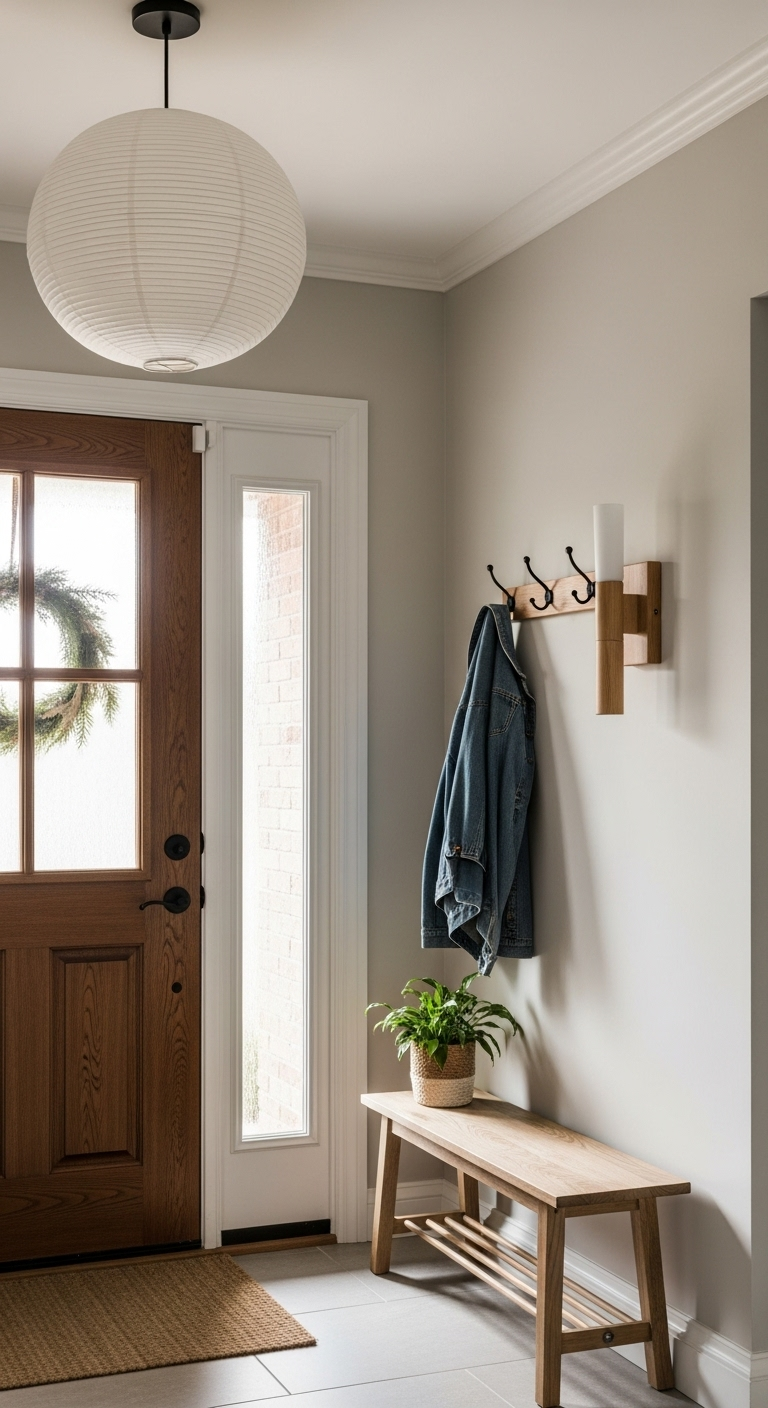
Soft, diffused lighting is essential for creating a welcoming glow as soon as you step through the front door. A paper lantern pendant or a sleek wooden wall sconce provides a warm light that is more inviting than harsh LEDs.
Lighting should be functional enough to find your keys but soft enough to set a relaxing mood for the rest of your home. This focus on atmosphere is why lighting is a major pillar of Japandi mudroom design.
By choosing warm-toned bulbs, you can instantly transform the mood of your entrance from purely utility to a cozy transition space. Layering your light sources allows you to adjust the brightness based on the time of day or the specific activity.
A paper lantern adds a delicate, sculptural element that diffuses light evenly to minimize harsh shadows on your walls. This thoughtful approach to illumination ensures your entryway feels like a peaceful sanctuary the moment you arrive.
13#. Concrete Accents for Texture
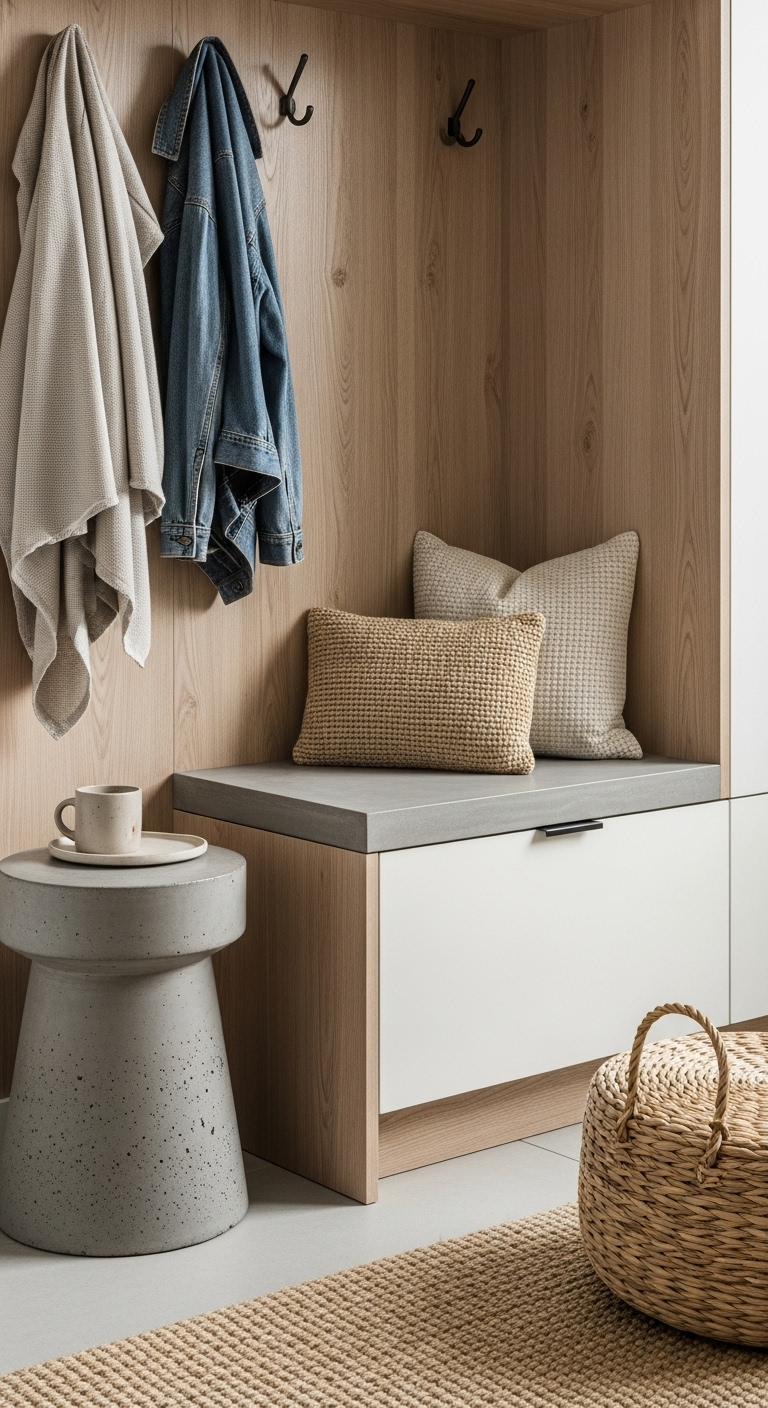
Introducing concrete through a small stool or a custom-poured countertop adds a modern, industrial weight to the mudroom. This raw material pairs beautifully with the warmth of light wood and the softness of natural woven textiles.
Concrete is incredibly durable and easy to maintain, making it a perfect choice for the heavy-duty nature of your entryway. Its neutral grey tone fits perfectly within the Japandi palette while providing a unique, contemporary texture.
The cool surface of a concrete bench provides a sturdy, grounding element that contrasts with the airy feel of your home. By incorporating this material, you create a sophisticated balance between rugged utility and refined, minimalist style.
You can soften the look by placing a linen cushion or a small, hand-thrown ceramic vase on top of the concrete surface. This intentional mix of textures ensures your mudroom feels both practical and thoughtfully designed for modern living.
14#. Sliding Barn Doors with a Twist
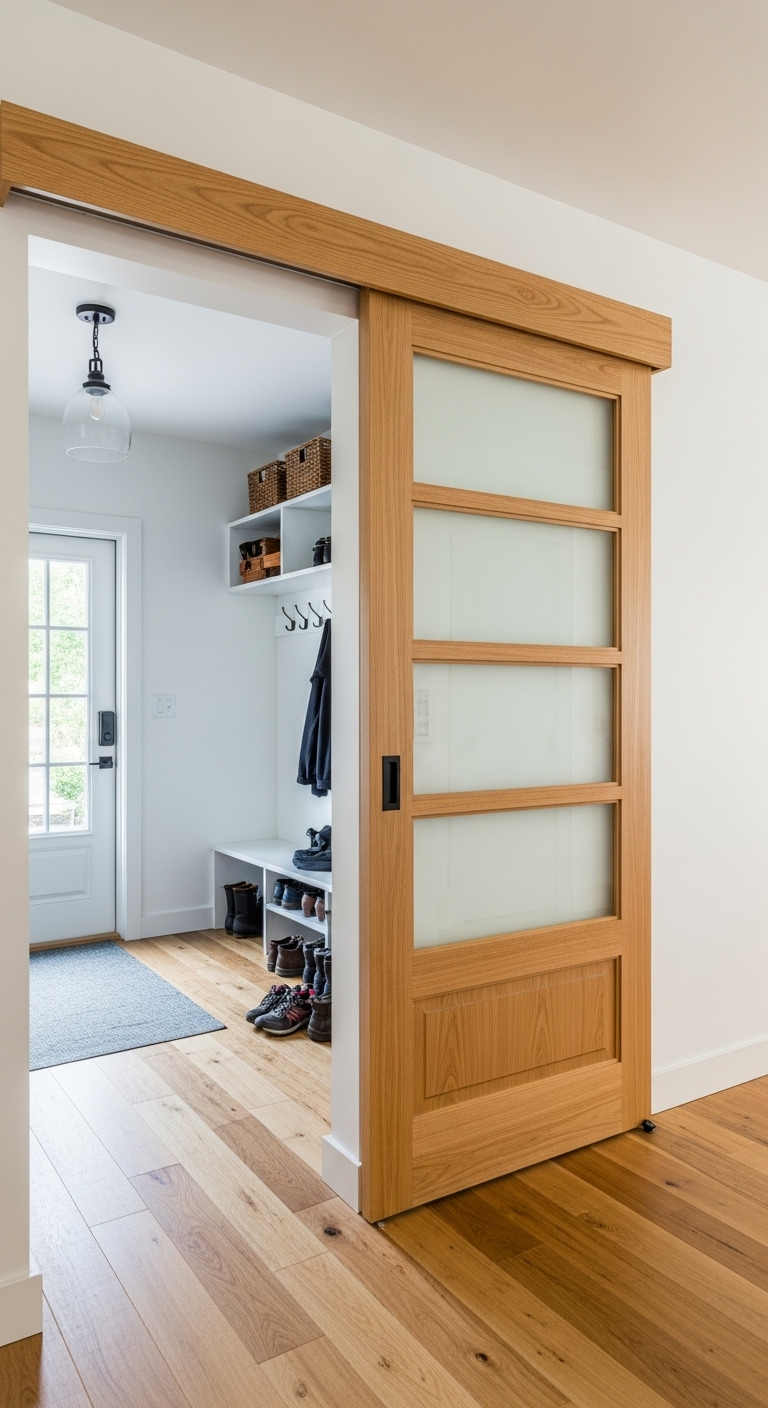
If your mudroom is a separate room, consider a sliding door made of light wood and frosted glass or traditional slatting. This saves space compared to a swinging door while acting as a large-scale piece of functional art for the hallway.
It allows natural light to pass through while providing privacy and hiding any daily messes that might be occurring inside the mudroom area. This sleek solution is a classic example of Japanese efficiency meeting modern Western interior design trends perfectly.
Choosing a sliding mechanism eliminates the floor clearance required by traditional doors, allowing you to maximize the square footage in tight entryways. You can effectively reclaim valuable inches that would otherwise be blocked by the arc of a swinging door.
Select hardware that complements your existing home finishes to create a cohesive look that connects your hallway to the rest of the space. Durable materials ensure that this high-traffic barrier stands up to years of daily use without showing significant wear.
15#. Minimalist Umbrella Stands
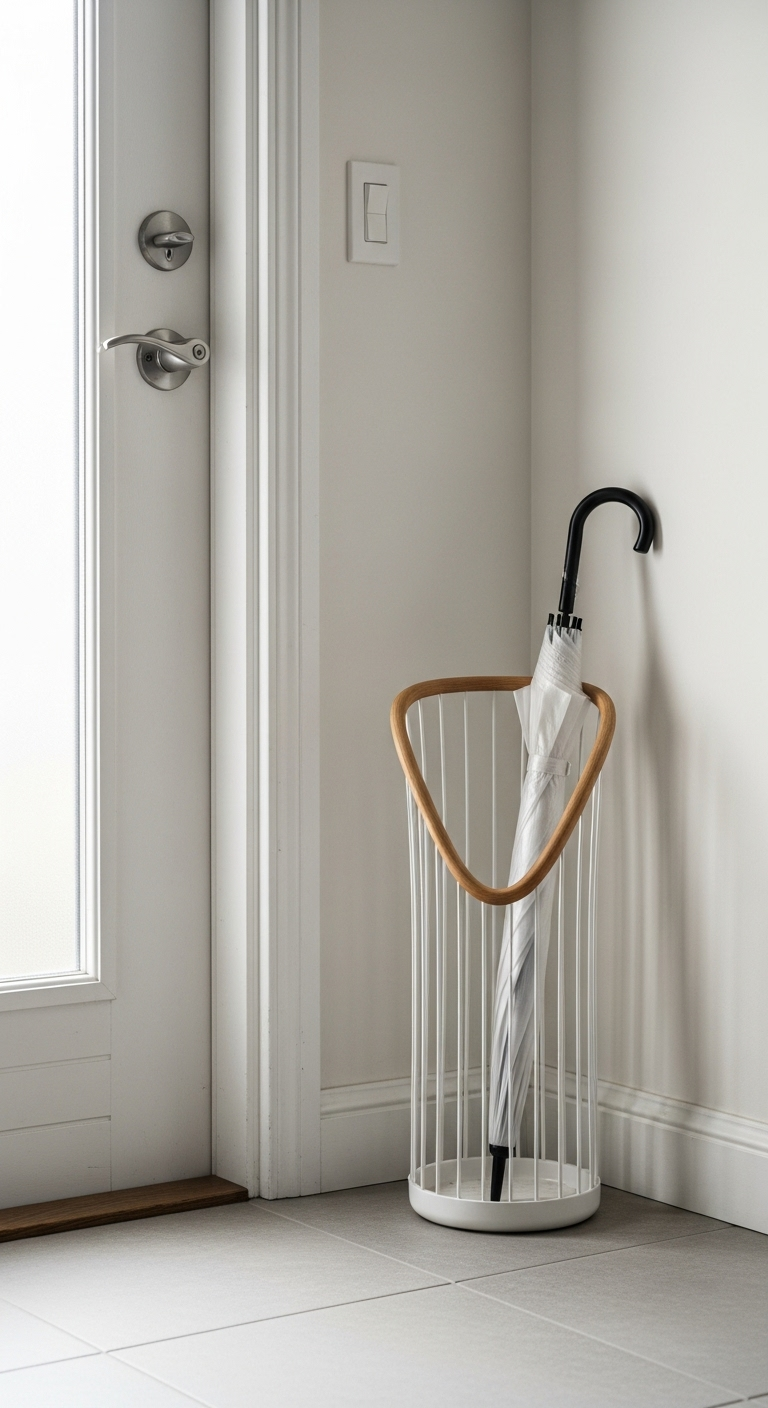
Even a functional item like an umbrella stand can be a beautiful decor piece when chosen with a clean, Japandi eye in mind. Look for designs in matte ceramic, bentwood, or simple wireframes that keep the visual look light and unobtrusive.
Placing this piece near your entryway ensures you are prepared for the weather without cluttering the floor with dripping wet items. It is a small but thoughtful detail that contributes to the overall organized and intentional feel of your entrance.
When selecting your stand, focus on organic shapes that mimic natural elements and complement the rest of your home furniture. A piece that feels grounded in texture rather than color will blend seamlessly into your existing entryway aesthetic and layout.
Consider the footprint of the stand carefully to ensure it does not impede the flow of traffic in your hallway. You want a solution that balances utility and style, providing a dedicated home for accessories without demanding too much attention.
16#. Neutral Jute Runners
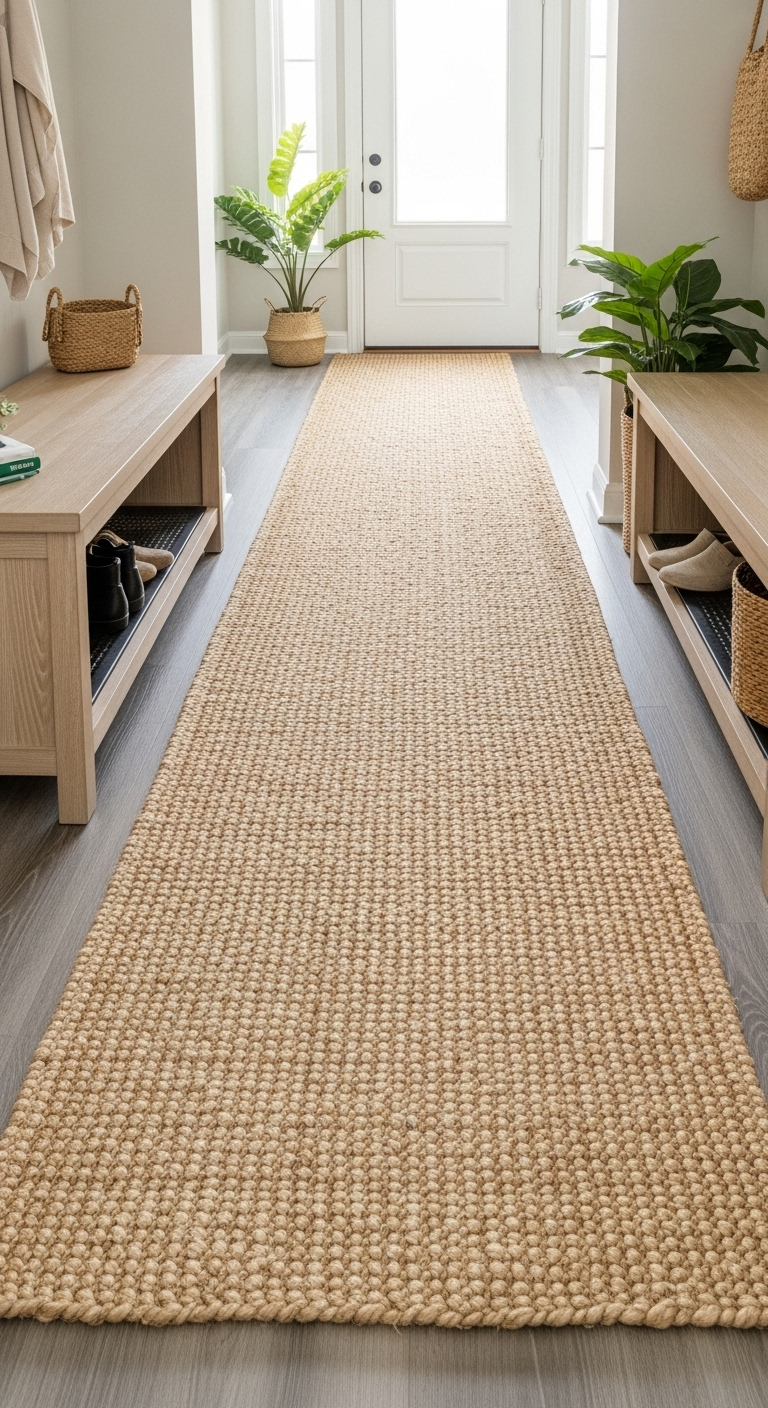
A long jute or sisal runner protects your hardwood floors while adding an earthy, rustic texture that feels great underfoot. These natural fibers are extremely resilient to constant foot traffic and moisture, making them the ideal choice for a busy entryway.
The sandy, neutral color of the jute complements light wood furniture and helps to ground the entire design of the mudroom. It provides a clear visual path that leads guests into the heart of your home with style and comfort.
These rugs work exceptionally well because they hide dirt effectively between professional cleanings, maintaining a tidy appearance during the work week. The coarse weave adds a layer of depth to your decor that synthetic alternatives simply cannot match in quality.
You should opt for a low-profile weave that allows your doors to open and close smoothly without catching on the fabric. This simple addition makes a massive difference in how finished and intentional your entryway feels to anyone walking inside.
17#. Tapered Wood Furniture Legs
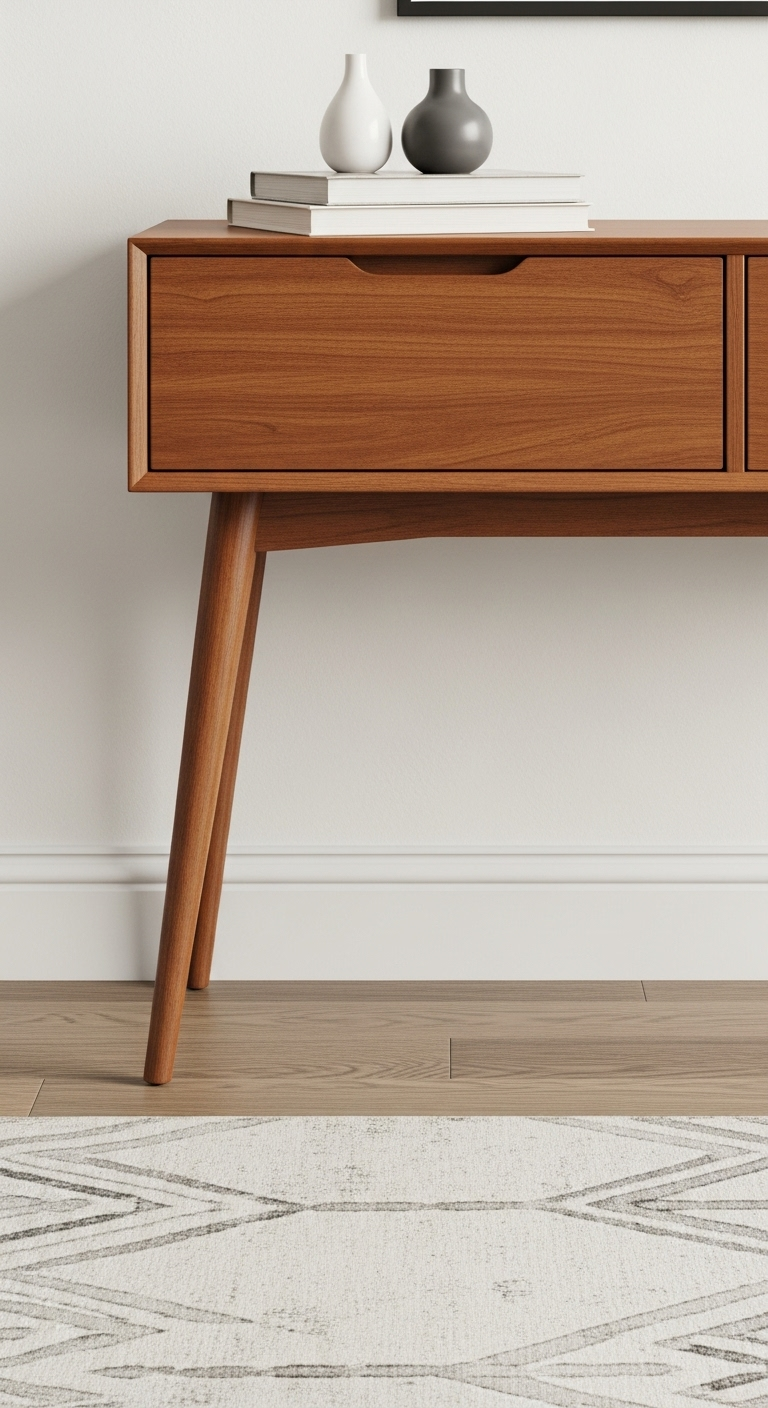
When choosing a console or a small side table for your mudroom, look for pieces with slim, tapered legs. This classic Mid-Century-inspired detail adds a sense of visual lightness, making the floor appear more expansive and less crowded.
Furniture that sits off the ground allows for better light flow and makes cleaning under the units much easier. It is a simple design trick that helps maintain the airy, open feel essential to your modern entryway.
Tapered legs draw the eye upward and keep the floor space visible, which is crucial for preventing a cramped atmosphere. This specific silhouette is perfect for entryways where you need a surface for keys but lack the room for bulky storage.
Select a console made from wood that matches your other entryway fixtures to ensure a seamless and cohesive look. Keeping the base materials consistent helps the entire space feel like it was designed by a professional rather than assembled.
18#. Recessed Lighting for Pathfinding
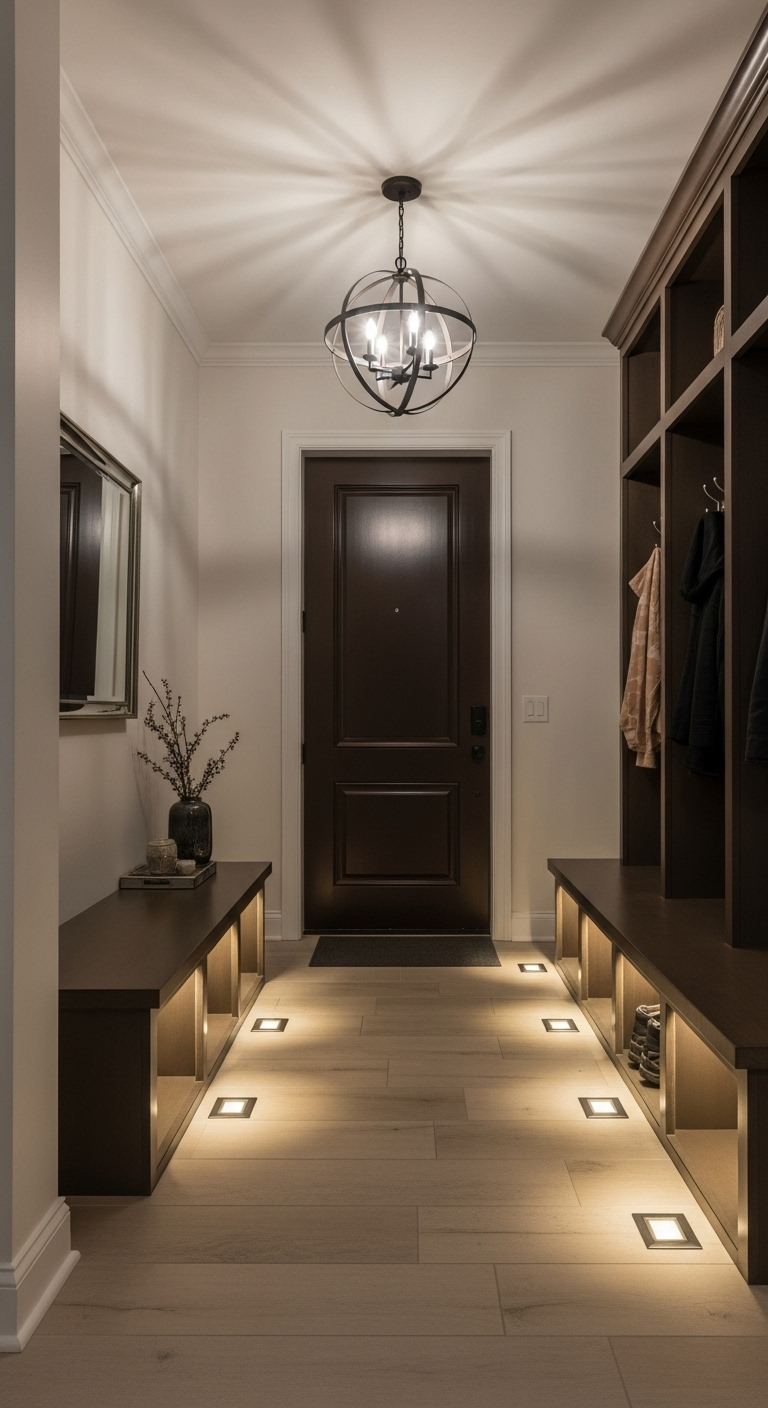
In addition to a statement pendant, consider recessed step lights near the floor to guide your way at night. This provides a safe, low-glare path through the mudroom without the need to turn on bright, overhead light fixtures.
This level of lighting design adds a high-end, architectural feel to your home that guests will certainly notice and appreciate. It is a subtle touch that prioritizes both safety and a calm, spa-like atmosphere in your main entrance.
These floor-level lights work perfectly for late arrivals, allowing you to navigate the entry without disrupting the relaxed mood. You avoid the harsh transition from darkness to bright, aggressive light when you step into the house after sunset.
Position your fixtures along the base of your storage units or near the stair transitions for the best effect. Consistent spacing ensures the light wash is even and professional, elevating the entire mood of your home’s entryway.
19#. Monochromatic Color Blocking
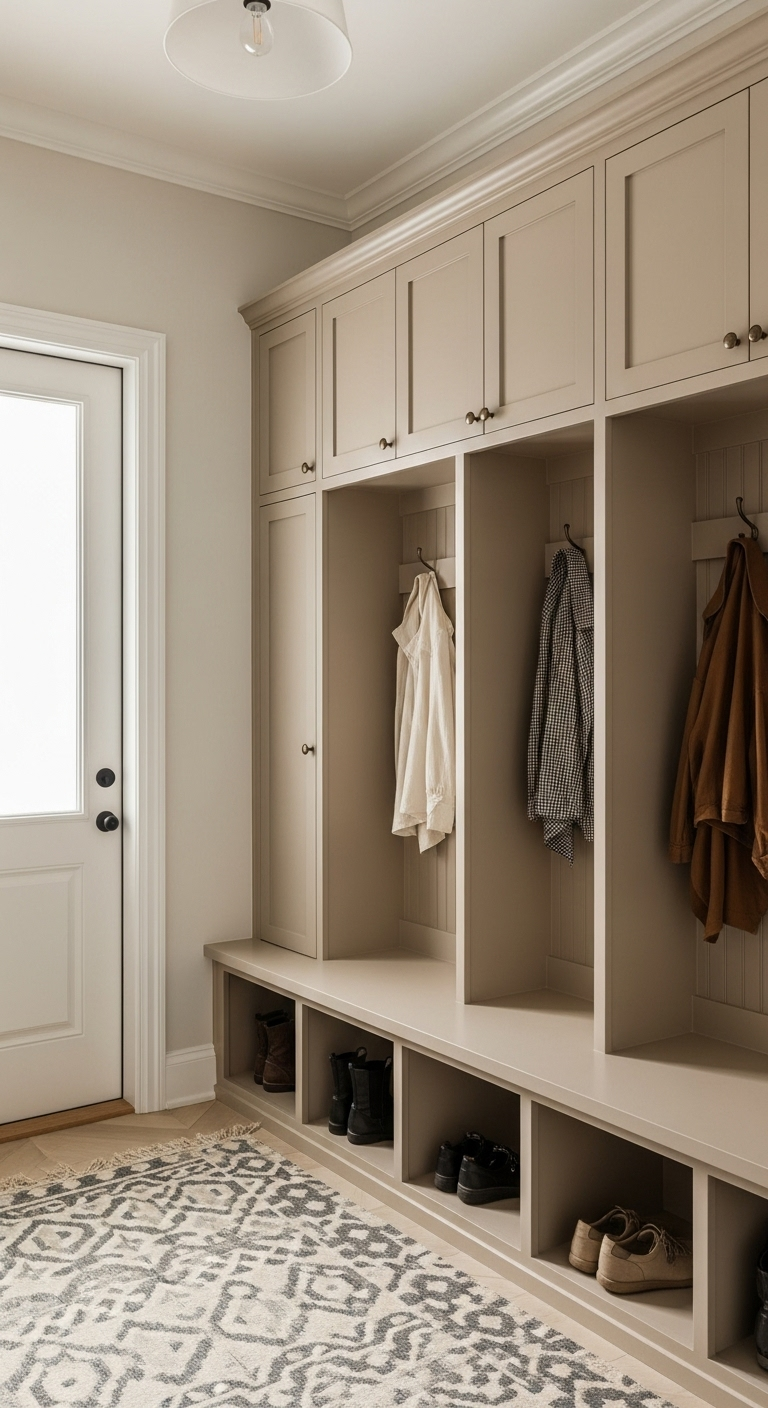
Using different shades of the same neutral color can create a sophisticated, layered look on your mudroom walls. Try a warm beige for the walls and a slightly darker tan for the built-in storage units to add depth.
This tone-on-tone approach is a staple in modern mudroom decor because it feels inherently cohesive and peaceful. It allows the natural textures of the wood and stone to become the main focal point of the entire room.
Applying this technique simplifies your color palette while preventing the space from feeling flat or one-dimensional in appearance. You create an environment that feels calm, allowing your eyes to rest the moment you step through the door.
Consistency in your color story helps the transition between your entrance and the rest of your home feel effortless. When colors are closely related, the visual boundary between built-in cabinets and the wall structure becomes beautifully blurred.
20#. Integrated Boot Trays
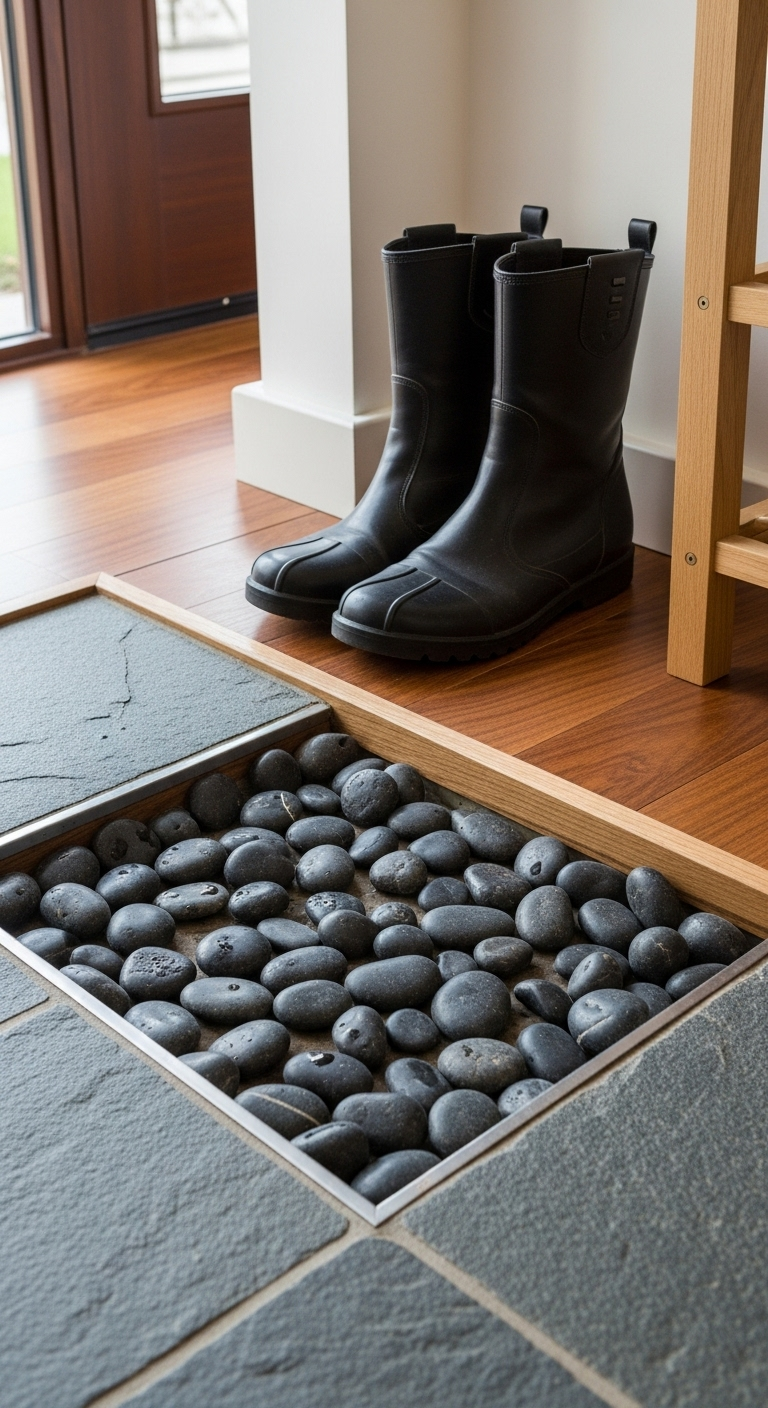
To protect your beautiful wood or stone floors, use a minimalist boot tray filled with smooth river stones. This provides a dedicated spot for wet shoes to dry while adding a natural, Zen-like element to the floor.
The stones allow air to circulate around the footwear while catching any drips or mud before they spread. It turns a messy necessity into a stylish, organized feature that fits perfectly within the modern Japandi theme.
Select stones that are uniform in color and size to ensure the tray looks intentional rather than chaotic. Grey or charcoal river rocks provide a beautiful, grounding contrast against lighter wood floors or cream-colored tiles.
This simple setup eliminates the need for plastic trays that often look cheap or out of place. You create a functional drainage system that maintains the visual integrity of your mudroom while handling daily moisture.
21#. Vertical Storage Hooks
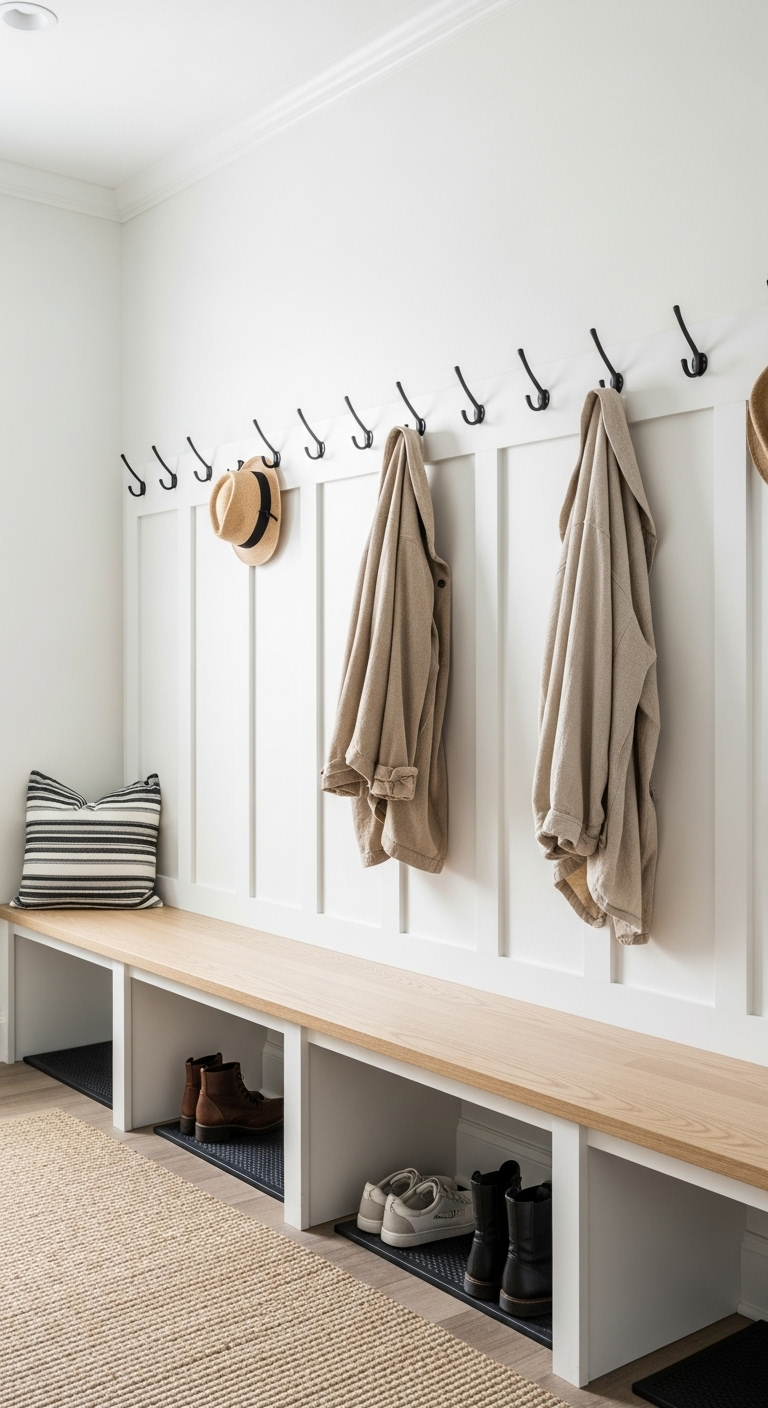
Simple wooden pegs or sleek black metal hooks arranged in a clean line provide a minimalist way to hang hats and coats. Spacing them evenly across a wall prevents the pile-up look that often plagues more traditional mudrooms.
By keeping the hooks high and the benches low, you maintain a clear visual middle ground that makes the room feel larger. This verticality is key to keeping a high-traffic area looking organized and intentionally styled at all times.
Choosing a linear arrangement creates an architectural rhythm that guides the eye naturally across the length of the wall. This layout is particularly effective in narrow hallways where you need to maximize every available inch of horizontal space.
The contrast between warm wood pegs and dark metal hooks can add a sharp, modern edge to your storage wall. You should select a material that mirrors the hardware used in your kitchen or main living room fixtures.
22#. Sculptural Wood Stools
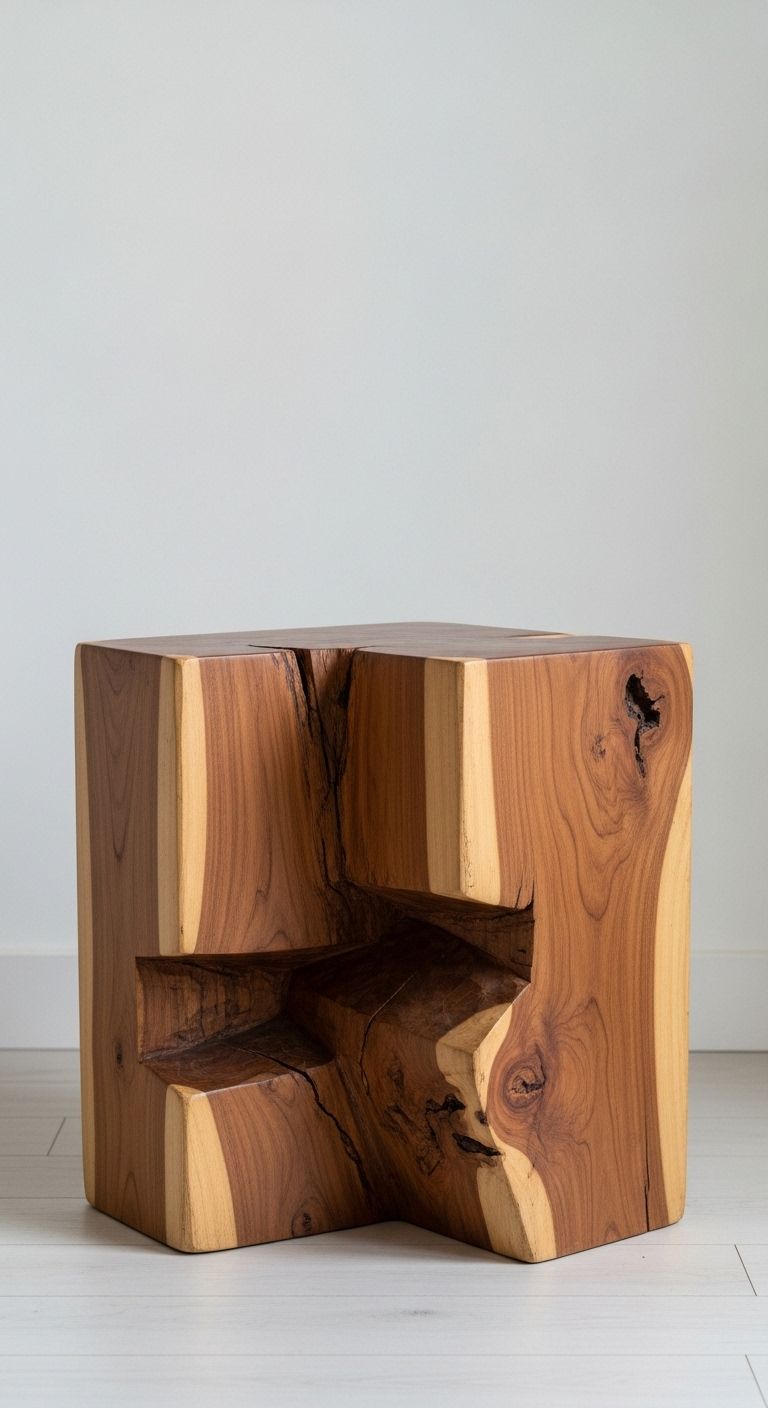
Placing a stool in your entryway offers a convenient spot to sit while putting on or removing your footwear. This simple addition makes your morning routine much more comfortable while adding a layer of style to the mudroom.
Because these stools are usually compact, they fit perfectly into corners that would otherwise remain empty and unused spaces. You maximize your floor layout without sacrificing the open, airy feeling that keeps your home feeling large.
The beauty of a handmade stool lies in the subtle imperfections of the wood, which celebrate the natural life cycle. This approach to decor creates a welcoming atmosphere that feels authentic rather than like a sterile, catalog showroom.
Consider using your stool as a base for a small plant or a sculptural object when it is not needed. Having a piece that serves multiple purposes is the most effective way to keep your home tidy and curated.
23#. Frosted Glass Cabinet Inserts
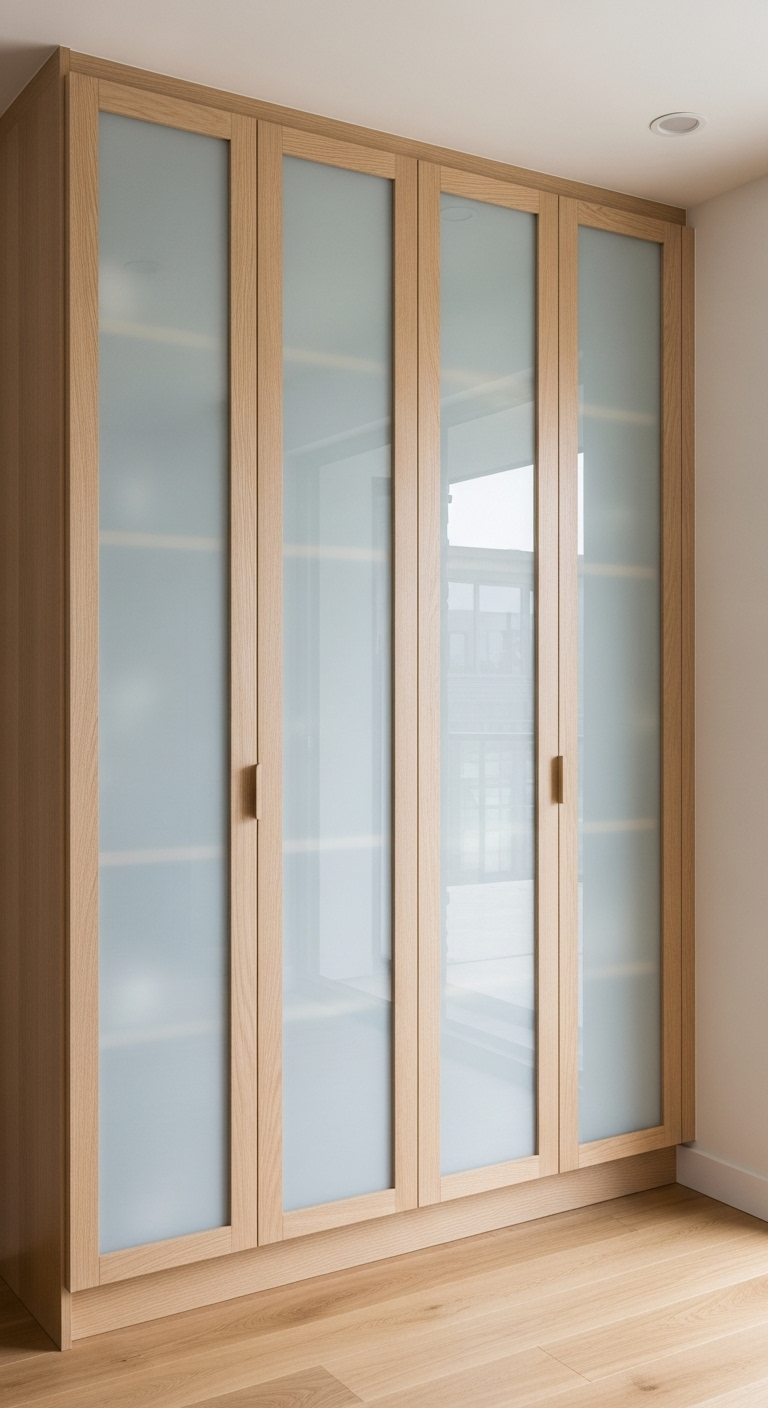
If you have closed cabinets, using frosted glass inserts can add a layer of lightness without revealing the clutter inside. This mimics the look of traditional Japanese shoji screens while offering a more durable and modern finish.
The frosted surface catches the light and adds a soft glow to the room, preventing a wall of cabinetry from feeling too heavy. It is a perfect compromise between the open feel of glass and the closed benefits of solid wood.
These inserts are particularly effective in smaller mudrooms where you want to maximize storage without overwhelming the visual space. You keep your items organized out of sight while ensuring the room retains a sense of airy, light-filled depth.
Choosing high-quality glass ensures that the material stands up to the constant opening and closing of cabinet doors. This structural choice provides a sophisticated upgrade that elevates your storage from basic furniture to custom architectural detail.
24#. Framed Botanical Sketches
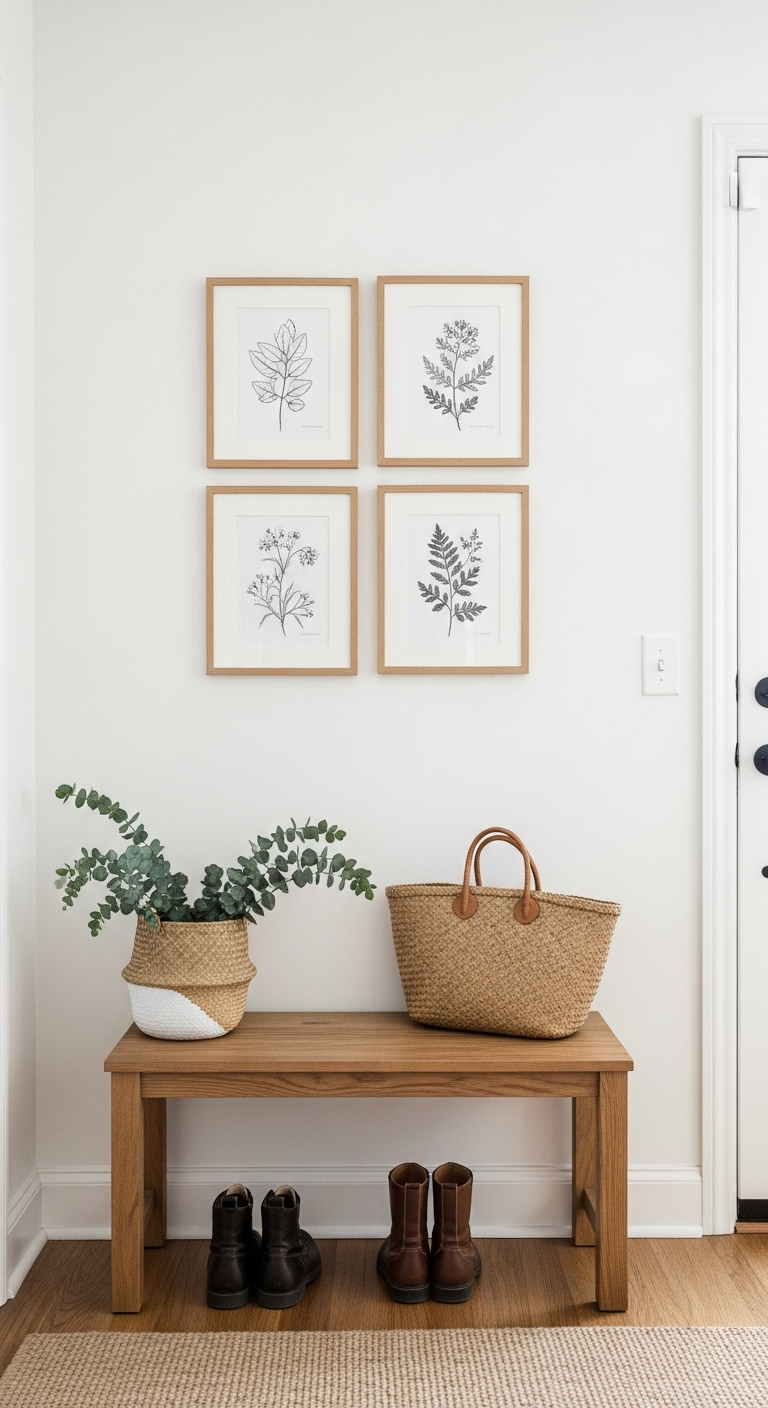
Simple, black-and-white botanical sketches in light wood frames add a touch of nature-inspired art to your mudroom walls. These pieces feel quiet and sophisticated, providing visual interest without demanding too much of your attention.
Group them in a small grid or a single row to maintain the organized, symmetrical feel of your space. This type of art reflects the peacefulness of the outdoors, making the entry to your home feel like a natural extension.
Choosing monochromatic sketches ensures the imagery feels timeless and avoids clashing with your existing color palette or decor. The minimalist lines highlight the beauty of natural forms, grounding the mudroom with a subtle, organic connection to the environment.
Selecting light wood frames maintains the airy brightness of the area while echoing the finishes of other furniture pieces. This cohesive material choice makes the artwork feel like an intentional part of the room rather than an afterthought.
25#. Minimalist Key Organizers
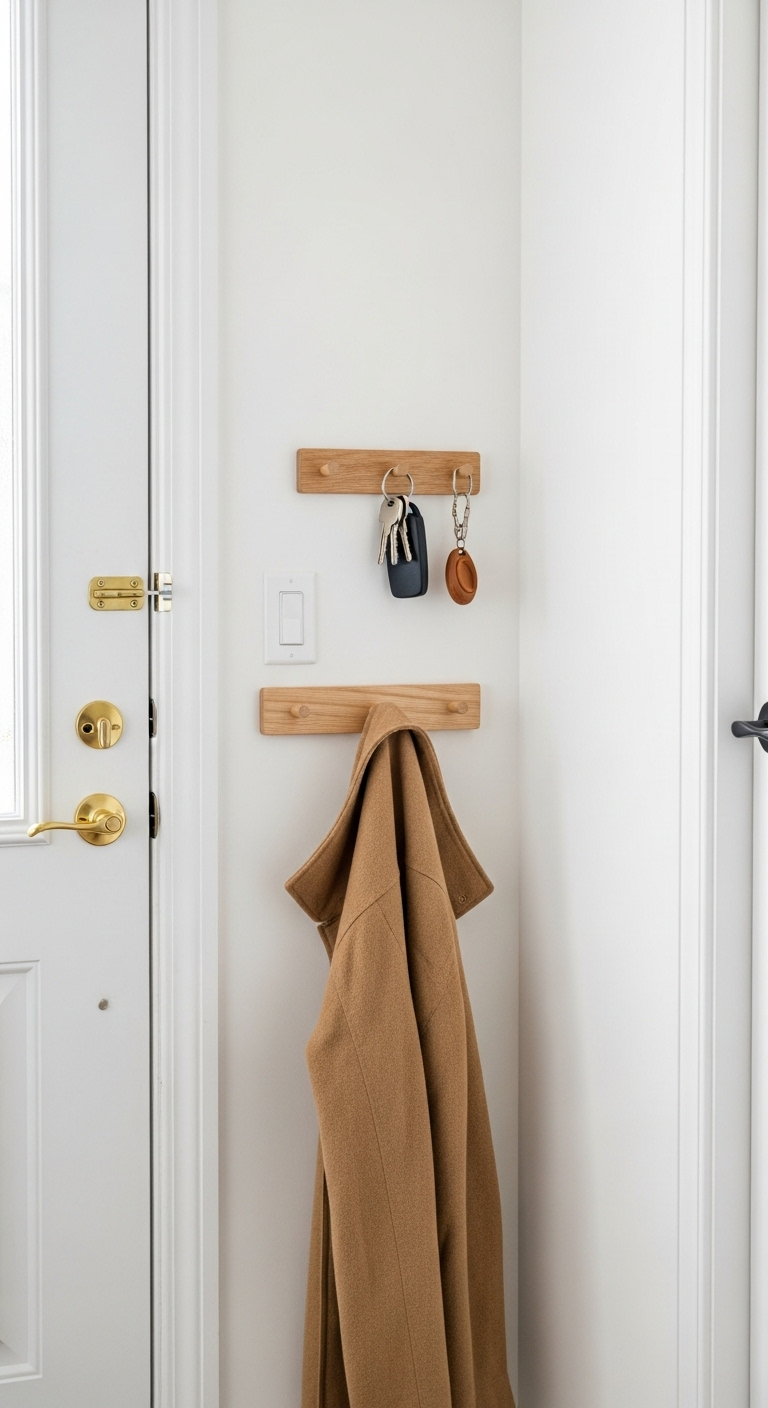
A small wooden magnetic strip or a set of sleek pegs near the door ensures your keys are always exactly where you need them. This prevents the morning scramble and keeps your surfaces clear of small, distracting metal objects.
Integrating your key storage into the wall decor keeps the look clean and intentional throughout the entire entryway. It is a tiny organizational win that contributes to the overall sense of calm and order in your daily routine.
Selecting a wooden finish for your magnetic strip adds a natural, warm touch that complements other timber elements in your mudroom. This approach hides the functional nature of the hardware, allowing the strip to blend in with your wall paneling.
You can mount these pieces at a height that is comfortable for you while keeping them tucked out of sight. Having a dedicated home for your essential items removes the stress of searching for lost keys before leaving.
26#. Floor-to-Ceiling Wood Slats
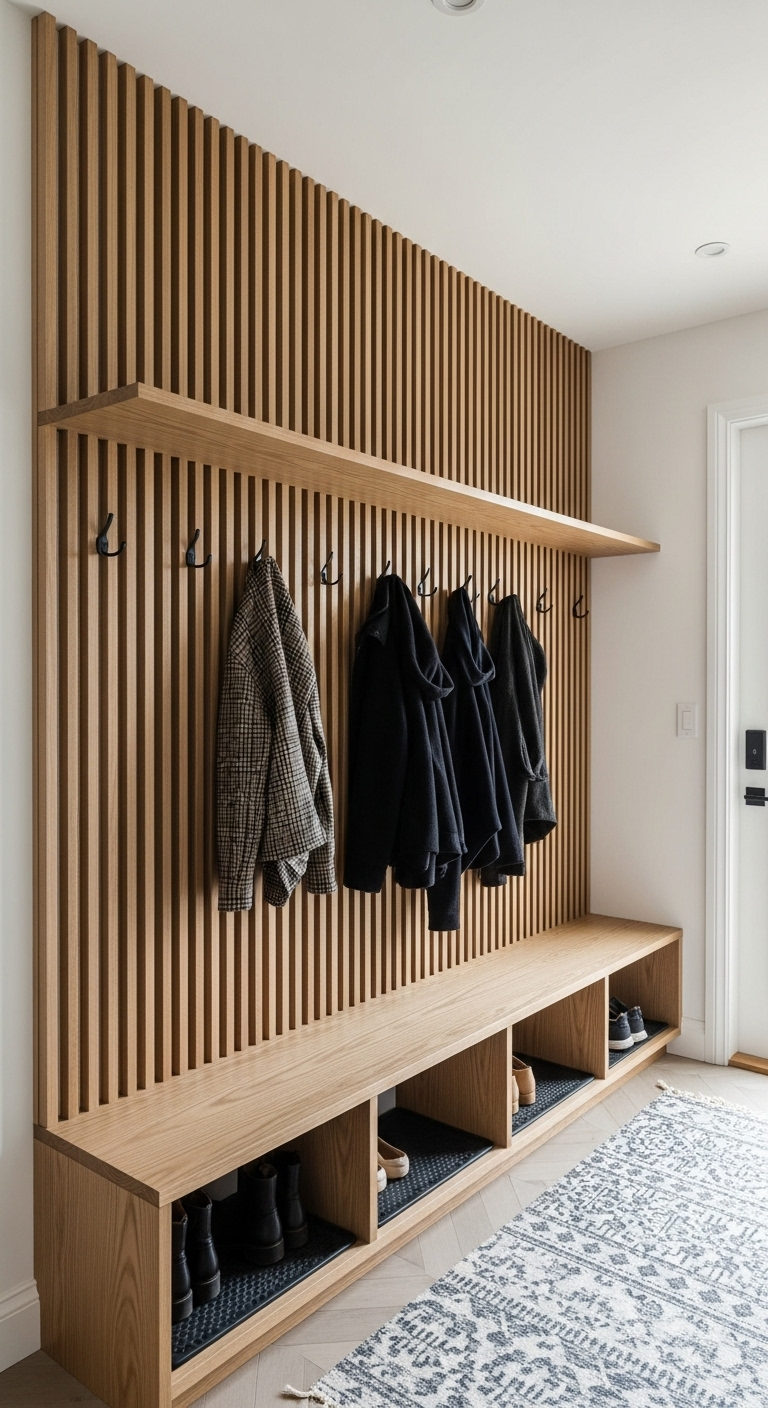
For a dramatic and modern look, extend your wood slatted panels from the floor all the way to the ceiling. This draws the eye upward and creates a stunning architectural feature that defines the mudroom as a distinct space.
The gaps between the slats can even be used to tuck in adjustable shelves or hooks, making the wall completely customizable. This is a favorite among modern mudroom decor ideas for its blend of beauty and extreme utility.
Vertical slats help to emphasize the height of your room, making a small transition area feel much more grand. By running the wood from the floor to the ceiling, you create a seamless backdrop that grounds the entire entryway.
Choosing a light-colored wood, such as white oak or ash, maintains an airy feel while adding warmth to the wall. The linear rhythm of the slats provides a clean, rhythmic quality that instantly elevates the mood of your home.
27#. Zen Sand and Stone Trays
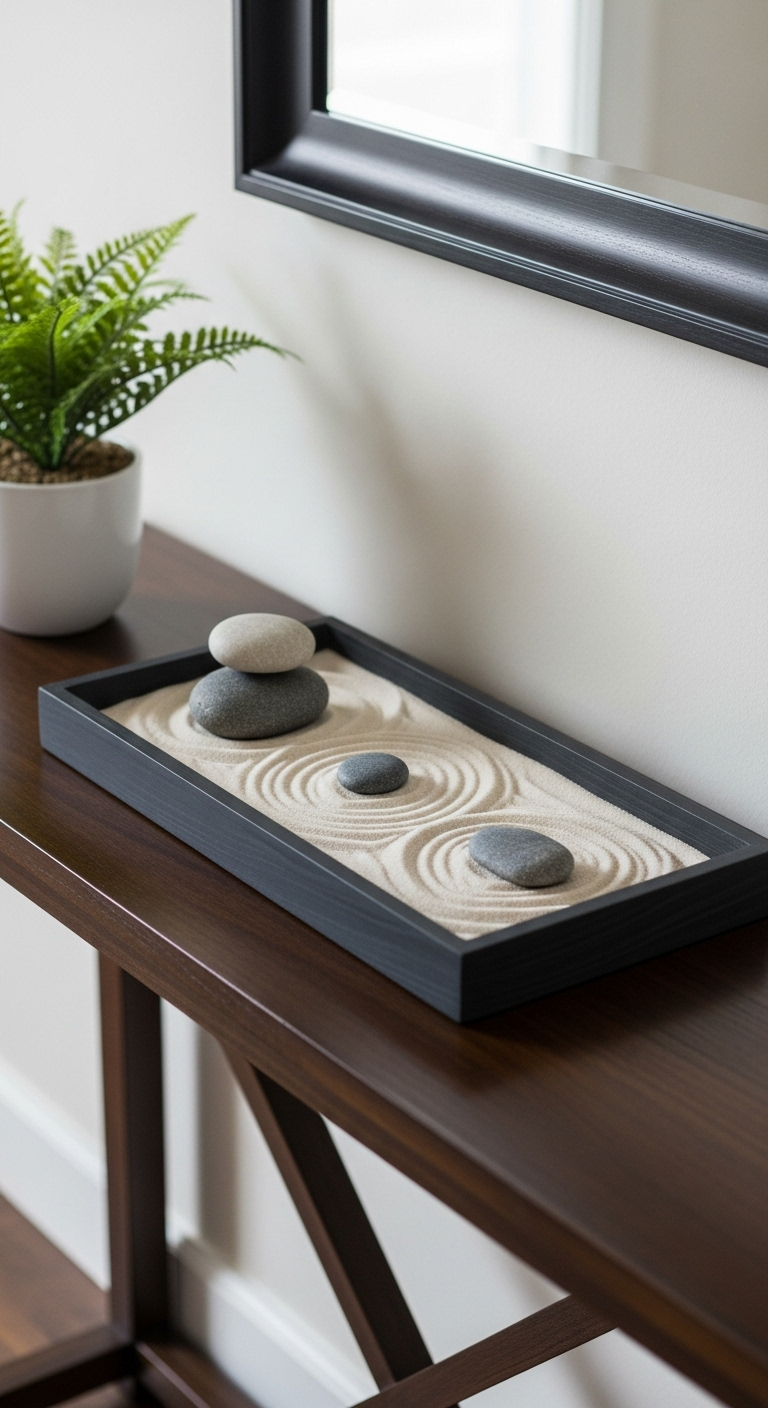
A small decorative tray filled with sand and a few smooth stones can be a beautiful centerpiece for a console table. It is a direct nod to Japanese Zen gardens and serves as a peaceful visual reminder to stay grounded.
This is a strictly decorative element that adds a sense of soul and culture to a room that is often purely functional. It sets a meditative tone for the home, encouraging everyone who enters to leave their daily stress at the door.
Choosing a low-profile tray made from concrete, ceramic, or natural wood creates a grounded look for your entryway table. The neutral colors of the sand and stones complement the soft textures of your mudroom walls and flooring.
You can periodically rake the sand into patterns to create a sense of movement and maintain a calm, intentional atmosphere. This simple ritual helps shift your focus from a busy day to the tranquility of your private living space.
28#. Oversized Ceramic Floor Vases
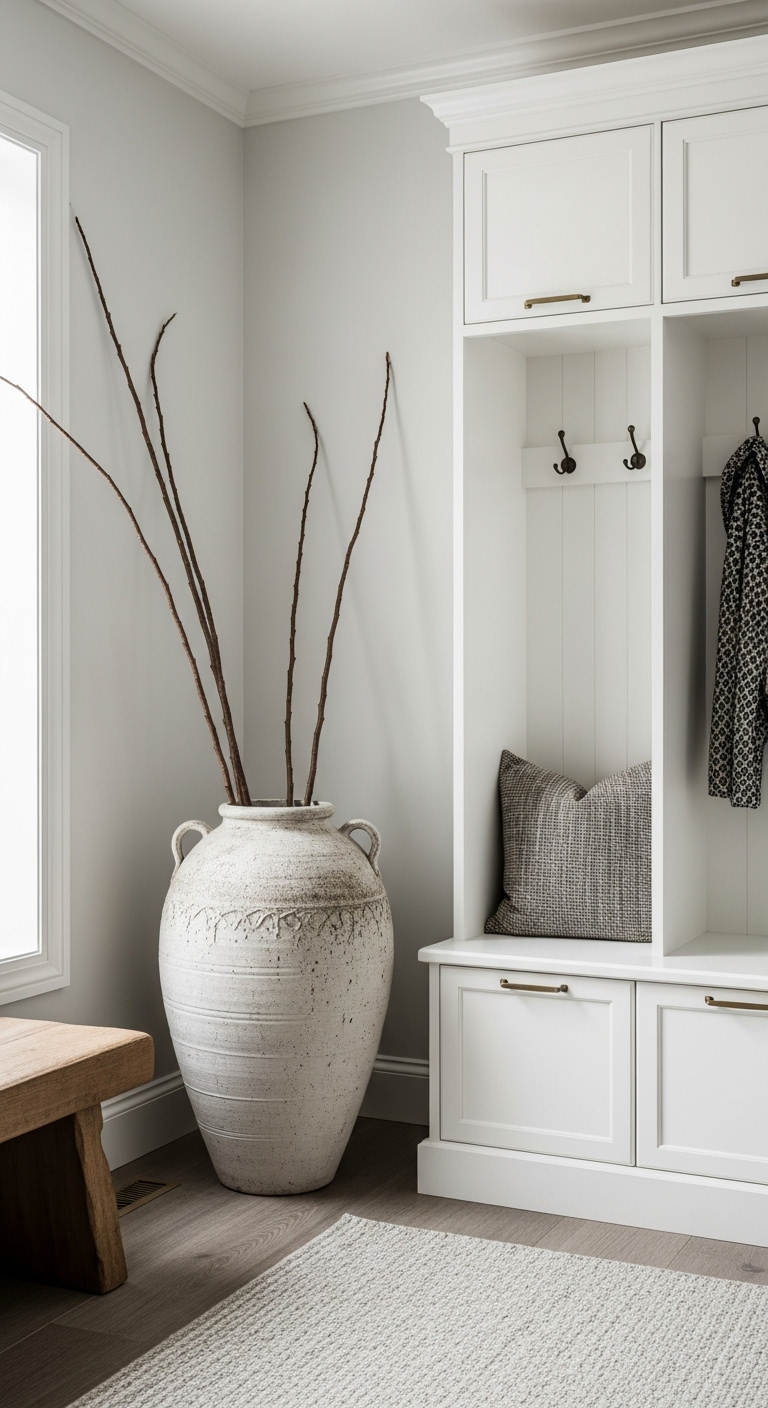
Placing a large, heavy ceramic vase in an unused corner can fill a dead space with a sense of artistic purpose. Choose a vase with a rough, textured finish and fill it with a few tall, dried branches for a minimalist look.
The height of the vase and branches adds a vertical element that balances the horizontal lines of benches and cabinets. It is a low-maintenance way to keep the mudroom looking stylish and lived-in without adding any extra clutter.
Large vessels provide a grounding weight to your entryway, helping to anchor the room and define its overall proportions. You can source pieces with an earthy glaze to enhance the organic connection to nature often found in modern interiors.
Dried branches offer a sculptural silhouette that remains beautiful throughout the year without requiring sunlight or consistent watering routines. This approach keeps your decor effortless while ensuring the room feels complete and purposefully decorated for daily life.
29#. Built-In Pet Stations
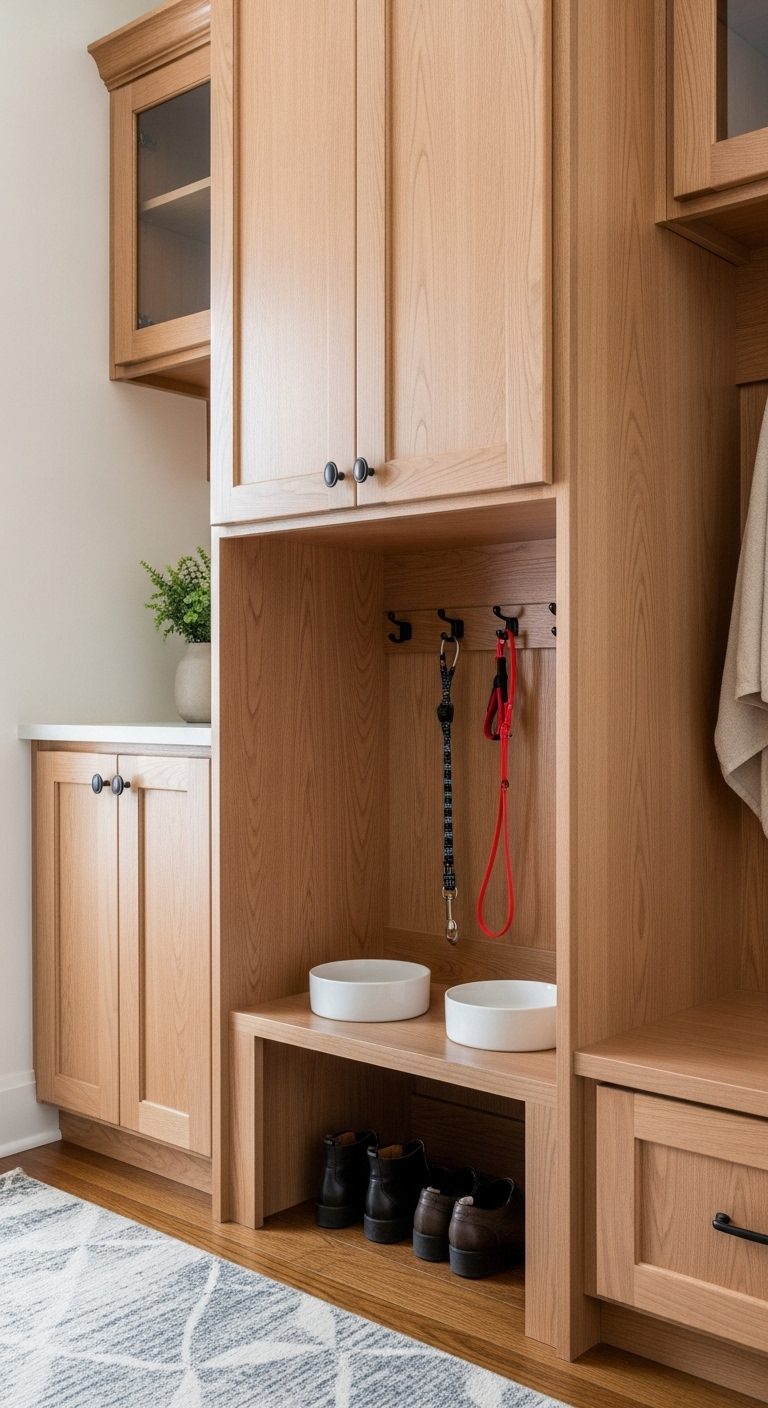
Japandi style is all about functional living, and that includes creating a dedicated, stylish spot for your pet’s bowls and leashes. Integrating a small nook into your mudroom cabinetry keeps pet gear organized and off the main floor.
Use matching wood finishes and ceramic bowls to ensure the pet station blends seamlessly with the rest of your decor. It is a thoughtful addition that makes the mudroom work harder for the whole family while staying aesthetically pleasing.
Customizing your cabinetry to include a low, open shelf allows you to tuck away bowls without sacrificing valuable floor space. This integrated approach ensures that your home remains tidy even during the busiest parts of your daily routine.
Consider adding a small, dedicated hook inside the nook to keep leashes and harnesses hanging in one tidy place. You gain an efficient system that streamlines your exit and arrival, saving you time when you are heading out.
30#. Minimalist Wall Clocks
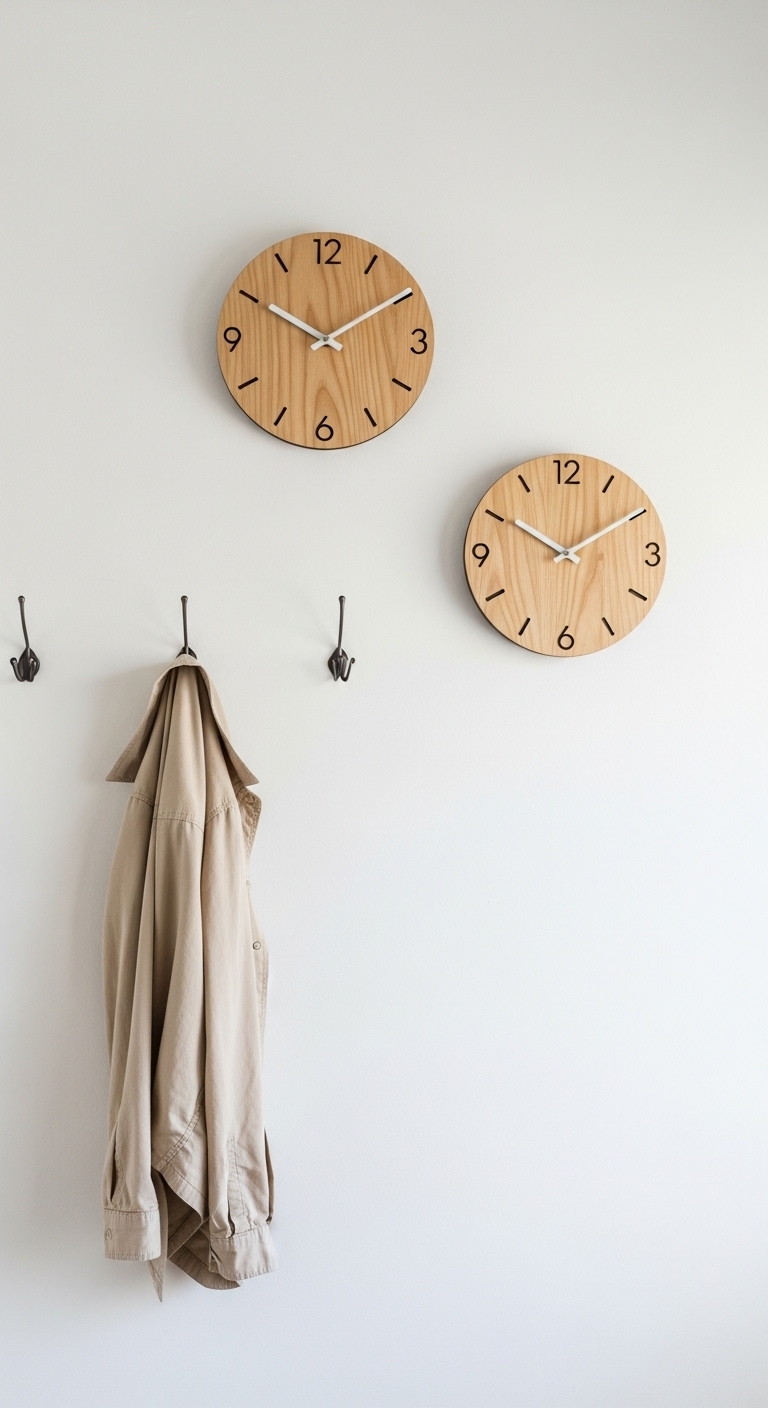
A simple wooden clock with no numbers and thin metal hands can be a functional and stylish addition to your mudroom wall. It helps you keep track of time as you are rushing out the door without adding visual noise.
The silent movement ensures the space remains peaceful, while the natural wood material fits perfectly within the Japandi palette. It is a small, practical detail that completes the look of a well-organized and intentional home entrance.
Choosing a face without numerals creates a sculptural effect that feels more like art than a standard timekeeping device. This clean aesthetic keeps your wall looking uncluttered while serving a vital purpose in your busy daily routine.
The warmth of the wood frame helps to soften the transition between your walls and any metal storage hardware. You will find that this balance of materials is key to achieving that signature calm, curated feel you desire.
31#. Hidden Mirror Cabinets
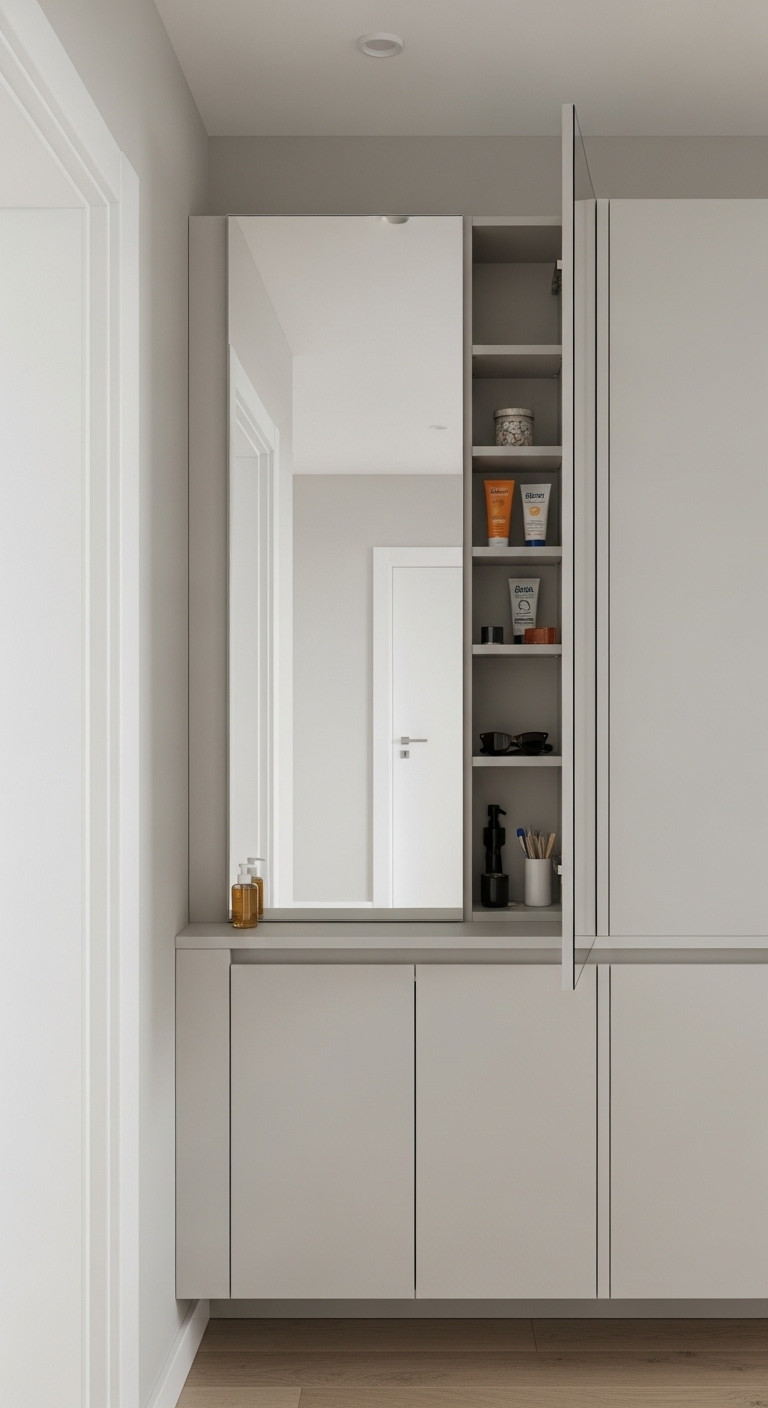
For a dual-purpose solution, install a wall cabinet with a mirrored front to store small items like sunscreen and sunglasses. This gives you a place for a last-minute outfit check while hiding all the small bits that usually clutter a console.
This is an excellent space-saving tip for smaller homes where the mudroom and hallway are the same narrow space. It combines two essential entryway needs into one sleek, minimalist unit that looks like a high-end architectural feature.
The reflection from the mirror helps to bounce light around your entryway, creating the illusion of a much larger room. By choosing a frameless or recessed design, you ensure the unit remains flush with your wall for a modern look.
Organizing your daily essentials inside a cabinet keeps your countertops completely free for more decorative, aesthetic items. You achieve a clean environment that supports a stress-free transition from the outside world into your private living space.
32#. Neutral Linen Benches
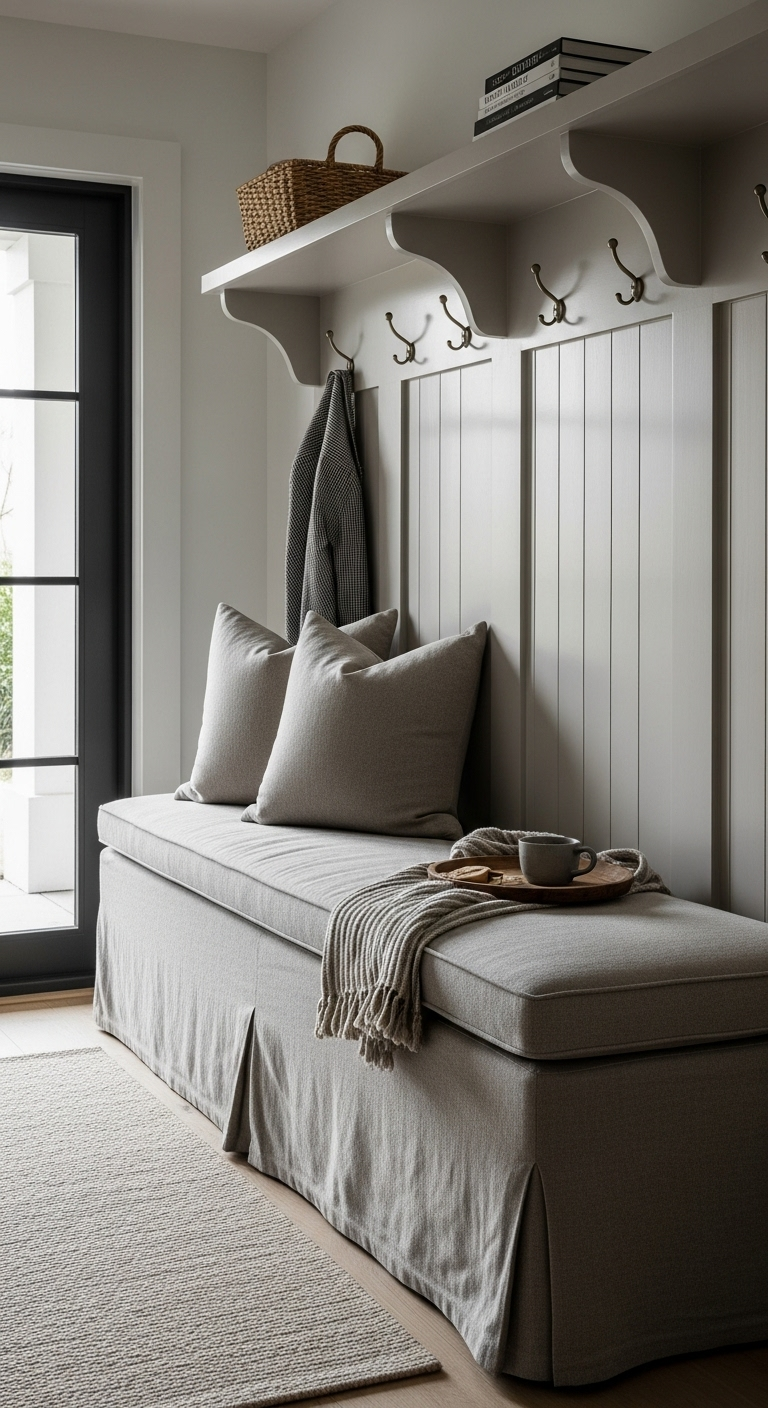
A custom-built bench upholstered in a heavy, neutral linen fabric provides a soft and comfortable spot to sit and relax. The fabric adds a much-needed layer of softness to the room, balancing the hard wood and stone surfaces.
Choose a removable, washable cover to ensure the bench remains practical for the high-traffic nature of an entryway. This blend of comfort and utility is what makes Japandi style so successful in modern, busy households.
Linen brings a beautiful, organic texture to your mudroom that synthetic fabrics simply cannot replicate in your design. Its neutral tone acts as a calming anchor for the space, allowing other architectural details to stand out clearly.
When you invest in custom upholstery, you ensure the piece fits your specific dimensions perfectly without wasting any space. This tailored approach makes your entryway feel finished and prevents the room from feeling like a random collection.
33#. Symmetrical Cabinet Layouts
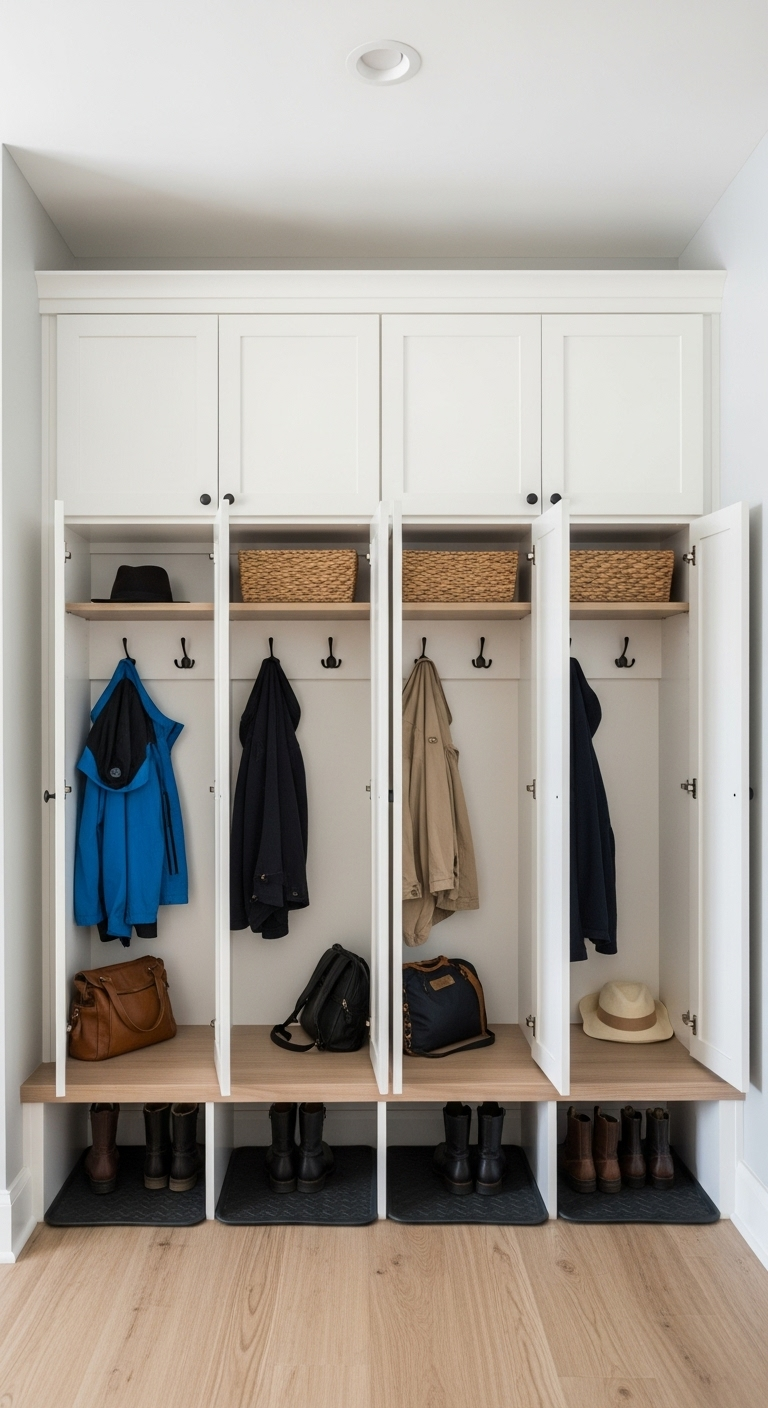
Japandi design often relies on symmetry to create a sense of balance and visual peace in a busy room like a mudroom. Organizing your lockers or cabinets in a perfectly symmetrical grid makes the space feel more intentional and calm.
Even if the items inside are messy, the external symmetry provides a sense of order that the eye finds very relaxing. This is a foundational principle when planning Japandi style mudroom decor ideas for a larger renovation project.
A balanced grid structure acts as an architectural anchor, effectively organizing your storage into clear, repeatable visual blocks. This consistency eliminates the chaotic energy often found in entryways, transforming the space into a structured and serene transition zone.
By aligning your hardware—such as handles, knobs, or hooks—across a symmetrical axis, you create a polished, high-end appearance. This precision is what elevates a basic utility room into a room that feels custom-designed for your lifestyle.
34#. Textured Grasscloth Wallpaper
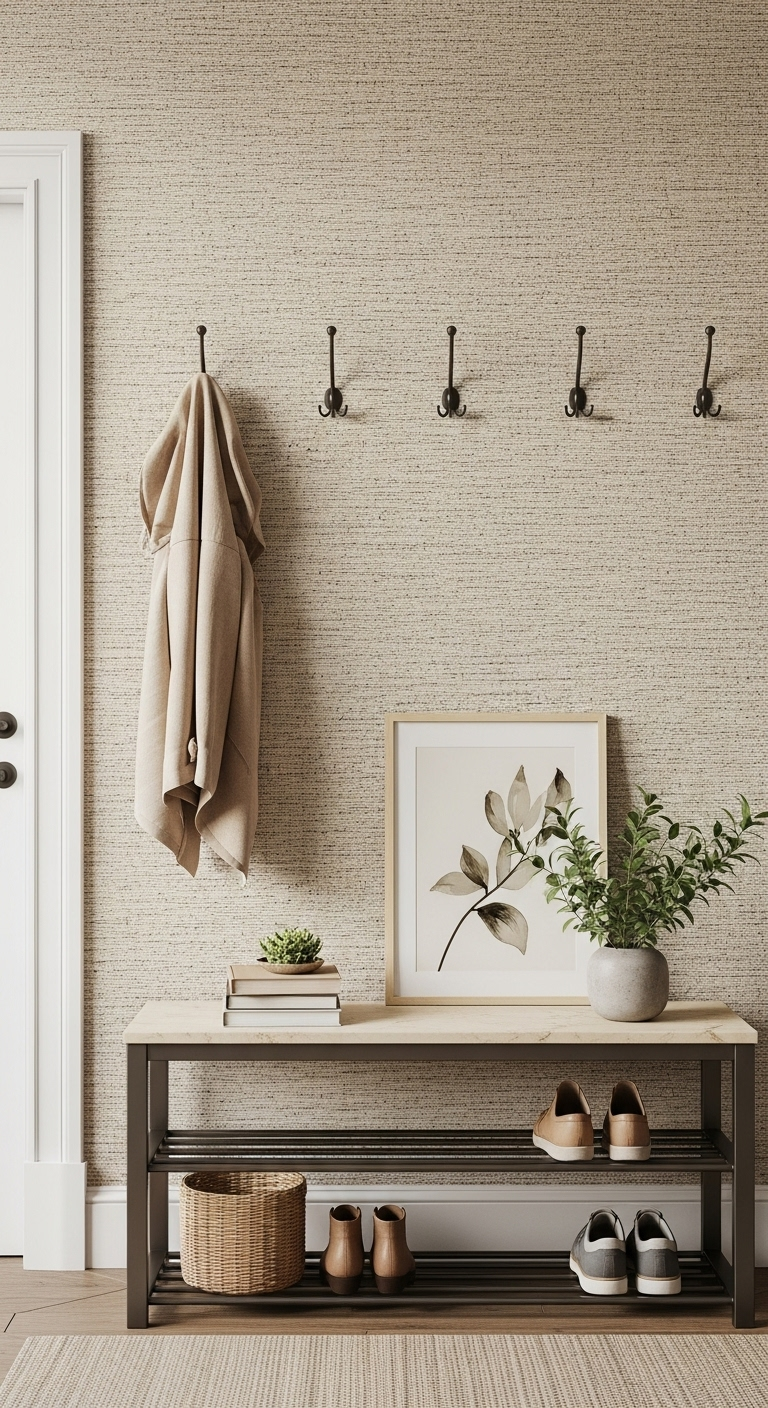
If you want to add a subtle pattern, choose a grasscloth wallpaper in a neutral tone like cream, sand, or light grey. The natural fibers add a rich, organic texture to the walls that paint simply cannot replicate on its own.
Grasscloth feels sophisticated and timeless, perfectly bridging the gap between Japanese craftsmanship and Scandinavian warmth. It is a durable option that adds a boutique hotel feel to your mudroom, making every entrance feel special.
The slight imperfections in the natural weave provide a warm, lived-in aesthetic that prevents a modern space from feeling sterile. By using grasscloth, you introduce a tactile element that softens the acoustics of a high-traffic entry area.
Select a high-quality, pre-sealed wallpaper to ensure it holds up against the inevitable moisture and daily wear of an entryway. This material choice offers a subtle, luxurious finish that acts as a quiet backdrop for your other design elements.
35#. Minimalist Chalkboards or Note Areas
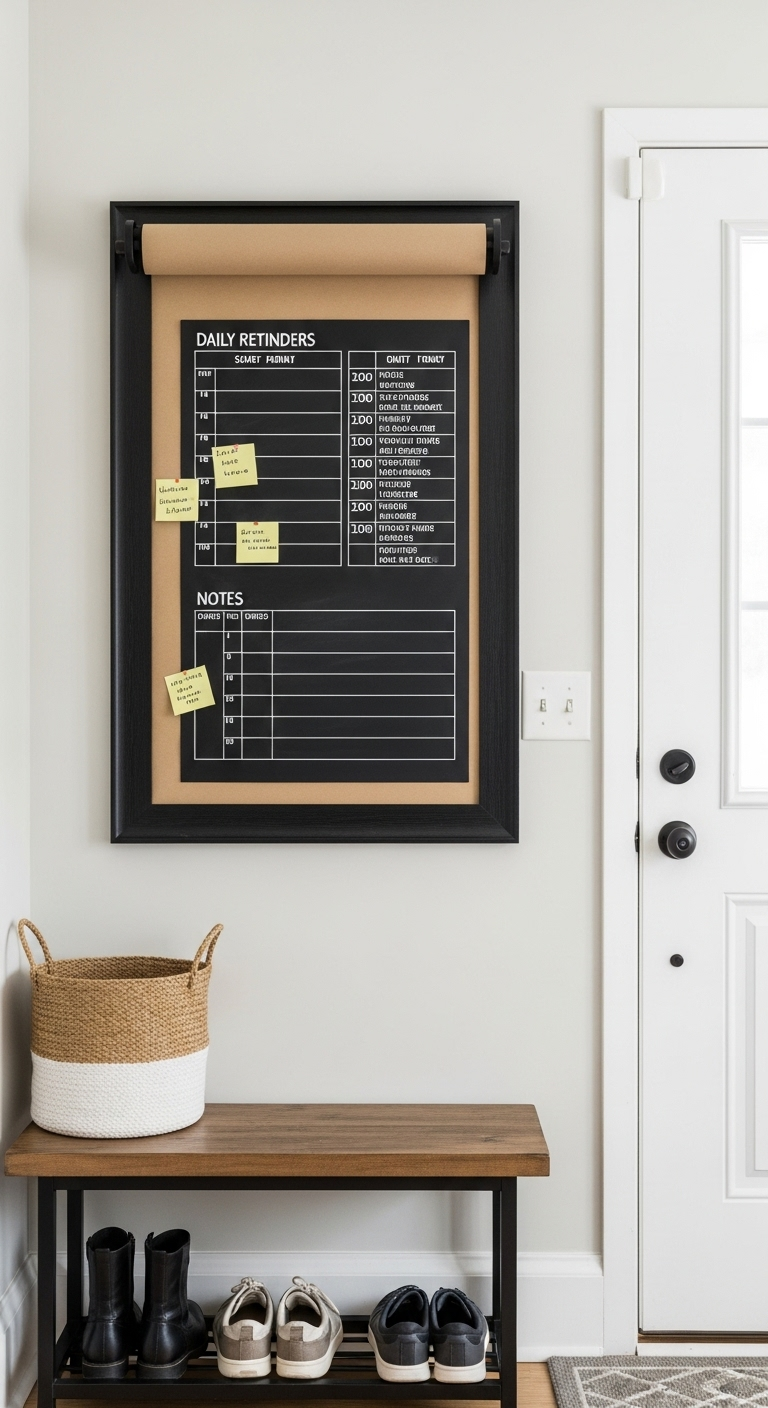
Stay organized with a simple, framed chalkboard or a roll of brown butcher paper for daily reminders and schedules. Using a dark frame and keeping the writing neat ensures this functional area remains part of the aesthetic.
It is a great way to keep the whole family on track while adding a personal, lived-in touch to the mudroom design. Placing it near the door ensures that everyone sees the most important notes of the day as they leave.
Choosing a frame that matches your hooks or other metal hardware ties the station directly into the broader design scheme of the mudroom. This creates a cohesive look that blends your daily organizational needs with the curated, minimalist vibe of the home.
The butcher paper roll offers a particularly artisanal, tactile experience that complements a Wabi-Sabi approach to decor. It allows you to tear off completed lists or notes, keeping the space feeling fresh and ready for the next day’s tasks.
36#. Brass and Gold Accents for Warmth
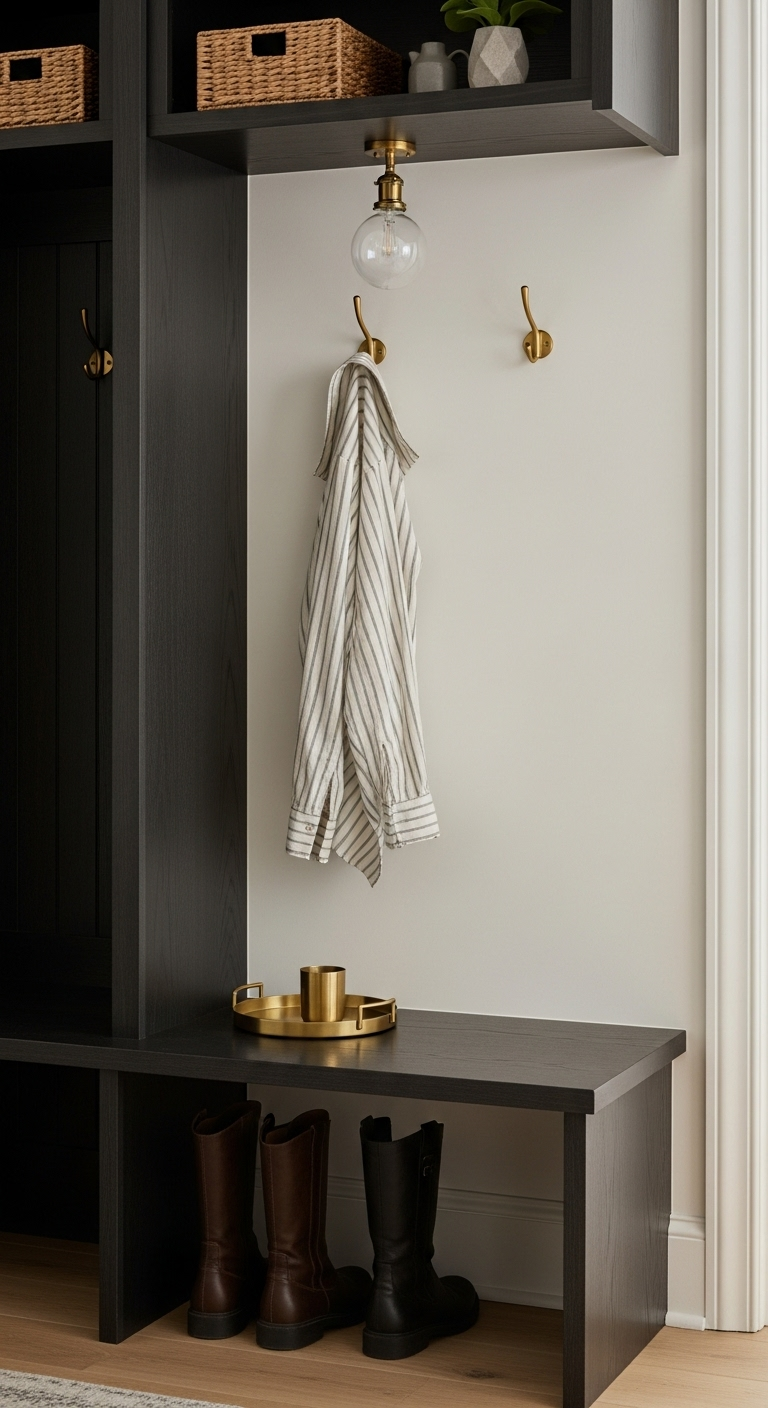
While black is common, a few small touches of brushed brass or gold can add a warm, festive glow to a neutral mudroom. Use these metallics sparingly—perhaps in the form of a small tray, a light fixture, or a single hook.
The gold tones catch the light beautifully and add a sense of luxury that feels modern rather than traditional or “glam.” It provides a sophisticated shimmer that enhances the natural beauty of the wood and stone surrounding it.
Opting for a “brushed” or “satin” finish is key to keeping the look grounded and understated. Avoid high-gloss, polished finishes that can distract from the serene, natural aesthetic central to Japandi interior design.
Strategically placing these elements ensures they act as jewelry for the room, drawing the eye without overwhelming the primary, minimalist features. A single brass hook or a thin gold light fixture creates a focal point that feels intentional and elegant.
37#. Floating Wood Cubbies
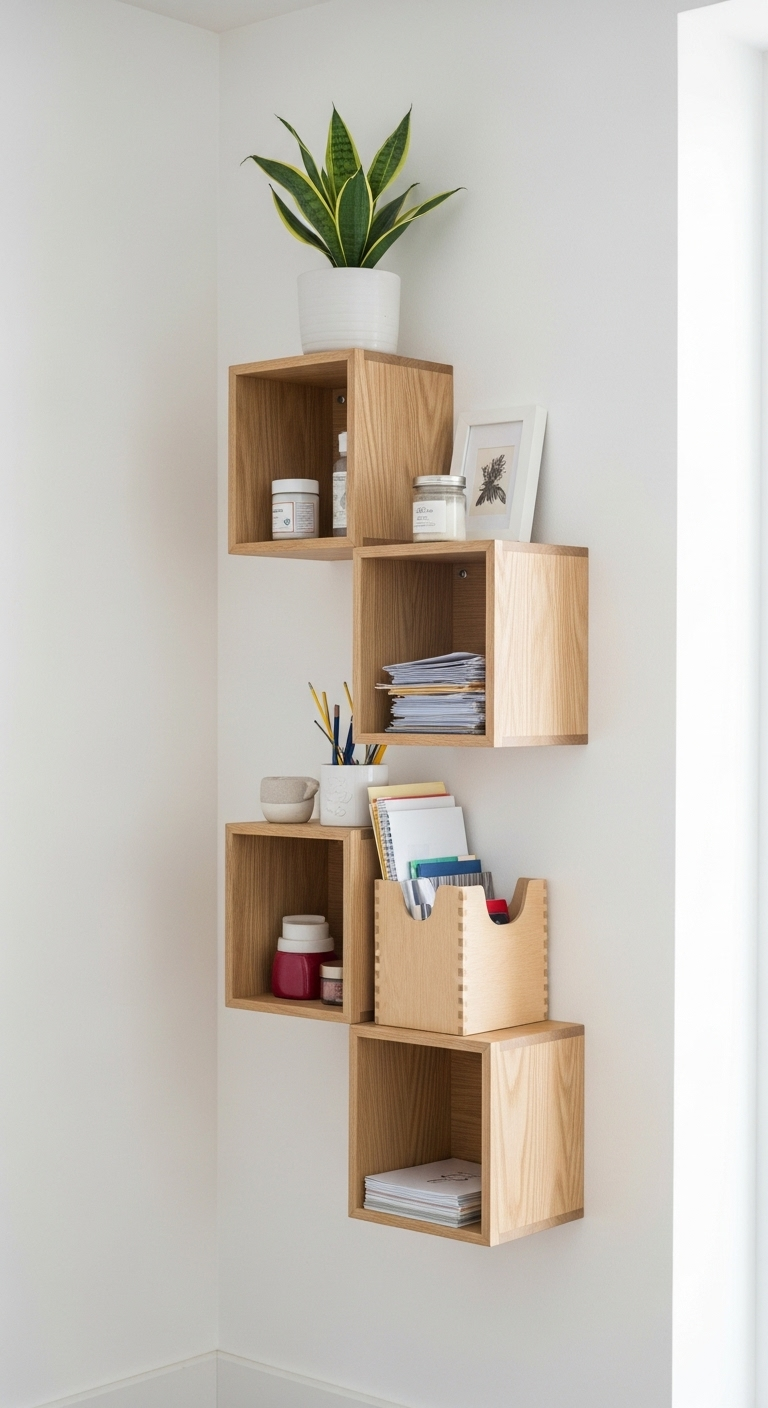
Floating elements naturally guide the eye upward, which can make a small or narrow mudroom feel significantly more spacious. You create an open, breathable environment that feels welcoming to both family members and guests alike.
Customizing the placement of these cubbies allows you to create a personalized system that works for your specific routine. Whether you dedicate one cubby per person or categorize them by item type, you gain a highly efficient, tailored solution for daily organization.
Because these units mount directly to the wall, they offer a clean, seamless look that avoids the bulk of traditional, floor-standing furniture. You maintain a streamlined wall surface that feels intentional, polished, and sophisticated.
Thoughtful organization is all about removing the friction from your daily habits through smart, simple, and permanent design choices. Investing in these minor details transforms your transition space into a highly functional and serene starting point each day.
38#. Sculptural Coat Trees
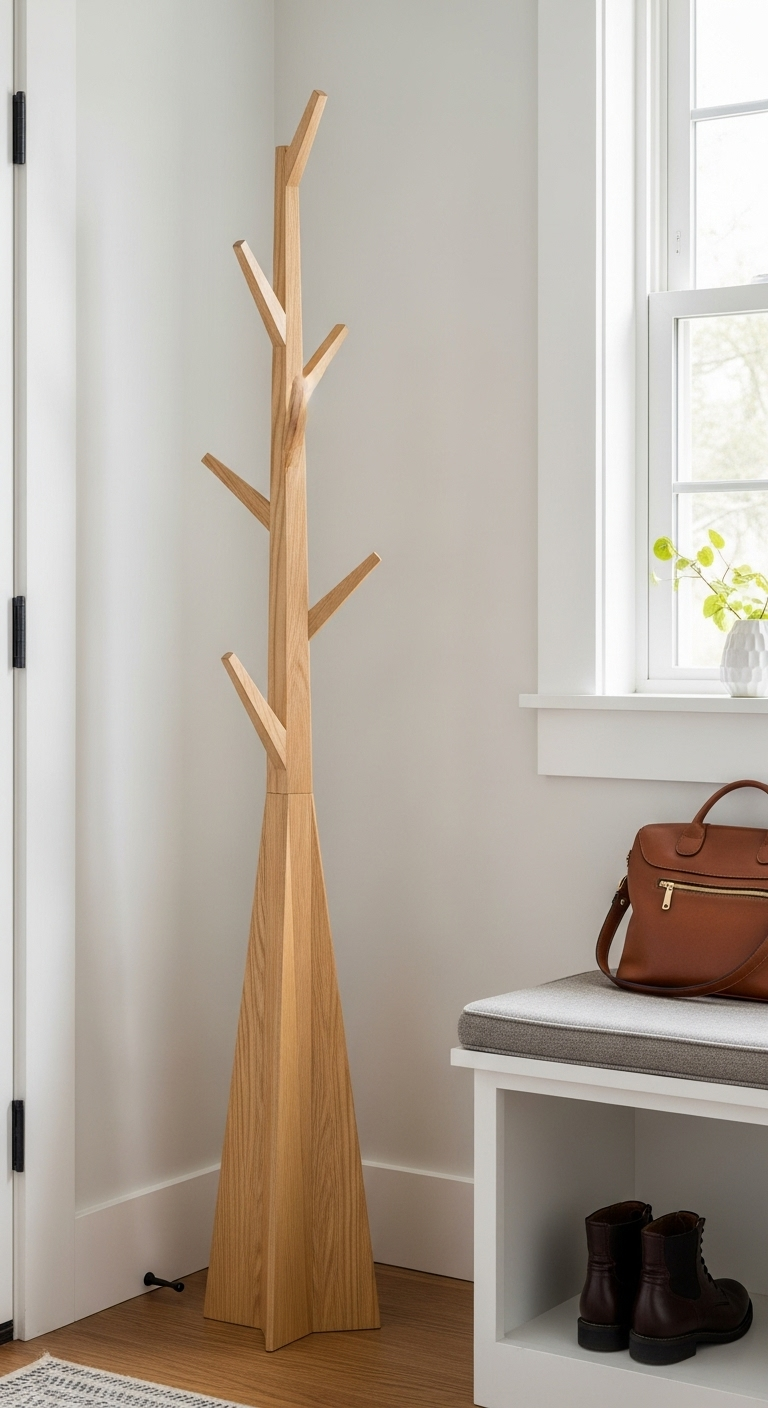
If you don’t have the space for a built-in mudroom, a single sculptural coat tree in a light wood finish can be a stunning alternative. Look for designs that resemble a tree or a simple geometric sculpture to add an artistic element to the corner.
This is a great solution for apartments or homes with a small entry nook rather than a full-sized mudroom. It provides a dedicated spot for coats and bags while acting as a beautiful piece of standalone decor when not in use.
A coat tree serves as a functional focal point that brings an organic, architectural element into your space. By choosing a design with clean lines and smooth, natural wood, you maintain the minimalist and serene spirit of Japandi style.
Unlike bulky cabinets, a coat tree occupies minimal floor space while allowing for an airy, open feel. It is an ideal choice for maintaining visual flow in narrow entryways or hallways where heavy furniture might feel restrictive.
39#. Neutral Floor Cushions
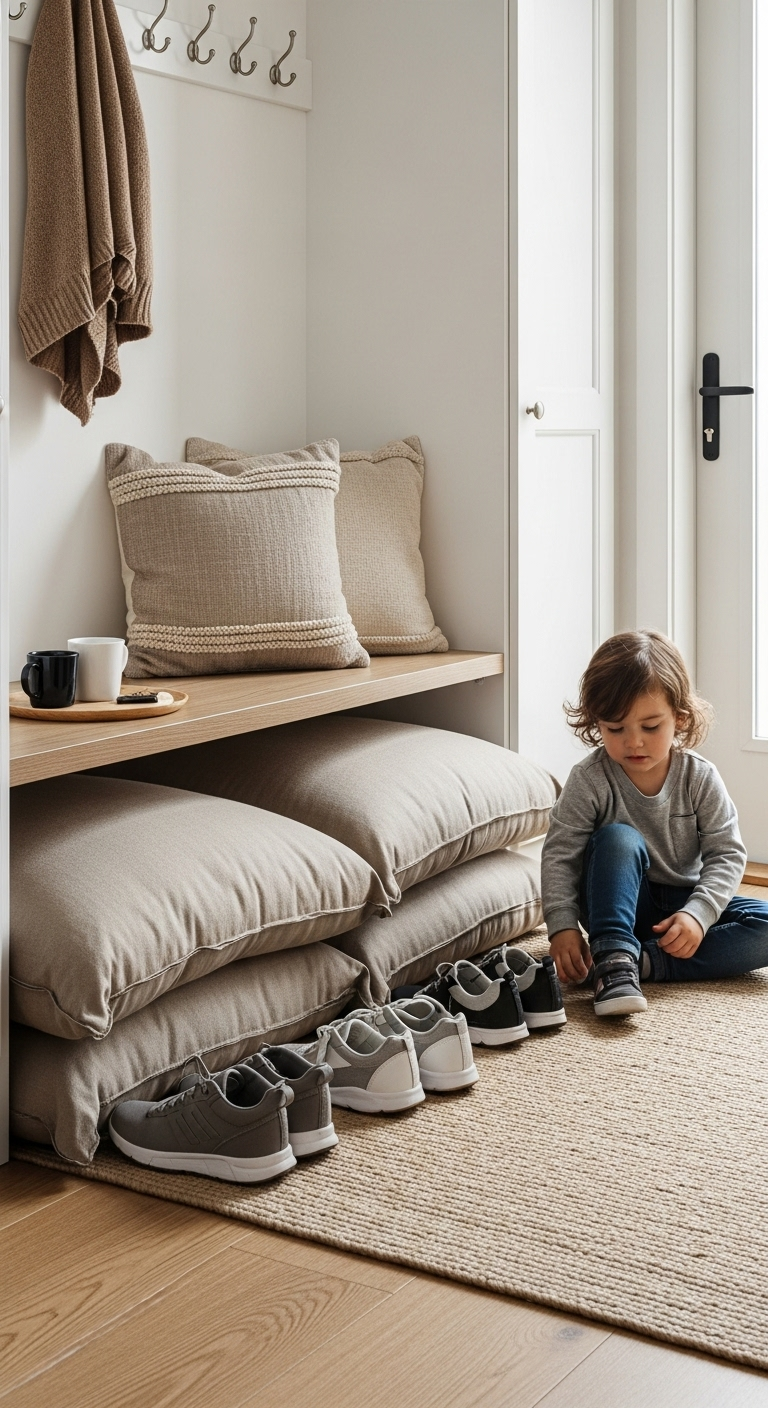
For a touch of Japanese tradition, place a few large, neutral floor cushions under a bench or in a corner for extra seating. These cushions add a soft, loungy vibe to the mudroom, making it feel like a true extension of the living area.
They are easy to move around and provide a comfortable spot for kids to sit while they struggle with their shoes. This simple addition brings a sense of Hygge comfort and Japanese practicality together in one stylish, versatile package.
Choosing oversized cushions in organic textures like linen, wool, or cotton reinforces the natural material palette central to Japandi design. A neutral color scheme—such as oatmeal, stone, or soft charcoal—ensures the cushions feel like a sophisticated part of the room rather than afterthoughts.
Tucking them neatly under a bench optimizes your floor space, keeping the area tidy when the seating is not currently in use. You gain an adaptable furniture solution that feels intentional, welcoming, and perfectly suited for the daily rhythms of family life.
wrap up: Embracing the Calm Entryway
Transforming your mudroom into a Japandi sanctuary is all about finding the balance between raw beauty and absolute function. By focusing on sustainable materials, smart storage, and a peaceful color palette, you’ve created a space that makes arriving home the best part of your day.
These ideas prove that even the most hardworking room in your home can be a source of calm and inspiration.