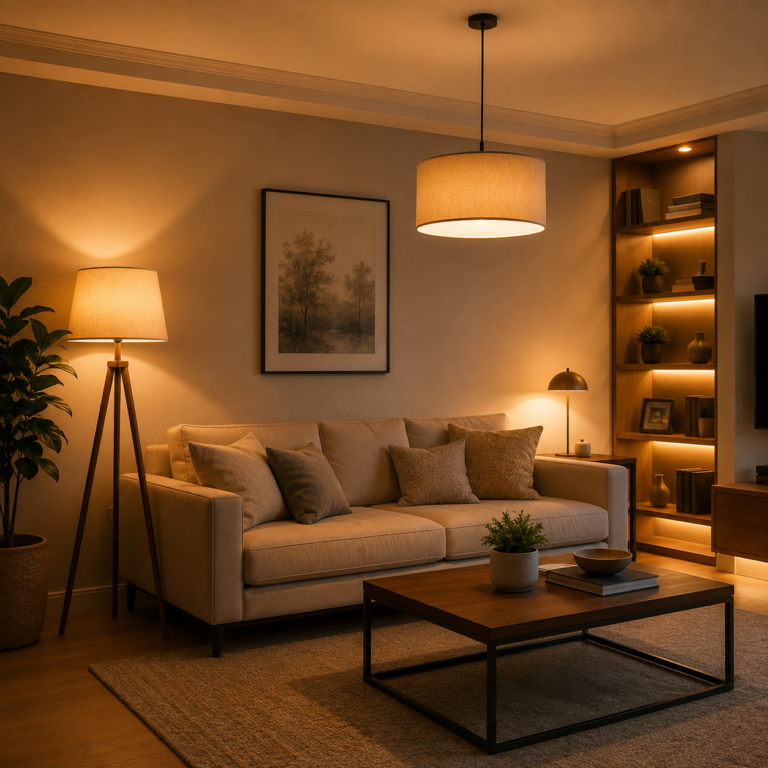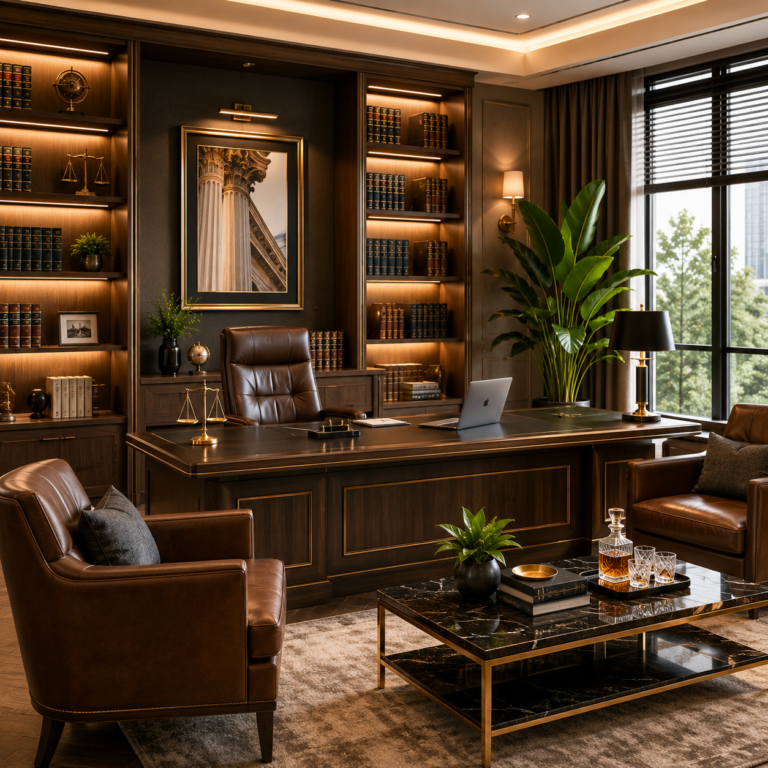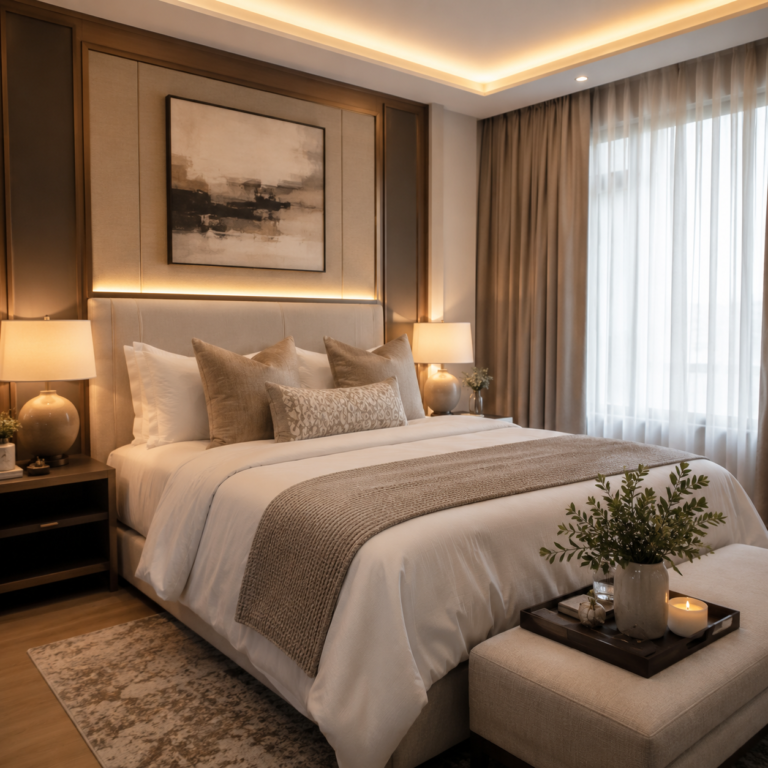
In the world of interior design, light is the ultimate magician. You can invest in premium Italian velvet sofas, import custom book-matched marble, and line your walls with bespoke millwork—but if your lighting is flat, clinical, or uninspired, the entire space will feel lifeless. Conversely, you can take a stark, architecturally nondescript room with plain white walls and, through the introduction of a single, showstopping luxury light fixture, transform it into an awe-inspiring sanctuary.
Luxury statement lighting is far more than a functional utility; it is functional sculpture. It serves as an anchor for the eye, an emotional mood setter, and an architectural tool that can visually rewrite the height, volume, and proportions of a room.
When a space feels boring, uninspired, or unanchored, it is almost always a failure of lighting. This comprehensive, 3,000-word design masterclass explores the art and science of deploying luxury lighting fixtures to inject high-end drama into ordinary spaces. Across twelve critical headings, we will analyze the archetypes, placement strategies, material sciences, and psychological impacts of spectacular illumination.
1. The Luminescent Anchor: The Science of Visual Hierarchy in Boring Spaces

A room feels “boring” when the human eye enters the space and finds nowhere to rest. Without a definitive focal point, the brain processes the environment as a chaotic or flat expanse of furniture, leading to visual fatigue and a distinct lack of spatial excitement.
Luxury statement lighting acts as the ultimate visual anchor. In interior design theory, this is the cornerstone of visual hierarchy—the deliberate arrangement of elements to guide the viewer’s eye through a space in a specific, intended order.
When you suspend a monumental chandelier in the center of a room or mount a series of dramatic geometric sconces along a corridor, you establish a definitive origin point for the design narrative. The light source naturally commands attention due to its luminescence, material opulence, and scale. Once the eye is captured by this hero asset, it can then gracefully ripple outward to appreciate secondary details—the grain of a sideboard, the texture of a rug, or the view from a window. By creating a clear primary focal point, statement lighting instantly gives an uninspired room a sense of purpose, high-end architecture, and intentional composition.
2. Treating Light Fixtures as Kinetic and Static Sculpture
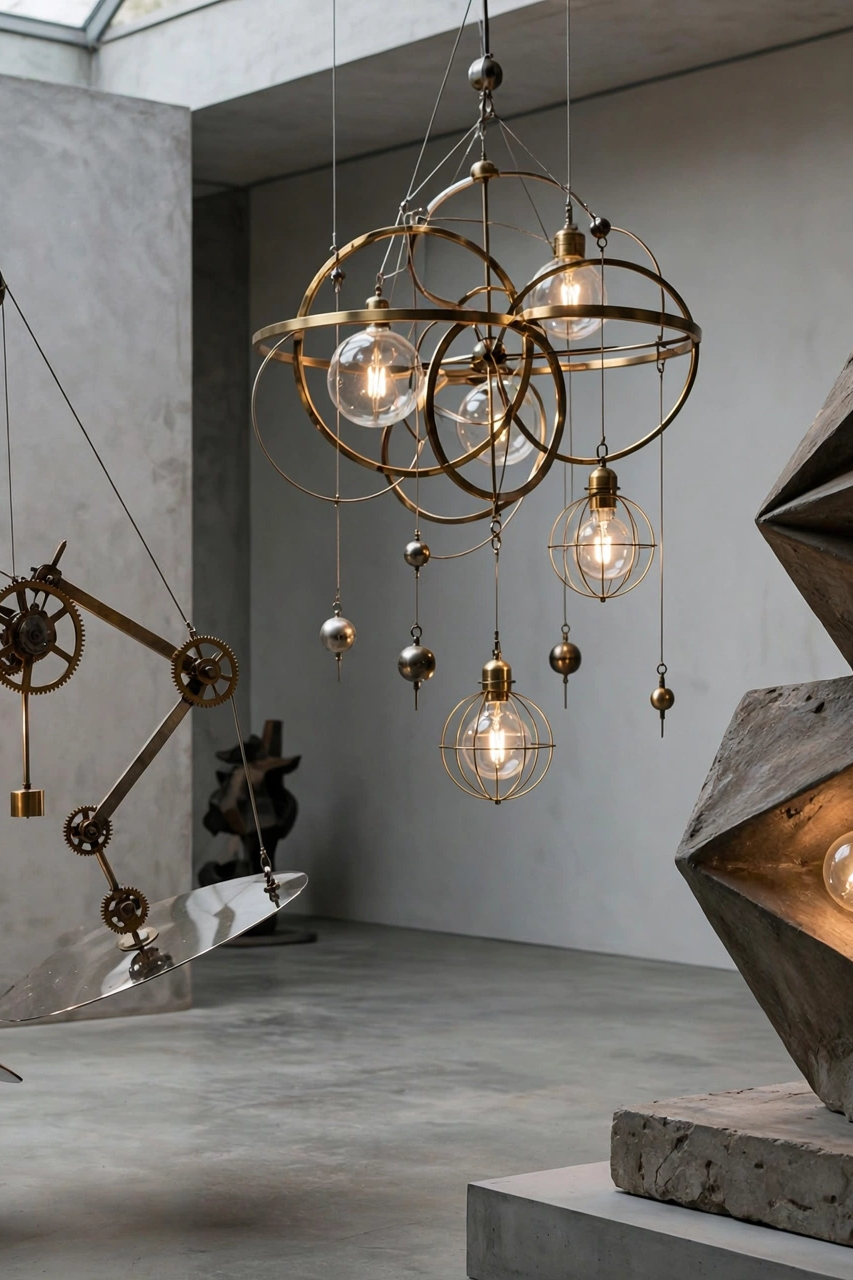
To successfully design with luxury lighting, one must undergo a fundamental mindset shift: you must decouple the fixture from its basic utility. A luxury light fixture is not a tool designed merely to push back darkness; it is a work of art that happens to emit photons. It must be evaluated under two distinct conditions: static beauty during the day and kinetic drama at night.
- The Static State (Daytime): When the sun is shining and the lights are switched off, the fixture must function as a compelling physical sculpture. The interplay of its materials—whether hand-blown Murano glass, brushed alabaster, or polished brass—must catch the natural daylight and provide visual texture. A great fixture looks like an exhibition piece in an art museum even when it is completely dormant.
- The Kinetic State (Nighttime): The moment the switch is thrown, the fixture transforms into a kinetic installation. It casts intricate shadows, refracts beams through crystal facets, illuminates hidden wall textures, and completely shifts the emotional tone of the architecture.
When you treat lighting as sculpture, you stop looking for fixtures that simply “blend in” with the ceiling. Instead, you look for pieces that possess unique silhouettes, dramatic masses, and unexpected forms that challenge and elevate the surrounding space.
3. Monumental Central Showpieces for Soaring Volumes
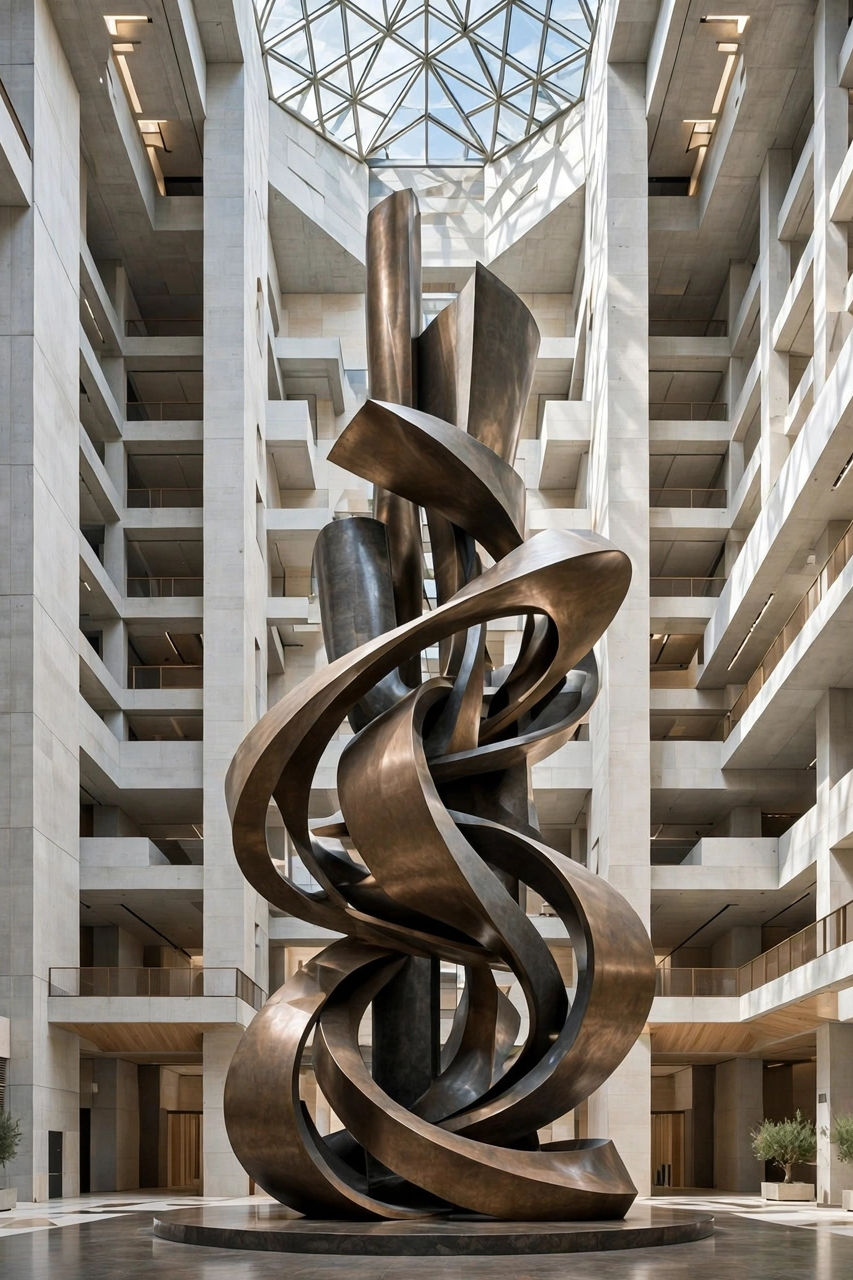
When dealing with large spaces—double-height living rooms, grand entryways, or formal dining halls—the biggest mistake is installing a fixture that is swallowed by the room’s volume. Large spaces demand the Chandelier Vanguard—monumental, high-impact fixtures that match or intentionally challenge the room’s physical height.
Modern luxury chandeliers have moved past the traditional, dusty crystal look of the 19th century. Today’s high-end showpieces rely on radical form and material innovation:
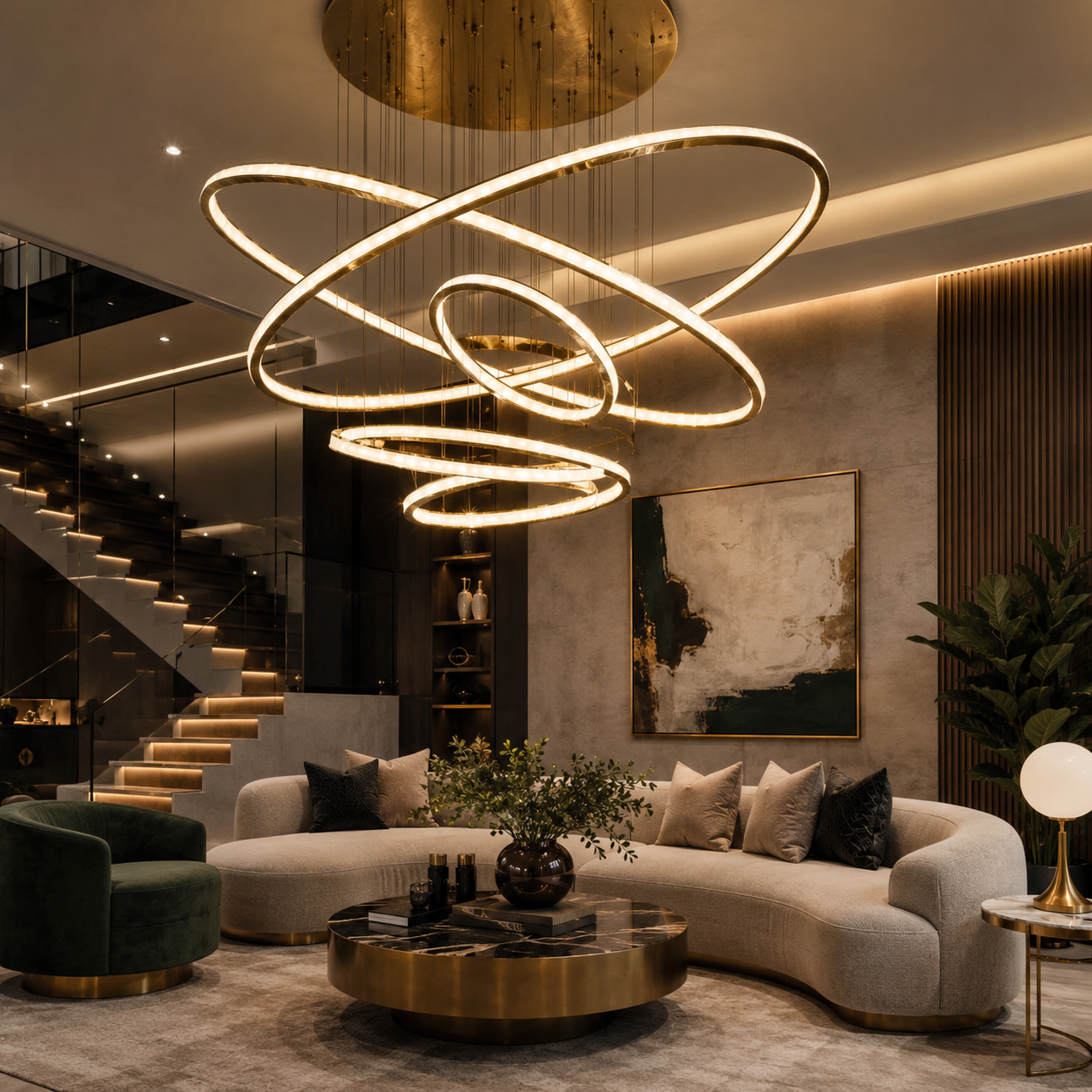
- The Geometric Cascade: Utilizing clean, interlocking rings, cubes, or linear rods wrapped in state-of-the-art flexible LED diffusers. These fixtures create a rhythmic, structural presence that emphasizes the crisp angles of contemporary architecture.
- The Biophilic Mobile: Articulated brass branches supporting delicate, hand-sculpted glass components that mimic falling leaves, water droplets, or cloud formations. These fixtures bring a soft, organic fluidity into rigid, square rooms, introducing a poetic counterpoint to standard drywall and flat ceilings.
4. Symmetrical Wall Sconces That Add Architectural Rhythm
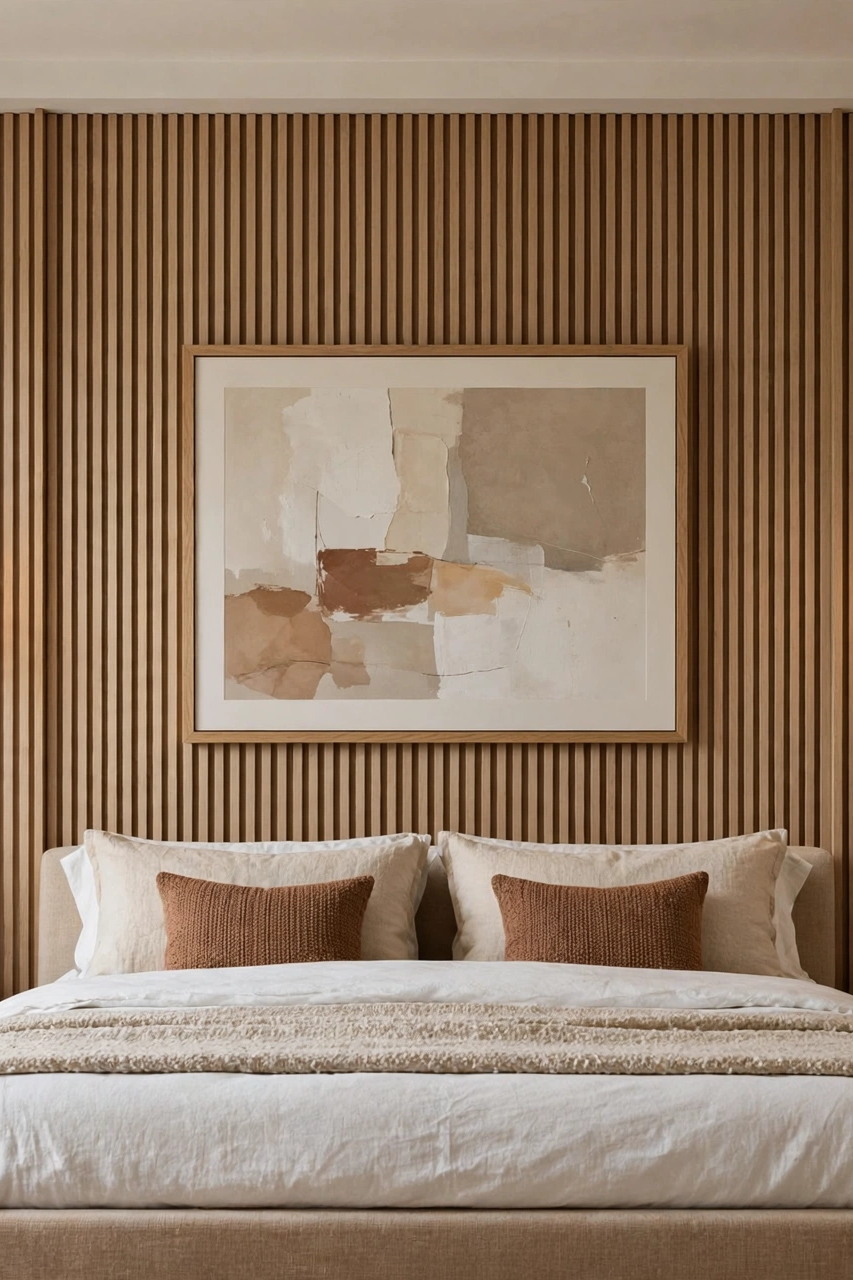
While central chandeliers handle vertical volume, a room can still feel incredibly boring if its perimeters are left in deep shadow. This is where wall sconces step in. Sconces are the interior designer’s secret weapon for introducing structural rhythm and architectural depth to flat, featureless vertical surfaces.
The Power of Repetition and Symmetry
Installing a single wall sconce can look like an afterthought. However, installing a sequence of matching sconces spaced evenly down a long hallway or flanking a fireplace mantel instantly establishes a sense of classical symmetry and grand pacing. This architectural repetition mimics the columns of historic palazzos, visually lengthening corridors and making entryways feel significantly more formal and expensive.
Up-Down Lighting Dynamics
Look for luxury sconces designed to cast light both upward toward the ceiling and downward toward the floor. This directional lighting technique plays beautifully with wall textures. If your living room features clay plaster, grasscloth wallpaper, or fluted millwork, up-down lighting will highlight every microscopic ridge and valley, casting dramatic shadows that give flat walls an incredibly rich, three-dimensional texture.
5. Material Opulence: Alabaster, Murano Glass, and the Alchemy of Metals

The difference between mass-produced, low-cost lighting and genuine luxury fixtures lies squarely within the realm of material science. Luxury lighting relies on premium, honest, and often rare materials that manipulate light in ways synthetics simply cannot replicate.
Alabaster: The Ethereal Mineral
Alabaster is a soft, translucent mineral patchworked with unique, earth-toned veining. When light passes through a solid, hand-carved sheet of alabaster, the harsh glare of the bulb is completely transformed into a milky, incredibly warm, and diffuse glow. No two alabaster fixtures are identical, meaning your space instantly inherits a completely bespoke piece of the earth.
Murano Glass and Crystal
Hailing from the historic islands of Venice, genuine Murano glass is hand-blown by master artisans who have spent decades perfecting the craft. The slight structural inconsistencies, trapped air bubbles, and varied thicknesses of the glass create a rich refraction pattern, casting a dance of light across the room that plastic or low-grade factory glass can never mimic.
The Metalwork Finish
Luxury fixtures discard cheap, painted-on gold or chrome finishes. Instead, they utilize solid brass, structural bronze, aerospace-grade aluminum, and stainless steel. These metals undergo sophisticated finishing processes—including hand-brushing, satin anodizing, or intentional acid-etching—to create deep, complex patinas that age beautifully over decades, turning the fixture into a true heirloom piece.
6. The Three-Tiered Luminescent Blueprint
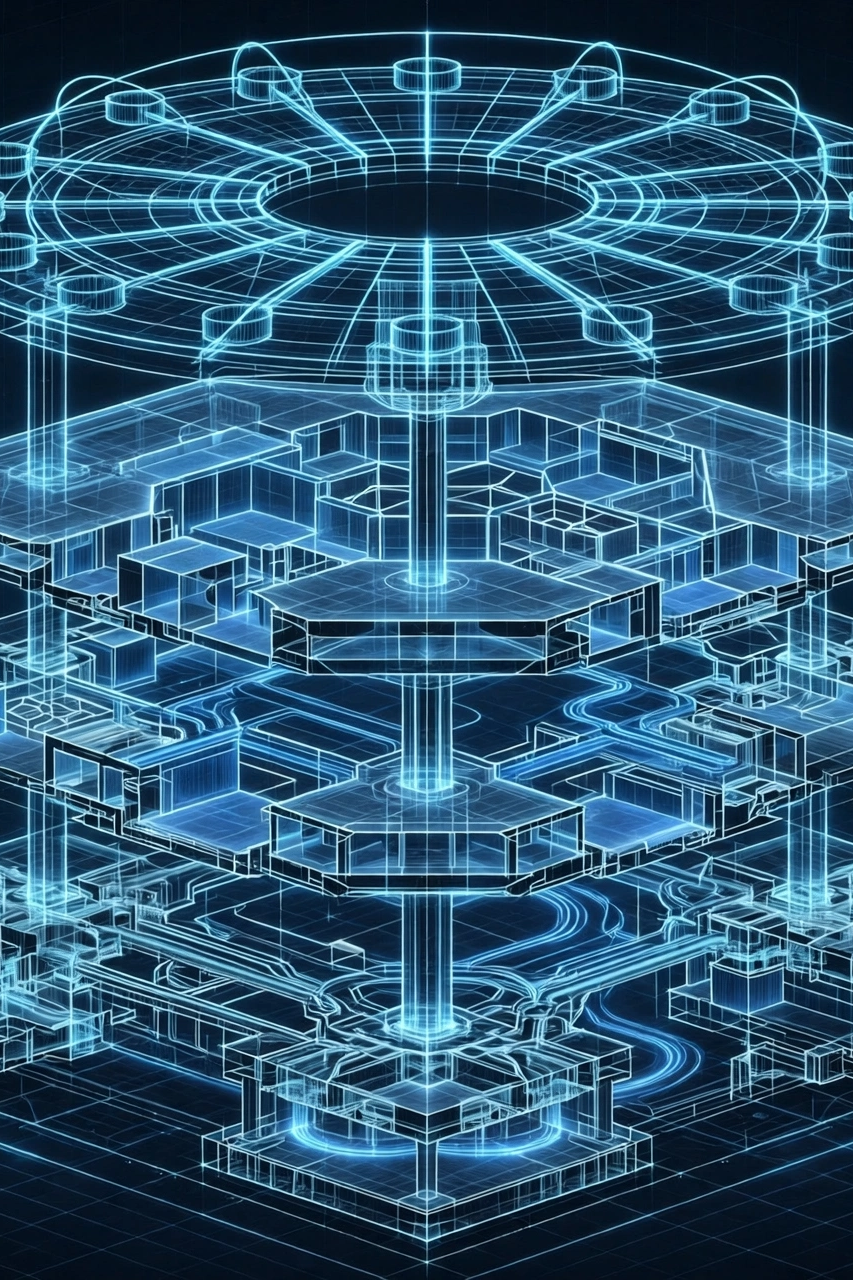
Depth and Dimension
To completely eliminate the boredom of a space, you must abandon the idea that a single switch should turn on all the lights at maximum brightness. A luxury interior relies on a sophisticated three-tiered luminescent blueprint that layers light across different heights and functional zones.
Layer 1: Ambient Lighting (The Sky)
This provides the baseline illumination for the room. It includes your large central chandeliers, flush-mounts, or high-end architectural recessed downlights. Ambient lighting should fill the space evenly, ensuring there are no pitch-black corners, but it should never be bright enough to feel clinical.
Layer 2: Task Lighting (The Horizon)
Task lighting focuses illumination exactly where human activity takes place. This layer includes the reading lamps next to a lounge chair, the linear pendants hanging over a kitchen island, or the directional vanity lights in a bathroom. Task lighting brings the light level down to eye level, creating a cozy sense of intimacy within larger rooms.
Layer 3: Accent Lighting (The Earth)
The magic layer that creates true architectural depth. Accent lighting is highly focused and decorative. It includes low-voltage LED strip lighting hidden inside a bookcase to make objects glow, small uplights tucked behind floor plants to cast organic ceiling shadows, or directional picture lights aimed precisely at fine artwork. By mixing these three tiers, you create visual contrast—an alluring dance of highlights and soft shadows that makes any space instantly dynamic.
7. Elevating Kitchens and Dining Rooms with Linear Luxury
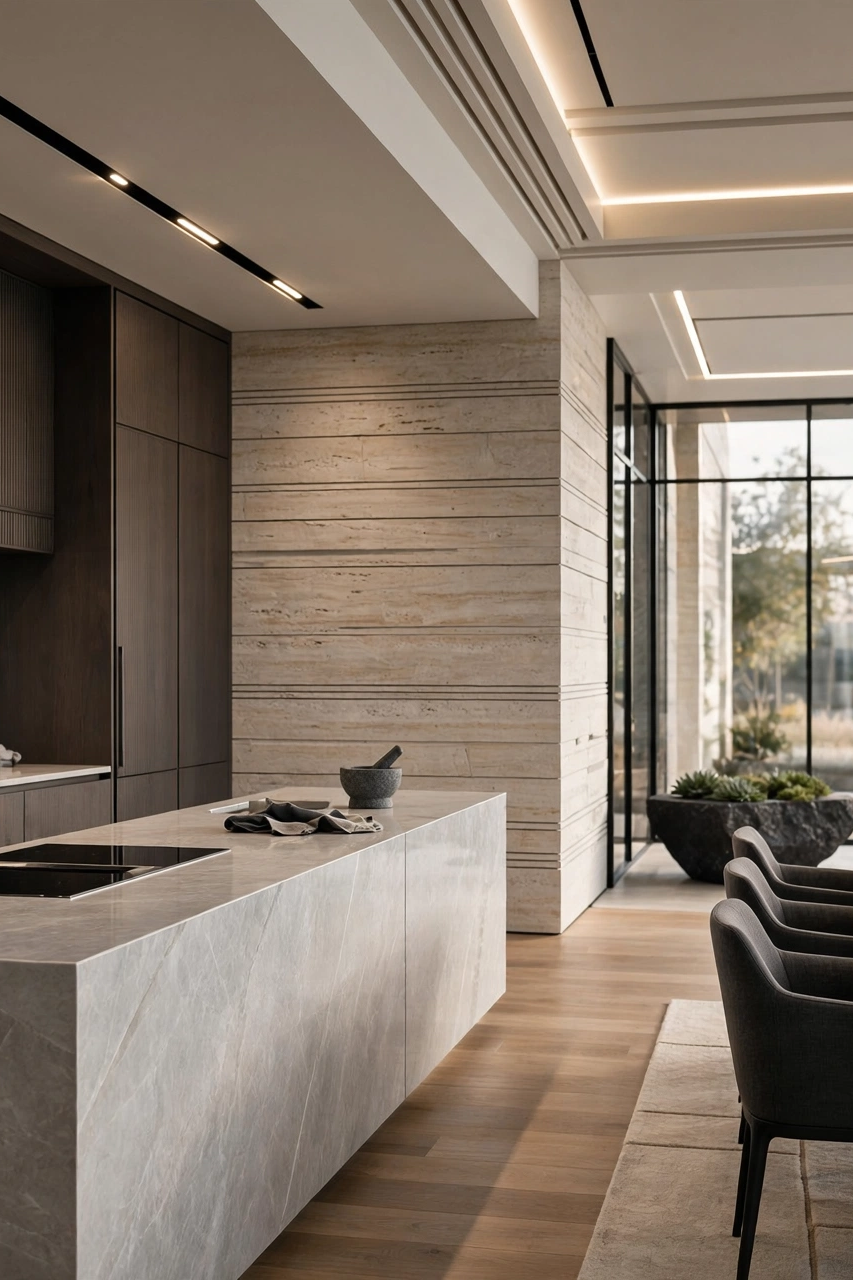
Kitchens and dining rooms are highly functional spaces, but they are also the social heartbeats of the contemporary home. Too often, they are lit with boring grids of recessed ceiling cans. To elevate these spaces into sophisticated culinary stages, you must introduce linear luxury.
Pendants Over the Island: The Rule of Proportions
The space above a kitchen island is prime real estate for a high-impact statement. Instead of installing small, generic mini-pendants, choose oversized, architecturally significant fixtures.
- The Trio Layout: For long islands, three matching sculptural glass domes hung in a precise line establish an exceptional geometric rhythm.
- The Single Linear Monolith: Alternatively, a singular, long-form horizontal pendant made of solid walnut, brushed brass, or carved alabaster bar creates a clean, minimalist statement that accentuates the long island counter below.
The Dining Canopy: Creating an Intimate Envelope
The lighting above a dining table dictates the tone of every dinner party and family gathering. A statement fixture should hang relatively low over the table (typically 30 to 36 inches above the surface) to create a visual “canopy.” This low placement encloses the dining zone, drawing guests into a warm, intimate envelope that encourages conversation while making the food and tableware on the surface look exceptionally beautiful.
8. Turning Boring Corridors and Foyers into Art Galleries
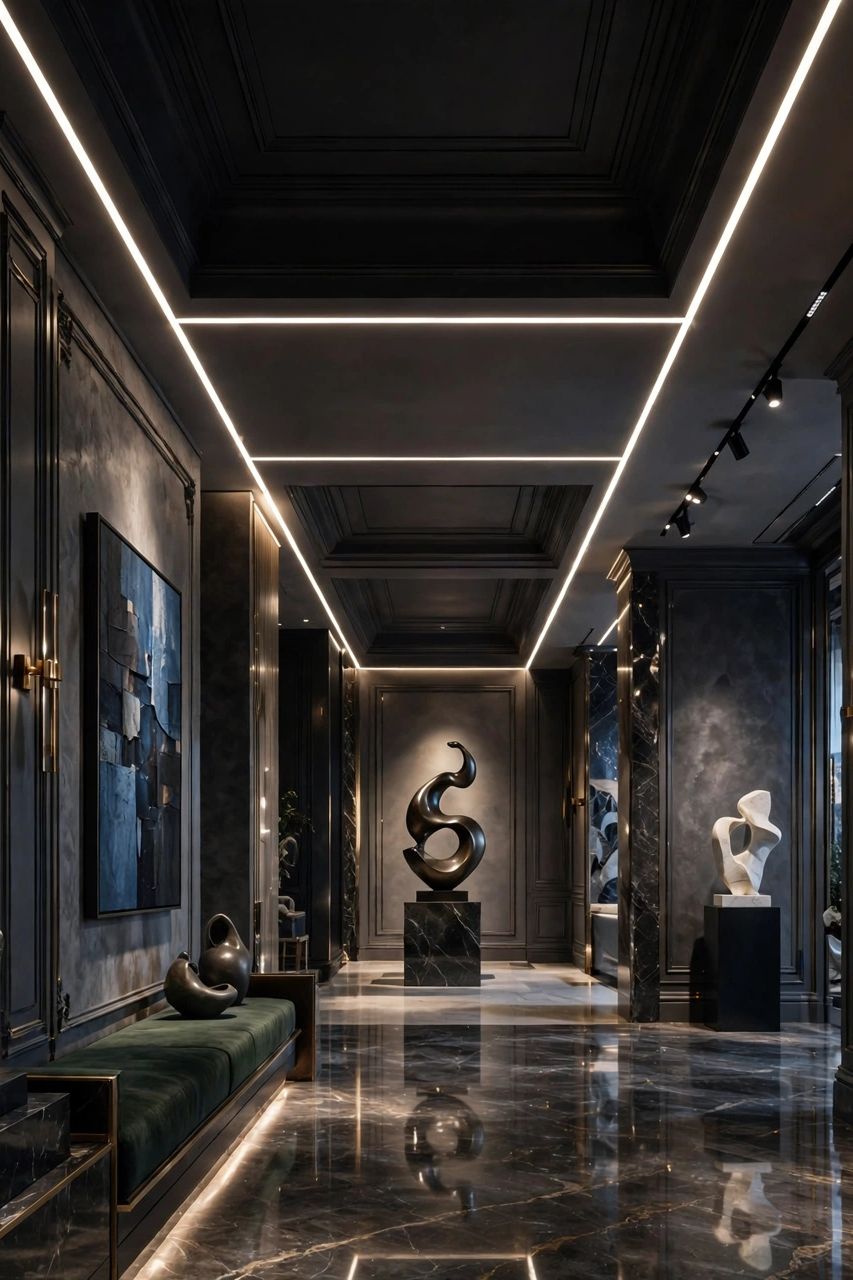
Hallways, foyers, and stairwells are frequently treated as purely functional transition zones—spaces you pass through rather than spaces you inhabit. Consequently, they are often the most boring areas in a home. Luxury statement lighting can rewrite this narrative, turning dead square footage into an immersive art gallery experience.
The Entryway Foyer: Setting the Architectural Handshake
Your foyer is the first design choice a guest experiences. A massive, multi-tiered sculptural light hanging in an entryway acts as a definitive architectural handshake. It announces the design ambition of the home immediately, telling the viewer that every detail has been carefully considered.
Hallways: Breaking Up the Monotony
Long hallways can easily look like sterile tunnels. By installing a series of dramatic semi-flush ceiling mounts featuring complex geometric glass or high-shine metal frames, you break up the monotonous overhead expanse. The fixtures cast a repeating pattern of light and shadow down the length of the hall, turning a boring walk from the bedroom to the living room into a cinematic experience.
9. High-End Recessed and Trimless Downlights
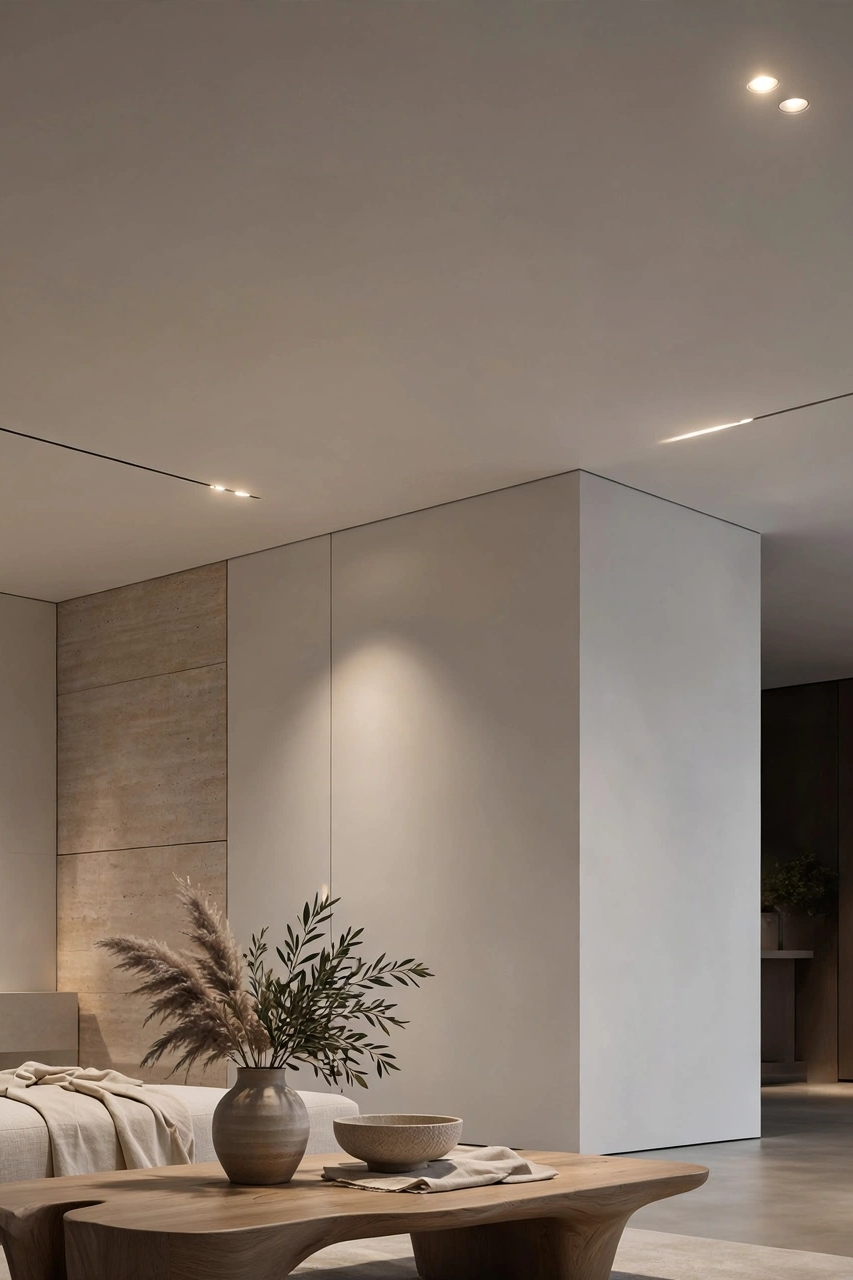
When discussing statement lighting, we often focus on the fixtures that hang down prominently. However, the architectural foundation of luxury lighting also relies heavily on what remains unseen: trimless recessed downlights.
The Flanged vs. Trimless Dilemma
Standard, low-cost recessed downlights feature a wide plastic or metal rim (the flange) that sits on top of the drywall. These rims catch the light, yellow over time, and create distracting white spots across a clean ceiling layout.
Luxury architecture utilizes trimless downlights. These fixtures are plastered directly into the ceiling during the drywall phase, leaving a completely seamless, sharp edge with zero visible trim. The light bulb itself is regressed deep up inside the architectural housing, making the fixture virtually invisible from most angles. Guests will see beautiful, intense pools of light illuminating your floors and furniture, but the ceiling itself remains perfectly clean and uncluttered—a phenomenon known in professional lighting design as the “quiet ceiling.”
10. The Psychology of Lumens and Kelvins
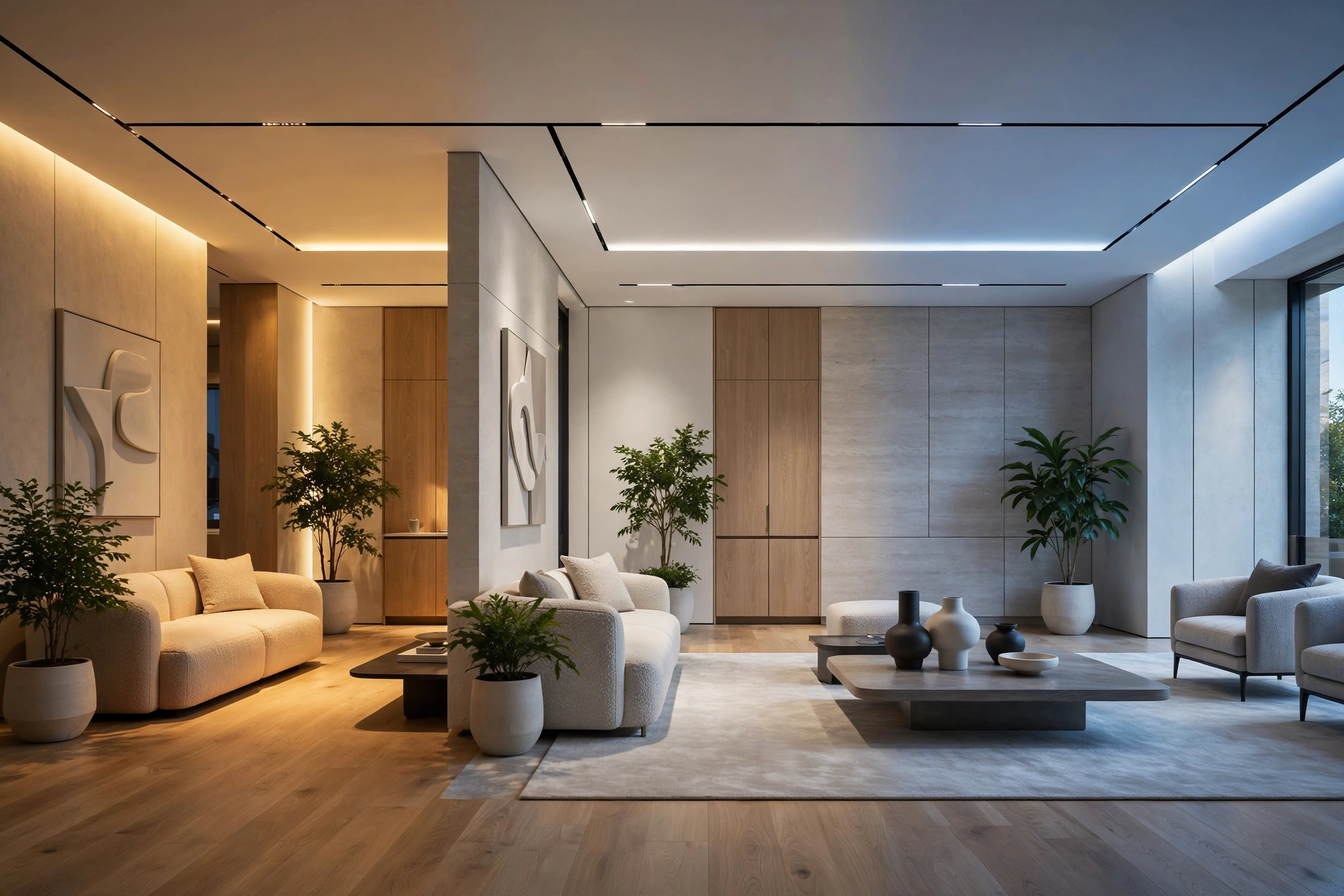
A common design failure is purchasing a highly sophisticated, multi-thousand-dollar light fixture and then screwing in cheap, high-kelvin bulbs that emit a harsh, cold, blue-white light. This completely strips the space of its luxury, making an expensive living room look like a commercial hospital ward or a supermarket aisle. To create a deeply relaxing, high-end sanctuary, you must master lumens (brightness) and kelvins (color temperature).
The Golden Rule: 2700K and Below
For residential luxury environments, your baseline color temperature should be 2700K. This replicates the warm, golden glow of traditional incandescent filaments, softening skin tones, enriching wood grains, and making fabrics like velvet and boucle feel incredibly cozy and inviting.
For secondary accent lighting—like bedside lamps or decorative wall sconces—you can drop down to 2200K–2400K to simulate ambient candlelight, which naturally signals to the human brain that it is time to unwind and rest. Keep your spaces sophisticated, warm, and emotionally grounding by avoiding cold, blue light sources entirely.
11. Step-by-Step Installation Sequencing for Lighting Transformations
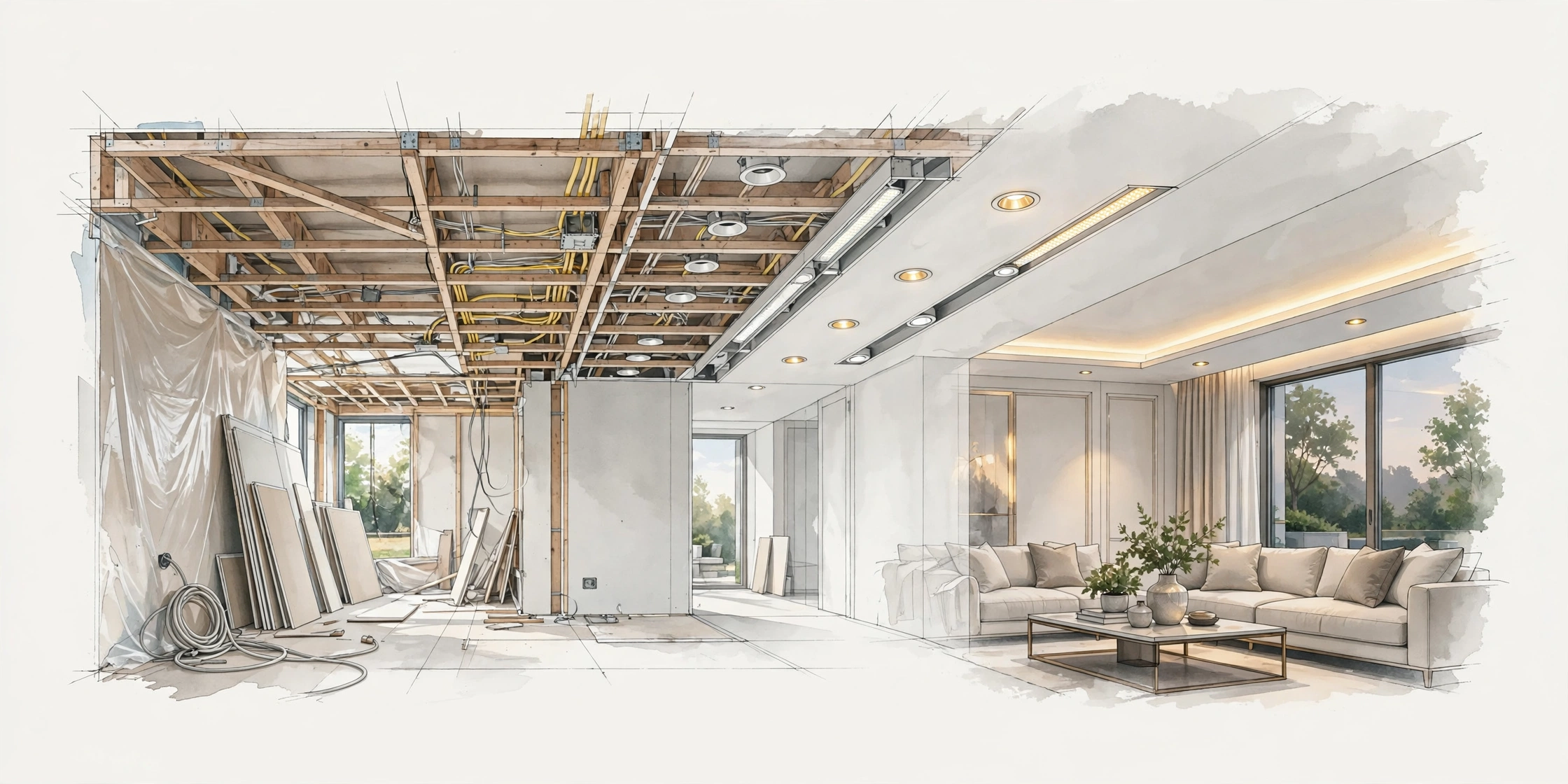
Upgrading a room with luxury statement lighting is a technical process that requires careful coordination between design concepts and structural electrical engineering. Follow this structured sequencing to execute your lighting transformation safely and flawlessly.
1.Assess Spatial Volume and Map Electrical Access:Phase 1: Concepts.
Measure the room’s height and square footage. Locate existing junction boxes and determine if new wiring is required for wall sconces or secondary lighting layers. Ensure your ceiling box can physically support the weight of a heavy statement fixture.
2.Reinforce Ceilings and Install Support Junctions:Phase 2: Engineering.
Large luxury chandeliers can weigh upwards of 50 to 150 lbs. Hire an electrician to install heavy-duty, commercial-grade steel junction boxes or attach direct structural wood blocking to the ceiling joists to prevent sagging or failure.
3.Wire Advanced Low-Voltage Dimmers and Smart Switches:Phase 3: Control.
Install high-end dimming switches compatible with modern LED drivers (such as ELV or 0-10V dimmers) to eliminate bulb flickering. Integrate smart dimming modules so you can preset custom lighting scenes for day, evening, and night uses.
4.Mount the Core Fixture Frame and Internal Wiring:Phase 4: Assembly.
Shut off the main circuit breaker. Secure the central mounting bracket to the reinforced junction box, hook up the electrical wiring, and lift the primary structural frame of the fixture into place before attaching any delicate decorative pieces.
5.Attach Glass, Crystals, and Premium Bulbs:Phase 5: Detailing.
Once the primary frame is anchored securely, carefully dress the fixture with its delicate components—such as hand-blown Murano glass leaves or solid alabaster panels. Install your premium, warm-toned 2700K LED bulbs using clean cotton gloves to avoid transferring skin oils.
6.Adjust Hanging Heights and Calibrate Light Levels:Phase 6: Calibration.
Turn the power back on. Evaluate the fixture’s height relative to the floor or dining tables, making minor chain adjustments if necessary. Calibrate your dimmers to find the perfect visual balance across all three tiers of lighting.
12. Integrating Dimmers and Automated Scene Controls
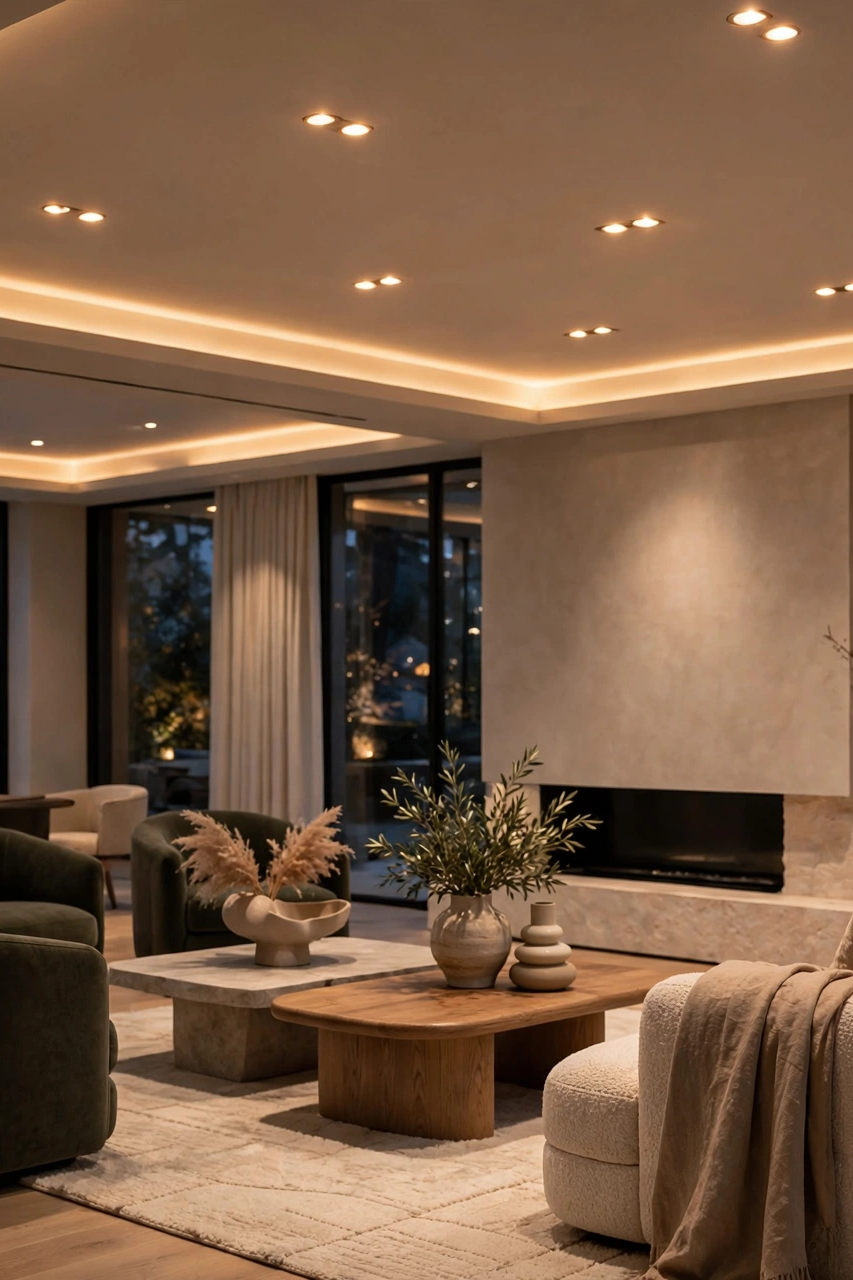
The final frontier of luxury statement lighting is control. A beautiful fixture loses its power if it cannot adapt to the shifting rhythms of your day. To truly elevate your home architecture, you must move past basic mechanical wall switches and integrate automated scene controls.
The Problem with On/Off Controls
Traditional switches offer only two states: total darkness or full brightness. This binary setup forces your luxury fixtures to run at maximum capacity, blinding your eyes during a quiet evening cocktail hour or washing out the room’s carefully planned shadow dynamics.
Architectural Scene Preset Systems
Modern luxury homes utilize smart lighting control systems (such as Lutron Ketra, Crestron, or premium automated dimmers). These systems allow you to program custom “scenes” that adjust multiple light tiers simultaneously with a single touch or voice command:
- The Morning Scene: Recessed downlights turn on to a clean, crisp 3000K at 50% brightness to mimic natural morning daylight, gently waking the household.
- The Dinner Party Scene: The overhead chandelier dimms to a warm, intimate 25% glow, wall sconces activate at 40% to texture the perimeters, and accent picture lights highlight fine artwork, creating a highly sophisticated restaurant ambiance.
- The Late-Night Soiree Scene: All ambient downlights turn off completely. The chandelier drops to a bare 10% shimmer, and table lamps glow at a candle-like 2200K, casting rich, cinematic shadows that make the space feel deeply atmospheric and exclusive.
WRAP UP
By automating your lighting tiers, you ensure that your luxury statement fixtures are always operating at their peak artistic capacity, seamlessly adapting your home’s interior design to match every human moment.