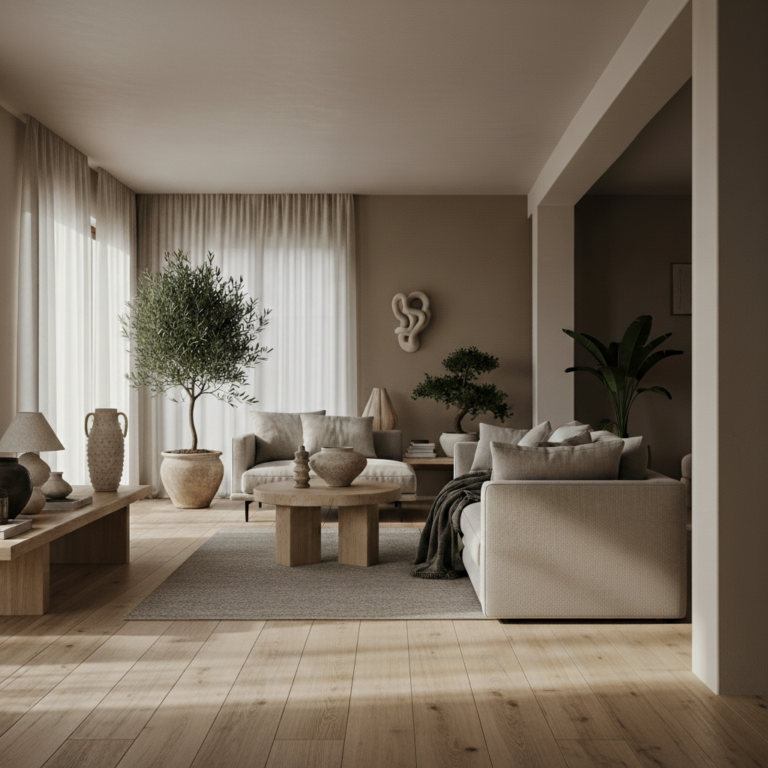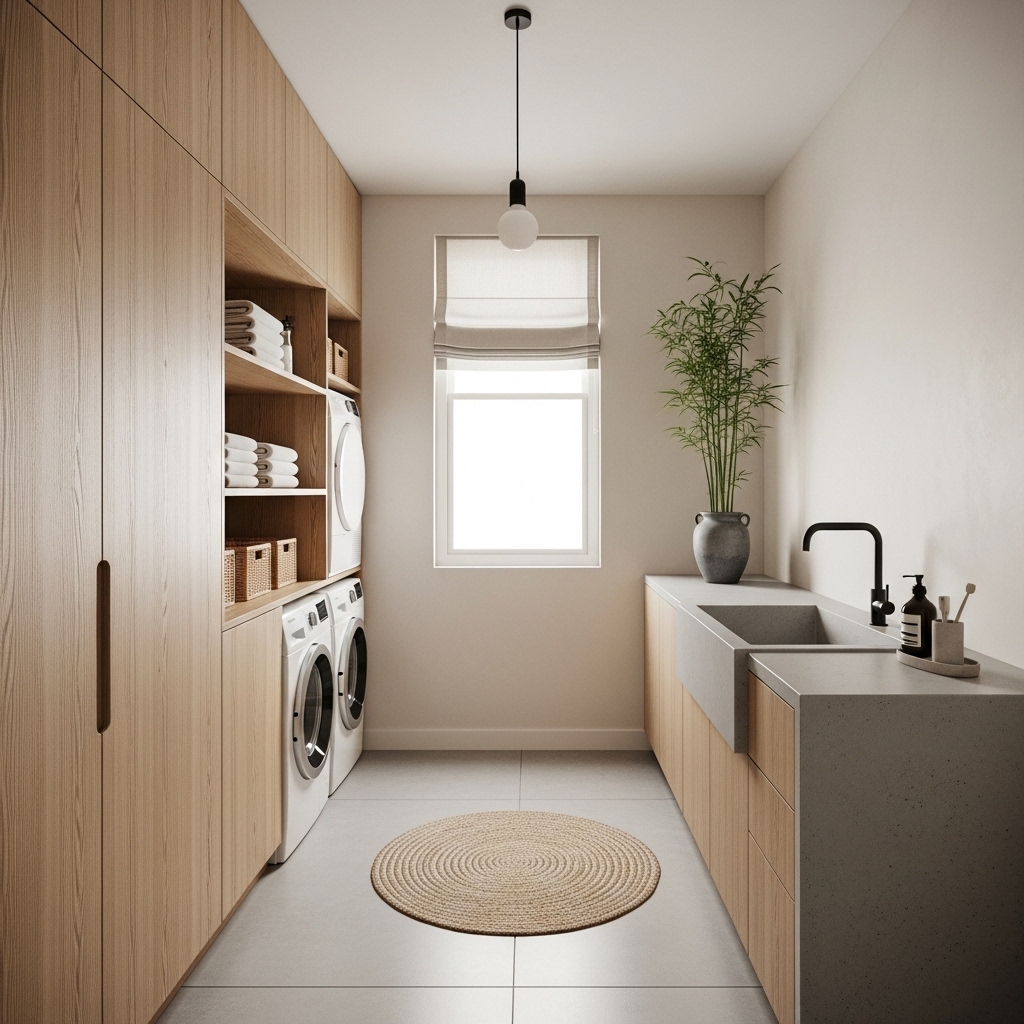
Doing laundry or organizing household chores shouldn’t feel like a chaotic burden.
Zen Japandi Utility Room Design Ideas for blending the cozy, functional spirit of Scandinavia with the serene minimalism of Japan, you can turn your chores into a meditative ritual.
In this guide, we’ll show you how to strip away the clutter and introduce natural textures to your workspace. Get ready to design a high-end, peaceful environment that makes every task feel like a breath of fresh air.
1#. Start with a Muted Color Palette
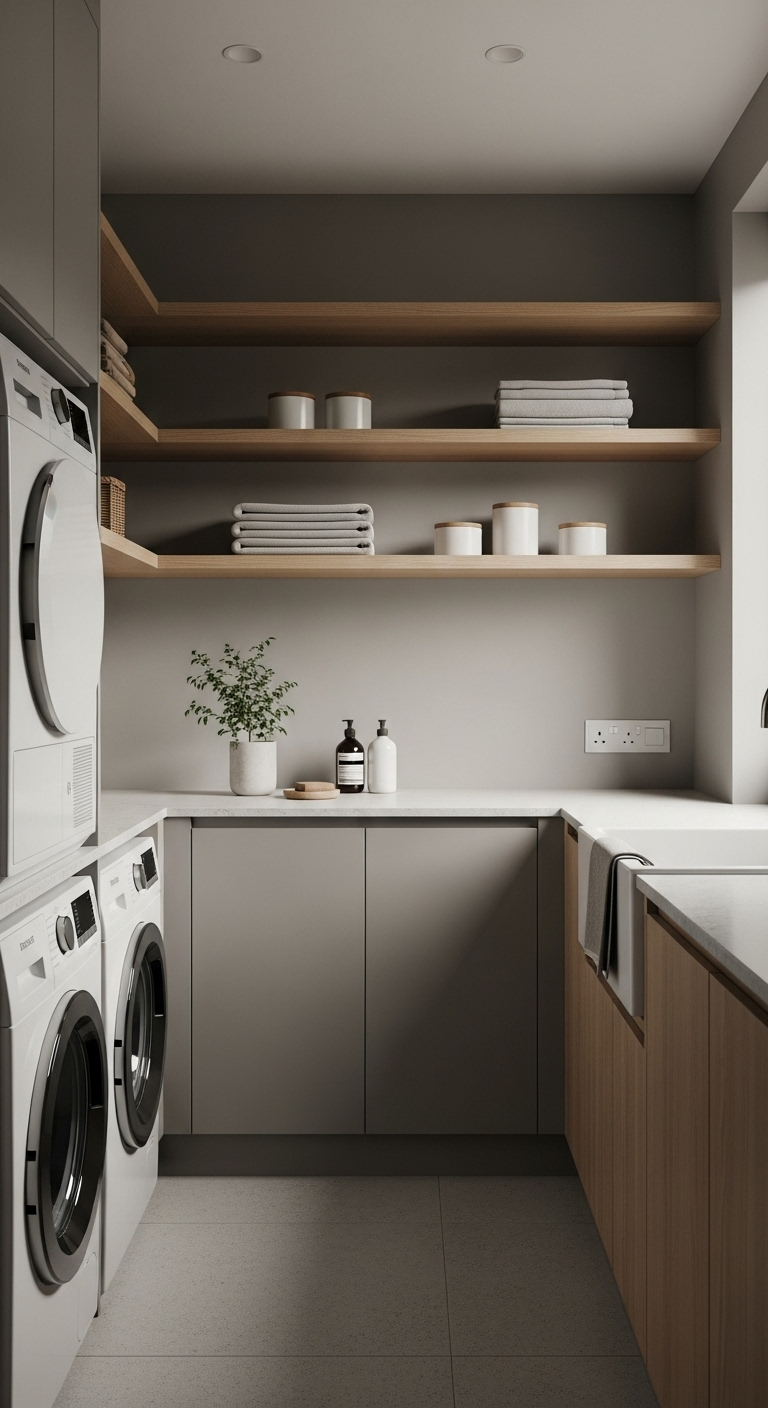
When learning how to create a Zen Japandi utility room, your first step should be selecting a soft, neutral base. Use shades like warm oatmeal, soft stone, or pale ash to make the small space feel brighter.
These calming tones reflect natural light effectively and create a serene backdrop for your daily chores. They help hide the visual noise of cleaning supplies, keeping your mind focused while you work through your lists.
A cohesive color scheme ensures your utility space feels like a seamless extension of your living areas. By prioritizing these light, airy colors, you remove the heavy feel often associated with traditional, dark laundry rooms.
Start by painting your walls and ceiling in a matte finish to reduce glare and enhance depth. This professional foundation creates the clean, minimalist canvas necessary for a truly organized and functional Japandi-inspired home.
2#. Incorporate Natural Wood and Bamboo
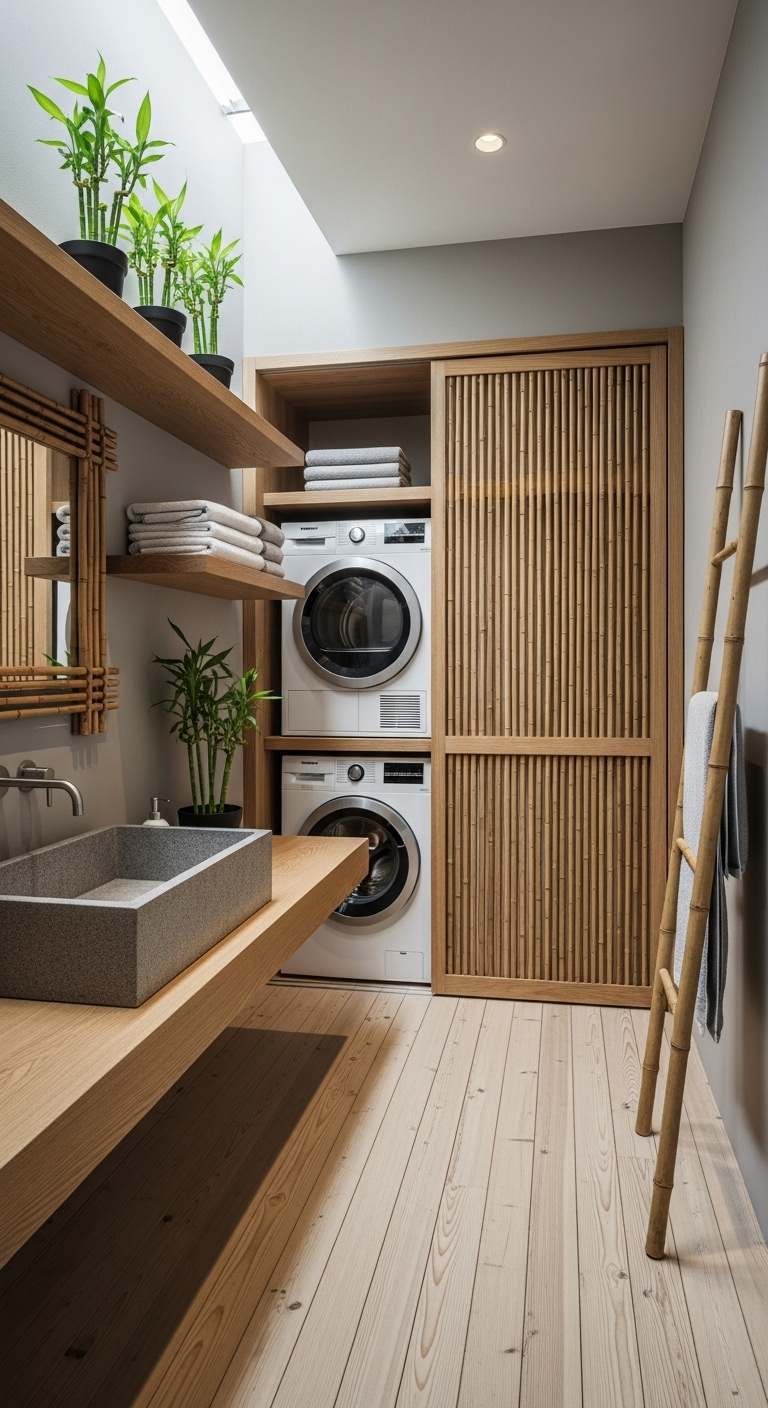
Swapping plastic bins for light wood shelving and bamboo organizers instantly brings a sustainable, organic warmth to your space. These natural textures act as a vital bridge between high-utility storage and a calm, intentional room atmosphere.
Incorporating raw wooden elements effectively softens the sterile appearance often found around bulky laundry room machinery. By choosing renewable materials, you create a space that feels grounded while maintaining the precision of modern design.
The lighter tones of wood and bamboo work to expand the visual footprint of tighter laundry work areas. This approach to organization ensures your room remains highly functional without sacrificing the clean, airy aesthetic you want.
Selecting high-quality bamboo organizers allows you to customize your storage layout for better long-term durability and efficiency. These purposeful additions demonstrate that even the most task-oriented rooms can benefit from a cohesive, nature-inspired design philosophy.
3#. Maximize Hidden Storage Solutions
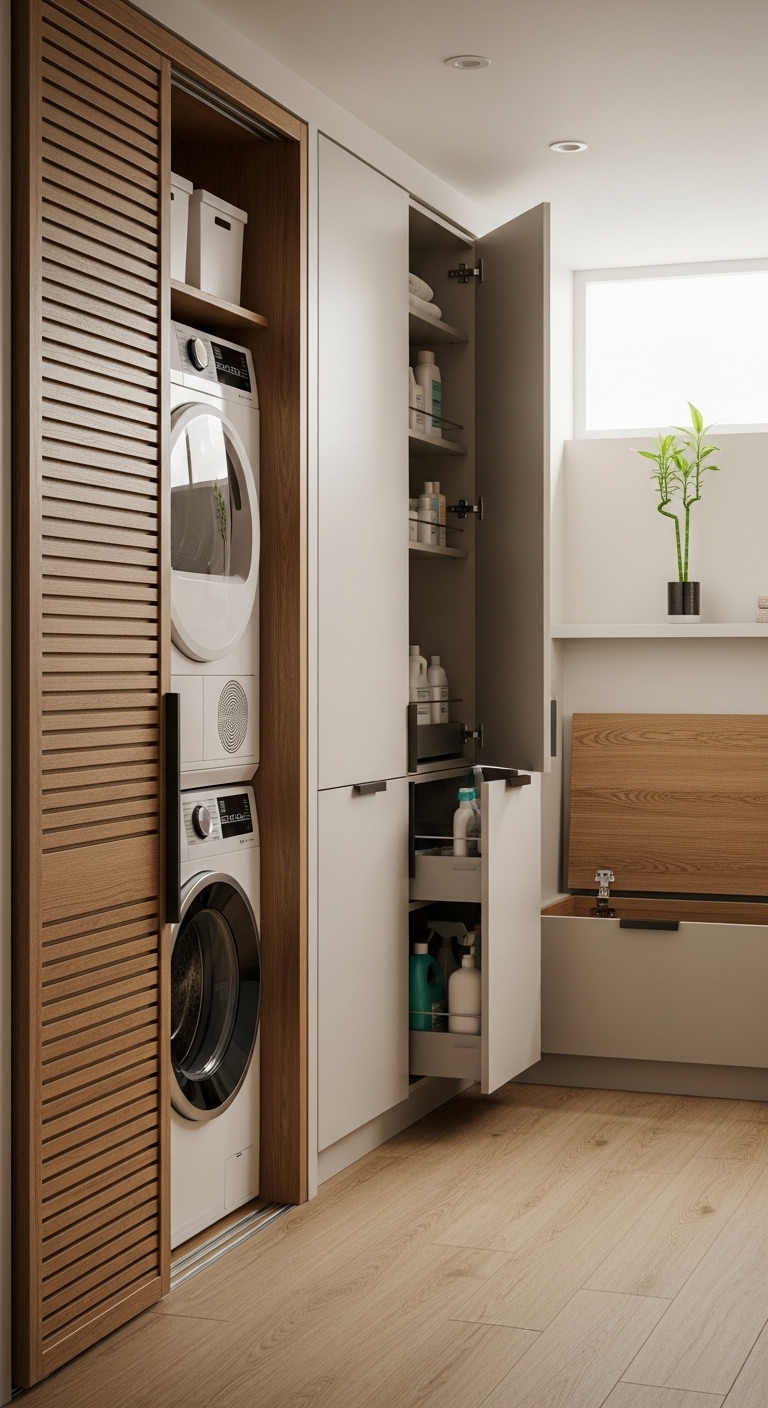
To truly master a Zen Japandi utility room, you must prioritize clever storage solutions that keep clutter completely out of sight. Installing floor-to-ceiling cabinets with handle-less doors provides a sleek, uninterrupted visual flow that helps calm the mind instantly.
Tucking away colorful detergent bottles and bulky ironing boards is essential for maintaining a minimalist aesthetic within your home. This disciplined approach ensures that when you step into the room, you focus on the peace of the space rather than chores.
Hidden organizational systems allow you to categorize your supplies efficiently while keeping the primary work surfaces entirely clear. Investing in interior drawer dividers and pull-out racks transforms how you interact with your utility tools on a daily basis.
A clutter-free environment promotes a sense of intentionality, making even repetitive tasks feel like a rhythmic, soothing part of your day. By prioritizing these hidden storage strategies, you create a dedicated zone that balances high-level functionality with a serene, beautiful atmosphere.
4#. Add Living Greenery for Vitality
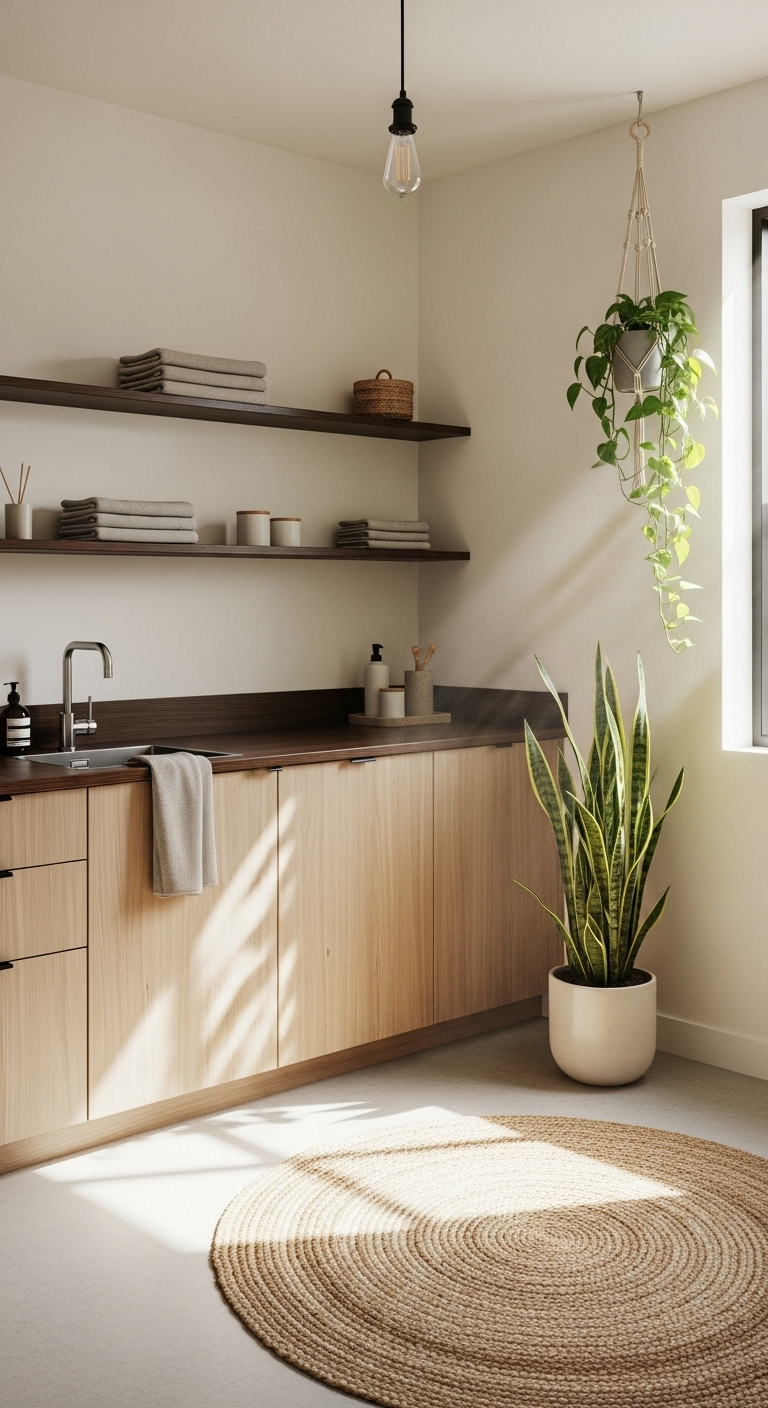
Introduce a touch of life to your workspace with low-maintenance indoor plants like a snake plant or a single eucalyptus branch. Greenery provides a refreshing pop of color that cleans the air and brings an organic, outdoor energy into the room.
Small botanical accents make the utility room feel less like a clinical workspace and more like a curated home sanctuary. Placing a plant on a stone countertop or a wooden shelf is a simple way to elevate the serene factor daily.
Choosing the right plant for your lighting conditions ensures that your greenery thrives without requiring excessive time or attention. Hardy options like snake plants are perfect because they handle fluctuating humidity levels while maintaining a sharp, sculptural appearance.
Integrate these plants within your existing shelving layout to create visual interest that draws the eye toward natural elements. This simple addition bridges the gap between raw functionality and a peaceful environment, finalizing your vision for a balanced room.
5#. Upgrade to Minimalist Hardware
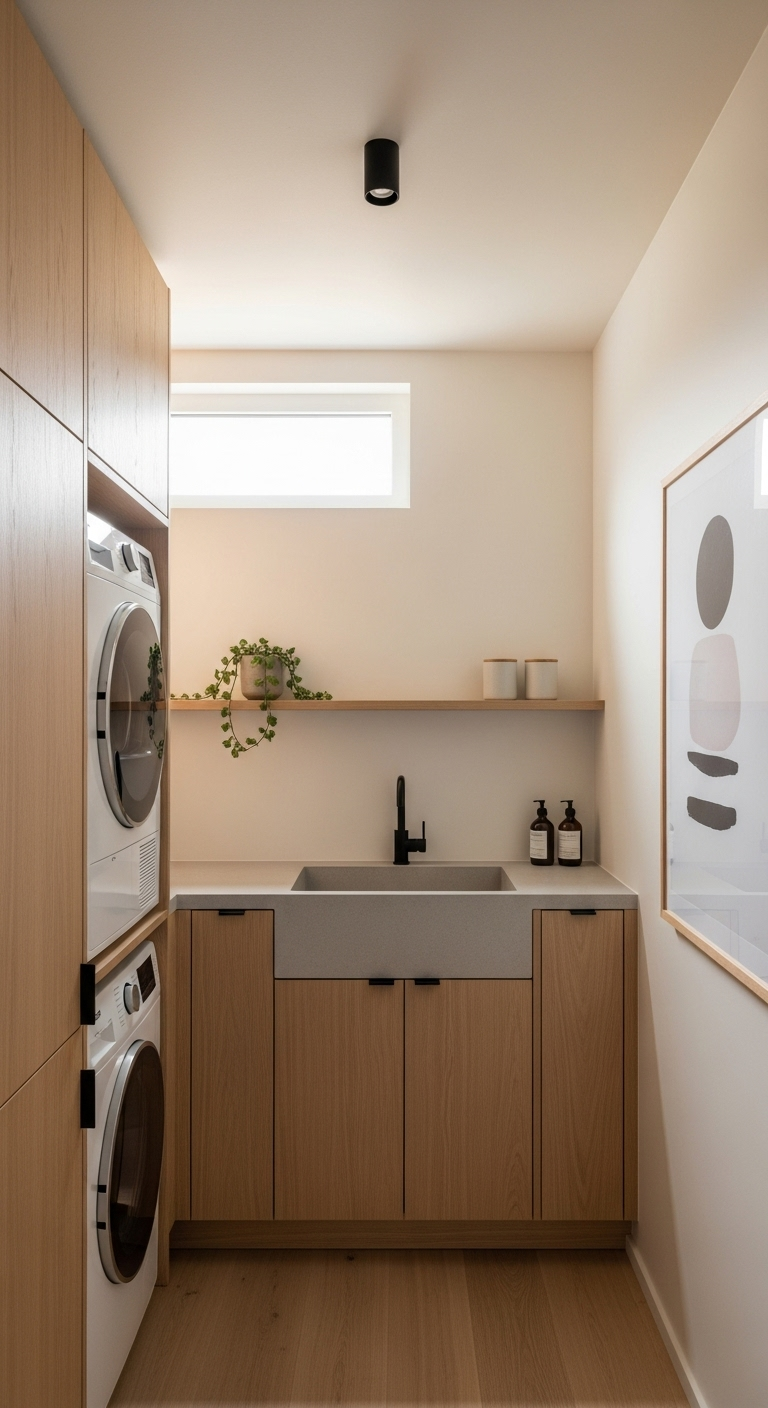
Small details like matte black faucets or brushed nickel cabinet pulls can completely transform the vibe of your renovation. Choosing sleek, geometric hardware adds a touch of modern craftsmanship that defines the high-end Japandi look effortlessly.
These accents provide a sophisticated contrast against light-colored cabinetry without feeling overly decorative or cluttered for the eyes. It is the final polish needed to ensure your utility room feels both professionally designed and incredibly functional.
Prioritize finishes that resist water spots and heavy daily use to maintain that clean aesthetic over the long term. Quality metal hardware will stand up to the constant movement and contact that happens in a busy sewing space.
Consider how the light hits these fixtures throughout the day to ensure they contribute to a soft, balanced atmosphere. A consistent finish across all elements helps tie the room together and creates a cohesive, high-end design statement.
6#. Opt for Natural Stone Countertops
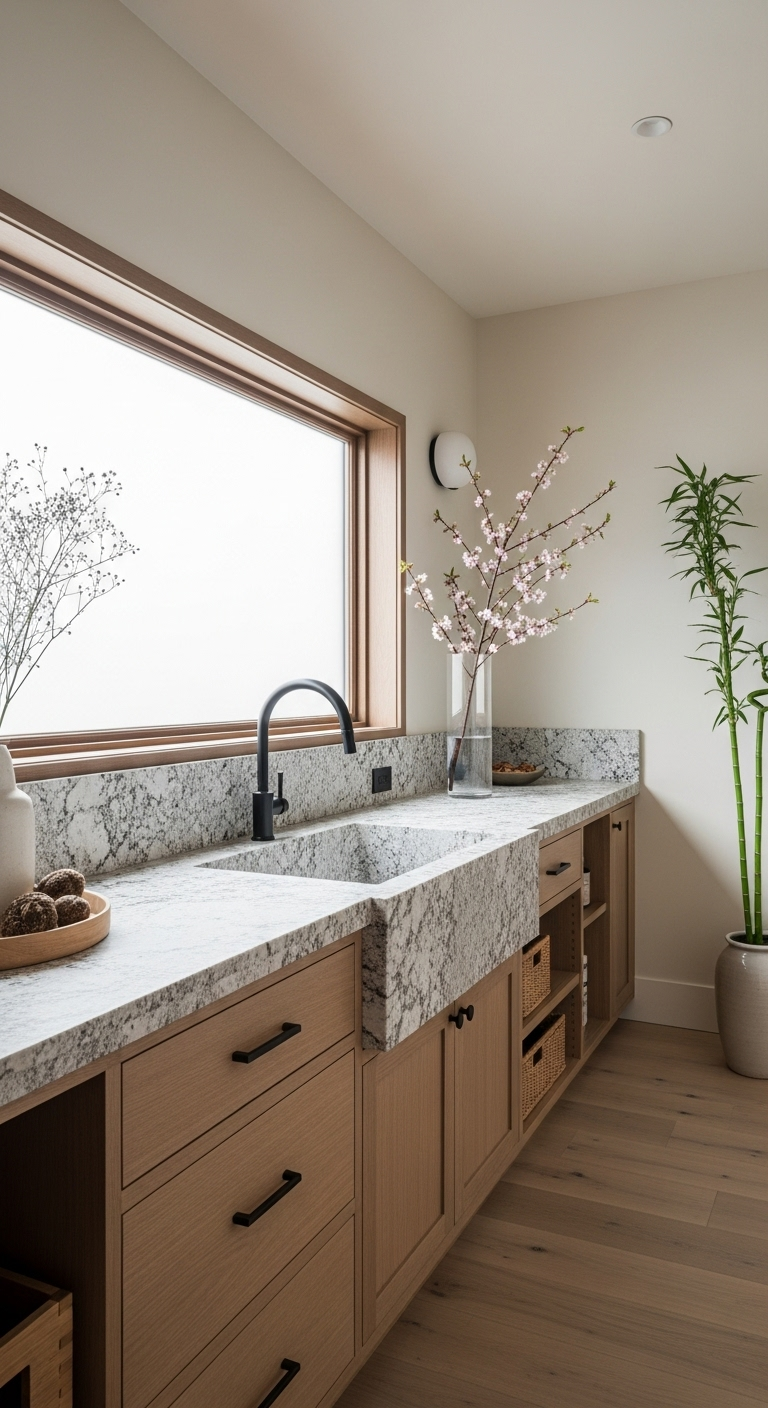
When researching how to create a zen Japandi utility room, choosing the right surface is essential for durability and style. Honed granite or quartz in a matte finish provides a durable, stony texture that feels incredibly grounded and high-end.
These cool surfaces offer a stunning visual contrast when paired with warm wooden cabinetry or bamboo accessories. The smooth, natural finish makes cleaning easy while reinforcing the earthy, wabi-sabi aesthetic of your home workspace.
Focusing on tactile materials helps ground the room and creates an environment where you feel focused and calm. Hardwearing surfaces ensure that your workspace remains pristine even after hours of intense sewing or craft projects.
Select colors that mimic nature, such as soft greys, charcoal, or sandy beige, to maintain a consistent color palette. A cohesive surface choice acts as the foundation for your design, allowing the accessories to shine without feeling overwhelming.
7#. Use Linen for Soft Texture
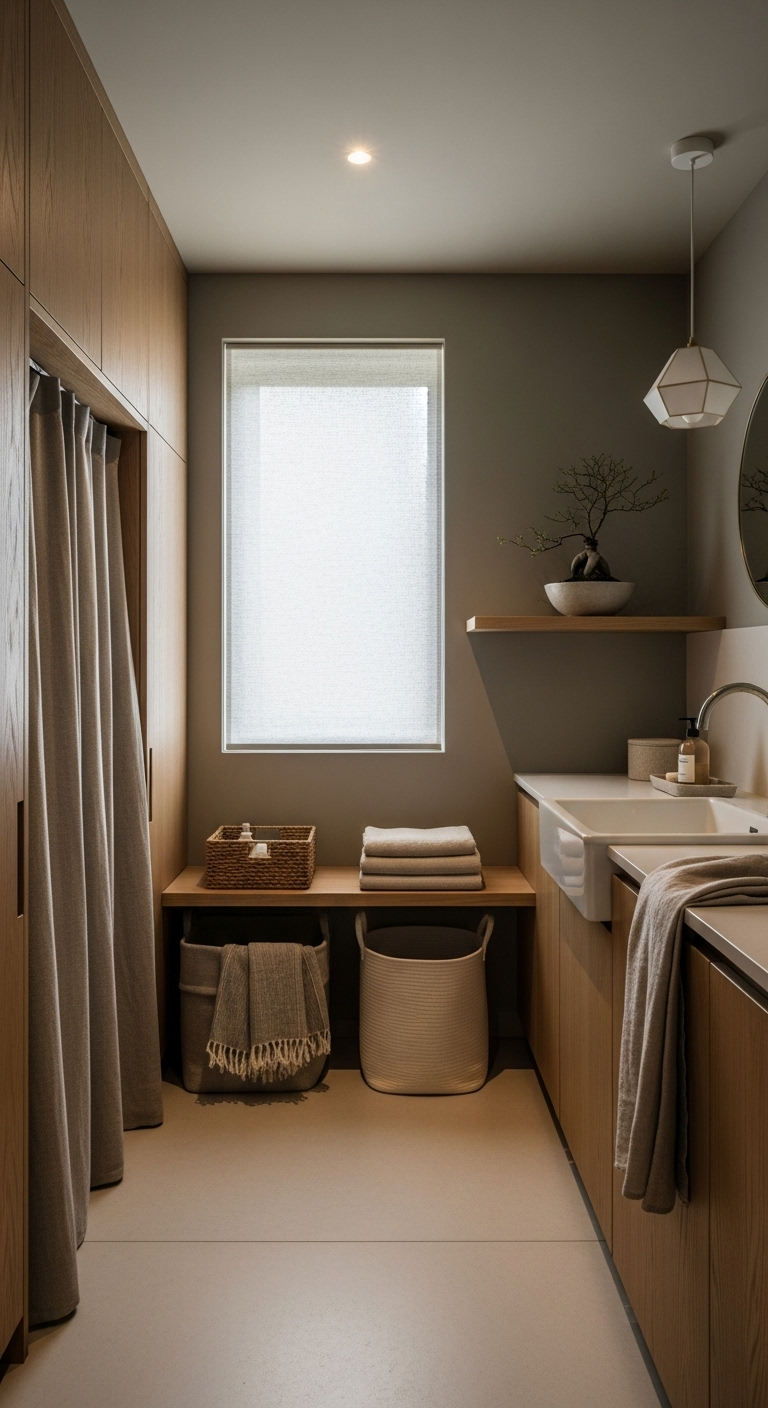
Soften the hard lines of your utility appliances by introducing high-quality linen textiles like laundry bags or simple window valances. Linen’s natural, slightly wrinkled texture adds a layer of hygge warmth that makes a functional room feel more inviting.
Stick to undyed, neutral tones like flax or charcoal to maintain a cohesive and peaceful color palette throughout the space. These breathable fabrics are practical for humidity-prone areas while adding a touch of quiet, organic luxury to the room.
Select linens that are durable enough for daily handling yet soft enough to provide a gentle, high-end visual appeal. Natural fibers bring a sense of history and lived-in charm to even the most modern and streamlined utility setups.
Allow the light to filter through these fabrics to create a soft, diffused glow that brightens your working area. A touch of organic softness prevents your room from feeling sterile and encourages a more relaxed, creative working environment.
8#. Implement Slatted Wood Wall Panels
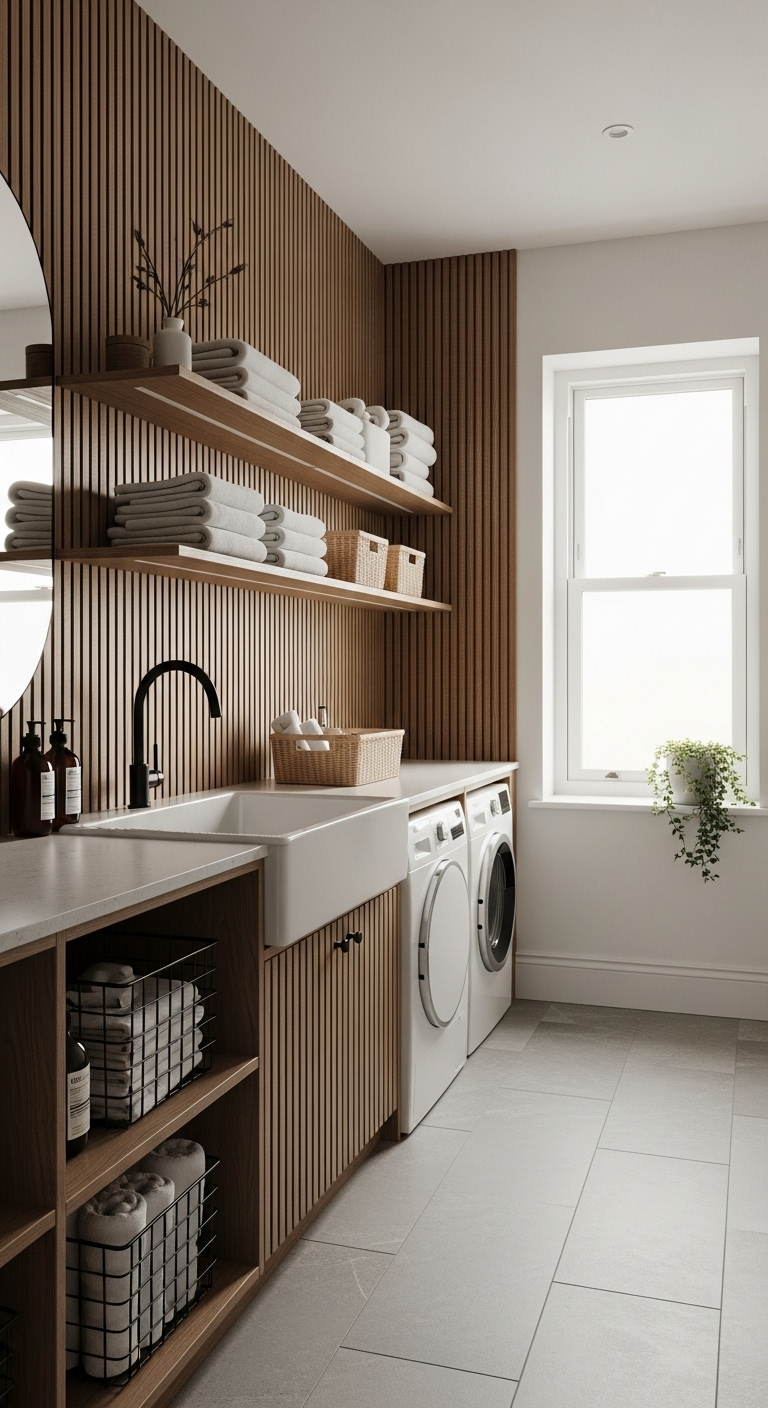
Vertical wood slats are a hallmark of Japandi design, providing architectural interest while serving a functional purpose. You can use these panels to hide plumbing or as a stylish backdrop for mounting minimalist hanging racks and hooks.
The repetition of the vertical lines helps to draw the eye upward, making even a tiny basement utility closet feel much taller. This design choice brings a sense of Japanese precision to your home, turning a plain wall into a beautiful focal point.
Choose light woods like white oak or pine to keep the room feeling bright and open rather than heavy. The natural grain of the wood adds organic warmth that contrasts beautifully with clean, modern utility appliances and fixtures.
Spacing between each slat determines the overall visual weight of the wall and how much depth it adds. Precise installation is key to achieving that high-end, professional look that defines a well-executed Japandi renovation project.
9#. Incorporate Woven Seagrass Baskets
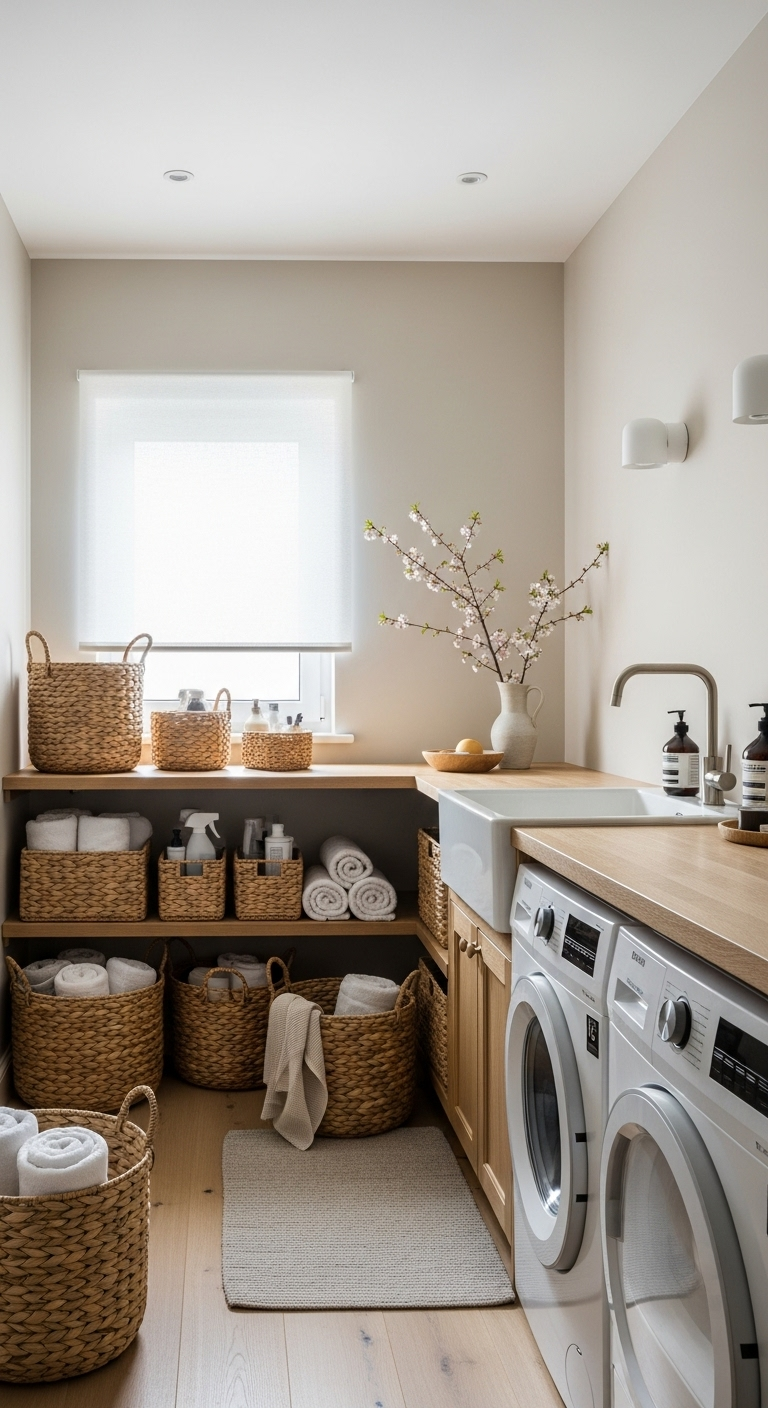
Organization is much more aesthetically pleasing when you use hand-woven seagrass or jute baskets to categorize your household items. These containers provide a soft, tactile alternative to plastic bins, keeping everything from clothespins to towels neatly organized.
Using baskets of various sizes on open shelving creates a layered, lived-in look that remains tidy and visually serene. This is a budget-friendly way to incorporate zen Japandi utility room principles while keeping your daily clutter at bay.
Select baskets with clean, simple shapes to maintain the minimalist spirit that defines this specific design movement. The natural variations in the fiber color add subtle warmth that breaks up the monotony of sleek, modern cabinetry.
Group items by function so that you can quickly locate what you need without rummaging through multiple containers. Maintaining a consistent style of basket throughout the room creates a sense of order that makes the space feel balanced.
10#. Install Integrated Drying Racks
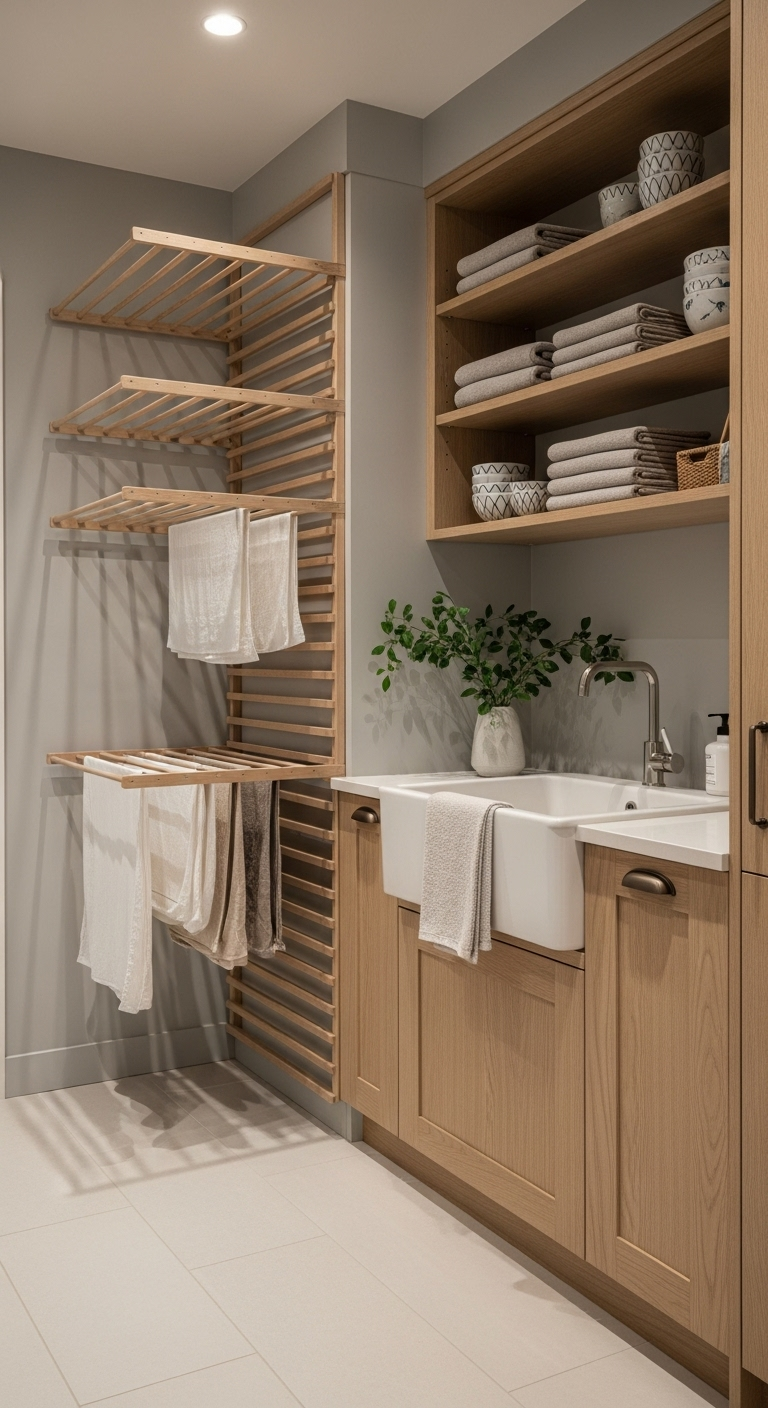
Space-saving pull-out or fold-down wooden drying racks are perfect for maintaining a minimalist and clutter-free floor area. When not in use, these racks disappear into the cabinetry, preserving the clean visual lines of your serene workspace.
This focus on functional efficiency is a core part of Japanese design, ensuring every square inch of the room serves a purpose. It allows you to air-dry clothes without the need for bulky, freestanding racks that interrupt the flow of the room.
Select high-quality wood finishes that match your existing cabinetry to ensure the hardware looks like a custom upgrade. A seamless integration makes the room feel sophisticated and intentional, rather than like a standard place for chores.
Consider installing these racks near a window or ventilation point to maximize airflow and speed up the drying process. Thoughtful placement ensures your garments remain fresh while you keep your floor space completely clear for other tasks.
11#. Choose Matte Black Faucets
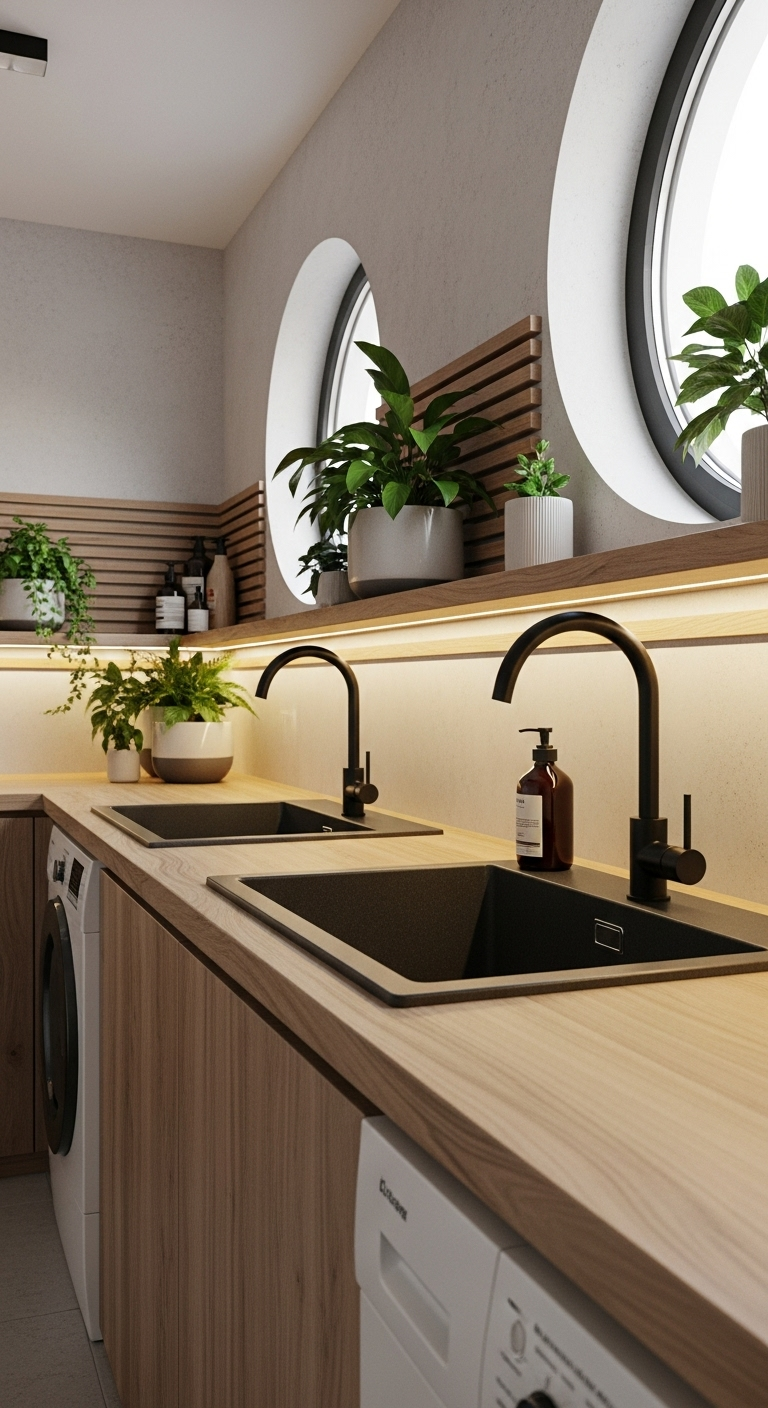
A sleek, matte black gooseneck faucet acts as a modern, sculptural anchor for your utility sink or soaking tub. This dark finish provides a sharp, sophisticated contrast against white walls and light-toned wood surfaces for a trendy look.
Matte finishes are excellent at hiding water spots and fingerprints, making them a practical choice for a high-traffic cleaning area. It’s a small hardware upgrade that instantly elevates the room from a basic chore space to a high-end sanctuary.
Choose a faucet model with a high-arch design to provide enough clearance for washing large buckets or delicate fabrics. The graceful curve of the gooseneck adds a soft, organic element that balances out the hard lines of your cabinetry.
Ensure the finish matches your other hardware choices throughout the room to keep the overall design feeling cohesive. Consistency in your metal selections is the secret to achieving that polished look professional interior designers always aim for.
12#. Focus on Symmetrical Layouts
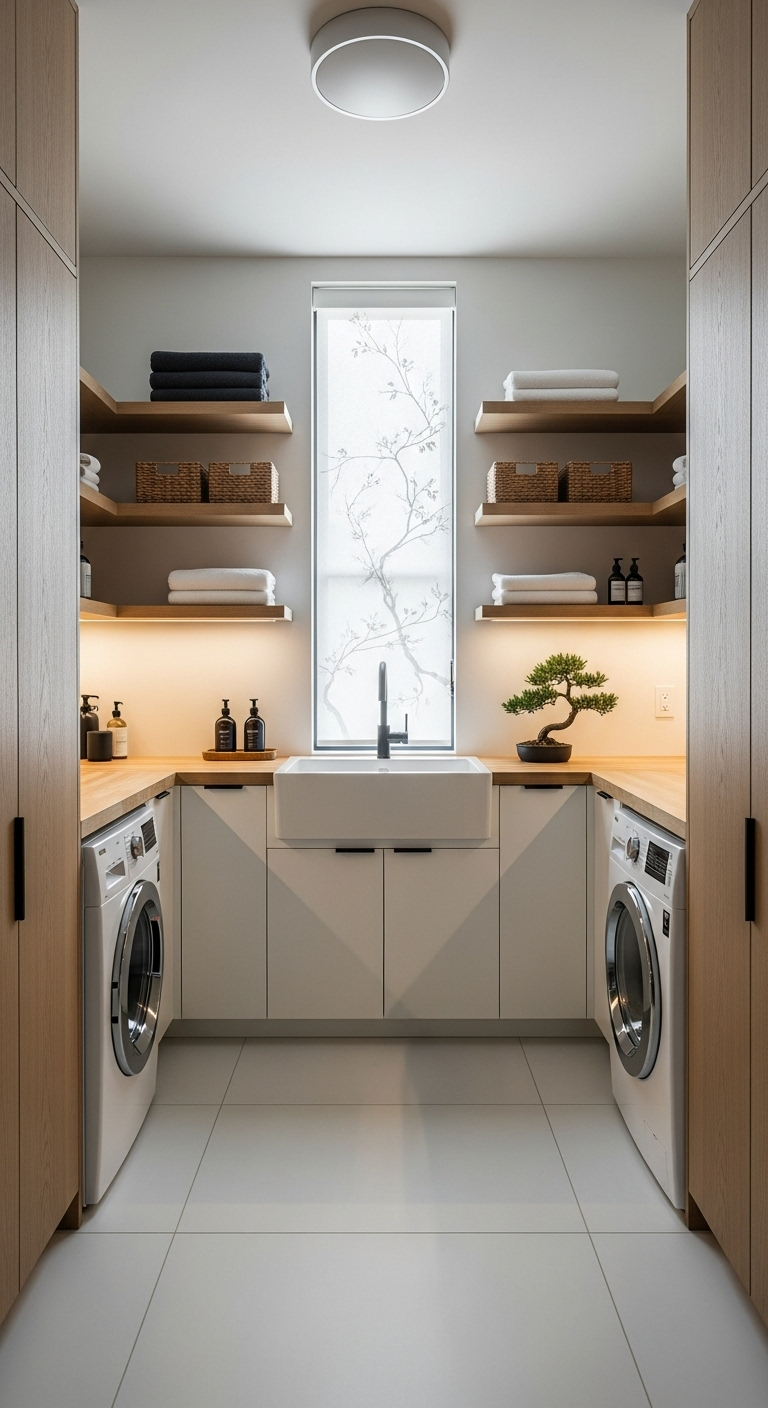
Creating a sense of visual balance is key to achieving a zen atmosphere in a room that often feels chaotic. Try to arrange your cabinets, appliances, and shelving in a symmetrical grid to provide a feeling of order and tranquility.
Symmetry helps the brain process the space more easily, reducing the stress associated with household management and organization. Even in a small galley-style utility room, a balanced layout makes the environment feel more spacious and professionally designed.
Focus on aligning the edges of your appliances and cabinetry to create clean, continuous lines that travel across walls. When furniture pieces mirror each other, the eye finds a natural point of rest that keeps the entire room grounded.
Limit the number of large appliances that sit outside of your main cabinetry footprint to maintain a uniform look. Integrated appliances that hide behind matching panels will take your room’s level of sophistication to a much higher tier.
13#. Utilize Glass Jars for Storage
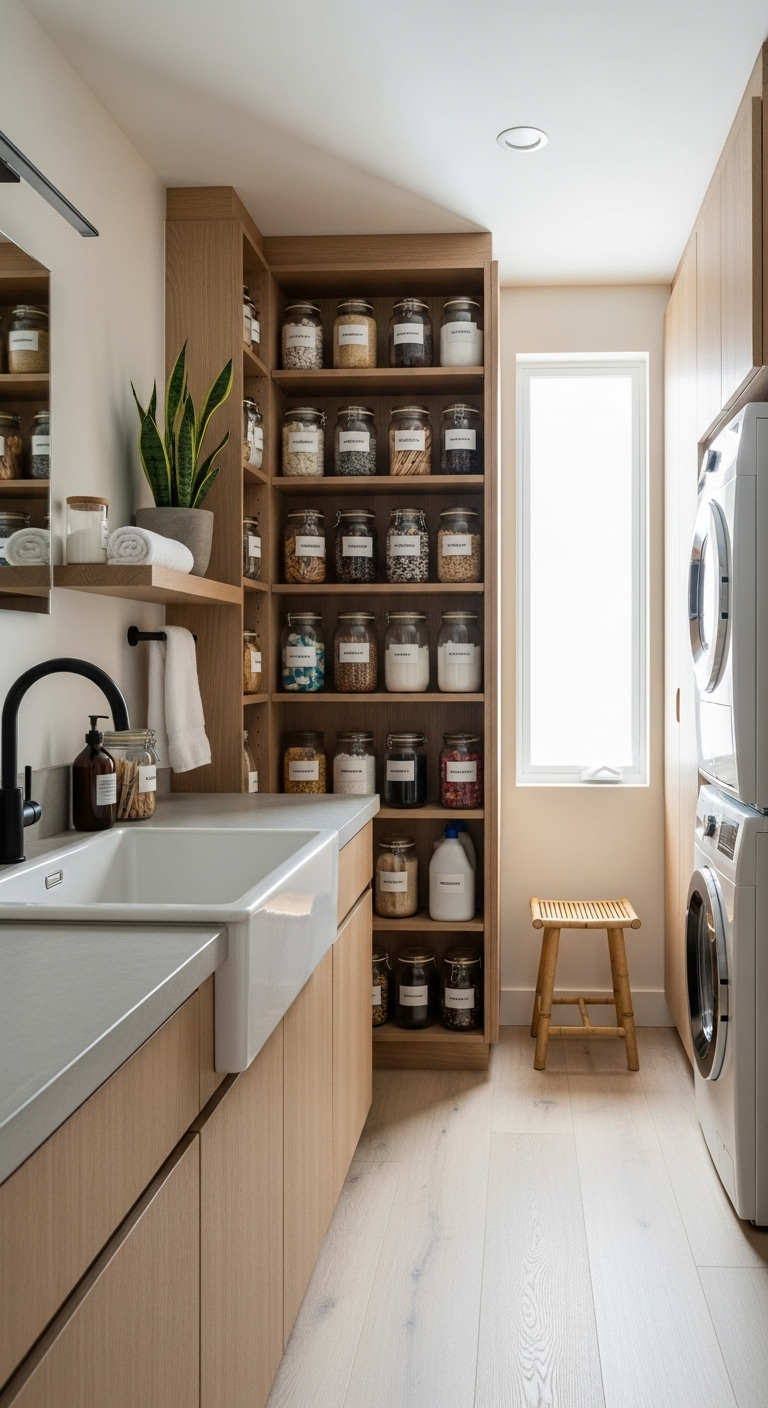
Transferring colorful laundry pods and powders into clear glass jars with wooden lids is a simple way to reduce visual noise. This replaces chaotic commercial branding with a clean, uniform look that highlights the natural beauty of the contents.
Lined up on a shelf, these jars act as a decorative feature while keeping your essential supplies within easy reach for daily use. This transparent approach to storage is a signature move for anyone mastering how to create a zen Japandi utility room.
Choose jars with airtight seals to keep your laundry powders fresh and protected from the moisture of a humid laundry area. Uniformity is the secret to this look, so try to source matching glass containers for every single one of your supplies.
Labeling the jars with minimalist, wooden tags adds a functional touch that prevents any confusion during your busy chore days. Small details like these make your space feel like a professionally curated room rather than just a place to wash clothes.
14#. Add a Simple Wooden Stool
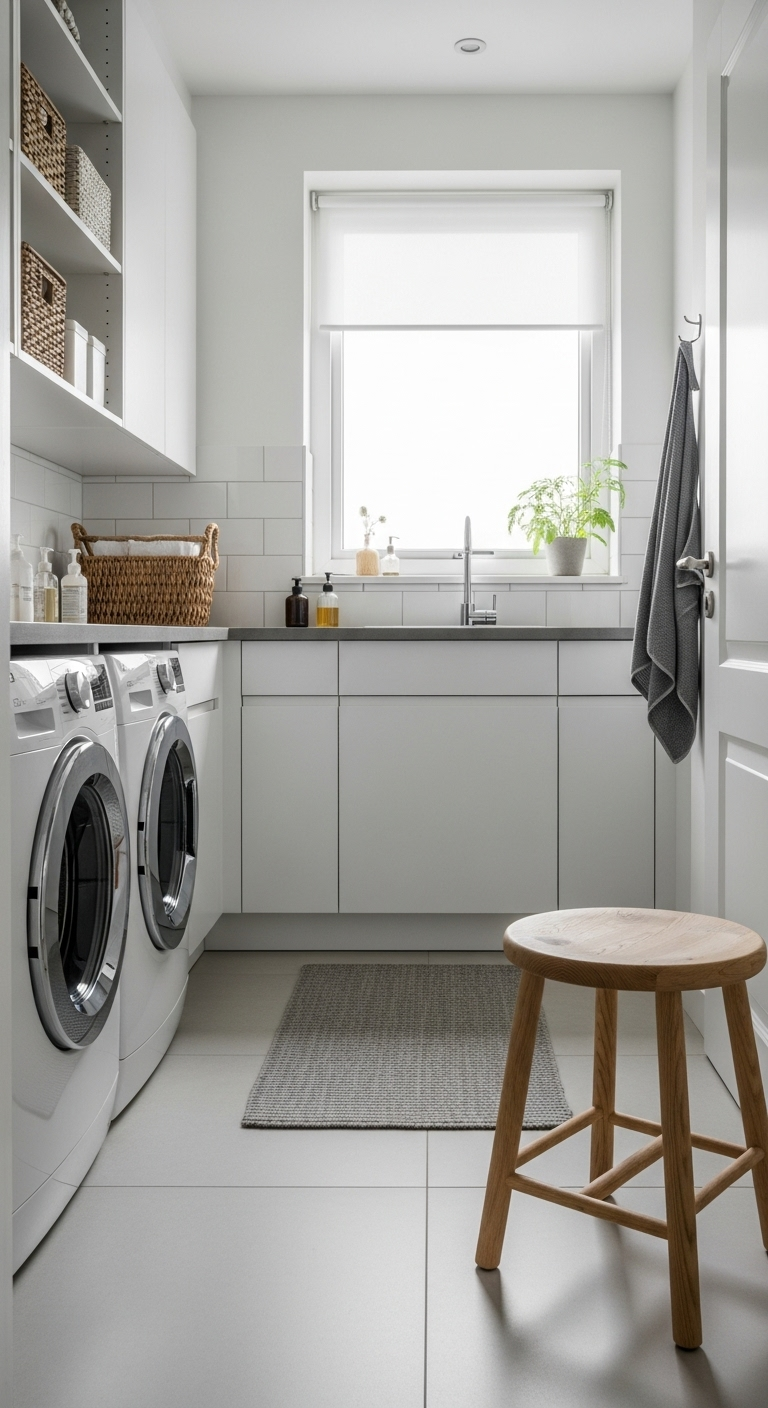
Creating a space that allows you to sit while you work transforms chores into a much more relaxed experience. A simple stool provides ergonomic support during long folding sessions, helping you stay focused and comfortable throughout the day.
Look for a design that is lightweight enough to move easily, allowing you to position it exactly where needed. Versatility is a core element of good design, and a stool that can serve multiple roles is a valuable asset.
Use the flat surface of the stool as a pedestal for a small plant or a woven storage basket. This double-duty functionality keeps your workspace tidy while adding visual interest to a room that could otherwise feel utilitarian.
Investing in high-quality furniture for your utility room encourages you to spend more time organizing your home with care. A thoughtful, comfortable space is far easier to maintain and brings a sense of joy to your regular cleaning routine.
15#. Install Recessed LED Lighting
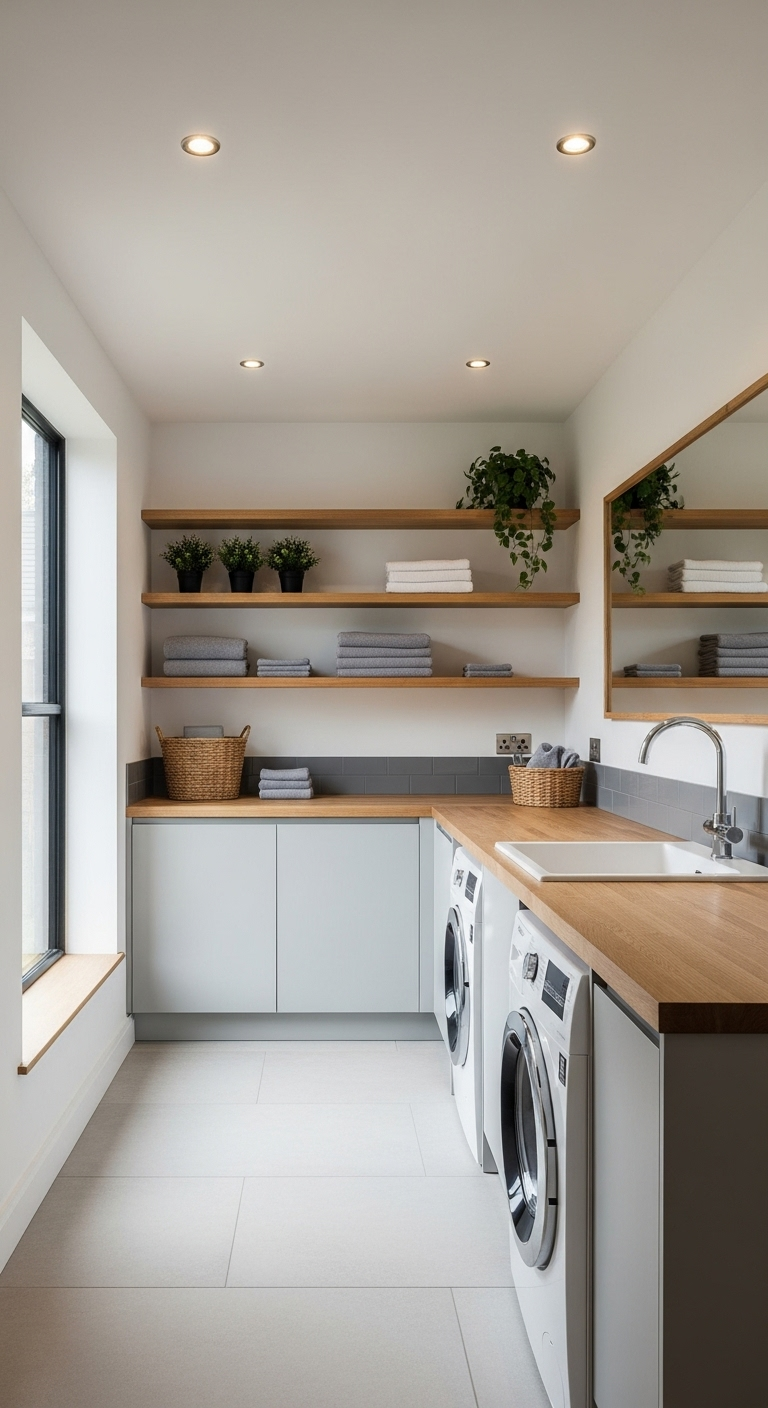
Good lighting is vital for sorting and cleaning, but harsh bulbs can ruin the peaceful zen vibe of your Japandi design. Opt for dimmable recessed LED lights that provide a soft, even wash of brightness without cluttering the ceiling.
Adding under-cabinet strip lighting can also highlight your workspace and make it easier to see fine details while you work. This layered lighting approach ensures the room remains functional throughout the day and cozy during your evening chores.
Choose color temperatures in the warm-to-neutral range to maintain the cozy, inviting atmosphere that your home aesthetic demands. Avoid cool, clinical blue tones, which can quickly make an organized utility room feel like a sterile lab environment.
Install a dimmer switch to gain total control over the brightness levels, allowing you to adapt to different tasks. The ability to transition from bright light for sorting to a soft glow for evening tidying is a professional touch.
16#. Incorporate Concrete Elements
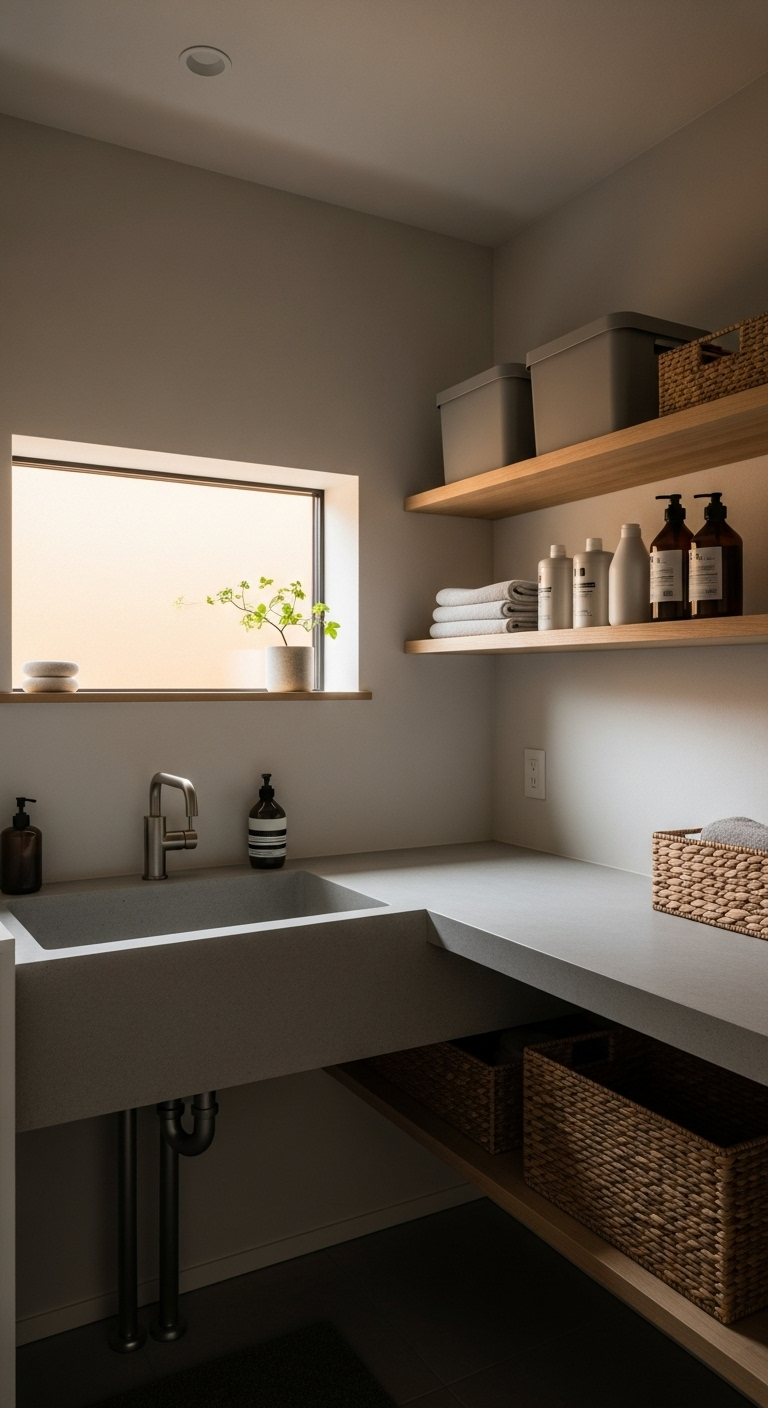
Concrete sinks or small concrete storage trays add a modern, industrial weight that pairs perfectly with the softness of wood. This raw material is incredibly durable and lends a contemporary wabi-sabi feel to the utility room’s aesthetic.
The cool grey tone of concrete acts as a neutral bridge between white appliances and warm wooden shelving units. It brings a unique, architectural texture to the room that feels both sophisticated and perfectly suited for heavy-duty tasks.
Choose a sealed, polished concrete finish to ensure the surface remains stain-resistant and easy to wipe down daily. The smooth touch of high-quality concrete provides a satisfying sensory experience whenever you are washing delicate sewing supplies.
These pieces serve as a grounded anchor for the room, preventing your lighter materials from feeling too airy. Integrating stone-like elements creates a timeless look that will remain stylish for many years throughout your home’s lifecycle.
17#. Use Ceramic Trays for Essentials
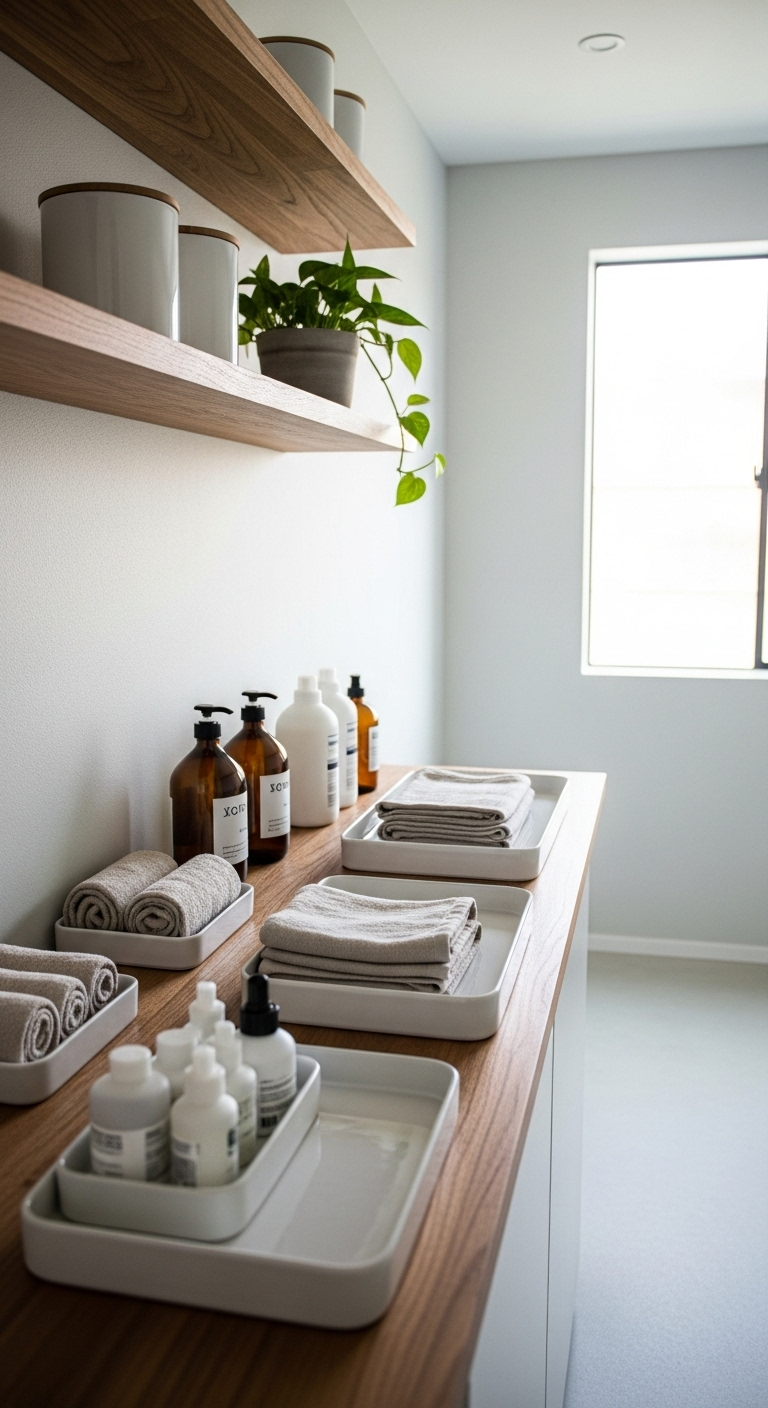
Place your hand soap, brushes, and sponges on a small ceramic tray to keep your sink area looking tidy and intentional. Choosing handmade ceramics with organic, irregular shapes adds a touch of artisan soul to your daily cleaning rituals.
This prevents moisture from damaging your countertops while creating a curated vignette out of everyday household items. It’s a small, thoughtful detail that reinforces the idea of finding beauty in the most functional parts of your home.
Look for earthy, neutral glazes such as matte cream, stone grey, or soft terracotta to maintain your design palette. A consistent color story across your sink accessories makes the entire room feel unified, peaceful, and highly professional.
Avoid cluttering this space with too many items, as the goal is to keep the area clear and highly usable. Selecting just a few beautiful pieces allows each one to stand out while keeping your workspace feeling completely serene.
18#. Add a Minimalist Wall Clock
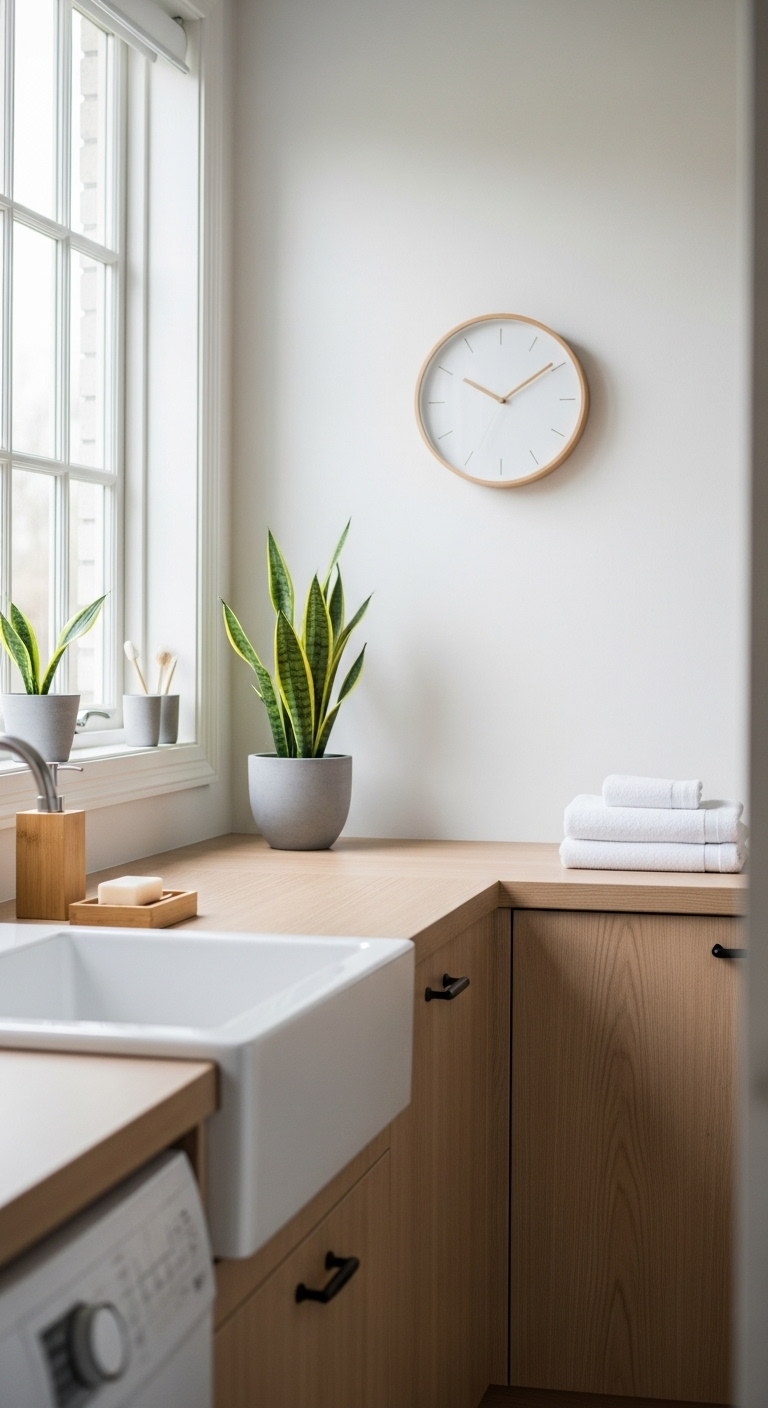
A simple wall clock with a wooden frame and no numbers is a practical addition for keeping track of your laundry cycles. Its understated design ensures it remains a quiet part of the background rather than a loud decorative statement.
This functional piece helps you manage your time efficiently without the need for digital screens that can feel cold or distracting. It contributes to the overall sense of order and intentionality that defines a well-designed Japandi utility space.
Choose a light wood finish like ash or white oak to ensure the clock blends seamlessly with your cabinetry. A smooth, rounded frame mirrors the organic shapes found in nature and helps soften the edges of your appliances.
Position the clock at eye level where it is clearly visible from your primary workspace or folding area. Having a reliable way to monitor your progress makes it easier to stay on task without feeling pressured.
19#. Implement Sliding Shoji Doors
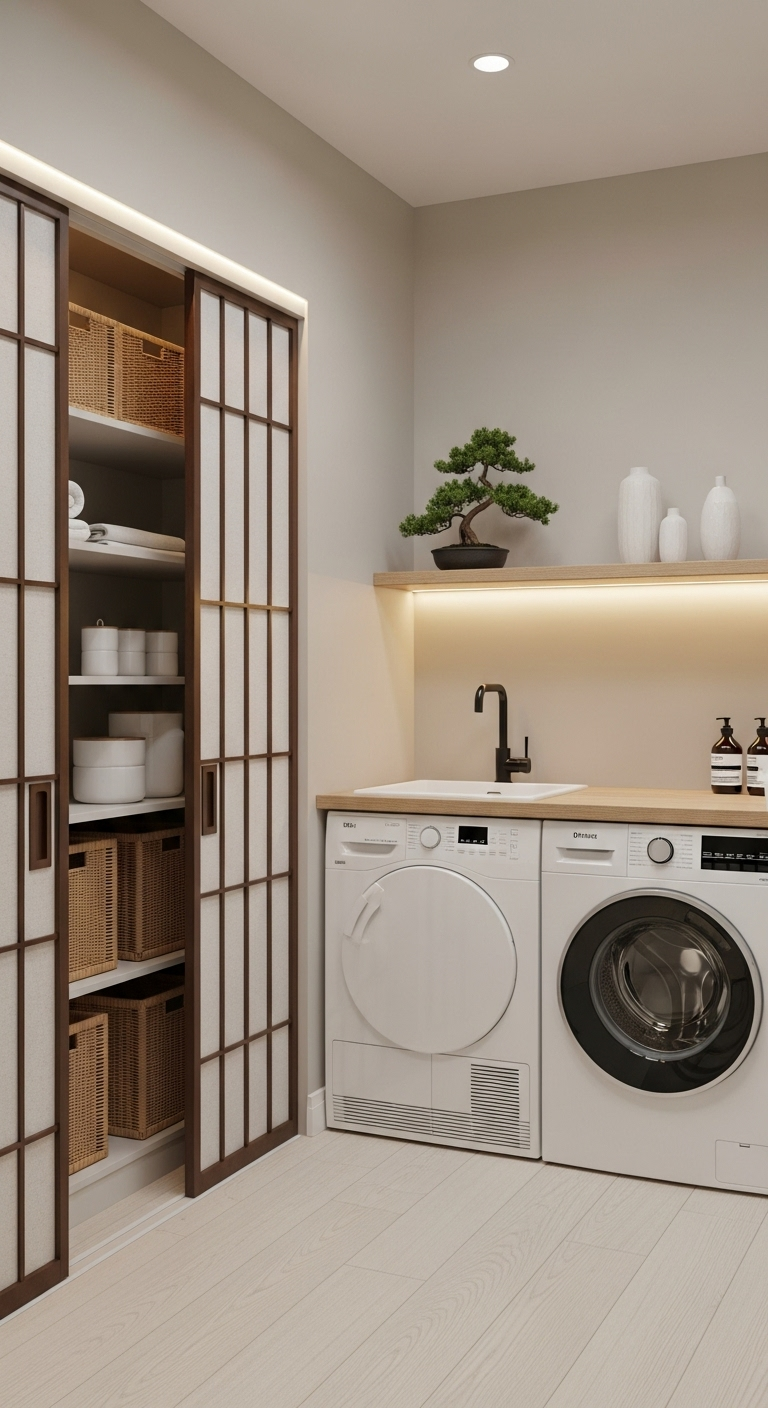
If your utility room is an alcove, consider using sliding doors with slatted wood or frosted glass inserts to hide the machines. This saves space compared to swinging doors and adds a beautiful Japanese architectural element to your hallway.
These screens allow for ventilation while keeping the clutter of the laundry room out of sight from the rest of the home. It’s a sleek, modern solution that perfectly balances privacy with a light and airy aesthetic.
Choose a track system that operates smoothly and silently to maintain the peaceful atmosphere of your living area. High-quality hardware ensures these doors feel substantial and durable every time you slide them open or shut.
Align the slat spacing with your other vertical wall features to create a continuous, rhythmic design across the space. This visual consistency makes your alcove feel like a deliberate, high-end feature rather than a simple storage closet.
20#. Create a Dedicated Folding Station
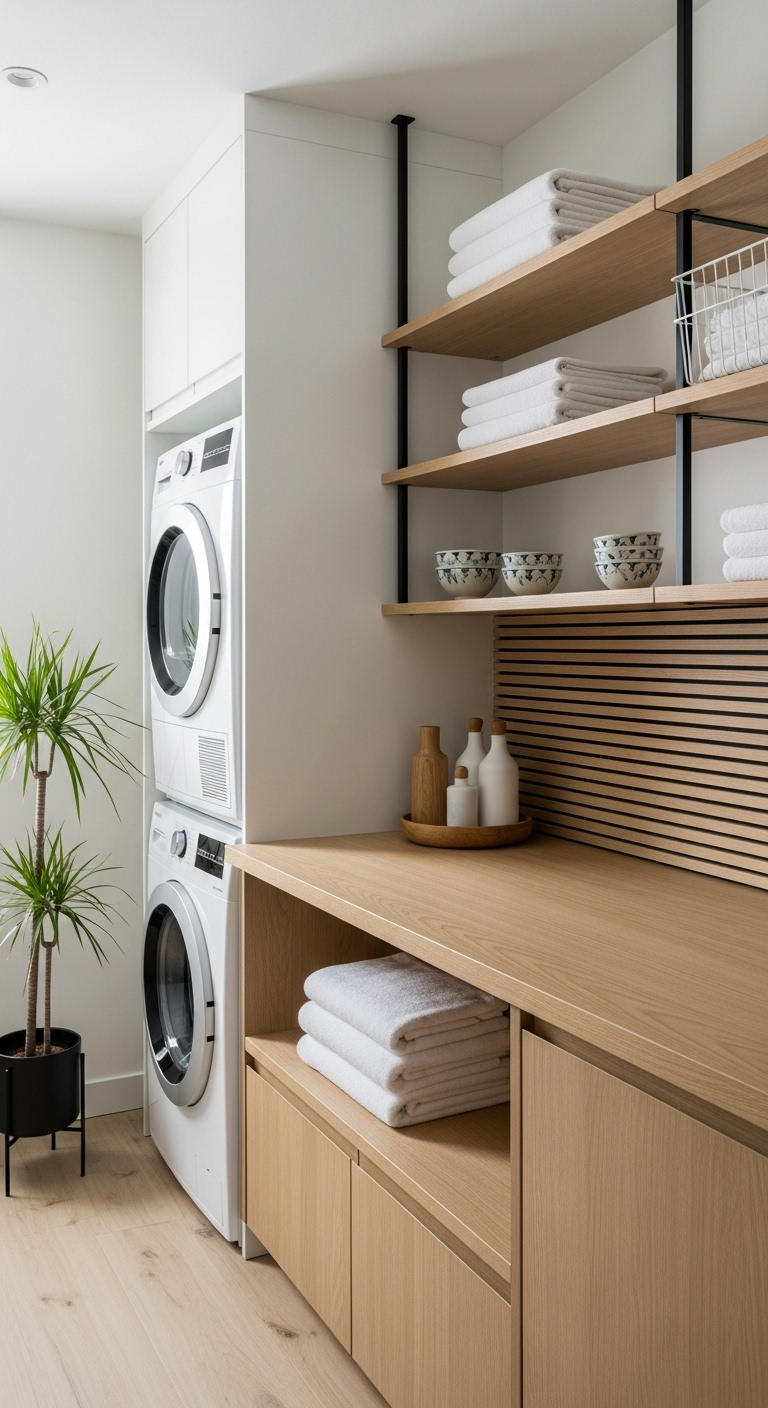
If space allows, a long, clear countertop serves as the perfect station for sorting and folding clothes with ease. Keeping this area clear of clutter is a major rule when learning how to create a zen Japandi utility room.
This dedicated zone prevents laundry from piling up on other surfaces throughout your house, helping maintain overall home order. A clean, wide surface makes the task of folding feel more organized and significantly less overwhelming for the mind.
Choose a matte-finish surface in a neutral tone like warm white or light stone to keep the area bright. A smooth, seamless countertop allows your laundry to slide effortlessly while you work through piles of clothing and linens.
Extend the counter over your machines to maximize the surface area without sacrificing any of your valuable floor space. This integrated approach creates a continuous, professional look that is both highly functional and visually very satisfying.
21#. Use Copper or Brass Accents
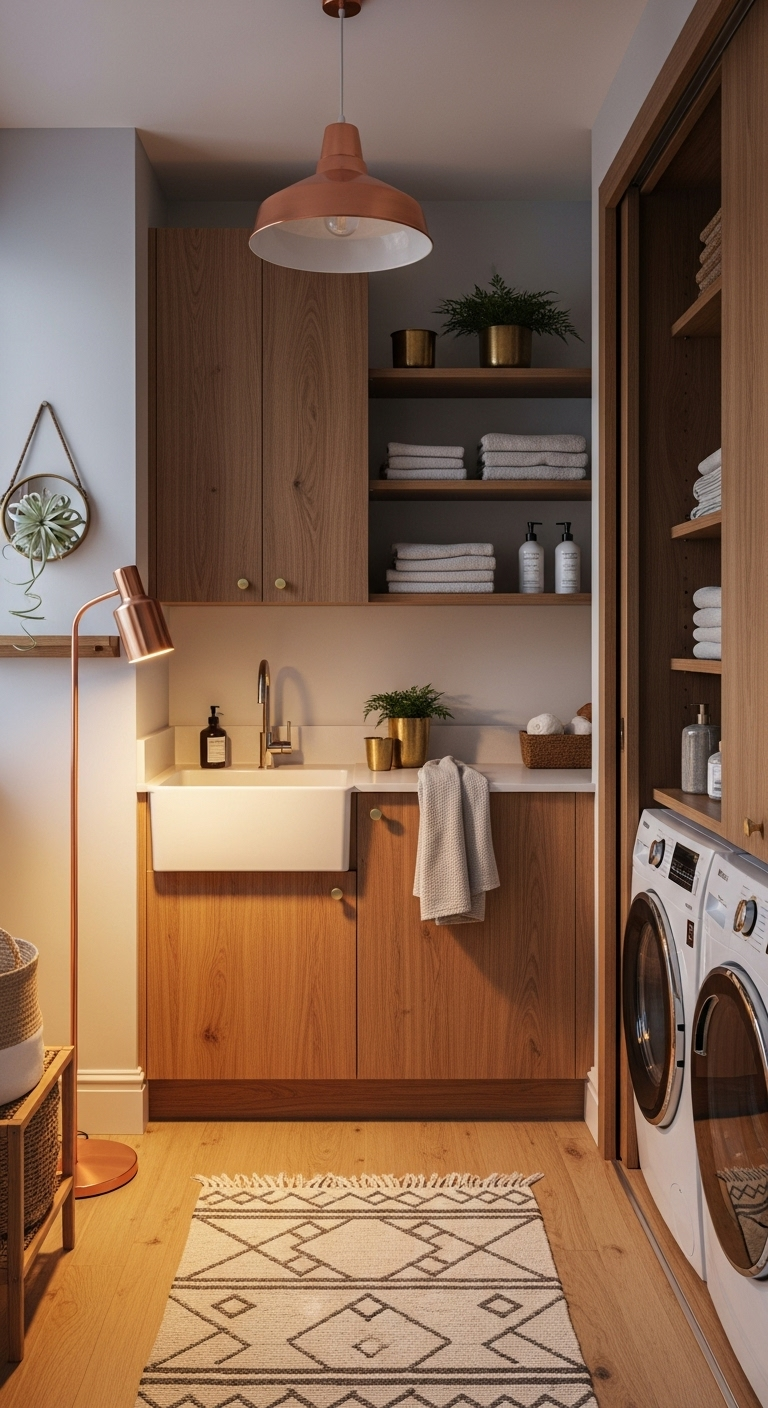
While matte black is popular, a few touches of warm metal like copper can add a festive glow to a neutral utility room. Use it for small items like a watering can for your plants or even the trim on your light fixtures.
These metallic tones catch the light and add a sense of quiet luxury that prevents a minimalist room from feeling too sterile. The warmth of the metal complements the natural wood grains, creating a sophisticated and harmonious environment.
Choose a brushed or satin finish for your copper items to keep the look soft and understated rather than overly shiny. A subtle sheen works best to maintain the calm, grounded atmosphere that you are building within your home’s utility area.
Avoid overdoing the metallic elements, as just a few strategic pieces are enough to make a significant visual impact. Let the copper stand out by placing it against simpler, light-colored backgrounds that allow the warm glow to shine through.
22#. Organize with Pegboard Systems
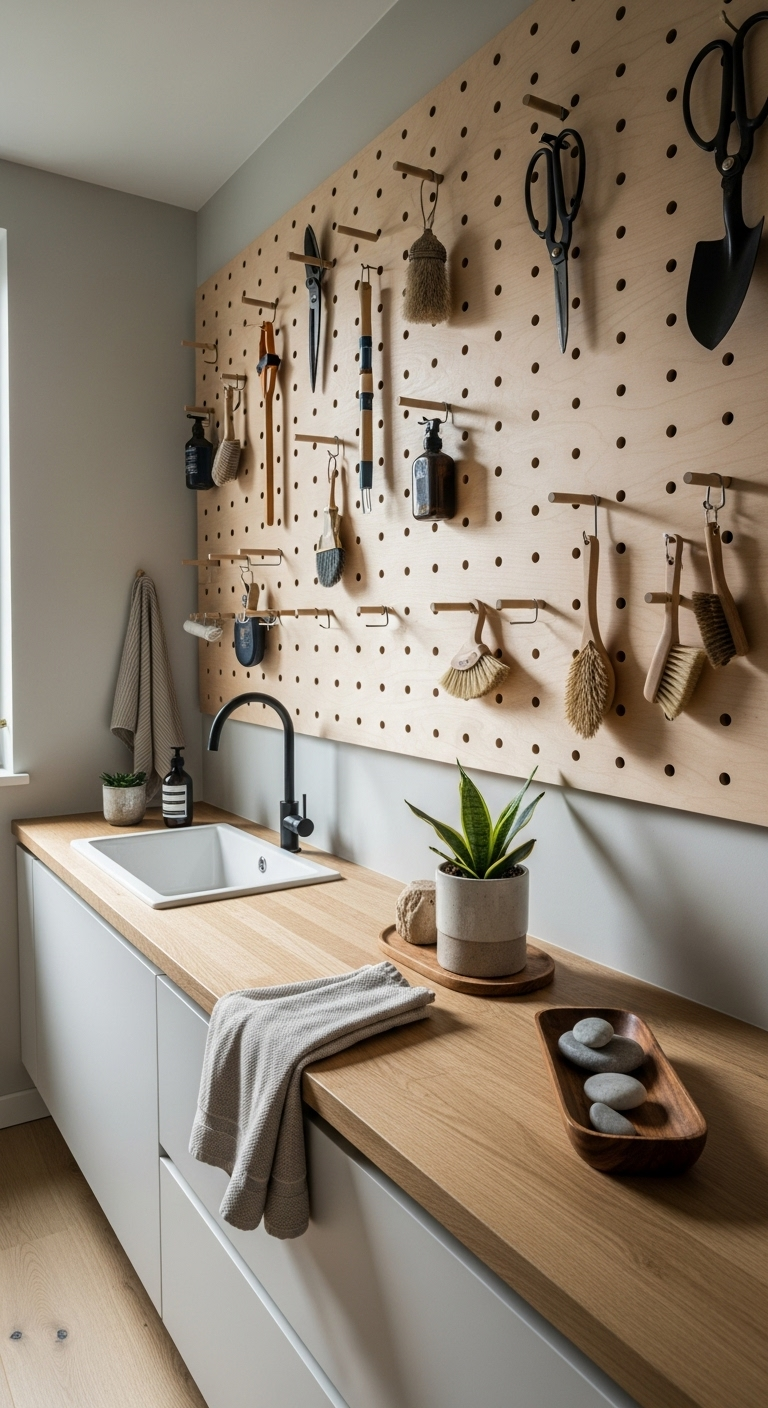
A large wooden pegboard provides a flexible and trendy way to hang cleaning tools, brushes, and small organizational bins. This vertical storage solution keeps the floor clear while allowing you to rearrange your layout as your needs change.
The pegboard itself adds a modern, functional texture to the wall that fits the “active storage” philosophy of Japandi design. It turns your most-used utility tools into an organized display that is both practical and visually interesting.
Select a high-quality wood species, such as birch or maple, to ensure the board feels substantial and matches your cabinetry. A light, natural wood tone brings warmth to your workspace and creates a beautiful, cohesive backdrop for your gear.
Space your items with intention to avoid a cluttered look, leaving breathing room between each hanging tool or container. Using uniform pegs or hooks keeps the system looking orderly and professional rather than like a disorganized tool shed.
23#. Incorporate Natural Jute Rugs
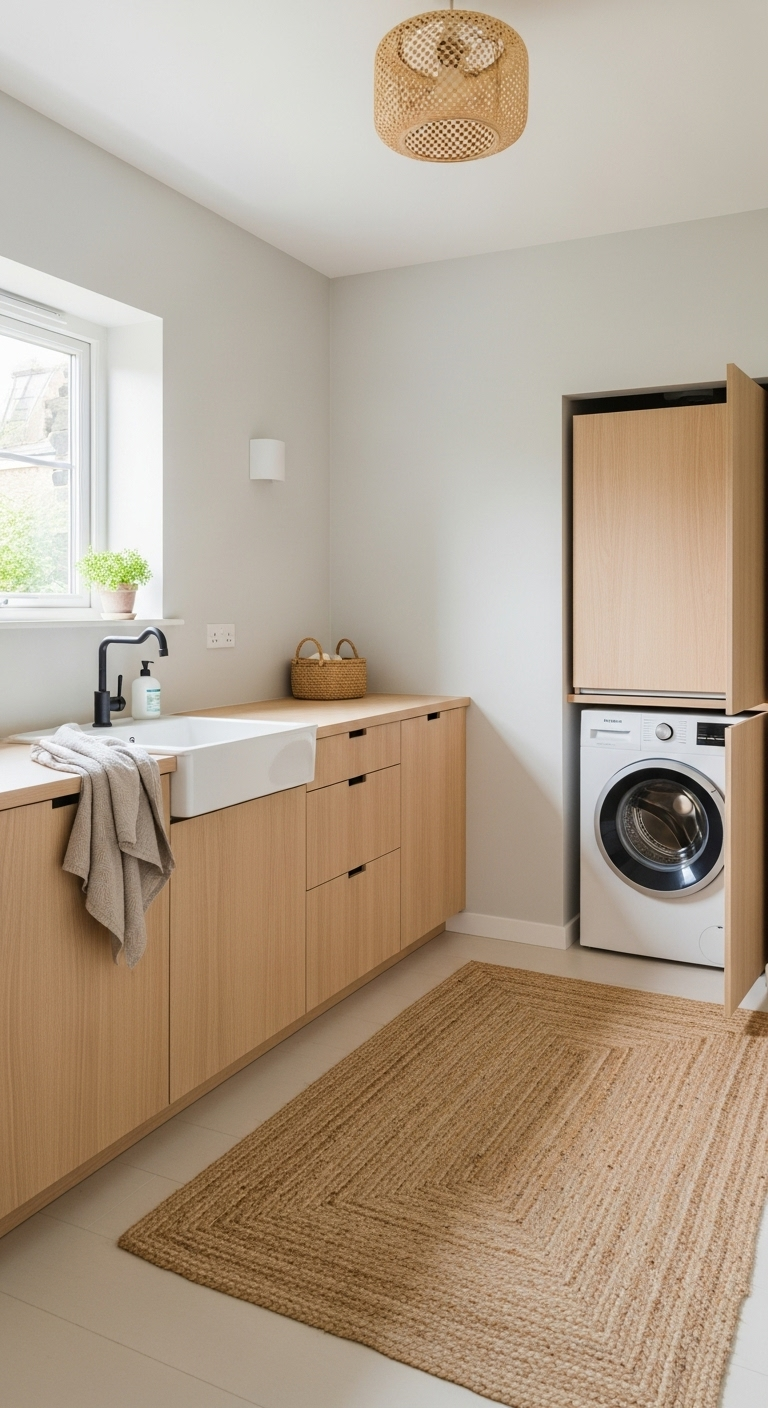
A small jute or sisal rug provides a durable, slip-resistant surface that adds an earthy texture to a tiled utility room floor. These natural fibers are incredibly resilient to the wear and tear of a laundry area while feeling great underfoot.
The sandy, neutral color of the rug helps to ground the room and coordinates perfectly with other wooden or woven elements. It adds a final layer of hygge comfort that makes the workspace feel warm and thoughtfully curated.
Choose a flat-weave style to ensure that your laundry cart wheels or your own feet move across the surface without any tripping hazards. A tightly woven texture is easier to vacuum and keep clean, making it a highly practical choice for a high-traffic zone.
Place the rug in front of your primary workstation—such as your folding counter or sink—to provide support while you are standing. This simple addition creates a designated “comfort zone” that makes long sessions of sorting and folding much more enjoyable.
24#. Install Frosted Glass Windows
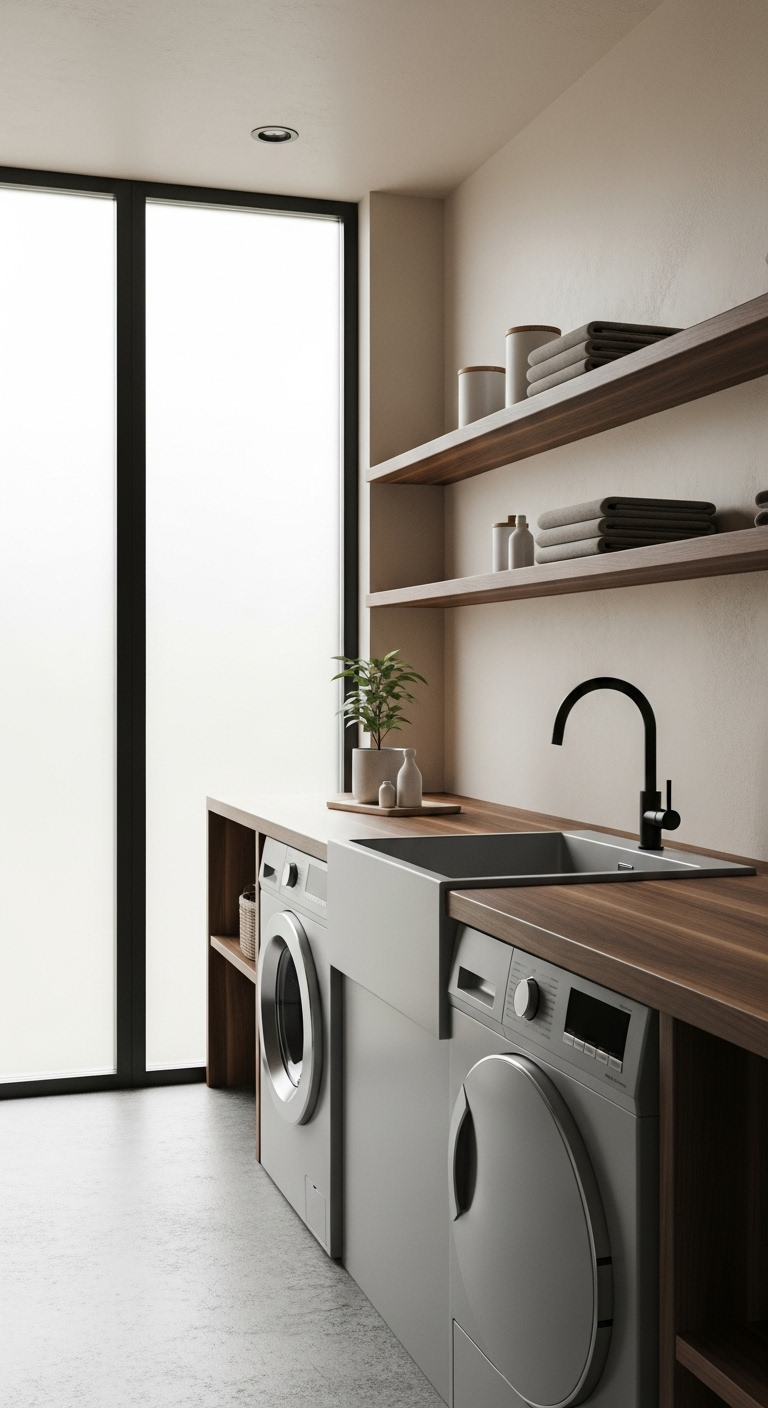
If your utility room has a window, use frosted glass or a simple sheer linen shade to maintain privacy while letting light in. Natural light is a key component of a zen atmosphere, making the room feel fresh and much less like a closet.
The soft, diffused glow from a frosted pane eliminates harsh shadows and creates a serene environment for your daily tasks. This connection to daylight is essential for a workspace that feels energetic and pleasant to spend time in.
Choose linen shades in soft, neutral tones like oatmeal, stone, or off-white to maintain that calm, airy aesthetic. Linen is a fantastic choice because it allows plenty of light to filter through while still providing the privacy you need.
Keep your window sill clear of clutter so that nothing blocks the path of incoming light throughout the day. Positioning a small, low-maintenance plant on the sill can bridge the gap between your indoor workspace and the natural world.
25#. Use Subtle Geometric Tiles
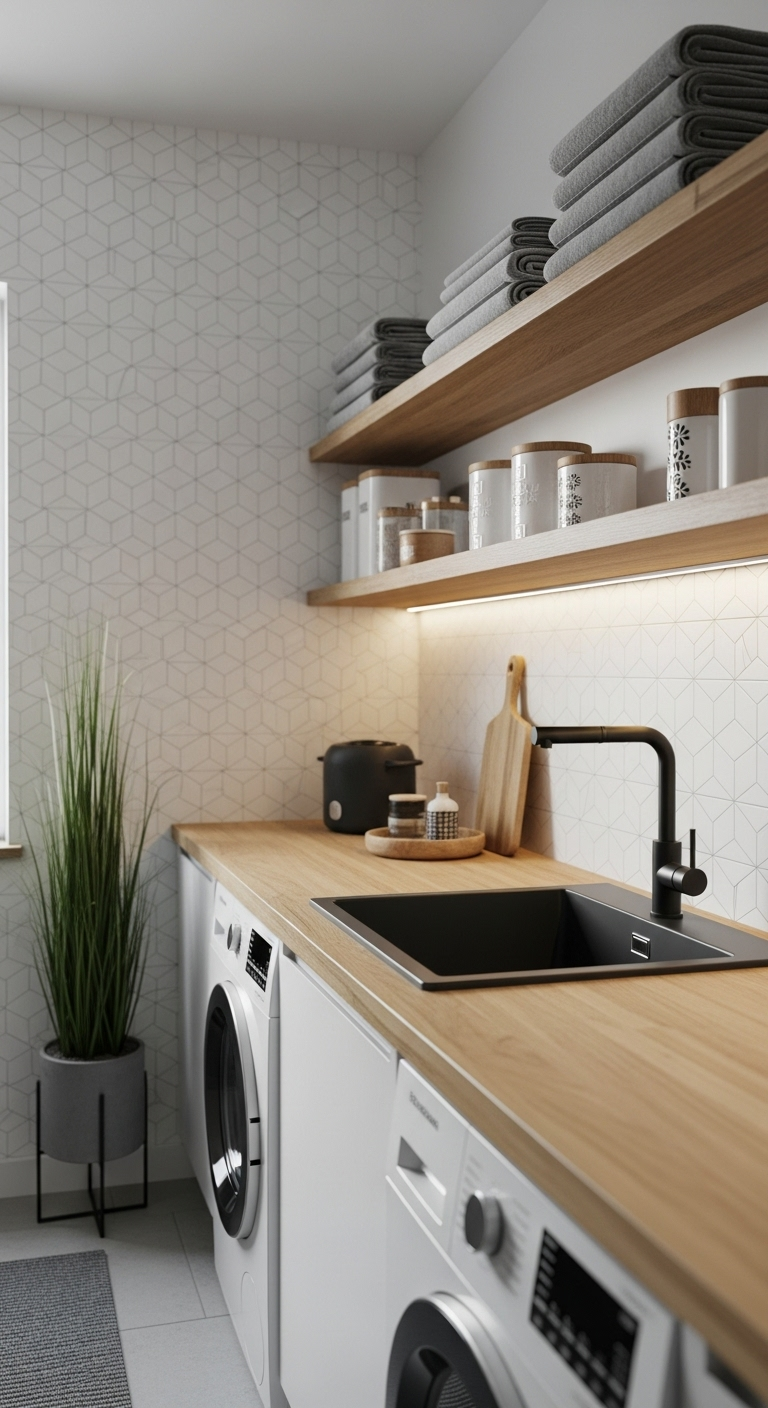
While many Japandi spaces focus on natural stone, a simple geometric tile in a muted color can add a modern twist. Look for hexagonal or subway tiles in shades of soft grey, cream, or sage green to add a delicate pattern.
The repetition of simple shapes creates a sense of rhythm and order that supports the minimalist goals of the room. It’s a great way to add personality to your utility space without breaking the peaceful and monochromatic flow.
Choose a matte finish for your tiles to maintain that soft, natural feel rather than an overly glossy, reflective look. Matte surfaces absorb light gently and are much more forgiving when it comes to showing water spots or daily dust.
Select a grout color that closely matches your tile to create a seamless, integrated appearance across the entire wall or floor. Minimizing the contrast between the tile and the grout keeps the focus on the overall shape rather than the grid lines.
26#. Add a Built-In Drying Bar
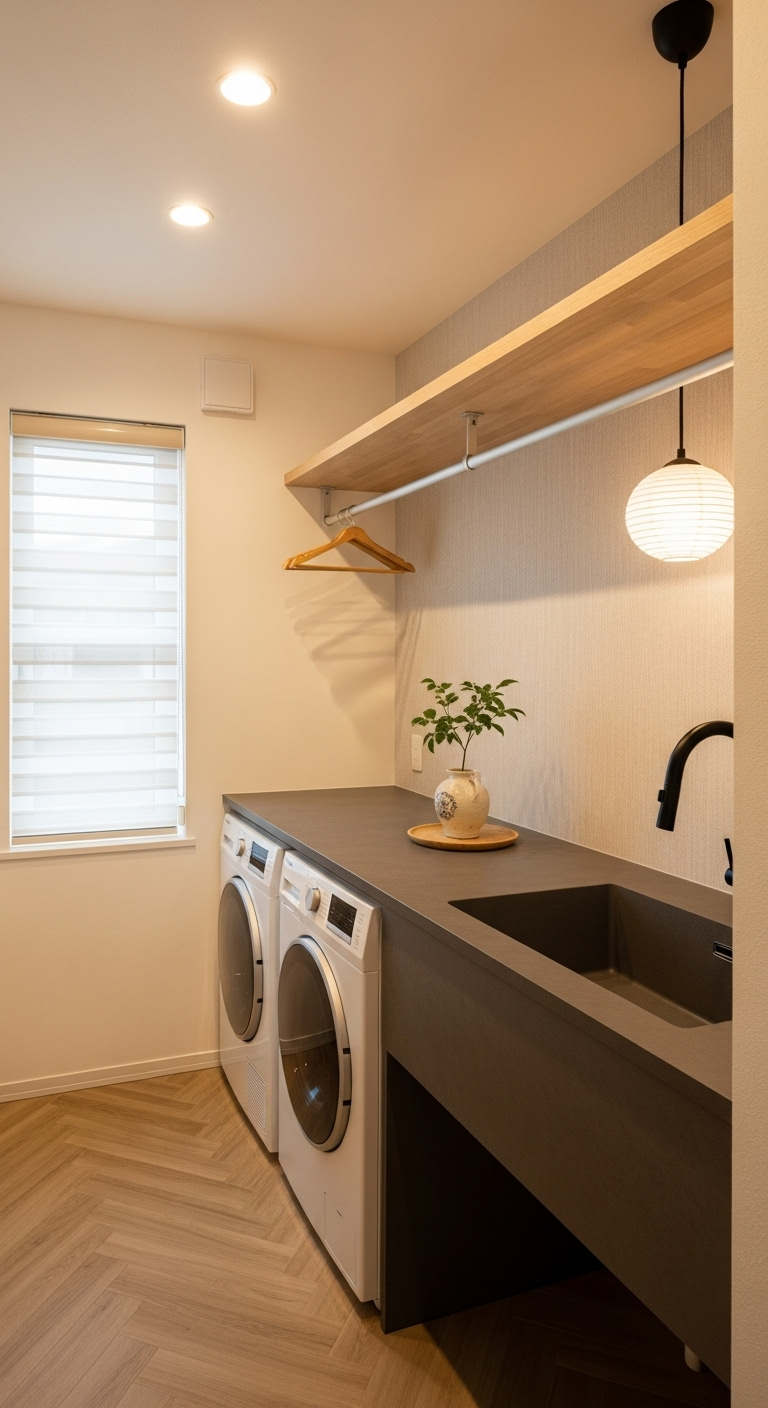
A simple wooden or black metal rod installed between two cabinets provides a permanent spot for hanging delicate garments. This integrated solution is much more stable and attractive than a flimsy, freestanding drying rack in the middle of the floor.
It allows clothes to dry naturally while keeping them organized and out of the way of your main prep and folding areas. This small addition makes the most of your vertical space, a vital tip for mastering how to create a zen Japandi utility room.
Choose a rod diameter that matches your aesthetic—slim black metal for a modern, architectural look or smooth, light wood for a warmer, organic touch. Mount the rod high enough so that longer garments can hang freely without touching the countertop or floor beneath.
Ensure the installation is secure, as damp clothing can add significant weight to the rod during the drying process. Using sturdy brackets that match your cabinetry hardware will create a seamless, built-in appearance that feels completely custom.
27#. Implement Hidden Power Outlets
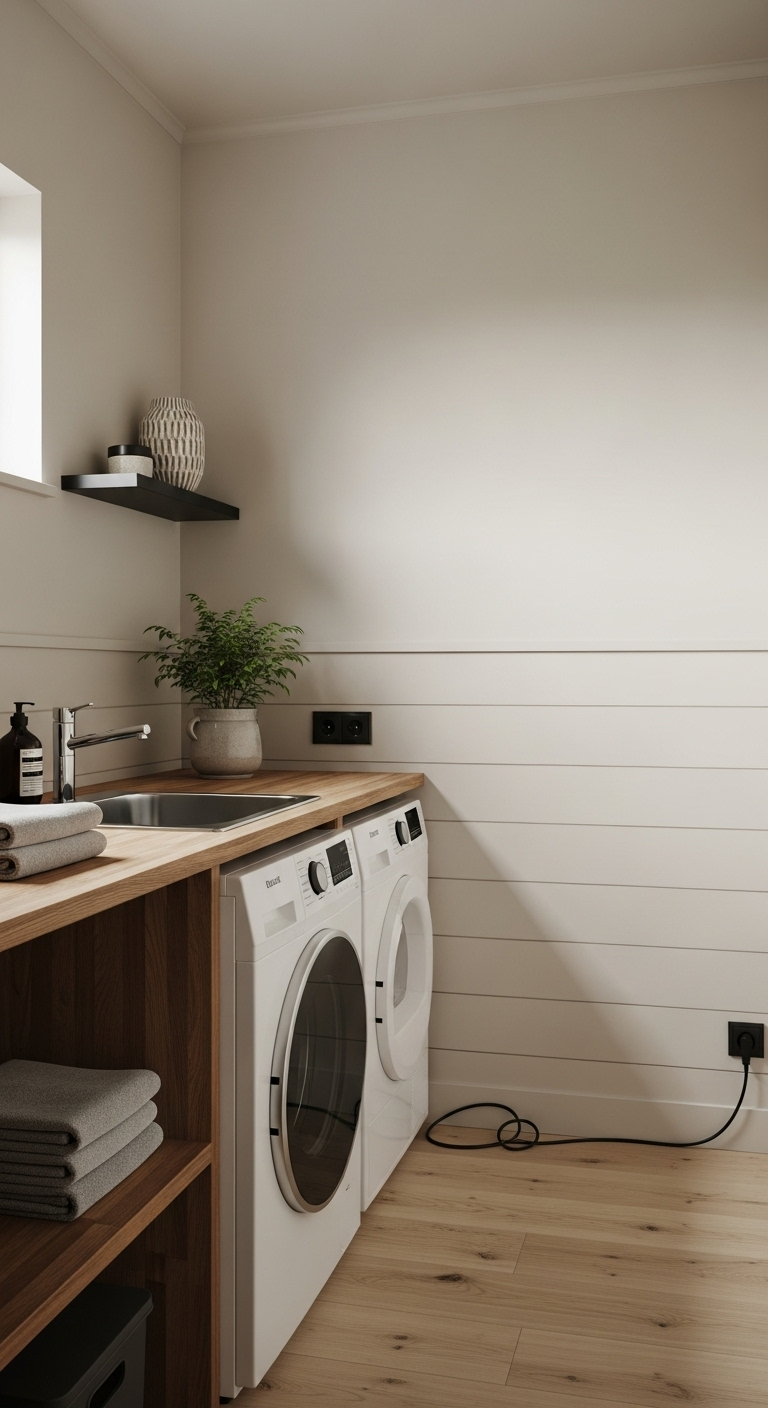
To keep your backsplash looking perfectly clean, consider installing pop-up outlets or hiding them under your upper cabinetry. This ensures that your beautiful tiles or wood panels are not interrupted by plastic wall plates or messy cords.
It is a high-end detail that significantly improves the zen feel of the room by removing unnecessary visual distractions from the eye. This level of intentionality is what separates a basic laundry room from a truly designer Japandi sanctuary.
Choose recessed or under-cabinet power strips to maintain a seamless, uninterrupted surface across your work area. These solutions allow you to plug in irons or steamers exactly where needed while keeping the wall completely clear.
If you must have outlets on the wall, opt for high-quality, matte-finish covers that match the exact color of your backsplash. Blending the outlet into the background helps it recede from sight, preserving the minimalist rhythm of your design.
28#. Choose Eco-Friendly Cleaning Supplies
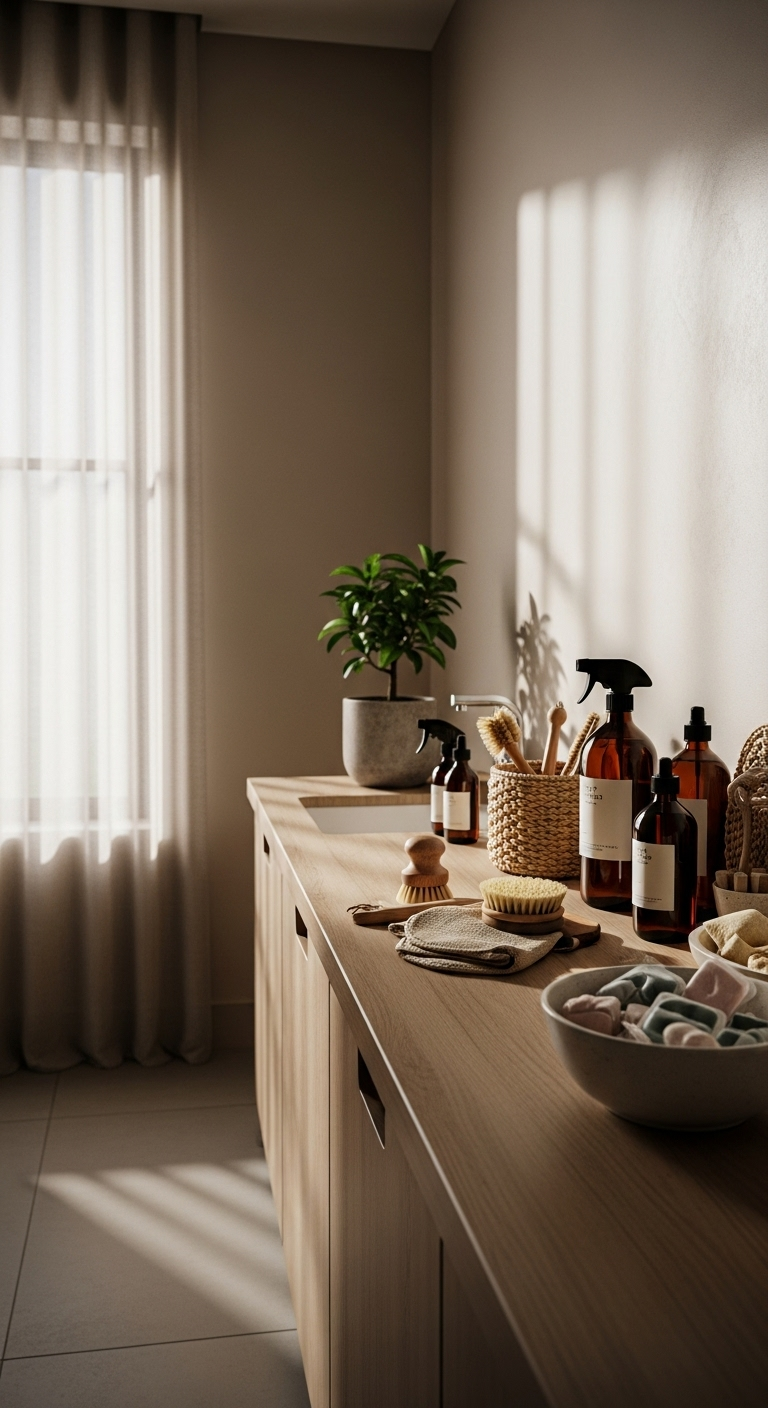
Part of the Japandi philosophy is living in harmony with nature, so opt for cleaning products in sustainable, refillable glass packaging. Using natural ingredients like vinegar and essential oils keeps the room smelling fresh and free of harsh chemicals.
Displaying these attractive, eco-friendly bottles on your counter adds to the curated and mindful aesthetic of the entire space. It’s a lifestyle shift that makes your cleaning ritual feel much more ethical and grounded in the wabi-sabi spirit.
Choose amber, frosted, or clear glass bottles to maintain a neutral, sophisticated palette that aligns with your home’s design. Applying minimalist, waterproof labels adds a professional touch while keeping your organizational system clear and easy to navigate.
Group your bottles on a small, elevated wooden tray or a stone base to create a dedicated station that looks intentional. This simple organization prevents the “clutter effect” and ensures your cleaning agents feel like part of the room’s decor.
29#. Create a Minimalist “Drop Zone”
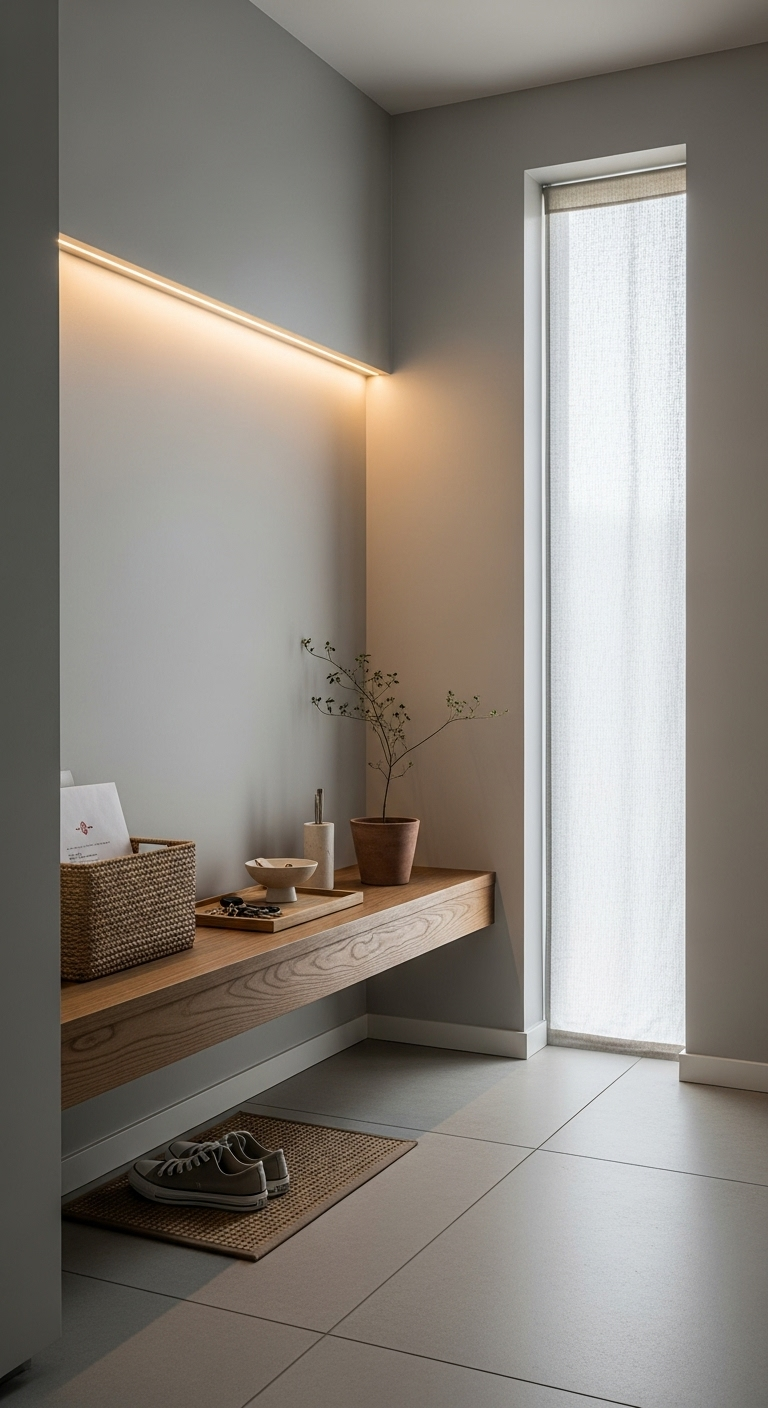
Choose a tray that complements the materials already present in your room—such as a dark charcoal concrete for an industrial edge or a warm oak piece to soften the space. Keep the tray’s dimensions modest so it serves its function without taking up excessive surface space on your primary shelving or counters.
Consider the “rule of one”: allow only essential items on the tray. If your mail requires sorting, handle it quickly and recycle the envelopes immediately to keep the area pristine. This habit reinforces a mindset of intentional living, ensuring that you only keep what is necessary in your personal sanctuary.
Position this zone near the entrance to your utility room but visually separate it from your laundry folding station. Creating these distinct “micro-zones” within the room helps define the specific activities that take place in each corner, preventing the space from feeling chaotic.
Integrating a simple, beautiful landing spot is a foundational design choice that supports a clean, stress-free household. When every object has a designated home, your home feels inherently more orderly, allowing you to move through your day with clarity and focus.
30#. Use Cork as a Tactile Acccent
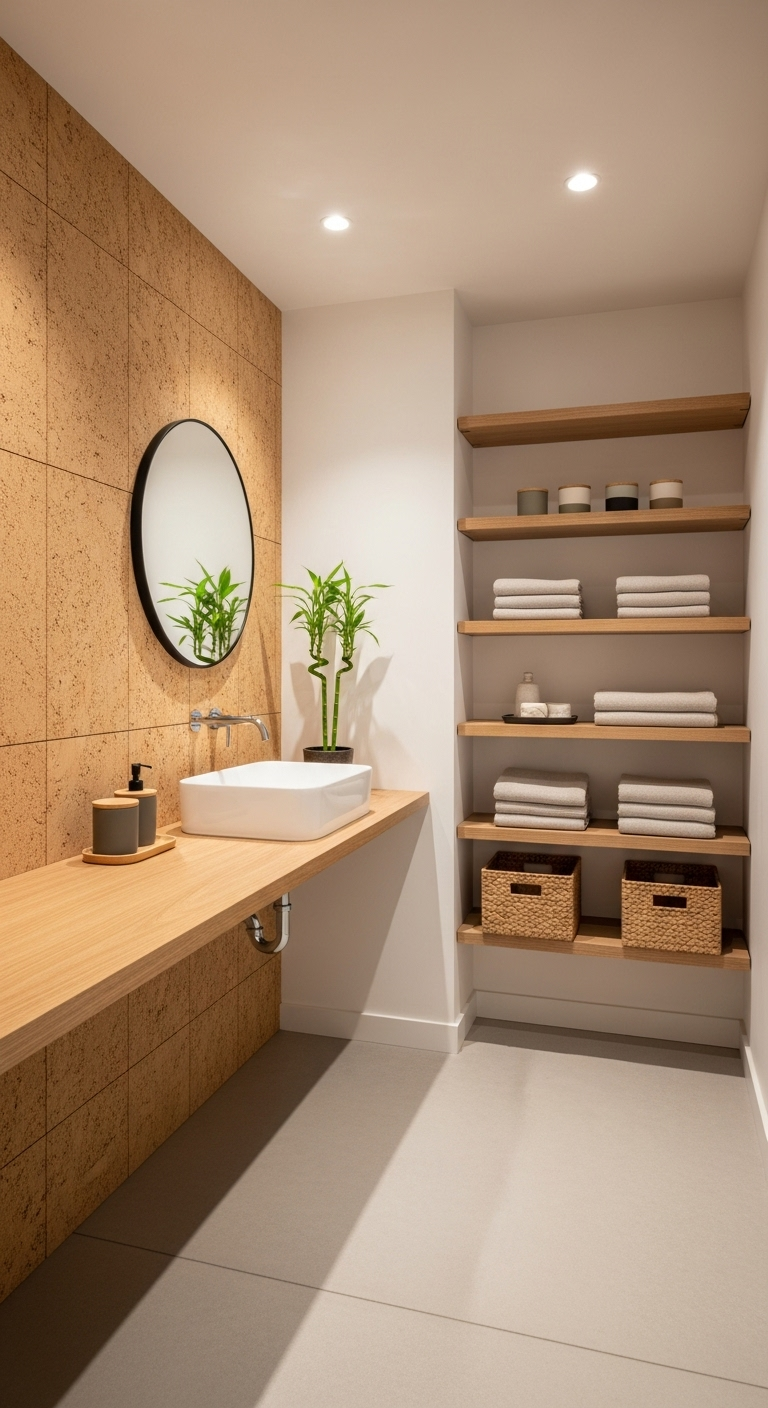
Cork is a sustainable and warm material that can be used for flooring, wall tiles, or even small organizational pinboards. Its unique, honey-colored texture adds a layer of visual interest that fits perfectly within the Japandi color palette.
Cork is naturally water-resistant and antimicrobial, making it a very practical choice for a room where moisture is often present. It provides a soft, acoustic-dampening surface that helps to quiet the noise of humming washing machines and dryers.
Consider installing cork wall tiles as a backdrop for your laundry station to create a soft, tactile surface that feels both modern and organic. This material acts as a beautiful natural insulator, making the space feel more cozy and inviting, especially during colder months.
Use a cork board in a refined, minimalist frame to pin laundry care tags, scheduling reminders, or even simple botanical sketches. This keeps your essential information organized without resorting to cold, plastic notice boards that disrupt the serene aesthetic of your room.
31#. Incorporate Tapered Cabinet Legs
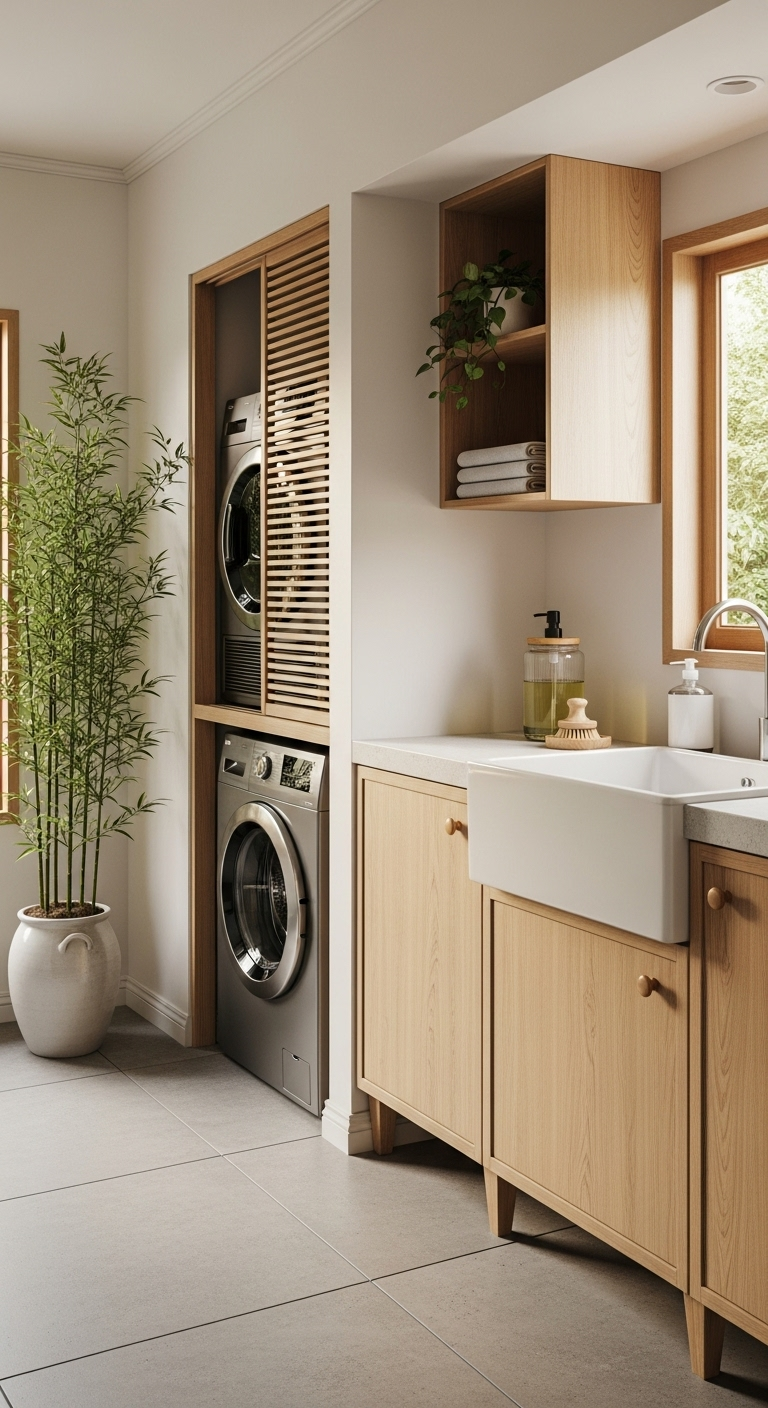
If your cabinetry isn’t built-in, choosing pieces with slim, tapered legs can make the utility room feel more like a furnished living area. This visual lightness allows light to flow underneath the furniture, making the entire room appear larger.
It prevents the floor from looking cluttered and makes cleaning much easier, which is essential for a high-functioning workspace. This design detail is a classic Mid-Century touch that blends perfectly with modern Nordic and Japanese styles.
Select furniture pieces in light, solid woods like white oak or ash to maintain a bright and airy atmosphere. The elegance of tapered legs adds a refined, sculptural quality to your utility room, elevating it beyond a simple storage zone.
Ensure the leg height is sufficient to allow for easy access with a vacuum or mop, reducing the effort needed to maintain a pristine space. This design choice promotes a sense of openness that is crucial for keeping your work area feeling calm and uncluttered.
32#. Add a Single Statement Branch
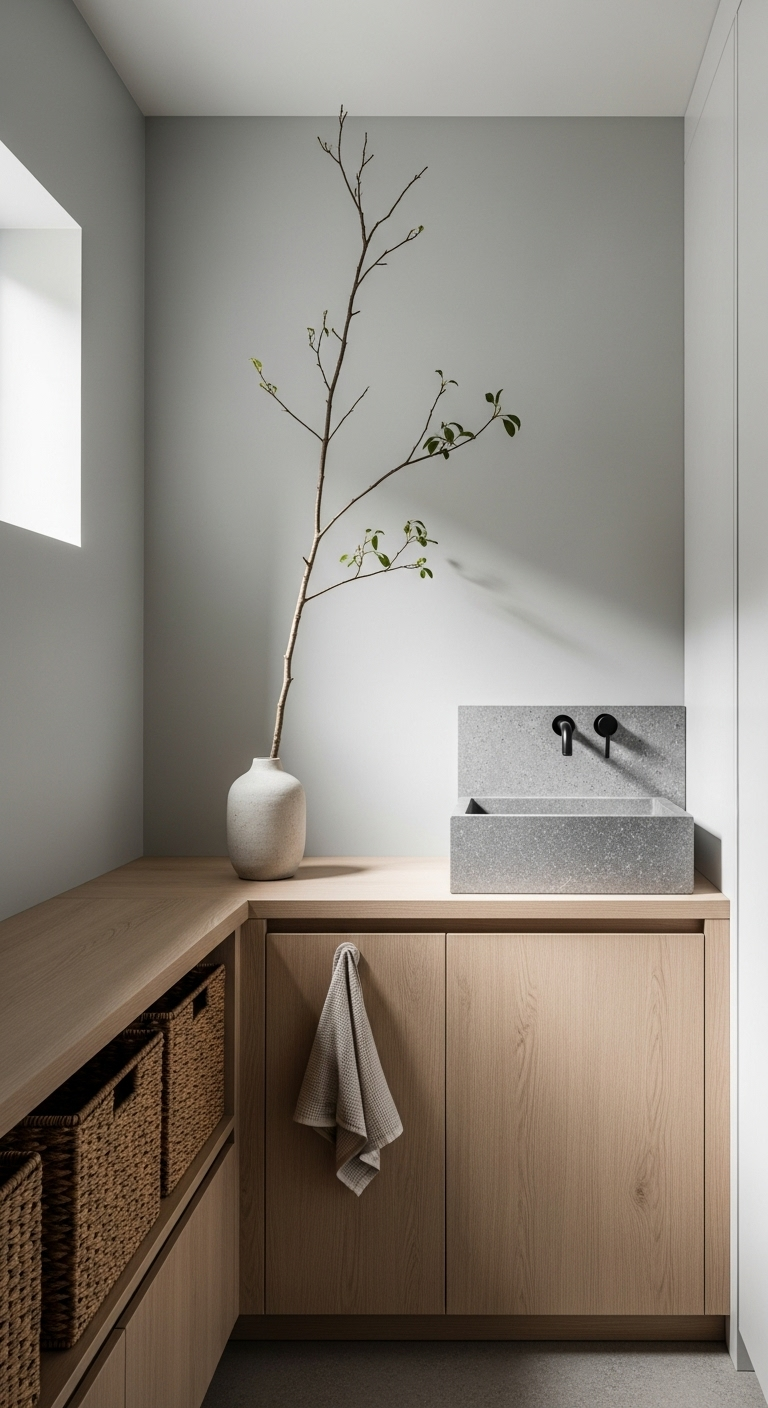
Sometimes the most effective decoration in a minimalist room is a single, large branch in a heavy ceramic or glass vase. This “less is more” approach brings the sculptural beauty of nature into your workspace without taking up much room.
A branch adds a sense of verticality and life to a corner or an empty stretch of countertop that might otherwise feel cold. It serves as a daily visual reminder to appreciate simple, natural forms even while you are performing routine chores.
Select a branch with interesting architectural lines, such as curly willow, manzanita, or a simple blossoming cherry branch. The natural structure provides a dynamic, changing silhouette that shifts as shadows fall throughout the day.
Use a heavy, matte-finish ceramic vessel in a neutral tone like sand, charcoal, or soft clay to ground the arrangement. The weight of the vase ensures stability, while the textured surface complements the organic feel of the wood.
33#. Install a Deep Undermount Sink
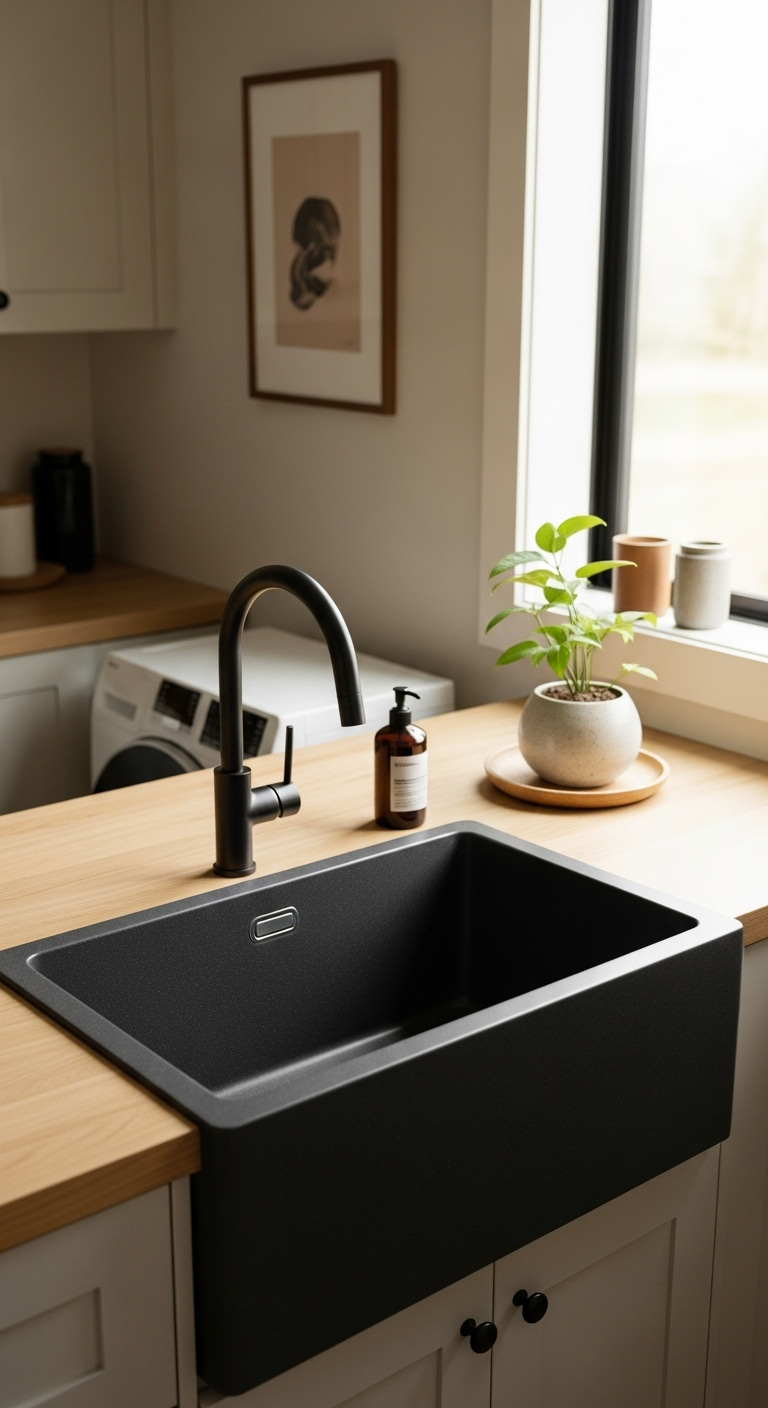
A large, deep sink is a functional necessity for a utility room, but choosing an undermount style keeps the look sleek and modern. This prevents a bulky sink rim from interrupting the clean lines of your stone or wood countertops.
It also makes it much easier to wipe dirt and water directly into the sink, keeping your surfaces dry and pristine. This focus on “cleanability” and seamless design is a cornerstone of the Japandi approach to functional home spaces.
Choose a matte-finish fireclay or composite sink to minimize water spots and maintain a soft, non-reflective appearance. A deep basin allows you to soak delicate items or hand-wash bulky textiles without splashing onto your surrounding workspace.
Pair your undermount sink with a high-quality, pull-down faucet in a complementary matte black or brushed metal finish. A pull-down sprayer increases the utility of the sink, making it easier to clean every corner of the basin quickly.
34#. Use Muted Terracotta Accents
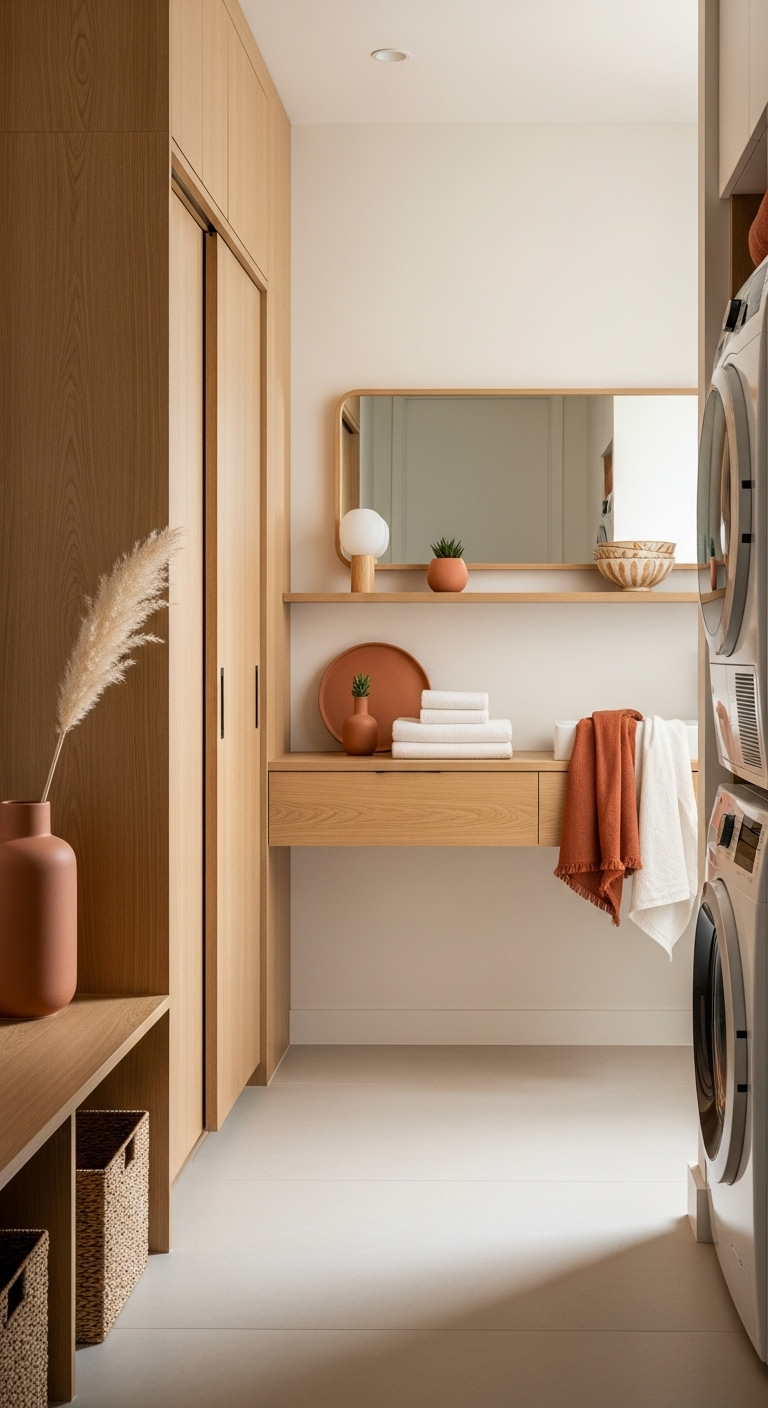
For a touch of warmth that isn’t wood, consider using a few terracotta pots or trays in a soft, sun-baked orange tone. This earthy color provides a beautiful pop of warmth against a backdrop of cool greys and whites.
Terracotta is a natural, breathable material that feels honest and rustic, aligning perfectly with the wabi-sabi appreciation for the earth. It adds a subtle Mediterranean-meets-Asian vibe that keeps the room feeling unique and inviting.
Choose terracotta items with a matte, unglazed finish to emphasize their porous, organic quality and raw tactile appeal. Over time, these pieces will develop a gentle, lived-in patina, which only adds to the character and depth of your utility room.
Use terracotta trays to group smaller items like brushes, soaps, or garden shears, keeping your counters tidy and visually anchored. The warm, sunset hue of the clay creates a stunning contrast against neutral-toned stone or light wood surfaces.
35#. Implement Vertical Wood Siding
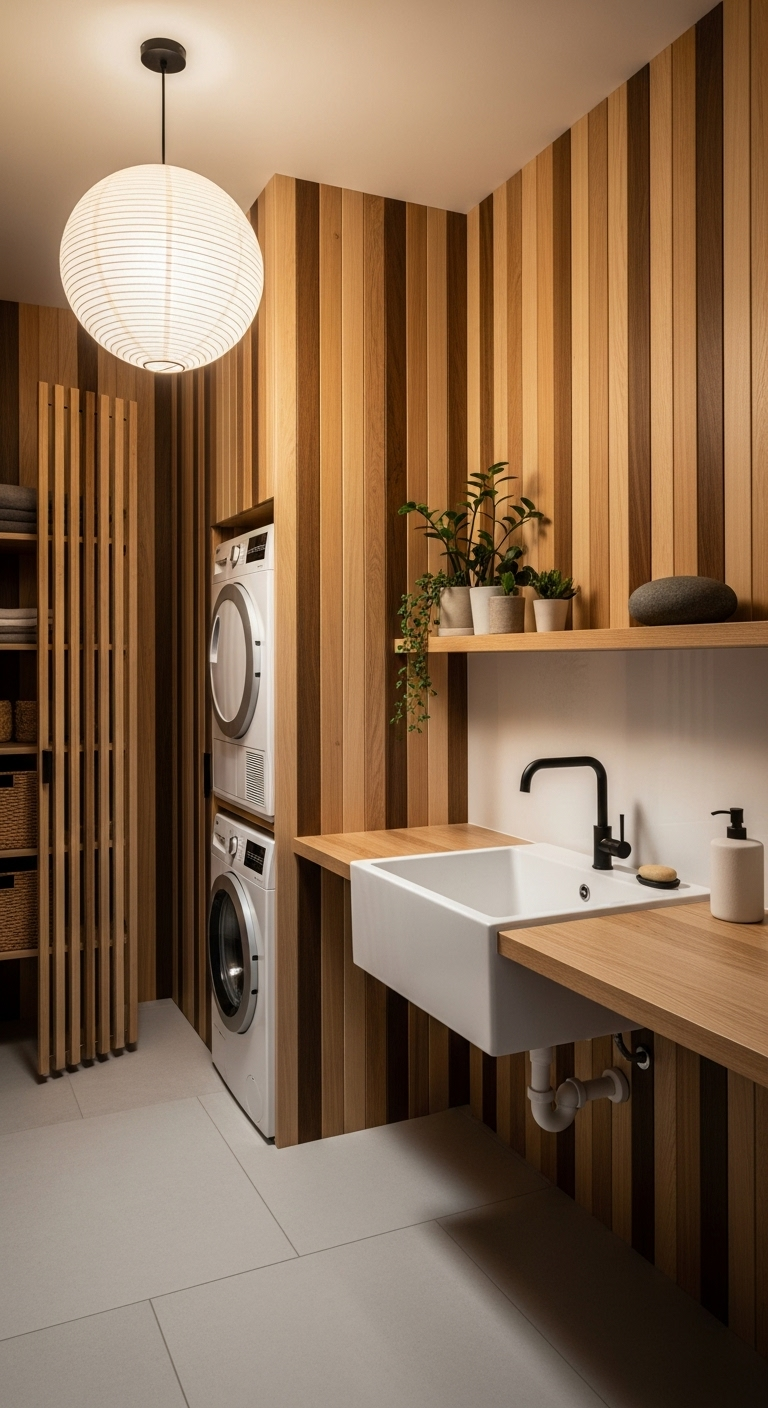
Instead of traditional tile, consider using vertical wood siding or “v-groove” paneling for your utility room walls. This adds a sense of cottage-like warmth and texture that makes the room feel incredibly cozy and high-end.
Painting the wood in a soft white or light grey keeps the room feeling bright and airy while providing a rich, layered look. It’s an excellent way to add architectural detail that feels much more permanent and curated than standard drywall.
Choose a moisture-resistant finish or a high-quality enamel paint to ensure your wood paneling stands up to the humidity of a laundry or utility area. A satin or eggshell sheen provides just enough reflectiveness to bounce light around the room without highlighting imperfections.
Install the boards vertically to draw the eye upward, effectively creating the illusion of higher ceilings and a more expansive, open space. This technique is particularly effective in smaller rooms where you want to maximize the sense of vertical volume.
36#. Organize with Ceramic Crocks
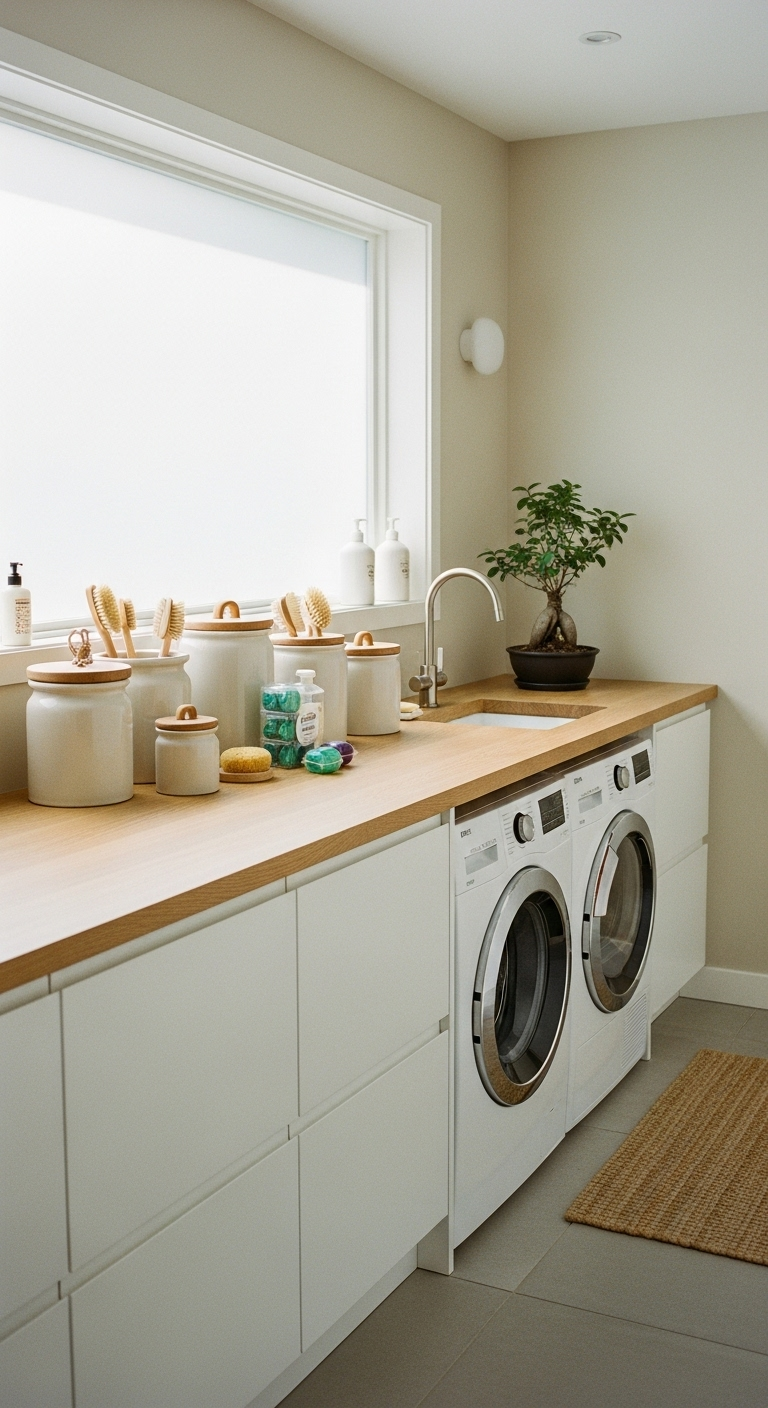
Large ceramic crocks are perfect for holding taller items like mops, brooms, or even rolled-up rugs in the corner of the room. These heavy, artisanal pieces provide a much more attractive storage solution than plastic buckets or wall clips.
The stony texture of the ceramic adds to the zen feel, making even your most basic cleaning tools look like part of a display. It’s a practical and stylish way to keep long-handled items organized and easily accessible for daily use.
Choose crocks with a substantial, weighted base to ensure they remain stable even when holding multiple heavy-duty tools. A matte or reactive glaze in neutral tones—such as slate, oatmeal, or muted earth—will anchor the corner and harmonize with your existing Japandi palette.
Group these crocks near the entrance or a recessed wall area to create a “cleaning station” that feels intentional and well-structured. By grouping your long-handled items, you free up valuable wall space elsewhere for your pegboard or shelving units.
37#. Add a Minimalist Mirror
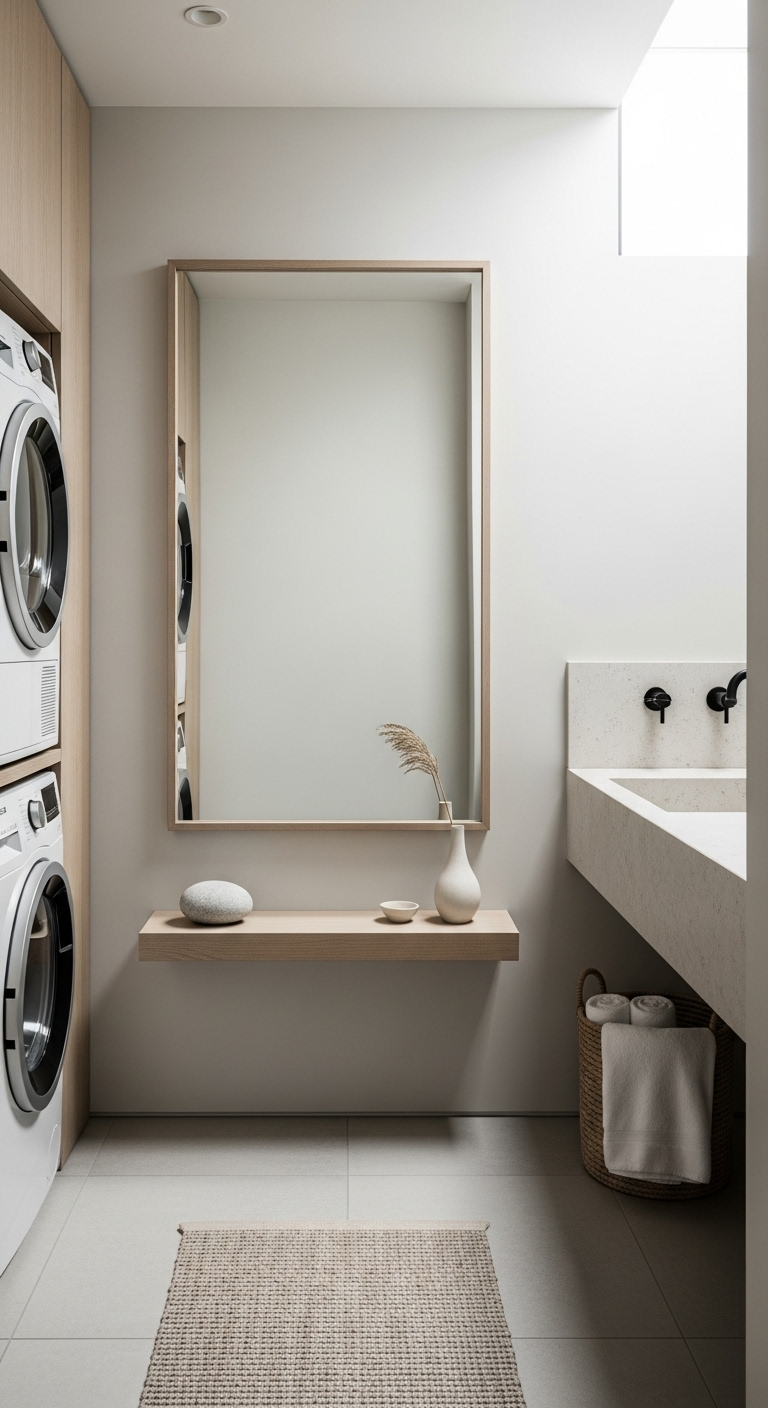
A simple, frameless mirror or one with a thin wooden edge can help to bounce light around a windowless utility room or closet. Mirrors make small spaces feel less claustrophobic, which is essential for a room where you might spend a lot of time.
It also serves a practical purpose if you use your utility room for steaming clothes or checking your appearance before leaving the house. This functional addition contributes to the overall bright and airy goal of how to create a zen Japandi utility room.
Choose a full-length, lean-to style if you have an empty wall, or a wall-mounted piece above a folding table to create a focal point. The slim profile ensures the mirror remains an unobtrusive part of the design while significantly expanding the visual depth of the room.
If you choose a framed option, look for light-toned wood—like pale oak or bamboo—to maintain that signature Japandi warmth. The natural grain of the wood provides an organic contrast to the cool, reflective glass, bridging the gap between texture and light.
38#. Use Subtle Scent Diffusers
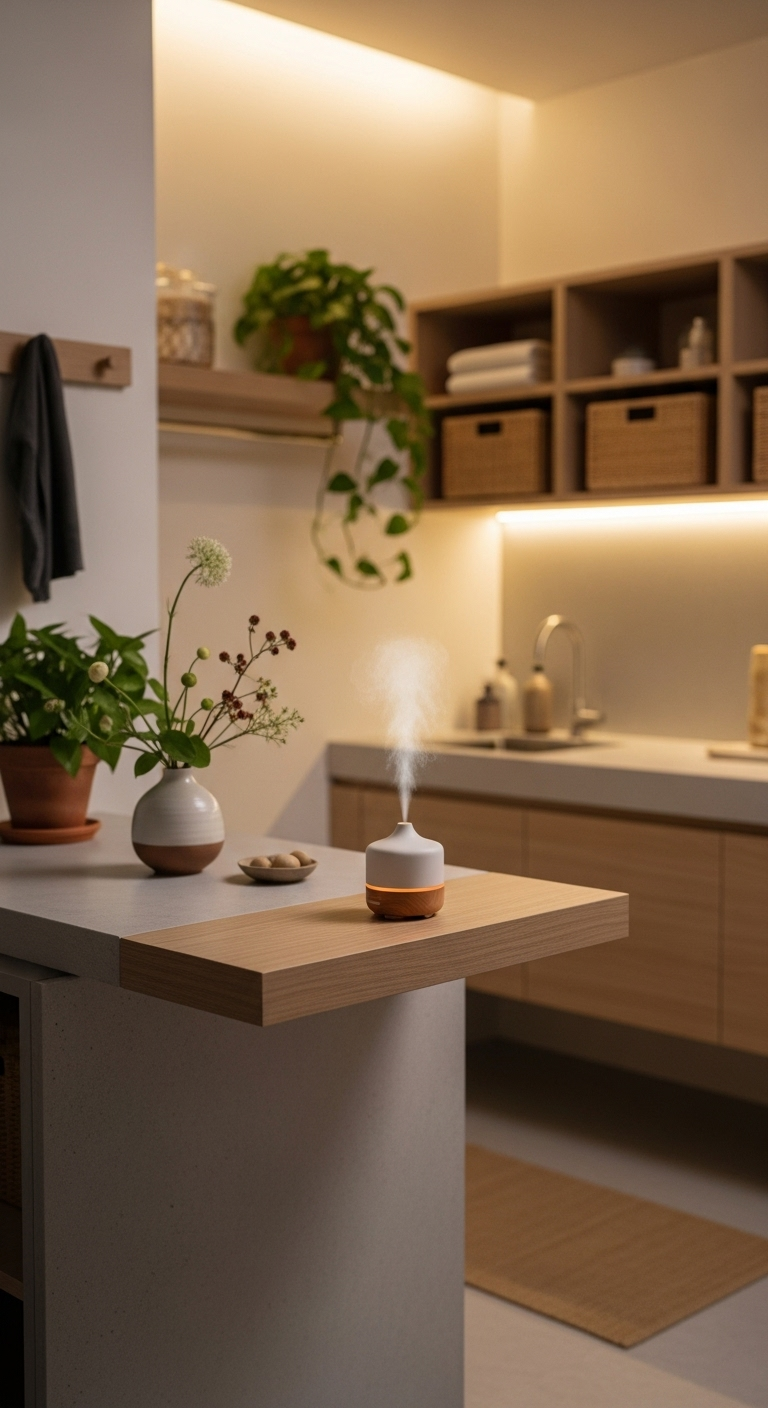
The final touch in creating a zen environment is appealing to the sense of smell with a minimalist reed diffuser or oil burner. Choose light, clean scents like hinoki wood, eucalyptus, or white tea to keep the air feeling fresh and calm.
Avoid heavy, artificial fragrances in favor of natural essential oils that mimic the smell of a forest or a spa. This creates an olfactory buffer that transforms the utility room into a place of relaxation rather than just a place for work.
Select a diffuser vessel in a matte, unglazed ceramic or dark glass to align with your Japandi aesthetic. Place it on a small wooden tray or a stone coaster to protect your surfaces while establishing a dedicated “scent zone.”
Incorporate high-quality, pure essential oils that offer a subtle, lingering aroma rather than an overpowering burst of scent. The goal is for the fragrance to feel like an extension of the room’s atmosphere—clean, natural, and restorative.
39#. Focus on Quality over Quantity
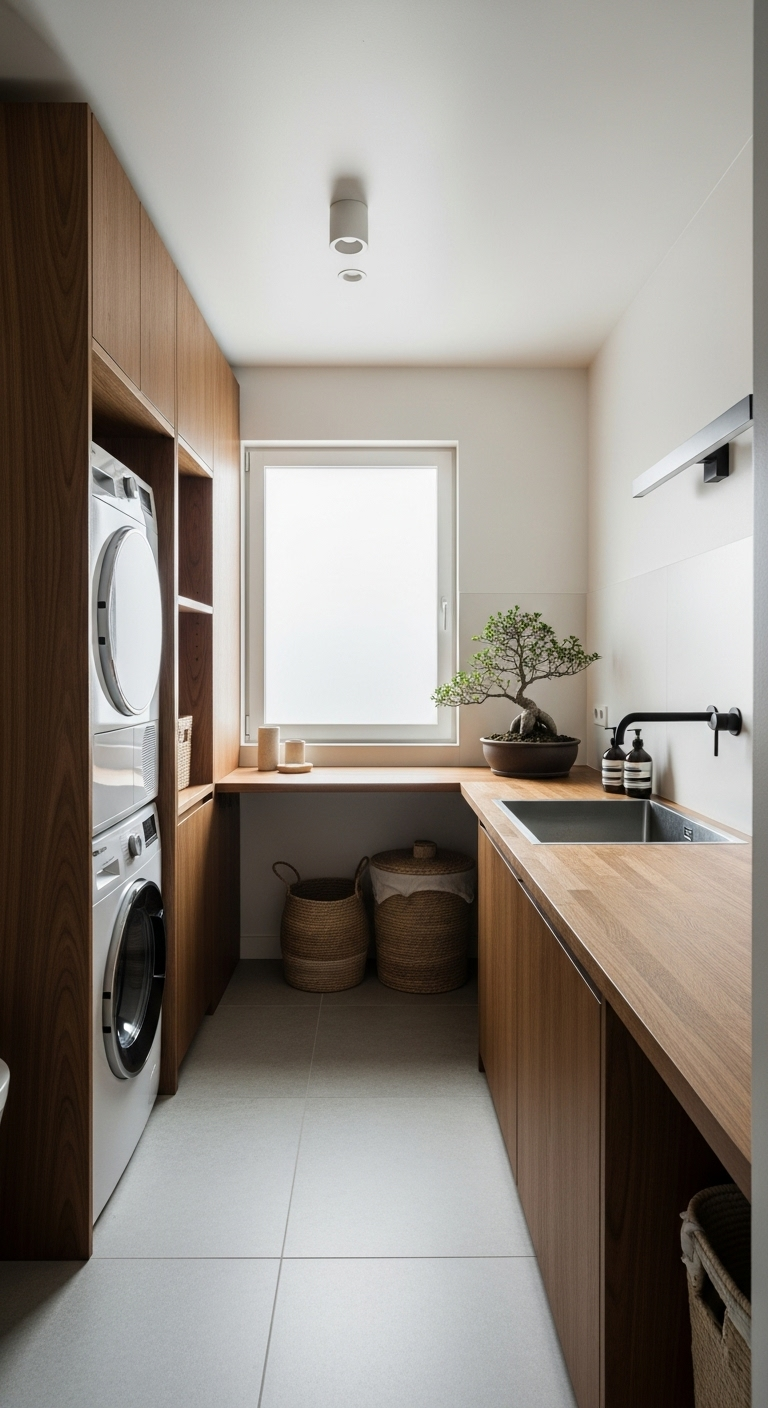
The ultimate secret to a Japandi space is choosing a few high-quality items rather than filling the room with cheap, disposable decor. Invest in a well-made wooden bench or a designer light fixture that will stand the test of time.
By curating your utility room with intention, you ensure that every object has a purpose and a place, leading to a more peaceful life. This “slow living” approach is what truly turns a house into a home that feels like a sanctuary from the world.
Prioritize pieces crafted from honest materials—solid oak, hand-forged iron, or authentic stone—that will develop a beautiful character through years of use. When you select items based on longevity rather than trends, you naturally reduce clutter and foster a deeper connection to your environment.
Focus on the “empty space” as much as the objects themselves; allow your high-quality pieces room to breathe and be appreciated. A single, thoughtfully placed bench can serve as a functional seat for changing shoes or folding laundry, while also acting as a grounded piece of sculptural furniture.
Conclusion: Ritual of Calm
Transforming your chore space into a “Zen” sanctuary is an act of self-care that makes every day feel a little more balanced. By implementing these Japandi principles, you’ve turned the most functional part of your home into a place of quiet beauty and order.
Now, even the simplest tasks like folding a towel can become a moment of peace and reflection in your beautifully curated home.