In a world that often feels cluttered and loud, the dining room should serve as a quiet anchor for the soul.
Japandi Dining Room Designs Ideas—the harmonious fusion of Japanese “Wabi-Sabi” and Scandinavian “Hygge”—offers a masterful solution for those seeking a space that is both functional and profoundly peaceful.
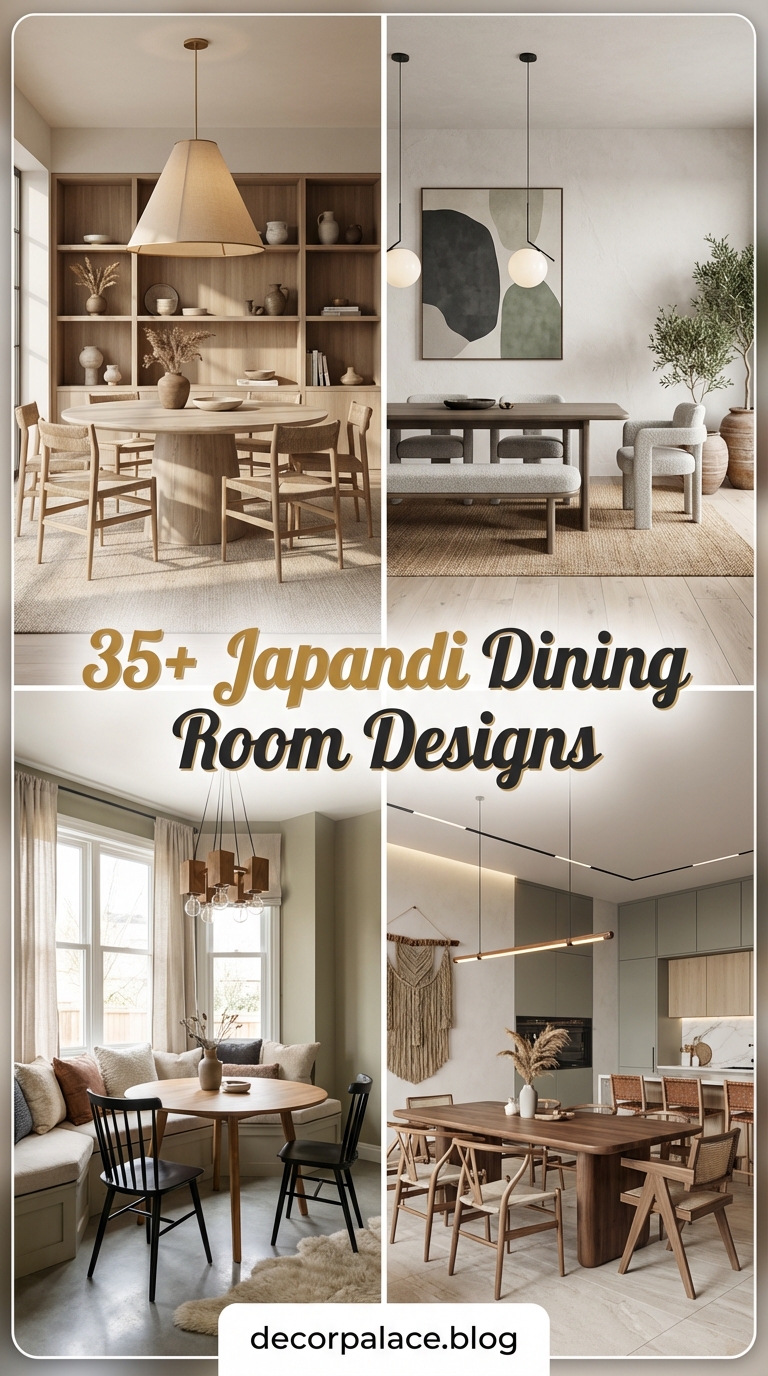
By stripping away the unnecessary and focusing on organic textures and intentional craftsmanship, you can turn every meal into a mindful ritual. Let’s explore how to blend the warmth of timber with the coolness of stone to create your ultimate minimalist sanctuary.
Zen Dining: Modern Japandi Interior Art
1#. Light Oak Tapered Tables
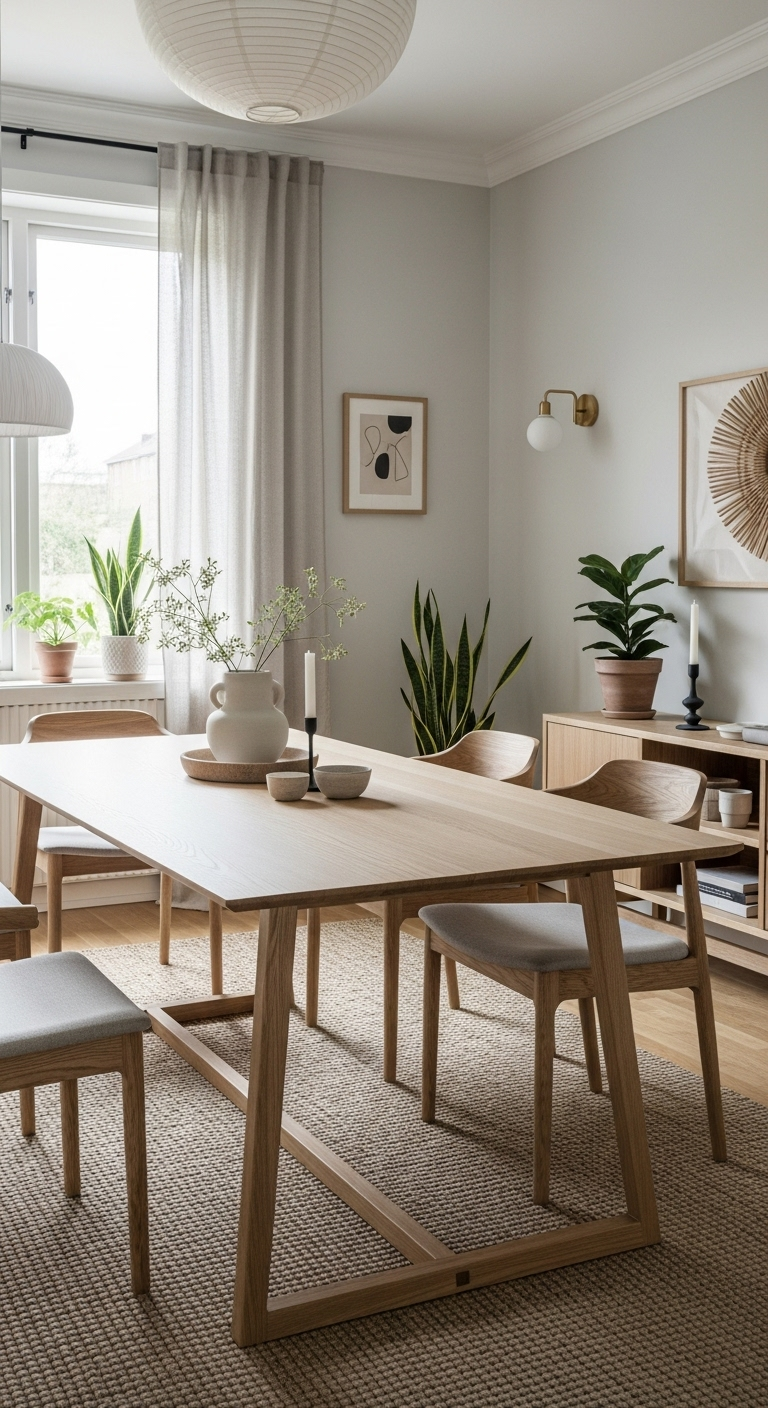
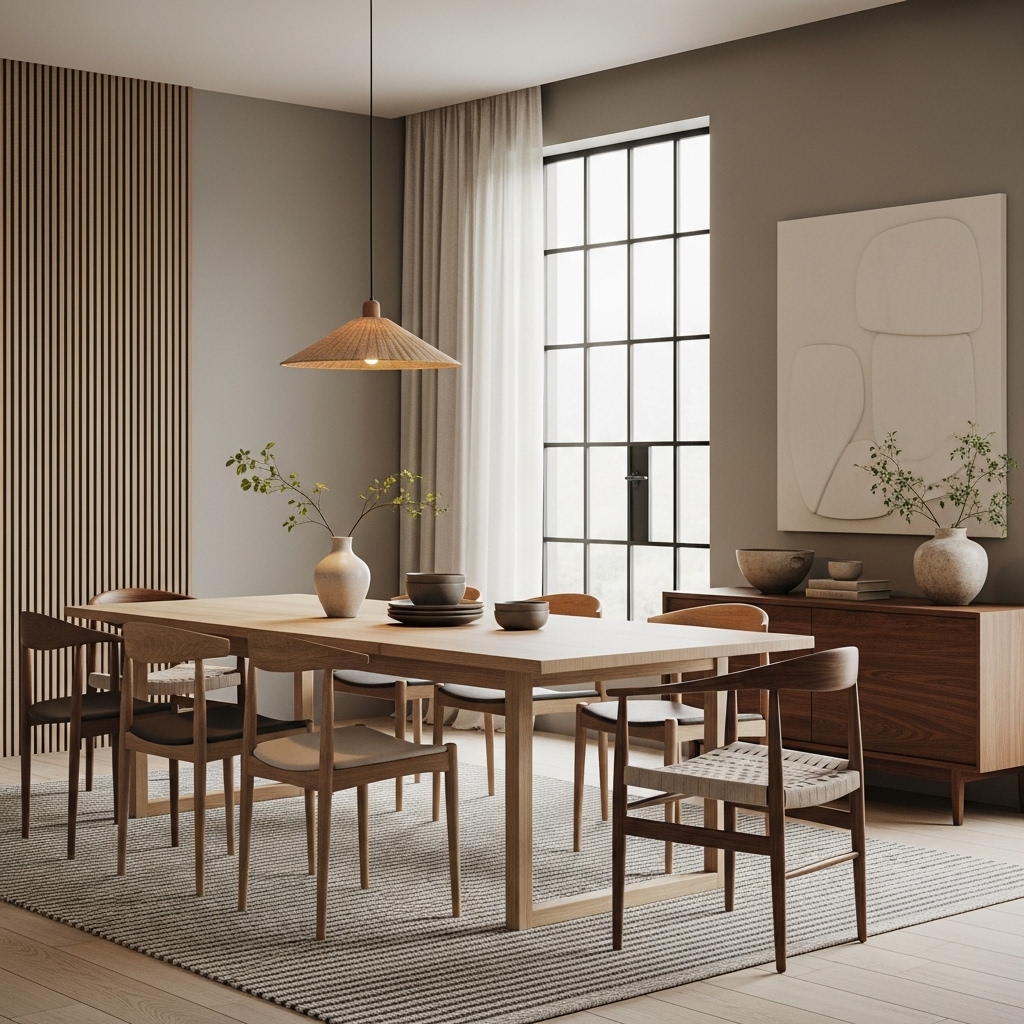
The centerpiece of most Japandi Dining Room Designs is a high-quality light oak table featuring slim, tapered legs for an airy feel. This natural wood tone provides a warm, organic foundation that bridges the gap between Nordic and Eastern aesthetics perfectly.
Choosing such a light timber keeps your floor space feeling open and uncluttered, which is essential for this minimalist movement. The clean lines of the legs allow for easy movement around the table while preventing the room from feeling heavy or visually crowded.
Prioritize a matte finish to celebrate the authentic grain and texture of the wood rather than a shiny, artificial lacquer. This tactile approach honors the Wabi-Sabi philosophy, where the beauty of natural materials is appreciated in their most honest and unrefined state.
A simple rectangular or circular shape ensures the room remains grounded and focused on the connection between your family and guests. This design choice removes unnecessary distractions, allowing the conversation and the shared meal to become the primary focus of your dining area.
2#. Black Spindle Dining Chairs
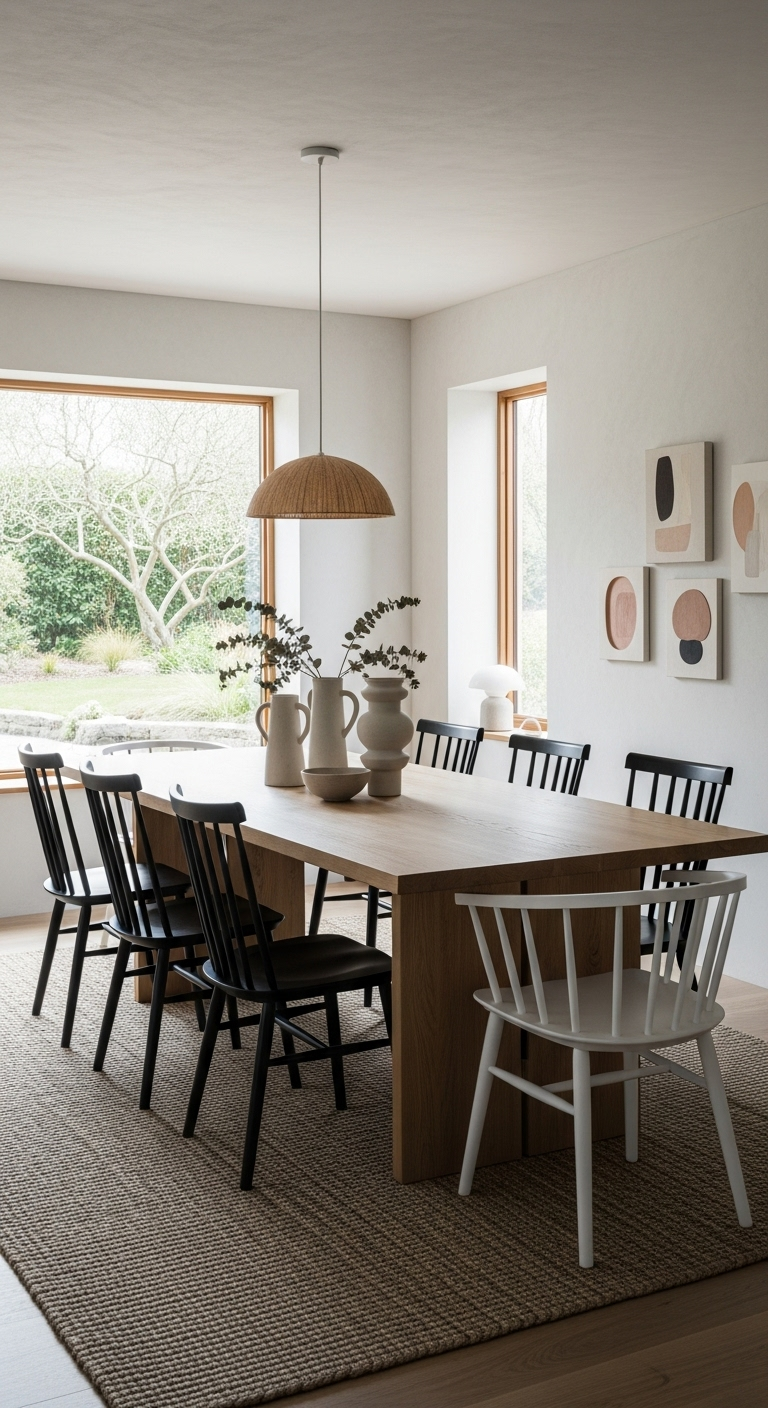
Contrast your light wood table with a set of sleek, black spindle chairs to add a touch of modern graphic definition. This visual anchor prevents a neutral-colored room from feeling flat and provides a sharp, sophisticated silhouette against your light-colored walls.
The thin, vertical lines of the spindles mimic the bamboo structures found in Japanese design while maintaining a classic Scandinavian profile. This blend of styles creates an balanced aesthetic that feels both culturally rich and effortlessly modern for your contemporary dining space.
These chairs serve as a timeless seating choice that remains lightweight in appearance while offering incredible sturdiness for daily use. Their open design ensures that your room maintains an airy, uncluttered flow, even when the chairs are pushed in around the table.
Selecting black for your seating provides the necessary depth required to ground your overall Japandi Dining Room Designs effectively. It is a confident design move that elevates your furniture from basic utility items into a cohesive, high-end display of artisan craftsmanship.
3#. Oversized Paper Lantern Pendants
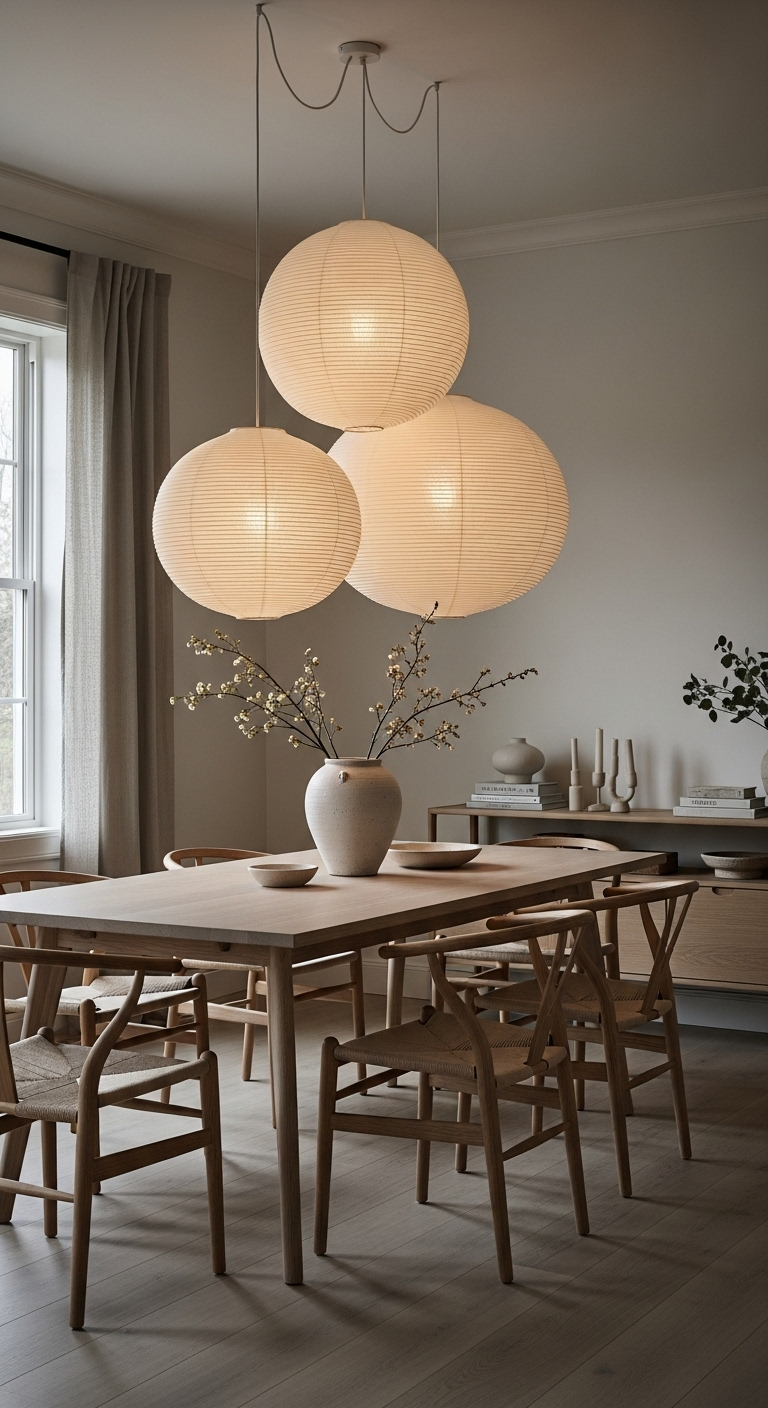
Hang a large, sculptural paper lantern over your dining table to cast a soft, diffused glow that mimics natural moonlight. The delicate texture of the washi paper adds a layer of fragile beauty and handcrafted soul to a minimalist room.
This lighting choice creates a warm and inviting environment that encourages long, relaxed conversations during your evening meals. By softening the harsh edges of modern furniture, the lantern helps transition your dining space into a serene retreat from the outside world.
The large scale of the pendant creates a stunning focal point without adding any unnecessary visual weight to the ceiling. Because the material is lightweight and ethereal, it maintains the open, airy feeling that is so central to modern minimalist interiors.
This deliberate choice is essential for establishing the peaceful, Zen atmosphere that defines the best Japandi Dining Room Designs. It acts as the final piece of the puzzle, balancing the starkness of clean lines with a gentle, glowing presence overhead.
4#. Low-Profile Slatted Sideboards
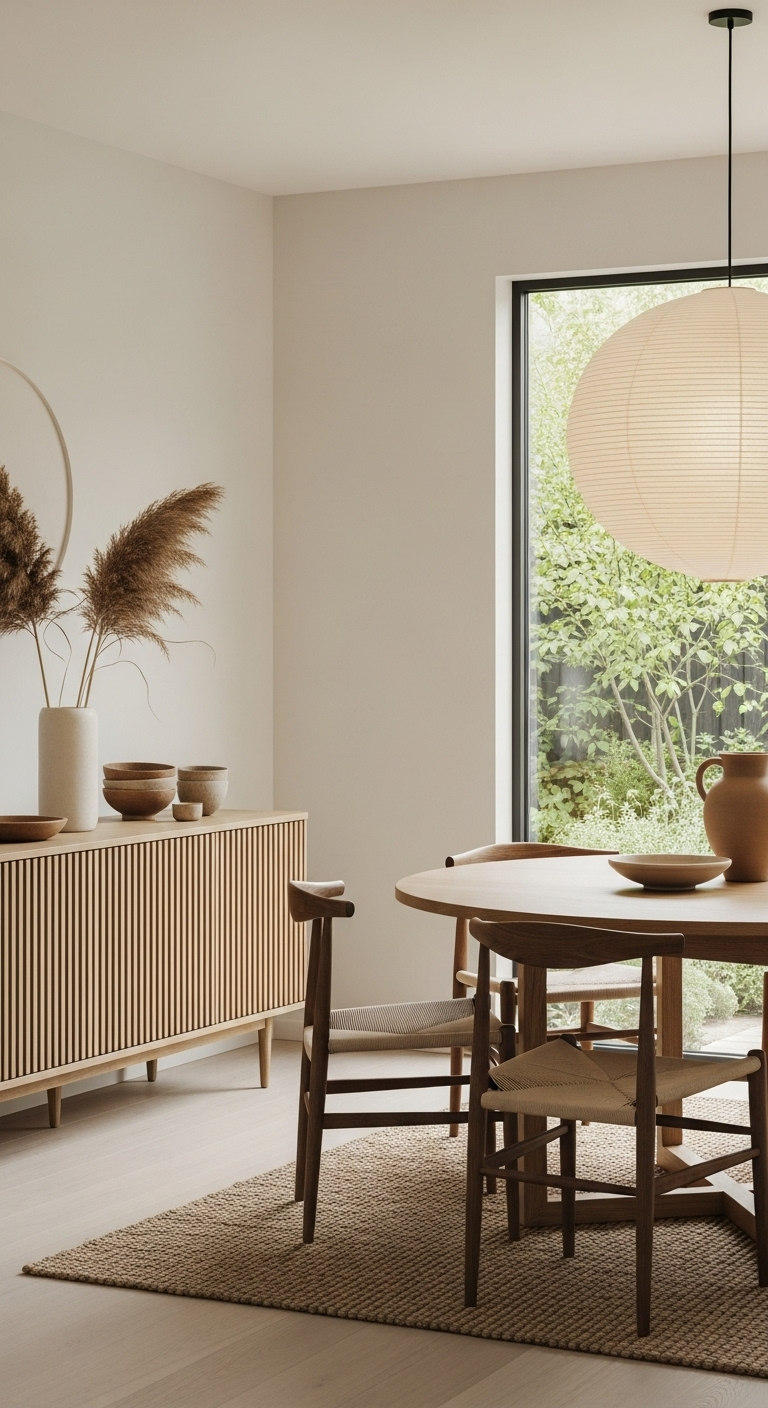
Incorporate a low-slung wooden sideboard featuring vertical slats to provide hidden storage for your minimalist dinnerware and linens. The repetitive lines of the slats add a rhythmic, architectural texture that is a hallmark of Japanese craftsmanship and structural order.
Choosing furniture with this specific design detail introduces a layer of visual interest that remains restrained and sophisticated. It serves as a decorative element in its own right, elevating the sideboard from simple storage into a central piece of art.
Keeping your furniture low to the ground helps the room feel more expansive and connected to the earth. This design choice prevents your dining area from feeling crowded or overly vertical, ensuring the atmosphere remains open, airy, and inviting.
This functional piece keeps your surfaces clear, supporting the essential philosophy that makes this interior style so restorative. By hiding away daily clutter, you maintain the clean, tranquil environment required for a balanced and genuinely peaceful dining experience.
5#. Hand-Knotted Jute Rugs
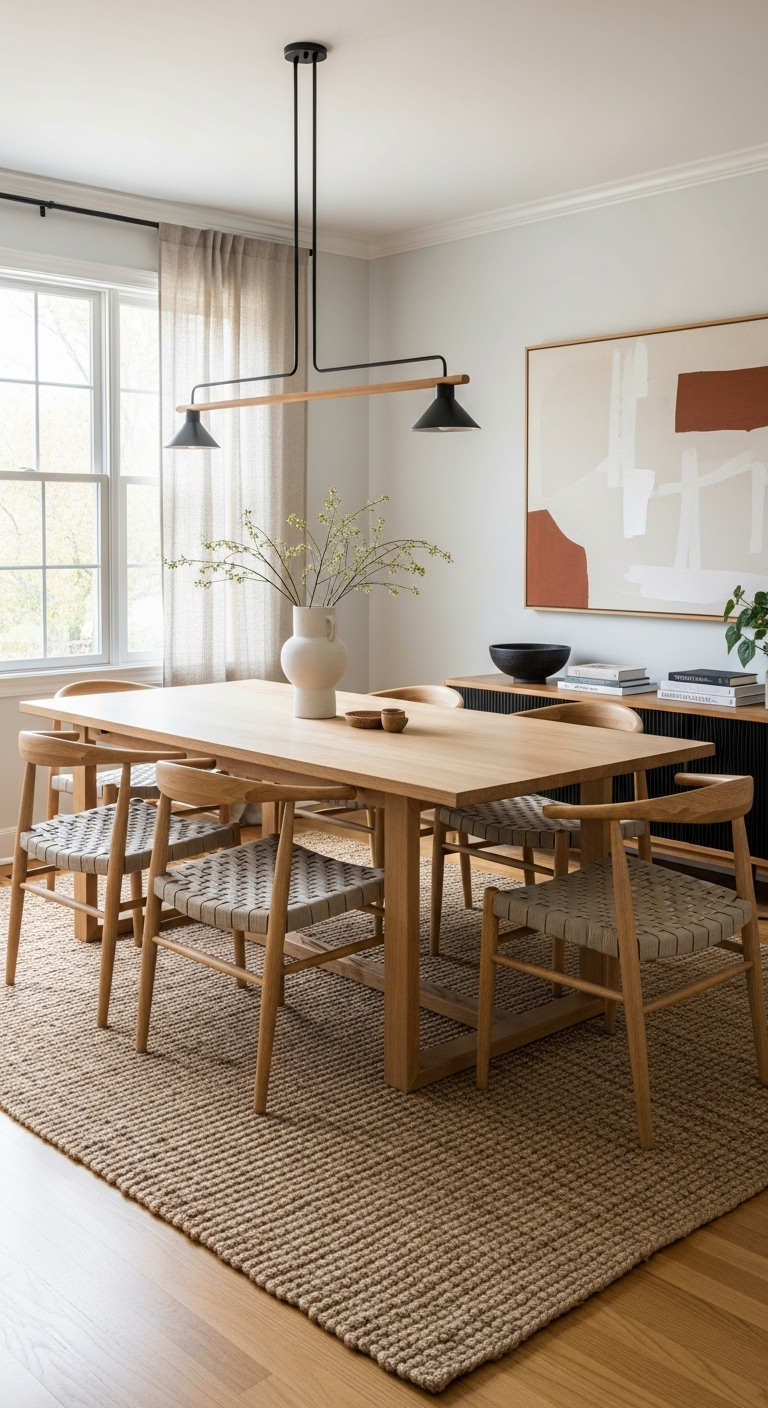
Place a large jute or sisal rug under your dining set to introduce a rugged, tactile foundation that grounds the entire space. The warm, golden-brown tones of the natural fibers coordinate perfectly with wood floors and add a necessary layer of inviting warmth.
This choice of material brings an organic quality to the room, preventing a minimalist layout from feeling cold or sterile. The subtle variation in the weave creates a soft, earthy visual that acts as a quiet backdrop for your primary furniture pieces.
Natural fiber rugs are incredibly durable and eco-friendly, aligning with the sustainable values of modern Japandi Dining Room Designs. Their resilience makes them an ideal choice for high-traffic dining areas, standing up well to the constant movement of chairs and foot traffic.
They provide a pleasant, sand-like texture underfoot that helps to blur the lines between your interior and the natural world. This final textural layer completes the room by adding a grounded sense of comfort that feels both intentional and inherently peaceful.
6#. Minimalist Ikebana Arrangements
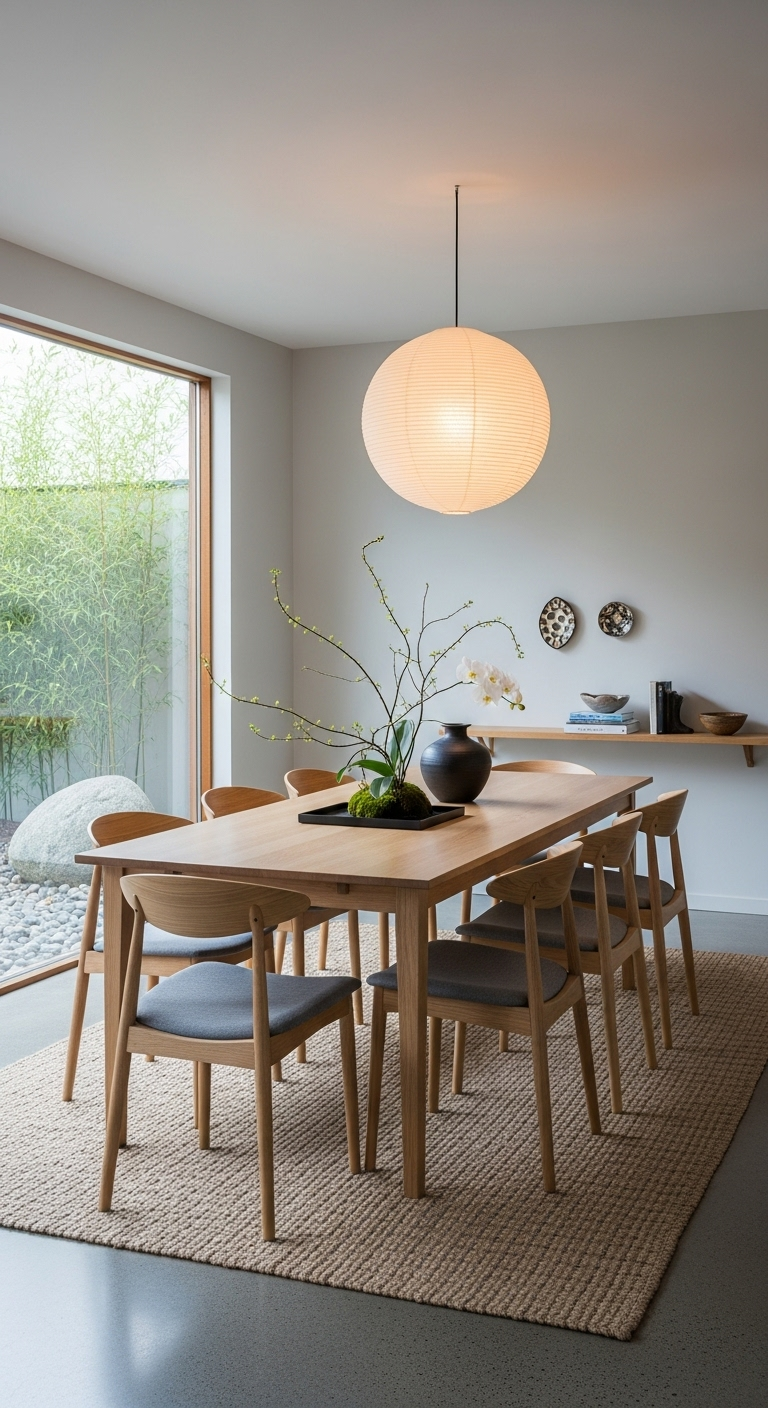
Instead of a crowded floral bouquet, choose a single, uniquely shaped branch or a lone stem in a tall ceramic vase. This practice of Ikebana celebrates the intentional beauty of negative space while highlighting the specific, rugged character of a living element.
This minimalist approach forces the eye to appreciate the architecture of the stem rather than just the color of a flower. It serves as a quiet, sophisticated centerpiece that honors the natural world without introducing unnecessary clutter to your dining table surface.
The sculptural silhouette of your chosen branch adds a sense of living art that evolves as the plant ages. This changing display connects you to the rhythmic cycles of the seasons, bringing a subtle, organic energy into your interior space.
It is a contemplative detail that brings a touch of the forest directly to your daily dining experience. By focusing on quality over quantity, you create a calm environment that perfectly reflects the grounded, intentional spirit of your home.
7#. Matte Stoneware Place Settings
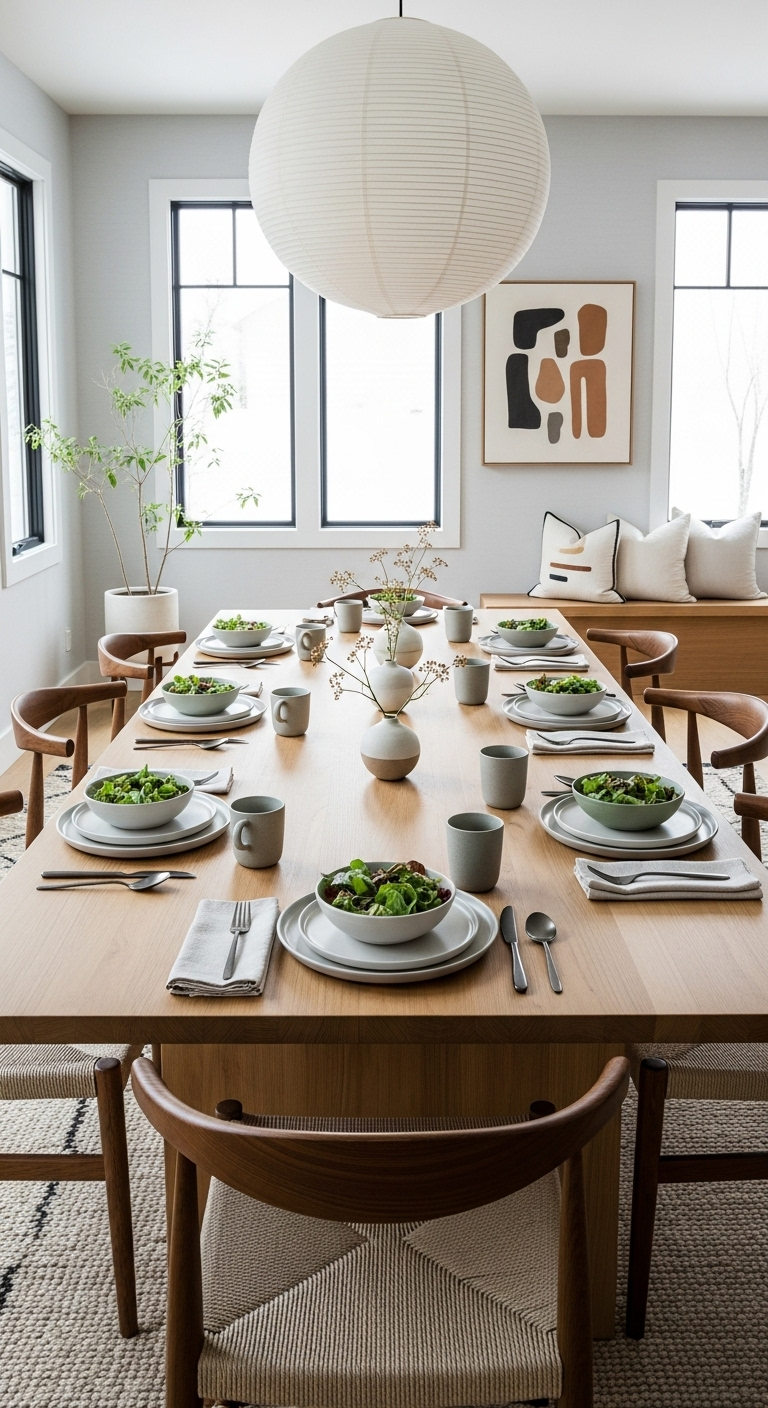
Set your dining table with handmade stoneware plates in muted tones like charcoal, sand, or misty grey for an artisanal feel. The irregular edges and matte surfaces of the ceramic celebrate the beauty of imperfection, a core tenet of the Wabi-Sabi philosophy.
Choosing pieces with distinct, hand-thrown characteristics ensures that no two settings are exactly identical. This subtle variation adds a layer of depth and personality to your dining experience, turning every meal into an opportunity to appreciate craftsmanship and simple beauty.
Mixing different shades within the same neutral palette creates a sophisticated, tonal look that feels very curated and high-end. This approach prevents your table from appearing too uniform, encouraging a more relaxed and visually interesting display for guests to enjoy.
Stoneware adds a cooling, stony texture that perfectly balances the warmth of your wooden furniture and woven room textiles. This material weight provides a satisfying tactile experience, grounding your meal and reinforcing the connection to natural, raw elements in your home.
8#. Linen Drapery in Oatmeal
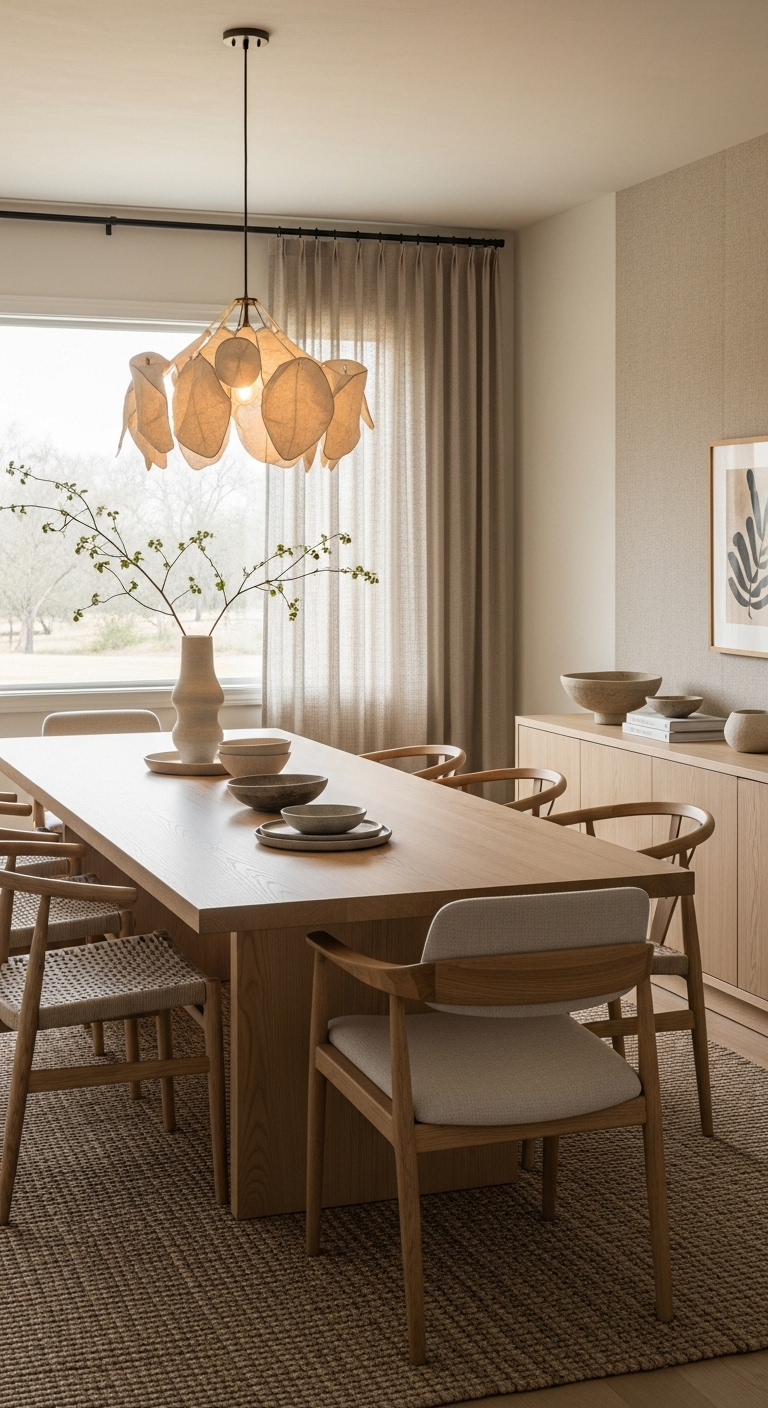
Hang floor-length linen curtains in a soft oatmeal or bone white shade to allow gentle, filtered sunlight to fill the room. The natural, breathable fabric moves softly with the breeze, adding a peaceful and airy quality that feels incredibly refreshing.
This choice of material brings a light and ethereal touch that perfectly complements the minimalist furniture in your space. By diffusing harsh daylight, the linen creates a soft, consistent glow that makes your dining area feel comfortable at any hour.
Linen window treatments provide a essential layer of privacy without making the dining room feel enclosed or overly dark. The semi-transparent nature of the weave maintains a visual connection to the outdoors, keeping the atmosphere open, bright, and welcoming.
This breezy detail is a staple in modern Japandi Dining Room Designs for creating a true sanctuary-like environment. It effectively bridges the gap between structured indoor architecture and the fluid movement of the natural world outside your window.
9#. Integrated Floating Wood Ledges
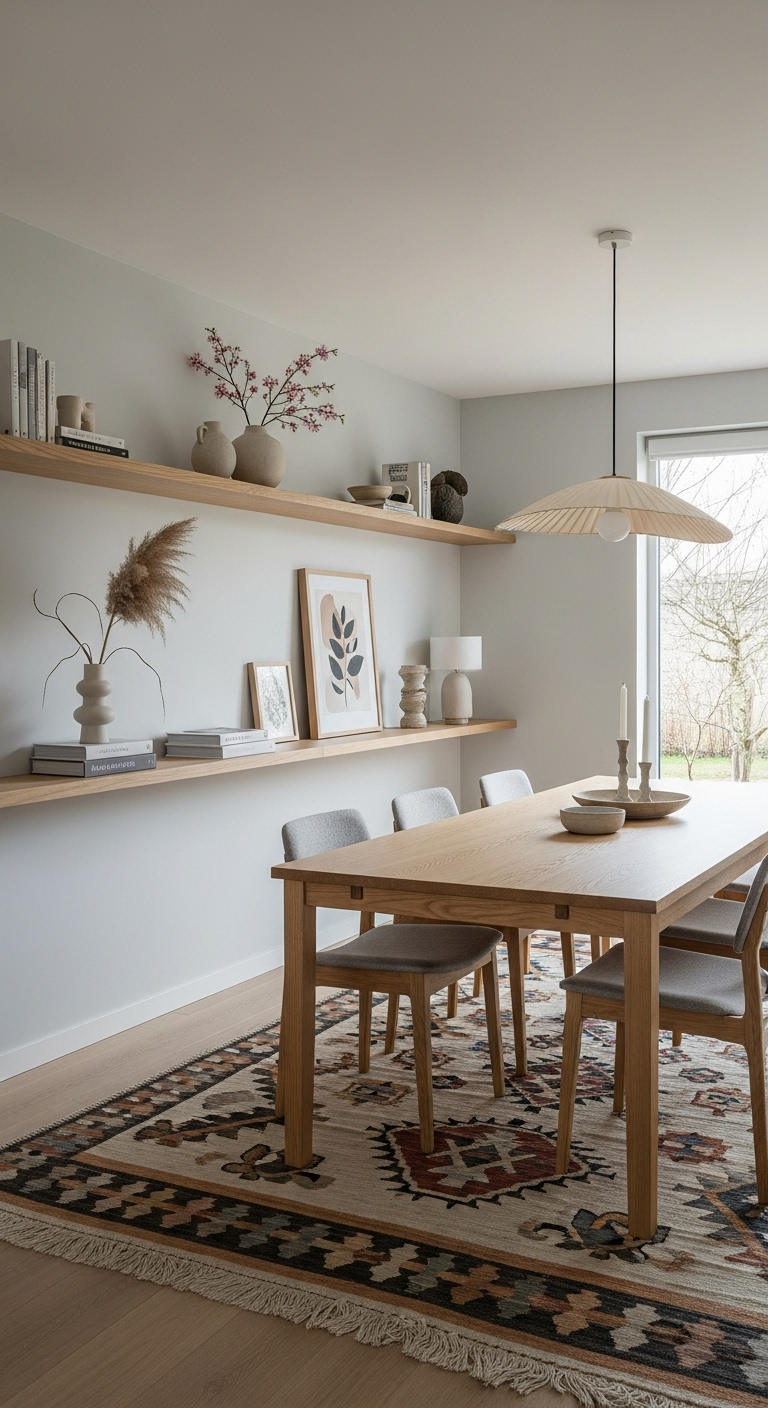
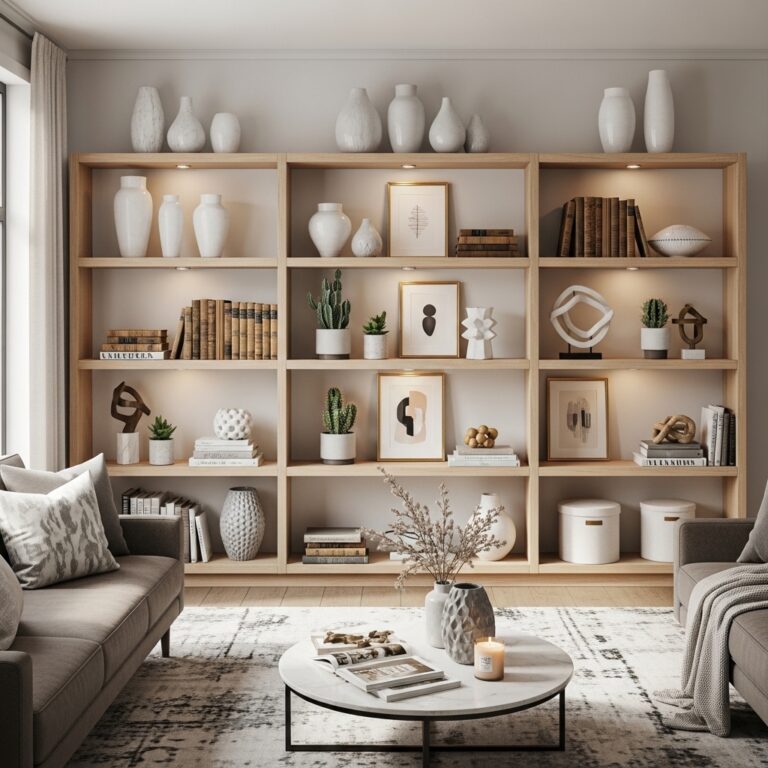
Install thin floating ledges made of the same light wood as your table to display a few select ceramics. This design choice keeps your floor space clear while adding a deliberate sense of verticality and personal character to your dining room walls.
By matching the wood tone to your central furniture, you create a cohesive visual thread that ties the entire room together. The ledges disappear into the background, allowing your art and accessories to become the primary focus of the wall display.
Limit the number of items you place on these shelves to ensure that each individual piece has room to breathe. This disciplined approach prevents the room from feeling cluttered, ensuring that every object is truly appreciated and viewed with intention.
It is a smart way to maximize display space while maintaining a clean, gallery-like atmosphere throughout your home. These simple shelves prove that functional organization can remain artistic and sophisticated without ever sacrificing the serene vibe of your interior.
10#. Subtle Bamboo Room Dividers
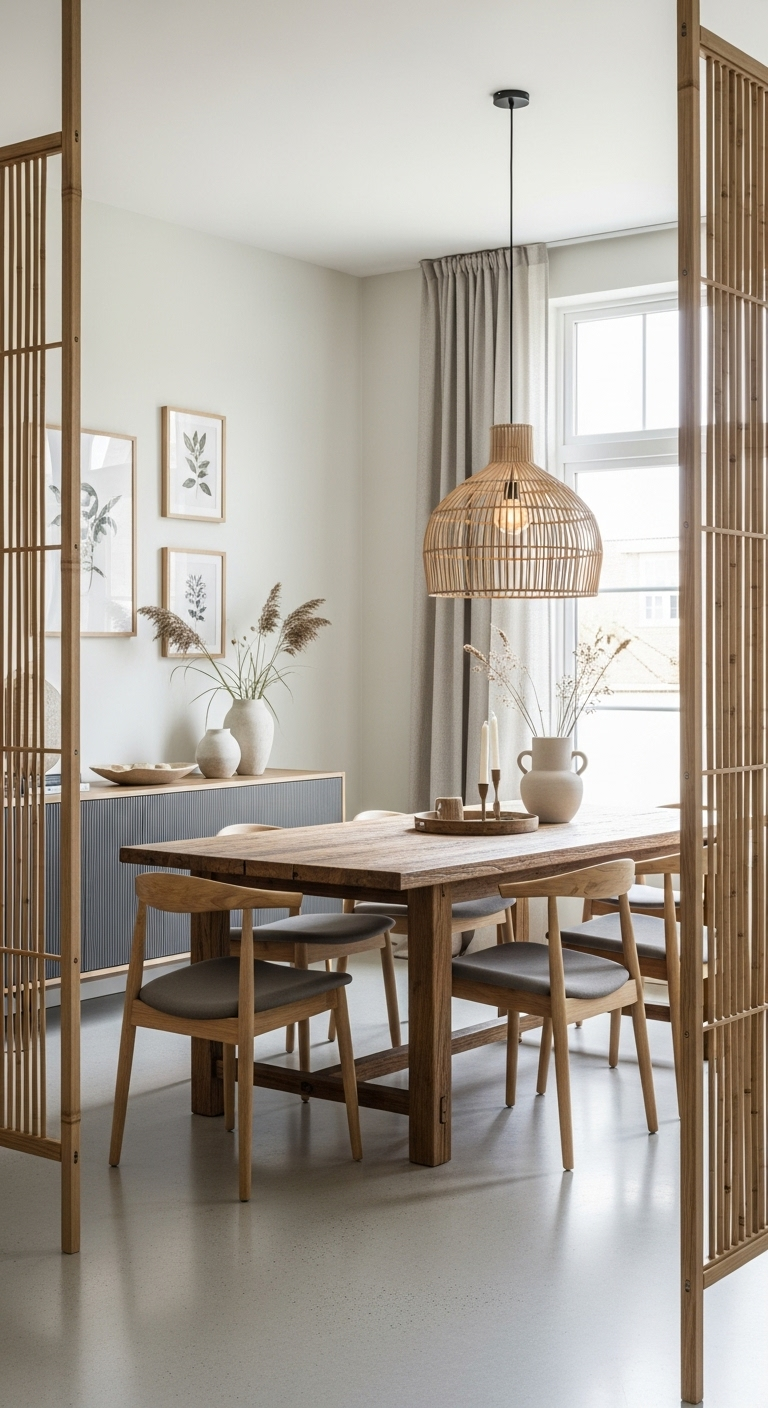
Use a slatted bamboo screen to subtly separate the dining area from an open-concept kitchen for added privacy. This semi-transparent barrier allows natural light to pass through freely while creating a dedicated and intimate nook for your daily meals.
These screens act as a soft architectural divide that distinguishes your dining space without closing it off completely. By maintaining a visual connection to the rest of your home, you ensure that the layout remains functional, open, and inviting.
The natural vertical lines of the bamboo add a touch of Eastern-inspired detail that feels exceptionally grounded and peaceful. This textural element introduces a rhythmic pattern to your walls, echoing the organic beauty found throughout the rest of your home.
It is a versatile design tool for those looking to master the flow of their Japandi Dining Room Designs. By carefully controlling how your rooms transition, you cultivate a sense of order and quiet luxury that elevates your living experience.
11#. Sculptural Abstract Canvas Art
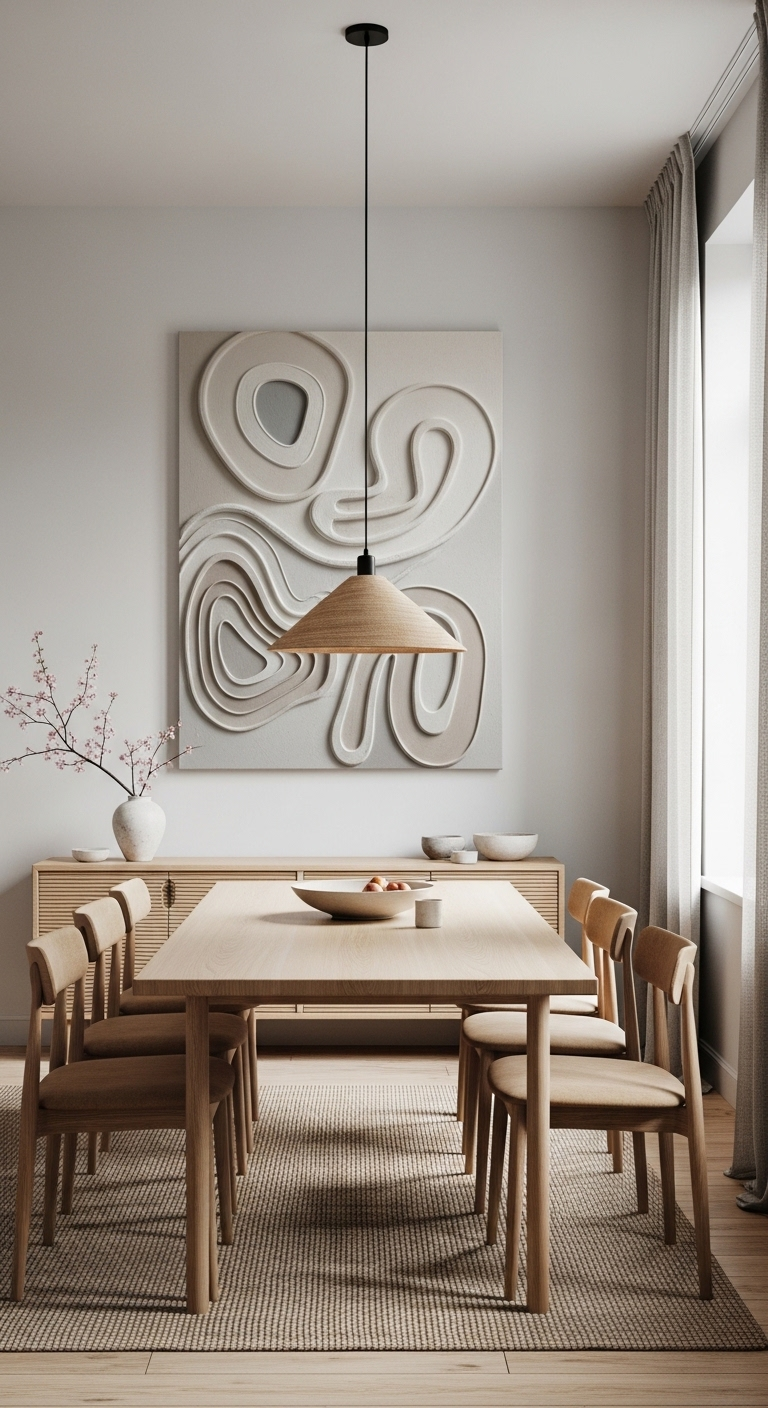
Decorate your walls with large-scale abstract paintings that feature soft, earthy brushstrokes and plenty of white negative space. This specific type of art effectively reflects the quiet, introspective energy of your room while serving as a focal point.
The deliberate simplicity of these pieces helps maintain the tranquil atmosphere essential for a well-designed dining space. Guests will appreciate the subtle texture and visual calm that these grand canvases bring to an otherwise sparse interior.
Choose thin, light wood frames to keep the aesthetic consistent with your furniture and ensure the art feels integrated. Matching the timber tone to your table creates a seamless flow that makes the artwork feel like part of the architecture.
A single large canvas is always more effective than many small ones for maintaining a true minimalist and Zen aesthetic. This intentional choice prevents visual clutter, allowing the room to feel spacious, balanced, and perfectly curated for home.
12#. Concrete and Stone Centerpieces
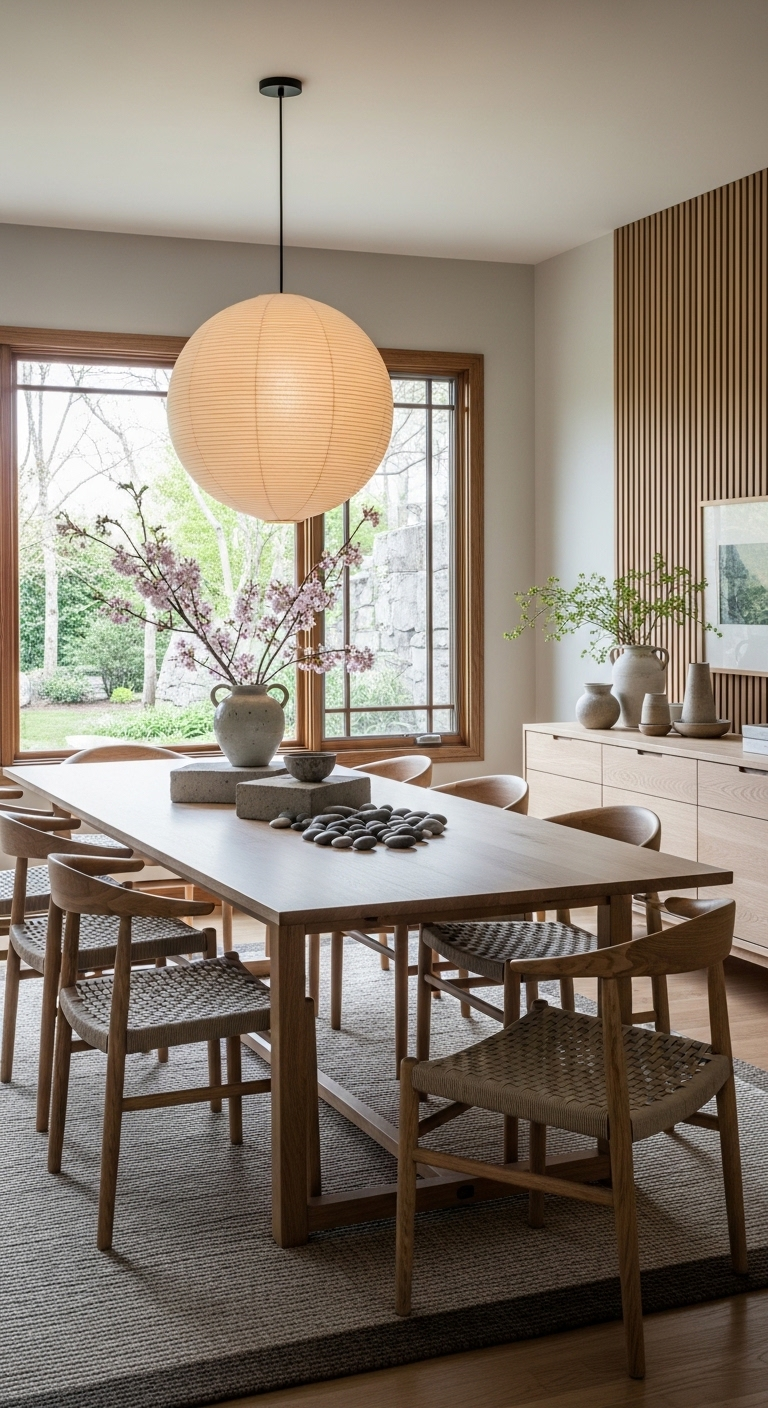
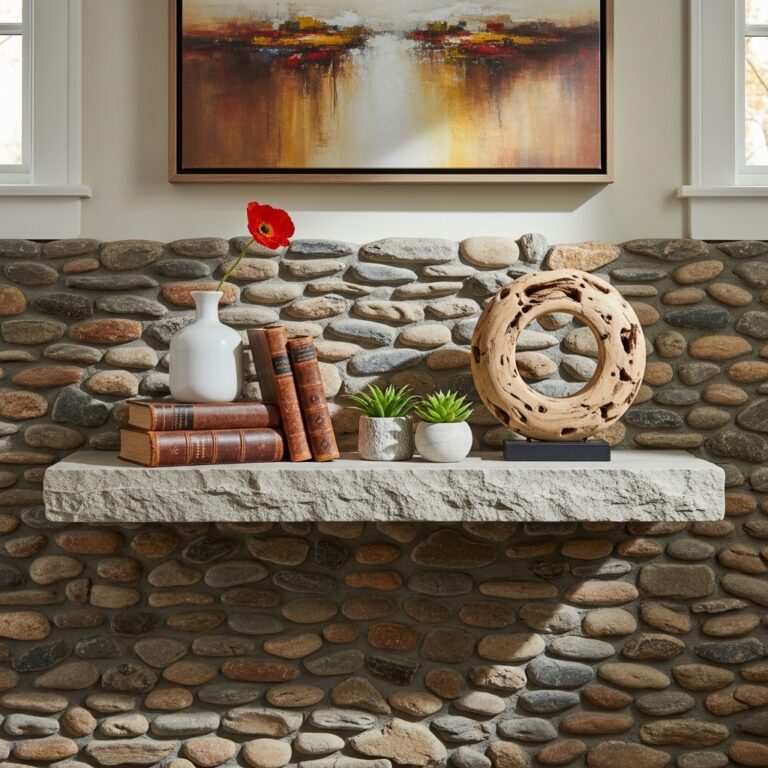
A heavy, cast-concrete bowl or a smoothed river stone tray can serve as a sturdy, organic centerpiece for your dining table. The cool, grey texture of the stone provides a beautiful, sharp contrast to the warm, honey-toned wood of your tabletop.
This pairing creates a visual balance between the raw earthiness of the stone and the refined elegance of the wood. Such a combination ensures that your table feels like a intentional, curated work of art rather than just another piece of furniture.
Using materials that feel like they were taken directly from nature helps to ground the room and foster a sense of permanence. This approach anchors the space, making your dining environment feel established, authentic, and connected to the beauty of the natural world.
It is a simple, low-maintenance way to introduce the stony side of your Japandi Dining Room Designs with ease. By choosing objects with weight and character, you elevate the entire room while keeping the aesthetic clean, uncluttered, and perfectly serene.
13#. Tasseled Cotton Floor Poufs
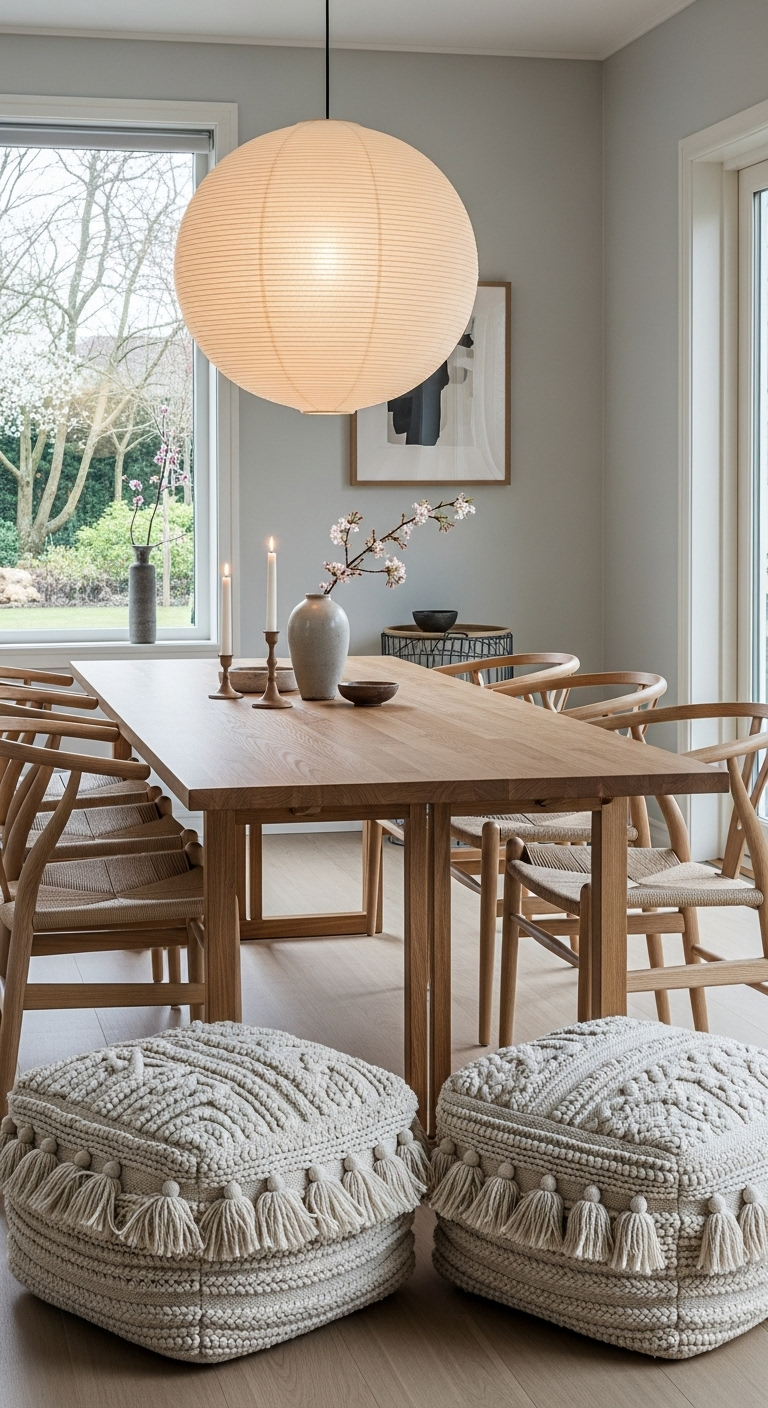
Incorporate a few soft cotton poufs in neutral colors around the room to provide extra, casual seating for family. These low-profile accessories encourage a more relaxed, floor-focused way of living that is commonly seen in traditional Japanese homes.
The soft, woven texture of the cotton adds a layer of comfort and warmth that balances the hard surfaces. This addition creates a more approachable environment, ensuring your dining space feels genuinely welcoming rather than just a formal area.
Poufs are exceptionally easy to move around and can even be tucked under the table when not needed. This flexibility helps you maintain an open floor plan, ensuring the room remains clear for movement and daily activities.
Choosing these pieces supports the restorative, flexible nature of your design while adding practical utility to the dining room. By prioritizing both comfort and function, you ensure the space feels perfectly equipped for hosting guests or relaxing.
14#. Black Metal Track Lighting
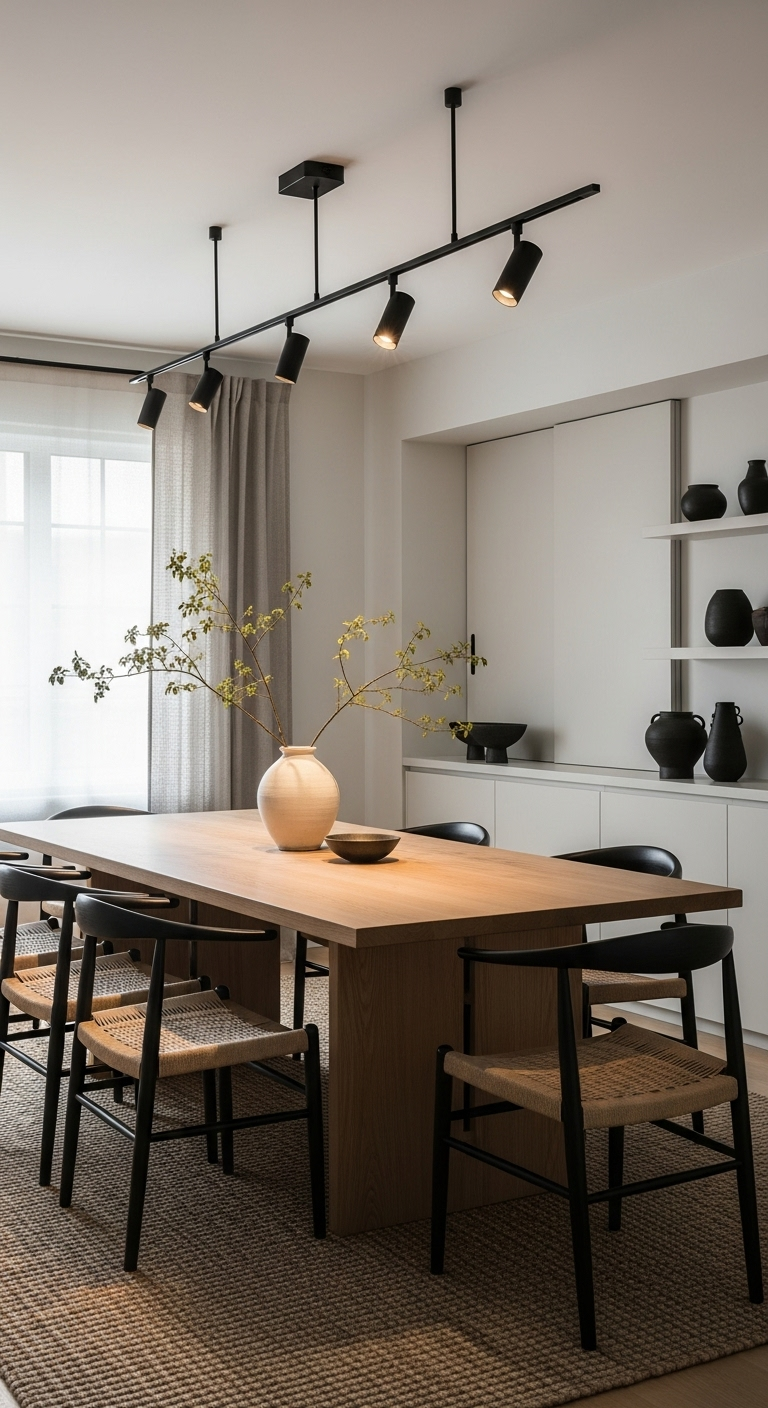
For a more contemporary edge, use slim black metal track lighting to provide targeted task lighting for your dining table and art. The dark, graphic lines of the tracks add a sharp, modern definition that coordinates perfectly with the silhouettes of your black spindle chairs.
Track lighting allows you to adjust the focus of the light precisely where you need it, ensuring your dining room is functional for both dining and remote work. This versatility makes the space adaptable, shifting easily from a quiet breakfast nook to a productive workspace as your daily needs evolve.
It is a sleek, studio-style solution that feels incredibly current and professionally designed. By keeping the light heads minimalist, you maintain the “less-is-more” philosophy while ensuring your room is illuminated exactly how you intend.
This lighting choice balances technical precision with the clean, uncluttered look required for a high-end Japandi aesthetic. It is a bold, modern upgrade that brings a sense of structural intentionality to your ceiling, effectively grounding your design with a sharp, graphic finish.
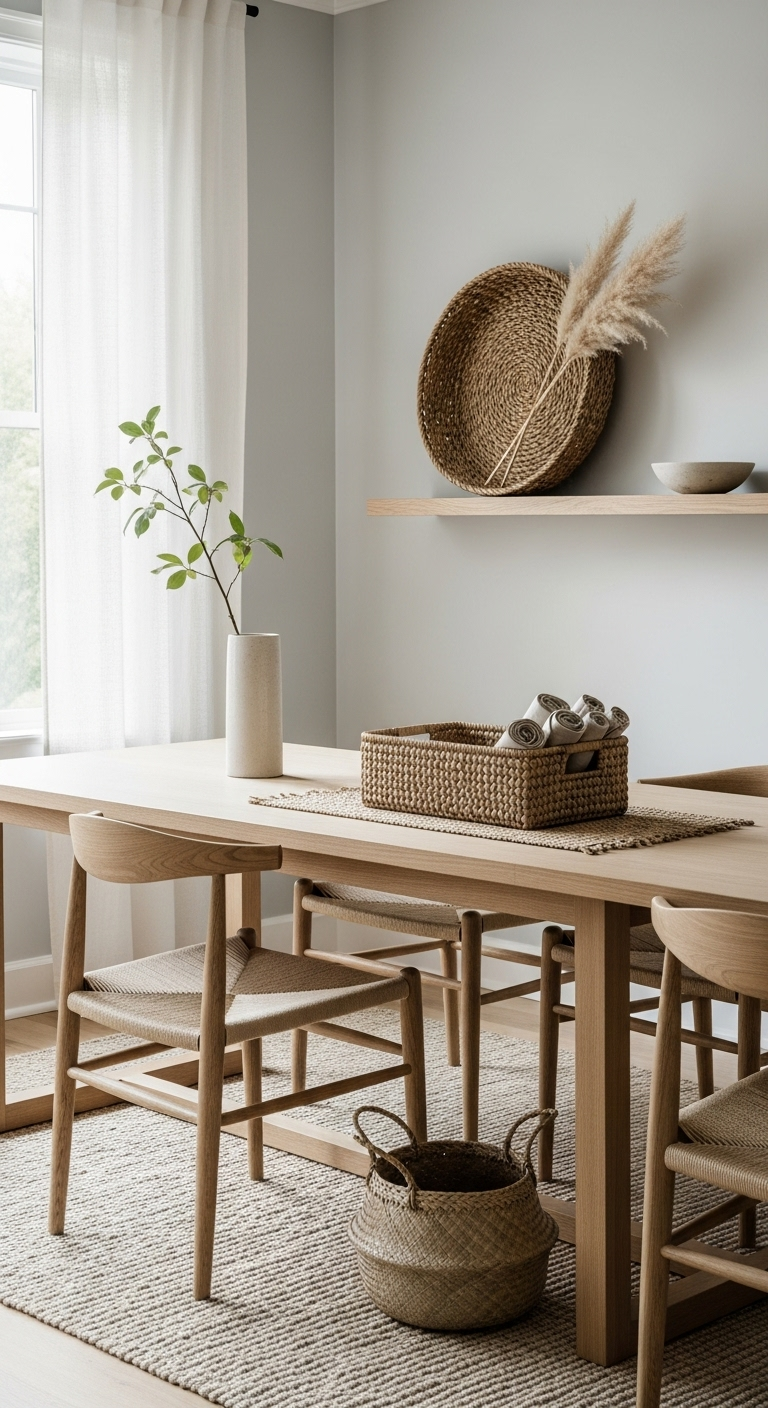
15#. Hand-Woven Seagrass Baskets
For a more contemporary edge, use slim black metal track lighting to provide targeted task lighting for your dining table and art. The dark, graphic lines of the tracks add a sharp, modern definition that coordinates perfectly with the silhouettes of your black spindle chairs.
Track lighting allows you to adjust the focus of the light precisely where you need it, ensuring your dining room is functional for both dining and remote work. This versatility makes the space adaptable, shifting easily from a quiet breakfast nook to a productive workspace as your daily needs evolve.
It is a sleek, studio-style solution that feels incredibly current and professionally designed. By keeping the light heads minimalist, you maintain the “less-is-more” philosophy while ensuring your room is illuminated exactly how you intend.
This lighting choice balances technical precision with the clean, uncluttered look required for a high-end Japandi aesthetic. It is a bold, modern upgrade that brings a sense of structural intentionality to your ceiling, effectively grounding your design with a sharp, graphic finish.
16#. Warm “Amber” Light Bulbs
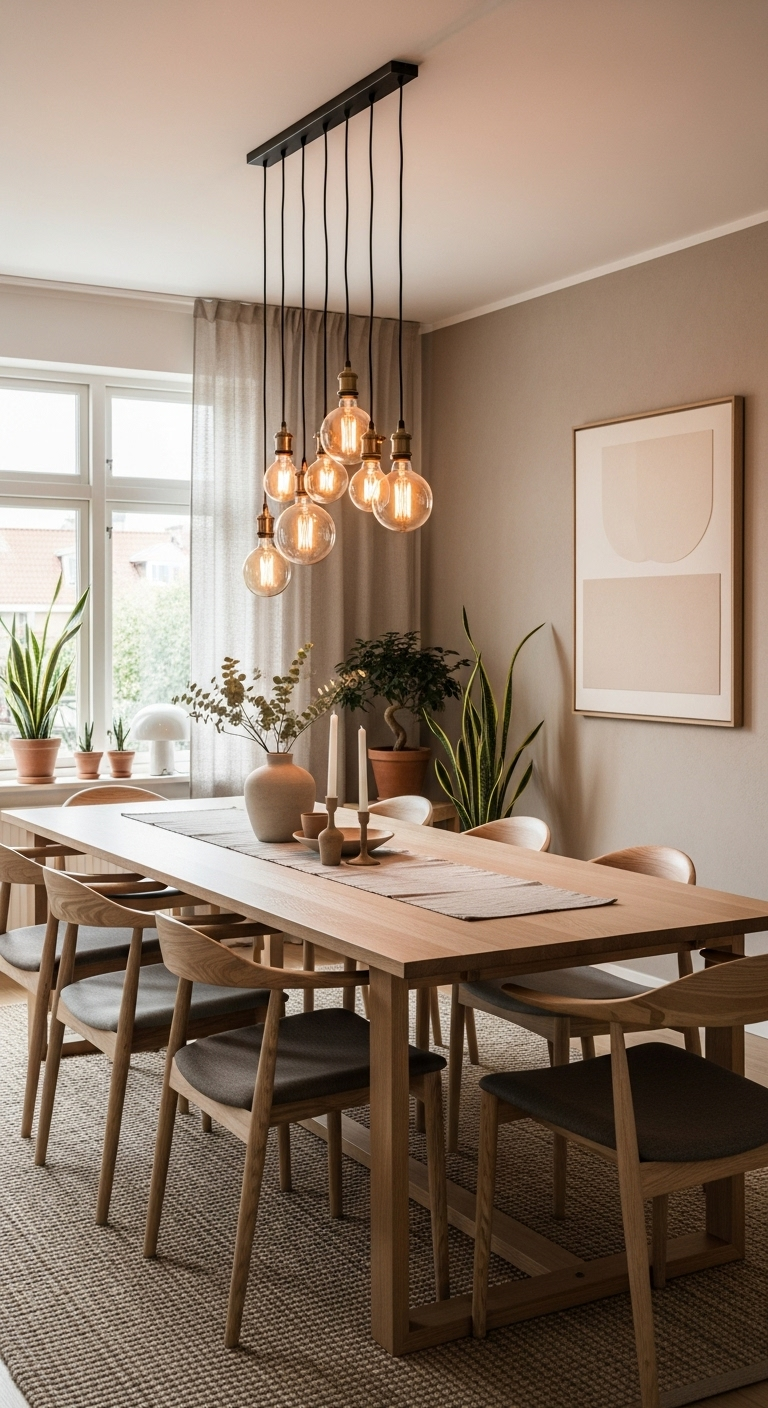
Choosing the right light temperature is the single most effective way to ensure your dining space feels inviting and lived-in. Warm-toned LED bulbs provide a gentle, golden glow that mimics candlelight, which softens the sharp lines of minimalist furniture.
Avoiding cool-toned or blueish “daylight” bulbs is critical because they clash with the organic wood textures typical of this style. Harsh lighting can easily make a curated room feel more like an uninspired clinical setting than a peaceful, functional home.
Focusing on amber-hued bulbs helps highlight the natural grain of your oak or walnut tables without adding unwanted glare. These subtle lighting choices emphasize the essential “Hygge” factor, transforming your dining area into a truly relaxing retreat.
You should aim for color temperatures around 2700K to achieve that perfect balance of clarity and cozy ambient warmth. Consistency is key, so make sure all fixtures in the dining room utilize the same bulb type for a cohesive look.
17#. Raw Edge Wood Benches
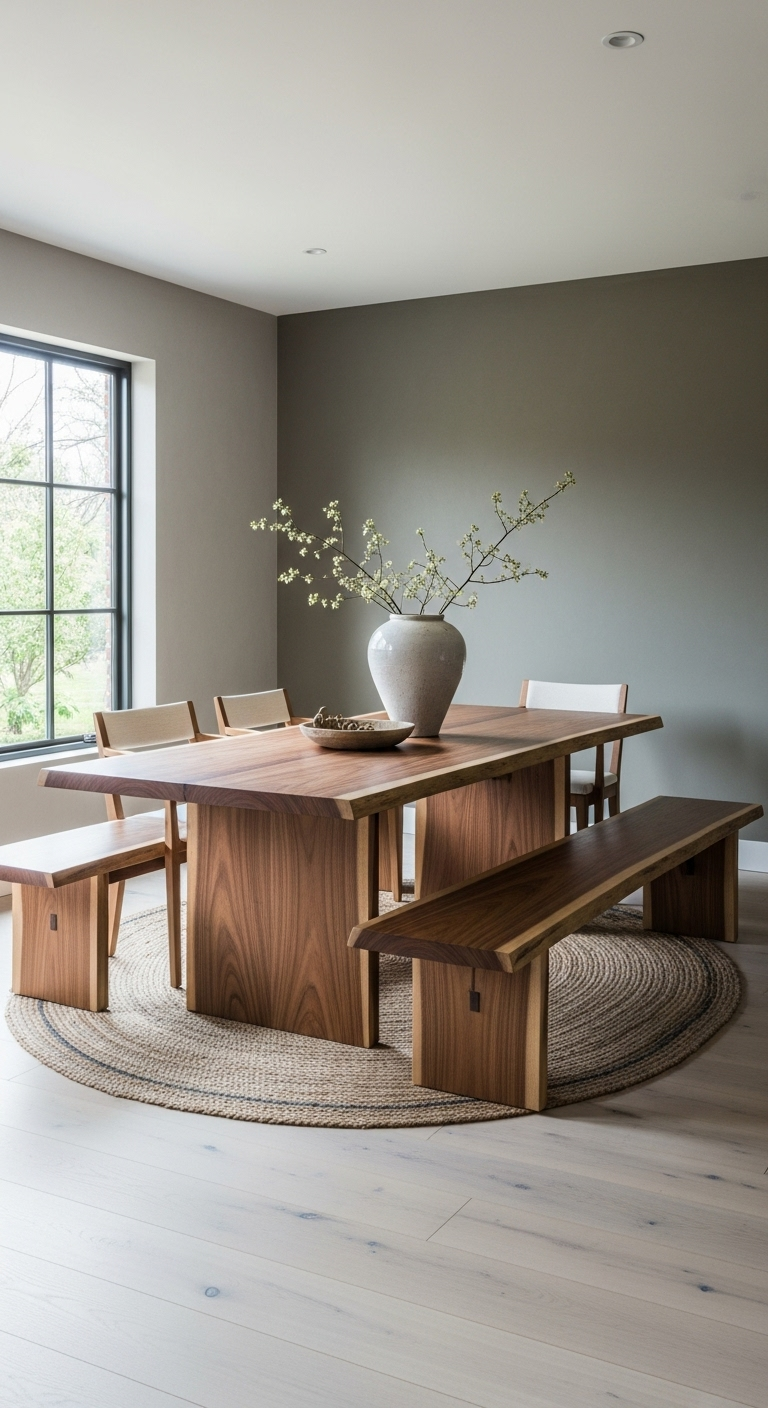
Swapping out traditional chairs for a long, raw-edge wood bench instantly opens up your dining area and promotes connection. This design choice encourages a more communal atmosphere, making your daily meals feel far more relaxed and intentionally inviting.
The natural, irregular edge of the timber celebrates the unique history of the wood while adding a soulful touch. Integrating these raw, organic textures brings a sense of “Wabi-Sabi” character that grounds the room in effortless, natural beauty.
Benches act as a highly effective space-saving solution, allowing you to accommodate extra guests without creating visual obstruction. By removing the bulk of multiple chair backs, you maintain clear sightlines that make the entire room appear larger.
This seating arrangement naturally fosters a sense of togetherness and informal warmth during every breakfast or dinner gathering. It is a simple yet high-impact way to shift the energy of your home toward a more welcoming environment.
18#. Minimalist Wall Clocks in Wood
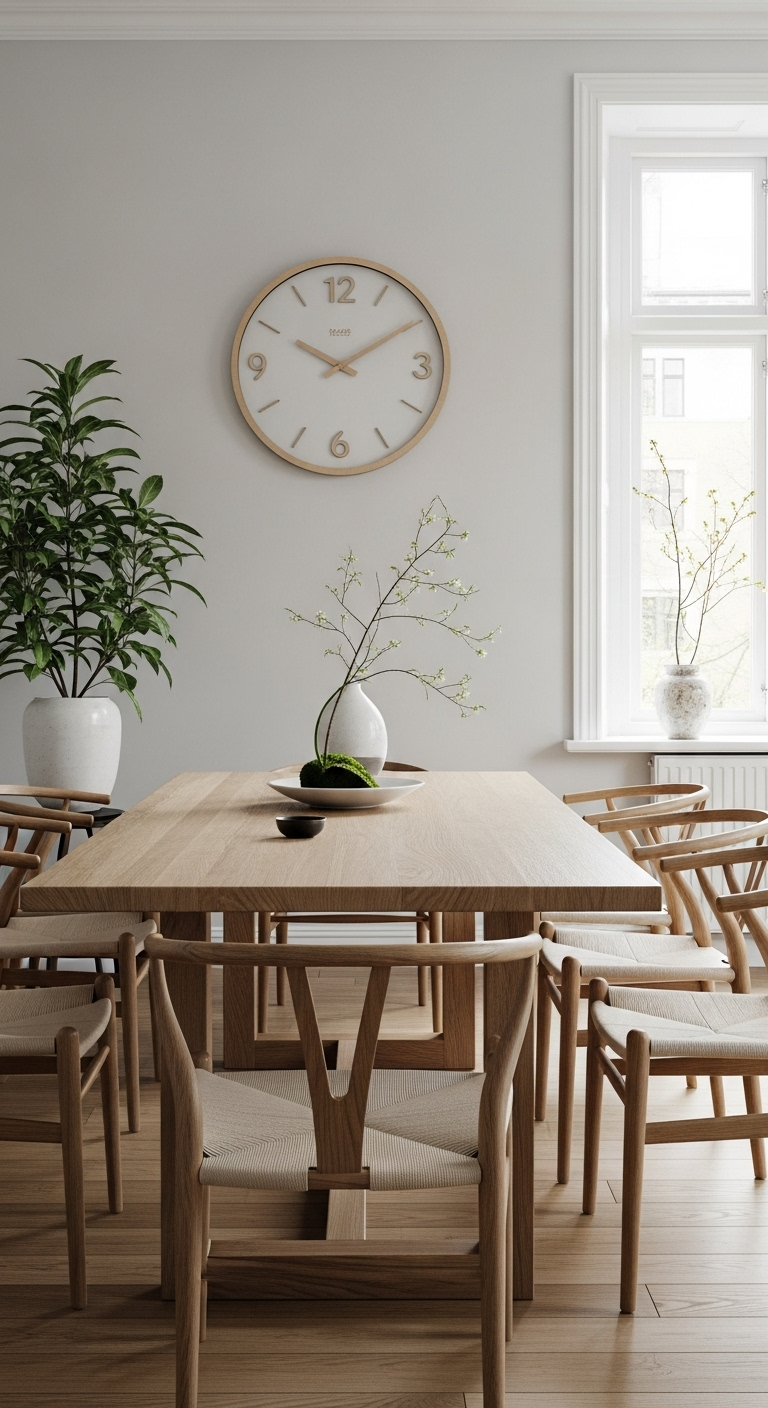
A simple wooden wall clock featuring thin metal hands serves as a functional anchor for your minimalist dining wall. By choosing a design without numbers, you maintain a clean aesthetic that avoids adding unnecessary visual noise or clutter.
The light wood finish integrates perfectly with your existing organic palette, honoring the essential philosophy of the design. This understated choice helps you manage your schedule through a busy day while keeping the overall atmosphere tranquil.
Because the design remains so streamlined, it effectively complements other decor elements without demanding too much focal attention. It acts as a quiet, practical detail that rounds out the refined look of a truly peaceful dining environment.
Finding a piece that blends seamlessly into the wall prevents the space from feeling chaotic or overly decorated. A single, high-quality clock reinforces the intentionality of your layout, proving that utility and style can coexist beautifully.
19#. Sheer Rice Paper Window Films
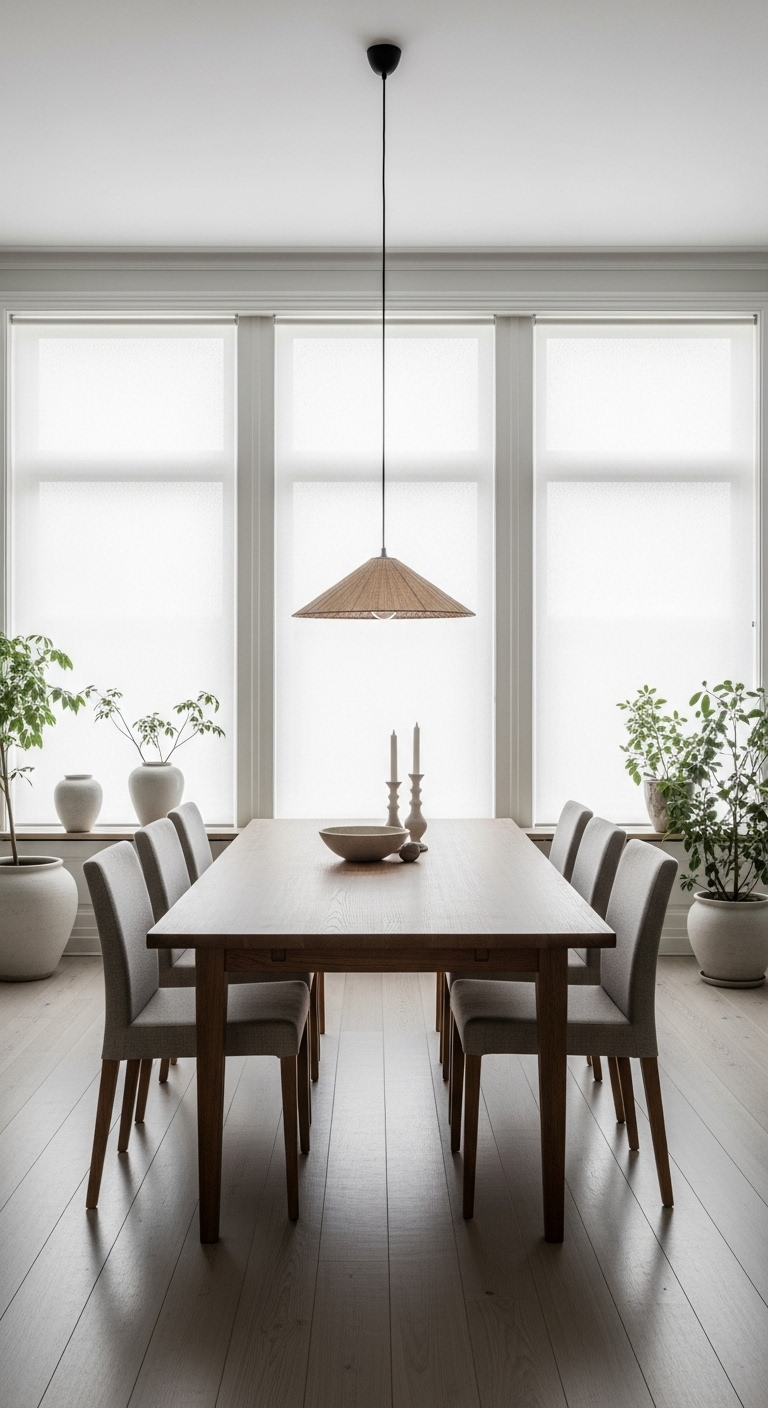
If your dining space lacks a scenic view, applying frosted or rice-paper window films is a smart solution. These films offer essential privacy for your home while still allowing plenty of soft, natural light to enter.
This technique draws inspiration from traditional “Shoji” screens, providing a beautiful way to filter incoming sunlight effectively. The result is a clean, luminous backdrop that perfectly complements the minimalist aesthetic of your dining room design.
Using diffused light helps eliminate those harsh, distracting shadows that often clutter an otherwise peaceful and airy space. It creates a constant, serene glow that makes the room feel much larger and more balanced during daytime hours.
This update remains one of the most affordable ways to achieve a professional, high-impact look in urban homes. It brings an authentic architectural quality to your dining area, ensuring the space feels both private and bright.
20#. Subtle Moss and Terrarium Displays
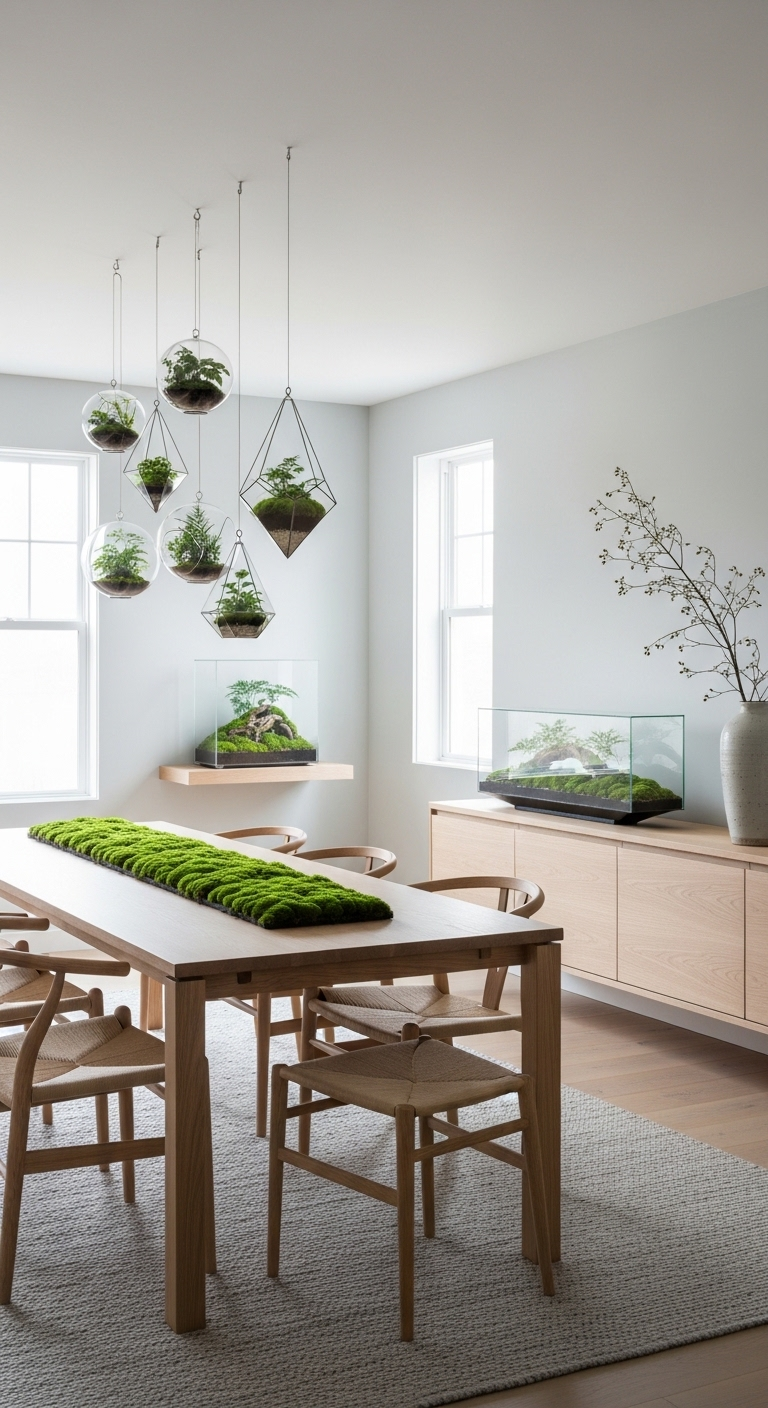
Adding a small, enclosed moss terrarium to your sideboard serves as a quick way to invite nature indoors. The rich, velvet-like green texture introduces a peaceful visual element that feels both grounding and incredibly sophisticated.
One of the best benefits of using preserved moss is that it provides constant beauty with zero maintenance. You can enjoy the lush, forest-inspired aesthetic year-round without worrying about watering schedules or specific light requirements.
This delicate micro-landscape functions as a tiny, living art piece that highlights the quiet beauty of the outdoors. It offers a perfect focal point for your sideboard, drawing the eye toward the textures that define your style.
Incorporating green life this way is an ideal solution when you want to avoid large, high-maintenance house plants. It keeps your surface areas clear and organized while ensuring the room retains a vibrant and refreshed atmosphere.
21#. Symmetrical Sideboard Styling
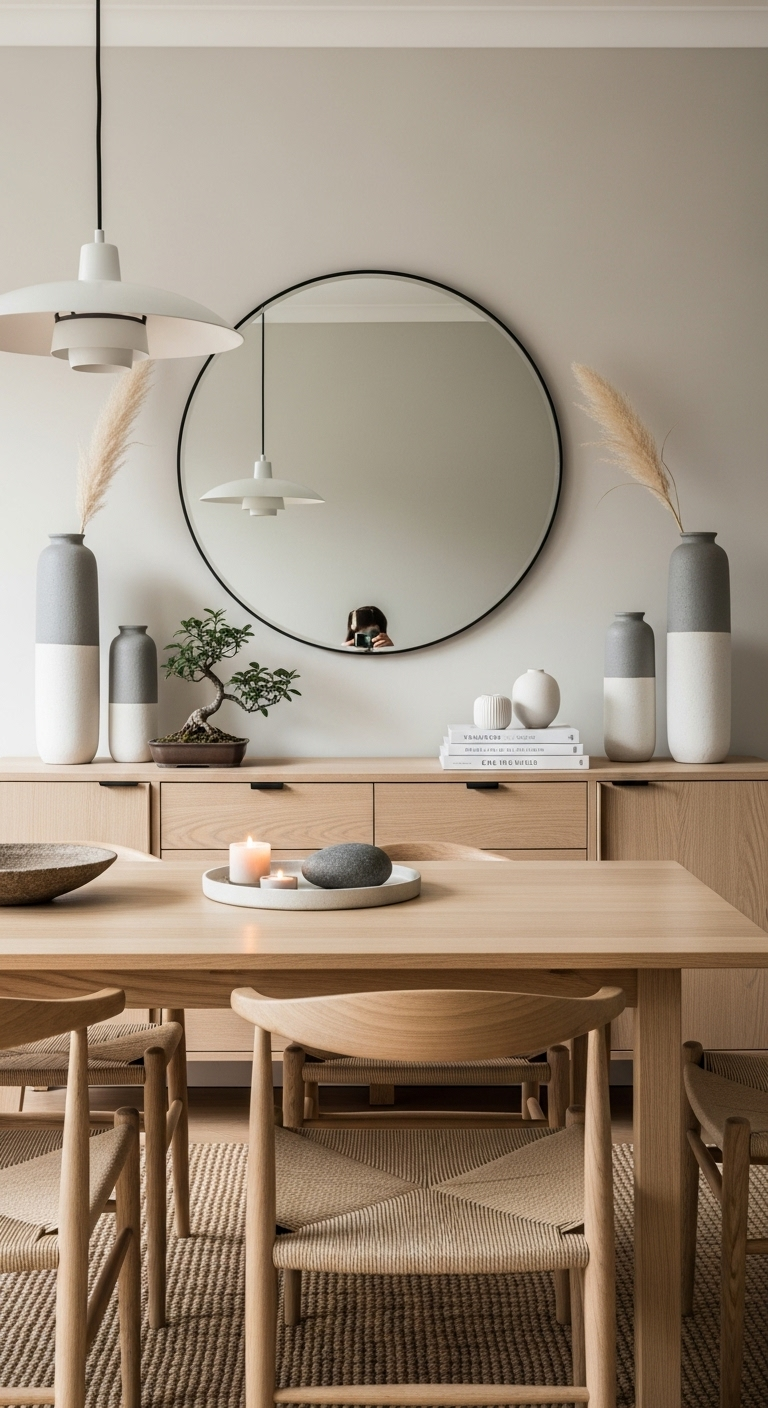
Styling your sideboard with identical lamps or vases at each end creates an immediate sense of visual order. This classic symmetrical arrangement feels inherently relaxing, lending your dining room a polished and intentionally curated professional aesthetic.
Placing matching items at the outer edges helps to frame the space and define your primary focal point. It is an effortless technique that brings instant stability to any room while making the layout feel grounded.
Incorporating a few asymmetric objects in the center space provides necessary contrast and a touch of organic character. These subtle, irregular details embrace the “Wabi-Sabi” philosophy, preventing the overall design from feeling too rigid or cold.
Mastering this balance is a core principle for achieving that quiet, calm “Zen” atmosphere in modern homes. When you combine perfect symmetry with small, unique accents, you create a dining area that feels both peaceful and dynamic.
22#. Recessed Baseboard LED Strips
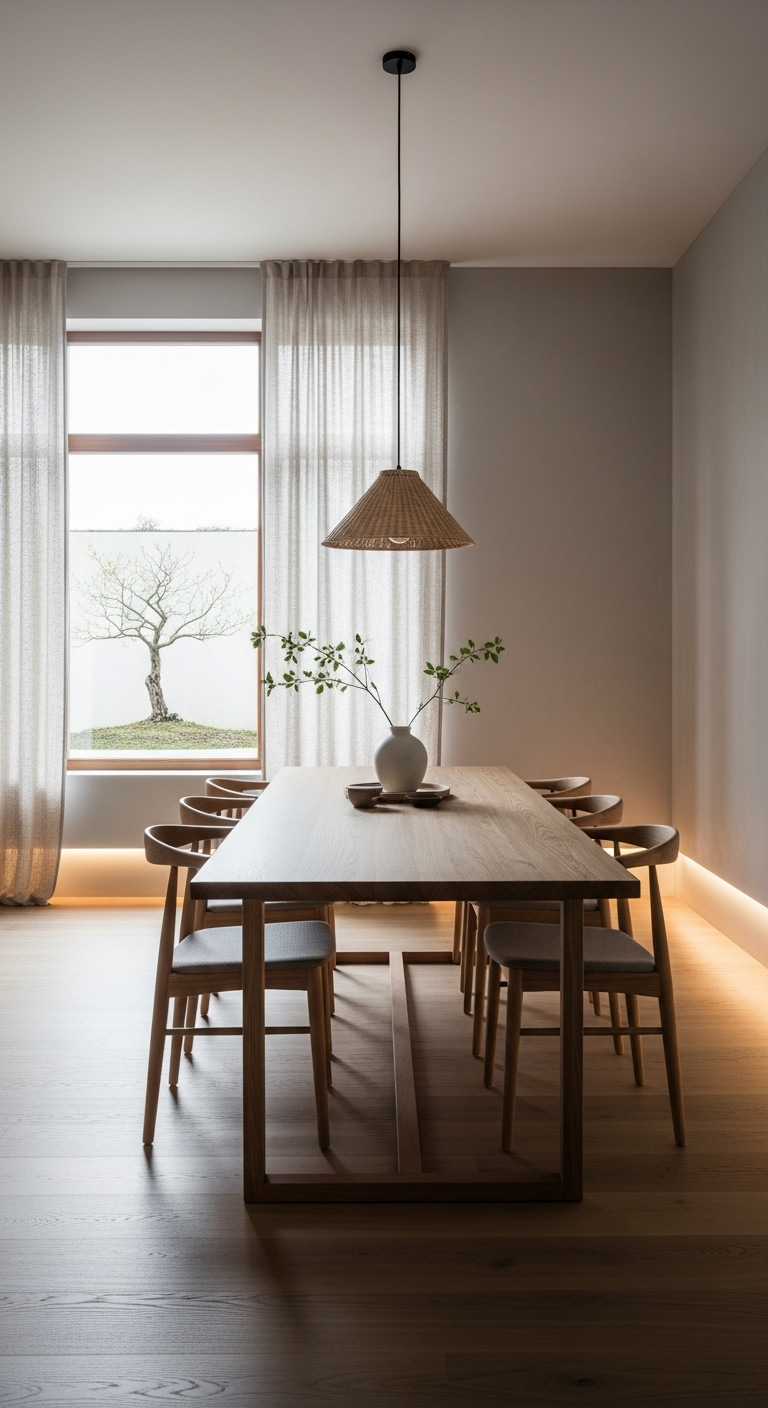
Installing low-glare LED strips along your baseboards provides a gentle way to navigate the dining room after dark. This subtle architectural lighting creates an ethereal glow that makes your home feel both safe and incredibly inviting.
The illumination adds a high-end, boutique hotel atmosphere to your space while maintaining a strictly minimalist design philosophy. It effectively highlights the rich textures of your flooring, adding depth and dimension to the room at night.
Using such lighting makes the entire area appear more three-dimensional and visually interesting without causing any harsh glare. It is a sophisticated, high-tech upgrade that seamlessly bridges the gap between traditional tranquility and modern daily convenience.
When the sun goes down, this soft ambient light transforms your dining room into a truly peaceful retreat. It ensures that your carefully curated design details remain visible and striking even in the quiet evening hours.
23#. Natural Linen Table Runners
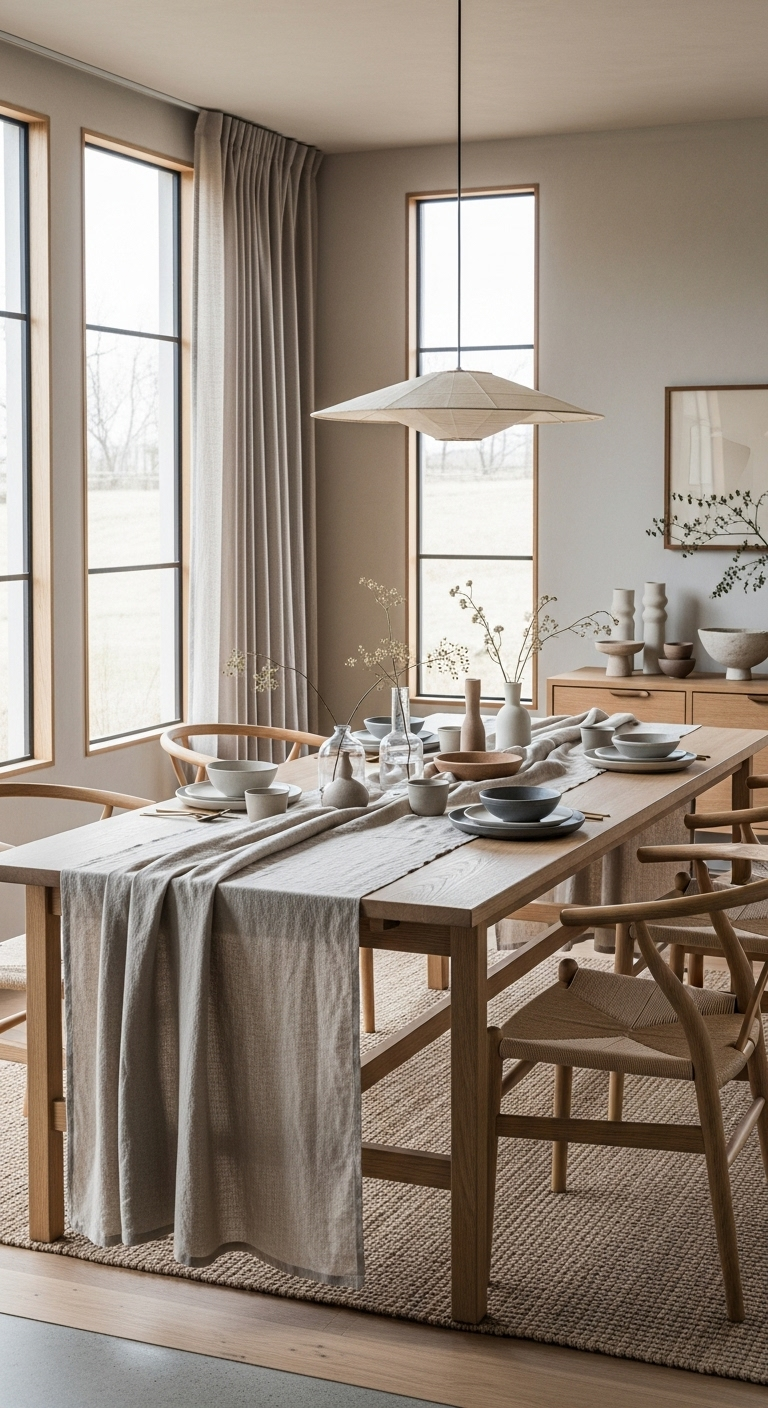
A light, unbleached linen table runner is the perfect choice for achieving that iconic Nordic-meets-Eastern aesthetic in your home. The naturally soft fabric provides an immediate sense of rustic elegance that anchors your entire table setting beautifully.
You will love that the slightly wrinkled texture adds an effortless, lived-in charm to your dining space every day. Because the material is intended to look relaxed, you can skip the ironing and enjoy a perfect finish regardless.
Layering this runner over a light oak table creates a stunning tonal contrast that feels both sophisticated and approachable. It bridges the gap between different materials, making your dining room feel more cohesive and intentionally designed for comfort.
This remains a highly budget-friendly way to infuse a lasting sense of “Hygge” warmth into your daily routine. It is a simple, tactile detail that elevates your dining area without requiring a major investment or complex styling.
24#. Sculptural Branch Coat Racks
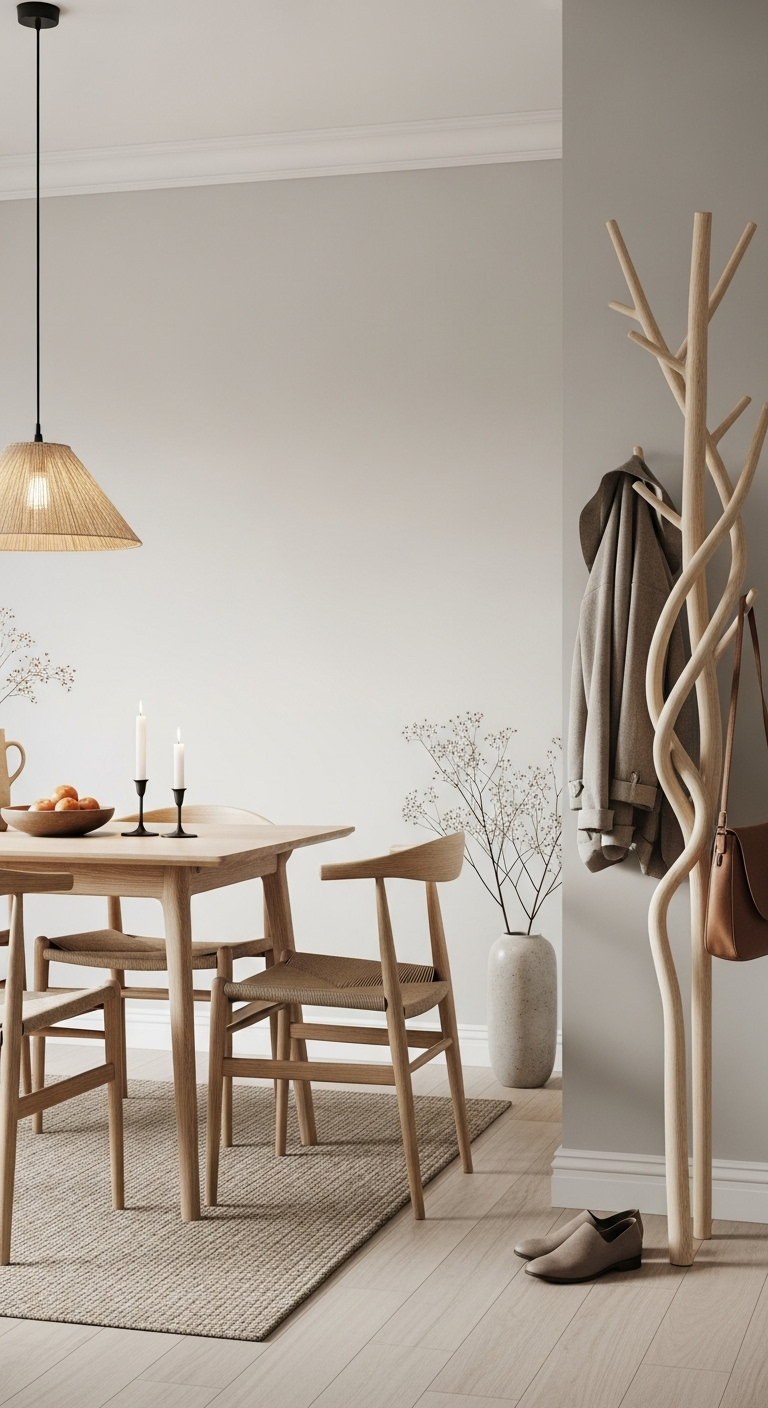
If your dining space sits near an entrance, a tree-branch-style coat rack serves as a perfect functional anchor. The light wood construction acts as a striking sculptural element, bringing an organic and forest-inspired silhouette indoors.
This piece offers a highly practical spot for guests to hang scarves and bags without creating messy piles. By keeping your main seating area free of items, you maintain the clean and airy feel your room deserves.
The design embodies a nature-first approach, reinforcing the core themes of simplicity and utility defining your style. It blends utility with art, ensuring that your storage solutions contribute to the overall visual harmony of the home.
Selecting a rack with clean lines ensures it does not overwhelm the space despite its unique structural shape. This intentional addition proves that everyday items can elevate your interior while keeping your entryway organized and peaceful.
25#. High-Contrast Black Picture Frames
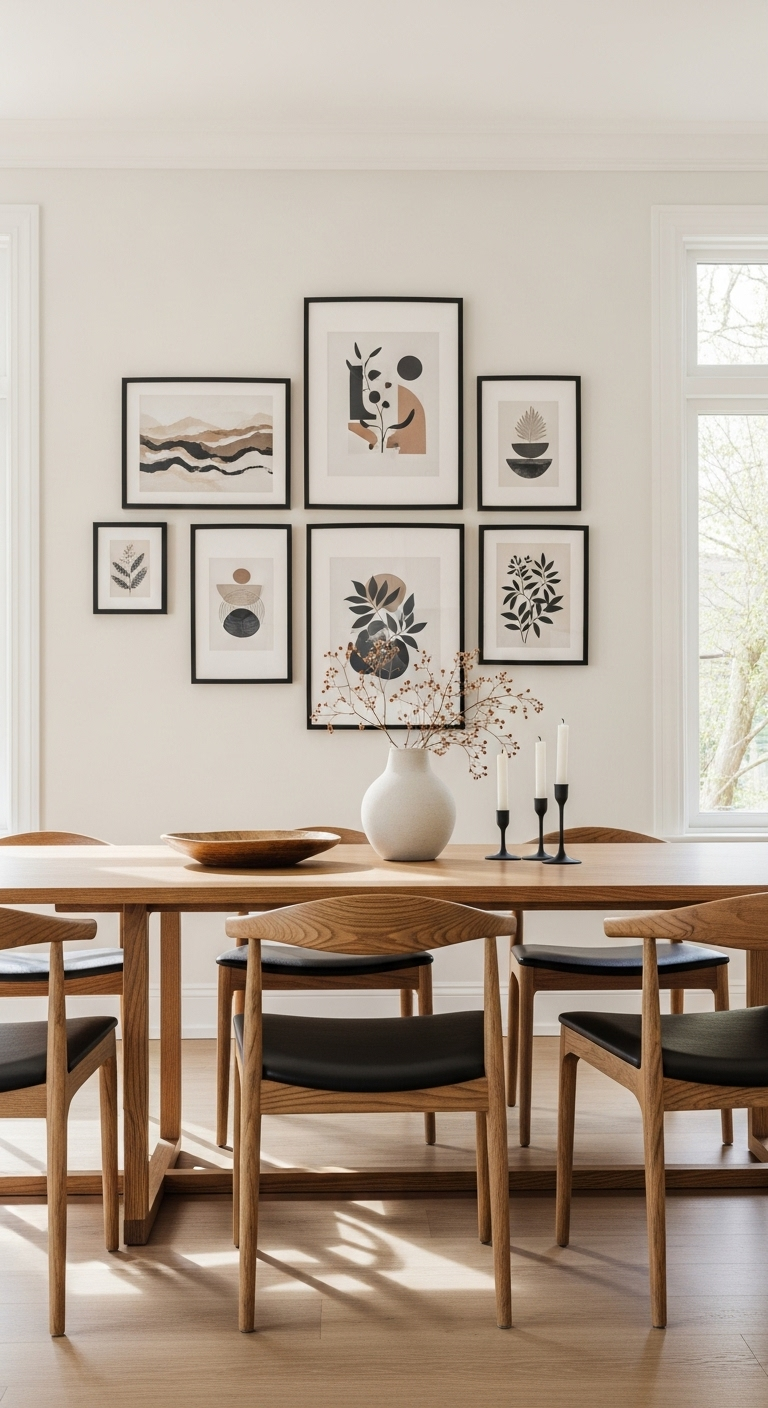
Using thin black frames for your botanical prints or photographs introduces a necessary, sharp line against neutral walls. This specific graphic touch ensures the room feels distinctly contemporary and well-defined instead of appearing too washed out.
The black frames serve as an essential visual anchor that coordinates effortlessly with other dark furniture pieces. They tie together your black spindle chairs and metal light fixtures, creating a cohesive narrative throughout the space.
This simple design choice is incredibly effective at introducing a sense of intentional, high-end polish to the room. By providing a clear outline for your art, you prevent the neutral tones from blending into a monotonous background.
Focusing on thin profiles keeps the aesthetic light and prevents the frames from competing with your organic decor. This strategic addition brings the perfect amount of structure to your Japandi dining room, enhancing its sophisticated appeal.
26#. Inset Wall Niches for Vases
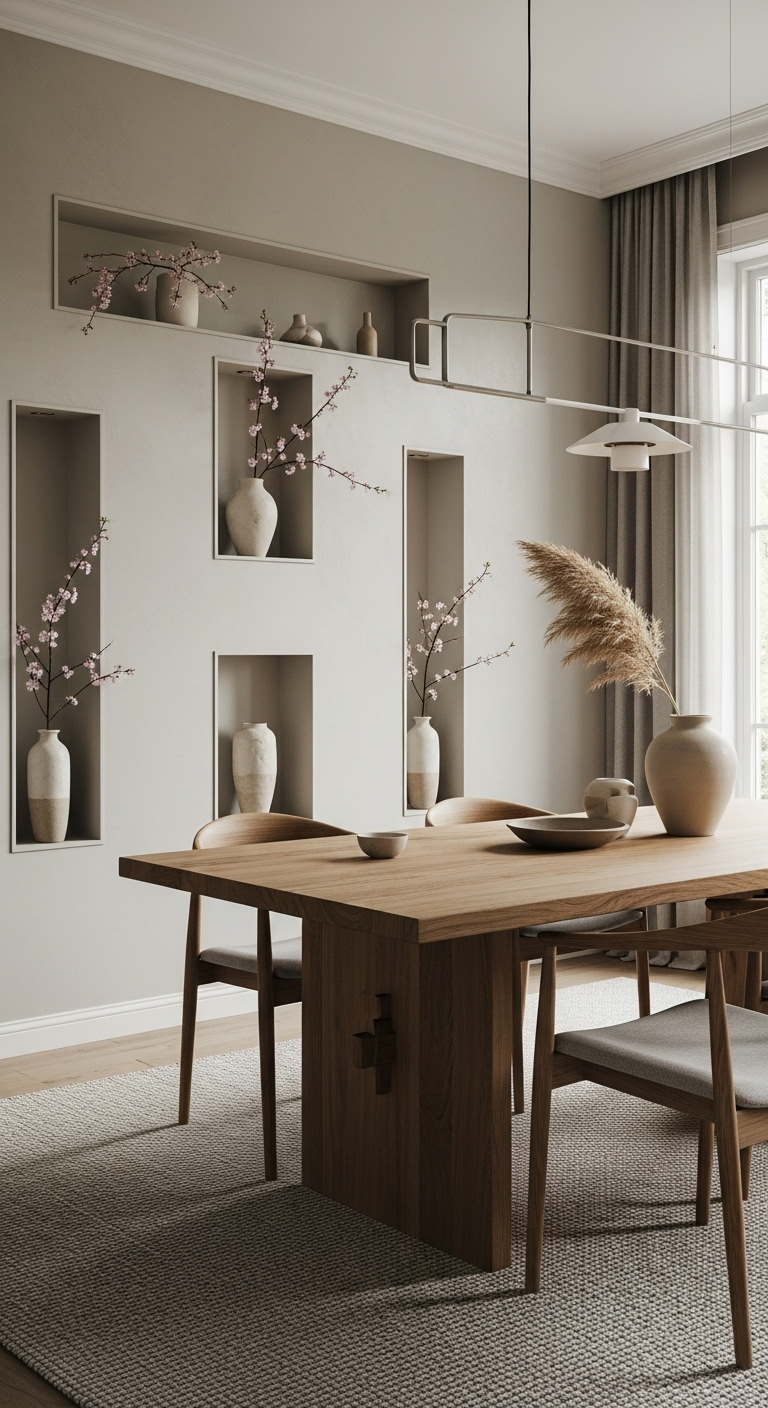
If you are planning a remodel, carving out a small rectangular wall niche provides a dedicated, recessed display space. This structural detail adds a sense of architectural honesty and custom quality that makes your home feel elevated.
Including a small, recessed spotlight inside the niche highlights the delicate texture and unique shape of your ceramics. This simple lighting choice creates a dramatic, moody vibe that mimics the experience of visiting a private gallery.
It is a brilliant way to incorporate the “less-is-more” design philosophy into the very structural bones of your home. By utilizing vertical wall space for decor, you keep your surfaces clear and maintain an uncluttered, peaceful environment.
The niche acts as an intentional frame for your pottery, turning a single piece into a beautiful, curated installation. This permanent feature enhances the luxury feel of your dining area while remaining perfectly aligned with minimalist principles.
27#. Subtle Earth-Tone Paint Palettes
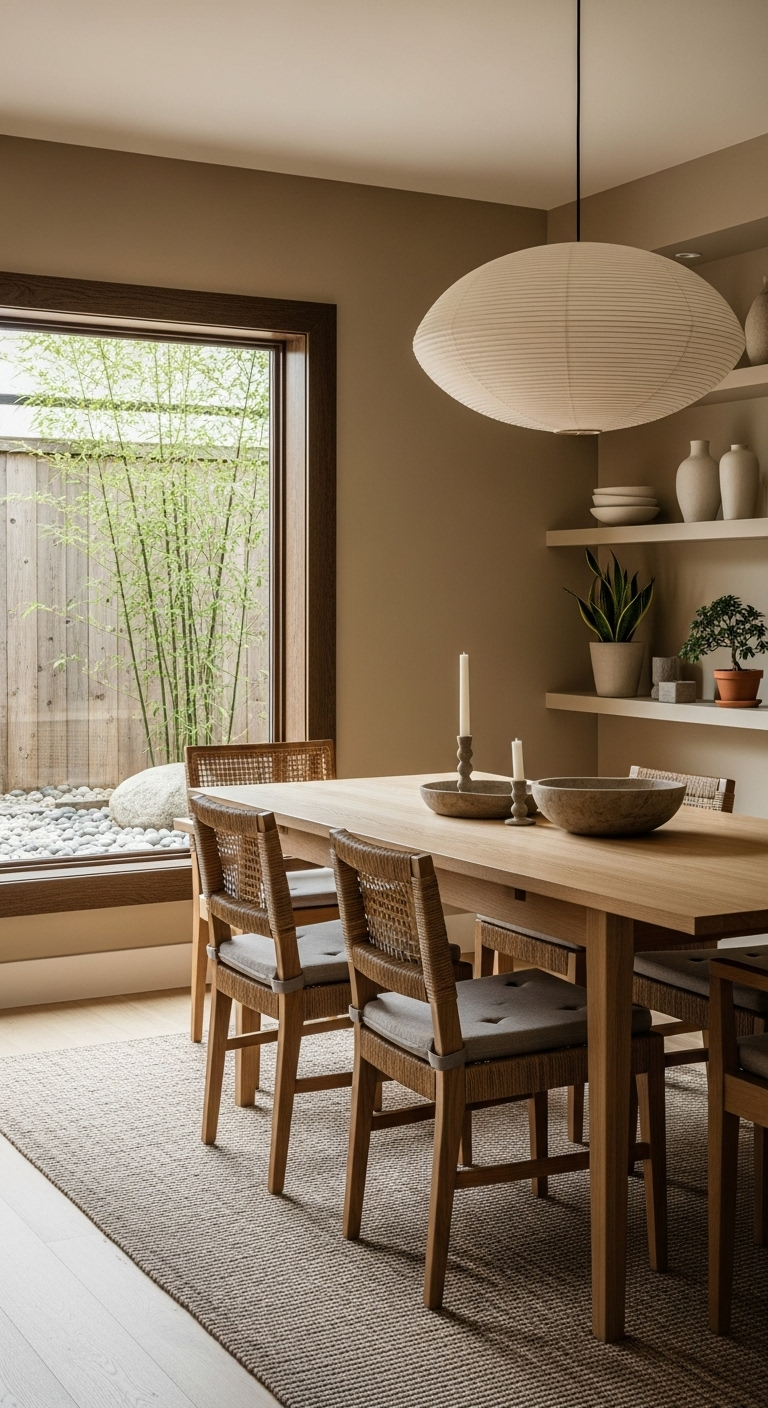
Moving away from stark, clinical white in favor of warm greige or soft sand creates a more comforting atmosphere. These earthy tones provide a gentle, cocoon-like backdrop that significantly enhances the natural warmth of your wooden furniture.
Selecting misty sage green is another excellent way to bring a sense of organic tranquility into your dining area. This soft-focus palette is essential for fostering the restorative energy that defines truly high-end, professionally styled minimalist homes.
These muted colors allow your natural textures to remain the star of the show without any harsh visual competition. By creating a cohesive, neutral foundation, you make it much easier to layer in additional decor and lighting elements.
Sticking to these refined, nature-inspired shades keeps the room feeling grounded and perfectly aligned with Japandi design principles. A well-chosen wall color acts as the primary canvas, tying your entire space together into one peaceful, unified composition.
28#. Cork and Timber Coasters
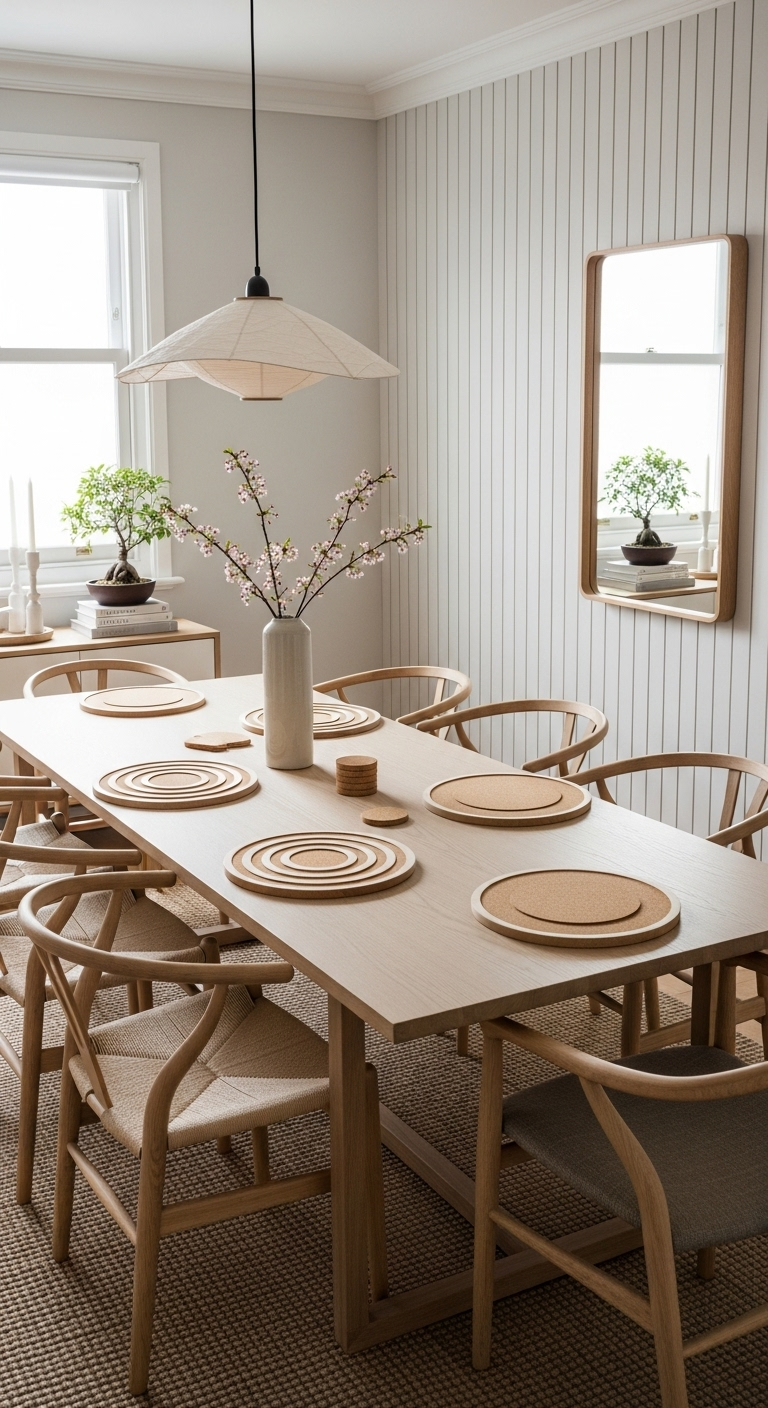
Protecting your wooden tables is vital, and choosing coasters made from natural cork or wood slices is a smart move. These small, organic details feel wonderful to the touch and effectively reinforce the natural materials theme throughout your home.
Coasters are an affordable and simple way to embrace the tactile, “Hygge” side of your decor without looking busy. They provide a subtle layer of texture that grounds your dining experience while keeping your furniture in perfect condition.
Natural cork is a highly sustainable material that aligns perfectly with the eco-friendly goals of the Japandi design movement. By selecting these accessories, you contribute to a more intentional home environment that favors longevity and simple, honest construction.
These pieces serve as functional art that prevents water rings while adding character to your daily table settings. It is an easy, low-cost update that demonstrates your commitment to both practical utility and a refined, nature-inspired lifestyle.
29#. Open Shelf “Curation” Stations
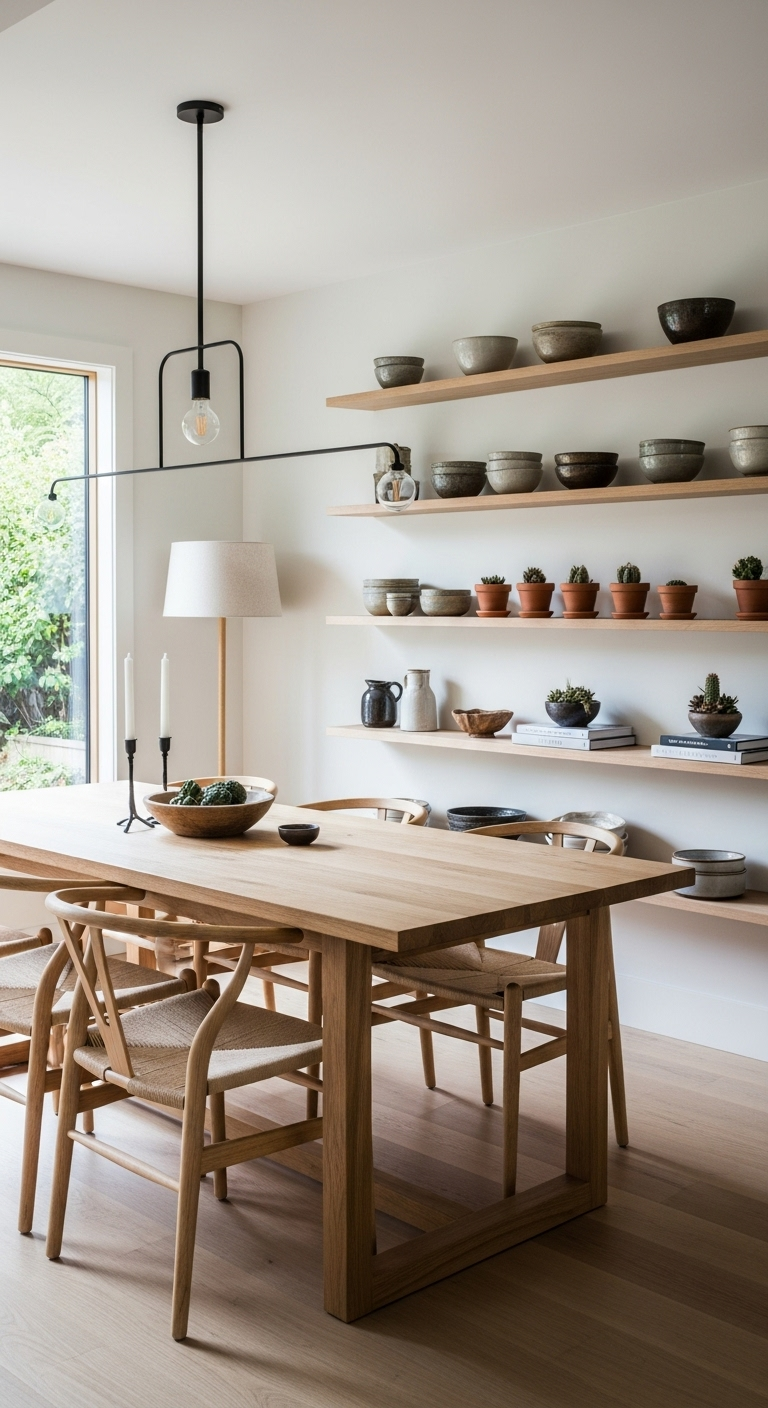
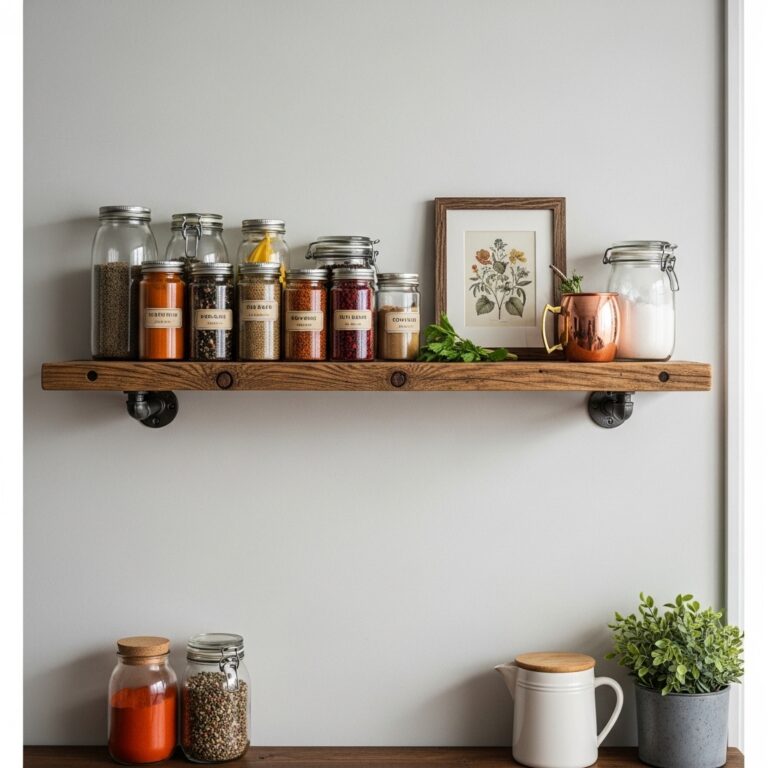
Installing a single floating shelf provides a perfect stage to display your favorite tea sets or handmade ceramic pieces. Arranging these items in a neat, organized row highlights your love for craftsmanship while keeping the dining area clear.
Rotating the selection on this shelf is an easy way to keep the room feeling fresh throughout the year. Each season offers a new opportunity to display different textures and colors that align with the current outdoor mood.
This approach is an incredibly creative way to utilize your vertical wall space without sacrificing a minimalist atmosphere. It ensures your most cherished decor pieces are showcased intentionally rather than getting lost in a cluttered storage cabinet.
Using a single shelf supports the core principles of Japandi design by emphasizing quality over the quantity of goods. This curation station acts as a beautiful focal point that balances aesthetic beauty with a sense of refined order.
30#. Minimalist Brass Tray Accents
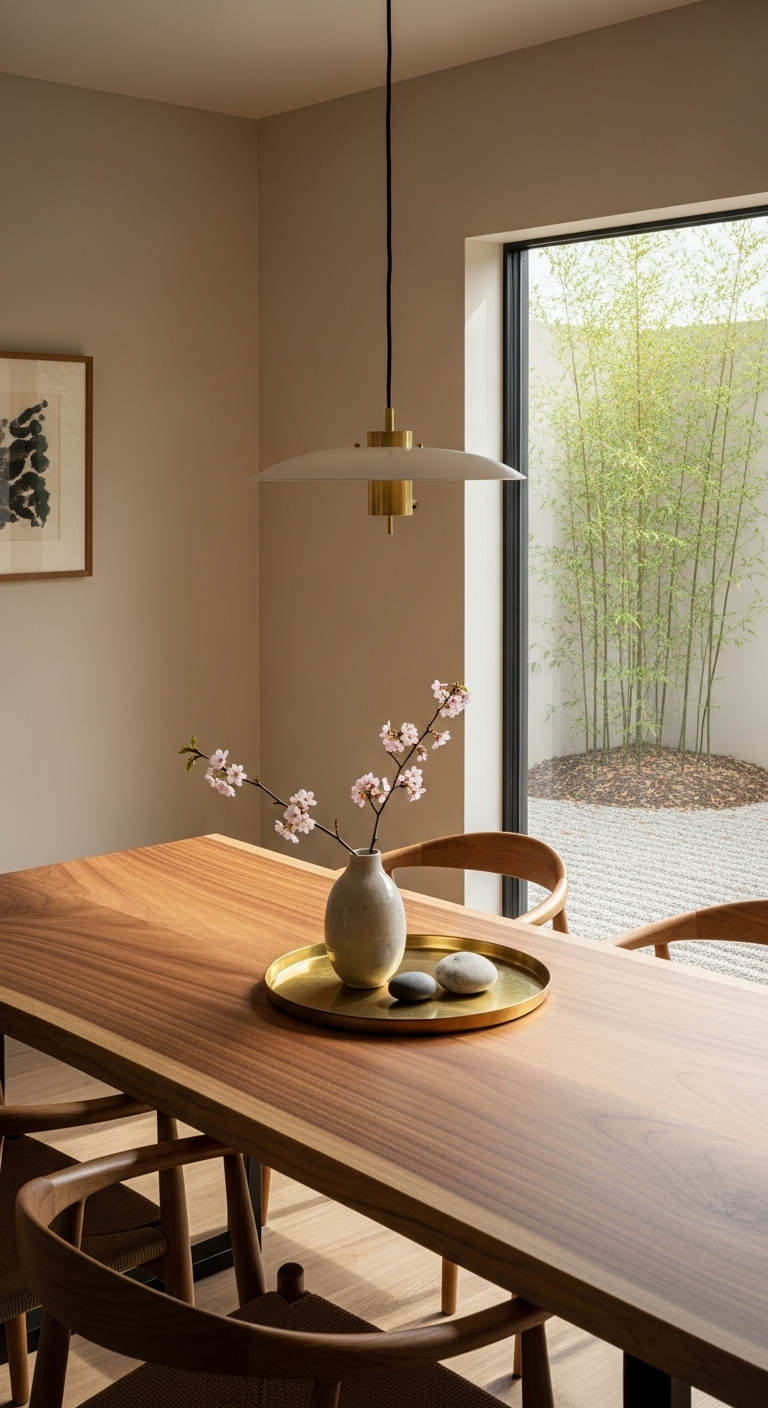
A small, circular brass tray placed on your sideboard serves as a functional anchor for your daily essentials. Whether you use it for essential oils or linen coasters, this metallic touch adds a warm shimmer to the surface.
This subtle glow effectively balances the matte textures of your natural wood furniture and organic stoneware pieces nearby. Metallic accents are essential because they prevent a minimalist room from feeling one-dimensional or flat during the day.
Incorporating these small details adds a necessary sense of luxury and polish to your overall dining room layout. It proves that even the most rustic or understated space can feel high-end when you introduce thoughtful, curated materials.
Focusing on warm-toned metals ensures your decor feels inviting rather than industrial or overly cold to the eye. These refined accents elevate the entire room, proving that deliberate contrast is key to a sophisticated Japandi design.
31#. Bamboo and Rattan Placemats
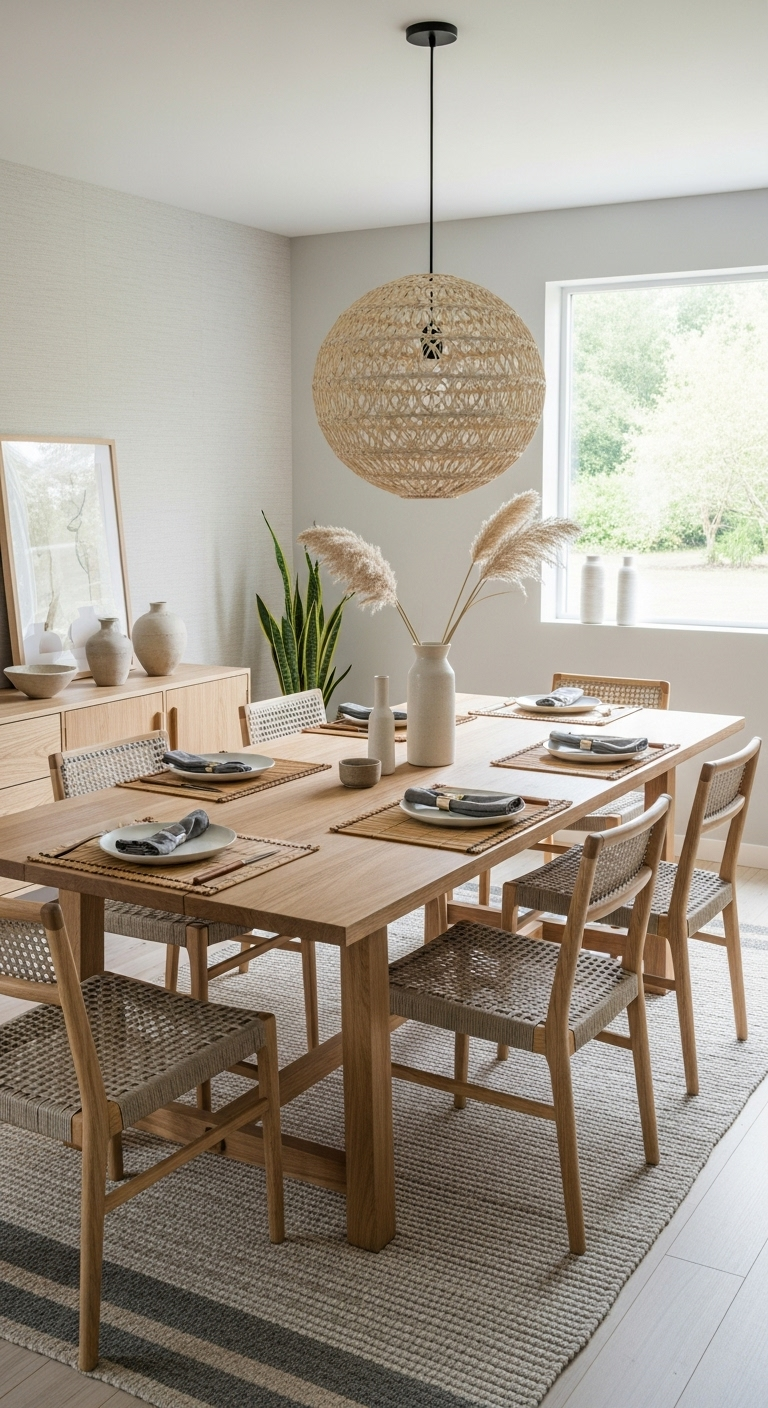
Incorporating woven bamboo or rattan placemats brings a layer of circular texture and Eastern-inspired charm to your table. These natural materials provide a beautiful, organic frame that perfectly complements your stoneware plates during every family meal.
The varying tones within the tight weave create a subtle pattern that feels energetic without becoming visually loud. By introducing these round shapes, you break up the harsh linear edges of your furniture for a softer look.
Choosing these durable materials ensures that your placemats remain easy to clean while maintaining a high-quality appearance. It is an incredibly practical way to protect your table surface while fully supporting the overall Japandi design aesthetic.
These woven accessories add a touch of warmth that makes your dining space feel grounded and intentional. When you pair them with simple dinnerware, you create an effortless, high-end look that is both inviting and timeless.
32#. Clear Glass Cloches with Nature
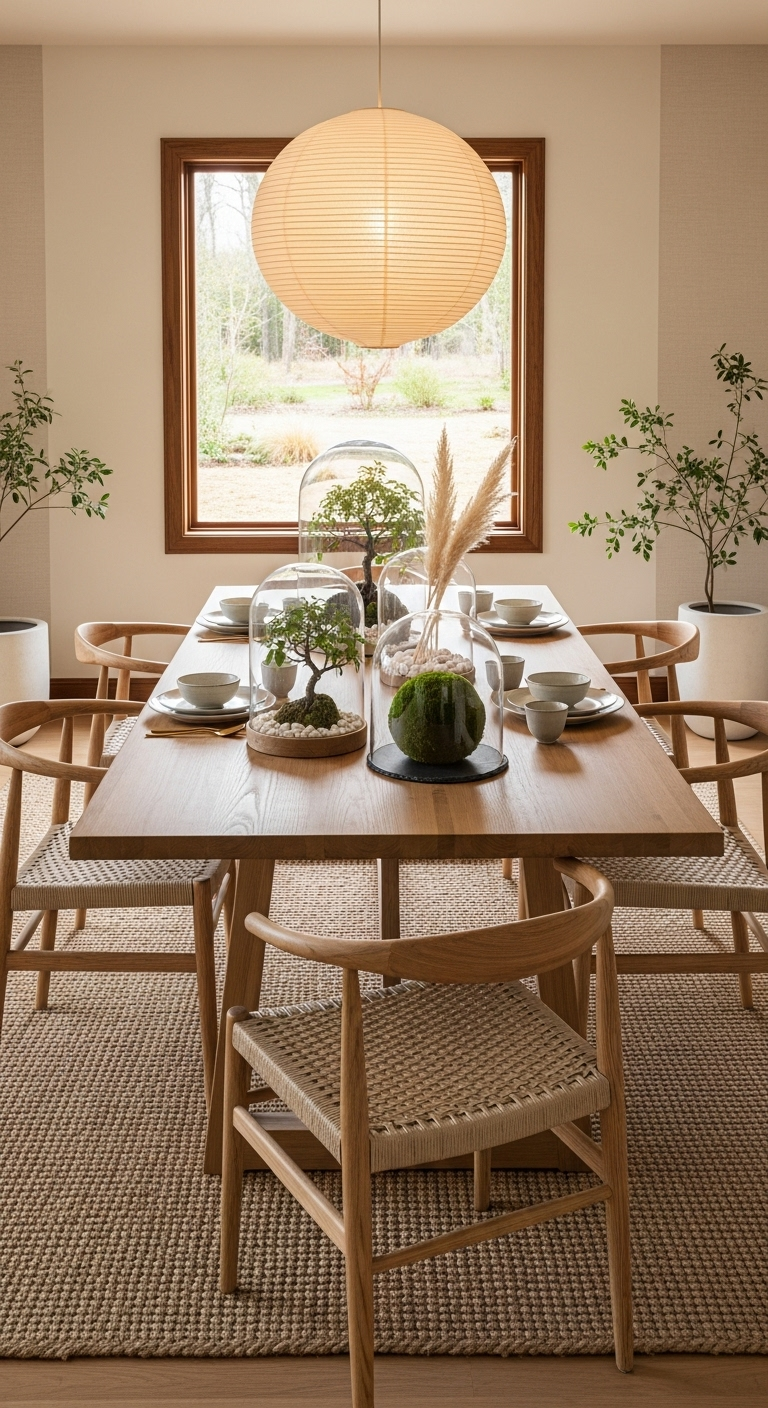
Displaying select found objects like pinecones or dried flowers under a clear glass cloche creates an instant art piece. This method turns simple, natural items into protected specimens, giving them a sense of curated importance and beauty.
The glass housing adds a subtle touch of shine that beautifully reflects the light from your nearby paper lanterns. This interplay between light and transparent surfaces makes your sideboard feel more dynamic and intentionally designed for guests.
Using a cloche is an elevated, simple way to showcase the small wonders of the natural world indoors. It keeps your surfaces organized and clean while preventing these delicate treasures from gathering dust over time.
This style aligns perfectly with the Japandi focus on honoring quiet moments and small, meaningful details at home. When you place these items strategically, they become points of interest that ground your dining space in nature.
33#. Natural Wool Pouf Seating
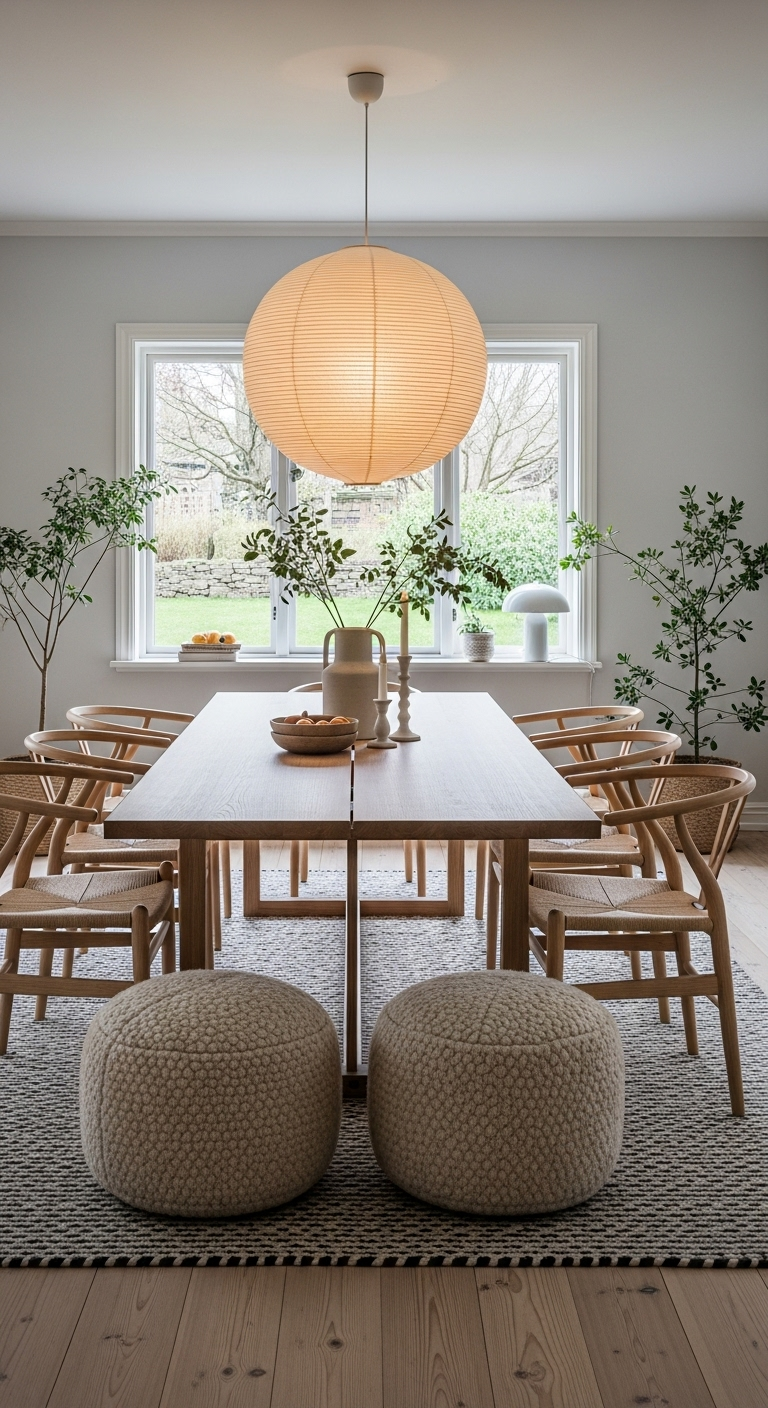
Swapping out standard plastic or metal stools for hand-knotted wool poufs adds a layer of comfort to your dining area. Available in oatmeal or charcoal grey, these pieces offer a soft, tactile experience that feels perfectly suited for minimalist homes.
These versatile items are easy to move throughout the room whenever you need extra seating for guests or family. You can even use them as footrests or place a wooden tray on top to create a functional side table.
Because they are crafted from wool, these poufs serve as a durable and sustainable choice for your home decor. They successfully support the organic, high-end theme of your Japandi Dining Room Designs without taking up unnecessary visual space.
Their unique texture breaks up the hard surfaces of your dining set, contributing to a more relaxed and welcoming environment. Choosing these pieces ensures your room remains adaptable while maintaining a cohesive, sophisticated, and intentionally curated overall design.
34#. Minimalist Black Candle Snuffers
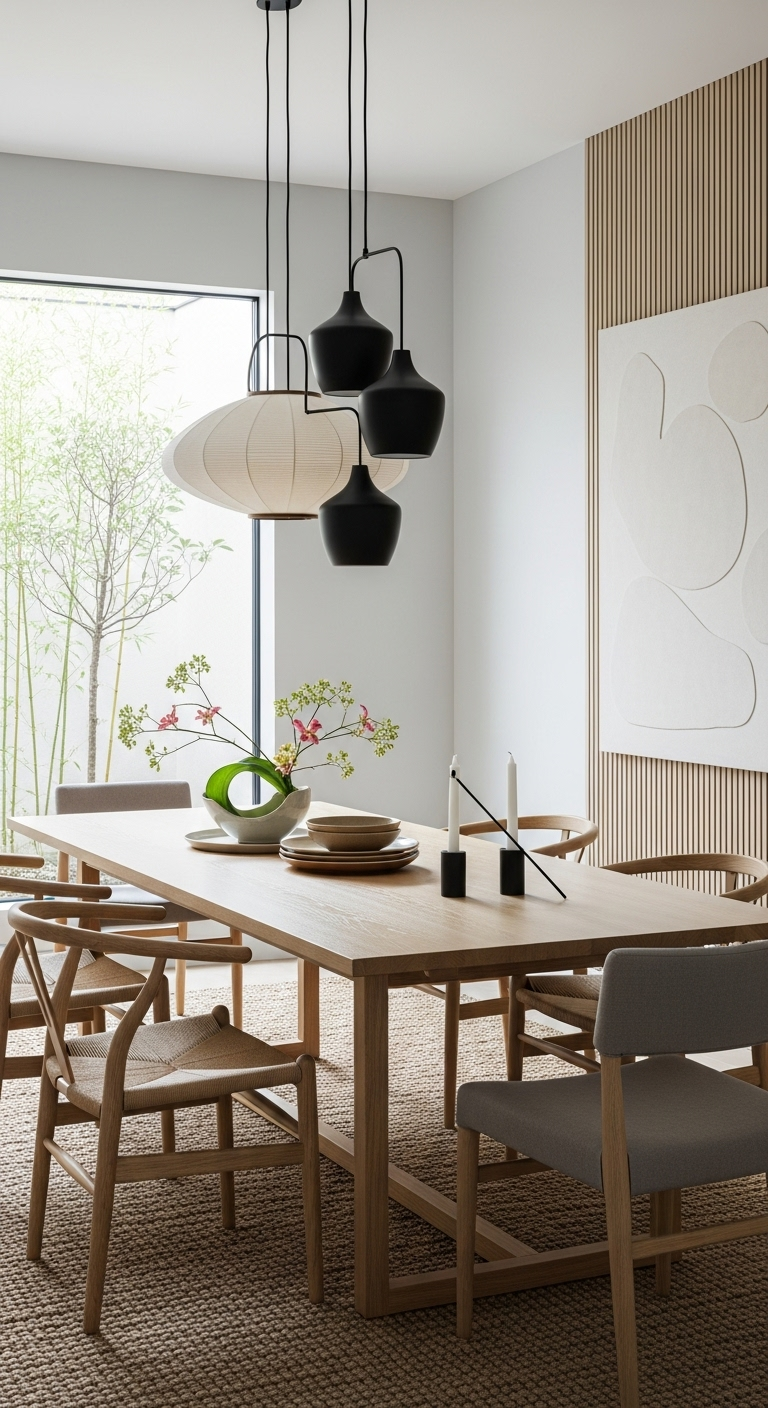
Keeping a stylish black metal candle snuffer on your sideboard tray adds a beautiful touch of ritual to your home. This small, functional tool effectively prevents smoke from filling the room whenever you extinguish your evening table candles.
It acts as a tiny detail that demonstrates your care for the experience and atmosphere of your living environment. By choosing a sleek metal design, you maintain the minimalist aesthetic while honoring traditional methods of candle care.
A candle snuffer serves as a sophisticated accessory that fits perfectly into the mindful, slow-living spirit of Japandi style. It turns the act of ending your evening meal into a conscious moment of calm, reinforcing your commitment to tranquility.
These tools are as decorative as they are useful, providing a permanent home for your candle-tending accessories. Including one in your design scheme highlights an appreciation for quality goods that serve a practical, daily purpose.
35#. Floor-to-Ceiling Wood Slats
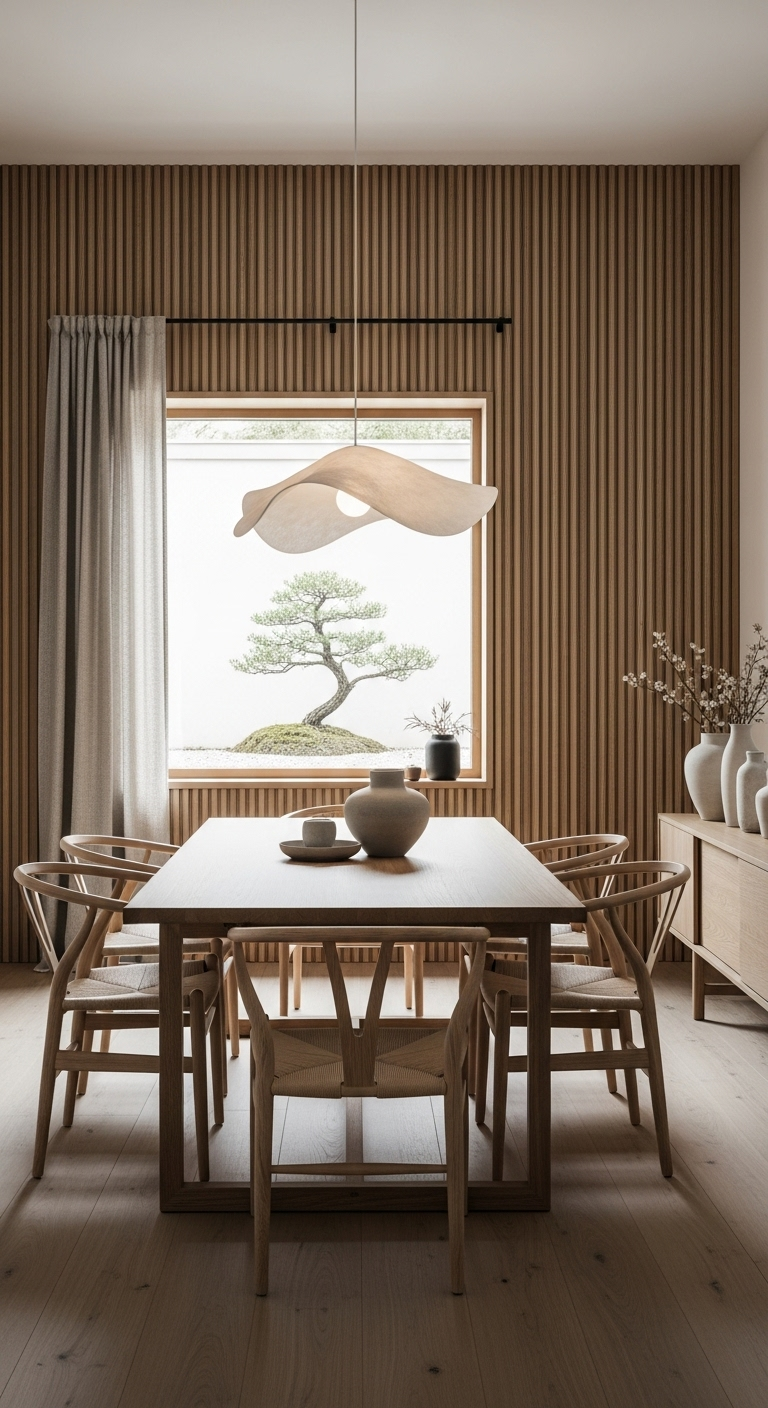
Installing a feature wall of vertical wood slats in a warm oak or ash finish provides a transformative architectural update. This addition introduces incredible texture and a sense of high-end, modern luxury that is foundational to the Japandi aesthetic.
The rhythmic repetition of these wood lines naturally elongates the room, drawing the eye upward and outward. It creates a stunning, intentional backdrop that allows your minimalist furniture and art to truly stand out.
This is a remarkably design-forward method to infuse the organic warmth of timber into your dining space. The slats provide a sophisticated layer of visual interest that remains calm and uncluttered, adhering strictly to “less-is-more” principles.
By selecting light, natural finishes like oak or ash, you maintain a bright and airy atmosphere while adding depth to your walls. This feature wall serves as the ultimate statement piece, bridging the gap between functional construction and artistic, modern home styling.
Wrap up
Mastering the Japandi aesthetic in your dining room is an exercise in intentionality—pairing the cozy warmth of Scandinavian living with the refined, minimalist order of Japanese design.
By choosing natural materials, organic textures, and a soft, earthy palette, you’ve created a space that celebrates the beauty of simplicity and the joy of a quiet home.
As you gather for your next meal, may the peaceful environment you’ve curated serve as a constant source of rest and inspiration for you and your loved ones.